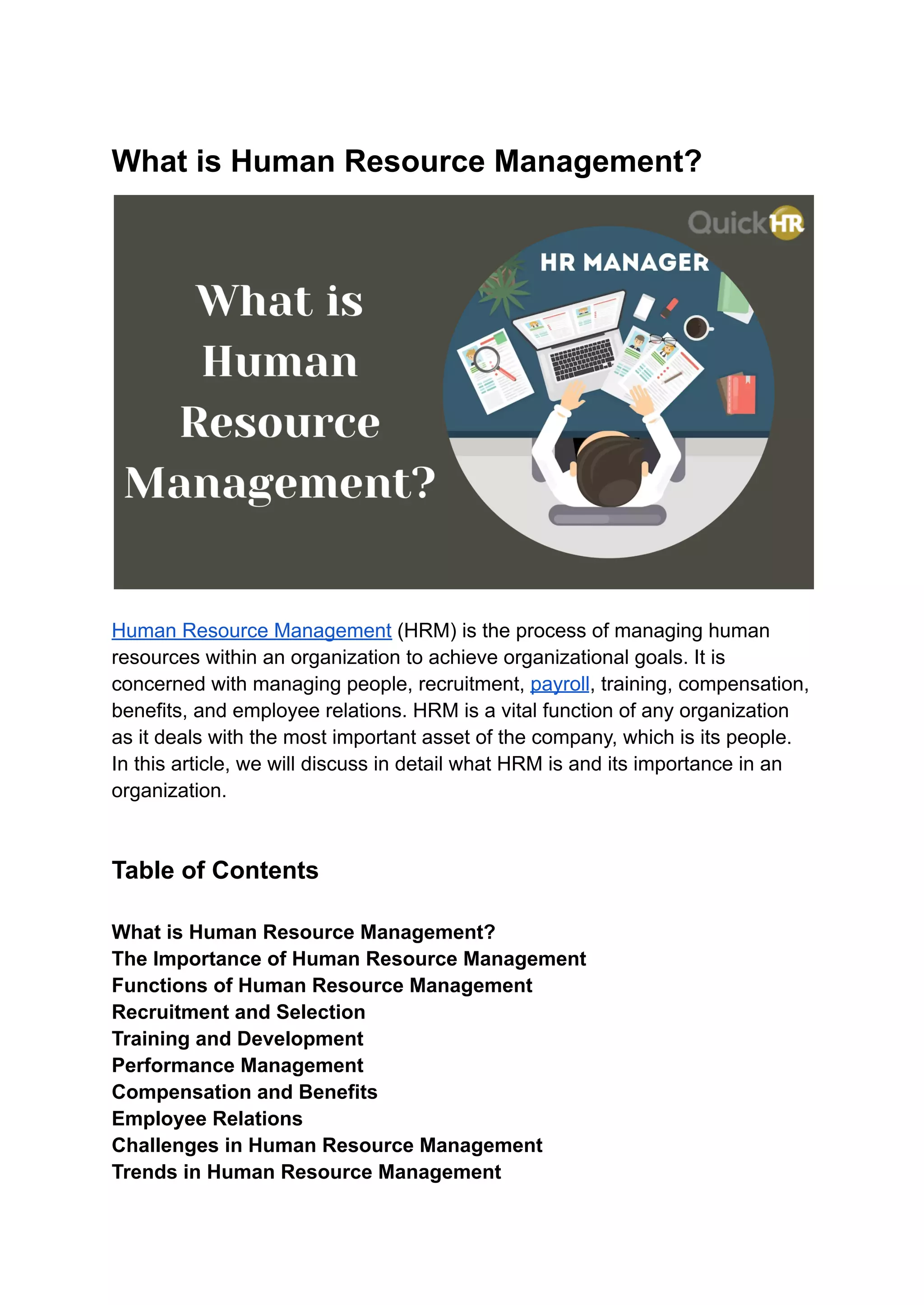
What is Human Resource Management?
Human Resource Management (HRM) is the process of managing human
resources within an organization to achieve organizational goals. It is
concerned with managing people, recruitment, payroll, training, compensation,
benefits, and employee relations. HRM is a vital function of any organization
as it deals with the most important asset of the company, which is its people.
In this article, we will discuss in detail what HRM is and its importance in an
organization.
Table of Contents
What is Human Resource Management?
The Importance of Human Resource Management
Functions of Human Resource Management
Recruitment and Selection
Training and Development
Performance Management
Compensation and Benefits
Employee Relations
Challenges in Human Resource Management
Trends in Human Resource Management
Use of Technology
Work-Life Balance
Diversity and Inclusion
Remote Work
Conclusion
FAQs
The Importance of Human Resource Management
Human resource management is crucial for the success of any organization. A
good HRM system can ensure that the right people are hired for the right job,
trained and developed to meet the organization's needs, compensated fairly,
and treated with respect and dignity. It can also help to build a positive work
culture, increase employee engagement, and reduce employee turnover. HRM
plays a critical role in driving the organization's growth, innovation, and
profitability.
Functions of Human Resource Management
Recruitment and Selection
Recruitment and selection are the processes of attracting and selecting the
right candidates for the organization. The HR department is responsible for
creating job descriptions, posting job vacancies, screening resumes,
conducting interviews, and selecting the best candidate for the job. This
process helps to ensure that the organization has the right people in the right
positions.
Training and Development
Training and development are essential for the growth and development of
employees. HRM is responsible for identifying the training needs of
employees and providing them with the necessary training to improve their
skills and knowledge. This process helps to enhance employee performance,
job satisfaction, and career development.
Performance Management
Performance management involves setting clear performance expectations,
providing feedback, and evaluating employee performance. HRM is
responsible for creating performance management systems, setting
performance goals, monitoring progress, and providing feedback. This
process helps to improve employee performance, motivation, and
accountability.
Compensation and Benefits
Compensation and benefits refer to the rewards and incentives provided to
employees for their work. HRM is responsible for creating a fair and
competitive compensation package that includes salary, bonuses, and
benefits such as health insurance, retirement plans, and paid time off. This
process helps to attract and retain the best talent and increase employee
satisfaction.
Employee Relations
Employee relations involve managing the relationship between employees
and the organization. HRM is responsible for creating policies and procedures
that ensure fair treatment of employees, promoting a positive work
environment, and managing employee grievances and disputes. This process
helps to build a positive work culture, increase employee engagement, and
reduce employee turnover.
Challenges in Human Resource Management
Human resource management faces several challenges, including managing
a diverse workforce, complying with labor laws and regulations, adapting to
technological changes, and managing employee expectations. HRM must
balance the needs of the organization with the needs of the employees and
ensure that all policies and procedures are fair, consistent, and transparent.
Trends in Human Resource Management
Use of Technology
Technology is changing the way HRM is conducted. HRM is now using
technology to automate routine tasks such as recruitment, selection,
performance management, and training. This process helps to improve
efficiency, reduce costs, and provide a better employee experience.
Work-Life Balance
Work-life balance has become increasingly important in today's workforce.
HRM is responsible for creating policies and programs that support
employees' work-life balance, such as flexible work arrangements,
telecommuting, and wellness programs. This process helps to reduce
employee burnout, increase employee satisfaction, and improve productivity.
Diversity and Inclusion
Diversity and inclusion have become top priorities for HRM. HRM is
responsible for creating policies and programs that support diversity and
inclusion, such as diversity training, affirmative action plans, and diversity
recruitment programs. This process helps to create a diverse and inclusive
work environment, increase employee engagement, and improve business
outcomes.
Remote Work
Remote work has become increasingly popular due to the COVID-19
pandemic. HRM is responsible for creating policies and programs that support
remote work, such as remote work guidelines, virtual communication tools,
and remote work training. This process helps to ensure that employees can
work from anywhere while maintaining productivity and engagement.
Conclusion
In conclusion, human resource management is a critical function of any
organization. It involves managing people, recruitment, training,
compensation, benefits, and employee relations to achieve organizational
goals. HRM is essential for creating a positive work culture, improving
employee engagement, reducing employee turnover, and driving business
growth. As the workforce and technology continue to evolve, HRM must adapt
to new trends and challenges to ensure the organization's success.
FAQs
What are the main functions of HRM?
The main functions of HRM include recruitment and selection, training and
development, performance management, compensation and benefits, and
employee relations.
Why is HRM important?
HRM is important because it helps to ensure that the organization has the
right people in the right positions, promotes a positive work culture, increases
employee engagement, and drives business growth.
What are some of the challenges in HRM?
Some of the challenges in HRM include managing a diverse workforce,
complying with labor laws and regulations, adapting to technological changes,
and managing employee expectations.
What are some of the trends in HRM?
Some of the trends in HRM include the use of technology, work-life balance,
diversity and inclusion, and remote work.
How can HRM help to improve employee engagement?
HRM can help to improve employee engagement by creating a positive work
culture, providing training and development opportunities, offering competitive
compensation and benefits, and promoting work-life balance and diversity and
inclusion.
For the best HRMS software in Singapore here is the 14 days free trial
Feature of HRMS software Singapore
Leave management Timesheet Expense claims Shift scheduling
Biometric Reports and
analytics
PSG grants
Singapore
CPF calculator
Incomplete month Payroll in Singapore Maternity Leave 2023 Singapore
holidays

What is Human Resource Management.pdf

  • 1.
    What is HumanResource Management? Human Resource Management (HRM) is the process of managing human resources within an organization to achieve organizational goals. It is concerned with managing people, recruitment, payroll, training, compensation, benefits, and employee relations. HRM is a vital function of any organization as it deals with the most important asset of the company, which is its people. In this article, we will discuss in detail what HRM is and its importance in an organization. Table of Contents What is Human Resource Management? The Importance of Human Resource Management Functions of Human Resource Management Recruitment and Selection Training and Development Performance Management Compensation and Benefits Employee Relations Challenges in Human Resource Management Trends in Human Resource Management
  • 2.
    Use of Technology Work-LifeBalance Diversity and Inclusion Remote Work Conclusion FAQs The Importance of Human Resource Management Human resource management is crucial for the success of any organization. A good HRM system can ensure that the right people are hired for the right job, trained and developed to meet the organization's needs, compensated fairly, and treated with respect and dignity. It can also help to build a positive work culture, increase employee engagement, and reduce employee turnover. HRM plays a critical role in driving the organization's growth, innovation, and profitability. Functions of Human Resource Management Recruitment and Selection Recruitment and selection are the processes of attracting and selecting the right candidates for the organization. The HR department is responsible for creating job descriptions, posting job vacancies, screening resumes, conducting interviews, and selecting the best candidate for the job. This process helps to ensure that the organization has the right people in the right positions. Training and Development Training and development are essential for the growth and development of employees. HRM is responsible for identifying the training needs of employees and providing them with the necessary training to improve their skills and knowledge. This process helps to enhance employee performance, job satisfaction, and career development.
  • 3.
    Performance Management Performance managementinvolves setting clear performance expectations, providing feedback, and evaluating employee performance. HRM is responsible for creating performance management systems, setting performance goals, monitoring progress, and providing feedback. This process helps to improve employee performance, motivation, and accountability. Compensation and Benefits Compensation and benefits refer to the rewards and incentives provided to employees for their work. HRM is responsible for creating a fair and competitive compensation package that includes salary, bonuses, and benefits such as health insurance, retirement plans, and paid time off. This process helps to attract and retain the best talent and increase employee satisfaction. Employee Relations Employee relations involve managing the relationship between employees and the organization. HRM is responsible for creating policies and procedures that ensure fair treatment of employees, promoting a positive work environment, and managing employee grievances and disputes. This process helps to build a positive work culture, increase employee engagement, and reduce employee turnover. Challenges in Human Resource Management Human resource management faces several challenges, including managing a diverse workforce, complying with labor laws and regulations, adapting to technological changes, and managing employee expectations. HRM must balance the needs of the organization with the needs of the employees and ensure that all policies and procedures are fair, consistent, and transparent.
  • 4.
    Trends in HumanResource Management Use of Technology Technology is changing the way HRM is conducted. HRM is now using technology to automate routine tasks such as recruitment, selection, performance management, and training. This process helps to improve efficiency, reduce costs, and provide a better employee experience. Work-Life Balance Work-life balance has become increasingly important in today's workforce. HRM is responsible for creating policies and programs that support employees' work-life balance, such as flexible work arrangements, telecommuting, and wellness programs. This process helps to reduce employee burnout, increase employee satisfaction, and improve productivity. Diversity and Inclusion Diversity and inclusion have become top priorities for HRM. HRM is responsible for creating policies and programs that support diversity and inclusion, such as diversity training, affirmative action plans, and diversity recruitment programs. This process helps to create a diverse and inclusive work environment, increase employee engagement, and improve business outcomes. Remote Work Remote work has become increasingly popular due to the COVID-19 pandemic. HRM is responsible for creating policies and programs that support remote work, such as remote work guidelines, virtual communication tools, and remote work training. This process helps to ensure that employees can work from anywhere while maintaining productivity and engagement. Conclusion
  • 5.
    In conclusion, humanresource management is a critical function of any organization. It involves managing people, recruitment, training, compensation, benefits, and employee relations to achieve organizational goals. HRM is essential for creating a positive work culture, improving employee engagement, reducing employee turnover, and driving business growth. As the workforce and technology continue to evolve, HRM must adapt to new trends and challenges to ensure the organization's success. FAQs What are the main functions of HRM? The main functions of HRM include recruitment and selection, training and development, performance management, compensation and benefits, and employee relations. Why is HRM important? HRM is important because it helps to ensure that the organization has the right people in the right positions, promotes a positive work culture, increases employee engagement, and drives business growth. What are some of the challenges in HRM? Some of the challenges in HRM include managing a diverse workforce, complying with labor laws and regulations, adapting to technological changes, and managing employee expectations. What are some of the trends in HRM? Some of the trends in HRM include the use of technology, work-life balance, diversity and inclusion, and remote work. How can HRM help to improve employee engagement? HRM can help to improve employee engagement by creating a positive work culture, providing training and development opportunities, offering competitive
  • 6.
    compensation and benefits,and promoting work-life balance and diversity and inclusion. For the best HRMS software in Singapore here is the 14 days free trial Feature of HRMS software Singapore Leave management Timesheet Expense claims Shift scheduling Biometric Reports and analytics PSG grants Singapore CPF calculator Incomplete month Payroll in Singapore Maternity Leave 2023 Singapore holidays