WHAT IS HLS
Intro to HTTP Streaming
What is HLS?
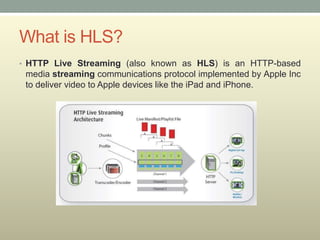
• HTTP Live Streaming (also known as HLS) is an HTTP-based
media streaming communications protocol implemented by Apple Inc
to deliver video to Apple devices like the iPad and iPhone.
How does HLS work?
• HLS breaks MP4 video content into 10-second
segments
• These segments are then carried to their
destination via HTTP which allows the HLS
streaming server to be accessed by an array of
devices
• Latency varies between 15 and 30 seconds
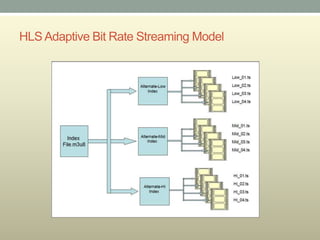
HLS Adaptive Bit Rate Streaming Model
Pros of using the HLS protocol
• All-device delivery
• Excellent quality
• Cost efficient
Cons of using the HLS protocol
• Latency
• Content Protection
Technical overview
• HLS streams are generated on the fly and stored on an
HTTP server.
• The HTTP server also creates a .M3U8 playlist file (also
called a manifest file) that serves as an index for the video
chunks.
• HLS doesn’t natively support digital rights management
(DRM) though you can encrypt the data and provide key
access using HTTPS authentication.
Alternatives to HLS Live Streaming
• RTMP: Real-Time Messaging Protocol, or RTMP for short, was
designed at the turn of the millennium specifically for audio and video
streaming.
• HDS: HDS, or HTTP Dynamic Streaming is a futuristic streaming
format created by Adobe, intended to be used along with Flash. It
hasn’t gained as much relative momentum, however.
• MPEG-DASH: One of the most recently innovated protocols, MPEG-
DASH presents many merits. Entirely HTTP-based, it allows
broadcasters to implement its framework faster than ever before.
Conclusion
• With mobile devices quickly shrouding larger screens
across the world, HLS becomes significant. Another point
to note is that HTML5 video players do not pair with
RTMP or HDS. HLS then becomes the sole option.
Read more at my website - https://streamhash.com/what-is-hls-streaming/

What is hls streaming

  • 1.
    WHAT IS HLS Introto HTTP Streaming
  • 2.
    What is HLS? •HTTP Live Streaming (also known as HLS) is an HTTP-based media streaming communications protocol implemented by Apple Inc to deliver video to Apple devices like the iPad and iPhone.
  • 3.
    How does HLSwork? • HLS breaks MP4 video content into 10-second segments • These segments are then carried to their destination via HTTP which allows the HLS streaming server to be accessed by an array of devices • Latency varies between 15 and 30 seconds
  • 4.
    HLS Adaptive BitRate Streaming Model
  • 5.
    Pros of usingthe HLS protocol • All-device delivery • Excellent quality • Cost efficient
  • 6.
    Cons of usingthe HLS protocol • Latency • Content Protection
  • 7.
    Technical overview • HLSstreams are generated on the fly and stored on an HTTP server. • The HTTP server also creates a .M3U8 playlist file (also called a manifest file) that serves as an index for the video chunks. • HLS doesn’t natively support digital rights management (DRM) though you can encrypt the data and provide key access using HTTPS authentication.
  • 8.
    Alternatives to HLSLive Streaming • RTMP: Real-Time Messaging Protocol, or RTMP for short, was designed at the turn of the millennium specifically for audio and video streaming. • HDS: HDS, or HTTP Dynamic Streaming is a futuristic streaming format created by Adobe, intended to be used along with Flash. It hasn’t gained as much relative momentum, however. • MPEG-DASH: One of the most recently innovated protocols, MPEG- DASH presents many merits. Entirely HTTP-based, it allows broadcasters to implement its framework faster than ever before.
  • 9.
    Conclusion • With mobiledevices quickly shrouding larger screens across the world, HLS becomes significant. Another point to note is that HTML5 video players do not pair with RTMP or HDS. HLS then becomes the sole option.
  • 10.
    Read more atmy website - https://streamhash.com/what-is-hls-streaming/