WHAT IS
DOWNSTREAM IN
OIL AND GAS
OPERATIONS
The final sector of the oil and natural
gas industry is known as downstream
Downstream operations are the
processes involved in turn oil and gas
into final products
There are upstream, midstream, and
downstream operations within the oil
and gas industries
About Downstream
oil and gas
The downstream industry provides
numerous products such as jet fuel,
gasoline, diesel, synthetic rubber, plastics,
pesticides, pharmaceuticals, natural gas,
and propane.
The downstream process delivers the
products most directly connected to
consumers, making it the most relatable
sector of the oil and gas industry for the
public.
About Downstream
oil and gas
Oil Refining
Natural Gas
Product Distribution
Marketing
Processes of Downstream
Oil and Gas.
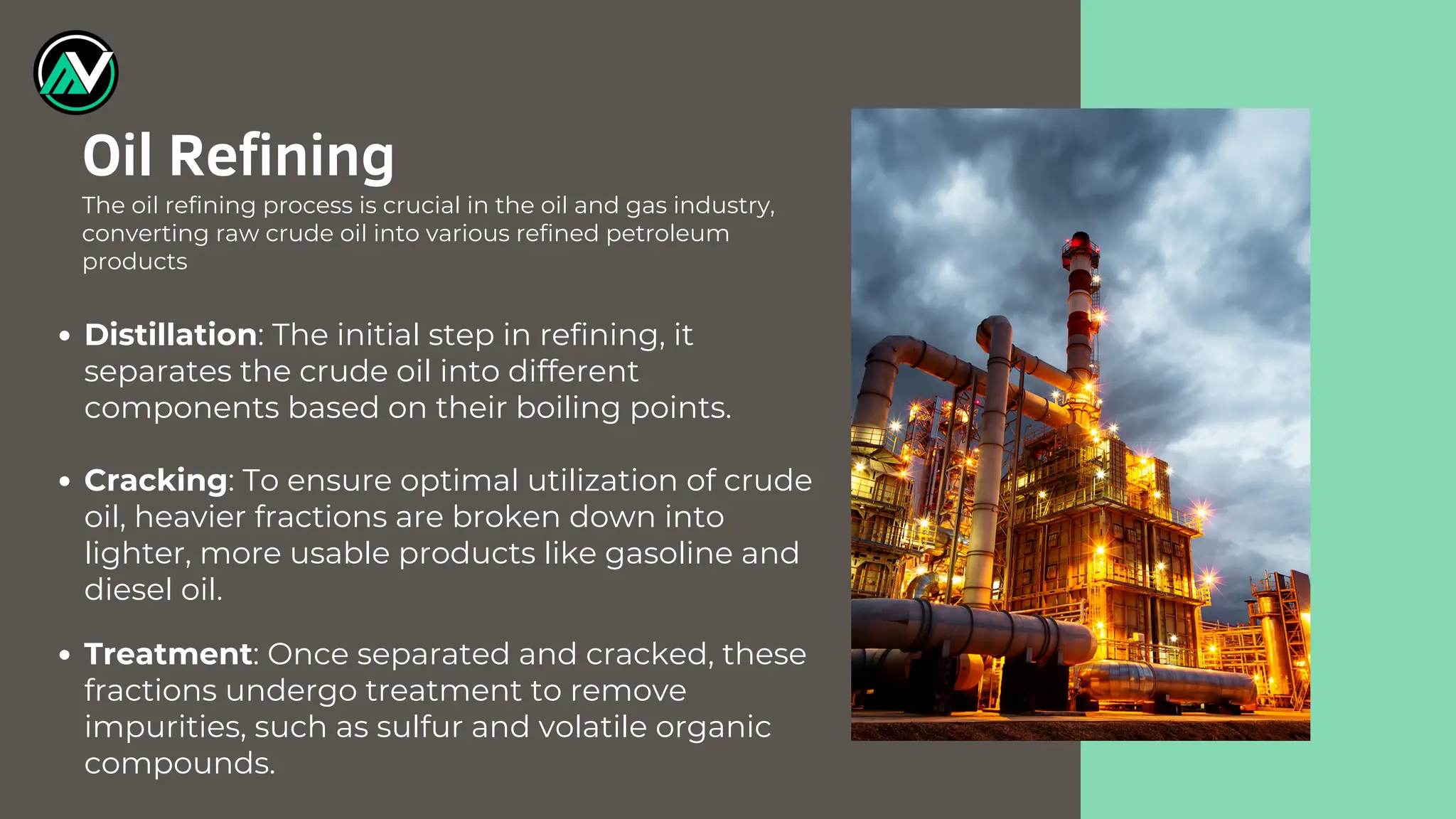
Distillation: The initial step in refining, it
separates the crude oil into different
components based on their boiling points.
Cracking: To ensure optimal utilization of crude
oil, heavier fractions are broken down into
lighter, more usable products like gasoline and
diesel oil.
Treatment: Once separated and cracked, these
fractions undergo treatment to remove
impurities, such as sulfur and volatile organic
compounds.
Oil Refining
The oil refining process is crucial in the oil and gas industry,
converting raw crude oil into various refined petroleum
products
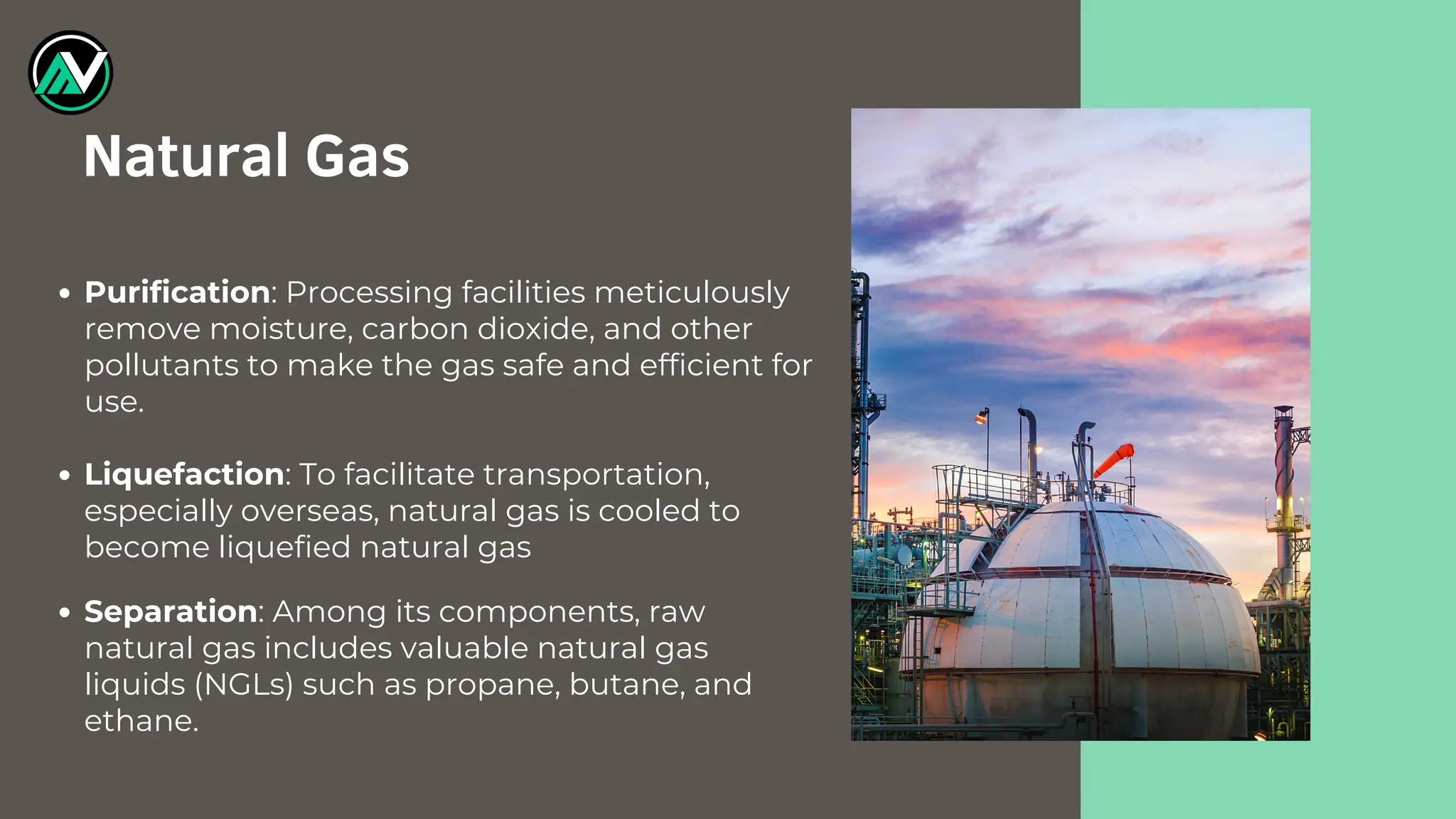
Purification: Processing facilities meticulously
remove moisture, carbon dioxide, and other
pollutants to make the gas safe and efficient for
use.
Liquefaction: To facilitate transportation,
especially overseas, natural gas is cooled to
become liquefied natural gas
Separation: Among its components, raw
natural gas includes valuable natural gas
liquids (NGLs) such as propane, butane, and
ethane.
Natural Gas
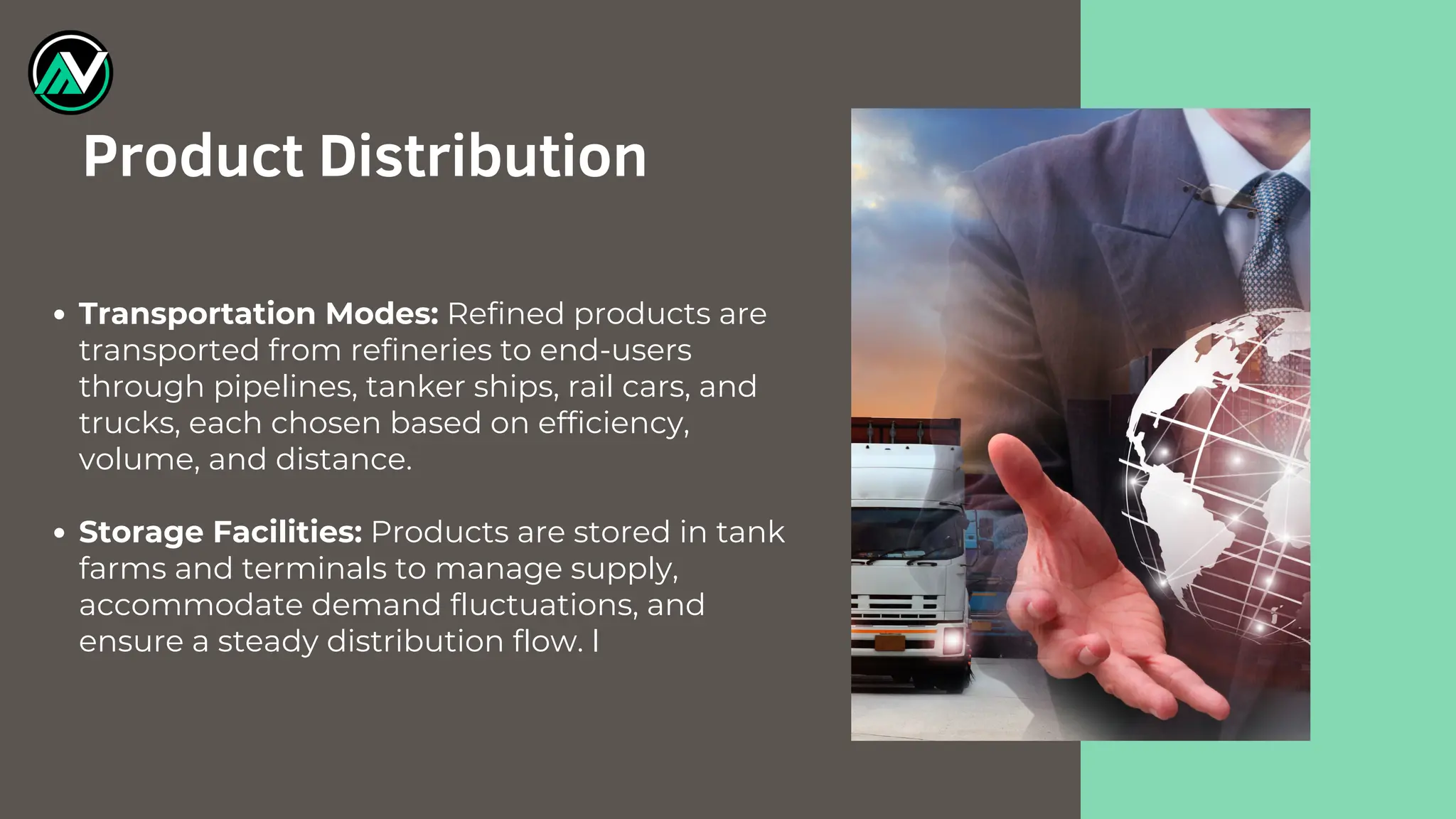
Transportation Modes: Refined products are
transported from refineries to end-users
through pipelines, tanker ships, rail cars, and
trucks, each chosen based on efficiency,
volume, and distance.
Storage Facilities: Products are stored in tank
farms and terminals to manage supply,
accommodate demand fluctuations, and
ensure a steady distribution flow. l
Product Distribution
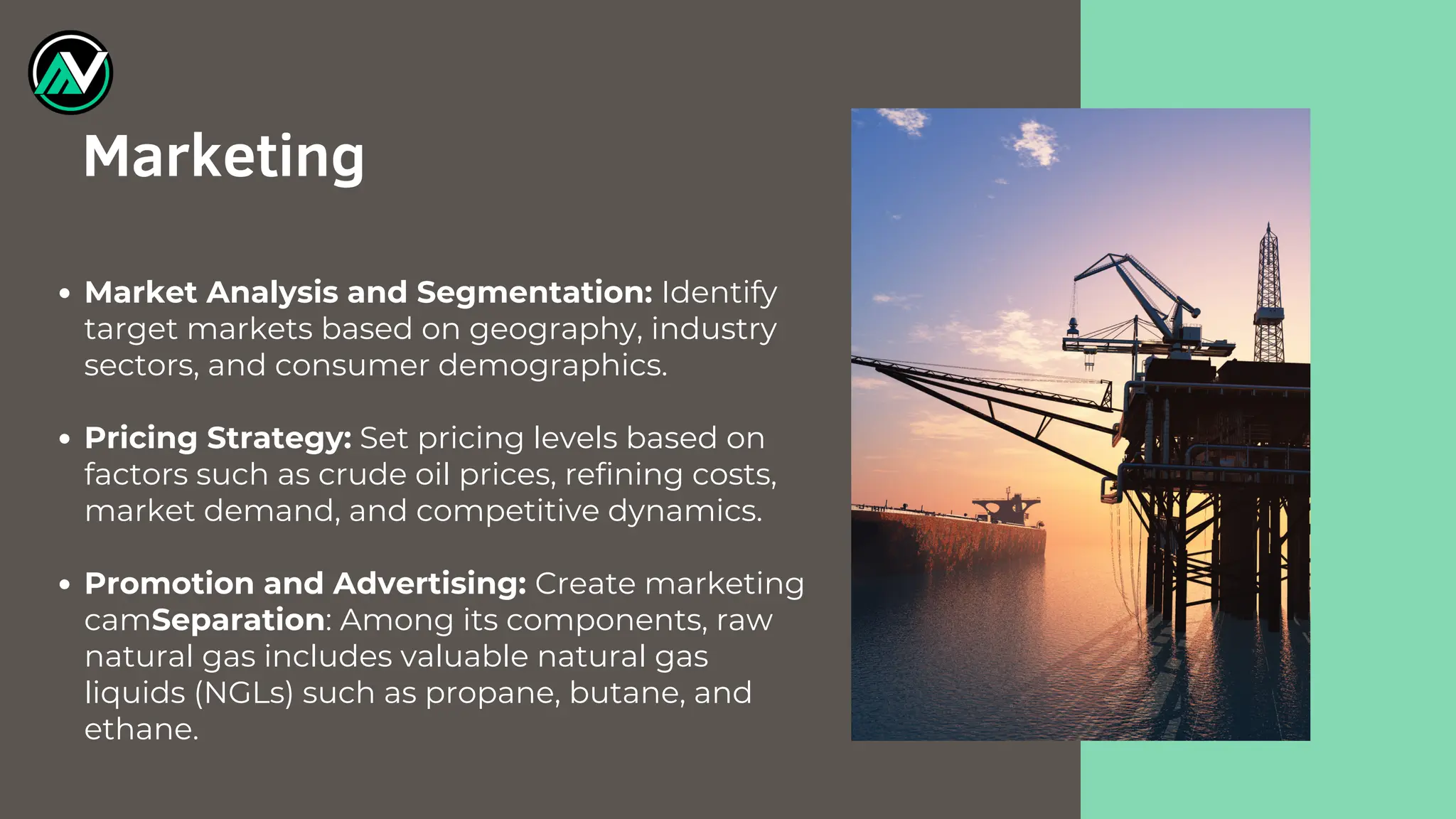
Market Analysis and Segmentation: Identify
target markets based on geography, industry
sectors, and consumer demographics.
Pricing Strategy: Set pricing levels based on
factors such as crude oil prices, refining costs,
market demand, and competitive dynamics.
Promotion and Advertising: Create marketing
camSeparation: Among its components, raw
natural gas includes valuable natural gas
liquids (NGLs) such as propane, butane, and
ethane.
Marketing
support@mineralview.com
VISIT MINERAL VIEW
Mineral-View was founded to provide mineral owners,
investors, and industry professionals with a robust,
easy-to-use online platform.
www.mineralview.com
866-646-8439

What is Downstream in oil and gas operations..pdf

  • 1.
    WHAT IS DOWNSTREAM IN OILAND GAS OPERATIONS
  • 2.
    The final sectorof the oil and natural gas industry is known as downstream Downstream operations are the processes involved in turn oil and gas into final products There are upstream, midstream, and downstream operations within the oil and gas industries About Downstream oil and gas
  • 3.
    The downstream industryprovides numerous products such as jet fuel, gasoline, diesel, synthetic rubber, plastics, pesticides, pharmaceuticals, natural gas, and propane. The downstream process delivers the products most directly connected to consumers, making it the most relatable sector of the oil and gas industry for the public. About Downstream oil and gas
  • 4.
    Oil Refining Natural Gas ProductDistribution Marketing Processes of Downstream Oil and Gas.
  • 5.
    Distillation: The initialstep in refining, it separates the crude oil into different components based on their boiling points. Cracking: To ensure optimal utilization of crude oil, heavier fractions are broken down into lighter, more usable products like gasoline and diesel oil. Treatment: Once separated and cracked, these fractions undergo treatment to remove impurities, such as sulfur and volatile organic compounds. Oil Refining The oil refining process is crucial in the oil and gas industry, converting raw crude oil into various refined petroleum products
  • 6.
    Purification: Processing facilitiesmeticulously remove moisture, carbon dioxide, and other pollutants to make the gas safe and efficient for use. Liquefaction: To facilitate transportation, especially overseas, natural gas is cooled to become liquefied natural gas Separation: Among its components, raw natural gas includes valuable natural gas liquids (NGLs) such as propane, butane, and ethane. Natural Gas
  • 7.
    Transportation Modes: Refinedproducts are transported from refineries to end-users through pipelines, tanker ships, rail cars, and trucks, each chosen based on efficiency, volume, and distance. Storage Facilities: Products are stored in tank farms and terminals to manage supply, accommodate demand fluctuations, and ensure a steady distribution flow. l Product Distribution
  • 8.
    Market Analysis andSegmentation: Identify target markets based on geography, industry sectors, and consumer demographics. Pricing Strategy: Set pricing levels based on factors such as crude oil prices, refining costs, market demand, and competitive dynamics. Promotion and Advertising: Create marketing camSeparation: Among its components, raw natural gas includes valuable natural gas liquids (NGLs) such as propane, butane, and ethane. Marketing
  • 9.
    support@mineralview.com VISIT MINERAL VIEW Mineral-Viewwas founded to provide mineral owners, investors, and industry professionals with a robust, easy-to-use online platform. www.mineralview.com 866-646-8439