The Real Cost of
Energy Management Systems
Shareable content – feel free to distribute - 1
True Costs of the EMS
1. Insufficient energy savings compared to new technology
2. Cyber security weaknesses
3. Lacks machine learning and predictive capabilities
4. No individual equipment performance insights
5. Inability to optimize airflow and air quality
6. Absenteeism, presenteeism and productivity costs
Shareable content – feel free to distribute - 2
The EMS and Energy Savings
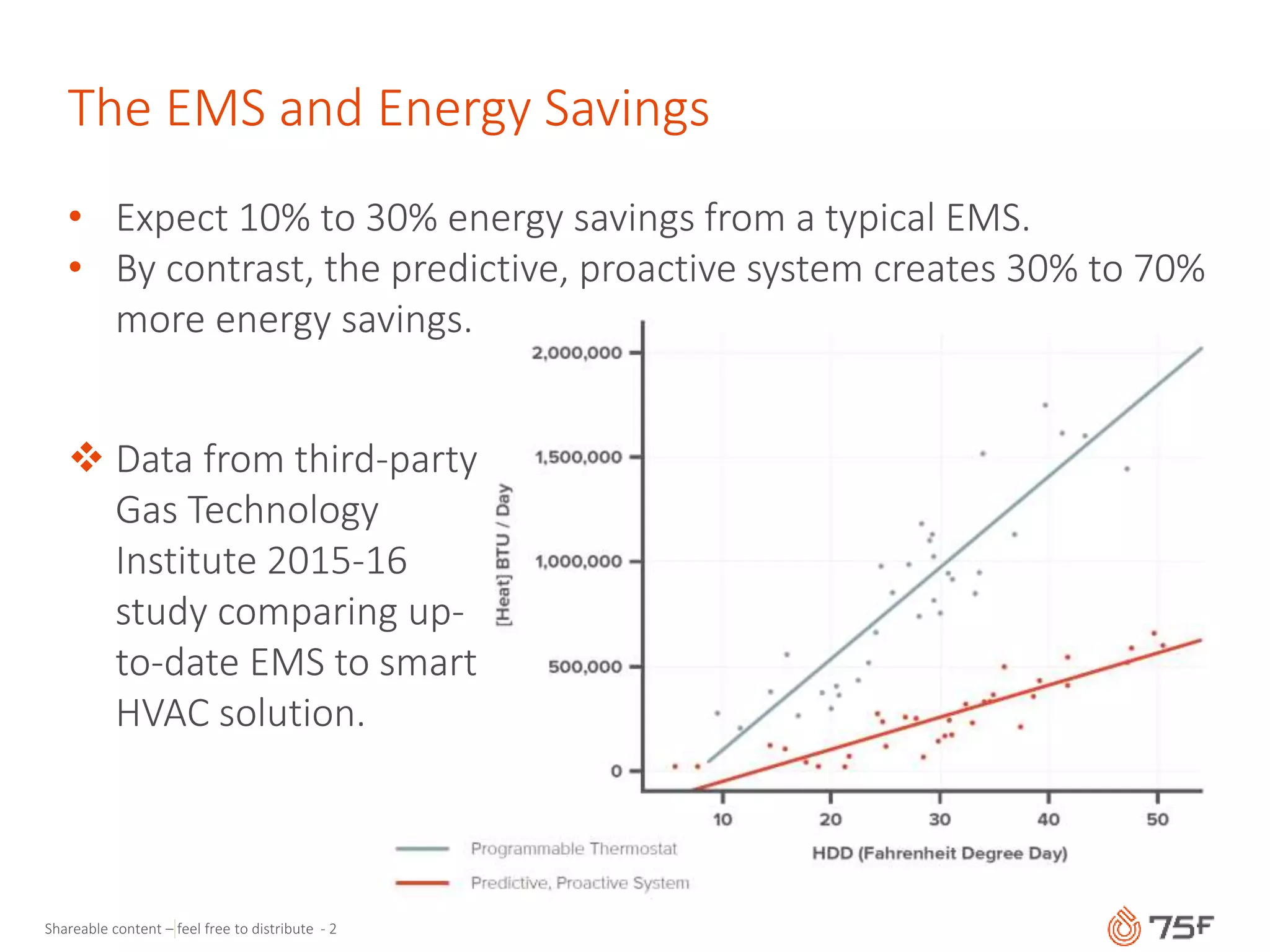
• Expect 10% to 30% energy savings from a typical EMS.
• By contrast, the predictive, proactive system creates 30% to 70%
more energy savings.
 Data from third-party
Gas Technology
Institute 2015-16
study comparing up-
to-date EMS to smart
HVAC solution.
Shareable content – feel free to distribute - 3
The EMS and Cyber Security
• EMS firms leave the bulk of cyber security up to you.
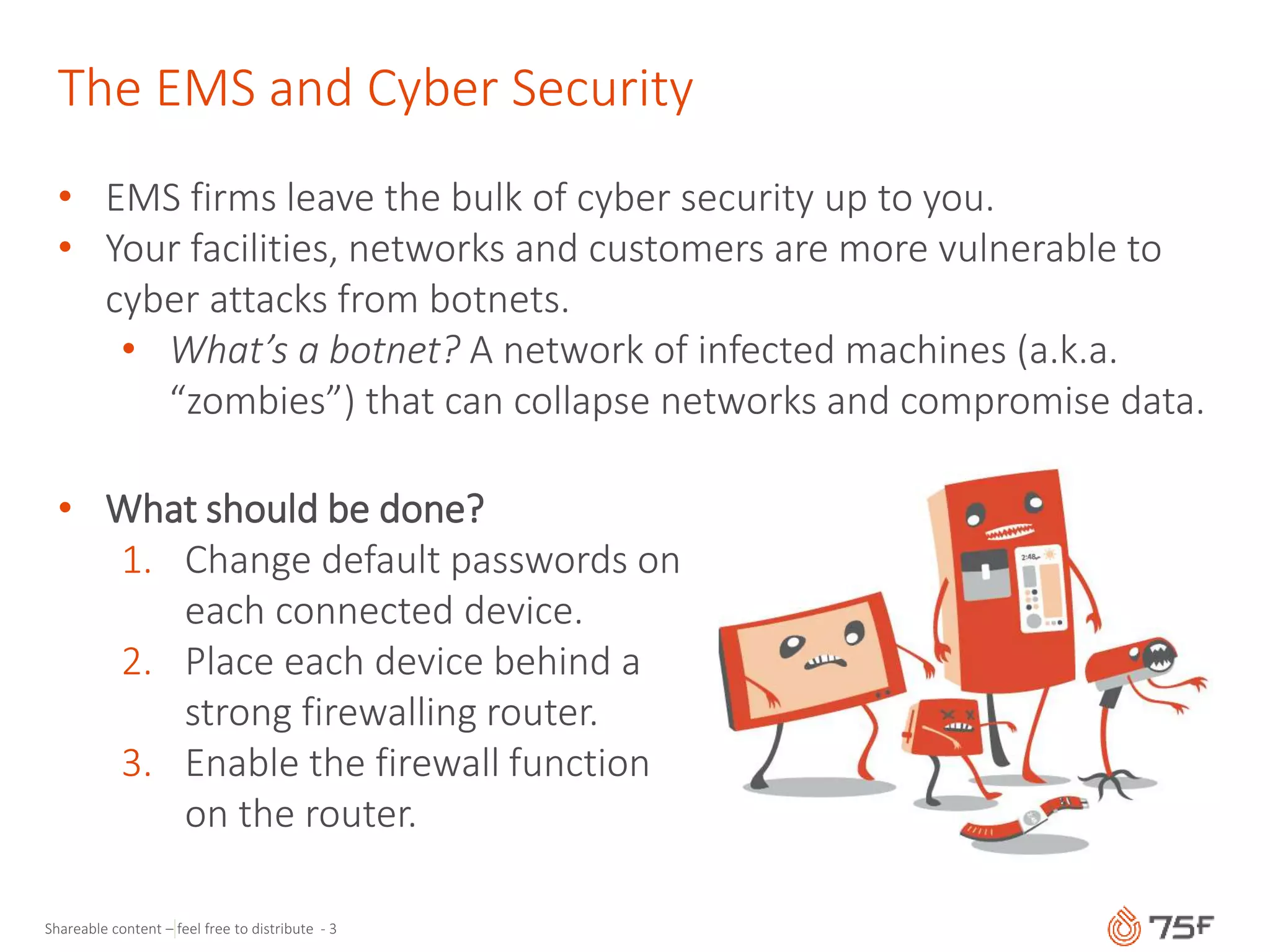
• Your facilities, networks and customers are more vulnerable to
cyber attacks from botnets.
• What’s a botnet? A network of infected machines (a.k.a.
“zombies”) that can collapse networks and compromise data.
• What should be done?
1. Change default passwords on
each connected device.
2. Place each device behind a
strong firewalling router.
3. Enable the firewall function
on the router.
Shareable content – feel free to distribute - 4
The EMS Is Not Predictive or Proactive
• EMS firms haven’t participated in the technology
revolution since 2005… before the first iPhone debuted!
• The EMS doesn’t correlate energy usage to your:
• Building’s geographic orientation
• Building usage patterns
• Local weather (real-time or forecast)
• It doesn’t optimize individual energy consuming pieces of
equipment.
Shareable content – feel free to distribute - 5
What Does the Predictive, Proactive System Do?
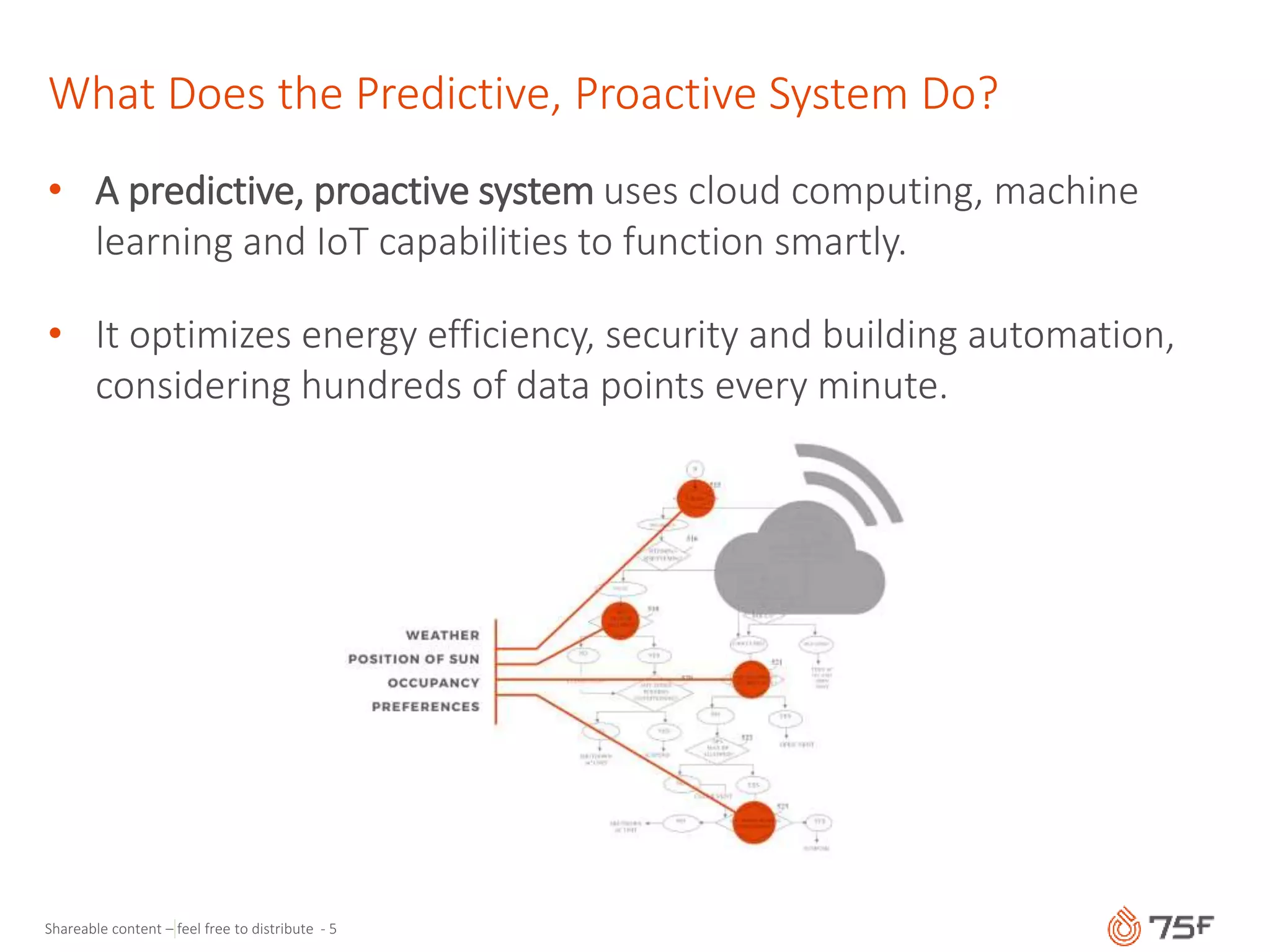
• A predictive, proactive system uses cloud computing, machine
learning and IoT capabilities to function smartly.
• It optimizes energy efficiency, security and building automation,
considering hundreds of data points every minute.
Shareable content – feel free to distribute - 6
The EMS Doesn’t Optimize Indoor Air Quality
• The EMS logs about 4 data points every minute.
The predictive system logs several hundred per minute.
The result? The EMS doesn’t optimize outdoor/indoor airflow or
air quality.
• The predictive system optimizes on the following points:
1. Local weather forecasts & real-time data
2. Building geographic orientation
3. Position of the sun
4. Humidity
5. Mean radiant temperature
6. CO2, CO, VOCs and particulate matter in the air
Shareable content – feel free to distribute - 7
Air Balancing with a Predictive System
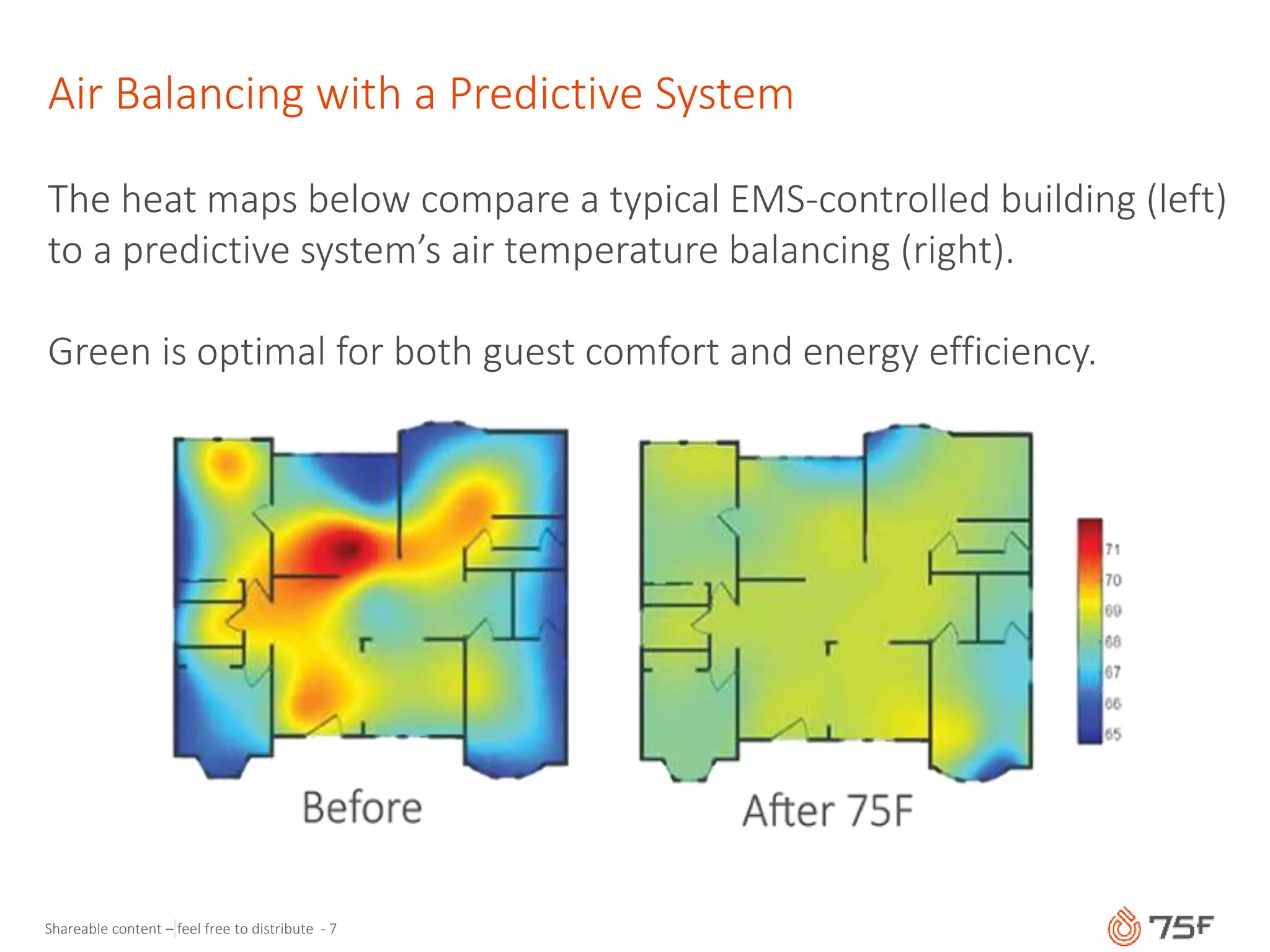
The heat maps below compare a typical EMS-controlled building (left)
to a predictive system’s air temperature balancing (right).
Green is optimal for both guest comfort and energy efficiency.
Shareable content – feel free to distribute - 8
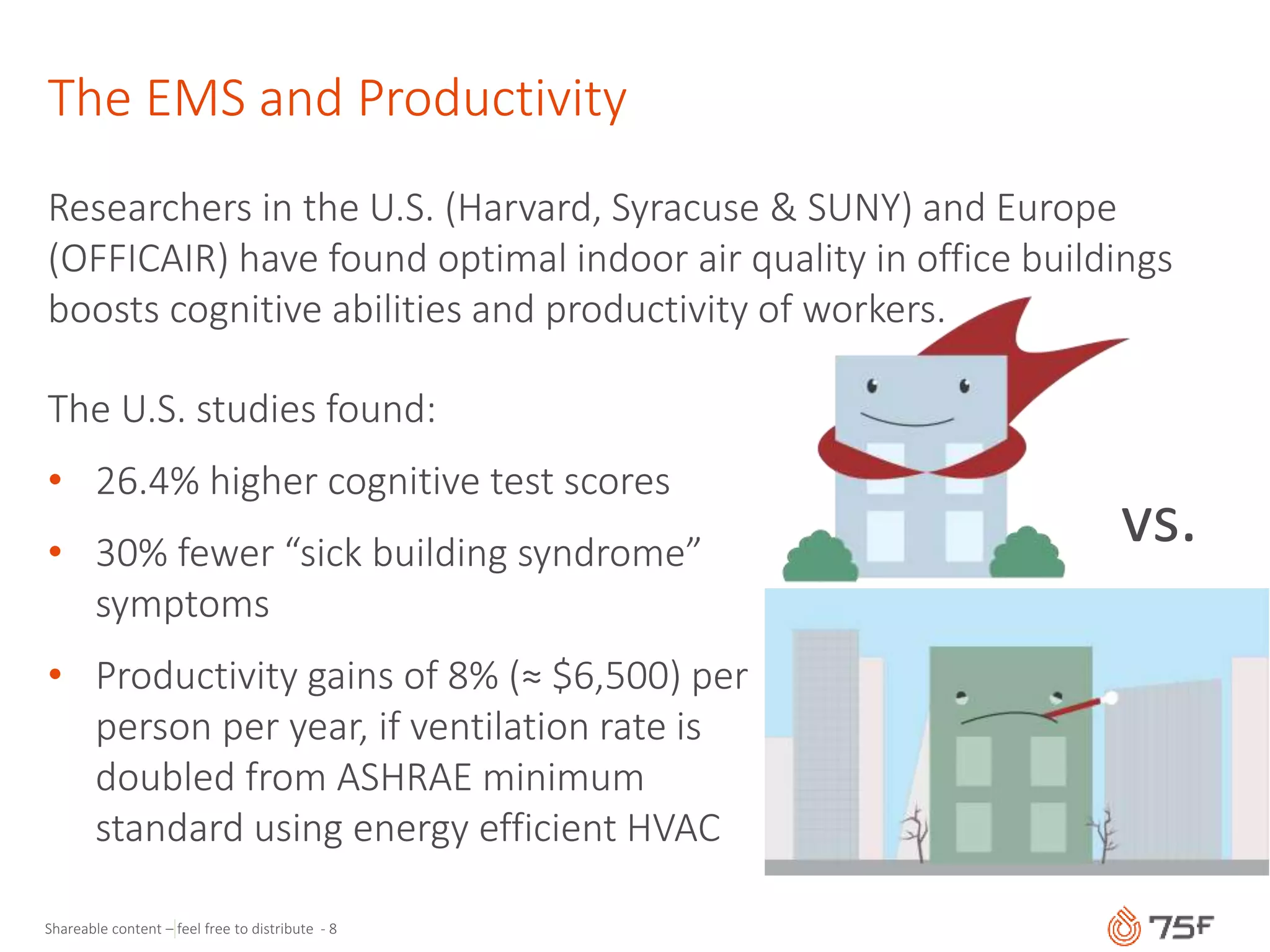
The EMS and Productivity
Researchers in the U.S. (Harvard, Syracuse & SUNY) and Europe
(OFFICAIR) have found optimal indoor air quality in office buildings
boosts cognitive abilities and productivity of workers.
The U.S. studies found:
• 26.4% higher cognitive test scores
• 30% fewer “sick building syndrome”
symptoms
• Productivity gains of 8% (≈ $6,500) per
person per year, if ventilation rate is
doubled from ASHRAE minimum
standard using energy efficient HVAC
vs.

What Do Energy Management Systems Really Cost?

  • 1.
    The Real Costof Energy Management Systems
  • 2.
    Shareable content –feel free to distribute - 1 True Costs of the EMS 1. Insufficient energy savings compared to new technology 2. Cyber security weaknesses 3. Lacks machine learning and predictive capabilities 4. No individual equipment performance insights 5. Inability to optimize airflow and air quality 6. Absenteeism, presenteeism and productivity costs
  • 3.
    Shareable content –feel free to distribute - 2 The EMS and Energy Savings • Expect 10% to 30% energy savings from a typical EMS. • By contrast, the predictive, proactive system creates 30% to 70% more energy savings.  Data from third-party Gas Technology Institute 2015-16 study comparing up- to-date EMS to smart HVAC solution.
  • 4.
    Shareable content –feel free to distribute - 3 The EMS and Cyber Security • EMS firms leave the bulk of cyber security up to you. • Your facilities, networks and customers are more vulnerable to cyber attacks from botnets. • What’s a botnet? A network of infected machines (a.k.a. “zombies”) that can collapse networks and compromise data. • What should be done? 1. Change default passwords on each connected device. 2. Place each device behind a strong firewalling router. 3. Enable the firewall function on the router.
  • 5.
    Shareable content –feel free to distribute - 4 The EMS Is Not Predictive or Proactive • EMS firms haven’t participated in the technology revolution since 2005… before the first iPhone debuted! • The EMS doesn’t correlate energy usage to your: • Building’s geographic orientation • Building usage patterns • Local weather (real-time or forecast) • It doesn’t optimize individual energy consuming pieces of equipment.
  • 6.
    Shareable content –feel free to distribute - 5 What Does the Predictive, Proactive System Do? • A predictive, proactive system uses cloud computing, machine learning and IoT capabilities to function smartly. • It optimizes energy efficiency, security and building automation, considering hundreds of data points every minute.
  • 7.
    Shareable content –feel free to distribute - 6 The EMS Doesn’t Optimize Indoor Air Quality • The EMS logs about 4 data points every minute. The predictive system logs several hundred per minute. The result? The EMS doesn’t optimize outdoor/indoor airflow or air quality. • The predictive system optimizes on the following points: 1. Local weather forecasts & real-time data 2. Building geographic orientation 3. Position of the sun 4. Humidity 5. Mean radiant temperature 6. CO2, CO, VOCs and particulate matter in the air
  • 8.
    Shareable content –feel free to distribute - 7 Air Balancing with a Predictive System The heat maps below compare a typical EMS-controlled building (left) to a predictive system’s air temperature balancing (right). Green is optimal for both guest comfort and energy efficiency.
  • 9.
    Shareable content –feel free to distribute - 8 The EMS and Productivity Researchers in the U.S. (Harvard, Syracuse & SUNY) and Europe (OFFICAIR) have found optimal indoor air quality in office buildings boosts cognitive abilities and productivity of workers. The U.S. studies found: • 26.4% higher cognitive test scores • 30% fewer “sick building syndrome” symptoms • Productivity gains of 8% (≈ $6,500) per person per year, if ventilation rate is doubled from ASHRAE minimum standard using energy efficient HVAC vs.