What to consider when integrating
energy into Facilities Management
Dean Noden, UK Sales Manager
eSight Energy Ltd
• Up to 50% of a Facilities Management budget is spent on energy
• Public awareness of energy management is at an all time high, and at the top of company
agendas
• New legislation such as ESOS, and standards including ISO 50001, are forcing the issue
• Pressure on FM professionals to improve building and asset performance
Why is energy important in Facilities Management?
• Open new investment opportunities within your organisation
• Increase in employment and/or consultancy with demand for energy services
• Achieve significant savings for clients, or for your organisation
Energy Opportunities
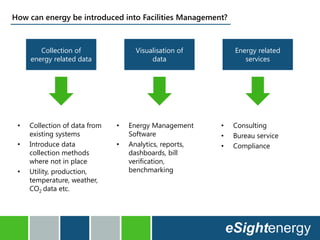
• Collection of data from
existing systems
• Introduce data
collection methods
where not in place
• Utility, production,
temperature, weather,
CO2 data etc.
How can energy be introduced into Facilities Management?
Collection of
energy related data
Visualisation of
data
Energy related
services
• Energy Management
Software
• Analytics, reports,
dashboards, bill
verification,
benchmarking
• Consulting
• Bureau service
• Compliance
What to consider when choosing an
Energy Management software?
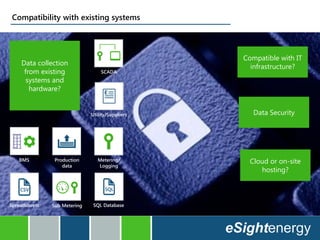
Compatibility with existing systems
Cloud or on-site
hosting?
Data Security
Compatible with IT
infrastructure?Data collection
from existing
systems and
hardware?
SCADA
Utility/Suppliers
BMS Production
data
Metering/
Logging
Spreadsheets Sub Metering SQL Database
Futureproofing
Is it scalable &
modular?
Can you add users
and functionality?
Can it grow with
your business?
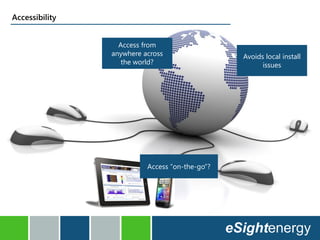
Accessibility
Access from
anywhere across
the world?
Access “on-the-go”?
Avoids local install
issues
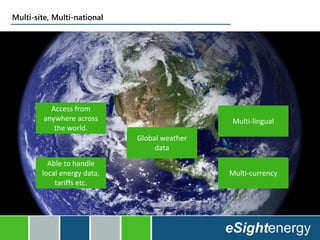
Multi-site, Multi-national
Access from
anywhere across
the world.
Multi-lingual
Multi-currency
Able to handle
local energy data,
tariffs etc.
Global weather
data
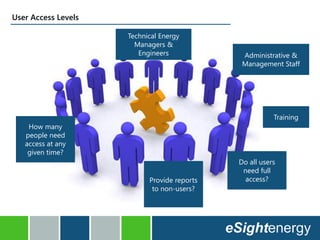
User Access Levels
Do all users
need full
access?
Administrative &
Management Staff
Technical Energy
Managers &
Engineers
How many
people need
access at any
given time?
Training
Provide reports
to non-users?
Reporting, legislation
Monitor user-defined
consumption of any
sustainability factor
Produce reports,
budgets & targets
for annual CSR
policy review
Evidence for
standards &
legislation including
ESOS, ISO 50001
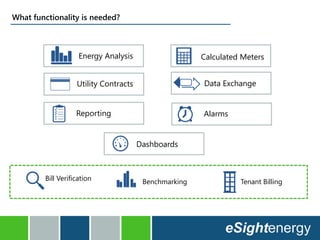
What functionality is needed?
Energy Analysis
Utility Contracts
Reporting
Benchmarking
Alarms
Bill Verification Tenant Billing
Calculated Meters
Data Exchange
Dashboards
Using Energy Management Software to
make savings
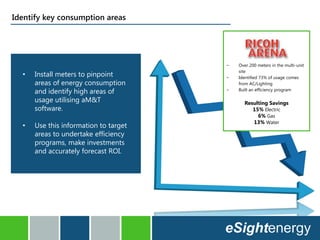
• Install meters to pinpoint
areas of energy consumption
and identify high areas of
usage utilising aM&T
software.
• Use this information to target
areas to undertake efficiency
programs, make investments
and accurately forecast ROI.
- Over 200 meters in the multi-unit
site
- Identified 73% of usage comes
from AC/Lighting
- Built an efficiency program
Resulting Savings
15% Electric
6% Gas
13% Water
Identify key consumption areas
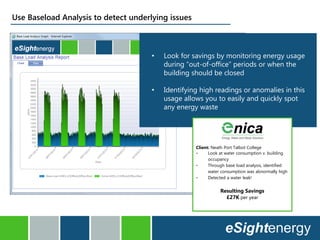
• Look for savings by monitoring energy usage
during “out-of-office” periods or when the
building should be closed
• Identifying high readings or anomalies in this
usage allows you to easily and quickly spot
any energy waste
Client: Neath Port Talbot College
- Look at water consumption v. building
occupancy
- Through base load analysis, identified
water consumption was abnormally high
- Detected a water leak!
Resulting Savings
£27K per year
Use Baseload Analysis to detect underlying issues
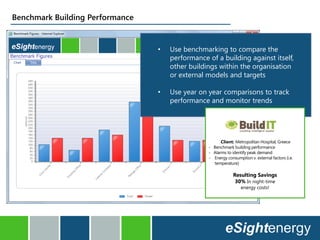
• Use benchmarking to compare the
performance of a building against itself,
other buildings within the organisation
or external models and targets
• Use year on year comparisons to track
performance and monitor trends
Client: Metropolitan Hospital, Greece
- Benchmark building performance
- Alarms to identify peak demand
- Energy consumption v. external factors (i.e.
temperature)
Resulting Savings
30% In night-time
energy costs!
Benchmark Building Performance
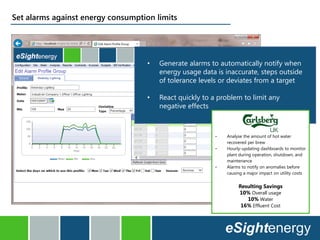
• Generate alarms to automatically notify when
energy usage data is inaccurate, steps outside
of tolerance levels or deviates from a target
• React quickly to a problem to limit any
negative effects
- Analyse the amount of hot water
recovered per brew
- Hourly-updating dashboards to monitor
plant during operation, shutdown, and
maintenance
- Alarms to notify on anomalies before
causing a major impact on utility costs
Resulting Savings
10% Overall usage
10% Water
16% Effluent Cost
Set alarms against energy consumption limits
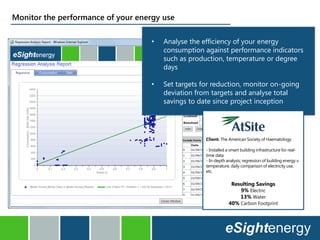
• Analyse the efficiency of your energy
consumption against performance indicators
such as production, temperature or degree
days
• Set targets for reduction, monitor on-going
deviation from targets and analyse total
savings to date since project inception
Client: The American Society of Haematology
- Installed a smart building infrastructure for real-
time data
- In-depth analysis; regression of building energy v.
temperature, daily comparison of electricity use,
etc.
Resulting Savings
9% Electric
13% Water
40% Carbon Footprint
Monitor the performance of your energy use
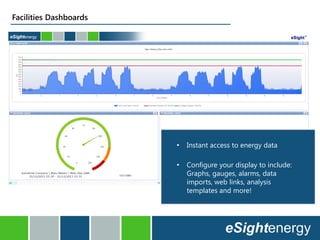
• Instant access to energy data
• Configure your display to include:
Graphs, gauges, alarms, data
imports, web links, analysis
templates and more!
Facilities Dashboards
When integrating energy into
Facilities Management, consider:
• Accessibility
• Global compatibility
• Scalability
• Flexibility
• The Future
Top tips to make energy savings:
• Identify key consumption
• Use baseload analysis to detect
issues
• Benchmark building performance
• Set alarms against consumption
limits
• Monitor the performance of your
energy use
Summary
eSight’s robustness and ease of deployment make it an essential tool for Facilities
Managers with an Energy Focus to manage their estates.”
Darren Davies - Energy Intelligence Lead, COFELY - IES Energy Intelligence
Thank you

What to consider when integrating energy into Facilities Management

  • 1.
    What to considerwhen integrating energy into Facilities Management Dean Noden, UK Sales Manager eSight Energy Ltd
  • 2.
    • Up to50% of a Facilities Management budget is spent on energy • Public awareness of energy management is at an all time high, and at the top of company agendas • New legislation such as ESOS, and standards including ISO 50001, are forcing the issue • Pressure on FM professionals to improve building and asset performance Why is energy important in Facilities Management?
  • 3.
    • Open newinvestment opportunities within your organisation • Increase in employment and/or consultancy with demand for energy services • Achieve significant savings for clients, or for your organisation Energy Opportunities
  • 4.
    • Collection ofdata from existing systems • Introduce data collection methods where not in place • Utility, production, temperature, weather, CO2 data etc. How can energy be introduced into Facilities Management? Collection of energy related data Visualisation of data Energy related services • Energy Management Software • Analytics, reports, dashboards, bill verification, benchmarking • Consulting • Bureau service • Compliance
  • 5.
    What to considerwhen choosing an Energy Management software?
  • 6.
    Compatibility with existingsystems Cloud or on-site hosting? Data Security Compatible with IT infrastructure?Data collection from existing systems and hardware? SCADA Utility/Suppliers BMS Production data Metering/ Logging Spreadsheets Sub Metering SQL Database
  • 7.
    Futureproofing Is it scalable& modular? Can you add users and functionality? Can it grow with your business?
  • 8.
    Accessibility Access from anywhere across theworld? Access “on-the-go”? Avoids local install issues
  • 9.
    Multi-site, Multi-national Access from anywhereacross the world. Multi-lingual Multi-currency Able to handle local energy data, tariffs etc. Global weather data
  • 10.
    User Access Levels Doall users need full access? Administrative & Management Staff Technical Energy Managers & Engineers How many people need access at any given time? Training Provide reports to non-users?
  • 11.
    Reporting, legislation Monitor user-defined consumptionof any sustainability factor Produce reports, budgets & targets for annual CSR policy review Evidence for standards & legislation including ESOS, ISO 50001
  • 12.
    What functionality isneeded? Energy Analysis Utility Contracts Reporting Benchmarking Alarms Bill Verification Tenant Billing Calculated Meters Data Exchange Dashboards
  • 13.
    Using Energy ManagementSoftware to make savings
  • 14.
    • Install metersto pinpoint areas of energy consumption and identify high areas of usage utilising aM&T software. • Use this information to target areas to undertake efficiency programs, make investments and accurately forecast ROI. - Over 200 meters in the multi-unit site - Identified 73% of usage comes from AC/Lighting - Built an efficiency program Resulting Savings 15% Electric 6% Gas 13% Water Identify key consumption areas
  • 15.
    • Look forsavings by monitoring energy usage during “out-of-office” periods or when the building should be closed • Identifying high readings or anomalies in this usage allows you to easily and quickly spot any energy waste Client: Neath Port Talbot College - Look at water consumption v. building occupancy - Through base load analysis, identified water consumption was abnormally high - Detected a water leak! Resulting Savings £27K per year Use Baseload Analysis to detect underlying issues
  • 16.
    • Use benchmarkingto compare the performance of a building against itself, other buildings within the organisation or external models and targets • Use year on year comparisons to track performance and monitor trends Client: Metropolitan Hospital, Greece - Benchmark building performance - Alarms to identify peak demand - Energy consumption v. external factors (i.e. temperature) Resulting Savings 30% In night-time energy costs! Benchmark Building Performance
  • 17.
    • Generate alarmsto automatically notify when energy usage data is inaccurate, steps outside of tolerance levels or deviates from a target • React quickly to a problem to limit any negative effects - Analyse the amount of hot water recovered per brew - Hourly-updating dashboards to monitor plant during operation, shutdown, and maintenance - Alarms to notify on anomalies before causing a major impact on utility costs Resulting Savings 10% Overall usage 10% Water 16% Effluent Cost Set alarms against energy consumption limits
  • 18.
    • Analyse theefficiency of your energy consumption against performance indicators such as production, temperature or degree days • Set targets for reduction, monitor on-going deviation from targets and analyse total savings to date since project inception Client: The American Society of Haematology - Installed a smart building infrastructure for real- time data - In-depth analysis; regression of building energy v. temperature, daily comparison of electricity use, etc. Resulting Savings 9% Electric 13% Water 40% Carbon Footprint Monitor the performance of your energy use
  • 19.
    • Instant accessto energy data • Configure your display to include: Graphs, gauges, alarms, data imports, web links, analysis templates and more! Facilities Dashboards
  • 20.
    When integrating energyinto Facilities Management, consider: • Accessibility • Global compatibility • Scalability • Flexibility • The Future Top tips to make energy savings: • Identify key consumption • Use baseload analysis to detect issues • Benchmark building performance • Set alarms against consumption limits • Monitor the performance of your energy use Summary eSight’s robustness and ease of deployment make it an essential tool for Facilities Managers with an Energy Focus to manage their estates.” Darren Davies - Energy Intelligence Lead, COFELY - IES Energy Intelligence
  • 21.