WEST:
  ADVANCING
   WOMEN IN
STEM CAREERS

               Ilene Fischer
               29 March 2012


                               1
WEST:
Foundation and
Background
Information


                 2
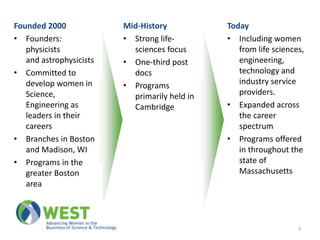
Founded 2000             Mid-History           Today
• Founders:              • Strong life-        • Including women
   physicists              sciences focus         from life sciences,
   and astrophysicists   • One-third post         engineering,
• Committed to             docs                   technology and
   develop women in      • Programs               industry service
   Science,                primarily held in      providers.
   Engineering as          Cambridge           • Expanded across
   leaders in their                               the career
   careers                                        spectrum
• Branches in Boston                           • Programs offered
   and Madison, WI                                in throughout the
• Programs in the                                 state of
   greater Boston                                 Massachusetts
   area


                                                                   3
WEST’s vision is to promote, advance, and
develop women in Science, Engineering,
  and Technology as leaders, advocates,
 C-level executives, and thought leaders;
 that make a profound difference in the
         communities they serve.


                                            4
About WEST

 WEST is a community, a forum, for early,
  mid-career, executive and entrepreneurial
  women in STEM careers.
 WEST members are committed to
  developing themselves as leaders through
  education, mentorship, networking, and
  information sharing.
 WEST encourages women to cultivate
  entrepreneurial thinking and creative risk-
  taking.

                                                5
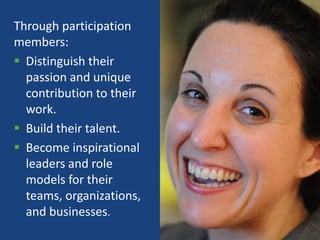
Through participation
members:
 Distinguish their
  passion and unique
  contribution to their
  work.
 Build their talent.
 Become inspirational
  leaders and role
  models for their
  teams, organizations,
  and businesses.
                          6
“Profession without
 passion is just a job.”
Anne Mulcahy, Former CEO of Xerox, Inc.


                                          7
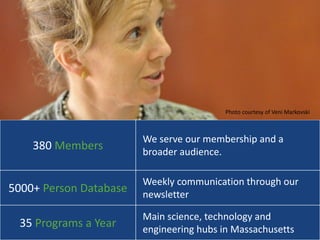
Photo courtesy of Veni Markovski


                        We serve our membership and a
    380 Members         broader audience.

                        Weekly communication through our
5000+ Person Database   newsletter

                        Main science, technology and
 35 Programs a Year     engineering hubs in Massachusetts            8
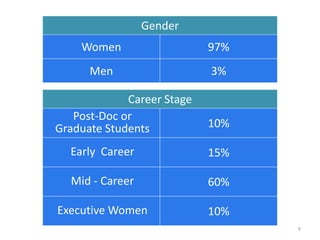
Gender
    Women                   97%
      Men                   3%

             Career Stage
   Post-Doc or
Graduate Students           10%

  Early Career              15%

  Mid - Career              60%

Executive Women             10%
                                  9
10
WEST’s Model For
Successful Women
     In STEM       11
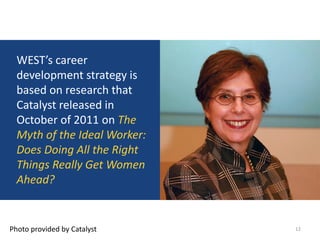
WEST’s career
  development strategy is
  based on research that
  Catalyst released in
  October of 2011 on The
  Myth of the Ideal Worker:
  Does Doing All the Right
  Things Really Get Women
  Ahead?


Photo provided by Catalyst    12
If men and women follow the same
  career advancement strategy, do
     they get the same results?


 No. Women advance less rapidly
 than their male counterparts and
     have slower pay growth.
                                    13
Findings From The Study

 Four areas for women to focus on
  to ensure success in their careers:
   Performance
   Visibility
   Leadership Experience
   Sponsorship


                                        14
Catalyst Research is reinforced by the
findings of the Harvard Business School:
 The Athena Factor: Why women leave
 their STEM careers, along with Studies
   on Success for Women by the Anita
              Borg Institute.


                                           15
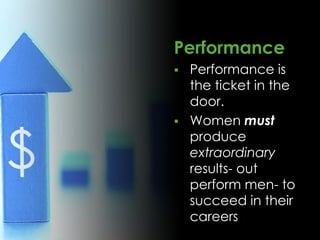
Performance
 Performance is
  the ticket in the
  door.
 Women must
  produce
  extraordinary
  results- out
  perform men- to
  succeed in their
  careers
Visibility
 On work
  assignments
 With senior
  executives
 For achievement
 In industry
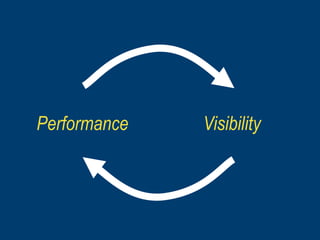
Performance   Visibility
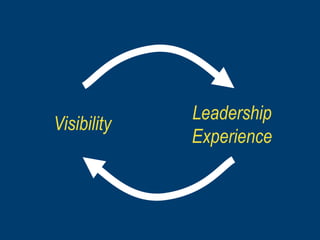
Leadership
 Experience
   Women need to be
    developed as
    leaders
   They need to have
    leadership
    experiences that
    enhance their
    visibility.
Leadership
Visibility
             Experience
Sponsorship
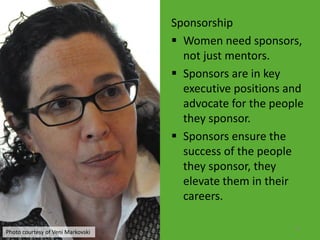
                                    Women need sponsors,
                                     not just mentors.
                                    Sponsors are in key
                                     executive positions and
                                     advocate for the people
                                     they sponsor.
                                    Sponsors ensure the
                                     success of the people
                                     they sponsor, they
                                     elevate them in their
                                     careers.

                                                          21
Photo courtesy of Veni Markovski
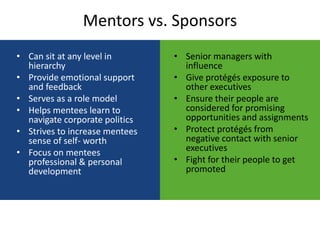
Mentors vs. Sponsors
• Can sit at any level in       • Senior managers with
  hierarchy                       influence
• Provide emotional support     • Give protégés exposure to
  and feedback                    other executives
• Serves as a role model        • Ensure their people are
• Helps mentees learn to          considered for promising
  navigate corporate politics     opportunities and assignments
• Strives to increase mentees   • Protect protégés from
  sense of self- worth            negative contact with senior
• Focus on mentees                executives
  professional & personal       • Fight for their people to get
  development                     promoted
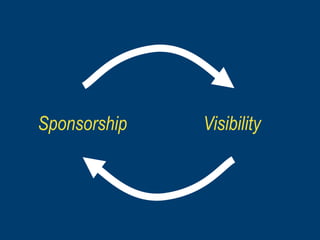
Sponsorship   Visibility
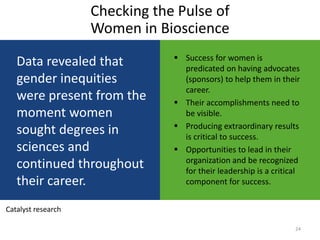
Checking the Pulse of
                    Women in Bioscience
                                 Success for women is
   Data revealed that             predicated on having advocates
   gender inequities              (sponsors) to help them in their
                                  career.
   were present from the         Their accomplishments need to
   moment women                   be visible.
                                 Producing extraordinary results
   sought degrees in              is critical to success.
   sciences and                  Opportunities to lead in their
                                  organization and be recognized
   continued throughout           for their leadership is a critical
   their career.                  component for success.


Catalyst research

                                                                  24
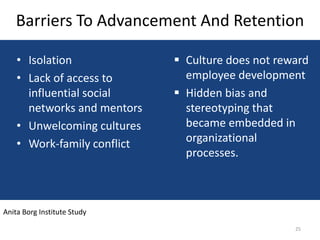
Barriers To Advancement And Retention

    • Isolation               Culture does not reward
    • Lack of access to        employee development
      influential social      Hidden bias and
      networks and mentors     stereotyping that
    • Unwelcoming cultures     became embedded in
    • Work-family conflict     organizational
                               processes.


Anita Borg Institute Study

                                                   25
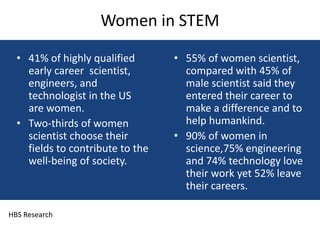
Women in STEM

  • 41% of highly qualified       • 55% of women scientist,
    early career scientist,         compared with 45% of
    engineers, and                  male scientist said they
    technologist in the US          entered their career to
    are women.                      make a difference and to
  • Two-thirds of women             help humankind.
    scientist choose their        • 90% of women in
    fields to contribute to the     science,75% engineering
    well-being of society.          and 74% technology love
                                    their work yet 52% leave
                                    their careers.

HBS Research
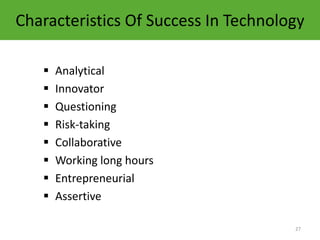
Characteristics Of Success In Technology

      Analytical
      Innovator
      Questioning
      Risk-taking
      Collaborative
      Working long hours
      Entrepreneurial
      Assertive

                                      27
Women in STEM have had to overcome
significant cultural hurdles to be able to
realize their commitment to making a
difference. We must find ways to create
environments for Women in STEM to succeed.


                                             28
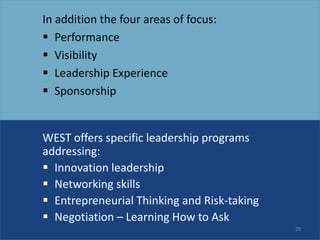
In addition the four areas of focus:
 Performance
 Visibility
 Leadership Experience
 Sponsorship


WEST offers specific leadership programs
addressing:
 Innovation leadership
 Networking skills
 Entrepreneurial Thinking and Risk-taking
 Negotiation – Learning How to Ask
                                             29
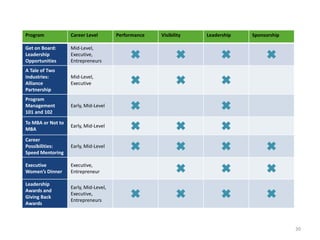
Program            Career Level        Performance   Visibility   Leadership   Sponsorship

Get on Board:      Mid-Level,
Leadership
Opportunities
                   Executive,
                   Entrepreneurs
                                            ✖              ✖           ✖            ✖
A Tale of Two
Industries:
Alliance
                   Mid-Level,
                   Executive                ✖              ✖           ✖
Partnership
Program
Management
101 and 102
                   Early, Mid-Level         ✖                          ✖
To MBA or Not to
MBA
                   Early, Mid-Level         ✖              ✖           ✖
Career
Possibilities:
Speed Mentoring
                   Early, Mid-Level         ✖              ✖           ✖            ✖
Executive
Women’s Dinner
                   Executive,
                   Entrepreneur                            ✖           ✖            ✖
Leadership
                   Early, Mid-Level,
Awards and
Giving Back
                   Executive,
                   Entrepreneurs
                                            ✖              ✖           ✖            ✖
Awards


                                                                                             30
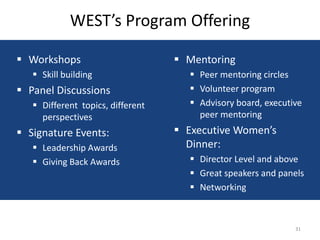
WEST’s Program Offering

 Workshops                         Mentoring
    Skill building                   Peer mentoring circles
 Panel Discussions                   Volunteer program
    Different topics, different      Advisory board, executive
     perspectives                      peer mentoring
 Signature Events:                 Executive Women’s
    Leadership Awards               Dinner:
    Giving Back Awards               Director Level and above
                                      Great speakers and panels
                                      Networking


                                                              31
32
Women on Boards
                  33
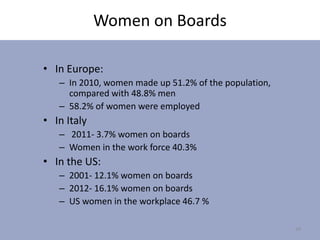
Women on Boards

• In Europe:
   – In 2010, women made up 51.2% of the population,
     compared with 48.8% men
   – 58.2% of women were employed
• In Italy
   – 2011- 3.7% women on boards
   – Women in the work force 40.3%
• In the US:
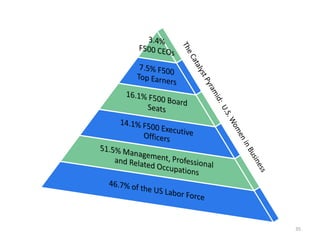
   – 2001- 12.1% women on boards
   – 2012- 16.1% women on boards
   – US women in the workplace 46.7 %

                                                       34
35
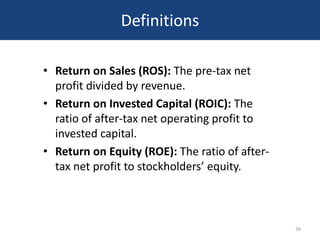
Definitions

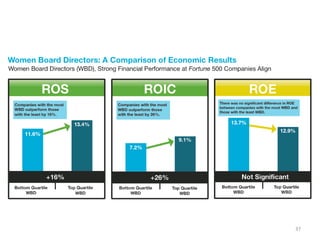
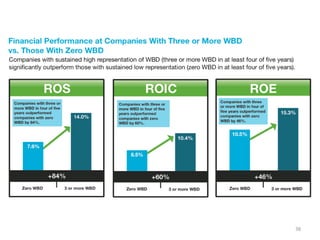
• Return on Sales (ROS): The pre-tax net
  profit divided by revenue.
• Return on Invested Capital (ROIC): The
  ratio of after-tax net operating profit to
  invested capital.
• Return on Equity (ROE): The ratio of after-
  tax net profit to stockholders’ equity.


                                                36
37
38
How can WEST support
      you Italy?


                       39
Bibliography

Catalyst Research:
The Myth of the Ideal Worker: Does Doing All
The Right Things Really Get Women Ahead?
Author: Nancy M. Carter and Christine Silva
Published: October 2011
Checking the Pulse of Women in Bioscience:
What Organizations Need to Know
Author: Anika K. Warren
Published: August 2011

                                               40
Bibliography

Anita Borg Institute Research
Senior Technical Women: A Profile of Success
Authors: Caroline Simard, Phd Shannon K. Gilmartin, Phd
Published: 2010

Harvard Business School Research
The Athena Factor : Reversing the Brain Drain
in Science, Engineering, and Technology
Authors: Sylvia Ann Hewlett, Carolyn Buck Luce, Lisa J.
Servon,Laura Sherbin, Peggy Shiller, Eytan Sosnovich, and
Karen Sumberg
Published: June 2008


                                                            41
42

West women in stem

  • 1.
    WEST: ADVANCING WOMEN IN STEM CAREERS Ilene Fischer 29 March 2012 1
  • 2.
  • 3.
    Founded 2000 Mid-History Today • Founders: • Strong life- • Including women physicists sciences focus from life sciences, and astrophysicists • One-third post engineering, • Committed to docs technology and develop women in • Programs industry service Science, primarily held in providers. Engineering as Cambridge • Expanded across leaders in their the career careers spectrum • Branches in Boston • Programs offered and Madison, WI in throughout the • Programs in the state of greater Boston Massachusetts area 3
  • 4.
    WEST’s vision isto promote, advance, and develop women in Science, Engineering, and Technology as leaders, advocates, C-level executives, and thought leaders; that make a profound difference in the communities they serve. 4
  • 5.
    About WEST  WESTis a community, a forum, for early, mid-career, executive and entrepreneurial women in STEM careers.  WEST members are committed to developing themselves as leaders through education, mentorship, networking, and information sharing.  WEST encourages women to cultivate entrepreneurial thinking and creative risk- taking. 5
  • 6.
    Through participation members:  Distinguishtheir passion and unique contribution to their work.  Build their talent.  Become inspirational leaders and role models for their teams, organizations, and businesses. 6
  • 7.
    “Profession without passionis just a job.” Anne Mulcahy, Former CEO of Xerox, Inc. 7
  • 8.
    Photo courtesy ofVeni Markovski We serve our membership and a 380 Members broader audience. Weekly communication through our 5000+ Person Database newsletter Main science, technology and 35 Programs a Year engineering hubs in Massachusetts 8
  • 9.
    Gender Women 97% Men 3% Career Stage Post-Doc or Graduate Students 10% Early Career 15% Mid - Career 60% Executive Women 10% 9
  • 10.
  • 11.
  • 12.
    WEST’s career development strategy is based on research that Catalyst released in October of 2011 on The Myth of the Ideal Worker: Does Doing All the Right Things Really Get Women Ahead? Photo provided by Catalyst 12
  • 13.
    If men andwomen follow the same career advancement strategy, do they get the same results? No. Women advance less rapidly than their male counterparts and have slower pay growth. 13
  • 14.
    Findings From TheStudy  Four areas for women to focus on to ensure success in their careers:  Performance  Visibility  Leadership Experience  Sponsorship 14
  • 15.
    Catalyst Research isreinforced by the findings of the Harvard Business School: The Athena Factor: Why women leave their STEM careers, along with Studies on Success for Women by the Anita Borg Institute. 15
  • 16.
    Performance  Performance is the ticket in the door.  Women must produce extraordinary results- out perform men- to succeed in their careers
  • 17.
    Visibility  On work assignments  With senior executives  For achievement  In industry
  • 18.
    Performance Visibility
  • 19.
    Leadership Experience  Women need to be developed as leaders  They need to have leadership experiences that enhance their visibility.
  • 20.
  • 21.
    Sponsorship  Women need sponsors, not just mentors.  Sponsors are in key executive positions and advocate for the people they sponsor.  Sponsors ensure the success of the people they sponsor, they elevate them in their careers. 21 Photo courtesy of Veni Markovski
  • 22.
    Mentors vs. Sponsors •Can sit at any level in • Senior managers with hierarchy influence • Provide emotional support • Give protégés exposure to and feedback other executives • Serves as a role model • Ensure their people are • Helps mentees learn to considered for promising navigate corporate politics opportunities and assignments • Strives to increase mentees • Protect protégés from sense of self- worth negative contact with senior • Focus on mentees executives professional & personal • Fight for their people to get development promoted
  • 23.
    Sponsorship Visibility
  • 24.
    Checking the Pulseof Women in Bioscience  Success for women is Data revealed that predicated on having advocates gender inequities (sponsors) to help them in their career. were present from the  Their accomplishments need to moment women be visible.  Producing extraordinary results sought degrees in is critical to success. sciences and  Opportunities to lead in their organization and be recognized continued throughout for their leadership is a critical their career. component for success. Catalyst research 24
  • 25.
    Barriers To AdvancementAnd Retention • Isolation  Culture does not reward • Lack of access to employee development influential social  Hidden bias and networks and mentors stereotyping that • Unwelcoming cultures became embedded in • Work-family conflict organizational processes. Anita Borg Institute Study 25
  • 26.
    Women in STEM • 41% of highly qualified • 55% of women scientist, early career scientist, compared with 45% of engineers, and male scientist said they technologist in the US entered their career to are women. make a difference and to • Two-thirds of women help humankind. scientist choose their • 90% of women in fields to contribute to the science,75% engineering well-being of society. and 74% technology love their work yet 52% leave their careers. HBS Research
  • 27.
    Characteristics Of SuccessIn Technology  Analytical  Innovator  Questioning  Risk-taking  Collaborative  Working long hours  Entrepreneurial  Assertive 27
  • 28.
    Women in STEMhave had to overcome significant cultural hurdles to be able to realize their commitment to making a difference. We must find ways to create environments for Women in STEM to succeed. 28
  • 29.
    In addition thefour areas of focus:  Performance  Visibility  Leadership Experience  Sponsorship WEST offers specific leadership programs addressing:  Innovation leadership  Networking skills  Entrepreneurial Thinking and Risk-taking  Negotiation – Learning How to Ask 29
  • 30.
    Program Career Level Performance Visibility Leadership Sponsorship Get on Board: Mid-Level, Leadership Opportunities Executive, Entrepreneurs ✖ ✖ ✖ ✖ A Tale of Two Industries: Alliance Mid-Level, Executive ✖ ✖ ✖ Partnership Program Management 101 and 102 Early, Mid-Level ✖ ✖ To MBA or Not to MBA Early, Mid-Level ✖ ✖ ✖ Career Possibilities: Speed Mentoring Early, Mid-Level ✖ ✖ ✖ ✖ Executive Women’s Dinner Executive, Entrepreneur ✖ ✖ ✖ Leadership Early, Mid-Level, Awards and Giving Back Executive, Entrepreneurs ✖ ✖ ✖ ✖ Awards 30
  • 31.
    WEST’s Program Offering Workshops  Mentoring  Skill building  Peer mentoring circles  Panel Discussions  Volunteer program  Different topics, different  Advisory board, executive perspectives peer mentoring  Signature Events:  Executive Women’s  Leadership Awards Dinner:  Giving Back Awards  Director Level and above  Great speakers and panels  Networking 31
  • 32.
  • 33.
  • 34.
    Women on Boards •In Europe: – In 2010, women made up 51.2% of the population, compared with 48.8% men – 58.2% of women were employed • In Italy – 2011- 3.7% women on boards – Women in the work force 40.3% • In the US: – 2001- 12.1% women on boards – 2012- 16.1% women on boards – US women in the workplace 46.7 % 34
  • 35.
  • 36.
    Definitions • Return onSales (ROS): The pre-tax net profit divided by revenue. • Return on Invested Capital (ROIC): The ratio of after-tax net operating profit to invested capital. • Return on Equity (ROE): The ratio of after- tax net profit to stockholders’ equity. 36
  • 37.
  • 38.
  • 39.
    How can WESTsupport you Italy? 39
  • 40.
    Bibliography Catalyst Research: The Mythof the Ideal Worker: Does Doing All The Right Things Really Get Women Ahead? Author: Nancy M. Carter and Christine Silva Published: October 2011 Checking the Pulse of Women in Bioscience: What Organizations Need to Know Author: Anika K. Warren Published: August 2011 40
  • 41.
    Bibliography Anita Borg InstituteResearch Senior Technical Women: A Profile of Success Authors: Caroline Simard, Phd Shannon K. Gilmartin, Phd Published: 2010 Harvard Business School Research The Athena Factor : Reversing the Brain Drain in Science, Engineering, and Technology Authors: Sylvia Ann Hewlett, Carolyn Buck Luce, Lisa J. Servon,Laura Sherbin, Peggy Shiller, Eytan Sosnovich, and Karen Sumberg Published: June 2008 41
  • 42.