Wellness
Programs
Successful Wellness
Marketing (2 of 5)


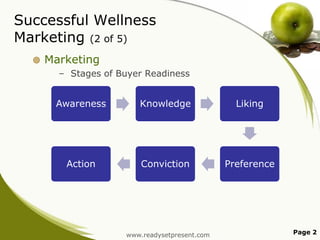
Marketing
– Stages of Buyer Readiness

Awareness

Knowledge

Liking

Action

Conviction

Preference

www.readysetpresent.com

Page 2
Objectives

(1 of 2)



Establish the significance of wellness
programs.



Educate employers about the
significance of productivity and the
costs of its loss due to illness with a
lack of physical health.



Show the steps needed to
implement and maintain a successful
wellness program.
www.readysetpresent.com

Page 3
Objectives

(2 of 2)



Establish methods for testing the
success of a wellness program.



Assess strategies for finding out
which wellness programs are most
effective for different work
environments.

www.readysetpresent.com

Page 4
Definition


Wellness:
– The state of being in good
emotional, physical and mental
health.

www.readysetpresent.com

Page 5
Costs of Health Conditions

(1 of 3)

44% of non-institutionalized
Americans have chronic health
conditions.
 These people account for 78% of
health care costs in the United
States.
 Obesity costs the United States
economy approximately $117 billion
per year.


Adapted
From:
“Benefits,” by
Dr. Jeanne
Michalski

www.readysetpresent.com

Page 6
Benefits of Wellness
Programs (2 of 5)


Tangible Benefits:
– Increased productivity
– Reduced worker’s compensation
– Reduced absenteeism
– Increased employee retention
• Lower turnover: reduced costs
from recruiting and training new
employees

www.readysetpresent.com

Page 7
Health Benefits


(1 of 6)

Wellness programs can benefit
employees by helping them to:
– Improve the cardiovascular system.
– Maintain muscle tone.

– Develop strength and endurance.
– Improve muscular flexibility.

www.readysetpresent.com

Page 8
Important Components

(1 of 4)



Employee assessments: Determine
employee health.



Health screenings: Detect and treat
health issues in a timely fashion.



Self-help materials and programs:
Help employees help themselves
through educational materials and
programs.

www.readysetpresent.com

Page 9
Health Risk
Assessments (HRA’s)

www.readysetpresent.com

Page 10
Health Risk Assessments
(HRA’s) (1 of 4)


HRA’s are used to identify health
risks in the workplace.



They identify problems to establish
programs for improvement.



They identify lifestyle practices and
their risk factors.

www.readysetpresent.com

Page 11
HIPAA

(3 of 8)



HIPAA also prohibits group health
plans from charging “similarly
situated individuals” different
premiums, contributions,
deductibles, or co-payments.



An exception exists to allow plans to
offer wellness programs.

Adapted
From:
“Benefits,” by
Dr. Jeanne
Michalski

www.readysetpresent.com

Page 12
GINA

(2 of 3)



GINA prohibits the use of genetic
information in health insurance and
employment.



It also prohibits group health plans
and health insurers from denying
coverage or charging higher
premiums based solely on genetic
predisposition to developing a
disease in the future.

www.readysetpresent.com

Page 13
Establish a Mission Statement

www.readysetpresent.com

Page 14
Successful Wellness
Marketing

www.readysetpresent.com

Page 15
Successful Wellness
Marketing (1 of 5)


Marketing
– Provide what people want in the manner
they’d like to receive it in.
– The Four P’s
• Product: What is it you’re exactly
trying to promote?
• Price: How much is this going to
cost?
• Place: What groups are you trying to
reach?
• Promotion: What method will you
use to reach them?

www.readysetpresent.com

Page 16
What is
Your Next
Step?

www.readysetpresent.com

Page 17
Download “Wellness Programs”
PowerPoint presentation
at ReadySetPresent.com
125 slides include: 3 points on creating awareness, 13 points on costs
of health conditions, 7 points on work and health, 8 reasons to develop a
wellness program, 5 slides detailing the benefits of having a wellness
program, 6 slides on health benefits, 4 slides highlighting the important
components for a successful wellness program, 10 considerations when
implementing the program, 5 slides covering employee interest surveys
and 4 slides on organizational health surveys, 4 slides on Health Risk
assessments (HRA), 8 slides on HIPAA, 5 points on GINA, 8 points on
health education and environmental health, disease and illness
prevention, 5 points on healthy workplace behaviors, 11 slides on
marketing wellness programs (budgets, timelines, stages, incentives and
support), 6 slides on wellness programs within small companies, 5 slides
on popular wellness program concentrations, Tips for ensuring longevity
and 4 slides on program evaluation, plus 7 slides covering sample
wellness program ideas and much more. This presentation offers you a
strong foundation and guide for you to follow on the path to successful
wellness program management.

Royalty Free - Use Them Over and Over Again.
Updated & Expanded 2013
Now: more content, graphics, and diagrams
www.readysetpresent.com

Page 18

Wellness programcontentfinalsample

  • 1.
  • 2.
    Successful Wellness Marketing (2of 5)  Marketing – Stages of Buyer Readiness Awareness Knowledge Liking Action Conviction Preference www.readysetpresent.com Page 2
  • 3.
    Objectives (1 of 2)  Establishthe significance of wellness programs.  Educate employers about the significance of productivity and the costs of its loss due to illness with a lack of physical health.  Show the steps needed to implement and maintain a successful wellness program. www.readysetpresent.com Page 3
  • 4.
    Objectives (2 of 2)  Establishmethods for testing the success of a wellness program.  Assess strategies for finding out which wellness programs are most effective for different work environments. www.readysetpresent.com Page 4
  • 5.
    Definition  Wellness: – The stateof being in good emotional, physical and mental health. www.readysetpresent.com Page 5
  • 6.
    Costs of HealthConditions (1 of 3) 44% of non-institutionalized Americans have chronic health conditions.  These people account for 78% of health care costs in the United States.  Obesity costs the United States economy approximately $117 billion per year.  Adapted From: “Benefits,” by Dr. Jeanne Michalski www.readysetpresent.com Page 6
  • 7.
    Benefits of Wellness Programs(2 of 5)  Tangible Benefits: – Increased productivity – Reduced worker’s compensation – Reduced absenteeism – Increased employee retention • Lower turnover: reduced costs from recruiting and training new employees www.readysetpresent.com Page 7
  • 8.
    Health Benefits  (1 of6) Wellness programs can benefit employees by helping them to: – Improve the cardiovascular system. – Maintain muscle tone. – Develop strength and endurance. – Improve muscular flexibility. www.readysetpresent.com Page 8
  • 9.
    Important Components (1 of4)  Employee assessments: Determine employee health.  Health screenings: Detect and treat health issues in a timely fashion.  Self-help materials and programs: Help employees help themselves through educational materials and programs. www.readysetpresent.com Page 9
  • 10.
  • 11.
    Health Risk Assessments (HRA’s)(1 of 4)  HRA’s are used to identify health risks in the workplace.  They identify problems to establish programs for improvement.  They identify lifestyle practices and their risk factors. www.readysetpresent.com Page 11
  • 12.
    HIPAA (3 of 8)  HIPAAalso prohibits group health plans from charging “similarly situated individuals” different premiums, contributions, deductibles, or co-payments.  An exception exists to allow plans to offer wellness programs. Adapted From: “Benefits,” by Dr. Jeanne Michalski www.readysetpresent.com Page 12
  • 13.
    GINA (2 of 3)  GINAprohibits the use of genetic information in health insurance and employment.  It also prohibits group health plans and health insurers from denying coverage or charging higher premiums based solely on genetic predisposition to developing a disease in the future. www.readysetpresent.com Page 13
  • 14.
    Establish a MissionStatement www.readysetpresent.com Page 14
  • 15.
  • 16.
    Successful Wellness Marketing (1of 5)  Marketing – Provide what people want in the manner they’d like to receive it in. – The Four P’s • Product: What is it you’re exactly trying to promote? • Price: How much is this going to cost? • Place: What groups are you trying to reach? • Promotion: What method will you use to reach them? www.readysetpresent.com Page 16
  • 17.
  • 18.
    Download “Wellness Programs” PowerPointpresentation at ReadySetPresent.com 125 slides include: 3 points on creating awareness, 13 points on costs of health conditions, 7 points on work and health, 8 reasons to develop a wellness program, 5 slides detailing the benefits of having a wellness program, 6 slides on health benefits, 4 slides highlighting the important components for a successful wellness program, 10 considerations when implementing the program, 5 slides covering employee interest surveys and 4 slides on organizational health surveys, 4 slides on Health Risk assessments (HRA), 8 slides on HIPAA, 5 points on GINA, 8 points on health education and environmental health, disease and illness prevention, 5 points on healthy workplace behaviors, 11 slides on marketing wellness programs (budgets, timelines, stages, incentives and support), 6 slides on wellness programs within small companies, 5 slides on popular wellness program concentrations, Tips for ensuring longevity and 4 slides on program evaluation, plus 7 slides covering sample wellness program ideas and much more. This presentation offers you a strong foundation and guide for you to follow on the path to successful wellness program management. Royalty Free - Use Them Over and Over Again. Updated & Expanded 2013 Now: more content, graphics, and diagrams www.readysetpresent.com Page 18