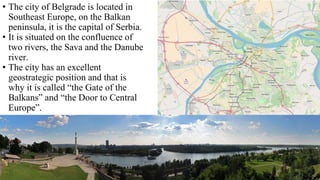
• The city of Belgrade is located in
Southeast Europe, on the Balkan
peninsula, it is the capital of Serbia.
• It is situated on the confluence of
two rivers, the Sava and the Danube
river.
• The city has an excellent
geostrategic position and that is
why it is called “the Gate of the
Balkans” and “the Door to Central
Europe”.
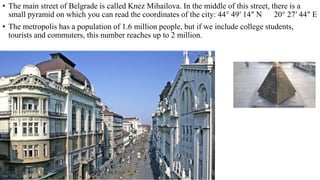
• The main street of Belgrade is called Knez Mihailova. In the middle of this street, there is a
small pyramid on which you can read the coordinates of the city: 44° 49′ 14″ N 20° 27′ 44″ E
• The metropolis has a population of 1.6 million people, but if we include college students,
tourists and commuters, this number reaches up to 2 million.
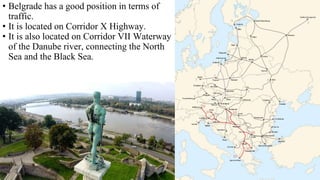
• Belgrade has a good position in terms of
traffic.
• It is located on Corridor X Highway.
• It is also located on Corridor VII Waterway
of the Danube river, connecting the North
Sea and the Black Sea.
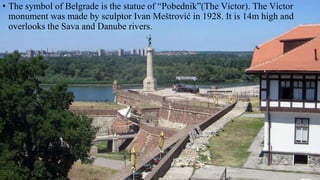
• The symbol of Belgrade is the statue of “Pobednik”(The Victor). The Victor
monument was made by sculptor Ivan Meštrović in 1928. It is 14m high and
overlooks the Sava and Danube rivers.
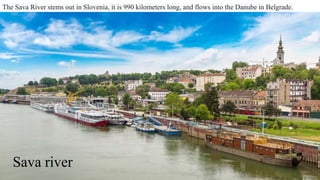
The Sava River stems out in Slovenia, it is 990 kilometers long, and flows into the Danube in Belgrade.
Sava river
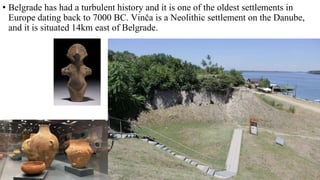
• Belgrade has had a turbulent history and it is one of the oldest settlements in
Europe dating back to 7000 BC. Vinča is a Neolithic settlement on the Danube,
and it is situated 14km east of Belgrade.
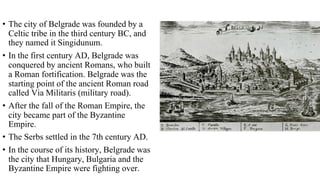
• The city of Belgrade was founded by a
Celtic tribe in the third century BC, and
they named it Singidunum.
• In the first century AD, Belgrade was
conquered by ancient Romans, who built
a Roman fortification. Belgrade was the
starting point of the ancient Roman road
called Via Militaris (military road).
• After the fall of the Roman Empire, the
city became part of the Byzantine
Empire.
• The Serbs settled in the 7th century AD.
• In the course of its history, Belgrade was
the city that Hungary, Bulgaria and the
Byzantine Empire were fighting over.
• It was only as late as in 1882 that Belgrade
became the capital of Serbia. At this point,
two dynasties – the Karađordević dynasty
and the Obrenović dynasty – start replacing
each other on the Serbian throne.
• In 1808, great Serbian educator Dositej
Obradović opened the Great School or
Lyceum in Belgrade, which was orginized
to imitate schools in other European cities.
• Today, Belgrade has 280 schools, 31
faculties and 8 scientific institutions.
• Belgrade was the capital of the largest state
formed in this part of Europe, i.e. Socialist
Federal Republic of Yugoslavia, which
existed from 1945 till 1991. This region is
now separated into six independent states.
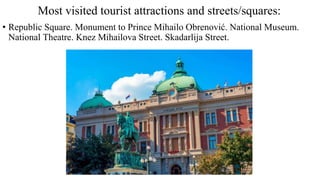
Most visited tourist attractions and streets/squares:
• Republic Square. Monument to Prince Mihailo Obrenović. National Museum.
National Theatre. Knez Mihailova Street. Skadarlija Street.
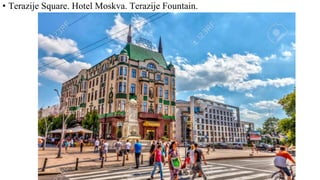
• Terazije Square. Hotel Moskva. Terazije Fountain.
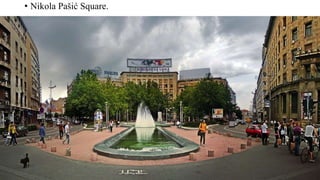
• Nikola Pašić Square.
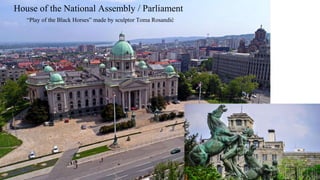
“Play of the Black Horses” made by sculptor Toma Rosandić
House of the National Assembly / Parliament
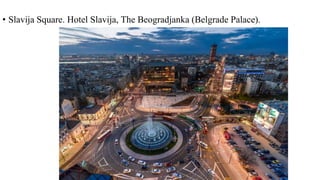
• Slavija Square. Hotel Slavija, The Beogradjanka (Belgrade Palace).
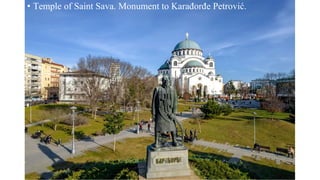
• Temple of Saint Sava. Monument to Karađorđe Petrović.
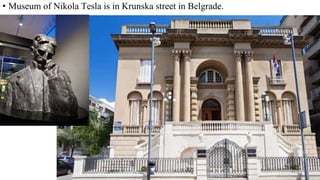
• Museum of Nikola Tesla is in Krunska street in Belgrade.
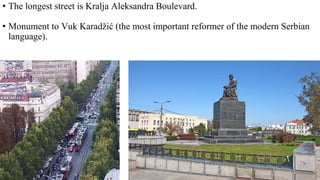
• The longest street is Kralja Aleksandra Boulevard.
• Monument to Vuk Karadžić (the most important reformer of the modern Serbian
language).
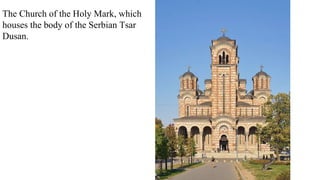
The Church of the Holy Mark, which
houses the body of the Serbian Tsar
Dusan.
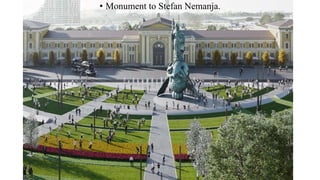
• Monument to Stefan Nemanja.
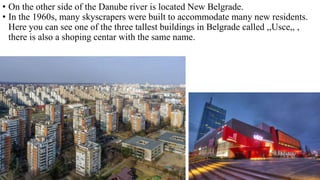
• On the other side of the Danube river is located New Belgrade.
• In the 1960s, many skyscrapers were built to accommodate many new residents.
Here you can see one of the three tallest buildings in Belgrade called ,,Usce,, ,
there is also a shoping centar with the same name.
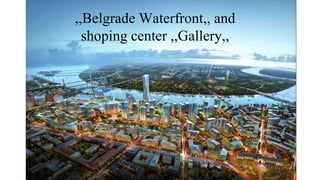
,,Belgrade Waterfront,, and
shoping center ,,Gallery,,
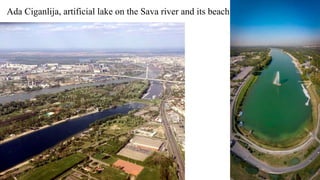
Ada Ciganlija, artificial lake on the Sava river and its beach.
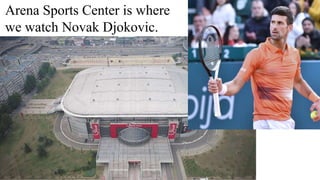
Arena Sports Center is where
we watch Novak Djokovic.
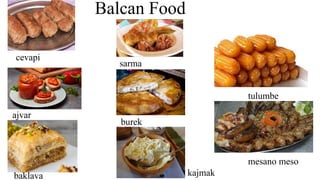
Balcan Food
cevapi
ajvar
baklava
sarma
burek
kajmak
tulumbe
mesano meso
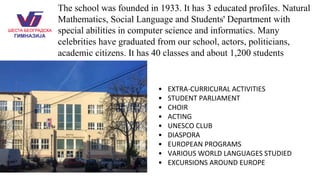
The school was founded in 1933. It has 3 educated profiles. Natural
Mathematics, Social Language and Students' Department with
special abilities in computer science and informatics. Many
celebrities have graduated from our school, actors, politicians,
academic citizens. It has 40 classes and about 1,200 students
• EXTRA-CURRICURAL ACTIVITIES
• STUDENT PARLIAMENT
• CHOIR
• ACTING
• UNESCO CLUB
• DIASPORA
• EUROPEAN PROGRAMS
• VARIOUS WORLD LANGUAGES STUDIED
• EXCURSIONS AROUND EUROPE
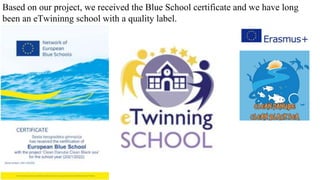
Based on our project, we received the Blue School certificate and we have long
been an eTwininng school with a quality label.
Enjoy the Sixth Belgrade Gymnasium, Belgrade and Serbia!!!

Welcome to Belgrade.pptx

  • 2.
    • The cityof Belgrade is located in Southeast Europe, on the Balkan peninsula, it is the capital of Serbia. • It is situated on the confluence of two rivers, the Sava and the Danube river. • The city has an excellent geostrategic position and that is why it is called “the Gate of the Balkans” and “the Door to Central Europe”.
  • 3.
    • The mainstreet of Belgrade is called Knez Mihailova. In the middle of this street, there is a small pyramid on which you can read the coordinates of the city: 44° 49′ 14″ N 20° 27′ 44″ E • The metropolis has a population of 1.6 million people, but if we include college students, tourists and commuters, this number reaches up to 2 million.
  • 4.
    • Belgrade hasa good position in terms of traffic. • It is located on Corridor X Highway. • It is also located on Corridor VII Waterway of the Danube river, connecting the North Sea and the Black Sea.
  • 5.
    • The symbolof Belgrade is the statue of “Pobednik”(The Victor). The Victor monument was made by sculptor Ivan Meštrović in 1928. It is 14m high and overlooks the Sava and Danube rivers.
  • 6.
    The Sava Riverstems out in Slovenia, it is 990 kilometers long, and flows into the Danube in Belgrade. Sava river
  • 7.
    • Belgrade hashad a turbulent history and it is one of the oldest settlements in Europe dating back to 7000 BC. Vinča is a Neolithic settlement on the Danube, and it is situated 14km east of Belgrade.
  • 8.
    • The cityof Belgrade was founded by a Celtic tribe in the third century BC, and they named it Singidunum. • In the first century AD, Belgrade was conquered by ancient Romans, who built a Roman fortification. Belgrade was the starting point of the ancient Roman road called Via Militaris (military road). • After the fall of the Roman Empire, the city became part of the Byzantine Empire. • The Serbs settled in the 7th century AD. • In the course of its history, Belgrade was the city that Hungary, Bulgaria and the Byzantine Empire were fighting over.
  • 9.
    • It wasonly as late as in 1882 that Belgrade became the capital of Serbia. At this point, two dynasties – the Karađordević dynasty and the Obrenović dynasty – start replacing each other on the Serbian throne. • In 1808, great Serbian educator Dositej Obradović opened the Great School or Lyceum in Belgrade, which was orginized to imitate schools in other European cities. • Today, Belgrade has 280 schools, 31 faculties and 8 scientific institutions. • Belgrade was the capital of the largest state formed in this part of Europe, i.e. Socialist Federal Republic of Yugoslavia, which existed from 1945 till 1991. This region is now separated into six independent states.
  • 10.
    Most visited touristattractions and streets/squares: • Republic Square. Monument to Prince Mihailo Obrenović. National Museum. National Theatre. Knez Mihailova Street. Skadarlija Street.
  • 11.
    • Terazije Square.Hotel Moskva. Terazije Fountain.
  • 12.
  • 13.
    “Play of theBlack Horses” made by sculptor Toma Rosandić House of the National Assembly / Parliament
  • 14.
    • Slavija Square.Hotel Slavija, The Beogradjanka (Belgrade Palace).
  • 15.
    • Temple ofSaint Sava. Monument to Karađorđe Petrović.
  • 16.
    • Museum ofNikola Tesla is in Krunska street in Belgrade.
  • 17.
    • The longeststreet is Kralja Aleksandra Boulevard. • Monument to Vuk Karadžić (the most important reformer of the modern Serbian language).
  • 18.
    The Church ofthe Holy Mark, which houses the body of the Serbian Tsar Dusan.
  • 19.
    • Monument toStefan Nemanja.
  • 20.
    • On theother side of the Danube river is located New Belgrade. • In the 1960s, many skyscrapers were built to accommodate many new residents. Here you can see one of the three tallest buildings in Belgrade called ,,Usce,, , there is also a shoping centar with the same name.
  • 21.
  • 22.
    Ada Ciganlija, artificiallake on the Sava river and its beach.
  • 23.
    Arena Sports Centeris where we watch Novak Djokovic.
  • 24.
  • 25.
    The school wasfounded in 1933. It has 3 educated profiles. Natural Mathematics, Social Language and Students' Department with special abilities in computer science and informatics. Many celebrities have graduated from our school, actors, politicians, academic citizens. It has 40 classes and about 1,200 students • EXTRA-CURRICURAL ACTIVITIES • STUDENT PARLIAMENT • CHOIR • ACTING • UNESCO CLUB • DIASPORA • EUROPEAN PROGRAMS • VARIOUS WORLD LANGUAGES STUDIED • EXCURSIONS AROUND EUROPE
  • 26.
    Based on ourproject, we received the Blue School certificate and we have long been an eTwininng school with a quality label.
  • 27.
    Enjoy the SixthBelgrade Gymnasium, Belgrade and Serbia!!!