Hi, I am Guillermo Delgado from
Mexico City, this is the last assessment
of this great course and i hope
everything goes find for all, again sorry
for some translating errors or
mispellings but i hope you found info
useful for you.
Regards.
Thanks for reading!
First a short description of which is a
synthesizer. A synthesizer is an electronic
musical instrument designed to produce
artificially generated sound, using
techniques such as additive, subtractive,
frequency modulation, physical modeling or
phase modulation synthesis to create sounds.
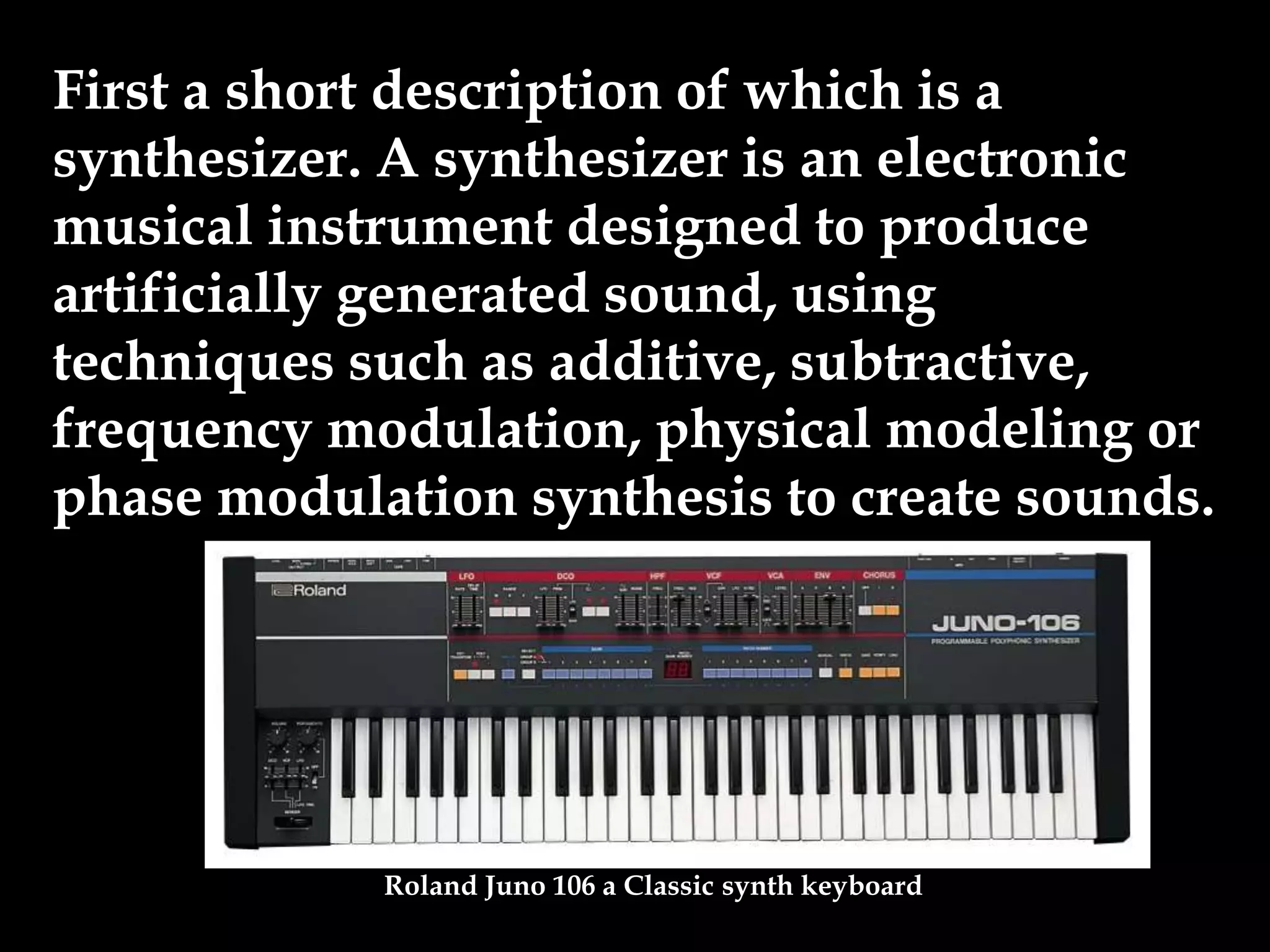
Roland Juno 106 a Classic synth keyboard
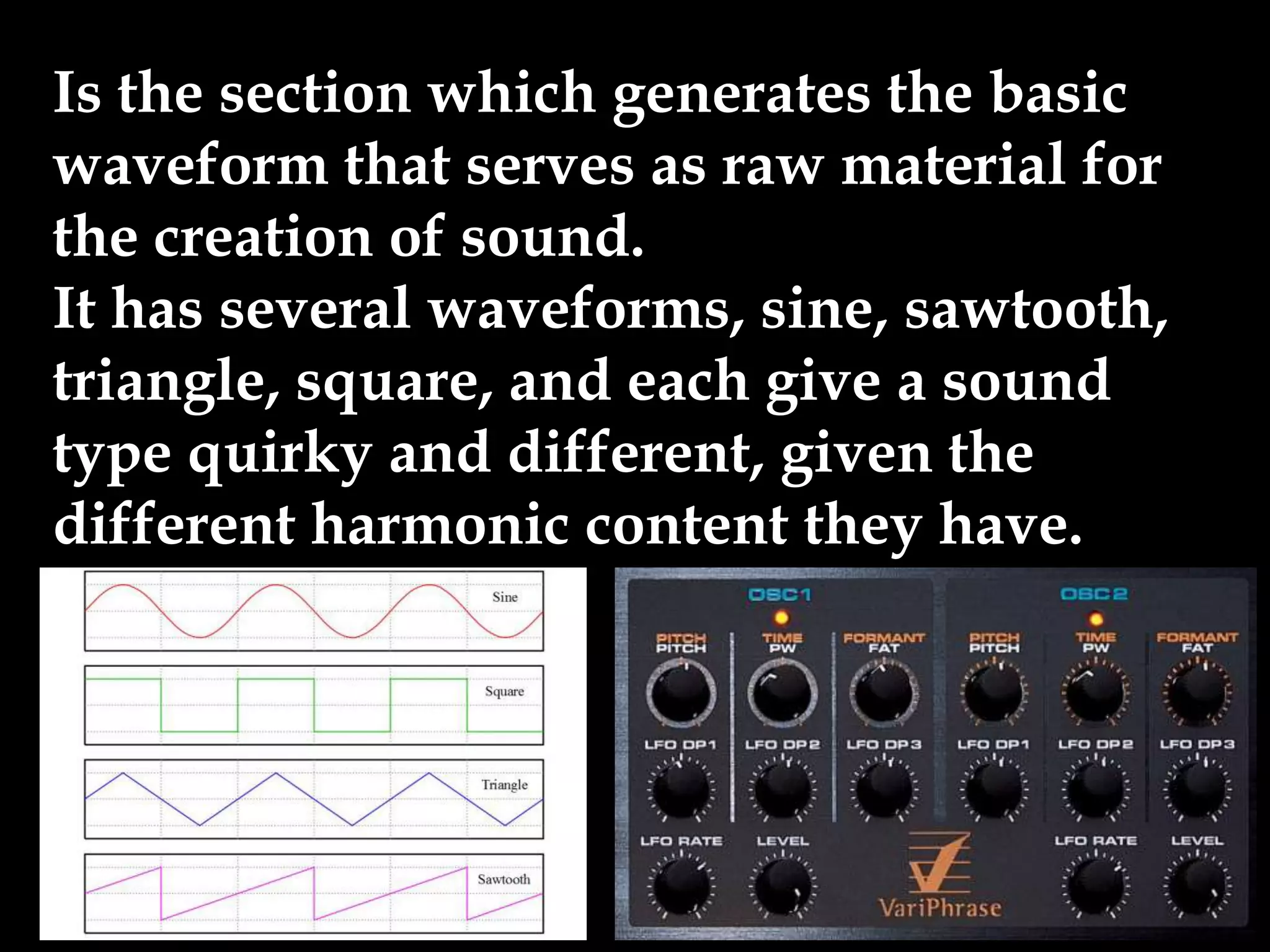
Is the section which generates the basic
waveform that serves as raw material for
the creation of sound.
It has several waveforms, sine, sawtooth,
triangle, square, and each give a sound
type quirky and different, given the
different harmonic content they have.
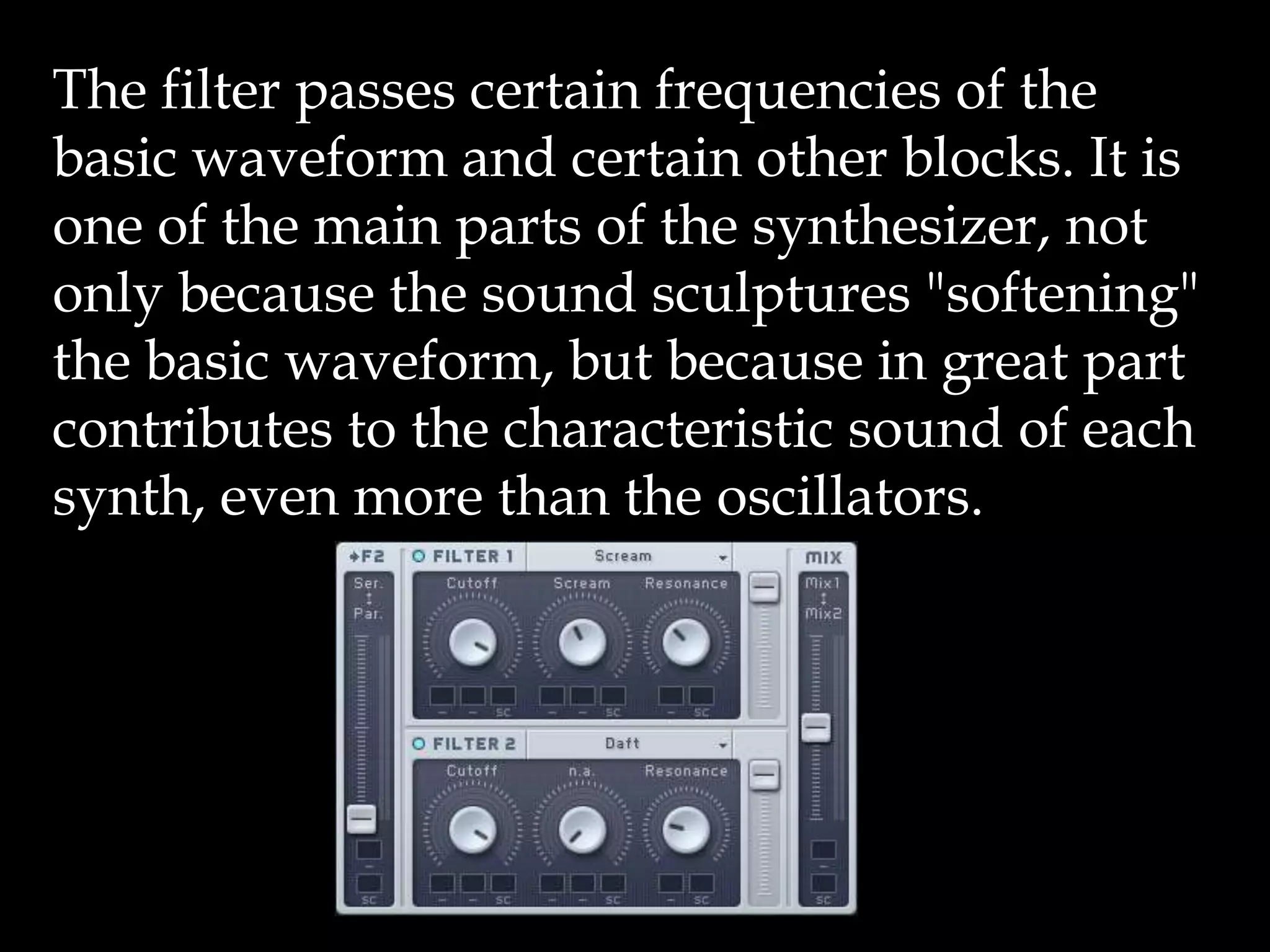
The filter passes certain frequencies of the
basic waveform and certain other blocks. It is
one of the main parts of the synthesizer, not
only because the sound sculptures "softening"
the basic waveform, but because in great part
contributes to the characteristic sound of each
synth, even more than the oscillators.
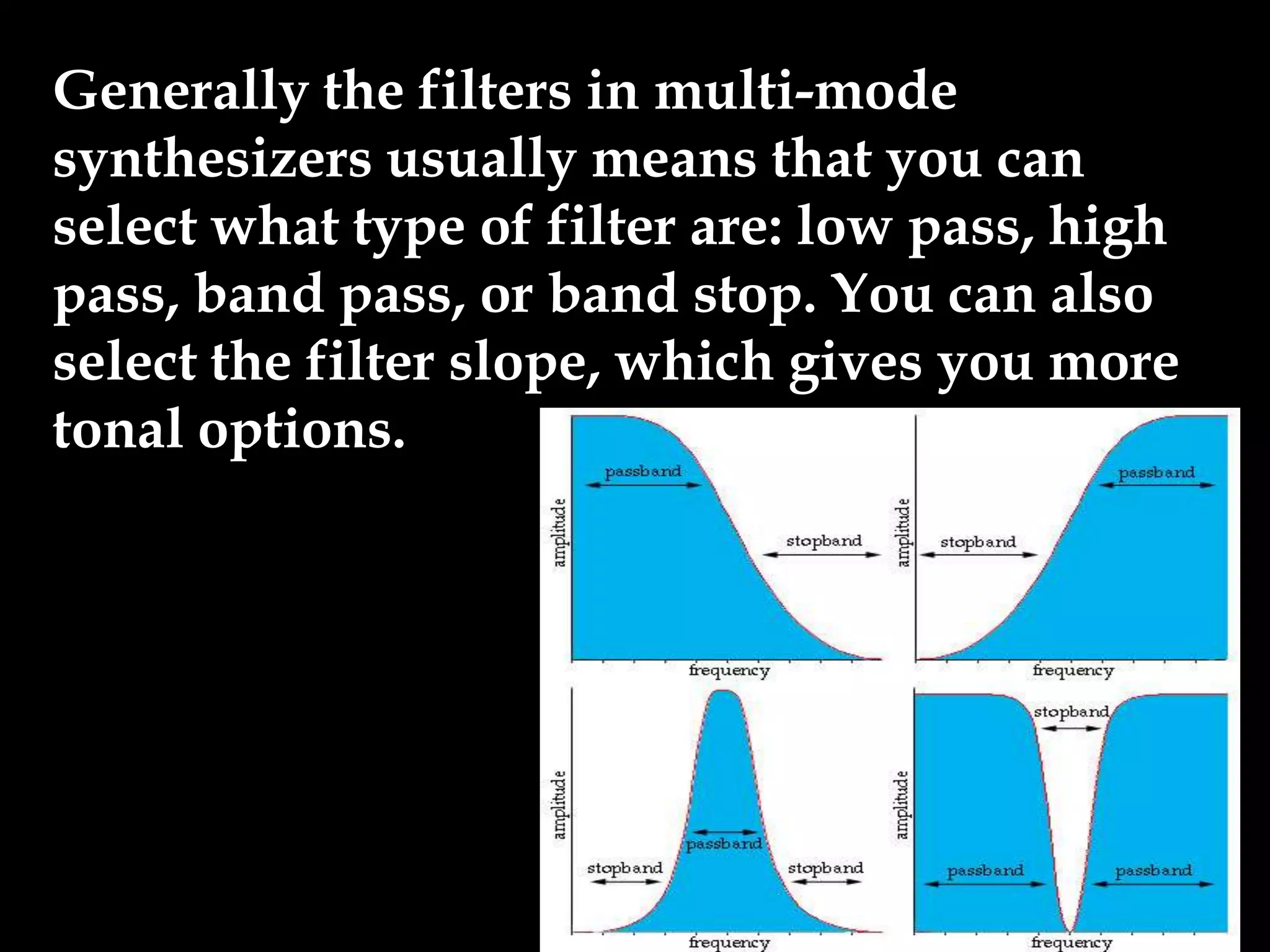
Generally the filters in multi-mode
synthesizers usually means that you can
select what type of filter are: low pass, high
pass, band pass, or band stop. You can also
select the filter slope, which gives you more
tonal options.
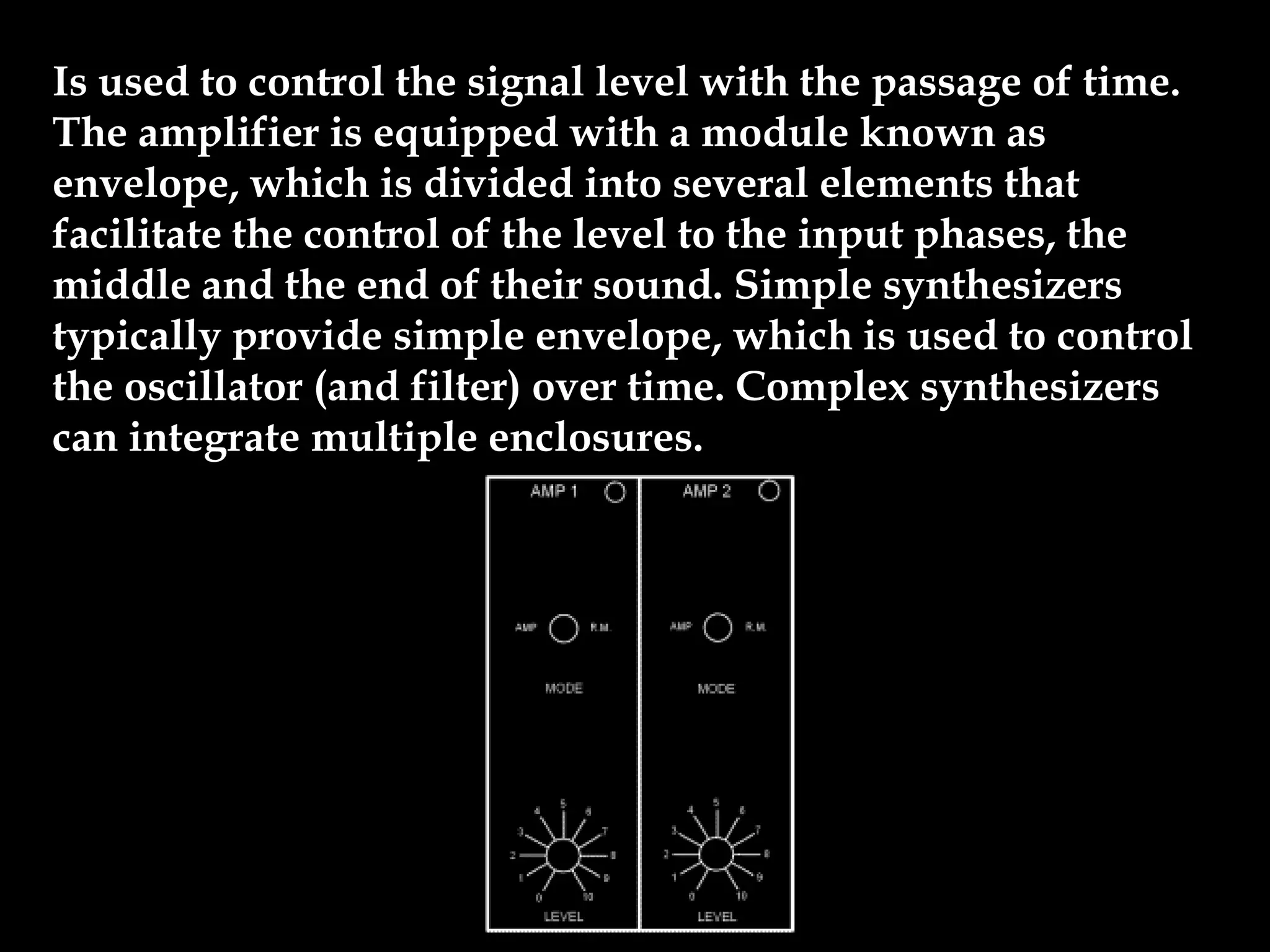
Is used to control the signal level with the passage of time.
The amplifier is equipped with a module known as
envelope, which is divided into several elements that
facilitate the control of the level to the input phases, the
middle and the end of their sound. Simple synthesizers
typically provide simple envelope, which is used to control
the oscillator (and filter) over time. Complex synthesizers
can integrate multiple enclosures.
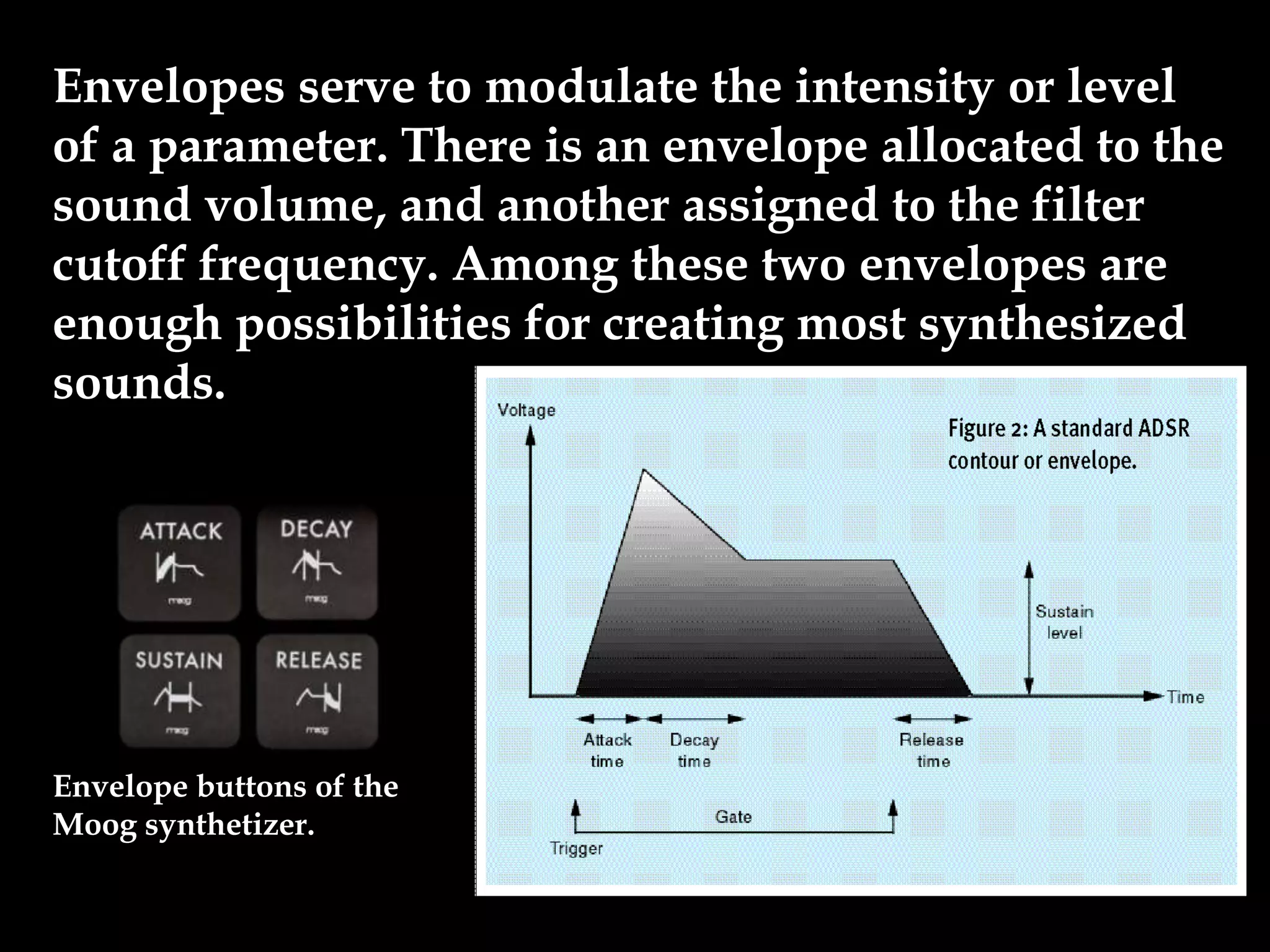
Envelopes serve to modulate the intensity or level
of a parameter. There is an envelope allocated to the
sound volume, and another assigned to the filter
cutoff frequency. Among these two envelopes are
enough possibilities for creating most synthesized
sounds.
Envelope buttons of the
Moog synthetizer.
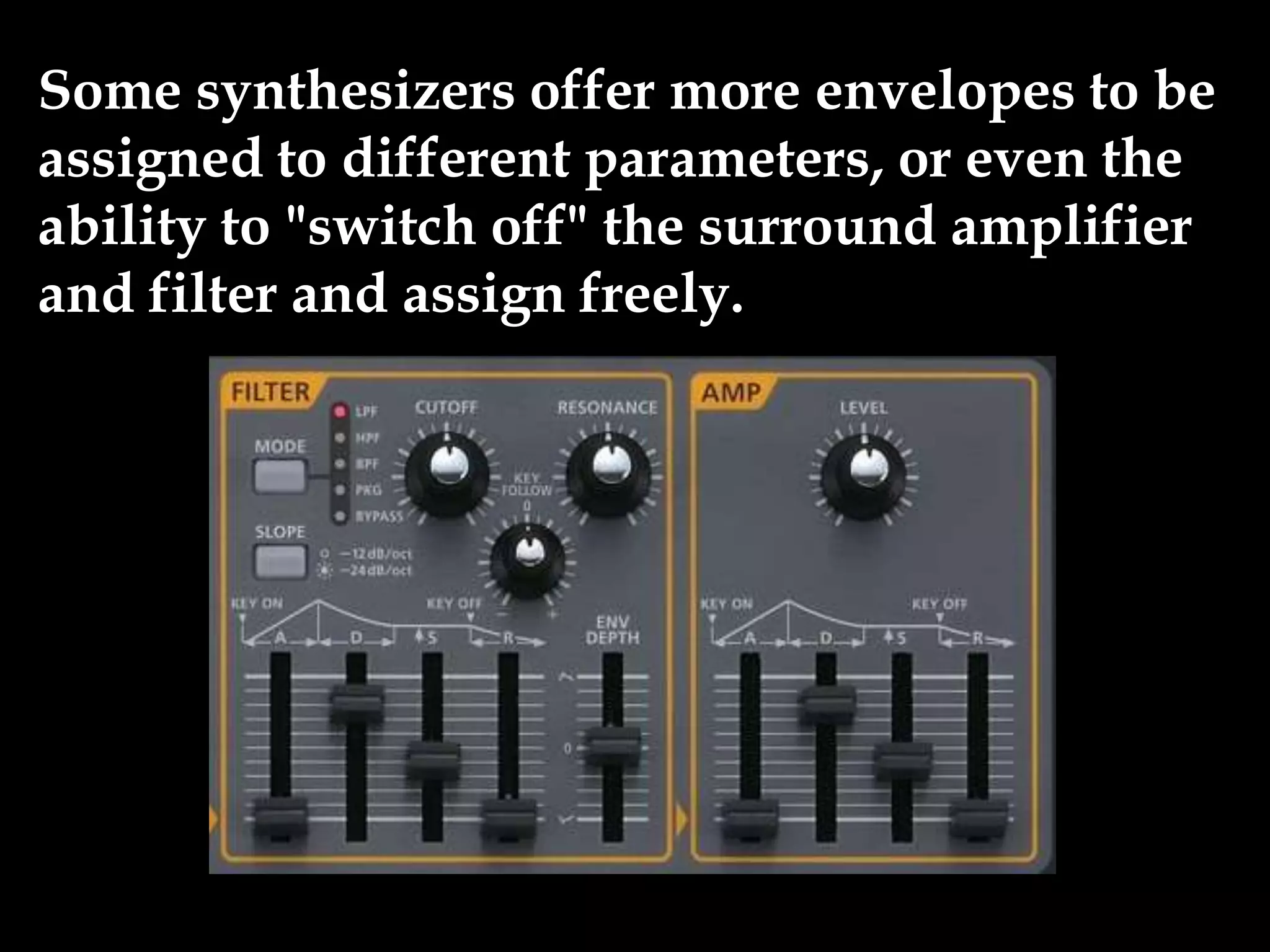
Some synthesizers offer more envelopes to be
assigned to different parameters, or even the
ability to "switch off" the surround amplifier
and filter and assign freely.
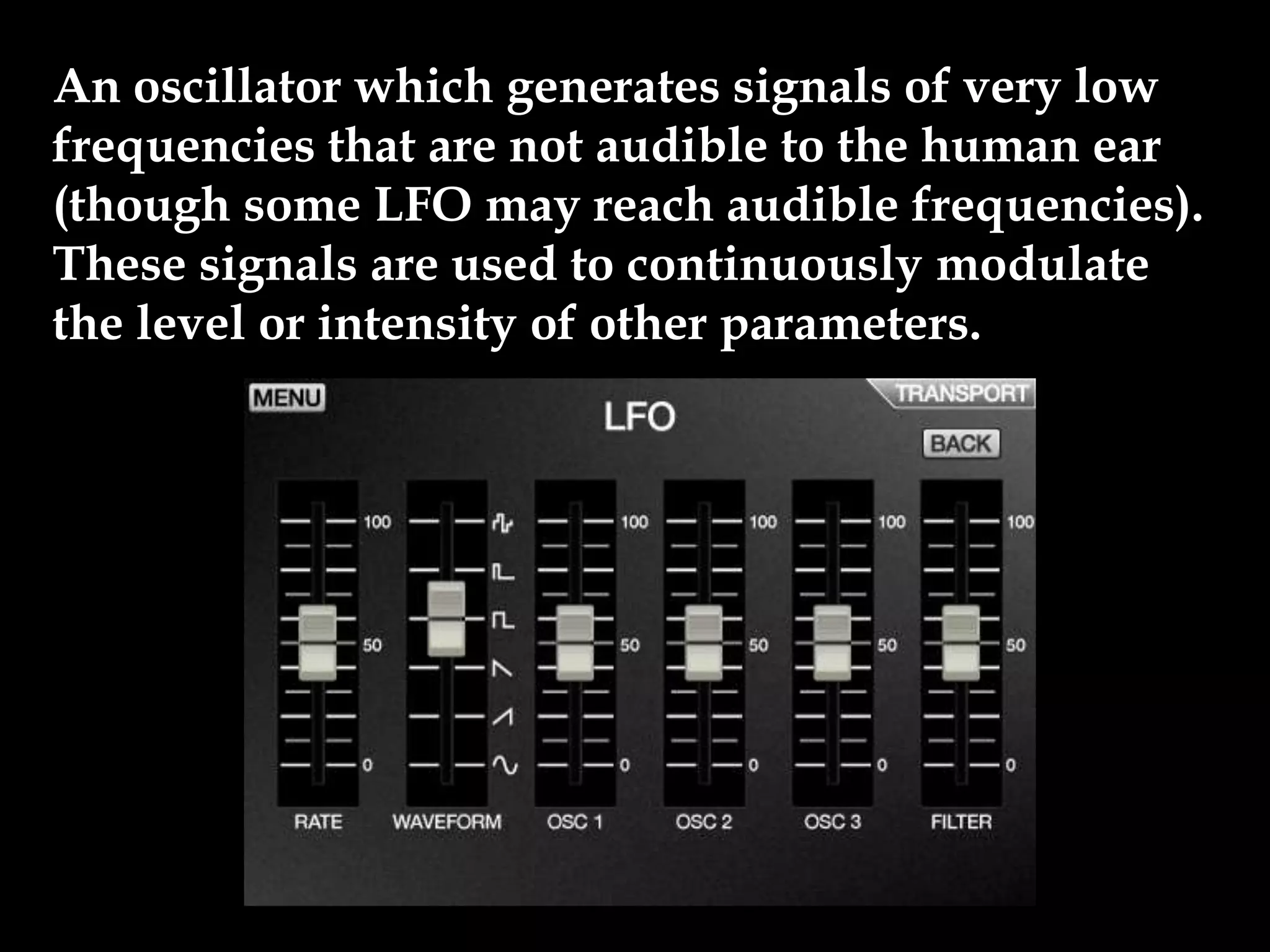
An oscillator which generates signals of very low
frequencies that are not audible to the human ear
(though some LFO may reach audible frequencies).
These signals are used to continuously modulate
the level or intensity of other parameters.
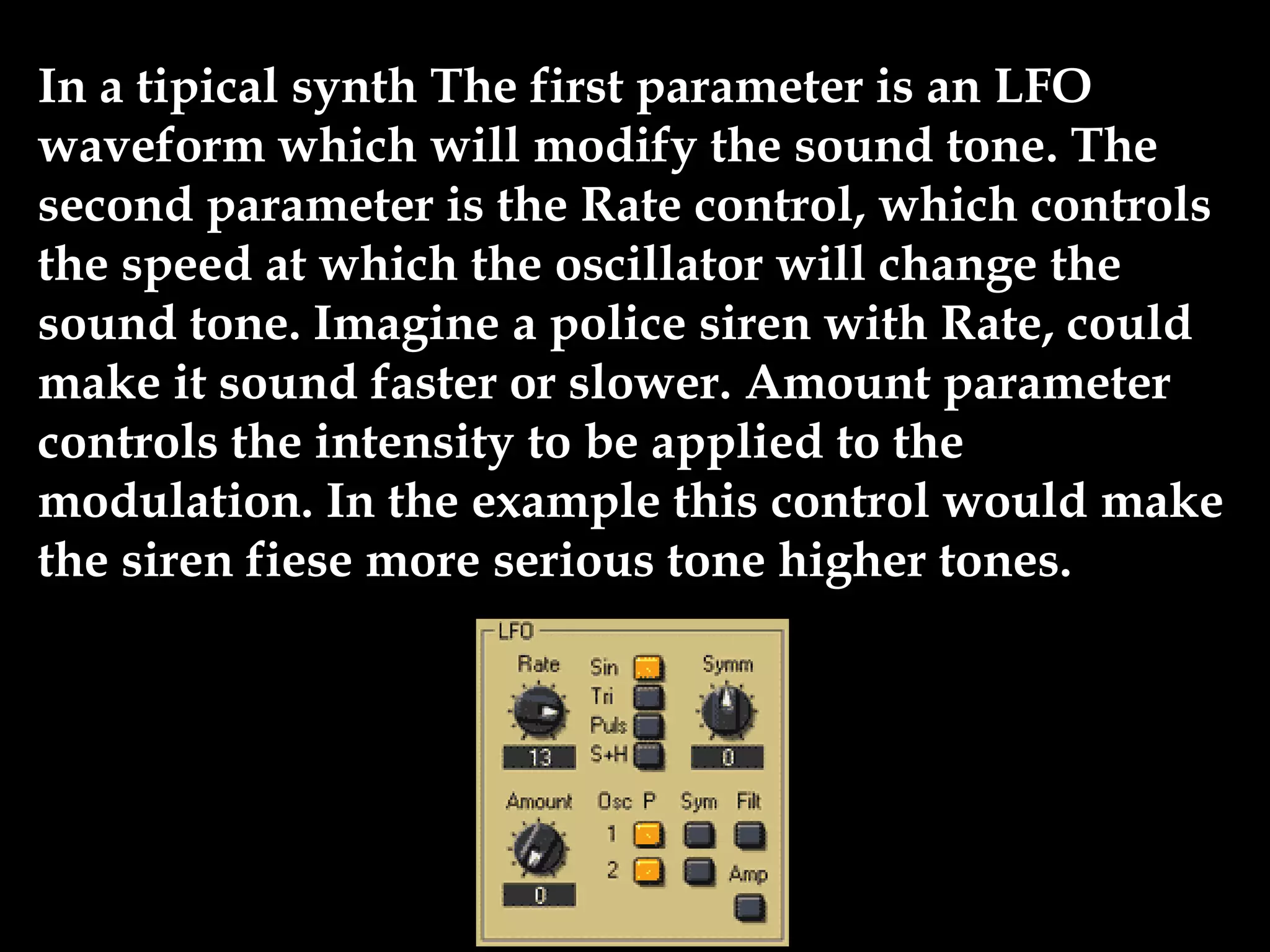
In a tipical synth The first parameter is an LFO
waveform which will modify the sound tone. The
second parameter is the Rate control, which controls
the speed at which the oscillator will change the
sound tone. Imagine a police siren with Rate, could
make it sound faster or slower. Amount parameter
controls the intensity to be applied to the
modulation. In the example this control would make
the siren fiese more serious tone higher tones.

Week 6 assessment synths

  • 1.
    Hi, I amGuillermo Delgado from Mexico City, this is the last assessment of this great course and i hope everything goes find for all, again sorry for some translating errors or mispellings but i hope you found info useful for you. Regards. Thanks for reading!
  • 3.
    First a shortdescription of which is a synthesizer. A synthesizer is an electronic musical instrument designed to produce artificially generated sound, using techniques such as additive, subtractive, frequency modulation, physical modeling or phase modulation synthesis to create sounds. Roland Juno 106 a Classic synth keyboard
  • 5.
    Is the sectionwhich generates the basic waveform that serves as raw material for the creation of sound. It has several waveforms, sine, sawtooth, triangle, square, and each give a sound type quirky and different, given the different harmonic content they have.
  • 7.
    The filter passescertain frequencies of the basic waveform and certain other blocks. It is one of the main parts of the synthesizer, not only because the sound sculptures "softening" the basic waveform, but because in great part contributes to the characteristic sound of each synth, even more than the oscillators.
  • 8.
    Generally the filtersin multi-mode synthesizers usually means that you can select what type of filter are: low pass, high pass, band pass, or band stop. You can also select the filter slope, which gives you more tonal options.
  • 10.
    Is used tocontrol the signal level with the passage of time. The amplifier is equipped with a module known as envelope, which is divided into several elements that facilitate the control of the level to the input phases, the middle and the end of their sound. Simple synthesizers typically provide simple envelope, which is used to control the oscillator (and filter) over time. Complex synthesizers can integrate multiple enclosures.
  • 12.
    Envelopes serve tomodulate the intensity or level of a parameter. There is an envelope allocated to the sound volume, and another assigned to the filter cutoff frequency. Among these two envelopes are enough possibilities for creating most synthesized sounds. Envelope buttons of the Moog synthetizer.
  • 13.
    Some synthesizers offermore envelopes to be assigned to different parameters, or even the ability to "switch off" the surround amplifier and filter and assign freely.
  • 15.
    An oscillator whichgenerates signals of very low frequencies that are not audible to the human ear (though some LFO may reach audible frequencies). These signals are used to continuously modulate the level or intensity of other parameters.
  • 16.
    In a tipicalsynth The first parameter is an LFO waveform which will modify the sound tone. The second parameter is the Rate control, which controls the speed at which the oscillator will change the sound tone. Imagine a police siren with Rate, could make it sound faster or slower. Amount parameter controls the intensity to be applied to the modulation. In the example this control would make the siren fiese more serious tone higher tones.