Foundational Leadership Part III
                    Discipline
   What is leadership?
   Leadership is influence

   What is the foundation of leadership?
   Character

   Define Character
   Who you are when no one else is looking

   Define Commitment
   A Promise
   What is discipline?


                Discipline
    Doing the right thing, the right
           way, all the time.
   Tom Landry said it in another way –
    “Discipline is ‘Making yourself do what you
    don’t want to do in order to achieve what you
    want to achieve.”
      Tom Landry p. 279


   Discipline comes from within!
   Have you ever spent much time around a
    “difference maker” in this world, someone
    who has really impacted the world? If you
    have you probably have noticed that they
    have a vision, and are driven to see the vision
    materialize. Because of their drive they have
    an unnatural amount of self-discipline.
   “No discipline seems pleasant at the time, but
    painful. Later on, however, it produces a
    harvest of righteousness and peace for those
    who have been trained by it. Therefore,
    strengthen your feeble arms and weak
    knees.” Hebrews 12:11-12
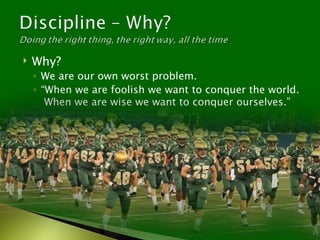
   Why?
    ◦ We are our own worst problem.
    ◦ “When we are foolish we want to conquer the world.
       When we are wise we want to conquer ourselves.”
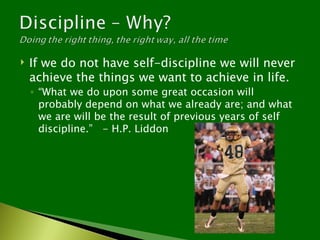
   If we do not have self-discipline we will never
    achieve the things we want to achieve in life.
    ◦ “What we do upon some great occasion will
      probably depend on what we already are; and what
      we are will be the result of previous years of self
      discipline.” - H.P. Liddon
   If we do not have self-discipline we will not
    be able to become the people we want to
    become.
   We have to have control over ourselves before
    we can even begin to think about leading
    others. The mastery of the self through
    discipline is essential.
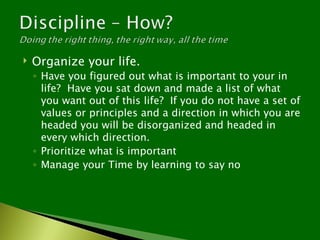
   Organize your life.
    ◦ Have you figured out what is important to your in
      life? Have you sat down and made a list of what
      you want out of this life? If you do not have a set of
      values or principles and a direction in which you are
      headed you will be disorganized and headed in
      every which direction.
    ◦ Prioritize what is important
    ◦ Manage your Time by learning to say no
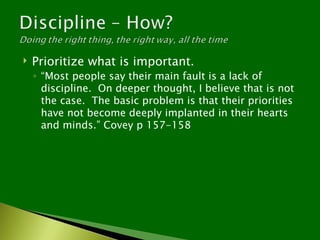
   Prioritize what is important.
    ◦ “Most people say their main fault is a lack of
      discipline. On deeper thought, I believe that is not
      the case. The basic problem is that their priorities
      have not become deeply implanted in their hearts
      and minds.” Covey p 157-158
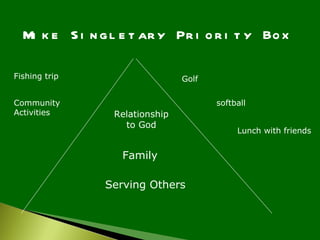
Mi k e S i n g l e t ar y Pr i o r i t y Bo x

Fishing trip                    Golf


Community                              softball
Activities       Relationship
                   to God
                                            Lunch with friends


                  Family

               Serving Others
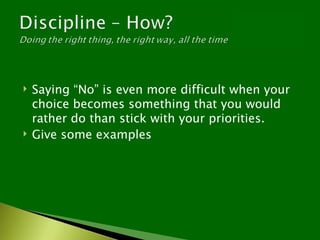
   Saying “No” is even more difficult when your
    choice becomes something that you would
    rather do than stick with your priorities.
   Give some examples
   Managing your time is one of the keys to
    surviving as a student-athlete. There are
    enough hours in a day to go to every class, to
    study for every class, to practice, to eat, to
    socialize, and to sleep. Most studies show that
    student athletes perform better in the
    classroom during the season because each day
    is so structured and there is no time for
    procrastination. If, however, you do not
    manage your time certain areas of your life will
    suffer. Time Management takes organization
    and self-discipline.
   Tips:
   Rick Pitino says to make a daily to do list. Do the things
    you want to do least first to get them out of the way. The
    things you want to do least will bog you down all day if
    they are not finished first. For the rest of the day you can
    do things you enjoy.
   Complete Projects one at a time.
   Organize your work space.
   Develop systems that work for you i.e., computers,
    phones, calendars, to do lists, etc. Find out how you work
    best and develop that system.
   Examples
   Tips for planning:
   Study your most difficult subjects at the times when you are
    most alert.
   Eliminate dead hours. Use a spare fifty minutes to review for
    a class rather than as an extended break.
   Use daylight hours to study.
   Study before recitation classes.
   Study after lecture classes.
   Study math and foreign language classes each day.
   Know your sleep pattern and put it in your schedule.
   Plan recreation.
   Plan study breaks.
   Allow time to eat well-balanced meals.
   Avoid too much detail in your plan.
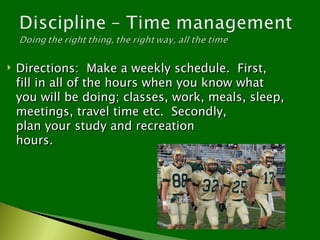
   Directions: Make a weekly schedule. First,
    fill in all of the hours when you know what
    you will be doing; classes, work, meals, sleep,
    meetings, travel time etc. Secondly,
    plan your study and recreation
    hours.
   Think about something in your life that you want or need to do, but
    have been unable to do. Do not think about life goals but something
    smaller and more manageable to achieve in a 30 day period. The
    challenge is to not only choose something but to commit to working
    on or accomplishing the task by finals week of this year. It is best to
    choose something that requires either daily discipline or a Mon.- Fri.
    discipline. Once a week things are ok but over a relatively small
    period of time like we are working with it is less effective. The key
    to this exercise is realizing something that you want to do. The
    second step is to make the commitment for a 30 day period and the
    final step is to discipline yourself to follow through. You can
    practice discipline and therefore you can get better in your
    discipline. No one is a lost cause. In the space to the side write in
    your commitment and sign you name. This will make you a better
    person and ultimately a better leader. Remember is you cannot lead
    yourself, then you will never be able to lead others.

Week 3 Discipline

  • 1.
  • 2.
    What is leadership?  Leadership is influence  What is the foundation of leadership?  Character  Define Character  Who you are when no one else is looking  Define Commitment  A Promise
  • 3.
    What is discipline? Discipline Doing the right thing, the right way, all the time.
  • 4.
    Tom Landry said it in another way – “Discipline is ‘Making yourself do what you don’t want to do in order to achieve what you want to achieve.”  Tom Landry p. 279  Discipline comes from within!
  • 5.
    Have you ever spent much time around a “difference maker” in this world, someone who has really impacted the world? If you have you probably have noticed that they have a vision, and are driven to see the vision materialize. Because of their drive they have an unnatural amount of self-discipline.
  • 6.
    “No discipline seems pleasant at the time, but painful. Later on, however, it produces a harvest of righteousness and peace for those who have been trained by it. Therefore, strengthen your feeble arms and weak knees.” Hebrews 12:11-12
  • 7.
    Why? ◦ We are our own worst problem. ◦ “When we are foolish we want to conquer the world. When we are wise we want to conquer ourselves.”
  • 8.
    If we do not have self-discipline we will never achieve the things we want to achieve in life. ◦ “What we do upon some great occasion will probably depend on what we already are; and what we are will be the result of previous years of self discipline.” - H.P. Liddon
  • 9.
    If we do not have self-discipline we will not be able to become the people we want to become.  We have to have control over ourselves before we can even begin to think about leading others. The mastery of the self through discipline is essential.
  • 10.
    Organize your life. ◦ Have you figured out what is important to your in life? Have you sat down and made a list of what you want out of this life? If you do not have a set of values or principles and a direction in which you are headed you will be disorganized and headed in every which direction. ◦ Prioritize what is important ◦ Manage your Time by learning to say no
  • 11.
    Prioritize what is important. ◦ “Most people say their main fault is a lack of discipline. On deeper thought, I believe that is not the case. The basic problem is that their priorities have not become deeply implanted in their hearts and minds.” Covey p 157-158
  • 12.
    Mi k eS i n g l e t ar y Pr i o r i t y Bo x Fishing trip Golf Community softball Activities Relationship to God Lunch with friends Family Serving Others
  • 13.
    Saying “No” is even more difficult when your choice becomes something that you would rather do than stick with your priorities.  Give some examples
  • 14.
    Managing your time is one of the keys to surviving as a student-athlete. There are enough hours in a day to go to every class, to study for every class, to practice, to eat, to socialize, and to sleep. Most studies show that student athletes perform better in the classroom during the season because each day is so structured and there is no time for procrastination. If, however, you do not manage your time certain areas of your life will suffer. Time Management takes organization and self-discipline.
  • 15.
    Tips:  Rick Pitino says to make a daily to do list. Do the things you want to do least first to get them out of the way. The things you want to do least will bog you down all day if they are not finished first. For the rest of the day you can do things you enjoy.  Complete Projects one at a time.  Organize your work space.  Develop systems that work for you i.e., computers, phones, calendars, to do lists, etc. Find out how you work best and develop that system.  Examples
  • 16.
    Tips for planning:  Study your most difficult subjects at the times when you are most alert.  Eliminate dead hours. Use a spare fifty minutes to review for a class rather than as an extended break.  Use daylight hours to study.  Study before recitation classes.  Study after lecture classes.  Study math and foreign language classes each day.  Know your sleep pattern and put it in your schedule.  Plan recreation.  Plan study breaks.  Allow time to eat well-balanced meals.  Avoid too much detail in your plan.
  • 17.
    Directions: Make a weekly schedule. First, fill in all of the hours when you know what you will be doing; classes, work, meals, sleep, meetings, travel time etc. Secondly, plan your study and recreation hours.
  • 18.
    Think about something in your life that you want or need to do, but have been unable to do. Do not think about life goals but something smaller and more manageable to achieve in a 30 day period. The challenge is to not only choose something but to commit to working on or accomplishing the task by finals week of this year. It is best to choose something that requires either daily discipline or a Mon.- Fri. discipline. Once a week things are ok but over a relatively small period of time like we are working with it is less effective. The key to this exercise is realizing something that you want to do. The second step is to make the commitment for a 30 day period and the final step is to discipline yourself to follow through. You can practice discipline and therefore you can get better in your discipline. No one is a lost cause. In the space to the side write in your commitment and sign you name. This will make you a better person and ultimately a better leader. Remember is you cannot lead yourself, then you will never be able to lead others.

Editor's Notes

  • #3 Discuss the integrity challenge.