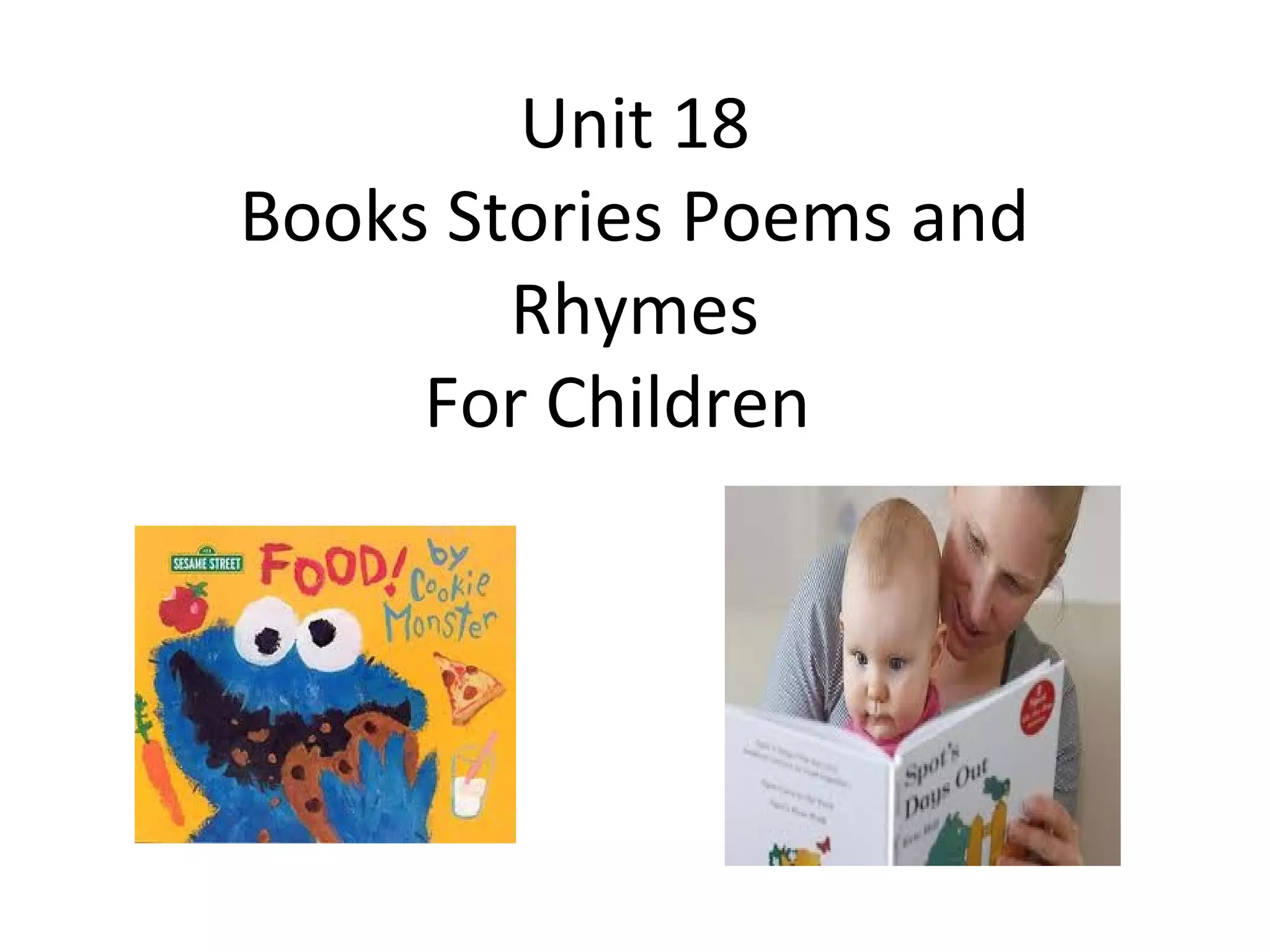
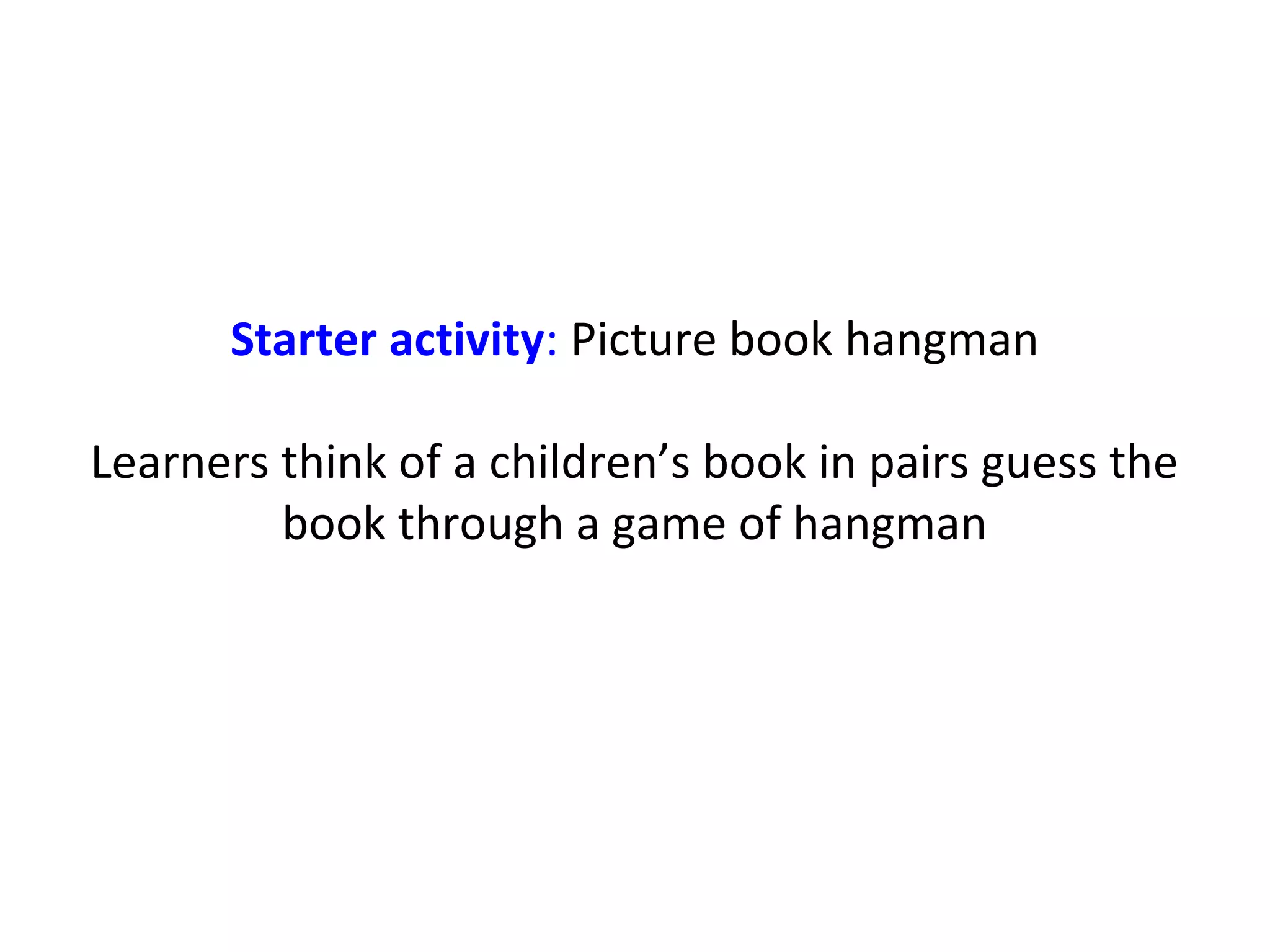
Unit 18
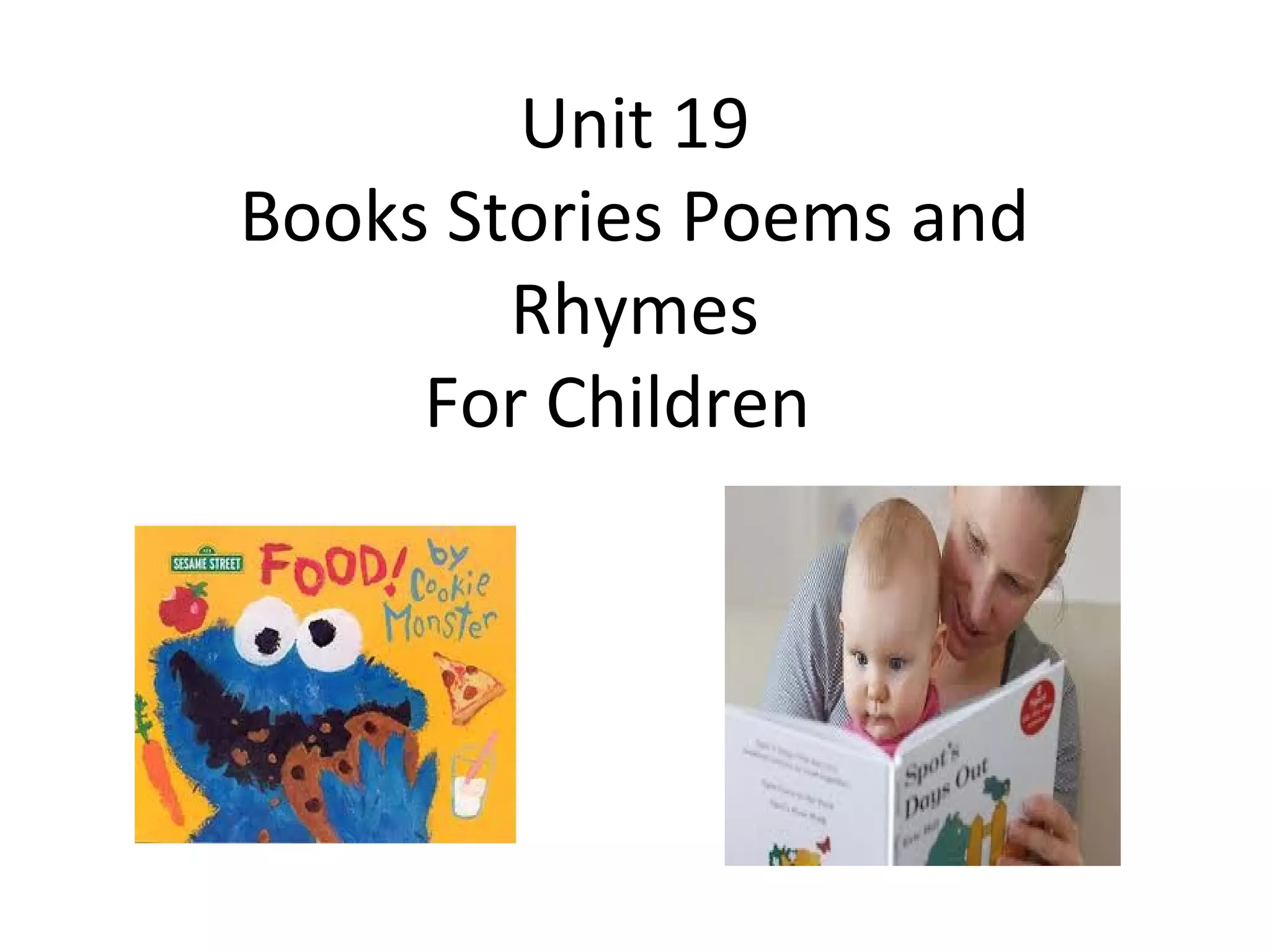
Books Stories Poems and
Rhymes
For Children
Starter activity: Picture book hangman
Learners think of a children’s book in pairs guess the
book through a game of hangman
All students will be able to:
• List key features of rhymes and poems
• List resources used to enhance a story, rhyme, or
poem session
• Identify what a story sack is
• Plan a story telling session
Many students will be able to:
• Explain what makes a great story
• Compare and contrast rhymes and poems between the
two age ranges
Some students will be able to:
• Discuss and reflect on ideas with a peer
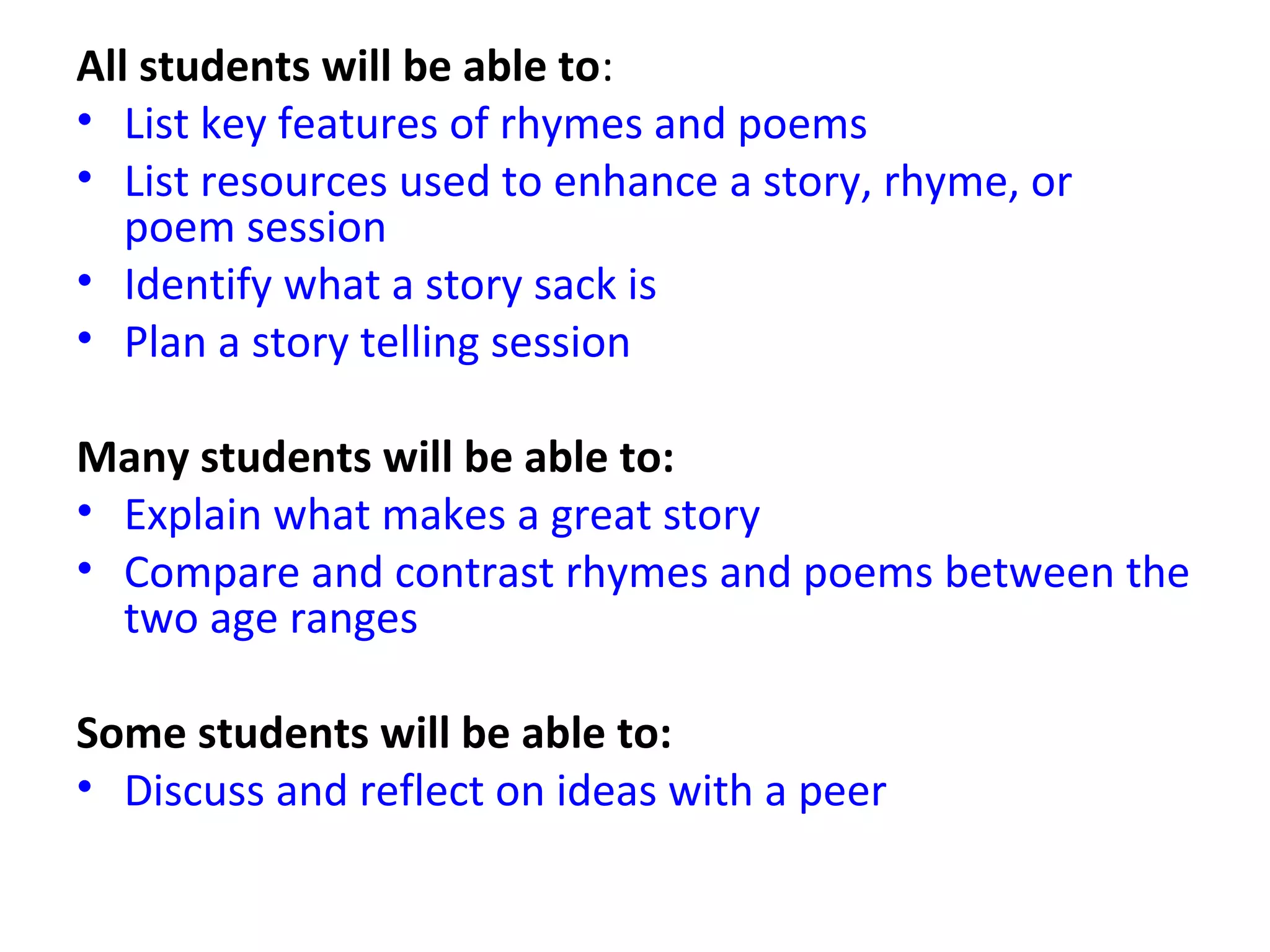
RECAP: In pairs list ALL the poems and rhymes
you know – Be prepared to share with the
whole class.
What is different about rhymes
and poems for 0-3 and 3-5yrs
Individually
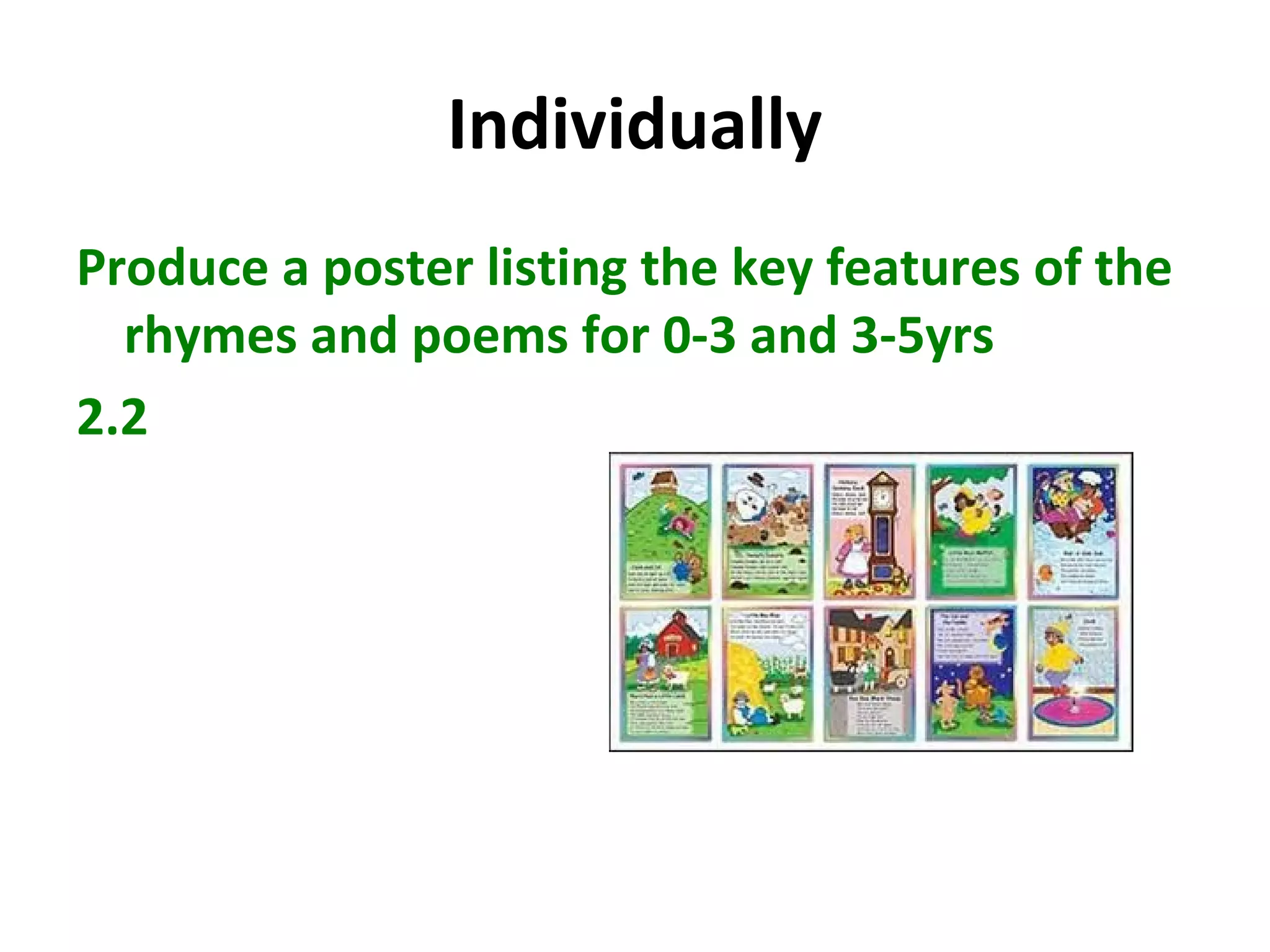
Produce a poster listing the key features of the
rhymes and poems for 0-3 and 3-5yrs
2.2
RECAP – What
makes a great
story session?
RECAP – What
makes a great
story session?
What can aid a story?
Paired Task
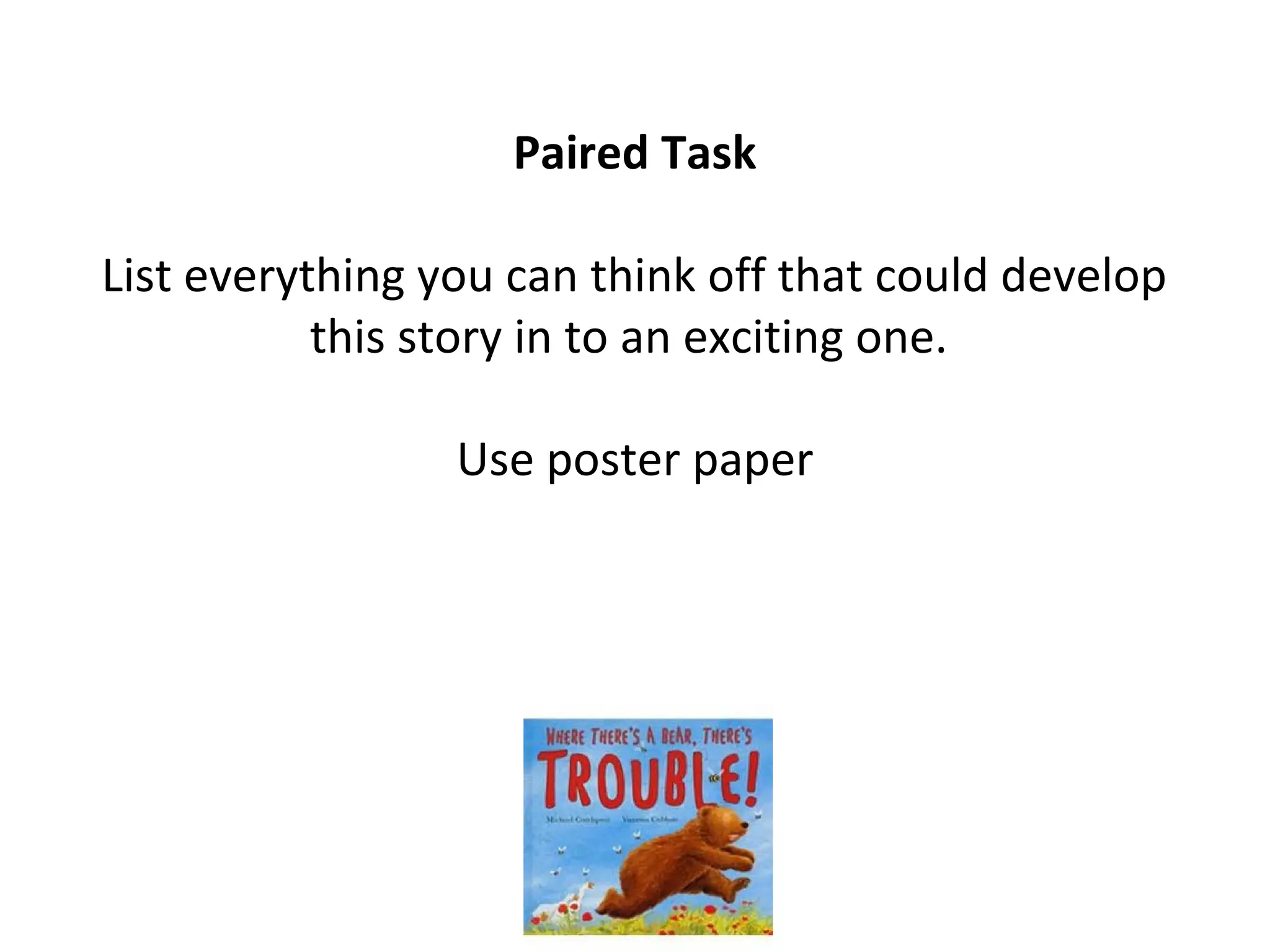
List everything you can think off that could develop
this story in to an exciting one.
Use poster paper
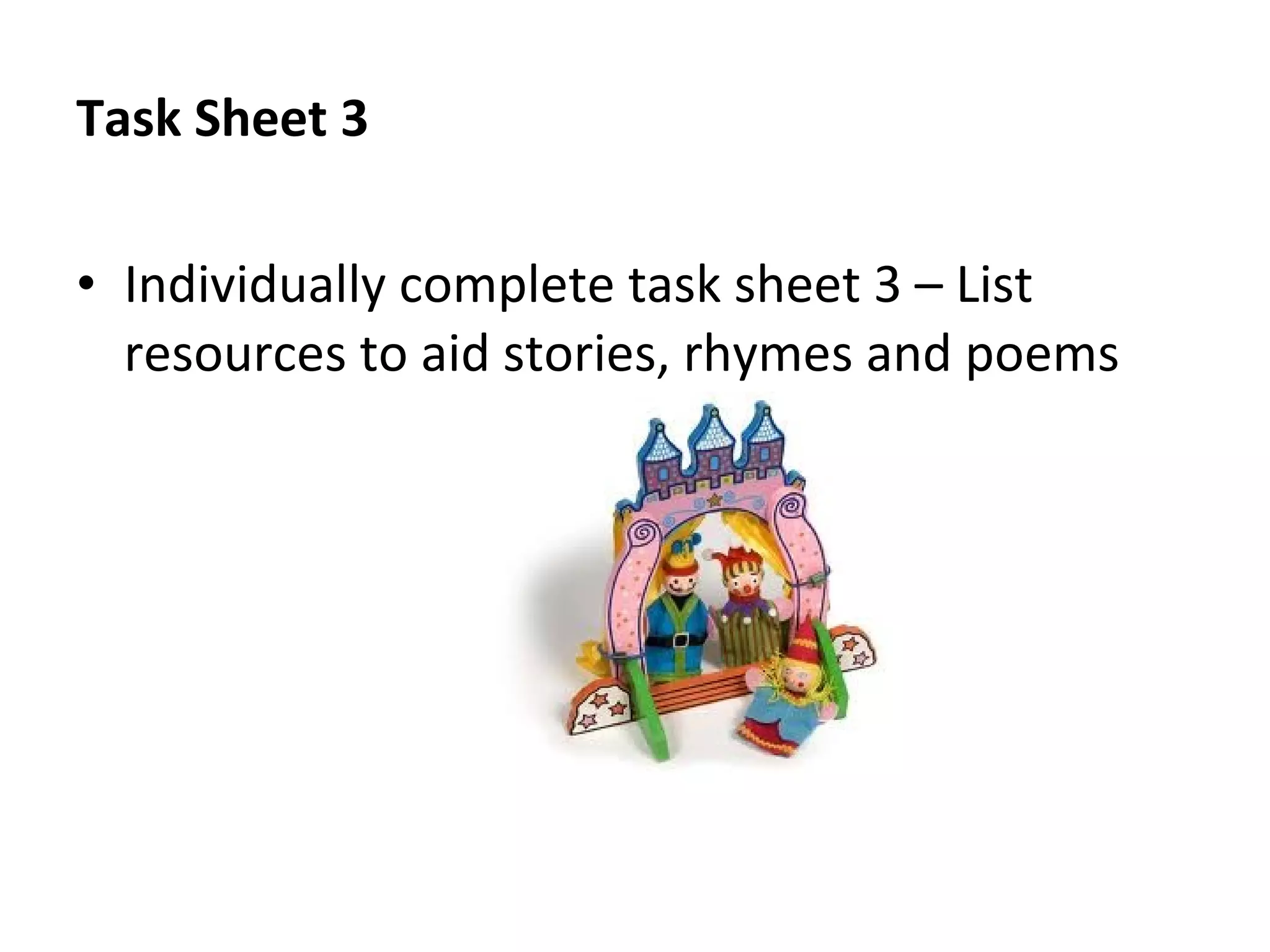
Task Sheet 3
• Individually complete task sheet 3 – List
resources to aid stories, rhymes and poems
Have you met any lesson
objectives yet?
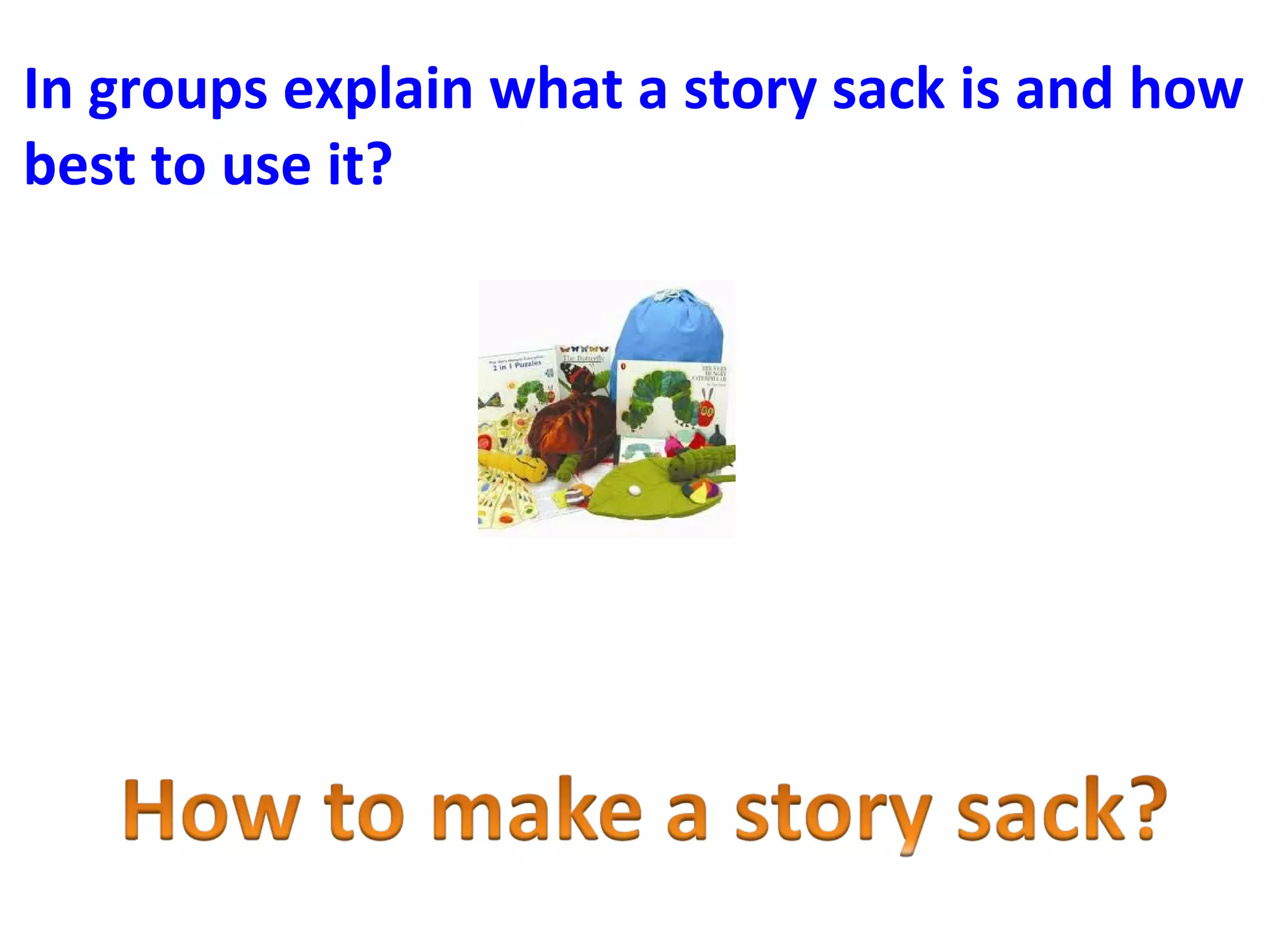
In groups explain what a story sack is and how
best to use it?
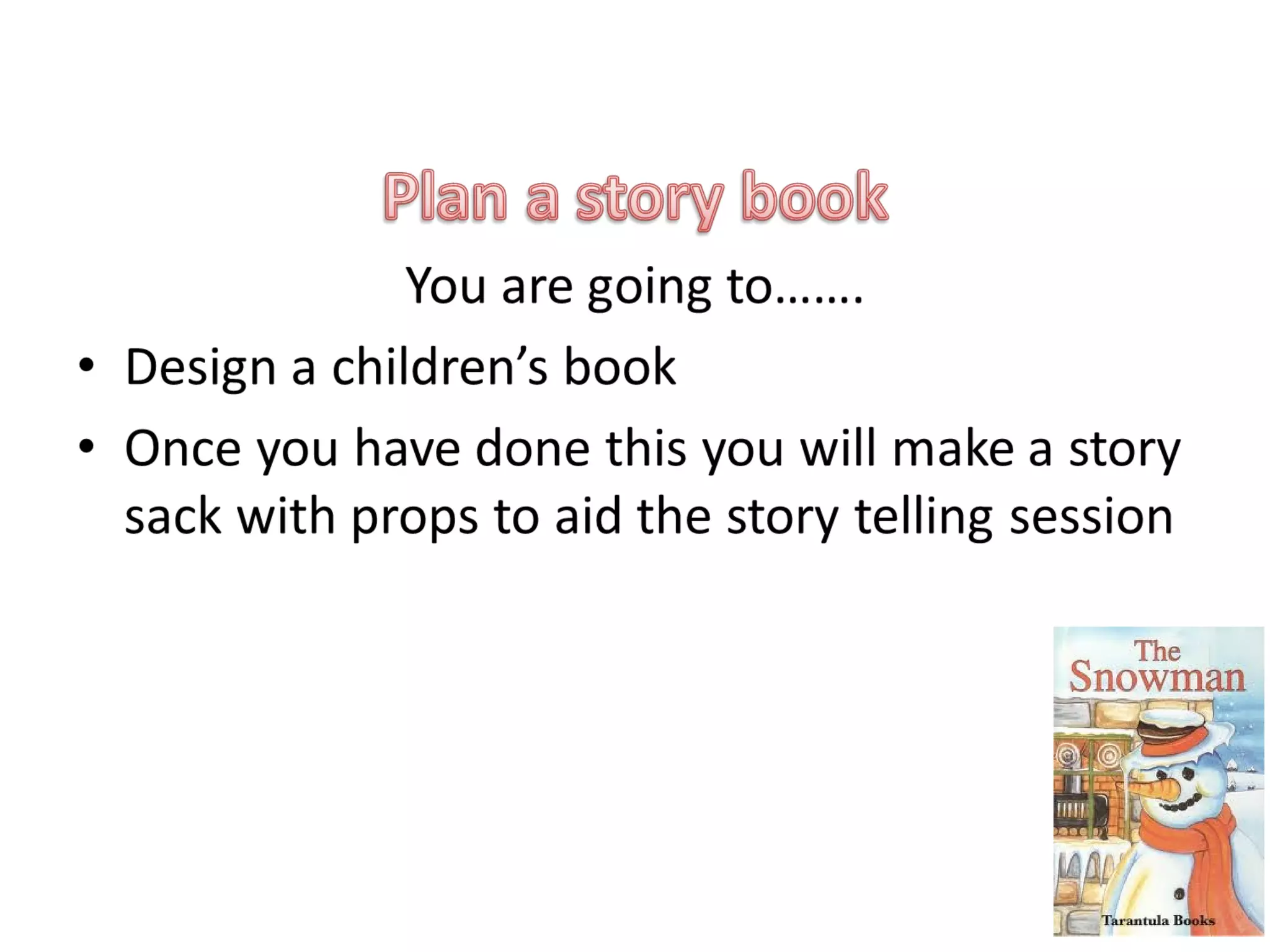
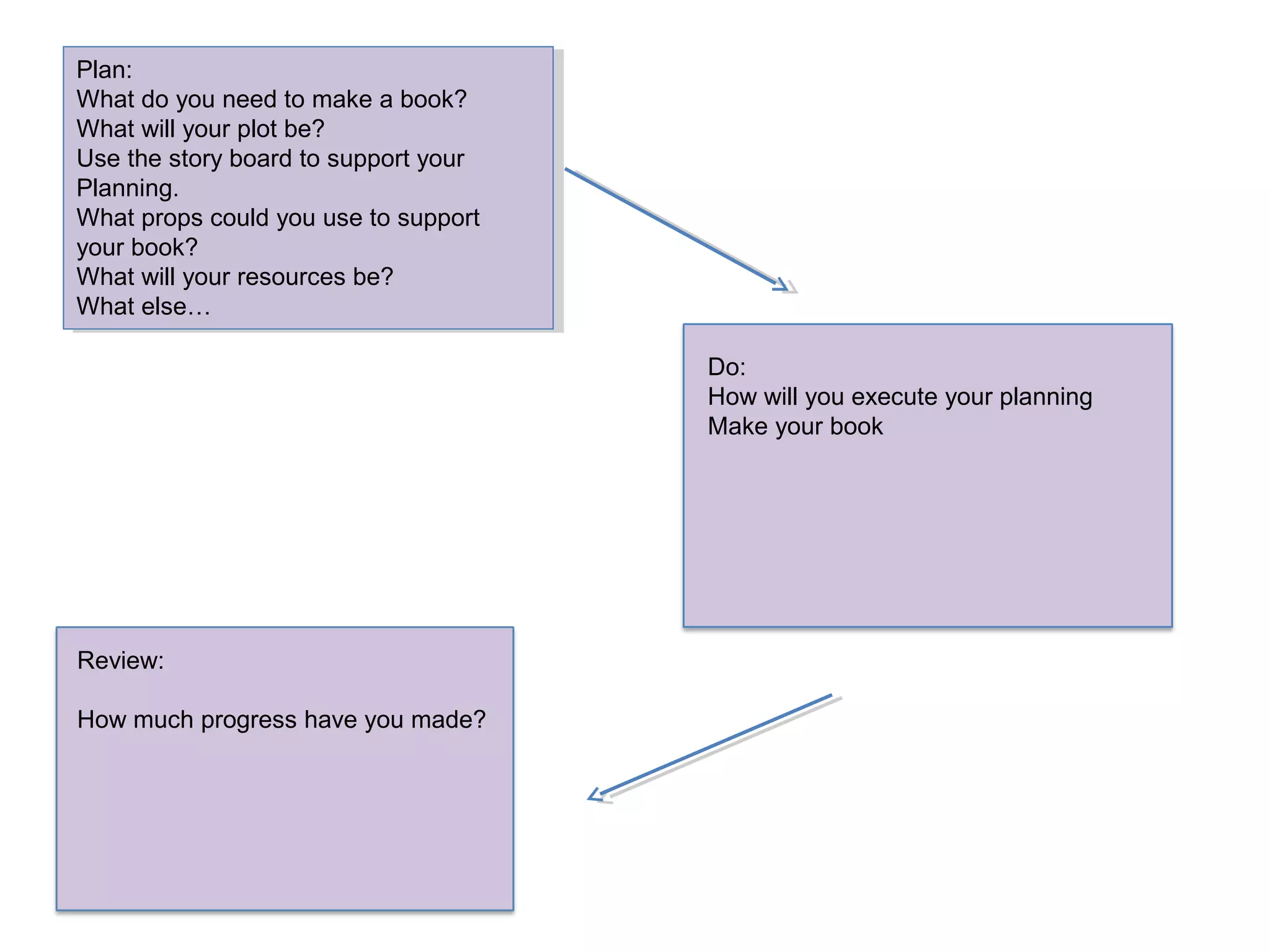
Plan:
What do you need to make a book?
What will your plot be?
Use the story board to support your
Planning.
What props could you use to support
your book?
What will your resources be?
What else…
Do:
How will you execute your planning
Make your book
Review:
How much progress have you made?
Start planning your book
Homework
• Gather some resources from home
• Bring in a pillow case for next lesson
Review
Check your lesson objectives – Have you met
them all?
What would you like help with?
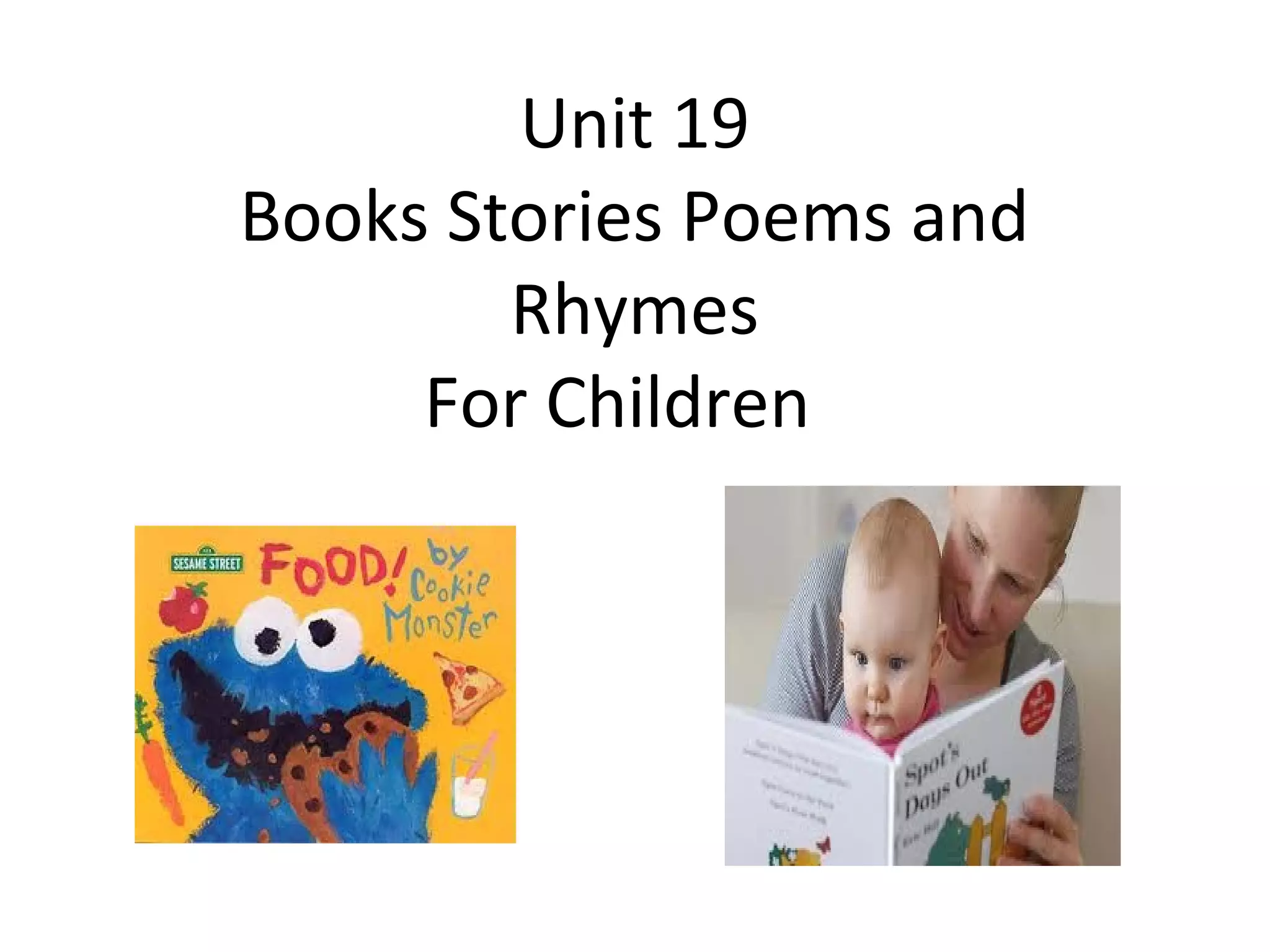
Unit 19
Books Stories Poems and
Rhymes
For Children
Objectives
All students will be able to:
•Identify homemaking skills relevant to childcare
•Demonstrate sewing skills
•List resources and props needed to develop a
story sack
•Plan and create a story sack
Many students will be able to:
•Reflect on the process of making the story sack
Some students will be able to:
•Evaluate the practical session
Name 1 number rhyme each
Why do we need homemaking
skills in childcare???
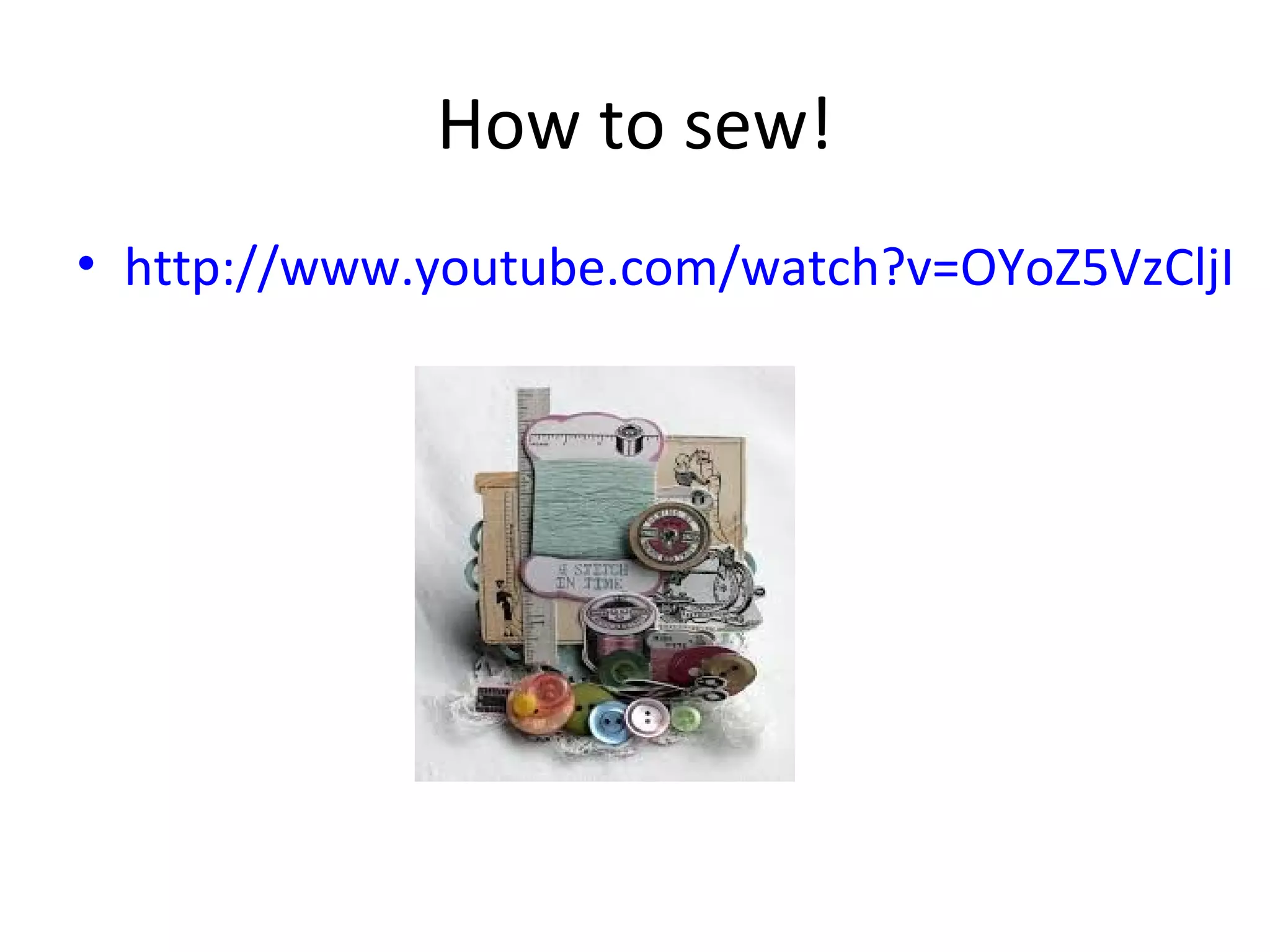
How to sew!
• http://www.youtube.com/watch?v=OYoZ5VzCljI
Making your story sack
Use the hand-out provided to sew
yourstory sack – 30mins
PlanPlan
• What will you decorate yourstory
sack with?
• What props and resources can you
use in yourstory sack?
• How will you make yourprops?
• Make a list of things you need
• Write down deadlines to complete
yourtasks
DoDo
GETMAKING
Review
Evaluate the process of making your story sack
What have you learnt?
What will the children gain from your story sack?
What did you find easy/hard?
Did you keep within the time frame/deadlines?
Did you demonstrate safe practice?
List the skills and knowledge you have
learnt today
Objectives
All students will be able to:
•Identify homemaking skills relevant to childcare
•Demonstrate sewing skills
•List resources and props needed to develop a
story sack
•Plan and create a story sack
Many students will be able to:
•Reflect on the process of making the story sack
Some students will be able to:
•Evaluate the practical session
Unit 19
Books Stories Poems and
Rhymes
For Children
Starter
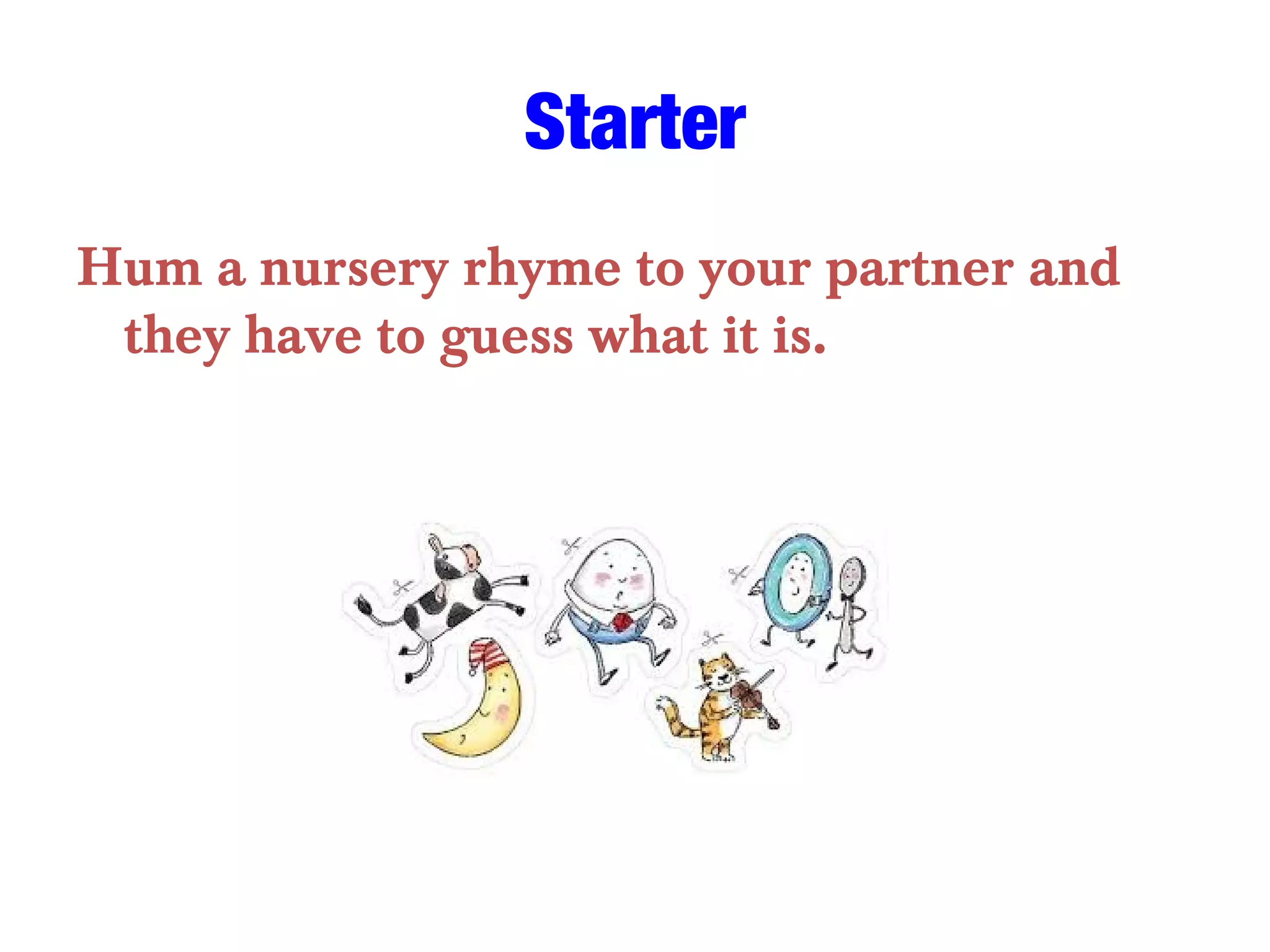
Hum a nursery rhyme to your partner and
they have to guess what it is.
Objectives
All students will be able to:
•Identify nursery rhymes suitable for 0-3 and 3-
5 yrs
•Plan a story session for young children
Many students will be able to:
•Demonstrate an effective story session
Some students will be able to:
•Reflect on the story telling session
Plan your own story session
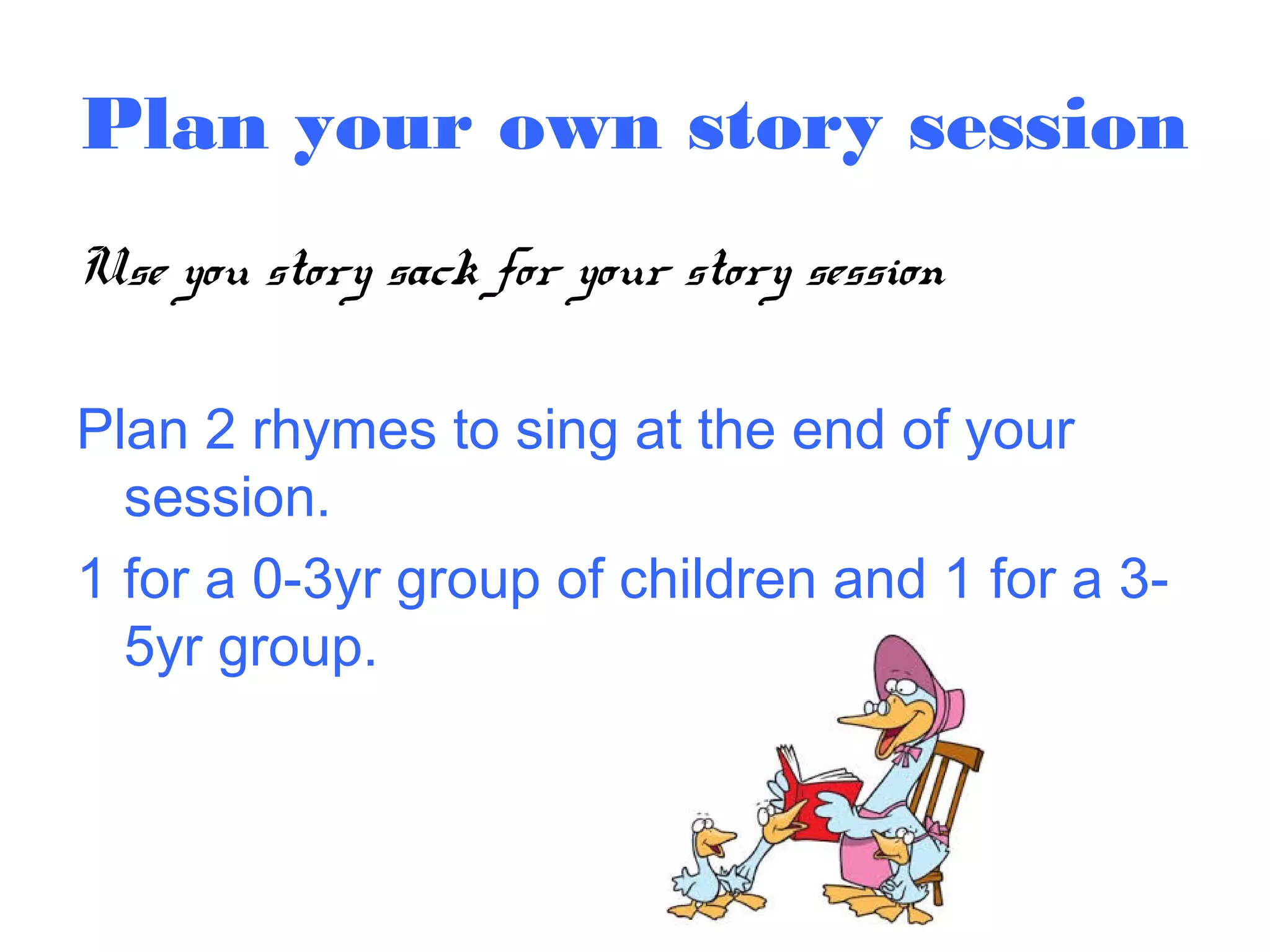
Use you story sack for your story session
Plan 2 rhymes to sing at the end of your
session.
1 for a 0-3yr group of children and 1 for a 3-
5yr group.
How to read a story?
What does the reader need to do
to make it an effective story
session?
Look at your assignment brief and
familiarise yourself with the skills you
need to demonstrate.
Discuss in pairs how you will meet
these.
Let’s observe your………
Reflect on the stories already heard and
feedback.
Objectives
All students will be able to:
•Identify nursery rhymes suitable for 0-3 and 3-
5 yrs
•Plan a story session for young children
Many students will be able to:
•Demonstrate an effective story session
Some students will be able to:
•Reflect on the story telling session

Week 2 unit 19 2016

  • 1.
    Unit 18 Books StoriesPoems and Rhymes For Children
  • 2.
    Starter activity: Picturebook hangman Learners think of a children’s book in pairs guess the book through a game of hangman
  • 3.
    All students willbe able to: • List key features of rhymes and poems • List resources used to enhance a story, rhyme, or poem session • Identify what a story sack is • Plan a story telling session Many students will be able to: • Explain what makes a great story • Compare and contrast rhymes and poems between the two age ranges Some students will be able to: • Discuss and reflect on ideas with a peer
  • 4.
    RECAP: In pairslist ALL the poems and rhymes you know – Be prepared to share with the whole class.
  • 5.
    What is differentabout rhymes and poems for 0-3 and 3-5yrs
  • 6.
    Individually Produce a posterlisting the key features of the rhymes and poems for 0-3 and 3-5yrs 2.2
  • 7.
    RECAP – What makesa great story session? RECAP – What makes a great story session? What can aid a story?
  • 8.
    Paired Task List everythingyou can think off that could develop this story in to an exciting one. Use poster paper
  • 9.
    Task Sheet 3 •Individually complete task sheet 3 – List resources to aid stories, rhymes and poems
  • 10.
    Have you metany lesson objectives yet?
  • 11.
    In groups explainwhat a story sack is and how best to use it?
  • 13.
    Plan: What do youneed to make a book? What will your plot be? Use the story board to support your Planning. What props could you use to support your book? What will your resources be? What else… Do: How will you execute your planning Make your book Review: How much progress have you made?
  • 14.
  • 15.
    Homework • Gather someresources from home • Bring in a pillow case for next lesson
  • 16.
    Review Check your lessonobjectives – Have you met them all? What would you like help with?
  • 17.
    Unit 19 Books StoriesPoems and Rhymes For Children
  • 18.
    Objectives All students willbe able to: •Identify homemaking skills relevant to childcare •Demonstrate sewing skills •List resources and props needed to develop a story sack •Plan and create a story sack Many students will be able to: •Reflect on the process of making the story sack Some students will be able to: •Evaluate the practical session
  • 19.
    Name 1 numberrhyme each
  • 20.
    Why do weneed homemaking skills in childcare???
  • 21.
    How to sew! •http://www.youtube.com/watch?v=OYoZ5VzCljI
  • 22.
    Making your storysack Use the hand-out provided to sew yourstory sack – 30mins
  • 23.
    PlanPlan • What willyou decorate yourstory sack with? • What props and resources can you use in yourstory sack? • How will you make yourprops? • Make a list of things you need • Write down deadlines to complete yourtasks
  • 24.
  • 25.
    Review Evaluate the processof making your story sack What have you learnt? What will the children gain from your story sack? What did you find easy/hard? Did you keep within the time frame/deadlines? Did you demonstrate safe practice?
  • 26.
    List the skillsand knowledge you have learnt today
  • 27.
    Objectives All students willbe able to: •Identify homemaking skills relevant to childcare •Demonstrate sewing skills •List resources and props needed to develop a story sack •Plan and create a story sack Many students will be able to: •Reflect on the process of making the story sack Some students will be able to: •Evaluate the practical session
  • 28.
    Unit 19 Books StoriesPoems and Rhymes For Children
  • 29.
    Starter Hum a nurseryrhyme to your partner and they have to guess what it is.
  • 30.
    Objectives All students willbe able to: •Identify nursery rhymes suitable for 0-3 and 3- 5 yrs •Plan a story session for young children Many students will be able to: •Demonstrate an effective story session Some students will be able to: •Reflect on the story telling session
  • 31.
    Plan your ownstory session Use you story sack for your story session Plan 2 rhymes to sing at the end of your session. 1 for a 0-3yr group of children and 1 for a 3- 5yr group.
  • 32.
    How to reada story? What does the reader need to do to make it an effective story session? Look at your assignment brief and familiarise yourself with the skills you need to demonstrate. Discuss in pairs how you will meet these.
  • 33.
  • 34.
    Reflect on thestories already heard and feedback.
  • 35.
    Objectives All students willbe able to: •Identify nursery rhymes suitable for 0-3 and 3- 5 yrs •Plan a story session for young children Many students will be able to: •Demonstrate an effective story session Some students will be able to: •Reflect on the story telling session