Origin and Structure
of the Earth
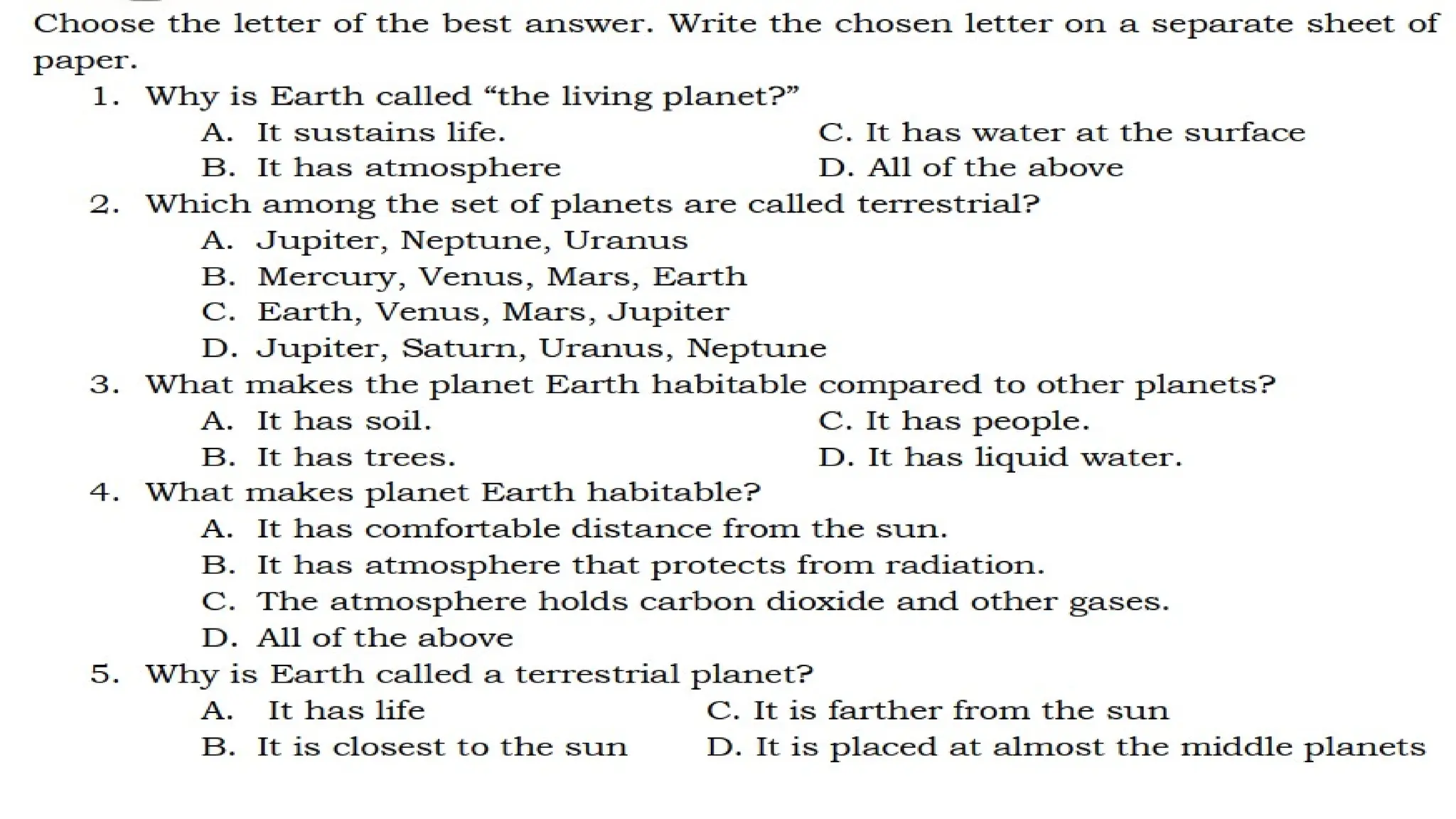
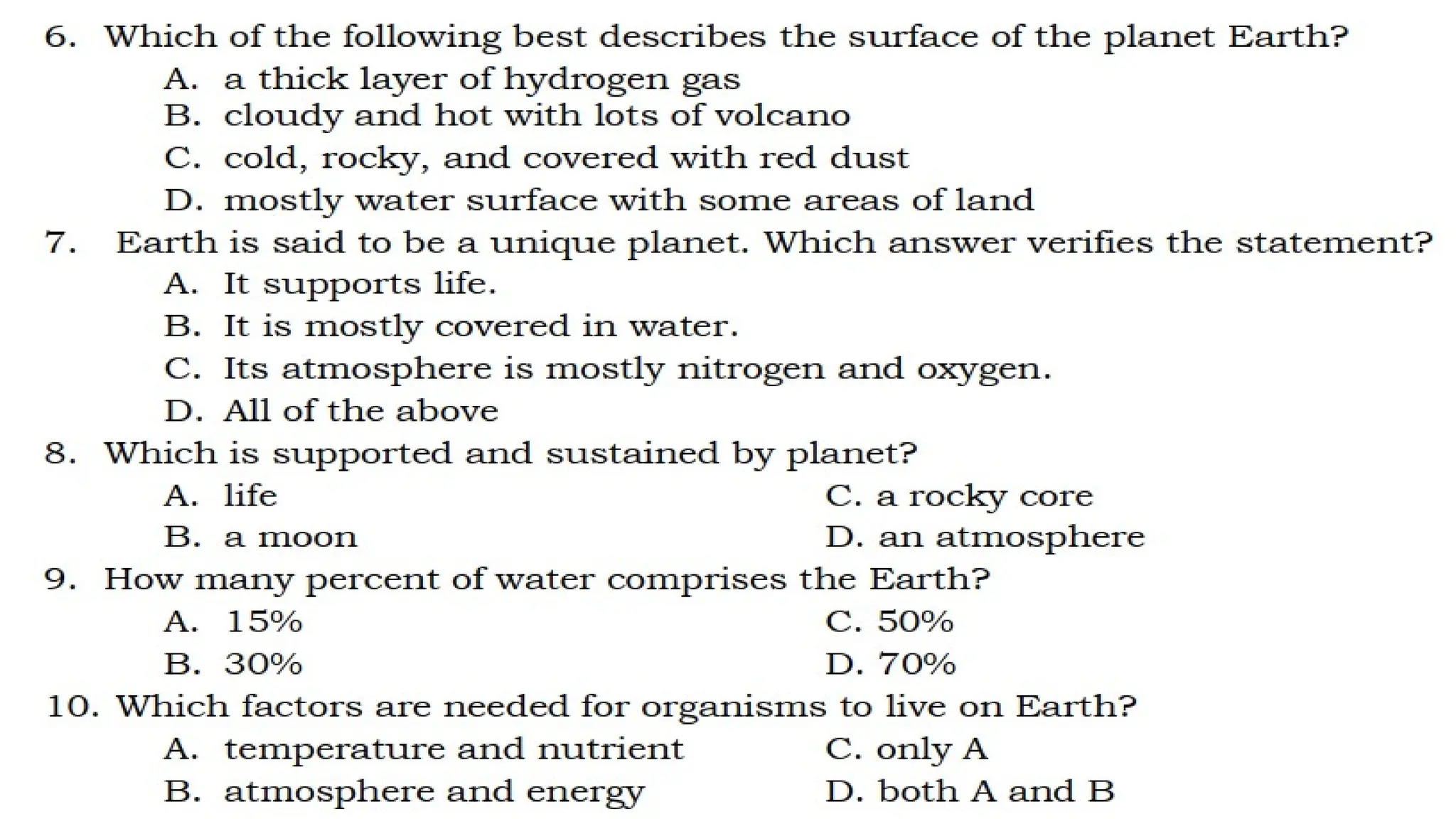
Pre-Assessment
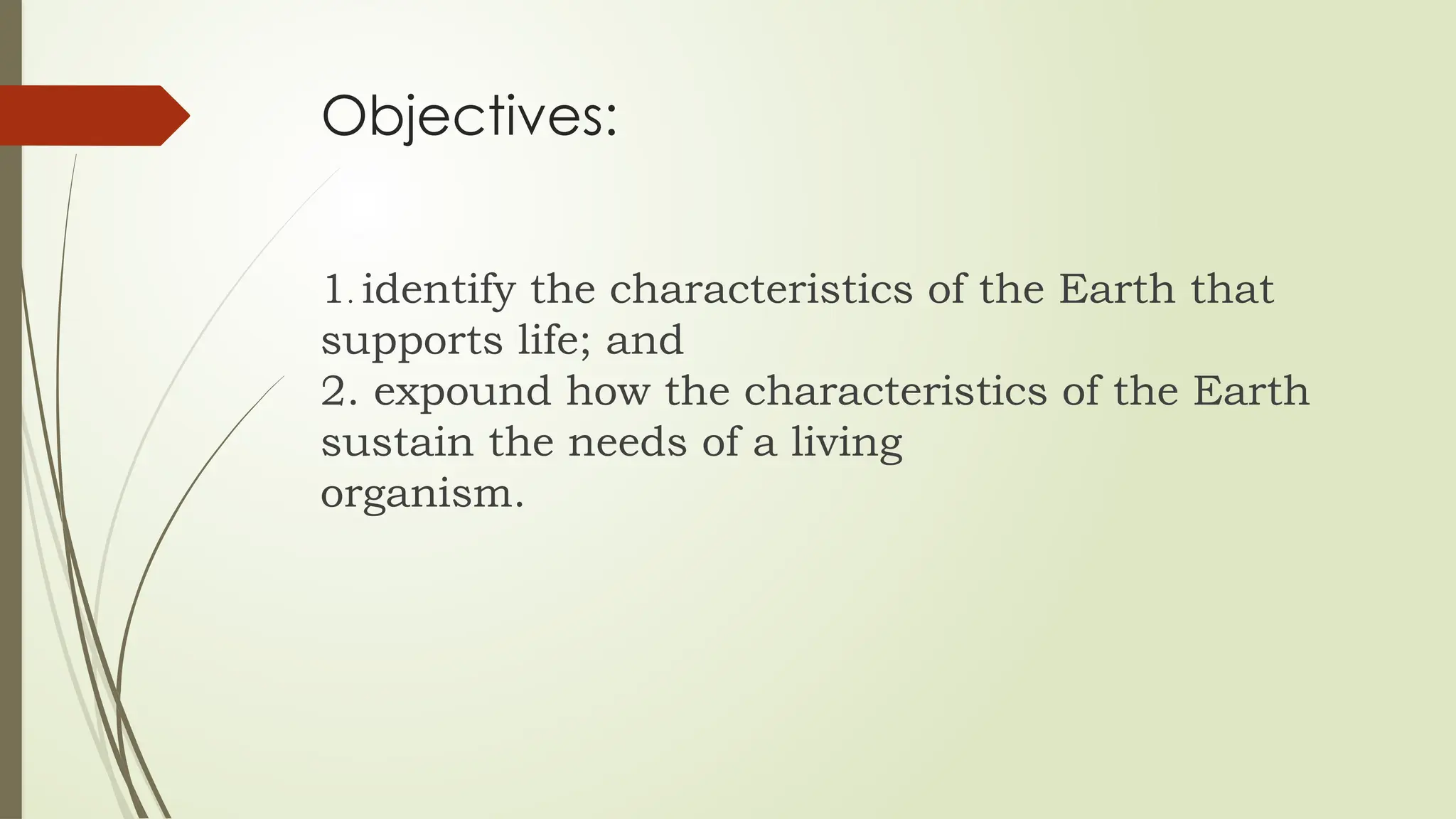
Objectives:
1. identify the characteristics of the Earth that
supports life; and
2. expound how the characteristics of the Earth
sustain the needs of a living
organism.
What have you learned?
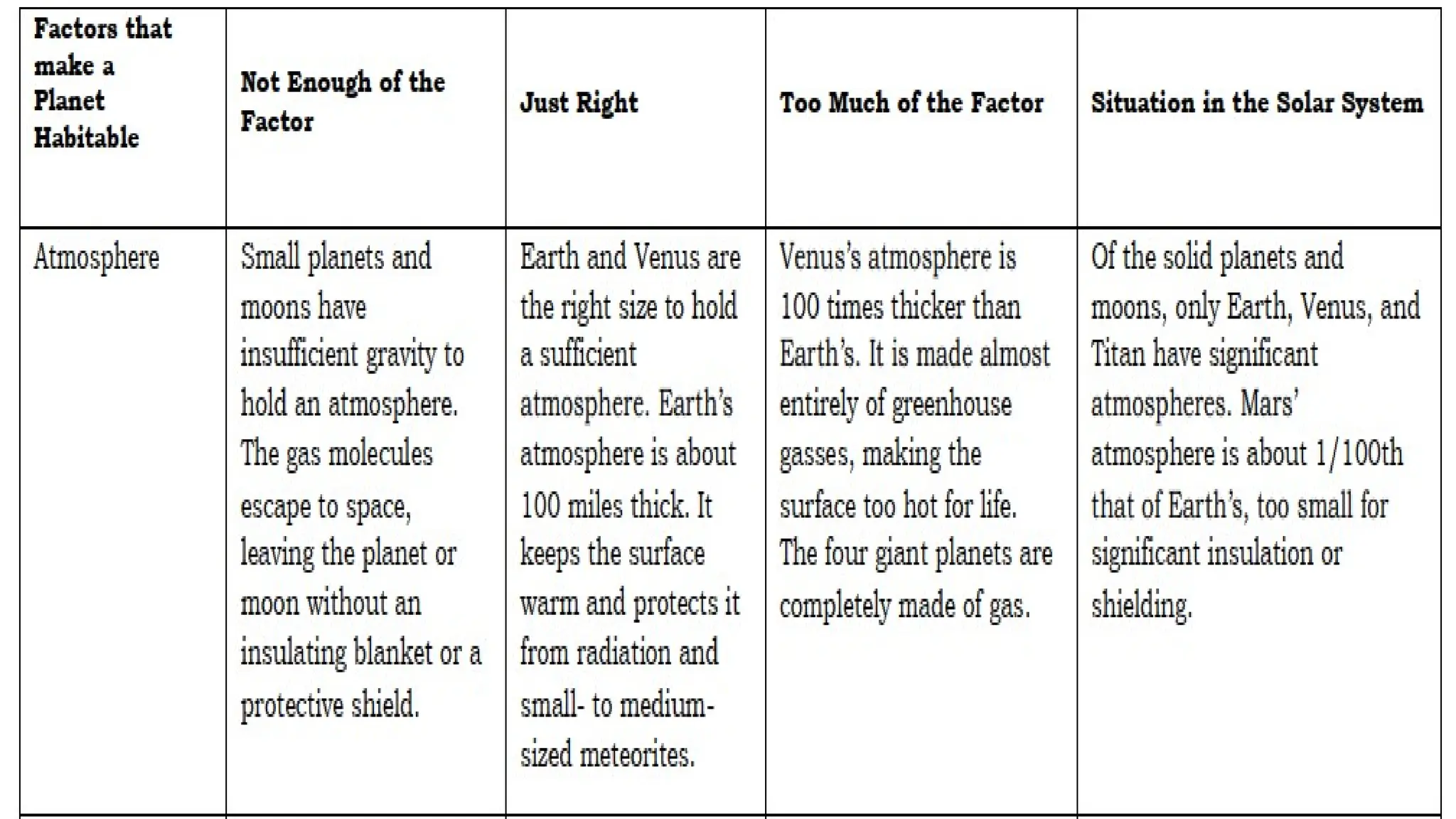
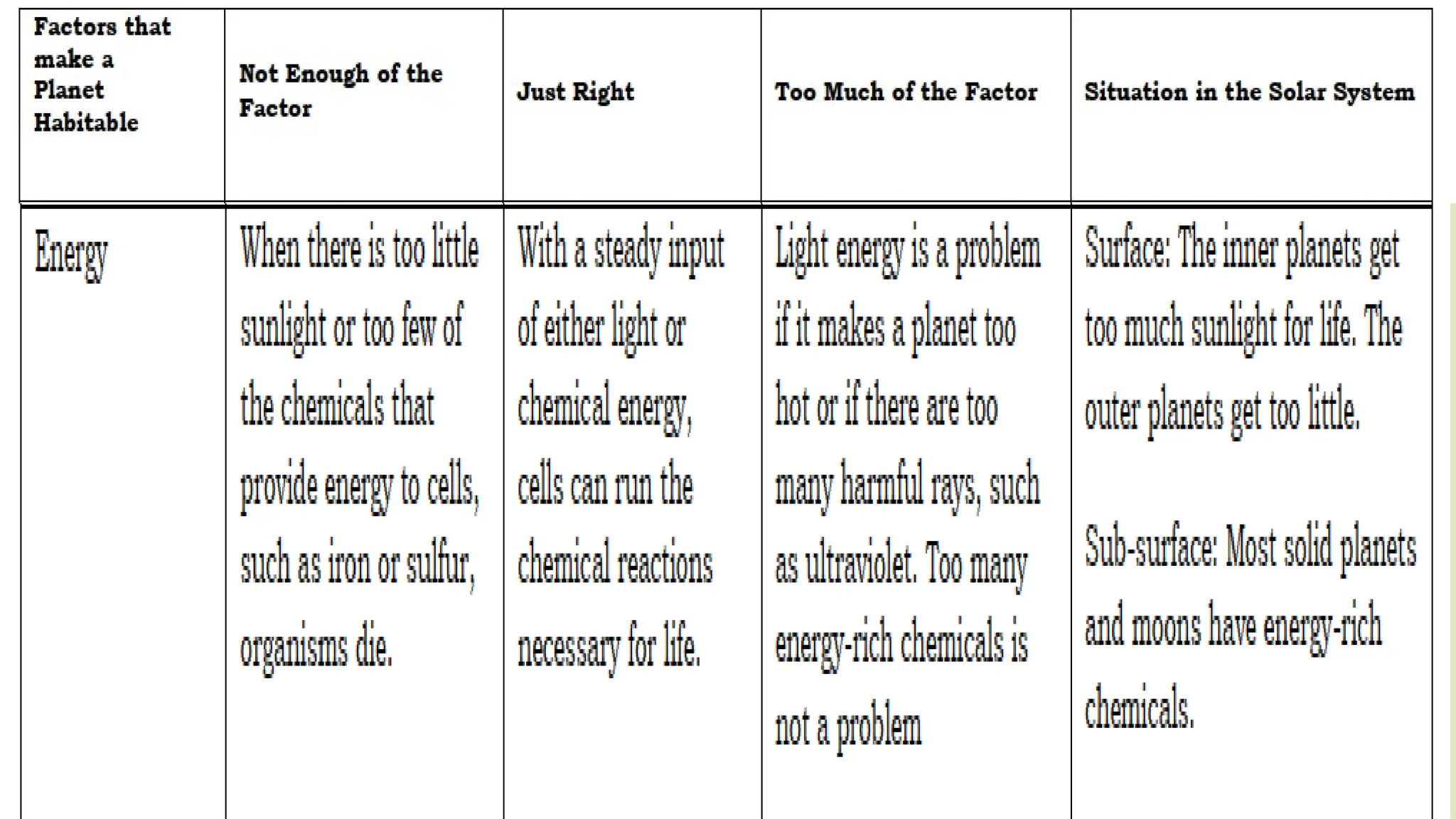
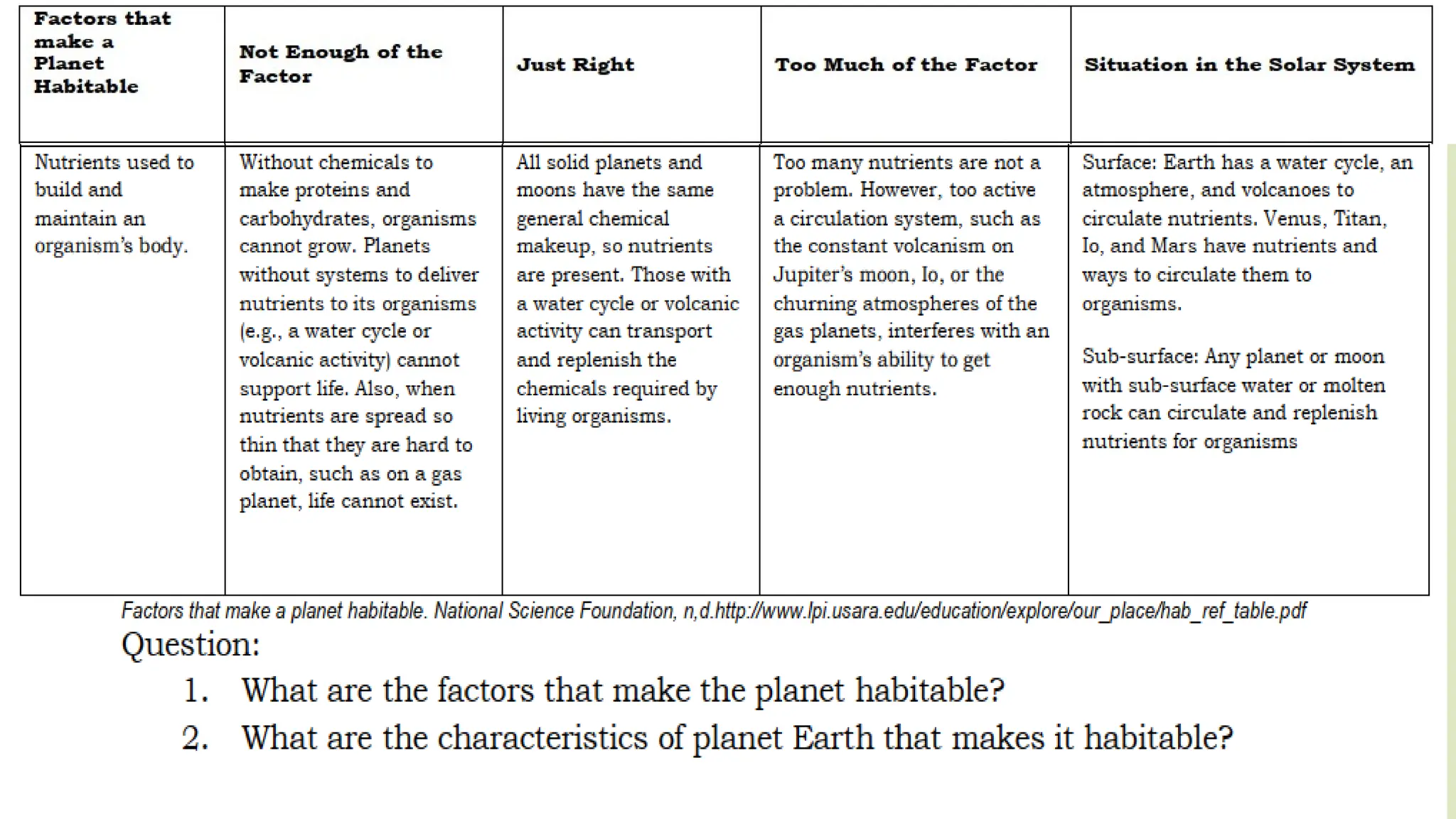
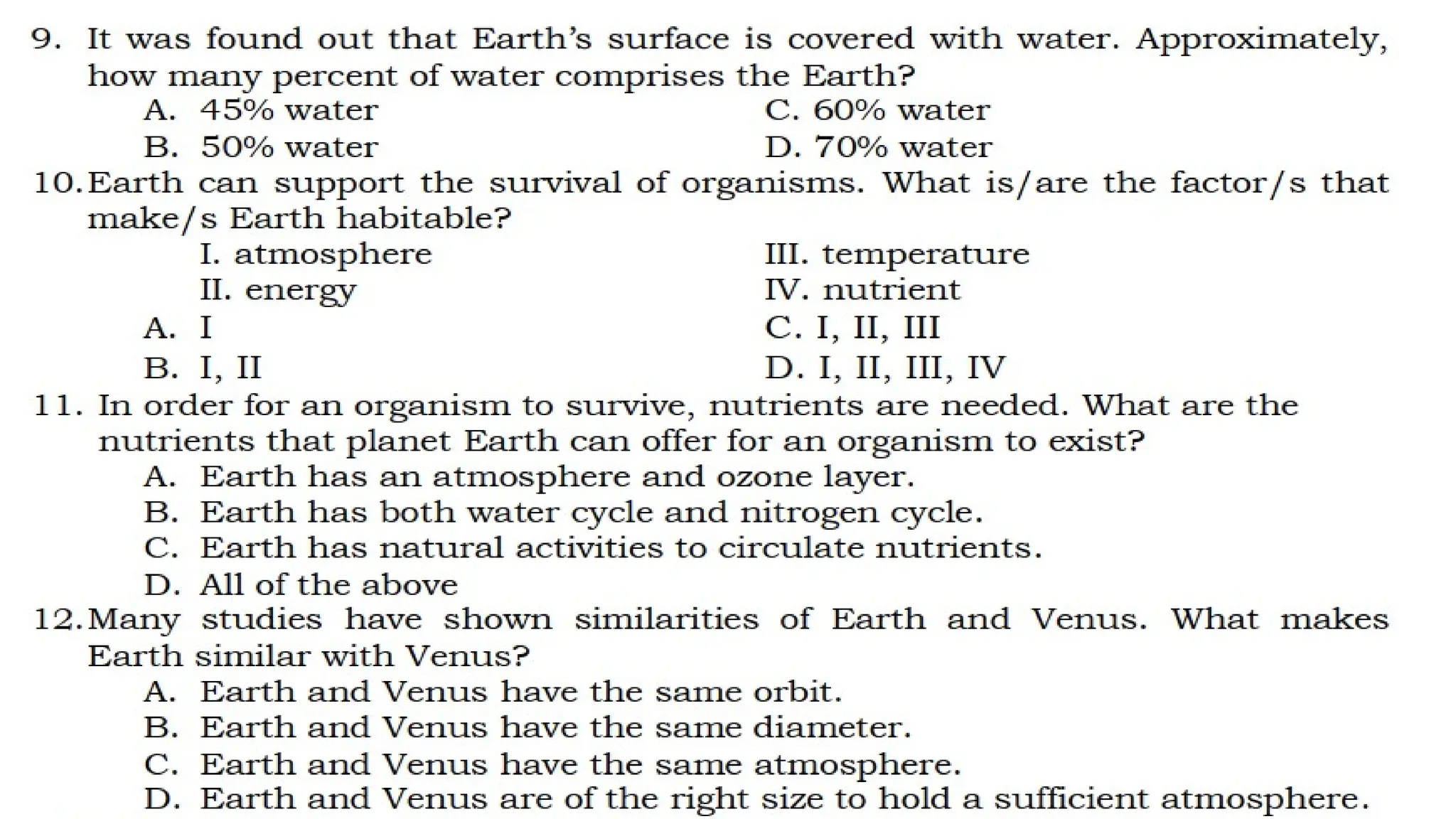
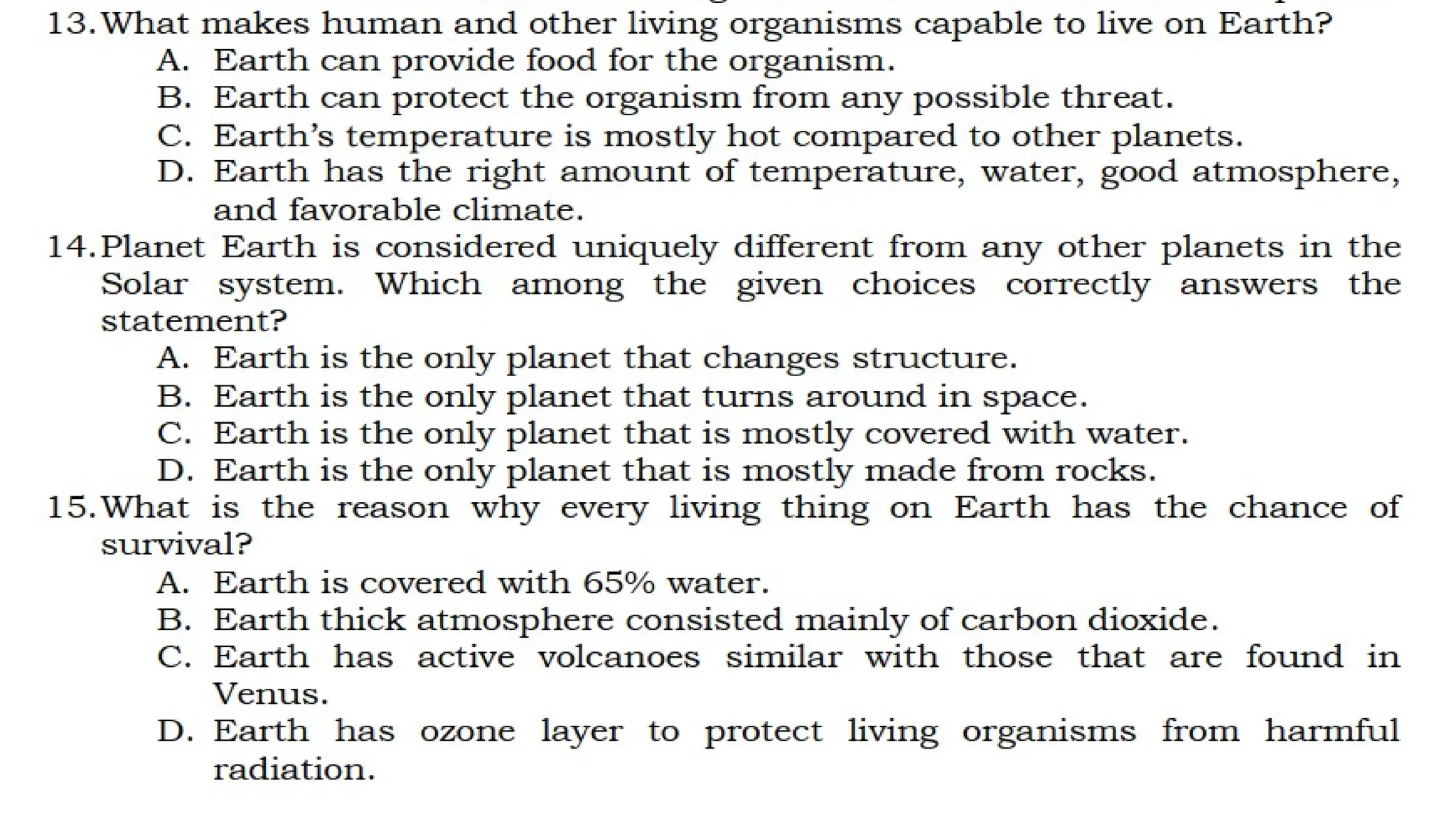
1.Planet Earth is considered habitable because of the
following reasons:
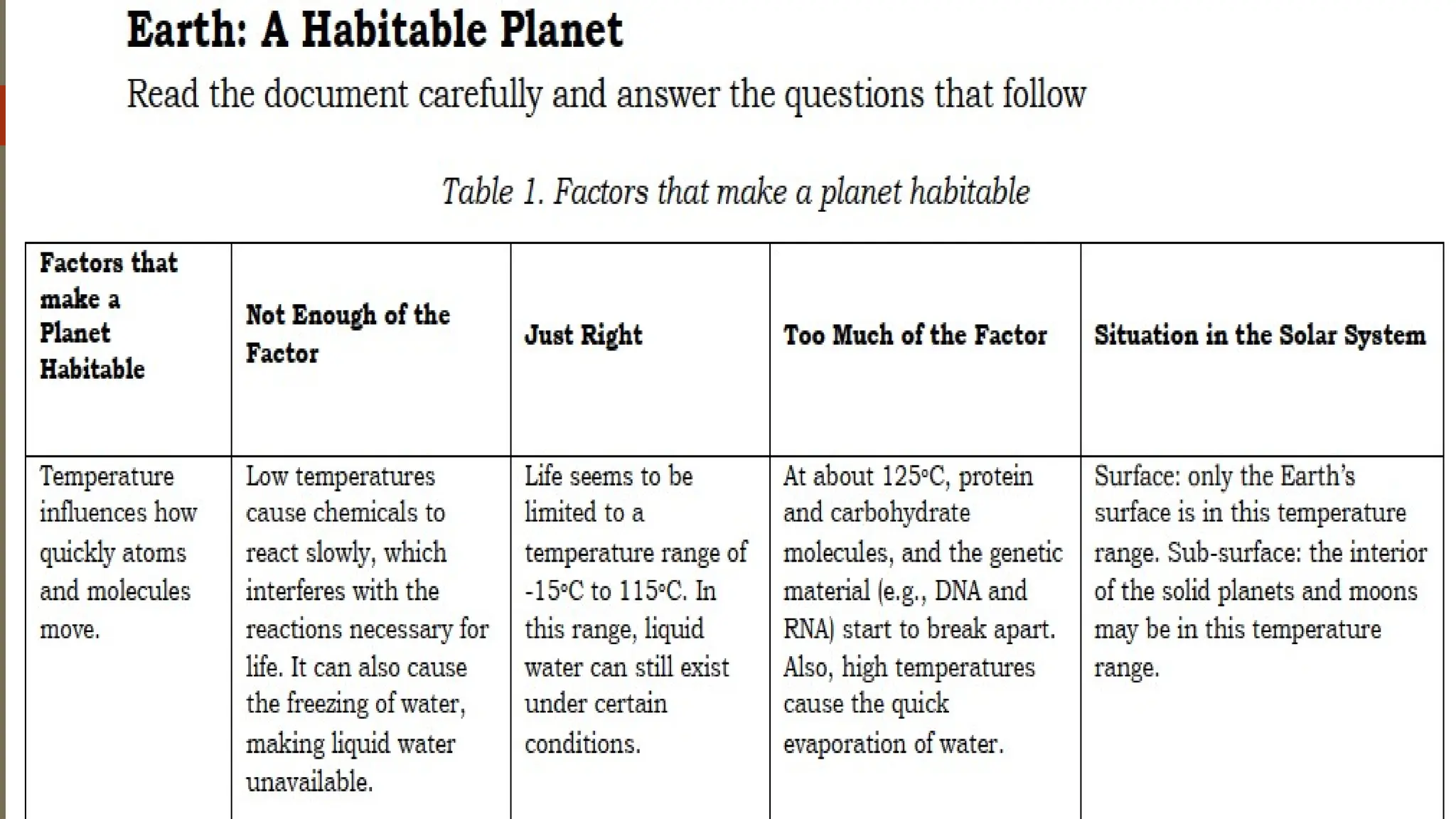
(1) it has the right distance from the sun;
(2) it is protected from harmful solar radiation by its
magnetic field;
(3) it is kept warm by an insulating atmosphere; and
(4) it has the right amount of ingredients for life,
including water and carbon.
What have you learned?
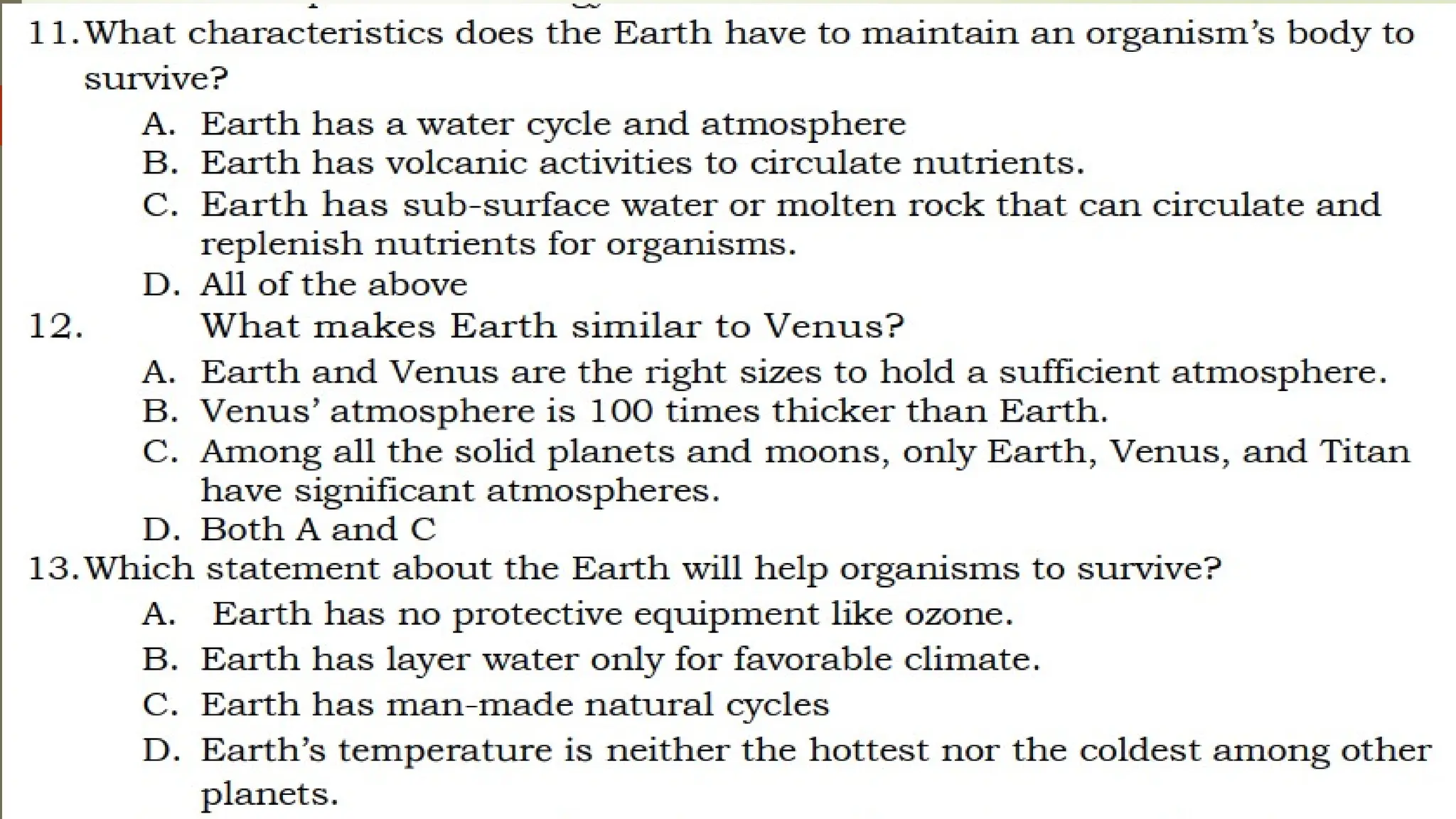
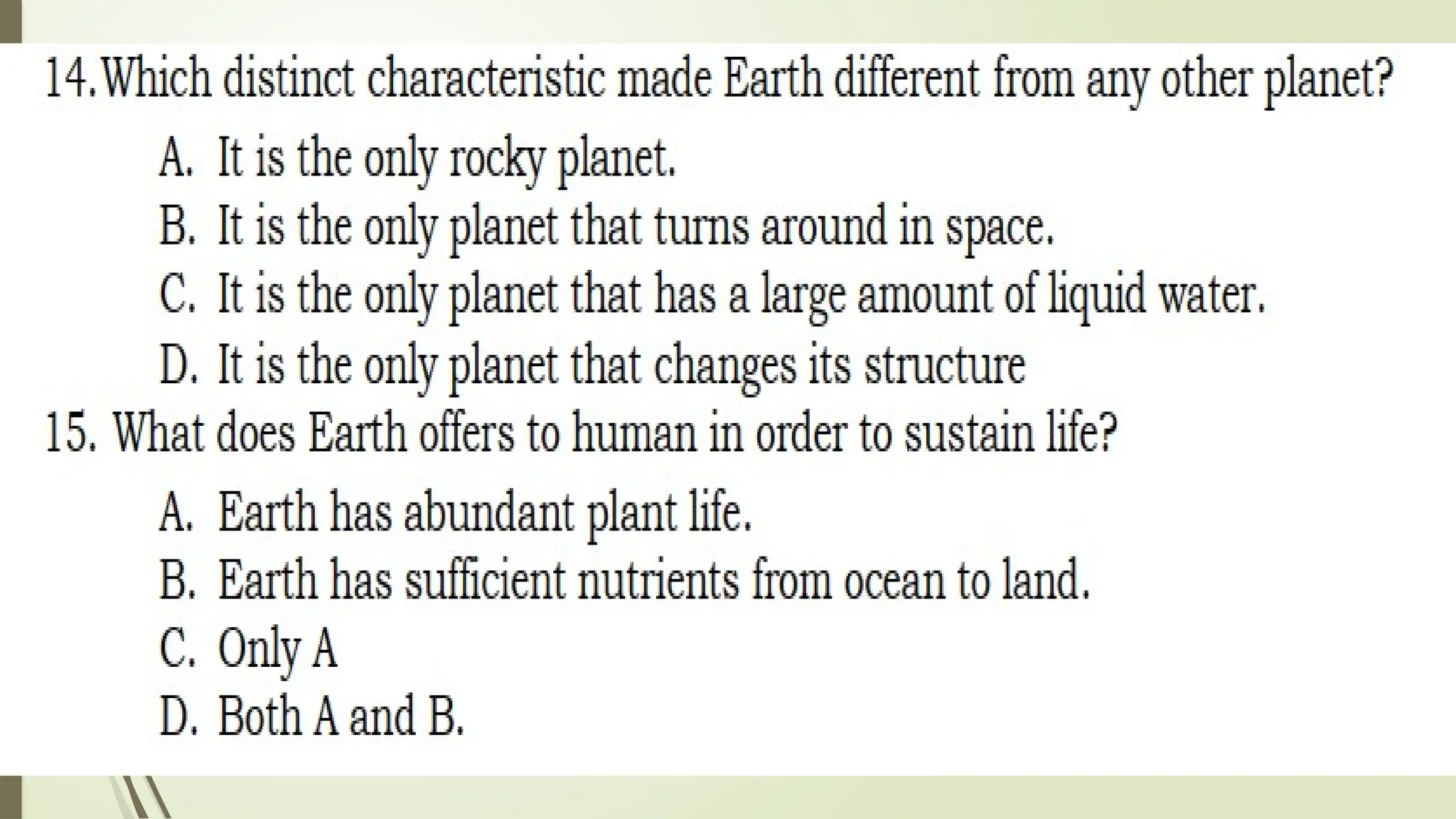
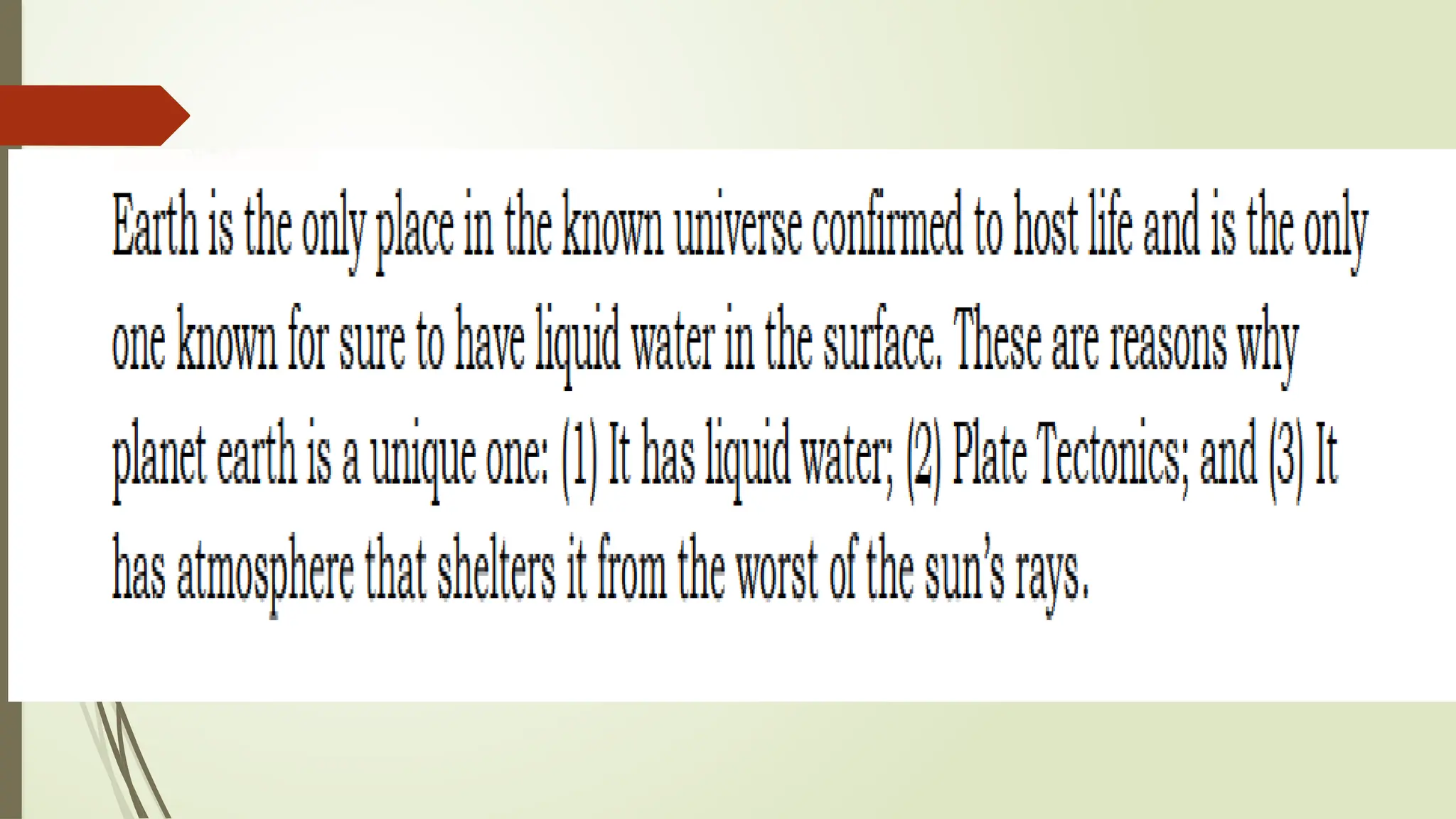
2. Earth is different from other planets in a way that it is
the only planet with liquid water on the surface.
a. Earth, Venus, and Mars may have similarities:
(1)They all are terrestrial planets, made of solid rocks and
silicates;
(2)They all have an atmosphere;
(3)They all almost have the same time to rotate on their
axes;
(4)Earth and Mars both have water;
(5) They all have carbon dioxide; and
(6)All have landforms.
What have you learned?
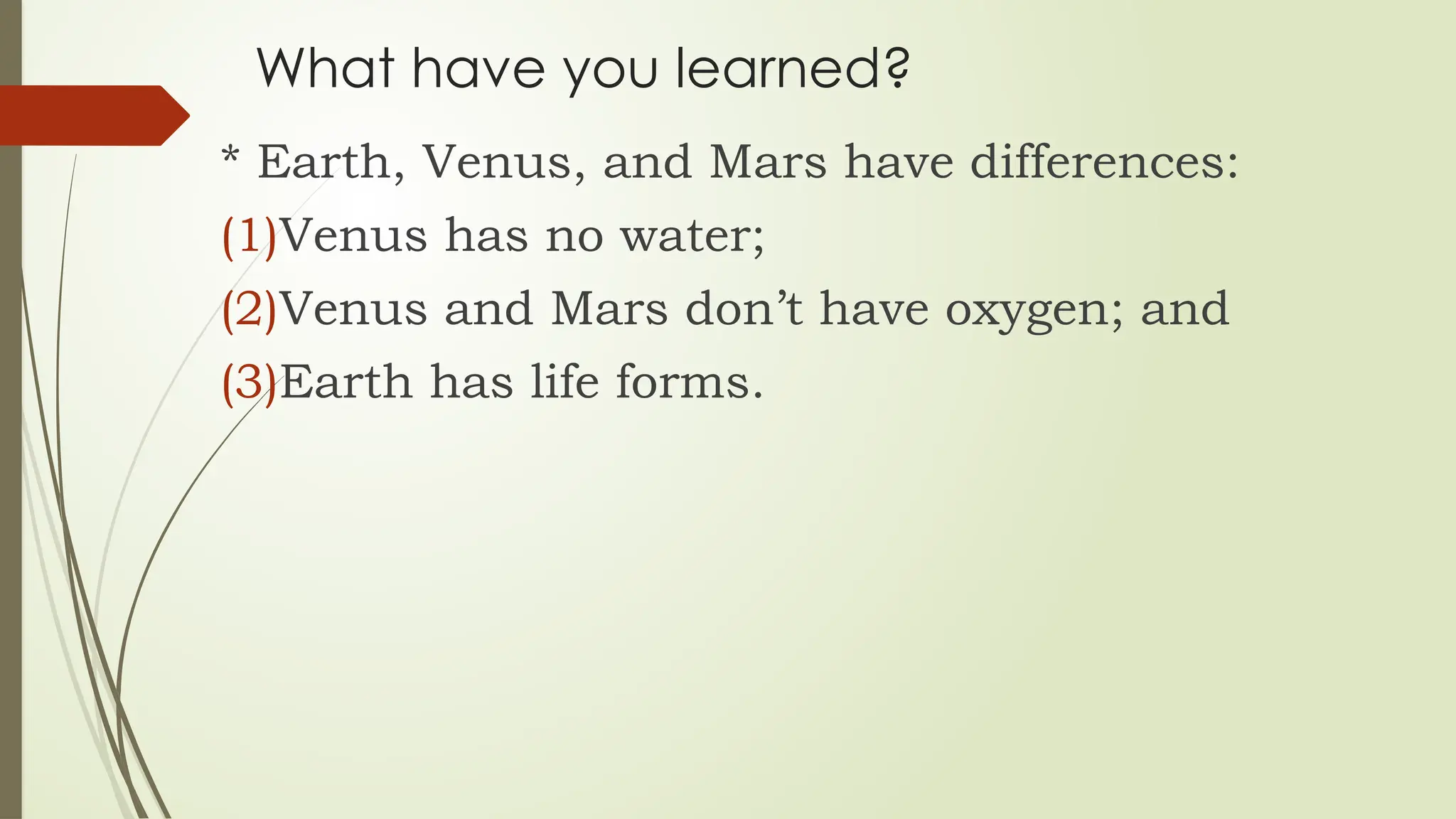
* Earth, Venus, and Mars have differences:
(1)Venus has no water;
(2)Venus and Mars don’t have oxygen; and
(3)Earth has life forms.
Post - Assessment
Week 1_Origin and Structure of the Earth.pptx

Week 1_Origin and Structure of the Earth.pptx

  • 1.
  • 2.
  • 7.
    Objectives: 1. identify thecharacteristics of the Earth that supports life; and 2. expound how the characteristics of the Earth sustain the needs of a living organism.
  • 15.
    What have youlearned? 1.Planet Earth is considered habitable because of the following reasons: (1) it has the right distance from the sun; (2) it is protected from harmful solar radiation by its magnetic field; (3) it is kept warm by an insulating atmosphere; and (4) it has the right amount of ingredients for life, including water and carbon.
  • 16.
    What have youlearned? 2. Earth is different from other planets in a way that it is the only planet with liquid water on the surface. a. Earth, Venus, and Mars may have similarities: (1)They all are terrestrial planets, made of solid rocks and silicates; (2)They all have an atmosphere; (3)They all almost have the same time to rotate on their axes; (4)Earth and Mars both have water; (5) They all have carbon dioxide; and (6)All have landforms.
  • 17.
    What have youlearned? * Earth, Venus, and Mars have differences: (1)Venus has no water; (2)Venus and Mars don’t have oxygen; and (3)Earth has life forms.
  • 18.