





![WEBSOCKETS SYNTAX
lvar Socket = new WebSocket(url, [protocal] );
lATTRIBUTES
lSocket.readyState
lSocket.bufferedAmount
EVENTS
lOpen
lMessage
lError
lClose
METHODS
lSocket.send()
lSocket.close()](https://image.slidesharecdn.com/meetuptalk-160627140437/85/WEBSOCKETS-AND-WEBWORKERS-13-320.jpg)
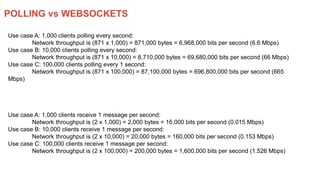
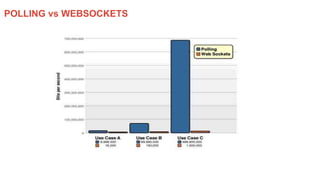

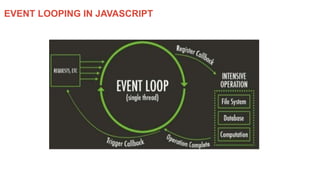
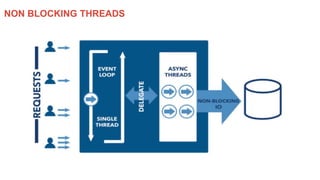
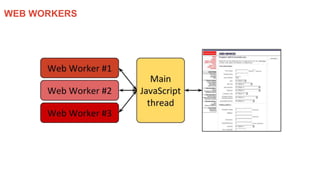


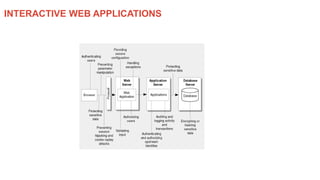
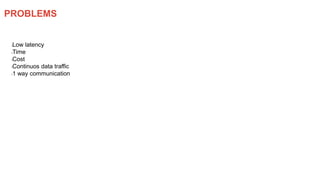
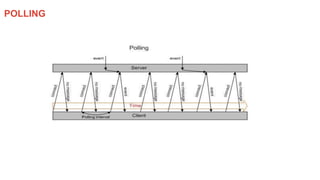
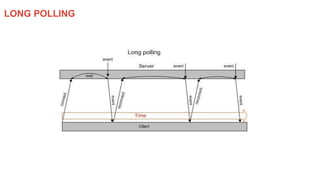
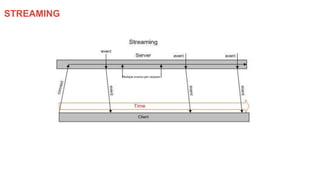
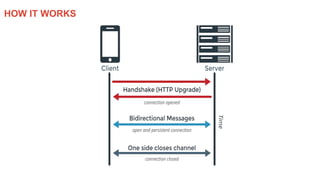
This document discusses websockets and web workers for building low latency interactive web applications. It covers the problems with traditional techniques like polling and describes how websockets enable full-duplex communication in a scalable way without overhead. Web workers allow running JavaScript in a non-blocking way by using multiple threads to improve performance of computationally intensive tasks.


![Getting Started with Apache Spark: Big Data Made Simple [Free Meetup]](https://cdn.slidesharecdn.com/ss_thumbnails/apachesparkgettingstarted-260203175547-8361bcc3-thumbnail.jpg?width=640&height=640&fit=bounds)


