


Phases of the Web Process
Project Scope
Defining the scope of the project is a critical step.
One of the most common frustrations with Web
projects is scope creep. By creating a well-defined
project scope plan that outlines specific activities
and deliverables, along with specific timelines, you
will be able to clearly set expectations for your
clients.
Project Scope
◦ Goals
◦ Target Audience
◦ Message
◦ Competition
Wireframes and Site Architecture
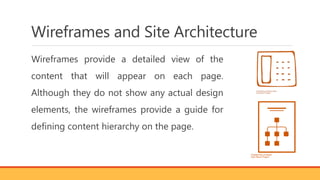
Site architecture includes the sitemap and
wireframes of pages. Creating the sitemap
ensures that you’ve considered all the key
pages in the site, showing their relationship to
each other and defining how the sties overall
navigation should be structured.
Wireframes and Site Architecture
Wireframes provide a detailed view of the
content that will appear on each page.
Although they do not show any actual design
elements, the wireframes provide a guide for
defining content hierarchy on the page.
Visual Design
Once the blueprint for the site has been
defined through the creation of the sitemap
and wireframes, the next step is to create a
visual style.
Visual Design
The overall visual style will most likely be
determined by the visual brand of the
organization; the goal being to connect the
Web with all other forms of the organization’s
communications.
Visual Design
The organization’s brand plays an important
role in this part of the process, as designers
will want to visually convey key brand
perceptual ideas within the design.
Site Development
With designs approved, it’s time to flesh out
the design of the pages, develop new content
and refine old content, create videos,
slideshows, podcasts and other media that will
appear on the site as well as start to build out
the HTML and CSS of the site.
Site Testing
Before the site is launched, it will be placed on
a production server where only internal
audiences and anyone who you share the link
with can view it.
Site Testing
Testing of the site is critical as there will
inevitably be issues that need to be addressed
before the site goes live. There is nothing that
erodes a brand more than a site that doesn’t
function properly or that has misspellings or
broken design elements.
Site Testing
At this stage the site will need to be reviewed
on multiple browsers (Firefox, Safari, Internet
Explorer) and multiple devices (laptops,
tablets, and mobile) to see if and where breaks
occur.
Launch
The big day. You’ve tested the site, had it
reviewed and approved by the project
stakeholders, and you’re ready to launch. But
once the site is launched, the project isn’t over
— you should be prepared to address
feedback from users adapting to the new site.
Launch
Expect to make some immediate changes to
the site, such as fixing broken links, editing
copy and making adjustments. The Web is a
fluid medium that changes on a daily, if not
hourly basis — change is inevitable.
Site Maintenance
Websites are living, breathing entities and
need constant care and maintenance.
Updating content, making changes to the
backend and fixing broken links are all in a
day’s work.
Site Maintenance
All of these phases are critical to the Web
design process. But the thread that runs
through the process is strategy: the desire to
achieve a goal, to move the organization
forward, to prosper in a competitive
environment.
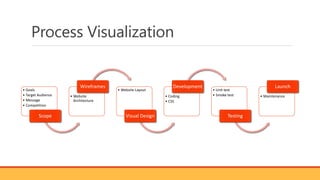
Process Visualization
• Goals
• Target Audience
• Message
• Competition
Scope
• Website
Architecture
Wireframes
• Website Layout
Visual Design
• Coding
• CSS
Development
• Unit test
• Smoke test
Testing
• Maintenance
Launch
THANKS

Website development process

  • 1.
    Phases of theWeb Process
  • 2.
    Project Scope Defining thescope of the project is a critical step. One of the most common frustrations with Web projects is scope creep. By creating a well-defined project scope plan that outlines specific activities and deliverables, along with specific timelines, you will be able to clearly set expectations for your clients.
  • 3.
    Project Scope ◦ Goals ◦Target Audience ◦ Message ◦ Competition
  • 4.
    Wireframes and SiteArchitecture Site architecture includes the sitemap and wireframes of pages. Creating the sitemap ensures that you’ve considered all the key pages in the site, showing their relationship to each other and defining how the sties overall navigation should be structured.
  • 5.
    Wireframes and SiteArchitecture Wireframes provide a detailed view of the content that will appear on each page. Although they do not show any actual design elements, the wireframes provide a guide for defining content hierarchy on the page.
  • 6.
    Visual Design Once theblueprint for the site has been defined through the creation of the sitemap and wireframes, the next step is to create a visual style.
  • 7.
    Visual Design The overallvisual style will most likely be determined by the visual brand of the organization; the goal being to connect the Web with all other forms of the organization’s communications.
  • 8.
    Visual Design The organization’sbrand plays an important role in this part of the process, as designers will want to visually convey key brand perceptual ideas within the design.
  • 9.
    Site Development With designsapproved, it’s time to flesh out the design of the pages, develop new content and refine old content, create videos, slideshows, podcasts and other media that will appear on the site as well as start to build out the HTML and CSS of the site.
  • 10.
    Site Testing Before thesite is launched, it will be placed on a production server where only internal audiences and anyone who you share the link with can view it.
  • 11.
    Site Testing Testing ofthe site is critical as there will inevitably be issues that need to be addressed before the site goes live. There is nothing that erodes a brand more than a site that doesn’t function properly or that has misspellings or broken design elements.
  • 12.
    Site Testing At thisstage the site will need to be reviewed on multiple browsers (Firefox, Safari, Internet Explorer) and multiple devices (laptops, tablets, and mobile) to see if and where breaks occur.
  • 13.
    Launch The big day.You’ve tested the site, had it reviewed and approved by the project stakeholders, and you’re ready to launch. But once the site is launched, the project isn’t over — you should be prepared to address feedback from users adapting to the new site.
  • 14.
    Launch Expect to makesome immediate changes to the site, such as fixing broken links, editing copy and making adjustments. The Web is a fluid medium that changes on a daily, if not hourly basis — change is inevitable.
  • 15.
    Site Maintenance Websites areliving, breathing entities and need constant care and maintenance. Updating content, making changes to the backend and fixing broken links are all in a day’s work.
  • 16.
    Site Maintenance All ofthese phases are critical to the Web design process. But the thread that runs through the process is strategy: the desire to achieve a goal, to move the organization forward, to prosper in a competitive environment.
  • 17.
    Process Visualization • Goals •Target Audience • Message • Competition Scope • Website Architecture Wireframes • Website Layout Visual Design • Coding • CSS Development • Unit test • Smoke test Testing • Maintenance Launch
  • 18.