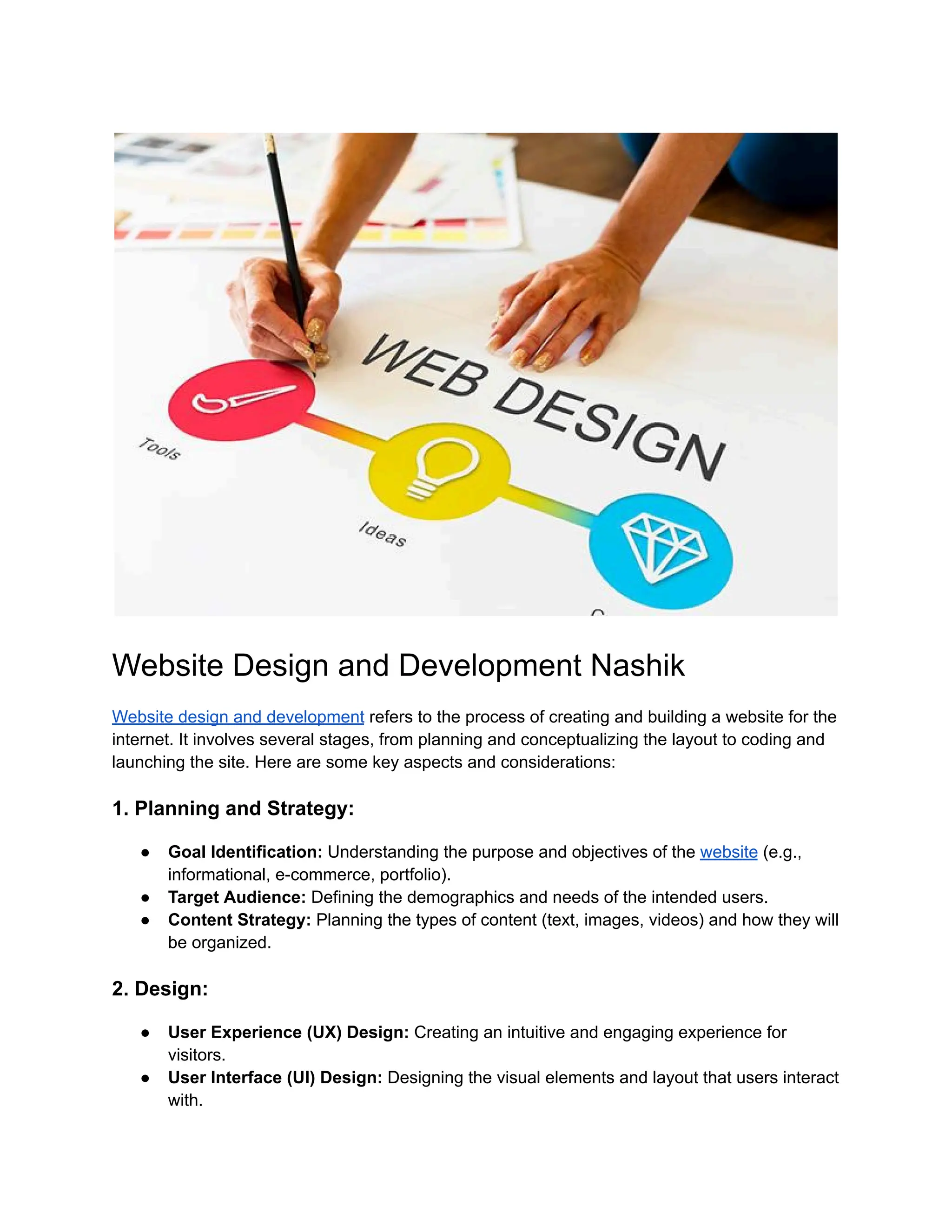
Website Design and Development Nashik
Website design and development refers to the process of creating and building a website for the
internet. It involves several stages, from planning and conceptualizing the layout to coding and
launching the site. Here are some key aspects and considerations:
1. Planning and Strategy:
● Goal Identification: Understanding the purpose and objectives of the website (e.g.,
informational, e-commerce, portfolio).
● Target Audience: Defining the demographics and needs of the intended users.
● Content Strategy: Planning the types of content (text, images, videos) and how they will
be organized.
2. Design:
● User Experience (UX) Design: Creating an intuitive and engaging experience for
visitors.
● User Interface (UI) Design: Designing the visual elements and layout that users interact
with.
● Responsive Design: Ensuring the website looks and functions well on various devices
(desktops, tablets, smartphones).
3. Development:
● Front-end Development: Building the client-side of the website using HTML, CSS, and
JavaScript.
● Back-end Development: Developing server-side functionality and integrating
databases, if needed.
● Content Management System (CMS): Implementing a CMS like WordPress, Drupal, or
custom CMS for easier content management.
4. Testing:
● Functionality Testing: Checking all interactive elements, forms, and navigation.
● Compatibility Testing: Ensuring the website works across different browsers and
devices.
● Performance Testing: Optimizing load times and responsiveness.
5. Deployment and Maintenance:
● Launch: Making the website live on the internet and monitoring initial performance.
● Maintenance: Regular updates, security patches, and content updates to keep the site
current and secure.
Key Considerations:
● SEO: Implementing best practices to improve search engine visibility.
● Accessibility: Ensuring the website is accessible to users with disabilities.
● Security: Implementing measures to protect user data and prevent breaches.
● Scalability: Designing the website to accommodate future growth and changes.
Benefits of Professional Website Design and Development:
● Professionalism: A well-designed website enhances credibility and trustworthiness.
● Customization: Tailoring the site to specific business needs and branding.
● User Engagement: Providing a positive user experience encourages visitors to explore
and interact with the site.
● Marketing and Growth: A strategically developed website can support marketing efforts
and business growth.
Website Design and Development features
Website design and development incorporates various features and functionalities to create an
effective online presence. Here are key features commonly included in modern websites:
Essential Features:
1. Responsive Design:
○ Ensures the website looks and functions well on different devices (desktops,
tablets, smartphones).
2. Intuitive Navigation:
○ Easy-to-use menus and navigation bars that help users find information quickly.
3. Fast Loading Speed:
○ Optimized performance to reduce loading times and improve user experience.
4. Content Management System (CMS):
○ Allows easy management and updating of website content without technical
knowledge.
5. SEO Optimization:
○ Implementation of SEO best practices to improve search engine rankings and
visibility.
6. Security Features:
○ SSL certificates, secure payment gateways (for e-commerce), and protection
against malware and hacking.
7. Contact Forms and Calls to Action (CTAs):
○ Forms for user inquiries, subscriptions, or bookings, strategically placed CTAs to
encourage user interaction.
8. Social Media Integration:
○ Links to social media profiles, social sharing buttons, and feeds to engage users
and increase reach.
9. Analytics and Reporting:
○ Integration with tools like Google Analytics to track visitor behavior, traffic
sources, and other key metrics.
Advanced Features:
1. E-commerce Functionality:
○ Product catalogs, shopping carts, secure checkout processes, and inventory
management (for online stores).
2. Interactive Elements:
○ Sliders, carousels, galleries, videos, animations, and interactive maps to enhance
user engagement.
3. Membership and User Authentication:
○ User registration, login/logout functionality, member-only content access.
4. Multilingual Support:
○ Capability to display content in multiple languages for global reach.
5. Integration with Third-Party Services:
○ APIs for integrating with CRM systems, email marketing platforms, payment
gateways, etc.
6. Blog or News Section:
○ Platform for publishing articles, news updates, and content marketing efforts.
7. Customizable Design Elements:
○ Ability to customize colors, fonts, layouts, and design elements to align with
brand identity.
8. Accessibility Features:
○ Compliance with accessibility standards (WCAG) to ensure usability for people
with disabilities.
9. Scalability and Flexibility:
○ Ability to scale the website as business needs grow, adding new features and
functionalities.
Design and User Experience (UX):
1. Visual Design:
○ Attractive and cohesive design that reflects brand identity and appeals to target
audience.
2. Typography and Readability:
○ Clear typography and readable content layout for better user experience.
3. Whitespace and Layout:
○ Strategic use of whitespace and organized layout for ease of navigation and
content consumption.
4. Mobile-First Design Approach:
○ Designing for mobile devices first, then scaling up for larger screens.
5. UI/UX Best Practices:
○ Consistent design elements, intuitive user flows, and usability testing to optimize
user experience.
Maintenance and Support:
1. Regular Updates:
○ Keeping software, plugins, and security patches up to date.
2. Technical Support:
○ Providing ongoing support, troubleshooting, and assistance to website
administrators.
3. Backup and Recovery:
○ Regular backups of website data and content to prevent data loss in case of
emergencies.
Website design and development FAQ
Certainly! Here's a set of frequently asked questions (FAQs) related to website design and
development:
General FAQs:
1. What is website design and development?
○ Website design and development involve creating and building a website for the
internet. It includes designing the layout, coding, and programming necessary to
make the website functional.
2. Why is a professional website important for businesses?
○ A professional website enhances credibility, increases brand visibility, and allows
businesses to reach a wider audience. It also serves as a platform for marketing,
customer engagement, and sales.
3. What are the steps involved in website development?
○ The steps typically include planning, designing the user interface (UI) and user
experience (UX), coding and development, testing, launch, and ongoing
maintenance.
4. What is responsive web design?
○ Responsive web design ensures that a website looks good and functions well on
various devices, including desktops, tablets, and smartphones, by automatically
adjusting its layout and content.
5. How long does it take to build a website?
○ The timeframe varies depending on the complexity of the website, features
required, and client's specifications. It can range from a few weeks for simpler
websites to several months for complex projects.
Design and Development FAQs:
6. What technologies are used in website development?
○ Technologies include HTML, CSS, JavaScript for front-end development, and
various server-side languages (e.g., PHP, Python, Ruby) and frameworks (e.g.,
Node.js, Laravel) for back-end development.
7. What is a Content Management System (CMS)?
○ A CMS is a software application used to manage and modify digital content on
websites. Popular CMS platforms include WordPress, Drupal, and Joomla.
8. Do I need to know coding to manage my website?
○ It depends on the complexity of updates you want to make. With a user-friendly
CMS, you can manage basic content updates without coding knowledge. For
more advanced changes, coding skills may be required.
9. What is SEO and why is it important for websites?
○ SEO (Search Engine Optimization) is the process of improving a website's
visibility in search engine results. It's important as it helps drive organic traffic to
the site, increasing chances of conversion and engagement.
E-commerce and Security FAQs:
10. What features are essential for an e-commerce website?
○ Essential features include product catalog, shopping cart, secure checkout,
payment gateway integration, inventory management, and customer account
management.
11. How do you ensure website security?
○ Website security measures include using HTTPS/SSL certificates, regular
software updates, strong passwords, implementing firewalls, and performing
security audits and monitoring.
Maintenance and Support FAQs:
12. What does website maintenance involve?
○ Website maintenance includes updating content, software, plugins, and security
patches, monitoring website performance, and ensuring backups are regularly
performed.
13. Do you provide ongoing support after the website is launched?
○ Yes, many web development agencies offer ongoing support packages that
include technical support, troubleshooting, and assistance with updates and
enhancements.
Conclusion:
These FAQs cover essential aspects of website design, development, maintenance, and
security. They provide foundational knowledge for anyone looking to understand the process
and importance of creating a successful online presence through effective website development.
If you have more specific questions or need further information, feel free to ask!
Incorporating these features ensures that a website is not only visually appealing but also
functional, user-friendly, and aligned with business goals. Whether creating a new website or
updating an existing one, focusing on these features can significantly enhance the effectiveness
and success of your online presence.
Whether you're looking to create a new website or revamp an existing one, professional
website design and development services can help achieve your business goals effectively. If
you have specific questions or need assistance with website development, feel free to ask!
Get in Touch With Us
Head Office Address:
Near Suman Petrol Pump, Rajiv Nagar Nashik-422009
Sales: +91 976-6362-403
Sales: +91 820-8156-654
Email: sales@dotphi.com
Sales Office Address:
Ukey villa, Ramawadi, Near Bhave Hospital, Jogeshwari(East), Mumbai- 400060, Maharashtra,
India.
Support: +91 - 844-6026-899
+91 - 727-6065-777
Sales: +91 - 820-8156-654
Email: sales@dotphi.com
We Dotphi ( ILOGICX INFOSOLUTIONS LLP) is to discover relationships and to make
arrangements and rearrangements among these ingredients.
COMPANY
​ About us
​ Our Team
​ Testimonial
​ Corporate Training
​ Contact
​ Blog
​ Privacy Policy
​ Terms & Condition
​ Return Policy
PORTFOLIO
​ Website
​ Mobile Apps
​ Softwares
​ Digital Marketing
​ Graphics
​ Brochures
​ Logo
​ Careers

Website Design and Development Nashik.pdf

  • 1.
    Website Design andDevelopment Nashik Website design and development refers to the process of creating and building a website for the internet. It involves several stages, from planning and conceptualizing the layout to coding and launching the site. Here are some key aspects and considerations: 1. Planning and Strategy: ● Goal Identification: Understanding the purpose and objectives of the website (e.g., informational, e-commerce, portfolio). ● Target Audience: Defining the demographics and needs of the intended users. ● Content Strategy: Planning the types of content (text, images, videos) and how they will be organized. 2. Design: ● User Experience (UX) Design: Creating an intuitive and engaging experience for visitors. ● User Interface (UI) Design: Designing the visual elements and layout that users interact with.
  • 2.
    ● Responsive Design:Ensuring the website looks and functions well on various devices (desktops, tablets, smartphones). 3. Development: ● Front-end Development: Building the client-side of the website using HTML, CSS, and JavaScript. ● Back-end Development: Developing server-side functionality and integrating databases, if needed. ● Content Management System (CMS): Implementing a CMS like WordPress, Drupal, or custom CMS for easier content management. 4. Testing: ● Functionality Testing: Checking all interactive elements, forms, and navigation. ● Compatibility Testing: Ensuring the website works across different browsers and devices. ● Performance Testing: Optimizing load times and responsiveness. 5. Deployment and Maintenance: ● Launch: Making the website live on the internet and monitoring initial performance. ● Maintenance: Regular updates, security patches, and content updates to keep the site current and secure. Key Considerations: ● SEO: Implementing best practices to improve search engine visibility. ● Accessibility: Ensuring the website is accessible to users with disabilities. ● Security: Implementing measures to protect user data and prevent breaches. ● Scalability: Designing the website to accommodate future growth and changes. Benefits of Professional Website Design and Development: ● Professionalism: A well-designed website enhances credibility and trustworthiness. ● Customization: Tailoring the site to specific business needs and branding. ● User Engagement: Providing a positive user experience encourages visitors to explore and interact with the site. ● Marketing and Growth: A strategically developed website can support marketing efforts and business growth. Website Design and Development features
  • 3.
    Website design anddevelopment incorporates various features and functionalities to create an effective online presence. Here are key features commonly included in modern websites: Essential Features: 1. Responsive Design: ○ Ensures the website looks and functions well on different devices (desktops, tablets, smartphones). 2. Intuitive Navigation: ○ Easy-to-use menus and navigation bars that help users find information quickly. 3. Fast Loading Speed: ○ Optimized performance to reduce loading times and improve user experience. 4. Content Management System (CMS): ○ Allows easy management and updating of website content without technical knowledge. 5. SEO Optimization: ○ Implementation of SEO best practices to improve search engine rankings and visibility. 6. Security Features: ○ SSL certificates, secure payment gateways (for e-commerce), and protection against malware and hacking. 7. Contact Forms and Calls to Action (CTAs): ○ Forms for user inquiries, subscriptions, or bookings, strategically placed CTAs to encourage user interaction. 8. Social Media Integration: ○ Links to social media profiles, social sharing buttons, and feeds to engage users and increase reach. 9. Analytics and Reporting: ○ Integration with tools like Google Analytics to track visitor behavior, traffic sources, and other key metrics. Advanced Features: 1. E-commerce Functionality: ○ Product catalogs, shopping carts, secure checkout processes, and inventory management (for online stores). 2. Interactive Elements: ○ Sliders, carousels, galleries, videos, animations, and interactive maps to enhance user engagement. 3. Membership and User Authentication: ○ User registration, login/logout functionality, member-only content access. 4. Multilingual Support: ○ Capability to display content in multiple languages for global reach. 5. Integration with Third-Party Services:
  • 4.
    ○ APIs forintegrating with CRM systems, email marketing platforms, payment gateways, etc. 6. Blog or News Section: ○ Platform for publishing articles, news updates, and content marketing efforts. 7. Customizable Design Elements: ○ Ability to customize colors, fonts, layouts, and design elements to align with brand identity. 8. Accessibility Features: ○ Compliance with accessibility standards (WCAG) to ensure usability for people with disabilities. 9. Scalability and Flexibility: ○ Ability to scale the website as business needs grow, adding new features and functionalities. Design and User Experience (UX): 1. Visual Design: ○ Attractive and cohesive design that reflects brand identity and appeals to target audience. 2. Typography and Readability: ○ Clear typography and readable content layout for better user experience. 3. Whitespace and Layout: ○ Strategic use of whitespace and organized layout for ease of navigation and content consumption. 4. Mobile-First Design Approach: ○ Designing for mobile devices first, then scaling up for larger screens. 5. UI/UX Best Practices: ○ Consistent design elements, intuitive user flows, and usability testing to optimize user experience. Maintenance and Support: 1. Regular Updates: ○ Keeping software, plugins, and security patches up to date. 2. Technical Support: ○ Providing ongoing support, troubleshooting, and assistance to website administrators. 3. Backup and Recovery: ○ Regular backups of website data and content to prevent data loss in case of emergencies.
  • 5.
    Website design anddevelopment FAQ Certainly! Here's a set of frequently asked questions (FAQs) related to website design and development: General FAQs: 1. What is website design and development? ○ Website design and development involve creating and building a website for the internet. It includes designing the layout, coding, and programming necessary to make the website functional. 2. Why is a professional website important for businesses? ○ A professional website enhances credibility, increases brand visibility, and allows businesses to reach a wider audience. It also serves as a platform for marketing, customer engagement, and sales. 3. What are the steps involved in website development? ○ The steps typically include planning, designing the user interface (UI) and user experience (UX), coding and development, testing, launch, and ongoing maintenance. 4. What is responsive web design? ○ Responsive web design ensures that a website looks good and functions well on various devices, including desktops, tablets, and smartphones, by automatically adjusting its layout and content. 5. How long does it take to build a website? ○ The timeframe varies depending on the complexity of the website, features required, and client's specifications. It can range from a few weeks for simpler websites to several months for complex projects. Design and Development FAQs: 6. What technologies are used in website development? ○ Technologies include HTML, CSS, JavaScript for front-end development, and various server-side languages (e.g., PHP, Python, Ruby) and frameworks (e.g., Node.js, Laravel) for back-end development. 7. What is a Content Management System (CMS)? ○ A CMS is a software application used to manage and modify digital content on websites. Popular CMS platforms include WordPress, Drupal, and Joomla. 8. Do I need to know coding to manage my website? ○ It depends on the complexity of updates you want to make. With a user-friendly CMS, you can manage basic content updates without coding knowledge. For more advanced changes, coding skills may be required. 9. What is SEO and why is it important for websites?
  • 6.
    ○ SEO (SearchEngine Optimization) is the process of improving a website's visibility in search engine results. It's important as it helps drive organic traffic to the site, increasing chances of conversion and engagement. E-commerce and Security FAQs: 10. What features are essential for an e-commerce website? ○ Essential features include product catalog, shopping cart, secure checkout, payment gateway integration, inventory management, and customer account management. 11. How do you ensure website security? ○ Website security measures include using HTTPS/SSL certificates, regular software updates, strong passwords, implementing firewalls, and performing security audits and monitoring. Maintenance and Support FAQs: 12. What does website maintenance involve? ○ Website maintenance includes updating content, software, plugins, and security patches, monitoring website performance, and ensuring backups are regularly performed. 13. Do you provide ongoing support after the website is launched? ○ Yes, many web development agencies offer ongoing support packages that include technical support, troubleshooting, and assistance with updates and enhancements. Conclusion: These FAQs cover essential aspects of website design, development, maintenance, and security. They provide foundational knowledge for anyone looking to understand the process and importance of creating a successful online presence through effective website development. If you have more specific questions or need further information, feel free to ask! Incorporating these features ensures that a website is not only visually appealing but also functional, user-friendly, and aligned with business goals. Whether creating a new website or updating an existing one, focusing on these features can significantly enhance the effectiveness and success of your online presence. Whether you're looking to create a new website or revamp an existing one, professional website design and development services can help achieve your business goals effectively. If you have specific questions or need assistance with website development, feel free to ask! Get in Touch With Us
  • 7.
    Head Office Address: NearSuman Petrol Pump, Rajiv Nagar Nashik-422009 Sales: +91 976-6362-403 Sales: +91 820-8156-654 Email: sales@dotphi.com Sales Office Address: Ukey villa, Ramawadi, Near Bhave Hospital, Jogeshwari(East), Mumbai- 400060, Maharashtra, India. Support: +91 - 844-6026-899 +91 - 727-6065-777 Sales: +91 - 820-8156-654 Email: sales@dotphi.com We Dotphi ( ILOGICX INFOSOLUTIONS LLP) is to discover relationships and to make arrangements and rearrangements among these ingredients. COMPANY ​ About us ​ Our Team ​ Testimonial ​ Corporate Training ​ Contact ​ Blog ​ Privacy Policy ​ Terms & Condition ​ Return Policy
  • 8.
    PORTFOLIO ​ Website ​ MobileApps ​ Softwares ​ Digital Marketing ​ Graphics ​ Brochures ​ Logo ​ Careers