WEB SCIENCE:
DISTRIBUTED APPROACHES
Mobile Computing
• Laptops
• Smartphones
• Tablets
• And now…
• Smartwatches
• Fitness trackers
• Google Glass (are you a glasshole?)
• Any other wearable computing stories?
• What are the common features of mobile computing?
Features of Mobile Computing
• Wireless access to information
• Internet
• Cloud services
• Etc.
• Sensors and other data capture
• GPS
• Accelerometer
• Camera
• Wireless communication with other devices
• Bluetooth
• Near-Field Communication (NFC)
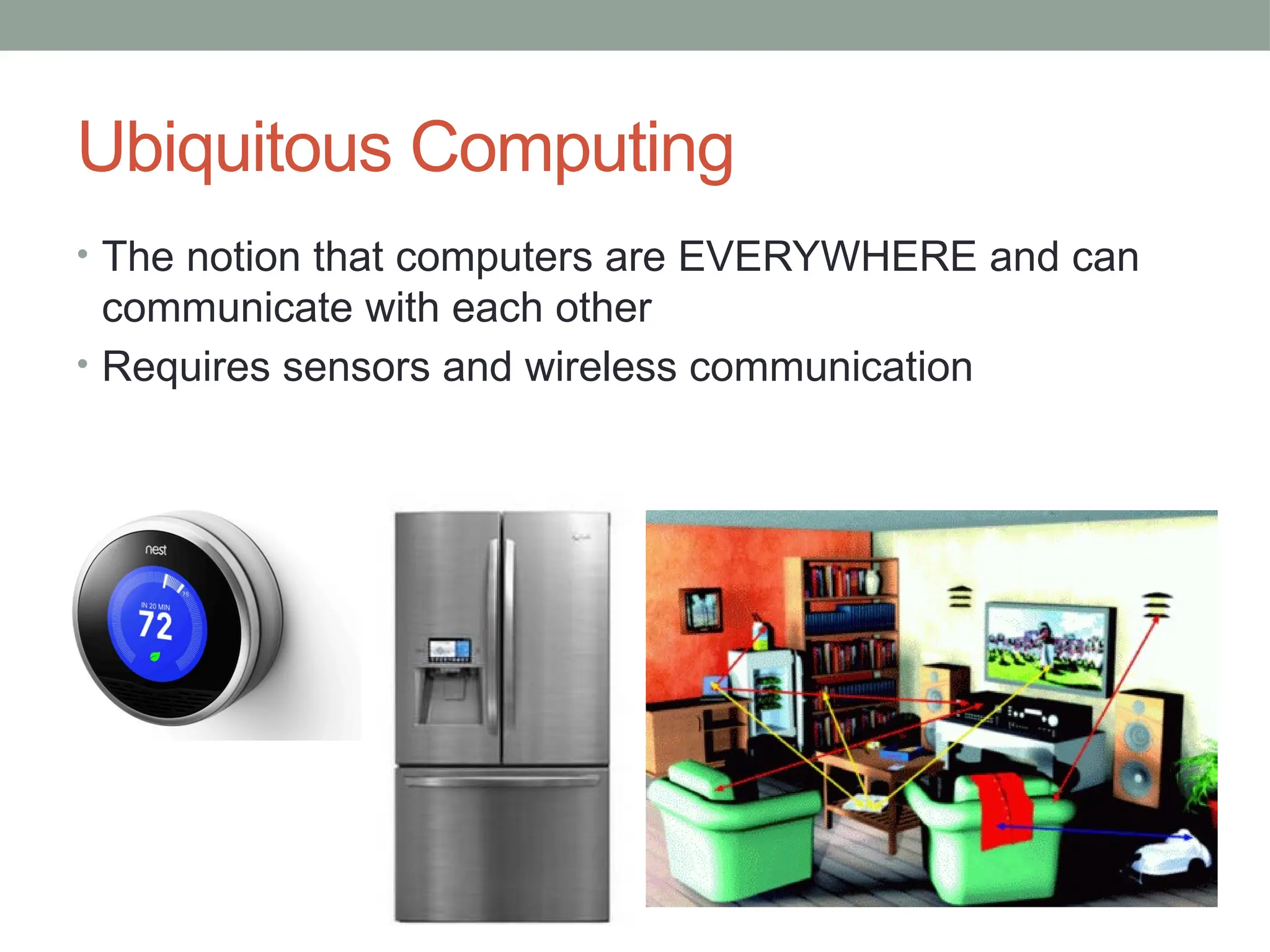
Ubiquitous Computing
• The notion that computers are EVERYWHERE and can
communicate with each other
• Requires sensors and wireless communication
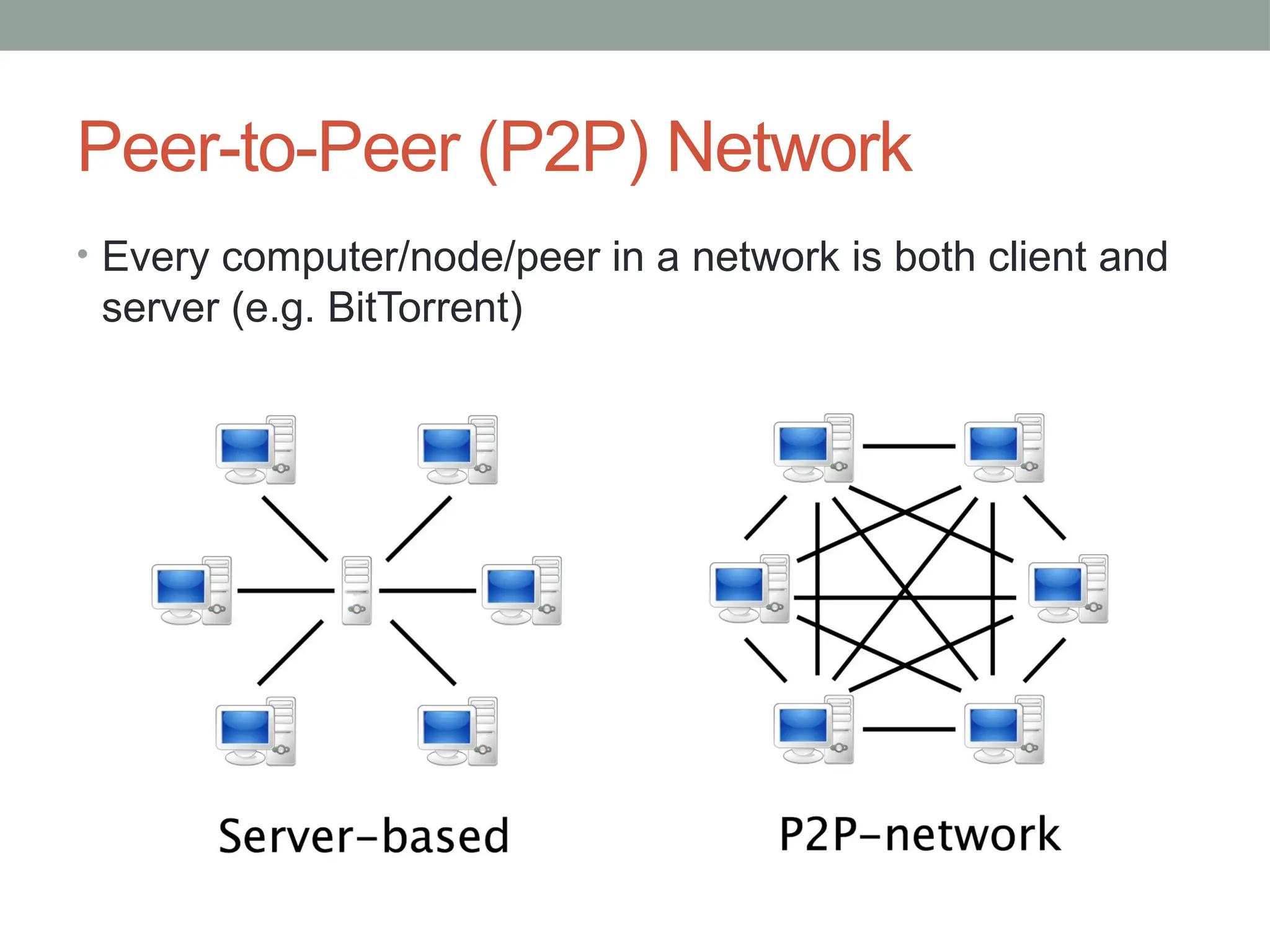
Peer-to-Peer (P2P) Network
• Every computer/node/peer in a network is both client and
server (e.g. BitTorrent)
Grid Computing
• “Grid” comes from the term “electric power grid”
• You can plug something into the electrical outlet, and it
receives electricity from the electric power grid
• Where exactly does the power come from?
• Anywhere … you don’t care
• Grid computing treats CPU power as a shared, collective
resource (like electricity)
Grid Computing Features
• Connected computer systems are heterogeneous
(different types)
• Servers
• Networks
• Personal computers
• Anything!
• Connected systems can be geographically anywhere
• The grid computer can be used for multiple types of
applications
• Folding@home (protein folding) - http://folding.stanford.edu/home/
• SETI@home (finding aliens) - http://setiathome.ssl.berkeley.edu/
What types of hardware can be used by distributed
networks?
• Anything and everything
How did we get everything to work together?
• Interoperability via open standards
• Interoperability – things operate/work with each other
• Open standards – publicly usable rules or languages
• Web standards examples:
• HTML
• CSS
• JavaScript
• HTTP
• HTTPS
What is data compression?
• Taking data and packaging it to a smaller size (shrink the
size of a file)
• Examples of data compression:
• ZIP (archives multiple files and uses some compression)
• JPEG - images
• MP3 - audio
• H.264 – video (e.g. Blu-ray, YouTube)
• Why is data compression used to transmit across a
network?
• Transfer is faster because the data is smaller
Lossy vs. Lossless Compression
• Lossy compression
• original quality CANNOT be reconstructed when
decompressed (mp3, jpg)
• http://upload.wikimedia.org/wikipedia/commons/c/ce/Qu
ality_comparison_jpg_vs_saveforweb.jpg
• Loss-less compression
• original quality CAN be reconstructed when
decompressed (png, flac, zip)

WebScience_Part3_DistributedApproaches.pptx

  • 1.
  • 2.
    Mobile Computing • Laptops •Smartphones • Tablets • And now… • Smartwatches • Fitness trackers • Google Glass (are you a glasshole?) • Any other wearable computing stories? • What are the common features of mobile computing?
  • 3.
    Features of MobileComputing • Wireless access to information • Internet • Cloud services • Etc. • Sensors and other data capture • GPS • Accelerometer • Camera • Wireless communication with other devices • Bluetooth • Near-Field Communication (NFC)
  • 4.
    Ubiquitous Computing • Thenotion that computers are EVERYWHERE and can communicate with each other • Requires sensors and wireless communication
  • 5.
    Peer-to-Peer (P2P) Network •Every computer/node/peer in a network is both client and server (e.g. BitTorrent)
  • 6.
    Grid Computing • “Grid”comes from the term “electric power grid” • You can plug something into the electrical outlet, and it receives electricity from the electric power grid • Where exactly does the power come from? • Anywhere … you don’t care • Grid computing treats CPU power as a shared, collective resource (like electricity)
  • 7.
    Grid Computing Features •Connected computer systems are heterogeneous (different types) • Servers • Networks • Personal computers • Anything! • Connected systems can be geographically anywhere • The grid computer can be used for multiple types of applications • Folding@home (protein folding) - http://folding.stanford.edu/home/ • SETI@home (finding aliens) - http://setiathome.ssl.berkeley.edu/
  • 8.
    What types ofhardware can be used by distributed networks? • Anything and everything
  • 9.
    How did weget everything to work together? • Interoperability via open standards • Interoperability – things operate/work with each other • Open standards – publicly usable rules or languages • Web standards examples: • HTML • CSS • JavaScript • HTTP • HTTPS
  • 10.
    What is datacompression? • Taking data and packaging it to a smaller size (shrink the size of a file) • Examples of data compression: • ZIP (archives multiple files and uses some compression) • JPEG - images • MP3 - audio • H.264 – video (e.g. Blu-ray, YouTube) • Why is data compression used to transmit across a network? • Transfer is faster because the data is smaller
  • 11.
    Lossy vs. LosslessCompression • Lossy compression • original quality CANNOT be reconstructed when decompressed (mp3, jpg) • http://upload.wikimedia.org/wikipedia/commons/c/ce/Qu ality_comparison_jpg_vs_saveforweb.jpg • Loss-less compression • original quality CAN be reconstructed when decompressed (png, flac, zip)