Web Security Considerations
www.digitdefence.com
01 02 03
Understanding Web Security
Importance of
Web Security
Common Threats Impact of Poor
Security
Web security is crucial
for protecting data
from unauthorized
access, ensuring
privacy, and
maintaining trust with
users.
Web security
addresses threats like
data breaches, DDoS
attacks, SQL injection,
and cross-site
scripting, which can
compromise sensitive
information.
Inadequate web
security can lead to
financial losses,
damage to reputation,
and legal
consequences for
organizations.
www.digitdefence.com
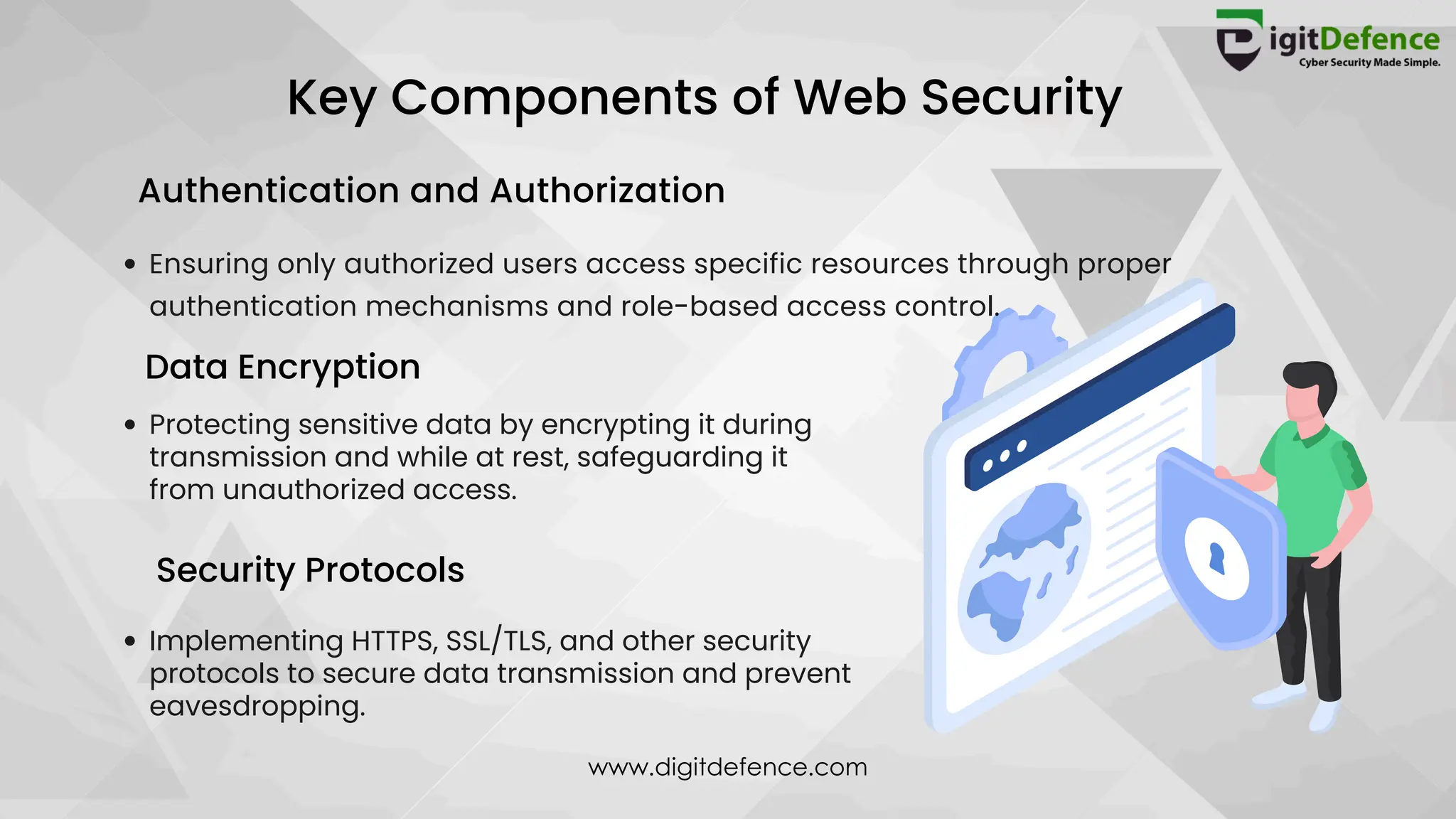
Key Components of Web Security
Security Protocols
Authentication and Authorization
Ensuring only authorized users access specific resources through proper
authentication mechanisms and role-based access control.
Implementing HTTPS, SSL/TLS, and other security
protocols to secure data transmission and prevent
eavesdropping.
Data Encryption
Protecting sensitive data by encrypting it during
transmission and while at rest, safeguarding it
from unauthorized access.
www.digitdefence.com
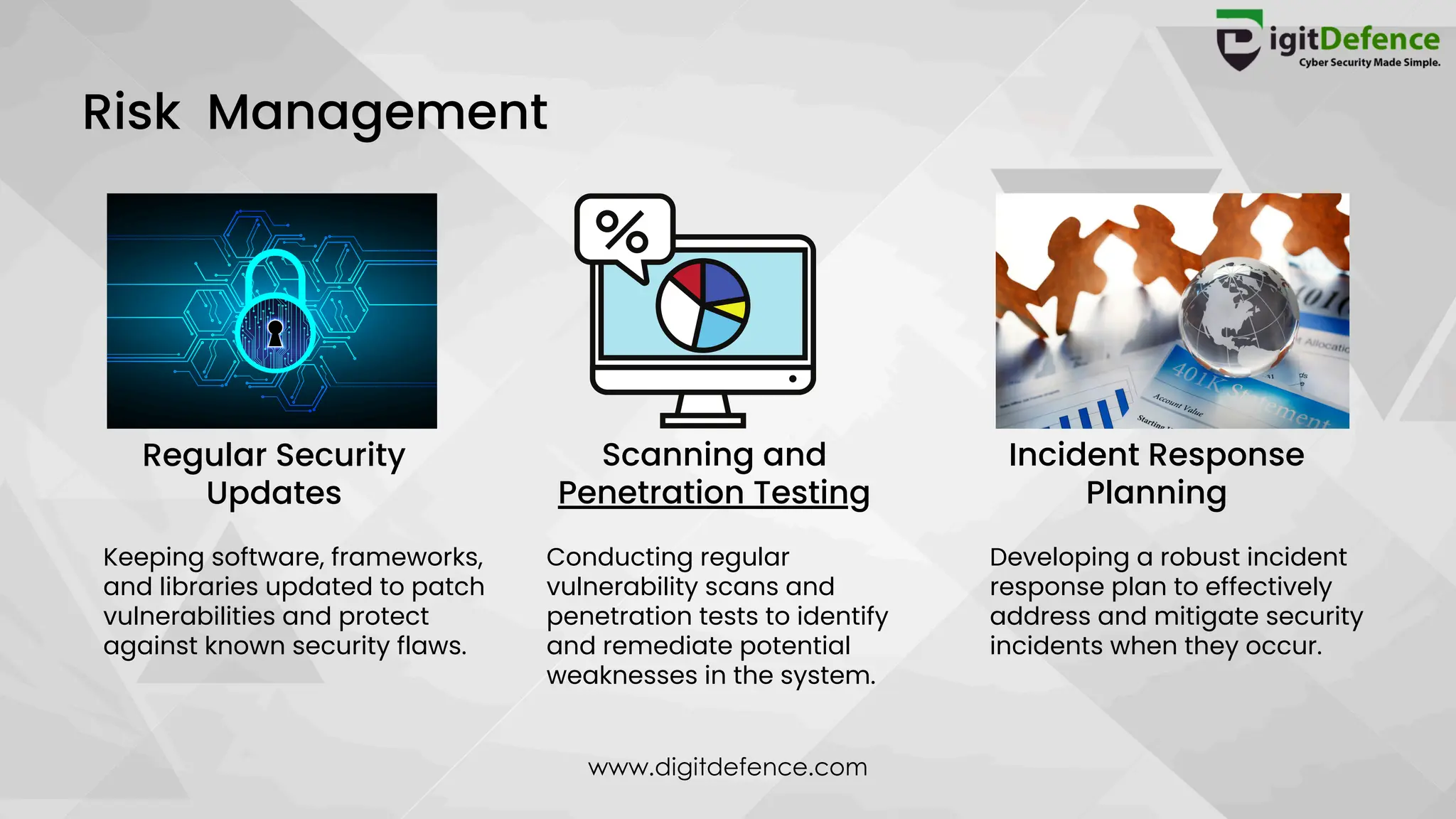
Risk Management
Regular Security
Updates
Scanning and
Penetration Testing
Incident Response
Planning
Keeping software, frameworks,
and libraries updated to patch
vulnerabilities and protect
against known security flaws.
Conducting regular
vulnerability scans and
penetration tests to identify
and remediate potential
weaknesses in the system.
Developing a robust incident
response plan to effectively
address and mitigate security
incidents when they occur.
www.digitdefence.com
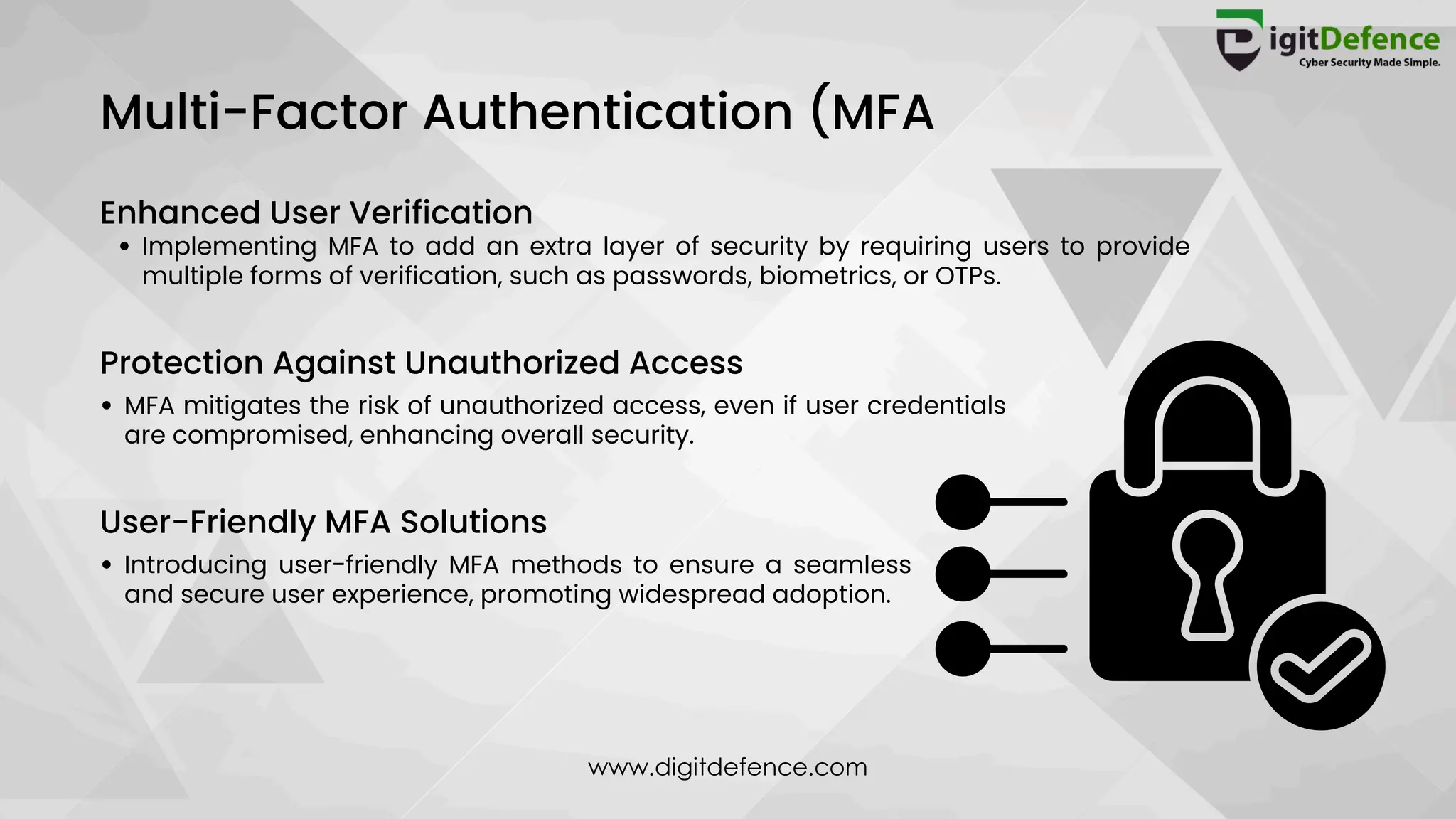
Multi-Factor Authentication (MFA
Enhanced User Verification
Implementing MFA to add an extra layer of security by requiring users to provide
multiple forms of verification, such as passwords, biometrics, or OTPs.
Protection Against Unauthorized Access
MFA mitigates the risk of unauthorized access, even if user credentials
are compromised, enhancing overall security.
User-Friendly MFA Solutions
Introducing user-friendly MFA methods to ensure a seamless
and secure user experience, promoting widespread adoption.
www.digitdefence.com
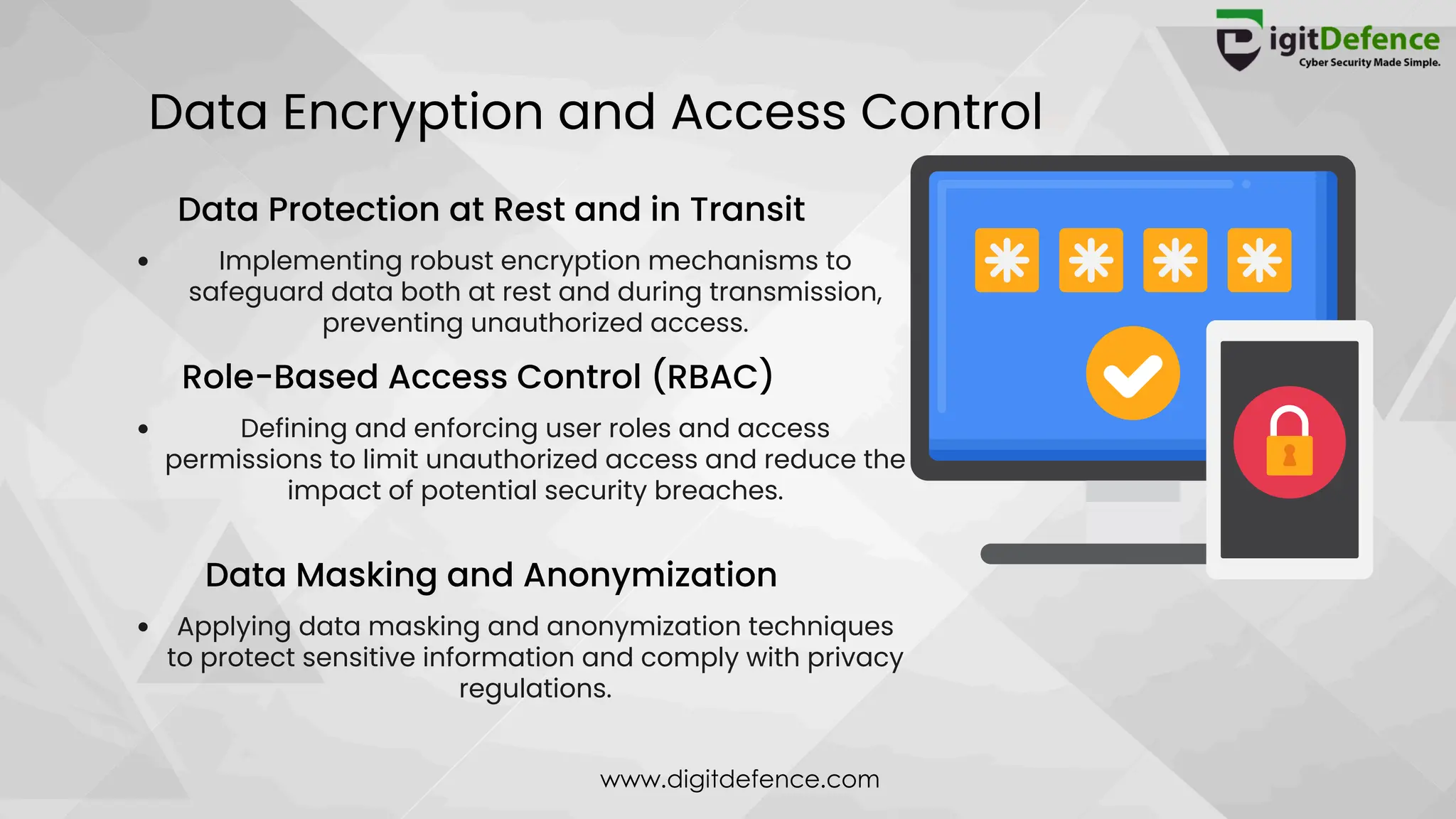
Data Encryption and Access Control
Data Protection at Rest and in Transit
Role-Based Access Control (RBAC)
Data Masking and Anonymization
Implementing robust encryption mechanisms to
safeguard data both at rest and during transmission,
preventing unauthorized access.
Defining and enforcing user roles and access
permissions to limit unauthorized access and reduce the
impact of potential security breaches.
Applying data masking and anonymization techniques
to protect sensitive information and comply with privacy
regulations.
www.digitdefence.com
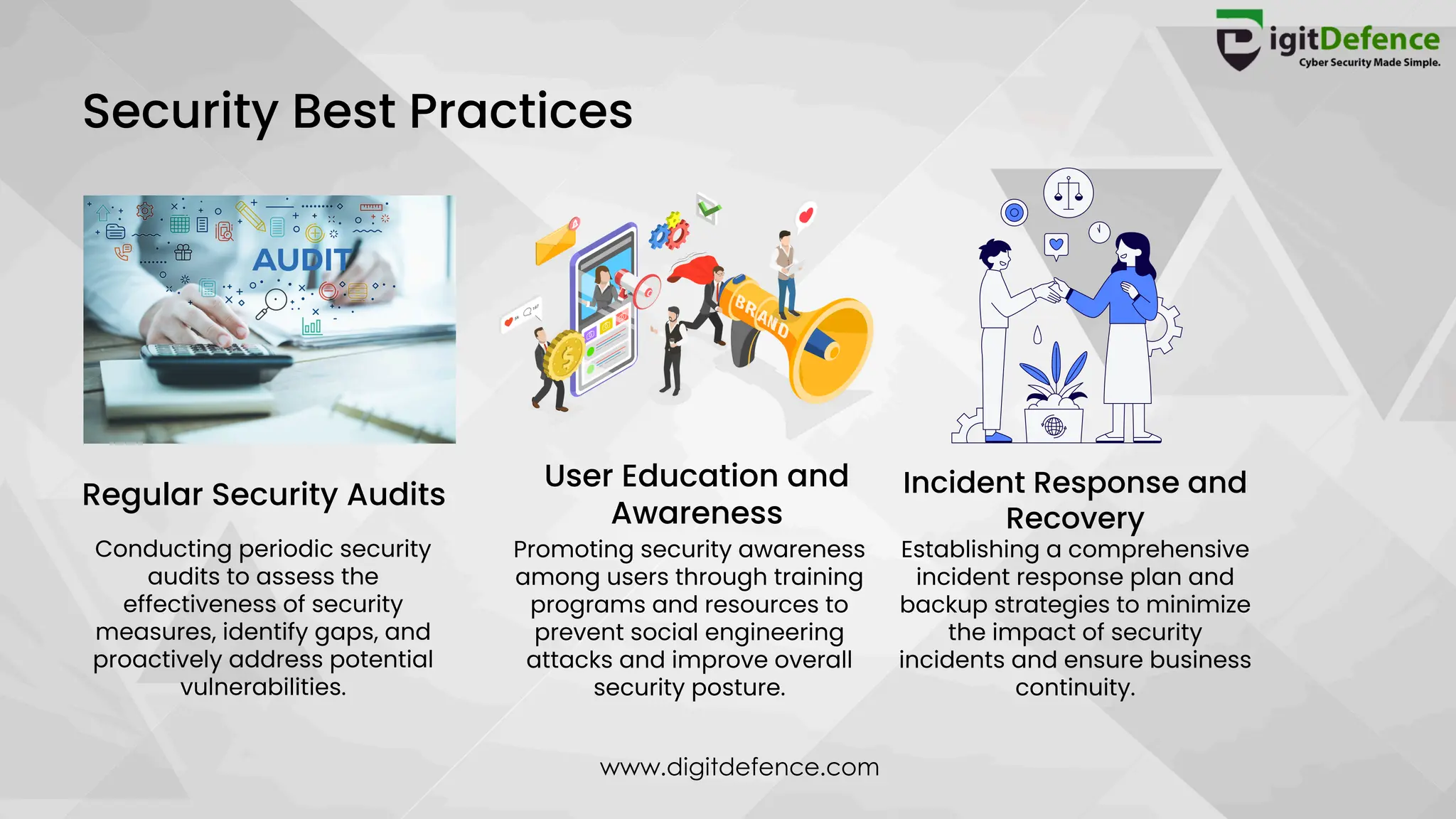
Security Best Practices
Regular Security Audits
User Education and
Awareness
Incident Response and
Recovery
Conducting periodic security
audits to assess the
effectiveness of security
measures, identify gaps, and
proactively address potential
vulnerabilities.
Promoting security awareness
among users through training
programs and resources to
prevent social engineering
attacks and improve overall
security posture.
Establishing a comprehensive
incident response plan and
backup strategies to minimize
the impact of security
incidents and ensure business
continuity.
www.digitdefence.com

Web Security Considerations for Enhanced Protection (1).pptx.pdf

  • 1.
  • 2.
    01 02 03 UnderstandingWeb Security Importance of Web Security Common Threats Impact of Poor Security Web security is crucial for protecting data from unauthorized access, ensuring privacy, and maintaining trust with users. Web security addresses threats like data breaches, DDoS attacks, SQL injection, and cross-site scripting, which can compromise sensitive information. Inadequate web security can lead to financial losses, damage to reputation, and legal consequences for organizations. www.digitdefence.com
  • 3.
    Key Components ofWeb Security Security Protocols Authentication and Authorization Ensuring only authorized users access specific resources through proper authentication mechanisms and role-based access control. Implementing HTTPS, SSL/TLS, and other security protocols to secure data transmission and prevent eavesdropping. Data Encryption Protecting sensitive data by encrypting it during transmission and while at rest, safeguarding it from unauthorized access. www.digitdefence.com
  • 4.
    Risk Management Regular Security Updates Scanningand Penetration Testing Incident Response Planning Keeping software, frameworks, and libraries updated to patch vulnerabilities and protect against known security flaws. Conducting regular vulnerability scans and penetration tests to identify and remediate potential weaknesses in the system. Developing a robust incident response plan to effectively address and mitigate security incidents when they occur. www.digitdefence.com
  • 5.
    Multi-Factor Authentication (MFA EnhancedUser Verification Implementing MFA to add an extra layer of security by requiring users to provide multiple forms of verification, such as passwords, biometrics, or OTPs. Protection Against Unauthorized Access MFA mitigates the risk of unauthorized access, even if user credentials are compromised, enhancing overall security. User-Friendly MFA Solutions Introducing user-friendly MFA methods to ensure a seamless and secure user experience, promoting widespread adoption. www.digitdefence.com
  • 6.
    Data Encryption andAccess Control Data Protection at Rest and in Transit Role-Based Access Control (RBAC) Data Masking and Anonymization Implementing robust encryption mechanisms to safeguard data both at rest and during transmission, preventing unauthorized access. Defining and enforcing user roles and access permissions to limit unauthorized access and reduce the impact of potential security breaches. Applying data masking and anonymization techniques to protect sensitive information and comply with privacy regulations. www.digitdefence.com
  • 7.
    Security Best Practices RegularSecurity Audits User Education and Awareness Incident Response and Recovery Conducting periodic security audits to assess the effectiveness of security measures, identify gaps, and proactively address potential vulnerabilities. Promoting security awareness among users through training programs and resources to prevent social engineering attacks and improve overall security posture. Establishing a comprehensive incident response plan and backup strategies to minimize the impact of security incidents and ensure business continuity. www.digitdefence.com