Mining the Relationship between
Anti-patterns
Dependencies and FaultProneness
Fehmi Jaafar,

Yann-Gaël Guéhéneuc,

Sylvie Hamel

Foutse Khomh
Anti-patterns describe poor solutions to
design and implementation problems…

…they are not technically incorrect and don't
currently prevent the program from

functioning.

Instead, they indicate weaknesses in design
that may be slowing down development or
increasing the risk of bugs or failures in the
future.

2
Examples of Anti-patterns
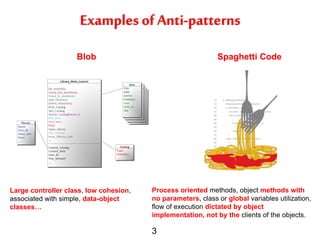
Blob

Large controller class, low cohesion,
associated with simple, data-object
classes…

Spaghetti Code

Process oriented methods, object methods with
no parameters, class or global variables utilization,
flow of execution dictated by object
implementation, not by the clients of the objects.

3
Motivation
Many studies have investigated the
impact of anti-patterns on

• Maintenance [Yamashita, 2013]
• Fault-proneness [Khomh, 2012]
• Change-proneness [Romano, 2012]
-----

4
Motivation
Yet, classes sharing static
relationships with anti-patterns

have been mostly ignored…

We conjecture that, static and co-change relationships with
anti-patterns can impact the fault-proneness of classes
without anti-patterns.

5
Approach
source code
repository

Antipatterns
detection
DECOR

Bugzilla

Relationships
retrieval
Macocha

Analyses

6

Bug information
Ibdoos
Data Collection
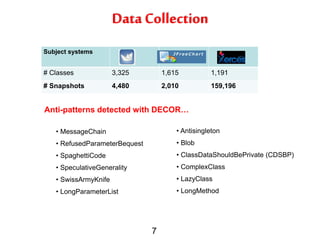
Subject systems

# Classes

3,325

1,615

1,191

# Snapshots

4,480

2,010

159,196

Anti-patterns detected with DECOR…
• MessageChain

• Antisingleton

• RefusedParameterBequest

• Blob

• SpaghettiCode

• ClassDataShouldBePrivate (CDSBP)

• SpeculativeGenerality

• ComplexClass

• SwissArmyKnife

• LazyClass

• LongParameterList

• LongMethod

7
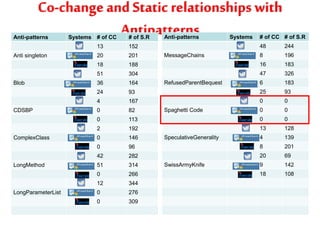
Co-change and Static relationships with
Antipatterns

Anti-patterns

Systems # of CC

# of S.R

Anti-patterns

Systems

# of CC # of S.R
48

244

8

196

188

16

183

51

304

47

326

36

164

6

183

24

93

25

93

4

167

0

0

0

82

0

0

0

113

0

0

2

192

13

128

0

146

4

139

0

96

8

201

42

282

20

69

51

314

9

142

0

266

18

108

12

344

0

276

0

309

13

Blob

CDSBP

ComplexClass

LongMethod

LongParameterList

20

201

18

Anti singleton

152
MessageChains

RefusedParentBequest

Spaghetti Code

SpeculativeGenerality

SwissArmyKnife
Research Questions

9
Analysis Methods

HRQ: The proportions of faults carried by classes having static (resp. Cochange) relationships with anti-patterns and other classes are the same.
10
RQ1: Are classes that have static relationships
with anti-patterns more fault-prone than other
classes?
Faults No-Faults

Odd Ratios

Total of classes related to AP

1939

1350

2.22

Classes with S.R with AP and that are not AP.

945

778

1.88

Total of other classes

1117

1725

1

Classes with S.R with AP

1062

1003

Classes with S.R with AP and that are not AP

402

600

Other classes

681

579

Classes with S.R with AP

432

226

Classes with S.R with AP and that are not AP.

281

103

Other classes

310

647

Classes with S.R with AP

445

121

Classes with S.R with AP and that are not AP.

262

75

Other classes

126

499

P-value = 2.2 e-16
RQ2: Are classes that co-change with anti-patterns
more fault-prone than other classes?
Faults

No-Faults

Odd Ratios

Total of classes co-changing with AP

346

149

2.5

Classes co-changing with AP and that are not AP

173

81

2.3

Total of other classes

2710

2926

1

Classes co-changing with AP

241

102

Classes co-changing with AP and that are not AP

120

59

Other classes

1502

1480

Classes co-changing with AP

68

26

Classes co-changing with AP and that are not AP

33

10

Other classes

674

847

Classes co-changing with AP

37

21

Classes co-changing with AP and that are not AP

20

12

Other classes

534

599

P-value = 2.2 e-16
Some Observations
 We found no class having a static dependency (i.e. use, association,
aggregation, and composition relationships) or that co-changed with a
SpaghettiCode.
 We found that classes having static relationships with Blob,
ComplexClass, and SwissArmyKnife are significantly more fault prone
than other classes with similar complexity, change history, and code size.
 Many anti-patterns’ relationships were with classes playing roles in
design patterns.

Classes that are co-changing with anti-patterns classes are
significantly more fault prone than other classes with similar
complexity, change history, and code size.

13
14

Mining the Relationship between Anti-patterns Dependencies and Fault-Proneness

  • 1.
    Mining the Relationshipbetween Anti-patterns Dependencies and FaultProneness Fehmi Jaafar, Yann-Gaël Guéhéneuc, Sylvie Hamel Foutse Khomh
  • 2.
    Anti-patterns describe poorsolutions to design and implementation problems… …they are not technically incorrect and don't currently prevent the program from functioning. Instead, they indicate weaknesses in design that may be slowing down development or increasing the risk of bugs or failures in the future. 2
  • 3.
    Examples of Anti-patterns Blob Largecontroller class, low cohesion, associated with simple, data-object classes… Spaghetti Code Process oriented methods, object methods with no parameters, class or global variables utilization, flow of execution dictated by object implementation, not by the clients of the objects. 3
  • 4.
    Motivation Many studies haveinvestigated the impact of anti-patterns on • Maintenance [Yamashita, 2013] • Fault-proneness [Khomh, 2012] • Change-proneness [Romano, 2012] ----- 4
  • 5.
    Motivation Yet, classes sharingstatic relationships with anti-patterns have been mostly ignored… We conjecture that, static and co-change relationships with anti-patterns can impact the fault-proneness of classes without anti-patterns. 5
  • 6.
  • 7.
    Data Collection Subject systems #Classes 3,325 1,615 1,191 # Snapshots 4,480 2,010 159,196 Anti-patterns detected with DECOR… • MessageChain • Antisingleton • RefusedParameterBequest • Blob • SpaghettiCode • ClassDataShouldBePrivate (CDSBP) • SpeculativeGenerality • ComplexClass • SwissArmyKnife • LazyClass • LongParameterList • LongMethod 7
  • 8.
    Co-change and Staticrelationships with Antipatterns Anti-patterns Systems # of CC # of S.R Anti-patterns Systems # of CC # of S.R 48 244 8 196 188 16 183 51 304 47 326 36 164 6 183 24 93 25 93 4 167 0 0 0 82 0 0 0 113 0 0 2 192 13 128 0 146 4 139 0 96 8 201 42 282 20 69 51 314 9 142 0 266 18 108 12 344 0 276 0 309 13 Blob CDSBP ComplexClass LongMethod LongParameterList 20 201 18 Anti singleton 152 MessageChains RefusedParentBequest Spaghetti Code SpeculativeGenerality SwissArmyKnife
  • 9.
  • 10.
    Analysis Methods HRQ: Theproportions of faults carried by classes having static (resp. Cochange) relationships with anti-patterns and other classes are the same. 10
  • 11.
    RQ1: Are classesthat have static relationships with anti-patterns more fault-prone than other classes? Faults No-Faults Odd Ratios Total of classes related to AP 1939 1350 2.22 Classes with S.R with AP and that are not AP. 945 778 1.88 Total of other classes 1117 1725 1 Classes with S.R with AP 1062 1003 Classes with S.R with AP and that are not AP 402 600 Other classes 681 579 Classes with S.R with AP 432 226 Classes with S.R with AP and that are not AP. 281 103 Other classes 310 647 Classes with S.R with AP 445 121 Classes with S.R with AP and that are not AP. 262 75 Other classes 126 499 P-value = 2.2 e-16
  • 12.
    RQ2: Are classesthat co-change with anti-patterns more fault-prone than other classes? Faults No-Faults Odd Ratios Total of classes co-changing with AP 346 149 2.5 Classes co-changing with AP and that are not AP 173 81 2.3 Total of other classes 2710 2926 1 Classes co-changing with AP 241 102 Classes co-changing with AP and that are not AP 120 59 Other classes 1502 1480 Classes co-changing with AP 68 26 Classes co-changing with AP and that are not AP 33 10 Other classes 674 847 Classes co-changing with AP 37 21 Classes co-changing with AP and that are not AP 20 12 Other classes 534 599 P-value = 2.2 e-16
  • 13.
    Some Observations  Wefound no class having a static dependency (i.e. use, association, aggregation, and composition relationships) or that co-changed with a SpaghettiCode.  We found that classes having static relationships with Blob, ComplexClass, and SwissArmyKnife are significantly more fault prone than other classes with similar complexity, change history, and code size.  Many anti-patterns’ relationships were with classes playing roles in design patterns. Classes that are co-changing with anti-patterns classes are significantly more fault prone than other classes with similar complexity, change history, and code size. 13
  • 14.