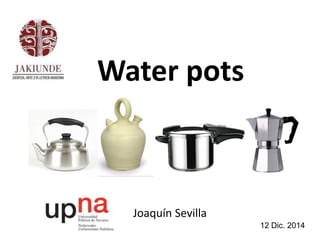
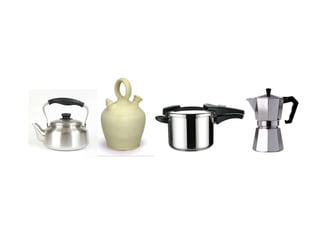
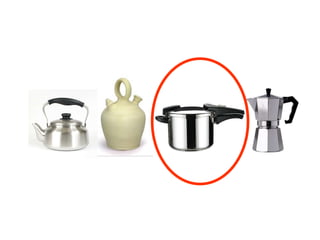
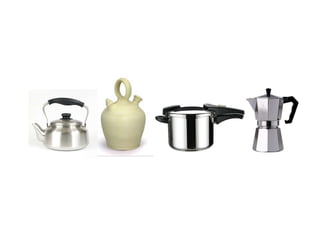
Water pots 
Joaquín Sevilla 
12 Dic. 2014
Everyday science 
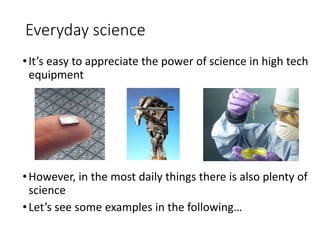
• It’s easy to appreciate the power of science in high tech 
equipment 
•However, in the most daily things there is also plenty of 
science 
• Let’s see some examples in the following…
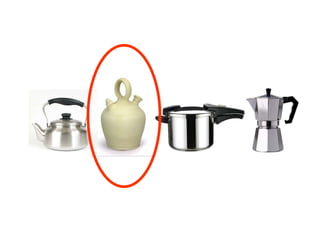
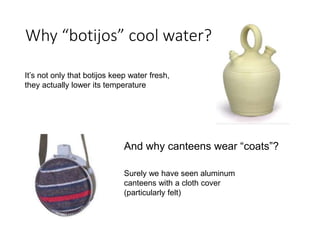
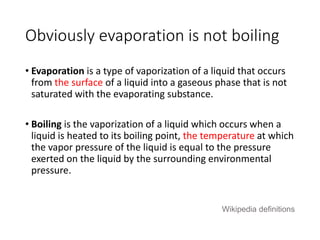
Why “botijos” cool water? 
It’s not only that botijos keep water fresh, 
they actually lower its temperature 
And why canteens wear “coats”? 
Surely we have seen aluminum 
canteens with a cloth cover 
(particularly felt)
Water cools when evaporates 
These fresh water flasks work because of the physical fact: 
“when water evaporates it removes heat form its 
surroundings” 
But, what is precisely “evaporation”, is the same as boiling?
Obviously evaporation is not boiling 
• Evaporation is a type of vaporization of a liquid that occurs 
from the surface of a liquid into a gaseous phase that is not 
saturated with the evaporating substance. 
• Boiling is the vaporization of a liquid which occurs when a 
liquid is heated to its boiling point, the temperature at which 
the vapor pressure of the liquid is equal to the pressure 
exerted on the liquid by the surrounding environmental 
pressure. 
Wikipedia definitions
Evaporation vs. Boiling 
• Boiling takes place in the bulk of the liquid and 
depends on the temperature 
• Evaporation is happens in the surface and is (almost) 
non dependent on the temperature 
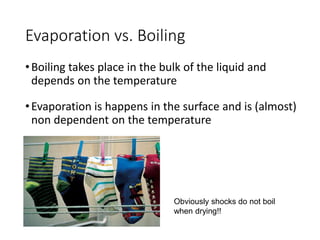
Obviously shocks do not boil 
when drying!!
Why water cools when evaporates? 
In the random 
movement of the 
molecules, when 
one gets energy 
enough, it leaves 
the liquid, 
and takes this 
energy with it !! 
This energy, averaged macroscopically can be 
measured and is called: latent heat of vaporization
How much vaporization cools? 
• Just go to the tables (or the internet) and look up 
“latent heat of vaporization” 
• at 0ºC 2.50 · 106 J/kg 595 cal/g 
• at 20ºC 2.45 · 106 J/kg 585 cal/g 
• at 100ºC 2.26 · 106 J/kg 540 cal/g 
The details on the process are not simple. One can discover the variables 
that are relevant thinking what to do to better dry your laundry: 
increase contact surface (hanging it), dry air, renewed air (some breeze), 
and warm air. 
But maybe we are going too far
Going back to our questions 
• Why “botijos” cool water? Because of evaporation 
• Why canteens wear felt coats? 
To be wet and evaporate
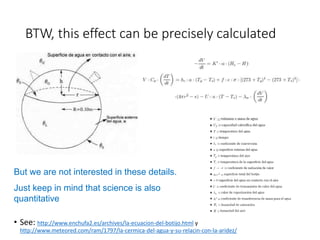
BTW, this effect can be precisely calculated 
But we are not interested in these details. 
Just keep in mind that science is also 
quantitative 
• See: http://www.enchufa2.es/archives/la-ecuacion-del-botijo.html y 
http://www.meteored.com/ram/1797/la-cermica-del-agua-y-su-relacin-con-la-aridez/
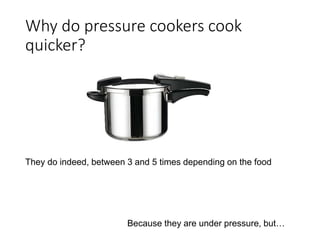
Why do pressure cookers cook 
quicker? 
They do indeed, between 3 and 5 times depending on the food 
Because they are under pressure, but…
What is cooking? 
“Cooking” is the transformation 
of food though a set of 
chemical reactions that take 
place at high temperature
What is cooking? 
“Cooking” is the transformation 
of food though a set of 
chemical reactions that take 
place at high temperature 
Hot air in the oven 
(bake) 
200ºC 
Boiling oil 
(fry) 
175ºC 
Boiling water 
(boil) 
100ºC
Evaporation vs. Boiling 
• Evaporation is a type of vaporization of a liquid that occurs 
from the surface of a liquid into a gaseous phase that is not 
saturated with the evaporating substance. 
• Boiling is the vaporization of a liquid which occurs when a 
liquid is heated to its boiling point, the temperature at which 
the vapor pressure of the liquid is equal to the pressure 
exerted on the liquid by the surrounding environmental 
pressure. 
Wikipedia definitions
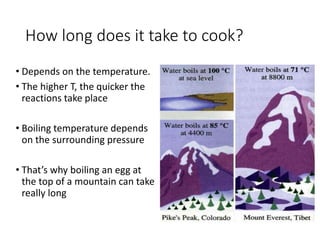
How long does it take to cook? 
• Depends on the temperature. 
• The higher T, the quicker the 
reactions take place 
• Boiling temperature depends 
on the surrounding pressure 
• That’s why boiling an egg at 
the top of a mountain can take 
really long
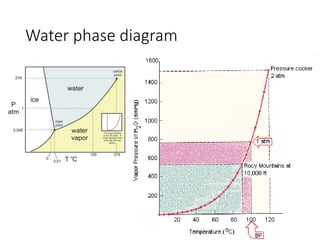
Higher pressure, higher temperature, 
less time 
Pressure cookers are pressurized flasks 
Typically 2 atm (absolute), 
that correspond to 120ºC
Water phase diagram
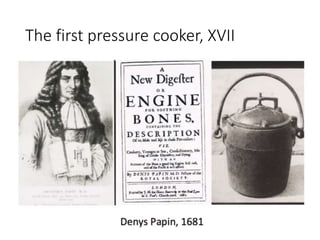
The first pressure cooker, XVII
Funny experiments… 
Esta reseña está tomada de este magnífico vídeo, 
http://www.youtube.com/watch?v=TH9R0J36n7w&feature=g-wl 
Parte de un curso entero de ciencia y gastronomía de Harvard que está disponible entero
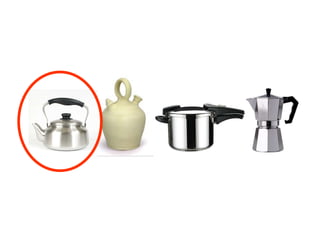
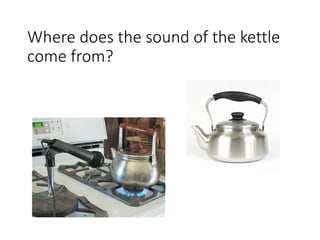
Where does the sound of the kettle 
come from?
Nucleate boiling
Nucleate boiling
Nucleate boiling 
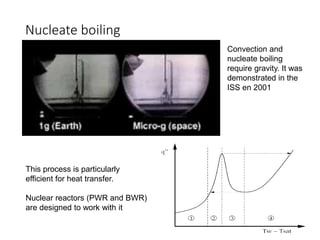
Convection and 
nucleate boiling 
require gravity. It was 
demonstrated in the 
ISS en 2001 
This process is particularly 
efficient for heat transfer. 
Nuclear reactors (PWR and BWR) 
are designed to work with it
Nucleate boiling 
Convection and 
nucleate boiling 
require gravity. It was 
demonstrated in the 
ISS en 2001 
This process is particularly 
efficient for heat transfer. 
Nuclear reactors (PWR and BWR) 
are designed to work with it
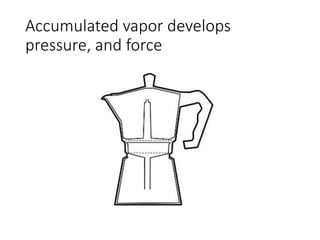
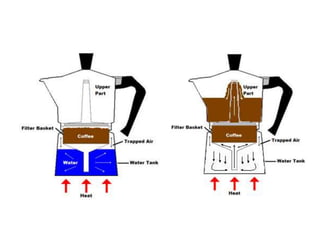
How does the water moves from the 
lower to the upper part?
Accumulated vapor develops 
pressure, and force
To summarize… 
• Not only high tech is full of science 
• These humble water pots have a lot to show 
•Water phase change from liquid to gas is more 
complicated than it seemed, and really useful
12 Dic. 2014

Water pots141212

  • 1.
    Water pots JoaquínSevilla 12 Dic. 2014
  • 2.
    Everyday science •It’s easy to appreciate the power of science in high tech equipment •However, in the most daily things there is also plenty of science • Let’s see some examples in the following…
  • 5.
    Why “botijos” coolwater? It’s not only that botijos keep water fresh, they actually lower its temperature And why canteens wear “coats”? Surely we have seen aluminum canteens with a cloth cover (particularly felt)
  • 6.
    Water cools whenevaporates These fresh water flasks work because of the physical fact: “when water evaporates it removes heat form its surroundings” But, what is precisely “evaporation”, is the same as boiling?
  • 7.
    Obviously evaporation isnot boiling • Evaporation is a type of vaporization of a liquid that occurs from the surface of a liquid into a gaseous phase that is not saturated with the evaporating substance. • Boiling is the vaporization of a liquid which occurs when a liquid is heated to its boiling point, the temperature at which the vapor pressure of the liquid is equal to the pressure exerted on the liquid by the surrounding environmental pressure. Wikipedia definitions
  • 8.
    Evaporation vs. Boiling • Boiling takes place in the bulk of the liquid and depends on the temperature • Evaporation is happens in the surface and is (almost) non dependent on the temperature Obviously shocks do not boil when drying!!
  • 9.
    Why water coolswhen evaporates? In the random movement of the molecules, when one gets energy enough, it leaves the liquid, and takes this energy with it !! This energy, averaged macroscopically can be measured and is called: latent heat of vaporization
  • 10.
    How much vaporizationcools? • Just go to the tables (or the internet) and look up “latent heat of vaporization” • at 0ºC 2.50 · 106 J/kg 595 cal/g • at 20ºC 2.45 · 106 J/kg 585 cal/g • at 100ºC 2.26 · 106 J/kg 540 cal/g The details on the process are not simple. One can discover the variables that are relevant thinking what to do to better dry your laundry: increase contact surface (hanging it), dry air, renewed air (some breeze), and warm air. But maybe we are going too far
  • 11.
    Going back toour questions • Why “botijos” cool water? Because of evaporation • Why canteens wear felt coats? To be wet and evaporate
  • 12.
    BTW, this effectcan be precisely calculated But we are not interested in these details. Just keep in mind that science is also quantitative • See: http://www.enchufa2.es/archives/la-ecuacion-del-botijo.html y http://www.meteored.com/ram/1797/la-cermica-del-agua-y-su-relacin-con-la-aridez/
  • 15.
    Why do pressurecookers cook quicker? They do indeed, between 3 and 5 times depending on the food Because they are under pressure, but…
  • 16.
    What is cooking? “Cooking” is the transformation of food though a set of chemical reactions that take place at high temperature
  • 17.
    What is cooking? “Cooking” is the transformation of food though a set of chemical reactions that take place at high temperature Hot air in the oven (bake) 200ºC Boiling oil (fry) 175ºC Boiling water (boil) 100ºC
  • 18.
    Evaporation vs. Boiling • Evaporation is a type of vaporization of a liquid that occurs from the surface of a liquid into a gaseous phase that is not saturated with the evaporating substance. • Boiling is the vaporization of a liquid which occurs when a liquid is heated to its boiling point, the temperature at which the vapor pressure of the liquid is equal to the pressure exerted on the liquid by the surrounding environmental pressure. Wikipedia definitions
  • 19.
    How long doesit take to cook? • Depends on the temperature. • The higher T, the quicker the reactions take place • Boiling temperature depends on the surrounding pressure • That’s why boiling an egg at the top of a mountain can take really long
  • 20.
    Higher pressure, highertemperature, less time Pressure cookers are pressurized flasks Typically 2 atm (absolute), that correspond to 120ºC
  • 21.
  • 22.
    The first pressurecooker, XVII
  • 23.
    Funny experiments… Estareseña está tomada de este magnífico vídeo, http://www.youtube.com/watch?v=TH9R0J36n7w&feature=g-wl Parte de un curso entero de ciencia y gastronomía de Harvard que está disponible entero
  • 26.
    Where does thesound of the kettle come from?
  • 27.
  • 28.
  • 29.
    Nucleate boiling Convectionand nucleate boiling require gravity. It was demonstrated in the ISS en 2001 This process is particularly efficient for heat transfer. Nuclear reactors (PWR and BWR) are designed to work with it
  • 30.
    Nucleate boiling Convectionand nucleate boiling require gravity. It was demonstrated in the ISS en 2001 This process is particularly efficient for heat transfer. Nuclear reactors (PWR and BWR) are designed to work with it
  • 33.
    How does thewater moves from the lower to the upper part?
  • 34.
    Accumulated vapor develops pressure, and force
  • 36.
    To summarize… •Not only high tech is full of science • These humble water pots have a lot to show •Water phase change from liquid to gas is more complicated than it seemed, and really useful
  • 37.