Waste Prevention Programmes in the EU Overview

Birgitte J. Kjær, EEA - ETC/SCP
Stakeholder meeting, Athens, 10 February 2014
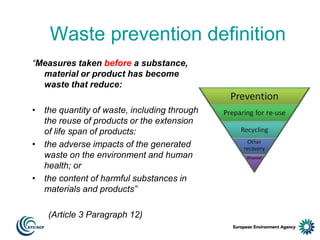
Waste prevention definition
“Measures taken before a substance,
material or product has become
waste that reduce:

• the quantity of waste, including through
the reuse of products or the extension
of life span of products:
• the adverse impacts of the generated
waste on the environment and human
health; or
• the content of harmful substances in
materials and products”
(Article 3 Paragraph 12)
2
Background for the EEA
activities in Waste Prevention
1. “The EEA is invited to […] review the
progress in the completion and
implementation of waste prevention
programmes”
(WFD article 30 (2))

2.

Member countries are very interested in the
exchange of information and experiences
on waste prevention.
EEA activities on WP
1. English abstracts of national waste prevention programmes, 10 abstracts uploaded
http://scp.eionet.europa.eu/facts/WPP
2. Information hub on waste prevention. More
than 100 reports
http://scp.eionet.europa.eu/themes/waste_pr
evention

3. Review the programmes published by 31
December 2013 in the spring 2014
Status WPP - February 2014
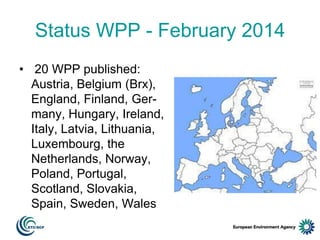
• 20 WPP published:
Austria, Belgium (Brx),
England, Finland, Germany, Hungary, Ireland,
Italy, Latvia, Lithuania,
Luxembourg, the
Netherlands, Norway,
Poland, Portugal,
Scotland, Slovakia,
Spain, Sweden, Wales
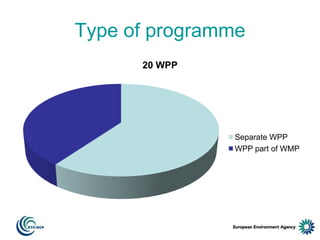
Type of programme
20 WPP

Separate WPP
WPP part of WMP
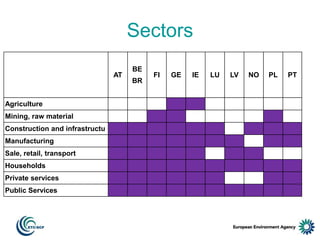
Sectors
AT

Agriculture

Mining, raw material
Construction and infrastructu
Manufacturing
Sale, retail, transport
Households
Private services
Public Services

BE
BR

FI

GE

IE

LU

LV

NO

PL

PT
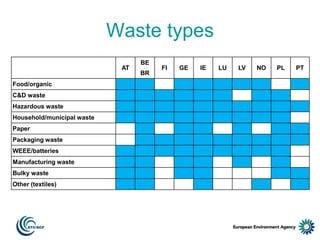
Waste types
AT
Food/organic
C&D waste
Hazardous waste
Household/municipal waste
Paper
Packaging waste

WEEE/batteries
Manufacturing waste
Bulky waste
Other (textiles)

BE
BR

FI

GE

IE

LU

LV

NO

PL

PT
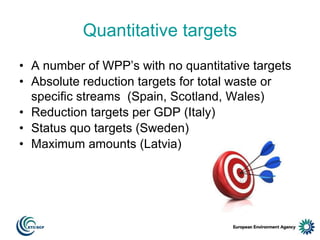
Quantitative targets
• A number of WPP’s with no quantitative targets
• Absolute reduction targets for total waste or
specific streams (Spain, Scotland, Wales)
• Reduction targets per GDP (Italy)
• Status quo targets (Sweden)
• Maximum amounts (Latvia)
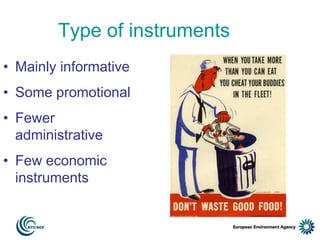
Type of instruments
• Mainly informative

• Some promotional
• Fewer
administrative
• Few economic
instruments
Stakeholder involvement
• The involvement of stakeholder differs in
development and implementation
• Success of implementation depends on
stakeholders
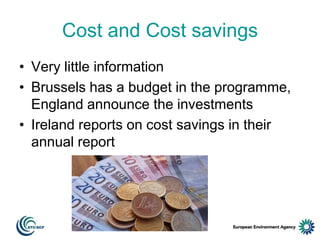
Cost and Cost savings
• Very little information
• Brussels has a budget in the programme,
England announce the investments
• Ireland reports on cost savings in their
annual report
Lessons learned
• The programmes differ substantially with
regard to content, comprehensiveness and
specificity.
• The experience on implementation limited.

• A lot of strong will – is that enough?
Thank you
More information

• Birgitte Kjær
• European Topic Centre
on Sustainable Consumption and Production
• bjk@etc.mim.dk
• http://scp.eionet.europa.e
u/

Questions and feedback

Waste Prevention Programmes in the EU - Overview

  • 1.
    Waste Prevention Programmesin the EU Overview Birgitte J. Kjær, EEA - ETC/SCP Stakeholder meeting, Athens, 10 February 2014
  • 2.
    Waste prevention definition “Measurestaken before a substance, material or product has become waste that reduce: • the quantity of waste, including through the reuse of products or the extension of life span of products: • the adverse impacts of the generated waste on the environment and human health; or • the content of harmful substances in materials and products” (Article 3 Paragraph 12) 2
  • 4.
    Background for theEEA activities in Waste Prevention 1. “The EEA is invited to […] review the progress in the completion and implementation of waste prevention programmes” (WFD article 30 (2)) 2. Member countries are very interested in the exchange of information and experiences on waste prevention.
  • 5.
    EEA activities onWP 1. English abstracts of national waste prevention programmes, 10 abstracts uploaded http://scp.eionet.europa.eu/facts/WPP 2. Information hub on waste prevention. More than 100 reports http://scp.eionet.europa.eu/themes/waste_pr evention 3. Review the programmes published by 31 December 2013 in the spring 2014
  • 6.
    Status WPP -February 2014 • 20 WPP published: Austria, Belgium (Brx), England, Finland, Germany, Hungary, Ireland, Italy, Latvia, Lithuania, Luxembourg, the Netherlands, Norway, Poland, Portugal, Scotland, Slovakia, Spain, Sweden, Wales
  • 7.
    Type of programme 20WPP Separate WPP WPP part of WMP
  • 8.
    Sectors AT Agriculture Mining, raw material Constructionand infrastructu Manufacturing Sale, retail, transport Households Private services Public Services BE BR FI GE IE LU LV NO PL PT
  • 9.
    Waste types AT Food/organic C&D waste Hazardouswaste Household/municipal waste Paper Packaging waste WEEE/batteries Manufacturing waste Bulky waste Other (textiles) BE BR FI GE IE LU LV NO PL PT
  • 10.
    Quantitative targets • Anumber of WPP’s with no quantitative targets • Absolute reduction targets for total waste or specific streams (Spain, Scotland, Wales) • Reduction targets per GDP (Italy) • Status quo targets (Sweden) • Maximum amounts (Latvia)
  • 11.
    Type of instruments •Mainly informative • Some promotional • Fewer administrative • Few economic instruments
  • 12.
    Stakeholder involvement • Theinvolvement of stakeholder differs in development and implementation • Success of implementation depends on stakeholders
  • 13.
    Cost and Costsavings • Very little information • Brussels has a budget in the programme, England announce the investments • Ireland reports on cost savings in their annual report
  • 14.
    Lessons learned • Theprogrammes differ substantially with regard to content, comprehensiveness and specificity. • The experience on implementation limited. • A lot of strong will – is that enough?
  • 15.
    Thank you More information •Birgitte Kjær • European Topic Centre on Sustainable Consumption and Production • bjk@etc.mim.dk • http://scp.eionet.europa.e u/ Questions and feedback