Romeo GNAN-KOUASSI
Diploma Holder EPFL / ETH
Pan-African Intergovernmental Agency
WSA Water and Sanitation for Africa)

                                       Reseau des centres de Ressources
                                          Burkina Faso, 26th January 2012
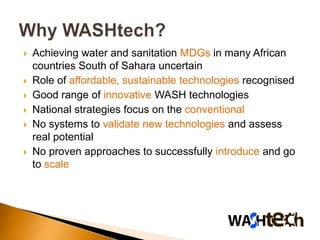
   Achieving water and sanitation MDGs in many African
    countries South of Sahara uncertain
   Role of affordable, sustainable technologies recognised
   Good range of innovative WASH technologies
   National strategies focus on the conventional
   No systems to validate new technologies and assess
    real potential
   No proven approaches to successfully introduce and go
    to scale
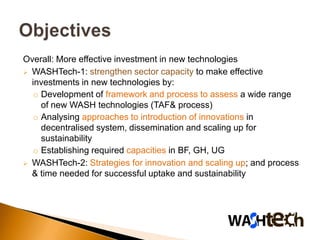
Overall: More effective investment in new technologies
 WASHTech-1: strengthen sector capacity to make effective
  investments in new technologies by:
  o Development of framework and process to assess a wide range
    of new WASH technologies (TAF& process)
  o Analysing approaches to introduction of innovations in
    decentralised system, dissemination and scaling up for
    sustainability
  o Establishing required capacities in BF, GH, UG
 WASHTech-2: Strategies for innovation and scaling up; and process
  & time needed for successful uptake and sustainability
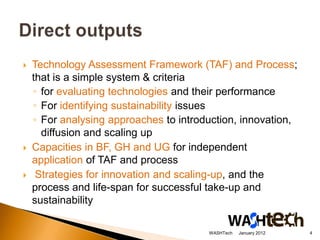
   Technology Assessment Framework (TAF) and Process;
    that is a simple system & criteria
    ◦ for evaluating technologies and their performance
    ◦ For identifying sustainability issues
    ◦ For analysing approaches to introduction, innovation,
      diffusion and scaling up
   Capacities in BF, GH and UG for independent
    application of TAF and process
    Strategies for innovation and scaling-up, and the
    process and life-span for successful take-up and
    sustainability

                                        WASHTech   January 2012   4
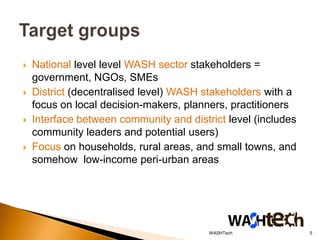
   National level level WASH sector stakeholders =
    government, NGOs, SMEs
   District (decentralised level) WASH stakeholders with a
    focus on local decision-makers, planners, practitioners
   Interface between community and district level (includes
    community leaders and potential users)
   Focus on households, rural areas, and small towns, and
    somehow low-income peri-urban areas


                                         WASHTech              5
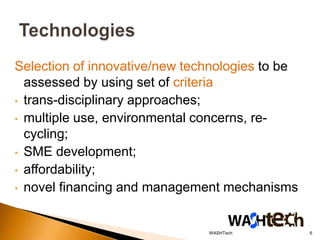
Selection of innovative/new technologies to be
  assessed by using set of criteria
• trans-disciplinary approaches;
• multiple use, environmental concerns, re-
  cycling;
• SME development;
• affordability;
• novel financing and management mechanisms


                               WASHTech          6
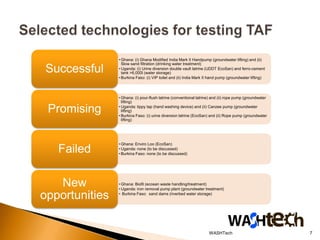
• Ghana: (i) Ghana Modified India Mark II Handpump (groundwater lifting) and (ii)
                  Slow sand filtration (drinking water treatment)
Successful      • Uganda: (i) Urine diversion double vault latrine (UDDT EcoSan) and ferro-cement
                  tank >6,000l (water storage)
                • Burkina Faso: (i) VIP toilet and (ii) India Mark II hand pump (groundwater lifting)


                • Ghana: (i) pour-flush latrine (conventional latrine) and (ii) rope pump (groundwater
                  lifting)

 Promising      • Uganda: tippy tap (hand washing device) and (ii) Canzee pump (groundwater
                  lifting)
                • Burkina Faso: (i) urine diversion latrine (EcoSan) and (ii) Rope pump (groundwater
                  lifting)


                • Ghana: Enviro Loo (EcoSan)
   Failed       • Uganda: none (to be discussed)
                • Burkina Faso: none (to be discussed)


   New          • Ghana: Biofil (ecosan waste handling/treatment)
                • Uganda: iron removal pump plant (groundwater treatment)

opportunities   • Burkina Faso: sand dams (riverbed water storage)


                                                                    WASHTech                             7
 Learning   together   yes


 Witheach of you.. To understand the
 process of technolog introduction and
 approval
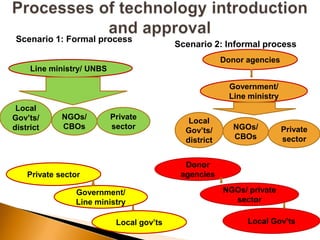
Scenario 1: Formal process
                                           Scenario 2: Informal process
                                                        Donor agencies
     Line ministry/ UNBS

                                                          Government/
                                                          Line ministry
 Local
Gov’ts/      NGOs/         Private
                                              Local
district     CBOs          sector                          NGOs/
                                             Gov’ts/                      Private
                                             district      CBOs           sector


                                             Donor
    Private sector                          agencies

                Government/                             NGOs/ private
                Line ministry                             sector

                            Local gov’ts                      Local Gov’ts
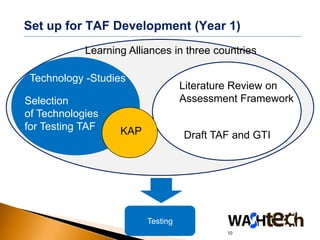
Set up for TAF Development (Year 1)
            Learning Alliances in three countries

 Technology -Studies
                                   Literature Review on
Selection                          Assessment Framework
of Technologies
for Testing TAF    KAP             Draft TAF and GTI


                         Testing
                                           10
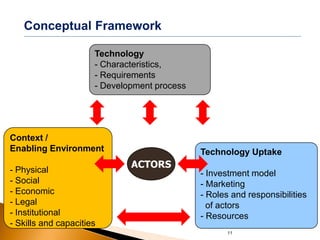
Conceptual Framework

                      Technology
                      - Characteristics,
                      - Requirements
                      - Development process


Context /
Enabling Environment                          Technology Uptake
                              ACTORS
- Physical                                    - Investment model
- Social                                      - Marketing
- Economic                                    - Roles and responsibilities
- Legal                                         of actors
- Institutional                               - Resources
- Skills and capacities
                                                     11
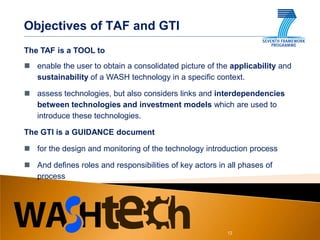
Objectives of TAF and GTI
The TAF is a TOOL to
 enable the user to obtain a consolidated picture of the applicability and
  sustainability of a WASH technology in a specific context.

 assess technologies, but also considers links and interdependencies
  between technologies and investment models which are used to
  introduce these technologies.

The GTI is a GUIDANCE document

 for the design and monitoring of the technology introduction process

 And defines roles and responsibilities of key actors in all phases of
  process


                                                          12
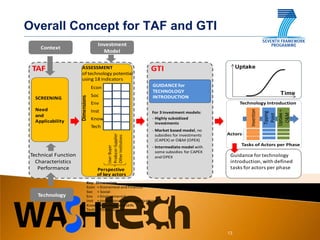
Overall Concept for TAF and GTI
                                      Investment
     Context
                                        Model


 TAF                   ASSESSMENT                                    GTI                                Uptake
                       of technology potential
                       using 18 indicators
                                   Econ                               GUIDANCE for
                                                                      TECHNOLOGY                                              Time
                                   Soc                                INTRODUCTION
                      Dimensions

   SCREENING
                                   Env                                                                   Technology Introduction
   Need


                                                                                                             Invention
                                   Inst


                                                                                                                         Uptake +
                                                                     For 3 investment models:


                                                                                                                         Tipping


                                                                                                                          O&M
                                                                                                                          Point
   and
                                   Know                              - Highly subsidized
   Applicability                                                       investments
                                   Tech
                                                                     - Market based model, no
                                                                       subsidies for investments   Actors
                                          Producer-Supplier
                                          Other Institutions


                                                                       (CAPEX) or O&M (OPEX)
                                                                                                         Tasks of Actors per Phase
                                          User-Buyer


                                                                     - Intermediate model with
                                                                       some subsidies for CAPEX
 Technical Function                                                    and OPEX                     Guidance for technology
   Characteristics                                                                                  introduction, with defined
    Performance                       Perspective                                                   tasks for actors per phase
                                      of key actors
                              Key: Dimensions
                              Econ = Economical and Financial
                              Soc = Social
    Technology                Env = Environmental
                              Inst = Institutional, legal, organisational
                              Know = Knowhow and skills
                              Tech = Technological


                                                                                                   13
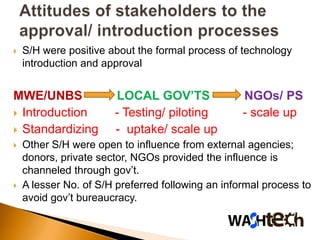
   S/H were positive about the formal process of technology
    introduction and approval


MWE/UNBS               LOCAL GOV’TS                NGOs/ PS
 Introduction         - Testing/ piloting         - scale up
 Standardizing        - uptake/ scale up
   Other S/H were open to influence from external agencies;
    donors, private sector, NGOs provided the influence is
    channeled through gov’t.
   A lesser No. of S/H preferred following an informal process to
    avoid gov’t bureaucracy.
   No detailed framework for technology
    introduction, appraisal or review of existing
    technologies.
   No tool that is employed to ensure a harmonized
    decision making process
   There is need for a technology assessment
    framework.
   Need for CB in technology assessment

Washtech presentation

  • 1.
    Romeo GNAN-KOUASSI Diploma HolderEPFL / ETH Pan-African Intergovernmental Agency WSA Water and Sanitation for Africa) Reseau des centres de Ressources Burkina Faso, 26th January 2012
  • 2.
    Achieving water and sanitation MDGs in many African countries South of Sahara uncertain  Role of affordable, sustainable technologies recognised  Good range of innovative WASH technologies  National strategies focus on the conventional  No systems to validate new technologies and assess real potential  No proven approaches to successfully introduce and go to scale
  • 3.
    Overall: More effectiveinvestment in new technologies  WASHTech-1: strengthen sector capacity to make effective investments in new technologies by: o Development of framework and process to assess a wide range of new WASH technologies (TAF& process) o Analysing approaches to introduction of innovations in decentralised system, dissemination and scaling up for sustainability o Establishing required capacities in BF, GH, UG  WASHTech-2: Strategies for innovation and scaling up; and process & time needed for successful uptake and sustainability
  • 4.
    Technology Assessment Framework (TAF) and Process; that is a simple system & criteria ◦ for evaluating technologies and their performance ◦ For identifying sustainability issues ◦ For analysing approaches to introduction, innovation, diffusion and scaling up  Capacities in BF, GH and UG for independent application of TAF and process  Strategies for innovation and scaling-up, and the process and life-span for successful take-up and sustainability WASHTech January 2012 4
  • 5.
    National level level WASH sector stakeholders = government, NGOs, SMEs  District (decentralised level) WASH stakeholders with a focus on local decision-makers, planners, practitioners  Interface between community and district level (includes community leaders and potential users)  Focus on households, rural areas, and small towns, and somehow low-income peri-urban areas WASHTech 5
  • 6.
    Selection of innovative/newtechnologies to be assessed by using set of criteria • trans-disciplinary approaches; • multiple use, environmental concerns, re- cycling; • SME development; • affordability; • novel financing and management mechanisms WASHTech 6
  • 7.
    • Ghana: (i)Ghana Modified India Mark II Handpump (groundwater lifting) and (ii) Slow sand filtration (drinking water treatment) Successful • Uganda: (i) Urine diversion double vault latrine (UDDT EcoSan) and ferro-cement tank >6,000l (water storage) • Burkina Faso: (i) VIP toilet and (ii) India Mark II hand pump (groundwater lifting) • Ghana: (i) pour-flush latrine (conventional latrine) and (ii) rope pump (groundwater lifting) Promising • Uganda: tippy tap (hand washing device) and (ii) Canzee pump (groundwater lifting) • Burkina Faso: (i) urine diversion latrine (EcoSan) and (ii) Rope pump (groundwater lifting) • Ghana: Enviro Loo (EcoSan) Failed • Uganda: none (to be discussed) • Burkina Faso: none (to be discussed) New • Ghana: Biofil (ecosan waste handling/treatment) • Uganda: iron removal pump plant (groundwater treatment) opportunities • Burkina Faso: sand dams (riverbed water storage) WASHTech 7
  • 8.
     Learning together yes  Witheach of you.. To understand the process of technolog introduction and approval
  • 9.
    Scenario 1: Formalprocess Scenario 2: Informal process Donor agencies Line ministry/ UNBS Government/ Line ministry Local Gov’ts/ NGOs/ Private Local district CBOs sector NGOs/ Gov’ts/ Private district CBOs sector Donor Private sector agencies Government/ NGOs/ private Line ministry sector Local gov’ts Local Gov’ts
  • 10.
    Set up forTAF Development (Year 1) Learning Alliances in three countries Technology -Studies Literature Review on Selection Assessment Framework of Technologies for Testing TAF KAP Draft TAF and GTI Testing 10
  • 11.
    Conceptual Framework Technology - Characteristics, - Requirements - Development process Context / Enabling Environment Technology Uptake ACTORS - Physical - Investment model - Social - Marketing - Economic - Roles and responsibilities - Legal of actors - Institutional - Resources - Skills and capacities 11
  • 12.
    Objectives of TAFand GTI The TAF is a TOOL to  enable the user to obtain a consolidated picture of the applicability and sustainability of a WASH technology in a specific context.  assess technologies, but also considers links and interdependencies between technologies and investment models which are used to introduce these technologies. The GTI is a GUIDANCE document  for the design and monitoring of the technology introduction process  And defines roles and responsibilities of key actors in all phases of process 12
  • 13.
    Overall Concept forTAF and GTI Investment Context Model TAF ASSESSMENT GTI Uptake of technology potential using 18 indicators Econ GUIDANCE for TECHNOLOGY Time Soc INTRODUCTION Dimensions SCREENING Env Technology Introduction Need Invention Inst Uptake + For 3 investment models: Tipping O&M Point and Know - Highly subsidized Applicability investments Tech - Market based model, no subsidies for investments Actors Producer-Supplier Other Institutions (CAPEX) or O&M (OPEX) Tasks of Actors per Phase User-Buyer - Intermediate model with some subsidies for CAPEX Technical Function and OPEX Guidance for technology Characteristics introduction, with defined Performance Perspective tasks for actors per phase of key actors Key: Dimensions Econ = Economical and Financial Soc = Social Technology Env = Environmental Inst = Institutional, legal, organisational Know = Knowhow and skills Tech = Technological 13
  • 14.
    S/H were positive about the formal process of technology introduction and approval MWE/UNBS LOCAL GOV’TS NGOs/ PS  Introduction - Testing/ piloting - scale up  Standardizing - uptake/ scale up  Other S/H were open to influence from external agencies; donors, private sector, NGOs provided the influence is channeled through gov’t.  A lesser No. of S/H preferred following an informal process to avoid gov’t bureaucracy.
  • 15.
    No detailed framework for technology introduction, appraisal or review of existing technologies.  No tool that is employed to ensure a harmonized decision making process  There is need for a technology assessment framework.  Need for CB in technology assessment