Here is where your presentation begins
6th
Grade
Ajra Hadzibegic
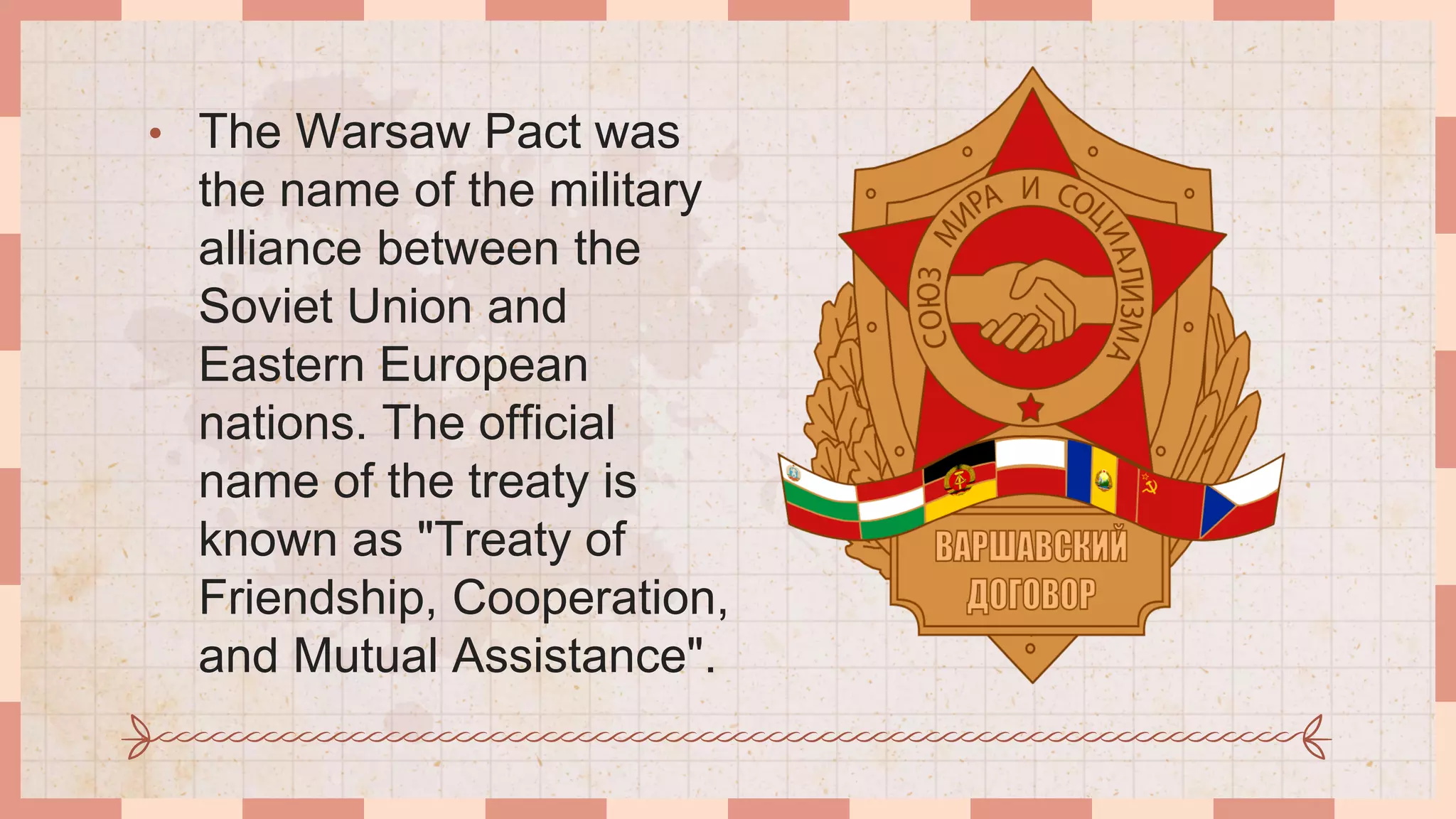
• The Warsaw Pact was
the name of the military
alliance between the
Soviet Union and
Eastern European
nations. The official
name of the treaty is
known as "Treaty of
Friendship, Cooperation,
and Mutual Assistance".
Some important
provisions of the
treaty:
CREATION
In 1955, the USSR with its own fears of a rearmed Germany
created a competing military alliance system, the Warsaw Pact.
It integrated the armed forces of Eastern Europe into a unified
command under the USSR. In addition, the USSR recognized
East Germany as an independent state. It was formally called
the Treaty of Friendship, Cooperation and Mutual Assistance.
The treaty was signed in Warsaw, Poland on May 14, 1955,
that was established to counter the alleged threat from the
NATO alliance.
STRUCTURE
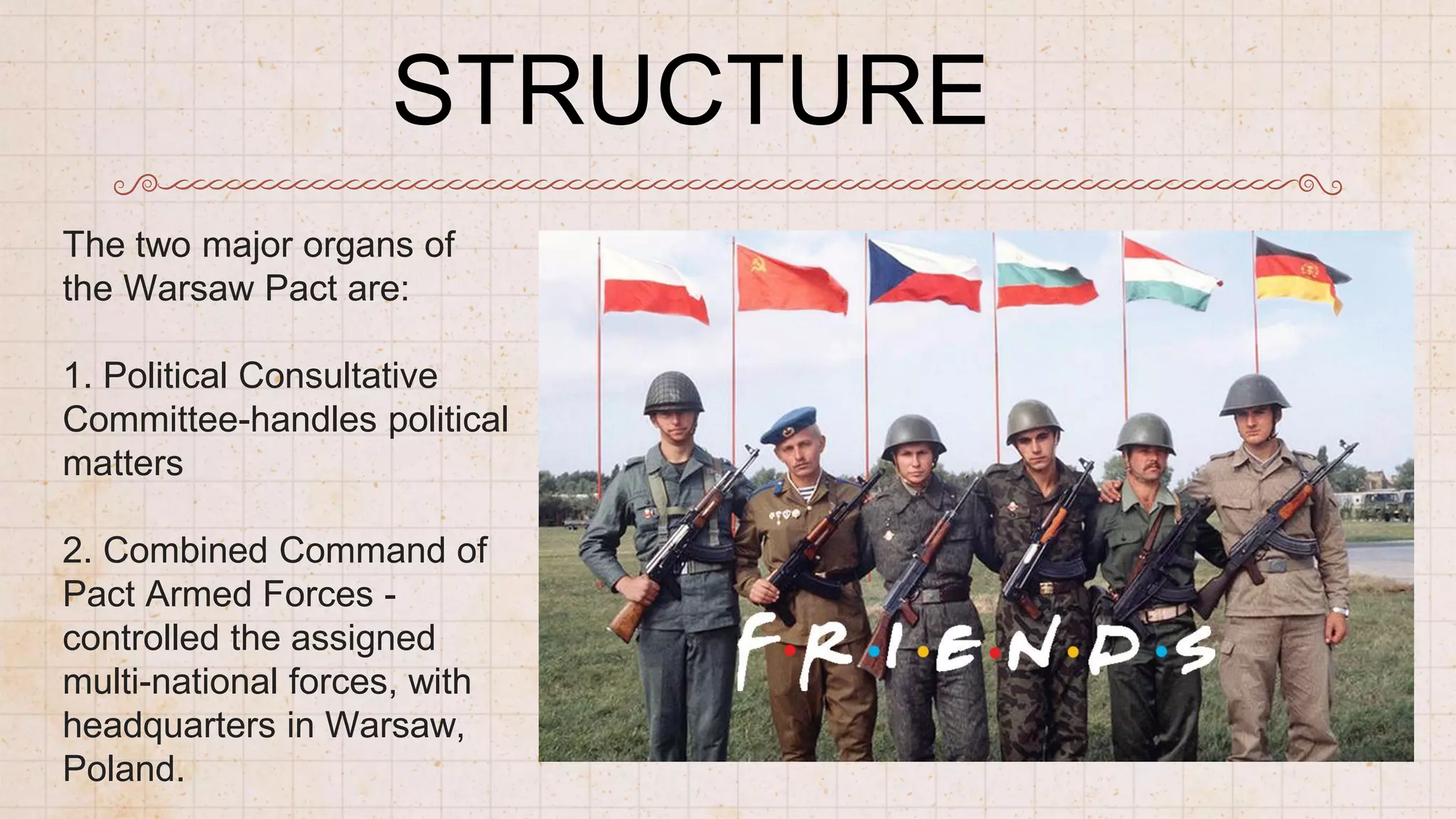
The two major organs of
the Warsaw Pact are:
1. Political Consultative
Committee-handles political
matters
2. Combined Command of
Pact Armed Forces -
controlled the assigned
multi-national forces, with
headquarters in Warsaw,
Poland.
STRUCTURE
PURPOSES
1. To reinforce communist
dominance in Eastern Europe.
2. To provide a counterbalance
to NATO and increase the
international negotiating power
of the Soviet Union.
Warsaw it's Use of Nuclear Weapon
How the Warsaw Pact influenced the Cold War
The Warsaw Pact was a
major factor in increasing
tensions between the
countries during the Cold
War. Because of its
opposing alliance with the
NATO, the country
members of both parties
sent out terrible threats,
violent propagandas, and
other measures of open
warfare.
What are the reasons why Warsaw Pact lost the war?
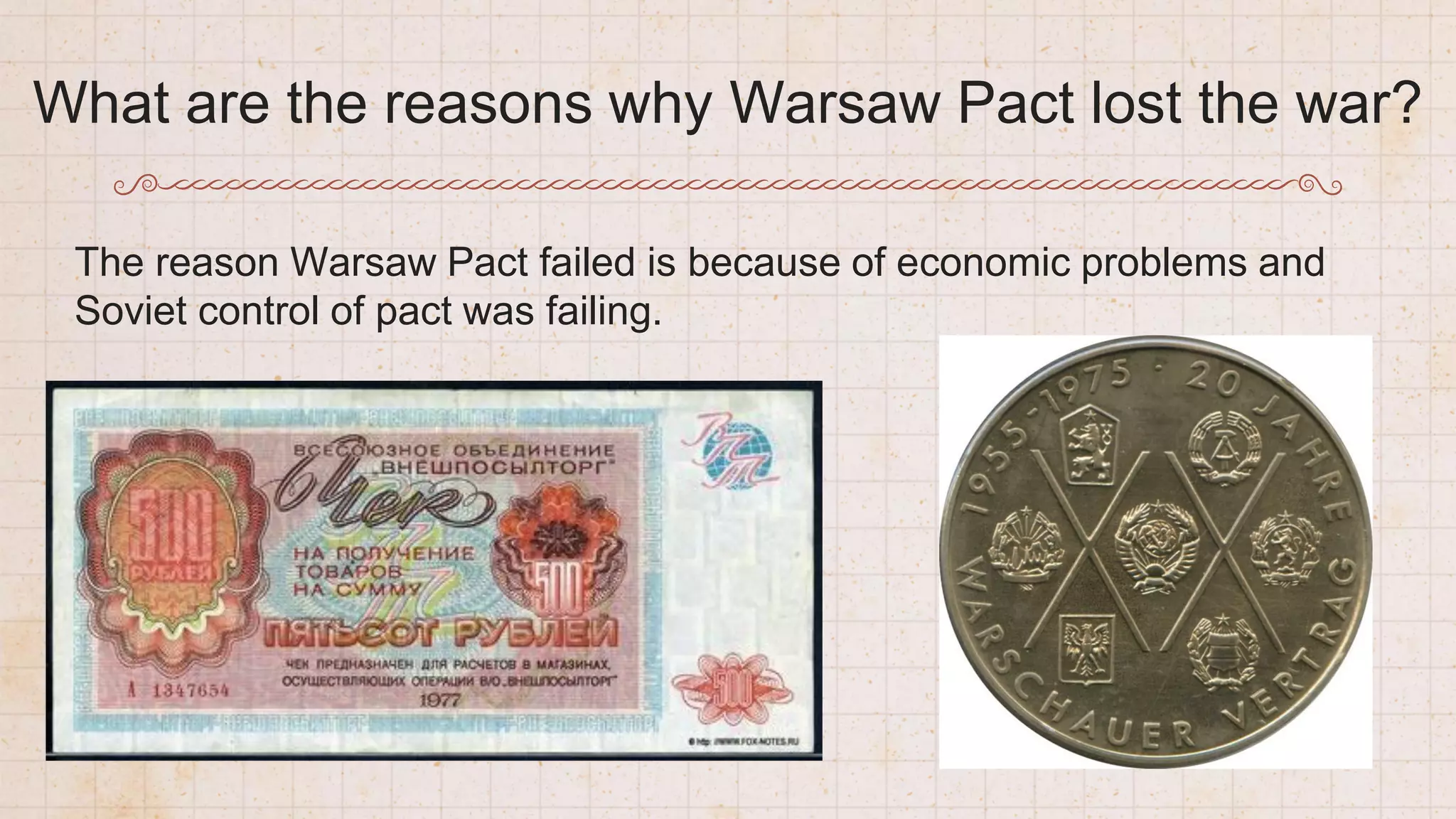
The reason Warsaw Pact failed is because of economic problems and
Soviet control of pact was failing.
Events that lead to the end of Warsaw Pact
• By late 1980s, anti-Soviet and anti-Communist movements throughout Eastern Europe
began to crack the Warsaw Pact.
• In 1990, East Germany left the Warsaw Past in preparation for its reunification with West
Germany. Poland and Czechoslovakia also indicated their strong desire to withdraw.
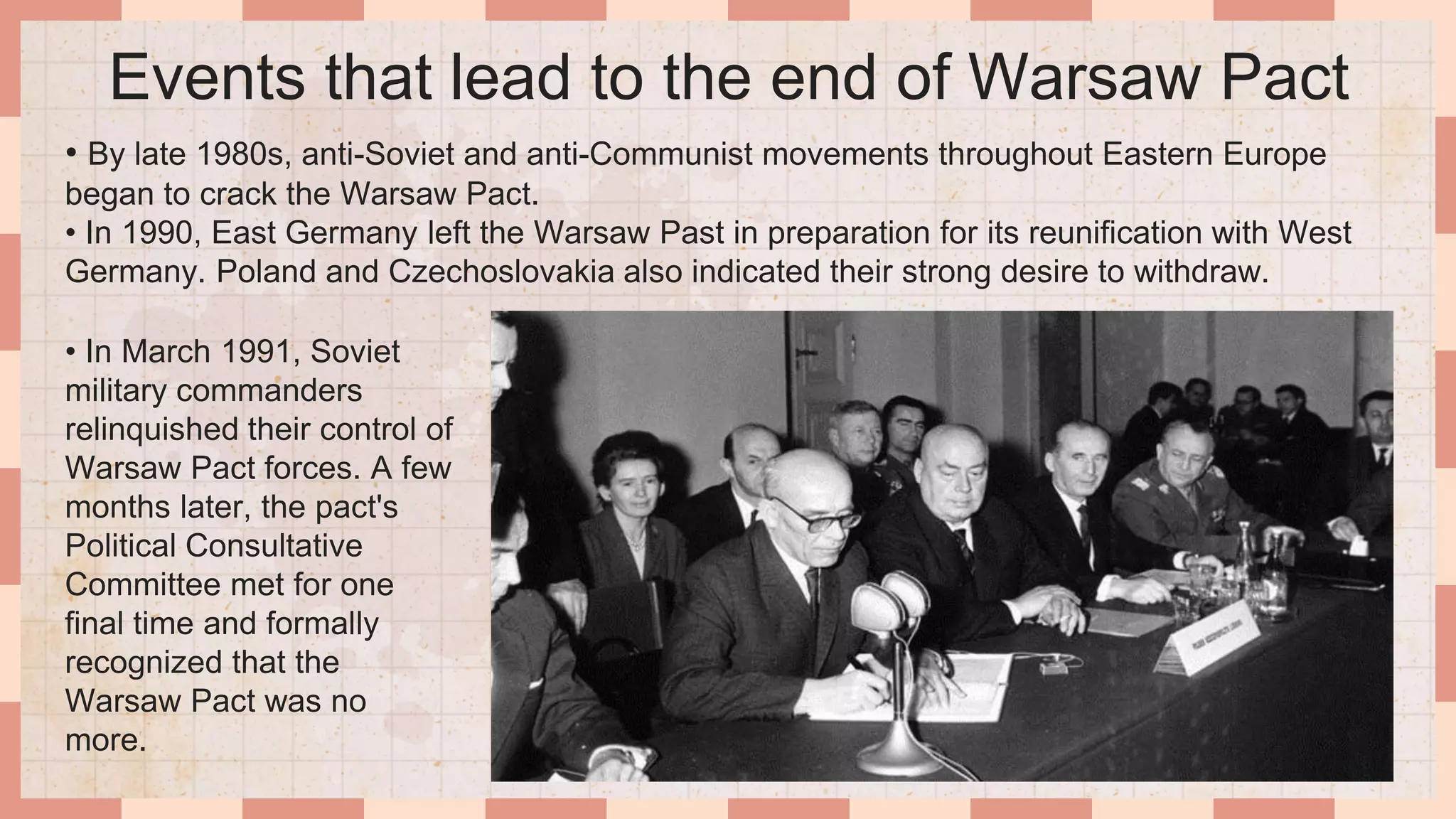
• In March 1991, Soviet
military commanders
relinquished their control of
Warsaw Pact forces. A few
months later, the pact's
Political Consultative
Committee met for one
final time and formally
recognized that the
Warsaw Pact was no
more.
THANK YOU FOR YOUR ATTENTION

Warsaw Pact .pdf

  • 1.
    Here is whereyour presentation begins 6th Grade Ajra Hadzibegic
  • 2.
    • The WarsawPact was the name of the military alliance between the Soviet Union and Eastern European nations. The official name of the treaty is known as "Treaty of Friendship, Cooperation, and Mutual Assistance".
  • 4.
  • 5.
    CREATION In 1955, theUSSR with its own fears of a rearmed Germany created a competing military alliance system, the Warsaw Pact. It integrated the armed forces of Eastern Europe into a unified command under the USSR. In addition, the USSR recognized East Germany as an independent state. It was formally called the Treaty of Friendship, Cooperation and Mutual Assistance. The treaty was signed in Warsaw, Poland on May 14, 1955, that was established to counter the alleged threat from the NATO alliance.
  • 6.
    STRUCTURE The two majororgans of the Warsaw Pact are: 1. Political Consultative Committee-handles political matters 2. Combined Command of Pact Armed Forces - controlled the assigned multi-national forces, with headquarters in Warsaw, Poland. STRUCTURE
  • 7.
    PURPOSES 1. To reinforcecommunist dominance in Eastern Europe. 2. To provide a counterbalance to NATO and increase the international negotiating power of the Soviet Union.
  • 8.
    Warsaw it's Useof Nuclear Weapon
  • 9.
    How the WarsawPact influenced the Cold War The Warsaw Pact was a major factor in increasing tensions between the countries during the Cold War. Because of its opposing alliance with the NATO, the country members of both parties sent out terrible threats, violent propagandas, and other measures of open warfare.
  • 10.
    What are thereasons why Warsaw Pact lost the war? The reason Warsaw Pact failed is because of economic problems and Soviet control of pact was failing.
  • 11.
    Events that leadto the end of Warsaw Pact • By late 1980s, anti-Soviet and anti-Communist movements throughout Eastern Europe began to crack the Warsaw Pact. • In 1990, East Germany left the Warsaw Past in preparation for its reunification with West Germany. Poland and Czechoslovakia also indicated their strong desire to withdraw. • In March 1991, Soviet military commanders relinquished their control of Warsaw Pact forces. A few months later, the pact's Political Consultative Committee met for one final time and formally recognized that the Warsaw Pact was no more.
  • 13.
    THANK YOU FORYOUR ATTENTION