WARM UP
VARIATION OF WALKING
WALKING WITH TOE
WALKING WITH HEEL
WALKING
DEFINITION
• Move at a regular pace by alternately
lifting and lowering each leg, never
both feet off the ground at once.
• Walking is defined by an 'inverted
pendulum' gait in which the body
jumps over a rigid limb or limb with
each step.
BASIC WALKING
1. Walking forward
2. Walking sideways
3. Backward walking
4. Walking fast
VARIATON WALKING
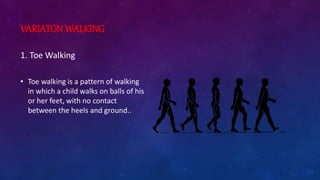
1. Toe Walking
• Toe walking is a pattern of walking
in which a child walks on balls of his
or her feet, with no contact
between the heels and ground..
HOW TO DO TOE WALKING
• Start by standing feet shoulder width
apart
• Raise your toes as you lift your heels off
the ground
• Walk on the ball of your feet as well as
your toes
• Keep your knees straight while walking in
a straight line
• Mulailah dengan berdiri kaki selebar
bahu
• Angkat jari-jari kaki Anda saat Anda
mengangkat tumit Anda dari tanah
• Berjalan di atas bola kaki Anda serta jari-
jari kaki Anda
• Jaga lutut anda agar tetap lurus saat
berjalan dalam garis lurus
BENEFIT OF WALKING TOE
• By using these tendons, nearby muscles, and ligaments for toe raises, you
work on range of motion and improve your overall foot health. In some cases,
you can even relieve foot and ankle pain. This makes injuries such as shin
splints, a common concern for runners, and stress fractures less likely
VARIATIONWALKING
3. Heel Walking
• A term for a normal gait in which the
heel of the foot touches the surface first.
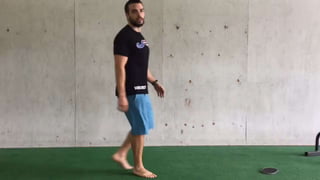
HOW TO DO HEEL WALKING
• Start by standing feet shoulder width
apart.
• Lift our toes up off the gound.
• Walk with your heels
• Keep your knees straight while
walking in a straight line
• Mulailah dengan berdiri kaki dibuka selebar
bahu
• Angkat jari kaki kita dari lantai .
• berjalan dengan tumit anda
• Jaga lutut anda agar tetap lurus saat berjalan
lurus.
BENEFITS OF WALKING HEEL
• This exercise will help mobilise the ankles,
• prevent or reduce stiffness,
• improve stability and help with walking.
HEEL AND TOE WALKING
• Characterized by a step where the heel of one foot touches the ground before
the toe of the other foot leaves it
HOW TO DO HEEL AND TOE WALKING
1. Walk on your toes with your toes pointed straight ahead for about 20 meters,
getting as high up on your toes as you possibly can. Your legs should be
relatively straight as you do this, and you should -- at least initially -- take
fairly small steps.
2. Switch to walking on your toes with your feet.
3. Do the same with your toes pointed
4. Repeat this while walking on your heels
BENEFITS OF HEEL AND TOE WALKING
• The benefit of walking this way is that it activates the set of muscles in your
foot and minimizes the impact on the bones in your heels and ankles.
1. Keep your heads up
• When you’re walking, focus on standing tall
with your chin parallel to the ground and
your ears aligned above your shoulders.
• Imagine your head being pulled up gently by
an invisible piece of string that’s attached to
the ceiling. This may help prevent you from
dropping your head into your chest while
you walk.
• Keep your eyes and gaze forward. Focus on
an area about 10 to 20 feet ahead of you
while you walk.
2. Lengthen your back
• Focus on elongating your spine while
you walk. Try to avoid slouching,
hunching, or leaning forward, which
can put stress on your back muscles.
3. Keep your shoulders down and
back
• Your shoulders also play a key role in your
walking posture and technique. If your
shoulders are tense or hunched forward, it
can strain the muscles and joints in your
shoulders, neck and upper back.
• Try to keep your shoulders loose and
relaxed, not tensed up toward your ears or
slouched forward. You can do shoulder
shrugs occasionally while you’re walking to
ensure that you’re keeping your shoulders
relaxed and in the right position.
• As you walk, gently swing your arms back
and forth at your sides. Make sure you
swing your arms from your shoulders, not
from your elbows.
• Don’t swing your arms across your body.
• Don’t swing your arms up too high. Keep
them around your midsection, not around
your chest.
4. Swing your arms
5. Step from heel to toe
• Maintain a steady heel-to-toe gait. This involves striking the
ground with your heel first, then rolling through your heel
to your toe, and pushing out of the step with your toe.
Avoid flat-footed steps or striking the ground with your
toes first.
COOLING DOWN
THANK YOU
KEEP SAFE AND CLEAN EVERYTIME

Walking

  • 2.
  • 3.
    VARIATION OF WALKING WALKINGWITH TOE WALKING WITH HEEL
  • 4.
    WALKING DEFINITION • Move ata regular pace by alternately lifting and lowering each leg, never both feet off the ground at once. • Walking is defined by an 'inverted pendulum' gait in which the body jumps over a rigid limb or limb with each step. BASIC WALKING 1. Walking forward 2. Walking sideways 3. Backward walking 4. Walking fast
  • 5.
    VARIATON WALKING 1. ToeWalking • Toe walking is a pattern of walking in which a child walks on balls of his or her feet, with no contact between the heels and ground..
  • 6.
    HOW TO DOTOE WALKING • Start by standing feet shoulder width apart • Raise your toes as you lift your heels off the ground • Walk on the ball of your feet as well as your toes • Keep your knees straight while walking in a straight line • Mulailah dengan berdiri kaki selebar bahu • Angkat jari-jari kaki Anda saat Anda mengangkat tumit Anda dari tanah • Berjalan di atas bola kaki Anda serta jari- jari kaki Anda • Jaga lutut anda agar tetap lurus saat berjalan dalam garis lurus
  • 8.
    BENEFIT OF WALKINGTOE • By using these tendons, nearby muscles, and ligaments for toe raises, you work on range of motion and improve your overall foot health. In some cases, you can even relieve foot and ankle pain. This makes injuries such as shin splints, a common concern for runners, and stress fractures less likely
  • 9.
    VARIATIONWALKING 3. Heel Walking •A term for a normal gait in which the heel of the foot touches the surface first.
  • 10.
    HOW TO DOHEEL WALKING • Start by standing feet shoulder width apart. • Lift our toes up off the gound. • Walk with your heels • Keep your knees straight while walking in a straight line • Mulailah dengan berdiri kaki dibuka selebar bahu • Angkat jari kaki kita dari lantai . • berjalan dengan tumit anda • Jaga lutut anda agar tetap lurus saat berjalan lurus.
  • 12.
    BENEFITS OF WALKINGHEEL • This exercise will help mobilise the ankles, • prevent or reduce stiffness, • improve stability and help with walking.
  • 13.
    HEEL AND TOEWALKING • Characterized by a step where the heel of one foot touches the ground before the toe of the other foot leaves it
  • 14.
    HOW TO DOHEEL AND TOE WALKING 1. Walk on your toes with your toes pointed straight ahead for about 20 meters, getting as high up on your toes as you possibly can. Your legs should be relatively straight as you do this, and you should -- at least initially -- take fairly small steps. 2. Switch to walking on your toes with your feet. 3. Do the same with your toes pointed 4. Repeat this while walking on your heels
  • 16.
    BENEFITS OF HEELAND TOE WALKING • The benefit of walking this way is that it activates the set of muscles in your foot and minimizes the impact on the bones in your heels and ankles.
  • 17.
    1. Keep yourheads up • When you’re walking, focus on standing tall with your chin parallel to the ground and your ears aligned above your shoulders. • Imagine your head being pulled up gently by an invisible piece of string that’s attached to the ceiling. This may help prevent you from dropping your head into your chest while you walk. • Keep your eyes and gaze forward. Focus on an area about 10 to 20 feet ahead of you while you walk. 2. Lengthen your back • Focus on elongating your spine while you walk. Try to avoid slouching, hunching, or leaning forward, which can put stress on your back muscles.
  • 18.
    3. Keep yourshoulders down and back • Your shoulders also play a key role in your walking posture and technique. If your shoulders are tense or hunched forward, it can strain the muscles and joints in your shoulders, neck and upper back. • Try to keep your shoulders loose and relaxed, not tensed up toward your ears or slouched forward. You can do shoulder shrugs occasionally while you’re walking to ensure that you’re keeping your shoulders relaxed and in the right position. • As you walk, gently swing your arms back and forth at your sides. Make sure you swing your arms from your shoulders, not from your elbows. • Don’t swing your arms across your body. • Don’t swing your arms up too high. Keep them around your midsection, not around your chest. 4. Swing your arms
  • 19.
    5. Step fromheel to toe • Maintain a steady heel-to-toe gait. This involves striking the ground with your heel first, then rolling through your heel to your toe, and pushing out of the step with your toe. Avoid flat-footed steps or striking the ground with your toes first.
  • 20.
  • 21.
    THANK YOU KEEP SAFEAND CLEAN EVERYTIME