DIABETES EARLY WARNING SIGNS                                       DIABETES AND YOUR FEET
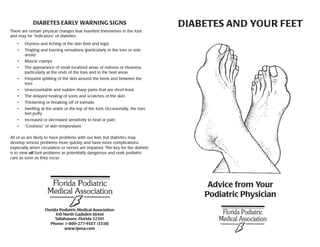
There are certain physical changes that manifest themselves in the foot
and may be “indicators” of diabetes:
   •   Dryness and itching of the skin (feet and legs)
   •   Tingling and burning sensations (particularly in the toes or sole
       areas)
   •   Muscle cramps
   •   The appearance of small localized areas of redness or blueness,
       particularly at the ends of the toes and in the heel areas
   •   Frequent splitting of the skin around the heels and between the
       toes
   •   Unaccountable and sudden sharp pains that are short-lived
   •   The delayed healing of sores and scratches of the skin
   •   Thickening or breaking off of toenails
   •   Swelling at the ankle or the top of the foot; Occasionally, the toes
       feel puffy
   •   Increased or decreased sensitivity to heat or pain
   •   “Coolness” of skin temperature

All of us are likely to have problems with our feet, but diabetics may
develop serious problems more quickly and have more complications,
expecially when circulation or nerves are impaired. The key for the diabetic
is to view all foot problems as potentially dangerous and seek podiatric
care as soon as they occur.


                                                                                    Advice from Your
                                                                                   Podiatric Physician
                   Florida Podiatric Medical Association
                         410 North Gadsden Street
                         Tallahassee, Florida 32301
                      Phone: 1-800-277-FEET (3338)
                              www.fpma.com
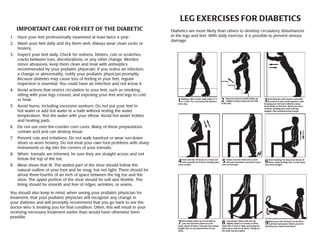
LEG EXERCISES FOR DIABETICS
     IMPORTANT CARE FOR FEET OF THE DIABETIC                                     Diabetics are more likely than others to develop circulatory disturbances
1.   Have your feet professionally examined at least twice a year.               in the legs and feet. With daily exercise, it is possible to prevent serious
                                                                                 damage.
2. Wash your feet daily and dry them well. Always wear clean socks or
   hosiery.
3. Inspect your feet daily. Check for redness, blisters, cuts or scratches,
   cracks between toes, discolorations, or any other change. Monitor
   minor abrasions, keep them clean and treat with antiseptics
   recommended by your podiatric physician. If you notice an infection,
   a change or abnormality, notify your podiatric physician promptly.
   Because diabetes may cause loss of feeling in your feet, regular
   inspection is essential. You could have an infection and not know it.
4. Avoid actions that restrict circulation to your feet, such as smoking,
   sitting with your legs crossed, and exposing your feet and legs to cold
   or heat.                                                                         1  Walking: Take a brisk, daily walk of 1/2
                                                                                       to 1 hour. Try to increase the distance
                                                                                    every day.
                                                                                                                                   2    Staircase exercise: Walk briskly up
                                                                                                                                        a flight of stairs using only the ball
                                                                                                                                   of the foot.
                                                                                                                                                                                3   Stretching the calf muscles: Lean with
                                                                                                                                                                                    the palms of your hands against a wall,
                                                                                                                                                                                keeping your feet some distance away,
5. Avoid burns, including excessive sunburn. Do not put your feet in                                                                                                            heels firmly on the floor. Bend your arms
                                                                                                                                                                                10 times, keeping your back and legs
   hot water or add hot water to a bath without testing the water                                                                                                               straight. This counteracts leg cramps.

   temperature. Test the water with your elbow. Avoid hot water bottles
   and heating pads.
6. Do not use over-the-counter corn cures. Many of these preparations
   contain acid and can destroy tissue.
7.   Prevent cuts and irritations. Do not walk barefoot or wear run-down
     shoes or worn hosiery. Do not treat your own foot problems with sharp
     instruments or dig into the corners of your toenails.
8. When toenails are trimmed, be sure they are straight across and not
   below the top of the toe.
                                                                                     4  Chair exercise: Sit down on a chair and
                                                                                        raise yourself up 10 times, keeping your    5   Tiptoe exercise: Hold onto a chair
                                                                                                                                        and raise and lower yourself on your    6  Knee bending: Do deep knee bends 10
                                                                                                                                                                                   times, while holding onto a chair. Keep
9. Wear shoes that fit. The widest part of the shoe should follow the                 arms crossed.                                  toes on that spot.                          your back straight.

   natural outline of your foot and be snug, but not tight. There should be
   about three-fourths of an inch of space between the big toe and the
   shoe. The upper portion of the shoe should be soft and flexible. The
   lining should be smooth and free of ridges, wrinkles, or seams.

You should also keep in mind, when seeing your podiatric physician for
treatment, that your podiatric physician will recognize any change in
your diabetes and will promptly recommend that you go back to see the
doctor who is treating you for that condition. Often, this will result in your
receiving necessary treatment earlier than would have otherwise been
possible.
                                                                                     7  Heel raising: Raise up on the balls of
                                                                                        your feet and then down on your
                                                                                     heels, about 20 times. Then put your whole
                                                                                                                                   8    Leg sweeps: Stand with one leg
                                                                                                                                        slightly raised, on a book or block.
                                                                                                                                   Hold onto a chair or table and swing the
                                                                                                                                                                                 9  Wave your feet: Sit down on the floor
                                                                                                                                                                                     and lean backwards. Shake your feet
                                                                                                                                                                                 until they are relaxed and warm.
                                                                                     weight, first on one leg and then on the       other leg to-and-fro 10 times. Change to
                                                                                     other.                                        the other leg and repeat.

Diabetes

  • 1.
    DIABETES EARLY WARNINGSIGNS DIABETES AND YOUR FEET There are certain physical changes that manifest themselves in the foot and may be “indicators” of diabetes: • Dryness and itching of the skin (feet and legs) • Tingling and burning sensations (particularly in the toes or sole areas) • Muscle cramps • The appearance of small localized areas of redness or blueness, particularly at the ends of the toes and in the heel areas • Frequent splitting of the skin around the heels and between the toes • Unaccountable and sudden sharp pains that are short-lived • The delayed healing of sores and scratches of the skin • Thickening or breaking off of toenails • Swelling at the ankle or the top of the foot; Occasionally, the toes feel puffy • Increased or decreased sensitivity to heat or pain • “Coolness” of skin temperature All of us are likely to have problems with our feet, but diabetics may develop serious problems more quickly and have more complications, expecially when circulation or nerves are impaired. The key for the diabetic is to view all foot problems as potentially dangerous and seek podiatric care as soon as they occur. Advice from Your Podiatric Physician Florida Podiatric Medical Association 410 North Gadsden Street Tallahassee, Florida 32301 Phone: 1-800-277-FEET (3338) www.fpma.com
  • 2.
    LEG EXERCISES FORDIABETICS IMPORTANT CARE FOR FEET OF THE DIABETIC Diabetics are more likely than others to develop circulatory disturbances 1. Have your feet professionally examined at least twice a year. in the legs and feet. With daily exercise, it is possible to prevent serious damage. 2. Wash your feet daily and dry them well. Always wear clean socks or hosiery. 3. Inspect your feet daily. Check for redness, blisters, cuts or scratches, cracks between toes, discolorations, or any other change. Monitor minor abrasions, keep them clean and treat with antiseptics recommended by your podiatric physician. If you notice an infection, a change or abnormality, notify your podiatric physician promptly. Because diabetes may cause loss of feeling in your feet, regular inspection is essential. You could have an infection and not know it. 4. Avoid actions that restrict circulation to your feet, such as smoking, sitting with your legs crossed, and exposing your feet and legs to cold or heat. 1 Walking: Take a brisk, daily walk of 1/2 to 1 hour. Try to increase the distance every day. 2 Staircase exercise: Walk briskly up a flight of stairs using only the ball of the foot. 3 Stretching the calf muscles: Lean with the palms of your hands against a wall, keeping your feet some distance away, 5. Avoid burns, including excessive sunburn. Do not put your feet in heels firmly on the floor. Bend your arms 10 times, keeping your back and legs hot water or add hot water to a bath without testing the water straight. This counteracts leg cramps. temperature. Test the water with your elbow. Avoid hot water bottles and heating pads. 6. Do not use over-the-counter corn cures. Many of these preparations contain acid and can destroy tissue. 7. Prevent cuts and irritations. Do not walk barefoot or wear run-down shoes or worn hosiery. Do not treat your own foot problems with sharp instruments or dig into the corners of your toenails. 8. When toenails are trimmed, be sure they are straight across and not below the top of the toe. 4 Chair exercise: Sit down on a chair and raise yourself up 10 times, keeping your 5 Tiptoe exercise: Hold onto a chair and raise and lower yourself on your 6 Knee bending: Do deep knee bends 10 times, while holding onto a chair. Keep 9. Wear shoes that fit. The widest part of the shoe should follow the arms crossed. toes on that spot. your back straight. natural outline of your foot and be snug, but not tight. There should be about three-fourths of an inch of space between the big toe and the shoe. The upper portion of the shoe should be soft and flexible. The lining should be smooth and free of ridges, wrinkles, or seams. You should also keep in mind, when seeing your podiatric physician for treatment, that your podiatric physician will recognize any change in your diabetes and will promptly recommend that you go back to see the doctor who is treating you for that condition. Often, this will result in your receiving necessary treatment earlier than would have otherwise been possible. 7 Heel raising: Raise up on the balls of your feet and then down on your heels, about 20 times. Then put your whole 8 Leg sweeps: Stand with one leg slightly raised, on a book or block. Hold onto a chair or table and swing the 9 Wave your feet: Sit down on the floor and lean backwards. Shake your feet until they are relaxed and warm. weight, first on one leg and then on the other leg to-and-fro 10 times. Change to other. the other leg and repeat.