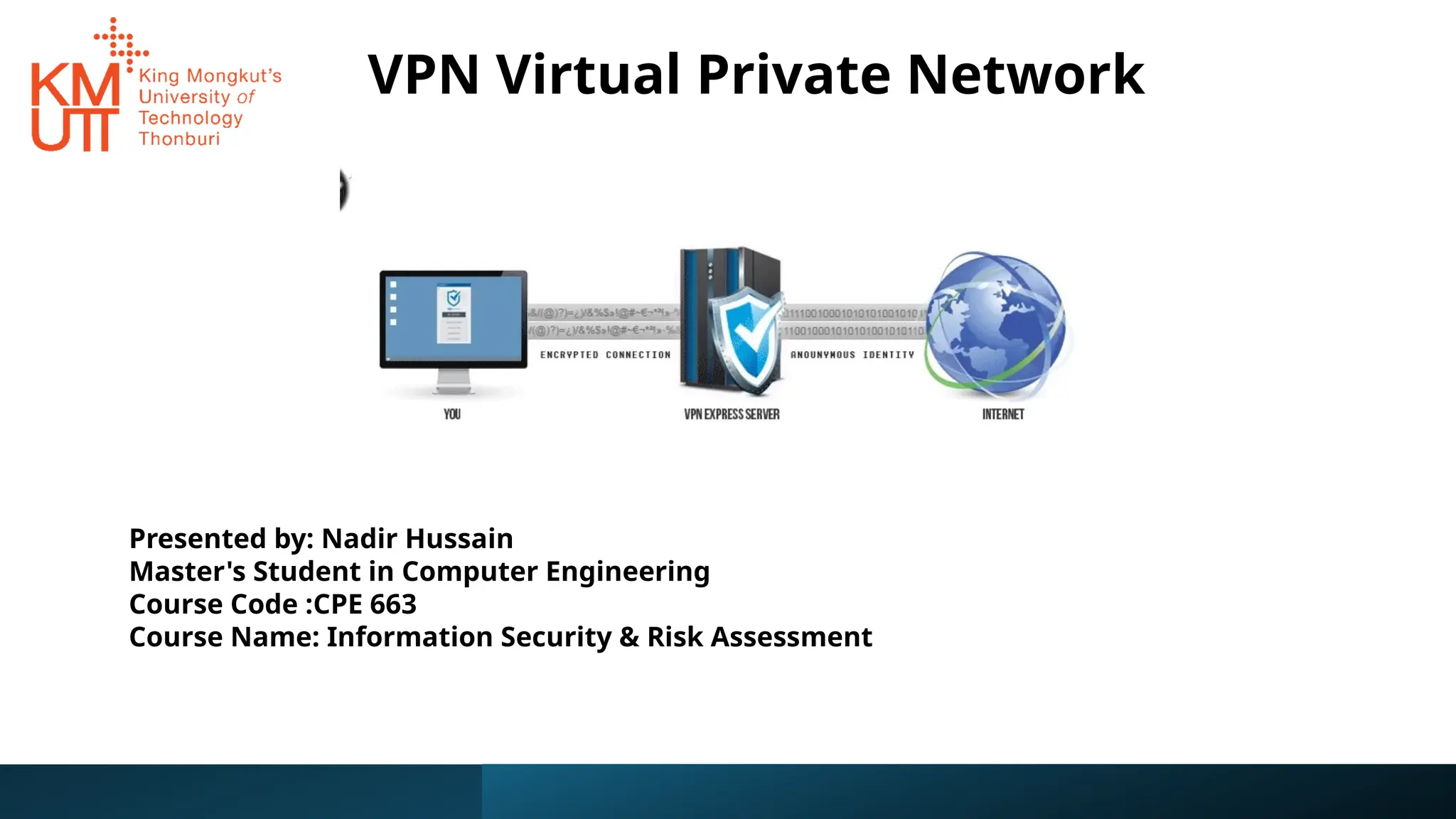
VPN Virtual Private Network
Presented by: Nadir Hussain
Master's Student in Computer Engineering
Course Code :CPE 663
Course Name: Information Security & Risk Assessment
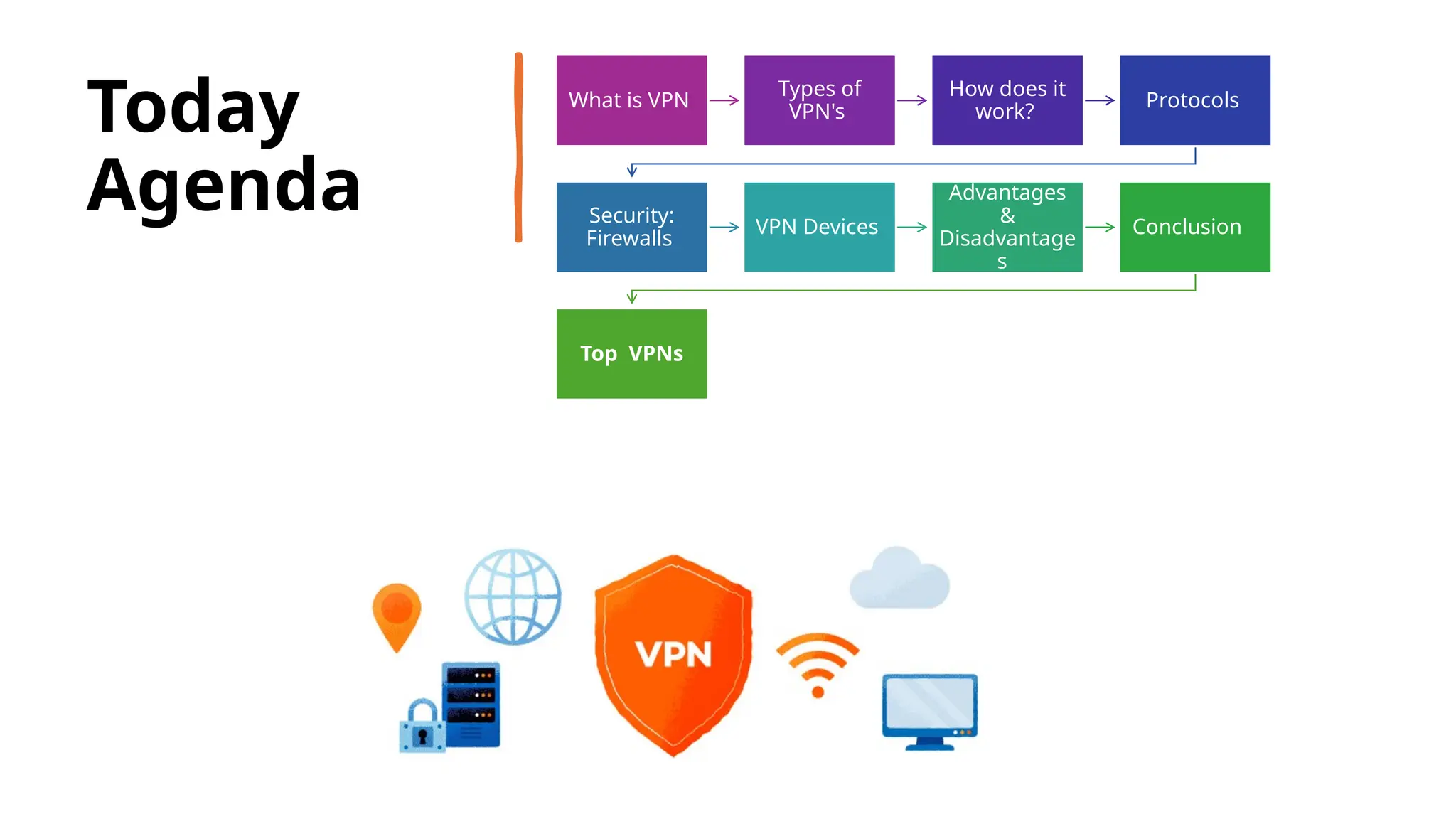
Today
Agenda
What is VPN
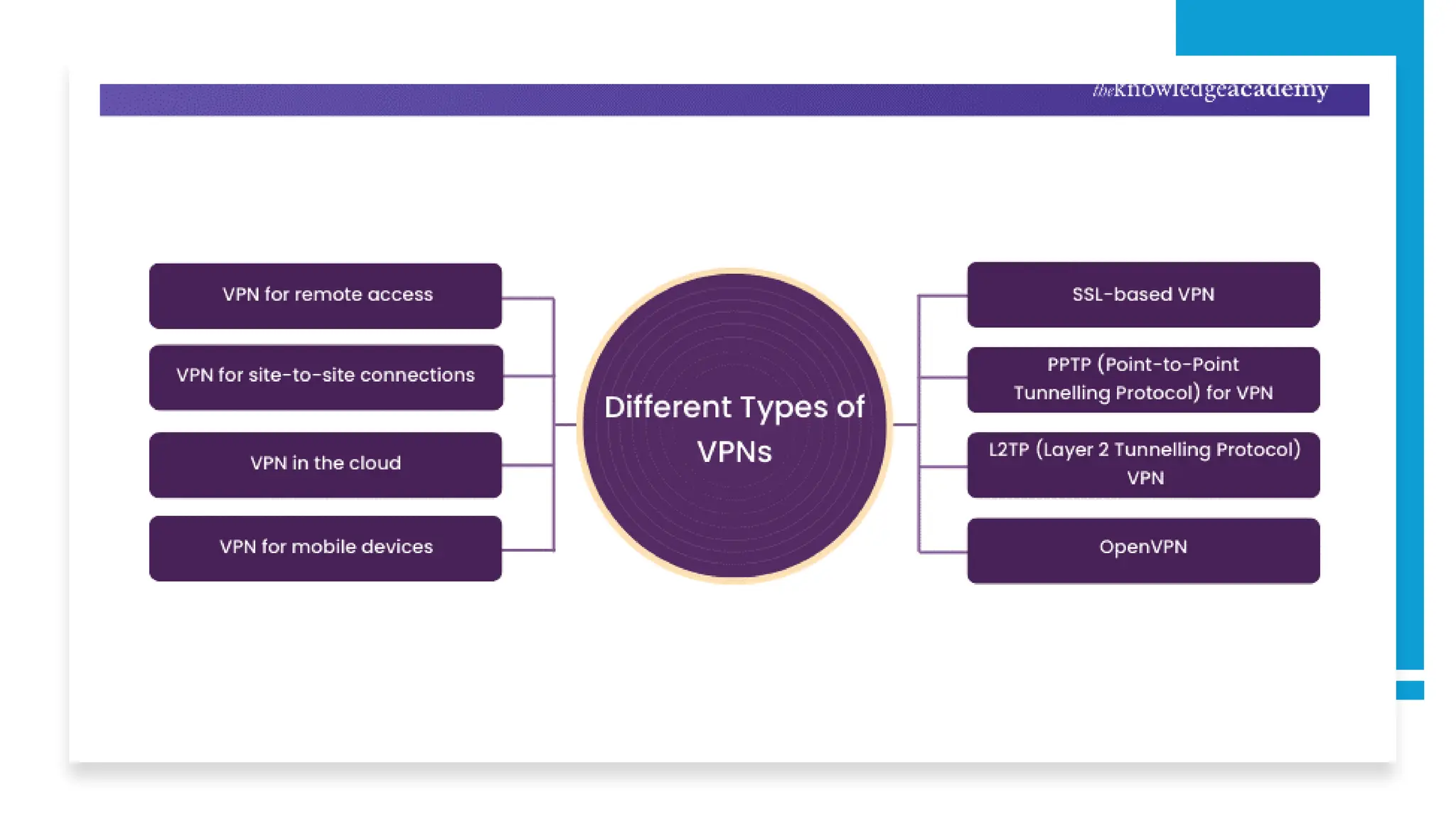
Types of
VPN's
How does it
work?
Protocols
Security:
Firewalls
VPN Devices
Advantages
&
Disadvantage
s
Conclusion
Top VPNs
•Video Refernce Link
So What is VPN?
The VPN is Nothing but secure,
private communication over public
networks.The first VPN protocols,
such as PPTP (Point-to-Point
Tunneling Protocol), were
developed by Microsoft in 1996.
PPTP
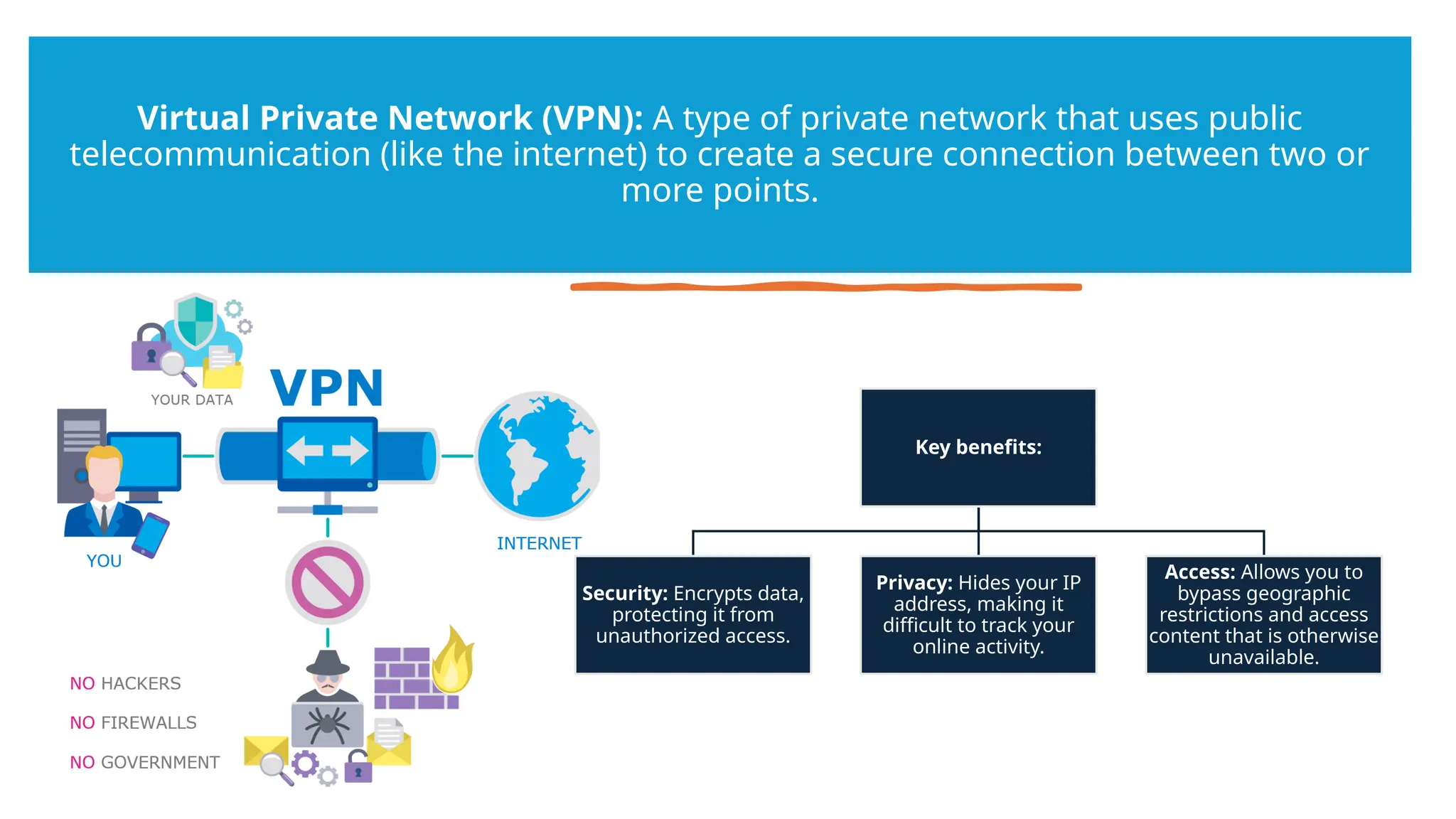
Key benefits:
Security: Encrypts data,
protecting it from
unauthorized access.
Privacy: Hides your IP
address, making it
difficult to track your
online activity.
Access: Allows you to
bypass geographic
restrictions and access
content that is otherwise
unavailable.
Virtual Private Network (VPN): A type of private network that uses public
telecommunication (like the internet) to create a secure connection between two or
more points.
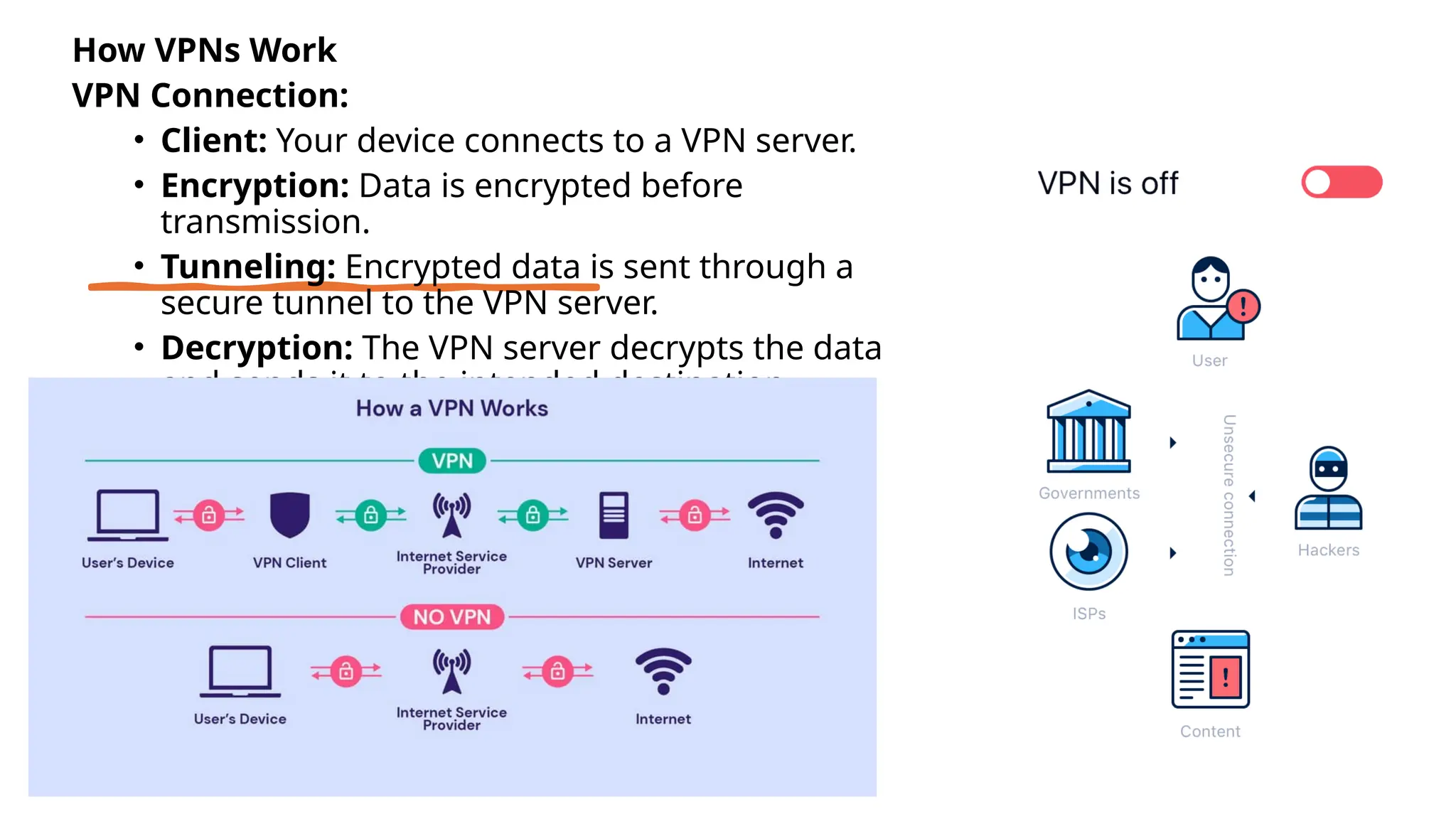
How VPNs Work
VPN Connection:
• Client: Your device connects to a VPN server.
• Encryption: Data is encrypted before
transmission.
• Tunneling: Encrypted data is sent through a
secure tunnel to the VPN server.
• Decryption: The VPN server decrypts the data
and sends it to the intended destination.
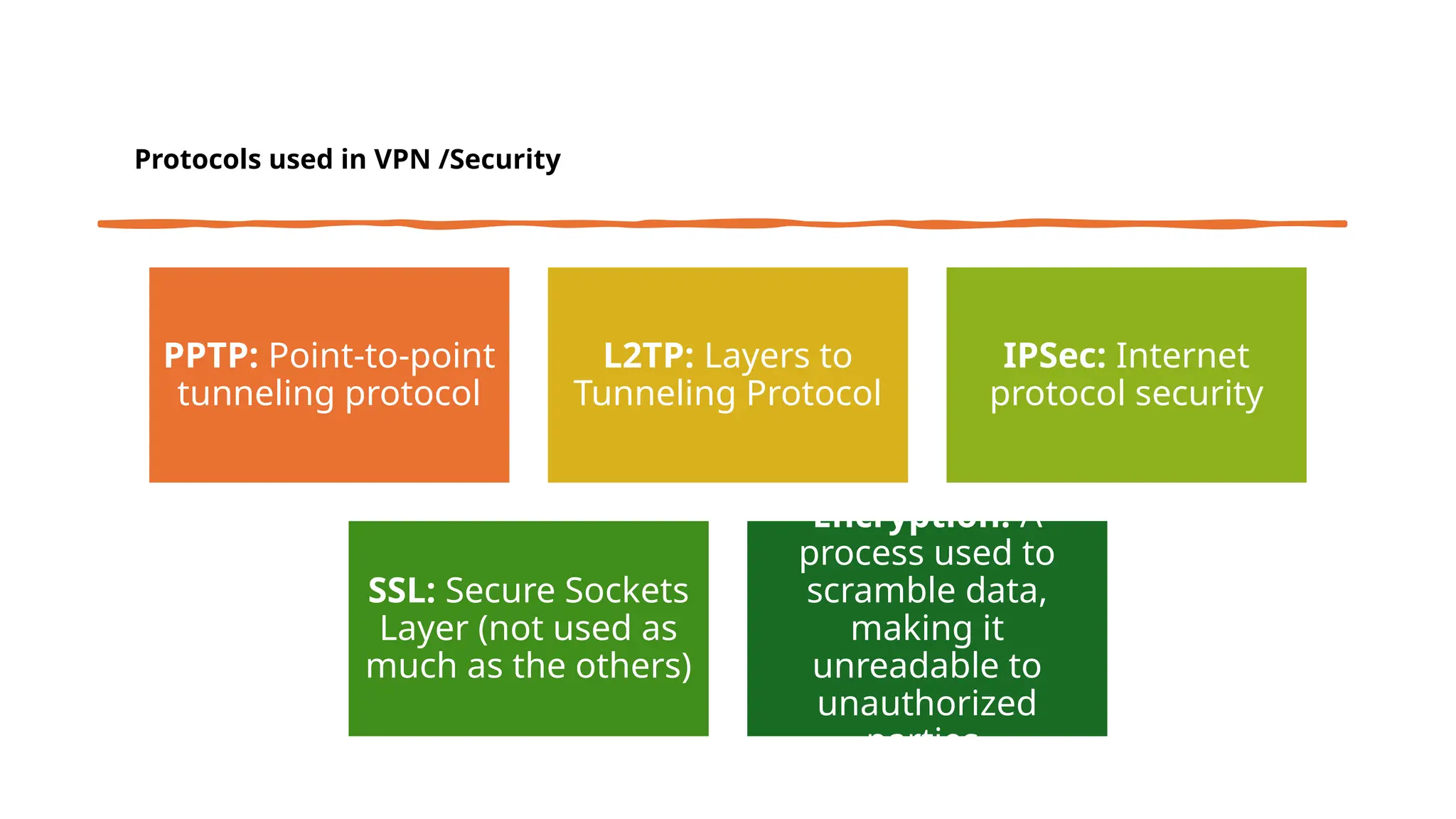
PPTP: Point-to-point
tunneling protocol
L2TP: Layers to
Tunneling Protocol
IPSec: Internet
protocol security
SSL: Secure Sockets
Layer (not used as
much as the others)
Encryption: A
process used to
scramble data,
making it
unreadable to
unauthorized
parties.
Protocols used in VPN /Security
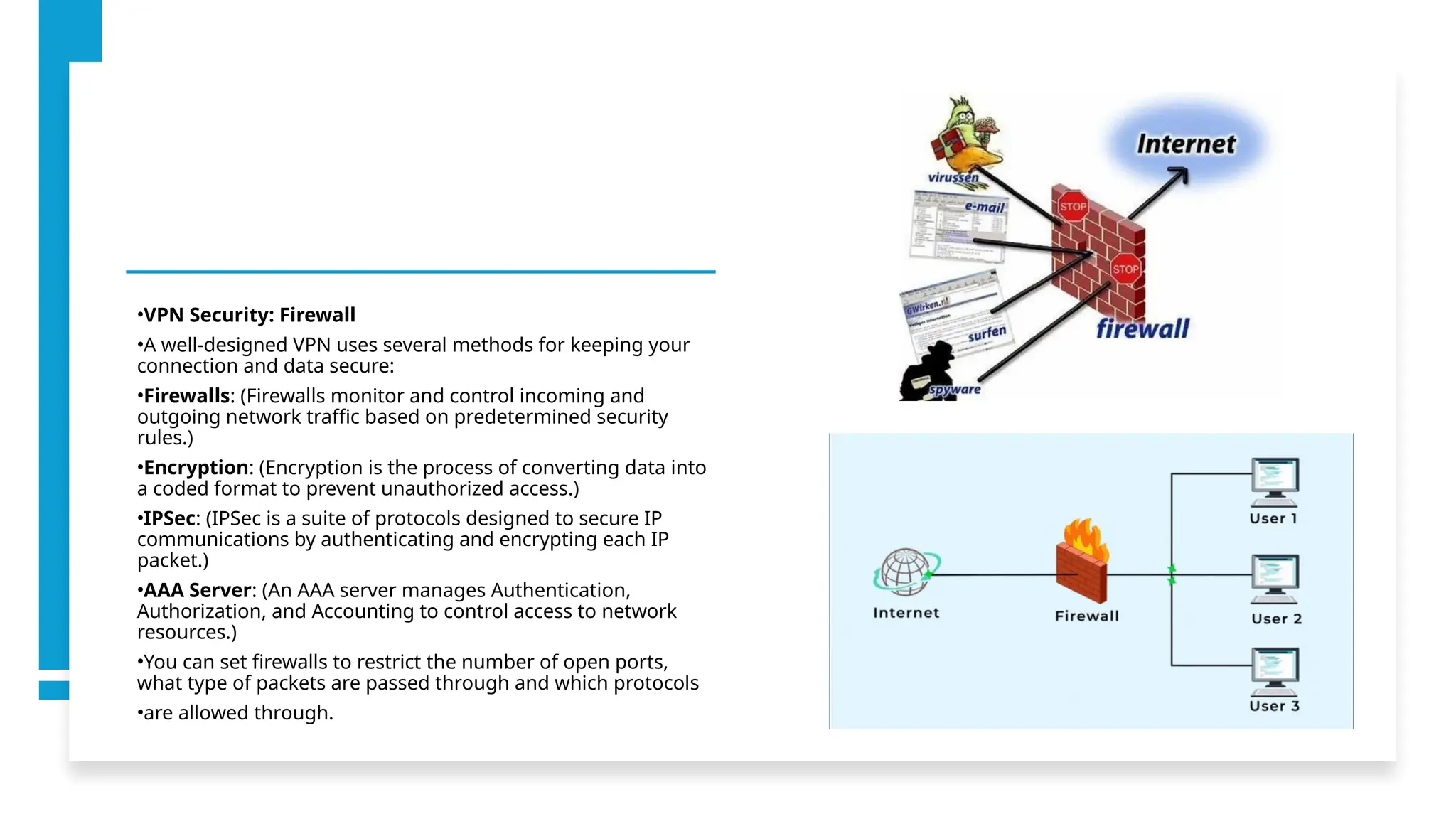
•VPN Security: Firewall
•A well-designed VPN uses several methods for keeping your
connection and data secure:
•Firewalls: (Firewalls monitor and control incoming and
outgoing network traffic based on predetermined security
rules.)
•Encryption: (Encryption is the process of converting data into
a coded format to prevent unauthorized access.)
•IPSec: (IPSec is a suite of protocols designed to secure IP
communications by authenticating and encrypting each IP
packet.)
•AAA Server: (An AAA server manages Authentication,
Authorization, and Accounting to control access to network
resources.)
•You can set firewalls to restrict the number of open ports,
what type of packets are passed through and which protocols
•are allowed through.
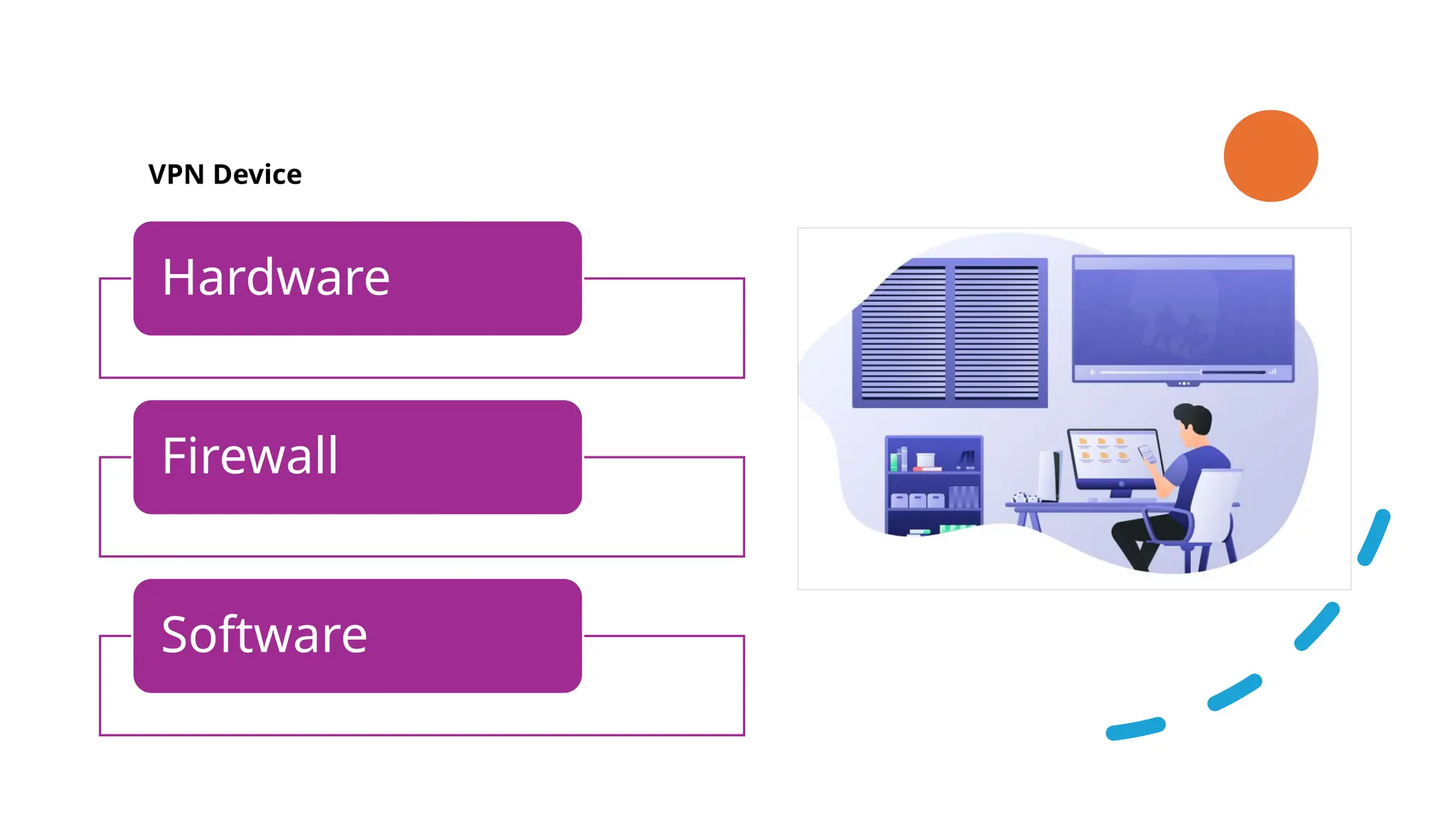
Hardware
Firewall
Software
VPN Device
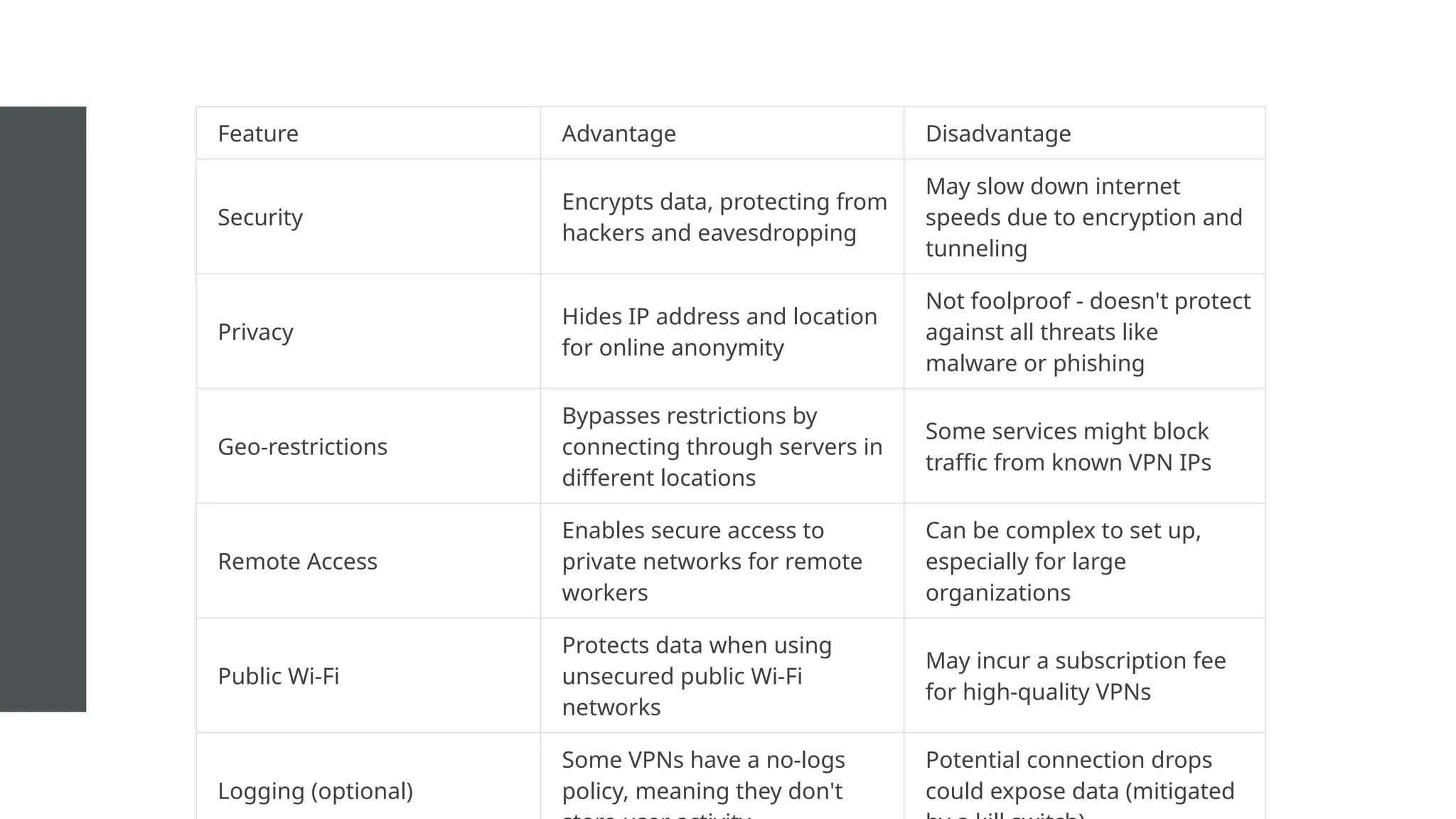
Feature Advantage Disadvantage
Security
Encrypts data, protecting from
hackers and eavesdropping
May slow down internet
speeds due to encryption and
tunneling
Privacy
Hides IP address and location
for online anonymity
Not foolproof - doesn't protect
against all threats like
malware or phishing
Geo-restrictions
Bypasses restrictions by
connecting through servers in
different locations
Some services might block
traffic from known VPN IPs
Remote Access
Enables secure access to
private networks for remote
workers
Can be complex to set up,
especially for large
organizations
Public Wi-Fi
Protects data when using
unsecured public Wi-Fi
networks
May incur a subscription fee
for high-quality VPNs
Logging (optional)
Some VPNs have a no-logs
policy, meaning they don't
Potential connection drops
could expose data (mitigated
•Conclusion
•Summary of VPN Benefits: VPNs are vital tools for
enhancing online privacy, ensuring secure data
transmission, and providing remote access to
networks. Through encryption, tunneling, and various
security protocols, VPNs protect against unauthorized
access and eavesdropping.
•Ongoing Security Vigilance: While VPNs offer
robust protection, they are not immune to
vulnerabilities. Regular updates, strong encryption,
proper configurations, and additional security
measures (e.g., firewalls and multi-factor
authentication) are essential for maintaining VPN
integrity.
•Future of VPN Technology: With the rise of new
threats and technologies, the future of VPNs may
include more advanced security features like AI-
driven monitoring, quantum cryptography, and
stronger encryption algorithms, ensuring continuous
protection.
•Final Thought: VPNs are an indispensable
component in the modern digital security landscape,
but users must stay informed and proactive in
securing their connections.
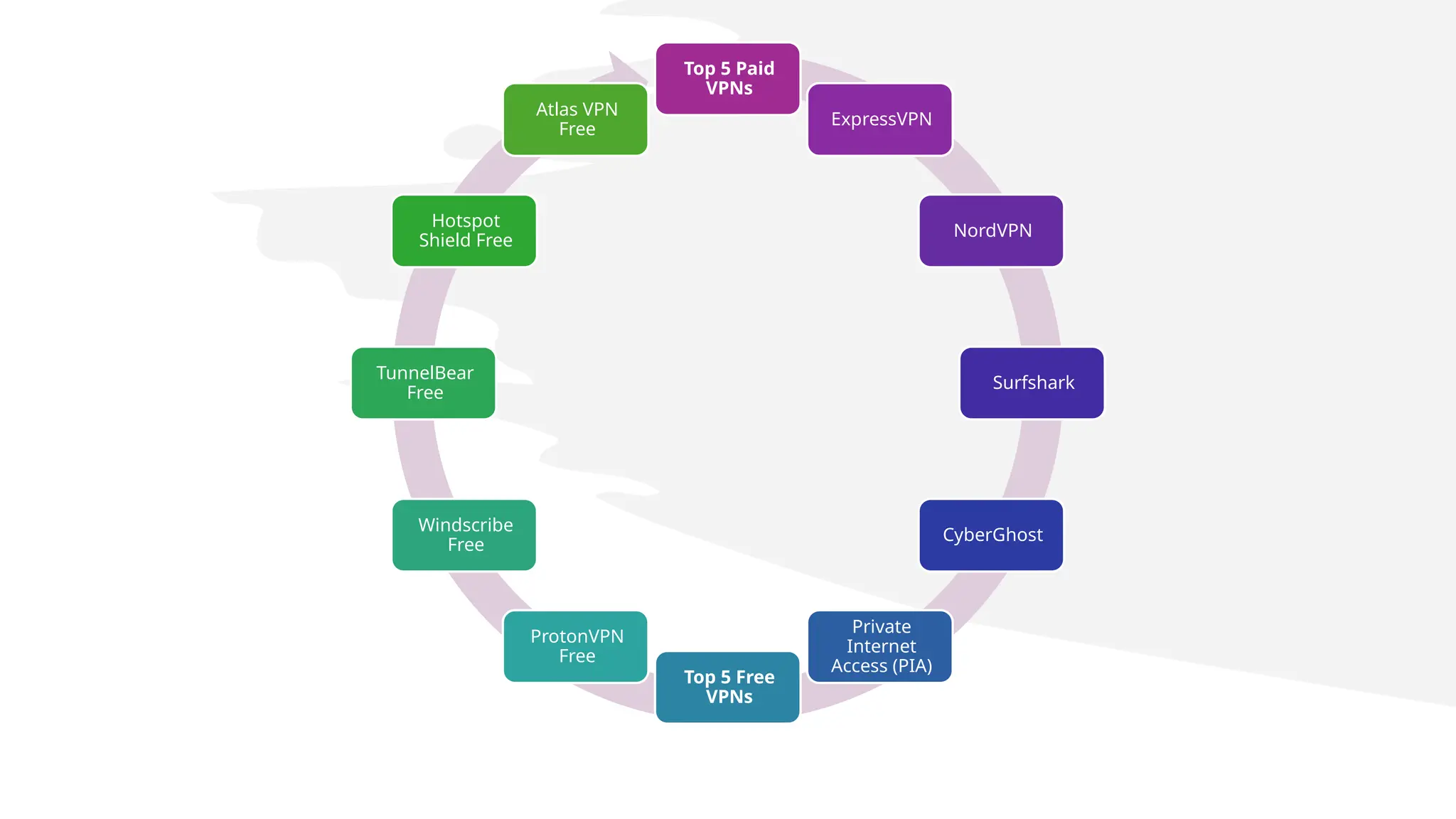
Top 5 Paid
VPNs
ExpressVPN
NordVPN
Surfshark
CyberGhost
Private
Internet
Access (PIA)
Top 5 Free
VPNs
ProtonVPN
Free
Windscribe
Free
TunnelBear
Free
Hotspot
Shield Free
Atlas VPN
Free
VPN Virtual Private Network,he first VPN protocols, such as PPTP

VPN Virtual Private Network,he first VPN protocols, such as PPTP

  • 1.
    VPN Virtual PrivateNetwork Presented by: Nadir Hussain Master's Student in Computer Engineering Course Code :CPE 663 Course Name: Information Security & Risk Assessment
  • 2.
    Today Agenda What is VPN Typesof VPN's How does it work? Protocols Security: Firewalls VPN Devices Advantages & Disadvantage s Conclusion Top VPNs
  • 3.
    •Video Refernce Link SoWhat is VPN? The VPN is Nothing but secure, private communication over public networks.The first VPN protocols, such as PPTP (Point-to-Point Tunneling Protocol), were developed by Microsoft in 1996. PPTP
  • 4.
    Key benefits: Security: Encryptsdata, protecting it from unauthorized access. Privacy: Hides your IP address, making it difficult to track your online activity. Access: Allows you to bypass geographic restrictions and access content that is otherwise unavailable. Virtual Private Network (VPN): A type of private network that uses public telecommunication (like the internet) to create a secure connection between two or more points.
  • 5.
    How VPNs Work VPNConnection: • Client: Your device connects to a VPN server. • Encryption: Data is encrypted before transmission. • Tunneling: Encrypted data is sent through a secure tunnel to the VPN server. • Decryption: The VPN server decrypts the data and sends it to the intended destination.
  • 7.
    PPTP: Point-to-point tunneling protocol L2TP:Layers to Tunneling Protocol IPSec: Internet protocol security SSL: Secure Sockets Layer (not used as much as the others) Encryption: A process used to scramble data, making it unreadable to unauthorized parties. Protocols used in VPN /Security
  • 8.
    •VPN Security: Firewall •Awell-designed VPN uses several methods for keeping your connection and data secure: •Firewalls: (Firewalls monitor and control incoming and outgoing network traffic based on predetermined security rules.) •Encryption: (Encryption is the process of converting data into a coded format to prevent unauthorized access.) •IPSec: (IPSec is a suite of protocols designed to secure IP communications by authenticating and encrypting each IP packet.) •AAA Server: (An AAA server manages Authentication, Authorization, and Accounting to control access to network resources.) •You can set firewalls to restrict the number of open ports, what type of packets are passed through and which protocols •are allowed through.
  • 9.
  • 10.
    Feature Advantage Disadvantage Security Encryptsdata, protecting from hackers and eavesdropping May slow down internet speeds due to encryption and tunneling Privacy Hides IP address and location for online anonymity Not foolproof - doesn't protect against all threats like malware or phishing Geo-restrictions Bypasses restrictions by connecting through servers in different locations Some services might block traffic from known VPN IPs Remote Access Enables secure access to private networks for remote workers Can be complex to set up, especially for large organizations Public Wi-Fi Protects data when using unsecured public Wi-Fi networks May incur a subscription fee for high-quality VPNs Logging (optional) Some VPNs have a no-logs policy, meaning they don't Potential connection drops could expose data (mitigated
  • 11.
    •Conclusion •Summary of VPNBenefits: VPNs are vital tools for enhancing online privacy, ensuring secure data transmission, and providing remote access to networks. Through encryption, tunneling, and various security protocols, VPNs protect against unauthorized access and eavesdropping. •Ongoing Security Vigilance: While VPNs offer robust protection, they are not immune to vulnerabilities. Regular updates, strong encryption, proper configurations, and additional security measures (e.g., firewalls and multi-factor authentication) are essential for maintaining VPN integrity. •Future of VPN Technology: With the rise of new threats and technologies, the future of VPNs may include more advanced security features like AI- driven monitoring, quantum cryptography, and stronger encryption algorithms, ensuring continuous protection. •Final Thought: VPNs are an indispensable component in the modern digital security landscape, but users must stay informed and proactive in securing their connections.
  • 12.
    Top 5 Paid VPNs ExpressVPN NordVPN Surfshark CyberGhost Private Internet Access(PIA) Top 5 Free VPNs ProtonVPN Free Windscribe Free TunnelBear Free Hotspot Shield Free Atlas VPN Free