NETWORKS AND TELECOMMUNICATIONS SERIES
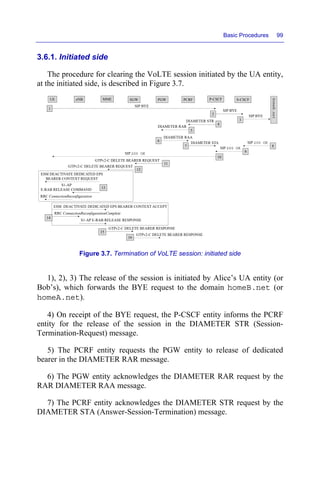
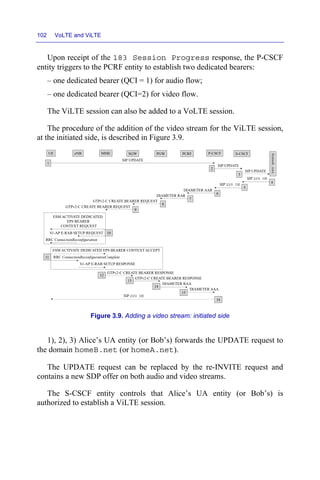
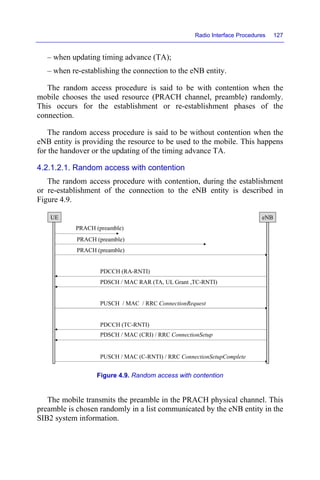
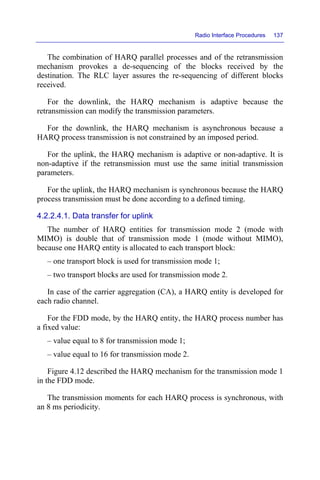
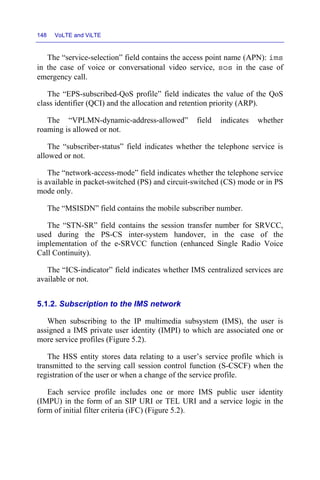
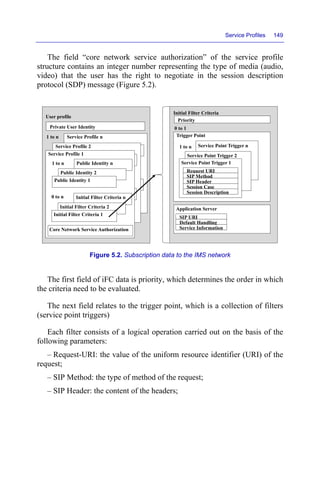
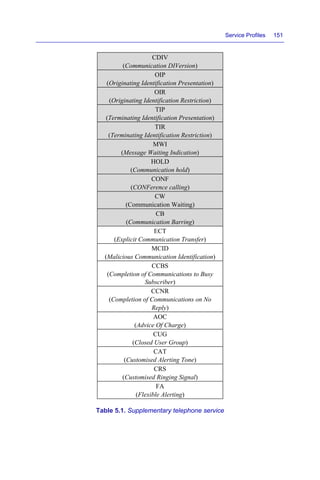
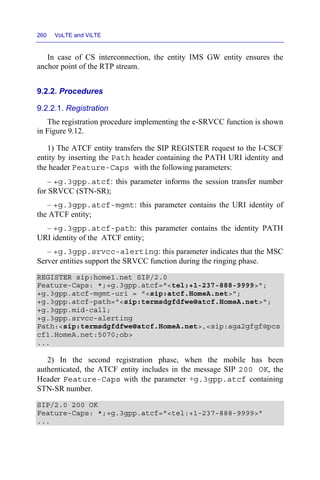
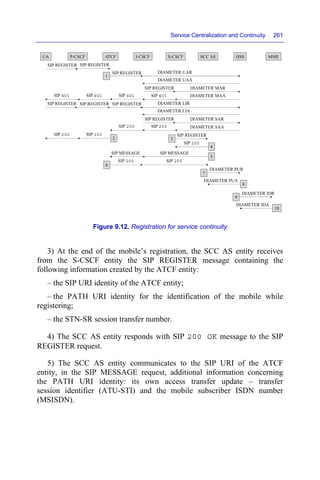
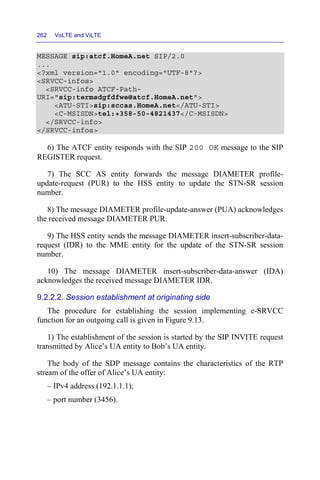
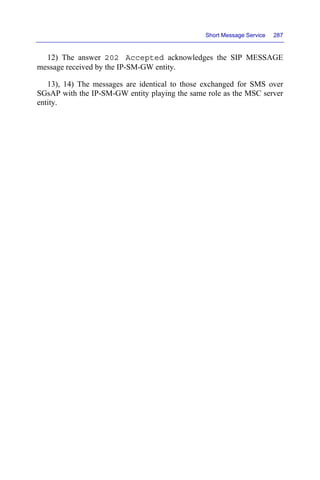
VoLTE and ViLTE
Voice and Conversational Video Services
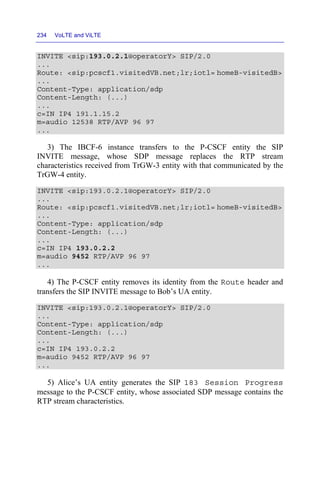
over the 4G Mobile Network
André Perez
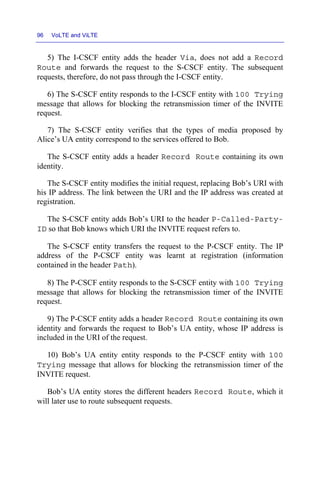
VoLTE and ViLTE
VoLTE and ViLTE
Voice and Conversational Video Services
over the 4G Mobile Network
André Perez
First published 2016 in Great Britain and the United States by ISTE Ltd and John Wiley & Sons, Inc.
Apart from any fair dealing for the purposes of research or private study, or criticism or review, as
permitted under the Copyright, Designs and Patents Act 1988, this publication may only be reproduced,
stored or transmitted, in any form or by any means, with the prior permission in writing of the publishers,
or in the case of reprographic reproduction in accordance with the terms and licenses issued by the
CLA. Enquiries concerning reproduction outside these terms should be sent to the publishers at the
undermentioned address:
ISTE Ltd John Wiley & Sons, Inc.
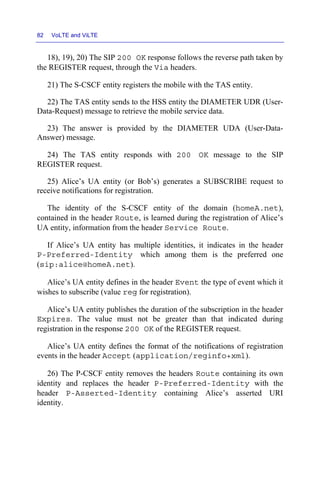
27-37 St George’s Road 111 River Street
London SW19 4EU Hoboken, NJ 07030
UK USA
www.iste.co.uk www.wiley.com
© ISTE Ltd 2016
The rights of André Perez to be identified as the author of this work have been asserted by him in
accordance with the Copyright, Designs and Patents Act 1988.
Library of Congress Control Number: 2016938934
British Library Cataloguing-in-Publication Data
A CIP record for this book is available from the British Library
ISBN 978-1-84821-923-6
Contents
Preface . . . . . . . . . . . . . . . . . . . . . . . . . . . . . . . . . . . . . . . . . . ix
List of Abbreviations . . . . . . . . . . . . . . . . . . . . . . . . . . . . . . . . . xv
Chapter 1. Network Architecture. . . . . . . . . . . . . . . . . . . . . . . . . 1
1.1. EPS network . . . . . . . . . . . . . . . . . . . . . . . . . . . . . . . . . . . 1
1.1.1. Functional architecture. . . . . . . . . . . . . . . . . . . . . . . . . . . 1
1.1.2. Protocol architecture . . . . . . . . . . . . . . . . . . . . . . . . . . . . 5
1.1.3. Bearers . . . . . . . . . . . . . . . . . . . . . . . . . . . . . . . . . . . . 8
1.2. IMS network . . . . . . . . . . . . . . . . . . . . . . . . . . . . . . . . . . . 12
1.2.1. Functional architecture. . . . . . . . . . . . . . . . . . . . . . . . . . . 12
1.2.2. Protocol architecture . . . . . . . . . . . . . . . . . . . . . . . . . . . . 17
1.3. Databases . . . . . . . . . . . . . . . . . . . . . . . . . . . . . . . . . . . . . 18
1.3.1. Functional architecture. . . . . . . . . . . . . . . . . . . . . . . . . . . 18
1.3.2. Protocol architecture . . . . . . . . . . . . . . . . . . . . . . . . . . . . 18
1.4. Charging associated with IMS network . . . . . . . . . . . . . . . . . . . 19
1.4.1. Functional architecture. . . . . . . . . . . . . . . . . . . . . . . . . . . 19
1.4.2. Protocol architecture . . . . . . . . . . . . . . . . . . . . . . . . . . . . 21
1.5. PCC function . . . . . . . . . . . . . . . . . . . . . . . . . . . . . . . . . . . 21
1.5.1. Functional architecture. . . . . . . . . . . . . . . . . . . . . . . . . . . 21
1.5.2. Protocol architecture . . . . . . . . . . . . . . . . . . . . . . . . . . . . 22
1.6. DIAMETER routers. . . . . . . . . . . . . . . . . . . . . . . . . . . . . . . 23
1.7. ENUM system . . . . . . . . . . . . . . . . . . . . . . . . . . . . . . . . . . 24
1.8. IPX network . . . . . . . . . . . . . . . . . . . . . . . . . . . . . . . . . . . 25
Chapter 2. Signaling Protocols. . . . . . . . . . . . . . . . . . . . . . . . . . 27
2.1. NAS protocol. . . . . . . . . . . . . . . . . . . . . . . . . . . . . . . . . . . 27
2.1.1. EMM messages . . . . . . . . . . . . . . . . . . . . . . . . . . . . . . . 28
vi VoLTE and ViLTE
2.1.2. ESM messages . . . . . . . . . . . . . . . . . . . . . . . . . . . . . . . 30
2.2. RRC protocol. . . . . . . . . . . . . . . . . . . . . . . . . . . . . . . . . . . 32
2.2.1. System information. . . . . . . . . . . . . . . . . . . . . . . . . . . . . 36
2.2.2. Control of RRC connection . . . . . . . . . . . . . . . . . . . . . . . . 37
2.2.3. Measurement report . . . . . . . . . . . . . . . . . . . . . . . . . . . . 39
2.3. S1-AP protocol. . . . . . . . . . . . . . . . . . . . . . . . . . . . . . . . . . 40
2.3.1. Context management. . . . . . . . . . . . . . . . . . . . . . . . . . . . 42
2.3.2. Bearer management . . . . . . . . . . . . . . . . . . . . . . . . . . . . 43
2.3.3. Mobility management . . . . . . . . . . . . . . . . . . . . . . . . . . . 43
2.3.4. S1-MME interface management . . . . . . . . . . . . . . . . . . . . . 45
2.4. X2-AP protocol . . . . . . . . . . . . . . . . . . . . . . . . . . . . . . . . . 45
2.4.1. Mobility management . . . . . . . . . . . . . . . . . . . . . . . . . . . 46
2.4.2. Load management . . . . . . . . . . . . . . . . . . . . . . . . . . . . . 47
2.4.3. X2 interface management . . . . . . . . . . . . . . . . . . . . . . . . . 48
2.5. GTPv2-C protocol. . . . . . . . . . . . . . . . . . . . . . . . . . . . . . . . 49
2.5.1. Bearer management . . . . . . . . . . . . . . . . . . . . . . . . . . . . 51
2.5.2. Mobility management . . . . . . . . . . . . . . . . . . . . . . . . . . . 52
2.6. SIP protocol . . . . . . . . . . . . . . . . . . . . . . . . . . . . . . . . . . . 53
2.6.1. Requests . . . . . . . . . . . . . . . . . . . . . . . . . . . . . . . . . . . 53
2.6.2. Responses . . . . . . . . . . . . . . . . . . . . . . . . . . . . . . . . . . 57
2.7. SDP protocol . . . . . . . . . . . . . . . . . . . . . . . . . . . . . . . . . . . 60
2.8. DIAMETER protocol . . . . . . . . . . . . . . . . . . . . . . . . . . . . . . 61
2.8.1. Application to EPS network . . . . . . . . . . . . . . . . . . . . . . . 61
2.8.2. Application to IMS network . . . . . . . . . . . . . . . . . . . . . . . 62
2.8.3. Application to PCC function . . . . . . . . . . . . . . . . . . . . . . . 64
Chapter 3. Basic Procedures . . . . . . . . . . . . . . . . . . . . . . . . . . . 69
3.1. Attachment . . . . . . . . . . . . . . . . . . . . . . . . . . . . . . . . . . . . 69
3.2. Registration. . . . . . . . . . . . . . . . . . . . . . . . . . . . . . . . . . . . 75
3.3. Deregistration . . . . . . . . . . . . . . . . . . . . . . . . . . . . . . . . . . 84
3.4. Detachment . . . . . . . . . . . . . . . . . . . . . . . . . . . . . . . . . . . . 85
3.5. Establishment of VoLTE session . . . . . . . . . . . . . . . . . . . . . . . 87
3.5.1. Originating side . . . . . . . . . . . . . . . . . . . . . . . . . . . . . . . 87
3.5.2. Terminating side . . . . . . . . . . . . . . . . . . . . . . . . . . . . . . 94
3.6. Termination of VoLTE session . . . . . . . . . . . . . . . . . . . . . . . . 98
3.6.1. Initiated side . . . . . . . . . . . . . . . . . . . . . . . . . . . . . . . . . 99
3.6.2. Received side . . . . . . . . . . . . . . . . . . . . . . . . . . . . . . . . 100
3.7. Establishment of ViLTE session . . . . . . . . . . . . . . . . . . . . . . . 101
3.8. Termination of ViLTE session . . . . . . . . . . . . . . . . . . . . . . . . 104
3.9. Emergency call. . . . . . . . . . . . . . . . . . . . . . . . . . . . . . . . . . 106
Contents vii
Chapter 4. Radio Interface Procedures . . . . . . . . . . . . . . . . . . . . 109
4.1. Radio interface . . . . . . . . . . . . . . . . . . . . . . . . . . . . . . . . . . 109
4.1.1. Data link sub-layer . . . . . . . . . . . . . . . . . . . . . . . . . . . . . 110
4.1.2. Logical channels . . . . . . . . . . . . . . . . . . . . . . . . . . . . . . 113
4.1.3. Transport channels . . . . . . . . . . . . . . . . . . . . . . . . . . . . . 114
4.1.4. Physical layer . . . . . . . . . . . . . . . . . . . . . . . . . . . . . . . . 114
4.1.5. Physical signals . . . . . . . . . . . . . . . . . . . . . . . . . . . . . . . 121
4.1.6. Physical channels . . . . . . . . . . . . . . . . . . . . . . . . . . . . . . 122
4.2. Procedures . . . . . . . . . . . . . . . . . . . . . . . . . . . . . . . . . . . . 124
4.2.1. Access control. . . . . . . . . . . . . . . . . . . . . . . . . . . . . . . . 124
4.2.2. Data transfer . . . . . . . . . . . . . . . . . . . . . . . . . . . . . . . . . 130
Chapter 5. Service Profiles. . . . . . . . . . . . . . . . . . . . . . . . . . . . . 147
5.1. Subscription data . . . . . . . . . . . . . . . . . . . . . . . . . . . . . . . . 147
5.1.1. Subscription to the EPS network. . . . . . . . . . . . . . . . . . . . . 147
5.1.2. Subscription to the IMS network. . . . . . . . . . . . . . . . . . . . . 148
5.2. VoLTE profile service . . . . . . . . . . . . . . . . . . . . . . . . . . . . . 150
5.2.1. Supplementary telephone services . . . . . . . . . . . . . . . . . . . . 150
5.2.2. Audio flow. . . . . . . . . . . . . . . . . . . . . . . . . . . . . . . . . . 167
5.3. ViLTE profile service. . . . . . . . . . . . . . . . . . . . . . . . . . . . . . 170
5.3.1. Supplementary conversational video service. . . . . . . . . . . . . . 170
5.3.2. Video flow . . . . . . . . . . . . . . . . . . . . . . . . . . . . . . . . . . 171
Chapter 6. Interconnections . . . . . . . . . . . . . . . . . . . . . . . . . . . . 173
6.1. Interconnection CS network . . . . . . . . . . . . . . . . . . . . . . . . . . 173
6.1.1. Functional architecture. . . . . . . . . . . . . . . . . . . . . . . . . . . 173
6.1.2. Protocol architecture . . . . . . . . . . . . . . . . . . . . . . . . . . . . 175
6.1.3. Session establishment . . . . . . . . . . . . . . . . . . . . . . . . . . . 181
6.1.4. Session termination. . . . . . . . . . . . . . . . . . . . . . . . . . . . . 190
6.2. Interconnection with IMS network . . . . . . . . . . . . . . . . . . . . . . 192
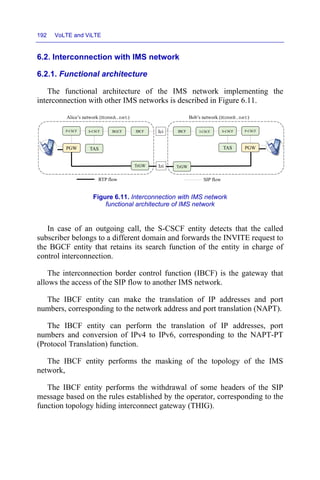
6.2.1. Functional architecture. . . . . . . . . . . . . . . . . . . . . . . . . . . 192
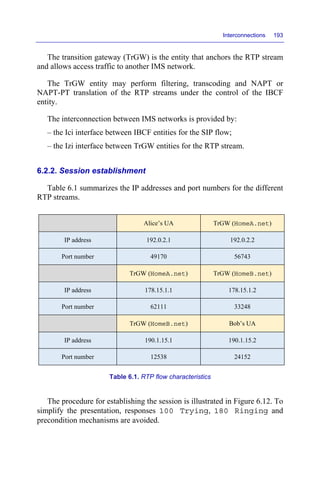
6.2.2. Session establishment . . . . . . . . . . . . . . . . . . . . . . . . . . . 193
Chapter 7. Handover . . . . . . . . . . . . . . . . . . . . . . . . . . . . . . . . . 199
7.1. Introduction. . . . . . . . . . . . . . . . . . . . . . . . . . . . . . . . . . . . 199
7.2. Handover based on X2 . . . . . . . . . . . . . . . . . . . . . . . . . . . . . 201
7.2.1. Handover based on X2 without relocation . . . . . . . . . . . . . . . 201
7.2.2. Handover based on X2 with relocation . . . . . . . . . . . . . . . . . 205
7.3. Handover based on S1 . . . . . . . . . . . . . . . . . . . . . . . . . . . . . 207
7.3.1. Handover based on S1 without relocation . . . . . . . . . . . . . . . 207
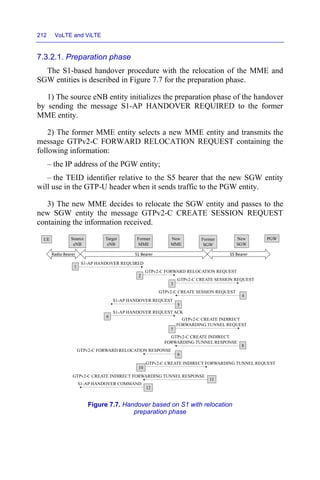
7.3.2. Handover based on S1 with relocation . . . . . . . . . . . . . . . . . 211
viii VoLTE and ViLTE
7.4. PS-PS inter-system handover . . . . . . . . . . . . . . . . . . . . . . . . . 218
7.4.1. Functional architecture. . . . . . . . . . . . . . . . . . . . . . . . . . . 218
7.4.2. Procedure. . . . . . . . . . . . . . . . . . . . . . . . . . . . . . . . . . . 220
Chapter 8. Roaming. . . . . . . . . . . . . . . . . . . . . . . . . . . . . . . . . . 223
8.1. Functional architecture . . . . . . . . . . . . . . . . . . . . . . . . . . . . . 223
8.1.1. Roaming applied to the EPS network . . . . . . . . . . . . . . . . . . 223
8.1.2. Roaming applied to the IMS network . . . . . . . . . . . . . . . . . . 224
8.2. Procedures . . . . . . . . . . . . . . . . . . . . . . . . . . . . . . . . . . . . 228
8.2.1. Session establishment for nominal routeing . . . . . . . . . . . . . . 228
8.2.2. Session establishment for optimal routeing. . . . . . . . . . . . . . . 235
Chapter 9. Service Centralization and Continuity . . . . . . . . . . . . . 243
9.1. ICS function . . . . . . . . . . . . . . . . . . . . . . . . . . . . . . . . . . . 243
9.1.1. Functional architecture. . . . . . . . . . . . . . . . . . . . . . . . . . . 243
9.1.2. Procedures . . . . . . . . . . . . . . . . . . . . . . . . . . . . . . . . . . 246
9.2. e-SRVCC function . . . . . . . . . . . . . . . . . . . . . . . . . . . . . . . 255
9.2.1. Functional architecture. . . . . . . . . . . . . . . . . . . . . . . . . . . 255
9.2.2. Procedures . . . . . . . . . . . . . . . . . . . . . . . . . . . . . . . . . . 260
Chapter 10. Short Message Service . . . . . . . . . . . . . . . . . . . . . . 273
10.1. Message structure . . . . . . . . . . . . . . . . . . . . . . . . . . . . . . . 273
10.1.1. SM-TL layer . . . . . . . . . . . . . . . . . . . . . . . . . . . . . . . . 274
10.1.2. SM-RL layer . . . . . . . . . . . . . . . . . . . . . . . . . . . . . . . . 275
10.1.3. SM-CL layer . . . . . . . . . . . . . . . . . . . . . . . . . . . . . . . . 275
10.2. SMS over SGsAP . . . . . . . . . . . . . . . . . . . . . . . . . . . . . . . 276
10.2.1. Functional architecture . . . . . . . . . . . . . . . . . . . . . . . . . . 276
10.2.2. Procedures . . . . . . . . . . . . . . . . . . . . . . . . . . . . . . . . . 277
10.3. SMS over SIP. . . . . . . . . . . . . . . . . . . . . . . . . . . . . . . . . . 282
10.3.1. Functional architecture . . . . . . . . . . . . . . . . . . . . . . . . . . 282
10.3.2. Procedures . . . . . . . . . . . . . . . . . . . . . . . . . . . . . . . . . 283
Bibliography. . . . . . . . . . . . . . . . . . . . . . . . . . . . . . . . . . . . . . . 289
Index . . . . . . . . . . . . . . . . . . . . . . . . . . . . . . . . . . . . . . . . . . . . 295
Preface
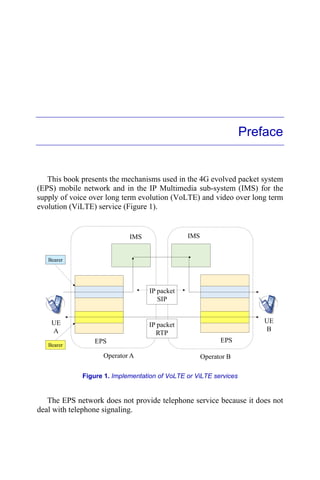
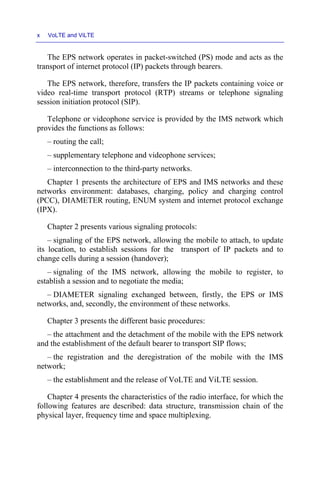
This book presents the mechanisms used in the 4G evolved packet system
(EPS) mobile network and in the IP Multimedia sub-system (IMS) for the
supply of voice over long term evolution (VoLTE) and video over long term
evolution (ViLTE) service (Figure 1).
Figure 1. Implementation of VoLTE or ViLTE services
The EPS network does not provide telephone service because it does not
deal with telephone signaling.
EPS
IMS
EPS
IMS
UE
A
UE
B
Operator A Operator B
IP packet
SIP
IP packet
RTP
Bearer
Bearer
x VoLTE and ViLTE
The EPS network operates in packet-switched (PS) mode and acts as the
transport of internet protocol (IP) packets through bearers.
The EPS network, therefore, transfers the IP packets containing voice or
video real-time transport protocol (RTP) streams or telephone signaling
session initiation protocol (SIP).
Telephone or videophone service is provided by the IMS network which
provides the functions as follows:
– routing the call;
– supplementary telephone and videophone services;
– interconnection to the third-party networks.
Chapter 1 presents the architecture of EPS and IMS networks and these
networks environment: databases, charging, policy and charging control
(PCC), DIAMETER routing, ENUM system and internet protocol exchange
(IPX).
Chapter 2 presents various signaling protocols:
– signaling of the EPS network, allowing the mobile to attach, to update
its location, to establish sessions for the transport of IP packets and to
change cells during a session (handover);
– signaling of the IMS network, allowing the mobile to register, to
establish a session and to negotiate the media;
– DIAMETER signaling exchanged between, firstly, the EPS or IMS
networks, and, secondly, the environment of these networks.
Chapter 3 presents the different basic procedures:
– the attachment and the detachment of the mobile with the EPS network
and the establishment of the default bearer to transport SIP flows;
– the registration and the deregistration of the mobile with the IMS
network;
– the establishment and the release of VoLTE and ViLTE session.
Chapter 4 presents the characteristics of the radio interface, for which the
following features are described: data structure, transmission chain of the
physical layer, frequency time and space multiplexing.
Preface xi
The same chapter also illustrates two procedures of the radio interface:
access control of the mobile to network and data transfer.
Chapter 5 presents the supplementary telephone and videophone services
offered by a particular entity of the IMS network, the telephony application
server (TAS).
These services include call forwarding, identity presentation, message
waiting indication, call hold, conference call, call waiting and call barring.
It also presents the characteristics of audio and video streams.
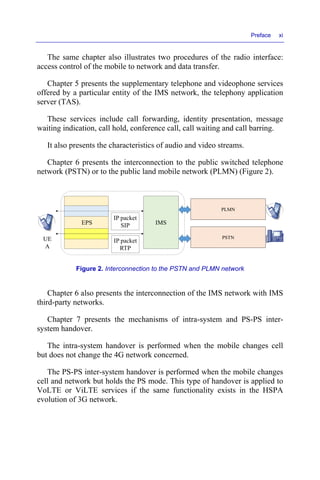
Chapter 6 presents the interconnection to the public switched telephone
network (PSTN) or to the public land mobile network (PLMN) (Figure 2).
Figure 2. Interconnection to the PSTN and PLMN network
Chapter 6 also presents the interconnection of the IMS network with IMS
third-party networks.
Chapter 7 presents the mechanisms of intra-system and PS-PS inter-
system handover.
The intra-system handover is performed when the mobile changes cell
but does not change the 4G network concerned.
The PS-PS inter-system handover is performed when the mobile changes
cell and network but holds the PS mode. This type of handover is applied to
VoLTE or ViLTE services if the same functionality exists in the HSPA
evolution of 3G network.
EPS IMS
UE
A
IP packet
SIP
IP packet
RTP
PLMN
PSTN
xii VoLTE and ViLTE
Both handover modes are transparent to VoLTE and ViLTE services, the
movement of the mobile being masked for the IMS network.
Chapter 8 presents the roaming for which two routing methods of the
RTP streams are described:
– nominal routeing of the RTP stream that passes through the home
network;
– optimal routeing of the RTP stream that does not pass through the home
network.
Chapter 9 presents the centralization of services implemented by IMS
centralized services (ICS) that enables the IMS network to offer VoLTE and
ViLTE services regardless of the network where the mobile phone is
connected.
Chapter 9 also presents the continuity of services implemented by
function enhanced single radio voice call continuity (e-SRVCC) which
ensures that the communication is maintained in case of PS-CS (Circuit-
Switched) inter-system handover (Figure 3).
Figure 3. PS-CS inter-system handover
EPS
IMS
IP packet
SIP
IP packet
RTP
2G / 3G Network
CS mode
Preface xiii
Chapter 10 presents the two modes providing short message service
(SMS).
Short message service over SGsAP allows a mobile connected to the 4G
network to send and receive SMS in the CS mode.
Short message service over SIP is a supplementary telephone service
provided by the IMS network.
André PEREZ
April 2016
List of Abbreviations
A
AAA Authorization-Authentication-Answer
AAR Authorization-Authentication-Request
ACA Accounting-Answer
ACM Address Complete Message
ACR Accounting-Request
AF Application Function
AIA Authentication-Information-Answer
AIR Authentication-Information-Request
AM Acknowledged Mode
AMBR Aggregate Maximum Bit Rate
AMR Adaptive Multi-Rate
AMR WB AMR Wide Band
ANM Answer Message
AOC Advice of Charge
APM Application transport Mechanism
APN Access Point Name
ARP Allocation and Retention Priority
ARQ Automatic Repeat Request
xvi VoLTE and ViLTE
AS Application Server
ASA Abort-Session-Answer
ASR Abort-Session-Request
ATCF Access Transfer Control Function
ATGW Access Transfer Gateway
ATU-STI Access Transfer Update – Session Transfer Identifier
AUTN Authentication Network
B
B2BUA Back-to-Back User Agent
BCCH Broadcast Control Channel
BCH Broadcast Channel
BCTP Bearer Control Tunnelling Protocol
BGCF Breakout Gateway Control Function
BICC Bearer Independent Call Control
BSR Buffer Status Report
BSS Base Station Sub-system
C
CA Carrier Aggregation
CAP Camel Application Part
CAT Customized Alerting Tone
CBP Constrained Baseline Profile
CC Component Carrier
CCA Credit-Control-Answer
CCBS Completion of Communications to Busy Subscriber
CCCH Common Control Channel
CCNL Completion of Communications on Not Logged-in
List of Abbreviations xvii
CCNR Completion of Communications on No Reply
CCR Credit-Control-Request
CD Communication Deflection
CDF Charging Data Function
CDIV Communication Diversion
CDR Charging Data Record
CFB Communication Forwarding on Busy User
CFI Control Format Indicator
CFNL Communication Forwarding on Not Logged-in
CFNR Communication Forwarding on no Reply
CFU Communication Forwarding Unconditional
CGF Charging Gateway Function
CK Cipher Key
CLA Cancel-Location-Answer
CLR Cancel-Location-Request
CM Call Management
CMAS Commercial Mobile Alert System
CNG Comfort Noise Generation
CP Cyclic Prefix
CQI Channel Quality Indicator
CRI Contention Resolution Identity
C-RNTI Cell RNTI
CRS Customised Ringing Signal
CS Circuit-Switched
CSCF Call Session Control Function
CSFB CS FallBack
CTF Charging Trigger Function
CUG Closed User Group
CW Communication Waiting
xviii VoLTE and ViLTE
D
DCCH Dedicated Control Channel
DCI Downlink Control Information
DDA Delete-Subscriber-Data-Answer
DDR Delete-Subscriber-Data-Request
DEA DIAMETER Edge Agent
DL-SCH Downlink Shared Channel
DNS Domain Name System
DRB Data Radio Bearer
DM-RS Demodulation Reference Signal
DRA DIAMETER Routing Agent
DRX Discontinuous Reception
DSCP DiffServ Code Point
DTCH Dedicated Traffic Channel
DTX Discontinuous Transmission
DwPTS Downlink Pilot Time Slot
E
EATF Emergency Access Transfer Function
ECGI E-UTRAN Cell Global Identifier
E-CSCF Emergency-CSCF
ECT Explicit Communication Transfer
EM End Marker
EMM EPS Mobility Management
eNB evolved Node B
EPC Evolved Packet Core
EPS Evolved Packet System
E-RAB EPS Radio Access Bearer
List of Abbreviations xix
ESM EPS Session Management
e-SRVCC enhanced Single Radio Voice Call Continuity
ETWS Earthquake and Tsunami Warning System
E-UTRAN Evolved Universal Terrestrial Radio Access Network
EVS Enhanced Voice Services
F
FA Flexible Alerting
FB Full Band
FDD Frequency Division Duplex
FFT Fast Fourier Transform
FR Full Rate
G
GBR Guaranteed Bit Rate
GGSN Gateway GPRS Support Node
GMSC Gateway MSC
GP Gap Period
GPRS General Packet Radio Service
GSM Global System for Mobile
GTP-C GPRS Tunnel Protocol Control
GTP-U GPRS Tunnel Protocol User
GUTI Globally Unique Temporary Identity
H
HARQ Hybrid ARQ
HI HARQ Indicator
HII High Interference Indication
HLR Home Location Register
xx VoLTE and ViLTE
H-PCRF Home PCRF
HR Half Rate
HSS Home Subscriber Server
HTTP Hypertext Transfer Protocol
I
IAM Initial Address Message
IBCF Interconnection Border Control Function
ICB Incoming Communication Barring
ICS IMS Centralized Services
ICIC Inter-Cell Interference Coordination
I-CSCF Interrogating-CSCF
IDA Insert-Subscriber-Data-Answer
IDR Insert-Subscriber-Data-Request
IETF Internet Engineering Task Force
iFC initial Filter Criteria
IFFT Inverse Fast Fourier Transform
IK Integrity Key
IMPI IMS Private User Identity
IMPU IMS Public User Identity
IMRN IP Multimedia Routing Number
IMS IP Multimedia Sub-system
IMS-GWF IMS Gateway Function
IMSI International Mobile Subscriber Identity
IOI Interference Overload Indication
IP Internet Protocol
IPBCP IP Bearer Control Protocol
IPSec IP Security
IP-SM-GW IP Short Message Gateway
List of Abbreviations xxi
IPX Internet Protocol eXchange
ISC IMS Service Control
ISIM IMS Services Identity Module
ISUP ISDN User Part
IWMSC Inter Working MSC
L
LAI Location Area Identifier
LCID Logical Channel Identifier
LIA Location-Info-Answer
LIR Location-Info-Request
LRF Location Retrieval Function
LTE Long Term Evolution
M
MAA Multimedia-Auth-Answer
MAC Media Access Control
MAR Multimedia-Auth-Request
MBR Maximum Bit Rate
MBSFN RS MBMS Single Frequency Network RS
MCC Mobile Country Code
MCCH Multicast Control Channel
MCH Multicast Channel
MCID Malicious Communication Identification
MGCF Media Gateway Control Function
MGW Multimedia Gateway
MIB Master Information Block
MIMO Multiple Input Multiple Output
MISO Multiple Input Single Output
xxii VoLTE and ViLTE
MME Mobility Management Entity
MNC Mobile Network Code
MP Main Profile
MRF Multimedia Resource Function
MRFC MRF Controller
MFRP MRF Processor
MSC Mobile-services Switching Centre
MDISDN Mobile Subscriber ISDN Number
MTCH Multicast Traffic Channel
MWI Message Waiting Indication
N
NAPT Network Address and Port Translation
NAPT-PT NAPT Protocol Translation
NAS Non Access Stratum
NB Narrow Band
NOA Notify-Answer
NOR Notify-Request
O
OCB Outgoing Communication Barring
OCS Online Charging System
OFCS Offline Charging System
OFDM Orthogonal Frequency-Division Multiplexing
OFDMA Orthogonal Frequency-Division Multiple Access
OIP Originating Identification Presentation
OIR Originating Identification Restriction
OMR Optimal Media Routeing
OTDOA Observed Time Difference of Arrival
List of Abbreviations xxiii
P
PBCH Physical Broadcast Channel
PCC Policy and Charging Control
PCCH Paging Control Channel
PCEF Policy and Charging Enforcement Function
PCFICH Physical Control Format Indicator Channel
PCH Paging Channel
PCI Physical-layer Cell Identity
PCRF Policy Charging and Rules Function
P-CSCF Proxy-CSCF
PDCCH Physical Downlink Control Channel
PDCP Packet Data Convergence Protocol
PDN Packet Data Network
PDSCH Physical Downlink Shared Channel
PGW PDN Gateway
PHICH Physical HARQ Indicator Channel
PHR Power Headroom Report
PLMN Public Land Mobile Network
PMCH Physical Multicast Channel
PMI Precoding Matrix Indicator
PNA Push-Notification-Answer
PNR Push-Notification-Request
PPA Push-Profile-Answer
PPR Push-Profile-Request
PRACH Physical Random Access Channel
PRS Positioning Reference Signal
PS Packet-Switched
PSAP Public Safety Answering Point
PSI Public Service Identity
xxiv VoLTE and ViLTE
PSS Primary Synchronization Signal
PSTN Public Switched Telephone Network
PUCCH Physical Uplink Control Channel
PUA Profile-Update-Answer
PUR Profile-Update-Request
PUSCH Physical Uplink Shared Channel
Q
QAM Quadrature Amplitude Modulation
QCI QoS Class Identifier
QoS Quality of Service
QPSK Quadrature Phase-Shift Keying
R
RAA Re-Auth-Answer
RACH Random Access Channel
RAR Random Access Response
RAR Re-Auth-Request
RA-RNTI Random Access RNTI
RAT Radio Access Technology
RB Resource Block
RE Resource Element
REL Release
RFC Request For Comments
RI Rank Indicator
RLC Radio Link Control
RLC Release Complete
RNC Radio Network Controller
RNTI Radio Network Temporary Identity
List of Abbreviations xxv
RNTP Relative Narrowband Tx Power
ROHC Robust Header Compression
RRC Radio Resource Control
RS Reference Signal
RSA Reset-Answer
RSR Reset-Request
RSRP Reference Signal Received Power
RSRQ Reference Signal Received Quality
RTA Registration-Termination-Answer
RTP Real-time Transport Protocol
RTR Registration-Termination-Request
RV Redundancy Version
S
SAA Server-Assignment-Answer
SAR Server-Assignment-Request
SCC AS Service Centralization and Continuity AS
SC-FDMA Single Carrier Frequency Division Multiple Access
S-CSCF Serving-CSCF
SDF Service Data Flow
SDP Session Description Protocol
SGSN Service GPRS Support Node
SFN System Frame Number
SGW Serving Gateway
SIB System Information Block
SIGTRAN Signalling Transport over IP
SIMO Single Input Multiple Output
SIP Session Initiation Protocol
SIP-I SIP with Encapsulated ISUP
xxvi VoLTE and ViLTE
SI-RNTI System Information RNTI
SISO Single Input Single Output
SLF Subscription Locator Functional
SM-AL Short Message Application Layer
SM-CL Short Message Control Layer
SM-RL Short Message Relay Layer
SM-TL Short Message Transport Layer
SMS Short Message Service
SMS-SC SMS Service Center
SNA Subscribe-Notifications-Answer
SNR Subscribe-Notifications-Request
SPR Subscription Profile Repository
SPS Semi-Persistent Scheduling
SRB Signalling Radio Bearer
SRS Sounding Reference Signal
SS7 Signalling System 7
SSS Secondary Synchronization Signal
STA Session-Termination-Answer
S-TMSI Shortened-TMSI
STN-SR Session Transfer Number for SRVCC
STR Session-Termination-Request
SWB Super Wide Band
T
TA Timing Advance
TAI Tracking Area Identity
TAS Telephony Application Server
TC-RNTI Temporary Cell RNTI
TDD Time Division Duplex
List of Abbreviations xxvii
TDM Time Division Multiplexing
TEID Tunnel Endpoint Identifier
THIG Topology Hiding Interconnect Gateway
TIP Terminating Identification Presentation
TIR Terminating Identification Restriction
TM Transparent Mode
TMSI Temporary Mobile Subscriber Identity
TPC Transmit Power Control
TRF Transit and Roaming Function
TrGW Transition Gateway
TTI Transmission Time Interval
U
UA User Agent
UAA User-Authorization-Answer
UAC User Agent Client
UAR User-Authorization-Request
UAS User Agent Server
UCI Uplink Control Information
UDA User-Data-Answer
UDR User-Data-Request
UE User Equipment
UICC Universal Integrated Circuit Card
ULA Update-Location-Answer
ULR Update-Location-Request
UL-SCH Uplink Shared Channel
UM Unacknowledged Mode
UMTS Universal Mobile Telecommunications System
UpPTS Uplink Pilot Time Slot
xxviii VoLTE and ViLTE
URI Uniform Resource Identifier
URN Uniform Resource Name
USIM Universal Services Identity Module
UTRAN Universal Terrestrial Radio Access Network
V
VAD Voice Activity Detection
ViLTE Video over LTE
VoHSPA Voice over High Speed Packet Access
VoLTE Voice over LTE
V-PCRF Visited PCRF
W, X
WB Wide Band
XCAP XML Configuration Access Protocol
XML eXtensible Markup Language
1
Network Architecture
1.1. EPS network
1.1.1. Functional architecture
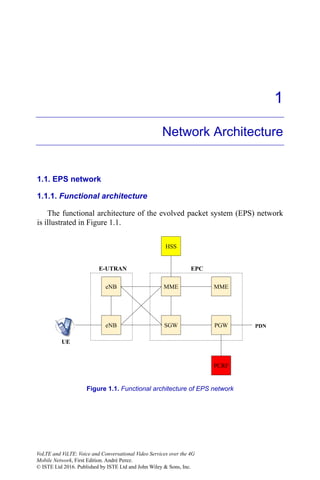
The functional architecture of the evolved packet system (EPS) network
is illustrated in Figure 1.1.
Figure 1.1. Functional architecture of EPS network
eNB
eNB
MME
SGW PGW PDN
E-UTRAN EPC
PCRF
UE
HSS
MME
VoLTE and ViLTE: Voice and Conversational Video Services over the 4G
Mobile Network, First Edition. André Perez.
© ISTE Ltd 2016. Published by ISTE Ltd and John Wiley & Sons, Inc.
2 VoLTE and ViLTE
The EPS mobile network consists of an evolved packet core (EPC)
network and an evolved universal terrestrial radio access network
(E-UTRAN).
The E-UTRAN access network ensures the connection of the User
Equipment (UE).
The EPC core network interconnects the access networks, provides the
interface to the packet data network (PDN) and ensures the attachment of
mobile phones and the establishment of bearers.
1.1.1.1. eNB entity
The E-UTRAN access network includes a single type of entity, the
evolved Node Base station (eNB) that connects to the mobiles.
The eNB entity is responsible for the management of radio resources, for
the control of the establishment of the data radio dearer (DRB), in which the
mobile traffic is transmitted and for its mobility management during the
session (handover).
The eNB entity transfers the traffic data from the mobile (respectively
from the Serving Gateway (SGW)) to the SGW entity (to the mobile phones
concerned, accordingly).
When the eNB entity receives data from the mobile or the SGW entity, it
refers to the QoS class identifier (QCI) in accordance with the data
scheduling mechanism.
The eNB entity can perform the marking of the DiffServ code point
(DSCP) field of IP header, based on the assigned QCI identifier, for the
outgoing data to the SGW entity.
The eNB entity performs compression and encryption of traffic data on
the radio interface.
The eNB entity performs encryption and integrity control of signaling
data exchanged with the mobile.
It also undertakes the selection of the mobility management entity
(MME) to which the mobile is attached.
Network Architecture 3
It treats paging requests sent by the MME entity for their distribution in
the cellphone corresponding to the radio coverage area of the eNB entity.
The eNB entity also distributes system information to the cell containing
the technical characteristics of the radio interface and allowing the mobile
access to connect.
The eNB entity uses the measurements made by the mobile to decide on
the initiation of a cell change during a session (handover).
1.1.1.2. MME entity
The MME entity is the network control tower, allowing mobile access
and controlling bearer establishment for the transmission of traffic data.
The MME entities belong to a group (pool). Load balancing of MME
entities is provided by the eNB entities within a group that must have access
to each MME entity of the same group.
The MME entity is responsible for attachment and detachment of the
mobile phone to the network concerned.
During attachment, the MME entity retrieves the subscriber’s profile and
the subscriber’s authentication data stored in the home subscriber server
(HSS) and performs authentication of the mobile.
During attachment, the MME entity registers the tracking area identity
(TAI) of the mobile and allocates a globally unique temporary identity
(GUTI) to the mobile which replaces the private international mobile
subscriber identity (IMSI).
The MME entity manages a list of location areas allocated to the mobile,
where the mobile can move in an idle state, without contacting the MME
entity to update its TAI location area.
When attaching the mobile, the MME selects SGW and PGW (PDN
Gateway) entities for the construction of the default bearer, e.g. for the
transport of IP packets containing Session Initiation Protocol (SIP)
signaling.
4 VoLTE and ViLTE
For the construction of the bearer, the selection of the PGW entity is
obtained from the access point name (APN), communicated by the mobile or
by the HSS entity in the subscriber’s profile.
The source MME entity also selects the target MME entity when the
mobile changes both cell and group (pool).
The MME entity provides the information required for lawful
interception, such as the mobile status (idle or connected), the TAI location
area if the mobile is idle or the E-UTRAN Cell Global Identifier (ECGI) if
the mobile is in session.
1.1.1.3. SGW entity
The SGW entities are organized into groups (pools). To ensure load
balancing of SGW entities, each eNB entity within a group must have access
to each SGW entity of the same group.
The SGW entity forwards incoming data from the PGW entity to the eNB
entity and outgoing data from the eNB entity to the PGW entity.
When the SGW entity receives data from the eNB or PGW entities, it
refers to the QCI identifier for the implementation of the data scheduling
mechanism.
The SGW entity can perform marking of the DSCP field of IP header
based on the assigned QCI identifier for incoming and outgoing data.
The SGW entity is the anchor point for intra-system handover (mobility
within EPS network) provided that the mobile does not change group.
Otherwise, the PGW entity performs this function.
The SGW entity is also the anchor point at the inter-system handover
PS-PS, requiring the transfer of traffic data from the mobile to the second or
third generation mobile network.
The SGW entity informs the MME entity of incoming data when the
mobile is in idle state, which allows the MME entity to trigger paging of all
eNB entities of the TAI location area.
Network Architecture 5
A mobile in the idle state remains attached to the MME entity. However,
it is no longer connected to the eNB entity and thus the radio bearer and the
S1 bearer are deactivated.
1.1.1.4. PGW entity
The PGW entity is the gateway router providing the EPS network
connection to the PDN network.
When the PGW entity receives data from the SGW entity or PDN
network, it refers to the QCI identifier for the implementation of the data
scheduling mechanism.
The PGW entity can perform DSCP marking of IP header based on the
assigned QCI identifier.
During attachment, the PGW entity grants an IPv4 or IPv6 address to the
mobile.
The PGW entity constitutes the anchor point for inter-SGW mobility
when the mobile changes groups.
The PGW entity hosts the policy and charging enforcement function
(PCEF) which applies the rules relating to mobile traffic data on packet
filtering, on charging and on quality of service (QoS) to be applied to the
bearer to build.
The policy charging and rules function (PCRF) entity, outside the EPS
network, provides the PCEF function of the PGW entity with the rules to
apply when establishing bearers.
The PGW entity generates data for use by charging entities to develop the
record tickets processed through the billing system.
The PGW entity performs replication of the mobile traffic data within the
framework of lawful interception.
1.1.2. Protocol architecture
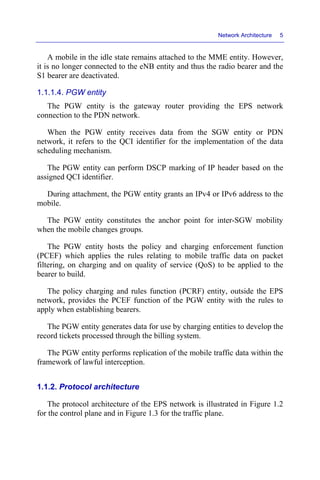
The protocol architecture of the EPS network is illustrated in Figure 1.2
for the control plane and in Figure 1.3 for the traffic plane.
6 VoLTE and ViLTE
Figure 1.2. Protocol architecture: control plane
The LTE-Uu interface is the reference point between the mobile and the
eNB entity.
This interface supports radio resource control (RRC) signaling exchanged
between the mobile and the eNB entity, transmitted in the signaling radio
bearer (SRB) and the mobile traffic data transmitted in the data radio bearer
(DRB).
The RRC signaling also provides transport of the non-access stratum
(NAS) protocol exchanged between the mobile and the MME entity.
Figure 1.3. Protocol architecture: traffic plane
The S1-MME interface is the reference point between the MME and eNB
entities for signaling, via the S1-AP (Application Part) protocol.
PDCP
RLC
MAC
LTE - L1
RRC
NAS
PDCP
RLC
MAC
LTE - L1
RRC
L1
L2
IP
SCTP
S1-AP
L1
L2
IP
SCTP
S1-AP
NAS
UE MME
eNode B
Uu S1-MME
L1
L2
IP
UDP
GTP-C
UDP
IP
L2
L1
GTP-C
L1
L2
IP
UDP
GTP-C
L1
L2
IP
UDP
GTP-C
SGW
S11 S5
PGW
SRB
PDCP
RLC
MAC
LTE-L1
PDCP
RLC
MAC
LTE-L1
L1
L2
IP
GTP-U
L1
L2
IP
GTP-U
UE
SGW
eNode B
Uu S1-U
L1
L2
IP
GTP-U
L1
L2
IP
GTP-U
L1
L2
IP
L4
L7
PGW
P
D
N
S5 SGi
IP IP
UDP UDP
UDP UDP
DRB
Bearer
S1
Bearer
S5
Network Architecture 7
The S1-AP protocol also provides transport of the NAS protocol
exchanged between the mobile and the MME entity.
The S11 interface is the reference point between the MME and SGW
entities for signaling via the GPRS (General Packet Radio Service) tunnel
control protocol (GTPv2-C).
The S5 interface is the reference point between the SGW and PGW
entities for signaling via the GTPv2-C protocol and traffic data (IP packets)
via the GPRS tunnel protocol user (GTP-U).
The S10 interface is the reference point between the MME entities for
signaling, via the GTPv2-C protocol.
The S1-U interface is the reference point between the eNB and SGW
entities for traffic data, via the GTP-U protocol.
The SGi interface is the reference point between the PDW entity and the
PDN network (Internet).
The X2 interface is the reference point between two eNB entities for
signaling, via the X2-AP protocol (Figure 1.4) and for incoming traffic data
via the GTP-U protocol when mobile changes cells (Figure 1.5).
Figure 1.4. Protocol architecture of the
X2 interface: control plane
The bearer established between the two eNB entities is unidirectional
(eNB source to eNB target). It allows for the transfer of traffic data received
L1
L2
IP
SCTP
X2-AP
L1
L2
IP
SCTP
X2-AP
eNB source
eNB cible
X2
8 VoLTE and ViLTE
from the SGW entity to the target eNB entity. It is established temporarily,
for the time of the handover of the mobile.
Figure 1.5. Protocol architecture
traffic plane during handover based on the X2 interface
1.1.3. Bearers
1.1.3.1. Bearer structure
The EPS network carries traffic data (IP packets) transparently to the
PGW entity that performs packet routing.
The IP packet is carried in bearers constructed between EPS network
entities (Figure 1.6).
Figure 1.6. Construction of the bearers
PDCP
RLC
MAC
LTE - L1
PDCP
RLC
MAC
LTE - L1
L1
L2
IP
GTP-U
L1
L2
IP
GTP-U
UE
eNB cible
Uu S1-U
L1
L2
IP
GTP-U
L1
L2
IP
GTP-U
L1
L2
IP
L4
L7
SGW
P
G
W
S5
IP
GTP-U
X2
eNB source
UDP UDP UDP UDP UDP
DRB
Bearer
X2
Bearer
S1
Bearer
S5
PGW
SGW
S5 Bearer
eNB
S1 Bearer
Radio Bearer
UE
MME
RRC GTP-C
Radio Access Bearer
EPS Bearer
Network Architecture 9
The data radio bearer (DRB) is constructed between the user equipment
(UE) and the eNB entity. The RRC signaling, which is exchanged between
the mobile and the eNB entity, is responsible for constructing this bearer.
The S1 bearer is constructed between the eNB and SGW entities. The
S1-AP signaling, exchanged between the eNB and MME entities and the
GTPv2-C signaling, exchanged between the MME and SGW entities, are
responsible for constructing this bearer.
The S5 bearer is constructed between the SGW and PGW entities. The
GTPv2-C signaling exchanged between the SGW and PGW entities is
responsible for constructing this bearer.
The connection of the radio bearer and the S1 bearer, performed by the
eNB entity, constitutes the EPS radio access bearer (E-RAB).
The connection of the E-RAB and S5 bearers, which is performed by the
SGW entity, constitutes the EPS bearer.
The PGW entity is the only EPS mobile network entity that routes traffic
data (IP packets).
The IP transport network that enables communication between the EPS
network entities routes the S1 or S5 bearers.
The eNB and SGW entities do not perform routeing. They only provide
the connection between the bearers.
There are two types of bearers in the EPS network:
– the default bearer established when attaching the mobile, used for
example to transport SIP signaling;
– the dedicated bearer, established following a specific request from the
mobile, used for example for transport of real time protocol (RTP) streams
containing voice or video.
1.1.3.2. Quality of Service
The EPS bearer can be of guaranteed bit rate (GBR) type or can be of
non-GBR type.
10 VoLTE and ViLTE
Table 1.1 provides the QoS characteristics associated with these two
bearer families.
QoS characteristics GBR Non-GBR
QCI (QoS Class Identifier)  
ARP (Allocation and Retention Priority)  
GBR (Guaranteed Bit Rate) 
MBR (Maximum Bit Rate) 
APN-AMBR (Aggregate Maximum Bit Rate) 
UE-AMBR 
Table 1.1. QOS characteristics
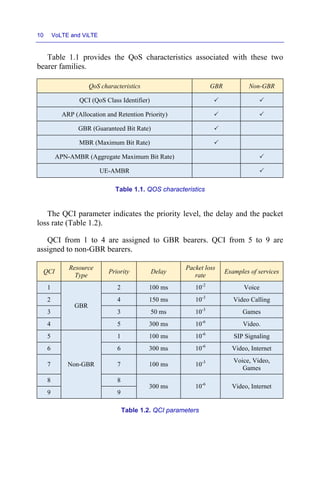
The QCI parameter indicates the priority level, the delay and the packet
loss rate (Table 1.2).
QCI from 1 to 4 are assigned to GBR bearers. QCI from 5 to 9 are
assigned to non-GBR bearers.
QCI
Resource
Type
Priority Delay
Packet loss
rate
Examples of services
1
GBR
2 100 ms 10-2
Voice
2 4 150 ms 10-3
Video Calling
3 3 50 ms 10-3
Games
4 5 300 ms 10-6
Video.
5
Non-GBR
1 100 ms 10-6
SIP Signaling
6 6 300 ms 10-6
Video, Internet
7 7 100 ms 10-3 Voice, Video,
Games
8 8
300 ms 10-6
Video, Internet
9 9
Table 1.2. QCI parameters
Network Architecture 11
The scheduling of traffic data carried out at the level of the eNB, SGW
and PGW entities is based on the QCI priority level.
The bit rate control is done from the GBR and MBR parameters for
guaranteed bit rate bearers.
The bit rate control is conducted for each bearer at the eNB and PGW
entities for incoming data in the EPS network.
The bit rate control is done from the APN-AMBR and UE-AMBR
parameters for non-GBR type bearers. This control is performed for
aggregated bit rates of non-GBR bearers of a mobile.
The APN-AMBR parameter controlled by the PGW entity corresponds to
the maximum bit rate authorized for all the streams of a mobile phone using
non-GBR bearers at the PGW entity level.
The UE-AMBR parameter controlled by the eNB entity corresponds to
the maximum authorized bit rate for all streams of a mobile phone using
non-GBR bearers, at the eNB entity level.
The pre-emption implemented at the eNB and PGW entity level
corresponds to the ARP parameter that defines the following information:
– pre-emption capability: this parameter is used for the establishment of a
new session, if the resource is not available. This parameter determines
whether or not a new session can pre-empt an existing session;
– pre-emption vulnerability: this parameter is used by the existing
session. This parameter is compared to the pre-emption capability parameter
of the new session to determine whether the existing session can be pre-
empted or not;
– priority: this determines the priority level associated with pre-emption.
This priority level is independent of that set for the QCI parameter.
The QoS parameters (QCI, ARP and APN-AMBR) relating to default
bearers are stored in the HSS entity. These values can be changed by the
PCRF entity.
The QoS parameters (QCI, ARP, GBR and MBR) relating to dedicated
bearers are stored in the subscription profile repository (SPR) entity
associated with the PCRF entity.
12 VoLTE and ViLTE
The MME entity replaces the UE-AMBR parameter provided by the HSS
entity by the sum of the different APN-AMBR parameters, provided it is less
than the value indicated by the HSS entity.
1.2. IMS network
1.2.1. Functional architecture
The functional architecture of the IP multimedia subsystem (IMS)
network is described in Figure 1.7.
The IMS network includes the following entities:
– call session control function (CSCF), involving P-CSCF (Proxy-CSCF),
S-CSCF (Serving-CSCF), I-CSCF (Interrogating-CSCF) and E-CSCF
(Emergency-CSCF);
– application servers (AS), involving telephony application server (TAS);
– multimedia resource function (MRF), involving MRFC (MRF
Controller) and MFRP (MRF Processor).
Figure 1.7. Functional architecture of IMS network
P-CSCF E-CSCF
S-CSCF
I-CSCF
TAS
MRFC
MRFP
PCRF
UE
UE
Traffic stream
Control stream
PDN
PDN
HSS
Interconnection
with CS network
with IMS network
LRF
Network Architecture 13
1.2.1.1. P-CSCF entity
The P-CSCF entity is the first point of contact for the mobile in the IMS
network. It performs the function of a PROXY SERVER. It receives the
requests from the UE or from the S-CSCF entity and transfers them
respectively to the S/I-CSCF entity or to the UE entity.
The P-CSCF entity may also act as an user agent (UA) in abnormal
operating conditions, when it has to terminate or generate SIP transactions.
During registration, the P-CSCF entity forwards the SIP REGISTER
request to the I-CSCF entity determined on the basis of the domain name
provided by the UE entity. Into this message, it adds a header path
containing its identity. This identity is preserved by the S-CSCF entity.
During session establishment, the P-CSCF entity forwards the SIP
INVITE request received from the S-CSCF entity (or from the UE entity
respectively) to the UE entity (or respectively to the S-CSCF entity).
To carry out the transfer, the P-CSCF entity has to retrieve the IP
addresses of the UE entity (or respectively of the S-CSCF entity):
– the SIP INVITE request received from the S-CSCF entity contains the
IP address of the UE entity instead of the uniform resource identifier (URI);
– the SIP INVITE request received from the UE entity contains the
identity of the S-CSCF entity in the header route.
The P-CSCF entity detects emergency calls and forwards them to the
E-CSCF entity.
The P-CSCF entity generates the data necessary for the generation of
charging tickets.
The P-CSCF entity establishes an IPSec (IP Security) association with the
UE at its registration.
During session establishment, the P-CSCF entity controls the type of
resources required by the UE on the basis of the capacities authorized by the
EPS network, using the DIAMETER messages exchanged with the PCRF
entity.
14 VoLTE and ViLTE
During session establishment, the P-CSCF entity checks resource
availability in the EPS network.
1.2.1.2. I-CSCF entity
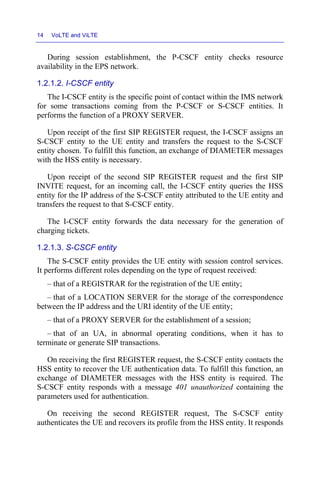
The I-CSCF entity is the specific point of contact within the IMS network
for some transactions coming from the P-CSCF or S-CSCF entities. It
performs the function of a PROXY SERVER.
Upon receipt of the first SIP REGISTER request, the I-CSCF assigns an
S-CSCF entity to the UE entity and transfers the request to the S-CSCF
entity chosen. To fulfill this function, an exchange of DIAMETER messages
with the HSS entity is necessary.
Upon receipt of the second SIP REGISTER request and the first SIP
INVITE request, for an incoming call, the I-CSCF entity queries the HSS
entity for the IP address of the S-CSCF entity attributed to the UE entity and
transfers the request to that S-CSCF entity.
The I-CSCF entity forwards the data necessary for the generation of
charging tickets.
1.2.1.3. S-CSCF entity
The S-CSCF entity provides the UE entity with session control services.
It performs different roles depending on the type of request received:
– that of a REGISTRAR for the registration of the UE entity;
– that of a LOCATION SERVER for the storage of the correspondence
between the IP address and the URI identity of the UE entity;
– that of a PROXY SERVER for the establishment of a session;
– that of an UA, in abnormal operating conditions, when it has to
terminate or generate SIP transactions.
On receiving the first REGISTER request, the S-CSCF entity contacts the
HSS entity to recover the UE authentication data. To fulfill this function, an
exchange of DIAMETER messages with the HSS entity is required. The
S-CSCF entity responds with a message 401 unauthorized containing the
parameters used for authentication.
On receiving the second REGISTER request, The S-CSCF entity
authenticates the UE and recovers its profile from the HSS entity. It responds
Network Architecture 15
with a message 200 OK containing a header Service Route with its IP
address which the UA keeps in its memory.
For an outgoing call, on receipt of the first INVITE request from the
P-CSCF entity, the S-CSCF entity performs a check on the service required
on the basis of the profile recovered during registration. The S-CSCF entity
transfers the request either to the application server or to the entity allocated
to the interconnection. The IP address of the application server is contained
in the profile of the UE entity recovered during registration.
For an incoming call, on receipt of the first INVITE request from the
I-CSCF entity, the S-CSCF entity performs a check on the service required.
The S-CSCF entity transfers the request either to the application server or to
the P-CSCF entity.In S-CSCF, as suggested in the latter case, the entity
replaces the URI identity of the request with the IP address of the UE entity.
The IP address of the P-CSCF entity is recovered on the basis of the header
Path, during the registration of the UE entity.
The S-CSCF entity forwards the data necessary to generate charging
tickets.
1.2.1.4. E-CSCF entity
The E-CSCF entity handles emergency calls transmitted by the P-CSCF
and routes the request to the public-safety answering point (PSAP) nearest to
the UE. The PSAP emergency center can be linked to a fixed or mobile
network or to another IMS network.
Upon receiving the INVITE request, the E-CSCF entity retrieves the
location of the mobile in the header P-Access-Network-Info.
The header P-Access-Network-Info was inserted by the P-CSCF entity.
The value of the mobile location was provided by the PGW entity through
the PCRF entity.
On receiving the INVITE request, the E-CSCF entity contacts the
location retrieval function (LRF) to obtain the URI identity of the PSAP
emergency center.
On the basis of information provided by the LRF entity, the E-CSCF
entity transfers the request to the entity allocated to the interconnection to
the CS network or the IMS network.
16 VoLTE and ViLTE
1.2.1.5. Application servers
The application server provides added-value services to the IMS network.
For instance, it hosts and executes the supplementary telephone services.
The AS entity may affect the SIP session depending on the service required.
The S-CSCF entity has to decide whether an application server is
necessary for a specific treatment of an SIP request to ensure handling of the
appropriate service. The decision is based on the information received from
the HSS during mobile registration.
The application server may play various roles in the processing of an SIP
message:
– that of a PROXY SERVER. In this mode, the SIP request from the
S-CSCF entity is sent to the application server. The application server can
add, remove or modify headers in the SIP message;
– that of an User Agent Server (UAS) or a REDIRECT SERVER. In this
mode, the response of the application server to the SIP request from the
S-CSCF entity is 2xx, 4xx, 5xx or 6xx (UAS) or 3xx (REDIRECT
SERVER);
– that of an user agent client (UAC). In this mode, the application server
generates the SIP request and transmits it to the S-CSCF entity.
– that of a Back to Back User Agent (B2BUA). In this mode, the
application server receiving an SIP request from the S-CSCF entity
terminates the dialog with the UAC entity at the originating side, and
generates a new request with an UAS entity at the terminating side.
1.2.1.6. Media processing
Media processing is done by the MRF function, divided into two entities,
the MRFC and MRFP.
The MRFC entity interprets information from the S-CSCF and controls
the MRFP on the basis of this interpretation;
The MRFC entity forwards the data necessary for the generation of
charging tickets.
Network Architecture 17
The MFRP entity generates media flows under the control of the MRFC,
such as telephone announcements.
The MFRP entity combines media flows to provide a conferencing
service.
The MFRP entity can also perform particular treatments of the media
flows, such as the transcoding of the audio signal.
1.2.2. Protocol architecture
The Gm interface is the reference point between the EU and P-CSCF
entities. This interface supports SIP and Session Description Protocol (SDP)
signaling.
The Ut interface is the reference point between the EU and TAS entities.
This interface supports XML Configuration Access Protocol (XCAP)
signaling, allowing the configuration of supplementary services by the
mobile.
The Mw interface is the reference point between the CSCF entities. This
interface supports SIP and SDP signaling.
The Mx interface is the reference point between, on the one hand, the
CSCF entities and, the other hand, the interconnection with the Circuit-
Switched (CS) network or the IMS network. This interface supports SIP and
SDP signaling.
The Mr interface is the reference point between the S-CSCF and MRFC
entities. This interface supports SIP and SDP signaling.
The Mb interface is the reference point between the UE and MRFP
entities. This interface supports the RTP stream.
The IMS service control (ISC) interface is the reference point between
the S-CSCF and TAS entities. This interface supports SIP and SDP
signaling.
18 VoLTE and ViLTE
1.3. Databases
1.3.1. Functional architecture
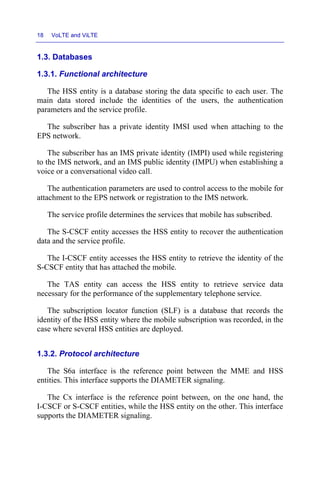
The HSS entity is a database storing the data specific to each user. The
main data stored include the identities of the users, the authentication
parameters and the service profile.
The subscriber has a private identity IMSI used when attaching to the
EPS network.
The subscriber has an IMS private identity (IMPI) used while registering
to the IMS network, and an IMS public identity (IMPU) when establishing a
voice or a conversational video call.
The authentication parameters are used to control access to the mobile for
attachment to the EPS network or registration to the IMS network.
The service profile determines the services that mobile has subscribed.
The S-CSCF entity accesses the HSS entity to recover the authentication
data and the service profile.
The I-CSCF entity accesses the HSS entity to retrieve the identity of the
S-CSCF entity that has attached the mobile.
The TAS entity can access the HSS entity to retrieve service data
necessary for the performance of the supplementary telephone service.
The subscription locator function (SLF) is a database that records the
identity of the HSS entity where the mobile subscription was recorded, in the
case where several HSS entities are deployed.
1.3.2. Protocol architecture
The S6a interface is the reference point between the MME and HSS
entities. This interface supports the DIAMETER signaling.
The Cx interface is the reference point between, on the one hand, the
I-CSCF or S-CSCF entities, while the HSS entity on the other. This interface
supports the DIAMETER signaling.
Network Architecture 19
The Sh interface is the reference point between the TAS and HSS entities.
This interface supports the DIAMETER signaling.
The Dx interface is the reference point between, on the one hand, the
I-CSCF or S-CSCF entities and the other hand, the SLF entity. This interface
supports the DIAMETER signaling.
The Dh interface is the reference point between the SLF and TAS
entities. This interface supports the DIAMETER signaling.
1.4. Charging associated with IMS network
1.4.1. Functional architecture
In the case of online charging, the user’s account is consulted before
granting the permission to use the network resource. That account is
decreased during the communication. When it reaches zero, the
communication is cut off. This mode of charging corresponds to pre-paid
service.
1.4.1.1. Offline charging
The functional architecture of the offline charging system (OFCS) is
described in Figure 1.8.
The charging trigger function (CTF) generates charging events based on
the observation of the use of network resources. It is integrated in all the
entities of the IMS network.
The charging data function (CDF) receives the charging data from the
CTF function. The CDF function then uses these data to generate charging
data records (CDR).
The charging data records produced by the CDF function are kept in the
charging gateway function (CGF), a database which acts as a gateway with
the billing system.
1.4.1.2. Online charging
The functional architecture of the online charging system (OCS) is
described in Figure 1.9.
20 VoLTE and ViLTE
Figure 1.8. Functional architecture of OFCS
Figure 1.9. Functional architecture of OCS
The S-CSCF entity does not trigger any charging event and does not
necessarily include the CTF function. Charging during a session is a service
logic controlled by an application server IMS Gateway Function
(IMS-GWF).
The OCS entity comprises several distinct modules:
– charging on the basis of the sessions established by the users (e.g. voice
calls);
– charging on the basis of events in conjunction with application servers;
AS
MRFC
MGCF
BGCF
S-CSCF
I-CSCF
P-CSCF
CTF
CTF
CTF
CTF
CTF
CTF
CTF
CDF
DIAMETER
CGF Billing system
CDR
AS
MRFC
S-CSCF
DIAMETER
Billing
System
SIP
CTF
CTF
CGF
IMS-GWF
CGF
CDF
OCS
CDR
Network Architecture 21
– valorization of the use of network resources to calculate the amount of
charging;
– balance of the user’s account.
The generation of CDRs sent to the billing system is optional. If the OCS
entity does not produce CDRs, they are used by the same CDF as with
offline charging.
1.4.2. Protocol architecture
The Rf interface is the reference point between, on the one hand, the
entities of the IMS network, while on the other hand, the OFCS entity. This
interface supports the DIAMETER signaling.
The Ro interface is the reference point between, on the one hand, the
entities of the IMS network, and on the other hand, the OCS entity. This
interface supports the DIAMETER signaling.
1.5. PCC function
1.5.1. Functional architecture
The functional architecture of the policy and charging control (PCC) is
described in Figure 1.10.
The PCRF entity provides to the PCEF entity, integrated in the PGW
entity, the necessary information for the control and the charging of the
traffic data (IP packets).
This information is stored in the subscription profile repository (SPR)
during the creation of the subscription.
Traffic control includes the following:
– association between a service data flow (SDF) and EPS bearer;
– blocking or allowing IP packets;
– allocation of QCI parameter to EPS bearer.
22 VoLTE and ViLTE
Figure 1.10. Functional architecture of PCC
The charging method defines as if the PCEF entity has to obtain credit
from the OCS entity for online charging or if it has to generate information
submitted to the OFCS entity.
The PCEF entity executes the rules provided by the PCRF entity to
control the traffic flow, the accounting of traffic volume and the charging.
The PCEF entity may relate to the PCRF entity a change of state of a
service flow, as in the case of loss of radio coverage of the mobile.
The PCRF entity may receive a session request from the AF (Application
Function) entity as in the case of the establishment of a voice or
conversational video communication initialized at the IMS network.
The PCRF entity may provide the AF entity information about events
occurring in the mobile network as in the case of loss of radio coverage of
the mobile.
In case of roaming, PCEF entity located in the visited network requests
rules to the Visited-PCRF (V-PCRF) entity, which gets them from the
Home-PCRF (H-PCRF) entity.
1.5.2. Protocol architecture
The Gx interface is the reference point between the PCRF and PCEF
entities. This interface supports the DIAMETER signaling.
H-
PCRF
AF
IMS (P-CSCF)
SPR
V-
PCRF
PCEF
OCS OFCS
Network Architecture 23
The Rx interface is the reference point between the PCRF entity and the
AF entity, represented by the P-CSCF entity as in the case of the IMS
network. This interface supports the DIAMETER signaling.
The Gy interface is the reference point between the PCEF and OCS
entities. This interface supports the DIAMETER signaling.
The Gz interface is the reference point between the PCEF and OFCS
entities. This interface supports the DIAMETER signaling.
The S9 interface is the reference point located between the H-PCRF
entity located in the home network and the V-PCRF entity located in the
visited network. This interface supports the DIAMETER signaling.
The Sp interface is the reference point between the PCRF and SPR
entities. The protocol used in this interface is not defined.
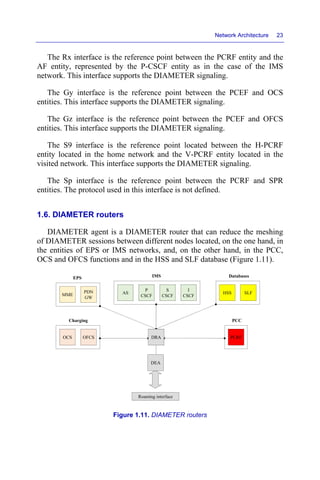
1.6. DIAMETER routers
DIAMETER agent is a DIAMETER router that can reduce the meshing
of DIAMETER sessions between different nodes located, on the one hand, in
the entities of EPS or IMS networks, and, on the other hand, in the PCC,
OCS and OFCS functions and in the HSS and SLF database (Figure 1.11).
Figure 1.11. DIAMETER routers
P
CSCF
S
CSCF
I
CSCF
AS
IMS
PDN
GW
MME
EPS
OFCS
OCS
Charging
SLF
HSS
Databases
PCRF
PCC
Roaming interface
DRA
DEA
24 VoLTE and ViLTE
DIAMETER routing is done on the basis of the operator’s domain name
to obtain the IP address of the next hop and on the basis of the identity of the
destination to obtain the IP address of the DIAMETER node.
DIAMETER routing agent (DRA) only performs routing DIAMETER
messages and does not analyze the content of DIAMETER messages. The
DRA router is deployed in the home network of the operator.
DIAMETER edge agent (DEA) performs the routing of DIAMETER
messages and control of their content according to rules established by the
operator. The DEA router is deployed at roaming interfaces between the
visited network and the home network.
1.7. ENUM system
The ENUM mechanism allows for using the phone number (E.164 or
TEL URI) to determine the network of the called.
The ENUM mechanism is based on domain name system (DNS)
resolution which converts the E.164 identity or TEL URI to a SIP URI
identity containing the domain name of the destination network.
The ENUM system is structured in three levels of servers:
– level 1: these servers contain pointers to the level-2 servers. The DNS
level-1 server manages the e164enum.net domain. The response to the
request relating to a phone number contains the identity of the DNS server
that handles the country where the mobile is registered;
– level 2: these servers have authority over the country code and contain
pointers to the level-3 servers. The DNS level-2 servers manage the
<country code> e164enum.net domain. The response to the request relating
to a phone number contains the identity of the operator’s DNS server that
handles the mobile;
– level 3: these servers have authority over the codes assigned to
operators and subscribers. The response to the request relating to a phone
number contains the SIP URI of the mobile identity.
Network Architecture 25
1.8. IPX network
The internet protocol exchange (IPX) network provides the
interconnection between mobile network operators
A mobile network requires only a single connection to an IPX network to
be able to interconnect with other networks of fixed and mobile operators.
IPX network can offer several types of services:
– transport service which is to route IP packets;
– proxy service which is to route DIAMETER messages, to route SIP
signaling messages and to switch RTP streams;
– virtual roaming service that allows an operator to replace multiple
bilateral roaming agreements by a single agreement with the virtual roaming
operator;
– ENUM database service by taking into account the level-1 DNS server
that manages the e164enum.net domain.
2
Signaling Protocols
2.1. NAS protocol
The non-access stratum (NAS) protocol is the signaling exchanged
between the user equipment (UE) and the mobility management entity
(MME).
The NAS protocol is transported by the radio resource control (RRC)
protocol over the radio interface LTE-Uu and by the S1-AP (Application
Part) protocol over the S1-MME interface.
The NAS protocol comprises the following two protocols:
– EPS mobility management (EMM): this takes care of controlling
mobility and security;
– EPS session management (ESM): this controls the bearer
establishment.
From the point of view of the MME entity, the mobile can be in one of
two operational states: EMM-REGISTERED or EMM-DEREGISTERED.
In the EMM-DEREGISTERED state, the mobile location is not known to
the MME entity, and therefore, it cannot be contacted.
The switch to the registered state takes place when the mobile attaches,
which comprises the following four procedures:
– mutual authentication of the mobile and the MME entity;
– registration of the mobile location with the MME entity;
VoLTE and ViLTE: Voice and Conversational Video Services over the 4G
Mobile Network, First Edition. André Perez.
© ISTE Ltd 2016. Published by ISTE Ltd and John Wiley & Sons, Inc.
28 VoLTE and ViLTE
– assignment of the globally unique temporary identity (GUTI) to the
mobile;
– establishment of the default bearer.
The switch to the deregistered state takes place when the mobile detaches
or when the attachment of the mobile, the update of its location or the
service request are rejected by the MME entity.
2.1.1. EMM messages
2.1.1.1. Attachment and detachment
The procedure of attachment is initiated by the mobile in the deregistered
state, by sending the message EMM ATTACH REQUEST to the MME
entity.
This message contains the mobile identity, GUTI or international mobile
subscriber identity (IMSI) and the tracking area identity (TAI).
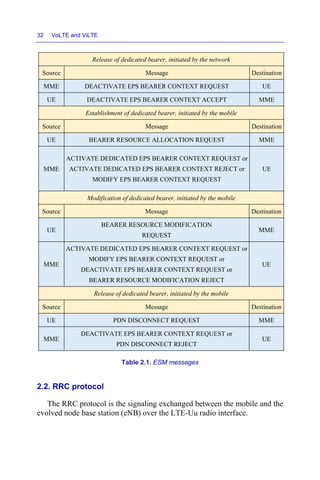
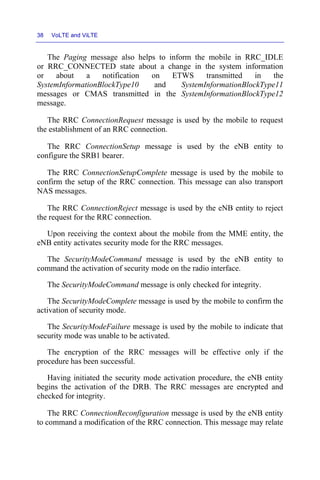
The mobile attaches the message ESM PDN CONNECTIVITY
REQUEST to establish the default bearer.
Upon receiving this message, the MME entity begins the authentication
and security procedures for the NAS protocol.
If they are successfully completed, the MME entity responds with the
message EMM ATTACH ACCEPT, containing a new GUTI, and the
message ESM ACTIVATE DEFAULT EPS BEARER CONTEXT
REQUEST, to establish the default bearer.
The mobile responds with the message EMM ATTACH COMPLETE
containing the message ESM ACTIVATE DEFAULT EPS BEARER
CONTEXT ACCEPT, to acknowledge the previous message.
If the procedures are not successful, the MME entity responds with the
message EMM ATTACH REJECT, containing the message ESM PDN
CONNECTIVITY REJECT, which causes the mobile to detach.
Detachment may be initiated by the mobile or the MME entity by sending
the message EMM DETACH REQUEST.
Signaling Protocols 29
The response EMM DETACH ACCEPT concludes the detachment
procedure. The response is not transmitted by the MME entity if the detach
request sent by the mobile indicates that it has been turned off. The
detachment procedure implicitly causes the release of the active bearers.
2.1.1.2. Authentication
The procedure of mutual authentication is initiated by the MME entity by
sending the message EMM AUTHENTICATION REQUEST, containing a
random number RAND and the authentication network (AUTN).
The mobile uses the RAND received to locally compute its own
authentication code RES (Result) and that of the network (AUTN) and
compares the AUTN calculated to the one received from the MME entity.
If the MME entity is authenticated, the mobile responds with the message
EMM AUTHENTICATION RESPONSE, containing the authentication
code RES.
Otherwise, it indicates that network authentication failed with the
message EMM AUTHENTICATION FAILURE.
The MME entity compares the RES value received from the mobile with
that communicated by the HSS.
If the two codes are the same, the mobile is authenticated and the MME
entity triggers security mode for NAS signaling.
Otherwise, the MME entity responds with the message EMM
AUTHENTICATION REJECT.
2.1.1.3. Security mode
When mutual authentication has been successful, the MME begins
putting the NAS signaling in security mode by sending the message EMM
SECURITY MODE COMMAND. The integrity of this message is protected.
If the check on the integrity of the message EMM SECURITY MODE
COMMAND is positive, the mobile responds with the message EMM
SECURITY MODE COMPLETE. All subsequent NAS messages are then
encrypted and their integrity is checked.
30 VoLTE and ViLTE
If the check on the integrity of the message EMM SECURITY MODE
COMMAND is negative, the mobile responds with the message EMM
SECURITY MODE REJECT.
2.1.1.4. Tracking area update
The procedure of tracking area update is periodically initiated so that the
mobile can maintain its tracking area or when the mobile has changed its
location area. The mobile, in the registered state, sends the message EMM
TRACKING AREA UPDATE REQUEST to the MME entity.
The MME entity responds either with the message EMM TRACKING
AREA UPDATE ACCEPT if it accepts the update, or else with the message
EMM TRACKING AREA UPDATE REJECT, indicating the cause of the
rejection.
If the message EMM TRACKING AREA UPDATE ACCEPT attributes
a new GUTI to the mobile, the mobile confirms receipt of this by sending the
message EMM TRACKING AREA UPDATE COMPLETE.
2.1.1.5. Service request
The service request is sent, when the mobile is in idle mode, to re-
establish the default bearers on the LTE-Uu and S1-U interfaces.
The service request is initiated by the mobile, by sending the EMM
SERVICE REQUEST when signaling or traffic data is waiting.
The mobile is notified of awaiting data at the level of the network by way
of the paging procedure.
The MME entity may reject the request, in which case it responds with
the message EMM SERVICE REJECT. This response causes the switch of
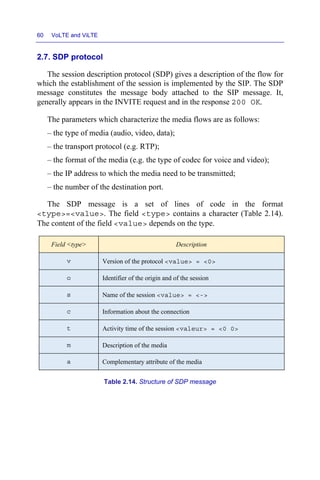
the mobile to the deregistered state.
2.1.2. ESM messages
The mobile sends the request to establish the default bearer when the
mobile attaches to the MME entity.
The establishment request for the dedicated bearer can be transmitted by
the network or the mobile.
Signaling Protocols 31
The dedicated bearer corresponds to a specific request by the mobile,
following for example the establishment of a voice or a conversational
video.
The dedicated bearer is associated with a particular quality of service,
corresponding to a particular QoS class identifier (QCI) which is different to
that of the default bearer.
Table 2.1 summarizes the ESM messages exchanged for the
establishment, modification and release of the default bearer and the
dedicated bearer.
Establishment of default bearer, initiated by the network
Source Message Destination
MME ACTIVATE DEFAULT EPS BEARER CONTEXT REQUEST UE
UE
ACTIVATE DEFAULT EPS BEARER CONTEXT ACCEPT or
ACTIVATE DEFAULT EPS BEARER CONTEXT REJECT
MME
Establishment of default bearer, initiated by the mobile
Source Message Destination
UE PDN CONNECTIVITY REQUEST MME
MME
ACTIVATE DEFAULT EPS BEARER CONTEXT REQUEST or
PDN CONNECTIVITY REJECT
UE
Establishment of dedicated bearer, initiated by the network
Source Message Destination
MME ACTIVATE DEDICATED EPS BEARER CONTEXT REQUEST UE
UE
ACTIVATE DEDICATED EPS BEARER CONTEXT ACCEPT or
ACTIVATE DEDICATED EPS BEARER CONTEXT REJECT
MME
Modification of dedicated bearer, initiated by the network
Source Message Destination
MME MODIFY EPS BEARER CONTEXT REQUEST UE
UE
MODIFY EPS BEARER CONTEXT ACCEPT or
MODIFY EPS BEARER CONTEXT REJECT
MME
32 VoLTE and ViLTE
Release of dedicated bearer, initiated by the network
Source Message Destination
MME DEACTIVATE EPS BEARER CONTEXT REQUEST UE
UE DEACTIVATE EPS BEARER CONTEXT ACCEPT MME
Establishment of dedicated bearer, initiated by the mobile
Source Message Destination
UE BEARER RESOURCE ALLOCATION REQUEST MME
MME
ACTIVATE DEDICATED EPS BEARER CONTEXT REQUEST or
ACTIVATE DEDICATED EPS BEARER CONTEXT REJECT or
MODIFY EPS BEARER CONTEXT REQUEST
UE
Modification of dedicated bearer, initiated by the mobile
Source Message Destination
UE
BEARER RESOURCE MODIFICATION
REQUEST
MME
MME
ACTIVATE DEDICATED EPS BEARER CONTEXT REQUEST or
MODIFY EPS BEARER CONTEXT REQUEST or
DEACTIVATE EPS BEARER CONTEXT REQUEST or
BEARER RESOURCE MODIFICATION REJECT
UE
Release of dedicated bearer, initiated by the mobile
Source Message Destination
UE PDN DISCONNECT REQUEST MME
MME
DEACTIVATE EPS BEARER CONTEXT REQUEST or
PDN DISCONNECT REJECT
UE
Table 2.1. ESM messages
2.2. RRC protocol
The RRC protocol is the signaling exchanged between the mobile and the
evolved node base station (eNB) over the LTE-Uu radio interface.
Signaling Protocols 33
The RRC protocol performs the following functions:
– broadcast of the system information related to the characteristics of the
radio interface;
– control of the RRC connection: this procedure includes the paging, the
establishment, the modification and the release of the signaling radio bearer
(SRB) and the data radio bearer (DRB). It also includes the activation of
security mode over the LTE-Uu interface, the procedure for which includes
putting mechanisms in place to encrypt the traffic and RRC signaling flows,
and to control the integrity of the RRC signaling flows;
– control of handover: this procedure executes the changing of cell
between two eNB entities (intra-system handover) or between an eNB entity
and a base station from a second- or third-generation mobile network (inter-
system handover);
– measurement reporting: the eNB entity can trigger measurements
carried out by the mobile, either periodically or on demand, to prepare for
handover;
– transport of the NAS messages exchanged between the mobile and the
MME entity.
From the point of view of the eNB entity, the mobile may be in one of
two operational states: idle mode (RRC_IDLE) or connected mode
(RRC_CONNECTED).
In idle mode, the mobile is not known to the eNB entity. It remains in this
state until the RRC connection setup procedure is completed. The setup
procedure is triggered by the mobile when it wishes to transmit traffic or
signaling data, the mobile being used the SRB0 bearer.
In connected mode, the mobile can transmit and receive signaling and
traffic data. The mobile is attributed an identifier which is unique to the cell,
the cell radio network temporary identity (C-RNTI). In this state, the mobile
uses either the SRB1 bearer for RRC messages with possible associated
NAS messages, or the SRB2 bearer for RRC messages transporting solely
NAS messages.
Table 2.2 summarizes the type of SRB, the mode of radio link control
(RLC) protocol and the channels used by the different RRC messages over
the radio interface.
34 VoLTE and ViLTE
MasterInformationBlock
SRB RLC mode Logical channel
Transport
channel
Physical
channel
Not available TM BCCH BCH PBCH
SystemInformationBlock
SRB RLC mode Logical channel
Transport
channel
Physical
channel
Not available TM BCCH DL-SCH PDSCH
Paging
SRB RLC mode Logical channel
Transport
channel
Physical
channel
Not available TM PCCH PCH PDSCH
ConnectionSetup
ConnectionReject
ConnectionReestablishment
ConnectionReestablishmentReject
SRB RLC mode Logical channel
Transport
channel
Physical
channel
SRB0 TM CCCH DL-SCH PDSCH
ConnectionRequest
ConnectionReestablishmentRequest
SRB RLC mode Logical channel
Transport
channel
Physical
channel
SRB0 TM CCCH UL-SCH PUSCH
Signaling Protocols 35
ConnectionReconfiguration
ConnectionRelease
SecurityModeCommand
SRB RLC mode Logical channel
Transport
channel
Physical
channel
SRB1 AM DCCH DL-SCH PDSCH
DLInformationTransfer (1)
SRB RLC mode Logical channel
Transport
channel
Physical
channel
SRB2 AM DCCH DL-SCH PDSCH
ULInformationTransfer (2)
SRB RLC mode Logical channel
Transport
channel
Physical
channel
SRB2 AM DCCH UL-SCH PUSCH
ConnectionSetupComplete
SecurityModeComplete
SecurityModeFailure
ConnectionReconfigurationComplete
ConnectionReestablishmentComplete
MeasurementReport
SRB RLC mode Logical channel
Transport
channel
Physical
channel
SRB1 AM DCCH UL-SCH PUSCH
Table 2.2. RRC messages: 1) transport of NAS messages only,
downstream; 2) transport of NAS messages only, upstream
36 VoLTE and ViLTE
2.2.1. System information
The information relating to the radio interface is divided between the
messages MasterInformationBlock and SystemInformationBlock.
These messages are transmitted periodically and a change in these data is
notified to the mobile by paging.
The MasterInformationBlock message contains the following data:
– the bandwidth of the radio signal for the downstream direction (1.4, 3,
5, 10, 15 and 20 MHz);
– the system frame number (SFN);
– the configuration of the physical channel PHICH of the radio interface.
The configuration of this physical channel is defined by the operator.
All SystemInformationBlock messages, with the exception of the
SystemInformationBlockType1 message, are mapped in a SystemInformation
message.
Each SystemInformation message contains SystemInformationBlock
messages with the same periodicity.
The SystemInformationBlockType2 message must necessarily be mapped
in the SystemInformation1 message.
The SystemInformationBlockType1 message contains the following data:
– the mobile country code (MCC) and mobile network code (MNC) of
the mobile network;
– the mobile network code (TAC) of the location area. The identity of the
TAI is a concatenation of the MCC, MNC and TAC codes.
– the E-UTRAN Cell global identifier (ECGI);
– the periodicity of the SystemInformation messages and the types of
SystemInformationBlock messages that they contain.
Table 2.3 shows the data transported by the different types of
SystemInformationBlock message.
Signaling Protocols 37
SystemInformationBlockType2
Bandwidth in upstream direction
Configuration of physical channels
SystemInformationBlockType3 Cell selection parameters
SystemInformationBlockType4 EPS neighboring cells, same frequency
SystemInformationBlockType5 EPS neighboring cells, different frequency
SystemInformationBlockType6 UMTS neighboring cells
SystemInformationBlockType7 GSM/GPRS neighboring cells
SystemInformationBlockType8 CDMA 2000 neighboring cells
SystemInformationBlockType9 Identity of the home eNB (HeNB)
SystemInformationBlockType10
SystemInformationBlockType11
Earthquake and tsunami warning system (ETWS)
SystemInformationBlockType12 Commercial Mobile Alert System (CMAS)
SystemInformationBlockType13
Information related to the MBSFN (MBMS over
Single Frequency Network) area
Table 2.3. SystemInformationBlock messages
2.2.2. Control of RRC connection
The different procedures associated with the control of the RRC
connection relate to paging, RRC connection setup, activation of security
mode, RRC connection reconfiguration, RRC connection re-establishment
and RRC connection release.
The Paging message is used by the eNB entity to alert one or more
mobiles in the RRC_IDLE state.
38 VoLTE and ViLTE
The Paging message also helps to inform the mobile in RRC_IDLE
or RRC_CONNECTED state about a change in the system information
or about a notification on ETWS transmitted in the
SystemInformationBlockType10 and SystemInformationBlockType11
messages or CMAS transmitted in the SystemInformationBlockType12
message.
The RRC ConnectionRequest message is used by the mobile to request
the establishment of an RRC connection.
The RRC ConnectionSetup message is used by the eNB entity to
configure the SRB1 bearer.
The RRC ConnectionSetupComplete message is used by the mobile to
confirm the setup of the RRC connection. This message can also transport
NAS messages.
The RRC ConnectionReject message is used by the eNB entity to reject
the request for the RRC connection.
Upon receiving the context about the mobile from the MME entity, the
eNB entity activates security mode for the RRC messages.
The SecurityModeCommand message is used by the eNB entity to
command the activation of security mode on the radio interface.
The SecurityModeCommand message is only checked for integrity.
The SecurityModeComplete message is used by the mobile to confirm the
activation of security mode.
The SecurityModeFailure message is used by the mobile to indicate that
security mode was unable to be activated.
The encryption of the RRC messages will be effective only if the
procedure has been successful.
Having initiated the security mode activation procedure, the eNB entity
begins the activation of the DRB. The RRC messages are encrypted and
checked for integrity.
The RRC ConnectionReconfiguration message is used by the eNB entity
to command a modification of the RRC connection. This message may relate
Signaling Protocols 39
to the configuration of the measurements, control of the mobility and
configuration of the DRB default bearer. This message can also transport
NAS messages.
The RRC ConnectionReconfigurationComplete message is used by the
mobile to confirm the reconfiguration of the RRC connection.
The RRC ConnectionReestablishmentRequest message is used by the
mobile to request the re-establishment of the RRC connection.
The RRC ConnectionReestablishment message is used by the eNB entity
to re-establish the RRC connection.
The RRC ConnectionReestablishmentComplete message is used by the
mobile to confirm the re-establishment of the RRC connection.
The RRC ConnectionReestablishmentReject message is used by the eNB
entity to indicate that the reestablishment of the RRC connection has been
rejected.
The RRC ConnectionRelease message is used by the eNB entity to
release the RRC connection. The procedure can also be used to redirect the
mobile to a different frequency band. In exceptional cases, the mobile can
terminate the RRC connection without alerting the eNB entity.
2.2.3. Measurement report
The measurements carried out by the mobile must be in line with the
configuration indicated in the RRC ConnectionReconfiguration message
transmitted by the eNB entity.
The mobile sends the eNB entity the measurements in the RRC
MeasurementReport message.
Measurements carried out on the serving cell and neighboring cells are
used for the selection of the cell and for the handover.
Intra-frequency measurement, essential for mobility, is configured when
connecting.
40 VoLTE and ViLTE
Inter-frequency and inter-radio access technology (RAT) measurement
can also be configured when connecting.
As the mobile does not generally have several radio receivers, the inter-
frequency and inter-RAT measurement should be performed at intervals
arranged in the frame.
The configuration of measurements to be performed by the mobile is
triggered by the eNB entity in RRC ConnectionSetup, Connection
Reconfiguration, ConnectionReestablishment messages.
The measurement configurations to perform define the following
parameters:
– the object that identifies the radio channel;
– the event triggering the measurement report;
– the combination of objects and events;
– the measurement of filtering parameters;
– the periodicity of measurements.
2.3. S1-AP protocol
The S1-AP protocol is the signaling exchanged between the eNB and
MME entities over the S1-MME interface.
The S1-AP protocol performs the following functions:
– activation of the context of the mobile by the MME entity;
– establishment, modification and release of the EPS radio access bearer
(E-RAB);
– handover management;
– paging. This procedure tells the eNB entity that the message needs to be
broadcast in the cell;
– transport of the NAS signaling exchanged between the mobile and the
MME entity;
– establishment of the S1-MME interface.
Signaling Protocols 41
Table 2.4 summarizes the S1-AP messages sent to paging, context
management, bearer management, mobility management, management of the
S1-MME interface and NAS messages transport.
Function Request Response
Context management
INITIAL CONTEXT
SETUP REQUEST
INITIAL CONTEXT
SETUP RESPONSE or
INITIAL CONTEXT
SETUP FAILURE
UE CONTEXT RELEASE
COMMAND
UE CONTEXT RELEASE
COMPLETE
Function Request Response
Bearer management
E-RAB SETUP / MODIFY
REQUEST
E-RAB SETUP / MODIFY
RESPONSE
E-RAB RELEASE
COMMAND
E-RAB RELEASE
RESPONSE
E-RAB RELEASE
INDICATION
None
Function Request Response
Paging PAGING None
Function Request Response
Mobility management
HANDOVER REQUIRED HANDOVER COMMAND
HANDOVER REQUEST
HANDOVER REQUEST
ACKNOWLEDGE or
HANDOVER FAILURE
eNB STATUS TRANSFER None
MME STATUS
TRANSFER
None
HANDOVER NOTIFY None
PATH SWITCH
REQUEST
PATH SWITCH
ACKNOWLEDGE or
PATH SWITCH FAILURE
42 VoLTE and ViLTE
Function Request Response
Management of the S1-
MME interface
S1 SETUP REQUEST
S1 SETUP RESPONSE
or
S1 SETUP FAILURE
ENB CONFIGURATION
UPDATE
ENB CONFIGURATION
UPDATE
ACKNOWLEDGE or
ENB CONFIGURATION
UPDATE FAILURE
MME CONFIGURATION
UPDATE
MME CONFIGURATION
UPDATE
ACKNOWLEDGE or
ENB CONFIGURATION
UPDATE FAILURE
OVERLOAD START None
OVERLOAD STOP None
Function Request Response
Transport of NAS signaling
INITIAL UE MESSAGE None
DOWNLINK NAS
TRANSPORT
None
UPLINK NAS
TRANSPORT
None
Table 2.4. S1-AP messages
2.3.1. Context management
The context of the mobile has to be established at the level of the eNB
and MME entities so as to transmit the mobile traffic and the NAS signaling
as well.
The context of the mobile includes the contexts relating to the default
bearer, security, capacities of the mobile and roaming restrictions.
Context setup for the mobile begins with the INITIAL CONTEXT
SETUP REQUEST message transmitted by the MME entity to the eNB
entity. This message follows the reception of the INITIAL UE MESSAGE
message.
Signaling Protocols 43
The MME has to prepare the establishment of the default bearer before
receiving the INITIAL CONTEXT SETUP RESPONSE message. This
message might contain the cause of the failure to set up the context of the
mobile, such as the lack of radio resources.
If the eNB is unable to establish the context of the mobile, it responds
with the INITIAL CONTEXT SETUP FAILURE message.
Release of the context of the mobile is done by way of the UE
CONTEXT RELEASE COMMAND message transmitted by the MME
entity to the eNB entity, for instance when the mobile changes cell.
This message is acknowledged in return by the UE CONTEXT
RELEASE COMPLETE response.
2.3.2. Bearer management
Establishment and modification of the E-RAB dedicated bearer are
initiated by the MME entity by sending the E-RAB SETUP/MODIFY
REQUEST messages.
The eNB entity responds positively or negatively by sending the E-RAB
SETUP/MODIFY RESPONSE messages.
Release of the dedicated bearer is initiated by the MME entity by sending
the E-RAB RELEASE COMMAND message or by the eNB entity by
sending an E-RAB RELEASE INDICATION message. Upon receiving this
message, the MME entity begins the procedure of release of the dedicated
bearer.
2.3.3. Mobility management
The decision regarding handover based on the S1 interface is made by the
source eNB entity.
The phase of handover preparation begins with the sending of the
HANDOVER REQUIRED message to the MME entity.
When the reservation of resources by the target eNB entity is effective,
the MME entity responds with the HANDOVER COMMAND message.
44 VoLTE and ViLTE
The MME entity directs the target eNB entity to reserve the radio
resources using the HANDOVER REQUEST message.
If the operation is successful, the target eNB entity responds with the
HANDOVER REQUEST ACKNOWLEDGE message. This message can
contain the elements for construction of a GTP-U tunnel to transfer the
received data from the source eNB entity to the target eNB entity so they can
be transmitted to the mobile.
If not, the target eNB entity responds with the HANDOVER FAILURE
message.
The source eNB entity has to transfer the value of the field sequence
number (SN) of the packet data convergence protocol (PDCP) to the target
eNB entity to preserve the continuity of the PDCP frame numbering. This
operation is done by the transmission of the following messages:
– eNB STATUS TRANSFER from the source eNB entity to the MME
entity;
– MME STATUS TRANSFER from the MME entity to the target eNB
entity.
This procedure applies only to bearers who use the acknowledgment
mode (AM) of the RLC protocol, which is not the case of a dedicated bearer
for voice or video.
When the execution of the handover has been completed, the target eNB
entity advises the MME entity of this by way of the HANDOVER NOTIFY
message.
Regarding handover based on the X2 interface the PATH SWITCH
REQUEST message is transmitted by the target eNB entity to the MME
entity for the transfer of the extremity of the GTP-U tunnel corresponding to
the source eNB entity to the target eNB entity.
The MME responds with the PATH SWITCH ACKNOWLEDGE
message if the response is positive or with PATH SWITCH FAILURE
message if not.
Signaling Protocols 45
2.3.4. S1-MME interface management
The eNB entity takes the initiative to activate the S1-MME interface by
transmitting the S1 SETUP REQUEST message, indicating the list of
serving location area.
The S1 SETUP RESPONSE message from MME entity contains
information relating to the MME entity such as its code number, the pool
number to which it belongs and the MNC and MCC codes.
The MME entity may respond negatively with the S1 SETUP FAILURE
message.
Updates to the information about the eNB entity (or the MME entity
respectively) are transmitted by the ENB CONFIGURATION UPDATE
message (or the MME CONFIGURATION UPDATE message respectively).
These messages receive a positive response with the ENB/MME
CONFIGURATION UPDATE ACKNOWLEDGE messages or a negative
one with the ENB/MME CONFIGURATION UPDATE FAILURE
messages.
The MME entity notifies the eNB entity of the beginning (or the end
respectively) of a state of overload by the OVERLOAD START message (or
OVERLOAD STOP message respectively) so as to avoid being selected for
the attachment of a new mobile.
2.4. X2-AP protocol
The X2-AP protocol is the signaling exchanged between two eNB entities
over the X2 interface.
The X2-AP protocol performs the following functions:
– mobility management: this function enables the source eNB entity to
transfer the connection of a mobile to the target eNB entity;
– load management: this function is used by the eNB entities to provide
an indication of the load of the cells that they serve;
– X2 interface management: this function is used for the activation of the
X2 interface, the reconfiguration and re-initialization of the X2 interface.
46 VoLTE and ViLTE
Table 2.5 summarizes the X2-AP messages exchanged for mobility
management, load management and X2 interface management.
Function Request Response
Mobility management
HANDOVER REQUEST
HANDOVER REQUEST
ACKNOWLEDGE or
HANDOVER
PREPARATION FAILURE
SN STATUS TRANSFER None
UE CONTEXT RELEASE None
HANDOVER CANCEL None
Function Request Response
Load management
LOAD INFORMATION None
RESOURCE STATUS
REQUEST
RESOURCE STATUS
RESPONSE or
RESOURCE STATUS
FAILURE
RESOURCE STATUS
UPDATE
None
Function Request Response
X2 interface management
X2 SETUP REQUEST
X2 SETUP RESPONSE or
X2 SETUP FAILURE
ENB CONFIGURATION
UPDATE
ENB CONFIGURATION
UPDATE
ACKNOWLEDGE or
ENB CONFIGURATION
UPDATE FAILURE
RESET REQUEST RESET RESPONSE
Table 2.5. X2-AP messages
2.4.1. Mobility management
The function of mobility management contains the following elementary
procedures:
– handover preparation;
– transfer of the state of the SN field of the PDCP protocol;
Signaling Protocols 47
– deactivation of the context of the mobile;
– handover cancellation.
The procedure of handover preparation is initiated by the source eNB
entity by transmission of the HANDOVER REQUEST message to the target
eNB entity.
The target eNB reserves the resources and responds with the
HANDOVER REQUEST ACKNOWLEDGE message.
This message contains the value of the tunnel endpoint identifier (TEID)
used by the GTP-U protocol for the traffic transferred by the source eNB
entity to the target eNB entity.
If the resources are unavailable, the target eNB entity sends back the
HANDOVER PREPARATION FAILURE message.
The procedure of transfer of the state of the SN field consists of
transferring to the eNB entity the value of the SN of the PDCP protocol with
the SN STATUS TRANSFER message. At the source eNB entity, this
message stops the attribution of the SN of the PDCP protocol for the
downstream direction.
The procedure for context release of the mobile is initiated by the target
eNB entity by sending the UE CONTEXT RELEASE message to the source
eNB entity. Upon receiving this message, the eNB entity eliminates the
context of the mobile.
The procedure for cancelling the handover is initiated by the source eNB
entity with the HANDOVER CANCEL message. This message causes the
target eNB entity to release the resources on the radio interface.
2.4.2. Load management
The function of load management includes the following elementary
procedures:
– cell-load indication;
– initialization of resource status reports;
– resource status reporting.
48 VoLTE and ViLTE
The procedure for indication of the load of the cell is initiated by either of
the eNB entities with the LOAD INFORMATION message. This message
may contain the following elements of information:
– interference overload indication (IOI): this information relates to the
interference detected by the eNB entity, for the upstream direction. The eNB
entity receiving this information has to decrease the interference transmitted
by the mobile;
– high interference indication (HII): this information relates to the
interference detected by the eNB entity, for the upstream direction,
indicating which bandwidths are affected. The eNB entity receiving this
information needs to avoid using the said bandwidth, for the upstream
direction, for the mobiles located on the periphery of the cell;
– relative narrowband Tx power (RNTP): this information relates to a
decrease in the power transmitted by an eNB entity. The eNB entity
receiving this information includes it in its traffic management mechanism.
The procedure for initialization of resource status reporting is initiated by
either of the eNB entities with the RESOURCE STATUS REQUEST
message.
The eNB receiving this message responds with the RESOURCE
STATUS RESPONSE message, which may contain status information for
the radio resources, the S1 interface and the load of the eNB entity.
The eNB entity may respond with the RESOURCE STATUS FAILURE
message if the reports cannot be generated.
The resource status report is then transmitted periodically by the eNB
entity by sending the RESOURCE STATUS UPDATE message.
2.4.3. X2 interface management
The X2 interface is set up with the intention of exchanging the
configuration data necessary for both eNB entities to function correctly.
One of the eNB entities initiates the procedure by indication of the cells
served in the X2 SETUP REQUEST message to a candidate eNB entity.
Signaling Protocols 49
The candidate eNB entity responds with the X2 SETUP RESPONSE
message, also containing the list of serving cells.
The information communicated may also include the list of neighboring
cells and the number of antennas for each serving cell.
The eNB entity may refuse the establishment of the X2 interface by
sending the X2 SETUP FAILURE message in response.
The X2 setup is followed by configuration updating of the eNB entity if
the configuration of the eNB entity changes. The configuration update is
initiated by the ENB CONFIGURATION UPDATE message.
The remote eNB entity may respond positively with the
CONFIGURATION UPDATE ACKNOWLEDGE message or negatively
with the ENB CONFIGURATION UPDATE FAILURE message.
The reset of the X2 interface is intended to align the resources of the eNB
entities in the case of an unexpected breakdown. The procedure is initiated
by the RESET REQUEST message.
The receiving eNB entity responds with the RESET RESPONSE
message. The procedure does not affect the data exchanged during the X2
setup or the configuration update of the eNB entity.
2.5. GTPv2-C protocol
GTP-U (GPRS Tunnel Protocol User) tunnels are used between two
entities of the EPS network. Such tunnels enable the traffic data to be
compartmentalized. GTP-U traffic tunnels are constructed on the S1-U, S5
and X2 interfaces.
The tunnel is identified by the TEID parameter, the IP addresses and the
UDP port numbers. The entity receiving the traffic or signaling data
determines the value of the TEID parameter which the sending entity has to
use.
The values of the TEID parameter of the GTP-U protocol are exchanged
via the GTPv2-C (GPRS Tunnel Protocol Control), S1-AP and X2-AP
protocols.
50 VoLTE and ViLTE
The TEID parameter used for the signaling exchanged over the S5
interface is unique. The same parameter is used for all signaling messages
relating to the activation of the various S5 bearers for the different mobiles.
The TEID parameter used for the signaling exchanged over the S10 and
S11 interfaces is unique for each mobile. The same parameter is used for all
signaling messages relating to the establishment of the various S1-U bearers
for the same mobile.
Table 2.6 summarizes the GTPv2-C messages exchanged for the
management of support and mobility.
Type of messages Request Response
Bearer management
CREATE / DELETE
SESSION REQUEST
CREATE / DELETE
SESSION RESPONSE
CREATE / MODIFY /
DELETE BEARER
REQUEST
CREATE / MODIFY /
DELETE BEARER
RESPONSE
DOWNLINK DATA
NOTIFICATION
DOWNLINK DATA
NOTIFICATION
ACKNOWLEDGE or
DOWNLINK DATA
NOTIFICATION FAILURE
INDICATION
CREATE / DELETE
INDIRECT DATA
FORWARDING TUNNEL
REQUEST
CREATE / DELETE
INDIRECT DATA
FORWARDING TUNNEL
RESPONSE
Type of messages Request Response
Mobility management
FORWARD RELOCATION
REQUEST
FORWARD RELOCATION
RESPONSE
FORWARD RELOCATION
NOTIFICATION
FORWARD RELOCATION
ACKNOWLEDGE
FORWARD ACCESS
CONTEXT
NOTIFICATION
FORWARD ACCESS
CONTEXT
ACKNOWLEDGE
CONTEXT REQUEST CONTEXT RESPONSE
CONTEXT ACKNOWLEDGE
Table 2.6. GTPv2-C messages
Signaling Protocols 51
2.5.1. Bearer management
The signaling bearer related to a mobile is created by the CREATE
SESSION REQUEST message. It is reinforced by the use of a TEID
parameter. The message is transmitted:
– by the MME entity to the serving gateway (SGW), over the S11
interface;
– by the target SGW entity for the PDN gateway (PGW), over the S5
interface. The request is transmitted when any of the following procedures
are initiated:
- attachment of the mobile,
- traffic request from the mobile,
- updating of the tracking area code (TAC),
- handover.
The SGW entity (or respectively PGW entity) responds to the MME
entity (or respectively SGW entity) with the CREATE SESSION
RESPONSE message.
The signaling bearer is deactivated by the exchange of the DELETE
SESSION REQUEST/RESPONSE messages.
The procedure is triggered when the mobile detaches, when the traffic is
released, when the TAC changes, leading to a modification of the SGW
entity, or when handover occurs, with a switch of the SGW.
The dedicated bearer specific to a mobile is created similarly, modified
possibly and deleted by the exchange of the following messages:
– CREATE / MODIFY / DELETE BEARER REQUEST;
– CREATE / MODIFY / DELETE BEARER RESPONSE.
The DOWNLINK DATA NOTIFICATION message is sent by the SGW
entity to the MME entity, over the S11 interface.
The procedure follows the reception by the SGW entity of data from the
PGW entity, with the mobile in ECM-IDLE mode. Just after receiving this
message, the MME entity sends the S1-AP PAGING message to the eNB
entities belonging to the TAC.
52 VoLTE and ViLTE
The MME entity may respond with the DOWNLINK DATA
NOTIFICATION ACKNOWLEDGE message, indicating whether or not the
request is accepted or with the DOWNLINK DATA NOTIFICATION
FAILURE INDICATION message if the mobile does not respond to the
paging or if the mobile service request is rejected.
The CREATE INDIRECT DATA FORWARDING TUNNEL
REQUEST/RESPONSE messages create a specific traffic bearer when
handover occurs. This bearer forwards the data traffic received by the source
eNB entity to the SGW entity to then be re-transmitted to the mobile via the
target eNB entity.
2.5.2. Mobility management
Mobility management messages are exchanged between the source and
target MME entities, when the handover of the mobile imposes a switch of
MME entity.
The source MME entity sends the target MME entity the FORWARD
RELOCATION REQUEST message containing the context of the mobile.
The target MME entity responds with the FORWARD RELOCATION
RESPONSE message when the resources needed for the handover have been
reserved.
The response contains the values of the TEID parameter, which will
enable the source SGW entity to redirect the traffic to the target SGW entity
during handover.
Upon receiving this message, the source MME entity sends the source
eNB entity the command to initiate handover.
The source MME entity sends the target MME entity the FORWARD
ACCESS CONTEXT NOTIFICATION message to provide it with the
elements of the context of the E-RAB bearer, such as the PDCP sequence
number.
The target MME entity sends the source MME entity the FORWARD
RELOCATION NOTIFICATION message to indicate that the handover
procedure is complete.
Signaling Protocols 53
The new MME entity sends the CONTEXT REQUEST message to the
former one in the procedure of TAI updating, to retrieve information about
the context of the mobile.
The former MME entity provides this information in the CONTEXT
RESPONSE message, which may contain a positive or negative response.
The new MME entity acknowledges this previous message with the message
CONTEXT ACKNOWLEDGE.
2.6. SIP protocol
Session initiation protocol (SIP) is a control protocol which can establish,
modify and terminate multimedia sessions. Media can be added to or
removed from an existing session.
SIP is based on a request/response pair such as hypertext transfer protocol
(HTTP). Each transaction consists of a request, which uses a particular
method and one or more responses.
2.6.1. Requests
The request begins with a line containing the method, a uniform resource
iidentifier (URI) and the version of the protocol.
INVITE sip:bob@homeB.net SIP/2.0
2.6.1.1. REGISTER method
The REGISTER method is used by an user agent (UA) to notify the
REGISTRAR entity of the correspondence between the IP address of the UA
entity and URI concerned. This correspondence is necessary for incoming
calls.
The use of the URI of the REGISTER request, and of the headers To
and From, is slightly different to that of other requests.
The URI contains only the domain of the REGISTRAR entity, with no
part relating to the user.
54 VoLTE and ViLTE
The header To contains the URI of the UA entity which needs to be
registered. The header From contains the URI of the entity performing the
registration. This entity is generally identical to that of the header To.
A UA entity may receive a redirect (3xx) or failure (4xx) response,
whose header Contact contains the place where the registrations need to
be sent.
2.6.1.2. INVITE method
The INVITE method is used by a user agent client (UAC) to establish a
dialog or a session. The definitive (positive or negative) responses need to be
acknowledged by the ACK request.
The INVITE request may contain a message body describing the media
that the UAC entity wants to establish. If this description is absent, it needs
to be added to the ACK request.
The response 200 OK contains the description of the media that the user
agent server (UAS) wants to establish. The media are established with the
response 200 OK (if the INVITE request contains the description of the
media) or with the ACK request (otherwise).
A successful INVITE request establishes a dialog between two UA
entities, which continues until a BYE request is sent by one of the parties to
terminate the session.
The dialog is identified by the header Call-ID and the parameter tag
of the headers To (parameter specified by the caller) and From (parameter
specified by the callee). The headers To and From are respectively specified
with the identities of the callee and the caller.
Within the dialog, it is possible for each UA entity to transmit one or
more requests, with each request initializing a transaction.
It is possible to transmit a new INVITE request (reINVITE) within a
dialog, for an established session, to update the characteristics of the media.
If the reINVITE request is declined, the session continues with the previous
characteristics.
Signaling Protocols 55
2.6.1.3. ACK method
The ACK method is used to acknowledge a definitive response (2xx,
3xx, 4xx, 5xx and 6xx) to the INVITE request. The ACK request may
contain a message body describing the media if this description is not given
in the INVITE request.
2.6.1.4. BYE method
The BYE method is used to terminate an established session. A session is
considered to be established when the response 2xx is received following
the INVITE request.
The BYE request is transmitted by either of the UA entities participating
in the session. The UAS sends the response back 2xx if the dialog is known,
or else sends the response 481 Dialog/Transaction Does Not
Exist.
2.6.1.5. CANCEL method
The CANCEL method is used to terminate a session which has not yet
been successful. It is generated when a provisional response 1xx has been
received, but not a definitive response.
Upon receiving a CANCEL request, the PROXY SERVER transmits the
request to the next hop (a PROXY SERVER or a UA entity) and confirms
the cancellation directly to the source with the response 200 OK.
A UAS receiving the CANCEL request confirms cancellation with the
response 200 OK and terminates the dialog initiated by the INVITE request
with a definitive negative response 487 Request Terminated.
2.6.1.6. PRACK method
The PRACK method is used to acknowledge the reception of a
provisional response (1xx), with the exception of the response 100
Trying.
The PRACK request is transmitted when the provisional response
received contains the headers CSeq and Rseq. The PRACK request must
include the header RAck containing the values of the headers CSeq and
Rseq of the provisional response received.
56 VoLTE and ViLTE
The provisional response is transmitted at the expiration of a timer until
the reception of the PRACK request.
The PRACK request is transmitted at the expiration of a timer until the
reception of a 200 OK response.
2.6.1.7. UPDATE method
The UPDATE method modifies the characteristics of the media in a
session which has not yet been successfully established.
If the session has successfully been established (the INVITE request has
received a 2xx response), the modification of the characteristics of the
media is negotiated by the INVITE method (reINVITE).
2.6.1.8. SUBSCRIBE method
The SUBSCRIBE method is used when an UA entity wishes to subscribe
to a service whereby he would receive event notifications. The type of event
is described in the header Event.
The entity which accepts the subscription returns the response 200 OK
containing the duration of the subscription in the header Expires. The
subscription has to be renewed by transmitting a new SUBSCRIBE request.
In the absence of renewal, the subscription terminates automatically.
2.6.1.9. NOTIFY method
The NOTIFY method enables an entity to notify the occurrence of an
event.
This entity needs to receive a response 200 OK which gives the
assurance that the request has been properly received.
Receipt of the response 481 Dialog/Transaction Does Not
Exist automatically terminates the subscription.
2.6.1.10. REFER method
The REFER method can be used to transfer media established between
two UA entities (e.g. Alice and Bob) to someone else. The REFER request is
sent by Alice (transferor) to Carol to resume communication. The header
Refer-to of the request contains the SIP URI of Bob (transferee). It
Signaling Protocols 57
should be noted that in this scenario, communication is not established
between Alice and Carol.
In a second scenario, Alice establishes an additional communication with
Carol. Alice then sends the REFER request to Bob to transfer the
communication that she has established with Carol. When Bob notifies her
that the transfer has been successful, Alice releases the communication
established with Bob.
2.6.1.11. MESSAGE method
The MESSAGE method is used to transmit short message service (SMS),
contained in a message body, between the two UA entities involved. This
message is acknowledged by a response 200 OK. The response must not
contain the message body. If the recipient wishes to respond, he must in turn
generate a new MESSAGE request.
2.6.2. Responses
The response begins with a line containing the version of the protocol,
followed by a code for the type of response and a textual description of the
code.
SIP/2.0 200 OK
The different types of responses are detailed in Tables 2.7 to 2.13.
Type of response Description
1xx Provisional response
2xx Definitive positive response
3xx Definitive redirect response
4xx Definitive negative response, error due to client
5xx Definitive negative response, error due to network
6xx Definitive negative response, global error
Table 2.7. Types of respones
58 VoLTE and ViLTE
Response Description
100 Trying
The sender is informed that the SIP message has been
received.
180 Ringing
The caller is informed that the callee is alerted to an
incoming call by a ringing tone.
181 Call Is Being
Forwarded
The caller is informed that its call has been
transferred to a different recipient.
183 Session Progress The caller is informed that its call is being processed.
Table 2.8. 1xx-type responses
Response Description
200 OK The response acknowledges receipt of the request.
202 Accepted
The callee has received the request, requiring a
different treatment thereafter
Table 2.9. 2xx-type responses
Response Description
300 Multiple Choices
The redirect indicates multiple contacts, the order of
which is significant.
301 Moved Permanently The redirect is permanent.
302 Moved Temporarily The redirect is temporary.
305 Use Proxy The redirect is performed to a PROXY SERVER.
380 Alternative Service
The redirect points to a different entity (e.g.
voicemail service).
Table 2.10. 3xx-type responses
Signaling Protocols 59
Response Description
401 Unauthorized The REGISTER request requires authentication
486 Busy Here The callee is busy
487 Request
Terminated
The response is transmitted by the UA when it receives
a CANCEL request
Table 2.11. 4xx-type responses
Response Description
500 Server Internal
Error
An internal error has occurred on the PROXY
SERVER or the REGISTRAR, so the request has to
be repeated later.
502 Bad Gateway
The gateway to a different network has detected a
fault.
503 Service Unavailable The service is temporarily unavailable.
504 Gateway Timeout
The gateway to a different network cannot relay the
request because a timer has run out.
505 Version Not
Supported
The request is denied because of the version of the
SIP.
513 Message Too Large
The request is denied because the size of the SIP
message is too great.
Table 2.12. 5xx-type responses
Response Description
600 Busy Everywhere The network is saturated.
603 Decline The call is refused.
604 Does Not Exist Anywhere
The SIP URI of the callee does not exist
anywhere.
606 Not Acceptable
Some aspects of the session are not
acceptable.
Table 2.13. 6xx-type responses
60 VoLTE and ViLTE
2.7. SDP protocol
The session description protocol (SDP) gives a description of the flow for
which the establishment of the session is implemented by the SIP. The SDP
message constitutes the message body attached to the SIP message. It,
generally appears in the INVITE request and in the response 200 OK.
The parameters which characterize the media flows are as follows:
– the type of media (audio, video, data);
– the transport protocol (e.g. RTP);
– the format of the media (e.g. the type of codec for voice and video);
– the IP address to which the media need to be transmitted;
– the number of the destination port.
The SDP message is a set of lines of code in the format
<type>=<value>. The field <type> contains a character (Table 2.14).
The content of the field <value> depends on the type.
Field <type> Description
v Version of the protocol <value> = <0>
o Identifier of the origin and of the session
s Name of the session <value> = <->
c Information about the connection
t Activity time of the session <valeur> = <0 0>
m Description of the media
a Complementary attribute of the media
Table 2.14. Structure of SDP message
Signaling Protocols 61
2.8. DIAMETER protocol
DIAMETER protocol is used by evolved packet system (EPS), IMS and
policy and charging control (PCC) networks to ensure authentication,
authorization and accounting.
2.8.1. Application to EPS network
Table 2.15 summarizes the DIAMETER messages exchanged over the
S6a interface between the MME and HSS entities.
Request Response
Authentication-Information-Request (AIR) Authentication-Information-Answer (AIA)
Update-Location-Request (ULR) Update-Location-Answer (ULA)
Purge-UE-Request (PUR) Purge-UE-Answer (PUA)
Insert-Subscriber-Data-Request (IDR) Insert-Subscriber-Data-Answer (IDA)
Cancel-Location-Request (CLR) Cancel-Location-Answer (CLA)
Delete-Subscriber-Data-Request (DDR) Delete-Subscriber-Data-Answer (DDA)
Reset-Request (RSR) Reset-Answer (RSA)
Notify-Request (NOR) Notify-Answer (NOA)
Table 2.15. DIAMETER messages over S6a interface
AIR and AIA messages allow an MME entity to retrieve the
authentication data of the mobile (RAND, RES, AUTN and KASME).
ULR and ULA messages allow:
– to provide the HSS entity with the identity of the MME entity who
attached the mobile and information on the mobile;
– the MME entity to retrieve the profile mobile data.
62 VoLTE and ViLTE
PUR and PUA messages are used to inform the HSS entity that MME
entity deleted the mobile profile, after a long period of inactivity.
CLR and CLA messages allow the HSS entity to delete the mobile profile
stored in the MME entity.
IDR and IDA messages allow the HSS entity updating mobile profile
stored in the MME entity.
DDR and DDA messages allow the HSS entity to remove elements of the
mobile profile stored in the MME entity.
RSR and RSA messages allow informing the MME entity of a restart of
the HSS entity.
NOR and NOA messages allow to inform the HSS entity on certain
events on the mobile.
2.8.2. Application to IMS network
Table 2.16 summarizes DIAMETER messages exchanged over Cx
interface between, on the one hand, serving call session control function
(S-CSCF) or interrogating-CSCF (I-CSCF), while on the other hand, the
HSS entity.
The same DIAMETER messages are exchanged over the Dx interface
between, on the one hand, the S-CSCF or I-CSCF entities, and, on the other
hand, the subscription locator function (SLF).
Request Response
Multimedia-Authentication-Request (MAR) Multimedia-Authentication-Answer (MAA)
Server-Assignment-Request (SAR) Server-Assignment-Answer (SAA)
Registration-Termination-Request (RTR) Registration-Termination-Answer (RTA)
Push-Profile-Request (PPR) Push-Profile-Answer (PPA)
User-Authorization-Request (UAR) User-Authorization-Answer (UAA)
Location-Information-Request (LIR) Location-Information-Answer (LIA)
Table 2.16. DIAMETER messages over Cx interface
Signaling Protocols 63
MAR and MAA messages are exchanged between S-CSCF and HSS
entities and allow the S-CSCF entity to retrieve the authentication data of the
mobile.
SAR and SAA messages are exchanged between S-CSCF and HSS
entities and allow the S-CSCF entity to retrieve the mobile profile.
RTR and RTA messages are exchanged between S-CSCF and HSS
entities which, in turn, allow the HSS entity to deregister the mobile.
PPR and PPA messages are exchanged between S-CSCF and HSS
entities and allow the HSS entity to update the profile data of the mobile.
UAR and UAA messages are exchanged between I-CSCF and HSS
entities and allow the I-CSCF entity to retrieve the list of S-CSCF entities
that can register the mobile.
LIR and LIA messages are exchanged between HSS and I-CSCF entities
and allow the I-CSCF entity to retrieve the address of the S-CSCF entity that
has registered the mobile.
Table 2.17 summarizes DIAMETER messages exchanged over Sh
interface between telephony application server (TAS) and the HSS entity.
The same DIAMETER messages are exchanged over the Dh interface
between the TAS and SLF entities.
Request Response
User-Data-Request (UDR) User-Data-Answer (UDA)
Profile-Update-Request (PUR) Profile-Update-Answer (PUA)
Subscribe-Notifications-Request (SNR). Subscribe-Notifications-Answer (SNA)
Push-Notification-Request (PNR) Push-Notification-Answer (PNA)
Table 2.17. DIAMETER messages over Sh interface
64 VoLTE and ViLTE
UDR and UDA messages allow the TAS entity to retrieve profile data
stored in the HSS entity.
PUR and PUA messages allow the TAS entity to update the profile data
stored in the HSS entity.
SNR and SNA messages allow the TAS entity to subscribe to
notifications relating to modifications of profile data stored in the HSS
entity.
PNR and PNA messages allow the TAS entity to receive the notification
of modifications in the profile data stored in the HSS entity.
2.8.3. Application to PCC function
Table 2.18 summarizes DIAMETER messages exchanged over
the Gx interface between policy charging and rules function (PCRF) and
policy and charging enforcement function (PCEF) hosted in the PGW
entity.
Request Response
Credit-Control-Request (CCR) Credit-Control-Answer (CCA)
Re-Auth-Request (RAR) Re-Auth-Answer (RAA)
Table 2.18. DIAMETER messages over Gx interface
CCR and CCA messages enable the PCEF entity to solicit the PCRF to:
– retrieve the rules to apply to the default bearer created by the EPS
network;
– inform the PCRF entity to the termination of the session on the EPS
network.
RAR and RAA messages allow the PCRF entity to solicit the PCEF
entity in order to provide the rules to be applied for the dedicated bearer.
Signaling Protocols 65
Table 2.19 summarizes DIAMETER messages exchanged over the Rx
interface between the PCRF and AF (Application Function) entities.
Request Response
Authenticate and Authorize Request (AAR) Authenticate and Authorize Answer (AAA)
Re-Auth-Request (RAR) Re-Auth-Answer (RAA)
Session Termination Request (STR) Session Termination Answer (STA)
Abort-Session-Request (ASR) Abort-Session-Answer (ASA)
Table 2.19. DIAMETER messages over Rx interface
AAR and AAA messages allow the AF entity to provide the
characteristics of the media so that the EPS network can establish the
dedicated bearer.
RAR and RAA messages allow the PCRF entity to notify the AF entity
that a number of IP flows were disabled following a deactivation applied at
the PCEF entity.
STR and STA messages allow the AF entity to inform the session is
finished, so that the EPS network releases the bearer dedicated.
ASR and ASA messages allow the PCRF entity to notify the AF entity
that session on the EPS network is complete, for example as a result of the
loss of coverage of the mobile.
DIAMETER messages exchanged over R9 interface between home
PCRF (H-PCRF) and visited PCRF (V-PCRF) are identical to the messages
exchanged over Gx and Rx interfaces.
Table 2.20 summarizes DIAMETER messages exchanged over the Gz
interface between the PCEF entity and offline charging system (OFCS).
66 VoLTE and ViLTE
The same DIAMETER messages are exchanged over the Rf interface
between, on the one hand, the entities of the IMS network, and, on the other
hand, the OFCS entity.
Request Response
Accounting-Request (ACR) Accounting-Answer (ACA)
Table 2.20. DIAMETER messages over Gz interface
ACR and ACA messages enable the PCEF entity to inform the OFCS
entity periodically on the consumption of resources in the case of post-paid
service.
Table 2.21 summarizes DIAMETER messages exchanged over
Gy interface between the PCEF entity and online charging system
(OCS).
Request Response
Credit-Control-Request (CCR) Credit-Control-Answer (CCA)
Re-Auth-Request (RAR) Re-Auth-Answer (RAA)
Abort-Session-Request (ASR) Abort-Session-Answer (ASA)
Table 2.21. DIAMETER messages over Gy interface
The same DIAMETER messages are exchanged over the Ro interface
between, on the one hand, media gateway control function (MGCF), IMS-
GWF (gateway function) and TAS entities of the IMS network, and, on the
other hand, the OCS entity.
CCR and CCA messages enable the PCEF entity to recover credit from
OCS entity in the case of pre-paid service.
Signaling Protocols 67
RAR and RAA messages allow the OCS entity to initialize a new
authentication or new authorization.
ASR and ASA messages allow the OCS entity to end the current
DIAMETER session.
3
Basic Procedures
3.1. Attachment
At the end of the connection procedure, the mobile starts the attachment
procedure to the evolved packet system (EPS) which comprises the
following steps:
– the mutual authentication between user equipment (UE) and mobility
management entity (MME) corresponding to the AKA (Authentication and
Key Agreement) mechanism;
– the security of non-access stratum (NAS) messages;
– the location of the mobile related to the tracking area identity (TAI) and
to the E-UTRAN cell global identifier (ECGI);
– the establishment of a default bearer. In the case where the voice or
video conversational call is supported by the EPS network, a default bearer
(QCI = 5) is established for transporting the signaling exchanged between
the mobile and the IP multimedia sub-system (IMS);
– the granting of a globally unique temporary identity (GUTI).
The UE mobile attachment procedure to the EPS network is described in
Figure 3.1:
1) The attachment procedure is triggered by the UE entity when it sends
to the eNB entity the EMM ATTACH REQUEST message containing the
international mobile subscriber identity (IMSI) of the mobile.
VoLTE and ViLTE: Voice and Conversational Video Services over the 4G
Mobile Network, First Edition. André Perez.
© ISTE Ltd 2016. Published by ISTE Ltd and John Wiley & Sons, Inc.
70 VoLTE and ViLTE
Figure 3.1. Mobile attachment to EPS network
The EMM ATTACH message carries the ESM PDN CONNECTIVITY
REQUEST message.
The EMM ATTACH REQUEST message is carried by the RRC
ConnectionSetupComplete message on the LTE-Uu radio interface and the
S1-AP INITIAL UE MESSAGE message on the S1-MME interface.
SGW
MME
eNB
UE PGW PCRF HSS
EMM ATTACH REQUEST
ESM PDN CONNECTIVITY REQUEST
RRC ConnectionSetupComplete
S1-AP INITIAL UE MESSAGE
1
DIAMETER AIR
2
DIAMETER AIA
3
EMM AUTHENTICATION REQUEST
4
EMM AUTHENTICATION RESPONSE
5
EMM SECURITY MODE COMMAND
6
EMM SECURITY MODE COMPLETE
7
8
DIAMETER ULA
9
DIAMETER ULR
GTPv2-C CREATE SESSION REQUEST
10
GTPv2-C CREATE SESSION REQUEST
11
DIAMETER CCR
12
13
DIAMETER CCA
14
GTPv2-C CREATE SESSION RESPONSE
15
GTPv2-C CREATE SESSION RESPONSE
ESM ACTIVATE DEFAULT EPS BEARER CONTEXT REQUEST
EMM ATTACH ACCEPT
S1-AP INITIAL CONTEXT SETUP REQUEST
RRC ConnectionReconfiguration
16
RRC SecurityModeCommand
17
RRC SecurityModeComplete
18
ESM ACTIVATE DEFAULT EPS BEARER CONTEXT ACCEPT
EMM ATTACH COMPLETE
19 RRC ConnectionReconfigurationComplete
S1-AP INITIAL CONTEXT SETUP RESPONSE
20
GTPv2-C MODIFY BEARER REQUEST
21
GTPv2-C MODIFY BEARER RESPONSE
Basic Procedures 71
The S1-AP UE INITIAL MESSAGE message contains the identities of
TAI and ECGI.
2) Upon receipt of the EMM ATTACH REQUEST message, the MME
entity requests the home subscriber server (HSS) entity for the cryptographic
data of the mobile in the DIAMETER AIR (Authentication-Information-
Request) message.
3) The HSS entity generates cryptographic data using a random number
RAND and the key Ki of the mobile and sends them to the MME entity in
the DIAMETER AIA (Authentication-Information-Answer) message.
The cryptographic data contain the random number (RAND), the mobile
authentication code (RES), the network authentication code (AUTN) and the
KASME key.
The MME entity derives the KASME key to generate the CKNAS, IKNAS and
KeNB keys:
– the CKNAS key is used to encrypt the NAS message;
– the IKNAS key is used to control the integrity of the NAS message;
– the KeNB key is transferred to the eNB entity.
4) The MME entity transmits the EMM AUTHENTICATION
REQUEST message containing the random number (RAND) and the
network authentication code (AUTN) to the mobile.
The mobile calculates locally from its secret Ki stored in the universal
services identity module (USIM) of its universal integrated circuit card
(UICC) and the RAND random number received, the key KASME, its
authentication code (RES) and that of the network (AUTN) which it
compares to the value received. If the two values are identical, the network is
authenticated.
5) The mobile responds to the MME entity with the EMM
AUTHENTICATION RESPONSE message containing the RES
authentication code.
The MME entity compares the RES values received from the mobile and
HSS entity. If the values are the same, the mobile is authenticated.
72 VoLTE and ViLTE
6) The NAS signaling security setting is enabled by the MME entity
sending the EMM SECURITY MODE COMMAND message controlled
with the integrity key IKNAS. This message contains algorithms to derive the
KASME key.
The mobile derives the KASME key to generate the CKNAS, IKNAS and KeNB
keys and checks the integrity of the EMM SECURITY MODE COMMAND
message.
7) The mobile responds with the EMM SECURITY MODE COMPLETE
message encrypted with the CKNAS key and controlled with integrity key
IKNAS.
After the mutual authentication phase and the security of NAS messages,
the MME entity registers the mobile with the HSS entity.
8) The MME entity sends the DIAMETER Update-Location-Request
(ULR) message to the HSS entity to register the mobile and obtain its service
profile.
The HSS entity records the identity of the MME entity which attached the
mobile and the identity of the TAI location area.
9) The HSS entity responds to the MME entity with the DIAMETER
Update-Location-Answer (ULA) message that contains the profile of the
mobile:
– the authorized access point names (APN);
– the characteristics of quality of service (QOS) for each default bearer
that must be established.
The MME entity selects the serving gateway (SGW) entity in its group
and the PDN gateway (PGW) entity from a domain name server (DNS)
resolution of the APN.
10) The MME entity sends the GTPv2-C CREATE SESSION REQUEST
message to create a context at the SGW entity.
The GTPv2-C CREATE SESSION REQUEST message contains the IP
address of the PGW entity, the APN and the default bearer profile.
Basic Procedures 73
11) The SGW entity sends the GTPv2-C CREATE SESSION REQUEST
message to create a context at the PGW entity.
The GTPv2-C CREATE SESSION REQUEST message contains the
tunnel endpoint identifier (TEID) that the PGW entity will use at the GPRS
tunneling protocol user plane (GTP-U) level for the S5 bearer.
12) The PGW entity sends to the policy and charging rules function
(PCRF) the DIAMETER Credit-Control-Request (CCR) message for
authorization to open the default bearer.
The PCRF entity compares the profile of the mobile with the rules
defined for the network and stored in the subscription profile repository
(SPR) database.
13) The PCRF entity responds to the PGW entity by a DIAMETER
Credit-Control-Answer (CCA) message containing the rules to be applied to
the default bearer (filter parameters and charging mode).
14) The PGW entity responds to the SGW entity by a GTPv2-C
CREATE SESSION RESPONSE message which contains the following
information:
– the TEID identifier that the SGW entity will use at the GTP-U protocol
level for the S5 bearer;
– the mobile configuration (IP address of the mobile, IP address of its
DNS server).
15) The SGW entity responds to the MME entity with a GTPv2-C
CREATE SESSION RESPONSE which contains the following information:
– the TEID identifier that the eNB entity will use at the GTP-U protocol
level for the S1 bearer;
– the mobile configuration.
16) The MME entity responds to the mobile with the EMM ATTACH
ACCEPT message containing the following information:
– the mobile configuration;
– its GUTI temporary identity.
74 VoLTE and ViLTE
The EMM ATTACH ACCEPT message carries the ESM ACTIVATE
DEFAULT EPS BEARER CONTEXT REQUEST message.
The EMM ATTACH ACCEPT message is carried by the S1-AP
INITIAL CONTEXT SETUP REQUEST message on the S1-MME interface
and by the RRC ConnectionReconfiguration message on the LTE-Uu radio
interface.
The S1-AP INITIAL CONTEXT SETUP REQUEST message allows for
the creation of the mobile context at the eNB entity level and contains the
following information:
– the TEID identifier assigned by the SGW entity;
– the QoS parameters;
– the KeNB key derived from the KASME key.
The eNB entity derives the key for creating the following keys:
– the KRRCenc key for RRC message encryption;
– the KRRCint key for RRC message integrity control;
– the KUPenc key for traffic encryption.
The RRC ConnectionReconfiguration message initializes mounting of the
data radio bearer (DRB).
17) The eNB entity requests the mobile to secure the radio interface with
the RRC SecurityModeCommand message which is controlled with the
integrity key KRRCint and contains algorithms that allow the mobile to derive
the KeNB key.
The mobile derives the KeNB key to generate the keys KRRCenc, KRRCint and
KUPenc, and checks the integrity of the RRC SecurityModeCommand
message.
18) The mobile confirms the establishment of the keys to the eNB entity
with the RRC SecurityModeComplete message which is controlled with the
integrity key KRRCint.
The messages of the last two steps are interposed between the reception
of the S1-AP INITIAL CONTEXT SETUP REQUEST message and the
Basic Procedures 75
transmission of the RRC ConnectionReconfiguration message by the eNB
entity.
19) The mobile confirms receipt of the EMM ATTACH REQUEST
message by sending the EMM ATTACH COMPLETE message.
The EMM ATTACH COMPLETE message carries the ESM ACTIVATE
DEFAULT EPS BEARER CONTEXT ACCEPT message.
The EMM ATTACH COMPLETE message is carried by the RRC
ConnectionReconfigurationComplete message on the LTE-Uu radio
interface and by the S1-AP INITIAL CONTEXT SETUP RESPONSE
message on the S1-MME interface.
The S1-AP INITIAL CONTEXT SETUP RESPONSE message contains
the TEID identifier which the SGW entity will use at the GTP-U protocol
level for the S1 bearer.
The RRC ConnectionReconfigurationComplete message acknowledges
the reception of the RRC ConnectionReconfiguration message.
20) The MME entity transfers the TEID identifier received from the eNB
entity to the SGW entity in the GTPv2-C MODIFY BEARER REQUEST
message.
21) The SGW entity acknowledges the message received by the
GTPv2-C MODIFY BEARER RESPONSE message.
3.2. Registration
The registration process to the IMS network includes the following steps:
– mutual authentication between the mobile and the serving call session
control function (S-CSCF);
– establishment of an IPSec security association between the mobile and
the P-CSCF entity (proxy-CSCF);
– registration by the S-CSCF entity of the correspondence between the IP
address of the mobile and its uniform resource identifier (URI);
– subscription by the mobile and the P-CSCF entity for mobile
registration events;
76 VoLTE and ViLTE
– notification by the S-CSCF entity of the events concerning the
registration of the mobile.
The registration process to the IMS network is shown in Figure 3.2.
Figure 3.2. Mobile registration to IMS network
S-CSCF
I-CSCF
P-CSCF
UA TAS HSS
SIP REGISTER
1
SIP REGISTER
2
3
DIAMETER UAR
DIAMETER UAA
4
SIP REGISTER
5
6
DIAMETER MAR
DIAMETER MAA
7
SIP 401 Unauthorized
8
SIP 401 Unauthorized
9
SIP 401 Unauthorized
10
11
SIP REGISTER
12
13
DIAMETER LIR
DIAMETER LIA
14
SIP REGISTER
15
16
DIAMETER SAR
DIAMETER SAA
17
SIP 200 OK
18
19
20
SIP 200 OK
SIP 200 OK
21
SIP REGISTER
SIP 200 OK
22
DIAMETER UDR
23
DIAMETER UDA
24
25
SIP SUBSCRIBE
26
SIP SUBSCRIBE
27
SIP 200 OK
28
SIP 200 OK
29
SIP SUBSCRIBE
30
SIP 200 OK
SIP SUBSCRIBE
31
SIP 200 OK
32
33
SIP NOTIFY
34
SIP NOTIFY
SIP 200 OK
35
36
SIP 200 OK
SIP NOTIFY
37
38
SIP 200 OK
39
SIP NOTIFY
40
SIP 200 OK
SIP REGISTER
Basic Procedures 77
1) Alice’s user agent (UA) sends to the P-CSCF entity an initial
REGISTER request containing her private identity
(alice_private@homeA.net) in the parameter username in the
header Authorization.
The header To contains the public identity of Alice’s UA entity (sip:
alice@homeA.net).
The header Contact contains the IP address of Alice’s UA entity.
The header Security-Client contains the parameters defining the
security association IPSec established with the P-CSCF entity.
The headers Require and Proxy-Require contain the value sec-
agree, indicating that the security mechanism based on IPSec is required.
The header Proxy-Require is addressed to the P-CSCF entity. The
header Require is addressed to the S-CSCF entity in case the request is
transmitted directly to it.
REGISTER sip:ims.mnc01.mcc208.3gppnetwork.org SIP/2.0
...
To: <sip:alice@homeA.net>
Contact: <sip:192.0.2.101>
Authorization: Digest
username="alice_private@homeA.net", realm="
ims.mnc01.mcc208.3gppnetwork.org ", nonce="",
uri="sip:ims.mnc01.mcc208.3gppnetwork.org", response=""
Security-Client: ipsec-3gpp; alg=hmac-sha-1-96; spi-
c=23456789; spi-s=12345678; port-c=2468; port-s=1357
Require: sec-agree
Proxy-Require: sec-agree
...
2) The P-CSCF entity transfers the REGISTER message to the I-CSCF
(Interrogating-CSCF) entity, including its identity in the header Path.
The P-CSCF entity can find the IP address of the I-CSCF entity by doing
a domain name system (DNS) resolution on the basis of the domain name of
Alice’s UA entity.
78 VoLTE and ViLTE
The P-CSCF entity provides the type of mobile network and the identity
of the cell in the header P-Access-Network-Info. This information is
provided by the PCRF entity.
The P-CSCF inserts the header Require containing the value path to
ensure that the S-CSCF (Serving-CSCF) entity will take account of the
header Path. If the S-CSCF entity does not support this header, it sends
back a response 420 Bad extension.
The P-CSCF entity declares in the parameter integrity-protected
of the header Authorization that security has not been established with
the UA entity.
The P-CSCF entity removes the headers Require and Proxy-
Require which contained the sec-agree because IPSec security will be
implemented by the P-CSCF entity.
REGISTER sip:ims.mnc01.mcc208.3gppnetwork.org SIP/2.0
...
Path: <sip:pcscf@homeA.net;lr>
Require: path
Authorization: Digest username="alice_private@homeA.net",
realm=" ims.mnc01.mcc208.3gppnetwork.org", nonce="",
uri="sip:ims.mnc01.mcc208.3gppnetwork.org ", response="",
integrity-protected="no"
...
3) I-CSCF entity transmits to the HSS entity the DIAMETER UAR
(User-Authorization-Request) message to retrieve the list of S-CSCF entities
that can be assigned to the UA entity.
4) I-CSCF entity performs the selection of an S-CSCF entity to which it
forwards the REGISTER request from the list of S-CSCF entities received in
the DIAMETER User-Authorization-Answer (UAA) message.
5) The I-CSCF entity replaces the initial URI (sip:ims.
mnc01.mcc208.3gppnetwork.org) with that of the S-CSCF
(sip:scscf.homeA.net) and sends the REGISTER request to the S-
CSCF entity selected.
REGISTER sip:scscf.homeA.net SIP/2.0
...
Basic Procedures 79
6) The S-CSCF entity transmits to the HSS entity the DIAMETER MAR
(Multimedia-Authentication-Request) message to recover the authentication
data of the mobile.
7) The S-CSCF entity receives from the HSS entity the DIAMETER
MAA (Multimedia-Authentication-Answer) message containing the random
number (RAND), the mobile authentication code (RES), the network
authentication code (AUTN), the integrity key (IK) and the cipher key (CK)
for establishing the IPSec security association.
At this stage, the identity of the S-CSCF entity is registered in the HSS
entity, and that of the P-CSCF entity in the S-CSCF entity.
8) The S-CSCF entity responds with a 401 Unauthorized message
containing the random number (RAND), the network authentication code
(AUTN), the integrity key (IK) and the cipher key (CK).
The SIP 401 Unauthorized response is transmitted to the I-CSCF
entity whose identity is contained in the first Via header.
SIP/2.0 401 Unauthorized
...
WWW-Authenticate:
Digest realm="ims.mnc01.mcc208.3gppnetwork.org ",
nonce=base64(RAND + AUTN + server specific data),
algorithm=AKAv1-MD5,
ik="00112233445566778899aabbccddeeff",
ck="ffeeddccbbaa11223344556677889900"
...
9) After removing the Via header containing its identity, the I-CSCF
entity forwards the response to the P-CSCF entity whose identity is
contained in the first Via header.
10) After removing the Via header containing its identity and the keys
IK and CK from the header WWW-Authenticate, the P-CSCF entity
transfers the response to the Alice’s UA entity (or Bob’s) whose identity is
contained in the first Via header.
In the header Security-Server, the P-CSCF entity indicates the
parameters of the security association IPSec established with Alice’s UA
entity.
80 VoLTE and ViLTE
SIP/2.0 401 Unauthorized
...
WWW-Authenticate:
Digest realm="ims.mnc01.mcc208.3gppnetwork.org ",
nonce=base64(RAND + AUTN + server specific data),
algorithm=AKAv1-MD5
Security-Server: ipsec-3gpp; q=0.1; alg=hmac-sha-1-96;
spi-c=98765432; spi-s=87654321; port-c=8642; port-s=7531
...
Upon receiving a 401 Unauthorized message, the mobile retrieves
the key Ki from the IMS services identity module (ISIM) contained in the
UICC card, calculates locally from the random number (RAND) received,
the authentication code AUTN and RES and the keys IK and CK.
11) If the authentication code calculated, AU is identical to that received,
the IMS network is authenticated and the Alice’s UA entity (or Bob’s) sends
to the P-CSCF entity a second SIP REGISTER request comprising its
identity private, the authentication code RES answer in parameter
response of the Authorization header.
The REGISTER request, in the header Security-Verify, includes
the security data received in the header Security-Server in the
response 401 Unauthorized.
REGISTER sip:ims.mnc01.mcc208.3gppnetwork.org SIP/2.0
...
Authorization: Digest
username="alice_private@homeA.net",
realm="ims.mnc01.mcc208.3gppnetwork.org",
nonce=base64(RAND + AUTN + server specific data),
algorithm=AKAv1-MD5,
uri="sip:ims.mnc01.mcc208.3gppnetwork.org",
response="6629fae49393a05397450978507c4ef1"
Security-Client: ipsec-3gpp; alg=hmac-sha-1-96; spi-
c=23456789; spi-s=12345678; port-c=2468; port-s=1357
Security-Verify: ipsec-3gpp; q=0.1; alg=hmac-sha-1-96;
spi-c=98765432; spi-s=87654321; port-c=8642; port-s=7531
...
12) The P-CSCF entity transfers the message REGISTER to the I-CSCF
entity.
Basic Procedures 81
13) I-CSCF entity transmits to the HSS entity the DIAMETER LIR
(Location-Information-Request) message to retrieve the IP address of S-
CSCF entity.
14) The HSS entity provides the IP address of the S-CSCF entity in the
DIAMETER LIA (Location-Information-Answer) message.
15) I-CSCF entity sends to the S-CSCF the REGISTER request.
The S-CSCF entity compares the value of the RES received from the UA
entity with that of the RES received from the HSS entity. If the two values
are identical, the mobile is authenticated.
16) The S-CSCF entity sends to the HSS entity the DIAMETER SAR
(Server-Assignment-Request) message to retrieve the mobile profile.
17) The HSS entity transmits the profile of the mobile in a DIAMETER
SAA (Server-Assignment-Answer) message.
The mobile profile contains the logic to invoke the telephony application
server (TAS) that provides supplementary telephone services and authorized
media.
The S-CSCF entity responds to the mobile with a SIP 200 OK message
including its identity in the Service Route header.
The registration is effective for a duration indicated in the parameter
expires in the header Contact.
The mobile has to renew its registration before expiration of that time, by
way of the same procedure as for initial registration.
The S-CSCF entity indicates, in the header P-Associated-URI, the
identities registered implicitly, in addition to that indicated in the header to.
SIP/2.0 200 OK
...
Contact: <sip:192.0.2.101>;expires=600000
P-Associated-URI: <sip:+1-212-555-1111@homeA.net;
user=phone>
...
82 VoLTE and ViLTE
18), 19), 20) The SIP 200 OK response follows the reverse path taken by
the REGISTER request, through the Via headers.
21) The S-CSCF entity registers the mobile with the TAS entity.
22) The TAS entity sends to the HSS entity the DIAMETER UDR (User-
Data-Request) message to retrieve the mobile service data.
23) The answer is provided by the DIAMETER UDA (User-Data-
Answer) message.
24) The TAS entity responds with 200 OK message to the SIP
REGISTER request.
25) Alice’s UA entity (or Bob’s) generates a SUBSCRIBE request to
receive notifications for registration.
The identity of the S-CSCF entity of the domain (homeA.net),
contained in the header Route, is learned during the registration of Alice’s
UA entity, information from the header Service Route.
If Alice’s UA entity has multiple identities, it indicates in the header
P-Preferred-Identity which among them is the preferred one
(sip:alice@homeA.net).
Alice’s UA entity defines in the header Event the type of event which it
wishes to subscribe (value reg for registration).
Alice’s UA entity publishes the duration of the subscription in the header
Expires. The value must not be greater than that indicated during
registration in the response 200 OK of the REGISTER request.
Alice’s UA entity defines the format of the notifications of registration
events in the header Accept (application/reginfo+xml).
26) The P-CSCF entity removes the headers Route containing its own
identity and replaces the header P-Preferred-Identity with the
header P-Asserted-Identity containing Alice’s asserted URI
identity.
Basic Procedures 83
The P-CSCF adds the headers Via and Record Route containing its
own identity. The header Record Route enables us to construct the route
taken by subsequent requests.
The S-CSCF authorizes the subscription with the response 200 OK
because it trusts the content of the header P-Asserted-Identity
inserted by the P-CSCF and because Alice has subscribed to the registration
event service.
27), 28) The response 200 OK is routed through the addresses contained
in the headers Via.
29) Receipt of the message 200 OK triggers a subscription on the part of
the P-CSCF entity to discover the state of registration of Alice’s UA entity.
30) The S-CSCF entity responds with 200 OK.
31) The 200 OK response to the REGISTER message triggers the
SUBSCRIBE request from the TAS entity to have knowledge of the
registration status of Alice’s UA entity (or Bob’s).
32) The S-CSCF entity responds with 200 OK.
33), 34) The S-CSCF entity notifies Alice’s UA entity of the registration
of its identities by sending a NOTIFY request.
The S-CSCF reports the state of the subscription in the header
Subscription-State (value active) and its duration in the parameter
expires.
The notification of registration elements is produced in an XML
(eXtensible markup language) document of type reginfo attached to the
SIP (session initiation protocol) message.
35), 36) The 200 OK response of the mobile is routed from addresses
contained in the Via headers.
37) The S-CSCF entity notifies to the P-CSCF entity the registration
status of Alice’s UA entity (or Bob’s) by sending a NOTIFY request.
38) The P-CSCF entity responds with 200 OK.
84 VoLTE and ViLTE
39) The S-CSCF entity notifies to the TAS entity the registration status of
Alice’s UA entity (or Bob’s) by sending a NOTIFY request.
40) The TAS entity responds with 200 OK.
3.3. Deregistration
The deregistration process to the IMS network is described in Figure 3.3.
1), 2) The deregistration phase starts when the Alice’s UA entity (or
Bob’s) transmits a REGISTER message which parameter expires of the
header Contact has a zero value.
3) The I-CSCF entity transmits to the HSS entity the DIAMETER LIR
message to retrieve the IP address of S-CSCF.
Figure 3.3. Mobile deregistration to IMS network
S-CSCF
I-CSCF
P-CSCF
UA TAS HSS
SIP REGISTER
1 SIP REGISTER
2
3
DIAMETER LIR
DIAMETER LIA
4
SIP REGISTER
5
6
DIAMETER SAR
DIAMETER SAA
7
SIP NOTIFY
8
9
10
11
SIP 200 OK
16
17
18
SIP 200 OK
SIP 200 OK
SIP NOTIFY
14
15
12
SIP NOTIFY
13
SIP NOTIFY
SIP 200 OK
SIP 200 OK
SIP 200 OK
SIP 200 OK
Basic Procedures 85
4) The HSS entity provides the IP address of the S-CSCF entity in the
DIAMETER LIA message.
5) The I-CSCF entity sends to the S-CSCF entity the REGISTER request.
6) The S-CSCF entity transmits to the HSS entity the DIAMETER SAR
message informing about deregistration of the mobile.
The HSS entity still retains the identity of the S-CSCF entity to allow the
use of services when the mobile is not registered, such as call forwarding to
voicemail.
7) The HSS entity transmits the DIAMETER SAA message to
acknowledge the previous request.
8), 9) The S-CSCF entity informs Alice’s UA entity (or Bob’s) of its
deregistration in a NOTIFY message.
10), 11) The 200 OK message is a response to the NOTIFY request.
12) The S-CSCF entity informs the TAS entity about the deregistration of
Alice’s UA entity in a NOTIFY message.
13) The 200 OK message is a response to the NOTIFY request.
14) The S-CSCF entity informs the P-CSCF entity about the
deregistration of Alice’s UA entity in a NOTIFY message.
15) The 200 OK message is a response to the NOTIFY request.
16), 17), 18) The 200 OK message is a response to the REGISTER
request.
3.4. Detachment
The detachment procedure to the EPS network is described in Figure 3.4.
1) Upon receipt of 200 OK response to the REGISTER request for
deregistration, Alice’s UA entity (or Bob’s) starts the detachment phase and
passes to the MME entity the EMM DETACH REQUEST message.
86 VoLTE and ViLTE
EMM ATTACH REQUEST message carries ESM PDN DISCONNECT
REQUEST message.
Figure 3.4 Mobile detachment to EPS network
EMM ATTACH REQUEST message is carried by RRC ULInformation
Transfer message on the radio interface LTE-Uu and S1-AP UPLINK NAS
TRANSPORT message on the S1-MME interface.
2) The MME entity sends to the SGW entity the GTPv2-C DELETE
SESSION REQUEST message to deactivate the default bearer used for
telephone signaling.
3) The SGW entity responds with the GTPv2-C DELETE SESSION
RESPONSE message.
4) The SGW entity sends to the PGW entity the GTPv2-C DELETE
SESSION REQUEST message to deactivate the default bearer.
5) The PGW entity responds with the GTPv2-C DELETE SESSION
RESPONSE message.
6) The PGW entity sends to the PCRF entity the DIAMETER CCR
message to inform about the deactivation of the default bearer.
SGW
MME
eNB
UE PGW PCRF HSS
EMM DETACH REQUEST
ESM PDN DISCONNECT REQUEST
RRC ULInformationTransfer
S1-AP UPLINK NAS TRANSPORT
1
GTPv2-C DELETE SESSION REQUEST
2
DIAMETER CCR
6
7
DIAMETER CCA
3
GTPv2-C DELETE SESSION RESPONSE
ESM DEACTIVATE EPS BEARER CONTEXT REQUEST
EMM DETACH ACCEPT
S1-AP UE CONTEXT RELEASE COMMAND
RRC ConnectionRelease
8
9
S1-AP UE CONTEXT RELEASE COMPLETE
GTPv2-C DELETE SESSION REQUEST
4
5
GTPv2-C DELETE SESSION RESPONSE
Basic Procedures 87
7) The PCRF entity responds to the PGW entity with the DIAMETER
CCA message.
8) The MME entity confirms the detachment to Alice’s UA entity in the
EMM DETACH ACCEPT message.
EMM DETACH ACCEPT message carries ESM DEACTIVATE EPS
BEARER CONTEXT REQUEST message.
EMM DETACH ACCEPT message is carried by RRC Connection
Release message on the radio interface LTE-Uu and S1-AP UE CONTEXT
RELEASE COMMAND message on the S1-MME interface.
9) The eNB entity confirms the context deactivation in S1-AP EU
CONTEXT RELEASE COMPLETE message.
3.5. Establishment of VoLTE session
The establishment of the VoLTE session includes the following
operations:
– the negotiation of the characteristics of real-time transport protocol
(RTP) streams via session description protocol (SDP);
– the establishment of dedicated bearer to the RTP stream.
3.5.1. Originating side
The procedure for establishing the VoLTE session on the outgoing call is
described in Figure 3.5.
1) Alice’s UA entity generates an initial INVITE request sent to
Bob’s URI (sip:bob@homeB.net).
Alice’s UA entity specifies in the header Require that Bob’s UA entity
must support the precondition of resource reservation before activating the
ringing of the telephone.
Alice’s UA entity indicates in the header Supported that it supports
the acknowledgement of provisional responses of 1xx type (value
100rel).
88 VoLTE and ViLTE
Figure 3.5. Establishment of VoLTE session: originating side
Alice’s UA entity indicates in the header Allow the different supported
methods (INVITE, ACK, CANCEL, BYE, PRACK, UPDATE, REFER and
MESSAGE).
SGW
MME
eNB
UE PGW PCRF P-CSCF S-CSCF
1
SIP INVITE
2
SIP 100 Trying
SIP INVITE
3
4
SIP 100 Trying
HomeB.net
SIP INVITE
5
6
SIP 100 Trying
7
SIP 183 Session Progress
8
SIP 183 Session Progress
9
DIAMETER AAR
10
DIAMETER RAR
11
GTPv2-C CREATE BEARER REQUEST
12
GTPv2-C CREATE BEARER REQUEST
ESM
ACTIVATE DEDICATED EPS
BEARER CONTEXT REQUEST
S1-AP E-RAB SETUP REQUEST
RRC ConnectionReconfiguration
13
ESM ACTIVATE DEDICATED EPS BEARER CONTEXT ACCEPT
RRC ConnectionReconfigurationComplete
S1-AP E-RAB SETUP RESPONSE
14
15
GTPv2-C CREATE BEARER RESPONSE
16
GTPv2-C CREATE BEARER RESPONSE
17
DIAMETER RAA
18
DIAMETER AAA
19
SIP 183 Session Progress
20
SIP PRACK
21
SIP PRACK
22
SIP PRACK
23
SIP 200 OK
24
SIP 200 OK
25
SIP 200 OK
26
SIP UPDATE
27
SIP UPDATE
28
SIP UPDATE
29
SIP 200 OK
30
SIP 200 OK
31
SIP 200 OK
32
SIP 180 Ringing
33
SIP 180 Ringing
34
SIP 180 Ringing
25
SIP 200 OK
36
SIP 200 OK
37
DIAMETER AAR
38
DIAMETER RAR
39
DIAMETER RAA
40
DIAMETER AAA
41
SIP 180 Ringing
SIP ACK
SIP ACK
SIP ACK
SGW
MME
eNB
UE PGW PCRF P-CSCF S-CSCF
1
SIP INVITE
2
SIP 100 Trying
SIP INVITE
3
4
SIP 100 Trying
SIP INVITE
5
6
SIP 100 Trying
7
SIP 183 Session Progress
8
SIP 183 Session Progress
9
DIAMETER AAR
10
DIAMETER RAR
11
GTPv2-C CREATE BEARER REQUEST
12
GTPv2-C CREATE BEARER REQUEST
ESM
ACTIVATE DEDICATED EPS
BEARER CONTEXT REQUEST
S1-AP E-RAB SETUP REQUEST
RRC ConnectionReconfiguration
13
ESM ACTIVATE DEDICATED EPS BEARER CONTEXT ACCEPT
RRC ConnectionReconfigurationComplete
S1-AP E-RAB SETUP RESPONSE
14
15
GTPv2-C CREATE BEARER RESPONSE
16
GTPv2-C CREATE BEARER RESPONSE
17
DIAMETER RAA
18
DIAMETER AAA
19
SIP 183 Session Progress
20
SIP PRACK
21
SIP PRACK
22
SIP PRACK
23
SIP 200 OK
24
SIP 200 OK
25
SIP 200 OK
26
SIP UPDATE
27
SIP UPDATE
28
SIP UPDATE
29
SIP 200 OK
30
SIP 200 OK
31
SIP 200 OK
32
SIP 180 Ringing
33
SIP 180 Ringing
34
SIP 180 Ringing
25
SIP 200 OK
36
SIP 200 OK
37
DIAMETER AAR
38
DIAMETER RAR
39
DIAMETER RAA
40
DIAMETER AAA
42
43
44
Basic Procedures 89
Alice’s UA entity sends an SDP offer in the initial INVITE request to
Bob’s UA entity. The offer lists the media (audio) that Alice wishes to use
for that session and lists the different codecs supported as well.
Alice’s UA entity indicates in the SDP offer (a=curr:qos local
none, a=curr:qos remote none) that the resource reservation has
not been established for the local and remote UA entities.
Alice’s UA entity indicates in the SDP offer (a=des:qos
mandatory local sendrecv) that the precondition of resource
reservation is mandatory for the local UA entity.
Alice’s UA entity indicates in the SDP offer (a=des:qos none
remote sendrecv) that the precondition of resource reservation is
unknown for the remote UA entity.
INVITE sip:bob@homeB.net SIP/2.0
...
Require: precondition, sec-agree
Proxy-Require: sec-agree
Supported: 100rel
Allow: INVITE, ACK, CANCEL, BYE, PRACK, UPDATE, REFER,
MESSAGE
...
Content-Type: application/sdp
Content-Length: (…)
...
a=curr:qos local none
a=curr:qos remote none
a=des:qos mandatory local sendrecv
a=des:qos none remote sendrecv
...
2) The P-CSCF entity responds to the mobile with 100 Trying
message that allows for blocking the retransmission timer of the INVITE
request.
3) The P-CSCF entity removes the header Route containing its own
identity.
90 VoLTE and ViLTE
The P-CSCF entity replaces the header P-Preferred-Identity
with the header P-Asserted-Identity containing the asserted URI of
Alice.
The P-CSCF entity adds the headers Via and Record Route
containing its own identity. The header Record Route enables us to
construct the route to be taken by subsequent requests.
The P-CSCF entity forwards the request to the S-CSCF entity whose
identity is contained in the header Route.
4) The S-CSCF entity responds to P-CSCF entity with 100 Trying
message that allows for blocking the retransmission timer of the INVITE
request.
5) The S-CSCF entity removes the header Route containing its own
identity.
The S-CSCF entity adds the headers Via and Record Route
containing its own identity.
The HSS entity has provided, during registration, the S-CSCF entity with
the user profile, containing the types of media authorized by the service
offered.
The S-CSCF entity examines the information contained in the SDP
message carried by the INVITE request. If the S-CSCF finds that these do
not conform to the service profile, it sends to Alice’s UA entity a negative
response 488 Not Acceptable Here.
The S-CSCF entity retrieves the destination domain name (homeB.net)
from Bob’s URI and forwards the INVITE request to the entity in charge of
the interconnection with the domain (homeB.net).
6) The homeB.net domain responds to S-CSCF entity with 100
Trying message that allows for blocking the retransmission timer of the
INVITE request.
7) In the response 183 Session Progress, Bob’s UA entity gives
an SDP response in which it chooses a type of codec from those proposed by
Alice’s UA entity.
Basic Procedures 91
The 183 Session Progress response contains in the header
Record Route IP addresses of entities that the subsequent requests must
pass through.
The 183 Session Progress response also indicates that a resource
reservation is also required of Bob's side before establishing a session.
...
a=curr:qos local none
a=curr:qos remote none
a=des:qos mandatory local sendrecv
a=des:qos mandatory remote sendrecv
...
8) The S-CSCF entity forwards the 183 Session Progress
response to the P-CSCF entity. The identity of the P-CSCF entity assigned to
Bob’s UA entity was learned during the registration (information contained
in the Path header).
The establishment of a dedicated bearer, assigned to voice, is coupled
with the establishment of a default bearer and assigned to telephone
signaling.
This dedicated bearer is coupled with the default bearer assigned to
telephone signaling, in that the bearer terminations are the same for both
types of bearer.
The establishment of the dedicated bearer is triggered by the P-CSCF
entity from the analysis of telephone signaling exchanged between the
terminals that want to establish a telephone call.
9) The P-CSCF entity sends to the PCRF entity the DIAMETER AAR
(authenticate and authorize request) message to verify that the media settings
are authorized by the EPS network and to trigger the establishment of
dedicated bearer.
10) The PCRF entity consults its SPR database to retrieve the level of
QoS to apply (QCI = 1) and transmits the DIAMETER RAR (Re-Auth-
Request) message to the PGW entity containing the characteristics of the
stream to establish.
92 VoLTE and ViLTE
11) The PGW entity sends to the SGW entity the GTPv2-C CREATE
BEARER REQUEST message containing the TEID identifier of the S5
bearer that the SGW entity will need to use in the GTP-U header when
sending traffic to the PGW entity.
12) The SGW entity sends to the MME entity the GTPv2-C CREATE
BEARER REQUEST message containing the TEID identifier of the S1
bearer that the eNB entity will need to use in the GTP-U header while
sending traffic to the SGW entity.
13) The MME entity sends to the mobile the ESM ACTIVATE
DEDICATED EPS BEARER CONTEXT REQUEST message carried by
the S1-AP E-RAB SETUP REQUEST message on the S1-MME interface
and by the RRC ConnectionReconfiguration message on the LTE-Uu
interface.
The S1-AP E-RAB SETUP REQUEST message contains the TEID
identifier that the MME entity has received from the SGW entity.
The RRC ConnectionReconfiguration message contains the logical
channel identifier (LCID) of the dedicated bearer.
14) The mobile responds to the MME entity by the ESM ACTIVATE
DEDICATED EPS BEARER CONTEXT ACCEPT message carried by the
RRC ConnectionReconfigurationComplete message on the LTE-Uu
interface and by the S1-AP E-RAB SETUP RESPONSE message on the
S1-MME interface.
The S1-AP E-RAB SETUP RESPONSE message contains the TEID
identifier of the S1 bearer that the SGW entity will need to use in the GTP-U
header when it sends traffic to the eNB entity.
15) The MME entity responds to the SGW entity by the GTPv2-C
CREATE BEARER RESPONSE message containing the TEID identifier
that the MME entity has received from the eNB entity.
16) The SGW entity responds to the PGW entity with the C-GTPv2
CREATE BEARER RESPONSE message containing the TEID identifier of
the S5 bearer that PGW entity will need to use in the GTP-U header when it
sends traffic to the SGW entity.
Basic Procedures 93
The dedicated bearer has been established at this stage. It will remain
blocked by the PGW entity until Bob picks up the call.
17) The PGW entity responds to the PCRF entity with the DIAMETER
RAA (Re-Auth Answer) message.
18) The PCRF entity responds to the P-CSCF entity with the
DIAMETER AAA (Authenticate-Authorize-Answer) message.
19) The P-CSCF entity forwards the 183 Session Progress
response to the Alice’s UA entity.
20), 21), 22) Alice’s entity sends the subsequent PRACK request to
acknowledge the provisional response 183 Session Progress.
Alice’s UA entity indicates in the Route headers the identities of CSCF
entities processing the request, namely P / C-CSCF entities in the domains
(homeA.net) and (homeB.net).
23), 24), 25) The 200 OK Message is the response to the PRACK
request.
26), 27), 28) When Alice’s UA entity has confirmation of the resource
reservation, it indicates this to Bob’s UA entity in an SDP offer
(a=curr:qos local sendrecv) contained in an UPDATE request.
...
a=curr:qos local sendrecv
a=curr:qos remote none
a=des:qos mandatory local sendrecv
a=des:qos mandatory remote sendrecv
...
29), 30), 31) When Bob’s UA entity has confirmation of the resource
reservation, it notifies Alice’s UA entity in an SDP offer contained in the
response 200 OK to the UPDATE request.
...
a=curr:qos local sendrecv
a=curr:qos remote sendrecv
a=des:qos mandatory local sendrecv
a=des:qos mandatory remote sendrecv
...
94 VoLTE and ViLTE
32), 33), 34) When the resource reservations are effective at both ends,
Bob’s telephone can ring and a response 180 Ringing is transmitted to
Alice’s UA entity, generating a ring back tone for her.
35), 36) When Bob picks up the phone, the 200 OK response to the
INVITE request is sent to the PCSCF entity.
37) The P-CSCF entity sends to the PCRF entity the DIAMETER AAR
message to indicate that Bob took the call.
38) The PCRF entity transmits to the PGW entity the RAR DIAMETER
message to unblock the dedicated bearer.
39) The PGW entity responds to the PCRF entity with the DIAMETER
AAR message.
40) The PCRF entity responds to the P-CSCF entity with the
DIAMETER AAA message.
41) The P-CSCF entity forwards the 200 OK response to the INVITE
request to Alice’s UA entity, which causes the end of the ring back tone.
42), 43), 44) Alice’s UA entity acknowledges 200 OK response by the
subsequent ACK request.
3.5.2. Terminating side
The procedure for establishing the VoLTE session on the incoming call is
shown in Figure 3.6.
1) The I-CSCF entity of the domain homeB.net receives the INVITE
request from the domain homeA.net.
2) The I-CSCF entity responds to the homeA.net domain with 100
Trying message that allows for blocking the retransmission timer of the
INVITE request.
3) The I-CSCF entity transmits to the HSS entity the DIAMETER LIR
message to retrieve the IP address of S-CSCF which recorded Bob’s UA
entity.
Basic Procedures 95
4) The HSS entity the IP address of the S-CSCF entity in the
DIAMETER LIA message.
Figure 3.6. Establishment of VoLTE session: terminating side
SGW
MME
eNB
UE PGW PCRF P-CSCF S-CSCF I-CSCF
SIP INVITE
1
2
SIP 100 Trying
HSS
DIAMETER LIR
3
4
DIAMETER LIA
SIP INVITE
5
6
SIP 100 Trying
SIP INVITE
7
8
SIP 100 Trying
SIP INVITE
9
10
SIP 100 Trying
11
SIP 183 Session Progress
12
DIAMETER AAR
13
DIAMETER RAR
14
GTPv2-C CREATE BEARER REQUEST
15
GTPv2-C CREATE BEARER REQUEST
ESM ACTIVATE DEDICATED EPS BEARER CONTEXT REQUEST
S1-AP E-RAB SETUP REQUEST
RRC ConnectionReconfiguration
16
ESM ACTIVATE DEDICATED EPS BEARER CONTEXT ACCEPT
RRC ConnectionReconfigurationComplete
S1-AP E-RAB SETUP RESPONSE
17
18
GTPv2-C CREATE BEARER RESPONSE
19
GTPv2-C CREATE BEARER RESPONSE
20
DIAMETER RAA
21
DIAMETER AAA
22
23
24
SIP 183
Session Progress SIP 183
Session Progress
SIP 183
Session
Progress
25
SIP PRACK
SIP PRACK
26
27
SIP PRACK
28
SIP 200 OK
SIP 200 OK
29
30
SIP 200 OK
31
SIP UPDATE
SIP UPDATE
32
33
SIP UPDATE
34
SIP 200 OK
SIP 200 OK
35
36
SIP 200 OK
37
SIP 180 Ringing
38
39
40
SIP 180 Ringing
SIP 180Ringing SIP 180
Ringing
41
SIP 200 OK
42
DIAMETER AAR
43
DIAMETER RAR
44
DIAMETER RAA
45
DIAMETER AAA
47
48
SIP 200 OK
SIP 200 OK
46
SIP 200 OK
49
SIP ACK
SIP ACK
50
SIP ACK
51
HomeA.net
96 VoLTE and ViLTE
5) The I-CSCF entity adds the header Via, does not add a Record
Route and forwards the request to the S-CSCF entity. The subsequent
requests, therefore, do not pass through the I-CSCF entity.
6) The S-CSCF entity responds to the I-CSCF entity with 100 Trying
message that allows for blocking the retransmission timer of the INVITE
request.
7) The S-CSCF entity verifies that the types of media proposed by
Alice’s UA entity correspond to the services offered to Bob.
The S-CSCF entity adds a header Record Route containing its own
identity.
The S-CSCF entity modifies the initial request, replacing Bob’s URI with
his IP address. The link between the URI and the IP address was created at
registration.
The S-CSCF entity adds Bob’s URI to the header P-Called-Party-
ID so that Bob knows which URI the INVITE request refers to.
The S-CSCF entity transfers the request to the P-CSCF entity. The IP
address of the P-CSCF entity was learnt at registration (information
contained in the header Path).
8) The P-CSCF entity responds to the S-CSCF entity with 100 Trying
message that allows for blocking the retransmission timer of the INVITE
request.
9) The P-CSCF entity adds a header Record Route containing its own
identity and forwards the request to Bob’s UA entity, whose IP address is
included in the URI of the request.
10) Bob’s UA entity entity responds to the P-CSCF entity with 100
Trying message that allows for blocking the retransmission timer of the
INVITE request.
Bob’s UA entity stores the different headers Record Route, which it
will later use to route subsequent requests.
Basic Procedures 97
11) Bob’s UA entity sends a response 183 Session Progress to
Alice’s UA entity. The response is routed on the basis of the Via headers
received from the request INVITE.
The response 183 Session Progress contains the Record
Route headers received from the request INVITE. This enables Alice’s UA
entity to retrieve the IP addresses of the CSCF entities that need to process
the subsequent requests.
Bob’s UA entity indicates the value 100rel in the header Require to
indicate that the response requires acknowledgement from Alice’s UA
entity. To correlate the acknowledgement with the response, Bob’s UA
entity inserts the header RSeq.
In the response 183 Session Progress, Bob’s UA entity gives an
SDP response in which it chooses a type of codec from those proposed by
Alice’s UA entity.
Bob’s UA entity indicates in the SDP message of the 183 Session
Progress response that resource reservation is also necessary on its part
before establishing a session.
12) to 21) On receiving of the 183 Session Progress response,
the P-CSCF entity initiates the establishment of dedicated bearer. They are
identical to messages 9 to 18 described in the preceding paragraph.
22), 23), 24) The 183 Session Progress response is transmitted to
the domain homeA.net.
25), 26), 27) Subsequent PRACK request is received from the domain
homeA.net, indicating that Alice’s UA entity has acknowledged receiving
183 Session Progress response.
28), 29), 30) The 200 OK message is the response to the PRACK request.
31), 32), 33) Subsequent UPDATE request is received from the domain
homeA.net, indicating that the dedicated bearer on the Alice’s side is
established.
34), 35), 36) The 200 OK message is the response to the UPDATE
request, indicating that the dedicated bearer on the Bob’s side is established.
98 VoLTE and ViLTE
37) to 40) The 180 Ringing response to the initial INVITE request is
sent to the domain homeA.net, indicating that the Bob’s phone is ringing.
41) The 200 OK response to the initial INVITE request indicates that
Bob picks up his phone.
42) The P-CSCF entity sends the PCRF entity the DIAMETER AAR
message to indicate that Bob took the call.
43) The PCRF entity transmits to the PGW entity the DIAMETER RAR
message to unblock the dedicated bearer.
44) The PGW entity responds to the PCRF entity with the DIAMETER
AAR message.
45) The PCRF entity responds to the P-CSCF entity with the
DIAMETER AAA message.
46), 47), 48) The P-CSCF entity forwards the 200 OK response to the
INVITE request to the domain homeA.net.
49), 50), 51) The ACK request of the 200 OK response is received from
the domain homeA.net.
3.6. Termination of VoLTE session
The termination of the session can be triggered by UA, P-CSCF or IMS-
GWF entity, using the BYE method.
Termination of the session can be initiated by either (Alice’s or Bob’s)
UA entity when the communication has finished.
The P-CSCF entity can also end the session if the mobile is no longer
within radio coverage. The PCRF entity sends this information to the P-CSCF
entity by way of a DIAMETER ASR (Abort-Session-Request) message.
The IMS-GWF entity is an application server which controls the session
in the case of pre-paid use. When the user’s credit is exhausted, the
IMS-GWF entity ends the session. Two BYE requests are needed to
terminate the session: one request sent to Alice’s UA entity and the second
to Bob’s UA entity.
Basic Procedures 99
3.6.1. Initiated side
The procedure for clearing the VoLTE session initiated by the UA entity,
at the initiated side, is described in Figure 3.7.
Figure 3.7. Termination of VoLTE session: initiated side
1), 2), 3) The release of the session is initiated by Alice’s UA entity (or
Bob’s), which forwards the BYE request to the domain homeB.net (or
homeA.net).
4) On receipt of the BYE request, the P-CSCF entity informs the PCRF
entity for the release of the session in the DIAMETER STR (Session-
Termination-Request) message.
5) The PCRF entity requests the PGW entity to release of dedicated
bearer in the DIAMETER RAR message.
6) The PGW entity acknowledges the DIAMETER RAR request by the
RAR DIAMETER RAA message.
7) The PCRF entity acknowledges the DIAMETER STR request by the
DIAMETER STA (Answer-Session-Termination) message.
SGW
MME
eNB
UE PGW PCRF P-CSCF S-CSCF
HomeB.net
1
SIP BYE
2
SIP BYE
3
SIP BYE
4
DIAMETER STR
5
DIAMETER RAR
6
DIAMETER RAA
7
DIAMETER STA
8
SIP 200 OK
9
SIP 200 OK
SIP 200 OK
10
11
GTPv2-C DELETE BEARER REQUEST
12
GTPv2-C DELETE BEARER REQUEST
ESM DEACTIVATE DEDICATED EPS
BEARER CONTEXT REQUEST
S1-AP
E-RAB RELEASE COMMAND
RRC ConnectionReconfiguration
13
ESM DEACTIVATE DEDICATED EPS BEARER CONTEXT ACCEPT
RRC ConnectionReconfigurationComplete
S1-AP E-RAB RELEASE RESPONSE
14
15
16
GTPv2-C DELETE BEARER RESPONSE
100 VoLTE and ViLTE
8), 9), 10) Alice’s UA entity (or Bob’s) receives the 200 OK response to
the BYE request from the domain homeB.net (or homeA.net).
11) Upon receipt of the DIAMETER RAR message, the PGW entity
initiates the removal of dedicated bearer by the GTPv2 C-BEARER
DELETE REQUEST message.
12) The SGW entity transmits the GTPv2 C-BEARER DELETE
REQUEST message to continue the dedicated bearer release request.
13) The MME entity sends the ESM DEACTIVATE EPS BEARER
CONTEXT REQUEST message to Alice’s UA entity (or Bob’s) to inform
about the deactivation of the dedicated bearer.
The ESM DEACTIVATE EPS BEARER CONTEXT REQUEST
message is carried by the RRC ConnectionReconfiguration message on the
radio interface LTE-Uu and the S1-AP E-RAB RELEASE COMMAND
message on the S1-MME interface.
14) The UA entity confirms the deactivation of the dedicated bearer in
the ESM DEACTIVATE EPS BEARER CONTEXT ACCEPT message.
The ESM DEACTIVATE EPS BEARER CONTEXT ACCEPT message
is carried by the RRC ConnectionReconfigurationComplete message on the
radio interface LTE-Uu and the S1-AP E-RAB RELEASE RESPONSE
message on the S1-MME interface.
15) The MME entity responds to the SGW entity with the GTPv2-C
DELETE BEARER RESPONSE message that acknowledges the release
request of the dedicated bearer.
16) The SGW entity responds to the PGW entity with the GTPv2-C
DELETE BEARER RESPONSE message that acknowledges the release
request of the dedicated bearer.
3.6.2. Received side
The procedure for clearing the VoLTE session initiated by the UA entity,
at the received side, is described in Figure 3.8.
Basic Procedures 101
1), 2), 3) Bob’s UA entity (or Alice’s) receives the BYE request, from the
domain homeA.net (or homeB.net), ending the session.
4) to 7) As described earlier, these messages are used to trigger the
release of the dedicated bearer.
8), 9), 10) Bob’s UA entity (or Alice’s) sends the 200 OK response to
the BYE request, to the domain homeA.net (or homeB.net).
11) to 16) As described earlier, these messages are used to remove the
dedicated bearer.
Figure 3.8. Termination of VoLTE session: received side
3.7. Establishment of ViLTE session
The procedure for establishing the ViLTE session is identical to that
described for the VoLTE session when the SDP protocol associated with the
initial INVITE request contains the negotiation of the two media, audio and
video, with a proposal for codecs for both media.
Similarly, the 183 Session Progress response defines the codec
selected among the proposals, for each media.
SGW
MME
eNB
UE PGW PCRF P-CSCF S-CSCF
HomeA.net
1
SIP BYE
SIP BYE
2
3
SIP BYE
4
DIAMETER STR
5
DIAMETER RAR
6
DIAMETER RAA
7
DIAMETER STA
8
SIP 200 OK
9
SIP 200 OK
SIP 200 OK
10
11
GTPv2-C DELETE BEARER REQUEST
12
GTPv2-C DELETE BEARER REQUEST
ESM DEACTIVATE
DEDICATED EPS BEARER
CONTEXT REQUEST
S1-AP
E-RAB RELEASE COMMAND
RRC ConnectionReconfiguration
13
ESM DEACTIVATE DEDICATED EPS BEARER CONTEXT ACCEPT
RRC ConnectionReconfigurationComplete
S1-AP E-RAB RELEASE RESPONSE
14
15
16
GTPv2-C DELETE BEARER RESPONSE
102 VoLTE and ViLTE
Upon receipt of the 183 Session Progress response, the P-CSCF
entity triggers to the PCRF entity to establish two dedicated bearers:
– one dedicated bearer (QCI = 1) for audio flow;
– one dedicated bearer (QCI=2) for video flow.
The ViLTE session can also be added to a VoLTE session.
The procedure of the addition of the video stream for the ViLTE session,
at the initiated side, is described in Figure 3.9.
Figure 3.9. Adding a video stream: initiated side
1), 2), 3) Alice’s UA entity (or Bob’s) forwards the UPDATE request to
the domain homeB.net (or homeA.net).
The UPDATE request can be replaced by the re-INVITE request and
contains a new SDP offer on both audio and video streams.
The S-CSCF entity controls that Alice’s UA entity (or Bob’s) is
authorized to establish a ViLTE session.
SGW
MME
eNB
UE PGW PCRF P-CSCF S-CSCF
HomeB.net
1
SIP UPDATE
2
SIP UPDATE
3
SIP UPDATE
4
SIP 200 OK
5
SIP 200 OK
SIP 200 OK
16
6
7
DIAMETER RAR
8
GTPv2-C CREATE BEARER REQUEST
9
GTPv2-C CREATE BEARER REQUEST
ESM ACTIVATE DEDICATED
EPS BEARER
CONTEXT REQUEST
S1-AP E-RAB SETUP REQUEST
RRC ConnectionReconfiguration
10
ESM ACTIVATE DEDICATED EPS BEARER CONTEXT ACCEPT
RRC ConnectionReconfigurationComplete
S1-AP E-RAB SETUP RESPONSE
11
12
GTPv2-C CREATE BEARER RESPONSE
13
GTPv2-C CREATE BEARER RESPONSE
14
DIAMETER RAA
15
DIAMETER AAA
DIAMETER AAR
Basic Procedures 103
4), 5) The 200 OK response to the UPDATE request contains the SDP
response in which Bob’s UA entity (or Alice’s) retains a codec from those
proposed by Alice’s UA entity (or Bob’s).
6) to 15) Upon receipt of the 200 OK response, the P-CSCF entity
initiates the establishment of dedicated bearer for the video stream.
16) The P-CSCF entity forwards the 200 OK response to Alice’s UA
entity (or Bob’s).
The procedure of the addition of the video stream for the ViLTE session,
at the received side, is described in Figure 3.10.
Figure 3.10. Adding a video stream: received side
1), 2), 3) The UPDATE request received from the domain homeA.net
(or homeB.net) is transmitted to Bob’s UA entity (or Alice’s).
The S-CSCF entity controls that Bob’s UA (or Alice’s) is authorized to
establish a ViLTE session.
4) Bob’s UA entity (or Alice’s) selects a codec for the video stream
among the proposals received in the SDP offer associated with the UPDATE
request.
SGW
MME
eNB
UE PGW PCRF P-CSCF S-CSCF
HomeA.net
1
SIP UPDATE
SIP UPDATE
2
3
SIP UPDATE
4
15
SIP 200 OK
SIP 200 OK
5
6
DIAMETER RAR
7
GTPv2-C CREATE BEARER REQUEST
8
GTPv2-C CREATE BEARER REQUEST
ESM ACTIVATE DEDICATE
EPS BEARER
CONTEXT REQUEST
S1-AP E-RAB SETUP REQUEST
RRC ConnectionReconfiguration
9
ESM ACTIVATE DEDICATED EPS BEARER CONTEXT ACCEPT
RRC ConnectionReconfigurationComplete
S1-AP E-RAB SETUP RESPONSE
10
11
GTPv2-C CREATE BEARER RESPONSE
12
GTPv2-C CREATE BEARER RESPONSE
13
DIAMETER RAA
14
DIAMETER AAA
DIAMETER AAR
16
SIP 200 OK
104 VoLTE and ViLTE
The UA entity responds with 200 OK message containing the selected
codec.
5) to 14) Upon receipt of the 200 OK response, the P-CSCF entity
initiates the establishment of dedicated bearer for the video stream.
15), 16) The P-CSCF entity forwards the 200 OK response to the
domain homeA.net (or homeB.net).
3.8. Termination of ViLTE session
The procedure for clearing the ViLTE session is identical to that
described for the VoLTE session if the two streams, audio and video, need to
be released.
The release of the ViLTE session may be limited to the removal of the
video stream, the audio stream being retained.
The procedure of the removal of the video stream, at the initiated side, is
described in Figure 3.11.
1), 2), 3) Alice’s UA entity (or Bob’s) takes the initiative in removing the
video flow by sending the UPDATE message to the domain homeB.net
(or homeA.net).
The deletion of the video flow is indicated in the SDP message, which
contains the port number of the video stream set to ZERO.
4) to 7) As described earlier, these messages are used to trigger the
release of the dedicated bearer for the video stream.
8), 9), 10) Bob’s UA entity (or Alice’s) sends the 200 OK response to
the UPDATE request to the domain homeA.net (or homeB.net).
The deletion of the video flow is indicated in the SDP message, which
contains the port number of the video stream set to ZERO.
11) to 16) As described earlier, these messages are used to remove the
dedicated bearer for the video stream.
Basic Procedures 105
Figure 3.11. Removing a video stream: initiated side
The procedure of the removal of the video stream, at the received side, is
described in Figure 3.12.
Figure 3.12. Removing a video stream: received side
SGW
MME
eNB
UE PGW PCRF P-CSCF S-CSCF
HomeB.net
1
SIP UPDATE
2
SIP UPDATE
3
SIP UPDATE
4
DIAMETER STR
5
DIAMETER RAR
6
DIAMETER RAA
7
DIAMETER STA
8
SIP 200 OK
9
SIP 200 OK
SIP 200 OK
10
11
GTPv2-C DELETE BEARER REQUEST
12
GTPv2-C DELETE BEARER REQUEST
ESM DEACTIVATE DEDICATED
EPS BEARER
CONTEXT REQUEST
S1-AP E-RAB
RELEASE COMMAND
RRC ConnectionReconfiguration
13
ESM DEACTIVATE DEDICATED EPS BEARER CONTEXT ACCEPT
RRC ConnectionReconfigurationComplete
S1-AP E-RAB RELEASE RESPONSE
14
15
16
GTPv2-C DELETE BEARER RESPONSE
SGW
MME
eNB
UE PGW PCRF P-CSCF S-CSCF
HomeA.net
1
SIP UPDATE
SIP UPDATE
2
3
SIP UPDATE
4
DIAMETER STR
5
DIAMETER RAR
6
DIAMETER RAA
7
DIAMETER STA
8
SIP 200 OK
9
SIP 200 OK
SIP 200 OK
10
11
GTPv2-C DELETE BEARER REQUEST
12
GTPv2-C DELETE BEARER REQUEST
ESM DEACTIVATE DEDICATED
EPS BEARER
CONTEXT REQUEST
S1-AP E-RAB
RELEASE COMMAND
RRC ConnectionReconfiguration
13
ESM DEACTIVATE DEDICATED EPS BEARER CONTEXT ACCEPT
RRC ConnectionReconfigurationComplete
S1-AP E-RAB RELEASE RESPONSE
14
15
16
GTPv2-C DELETE BEARER RESPONSE
106 VoLTE and ViLTE
1), 2), 3) Bob’s UA entity (or Alice’s) receives the UPDATE request,
from the domain homeA.net (or homeB.net), indicating the removal of
the video stream.
4) to 7) As described earlier, these messages are used to trigger the
release of the dedicated for to the video stream.
8), 9), 10) Bob’s UA entity (or Alice’s) sends the 200 OK response to
the UPDATE request to the domain homeA.net (or homeB.net),
indicating the suppression of the video flow.
11) to 16) As described earlier, these messages are used to remove the
dedicated bearer for the video stream.
3.9. Emergency call
If the mobile detects the emergency call, it performs a particular resource
reservation with the EPS network to transmit the INVITE request.
The mobile will replace the number dialed by the user by the uniform
resource name (URN) which defines the type of emergency call.
INVITE urn:service:sos SIP/2.0
...
The EPS network establishes a bearer (QCI = 5) whose allocation and
retention priority (ARP) is higher than that established during the attachment
of the mobile.
If the mobile does not detect the emergency call, the INVITE request is
transmitted on the normal bearer (QCI = 5).
If the P-CSCF entity detects the emergency call, it can answer the mobile
with an emergency call indication (Figure 3.13).
Upon receiving the INVITE message, the P-CSCF entity requests the
PCRF entity for the ECGI identifier of the cell where the mobile is located.
The P-CSCF entity inserts that identifier in the INVITE request that it
transfers to the Emergency CSCF entity (E-CSCF), in the following two
cases (Figure 3.13):
Basic Procedures 107
– the mobile is not registered, because it has no UICC card or because it
is on a visited network that has no roaming agreement with the home
network;
– the mobile is already registered with the S-CSCF entity and a specific
registration for the emergency call is not required.
If a specific registration for the emergency call is required, the P-CSCF
entity informs the mobile (Figure 3.13).
Figure 3.13. Conditions for the transmission of the emergency call
The REGISTER request shall insert in the header Contact the
parameter sos to indicate that it is a registration for an emergency call.
REGISTER sip:ims.mnc01.mcc208.3gppnetwork.org SIP/2.0
...
Contact: <sip:192.0.2.101>; expires=600000; sos;
...
User dials an
emergency call
The mobile detects the
emergency call
P-CSCFentity détects
the emergency call
The mobile send a
normal service request
yes
no
P-CSCF entity inserts
an emergency
indication information
Starting the procedure
of the detected
emergency call
The mobile is
registered
no the mobile sends an
emergency service
request
P-CSCF entity accepts
anonymous call
E-CSCF entity
processes the
anonymous call
yes the mobile sends an
emergency service
request awith normal
registration
P-CSCF entity accepte
the emergency service
request awith normal
registration
E-CSCF entity
processes the
emergency call
yes
Emergency registration
procedure
The mobile sends an
emergency service request
with an emergency
registration
no
E-CSCF entity
processes the
emergency call
4
Radio Interface Procedures
4.1. Radio interface
At the LTE-Uu radio interface, between the user equipment (UE) and the
evolved node base station (eNB), traffic data, corresponding to an IP Internet
protocol (IP) packet and signaling data, corresponding to an radio resource
control (RRC) message, are encapsulated by the data link layer broken down
into three sub-layers (Figure 4.1):
– packet data convergence protocol (PDCP);
– radio link control (RLC) protocol;
– medium access control (MAC) protocol.
Three types of channels are defined (Figure 4.1):
– the logical channel defines the data structure at the interface between
the RLC and MAC sub-layers;
– the transport channel defines the data structure at the interface between
the MAC sub-layer and the physical layer;
– the physical channel defines the data structure between the two parts
making up the physical layer, firstly, the coding and, secondly, the
modulation and the multiplexing.
The RRC messages can carry non-access stratum (NAS) messages
exchanged between the mobile and the mobility management entity (MME).
VoLTE and ViLTE: Voice and Conversational Video Services over the 4G
Mobile Network, First Edition. André Perez.
© ISTE Ltd 2016. Published by ISTE Ltd and John Wiley & Sons, Inc.
110 VoLTE and ViLTE
Figure 4.1. Radio interface structure. For a color version
of the figure, see www.iste.co.uk/perez/volte.zip
4.1.1. Data link sub-layer
4.1.1.1. PDCP protocol
The PDCP protocol is used for RRC signaling messages, relating to
dedicated control data and for the traffic IP packets.
The PDCP protocol performs the following functions:
– compression of the data traffic headers using the robust header
compression (ROHC) mechanism;
– security of data traffic (confidentiality) and RRC signaling (integrity
and confidentiality);
– the delivery in sequence of the RRC messages and the IP packets;
– the recovery of PDCP frames lost during the handover.
Several PDCP instances can be activated simultaneously:
– two instances for signaling radio bearers (SRB1 and SRB2) relating to
RRC signaling data:
BCCH PCCH CCCH DCCH DTCH MCCH MTCH
CCCH DCCH DTCH
Logical
channels
BCH
PBCH
PCH DL-SCH MCH
PDSCH PMCH
PDCCH
PCFICH
PHICH
Transport
channels
Physical
Channels
UL-SCH
PUSCH
MAC
sub-layer
Physical
layer
RLC
sub-layer
PRACH
RACH
Uplink
Downlink
PDCP
sub-layer
RRC
message
IP
Packet
PUCCH
NAS
message
Control flows
Traffic flow
Radio Interface Procedures 111
- the SRB1 bearer is used for the transmission of an RRC message that
can carry a NAS message,
- the SRB2 bearer is used for the transmission of a NAS message
only;
– one instance for each data radio bearer (DRB) relating to data traffic.
Header compression is based on the ROHC mechanism for which
multiple algorithms have been defined by the request for comments (RFC)
specifications of the Internet engineering task force (IETF) standards body
(Table 4.1).
Profile identifier Compressed headers References
0×0000 uncompressed RFC 4995
0×0001 RTP/UDP/IP RFC 3095, RFC 4815
0×0002 UDP/IP RFC 3095, RFC 4815
0×0003 ESP/IP RFC 3095, RFC 4815
0×0004 IP RFC 3843, RFC 4815
0×0006 TCP/IP RFC 4996
0×0101 RTP/UDP/IP RFC 5225
0×0102 UDP/IP RFC 5225
0×0103 ESP/IP RFC 5225
0×0104 IP RFC 5225
Table 4.1. ROHC specifications
Header compression is based on the observation that in a session, a
number of fields are invariant, such as IP addresses or port numbers.
Header compression is particularly effective when the size of the IP
packet payload is relatively low, which is the case for voice (Figure 4.2).
The decompressor uses the PDCP feedback control message to inform the
compressor that decompression is successful or that synchronization
between compression and decompression has been lost.
112 VoLTE and ViLTE
Figure 4.2. Header compression
4.1.1.2. RLC protocol
The RLC protocol provides control of the radio link between the mobile
and the eNB entity.
The mobile can simultaneously activate multiple RLC instances, with
each instance corresponding to a PDCP instance.
The RLC protocol operates in three modes:
– acknowledged mode (AM): session information protocol (SIP) uses this
mode;
– unacknowledged mode (UM): real-time transport protocol (RTP) uses
this mode.
– transparent mode (TM) for which no header is added.
The RLC protocol performs the following operations:
– retransmission in the case of error via the automatic repeat request
(ARQ) mechanism, for the acknowledged mode only;
– concatenation, segmentation and reassembly of PDCP frames both in
the acknowledged and unacknowledged mode;
– possible re-segmentation of PDCP frames, in the acknowledged mode,
during retransmission of the RLC frame;
– re-sequencing of received data, both in the acknowledged and
unacknowledged mode;
– detection of duplicate data both in the acknowledged and
unacknowledged mode.
AMR
RTP
UDP
IP
AMR
R
O
H
C
4 bytes
12,2 kbps
244 bits every 20 ms
28,2 kbps
564 bits every 20 ms
12,2 kbps
244 bits every 20 ms
13,8 kbps
276 bits every 20 ms
12 bytes
8 bytes
20 bytes
Radio Interface Procedures 113
4.1.1.3. MAC protocol
The MAC protocol provides the following functions:
– multiplexing of RLC frames from multiple instances in a transport
block;
– resource allocation via a scheduling mechanism;
– management of retransmission in case of error via the hybrid automatic
repeat request (HARQ) mechanism;
– management of the random access procedure.
4.1.2. Logical channels
The broadcast control channel (BCCH) is a unidirectional common
control channel, used only in the downlink for RRC broadcasting of master
information block (MIB) and system information block (SIB) messages.
The paging control channel (PCCH) is a unidirectional common control
channel, used only in the downlink to transport RRC messages for paging.
The common control channel (CCCH) is a bidirectional common control
channel, used to transmit the first RRC signaling messages when the mobile
connects to the eNB entity.
The dedicated control channel (DCCH) is a bidirectional dedicated
control channel, used to transmit RRC messages when the mobile is
connected to the eNB entity.
The dedicated traffic channel (DTCH) is a dedicated bidirectional
channel, used to transmit unicast IP packets.
The multicast control channel (MCCH) is a unidirectional channel used
for transmitting RRC messages for control information associated with IP
packets transmitted in broadcast mode.
The multicast traffic channel (MTCH) is a unidirectional channel used to
transmit IP packets in broadcast mode to the mobile.
114 VoLTE and ViLTE
4.1.3. Transport channels
4.1.3.1. Downlink
The broadcast channel (BCH) supports the BCCH logical channel
including the RRC message relating to MIB system information.
The paging channel (PCH) supports the PCCH logical channel.
The downlink shared channel (DL-SCH) multiplexes the CCCH, DCCH,
DTCH and BCCH logical channels. The BCCH logical channel includes the
RRC messages relating to SIB system information.
The MCCH and MTCH logical channels are mapped to the DL-SCH
transport channel if the number of mobiles concerned by transmitted IP
packets in broadcast mode is low.
The multicast channel (MCH) multiplexes the MCCH and MTCH logical
channels if the number of mobiles concerned by IP packets transmitted in
broadcast mode is significant.
4.1.3.2. Uplink
The random access channel (RACH) does not transport logical channels.
It is used by the mobile for random access to the eNB entity. The RACH
transport channel only carries a preamble to initialize the connection with the
eNB entity.
The uplink shared channel (UL-SCH) multiplexes the DCCH, CCCH and
DTCH logical channels.
4.1.4. Physical layer
4.1.4.1. Transmission chain
The transmission chain consists of two sub-sets:
– for each direction of transmission, the first sub-set comprises the error
detection code, the error correction code and the bit rate matching;
– for the downlink direction, the second sub-set includes modulation,
mapping on spatial layers, precoding, resource element mapping and inverse
fast Fourier transform (IFFT) to generate the orthogonal frequency division
multiple access (OFDMA) signal (Figure 4.3).
Radio Interface Procedures 115
Figure 4.3. Transmission chain: downlink
– for the uplink direction, the second sub-set includes modulation,
mapping to resource elements and inverse Fourier transform IFFT. The
generation of the single carrier frequency division multiple access
(SC-FDMA) signal introduced a fast Fourier transform (FFT). The
spatial layer mapping and precoding are implemented only for Release 10
(Figure 4.4).
Figure 4.4. Transmission chain: uplink
Error detection code Modulation
Mapping on spatial layers
Precoding
Mapping on resource elements
Transport block
Physical channel
IFFT
Error correction code
Rate matching
Control information
OFDMA signal
Error detection code Modulation
Mapping on spatial layers
Precoding
Mapping on resource elements
Transport block
Physical channel
IFFT
Error correction code
Rate adaptation
Control information
SC-FDMA signal
FFT
Release
10
116 VoLTE and ViLTE
4.1.4.2. Frequency-division multiplexing
Support for both transmission directions uses two bandwidths matched in
the frequency division duplex (FDD) mode or a single bandwidth in the
time-division duplex (TDD) mode.
For the FDD mode, each transmission direction operates simultaneously
in the assigned bandwidth.
For the TDD mode, both directions of transmission operate alternately in
the same bandwidth, meaning each direction is assigned a portion of time.
The bandwidth of the radio channel is flexible and can take several
values: 1.4 MHz, 3 MHz, 5 MHz, 10 MHz, 15 MHz and 20 MHz.
Carrier aggregation (CA) involves combining the use of several
component carriers (CC) or radio channels to increase the cell bit rate. The
aggregation can be performed on five radio channels, bringing the maximum
bandwidth to 100 MHz.
The radio channel is formed in the frequency domain of an orthogonal
frequency-division multiplexing (OFDM) with sub-carrier spacing of 15 kHz
or 7.5 kHz.
4.1.4.3. Time-division multiplexing
Two structures of time frames are defined according to the FDD or TDD
mode.
The type-1 structure defined for the FDD mode lasts 10 ms and contains
10 sub-frames (Figure 4.5). Each sub-frame is made up of two time slots.
Figure 4.5. Structure of the frame in FDD mode
1 2 3 4 5 6 7 8
0 9 11 12 13 14 15 16 17 18
10 19
Slot
0 1 2 3 4 5 6 7 8 9
Frame
Sub-frame
10 ms
1 ms
0.5 ms
Radio Interface Procedures 117
For the uplink, the signals transmitted by different mobiles must be
temporally aligned, to the reception by the eNB entity.
The mobiles must, therefore, be synchronized temporally by the eNB
entity which conveys the timing advance (TA) to them, to be applied for the
uplink.
The type-2 structure defined for the TDD mode also lasts 10 ms and
contains two half-frames of 5 ms each (Figure 4.6).
Each half-frame comprises five sub-frames and the second sub-frame can
correspond to a special sub-frame containing three particular fields:
– a field for the downlink pilot time slot (DwPTS) which can contain
data;
– a field for the uplink pilot time slot (UpPTS) which can contain data or
a preamble;
– a gap period (GP), between the two preceding fields. This interval
time facilitates the compensation of a time difference between
different mobiles and avoids an overlap between the two transmission
directions.
Figure 4.6. Structure of the frame in TDD mode
1 4 5 6 7 8
0 9 11 14 15 16 17 18
10 19
Slot
0 2 3 4 5 7 8 9
Frame
Sub-frame
10 ms
1 ms
0.5 ms
Half-frame Half-frame
5 ms
G
P
DwPTS UpPTS
G
P
DwPTS UpPTS
G
P
G
P
118 VoLTE and ViLTE
The sub-frames are attributed to the data for the uplink and downlink
according to diverse configurations (Table 4.2):
– sub-frames 0 and 5 are always allocated to traffic in the downlink;
– sub-frame 1 is always allocated to the special sub-frame containing the
three particular fields;
– sub-frame 2 is always allocated to traffic in the uplink;
– sub-frame 6 can be allocated to the special sub-frame containing three
particular fields for a periodicity of 5 ms;
– sub-frames 3, 4, 7, 8, 9 are allocated to the downlink or uplink traffic
according to the selected configuration.
Configuration Periodicity
Number of the sub-frame
0 1 2 3 4 5 6 7 8 9
0 5 ms D S U U U D S U U U
1 5 ms D S U U D D S U U D
2 5 ms D S U D D D S U D D
3 10 ms D S U U U D D D D D
4 10 ms D S U U D D D D D D
5 10 ms D S U D D D D D D D
6 5 ms D S U U U D S U U D
D (Downlink) / U (Uplink) / S (Special)
Table 4.2. TDD frame configuration
Radio Interface Procedures 119
Each time slot comprises of 3 or 6 or 7 OFDM symbols (Figure 4.7).
Figure 4.7. Time slot structure
An OFDM symbol corresponds to a number of bits which depends on the
modulation used:
– 2 bits in the case of a quadrature phase-shift keying (QPSK) modulation
whose constellation contains 4 different symbols;
– 4 bits in the case of a quadrature amplitude modulation (16-QAM)
whose constellation contains 16 different symbols;
– 6 bits in the case of a 64-QAM modulation whose constellation contain
64 different symbols.
The introduction of a guard time between the symbols facilitates the
removal of inter-symbol interference.
The guard time of a time slot is found at the beginning of the symbol. It
contains the copy of the end of the symbol in order to avoid a very high
dynamic for the amplifiers. This copy is called the cyclic prefix (CP).
The normal cyclic prefix is used in case the delay between the different
reflected signals is low, which is the case in cells with a smaller diameter.
Normal cyclic prefix
160 2048 144 2048 144 2048 144 2048 144 2048 144 2048 144 2048
1 slot = 15360 Ts
Symbol 0 1 2 3 4 5 6
Extended cyclic prefix
512 2048 512 2048 512 2048 512 2048 512 2048 512 2048
1 slot = 15360 Ts
Symbol 0 1 2 3 4 5
120 VoLTE and ViLTE
The extended cyclic prefix is used in case the delay between the different
reflected signals is significant, which is the case in cells of a large diameter.
4.1.4.4. Spatial multiplexing
Four modes characterize the transmission system on the radio channel
(Figure 4.8). It should be noted that the term input is applied to the input of
the radio channel and the term output to the output of the same channel.
Figure 4.8. Transmission modes
The single input single output (SISO) mode is the basic signal
propagation mode in which a transmitting and a receiving antenna are used.
The single input multiple output (SIMO) mode is characterized by the use
of a single transmitting antenna and multiple receiving antennas. The SIMO
mode is often referred to as receive diversity. The transmitted bit rate is
identical to the SISO mode. On the other side, the selection of the received
signal allows the receiver to protect against fading of the radio signal.
The multiple input single output (MISO) mode features multiple transmit
antennas and a single reception antenna. The same signal is transmitted on
the transmit antennas. The MISO mode is often referred to as transmit
Tx Rx
S
SISO
Tx
Rx1
Rx2
S
SIMO
Tx1
Tx2
Rx
MISO
Tx1
Tx2
Rx1
Rx2
S1
S2
MIMO
Radio Interface Procedures 121
diversity. As for the SIMO mode, the MISO mode allows the receiver to
protect against radio signal fading.
The MISO mode is also used for beamforming, directed towards the
mobile, by controlling different phases of the emitted signals.
The multiple input multiple output (MIMO) uses multiple antennas for
transmission and reception. It improves bit rate by allowing the transmission
of several different signals on the same frequency and at the same time.
4.1.5. Physical signals
4.1.5.1. Downlink
The primary synchronization signal (PSS) ensures the frequency
synchronization of the OFDMA signal and timing synchronization at the
half-frame level.
The secondary synchronization signal (SSS) provides time
synchronization at the frame level.
The cell-specific reference signal (RS) is a signal specific to the cell used
to perform coherent demodulation of the received signal which is based on
the calculation of the transfer function of the radio channel.
The MBMS single frequency network reference signal (MBSFN RS) is
transmitted only in the physical multicast channel (PMCH) to perform
coherent demodulation of the received signal.
The UE-specific RS physical signal is a specific signal to the mobile used
to perform coherent demodulation of the received signal, to measure the
power of the received signal and for beamforming.
The positioning reference signal (PRS) is used by the mobile to
determine its location from the observed time difference of arrival (OTDOA)
mechanism.
The channel state information reference signal (CSI RS) improves the
measurement of the received signal and the interference level from that
supplied from the cell-specific RS physical signal.
122 VoLTE and ViLTE
The power of the CSI RS physical signal is either transmitted to
determine the level of the received signal, or suppressed to measure the level
of interference.
4.1.5.2. Uplink
The demodulation reference signal (DM-RS) associated with the physical
uplink shared channel (PUSCH) is used for estimation and synchronization
of the PUSCH physical channel.
The DM-RS physical signal associated with the physical uplink control
channel (PUCCH) is used for estimation and synchronization of the PUCCH
physical channel.
The sound reference signal (SRS) allows the eNB entity to measure the
quality of the signal for the uplink, in a frequency band higher than that
allocated to the mobile.
This measurement cannot be obtained by the DM-RS physical signal
because the DM-RS is associated with the PUSCH or PUCCH physical
channels.
The measurement performed by the eNB entity allows it to set the
frequency location of the resource allocated to the mobile for the uplink
direction, and the modulation and coding scheme.
4.1.6. Physical channels
4.1.6.1. Downlink
The physical broadcast channel (PBCH) transmits the BCH transport
channel containing the system information corresponding to the MIB
message.
The physical control format indicator channel (PCFICH) transmits the
control format indicator (CFI) indicating the size of the physical downlink
control channel (PDCCH).
The physical HARQ indicator channel (PHICH) transmits the HARQ
indicator (HI) which indicates a positive (ACK) or negative (NACK)
acknowledgment for the uplink data received, in the physical uplink shared
channel (PUSCH).
Radio Interface Procedures 123
The PDCCH physical channel transmits downlink control information
(DCI):
– allocation of resources and the modulation and coding scheme, for the
data in the PDSCH and PUSCH physical channels;
– transmission power of the PUCCH and PUSCH physical channels.
The physical downlink shared channel (PDSCH) transmits the DL-SCH
and PCH transport channels.
The physical multicast channel (PMCH) transmits the MCH transport
channel.
4.1.6.2. Uplink
The physical random access channel (PRACH) contains a preamble used
by the mobile when it needs to perform a random access, which is the first
stage of the connection of the mobile to the eNB entity.
The PUCCH physical channel uses three types of format to transport the
uplink control information (UCI):
– formats 1, 1a and 1b transport the UCI information relating to the
scheduling request to obtain resource on the PUSCH physical channel and to
the positive (ACK) or negative (NACK) acknowledgment, corresponding to
the HARQ mechanism, for the data received on the PDSCH physical
channel;
– formats 2, 2a and 2b transport UCI information relating to the signal
status reports for the signal received on the PDSCH physical channel and the
positive (ACK) or negative (NACK) acknowledgments;
– format 3 transports the same information as format 1 by adapting it to
the aggregation of radio channels introduced in Release 10.
The PUSCH physical channel transmits the UL-SCH transport channel
and the UCI control information.
For Releases 8 and 9, the simultaneous transmission of PUSCH and
PUCCH physical channels is not supported.
The transmission of UCI information in the PUSCH physical channel is
carried out, on the one hand, together with the transfer of traffic data or RRC
124 VoLTE and ViLTE
control, while for the transfer of aperiodic UCI information reports, on the
other.
For Release 10, the simultaneous transmission of the PUSCH and
PUCCH physical channels is supported.
The transmission of UCI information in the PUCCH physical channel is
maintained when the data traffic or RRC control need to be transferred to the
PUSCH physical channel.
4.2. Procedures
4.2.1. Access control
4.2.1.1. Acquisition of the PRACH physical channel
The procedure of access to the eNB entity is developed for accessing the
physical random access channel (PRACH) that the mobile is going to use to
carry out the random access.
The different physical channels and physical signals processed by the
mobile for the acquisition of the PRACH physical channel can be found in
Table 4.3.
Physical channels Physical signals Acquisition of the parameters
PSS
Frequency synchronization
Time synchronization
Parameter
(2)
ID
N
SSS
Time synchronization
Length of the cyclic prefix
Parameter
(1)
ID
N
Cell-Specific RS Coherent demodulation
PBCH
Bandwidth of the channel. for the downlink
Parameter of the PHICH physical channel
PCFICH Size of the PDCCH physical channel
PDCCH Detection of the SI-RNTI identity
PDSCH SIB1 and SIB2 system information
Table 4.3. Acquisition of the PRACH physical channel
Radio Interface Procedures 125
The PSS physical signal facilitates the following functions:
– frequency synchronization;
– time synchronization at the level of the OFDM symbol, of the time
slot, of the sub-frame (1-ms periodicity) and the half-frame (5-ms
periodicity);
– determination of the value of the number (2)
ID
N .
The SSS physical signal facilitates the following functions:
– time synchronization at the frame level (periodicity 10 ms);
– determination of the FDD or TDD mode;
– determination of the Cyclic Prefix (CP) type, normal or extended;
– determination of the value of the number (1)
ID
N .
The number of the physical-layer cell identity (PCI) is
(1) (2)
cell
ID ID ID
3
N N N
= + .
(1)
ID
N represents the group number and can take the values between 0 and
167. It is determined by the SSS physical signal.
(2)
ID
N represents the number in the group and can be a value between 0
and 2. It is determined by the PSS physical signal.
The value cell
ID
N determines the mapping of the cell-specific (RS)
physical signal on the resource elements (RE).
A resource element corresponds to a symbol in the time domain and one
sub-carrier in the frequency domain.
After having withdrawn the resource elements allocated to the cell-
specific RS physical signal, the mobile can analyze the PBCH physical
channel which transmits the BCH transport channel containing the system
information corresponding to the MIB message.
126 VoLTE and ViLTE
The MIB message provides the information which allows the mobile to
analyze the PCFICH and the PDCCH physical channels subsequently:
– the bandwidth of the radio channel, for the downlink;
– the system frame number (SFN);
– the configuration of the PHICH physical channel.
The processing of the PSS and SSS physical signal, on the one hand, and
of the PBCH physical channel, on the other hand, is independent of the
bandwidth of the radio channel.
After having withdrawn the resource elements allocated to the cell-
specific RS physical signal, the mobile can analyze the PCFICH physical
channel which, for each sub-frame, defines the number of OFDM symbols
allocated to the PDCCH physical channel.
After having withdrawn the resource elements allocated to the cell-
specific RS physical signal, to the PCFICH and PHICH physical channels,
the mobile can analyze the PDCCH physical channel.
The PDCCH physical channel transports the information which facilitates
the recovery of the System Information Base 1 and 2 (SIB1 and SIB2)
messages contained in the PDSCH physical channel from the detection of
the system information radio network temporary identifier (SI-RNTI).
The SIB1 message provides the following information:
– the bandwidth of the radio channel, for the uplink;
– the configuration of the type-2 time frame;
– the scheduling of the other SIB system information.
The SIB2 message provides the information related to the configuration
of radio resources allocated to the PRACH physical channel.
4.2.1.2. Random access
The random access procedure is initialized by the mobile and is required
by the following cases:
– when establishing the connection to the eNB entity;
– when changing the cell during the session (handover);
Radio Interface Procedures 127
– when updating timing advance (TA);
– when re-establishing the connection to the eNB entity.
The random access procedure is said to be with contention when the
mobile chooses the used resource (PRACH channel, preamble) randomly.
This occurs for the establishment or re-establishment phases of the
connection.
The random access procedure is said to be without contention when the
eNB entity is providing the resource to be used to the mobile. This happens
for the handover or the updating of the timing advance TA.
4.2.1.2.1. Random access with contention
The random access procedure with contention, during the establishment
or re-establishment of the connection to the eNB entity is described in
Figure 4.9.
Figure 4.9. Random access with contention
The mobile transmits the preamble in the PRACH physical channel. This
preamble is chosen randomly in a list communicated by the eNB entity in the
SIB2 system information.
UE eNB
PRACH (preamble)
PRACH (preamble)
PRACH (preamble)
PDCCH (RA-RNTI)
PDSCH / MAC RAR (TA, UL Grant ,TC-RNTI)
PUSCH / MAC / RRC ConnectionRequest
PDCCH (TC-RNTI)
PDSCH / MAC (CRI) / RRC ConnectionSetup
PUSCH / MAC (C-RNTI) / RRC ConnectionSetupComplete
128 VoLTE and ViLTE
In case the eNB entity does not respond, the mobile retransmits the
preamble while increasing the transmission power. The maximum number of
retransmissions is shown by the SIB2 system information or the RRC
Connection Reconfiguration message.
The risk of contention is linked to the fact that several mobiles can access
the same PRACH physical channel and use the same preamble.
When the eNB entity receives the PRACH physical channel, it calculates
the timing advance and transmits to the mobile:
– the DCI control information in the PDCCH physical channel, recovered
from random access RNTI (RA-RNTI) identity. The mobile retrieves the
description of its data in the PDSCH physical channel;
– the random access response (MAC RAR) frame containing the index of
the preamble, the timing advance TA, the resource to use (UL Grant) for the
transmission in the PUSCH physical channel and the temporary cell RNTI
(TC-RNTI) identity. This identity is temporary as several mobiles may
consider that this identity is allocated to them, thereby leading to contention.
The mobile initializes its timing advance and responds with the RRC
Connection Request message containing:
– the shortened temporary mobile subscriber identity (S-TMSI), if the
mobile is already attached;
– a random number in the contrary case.
When the eNB entity receives the RRC Connection Request message, it
transmits to the mobile:
– the DCI control information in the PDCCH physical channel, recovered
from the TC-RNTI identity. The mobile retrieves the description of its data
in the PDSCH physical channel;
– the header MAC RAR containing the UE CRI (contention resolution
identity) control element. This control element reproduces the identity in the
RRC Connection Request message, thereby resolving the contention issue;
– the RRC ConnectionSetup message.
The TC-RNTI identity becomes the C-RNTI, the definitive identity
allocated to mobile.
Radio Interface Procedures 129
The mobile indicates its C-RNTI in the control element of the
MAC frame and confirms the connection through the RRC
ConnectionSetupComplete message.
4.2.1.2.2. Random access without contention
The random access procedure without contention, when changing the cell
during the session, is described in Figure 4.10.
During the procedure of handover based on the X2 interface, the target
eNB entity provides the characteristics of the radio interface to the source
eNB entity in a message X2-AP HANDOVER REQUEST ACK.
This message contains the information element handover command
which specifies the preamble that the mobile must use during the random
access procedure to the target eNB entity.
The source eNB entity forwards the information element handover
command in the RRC Connection Reconfiguration message which triggers
the handover for the mobile.
Figure 4.10. Random access without contention
in case of changing the cell during the session
The random access procedure comprises as before the preamble
transmission by the mobile and the MAC RAR frame by the eNB entity.
UE
PRACH (preamble)
PRACH (preamble)
PRACH (preamble)
PDCCH (RA-RNTI)
PDSCH / MAC RAR (TA, UL Grant ,TC-RNTI)
PUSCH / RRC ConnectionReconfigurationComplete
Target
eNB
Source
eNB
X2-AP HANDOVER REQUEST ACK
(preamble)
RRC ConnectionReconfiguration
(preamble)
130 VoLTE and ViLTE
The mobile connection is finalized when the mobile transmits the RRC
Connection Reconfiguration Complete message.
4.2.2. Data transfer
4.2.2.1. Scheduling
Data scheduling is the operation carried out by the eNB entity which
consists of providing resource blocks (RB) to the mobiles and in controlling
transmission power, for the downlink and the uplink direction.
In the time domain, the allocation of the resources corresponds to a sub-
frame of a TTI (Transmission Time Interval) duration of a millisecond,
which represents two resource blocks (RB).
In the frequency domain, the eNB entity can give the mobile several
resource blocks, each block corresponds to a frequency band of 180 kHz,
formed from an orthogonal frequency division multiplexing (OFDM) of 12
sub-carriers spaced 15 kHz or 24 sub-carriers spaced 7.5 kHz.
In the space domain, the mobile can receive and transmit different
resource blocks, simultaneously and in the same frequency band, thanks to
the MIMO mechanism.
For the downlink, the scheduling algorithm takes into account the
following information:
– the information recovered by the mobiles, in relation to the channel
quality indicator (CQI), to the precoding matrix indicator (PMI) and to the
number of spatial layers from the signal received on the PDSCH physical
channel;
– the information recovered by the adjacent eNB entities under the inter
cell interference coordination (ICIC) mechanism, in relation to the relative
narrowband tx power (RNTP) power transmission;
– the information transmitted by the MME entity in relation to the
category of the mobile and to the QoS class identifier (QCI) level;
– the local information related to the state of the memory, to the need of
retransmission, to the state of available resources and to the measure
intervals constructed for the mobile.
Radio Interface Procedures 131
For the uplink, the scheduling algorithm takes into account the following
information:
– the information recovered by the mobiles, in relation to the power
headroom report (PHR) and the buffer status report (BSR);
– the information recovered by the adjacent eNB entities under the ICIC
mechanism, in relation to the interference overload indication (IOI) and to
high interference indication (HII);
– the information recovered by the MME entity in relation to the category
of the mobile and to the QCI level;
– the local information related to the level of quality measured on the
SRS physical signal, to the need for retransmission, to the state of available
resources and to the measure intervals constructed for the mobile.
The results of the scheduling make up the DCI control information
communicated in the PDCCH physical channel.
The DCI control information in formats 0 and 4 facilitates the scheduling
of the data in the PUSCH physical channel.
The DCI control information in formats 1, 1A, 1B, 1C, 1D and 2, 2B, 2C
facilitates the scheduling of data in the PDSCH physical channel.
The DCI control information in format 3 facilitates the transmit power
control (TPC) of the PUSCH and PUCCH physical channels.
The allocation of the resources is shown by the radio network temporary
identifier (RNTI) specific to a mobile (C-RNTI, SPS C-RNTI and TPC-
RNTI) or to a set of mobiles (P-RNTI, RA-RNTI, TC-RNTI and SI-RNTI).
In the FDD mode, the resource allocation for the uplink, signaled in the
PDCCH physical channel of the sub-frame n, is applicable to the sub-frame
n+4 ms.
In the TDD mode, the shift between signaling in the PDCCH physical
channel and transmission in the PUSCH physical channel depends on the
configuration of the time frame and the number of the sub-frame of the
PDCCH physical channel (Table 4.4).
132 VoLTE and ViLTE
Configuration of the
time frame
Number of the sub-frame of the PDCCH physical channel
0 1 2 3 4 5 6 7 8 9
1 – 6 – – 4 - 6 – – 4
2 – – – 4 – – – – 4 –
3 4 – – – – – – – 4 4
4 – – – – – – – – 4 4
5 – – – – – – – – 4
6 7 7 – – – 7 7 – – 5
Table 4.4. Shift between signaling in the PDCCH channel
and transmission in the PUSCH channel
For configuration 0 of the time frame, the shift between signaling in the
PDCCH physical channel and transmission in the PUSCH channel depends
on the value of the two bits Uplink Index of DCI control information in
formats 0 and 4:
– for the most significant bit at ONE and the least significant bit at
ZERO, the shift is provided in Table 4.5;
– for the most significant bit at ZERO and the least significant bit at
ONE, the shift is fixed at 7 ms;
– for the most significant bit at ONE and the least significant bit at ONE,
the mobile can transmit in the two sub-frames previously defined.
Configuration of the
time frame
Number of the sub-frame of the PDCCH physical channel
0 1 2 3 4 5 6 7 8 9
0 4 6 – – – 4 6 – – –
Table 4.5. Shift for configuration 0 of the time frame
4.2.2.2. DRX function
The discontinuous reception (DRX) function determines the moments
when the mobile must analyze the PDCCH physical channel, which allows it
Radio Interface Procedures 133
to avoid processing this channel every millisecond and in this way to
preserve the consumption of its battery (Figure 4.11).
Figure 4.11. DRX function For a color version of
the figure, see www.iste.co.uk/perez/volte.zip
An inactivity timer drx-Inactivity Timer of the DRX function is triggered
when the mobile receives data on the PDCCH physical channel.
This timer is reinitialized each time that the mobile receives data on the
PDCCH physical channel.
When the timer drx-Inactivity Timer expires, the mobile starts an optional
period for the short cycle corresponding to the timer drxShort Cycle Timer.
During the short cycle, the mobile analyzes the PDCCH physical channel
in a duration corresponding to the timer onDurationTimer.
During the short cycle, the triggering of the active period is provided by
the following formula:
[(SFN * 10) + (sub-frame number)] modulo (shortDRX-Cycle) =
(drxStartOffset) modulo (shortDRX-Cycle)
When the timer drxShort Cycle Timer expires, the mobile starts the long
cycle period for which the triggering of the active period is provided by the
following formula:
[(SFN * 10) + (sub-frame number)] modulo (longDRX-Cycle) =
drxStartOffset
The parameter configuration of the DRX function is indicated in the RRC
messages of establishment or re-establishment of the connection.
drx-InactivityTimer
shortDRX-Cycle
drxShortCycleTimer
longDRX-Cycle
onDurationTimer onDurationTimer
134 VoLTE and ViLTE
The eNB entity indicates the activation of the DRX function while using
the DRX control element in the MAC frame.
The timer drx-Retransmission Timer defines an inactive period of the
DRX function during an expected HARQ retransmission.
The timer drx-Retransmission Timer starts after the round trip HARQ
timer associated with the HARQ retransmission.
4.2.2.3. SPS function
The semi-persistent scheduling (SPS) function is applied to the
applications that have a periodic character, for example the voice which
produces a block every 20 milliseconds.
The SPS function allows the eNB entity to avoid announcing the DCI
control information in the PDCCH physical channel.
The SPS function is configured by the eNB entity in RRC messages of
establishment or re-establishment of the connection or establishment of Data
Radio Bearer (DRB) containing the following parameter:
– SPS C-RNTI identifier;
– allocation periodicity, for example a transmission every 20 sub-frames
for the voice;
– number of the HARQ process of retransmission in case of errors, for
the downlink.
When the SPS function has been configured, the eNB entity uses the DCI
control information transmitted in the PDCCH physical channel to activate
or release it.
When the SPS function has been configured, the mobile must,
nevertheless, continue the analysis of the PDCCH physical channel, for the
defined sub-frames by the DRX function to detect the DCI control
information in relation to the allocation release.
When the SPS function has been activated for the downlink, the sub-
frame allocation of the PDSCH physical channel corresponds to the
following formula:
Radio Interface Procedures 135
(10 * SFN + sub-frame) = [(10 * SFNstart time + subframestart time) +
N * semiPersistSchedIntervalDL] modulo 10240
The SFN start time and sub frame start time parameters correspond to the
values of the frame and sub-frame number when the SPS function has been
activated.
The semiPersistSchedIntervalDL parameter corresponds to the allocation
periodicity of resources for the downlink.
When the SPS function has been activated for the uplink, the sub-frame
allocation of the PUSCH physical channel corresponds to the following
formula:
(10 * SFN + sub-frame) = [(10 * SFNstart time + subframestart time) +
N * semiPersistSchedIntervalUL + Subframe_Offset * (N modulo 2)]
modulo 10240
The semiPersistSchedIntervalUL parameter corresponds to the allocation
periodicity of resources for the uplink.
The Subframe_Offset parameter is optional and its value is equal to
ZERO for the FDD mode and is indicated in Table 4.6 for the TDD mode.
Configuration of the
sub-frame
Number of the subf-rame during
the SPS activation
Sub-frame_Offset
0 sans objet 0
1
2 and 7 1
3 and 8 -1
2
2 5
7 -5
3
2 and 3 1
4 -2
4
2 1
3 -1
5 sans objet 0
6 sans objet 0
Table 4.6. Value of optional parameter Subframe_Offset
136 VoLTE and ViLTE
4.2.2.4. HARQ function
In case of error, the retransmission implements two mechanisms:
– the automatic repeat request (ARQ) mechanism elaborated by the RLC
layer;
– the hybrid ARQ (HARQ) mechanism established at the physical layer
level, under the MAC layer control.
The ARQ mechanism takes over from the HARQ mechanism if the
retransmissions at the physical layer level have failed.
The ARQ is applied only to the flow of traffic and signaling using the
acknowledged mode (AM) of the RLC protocol.
On the other hand, taking its speed into consideration, the HARQ
mechanism is applied to the flow using the AM mode and unacknowledged
mode (UM) of the RLC protocol.
A different redundancy version facilitates the retransmission of selected
data:
– for the chase combining mechanism, the retransmission contains the
same sequence. The improvement of the error corrector code is due to the
increase of the signal to noise ratio;
– for the incremental redundancy mechanism, the retransmission contains
some different sequences. The improvement of the error corrector code is
due to the increase of the number of redundancy bits.
The first transmission corresponding to the redundancy version
(RV0) contains the initial sequence to transmit and redundancy bits
generated by the error corrector code, whose number is determined by the
coding rate.
The HARQ mechanism functions with a window of one data unit. When
a transport block is transmitted, the transmitter must wait for the reception of
the acknowledgement before sending the following transport block.
This disposition penalizes the rate of the mobile and this restriction
is removed thanks to the implementation of several HARQ parallel
processes.
Radio Interface Procedures 137
The combination of HARQ parallel processes and of the retransmission
mechanism provokes a de-sequencing of the blocks received by the
destination. The RLC layer assures the re-sequencing of different blocks
received.
For the downlink, the HARQ mechanism is adaptive because the
retransmission can modify the transmission parameters.
For the downlink, the HARQ mechanism is asynchronous because a
HARQ process transmission is not constrained by an imposed period.
For the uplink, the HARQ mechanism is adaptive or non-adaptive. It is
non-adaptive if the retransmission must use the same initial transmission
parameters.
For the uplink, the HARQ mechanism is synchronous because the HARQ
process transmission must be done according to a defined timing.
4.2.2.4.1. Data transfer for uplink
The number of HARQ entities for transmission mode 2 (mode with
MIMO) is double that of transmission mode 1 (mode without MIMO),
because one HARQ entity is allocated to each transport block:
– one transport block is used for transmission mode 1;
– two transport blocks are used for transmission mode 2.
In case of the carrier aggregation (CA), a HARQ entity is developed for
each radio channel.
For the FDD mode, by the HARQ entity, the HARQ process number has
a fixed value:
– value equal to 8 for transmission mode 1;
– value equal to 16 for transmission mode 2.
Figure 4.12 described the HARQ mechanism for the transmission mode 1
in the FDD mode.
The transmission moments for each HARQ process is synchronous, with
an 8 ms periodicity.
138 VoLTE and ViLTE
The PHICH physical channel transports the HARQ indicator (ACK or
NACK bits) for each transport block, 4 milliseconds after the transmission of
the data in the PUSCH physical channel.
Under a HARQ process, if a transport block is acknowledged, a new
transport block can be transmitted 8 milliseconds later. If a transport block is
not acknowledged, the RV1 redundancy version is transmitted 8
milliseconds later.
The HARQ processes used depend on the transmission moment of
transport blocks. The 8 HARQ processes are systematically used if the eNB
entity allocates every millisecond of resources to the mobile.
Figure 4.12. HARQ function in the FDD mode
Data transfer for uplink. For a color version of the figure,
see www.iste.co.uk/perez/volte.zip
For the TDD mode, the HARQ process number, under the HARQ entity,
depends on the type of configuration of the time frame and transmission
mode (Table 4.7).
1ms
Transmission instants of data on PUSCH physical channel
Reception instants of ACK/NACK on PHICH physical channel
1
2
3
4
5
6
7
8
Process
number
HARQ
Radio Interface Procedures 139
Configuration of the time frame 0 1 2 3 4 5 6
Number of sub-frames / uplink 6 4 2 3 2 1 5
Transmission mode 1 7 4 2 3 2 1 6
Transmission mode 2 14 8 4 3 4 2 12
Table 4.7. HARQ process number in the TDD mode
Data transfer for uplink
The shift which is given in milliseconds, between the transmission of a
block in the PUSCH physical channel and the reception of the HI indicator
in the PHICH physical channel, is shown in Table 4.8.
Configuration of the time
frame
Number of the sub frame having received HI
0 1 2 3 4 5 6 7 8 9
0 7/6 4 – – – 7/6 4 – – –
1 – 4 – – 6 – 4 – – 6
2 – – – 6 – – – – 6 –
3 6 – – – – – – – 6 6
4 – – – – – – – – 6 6
5 – – – – – – – – 6 –
6 6 4 – – – 7 4 – – 6
Table 4.8. Shift between the PUSCH
and PHICH physical channels
Figure 4.13 describes the HARQ mechanism for configuration 1 of the
time frame in the TDD mode.
140 VoLTE and ViLTE
Figure 4.13. HARQ function in the TDD mode, for configuration 1
Data transfer for uplink. For a color version of the figure, see
www.iste.co.uk/perez/volte.zip
The transport block transmitted in sub-frame 2 or 7 (sub-frame 3 or 8
respectively) receives the HI indicator with a shift of 4 milliseconds
(6 milliseconds respectively).
Under a HARQ process, if a transport block is acknowledged, a new
transport block can be transmitted 10 milliseconds later. If a transport block
is not acknowledged, the RV1 redundancy version is transmitted
10 milliseconds later.
4.2.2.4.2. Data transfer for downlink
Contrary to the uplink, a single HARQ entity is developed independently
of the transmission mode.
In case of the aggregation of radio channels, a HARQ entity is developed
for each radio channel.
As the process number is shown in the DCI control information, the
number of open HARQ processes is not fixed and depends on transmission
needs.
1ms
0 1 2 3 4 5 6 7 8 9 0 1 2 3 4 5
Transmission instants of data on PUSCH physical channel
Reception instants of ACK/NACK on PHICH physical channel
1
2
3
4
HARQ
process
number
Sub-frame
number
Radio Interface Procedures 141
For the FDD mode, the number of open HARQ processes is less than or
equal to 8. The eight HARQ processes are only open if the eNB entity
allocates resources to the mobile every millisecond.
The PUCCH or PUSCH physical channel transports the ACK or NACK
indicator with a shift of 4 milliseconds after the transmission of the transport
block in the PDSCH physical channel.
Under a HARQ process, if a transport block is acknowledged, a new
transport block can be transmitted. If a transport block is not acknowledged,
the RV1 redundancy version is transmitted. In the two cases, the moment
used by the HARQ process is not imposed by timing as is the case for the
uplink.
For the TDD mode, the HARQ process number, by the HARQ entity
depends on the configuration of the time frame (Table 4.9).
Configuration of the time frame 0 1 2 3 4 5 6
Number of sub-frames downlink 4 6 8 7 8 9 5
HARQ process number ≤ 4 ≤ 7 ≤ 10 ≤ 9 ≤ 12 ≤ 15 ≤ 6
Table 4.9. HARQ process number in the TDD mode
data transfer for the downlink
Table 4.10 shows the number of ACK/NACK bits to be transmitted,
through the HARQ entity in the PUCCH physical channel, depending on the
configuration of the time frame, for transmission mode 1. The indicated
values are doubled in the case of transmission mode 2.
Configuration of the time frame 0 1 2 3 4 5 6
Number of sub-frames
for the PUCCH physical channel
6 4 2 3 2 1 5
Number of ACK / NACK bits 4 6 8 7 8 9 5
Number of bits through sub-frame
1
ou
0
1
ou
2
4
2
ou
3
4 9 1
Table 4.10. Number of ACK / NACK bits to be transmitted in the PUCCH physical
channel for the TDD mode and the transmission mode 1
142 VoLTE and ViLTE
In certain cases, the capacity of the PUCCH physical channel is
insufficient for recovering all the ACK / NACK information:
– format 1a has a capacity of one bit;
– format 1b has a capacity of 2 or 4 bits.
Two methods are defined to reduce the number of bits:
– coupling carried out from a logical AND of various ACK / NACK
information:
- the NACK information of a transport block involves the
retransmission of all the transport blocks which are linked to it,
- in case an ACK / NACK bit is generated by a sub-frame, the
coupling generates a bit transmitted in format 1a,
- in case two ACK / NACK bits are generated by the sub-frame, the
coupling generates two bits transmitted in format 1b (Figure 4.14);
Figure 4.14. Coupling ACK / NACK information
Configuration 2 of the time frame Data transfer for
downlink. For a color version of the figure,
see www.iste.co.uk/perez/volte.zip
– multiplexing of ACK / NACK information in the PUCCH physical
channel:
AND
1ms
0 1 2 3 4 5 6 7 8 9 0 1 2 3 4 5
Transmission instants of data on PDSCH physical channel
Reception instants of ACK/NACK on PUSCH / PUCCH physical channel
Sub-frame
number
8 ACK / NACK bits
AND
Radio Interface Procedures 143
- format 1b is used for transporting 4 bits of information, each bit
corresponding to ACK / NACK information generated by a sub-frame,
- in case two bits are generated by the sub-frame, the two ACK /
NACK corresponding bits are linked by a logical AND (Figure 4.15),
- the NACK information of a transport block of a sub-frame involves
the retransmission of the other transport block of the same sub-frame.
Figure 4.15. Multiplexing ACK / NACK information
Configuration 2 of the time frame data transfer for uplink.
For a color version of the figure, see
www.iste.co.uk/perez/volte.zip
4.2.2.5. TTI bundling function
Real-time applications like the voice are sensitive to the packet jitter. The
RTP protocol facilitates the correction of the jitter introduced in the network,
with a maximum value of 40 ms and packets having a jitter greater than this
value are suppressed.
The retransmission mechanism of the HARQ function results in
an increase of the packet jitter for each retransmission (for example 8 ms in
the FDD mode). The HARQ mechanism may be counter-productive in this
case.
1ms
0 1 2 3 4 5 6 7 8 9 0 1 2 3 4 5
Transmission instants of data on PDSCH physical channel
Reception instants of ACK/NACK on PUSCH / PUCCH physical channel
AND
Sub-frame
number
8 ACK / NACK bits
AND AND AND
144 VoLTE and ViLTE
The TTI bundling function consists of transmitting, in four consecutive
sub-frames, four redundancy versions, without waiting for the return of HI
information, in order to reduce the value of the jitter.
The same modulation and coding scheme and the same frequency band
are used for transmission of the four redundancy versions.
The TTI bundling function is limited to the transmission for the uplink.
The TTI bundling function is not supported for the aggregation of radio
channels.
In the FDD mode, the number of HARQ processes is reduced to 4
(Figure 4.16). The HI information is transmitted 4 ms after the last
redundancy version. If the HI information corresponds to a NACK, the four
redundancy versions are retransmitted with a 16 ms delay.
Figure 4.16. TTI bundling function in the FDD mode
For a color version of the figure, see
www.iste.co.uk/perez/volte.zip
In the TDD mode, the TTI bundling function is only applicable in
configurations 0, 1 and 6 of the time frame.
The HARQ processes number is limited to 3 for the configurations 0 and
6 and to 2 for the configuration 1 (Figure 4.17).
1ms
Transmission instants of data on PUSCH physical channel
Reception instants of ACK/NACK on PHICH physical channel
1
2
3
4
HARQ
number
process
Radio Interface Procedures 145
Figure 4.17. TTI function bundling in the TDD mode for configuration 1.
For a color version of the figure, see www.iste.co.uk/perez/volte.zip
1ms
Transmission instants of data on PUSCH physical channel
Reception instants of ACK/NACK on PHICH physical channel
0 1 2 3 4 5 6 7 8 9 0 1 2 3 4 5
1
2
HARQ
process
number
Sub-frame
number
6 7 8 9 0 1 2 3 4 5 6 7 8 9 0 1
5
Service Profiles
5.1. Subscription data
5.1.1. Subscription to the EPS network
When subscribing to the evolved packet system (EPS), the user is
assigned a private international mobile subscriber identity (IMSI) which is
associated with a profile on the telephone service (Figure 5.1).
Figure 5.1. Subscription data to EPS network
The home subscriber server (HSS) stores the service profile data that is
transmitted to the mobility management entity (MME) when attaching the
mobile or when changing the profile service.
The “PDP-Type” field indicates the version of IP (Internet Protocol):
IPv4, IPv6, IPv4 or IPv6, IPv4 and IPv6.
IMSI
User profile
APN-Configuration-Profile
Subscriber-Status
Network-Access-Mode
MSISDN
STN-SR
ICS-Indicator
APN-Configuration-Profile
PDN-Type
Service-Selection
EPS-Subscribed-QoS Profile
VPLMN-Dynamic-Address-Allowed
APN-Configuration
VoLTE and ViLTE: Voice and Conversational Video Services over the 4G
Mobile Network, First Edition. André Perez.
© ISTE Ltd 2016. Published by ISTE Ltd and John Wiley & Sons, Inc.
148 VoLTE and ViLTE
The “service-selection” field contains the access point name (APN): ims
in the case of voice or conversational video service, sos in the case of
emergency call.
The “EPS-subscribed-QoS profile” field indicates the value of the QoS
class identifier (QCI) and the allocation and retention priority (ARP).
The “VPLMN-dynamic-address-allowed” field indicates whether
roaming is allowed or not.
The “subscriber-status” field indicates whether the telephone service is
allowed or not.
The “network-access-mode” field indicates whether the telephone service
is available in packet-switched (PS) and circuit-switched (CS) mode or in PS
mode only.
The “MSISDN” field contains the mobile subscriber number.
The “STN-SR” field contains the session transfer number for SRVCC,
used during the PS-CS inter-system handover, in the case of the
implementation of the e-SRVCC function (enhanced Single Radio Voice
Call Continuity).
The “ICS-indicator” field indicates whether IMS centralized services are
available or not.
5.1.2. Subscription to the IMS network
When subscribing to the IP multimedia subsystem (IMS), the user is
assigned a IMS private user identity (IMPI) to which are associated one or
more service profiles (Figure 5.2).
The HSS entity stores data relating to a user’s service profile which is
transmitted to the serving call session control function (S-CSCF) when the
registration of the user or when a change of the service profile.
Each service profile includes one or more IMS public user identity
(IMPU) in the form of an SIP URI or TEL URI and a service logic in the
form of initial filter criteria (iFC) (Figure 5.2).
Service Profiles 149
The field “core network service authorization” of the service profile
structure contains an integer number representing the type of media (audio,
video) that the user has the right to negotiate in the session description
protocol (SDP) message (Figure 5.2).
Figure 5.2. Subscription data to the IMS network
The first field of iFC data is priority, which determines the order in which
the criteria need to be evaluated.
The next field relates to the trigger point, which is a collection of filters
(service point triggers)
Each filter consists of a logical operation carried out on the basis of the
following parameters:
– Request-URI: the value of the uniform resource identifier (URI) of the
request;
– SIP Method: the type of method of the request;
– SIP Header: the content of the headers;
Private User Identity
User profile
Service Profile n
Public Identity n
Public Identity 2
Public Identity 1
Filter Criteria n
Filter Criteria 2
Filter Criteria 1
1 to n
0 to n
Service Profile 2
Public Identity n
Public Identity 2
Public Identity 1
Filter Criteria n
Filter Criteria 2
Filter Criteria 1
1 to n
0 to n
Service Profile 1
Public Identity n
Public Identity 2
Public Identity 1
Initial Filter Criteria n
Initial Filter Criteria 2
Initial Filter Criteria 1
1 to n
0 to n
1 to n
Core Network Service Authorization
Priority
Initial Filter Criteria
Trigger Point
Service Point Trigger n
Service Point Trigger 2
Service Point Trigger 1
1 to n
0 to 1
Request URI
SIP Method
Session Case
SIP Header
Session Description
Application Server
SIP URI
Default Handling
Service Information
150 VoLTE and ViLTE
– Session Case: the type of call (outgoing or incoming), for a registered
or unregistered mobile;
– Session Description: the content of the fields of the SDP message.
The iFC data also contain the public identity of the telephony application
server (TAS) to which the S-CSCF entity transfers the request if the
conditions are all fulfilled.
The field “default handling” defines the treatment that needs to be applied
to the request (continuation or cessation) if the S-CSCF entity cannot contact
the telephony application server.
The field “service information” contains data which are transparent for
the HSS and S-CSCF entities. These data are handled only by the telephony
application server.
5.2. VoLTE profile service
5.2.1. Supplementary telephone services
The user agent (UA) indicates that it supports supplementary
telephone service by adding in the REGISTER and INVITE requests,
the parameter +g.3gpp.icsi-ref associated with the header
Contact.
...
Contact: <sip:192.0.2.101>;expires=600000;+g.3gpp.icsi-
ref="urn:urn-7:3A3gpp-service-ims.icsi.mmtel"
...
Table 5.1 lists the supplementary telephone service. The shaded boxes
represent supplementary telephone service described in this chapter.
5.2.1.1. Communication diversion
CDIV consists of diverting a call (from Alice to Bob) to a
different destination (Carol). In this scenario, CDIV is implemented by the
telephony application server associated with the callee’s (i.e. Bob’s) S-CSCF
entity.
Service Profiles 151
CDIV
(Communication DIVersion)
OIP
(Originating Identification Presentation)
OIR
(Originating Identification Restriction)
TIP
(Terminating Identification Presentation)
TIR
(Terminating Identification Restriction)
MWI
(Message Waiting Indication)
HOLD
(Communication hold)
CONF
(CONFerence calling)
CW
(Communication Waiting)
CB
(Communication Barring)
ECT
(Explicit Communication Transfer)
MCID
(Malicious Communication Identification)
CCBS
(Completion of Communications to Busy
Subscriber)
CCNR
(Completion of Communications on No
Reply)
AOC
(Advice Of Charge)
CUG
(Closed User Group)
CAT
(Customised Alerting Tone)
CRS
(Customised Ringing Signal)
FA
(Flexible Alerting)
Table 5.1. Supplementary telephone service
152 VoLTE and ViLTE
5.2.1.1.1. CFU
Communication forwarding unconditional (CFU) consists of
systematically forwarding an incoming call to another destination. However,
the outgoing calls initiated by Bob’s UA entity are not affected by this
service.
Optionally, a subscription service may be offered to Bob, giving him an
indication that CFU is active. This information is transmitted to him when
Bob initializes a communication.
The different exchanges relating to CFU are shown in Figure 5.3.
Figure 5.3. CFU
S-CSCF TAS P-CSCF UA
Bob
1
SIP INVITE (SDP Alice)
2
SIP INVITE (SDP Alice)
3
SIP 181 Call Is Being Forwarded
4
SIP 181
Call Is Being Forwarded
5
SIP INVITE (SDP Alice)
6
SIP INVITE (SDP Alice)
7
SIP INVITE (SDP Alice)
8
SIP 200 OK (SDP Carol)
9
SIP 200 OK (SDP Carol)
10
SIP 200 OK (SDP Carol)
11
SIP 200 OK (SDP Carol)
12
SIP ACK
13
SIP ACK
14
SIP ACK
15
SIP ACK
16
17
SIP ACK
UA
Carol
Service Profiles 153
1) The INVITE request transmitted by Alice’s UA entity is received by
Bob’s S-CSCF entity.
The INVITE message contains the SDP message of Alice’s UA entity.
2) As the result of the iFC data handling is positive, the request is
transmitted to the telephony application server.
3), 4) The telephony application server responds to Alice’s UA entity
with the 181 Call Is Being Forwarded. This message alerts
Alice’s UA entity that the call has been transferred.
5), 6), 7) The telephony application server generates an INVITE request,
sent to Carol’s UA entity. This request includes the SDP message from the
INVITE request received from Alice’s UA entity.
8), 9), 10) Carol’s UA entity responds to the telephony application server
with the message 200 OK.
The response contains the SDP message of Carol’s UA entity.
11), 12) The telephony application server transfers the SDP message from
Carol’s UA entity in the message 200 OK transmitted to Alice’s UA entity.
13), 14) The ACK request from Alice’s UA entity acknowledges receipt
of the message 200 OK from the telephony application server.
15), 16), 17) The ACK request from the telephony application server
acknowledges receipt of the message 200 OK from Carol’s UA entity.
The media flow is then established between Alice’s and Carol’s UA
entities.
5.2.1.1.2. CFB
Communication forwarding on busy user (CFB) consists of forwarding
an incoming call when the callee (Bob) is busy.
The different exchanges relating to CFB are shown in Figure 5.4.
154 VoLTE and ViLTE
1) to 5) The INVITE request transmitted by Alice’s UA entity to Bob’s
UA entity passes through the telephony application server associated with
Bob’s S-CSCF entity.
6), 7), 8) Bob’s UA entity responds with the message 486 Busy Here.
This message is intercepted by the telephony application server, which
implements communication forwarding to Carol’s UA entity.
The following exchanges are identical to those shown for CFU (3 to 17).
Figure 5.4. CFB
5.2.1.1.3. CFNR
Communication forwarding on no reply (CFNR) involves forwarding an
incoming call in the case of the lack of a response from the callee (Bob).
The different exchanges relating to CFNR are shown in Figure 5.5.
1) to 5) The INVITE request submitted by Alice’s UA entity is received
by Bob’s UA entity.
6) to 10) On receiving the INVITE request, Bob’s UA entity responds
with the message 180 Ringing. This message passes through the
telephony application server which starts a timer.
S-CSCF TAS P-CSCF UA
Bob
1
SIP INVITE (SDP Alice)
2
SIP INVITE (SDP Alice)
3
SIP INVITE (SDP Alice)
4
SIP INVITE (SDP Alice)
5
SIP INVITE (SDP Alice)
UA
Carol
SIP 486 Busy Here
6
7
SIP 486 Busy Here
SIP 486 Busy Here
8
Service Profiles 155
11), 12) At the expiration of the timer, the TAS entity responds to Alice’s
UA entity with the message 181 Call Is Being Forwarded. This
message can alert Alice’s UA entity that her call was being transferred.
13), 14), 15) The TAS entity stops the ringing by sending the CANCEL
request to Bob’s UA entity.
16), 17), 18) Bob’s UA entity responds with the 200 OK message to the
CANCEL request.
Figure 5.5. CFNR
S-CSCF TAS P-CSCF UA
Bob
1
SIP INVITE (SDP Alice)
2
SIP INVITE (SDP Alice)
UA
Carol
SIP INVITE (SDP Alice)
3
4
SIP INVITE (SDP Alice)
5
SIP INVITE (SDP Alice)
6
7
8
9
10
SIP 180 Ringing
SIP 180 Ringing
SIP 180 Ringing
SIP 180 Ringing
SIP 180 Ringing
11
12
SIP 181 Call Is Being Forwarded
SIP 181
SIP CANCEL
13
14
SIP CANCEL
15
SIP CANCEL
16
17
18
SIP 200 OK
SIP 200 OK
SIP 200 OK
19
20
21
SIP 487 Request Terminated
SIP ACK
22
23
SIP ACK
24
SIP ACK
156 VoLTE and ViLTE
19), 20), 21) Bob’s UA entity responds with the message 487
Request Terminated to the INVITE request.
22), 23), 24) The ACK request from the telephony application server
acknowledges the receipt of the message 487 Request Terminated
from Carol’s UA entity.
The following exchanges are identical to those described for CFU (5 to
17).
5.2.1.1.4. CFNL
Communication forwarding on not logged-in (CNFL) consists of
diverting an incoming call if the callee (Bob) is not logged in with the
S-CSCF entity.
The different exchanges relating to CFNL are identical to those for CFU.
5.2.1.1.5. CD
Communication deflection enables the callee (Bob) to deflect a call if he
does not want to answer the caller (Alice).
The different exchanges relating to CD are shown in Figure 5.6.
Figure 5.6. CD
S-CSCF TAS P-CSCF UA
Bob
1
SIP INVITE (SDP Alice)
2
SIP INVITE (SDP Alice)
UA
Carol
SIP INVITE (SDP Alice)
3
4
SIP INVITE (SDP Alice)
5
SIP INVITE (SDP Alice)
6
7
8
SIP 302 Moved Temporarily
Service Profiles 157
1) to 5) The INVITE request submitted by Alice’s UA entity is received
by Bob’s UA entity.
6), 7), 8) Bob’s UA entity responds with the message 302 Moved
Temporarily. The response contains Carol’s URI, to which the call
should be forwarded.
The response is intercepted by the TAS entity, which diverts the
communication to Carol’s UA entity.
The following exchanges are identical to those described for CFU
(5 to 17).
5.2.1.2. Identification presentation
5.2.1.2.1. OIP and OIR
Originating identification presentation (OIP) consists of presenting the
callee (Bob) with the identification of the caller (Alice), asserted by the IMS
network.
Alice’s UA inserts into the INVITE request the header P-Preferred-
Identity, containing the public identity IMPU.
INVITE sip:bob@homeB.net SIP/2.0
...
P-Preferred-Identity:<sip:alice@home1.net>
...
The P-CSCF (Proxy-CSCF) entity replaces this header with the header
P-Asserted-Identity. The value of this header is presented to Bob’s
UA entity if the identity of Alice was registered. Otherwise, the P-CSCF
entity inserts in the header P-Asserted-Identity Alice’s identity
registered by default.
INVITE sip:bob@homeB.net SIP/2.0
...
P-Asserted-Identity:<sip:alice@home1.net>
...
Originating identification restriction (OIR) consists of hiding Alice’s
identification from the callee (Bob).
158 VoLTE and ViLTE
Alice’s UA entity can temporarily mask the presentation of her identity.
It has to perform the following operations:
– it has to fill in the header From with the following value:
<sip:anonymous@anonymous.invalid>;
– it has to indicate the value id in the header Privacy so that the
identity present in the header P-Asserted-Identity is not presented to
Bob.
INVITE sip:bob@homeB.net SIP/2.0
...
From: "anonymous"
<sip:anonymous@anonymous.invalid>;tag=xyz
P-Asserted-Identity:<sip:alice@home1.net>
Privacy:id
...
If Alice has subscribed to OIR, her telephony application server has to
insert the value id into the header Privacy. It also has to modify the value
of the header From to erase Alice’s identity.
If Alice has subscribed to OIR, Alice’s UA entity can raise the restriction
temporarily by inserting the value none in the header Privacy.
If Bob has not subscribed to OIP or if the header Privacy has the
value id, his telephony application server has to remove the header
P-Asserted-Identity, modify the value of the header From and
remove Alice’s identity.
5.2.1.2.2. TIP and TIR
Terminating identification presentation (TIP) consists of showing Alice,
in the response 183 Session Progress, the identity of the callee (Bob
or Carol in the case of communication forwarding), certified by the IMS
network.
SIP/2.0 183 Session Progress
...
P-Asserted-Identity: <sip:bob@homeB.net>
...
Service Profiles 159
If Alice has not subscribed to TIP or if the messages received contain the
header Privacy with the value id, her telephony application server has to
remove the header P-Asserted-Identity and modify the value of the
header From, deleting Bob’s or Carol’s identity.
Terminating identification restriction (TIR) consists of hiding Bob or
Carol’s identity from Alice.
The callee’s UA entity (i.e. Bob’s or Carol’s) can temporarily mask the
presentation of his/her identity by adding the value id to the header
Privacy in the response.
If the callee (Bob or Carol) has subscribed to TIR, their telephony
application server has to insert the header Privacy with the value id.
If the callee (Bob or Carol) has subscribed to TIR, they can temporarily
raise the restriction by indicating the value none in the header Privacy.
5.2.1.3. Message waiting indication
Message waiting indication (MWI) enables the telephony application
server to indicate that a communication has occurred and that a voicemail
(for instance) has been recorded. In this case, the TAS entity fulfills the
function of a voicemail messaging service.
An MWI is transmitted if the user has subscribed to the MWI service.
Alice’s UA entity transmits a SUBSCRIBE request to subscribe to the
MWI service. This message contains the header event with the value
message-summary. It indicates in the header Accept the type of
message body (value application/simple-message-summary).
SUBSCRIBE sip:Alice@homeA.net SIP/2.0
...
Event: message-summary
Accept: application/simple-message-summary
...
The request is transmitted to the telephony application server by the
S-CSCF entity following the iFC data processing.
160 VoLTE and ViLTE
The telephony application server verifies that the subscription for Alice’s
identity, contained in the header P-Asserted-Identity, is authorized
and responds with 200 OK. Otherwise, the response is 403 Forbidden.
When the subscription has been successful, the telephony application
server immediately sends a NOTIFY request to synchronize the current state
of the messages waiting. This initial notification contains only brief
information about the recorded messages.
NOTIFY sip:Alice@homeA.net SIP/2.0
...
Subscription-State: active; expires=86399
Event: message-summary
...
Content-Type: application/simple-message-summary
Content-Length: (...)
Messages-Waiting: yes
Message-Account: sip:Alice@homeA.net
Voice-Message: 2/1 (1/0)
Video-Message: 0/1 (0/0)
The message body of the NOTIFY request contains the following fields:
– Message-Account: this field includes Alice’s public identity;
– Voice-Message 2/1 (1/0): this field shows the number of voice
messages recorded:
- 2/1: two new and one old voice messages are recorded,
- (1/0): one of the two new messages is urgent;
– Video-Message: 0/1 (0/0): this field shows the number of
video messages recorded:
- 0/1: one old message is recorded,
- (0/0): no urgent messages are recorded.
If new messages are recorded, the telephony application server sends a
new NOTIFY request whose message body provides a detailed description
(the caller’s identity, the subject of the message, the date) of the new
messages.
Service Profiles 161
5.2.1.4. HOLD
The HOLD service enables a user to suspend an active communication
and come back to it later on.
The different exchanges relating to call parking are shown in Figure 5.7.
Figure 5.7. HOLD
UA
Alice
P-CSCF S-CSCF P-CSCF UA
Bob
SIP INVITE
1 SIP INVITE
2
SIP INVITE
3
SIP INVITE
4
SIP 200 OK
5
SIP 200 OK
6
SIP 200 OK
7
SIP 200 OK
8
SIP ACK
9 SIP ACK
10
SIP ACK
11
SIP ACK
12
Audio flow (RTP) activated
Audio flow (RTP) deactivated
SIP INVITE
1 SIP INVITE
2
SIP INVITE
3
SIP INVITE
4
SIP 200 OK
5
SIP 200 OK
6
SIP 200 OK
7
SIP 200 OK
8
SIP ACK
9 SIP ACK
10
SIP ACK
11
SIP ACK
12
Audio flow (RTP) activated
162 VoLTE and ViLTE
1) to 4) Alice’s UA entity sends a re-INVITE request to Bob’s UA entity
to park the current call. Parking is achieved by modifying the attributes of
the audio flow in the SDP message (a=sendonly).
5) to 8) Bob’s UA entity responds positively with the message 200 OK.
The SDP message is associated with the indication of the attribute
(a=recvonly).
9) to 12) Alice’s UA entity acknowledges the response with the ACK
message.
13) to 16) Alice’s UA entity sends a re-INVITE to Bob’s UA entity to
resume the parked communication. Recovery is achieved by modifying the
attributes of the media flow in the SDP message (a=sendrecv).
17) to 20) Bob’s UA entity responds positively with the message 200
OK.
20) to 24) Alice’s UA entity acknowledges the response with the ACK
message.
5.2.1.5. Conference
The CONF service is provided by an application server comprising the
multimedia resource function controller (MRFC) and MRF processor
(MFRP). The MRFP entity enables the media flows to be added together.
The MRFC entity plays the part of a UA entity and controls the MRFP
entity.
The different exchanges relating to establishing the conference service
are shown in Figure 5.8.
Two UA entities (Alice and Bob) are communicating. Alice decides to
invite Carol and to activate the conference service. Alice puts Bob on hold,
initializes a session with Carol, establishes a session with the conference
bridge (MFRP) and transfers the two sessions established with Bob and
Carol to the conference bridge.
When Alice’s UA entity has established the sessions with Bob, Carol and
the conference bridge, she begins the transfer of the session established with
Bob to the conference bridge by sending the request REFER to the MRFC
entity.
Service Profiles 163
The REFER request includes the header Refer-to containing the
references of the dialog initialized with Bob’s UA entity (Bob’s URI, header
Call-Id, parameters tag in the headers From and To).
Figure 5.8. CONF
UE
Alice P-CSCF S-CSCF
MRFC
MFRP
UE
Bob
P-CSCF
SIP REFER
UE
Carol
Session established between Alice and Bob
Audio flow
Alice places Bob on HOLD
Session established between Alice and Carol
Audio flow
Session established between Alice
and conference bridge
Audio flow
SIP INVITE
SIP INVITE
SIP INVITE
SIP ACK
SIP ACK SIP ACK
Audio flow
Transfer of the session
established between
Alice and Bob
to the conference bridge
Transfer of the session established between Alice and Carol to the conference bridge
Audio flow
SIP REFER SIP REFER
SIP 202
SIP ACK SIP ACK SIP ACK
SIP 202 SIP 202
SIP NOTIFY SIP NOTIFY SIP NOTIFY
SIP 200 SIP 200 SIP 200
SIP 200 SIP 200
SIP 200
Clearing of the session established between Alice and Bob
Clearing of the session established between Alice and Carol
164 VoLTE and ViLTE
The MRFC entity sends a NOTIFY request to Alice’s UA entity to
indicate that the transfer has been activated. The header Subscription-
State assumes the value active.
The MRFC entity initializes an INVITE request to Bob’s UA entity,
using the parameters communicated in the REFER request in the header
Replaces. The session is established between Bob’s UA entity and the
conference bridge.
The MRFC entity sends a NOTIFY request to Alice’s UA entity to
communicate that the transfer has been terminated. The header
Subscription-State assumes the value terminated.
Alice’s UA entity sends a BYE request to Bob’s UA entity to release the
previously-established session.
5.2.1.6. Communication waiting
Communication waiting (CW) gives information to the caller telling them
that the callee is on a different communication but that he has been notified
of the call.
Two possible scenarios may occur:
– if the telephony application server knows the callee’s status and if the
service is activated (case 1), it inserts the communication waiting indication
into the INVITE request sent to the callee;
– otherwise (case 2), the TAS entity is informed of the situation in the
response given by the callee.
The different exchanges relating to communication waiting, for case 1,
are shown in Figure 5.9.
1), 2), The INVITE request containing the SDP message of the caller is
transferred to Bob’s TAS entity.
3), 4), 5) The telephony application server adds a second XML message
(application/vnd.3gpp.cw+xml) giving the communication waiting
indication, to the message body containing an SDP message
(application/sdp) in the INVITE request, received from the S-CSCF
entity.
Service Profiles 165
The telephony application server indicates in the header Content-
Type that multiple messages appear in the message body (value
multipart/mixed).
Figure 5.9. CW
The telephony application server also includes in this header a parameter
boundary corresponding to the boundary between the messages (value
boundary1).
TAS
S-CSCF P-CSCF UA
Bob
SIP INVITE (SDP)
1
SIP INVITE (SDP)
2
SIP INVITE (SDP / XML)
3
SIP INVITE (SDP / XML)
4
SIP INVITE (SDP / XML)
5
SIP 180 Ringing
6
SIP 180 Ringing
7
8
SIP 180 Ringing
9
SIP 180 Ringing (Alert-Info)
10
SIP 180 Ringing (Alert-Info)
SIP 200 OK
11
12
13
14
15
SIP 200 OK
SIP 200 OK
SIP 200 OK
SIP 200 OK
SIP ACK
16
SIP ACK
17
SIP ACK
18
SIP ACK
19
SIP ACK
20
166 VoLTE and ViLTE
–boundary1
Content-Type: application/sdp
(SDP message)
–boundary1
Content-Type: application/vnd.3gpp.cw+xml
<?xml version="1.0"?>
<ims-cw xmlns="urn:3gpp:ns:cw:1.0">
<communication-waiting-indication/>
</ims-cw>
–boundary1—
6), 7), 8) On receiving the message 180 Ringing, the telephony
application server implements the CFNR, to transfer the call to a third party,
in case Bob does not pick the waiting communication up.
9), 10) To the message 180 Ringing received from the P-CSCF
entity, the TAS may optionally add the indication to the caller of a call
waiting in the header Alert-Info (value urn:alert:service:
call-waiting).
11) to 15) Bob’s UA entity decides to take the call and end the current
call or park his correspondent, and responds to the INVITE request with the
message 200 OK.
16) to 20) The caller’s UA entity caller acknowledges the 200 OK
response with the ACK message.
In the second case, the telephony application server relays the INVITE
request, without enriching the message body. However, as before, it inserts
the header Alert-Info into the response 180 Ringing.
5.2.1.7. Communication rejection
5.2.1.7.1. ICB
Incoming communication barring (ICB) enables the callee (Bob) to reject
an incoming call belonging to a certain category of communication. The rule
may include the URI of the caller, present in the header P-Asserted-
Identity or Referred-By (in the case of call forwarding).
Bob’s telephony application server responds to Alice’s UA entity with
the message 603 Decline.
Service Profiles 167
5.2.1.7.2. OCB
Outgoing communication barring (OCB) is able to block an outgoing
communication belonging to a certain category of communication.
Bob’s telephony application server responds to Alice’s UA entity with
the message 603 Decline.
5.2.1.7.3. ACR
Anonymous communication rejection (ACR) enables Bob to reject an
anonymous communication.
Bob’s TAS entity rejects the communication because the INVITE request
contains the header Privacy with the value id. It responds to the INVITE
request with the message 433 Anonymity Disallowed.
5.2.2. Audio flow
The SDP message contains the types of audio codecs proposed by the
caller and the codec selected by the callee, among the following list of codecs:
– adaptative multi-rate (AMR);
– AMR-WB (Wide Band);
– enhanced voice services (EVS).
5.2.2.1. AMR codec
The AMR codec provides the analog/digital conversion of an audio signal
in the frequency band 300–3400 Hz.
The AMR codec produces 20 ms frames and the resulting flow can have
the following values: 12.2 kbps, 10.2 kbps, 7.95 kbps, 7.40 kbps, 6.70 kbps,
5.90 kbps, 5.15 kbps and 4.75 kbps.
The AMR codec uses discontinuous transmission (DTX) associated with
voice activity detection (VAD) and comfort noise generation (CNG) to
reduce the flow rate during periods of silence.
The SDP offer contains the values of the payload type field of the real-
time transport protocol (RTP) header that identifies the codec type used.
168 VoLTE and ViLTE
...
m=audio 49152 RTP/AVP 97 98
a=rtpmap:97 AMR/8000/1
a=rtpmap:98 AMR/8000/1
a=fmtp:98 octet-align=1
...
The value 97 corresponds to the bandwidth-efficient format, for which
only the payload is aligned on byte boundaries, fewer padding bits being
thus added.
The value 98 corresponds to byte-aligned format, where all fields in the
payload of the RTP segment are aligned individually on byte boundaries
(a = fmtp: 98 byte-align = 1).
The value of 97 for the payload type field is listed first as the
corresponding format has priority.
5.2.2.2. AMR-WB codec
The AMR-WB codec has the same technical features as the AMR codec
and improves voice quality by increasing the bandwidth (50–7000 Hz) for
the audio signal.
Several configurations (A, B, C) and several rates per configuration are
defined:
– configuration A: 6.6 kbps, 8.85 kbps and 12.65 kbps;
– configuration B: 6.6 kbps, 8.85 kbps, 12.65 kbps and 15.85 kbps;
– configuration C: 6.6 kbps, 8.85 kbps, 12.65 kbps and 23.85 kbps.
The SDP offer is more important because it must include the AMR and
AMR-WB codecs and can propose, for each type of codec, both formats:
– the values 97 and 99 of the Payload Type field correspond to the
bandwidth-efficient format for AMR-WB and AMR codecs;
– the values 98 and 100 of the payload type field correspond to the byte-
aligned format for AMR-WB and AMR codecs.
The values 97 and 98 of the payload type field are listed first because the
AMR-WB codec has priority over the AMR codec.
Service Profiles 169
...
m=audio 49152 RTP/AVP 97 98 99 100
a=rtpmap:97 AMR-WB/16000/1
a=rtpmap:98 AMR-WB/16000/1
a=fmtp:98 octet-align=1
a=rtpmap:99 AMR/8000/1
a=rtpmap:100 AMR/8000/1
a=fmtp:100 octet-align=1
...
5.2.2.3. EVS codec
The EVS concept is a new family of codecs whose different types depend
on the bandwidth of the audio signal:
– Narrow band (NB), for an audio signal whose bandwidth is 300–3400
Hz;
– Wide band (WB), for an audio signal whose bandwidth is 50–7000 Hz;
– Super wide band (SWB), for an audio signal whose bandwidth is 50–
14000 Hz;
– Full band (FB), for an audio signal whose bandwidth is 20–20000 Hz.
The flow rates obtained have the following values: 5.9 kbps, 7.2 kbps,
8 kbps, 9.6 kbps, 13.2 kbps, 16.4 kbps, 24.4 kbps, 32 kbps, 48 kbps, 64 kbps,
96 kbps and 128 kbps.
The rate for the NB type is in the range between 5.9 and 24.4 kbps.
The rate for the WB type is in the range between 5.9 and 128 kbps.
The rate for the SWB type is in the range between 9.6 and 128 kbps.
The rate for the SWB type is in the range between 16.4 and 128 kbps.
The NB-type and WB-type EVS codecs provide the following
improvements compared to the AMR and AMR-WB codecs:
– for the same quality, the rate is decreased;
– for achieving equivalent rate, the quality is improved.
The SWB-type and FB-type EVS codecs are reserved for coding music
signals.
170 VoLTE and ViLTE
The SDP offer relating to EVS codec must also include the AMR and
AMR-WB codecs, EVS codec having priority.
The rate required for reservation of resources in the 4G network is equal
to 42 kbps (field b = AS: 42).
The EVS codec is WB-type because the sampling frequency is 16000 Hz.
The rate of WB-type EVS codec is in the range between 5.9 and 24.4 kbps.
...
m=audio 49152 RTP/AVP 97 98 99 100 101
b=AS:42
a=rtpmap:97 EVS/16000/1
a=fmtp:97 br=5.9-24.4
a=rtpmap:98 AMR-WB/16000/1
a=rtpmap:99 AMR-WB/16000/1
a=fmtp:99 octet-align=1
a=rtpmap:100 AMR/8000/1
a=rtpmap:101 AMR/8000/1
a=fmtp:101 octet-align=1
...
5.3. ViLTE profile service
5.3.1. Supplementary conversational video service
The supplementary telephone service described for VoLTE service is
extended for the ViLTE service, with supplements for communication hold
and conference.
In the case of communication hold, the IMS network can take the
decision to reduce the bandwidth for audio and video streams.
In the case of conference, the following configurations are possible:
– a UA entity invited to the conference can only enable the audio stream
and disable the video stream indicating in the SDP message, a value equal to
ZERO for the port number;
– a UA entity participating in a conversational video conference can
disable the video stream and keep the audio stream;
Service Profiles 171
– if the UA entity responsible for the conversational video conference
removes the video stream, the IMS network may decide to convert
conversational video conference in an audio conference for all participants.
5.3.2. Video flow
The SDP message contains the types of video codecs proposed by the
caller and the codec selected by the callee, among the following codecs list:
– H.264 codec, with constrained baseline profile (CBP), level 1.2;
– H.265 with main profile (MP) level 3.1 main tier.
5.3.2.1. H.264 codec
H.264 profile is identified by the parameter profile-level-id in
the SDP offer.
The maximum image size (number of pixels) and the maximum number
of frames per second for the CBP profile level 1.2 can take several values:
– size 176 × 144, 60.6 frame/s;
– size 320 × 240, 20 frame/s;
– size 352 × 288, 15.2 frame/s.
Several actual sizes of the image can be negotiated and are identified by
the parameter a = imageattr in the SDP offer.
The maximum rate supported by the profile is equal to 384 kbps. The
reserved actual reserved is indicated by the parameter b = AS in the SDP
offer.
...
m=video 49154 RTP/AVP 99
b=AS:315
a=rtpmap:99 H264/90000
a=fmtp:99 profile-level-id=42e00c
a=imageattr:99 send [x=176,y=144] [x=224,y=176]
[x=272,y=224] [x=320,y=240] recv [x=176,y=144]
[x=224,y=176] [x=272,y=224] [x=320,y=240]
...
172 VoLTE and ViLTE
5.3.2.2. H.265 codec
The H.265 codec presents the following improvements compared to
H.264 codec:
– for the same quality, the rate is decreased;
– for an equivalent rate, the quality is improved.
The maximum image size (number of pixels) and the maximum number
of frames per second for the MP profile level 3.1 main tier can take several
values:
– size 720 × 576, 75 frame/s;
– size 960 × 540, 60 frame/s;
– size 1280 × 720, 33.7 frame/s.
In the following example, the mobile is equipped with a 5-inch screen
which supports an 848 × 480 frame size and 25 frames per second.
The SDP offer provides H.265 codec, H.264 level 3.1 for the frame size
848 × 480 and H.264 level 1.2 for the frame size 320 × 240.
The required rate is equal to 690 kbps for a H.264 level 3.1 and 540 kb/s
for the H.265 codec. The rate indicated by the parameter b = AS is the
maximum rate.
...
m=video 49154 RTP/AVP 98 97 100 99
b=AS:690
a=rtpmap:100 H264/90000
a=fmtp:100 profile-level-id=42e01f
a=imageattr:100 send [x=848,y=480] recv [x=848,y=480]
a=rtpmap:99 H264/90000
a=fmtp:99 profile-level-id=42e01f
a=imageattr:99 send [x=320,y=240] recv [x=320,y=240]
a=rtpmap:98 H265/90000
a=fmtp:98 profile-id=1; level-id=93
a=imageattr:98 send [x=848,y=480] recv [x=848,y=480]
a=rtpmap:97 H265/90000
a=fmtp:97 profile-id=1; level-id=93
a=imageattr:97 send [x=320,y=240] recv [x=320,y=240]
...
6
Interconnections
6.1. Interconnection CS network
6.1.1. Functional architecture
The CS (Circuit-Switched) network is the public switched telephone
network (PSTN) or public land mobile network (PLMN) implementing time-
division multiplexing (TDM).
The functional architecture of the IMS network for interconnection to the
CS network is described in Figure 6.1.
The interconnection between the IMS network and the CS network
implements new entities:
– breakout gateway control function (BGCF), to determine the entity in
charge of interconnection, only for outgoing calls;
– media gateway control function (MGCF), performing the translation of
telephone signaling and for controlling the interconnection gateway;
– IMS-MGW (media gateway), adapting the transport formats of traffic
flows and signaling flows between the IMS and CS networks.
The BGCF entity processes the INVITE requests sent by the serving call
session control function (S-CSCF) in case the session needs to be forwarded
to an interconnection. This relates to calls to the users connected to the
PSTN or PLMN networks.
VoLTE and ViLTE: Voice and Conversational Video Services over the 4G
Mobile Network, First Edition. André Perez.
© ISTE Ltd 2016. Published by ISTE Ltd and John Wiley & Sons, Inc.
174 VoLTE and ViLTE
From the telephone number, the BGCF entity determines the next hop for
the routing of the SIP message. It has to choose the MGCF entity that is
responsible for interconnection with the PSTN or PLMN networks.
If the interconnection entity is in a third-party network, the BGCF entity
transmits the SIP message to another BGCF entity in that third-party
network.
Figure 6.1. Functional architecture of IMS network
interconnection with CS network
The MGCF entity controls the establishment, the maintenance and the
release of the connections in the IMS-MGW entity. A connection represents
an association between an end-point related to the interface with the PSTN
or PLMN networks and an end-point related to the interface with the IP
network.
The MGCF entity performs the translation between SIP (Session
Initiation Protocol) signaling used in the IMS network and telephone
Interconnections 175
signaling at the interconnection between IMS or CS networks, using the
following protocols:
– ISUP (ISDN User Part), for interconnection in TDM mode, with PSTN
and PLMN networks;
– BICC (Bearer Independent Call Control), for interconnection in IP
mode with the PLMN networks corresponding to the Release 4;
– SIP-I (SIP with encapsulated ISUP), for interconnection in IP mode
with the PLMN networks corresponding to the Release 4.
H.248 signaling is used by the MGCF entity to control the IMS-MGW
interconnection gateway, whose deployment is mandatory for the
interconnection in TDM mode (case of ISUP signaling) and optional for the
interconnection in IP mode (the case of BICC or SIP-I signaling).
The IMS-MGW performs the conversion of protocols relating to the
media flows between the two end-points. It contains the treatments carried
out on the media flows, such as transcoding (modification of the type of
codec between the two end-points), echo cancellation and transmission of
tones and announcements.
6.1.2. Protocol architecture
6.1.2.1. ISUP signaling
The protocol ISUP defines the procedures used to establish, manage and
release the circuits which transport the voice signals.
Initial address message (IAM) is transmitted between digital switches to
notify the request for establishment of a communication. It contains the
telephone numbers of the caller and the callee;
Address complete message (ACM) is returned by the destination switch
to indicate that the ringing has been activated for the callee.
Answer message (ANM) is transmitted by the destination switch to
indicate that the callee has picked up the telephone.
Release (REL) message is sent to release the resources when a user hangs
up the telephone.
176 VoLTE and ViLTE
Release complete (RLC) message is transmitted to acknowledge the REL
message.
6.1.2.2. BICC signaling
The BICC protocol is used for signaling exchanged between, on one
hand, the MGCF entity of the IMS network, and, on the other hand, the
entity of the CS network responsible for interconnection of the telephone
signaling.
The BICC protocol was developed from the ISUP protocol that it is
similar for basic call procedures and functions of supplementary telephone
services basically.
The BICC protocol also implements a mechanism which allows for the
exchange of information linked to the support command of the media flow
on the IP network between, on one hand, the IMS-MGW interconnection
gateway, and, on the other hand, the entity of the CS network responsible for
interconnection of the media flow.
This information concerns IP addresses, UDP port numbers, types of
media (voice, video and data) and formats used for this media (codecs for
voice and video protocols for data).
This information is tunneled in BICC messages containing signaling such
as for example the IAM message for communication establishment or in the
BICC APM (Application Transport Mechanism) message which does not
transport any signaling information.
The IP bearer control protocol (IP BCP) protocol is a control protocol for
media flow which aims to ensure the exchange of necessary information to
establish or modify media flow characteristics.
The IPBCP protocol is initialized by the IMS-MGW and passed to the
MGCF entity thanks to the H.248 protocol, for which a specific package is
defined. The package defines additional properties which can appear in the
terminations and contexts.
The IPBCP protocol defines four types of message:
– REQUEST message is sent by the MGCF entity to launch a request to
establish or modify a media flow on the IP network;
Interconnections 177
– ACCEPTED message is sent by the MGCF entity which receives a
message of media flow establishment or modification, if it accepts the
request;
– CONFUSED message is sent by the MGCF entity in response to a
media flow modification or establishment if it cannot deal with the received
request message;
– REJECTED message is sent by the MGCF entity in response to a
request for media flow establishment or modification if it refuses the request.
The bearer control tunnelling protocol (BCTP) protocol is used for the
encapsulation of support control protocol for media flow.
The header of the BCTP protocol contains the following indications:
– the version of the BCTP protocol;
– the type of support control protocol for media flow.
6.1.2.3. SIP-I signaling
SIP-I signaling allows for the transport of ISUP messages encapsulated
by SIP messages.
The ISUP IAM message is carried by the SIP INVITE message.
The ISUP ACM message is carried by the provisional response SIP 180
Ringing to the SIP INVITE request.
The ISUP ANM message is carried by the SIP 200 OK response to the
SIP INVITE request.
The ISUP REL message is carried by the SIP BYE message.
The ISUP RLC message is carried by the SIP 200 OK response to the
SIP BYE request.
6.1.2.4. H.248 signaling
The connection model describes the logical entities contained in the IMS-
MGW entity that the MGCF entity can control.
The main abstractions used in this connection model are contexts and
terminations.
178 VoLTE and ViLTE
A termination sends and/or collects several flows. The media flow
parameters are encapsulated in the termination.
A context is a package of allocated terminations. The NULL context
contains all terminations which are not allocated to another termination, as is
the case with idle time-slots on the TDM-mode interface.
H.248 messages have a header which contains the identity of the
transmitter and the version of the protocol. Several transactions can be
concatenated in a H.248 message. The transactions contained in a message
are dealt with independently and no order is predetermined.
Each transaction is indicated by a transaction identifier and consists of
one or several actions (Figure 6.2).
An action consists of a series of commands to modify or examine the
context property. Each action usually specifies a context identifier
(Figure 6.2).
Each command consists of an identifier and a termination descriptor. The
descriptor contains the parameters of a termination concerning a command.
A descriptor consists of a name and a list of elements (Figure 6.2).
Figure 6.2. H.248 structure message
The terminations which are physical entities have a semi-permanent
existence like a time-slot in a time-division multiplexing (TDM).
Message
header
Transaction Transaction Transaction Transaction
Transaction
identifier
H.248 Message
Action Action Action
Context
identifier
Command Command Command
Termination
identifier
Termination
descriptor
Interconnections 179
The temporary terminations are real-time transport protocol (RTP) flow,
in the case of the interface with the IP network.
The protocol provides commands to manipulate the logical entities, the
contexts and the terminations of the connection model.
ADD command adds a termination to a context. Applied to the first
termination of a context, it also serves to create a context.
MODIFY command modifies the properties of a termination.
SUBTRACT command disconnects a termination from its context and
sends back statistics about the participation of this termination in this
context. Applied to the last termination of a context, it serves to cancel this
context.
MOVE command moves a termination to another context.
AuditValue command sends back the current states of the properties and
statistics associated with the terminations.
AuditCapabilities command sends back all the possible values of
termination properties authorized by the IMS-MGW gateway.
NOTIFY command allows the IMS-MGW gateway to inform the MGCF
entity about the development of events in this gateway.
ServiceChange command allows the IMS-MGW gateway to signal to the
MGCF entity that a termination or a group of terminations is about to be
disabled or has just been enabled.
This command is also used by the IMS-MGW to register with the MGCF
entity. The MGCF entity can also use this command to request the IMS-
MGW to disable a termination or a group of terminations.
Most commands are reserved for the specific use of the MGCF entity to
control the IMS-MGW gateway. The exceptions are NOTIFY and
ServiceChange commands, the first being sent by the IMS-MGW and the
second being able to be sent by one of the two entities.
180 VoLTE and ViLTE
6.1.2.5. Interfaces
The Mi interface is the reference point between the S-CSCF and BGCF
entities. This interface supports SIP and SDP signaling.
The Mj interface is the reference point between the BGCF and MGCF
entities. This interface supports SIP and SDP signaling.
The Mg interface is the reference point between the CSCF and MGCF
entities. This interface supports SIP and SDP signaling.
The Mn interface is the reference point between the MGCF and IMS-
MGW entities. This interface supports H.248 signaling.
The IMS-MGW performs the conversion of the transport protocols
relating to the signaling exchanged between the MGCF, depending on
signaling transport over IP (SIGTRAN) model, the PSTN and PLMN
networks, depending on signaling system 7 (SS7) model (Figure 6.3).
Figure 6.3. Transport of ISUP signaling
The IMS-MGW performs, in the case of the ISUP signaling, the
conversion of protocols relating to the media flows between the two end-
points, corresponding, firstly, to RTP flow, and, secondly, to TDM flow
(Figure 6.4).
ISUP
SCCP
MTP3
MTP2
MTP1
PLMN
PSTN
MTP3
MTP2
MTP1
M3UA
SCTP
IP
Layer 2
Layer 1
M3UA
SCTP
IP
Layer 2
Layer 1
SCCP
MGCF
IMS
MGW
ISUP
Interconnection
IMS / PSTN or PLMN
SS7 transport SIGTRAN transport
Interconnections 181
Figure 6.4. Voice transport
6.1.3. Session establishment
6.1.3.1. Session establishment initiated by IMS network
The procedure for establishing the session corresponds to a call generated
by the Alice’s user agent (UA) connected to the IMS network to Bob’s
telephone terminal connected to a CS network.
The procedure for establishing the session initiated by the IMS network
for ISUP or BICC telephone signaling is illustrated in Figure 6.5.
1) The call is generated by Alice’s UA entity, by way of an INVITE
request whose identity TEL URI contains the telephone number of the
callee.
The S-CSCF entity carries out an ENUM resolution with the DNS server,
to convert the TEL URI into a SIP URI.
The INVITE message contains the session description protocol (SDP)
message of Alice’s UA entity.
As the callee is not a client of the IMS network, the response from the
DNS server is negative and the S-CSCF entity then routes the INVITE
request to the BGCF entity.
IP
Layer 2
Layer 1
RTP
UDP
AMR
Codec
IMS-MGW
G.711
Codec
G.704
G.703
PLMN
PSTN
G.711
Codec
G.704
G.703
EPS
Network
UE
Telephone
handset
Interconnection
IMS / PSTN or PLMN (CS mode)
Interconnection
IMS / EPS
182 VoLTE and ViLTE
Figure 6.5. Session establishment initiated by IMS network
ISUP or BICC signaling
2) The BGCF entity responds to the S-CSCF entity with the 100
Trying message that allows the blocking of the retransmission timer of the
INVITE request.
3) The BGCF entity determines the MGCF entity which interconnects
with the CS network, either from an ENUM resolution, or from internal
correspondence tables, and forwards the INVITE request.
4) The MGCF entity responds to the BGCF entity with the 100
Trying message that allows the blocking of the retransmission timer of the
INVITE request.
BGCF
S-CSCF MGCF
CS
network
SIP INVITE (SDP Alice)
1
SIP 100 Trying
2
SIP INVITE (SDP Alice)
3
SIP 100 Trying
4
ISUP / BICC IAM
5
6
SIP 183 Session in Progress
(SDP IMS-MW)
7
8
SIP PRACK
9
SIP PRACK
10
SIP 200 OK
11
SIP 200 OK
12
SIP UPDATE (SDP Alice)
13
SIP UPDATE (SDP Alice)
15
SIP 200 OK
(SDP IMS-GW)
16
ISUP / BICC COT
14
SIP 183 Session in Progress
(SDP IMS-MW)
17
ISUP / BICC ACM
18
SIP 200 OK
(SDP IMS-GW)
SIP 180 Ringing
19
SIP 180 Ringing ISUP / BICC ANM
20
21
SIP 200 OK
22
SIP 200 OK
23
SIP ACK
SIP ACK
24
Interconnections 183
5) The MGCF entity converts the INVITE request into an ISUP/BICC
IAM message. This message is transmitted to the IMS-MGW using
SIGTRAN transport, and then to the network in CS mode.
When the MGCF entity receives the INVITE request, it performs the
following operations with the IMS-MGW gateway, in the case of ISUP
interconnection:
– it transfers to the IMS-MGW gateway the SDP message associated with
the INVITE request;
– it commands the constitution of the context and the end-points at the
level of the IMS-MGW gateway;
– it retrieves the characteristics of the media flow of the interface on the
IP side and on the TDM side of the IMS-MGW gateway.
In the case of a BICC interconnection, the configuration of the IMS-
MGW gateway can for example correspond to a transcoding of voice:
– adaptive multi-rate/narrow band (AMR/NB) codec, at the 4G network
side;
– half rate (HR) or full rate (FR) codec, at 2G network side.
6), 7) The MGCF entity transmits the response 183 Session
Progress to the INVITE request in which the SDP messages recovered
from the IMS-MGW gateway is inserted.
8), 9) The subsequent PRACK request acknowledges of the provisional
response 183 Session Progress.
10), 11) The 200 OK message is the response to the PRACK request.
12), 13) The confirmation of the resource reservation on the 4G network
is indicated to the MGCF entity in an SDP offer contained in the UPDATE
request.
14) The MGCF entity transmits to the CS network the ISUP/BICC COT
to inform him that the resource is available on the caller’s side.
15), 16) The 200 OK message is the response to the UPDATE request.
184 VoLTE and ViLTE
17) The network operating in CS mode reserves the resources and
responds with an ISUP ACM message indicating that the call has been
presented to the callee.
18), 19) The MGCF entity transmits the provisional response 180
Ringing to the INVITE request to trigger the ring back tone at Alice’s UA
entity.
20) When the callee hangs up, the MGCF entity receives the ISUP/BICC
ANM message.
The MGCF entity connects the end-points at the level of the IMS-MGW
gateway.
21), 22) The MGCF entity sends the definitive response 200 OK to
Alice’s UA entity for stopping the ring back tone.
23), 24) The 200 OK response is acknowledged by the ACK request.
The procedure for establishing the session initiated by the IMS network
for SIP-I signaling is shown in Figure 6.6.
The procedure for establishing the session initiated by the IMS network
for SIP-I signaling, takes that described for ISUP/BICC signaling, with the
following modifications.
5) The ISUP IAM message is transmitted in a SIP INVITE message that
also contains the SDP message of Alice’s UA entity.
6) The CS network responds to MGCF entity with the 100 Trying
message which allows the blocking of the retransmission timer of the
INVITE request.
7) The provisional response 183 Session in Progress to the
INVITE request is generated by the CS network and contains the SDP
message of the gateway of this network.
12) The PRACK request is extended to the CS network.
13) The 200 OK response to the PRACK request is generated by the CS
network.
Interconnections 185
Figure 6.6. Session establishment initiated by IMS network
SIP-I signaling
18) The UPDATE request is extended to the CS network.
19) The 200 OK response to the UPDATE request is generated by the
CS network.
BGCF
S-CSCF MGCF
CS
network
SIP INVITE (SDP Alice)
1
SIP 100 Trying
2
SIP INVITE (SDP Alice)
3
SIP 100 Trying
4
SIP INVITE
(SDP Alice / ISUP IAM)
5
8
SIP 183 Session in Progress
(SDP Réseau CS)
9
10
SIP PRACK
11
SIP PRACK
14
SIP 200 OK
15
SIP 200 OK
16
SIP UPDATE (SDP Alice)
17
SIP UPDATE (SDP Alice)
20
SIP 200 OK
(SDP Réseau CS)
21
18
SIP 183 Session in Progress
(SDP Réseau CS)
22
SIP 180 Ringing
(ISUP ACM)
23
SIP 200 OK
(SDP Réseau CS)
SIP 180 Ringing
24
SIP 180 Ringing SIP 200 OK
(ISUP ANM)
25
26
SIP 200 OK
27
SIP 200 OK
28
SIP ACK
SIP ACK
29
6
SIP 100 Trying
SIP 183 Session in Progress
(SDP Réseau CS)
7
12
SIP PRACK
13
SIP 200 OK
SIP UPDATE (SDP Alice)
19
SIP 200 OK
(SDP Réseau CS)
SIP ACK
30
186 VoLTE and ViLTE
22) The ISUP ACM message is transmitted in the provisional response
180 Ringing to the INVITE request.
25) The ISUP ANM message is transmitted in the 200 OK response to
the INVITE request.
30) The IP ACK request is extended to the CS network.
6.1.3.2. Session establishment initiated by CS network
The procedure for establishing the session corresponds to a call initiated
by the telephone terminal of Alice connected to the CS network to Bob’s UA
entity connected to the IMS network.
The procedure for establishing the session initiated by the CS network for
the BICC or ISUP signaling is described in Figure 6.7.
Figure 6.7. Session establishment initiated by CS network
ISUP or BICC signaling
I-CSCF
S-CSCF MGCF
CS
network
1
SIP 100 Trying
2
SIP INVITE (SDP IMS-MGW)
3
SIP 100 Trying
4
ISUP / BICC IAM
5
6
SIP 183 Session in Progress
(SDP Bob)
7
8
SIP PRACK
9
10
SIP 200 OK
11
12
13
SIP UPDATE (SDP IMS_MGW)
15
SIP 200 OK (SDP Bob)
16
ISUP / BICC COT
14
SIP 183
Session in Progress
(SDP Bob)
17
ISUP / BICC ACM
18
SIP 180 Ringing
19
SIP 180 Ringing
ISUP / BICC ANM
20
21
SIP 200 OK
SIP 200 OK
SIP ACK
HSS
DIAMETER LIR
DIAMETER LIA
SIP INVITE
(SDP IMS-MGW)
Interconnections 187
1) The call is generated by the CS network, and results, at the level of the
MGCF entity, in the receipt of the message ISUP/BICC IAM.
The MGCF entity creates the end-points with the IMS-MGW gateway
and retrieves the message, describing the characteristics of the termination of
the IMS-MGW gateway on the IP side.
2) The MGCF entity generates an INVITE request with the identity TEL
URI containing the telephone number contained in the message ISUP/BICC
IAM, associating the SDP message given by the IMS-MGW gateway and
forwards the INVITE message to the Interrogating-CSCF (I-CSCF).
The MGCF entity shall indicate in the SDP message that the
preconditions for the resource reservation are needed.
3) The I-CSCF entity responds to the MGCF entity with the 100
Trying message that allows the blocking of the retransmission timer of the
INVITE request.
4) The I-CSCF entity sends to the home subscriber server (HSS) the
DIAMETER LIR (Location-Information-Request) message to retrieve the IP
address of the S-CSCF entity which registered Bob’s UA entity.
5) The HSS entity provides the IP address of the S-CSCF entity in the
DIAMETER LIA (Location-Information-Answer) message.
6) The I-CSCF entity forwards the SIP INVITE request to the S-CSCF
entity.
7) The S-CSCF entity responds to the I-CSCF entity with the 100
Trying message that allows the blocking of the retransmission timer of the
INVITE request.
8), 9) On receipt of the message 183 Session in Progress, the
MGCF entity transfers the SDP message from the Bob’s UA entity to the
IMS-MGW gateway, thereby supplementing the characteristics of the end-
point on the IP network.
10) The PRACK request acknowledges the provisional response 183
Session in Progress.
188 VoLTE and ViLTE
11) The 200 OK message is the response to the PRACK request.
12) The message ISUP/BICC COT tells the MGCF entity that the
resource has been reserved on the CS network.
13) The confirmation of the resource reservation on the CS network is
indicated to Bob’s UA entity in an SDP offer contained in the UPDATE
request.
14) The confirmation of the resource reservation on the 4G network is
indicated to the MGCF entity in an SDP offer contained in the 200 OK
response to the INVITE request.
15), 16) When Bob’s UA entity has confirmation of the resource
reservation in the 4G network, the telephone rings and the MGCF entity
receives the message 180 Ringing.
17) The MGCF entity generates the message ISUP / BICC ACM, sent to
the CS network.
18), 19) When Bob picks up, the MGCF entity receives the message 200
OK and connects the end-points of the IMS MGW.
20) The MGCF entity transmits the message ISUP / BICC ANM to the
network in CS mode.
21) The 200 OK response is acknowledged by the ACK request.
The procedure for establishing the session generated by the CS network
for SIP-I signaling is described in Figure 6.8.
The procedure for establishing the session generated by the CS network
for SIP-I signaling, takes that described for ISUP/BICC signaling, with the
following modifications.
1) The ISUP IAM message is transmitted in the INVITE message which
also contains the SDP message of the CS network gateway.
2) The MGCF entity responds to the CS network with the 100 Trying
message that allows the blocking of the retransmission timer of the INVITE
request.
Interconnections 189
Figure 6.8. Session establishment initiated
by CS network SIP-I signaling
11) The provisional response 183 Session in Progress to the
INVITE request is extended to the CS network.
12) The PRACK request is generated by the CS network.
15) The 200 OK response to the PRACK request is extended to the CS
network.
I-CSCF
S-CSCF MGCF
CS
network
1
SIP 100 Trying
2
SIP INVITE (SDP Réseau CS)
3
SIP 100 Trying
4
SIP INVITE
(SDP Réseau CS
ISUP IAM)
5
6
SIP 183 Session in Progress
(SDP Bob)
7
8
SIP PRACK
9
10
SIP 200 OK
11
12
13
SIP UPDATE (SDP Réseau CS)
15
SIP 200 OK (SDP Bob)
16
14
SIP 183
Session in Progress
(SDP Bob)
17
SIP 180 Ringing
(ISUP ACM)
18
SIP 180 Ringing
19
SIP 180 Ringing
SIP 200 OK
(ISUP ANM)
20
21
SIP 200 OK
SIP 200 OK
SIP ACK
HSS
DIAMETER LIR
DIAMETER LIA
SIP INVITE
(SDP Réseau CS)
SIP 100 Trying
SIP 183
Session in Progress
(SDP Bob)
SIP PRACK
SIP UPDATE
(SDP Réseau CS)
SIP 200 OK
(SDP Bob)
22
23
24
26
SIP ACK
25
SIP 200 OK
27
190 VoLTE and ViLTE
16) The UPDATE request is generated by the CS network.
19) The 200 OK response to the UPDATE request is extended to the CS
network.
22) The ISUP ACM message is transmitted in the provisional response
180 Ringing to the INVITE request.
25) The ISUP ANM message is transmitted in the 200 OK response to
the INVITE request.
26) The ACK request is generated by the CS network.
6.1.4. Session termination
6.1.4.1. Session termination initiated by IMS network
Procedure for the release of the session initiated by the IMS network is
displayed in Figure 6.9.
Figure 6.9. Session clearing initiated by IMS network
ISUP, BICC or SIP-I signaling
1), 2) The UA entity terminates the communication by generating the
BYE request.
3) Upon receipt of the BYE request, the MGCF entity removes the end-
points of the IMS-MGW gateway and generates the message ISUP/BICC
REL to the CS network, in the case of ISUP/BICC signaling.
In the case of SIP-I signaling, the ISUP REL message is carried in the
BYE request.
BGCF
S-CSCF MGCF
CS
network
SIP BYE
SIP BYE ISUP / BICC REL
SIP BYE (ISUP REL)
1
2
3
ISUP / BICC RLC
SIP 200 OK (ISUP RLC)
4
5
SIP 200 OK
6
SIP 200 OK
Interconnections 191
4) In the case of ISUP/BICC signaling, the CS network responds with the
message ISUP / BICC RLC.
In the case of SIP-I signaling, the ISUP RLC message is conveyed in the
200 OK response to the BYE request generated by the MGCF entity.
5), 6) The 200 OK message is the response to the BYE request generated
by the UA entity.
6.1.4.2. Session termination initiated by CS network
The procedure for the release of the session initiated by the CS network is
described in Figure 6.10.
Figure 6.10. Session clearing initiated by CS network
ISUP, BICC or SIP-I signaling
1) In the case of ISUP/BICC signaling, the MGCF entity receives the
message ISUP / BICC REL from the CS network.
In case of SIP-I signaling, the ISUP REL message is carried in the BYE
request.
2) The MGCF entity, in turn, generates a BYE request sent to Bob’s UA
entity and deletes the end-points of the IMS-MGW gateway.
3) The 200 OK message is the response to the BYE request generated by
the MGCF entity.
4) On receiving this message, the MGCF entity generates the message
ISUP/ BICC RLC, addressed to the CS network.
In the case of SIP-I signaling, the ISUP RLC message is conveyed in the
200 OK response to the BYE request generated by the MGCF entity.
S-CSCF MGCF
CS
network
SIP BYE
ISUP / BICC REL
SIP BYE (ISUP REL)
1
2
3
ISUP / BICC RLC
SIP 200 OK (ISUP RLC)
4
SIP 200 OK
192 VoLTE and ViLTE
6.2. Interconnection with IMS network
6.2.1. Functional architecture
The functional architecture of the IMS network implementing the
interconnection with other IMS networks is described in Figure 6.11.
Figure 6.11. Interconnection with IMS network
functional architecture of IMS network
In case of an outgoing call, the S-CSCF entity detects that the called
subscriber belongs to a different domain and forwards the INVITE request to
the BGCF entity that retains its search function of the entity in charge of
control interconnection.
The interconnection border control function (IBCF) is the gateway that
allows the access of the SIP flow to another IMS network.
The IBCF entity can make the translation of IP addresses and port
numbers, corresponding to the network address and port translation (NAPT).
The IBCF entity can perform the translation of IP addresses, port
numbers and conversion of IPv4 to IPv6, corresponding to the NAPT-PT
(Protocol Translation) function.
The IBCF entity performs the masking of the topology of the IMS
network,
The IBCF entity performs the withdrawal of some headers of the SIP
message based on the rules established by the operator, corresponding to the
function topology hiding interconnect gateway (THIG).
P-CSCF
TAS
TrGW
IBCF
TAS PGW
P-CSCF
IBCF
Alice’s network (HomeA.net) Bob’s network (HomeB.net)
RTP flow SIP flow
Ici
Izi
PGW
S-CSCF BGCF I-CSCF S-CSCF
TrGW
Interconnections 193
The transition gateway (TrGW) is the entity that anchors the RTP stream
and allows access traffic to another IMS network.
The TrGW entity may perform filtering, transcoding and NAPT or
NAPT-PT translation of the RTP streams under the control of the IBCF
entity.
The interconnection between IMS networks is provided by:
– the Ici interface between IBCF entities for the SIP flow;
– the Izi interface between TrGW entities for the RTP stream.
6.2.2. Session establishment
Table 6.1 summarizes the IP addresses and port numbers for the different
RTP streams.
Alice’s UA TrGW (HomeA.net)
IP address 192.0.2.1 192.0.2.2
Port number 49170 56743
TrGW (HomeA.net) TrGW (HomeB.net)
IP address 178.15.1.1 178.15.1.2
Port number 62111 33248
TrGW (HomeB.net) Bob’s UA
IP address 190.1.15.1 190.1.15.2
Port number 12538 24152
Table 6.1. RTP flow characteristics
The procedure for establishing the session is illustrated in Figure 6.12. To
simplify the presentation, responses 100 Trying, 180 Ringing and
precondition mechanisms are avoided.
194 VoLTE and ViLTE
Figure 6.12. Interconnection with IMS network
session establishment
1) The S-CSCF entity receives from the P-CSCF entity the INVITE
message whose associated SDP message contains the characteristics of the
RTP streams of Alice’s UA entity.
INVITE SIP: tel:+4687197378; SIP/2.0
...
Route: <sip:scscf1.operatorHA.net;lr>
...
Content-Type: application/sdp
Content-Length: (...)
...
c=IN IP4 192.0.2.1
m=audio 49170 RTP/AVP 96 97
...
2) The S-CSCF entity detects that Alice’s and Bob’s UA entities are in
different domains and transfers the INVITE message to the BGCF entity.
The S-CSCF entity removes its identity from the Route header and
performs the ENUM resolution on the URI identity of the destination to
which it adds the iotl parameter indicating the direction of the request
(homeA-Homeb).
S-CSCF BGCF IBCF IBCF I-CSCF
1
SIP INVITE
2
SIP INVITE SIP INVITE
3
4
SIP INVITE
SIP INVITE SIP INVITE
5
SIP 183
SIP 183
6
SIP 183
SIP 183
7
SIP 183
SIP 183
SIP 200 SIP 200 SIP 200 SIP 200 SIP 200 SIP 200
SIP ACK SIP ACK SIP ACK SIP ACK
Alice’s network (HomeA.net) Bob’s network (HomeB.net)
Interconnections 195
The BGCF entity selects the IBCF entity and forwards the INVITE
message without changing the SDP message.
INVITE
<sip:+46107197378@operatorHb.net;user=phone;iotl=homeA-
homeB> SIP/2.0
...
Content-Type: application/sdp
Content-Length: (...)
...
c=IN IP4 192.0.2.1
m=audio 49170 RTP/AVP 96 97
...
3) The IBCF entity of the HomeA.net network selects the IBCF entity
of the HomeB.net network and forwards the INVITE message including
the SDP message which replaces the characteristics of the RTP streams
received from Alice’s UA entity with those communicated the TrGW entity
of the HomeA.net network.
INVITE
<sip:+46107197378@operatorHb.net;user=phone;iotl=homeA-
homeB> SIP/2.0
...
Content-Type: application/sdp
Content-Length: (...)
...
c=IN IP4 178.15.1.1
m=audio 62111 RTP/AVP 96 97
...
4) The IBCF entity of the HomeB.net network transfers to the I-CSCF
entity the INVITE message including the SDP message which replaces
the characteristics of the RTP streams received from the IBCF entity of the
HomeA.net network with those communicated by the TrGW entity of the
HomeB.net network.
The I-CSCF entity retrieves from the HSS entity the identity of the
S-CSCF entity and forwards the INVITE message without changing the SDP
message.
196 VoLTE and ViLTE
INVITE
<sip:+46107197378@operatorHb.net;user=phone;iotl=homeA-
homeB> SIP/2.0
...
Content-Type: application/sdp
Content-Length: (...)
...
c=IN IP4 190.1.15.2
m=audio 12538 RTP/AVP 97 98
...
5) I-CSCF entity receives the provisional response 183 Session in
Progress from the S-CSCF entity with the associated SDP message
containing the RTP streams characteristics of Bob's UA entity.
SIP/2.0 183 Session Progres
...
Content-Type: application/sdp
Content-Length: (...)
...
c=IN IP4 190.1.15.1
m=audio 24152 RTP/AVP 97 98
...
The I-CSCF entity forwards to the IBCF entity of the HomeB.net
network the provisional response 183 Session in Progress without
changing the SDP message.
6) The IBCF entity of the HomeB.net network transfers to the IBCF
entity of the HomeA.net network the provisional response 183 Session
in Progress including the SDP message which replaces the
characteristics of the RTP streams received from Bob’s UA entity with those
provided by the TrGW entity of the HomeB.net network.
SIP/2.0 183 Session Progress
...
Content-Type: application/sdp
Content-Length: (...)
...
c=IN IP4 178.15.1.2
m=audio 33248 RTP/AVP 97 98
...
7) The IBCF entity of the HomeA.net network transfers to the BGCF
entity the provisional response 183 Session in Progress including
Interconnections 197
the SDP message which replaces the characteristics of RTP streams received
from the IBCF entity of the HomeB.net network with those communicated
by the TrGW entity of the HomeA.net network.
SIP/2.0 183 Session Progress
...
Content-Type: application/sdp
Content-Length: (...)
...
c=IN IP4 192.0.2.2
m=audio 56743 RTP/AVP 97 98
...
7
Handover
7.1. Introduction
Handover is the mechanism that maintains the current session (the voice
or the conversational video communication) when the mobile changes the
radio cell.
During the inter-system handover, cell change takes place without mobile
network changes.
During the intra-system handover, serving gateway (SG) and PDN
gateway (PGW) entities play the role of an anchor point, which will hide the
terminal mobility from the IMS network.
There are two types of intra-system handover:
– X2-based handover, from the name of the interface between the eNB
entities;
– S1-based handover, from the name of the interface between the MME
(Mobility Management Entity) and eNB entities.
X2-based handover occurs if both eNB entities, the source and the
target, belong to the same group (pool) and the X2-AP interface has been
enabled.
VoLTE and ViLTE: Voice and Conversational Video Services over the 4G
Mobile Network, First Edition. André Perez.
© ISTE Ltd 2016. Published by ISTE Ltd and John Wiley & Sons, Inc.
200 VoLTE and ViLTE
During X2-based handover, the MME entity does not change, which is
not the case of SGW entity that can be relocated or not.
S1-based handover occurs for the following four cases:
– X2-AP interface between two eNB entities of the same group was not
activated, the MME must not be relocated and the SGW entity may be
relocated (scenario described in section 7.3.1);
– both eNB entities belong to two different groups, the MME entity must
be relocated and the SGW entity may be relocated (scenario described in
section 7.3.2) or not.
During the inter-system handover, cell change is accompanied by a
change of network, the mobile being transferred from 4G network to 2G or
3G networks.
There are two types of inter-system handover:
– packet-switched (PS-PS) handover, for which the mobile does not
change the mode when changing the network;
– circuit-switched (PS-CS) handover, for which the mobile is also
changing the mode.
In the case of a voice or conversational video communication, PS-PS
inter-system handover occurs only if the voice over high speed packet access
(VoHSPA) service is available on 3G network.
During PS-PS inter-system handover, the SGW entity acts as an anchor
point, which will hide the terminal mobility to the IMS network.
PS-CS inter-system handover is described relative to the service
centralization and continuity in Chapter 8.
The handover procedure is activated by the source eNB entity from
measurements on the radio signal made by:
– the eNB entity for the uplink direction;
– the mobile for the downlink direction, for the serving and neighboring
cells. These measures are recovered by the eNB entity in RRC
MeasurementReport messages.
Handover 201
The handover procedure takes place in three phases:
– the preparation phase corresponding to the decision of cell change and
resource reservation;
– the execution phase corresponding to the mobile connection to the
target eNB entity;
– the completion phase corresponding to the establishment of final
bearers and the release of the old resources.
The intra-system handover is carried out with a disconnection of the
mobile with the eNB entity, whose duration depends on the following:
– the synchronization of the mobile on the primary synchronization signal
(PSS) and secondary synchronization signal (SSS) transmitted by the target
eNB entity;
– the discovery of the physical random access channel (PRACH);
– the random access procedure;
– the connection procedure to the target eNB entity.
During the preparation of the intra-system handover, a unidirectional and
temporary bearer is created between the source and target eNB entities for
the downward direction.
During the execution of the handover, the incoming data are forwarded to
the target eNB entity that stores and delivers it to the mobile when it
connects.
For voice and conversational video communication, this operation causes
an increase in packet jitter, which is corrected using the real-time transport
protocol (RTP), to a certain limit. If the jitter of packets from end to end
becomes too large, the packets are dropped.
7.2. Handover based on X2
7.2.1. Handover based on X2 without relocation
The functional architecture of the handover based on X2 without
relocation of the SGW entity is described in Figure 7.1.
202 VoLTE and ViLTE
Figure 7.1. Handover based on X2 without relocation
functional architecture
The X2-based handover procedure without relocation of the SGW entity
is described in Figure 7.2:
– the preparation phase includes messages 1 and 2;
– the implementation phase includes messages 3 to 5;
– the completion phase includes messages 6 to 15.
1) On receipt of the RRC MeasurementReport message, the source eNB
entity decides to perform a cell change and transmits to the target eNB entity
the message X2-AP HANDOVER REQUEST containing the context of the
mobile, particularly the tunnel endpoint identifier (TEID) of the S1 bearer
provided by the SGW entity.
2) The target eNB entity responds with the message X2-AP
HANDOVER REQUEST ACK, containing the technical characteristics of
the radio interface in the information element. Handover command and the
TEID identifier of the unidirectional X2 temporary bearer built between
source and target eNB entities.
3) The source eNB entity eNB starts the execution phase by sending to
the mobile the message RRC ConnectionReconfiguration containing
information element handover.
Source
eNB
Target
eNB
MME
SGW PGW PDN
E-UTRAN EPC
PCRF
UE
HSS
LTE-Uu
LTE-Uu
S1-MME
S1-U
S1-U S1-MME
S5
S11
Gx
S6a
X2
Handover 203
4) The source eNB entity sends to the target eNB the sequence numbers
of the packet data convergence protocol (PDCP) in the message X2-AP SN
STATUS TRANSFER and incoming data that have not been acknowledged
by the mobile and that the target eNB entity will store until the mobile is
able to receive them.
5) When the RRC connection is established between the mobile and
the target eNB entity, the mobile transmits the message RRC
ConnectionReconfigurationComplete, which will trigger the transfer of
incoming data stored by the target eNB entity to the mobile.
Figure 7.2. Handover based on X2
without relocation procedure
UE Source
eNB
Target
eNB
MME SGW PGW PCRF
Radio Bearer S1 Bearer S5 Bearer
X2-AP HANDOVER REQUEST
1
X2-AP HANDOVER REQUEST ACK
2
RRC ConnectionReconfiguration
3
X2-AP SN STATUS TRANSFER
4
RRC ConnectionReconfigurationComplete
5
S5 Bearer
Traffic
Incoming data
S1 Bearer
X2 Bearer
Traffic
Incoming data
Outgoing data
Radio Bearer
Radio Bearer S1 Bearer S5 Bearer Traffic
Outgoing data
S1-AP PATH SWITH REQUEST
6
GTPv2-C MODIFY BEARER REQUEST
7
GTPv2-C MODIFY BEARER REQUEST
8
DIAMETER CCR
9
DIAMETER CCA
10
GTPv2-C MODIFY BEARER RESPONSE
11
GTPv2-C MODIFY BEARER RESPONSE
12
GTP-U EM
13
GTP-U EM
S5 Bearer
Traffic
Incoming data
S1 Bearer
Radio Bearer
S1-AP PATH SWITH REQUEST ACK
14
X2-AP UE CONTEXT RELEASE
15
204 VoLTE and ViLTE
6) The target eNB entity starts the completion phase and transmits to the
MME entity the message S1-AP SWITH PATH REQUEST containing the
following information:
– the TEID identifier of the S1 bearer that the SGW entity will use in the
GTP-U header when it sends traffic to the target eNB entity;
– the E-UTRAN cell global identifier (ECGI).
7) The MME determines that the SGW entity shall not change and
transfers this information to the SGW entity in the message GTPv2-C
MODIFY BEARER REQUEST.
8) The SGW entity transfers the ECGI identifier of the cell to the PGW
entity in the message GTPv2-C MODIFY BEARER REQUEST.
9) The PGW entity transfers the ECGI identifier of the cell to the policy
and charging rules function (PCRF) in the message DIAMETER credit-
control-request (CCR).
10) The PCRF entity responds to the PGW entity with the message
DIAMETER credit-control-answer (CCA) to acknowledge the request.
11) The PGW entity responds to the SGW entity with the message
GTPv2-C MODIFY BEARER RESPONSE to acknowledge the request.
12) The SGW entity responds to the MME entity with the message
GTPv2-C MODIFY BEARER RESPONSE message to acknowledge the
request.
13) The target eNB entity transmits to the mobile the traffic received
from the source eNB entity until it receives the GTP-U EM (End Marker)
messages of the SGW entity, from which the traffic will be received directly.
14) The MME responds to the target eNB entity with the message S1-AP
SWITH PATH REQUEST ACK to acknowledge the request.
15) The target eNB entity informs the source eNB entity that the
handover was achieved with the message X2-AP EU CONTEXT RELEASE
so that it releases the context associated with the mobile.
Handover 205
7.2.2. Handover based on X2 with relocation
The functional architecture of the handover based on X2 with relocation
of the SGW entity is shown in Figure 7.3.
The X2-based handover procedure with relocation of SGW entity for the
completion phase is illustrated in Figure 7.4.
Figure 7.3. Handover based on X2 with relocation
functional architecture
The preparation and execution phases are identical to those described for
the handover based on X2 without relocation.
1) The target eNB entity starts the completion phase and transmits to the
MME entity the message S1-AP SWITH PATH REQUEST containing
TEID and ECGI identifiers.
2) The MME entity determines that the SGW entity must be relocated
and transfers this information as well as the IP address of the entity PGW to
the new SGW entity in the message GTPv2-C CREATE SESSION
REQUEST.
Source
eNB
Target
eNB
MME
New
SGW
PGW PDN
E-UTRAN EPC
PCRF
UE
HSS
LTE-Uu
LTE-Uu
S1-MME
S1-U
S1-U
S1-MME S5
Gx
Former
SGW
S11
S11
X2
S6a
S5
206 VoLTE and ViLTE
3) The new SGW entity forwards the ECGI identifier of the cell to the
PGW entity in the message GTPv2-C MODIFY BEARER REQUEST that
contains the TEID identifier that the PGW entity will use when it sends
traffic to the new SGW entity.
4) The PGW entity forwards the ECGI identifier of the cell to the PCRF
entity in the DIAMETER CCR message.
Figure 7.4. Handover based on X2 with
relocation completion phase
5) The PCRF entity responds to the PGW entity with the DIAMETER
CCA message to acknowledge the request.
6) The PGW entity responds to the SGW entity with the message
GTPv2-C MODIFY BEARER RESPONSE containing the TEID identifier
that the new SGW entity will use when it sends traffic to the PGW entity.
7) The new SGW entity responds to the MME entity with the message
GTPv2-C CREATE SESSION RESPONSE containing the TEID identifier
UE Source
eNB
Target
eNB
MME Former
SGW
PGW PCRF
S5 Bearer
Traffic
Incoming data
S1 Bearer
X2 Bearer
Radio Bearer
Radio Bearer S1 Bearer S5 Bearer Traffic
Outgoing data
S1-AP PATH SWITH REQUEST
1
GTPv2-C CREATE SESSION REQUEST
2
GTPv2-C MODIFY BEARER REQUEST
3
DIAMETER CCR
4
DIAMETER CCA
5
GTPv2-C MODIFY BEARER RESPONSE
6
GTPv2-C CREATE SESSION RESPONSE
7
Bearer S5
Traffic
Incoming data
Bearer S1
Bearer Radio
S1-AP PATH SWITH REQUEST ACK
8
X2-AP UE CONTEXT RELEASE
9
New
SGW
Bearer Radio Bearer S1 Bearer S5 Traffic
Outgoing data
GTPv2-C DELETE SESSION REQUEST
10
GTPv2-C DELETE SESSION RESPONSE
11
Handover 207
that the target eNB entity will use in the GTP-U header when sending traffic
to the new SGW entity.
8) The MME entity responds to the target eNB entity with the message
S1-AP SWITH PATH REQUEST ACK containing the TEID identifier
provided by the new SGW entity.
9) The target eNB entity informs the source eNB entity that the handover
was achieved with the message X2-AP EU CONTEXT RELEASE that it
releases the context associated with the mobile.
10) The MME entity controls the release of the context of the former
SGW entity with the message GTPv2-C DELETE SESSION REQUEST.
11) The former SGW entity responds to the MME entity with the
message GTPv2-C DELETE SESSION REQUEST to acknowledge the
request.
7.3. Handover based on S1
7.3.1. Handover based on S1 without relocation
The functional architecture for the handover based on S1 without
relocation of the MME and SGW entities corresponds to Figure 7.1, for
which the X2 interface between the source and target eNB entities is
deactivated.
The MME is no longer transparent to the handover mechanism and acts
as a signaling relay for the handover control between the source and target
eNB entities.
The temporary bearer built between the source and target eNB entities for
incoming data passes through the SGW entity.
The handover procedure based on S1 without relocation of the MME and
SGW entities is given in Figure 7.5:
– the preparation phase includes messages 1 to 6;
– the execution phase includes messages 7 to 10;
– the completion phase includes messages 11 to 22.
208 VoLTE and ViLTE
Figure 7.5. Handover based on S1
without relocation procedure
UE Source
eNB
Target
eNB
MME SGW PGW PCRF
Radio Bearer S1 Bearer S5 Bearer
S1-AP HANDOVER REQUIRED
1
S1-AP HANDOVER REQUEST
2
RRC ConnectionReconfiguration
3
4
RRC ConnectionReconfigurationComplete
5
S5 Bearer
Traffic
Incoming data
S1 Bearer
Temporary Bearer
Traffic
Incoming data
Outgoing data
Temporary Bearer
Radio Bearer S1 Bearer S5 Bearer Traffic
Outgoing data
S1-AP HANDOVER NOTIFY
6
GTPv2-C MODIFY BEARER REQUEST
7
GTPv2-C MODIFY BEARER REQUEST
13
DIAMETER CCR
14
DIAMETER CCA
15
GTPv2-C MODIFY BEARER RESPONSE
11
GTPv2-C MODIFY BEARER RESPONSE
17
GTP-U EM (Bearer S1)
18
GTP-U EM (Bearer temporaire)
S5 Bearer
Traffic
Incoming data
S1 Bearer
Radio Bearer
S1-AP UE CONTEXT RELEASE REQUEST
19
20
S1-AP HANDOVER REQUEST ACK
GTPv2-C CREATE INDIRECT
FORWARDING TUNNEL REQUEST
GTPv2-C CREATE INDIRECT
FORWARDING TUNNEL RESPONSE
S1-AP HANDOVER COMMAND
S1-AP eNB STATUS TRANSFER
8
S1-AP MME STATUS TRANSFER
9
10
Radio Bearer
12
16
GTP-U EM (Bearer temporaire)
S1-AP UE CONTEXT RELEASE COMPLETE
21
22
GTPv2-C DELETE INDIRECT
FORWARDING TUNNEL REQUEST
GTPv2-C DELETE INDIRECT
FORWARDING TUNNEL RESPONSE
Handover 209
1) The source eNB entity initiates the preparation phase of the handover
by sending the message S1-AP HANDOVER REQUIRED to the MME
entity.
2) The MME entity sends to the target eNB entity the message S1-AP
HANDOVER REQUEST to perform the reservation of resources.
3) The target eNB entity responds to the MME entity with the message
S1-AP HANDOVER REQUEST ACK containing the following
information:
– the TEID identifier of the temporary bearer that the SGW entity will
use in the GTP-U header when it sends traffic to the target eNB entity;
– the TEID identifier of the S1 bearer that the SGW entity will use in
GTP-U header when it sends traffic to the target eNB entity;
– the technical characteristics of the radio interface in the information
element handover command.
4) The MME entity forwards the TEID identifier relating to the
temporary bearer to the SGW entity in the message GTPv2-C CREATE
INDIRECT FORWARDING TUNNEL REQUEST.
5) The SGW entity acknowledges the creation of the temporary bearer
with the message GTPv2-C CREATE INDIRECT FORWARDING
TUNNEL RESPONSE containing the TEID identifier of the temporary
bearer that the source eNB entity will use in the GTP-U header when it will
send traffic to the SGW entity.
6) The preparation phase ends when the MME entity sends to the source
eNB entity the message S1-AP HANDOVER COMMAND containing the
following information:
– the TEID identifier of the temporary bearer that the source eNB entity
will use in the GTP-U header when it sends traffic to the SGW entity;
– the technical characteristics of the radio interface of the target eNB
entity in the information element handover command.
7) The source eNB entity starts the execution phase by sending to the
mobile the RRC ConnectionReconfiguration message containing the
information element Handover Command.
210 VoLTE and ViLTE
8) The source eNB entity transmits to the MME entity the sequence
numbers of the PDCP protocol with the message SI-AP SN STATUS
TRANSFER.
9) The MME entity forwards the sequence numbers to the target eNB
entity in the message SI-AP MME STATUS TRANSFER.
Incoming data that have not been acknowledged by the mobile which the
target eNB entity will store until the mobile is able to receive are transmitted
in the temporary bearer.
10) When the RRC connection is established between the mobile and the
target eNB entity, the mobile transmits the message RRC
ConnectionReconfigurationComplete, which will trigger the transfer of
incoming data stored by the target eNB entity to the mobile.
11) The completion phase starts when the target eNB entity notifies the
MME entity with the message S1-AP HANDOVER NOTIFY containing the
ECGI identity of the cell.
12) The MME entity forwards to the SGW entity the message GTPv2-C
MODIFY BEARER REQUEST containing the ECGI identity of the cell and
the TEID identifier of the S1 bearer that the SGW entity will use in the
GTP-U header when it sends traffic to the target eNB entity.
13) The SGW entity transfers the ECGI identifier of the cell to the PGW
entity in the message GTPv2-C MODIFY BEARER REQUEST.
14) The PGW entity transfers the ECGI identifier of the cell to the PCRF
entity in the DIAMETER CCR message.
15) The PCRF entity responds to the PGW entity with the DIAMETER
CCA message to acknowledge the request.
16) The PGW entity responds to the SGW entity with the message
GTPv2-C MODIFY BEARER RESPONSE to acknowledge the request.
17) The SGW entity responds to the MME entity with the message
GTPv2-C MODIFY BEARER RESPONSE to acknowledge the request.
18) The target eNB entity transmits to the mobile the traffic received
from the source eNB entity by the temporary bearer until it receives a
Handover 211
GTP-U EM message from the SGW entity from which the traffic will be
received directly from the S1 bearer.
19) The release of the context of the mobile at the source eNB entity is
triggered by the MME entity by sending the message S1-AP UE CONTEXT
RELEASE REQUEST.
20) The source eNB entity responds to the MME entity with the message
S1-AP and acknowledges the message received.
21) The release of the temporary bearer at the SGW entity is triggered by
the MME entity by sending the message GTPv2-C DELETE INDIRECT
FORWARDING TUNNEL REQUEST.
22) The SGW entity responds to the MME entity with the message
GTPv2-C DELETE INDIRECT FORWARDING TUNNEL RESPONSE to
acknowledge the received message.
7.3.2. Handover based on S1 with relocation
The functional architecture for the handover based on S1 with the
relocation of the MME and SGW entities is described in Figure 7.6.
Figure 7.6. Handover based on S1 with relocation
functional architecture
Source
eNB
Target
eNB
Former
MME
New
SGW
PGW PDN
E-UTRAN EPC
PCRF
UE
HSS
LTE-Uu
LTE-Uu
S1-MME
S1-U
S1-U
S1-MME
S5
Gx
Former
SGW
S11
S11
S6a
New
MME
S6a
S5
S10
212 VoLTE and ViLTE
7.3.2.1. Preparation phase
The S1-based handover procedure with the relocation of the MME and
SGW entities is described in Figure 7.7 for the preparation phase.
1) The source eNB entity initializes the preparation phase of the handover
by sending the message S1-AP HANDOVER REQUIRED to the former
MME entity.
2) The former MME entity selects a new MME entity and transmits the
message GTPv2-C FORWARD RELOCATION REQUEST containing the
following information:
– the IP address of the PGW entity;
– the TEID identifier relative to the S5 bearer that the new SGW entity
will use in the GTP-U header when it sends traffic to the PGW entity.
3) The new MME decides to relocate the SGW entity and passes to the
new SGW entity the message GTPv2-C CREATE SESSION REQUEST
containing the information received.
Figure 7.7. Handover based on S1 with relocation
preparation phase
UE Source
eNB
Target
eNB
Former
MME
Former
SGW
PGW
New
SGW
New
MME
Radio Bearer S1 Bearer S5 Bearer
S1-AP HANDOVER REQUIRED
1
2
GTPv2-C FORWARD RELOCATION REQUEST
GTPv2-C CREATE SESSION REQUEST
3
GTPv2-C CREATE SESSION REQUEST
4
S1-AP HANDOVER REQUEST
5
6
S1-AP HANDOVER REQUEST ACK
7
8
GTPv2-C CREATE INDIRECT
FORWARDING TUNNEL REQUEST
GTPv2-C CREATE INDIRECT
FORWARDING TUNNEL RESPONSE
9
GTPv2-C FORWARD RELOCATION RESPONSE
10
11
GTPv2-C CREATE INDIRECT FORWARDING TUNNEL REQUEST
GTPv2-C CREATE INDIRECT FORWARDING TUNNEL RESPONSE
12
S1-AP HANDOVER COMMAND
Handover 213
4) The new SGW entity responds with the message GTPv2-C CREATE
SESSION REQUEST containing the TEID identifier of the S1bearer that the
target eNB entity will use in the GTP-U header when it sends traffic to the
new SGW entity.
5) The new MME entity transmits to the target eNB entity the message
S1-AP HANDOVER REQUEST to perform the reservation of resources.
6) The target eNB entity responds to the new MME entity with the
message S1-AP HANDOVER REQUEST ACK containing the following
information:
– the TEID identifier of the temporary bearer that the new SGW entity
will use in the GTP-U header when it sends traffic to the target eNB entity;
– the TEID identifier of the S1 bearer that the new SGW entity will use in
the GTP-U header when it sends traffic to the target eNB entity;
– the technical characteristics of the radio interface in the information
element handover command.
7) The new MME entity forwards the TEID identifier relating to the
temporary bearer to the SGW entity in the message GTPv2-C CREATE
INDIRECT FORWARDING TUNNEL REQUEST.
8) The new SGW entity acknowledges the creation of the temporary
bearer by the message GTPv2-C CREATE INDIRECT FORWARDING
TUNNEL RESPONSE containing the TEID identifier of the temporary
bearer that the former SGW entity will use in the GTP-U header when it will
send traffic to the new SGW entity.
9) The new MME entity responds to the former MME entity with the
message GTPv2-C FORWARD RELOCATION REQUEST containing the
following information:
– the TEID identifier of the temporary bearer that the former SGW entity
will use in the GTP-U header when it sends traffic to the new SGW entity;
– the technical characteristics of the radio interface of the target eNB
entity in the information element Handover Command.
10) The former MME entity forwards the TEID identifier relating to the
temporary bearer to the former SGW entity in the message GTPv2-C
CREATE INDIRECT FORWARDING TUNNEL REQUEST.
214 VoLTE and ViLTE
11) The former SGW entity acknowledges the creation of the temporary
bearer with the message GTPv2-C CREATE INDIRECT FORWARDING
TUNNEL RESPONSE containing the TEID identifier of the temporary
bearer that the source eNB entity will use in the GTP-U header when it will
send traffic to the former entity SGW.
12) The preparation phase ends when the former MME entity transmits to
the source eNB entity the message S1-AP HANDOVER COMMAND
containing the following information:
– the TEID identifier from the temporary bearer that the source eNB
entity will use in the GTP-U header when it sends traffic to the former SGW
entity;
– the technical characteristics of the radio interface of the target eNB
entity in the information element handover command.
7.3.2.2. Execution phase
The S1-based handover procedure with relocation of the MME and SGW
entities is described in Figure 7.8 for the execution phase.
Figure 7.8. Handover based on S1 with relocation
execution phase
1) The source eNB entity starts the execution phase by sending to the
mobile the RRC ConnectionReconfiguration message containing the
information element handover command.
UE Source
eNB
Target
eNB
Former
MME
Former
SGW
PGW
New
SGW
New
MME
S5 Bearer
S1 Bearer
Temporary Bearer
Temporary Bearer
Radio Bearer S1 Bearer S5 Bearer
Radio Bearer
Temporary
RRC ConnectionReconfiguration
RRC ConnectionReconfigurationComplete
1
S1-AP eNB STATUS TRANSFER
2
S1-AP MME STATUS TRANSFER
5
GTPv2-C FORWARD ACCESS CONTEXT NOTIFICATION
3
GTPv2-C FORWARD ACCESS CONTEXT ACKNOWLEDGE
4
6
Handover 215
2) The source eNB entity transmits to the former MME entity the
sequence numbers of the PDCP protocol with the message SI-AP SN
STATUS TRANSFER.
3) The former MME entity forwards the sequence numbers to the new
MME entity in the message GTPv2-C FORWARD ACCESS CONTEXT
NOTIFICATION.
4) The new MME entity responds to the former MME entity with the
message GTPv2-C FORWARD ACCESS CONTEXT ACKNOWLEDGE to
acknowledge the message received.
5) The new MME entity forwards the sequence numbers to the target
eNB entity in the message SI-AP MME STATUS TRANSFER.
Incoming data that have not been acknowledged by the mobile which the
target eNB entity will store until the mobile is able to receive are transmitted
in the temporary bearer.
6) When the RRC connection is established between the mobile and the
target eNB entity, the mobile transmits the RRC
ConnectionReconfigurationComplete message, which will trigger the
transfer of incoming data stored by the target eNB entity to the mobile.
7.3.2.3. Completion phase
The S1-based handover procedure with the relocation of the MME and
SGW entities is shown in Figure 7.9 for the completion phase.
1) The completion phase starts when the target eNB entity notifies the
new MME entity with the message S1-AP HANDOVER NOTIFY
containing the ECGI identity of the cell.
2) The new MME entity informs the former MME entity that the
handover is completed with the message GTPv2-C FORWARD
RELOCATION COMPLETE NOTIFICATION.
3) Former MME entity responds to the new MME entity with the
message GTPv2-C FORWARD RELOCATION COMPLETE
ACKNOWLEDGE to acknowledge the message received.
216 VoLTE and ViLTE
4) The new MME entity forwards to the new SGW entity in the message
GTPv2-C MODIFY BEARER REQUEST containing the ECGI identity
of the cell and the TEID identifier of the S1 bearer that the new SGW
entity will use in the GTP-U header when it sends traffic to the target eNB
entity.
Figure 7.9. Handover based on S1 with relocation
completion phase
5) The new SGW entity forwards the ECGI identifier of the cell to the
PGW entity in the message GTPv2-C MODIFY BEARER REQUEST.
The PGW entity transfers the ECGI identifier of the cell to the PCRF
entity in the DIAMETER RRC message.
UE Source
eNB
Target
eNB
Former
MME
Former
SGW
PGW
New
SGW
New
MME
S1-AP HANDOVER NOTIFY
GTPv2-C MODIFY BEARER REQUEST
GTPv2-CMODIFY BEARER REQUEST
5
GTPv2-C MODIFY BEARER RESPONSE
1
GTPv2-C MODIFY BEARER RESPONSE
7
GTP-U EM (S1 Bearer)
8
GTP-U EM (Temporary Bearer)
S5 Bearer
S1 Bearer
Radio Bearer
S1-AP UE CONTEXT RELEASE REQUEST
9
10
4
6
GTP-U EM (Temporary Bearer)
S1-AP UE CONTEXT RELEASE COMPLETE
13
14
GTPv2-C DELETE INDIRECT FORWARDING TUNNEL REQUEST
GTPv2-C DELETE INDIRECT FORWARDING TUNNEL RESPONSE
2
GTPv2-C FORWARD RELOCATION COMPLETE NOTIFICATION
GTPv2-C FORWARD RELOCATION COMPLETE ACKNOWLEDGE
3
GTP-U EM (Temporary Bearer)
11
GTPv2-C DELETE SESSION REQUEST
12
GTPv2-C DELETE SESSION RESPONSE
GTPv2-C DELETE INDIRECT FORWARDING TUNNEL REQUEST
GTPv2-C DELETE INDIRECT FORWARDING TUNNEL RESPONSE
15
16
Handover 217
The PCRF entity responds to the PGW entity with the DIAMETER CCA
message to acknowledge the request.
6) The PGW entity responds to the new SGW entity with the message
GTPv2-C MODIFY BEARER RESPONSE to acknowledge the request.
7) The new SGW entity responds to the new MME entity with the
message GTPv2-C MODIFY BEARER RESPONSE to acknowledge the
request.
8) The target eNB entity transmits to the mobile the traffic received from
the source eNB entity by the temporary bearer until it receives the message
GTP-U EM of the new SGW entity, from which the traffic will be received
directly by the S1 bearer.
9) The release of the context of the mobile at the source eNB entity is
triggered by the former MME entity by sending the message S1-AP EU
CONTEXT RELEASE REQUEST.
10) The source eNB entity responds to the former MME entity with the
message S1-AP EU CONTEXT RELEASE COMPLETE to acknowledge
the received message.
11) The release of the temporary bearer at the former SGW entity is
triggered by the former MME entity by sending the message GTPv2-C
DELETE INDIRECT FORWARDING TUNNEL REQUEST.
12) The former SGW entity responds to the former MME entity with the
message GTPv2-C DELETE INDIRECT FORWARDING TUNNEL
RESPONSE to acknowledge the received message.
13) The release of the context at the former SGW entity is triggered by
the former MME entity by sending the message GTP-C DELETE SESSION
REQUEST.
14) The former SGW entity responds to the former MME entity with the
message GTP-C DELETE SESSION RESPONSE to acknowledge the
received message.
218 VoLTE and ViLTE
15) The release of the temporary bearer at the new SGW entity is
triggered by the new MME entity by sending the message GTPv2-C
DELETE INDIRECT FORWARDING TUNNEL REQUEST.
16) The new SGW entity responds to the new MME entity with the
message GTPv2-C DELETE INDIRECT FORWARDING TUNNEL
RESPONSE to acknowledge the received message.
7.4. PS-PS inter-system handover
7.4.1. Functional architecture
PS-PS inter-system handover impacts the serving GPRS support node
(SGSN) of 2G/3G mobile network and possibly the radio network controller
(RNC) if the feature Direct Tunnel is implemented.
The SGSN entity plays for 2G/3G mobile networks the same role as the
MME entity for a 4G mobile network.
The RNC entity plays for a 3G mobile network the same role as the eNB
entity regarding the control of the mobile connection and the allocation of
resources on the radio interface.
The feature Direct Tunnel, specific to a 3G mobile network, allows for
direct transfer traffic between the RNC and gateway GPRS support node
(GGSN) entities without passing through the SGSN entity.
The GGSN entity plays for 2G/3G mobile networks the same role as the
PGW entity for 4G mobile network.
The SGW entity ensures the anchor point of 2G/3G mobile networks:
– anchoring the traffic is carried by the SGSN entity that connects to the
SGW entity if the feature Direct Tunnel is not available;
– anchoring the traffic is carried by the RNC entity that connects to the
SGW entity if the feature Direct Tunnel is available.
The functional architecture for the PS-PS inter-system handover is
described in Figure 7.10.
Handover 219
Figure 7.10. PS-PS inter-system handover
functional architecture
The S3 interface is the reference point between the SGSN and MME
entities:
– this interface supports GTPv2-C (GPRS Tunnel Protocol Control)
signaling;
– this interface allows the exchange of messages related to the
management of PS-PS inter-system handover.
The S4 interface is the reference point between the SGW and SGSN
entities:
– this interface is deployed if the feature Direct Tunnel is not available;
– this interface supports GTPv2-C signaling for the control plane and
GTP-U (GPRS Tunnel Protocol User) tunneling for the traffic plane;
– GTPv2-C signaling ensures the construction of S4 bearer built between
the SGW and SGSN entities.
The S12 interface is the reference point between the SGW and RNC
entities:
– this interface is deployed if the feature Direct Tunnel is available;
– this interface supports the GTP-U tunneling for the traffic plane.
Source
eNB
MME
PGW PDN
GERAN
EPC
PCRF
UE
HSS
LTE-Uu
S1-MME
S12
S1-U
Gx
SGW
S11
SGSN
S5
S3
S6a
S4
E-UTRAN
RNC
UTRAN
220 VoLTE and ViLTE
7.4.2. Procedure
The procedure for PS-Ps inter-system handover is shown in Figure 7.11:
– the preparation phase includes messages 1 to 8;
– the execution phase includes messages 9 and 10;
– the completion phase includes messages 11 to 21.
During the preparation phase, a temporary bearer is constructed to route
the incoming data:
– the temporary bearer may be direct if the data is routed directly from
the eNB entity to the 2G/3G radio access network;
– the temporary bearer may be indirect if the incoming data passes
through the SGW and SGSN entities.
The procedure for PS-PS inter-system handover is elaborated with the
following assumptions in hand:
– the temporary bearer built between the eNB and RNC entities is a direct
bearer;
– the feature Direct Tunnel is not available.
1) to 4) The messages are equivalent to messages 1 to 4 described for the
preparation phase of the handover based on S1 with relocation of the MME
and SGW entities.
5) The SGSN entity transmits to the RNC entity the message RANAP
RELOCATION REQUEST to reserve resources in the radio access network.
6) The RNC entity responds with the message RANAP RELOCATION
REQUEST ACK to acknowledge the request.
7), 8) The messages are equivalent to messages 11 and 12 described for
the preparation phase of the handover based on S1 with relocation of the
MME and SGW entities.
9) The message is equivalent to the message 1 described for the execution
phase of the handover based on S1 with relocation of the MME and SGW
entities.
Handover 221
Figure 7.11. PS-PS inter-system
handover procedure
10) The mobile confirms its connection to the RNC entity with the RRC
HandovertoUTRANComplete message.
11) The RNC entity informs the SGSN entity about the connection of the
mobile with the message RANAP RELOCATION COMPLETE.
UE Source
eNB
RNC MME Former
SGW
PGW
New
SGW
SGSN
Radio Bearer S1 Bearer S5 Bearer
S1-AP HANDOVER REQUIRED
1
2
GTPv2-C FORWARD RELOCATION REQUEST
GTPv2-C CREATE SESSION REQUEST
3
GTPv2-C CREATE SESSION REQUEST
4
RANAP RELOCATION REQUEST
5
6
RANAP RELOCATION REQUEST ACK
7
GTPv2-C FORWARD RELOCATION RESPONSE
8
S1-AP HANDOVER COMMAND
RRC ConnectionReconfiguration
9
S5 Bearer
S1 Bearer
Temporary
Radio Bearer S1 Bearer S5 Bearer
Radio Bearer
RRC HandovertoUTRANComplete
10
11
RANAP RELOCATION COMPLETE
GTPv2-C MODIFY BEARER REQUEST
GTPv2-CMODIFY BEARER REQUEST
15
GTPv2-C MODIFY BEARER RESPONSE
17
14
16
12
GTPv2-C FORWARD RELOCATION COMPLETE NOTIFICATION
GTPv2-C FORWARD RELOCATION COMPLETE ACKNOWLEDGE
13
S5 Bearer
S1 Bearer
Radio Bearer
S1-AP UE CONTEXT RELEASE REQUEST
18
19
S1-AP UE CONTEXT RELEASE COMPLETE
20
21
GTPv2-C DELETE SESSION REQUEST
GTPv2-C DELETE SESSION RESPONSE
222 VoLTE and ViLTE
12) to 17) The messages are equivalent to messages 2 to 7 described for
the completion phase of the handover based on S1 with relocation of the
MME and SGW entities.
18), 19) The messages are equivalent to messages 9 and 10 described the
completion phase of the handover based on S1 with relocation of the MME
and SGW entities.
20), 21) The messages are equivalent to messages 13 and 14 described for
the completion phase of the handover based on S1 with relocation of the
MME and SGW entities.
8
Roaming
8.1. Functional architecture
8.1.1. Roaming applied to the EPS network
The functional architecture of roaming applied to the evolved packet
system (EPS) is described in Figure 8.1.
Figure 8.1. Roaming applied to the EPS network
functional architecture
The functions of the evolved packet core (EPC) and the evolved UMTS
terrestrial radio access network (E-UTRAN) are located in the visited
network.
eNB SGW PGW
MME
V
PCRF
H
PCRF
HSS
Traffic flow
(RTP, SIP)
Control flow
(4G signaling)
S6a S9
Visited network
Home network
VoLTE and ViLTE: Voice and Conversational Video Services over the 4G
Mobile Network, First Edition. André Perez.
© ISTE Ltd 2016. Published by ISTE Ltd and John Wiley & Sons, Inc.
224 VoLTE and ViLTE
The mobility management entity (MME) located in the visited network is
connected to the home subscriber server (HSS) located in the home network
via the S6a interface.
The S9 interface between the home policy charging and rules function
(H-PCRF) and the V-PCRF (Visited PCRF) entity is optional. If the S9
interface is not deployed, the rules applying to mobile traffic in roaming are
stored in the subscription profile repository (SPR) associated with the V-
PCRF entity.
During the mobile registration, the S9 interface carries the DIAMETER
messages of the Gx interface exchanged between V-PCRF and PGW
entities for the establishment of the default support (default bearer) assigned
to the SIP flow.
During the establishment of the session, S9 interface carries the
DIAMETER messages of the Rx interface exchanged between the V-PCRF
entity and the proxy call session control function (P-CSCF) in the IMS for
the establishment of the dedicated bearer allocated to the RTP stream.
8.1.2. Roaming applied to the IMS network
The functional architecture of roaming applied to the IMS network is
described in Figure 8.2, when the RTP stream passes through the home
network.
The roaming interface is between the P-CSCF entity located in the visited
network and the S-CSCF (Serving CSCF) entity located in the home
network.
The interconnection border control function (IBCF) can make the
translation of IP addresses and port numbers, corresponding to the network
address and port translation (NAPT).
The IBCF entity can perform the translation of IP addresses, port
numbers and conversion of IPv4 to IPv6, corresponding to the NAPT-PT
(Protocol Translation) function.
The IBCF entity performs the withdrawal of some headers of the SIP
message based on the rules established by the operator, corresponding to the
function topology hiding interconnect gateway (THIG).
Roaming 225
The transition gateway (TrGW) may perform filtering, transcoding and
NAPT or NAPT-PT translation of the RTP streams under the control of the
IBCF entity.
Figure 8.2. Roaming applied to the IMS network: nominal routeing
The IBCF entity of Alice’s home network (Bob’s home network,
respectively) consists of two IBCF-2 and-3 IBCF instances (IBCF-4 and
IBCF-5, respectively).
The IBCF entity of Alice’s home network (Bob’s home network,
respectively) controls the TrGW-2 entity (TrGW-3, respectively).
Roaming interfaces between the home network and the visited network
are provided by:
– Ici interfaces required for SIP flow between IBCF-1 and IBCF-2
instances for Alice’s network and between IBCF-5 and IBCF-6 instances for
Bob’s network;
– Izi interfaces for the RTP stream between TrGW-1 and TrGW-2 entities
for Alice’s network and between TrGW-3 and TrGW-4 entities for Bob’s
network.
PGW
P-CSCF IBCF-1
TrGW-1
IBCF-2 S-CSCF
TAS
TrGW-2 IBCF-3
TrGW-4 TrGW-3 IBCF-4
TAS
IBCF-5
I/S-
CSCF
PGW
P-CSCF IBCF-6
Alice’s visited network (VisitedA.net) Alice’s home network (HomeA.net)
Bob ‘s visited network (VisitedB.net) Bob’s home network (HomeB.net)
RTP flow
SIP flow
Ici
Ici
Ici
Izi
Izi
Izi
226 VoLTE and ViLTE
The interfaces for the interconnection between IMS networks performing,
on the one hand, the outgoing call and, on the other hand, the incoming call
is provided by:
– Ici interface between IBCF-3 and IBCF-4 instances for the SIP flow;
– Izi interface between the TrGW-2 and TrGW-3 entities for the RTP
stream.
The functional architecture of roaming applied to the IMS network is
described in Figure 8.3, when the RTP flows does not pass through the
home network of the caller, corresponding to the optimal media routeing
(OMR).
Figure 8.3. Roaming applied to IMS network: optimal routeing
The IBCF entity of Alice’s visited network consists of three instances,
IBCF-1, IBCF-4 and IBCF-5, and controls the TrGW-1 entity.
The transit and roaming function (TRF) is located in the visited network
of the caller (Alice). The TRF entity receives the initial request SIP INVITE
from the S-CSCF entity of the home network of the caller and forwards the
request to the home network of the called party (Bob).
PGW
P-CSCF IBCF-1
TrGW-1
IBCF-2 S-CSCF
TAS
IBCF-3
TrGW-4 IBCF-6
TAS
IBCF-7
I/S-
CSCF
PGW
P-CSCF IBCF-8
Alice’s visited network (VisitedA.net) Alice’ home network (HomeA.net)
Bob’ visited network (VisitedB.net) Bob’s home network (HomeB.net)
RTP flow
SIP flow
IBCF-4
TRF
IBCF-5
Ici
Ici
Ici
Ici
Izi
TrGW-3
TrGW-2
Roaming 227
Roaming interfaces are provided by:
– Ici interfaces between the IBCF-1 and-2 IBCF instances, between the
IBCF-3 and IBCF-4 instances and between the IBCF-7 and IBCF-8
instances, for the SIP stream;
– Izi interface between the GW-3 and TrGW-4 entities, for the RTP
stream.
The interfaces for the interconnection is provided by:
– Ici interface between the IBCF-5 and IBCF-6 instances for the SIP
flow;
– Izi interface between the TrGW-1 and TrGW-3 entities for the RTP
stream.
Figure 8.4 provides an example of SDP announcements containing the
characteristics (IP addresses, port numbers and domain name) of the RTP
stream.
Figure 8.4. SDP announcements: optimal routeing
The SIP INVITE request generated by the various IBCF
entities maintains in the SDP message the characteristics of RTP streams
IBCF-5
TrGW-1
P-CSCF
183
(192.0.2.4, 16511)
RTP flow
Domain Va.operatorV
Domain
Xa.operatorX
IBCF-2
TrGW-2
S-CSCF
INVITE
(190.1.15.1, 16789)
(178.15.1.1, 62111)
(192.0.2.1, 49170)
Domain
Ha.operatorH
INVITE
(192.0.2.1, 49170)
INVITE (179.14.1.2, 34500) (190.1.15.1, 16789)
(178.15.1.1, 62111) (192.0.2.1, 49170)
IBCF-3
TrGW-2
183 (0.0.0.0, 16511)(192.0.2.4, 16511)
INVITE
(192.0.2.1, 49170)
INVITE (178.15.1.1, 62111) (192.0.2.1, 49170)
183 (0.0.0.0, 16511)(192.0.2.4, 16511)
183 (0.0.0.0, 16511)(192.0.2.4, 16511)
TRF
IBCF-4
TrGW-1
183
(192.0.2.4, 16511)
IBCF-1
TrGW-1
228 VoLTE and ViLTE
(IP address, port number and domain name) of the previous
announcements.
The IBCF-4 instance must detect from the SIP INVITE request received
from the IBCF-3 instance that a looping from the home network has been
achieved and must implement the OMR routeing for the RTP stream, to
provide to the IBCF-5 instance the SDP message generated by Alice’s UA
entity.
The response SIP 183 Session Progress from the IBCF-5
instance contains in the SDP message the characteristics of RTP streams
provided by the TrGW-1 entity, which need to be transferred to Alice’s UA
entity.
The IBCF-4 instance replaces the IP address provided by the IBCF-5
instance by the undetermined IP address 0.0.0.0 as the IP address has no
meaning in the home and transit networks.
The IBCF-4 instance, however, maintains in the SDP message the RTP
stream characteristics provided by the IBCF-5 instance.
The undetermined IP address is deleted by IBCF-1 instance and the IP
address provided by the IBCF-5 instance is restored.
8.2. Procedures
8.2.1. Session establishment for nominal routeing
8.2.1.1. Originating side
The session establishment procedure for the nominal routeing of the RTP
streams, relating to the outgoing call, is described in Figure 8.5.
To simplify the presentation, responses 100 Trying and 180
Ringing and precondition mechanisms are not shown.
Table 8.1 summarizes the IP addresses and the port numbers of the RTP
flows, established, on the one hand, between Alice’s UA entity and the
TrGW-1 entity, and on the other hand, between the TrGW-1 and TrGW-2
entities.
Roaming 229
Figure 8.5. Session establishment for
nominal routeing originating side
Alice’s UA TrGW-1
IP address 192.0.2.1 192.0.2.2
Port number 49170 9452
TrGW-1 TrGW-2
IP address 178.15.1.1 190.1.15.2
Port number 62111 12538
Table 8.1. RTP flow characteristics in the case of
nominal routeing originating side
1) Alice’s UA entity transmits to the P-CSCF entity the SIP INVITE
request, whose SDP message contains the characteristics (IP address and
port number) of the RTP stream.
INVITE SIP: tel:+4687197378; SIP/2.0
...
Route: <sip:pcscf1.visitedVA.net;lr>
...
Content-Type: application/sdp
Content-Length: (...)
...
c=IN IP4 192.0.2.1
m=audio 49170 RTP/AVP 96 97
...
UA P-CSCF IBCF-1 IBCF-2 S-CSCF IBCF-3
SIP INVITE
1
SIP INVITE
2
SIP INVITE
3
SIP INVITE
SIP INVITE
4
SIP 183
SIP 183
SIP 183
6
SIP 183
SIP 183
5
SIP 200
SIP 200
SIP 200
SIP 200
SIP 200
SIP ACK SIP ACK SIP ACK SIP ACK SIP ACK
230 VoLTE and ViLTE
2) The P-CSCF entity selects the IBCF entity of the visited network
(IBCF-1 instance) and transfers the SIP INVITE request.
The P-CSCF entity removes its uniform resource identifier (URI) in the
Route header and adds that of the S-CSCF entity of the home network,
indicating in the iotl parameter the direction of request (visitedA-
homeA).
INVITE SIP: tel:+4687197378; SIP/2.0
...
Route: <sip:scscf1.operatorHA.net;lr;iotl=visitedA-
homeA>
...
Content-Type: application/sdp
Content-Length: (...)
...
c=IN IP4 192.0.2.1
m=audio 49170 RTP/AVP 96 97
...
3) The IBCF-1 instance selects the IBCF entity of the home network
(IBCF-2 instance) and transfers the SIP INVITE message, whose SDP
message replaces the characteristics of RTP streams received from the
Alice’s UA entity by those provided by the TrGW-1 entity.
INVITE SIP: tel:+4687197378; SIP/2.0
...
Route: <sip:scscf1.operatorHA.net;lr;iotl=visitedA-
homeA>
...
Content-Type: application/sdp
Content-Length: (...)
...
c=IN IP4 178.15.1.1
m=audio 62111 RTP/AVP 96 97
...
The IBCF-2 instance forwards to the S-CSCF entity the SIP INVITE
message without changing the SDP message.
4) The S-CSCF entity transfers to the IBCF-3 instance the SIP INVITE
message having the following transactions:
– it withdraws its URI identity in the route header;
Roaming 231
– it performs the ENUM resolution on the URI identity of the destination
to which it adds the iotl parameter indicating the direction of the request
(homeA-homeB).
INVITE
<sip:+46107197378@operatorY;user=phone;iotl=homeA-homeB>
SIP/2.0
...
Content-Type: application/sdp
Content-Length: (...)
...
c=IN IP4 178.15.1.1
m=audio 62111 RTP/AVP 96 97
...
When the IBCF-3 instance has received the SIP INVITE request, it
generates a new SIP INVITE request to Bob’s home network.
5) On receipt of the SIP 183 Session Progress message from
Bob’s home network, the IBCF-3 instance generates the SIP 183
Session Progress message to the S-CSCF entity whose associated
SDP message contains the characteristics of the flow RTP communicated by
the TrGW-2 entity.
SIP/2.0 183 Session Progress
...
Content-Type: application/sdp
Content-Length: (...)
...
c=IN IP4 190.1.15.2
m=audio 12538 RTP/AVP 97 98
...
The SIP 183 Session Progress message is forwarded without
changing the SDP message to the IBCF-1 instance.
6) The IBCF-1 instance forwards to the P-CSCF entity the SIP 183
Session Progress message, whose SDP message replaces the RTP
stream characteristics received from the IBCF-3 instance with those
provided by the entity TrGW-1.
232 VoLTE and ViLTE
SIP/2.0 183 Session Progress
...
Content-Type: application/sdp
Content-Length: (...)
...
c=IN IP4 192.0.2.2
m=audio 9452 RTP/AVP 97 98
...
The SIP 183 Session Progress message is forwarded without
changing the SDP message to Alice’s UA entity.
8.2.1.2. Terminating side
The session establishment procedure for the nominal routeing of the RTP
streams, relating to the outgoing call, is described in Figure 8.6.
Table 8.2 summarizes the IP addresses and the port numbers of the RTP
streams, established, on the one hand, between Bob’s UA entity and
TrGW-4 entity, and, on the other hand, between TrGW-3 and TrGW-4
entities.
Figure 8.6. Session establishment for
nominal routeing terminating side
UA P-CSCF IBCF-6 IBCF-5 S-CSCF IBCF-4
SIP INVITE
1
SIP INVITE
2
SIP INVITE
3
SIP INVITE
SIP INVITE
4
SIP 183
SIP 183
6
SIP 183
SIP 183
SIP 183
5
SIP 200
SIP 200
SIP 200
SIP 200
SIP 200
SIP ACK SIP ACK SIP ACK SIP ACK SIP ACK
Roaming 233
Bob’s UA TrGW-4
IP address 193.0.2.1 193.0.2.2
Port number 49170 9452
TrGW-4 TrGW-3
IP address 179.15.1.1 191.1.15.2
Port number 62111 12538
Table 8.2. RTP flow characteristics in the
case of nominal routeing terminating side
1) Upon receipt of the SIP INVITE request from Alice’s home network,
the IBCF-4 instance generates the SIP INVITE message to the S-CSCF
entity, whose SDP message contains the RTP stream characteristics provided
by the TrGW-3 entity.
INVITE
<sip:+46107197378@operatorY;user=phone;iotl=homeA-homeB>
SIP/2.0
...
Content-Type: application/sdp
Content-Length: (...)
...
c=IN IP4 191.1.15.2
m=audio 12538 RTP/AVP 96 97
...
2) The S-CSCF entity inserts Bob’s IP address instead of the phone
number into the SIP URI identity of the SIP INVITE request.
The S-CSCF entity adds the Route header containing the URI identity
of the P-CSCF entity and iotl parameter indicating the direction of the
request (homeB-visitedB).
The IBCF-5 instance forwards to the IBCF (IBCF-6 instance) entity the
SIP INVITE message without changing the SDP message.
234 VoLTE and ViLTE
INVITE <sip:193.0.2.1@operatorY> SIP/2.0
...
Route: <sip:pcscf1.visitedVB.net;lr;iotl= homeB-visitedB>
...
Content-Type: application/sdp
Content-Length: (...)
...
c=IN IP4 191.1.15.2
m=audio 12538 RTP/AVP 96 97
...
3) The IBCF-6 instance transfers to the P-CSCF entity the SIP
INVITE message, whose SDP message replaces the RTP stream
characteristics received from TrGW-3 entity with that communicated by the
TrGW-4 entity.
INVITE <sip:193.0.2.1@operatorY> SIP/2.0
...
Route: <sip:pcscf1.visitedVB.net;lr;iotl= homeB-visitedB>
...
Content-Type: application/sdp
Content-Length: (...)
...
c=IN IP4 193.0.2.2
m=audio 9452 RTP/AVP 96 97
...
4) The P-CSCF entity removes its identity from the Route header and
transfers the SIP INVITE message to Bob’s UA entity.
INVITE <sip:193.0.2.1@operatorY> SIP/2.0
...
Content-Type: application/sdp
Content-Length: (...)
...
c=IN IP4 193.0.2.2
m=audio 9452 RTP/AVP 96 97
...
5) Alice’s UA entity generates the SIP 183 Session Progress
message to the P-CSCF entity, whose associated SDP message contains the
RTP stream characteristics.
Roaming 235
SIP/2.0 183 Session Progress
...
Content-Type: application/sdp
Content-Length: (...)
...
c=IN IP4 193.0.2.1
m=audio 59170 RTP/AVP 97 98
...
The SIP 183 Session Progress message is forwarded without
changing the SDP message to the IBCF-6 instance.
6) The IBCF-6 instance forwards to the IBCF-5 instance SIP 183
Session Progress message, whose SDP message replaces the RTP
stream characteristics received from the Bob’s UA entity with those
provided by the TrGW-4 entity.
SIP/2.0 183 Session Progress
...
Content-Type: application/sdp
Content-Length: (...)
...
c=IN IP4 179.15.1.1
m=audio 62111 RTP/AVP 97 98
...
The SIP 183 Session Progress message is forwarded without
changing the SDP message to the IBCF-4 instance.
8.2.2. Session establishment for optimal routeing
The session establishment procedure for the OMR routeing of the RTP
streams, relating to the outgoing call, is shown in Figure 8.7.
1) Alice’s UA entity transmits to the P-CSCF entity the SIP INVITE
request, whose SDP message contains the characteristics (IP address and
port number) of the RTP stream.
236 VoLTE and ViLTE
INVITE SIP: tel:+4687197378; SIP/2.0
...
Route: <sip:pcscf1.visitedVA.net;lr>
...
Content-Type: application/sdp
Content-Length: (...)
...
c=IN IP4 192.0.2.1
m=audio 49170 RTP/AVP 96 97
...
Figure 8.7. Session establishment for
optimal routeing originating side
2) The P-CSCF entity removes its URI identity in the Route header and
adds that of the S-CSCF entity of the home network, indicating in the iotl
parameter the direction of request (visitedA-homeA).
The P-CSCF entity selects the IBCF entity of the visited network
(IBCF-1 instance) and transfers the SIP INVITE request, whose Feature-
Caps header contains the URI identity of the TRF entity.
UA P-CSCF IBCF-1 IBCF-2 S-CSCF IBCF-3 IBCF-4 TRF IBCF-5
Alice’s visited network (VisitedA.net) Alice’s home network
(HomeA.net)
Alice’ visited network (VisitedA.net)
1
INVITE
2
INVITE
3
INVITE
4
INVITE
5
INVITE
6
INVITE
7
INVITE
8
INVITE
9
SIP 183
SIP 183
10
SIP 183
SIP 183
SIP 183
SIP 183
11
SIP 183
SIP 183
SIP 200
SIP 200
SIP 200
SIP 200
SIP 200
SIP 200
SIP 200
SIP 200
SIP ACK SIP ACK SIP ACK SIP ACK SIP ACK SIP ACK SIP ACK SIP ACK
Roaming 237
INVITE SIP: tel:+4687197378; SIP/2.0
...
Route: <sip:scscf1.operatorHA.net;lr;iotl=visitedA-
homeA>
Feature-
Caps:*;+g.3gpp.trf="<sip:trf1.visitedV.net;iotl=homeA-
visitedA>"
...
Content-Type: application/sdp
Content-Length: (...)
...
c=IN IP4 192.0.2.1
m=audio 49170 RTP/AVP 96 97
...
3) The IBCF-1 instance selects the IBCF entity of the home network
(IBCF-2 instance) and transfers the SIP INVITE message, whose SDP
message replaces the RTP stream characteristics received from Alice’s UA
entity with those provided by the TrGW-1 entity.
The SIP message also contains the instances 1 and 2 of the
a=visited-realm populated with the following information:
– the domain name to which Alice’s UA entity is connected
(Va.operatorV.net), the IP address and the RTP stream port number of
Alice’s UA entity;
– the domain name of the network to which the IBCF-1 instance is
connected (Xa1.operatorX.net), the IP address and the port number of the
RTP stream provided by the TrGW-1 entity for the specified domain name.
INVITE SIP: tel:+4687197378; SIP/2.0
...
Route: <sip:scscf1.operatorH.net;lr;iotl=visitedA-homeA>
...
Content-Type: application/sdp
Content-Length: (...)
...
c=IN IP4 178.15.1.1
m=audio 62111 RTP/AVP 96 97
...
a=visited-realm:1 Va.operatorV.net IN IP4 192.0.2.1
49170
a=visited-realm:2 Xa1.operatorX.net IN IP4 178.15.1.1
62111
...
238 VoLTE and ViLTE
4) The IBCF-2 instance forwards to the S-CSCF entity the SIP INVITE
message, whose SDP message replaces the RTP stream characteristics
received from the IBCF-1 instance with those provided by the TrGW-2
entity.
The SIP message adds the instance 3 of the header a=visited-realm
populated with the domain name of the network to which the instance
IBCF-2 is connected (Ha.operatorH.net), the IP address and the port
number of the RTP stream provided by the TrGW-2 entity for the specified
domain name.
INVITE SIP: tel:+4687197378; SIP/2.0
...
Route: <sip:scscf1.operatorH.net;lr;iotl=visitedA-homeA>
...
Content-Type: application/sdp
Content-Length: (...)...
c=IN IP4 190.1.15.1
m=audio 16789 RTP/AVP 96 97
...
a=visited-realm:1 Va.operatorV.net IN IP4 192.0.2.1
49170
a=visited-realm:2 Xa1.operatorH.net IN IP4 178.15.1.1
62111
a=visited-realm:3 Ha.operatorH.net IN IP4 190.1.15.1
16789
...
5) The S-CSCF entity transfers to the IBCF-3 instance the SIP INVITE
message whose header Feature-Caps indicates that the loop to Alice’s
visited network is activated.
The S-CSCF entity withdraws its URI identity in the Route header and
adds that the TRF entity of the visited network, indicating in the iotl
parameter the direction of the request (homeA-visitedA).
INVITE SIP: tel:+4687197378; SIP/2.0
...
Route:<sip:trf1.visitedV.net;lr;iotl=homeA-visitedA>
Feature-Caps:*;+g.3gpp.loopback=<"homenetwork_A">
...
Content-Type: application/sdp
Content-Length: (...)
...
Roaming 239
c=IN IP4 190.1.15.1
m=audio 16789 RTP/AVP 96 97
...
a=visited-realm:1 Va.operatorV.net IN IP4 192.0.2.1
49170
a=visited-realm:2 Xa1.operatorH.net IN IP4 178.15.1.1
62111
a=visited-realm:3 Ha.operatorH.net IN IP4 190.1.15.1
16789
...
6) The IBCF-3 instance transfers to the IBCF entity of the visited
network (IBCF-4 instance) the SIP INVITE message, whose SDP message
replaces the RTP stream characteristics received from the IBCF-2 instance
with those reported by the TrGW-2 entity.
The SIP message adds the instance 4 of the header a=visited-realm
populated with the domain name of the network to which the IBCF-3
instance is connected (Xa2.operatorX.net), the IP address and the port
number of the RTP, stream provided by the TrGW-2 entity for the specified
domain name.
INVITE SIP: tel:+4687197378; SIP/2.0
...
Route:<sip:trf1.visitedV.net;lr;iotl=homeA-visitedA>
Feature-Caps:*;+g.3gpp.loopback=<"homenetwork-A">
...
Content-Type: application/sdp
Content-Length: (...)
...
c=IN IP4 179.14.1.2
m=audio 34500 RTP/AVP 96 97
...
a=visited-realm:1 Va.operatorV.net IN IP4 192.0.2.1
49170
a=visited-realm:2 Xa1.operatorX.net IN IP4 178.15.1.1
62111
a=visited-realm:3 Ha.operatorH.net IN IP4 190.1.15.1
16789
a=visited-realm:4 Xa2.operatorX.net IN IP4 179.14.1.2
34500
...
240 VoLTE and ViLTE
7) Upon receipt of the SIP INVITE message, the IBCF-4 instance detects
that the case of optimal routeing is possible.
The IBCF-4 instance transfers to the TRF entity the SIP INVITE
message, whose SDP message replaces the RTP stream characteristics of the
IBCF-3 instance with those of the instance 1 of the header a=visited-
realm.
Instances 2 to 4 of the header a=visited-realm are deleted.
INVITE SIP: tel:+4687197378; SIP/2.0
Route:<sip:trf1.visitedV.net;lr;iotl=homeA-visitedA>
Feature-Caps:*;+g.3gpp.loopback=<"homenetwork-A">
...
Content-Type: application/sdp
Content-Length: (...)
...
c=IN IP4 192.0.2.1
m=audio 49170 RTP/AVP 96 97
...
a=visited-realm:1 Va.operatorV.net IN IP4 192.0.2.1
49170
...
8) The TRF entity performs ENUM resolution on the URI identity of the
destination to which it adds the iotl parameter indicating the direction of
the request (visitedA-homeB), withdraws its URI identity in the Route
header and transfers the SIP INVITE request to the IBCF-5 instance.
INVITE SIP:
<sip:+46107197378@operatorY;user=phone;iotl=visitedA-
homeB> SIP/2.0
...
Feature-Caps:*;+g.3gpp.loopback=<"homenetwork-A">
...
Content-Type: application/sdp
Content-Length: (...)
...
c=IN IP4 192.0.2.1
m=audio 49170 RTP/AVP 96 97
...
a=visited-realm:1 Va.operatorV.net IN IP4 192.0.2.1
49170
...
Roaming 241
When the IBCF-5 instance received the SIP INVITE request, it generates
a new request to the SIP INVITE Bob’s home network.
9) Upon receipt of the SIP 183 Session Progress message from
Bob’s home network, the IBCF-5 instance generates to the TRF entity, the
SIP 183 Session Progress message, whose associated SDP message
contains RTP stream characteristics reported by the TrGW-1 entity.
The SIP message also contains the instance 1 of the header
a=visited-realm populated with the domain name to which the IBCF-5
instance is connected the IP address and the RTP stream port number of the
TrGW-1 entity.
SIP/2.0 183 Session Progress
...
Content-Type: application/sdp
Content-Length: (...)
...
c=IN IP4 192.0.2.4
m=audio 16511 RTP/AVP 97 98
...
a=visited-realm:1 Va.operatorV.net IN IP4 192.0.2.4 16511
...
The SIP 183 Session Progress message is forwarded without
changing the SDP message to the IBCF-4 instance.
10) The IBCF-4 instance transfers to the IBCF entity of the visited
network (IBCF-3 instance), the SIP 183 Session Progress message
whose SDP message replaces the IP address of the RTP stream of the
IBCF-5 instance by 0.0.0.0 value.
SIP/2.0 183 Session Progress
...
Content-Type: application/sdp
Content-Length: (...)
...
c=IN IP4 0.0.0.0
m=audio 16511 RTP/AVP 97 98
...
a=visited-realm:1 Va.operatorV.net IN IP4 192.0.2.4 16511
...
The SIP 183 Session Progress message is forwarded without
changing the SDP message to the IBCF-1 instance.
242 VoLTE and ViLTE
11) The IBCF-1 instance forwards to the P-CSCF entity the SIP 183
Session Progress message, whose SDP message replaces the RTP
stream characteristics received from the IBCF-4 instance with those of the
instance 1 of the header a=visited-realm and removes it.
The SIP 183 Session Progress message is forwarded without
changing the SDP message to Alice’s UA entity.
SIP/2.0 183 Session Progress
...
Content-Type: application/sdp
Content-Length: (...)
...
c=IN IP4 192.0.2.4
m=audio 16511 RTP/AVP 97 98
...
9
Service Centralization and Continuity
9.1. ICS function
IMS centralized services (ICS) allow for centralizing IMS services
regardless of whether the mode of the mobile network is circuit-switched
(CS) or packet-switched (PS).
The role of the network in CS mode becomes equivalent to that of the
network in PS mode: it is restricted to the construction of bearers which
handle telephone signaling and voice or conversational video.
9.1.1. Functional architecture
The functional architecture of the ICS function is described in Figure 9.1,
for the case where the mobile-services switching centre (MSC) server and
the user equipment (UE) implement ICS.
The mobile attached to the network in CS mode can use the Gm interface
for session initiation protocol (SIP) if both CS and PS modes are available
simultaneously.
The mobile attached to the network in CS mode can use the Ut interface
to configure its services to the telephony application server (TAS) if both CS
and PS modes are available simultaneously.
The ICS function introduces a new entity in the IMS network, the service
centralization and continuity application server (SCC AS).
VoLTE and ViLTE: Voice and Conversational Video Services over the 4G
Mobile Network, First Edition. André Perez.
© ISTE Ltd 2016. Published by ISTE Ltd and John Wiley & Sons, Inc.
244 VoLTE and ViLTE
Figure 9.1. MSC server and UE implementing ICS
function functional architecture
The SCC AS entity combines the SIP signaling arising from the mobile
(via the Gm interface) and from the MSC server entity (via the I2 interface)
and acts as a back-to-back user agent (B2BUA), providing an anchor point
for incoming and outgoing calls:
– in the case of an outgoing call, it ends the dialogue with the mobile and
the MSC server entity and initiates a new dialogue with the downstream
entity. The SCC AS entity is the first application server invoked by the
serving call session control function (S-CSCF).
– in the case of an incoming call, it ends the dialogue with the upstream
entity and initiates a dialogue with the MSC server entity and the mobile.
The SCC AS entity is the latest application server invoked by the S-CSCF
entity.
The SCC AS entity provided the terminating access domain selection
(T-ADS) that can route an incoming call to the appropriate mobile network:
2G or 3G network in CS mode, 3G or 4G network in PS mode (Figure 9.2).
The SCC AS entity queries the home subscriber server (HSS) to obtain
the address of the mobility management entity (MME) and the service GPRS
support node (SGSN).
The HSS entity asks the SGSN and MME entities to recover network and
mobile capacities.
Sh
(DIAMETER)
SCC
AS
HSS TAS
CSCF
MSC
Server
MSC
GW
I2 (SIP)
ISC ISC
NAS (CM)
(CS flow)
Mb (RTP flow)
Ut (XCAP)
Mx / Mi (SIP)
Cx
(DIAMETER)
TADS
UE
Gm(SIP)
Service Centralization and Continuity 245
Figure 9.2. Functional architecture for TADS
The MSC server entity ensures registering the mobile from the SCC AS
and S-CSCF entities.
The MSC server entity provides the translation of the telephone signaling
for the establishment of a communication:
– call management (CM), a part of non-access stratum (NAS), at CS side;
– SIP signaling, at IMS side via the I2 interface.
The MSC server entity provides the control of the MSC GW entity for
the establishment of the CS bearer, on one side, and the real-time transport
protocol (RTP) stream on the side of the IP network.
The functional architecture of the ICS function is described in Figure 9.3
in the case where the MSC server entity and the mobile do not implement
the ICS service.
When the MSC server entity receives the call for the establishment of the
communication, it recovers from the SCC AS entity, via camel application
part (CAP), the IP multimedia routing number (IMRN).
The MSC server entity routes the call to the media gateway control
function (MGCF) using the IMRN number to reach the SCC AS entity.
The MGCF entity translates the telephone signaling:
– ISDN user part (ISUP) at CS network side;
– SIP at IMS network side.
Sh
(DIAMETER)
HSS
SCC
AS
CSCF
MSC
Server
I2 (SIP)
ISC
NAS (CM) Mx / Mi (SIP)
Cx
(DIAMETER)
T-ADS
SGSN
NAS (SM)
Gr
(MAP)
S6d (DIAMETER)
MME
NAS (ESM)
S6a (DIAMETER)
246 VoLTE and ViLTE
Figure 9.3. MSC server and UE not implementing
ICS function functional architecture
The MGCF entity provides the control of the IMS GW entity for the
establishment of the CS bearer on one side and the RTP stream on the IP
network side.
The B2BUA function of the SCC AS entity allows to end the dialogue
with the MGCF entity and to start a new dialogue with the called party.
9.1.2. Procedures
9.1.2.1. Registration
The registration of the mobile to the IMS network deploys the general
procedure if the mobile implements the ICS function.
In the case where the mobile and the MSC server entity do not implement
the ICS function, the mobile is not registered to the IMS network.
The registration procedure of the mobile to the IMS network is described
in Figure 9.4, where:
– the MSC server entity implements ICS function;
– the mobile does not implement ICS function.
1) After the attachment of the mobile, the MSC server entity transmits the
SIP REGISTER request to the I-CSCF (interrogating-CSCF) entity.
(ISUP)
Sh
(DIAMETER)
SCC
AS
HSS TAS
CSCF
MSC
Server
IMS
MGW
Mg (SIP)
ISC ISC
NAS (CM)
(CS flow)
Mb (RTP flow)
Ut (XCAP)
Mx / Mi (SIP)
Cx
(DIAMETER)
TADS
UE
(CAP)
MGCF
H.248
Service Centralization and Continuity 247
The SIP URI (Uniform Resource Identifier) of the REGISTER request is
derived from the mobile country code (MCC) and the mobile network code
(MNC).
The temporary public identity of the headers From and To is derived
from the international mobile subscriber identity (IMSI).
The private identity in the Authorization header is also derived from
the IMSI private identity.
The Contact header contains the parameter + g.3gpp.ics
indicating that the MSC server entity implements the ICS service.
REGISTER sip:ics.mnc01.mcc208.3gppnetwork.org SIP/2.0
...
From:
<sip:20810999999999@ics.mnc01.mcc208.3gppnetwork.org>;
tag=4fa3
To:
<sip:20810999999999@ics.mnc01.mcc208.3gppnetwork.org>
Contact: <sip:[5555::aaa:bbb:ccc:ddd]>;expires=600000;
+g.3gpp.ics="server"
Authorization: Digest username="
20810999999999@ics.mnc01.mcc208.3gppnetwork.org ",
realm=" ics.mnc01.mcc208.3gppnetwork.org ", nonce="",
integrity-protected="auth-done", uri="sip:
ics.mnc01.mcc208.3gppnetwork.org ", response=""
...
2) The I-CSCF entity sends to the HSS entity the message DIAMETER
user-authorization-request (UAR) to retrieve the list of the S-CSCF entities
that can be assigned to the UA entity.
3) The I-CSCF entity performs the selection of an S-CSCF entity to
which it forwards the REGISTER request, from the list of the S-CSCF
entities received in the message DIAMETER user-authorization-answer
(UAA).
4) The I-CSCF entity replaces the initial URI identity (sip:
ics.mnc01.mcc208.3gppnetwork.org) by that of the S-CSCF
entity (sip:scscf.HomeA.net or sip:scscf.HomeB.net) and
transmits the SIP REGISTER request to the selected S-CSCF entity.
248 VoLTE and ViLTE
Figure 9.4. Mobile registration to IMS network with ICS function
5) As the mobile has been authenticated by the MSC server entity, the
S-CSCF entity sends to the HSS entity the message DIAMETER server-
assignment-request (SAR) to retrieve the mobile profile.
6) The HSS entity transmits the profile of the mobile in the message
DIAMETER server-assignment-answer (SAA).
7), 8) The SIP 200 OK response follows the reverse route taken by the
REGISTER request.
9) The S-CSCF entity registers the mobile to the SCC AS entity.
10) The SCC AS entity responds with SIP 200 OK message to the SIP
REGISTER request.
After the registration procedure, the MSC server and SCC AS entities
deploy the general procedure for subscription to the mobile registration
events.
UE MSC
Server
HSS I-CSCF S-CSCF SCC
AS
Attachment procedure
1
SIP REGISTER
DIAMETER UAR
2
DIAMETER UAA
3
4
SIP REGISTER
DIAMETER SAR
5
6
DIAMETER SAA
SIP 200 OK
7
SIP 200 OK
8
9
SIP REGISTER
SIP 200 OK
10
Subscription
Subscription
Service Centralization and Continuity 249
9.1.2.2. Session establishment at originating side
The procedure to establish the session for the outgoing call is described in
Figure 9.5, in the case where the MSC server entity and the mobile
implement ICS function.
Figure 9.5. Session establishment at originating side
MSC server and UE implementing ICS function
UE MSC
Server
CSCF
SCC
AS
HomeB.net
SIP INVITE
1
SIP 100 Trying
2
SIP INVITE
3
SIP 100 Trying
4
SIP 183 Session Progress
5
SIP 183 Session Progress
6
SIP PRACK
7
SIP PRACK
8
SIP 200 OK
9
SIP 200 OK
10
SETUP
CALL PROCEEDING
11
SIP INVITE
SIP 100 Trying
12
13
SIP INVITE
SIP 100 Trying
14
15
SIP INVITE
SIP 100 Trying
16
SIP INVITE
17
SIP 100 Trying
18
19
SIP 180 Ringing
20
21
SIP 180 Ringing
SIP 180 Ringing
22
SIP 180 Ringing
23
SIP 200 OK
24
25
SIP 200 OK
SIP 200 OK
SIP 200 OK
26
CONNECT
CONNECT ACK
27
SIP ACK
SIP ACK
28
29
SIP 200 OK
30
SIP 200 OK
SIP ACK
31 SIP ACK
32
SIP ACK
33
34
SIP ACK
250 VoLTE and ViLTE
1), 3) Alice’s UA entity initializes the service control by sending the SIP
INVITE message to the SCC AS entity.
The URI identity of the request is the SIP URI or TEL URI identity of the
called party (Bob).
SDP (Session Description Protocol) messages associated with the SIP
INVITE request indicates that the session is established from a CS-mode
network.
INVITE tel:+1-212-555-2222 SIP/2.0
...
c=PSTN - -
t=0 0
m=audio 9 PSTN -
a=setup:active
a=connection:new
a=cs-correlation:callerid:+358504821437
...
2), 4) Each entity responds with the SIP 100 Trying response that
allows blocking the retransmission timer of the SIP INVITE request.
5), 6) The response SIP 183 Session in Progress received from
the SCC AS entity provides a SDP response that contains the public service
identity (PSI).
...
c=PSTN E164 +12125556666
...
7), 8) Alice’s UA entity sends the subsequent SIP PRACK request to
acknowledge the provisional response SIP 183 Session in
Progress.
9), 10) The SIP 200 OK message is the response to the PRACK request.
Alice’s mobile proceeds with the establishment of the bearer in the CS-
mode network (SETUP) indicating the PSI identity as destination.
11), 13) The MSC server entity generates the SIP INVITE request to the
identity PSI.
Service Centralization and Continuity 251
The header P-Asserted-Identity contains the phone number of
the caller.
The header Accept-Contact indicates that the MSC server entity
supports supplementary telephone services.
INVITE tel:+1-212-555-6666 SIP/2.0
...
P-Asserted-Identity: <tel:+358-50-4821437>
Accept-Contact: *;+g.3gpp.icsi-ref="urn%3Aurn-7%3gpp-
service.ims.icsi.mmtel"
...
The SIP INVITE request contains an SDP offer that contains the
characteristics of the audio stream provided by the MSC GW entity.
12), 14) Each entity responds with the SIP 100 Trying response that
allows for blocking the retransmission timer of the SIP INVITE request.
15), 17) The SCC AS entity generates the SIP INVITE request to Bob
located in the domain HomeB.net.
The SCC AS entity replaces the PSI identity by the TEL URI identity of
Bob that was recorded during the first SIP INVITE message.
INVITE tel:+1-212-555-2222 SIP/2.0
...
16), 18) Each entity responds with the SIP 100 Trying response that
allows for blocking the retransmission timer of the SIP INVITE request.
19), 20) The SCC AS entity receives from the domain HomeB.net the
SIP 180 Ringing message indicating that Bob’s phone is ringing.
21), 22) The SCC AS entity responds with the SIP 180 Ringing
message to the INVITE request received from Alice’s UA entity.
23), 24) The SCC AS entity receives from the domain HomeB.net the
SIP 200 OK message indicating that Bob picked up the phone.
The SIP 200 OK message contains the SDP message with the
characteristics of the audio stream.
252 VoLTE and ViLTE
25), 26) The SCC AS entity responds to the SIP INVITE request of the
MSC server entity with the SIP 200 OK message in which the SCC AS
entity forwards the SDP message received from the domain HomeB.net.
Upon receipt of the SIP 200 OK message, the MSC server entity
confirms the session establishment (CONNECT) to Alice’s mobile and
transfers the characteristics of audio stream to the MSC GW entity.
27), 28) The MSC server entity acknowledges the SIP 200 OK response
by the subsequent SIP ACK request.
29), 30) The SCC AS entity responds to the SIP INVITE request of
Alice’s UA entity with the SIP 200 OK message.
31), 32) Alice’s UA entity acknowledges the SIP 200 OK response by
the subsequent SIP ACK request.
33), 34) The SCC AS entity acknowledges the SIP 200 OK response
received from the area HomeB.net by the subsequent SIP ACK request.
9.1.2.3. Session establishment at terminating side
The procedure to establish the session for the incoming call is illustrated
in Figure 9.6, in the case where the MSC server entity and the mobile
implement ICS function.
1), 3) The SCC AS entity receives the SIP INVITE request from the
domain HomeA.net. The translation of TEL URI identity in SIP URI has
been issued within the network HomeA.net.
INVITE sip:bob@HomeB.net SIP/2.0
...
The SDP message associated with the SIP INVITE request contains the
characteristics of the audio stream.
2), 4) Each entity responds with the SIP 100 Trying response that
allows blocking the retransmission timer of the SIP INVITE request.
5) The SCC AS entity determines the capacity and the location of the
mobile through the T-ADS function and generates a SIP INVITE request to
Bob’s UA entity.
Service Centralization and Continuity 253
Figure 9.6. Session establishment at terminating side
MSC server and UE implementing ICS function
7) The S-CSCF entity replaces the SIP URI identity by Bob’s telephone
number associated with the identity of the MSC Server which recorded Bob.
HomeA.net CSCF
SCC
AS
MSC
Server
UA
SIP INVITE
1
SIP 100 Trying
2
3
SIP INVITE
SIP 100 Trying
4
SIP INVITE
SIP 100 Trying
5
6
SIP INVITE
7
SIP 100 Trying
8
9
SIP 183 Session Progress
10
SETUP
CALL PROCEEDING
SIP INVITE
11
SIP 100 Trying
12
SIP INVITE
13
14
SIP 100 Trying
15
SIP 200 OK
SIP 200 OK
16
CONNECT
CONNECT ACK
17
SIP ACK
SIP ACK
18
SIP 180 Ringing
19
SIP 180 Ringing
20
SIP 180 Ringing
23
24
SIP 200 OK
SIP 200 OK
SIP 200 OK
25
21
SIP 180 Ringing
22
SIP 200 OK
26
27
SIP ACK
28
SIP ACK
SIP ACK
29
SIP ACK
30
254 VoLTE and ViLTE
INVITE sip:12125552222@msc.HomeB.net SIP/2.0
...
6), 8) Each entity responds with SIP 100 Trying response that allows
for blocking the retransmission timer of the SIP INVITE request.
9), 10) Bob’s UA entity responds with SIP 183 Session Progress
message containing the SDP message indicating that the CS bearer is used.
Bob’s mobile proceeds with the establishment of the bearer in the CS
network (SETUP), indicating the PSI identity as destination.
11), 13) The MSC Server entity generates a SIP INVITE request to the
PSI identity.
The SIP INVITE request contains an SDP offer that contains the
characteristics of the audio stream provided by the MSC GW entity.
12), 14) Each entity responds with SIP 100 Trying response that
allows for blocking the retransmission timer of the SIP INVITE request.
The MSC server entity indicates to Bob’s mobile that the media in the CS
network has been established (CONNECT) and forwards the SDP message
to the MSC GW entity.
15), 16) The SCC AS entity responds to the MSC server entity with SIP
200 OK message containing the SDP message received from the domain
HomeA.net.
17), 18) The MSC server entity acknowledges the SIP 200 OK response
with the subsequent SIP ACK request.
19), 20) Bob’s UA entity responds to the SIP INVITE request received
from the SCC AS entity with the SIP 180 Ringing message to indicate
that Bob’s phone is ringing.
23), 24) Bob’s UA entity responds to the SIP INVITE request received
from the SCC AS entity with SIP 200 OK message to indicate that Bob
picked up the phone.
Service Centralization and Continuity 255
25), 26) The SCC AS entity responds to the SIP INVITE request received
from the domain HomeA.net with the SIP 200 OK message to indicate
that Bob picked up the phone.
27), 28) The domain HomeA.net acknowledges the SIP 200 OK
response with the subsequent SIP ACK request.
29), 30) The SCC AS entity acknowledges the SIP 200 OK response
with the subsequent SIP ACK request.
9.2. e-SRVCC function
9.2.1. Functional architecture
9.2.1.1. Architecture for basic call
When the mobile has established a call on the 4G evolved packet system
(EPS), it is necessary to be able to transfer to the 3G universal mobile
telecommunications system (UMTS) or 2G global system for mobile (GSM),
if loss of coverage occurs on the 4G EPS network.
The enhanced single radio voice call continuity (e-SRVCC) ensures
continuity of service when the mobile moves from one network in PS mode
to a network in CS mode.
The functional architecture of the e-SRVCC function is described in
Figure 9.7, for the SIP flow and in Figure 9.8 for the RTP stream.
To ensure continuity of service, e-SRVCC function introduces two
anchor points in the IMS network:
– access transfer control function (ATCF) which provides the anchor
point for SIP signaling. The ATCF entity is inserted into the path of SIP
signaling between control session CSCF entities, on one hand, the P-CSCF
(Proxy-CSCF) entity while, on the other hand, the I-CSCF or the S-CSCF
entity;
– access gateway transfer (ATGW) that provides the anchor point for the
RTP stream.
The ATCF entity is located in the visited IMS network in the case of
roaming to hide to the nominal IMS network and to the interconnected IMS
256 VoLTE and ViLTE
network that the SIP flow has changed IP address, given the move from the
PS mode to the CS mode.
Figure 9.7. Functional architecture for basic call control plane
Figure 9.8. Functional architecture for basic call traffic plane
eNB PGW
SGW
MSC
Server
MME
GERAN
UTRAN
ATCF
Flux
SIP
Flux
SIP
Flux
SIP
Bearer
Radio
Flux
SIP
Bearer
S1
Flux
SIP
Bearer
S5
GTPv2-C
S1-AP
RRC
GTPv2-C
Interface Sv
P
CSCF
Flux
SIP
NAS
CM
2G / 3G
S / I
CSCF
SCC
AS
HSS
DIAMETER
Flux
SIP
Flux
SIP
Flux SIP
1
2
1 Interface d’interconnexion
2 Interface d’itinérance
DIAMETER
SIP
flow
Radio
Bearer
SIP
flow
S1
Bearer
SIP
flow
S5
Bearer
SIP
flow
SIP
flow
SIP
flow
SIP flow
SIP
flow
SIP
flow
GTPv2-C
Sv interface
Interconnection interface
Roaming interface
eNB
MSC
GW
PGW
SGW
MSC
Server
MME
GERAN
UTRAN
ATGW
ATCF
CS
flow
RTP
flow
RTP
flow
RTP
flow
RTP
flow
Radio
Bearer
RTP
flow
S1
Bearer
RTP
flow
S5
Bearer
GTPv2-C
S1-AP
H.248
H.248
RRC
GTPCv2-C
Sv interface
BSSAP
RANAP
1
1 Interconnection interface
Service Centralization and Continuity 257
The ATGW entity is located in the visited IMS network too in the case of
roaming to hide from the interconnected IMS network that the RTP stream has
changed its IP address, given the move from the PS mode to the CS mode.
The ATGW entity is controlled by the ATCF entity via the H.248 protocol.
The ATGW entity may also perform the transcoding of voice if the
codecs used, firstly, in the EPS network and, secondly, in GSM or UMTS
networks, are different.
Figure 9.9 provides an example of the constitution of the RTP stream
between Alice’s UA in the domain HomeA.net, Bob’s UA in the domain
HomeB.net and ATGW entities.
Figure 9.9. RTP flow characteristics for service continuity
Figure 9.10 provides an example of the constitution of the RTP stream
between MSC GW entity in the domain HomeA.net, Bob’s UA in the
domain HomeB.net ATGW entities, after the PS-CS inter-system
handover for Alice’s mobile.
Figure 9.10. RTP flow characteristics at the
end of PS-CS inter-system handover
The SCC AS entity implements the mechanisms for the control of the
registration of the e-SRVCC function and for the transfer of the session at
the PS-CS inter-system handover.
UA
Alice
ATGW ATGW
UA
Bob
RTP flow RTP flow
RTP flow
@IP 192.1.1.1
N° port 3456
@IP 200.1.1.1
N° port 11234
@IP 200.1.1.2
N° port 8899
@IP 200.2.2.2
N° port 6544
@IP 200.2.2.1
N° port 10124
@IP 192.2.2.1
N° port 4528
domain HomeA.net domain HomeB.net
Alice ATGW
UA
Bob
RTP flow RTP flow
@IP 196.1.1.1
N° port 7236
@IP 200.1.1.1
N° port 5238
@IP 200.1.1.2
N° port 8899
@IP 200.2.2.2
N° port 6544
@IP 200.2.2.1
N° port 10124
@IP 192.2.2.1
N° port 4528
domain HomeA.net domain HomeB.net
CS flow
MSC
GW
ATGW RTP flow
258 VoLTE and ViLTE
The MME entity of the EPS network is affected by the e-SRVCC
function by performing the following functions:
– it separates the bearer dedicated to the voice from the other media
carrying no voice;
– it initializes, via the Sv interface, the e-SRVCC procedure for voice
handover to the target cell of the GSM or UMTS network;
– it coordinates the handover from the PS mode to the CS mode for voice
and possibly the handover of the PS mode to the PS mode for the other
streams.
The MSC server entity of the 2G GSM or 3G UMTS network is also
affected by the e-SRVCC function by performing the following functions:
– it ensures the availability of resources in the 2G GSM or 3G UMTS
network before executing the handover;
– it coordinates the execution of the handover and the transfer of the
telephone communication.
The transfer of the telephone signaling involves transferring, on one
hand, SIP signaling exchanged between the mobile and the ATCF entity,
while on the other hand, the signaling consisting of call management
exchanged between the mobile and the MSC server and SIP exchanged
between MSC server and ATCF entity.
The voice transfer involves transferring, on one hand, the RTP stream
established between the mobile and the ATGW entity, while on the other
hand, the CS bearer between the mobile and the MSC GW entity and the
RTP stream established between the MSC GW entity and the ATGW entity.
9.2.1.2. Architecture for emergency call
The functional architecture of the e-SRVCC function in the case of an
emergency call is given in Figure 9.11.
The emergency access transfer function (EATF) ensures continuity of
service when the mobile performs the PS-CS inter-system handover.
The EATF entity constitutes the anchor point of the SIP signaling and
acts as a B2BUA entity.
Service Centralization and Continuity 259
In the case of roaming, the E-CSCF (Emergency CSCF) and EATF
entities are located in the visited network.
Figure 9.11. Functional architecture for emergency call control plane
SIP flow is transmitted to the public safety answering point (PSAP) via
the interconnect border control function (IBCF) in the case of IMS
interconnection or via breakout gateway control function (BGCF) and
MGCF entity in the case of CS interconnection.
The RTP stream is transmitted to the PSAP emergency center via TrGW
in the case of IMS interconnection or via IMS GW in the case of CS
interconnection.
In the case of IMS interconnection, the IBCF entity ensures the anchor
point of the SIP stream.
In the case of IMS interconnection, the TrGW entity ensures the anchor
point of the RTP stream.
In the case CS interconnection, the MGCF entity ensures the anchor point
of the SIP stream.
eNB PGW
SGW
MSC
Server
MME
GERAN
UTRAN
EATF
SIP
flow
SIP
flow
SIP
flow
Radio
Bearer
SIP
flow
S1
Bearer
SIP
flow
S5
Bearer
GTPv2-C
S1-AP
RRC
GTPv2-C
Sv interface
P
CSCF
SIP
flow
NAS
CM
2G / 3G
I
CSCF
SIP
flow
SIP
flow
PSAP
E
CSCF
SIP
flow
260 VoLTE and ViLTE
In case of CS interconnection, the entity IMS GW entity ensures the
anchor point of the RTP stream.
9.2.2. Procedures
9.2.2.1. Registration
The registration procedure implementing the e-SRVCC function is shown
in Figure 9.12.
1) The ATCF entity transfers the SIP REGISTER request to the I-CSCF
entity by inserting the Path header containing the PATH URI identity and
the header Feature-Caps with the following parameters:
– +g.3gpp.atcf: this parameter informs the session transfer number
for SRVCC (STN-SR);
– +g.3gpp.atcf-mgmt: this parameter contains the URI identity of
the ATCF entity;
– +g.3gpp.atcf-path: this parameter contains the identity PATH
URI identity of the ATCF entity;
– +g.3gpp.srvcc-alerting: this parameter indicates that the MSC
Server entities support the SRVCC function during the ringing phase.
REGISTER sip:home1.net SIP/2.0
Feature-Caps: *;+g.3gpp.atcf="<tel:+1-237-888-9999>";
+g.3gpp.atcf-mgmt-uri = "<sip:atcf.HomeA.net>";
+g.3gpp.atcf-path="<sip:termsdgfdfwe@atcf.HomeA.net>";
+g.3gpp.mid-call;
+g.3gpp.srvcc-alerting
Path:<sip:termsdgfdfwe@atcf.HomeA.net>,<sip:aga2gfgf@pcs
cf1.HomeA.net:5070;ob>
...
2) In the second registration phase, when the mobile has been
authenticated, the ATCF entity includes in the message SIP 200 OK, the
Header Feature-Caps with the parameter +g.3gpp.atcf containing
STN-SR number.
SIP/2.0 200 OK
Feature-Caps: *;+g.3gpp.atcf="<tel:+1-237-888-9999>"
...
Service Centralization and Continuity 261
Figure 9.12. Registration for service continuity
3) At the end of the mobile’s registration, the SCC AS entity receives
from the S-CSCF entity the SIP REGISTER message containing the
following information created by the ATCF entity:
– the SIP URI identity of the ATCF entity;
– the PATH URI identity for the identification of the mobile while
registering;
– the STN-SR session transfer number.
4) The SCC AS entity responds with SIP 200 OK message to the SIP
REGISTER request.
5) The SCC AS entity communicates to the SIP URI of the ATCF
entity, in the SIP MESSAGE request, additional information concerning
the PATH URI identity: its own access transfer update – transfer
session identifier (ATU-STI) and the mobile subscriber ISDN number
(MSISDN).
UA P-CSCF ATCF I-CSCF S-CSCF SCC AS HSS MME
SIP REGISTER SIP REGISTER
1
SIP REGISTER DIAMETER UAR
DIAMETER UAA
SIP REGISTER DIAMETER MAR
DIAMETER MAA
SIP 4O1
SIP 4O1
SIP 4O1
SIP 4O1
SIP REGISTER SIP REGISTER SIP REGISTER DIAMETER LIR
DIAMETER LIA
SIP REGISTER DIAMETER SAR
DIAMETER SAA
SIP 200
SIP 200
SIP 200
SIP 200
2
SIP REGISTER
SIP 200
3
4
5
SIP MESSAGE
SIP 200
SIP MESSAGE
6
SIP 200
7
DIAMETER PUR
DIAMETER PUA
8
9
DIAMETER IDR
DIAMETER IDA
10
262 VoLTE and ViLTE
MESSAGE sip:atcf.HomeA.net SIP/2.0
...
<?xml version="1.0" encoding="UTF-8"?>
<SRVCC-infos>
<SRVCC-info ATCF-Path-
URI="sip:termsdgfdfwe@atcf.HomeA.net">
<ATU-STI>sip:sccas.HomeA.net</ATU-STI>
<C-MSISDN>tel:+358-50-4821437</C-MSISDN>
</SRVCC-info>
</SRVCC-infos>
6) The ATCF entity responds with the SIP 200 OK message to the SIP
REGISTER request.
7) The SCC AS entity forwards the message DIAMETER profile-
update-request (PUR) to the HSS entity to update the STN-SR session
number.
8) The message DIAMETER profile-update-answer (PUA) acknowledges
the received message DIAMETER PUR.
9) The HSS entity sends the message DIAMETER insert-subscriber-data-
request (IDR) to the MME entity for the update of the STN-SR session
number.
10) The message DIAMETER insert-subscriber-data-answer (IDA)
acknowledges the received message DIAMETER IDR.
9.2.2.2. Session establishment at originating side
The procedure for establishing the session implementing e-SRVCC
function for an outgoing call is given in Figure 9.13.
1) The establishment of the session is started by the SIP INVITE request
transmitted by Alice’s UA entity to Bob’s UA entity.
The body of the SDP message contains the characteristics of the RTP
stream of the offer of Alice’s UA entity:
– IPv4 address (192.1.1.1);
– port number (3456).
Service Centralization and Continuity 263
Figure 9.13. Session establishment for service continuity originating side
UA P-CSCF ATCF
ATGW
S-CSCF SCC
AS
HomeB.net
SIP INVITE
SIP INVITE
3
SIP INVITE SIP INVITE
SIP 100
SIP 100
SIP 100
SIP 100
SIP INVITE
SIP 100
SIP INVITE
SIP 100
1
2
4
SIP 183
SIP 183
SIP 183
SIP 183
SIP 183
SIP 183
5
SIP PRACK SIP PRACK SIP PRACK SIP PRACK
SIP PRACK
SIP PRACK
SIP 200
SIP 200
SIP 200
SIP 200
SIP 200
SIP 200
SIP UPDATE SIP UPDATE SIP UPDATE SIP UPDATE
SIP UPDATE
SIP UPDATE
SIP 200
SIP 200
SIP 200
SIP 200
SIP 200
SIP 200
SIP 180
SIP 180
SIP 180
SIP 180
SIP 180
SIP 180
SIP 200
SIP 200
SIP 200
SIP 200
SIP 200
SIP 200
SIP ACK SIP ACK SIP ACK SIP ACK
SIP ACK
SIP ACK
264 VoLTE and ViLTE
The Route headers contain the identities of the P-CSCF and S-CSCF
entities, Alice’s UA entity does not know the identity of the ATCF entity
which, however, is located between the P-CSCF and S-CSCF entities.
2) As the SIP 200 OK response to the SIP REGISTER request contains
the header Feature-Caps with parameter +g.3gpp.atcf, the P-CSCF
entity forwards the SIP INVITE request to the ATCF entity.
3) Upon receipt of the SIP INVITE message, the ATCF entity reserves
the resource with the ATGW entity providing the anchor point for the RTP
stream.
The ATCF entity transfers to the S-CSCF entity the SIP INVITE request
whose associated SDP message, sent to the domain HomeB.net, is that of
ATGW entity to replace that of Alice’s UA entity:
– Alice’s IP address (192.1.1.1) is replaced by the value communicated
by the ATGW entity (200.1.1.2);
– the port number (3456) is replaced by the value communicated by the
ATGW entity (8899).
4) The SIP 183 Session Progress response from the domain
HomeB.net contains the characteristics of the RTP stream in the SDP
message body:
– IPv4 address (200.2.2.2);
– port number (6544).
5) Upon receipt of the provisional SIP 183 Session Progress
response, the ATCF entity configures the ATGW entity and replaces the
SDP message body received from the domain HomeB.net by that received
from the ATGW entity:
– the IP address (200.2.2.2) is replaced by the ATGW entity address
(200.1.1.1);
– the port number (6544) is replaced by the value communicated by the
ATGW entity (11234).
9.2.2.3. Session establishment at terminating side
The procedure for establishing the session implementing e-SRVCC
function for an incoming call is illustrated in Figure 9.14.
Service Centralization and Continuity 265
Figure 9.14. Session establishment for service continuity terminating side
1) The SIP INVITE request received from the domain HomeA.net by
the I-CSCF entity contains the SDP message body with the RTP stream
characteristics:
– IPv4 address (200.1.1.2);
– port number (8899).
I-CSCF
HSS
S-CSCF
SCC AS
ATCF
P-CSCF
UA HomeA.net
SIP INVITE
1
SIP 100
DIAMETER LIR
DIAMETER LIA
SIP INVITE
SIP INVITE
SIP 100
SIP 100
SIP INVITE
SIP 100
SIP INVITE
SIP 100
SIP INVITE
SIP INVITE
SIP 100 SIP 100
SIP 183
2
3
4
SIP 183
5
SIP 183
SIP 183
SIP 183 SIP 183 SIP 183
SIP PRACK
SIP PRACK
SIP PRACK
SIP PRACK
SIP PRACK
SIP PRACK
SIP 200 SIP 200 SIP 200
SIP 200
SIP 200 SIP 200
SIP UPDATE
SIP UPDATE
SIP UPDATE
SIP UPDATE
SIP UPDATE
SIP UPDATE
SIP 200 SIP 200 SIP 200
SIP 200
SIP 200 SIP 200
SIP 180 SIP 180 SIP 180
SIP 180
SIP 180 SIP 180 SIP 180
SIP 200 SIP 200 SIP 200
SIP 200
SIP 200 SIP 200 SIP 200
SIP ACK
SIP ACK
SIP ACK
SIP ACK
SIP ACK
SIP ACK
266 VoLTE and ViLTE
2) The S-CSCF entity forwards the SIP INVITE request to the SCC AS,
ATCF, P-CSCF and Bob’s UA entities:
– the identity of the SCC AS entity is obtained following the review of
the initial filter criteria (iFC);
– the identities of the ATCF and P-CSCF entities are retrieved from the
Path header of the SIP REGISTER request;
– the IP address of Bob’s UA entity results from registration.
3) Upon receipt of the SIP INVITE message, the ATCF entity reserves
the resource with the ATGW entity providing the anchor point for the RTP
stream.
The ATCF entity transfers to the P-CSCF entity the SIP INVITE request
whose associated SDP message, sent to Bob’s UA entity, is that of the
ATGW entity to replace the one received from the domain HomeA.net:
– the IP address (200.1.1.2) is replaced by that of the ATGW entity
(200.2.2.1);
– the port number (8899) is replaced by the value communicated by the
ATGW entity (10124).
4) The SIP 183 Session Progress response from Bob’s UA
entity contains the characteristics of the RTP stream in the SDP message
body:
– IPv4 address (192.2.2.1);
– port number (4528).
5) Upon receipt of the provisional response SIP 183 Session
Progress, the ATCF entity configures the ATGW entity and replaces the
SDP message body received from Bob’s UA entity by the one received from
the ATGW entity:
– the IP address (192.2.2.1) is replaced by that of the ATGW entity
(200.2.2.2);
– the port number (4528) is replaced by the value communicated by the
ATGW entity (6544).
Service Centralization and Continuity 267
9.2.2.4. PS-CS inter-system handover
The PS-CS inter-system handover procedure is given in Figure 9.15.
Figure 9.15. PS-CS inter-system handover
1) The decision to perform a handover from the EPS network in PS mode
to the UMTS or GSM network in CS mode is taken by the eNB on which the
mobile is connected.
This decision is taken based on measurement reports from the mobile in
the message RRC MeasurementReport.
2) The eNB entity sends to the MME entity the message S1-AP
HANDOVER REQUIRED. The handover request may also relate to the
flow transferred to the 3G UMTS network in PS mode.
3) From the quality class index (QCI), the MME entity separates the
audio stream (QCI = 1) and possibly video (QCI = 2) from other flows and
initializes them to be relocated either to the MSC server entity (RTP stream)
or to the SGSN entity.
UE eNB MME
SGW
PGW
MSC
Server
BSS
UTRAN
RRC MeasurementReport
1
S1-AP HANDOVER REQUIRED
2
GTPv2-C SRVCC PS-CS REQUEST
RELOCATION REQUEST
RELOCATION REQUEST ACK
3
GTPv2-C SRVCC PS-CS RESPONSE
4
S1-AP HANDOVER COMMAND
RRC ConnectionReconfiguration
5
6
GTPv2-C SRVCC PS-CS COMPLETE NOTIFICATION
HANDOVER TO UTRAN
COMPLETE
GTPv2-C SRVCC PS-CS COMPLETE NOTIFICATION ACK
7
8
GTPv2-C DELETE SESSION REQUEST
9
Handover execution
GTPv2-C DELETE SESSION RESPONSE
10
S1-AP UE CONTEXT RELEASE COMMAND
11
268 VoLTE and ViLTE
The MME entity initiates the procedure of PS-CS inter-system handover
by transmitting the message GTPv2-C SRVCC PS-CS REQUEST to the
MSC server entity, which contains the STN-SR session number and the
MSISDN phone number.
The MSC server entity sends a handover request to the UMTS terrestrial
radio access network (UTRAN) of the UMTS network or the base station
sub-system (BSS) of the GSM network.
After reserving the resources, the access network acknowledges the
request received from the MSC server entity. The answer carries a container
that will be transmitted to the mobile. This container contains the radio
characteristics of the 2G or 3G cell, which will optimize the mobile
connection time.
4) The MSC server entity responds to the MME entity by indicating that
resources are available for the execution of the handover in the message
GTPv2-C SRVCC PS-CS RESPONSE.
5) The MME entity triggers the execution of the handover by sending the
message S1-AP HANDOVER COMMAND to the eNB entity.
6) The eNB entity transmits to the mobile the message RRC
ConnectionReconfiguration, causing the connection establishment of the
mobile to the radio station of the BSS or UTRAN access network.
7) When the mobile is connected, the access network notifies the MSC
server entity which informs the MME entity to the completion of handover
in a message GTPv2 SRVCC C-PS-CS COMPLETE NOTIFICATION.
8) This message is acknowledged by a message GTPv2-C SRVCC PS-CS
COMPLETE NOTIFICATION ACK.
The MSC server entity assigns a temporary mobile subscriber identity
(T-TMSI) to the mobile and updates the location of the mobile to the HSS
entity.
9) The MME entity induces the deletion of the context of audio and video
streams at the SGW by sending the message GTPv2-C DELETE SESSION
REQUEST, if the PS-PS inter-system handover is not established.
Service Centralization and Continuity 269
10) The SGW and PGW entities carry the message received by the
message GTPv2-C DELETE SESSION RESPONSE.
11) The MME entity causes the deletion of the contexts of audio and
video streams at the entity eNB by sending the message S1-AP UE
CONTEXT RELEASE COMMAND to the eNB entity.
After the PS-CS inter-system handover, the CS flow is established
between Alice’s mobile and the MSC GW entity. The next phase involves
the establishment of RTP flows between the MSCGW and ATGW entities.
9.2.2.5. Access transfer
The access transfer procedure is described in Figure 8.16.
Figure 9.16. Access transfer for service continuity
1) The MSC server entity sends the SIP INVITE request to the ATCF
entity. The URI identity of the query contains the STN-SR session number
mentioned by the MME in the procedure of the PS-CS inter-system
handover.
The header P-Asserted-Identity contains Alice’s phone number
(MSISDN).
INVITE tel:+1-237-888-9999 SIP/2.0
...
P-Asserted-Identity: <tel:+358-50-4821437>
...
MSC
Server
ATCF
P-CSCF
SCC
AS
SIP INVITE (URI STN-SR, SDP MSC GW)
1
SIP 100 Trying
SIP 200 OK (SDP ATGW)
2
SIP INVITE (URI ATU-STI, SDP ATGW)
3
SIP 100 Trying
4
SIP 200 OK (SDP ATGW)
SIP BYE
SIP BYE
SIP 200 OK SIP 200 OK
5
SIP ACK
SIP ACK
270 VoLTE and ViLTE
The body of the SDP message contains the characteristics of the RTP
stream provided by the MSC GW entity:
– IPv4 address (196.1.1.1);
– port number (7236).
2) Upon receipt of the SIP INVITE message, the ATCF entity transfers
the SDP message of the MSC GW entity to the ATGW entity and responds
with the SIP 200 OK message containing the SDP message with the RTP
flow characteristics provided by the ATGW entity:
– IPv4 address (200.1.1.1);
– port number (5238).
The next phase aims at informing the SCC AS entity about the transfer of
Alice’s communication to a CS network.
3) The ATCF entity establishes a new dialogue with the SCC AS entity
by sending a new SIP INVITE request.
The URI identity of the query contains the ATU-STI identity of the entity
SCC AS entity recovered during registration.
The SIP INVITE message incorporates a Require header with the
value tdialog to mean that the header Target-Dialog is required.
The header Target-Dialog specifies that the existing dialogue
(Call-ID header, tag parameters of the headers From and To) must be
connected with the dialogue established by the ATCF entity.
The P-Asserted-Identity header contains Alice’s phone number
(MSISDN).
INVITE sip:sccas.HomeA.net SIP/2.0
...
Require: tdialog
Target-Dialog: me03a0s09a2sdfgjkl491777; remote-
tag=774321; local-tag=64727891
P-Asserted-Identity: <tel:+358-50-4821437>
...
Service Centralization and Continuity 271
The body of the SDP message contains the characteristics of the RTP
stream provided by the ATGW entity of the domain HomeA.net (IPv4
address 200.1.1.2 and port number 8899) while establishing the session.
As the SDP message body has not changed, there is no need to make an
update for the domain HomeB.net.
4) The SIP 200 OK response incorporates the SDP message
communicated by ATGW entity of the domain HomeB.net (IPv4 address
200.2.2.2 and port number 6544) that the SCC AS entity had retained.
5) The SCC AS entity sends the SIP BYE request to complete the initial
dialogue in the P-CSCF and ATCF entities and possibly in Alice’s UA entity
if it has carried out for the SIP flow the inter-system PS-PS handover
simultaneously with the PS-CS inter-system handover.
In the case where Alice’s UA entity may not respond with a message SIP
200 OK, the ending of the dialogue takes place at the initiative of the
entities concerned network.
9.2.2.6. Emergency call
9.2.2.6.1. Session establishment for an emergency call
The procedure for establishing the emergency call by implementing the
e-SRVCC function is illustrated in Figure 9.17.
Figure 9.17. Session establishment for
service continuity emergency call
UA P-CSCF E-CSCF EATF PSAP
SIP INVITE SIP INVITE SIP INVITE
SIP INVITE
SIP INVITE
SIP 200 OK
SIP 200 OK
SIP 200 OK
SIP 200 OK
SIP 200 OK
SIP ACK SIP ACK SIP ACK
SIP ACK
SIP ACK
272 VoLTE and ViLTE
9.2.2.6.2. Access transfer for an emergency call
The procedure of access transfer for an emergency call is described in
Figure 9.18.
Figure 9.18. Access transfer for an emergency call
1) The MSC server entity sends the SIP INVITE request to the EATF
entity. The URI identity of the query contains the E-STN-SR number of the
EATF entity, configured at the MSC server entity.
The body of the SDP message contains the characteristics of the RTP
stream provided by the MSC GW entity.
2) The EATF entity transfers the SDP message received to the entity in
charge of the interconnection with the emergency center, in a SIP reINVITE
message.
3) The EATF entity issues the SIP BYE request to complete the initial
dialogue in the P-CSCF entity, and possibly in Alice’s UA entity if it has
carried out for the SIP stream the PS-PS inter-system handover
simultaneously with the PS-CS inter-system handover.
UA
MSC
Server
P-CSCF I-CSCF EATF E-CSCF PSAP
PS-CS
inter-system
handover
1
SIP INVITE (URI E-STN-SR, SDP MSC GW)
SIP reINVITE
(URI PSAP, SDP MSC GW)
2
SIP 200 OK
SIP 200 OK
SIP ACK SIP ACK
SIP 200 OK
SIP 200 OK
SIP ACK SIP ACK
SIP BYE
SIP 200 OK
3
SIP BYE
SIP BYE
SIP 200 OK
SIP 200 OK
10
Short Message Service
10.1. Message structure
A short message service (SMS) over the SGsAP protocol allows for a
mobile connected to the 4G network to send and receive an SMS in CS
(Circuit-Switched) mode.
A short message service over the session initiation protocol (SIP) is a
supplementary telephone service offered by the IMS.
The SMS message is generated and interpreted by the short message
application layer (SM-AL) between the mobile and the SMS service center
(SMS-SC) (Figures 10.1 and 10.2).
The short message transport layer (SM-TL) ensures reliable transmission
of SMS messages between the mobile and the SMS-SC entity (Figures 10.1
and 10.2).
The short message relay layer (SM-RL) ensures reliable transmission of
SMS messages between, firstly, the mobile, and, secondly:
– the interworking mobile services switching center (SMS-IWMSC) for
outgoing SMS messages (Figures 10.1 and 10.2);
– the gateway mobile-services switching center (SMS-GMSC) for
incoming SMS messages (Figures 10.1 and 10.2);
The short message control layer (SM-CL) ensures reliable transmission of
SMS messages between the mobile and the MSC server entity (Figure 10.1).
VoLTE and ViLTE: Voice and Conversational Video Services over the 4G
Mobile Network, First Edition. André Perez.
© ISTE Ltd 2016. Published by ISTE Ltd and John Wiley & Sons, Inc.
274 VoLTE and ViLTE
For the architecture of SMS over SGsAP, the mobility management
entity (MME) ensures relaying SM-CL messages and the MSC server entity
that SM-RL messages (Figure 10.1).
For the architecture of SMS over SIP, the IP short message gateway (IP-
SM-GW) provides relaying SM-RL messages (Figure 10.1 and 10.2).
Figure 10.1. Protocol architecture for SMS over SGsAP
`
Figure 10.2. Protocol architecture for SMS over SIP
10.1.1. SM-TL layer
SMS-SUBMIT message carries outgoing SMS messages from the mobile
to the SMS-SC entity.
SMS-SUBMIT-REPORT message is an acknowledgment on the part of
the SMS-SC entity, positive or negative, of the SMS-SUBMIT message.
SMS-DELIVER message carries incoming SMS messages from the
SMS-SC entity to the mobile.
SMS-DELIVER-REPORT message is an acknowledgment on the part of
the mobile, positive or negative, of the SMS-DELIVER message or the
SMS-STATUS-REPORT message.
SM-AL
SM-TL
SM-RL
SM-CL
Mobile
SM-CL
SM-RL
SM-AL
SM-TL
NAS SGsAP
MAP
Not defined
MME
MSC Server
SMS-IWMSC
SMS-GMSC
SMS-SC
SM-AL
SM-TL
SM-RL
Mobile
SM-RL
SM-AL
SM-TL
SIP MAP
Not defined
IP-SM-GW
SMS-IWMSC
SMS-GMSC
SMS-SC
Short Message Service 275
SMS-STATUS-REPORT is a report sent by the SMS-SC entity to the
mobile which transmits the SMS-SUBMIT message, report relating to the
delivery of the SMS message to the destination.
10.1.2. SM-RL layer
The header of the SM-RL layer contains the following fields:
– Message Type Indicator: this field indicates the type of message
(RP-DATA-ACK RP, RP-ERROR);
– Message Reference: this field contains a sequence number that
associates the RP-DATA message and the RP-ACK or RP-ERROR
response;
– Originator Address: this field indicates the E.164 phone number of the
SMS SC entity issuing the SMS message;
– Destination address: this field indicates the E.164 phone number of the
SMS SC entity receiving the SMS message.
The RTP-DATA header contains SMS-SUBMIT, SMS-DELIVER or
SMS-STATUS-REPORT messages from the SM-TL layer.
The RP-ACK header is an acknowledgment of the receipt of RP-DATA
header and contains the SMS-SUBMIT-REPORT or SMS-DELIVER-
REPORT messages from the SM-TL layer.
10.1.3. SM-CL layer
The header of the SM-LC layer contains the following fields:
– Protocol Discriminator: this field indicates the nature of the data
transmitted. It takes the value “SMS message”;
– Transaction Identifier: this field identifies the number of the
transaction;
– Message Type: this field shows the type of message (CP-DATA,
CP-ACK, CP-ERROR).
276 VoLTE and ViLTE
The CP-DATA header contains the headers RP-DATA or RP-ACK and
the associated messages of the SM-TL layer.
The CP-ACK header is an acknowledgment of receipt of the message
CP-DATA.
10.2. SMS over SGsAP
10.2.1. Functional architecture
Short message service over SGsAP is a feature of the circuit-switched
fallback (CSFB) mechanism which allows a mobile connected to a 4G
network to use the services of the 2G/3G network in CS mode.
The functional architecture of the short message service over SGsAP is
described in Figure 10.3.
Figure 10.3. Functional architecture for SMS over SGsAP
When attaching the mobile, the MME entity attaches the mobile to the
MSC server entity, selected by the MME entity.
The MME entity must perform a conversion of the tracking area identity
(TAI) of the mobile on the 4G network in a location area identity (LAI) on
the 2G or 3G network.
SMS message is conveyed between the mobile and the MSC server
entity, and is supported by the following messages:
– non-access stratum (NAS) message between the mobile and the MME
entity;
– SGsAP message between the MME and MSC server entities.
E-
UTRAN MME
MSC
Server
SMS
GMSC
SMS
IWMSC
SMS
SC
EPS
Outgoing SMS
Incoming SMS
Short Message Service 277
SGs interface is the reference point between the MME and MSC server
entities for signaling. This interface supports SGsAP signaling.
For an incoming SMS message, the MSC server entity generates a paging
to the MME entity.
If the mobile is in standby state on the 4G network, the MME entity
triggers the paging procedure for establishing the signaling bearer on
LTE-Uu and S1-MME interfaces, allowing the transport of NAS messages.
10.2.2. Procedures
10.2.2.1. Originating side
The transfer procedure for outgoing SMS messages is given in
Figure 10.4.
Figure 10.4. Procedure at originating side for SMS over SGsAP
UE MME MSC
Server
SMS
IWMSC
SMS
SC
SMS / SMS-SUBMIT / RP-DATA / CP-DATA
NAS UPLINK NAS TRANSPORT
SMS / SMS-SUBMIT / RP-DATA / CP-DATA
SGsAP UPLINK UNITDATA
SMS / SMS-SUBMIT / RP-DATA
MAP FORWARD SHORT MESSAGE
SMS / SMS-SUBMIT
SMS-SUBMIT-REPORT
SMS-SUBMIT-REPORT / RP-ACK
MAP FORWARD SHORT MESSAGE ACK
SMS-SUBMIT-REPORT / RP-ACK / CP-DATA
SGsAP DOWNLINK UNITDATA
SMS-SUBMIT-REPORT / RP-ACK / CP-DATA
NAS DOWNLINK NAS TRANSPORT
CP-ACK
NAS UPLINK NAS TRANSPORT
CP-ACK
SGsAP UPLINK UNITDATA
SGsAP RELEASE REQUEST
1
2
5
6
7
8
9
10
11
12
13
CP-ACK
SGsAP DOWNLINK UNITDATA
CP-ACK
NAS DOWNLINK NAS TRANSPORT
3
4
278 VoLTE and ViLTE
1) The message SMS/SMS-SUBMIT/RP-DATA/CP-DATA is carried by
the message NAS UPLINK NAS TRANSPORT between the mobile and the
MME entity.
2) The message SMS/SMS-SUBMIT/RP-DATA/CP-DATA is conveyed
by the message SGsAP UPLINK UNITDAT between the MME and MSC
Server entities.
The CP-ACK message is transmitted by the MSC server entity to
acknowledge the receipt of the message SMS/SMS-SUBMIT/RP-
DATA/CP-DATA.
3) The CP-ACK message is conveyed by the message SGsAP
DOWNLINK UNITDATA between the MSC Server and MME entities.
4) The CP-ACK message is conveyed by the message NAS DOWNLINK
NAS TRANSPORT between the MME entity and the mobile.
5) The message SMS/SMS-SUBMIT/RP-DATA is carried by the
message MAP FORWARD SHORT MESSAGE between the MSC server
and SMS-IWMSC entities.
6) The message SMS/ SMS-SUBMIT is transferred to the SMS-SC
entity.
7) The SMS SC entity acknowledges receiving the message SMS/SMS-
SUBMIT message by sending SMS-SUBMIT-REPORT message to the
SMS-IWMSC entity.
8) The message SMS-SUBMIT-REPORT/RP-ACK is carried by the
message MAP FORWARD SHORT MESSAGE ACK between the SMS-
IWMSC and MSC server entities.
9) The message SMS-SUBMIT-REPORT/RP-ACK/CP-DATA is carried
by the message SGsAP DOWNLINK UNITDATA between the MSC server
and MME entities.
10) The message SMS-SUBMIT-REPORT/RP-ACK/CP-DATA is
carried by the message NAS DOWNLINK NAS TRANSPORT between the
MME entity and the mobile.
Short Message Service 279
The CP-ACK message is transmitted by the mobile to acknowledge the
receipt of the message SMS-SUBMIT-REPORT/RP-ACK/CP-DATA.
11) The CP-ACK message is conveyed by the message NAS UPLINK
NAS TRANSPORT between the mobile and the MME entity.
12) The CP-ACK message is conveyed by the message SGsAP UPLINK
UNITDATA between the MME and MSC server entities.
When the SMS-SC entity has the confirmation that the SMS message was
delivered to the destination, it sends to the mobile the SMS-STATUS-
REPORT/RP-ACK, whose transport is nothing but reproduced steps 7 to 12.
13) The MSC server entity informs the MME entity that the transfer of
the SMS message is done by sending the message SGsAP RELEASE
REQUEST.
10.2.2.2. Terminating side
The transfer procedure for incoming SMS messages is given in
Figure 10.5.
1) The SMS-SC entity sends the message SMS/SMS-DELIVER to the
SMS-GMSC entity.
2) The SMS-GMSC entity interrogates the home location register (HLR)
via the message MAP SEND ROUTING INFO FOR SM to obtain the
identity of the MSC server entity.
3) The HLR entity provides the identity of the MSC server entity to the
SMS-GMSC entity in the message MAP SEND ROUTING INFO FOR SM
ACK.
4) The message SMS/SMS-DELIVER/RP-DATA is transported by the
message MAP FORWARD SHORT MESSAGE between the SMS-GMSC
and MSC server entities.
5) The message SGsAP PAGING containing the temporary mobile
subscriber identity (TMSI) of the mobile, is transmitted to the MME entity.
6) The message S1-AP PAGING, containing the identity shortened TMSI
(S-TMSI) is sent to all eNB entities of the TAI area.
280 VoLTE and ViLTE
Figure 10.5. Procedure at terminating side for SMS over SGsAP
7) The RRC Paging message is broadcast by the eNB entities belonging
to the TAI area.
The mobile connects to the eNB entity and performs a service request to
the MME entity to establish the signaling bearer.
UE MME MSC
Server
SMS
GMSC
SMS
SC
eNB HLR
SMS / SMS-DELIVER
1
MAP
SEND ROUTING INFO FOR SM
MAP
SEND ROUTING INFO FOR SM ACK
2
3
SMS / SMS-DELIVER / RP-DATA
MAP FORWARD SHORT MESSAGE
4
SGsAP PAGING
5
S1-AP
PAGING
6
RRC
Paging
7
Service Request SGsAP
SERVICE REQUEST
8
SMS / SMS-DELIVER / RP-DATA / CP-DATA
SGsAP DOWNLINK UNITDATA
SMS / SMS-DELIVER / RP-DATA / CP-DATA
NAS DOWNLINK NAS TRANSPORT
9
10
CP-ACK
NAS UPLINK NAS TRANSPORT
11
CP-ACK
SGsAP UPLINK UNITDATA
12
SMS-DELIVER-REPORT / RP-ACK / CP-DATA
NAS UPLINK NAS TRANSPORT
13 SMS-DELIVER-REPORT / RP-ACK / CP-DATA
SGsAP UPLINK UNITDATA
14
SMS-DELIVER-REPORT / RP-ACK
MAP FORWARD SHORT MESSAGE ACK
15
SMS-DELIVER-REPORT
16
CP-ACK
SGsAP DOWNLINK UNITDATA
CP-ACK
NAS DOWNLINK NAS TRANSPORT
17
18
SGsAP RELEASE REQUEST
19
Short Message Service 281
8) The MME entity sends a service request to the MSC server entity, via
the message SGsAP SERVICE REQUEST.
9) The message SMS/SMS-DELIVER/RP-DATA/CP-DATA is
conveyed by the message SGsAP DOWNLINK UNITDATA between the
MSC server and MME entities.
10) The message SMS/SMS-DELIVER/RP-DATA/CP-DATA is
transported by the message NAS DOWNLINK NAS TRANSPORT between
the MME and the mobile.
The CP-ACK message is transmitted from the mobile to acknowledge the
message SMS/SMS-DELIVER/RP-DATA/CP-DATA.
11) The CP-ACK message is conveyed by the message NAS UPLINK
NAS TRANSPORT between the mobile and the MME entity.
12) The CP-ACK message is conveyed by the message SGsAP UPLINK
UNITDATA between the MME and MSC server entities.
The message SMS-DELIVER-REPORT/RP-ACK is transmitted from the
mobile to acknowledge the message SMS/SMS-DELIVER/RP-DATA.
13) The message SMS-DELIVER-REPORT/RP-ACK/CP-DATA is
carried by the message NAS UPLINK NAS TRANSPORT, between the
mobile and the MME entity.
14) The message SMS-DELIVER-REPORT/RP-ACK/CP-DATA is
transported by the message SGsAP UPLINK UNITDATA between the
MME and MSC server entities.
15) The message SMS-DELIVER-REPORT/RP-ACK is transported by
the message MAP FORWARD SHORT MESSAGE ACK, between the
MSC server and SMS-GMSC entities.
16) The SMS-GMSC entity sends the message SMS-DELIVER-
REPORT to the SMS-SC entity.
The CP-ACK message is transmitted by the MSC server entity to
acknowledge the message SMS-DELIVER-REPORT/RP-ACK/CP-DATA.
282 VoLTE and ViLTE
17) The CP-ACK message is the message conveyed by SGsAP
DOWNLINK UNITDATA between the MSC server and MME entities.
18) The CP-ACK message is conveyed by the message NAS UPLINK
NAS TRANSPORT between the MME entity and the mobile.
19) The entity MSC server informs the MME entity that the transfer of
the SMS messages is done by sending the message SGsAP RELEASE
REQUEST.
10.3. SMS over SIP
10.3.1. Functional architecture
The functional architecture of the SMS over SIP is given in Figure 10.6.
The IP-SM-GW entity is an application server of the IMS network.
The IP-SM-GW entity provides the protocol interworking between,
firstly, the IMS network and secondly, the SMS-IWMSC entity for outgoing
SMS messages or the SMS-GMSC entity for incoming SMS messages.
Figure 10.6. Functional architecture for SMS over SIP
When the mobile registers with the S-CSCF entity, the S-CSCF entity
registers the mobile to the IP-SM-GW entity.
To receive incoming SMS messages, the IP-SM-GW entity registers in
turn the mobile to the HLR entity and provides also its address.
The entities SMS-IWMSC, SMS-GMSC and SMSC are not affected by
the architecture of SMS over SIP.
E-
UTRAN EPC
IP-SM
GW
SMS
GMSC
SMS
IWMSC
SMS
SC
EPS
Outgoing SMS
Incoming SMS
S
CSCF
P
CSCF
IMS
Short Message Service 283
10.3.2. Procedures
10.3.2.1. Originating side
The transfer procedure for outgoing SMS messages is shown in
Figure 10.7.
Figure 10.7. Procedure at originating side for SMS over SIP
1) The message SMS/SMS-SUBMIT/RP-DATA is carried by the SIP
MESSAGE message between the mobile and the proxy call session control
function (P-CSCF).
The identity of the request contains the public service identity (PSI) of
the SMS-SC entity.
UE P-CSCF S-CSCF SMS
IWMSC
SMS
SC
SMS / SMS-SUBMIT / RP-DATA
SIP MESSAGE
SMS / SMS-SUBMIT / RP-DATA
SIP MESSAGE
SMS / SMS-SUBMIT / RP-DATA
MAP FORWARD SHORT MESSAGE
SMS / SMS-SUBMIT
SMS-SUBMIT-REPORT
SMS-SUBMIT-REPORT / RP-ACK
MAP FORWARD SHORT MESSAGE ACK
SMS-SUBMIT-REPORT / RP-ACK
SIP MESSAGE
200
1
2
5
6
7
8
9
12
202
4
IP-SM-GW
SMS / SMS-SUBMIT / RP-DATA
SIP MESSAGE
3
202
202
SMS-SUBMIT-REPORT / RP-ACK
SIP MESSAGE
10
SMS-SUBMIT-REPORT
RP-ACK
SIP MESSAGE
11
200 200
284 VoLTE and ViLTE
The SIP MESSAGE message indicates in the header Content Type
that the message body contains an SMS message.
MESSAGE sip:sc.homeA.net SIP/2.0
...
Content-Type: application/vnd.3gpp.sms
...
2) The message SMS/SMS-SUBMIT/RP-DATA is carried by the SIP
MESSAGE message between the P-CSCF and serving CSCF (S-CSCF)
entities.
The P-CSCF entity inserts in the header P-Asserted-Identity the
uniform resource identifier (URI) of the origin of the SMS message.
MESSAGE sip:sc.homeA.net SIP/2.0
...
P-Asserted-Identity:<sip:alice@homeA.net>
Content-Type: application/vnd.3gpp.sms
...
3) The S-CSCF entity analyzes the received message and the initial filter
criteria (iFC) to determine the destination of the SIP MESSAGE message.
The message SMS/SMS-SUBMIT/RP-DATA is carried by the SIP
MESSAGE messages between the S-CSCF and IP-SM-GW entities.
4) The answer 202 Accepted acknowledges the SIP MESSAGE
message received by the IP-SM-GW entity.
5) to 8) The messages are identical to those exchanged for SMS over
SGsAP, the IP-SM-GW entity playing the same role as the MSC server
entity.
9) The message SMS-SUBMIT-REPORT/RP-ACK is carried by the SIP
MESSAG message between the IP-SM-GW and the S-CSCF entities.
The identity of the request contains the URI identity of the mobile
originating the SMS message.
MESSAGE sip:alice@homeA.net SIP/2.0
...
Short Message Service 285
10) The message SMS-SUBMIT-REPORT/RP-ACK is carried by the SIP
MESSAGE message between the S-CSCF and the P-CSCF entities.
11) The message SMS-SUBMIT-REPORT/RP-ACK is carried by the SIP
MESSAGE message between the P-CSCF entity and the mobile.
12) The 200 OK response acknowledges the SIP MESSAGE message
received by the mobile.
10.3.2.2. Terminating side
The transfer procedure for incoming SMS messages is given in
Figure 10.8.
1) to 4) The messages are identical to those exchanged for SMS over
SGsAP, the IP-SM-GW entity playing the same role as the MSC server
entity.
5) The message SMS/SMS-DELIVER/RP-DATA is carried by the SIP
MESSAGE message between the IP-SM-GW and S-CSCF entities.
The identity of the request contains the URI identity of the mobile
receiving the SMS.
The IP-SM-GW entity inserts in the header P-Asserted-Identity
its own identity.
MESSAGE sip:bob@homeB.net SIP/2.0
...
P-Asserted-Identity: <sip:ipsmgw.homeB.net>
...
6) The message SMS/SMS-DELIVER/RP-DATA is carried by the SIP
MESSAGE message between the S-CSCF and P-CSCF entities.
7) The message SMS/SMS-DELIVER/RP-DATA is carried by the SIP
MESSAGE message between the P-CSCF entity and the mobile.
8) The 200 OK response acknowledges the SIP MESSAGE message
received by the mobile.
9) The message SMS-DELIVER-REPORT/RP-ACK is carried by the SIP
MESSAGE message between the mobile and the P-CSCF entity.
286 VoLTE and ViLTE
Figure 10.8. Procedure at terminating side for SMS over SIP
The identity of the request contains the URI identity of the IP-SM-GW
entity.
MESSAGE sip:ipsmgw.homeB.net SIP/2.0...
...
10) The message SMS-DELIVER-REPORT/RP-ACK is carried by the
SIP MESSAGE message between the P-CSCF and S-CSCF entities.
11) The message SMS-DELIVER-REPORT/RP-ACK is carried by the
SIP MESSAGE message between the S-CSCF and IP-SM-GW entities.
UE S-CSCF IP-SM-GW SMS
GMSC
SMS
SC
P-CSCF HLR
SMS / SMS-DELIVER
1
MAP
SEND ROUTING INFO FOR SM
MAP
SEND ROUTING INFO FOR SM ACK
2
3
SMS / SMS-DELIVER / RP-DATA
MAP FORWARD SHORT MESSAGE
4
SMS / SMS-DELIVER / RP-DATA
SIP MESSAGE
SMS / SMS-DELIVER / RP-DATA
SIP MESSAGE
5
6
8
SMS-DELIVER-REPORT / RP-ACK
SIP MESSAGE
9
10
SMS-DELIVER-REPORT / RP-ACK
MAP FORWARD SHORT MESSAGE ACK
13
SMS-DELIVER-REPORT
14
SMS / SMS-DELIVER /
RP-DATA
SIP MESSAGE
7
200 OK 200 OK 200 OK
SMS-DELIVER-REPORT / RP-ACK
SIP MESSAGE
11
SMS-DELIVER-REPORT / RP-ACK
SIP MESSAGE
202
202
202
12
Short Message Service 287
12) The answer 202 Accepted acknowledges the SIP MESSAGE
message received by the IP-SM-GW entity.
13), 14) The messages are identical to those exchanged for SMS over
SGsAP with the IP-SM-GW entity playing the same role as the MSC server
entity.
Bibliography
Chapter 1 – Network Architecture
[3GPP TS 23.401] General Packet Radio Service (GPRS) enhancements for Evolved
Universal Terrestrial Radio Access Network (E-UTRAN) access
[3GPP TS 23.228] IP Multimedia Subsystem (IMS); Stage 2
[3GPP TS 24.229] IP multimedia call control protocol based on Session Initiation
Protocol (SIP) and Session Description Protocol (SDP); Stage 3
[3GPP TS 29.212] Policy and Charging Control (PCC); Reference points
Chapter 2 – Signaling Protocol
[3GPP TS 24.301] Non-Access-Stratum (NAS) protocol for Evolved Packet System
(EPS): Stage 3
[3GPP TS 36.331] Radio Resource Control (RRC): Protocol specification
[3GPP TS 36.413] S1 Application Protocol (S1AP)
[3GPP TS 36.423] X2 application protocol (X2AP)
[3GPP TS 29.274] Evolved General Packet Radio Service (GPRS) Tunneling
Protocol for Control plane (GTPv2-C); Stage 3
[IETF RFC 3261] SIP: Session Initiation Protocol
[IETF RFC 4566] SDP: Session Description Protocol
[IETF RFC 3428] Session Initiation Protocol (SIP) Extension for Instant Messaging
VoLTE and ViLTE: Voice and Conversational Video Services over the 4G
Mobile Network, First Edition. André Perez.
© ISTE Ltd 2016. Published by ISTE Ltd and John Wiley & Sons, Inc.
290 VoLTE and ViLTE
[IETF RFC 3262] Reliability of Provisional Responses in the Session Initiation
Protocol (SIP)
[IETF RFC 3515] The Session Initiation Protocol (SIP) Refer Method
[IETF RFC 6665] SIP-Specific Event Notification
[IETF RFC 3311] The Session Initiation Protocol (SIP) UPDATE Method
[IETF RFC 3588] Diameter Base Protocol
[3GPP TS 29.229] Cx and Dx interfaces based on the Diameter protocol; Protocol
details
[3GPP TS 29.329] Sh Interface based on the Diameter protocol; Protocol details
[3GPP TS 29.272] Mobility Management Entity (MME) and Serving GPRS Support
Node (SGSN) related interfaces based on Diameter protocol
[3GPP TS 29.212] Policy and Charging Control (PCC); Reference points
[3GPP TS 29.214] Policy and Charging Control over Rx reference point
[3GPP TS 29.215] Policy and Charging Control (PCC) over S9 reference point;
Stage 3
[3GPP TS 32.299] Diameter charging applications
Chapter 3 – Basic Procedures
[3GPP TS 23.401] General Packet Radio Service (GPRS) enhancements for Evolved
Universal Terrestrial Radio Access Network (E-UTRAN) access
[IETF RFC 3665] Session Initiation Protocol (SIP) Basic Call Flow Examples
[3GPP TS 24.228] Signaling flows for the IP multimedia call control based on
Session Initiation Protocol (SIP) and Session Description Protocol (SDP);
Stage 3
[3GPP TS 24.930] Signaling flows for the session setup in the IP Multimedia core
network Subsystem (IMS) based on Session Initiation Protocol (SIP) and Session
Description Protocol (SDP); Stage 3
[3GPP TS 23.167] IP Multimedia Subsystem (IMS) emergency sessions
Bibliography 291
Chapter 4 – Radio Interface Procedures
[3GPP TS 36.300] Evolved Universal Terrestrial Radio Access (E-UTRA) and
Evolved Universal Terrestrial Radio Access Network (E-UTRAN); Overall
description; Stage 2
[3GPP TS 36.213] Evolved Universal Terrestrial Radio Access (E-UTRA); Physical
layer procedures
Chapter 5 – Service Profiles
[GSMA PRD IR.92] IMS Profile for Voice and SMS
[GSMA PRD IR.94] IMS Profile for Conversational Video Service
[3GPP TS 24.604] Communication Diversion (CDIV) using IP Multimedia (IM)
Core Network (CN) subsystem; Protocol specification
[3GPP TS 24.605] Conference (CONF) using IP Multimedia (IM) Core Network
(CN) subsystem; Protocol specification
[3GPP TS 24.606] Message Waiting Indication (MWI) using IP Multimedia (IM)
Core Network (CN) subsystem; Protocol specification
[3GPP TS 24.607] Originating Identification Presentation (OIP) and Originating
Identification Restriction (OIR) using IP Multimedia (IM) Core Network (CN)
subsystem; Protocol specification
[3GPP TS 24.608] Terminating Identification Presentation (TIP) and Terminating
Identification Restriction (TIR) using IP Multimedia (IM) Core Network (CN)
subsystem; Protocol specification
[3GPP TS 24.610] Communication HOLD (HOLD) using IP Multimedia (IM) Core
Network (CN) subsystem; Protocol specification
[3GPP TS 24.611] Anonymous Communication Rejection (ACR) and
Communication Barring (CB) using IP Multimedia (IM) Core Network (CN)
subsystem; Protocol specification
[3GPP TS 24.615] Communication Waiting (CW) using IP Multimedia (IM) Core
Network (CN) subsystem; Protocol Specification
[3GPP TS 26.114] Multimedia Telephony; Media handling and interaction
292 VoLTE and ViLTE
Chapter 6 – Interconnection
[3GPP TS 29.163] Interworking between the IP Multimedia (IM) Core Network
(CN) subsystem and Circuit Switched (CS) networks
[3GPP TS 29.165] Interworking between SIP-I based circuit-switched core network
and other networks
[3GPP TS 23.205] Bearer-independent circuit-switched core network; Stage 2
[3GPP TS 23.231] SIP-I based circuit-switched core network; Stage 2
[3GPP TS 29.165] Inter-IMS Network to Network Interface (NNI)
Chapter 7 – Handover
[3GPP TS 23.401] General Packet Radio Service (GPRS) enhancements for Evolved
Universal Terrestrial Radio Access Network (E-UTRAN) access
Chapter 8 – Roaming
[GSMA PRD IR.65] IMS Roaming and Interworking Guidelines
[GSMA PRD IR.88] LTE Roaming Guidelines
[3GPP TS 29.079] Optimal Media Routing within the IP Multimedia System (IMS);
Stage 3
Chapter 9 – Service Centralization and Continuity
[GSMA PRD IR.64] IMS Service Centralization and Continuity Guidelines
[3GPP TS 23.292] IP Multimedia Subsystem (IMS) Centralized Services; Stage 2
[3GPP TS 24.292] IP Multimedia (IM) Core Network (CN) subsystem Centralized
Services (ICS); Stage 3
[3GPP TS 23.237] IP Multimedia Subsystem (IMS) Service Continuity; Stage 2
[3GPP TS 24.237] IP Multimedia Subsystem (IMS) Service Continuity; Stage 3
[3GPP TS 23.216] Single Radio Voice Call Continuity (SRVCC); Stage 2
Bibliography 293
Chapter 10 – Short Message Service
[3GPP TS 23.040] Technical realization of the Short Message Service (SMS)
[3GPP TS 24.011] Point-to-Point (PP) Short Message Service (SMS) support on
mobile radio interface
[3GPP TS 23.272] Circuit Switched (CS) fallback in Evolved Packet System (EPS);
Stage 2
[3GPP TS 23.204] Support of Short Message Service (SMS) over generic 3GPP
Internet Protocol (IP) access; Stage 2
Index
180 Ringing, 58, 88, 94, 95, 98, 154,
155, 165, 166, 182, 184–186, 188–
190, 193, 228, 249, 251, 253, 254
181 Call Is Being Forwarded, 58,
152, 153, 155
183 Session Progress, 58, 88, 90, 91,
93, 95, 97, 101, 102, 158, 183, 196,
197, 228, 231, 232, 234, 235, 241,
242, 249, 253, 254, 256, 266
202 Accepted, 58, 284, 287
401 Unauthorized, 14, 59, 79, 80
603 Decline, 59, 166, 167
A
AAA (DIAMETER), 88, 93, 94, 95,
98, 102, 103
AAR (DIAMETER), 88, 91, 94, 95,
98, 102, 103
access point name (APN), 4, 10, 11,
12, 72, 147, 148
ACM, 175, 177, 182, 184, 185,
186188, 189, 190
AIA (DIAMETER), 70, 71
AIR (DIAMETER), 70, 71
AMBR, 10, 11, 12
AMR, 112, 167, 168, 169, 170, 181,
183
AMR WB, 167, 168, 169, 170
ANM, 175, 177, 182, 184–186, 188–
190
application server, 12, 15, 16, 20, 63,
81, 98, 149, 150, 153, 154, 156,
158–160, 162, 164–167, 243, 244,
282
ARP, 10, 11, 106, 148
ARQ, 112, 113, 122, 123, 134, 136–
141, 143–145,
ASR (DIAMETER), 98
ATCF, 255–258, 260–266, 269, 270,
271
ATGW, 255–258, 263, 264, 266,
269–271
ATU-STI, 261, 262, 269, 270
authentication code, 29, 71, 79, 80
AUTN, 29, 61, 71, 79, 80
B
B2BUA, 16, 244 , 246, 258
BCCH, 34, 110, 113, 114
BCH, 34, 110, 114, 122, 124–126
bearer
dedicated, 9, 11, 30–32, 43, 44, 51,
64, 65, 87, 91–94, 97–104, 106,
224
VoLTE and ViLTE: Voice and Conversational Video Services over the 4G
Mobile Network, First Edition. André Perez.
© ISTE Ltd 2016. Published by ISTE Ltd and John Wiley & Sons, Inc.
296 VoLTE and ViLTE
default, 3, 9, 11, 28, 30, 31, 39, 42,
43, 64, 69, 72, 73, 86, 91, 224
radio, 5, 6, 8, 9, 33, 74, 110, 111,
134, 203, 206, 208, 212, 214,
216, 221, 256, 259
BGCF, 20, 173, 174, 180–182, 185,
190, 192, 194–196, 259
BICC, 175, 176, 181–184, 186, 187,
188, 190, 191
BYE, 54, 55, 88, 89, 98–101, 164,
177, 190, 191, 269, 271, 272
C
call forwarding, 85, 166
Call Management (CM), 245, 258
camel application part (CAP), 245
CANCEL, 46, 47, 55, 59, 61, 88, 89,
155, 175, 179
CCA (DIAMETER), 70, 86, 87, 203,
206, 208, 210, 217
CCCH, 34, 110, 113, 114
CCR (DIAMETER), 70, 86, 203,
206, 208, 210
CDF, 19– 21
CDIV, 150, 151
CDR, 19, 20, 21
Cell-Specific (RS), 121, 124
CFB, 153, 154
CFNL, 156
CFNR, 154, 155, 166
CFU, 152, 154, 156, 157
CGF, 19, 20
charging, 5, 13–16, 19–23, 61, 64–
66, 73, 204, 224
Circuit-Switched, 17, 148, 174, 200,
243, 273, 276
CKNAS, 71, 72
codec, 60, 89, 90, 97, 101, 103, 104,
167–172, 175, 176, 181, 183, 257
audio, 167
video, 171
communication barring, 151, 166,
167
compression, 2, 110–112
core network (EPS), 2, 149
CQI, 130
C-RNTI, 33, 127–129, 131, 134
CS (Circuit-Switched), 173, 273
CSFB (CS Fallback), 276
CTF, 19, 20
CW, 151, 164, 165, 166
D, E
data link layer, 109
DCCH, 35, 110, 113, 114, 122, 123,
124, 126–129, 131–134
DEA, 23, 24
DIAMETER (routing), 24
DL-SCH, 34, 35, 110, 114, 123
DM-RS, 122
DNS (Domain Name System), 24, 77
DRA, 23, 24
DRB, 2, 6, 8, 9, 33, 38, 39, 74, 111,
134
DRX, 132, 133, 134
DiffServ Code Point (DSCP), 2
DTCH, 110, 113, 114
EATF, 258, 259, 271, 272
ECGI, 4, 36, 69, 71, 106, 204–206,
210, 215, 216
E-CSCF, 12, 13, 15, 106–108, 174,
259, 271, 272
emergency center, 15, 259, 272
EMM, 27–30, 69–75, 85– 87
ENUM, 24, 25, 181, 182, 194, 231,
240
EPC, 1, 202, 205, 211, 219, 223, 282
E-RAB, 9, 40, 41, 43, 52, 88, 92, 95,
99, 100–103, 105
ESM, 27, 28, 30– 32, 70, 74, 75, 86–
88, 92, 95, 99, 100–102, 103, 105,
245
Index 297
e-SRVCC, 148, 255–258, 260, 262,
264, 271
E-UTRAN, 1, 2, 4, 36, 70, 202, 204,
205, 211, 219, 223
EVS, 167, 169, 170
F, G, H
FDD, 116, 125, 131, 135, 137, 138,
141, 143, 144
GBR, 9–11
GGSN, 228
GMSC, 273, 274, 276, 279, 280–282,
286
GPRS, 7, 37, 49, 73, 218, 219, 244
GSM, 37, 255, 257, 258, 267, 268
GTP-C, 6, 8, 217
GTP-U, 6, 7, 8, 44, 47, 49, 73, 75, 92,
203, 204, 207, 208, 209, 210, 211,
212, 213, 214, 216, 217, 219
GUTI, 3, 28, 30, 69, 73
H.248, 175–178, 180, 246, 256, 257
H.264, 171, 172
H.265, 171, 172
handover, 2, 3, 4, 8, 33, 39, 40, 41,
43, 44, 46, 47, 51, 52, 110, 126,
127
HARQ, 113, 122, 123, 134, 136, 137,
138, 139, 140, 141, 144, 145
HLR, 279, 280, 282, 286
HOLD, 151, 161–163, 170,
H-PCRF, 22, 23, 65, 224
I
IBCF, 192–197, 224–242, 259
ICB, 166
ICS, 145, 223, 244–249, 252, 253
IDA (DIAMETER), 261
Identity
module, 71, 80
presentation, 151, 157, 158
private, 3, 18, 77, 78, 80, 148, 149,
247
public, 15, 18, 77, 108, 148–150,
157, 160, 173, 247, 250, 259,
283
temporary, 3, 28, 33, 58, 69, 73,
126, 128, 131, 179, 201, 202,
207–211, 213–218, 220, 221,
247, 268, 279
IDR (DIAMETER), 261, 262
IK, 71, 72, 79, 80, 143
IKNAS, 71, 72
IMPI, 18, 148
IMPU, 18, 148, 157
IMRN, 245
IMS-GWF, 20, 98
IMSI, 3, 18, 28, 69, 147, 247
interconnection (IMS), 259
intra-system, 4, 33, 199, 201
IPSec, 13, 75, 77, 78, 79, 80
IP-SM-GW, 274, 282–287
IPX, 25
ISC, 17, 244, 245, 246
ISIM, 80
IWMSC, 273, 274, 276–278, 282,
283
K, L
KASME, 61, 71, 72, 74
KeNB, 71, 72, 74
key, 69, 71, 72, 74, 79, 80, 119
cipher, 79
integrity, 2, 29, 30, 33, 38, 71, 72,
74, 78, 79, 110, 247
secret, 71
Ki, 71, 80
LAI, 276
LIA (DIAMETER), 76, 81, 84, 85,
95, 186, 187, 189, 261, 265
location area, 3, 4, 30, 36, 45, 72, 276
logical channel, 34, 35, 92, 109, 113,
114
LRF, 12, 15, 108
298 VoLTE and ViLTE
LTE, 6, 8, 27, 30, 32, 33, 70, 74, 75,
86, 87, 92, 94, 100, 202, 205, 211,
277
M, N, O
MAA (DIAMETER), 76, 79, 261
MAC, 6, 8, 109, 110, 113, 127–129,
134, 136
MAR (DIAMETER), 76, 79, 261
MBR, 10–12
MBSFN RS
MCC, 36, 45, 247
MCCH, 110–114
MCH, 110, 114, 123
media resource, 12, 162
MGCF, 20, 66, 173, 174, 175, 176,
177, 179, 180, 182, 183, 184, 185,
186, 187, 188, 189, 190, 191, 245,
246, 259
MGW, 173–177, 179–181, 183, 184,
186–188, 190, 191, 246, 285, 286
MIB, 113, 114, 122, 125, 126
MIMO, 120, 121, 130, 137
MNC, 36, 45, 247
mode
acknowledgment, 44
transparent, 112
MRFC, 12, 16, 17, 20, 162–164, 174
MFRP, 12, 17, 162, 163
MSC GW, 244, 245, 251, 252, 254,
256, 257, 258, 269, 270, 272
MTCH, 110, 113, 114
MWI, 151, 159
NAS (messages), 29, 33, 35, 38, 39,
41, 69, 72, 109, 277
NOTIFY, 41, 44, 53, 56, 61, 65, 76,
83–85, 160, 163, 164, 175, 179,
208, 210, 215, 216
OCB, 167
OCS, 19–23, 66, 67
OFCS, 19, 20–23, 65, 66
OIP, 151, 157, 158
OIR, 151, 157, 158
OMR, 226, 228, 235
P, Q
packet-switched, 148, 200, 243
paging, 3, 4, 30, 33, 34, 36–38, 40,
41, 51, 52, 113, 114, 277, 279, 280
PATH URI, 260–262
PBCH, 34, 110, 122, 124–126
PCC, 21–23, 34, 61, 64, 110, 113,
114
PCCH, 34, 110, 113, 114
PCEF, 5, 21–23, 64–66
PCFICH, 110, 122, 124, 126
PCH, 34, 110, 114, 123
PSS, 121, 124–126, 201
PSTN, 173–175, 180, 181, 250
PUA (DIAMETER), 261
PUCCH, 110, 122–124, 131, 141–
143
PUR (DIAMETER), 261, 262
PUSCH, 34, 35, 110, 122–124, 127–
129, 131, 132, 135, 138–145
quality of service, 5, 9, 31, 72
QCI, 2, 4, 5, 10, 11, 21, 31, 69, 91,
102, 106, 130, 131, 148, 267
QoS, 2, 5, 10, 11, 31, 72, 74, 89, 91,
93, 130, 147, 148
RAA (DIAMETER), 88, 93, 95, 99,
101–103, 105
RACH, 110, 114, 123, 124, 126–129,
201
radio link control (RLC), 33, 109
RAND, 29, 61, 71, 79, 80, 113, 114,
123, 124, 126–129, 201
random access, 113, 114, 123, 124,
126–129, 201
random access response (RAR), 128
RA-RNTI, 127–129, 131
re-auth-request (RAR), 64–66, 91
reference signal, 121, 122
Index 299
retransmission, 89, 90, 94, 96, 112,
113, 128, 130, 131, 134, 136, 137,
142, 143, 182, 184, 187, 188, 250–
252, 254
release complete (RLC), 41, 41, 86,
87, 176, 208, 216, 217, 221
RNC, 218–221
roaming, 22–25, 42, 107, 148, 223–
227, 229, 231, 233, 235, 237, 239,
241, 255, 257, 259
ROHC, 110–112
routeing, 9, 225–229, 232, 233, 235,
236, 240
nominal routeing, 225, 228, 229,
232, 233
optimal routeing, 226, 227, 235,
236, 240
S
SAA (DIAMETER), 76, 81, 84, 85,
261
SAR (DIAMETER), 76, 81, 84, 85,
248, 261
SCC AS, 243, 244, 245, 246, 248–
255, 261–263, 265, 266, 269–271
service centralization, 200, 243
service continuity, 257, 261, 263,
265, 269, 271
session description protocol (SDP),
17, 60, 87, 149, 181, 250
SGsAP, 273, 274, 276–284, 285, 287
SGSN, 218, 219, 220, 221, 244, 245,
267
SIB, 2, 3, 9, 33, 51, 54, 83, 112, 113,
114, 124, 126, 127, 128, 164, 170,
171, 174, 176, 179, 218, 240, 258,
267, 271, 272
SIGTRAN, 180, 183
SIMO, 120, 121
SIP (request), 16
SIP (response), 102, 177, 228, 250,
266
SIP-I, 175, 177, 184, 185, 188, 189,
190, 191
SI-RNTI, 124, 126, 131
SISO, 120
SLF, 18, 19, 23, 62, 63
SM-AL, 273–287
SM-CL, 273–275
SM-RL, 273–275
SM-TL, 273–276
SMS, 33, 57, 136, 193, 228, 257,
273–287
SMS-SC, 273–275, 278, 279, 281,
283
SPR, 11, 21–23, 73, 91, 224
SPS, 131, 134, 135
SRB, 6, 33–35, 38, 110, 111
SRS, 122, 131
SS7, 180
SSS, 121, 124, 125, 126, 201
STA (DIAMETER), 99, 101, 105
S-TMSI, 128, 279
STN-SR, 147, 148, 260–262, 268,
269, 272
STR (DIAMETER), 99, 101, 105
SUBSCRIBE, 3, 4, 18, 24, 28, 56, 61,
63, 64, 69, 71, 76, 82, 83, 128, 147,
148, 151, 158, 159, 187, 192, 224,
244, 247, 261, 262, 268, 279
synchronization signal, 121, 201
system information, 3, 33, 36, 38,
113, 114, 122, 124–128
T
TC-RNTI, 127–129, 131
TDD, 116–118, 125, 131, 135, 138–
141, 144, 145
TDM, 173, 175, 178, 180, 183
TEID, 47, 49–52, 73–75, 92, 202,
204–207, 209–214, 216
TIP, 25, 58, 82, 109, 111–116, 120,
121, 130, 142, 143, 151, 158, 165,
174, 178
300 VoLTE and ViLTE
TIR, 151, 158, 159
TM, 16, 17, 34, 49, 58, 112, 128,
150, 175, 268, 279
TMSI, 128, 268, 279
TRF, 226, 227, 236–241
transmission mode, 120, 137–141
transport channel, 34, 35, 109, 110,
114, 122, 123, 125
uplink, 42, 86, 110, 114, 115, 117,
118, 122, 123, 126, 130–132,
135, 137–141, 143, 144, 200,
277–282
TrGW, 192, 193, 195–197, 225, 226–
235, 237–239, 241, 259
TTI, 29, 33, 45, 56, 72, 91, 113, 120,
130, 143–145, 268
TTI bundling, 143, 144
U, V
UAA (DIAMETER), 76, 248, 261
UAR (DIAMETER), 76, 78, 248, 261
UDA (DIAMETER), 76, 82
UDR (DIAMETER), 76, 82
UE-Specific RS, 121
UICC, 71, 80, 107
ULA (DIAMETER), 70
ULR (DIAMETER), 70
UL-SCH, 34, 35, 110, 114, 123
UMTS, 37, 223, 255, 257, 258, 267,
268
URN, 29, 43, 56, 57, 63, 106, 108,
144, 150, 166, 175, 191, 251, 282
user agent (UA), 13, 16, 53, 54, 77,
150, 181, 244
user equipment (UE), 2, 9, 27, 69,
109, 243
USIM, 71
ViLTE, 101–104, 170
VoHSPA, 200
VoLTE, 87, 88, 90, 94, 95, 98–102,
104, 110, 133, 138, 140, 142–145,
150, 170
V-PCRF, 22, 23, 65, 224
X
X2-AP, 7, 45, 46, 49, 129, 199, 200,
202–204, 206, 207
XCAP, 17, 244, 246
XML, 17, 82, 83, 164–166, 262
Other titles from
in
Networks and Telecommunications
2016
CHIASSERINI Carla Fabiana, GRIBAUDO Marco, MANINI Daniele
Analytical Modeling of Wireless Communication Systems
(Stochastic Models in Computer Science and Telecommunication Networks
Set – Volume 1)
2015
BENSLAMA Malek, KIAMOUCHE Wassila, BATATIA Hadj
Connections Management Strategies in Satellite Cellular Networks
BENSLAMA Malek, BATATIA Hadj, BOUCENNA Mohamed Lamine
Ad Hoc Networks Telecommunications and Game Theory
BERTHOU Pascal, BAUDOIN Cédric, GAYRAUD Thierry, GINESTE Matthieu
Satellite and Terrestrial Hybrid Networks
LE RUYET Didier, PISCHELLA Mylène
Digital Communications 1: Source and Channel Coding
PEREZ André
LTE and LTE Advanced: 4G Network Radio Interface
PISCHELLA Mylène, LE RUYET Didier
Digital Communications 2: Digital Modulations
PUJOLLE Guy
Software Networks
2014
ANJUM Bushra, PERROS Harry
Bandwidth Allocation for Video under Quality of Service Constraints
BATTU Daniel
New Telecom Networks: Enterprises and Security
BEN MAHMOUD Mohamed Slim, GUERBER Christophe, LARRIEU Nicolas,
PIROVANO Alain, RADZIK José
Aeronautical Air−Ground Data Link Communications
BITAM Salim, MELLOUK Abdelhamid
Bio-inspired Routing Protocols for Vehicular Ad-Hoc Networks
CAMPISTA Miguel Elias Mitre, RUBINSTEIN Marcelo Gonçalves
Advanced Routing Protocols for Wireless Networks
CHETTO Maryline
Real-time Systems Scheduling 1: Fundamentals
Real-time Systems Scheduling 2: Focuses
EXPOSITO Ernesto, DIOP Codé
Smart SOA Platforms in Cloud Computing Architectures
MELLOUK Abdelhamid, CUADRA-SANCHEZ Antonio
Quality of Experience Engineering for Customer Added Value Services
OTEAFY Sharief M.A., HASSANEIN Hossam S.
Dynamic Wireless Sensor Networks
PEREZ André
Network Security
PERRET Etienne
Radio Frequency Identification and Sensors: From RFID to Chipless RFID
REMY Jean-Gabriel, LETAMENDIA Charlotte
LTE Standards
LTE Services
TANWIR Savera, PERROS Harry
VBR Video Traffic Models
VAN METER Rodney
Quantum Networking
XIONG Kaiqi
Resource Optimization and Security for Cloud Services
2013
ASSING Dominique, CALÉ Stéphane
Mobile Access Safety: Beyond BYOD
BEN MAHMOUD Mohamed Slim, LARRIEU Nicolas, PIROVANO Alain
Risk Propagation Assessment for Network Security: Application to Airport
Communication Network Design
BEYLOT André-Luc, LABIOD Houda
Vehicular Networks: Models and Algorithms
BRITO Gabriel M., VELLOSO Pedro Braconnot, MORAES Igor M.
Information-Centric Networks: A New Paradigm for the Internet
BERTIN Emmanuel, CRESPI Noël
Architecture and Governance for Communication Services
DEUFF Dominique, COSQUER Mathilde
User-Centered Agile Method
DUARTE Otto Carlos, PUJOLLE Guy
Virtual Networks: Pluralistic Approach for the Next Generation of Internet
FOWLER Scott A., MELLOUK Abdelhamid, YAMADA Naomi
LTE-Advanced DRX Mechanism for Power Saving
JOBERT Sébastien et al.
Synchronous Ethernet and IEEE 1588 in Telecoms: Next Generation
Synchronization Networks
MELLOUK Abdelhamid, HOCEINI Said, TRAN Hai Anh
Quality-of-Experience for Multimedia: Application to Content Delivery
Network Architecture
NAIT-SIDI-MOH Ahmed, BAKHOUYA Mohamed, GABER Jaafar,
WACK Maxime
Geopositioning and Mobility
PEREZ André
Voice over LTE: EPS and IMS Networks
2012
AL AGHA Khaldoun
Network Coding
BOUCHET Olivier
Wireless Optical Communications
DECREUSEFOND Laurent, MOYAL Pascal
Stochastic Modeling and Analysis of Telecoms Networks
DUFOUR Jean-Yves
Intelligent Video Surveillance Systems
EXPOSITO Ernesto
Advanced Transport Protocols: Designing the Next Generation
JUMIRA Oswald, ZEADALLY Sherali
Energy Efficiency in Wireless Networks
KRIEF Francine
Green Networking
PEREZ André
Mobile Networks Architecture
2011
BONALD Thomas, FEUILLET Mathieu
Network Performance Analysis
CARBOU Romain, DIAZ Michel, EXPOSITO Ernesto, ROMAN Rodrigo
Digital Home Networking
CHABANNE Hervé, URIEN Pascal, SUSINI Jean-Ferdinand
RFID and the Internet of Things
GARDUNO David, DIAZ Michel
Communicating Systems with UML 2: Modeling and Analysis of Network
Protocols
LAHEURTE Jean-Marc
Compact Antennas for Wireless Communications and Terminals: Theory
and Design
RÉMY Jean-Gabriel, LETAMENDIA Charlotte
Home Area Networks and IPTV
PALICOT Jacques
Radio Engineering: From Software Radio to Cognitive Radio
PEREZ André
IP, Ethernet and MPLS Networks: Resource and Fault Management
TOUTAIN Laurent, MINABURO Ana
Local Networks and the Internet: From Protocols to Interconnection
2010
CHAOUCHI Hakima
The Internet of Things
FRIKHA Mounir
Ad Hoc Networks: Routing, QoS and Optimization
KRIEF Francine
Communicating Embedded Systems / Network Applications
2009
CHAOUCHI Hakima, MAKNAVICIUS Maryline
Wireless and Mobile Network Security
VIVIER Emmanuelle
Radio Resources Management in WiMAX
2008
CHADUC Jean-Marc, POGOREL Gérard
The Radio Spectrum
GAÏTI Dominique
Autonomic Networks
LABIOD Houda
Wireless Ad Hoc and Sensor Networks
LECOY Pierre
Fiber-optic Communications
MELLOUK Abdelhamid
End-to-End Quality of Service Engineering in Next Generation
Heterogeneous Networks
PAGANI Pascal et al.
Ultra-wideband Radio Propagation Channel
2007
BENSLIMANE Abderrahim
Multimedia Multicast on the Internet
PUJOLLE Guy
Management, Control and Evolution of IP Networks
SANCHEZ Javier, THIOUNE Mamadou
UMTS
VIVIER Guillaume
Reconfigurable Mobile Radio Systems
WILEY END USER LICENSE AGREEMENT
Go to www.wiley.com/go/eula to access Wiley’s ebook EULA.
This book presents the architecture of two networks that make up
the backbone of the telephone service VoLTE and video service
ViLTE.
The 4G mobile network makes it possible to construct bearers
through which IP packets, containing either telephone signals
(SIP, SDP) or voice or video media (RTP stream), are transported.
The IMS network performs the processing of the telephone signal
to provide VoLTE and ViLTE services, including call routing and
the provision of additional services.
Different procedures are described: the set-up and termination of
a session, interconnection with third-party networks, roaming and
intra-system handover.
The inter-system handover PS-CS is a special case that occurs
when the mobile loses 4G network coverage over the course of a
session. The e-SRVCC mechanism enables continuity of the
service during the switch of the telephone communication to the
2G or 3G networks.
The SMS service for short messages, which is a special telephone
service in itself, is provided by two structures, one relying on the
IMS network, and a second on the CSFB functionality.
André Perez is a consultant and teacher in networks and
telecommunications. He works with industrialists and operators
regarding architecture studies and leads training on the 4G and
IMS networks for NEXCOM SYSTEMS.
Z(7ib8e8-CBJCDG(
www.iste.co.uk

VoLTE and ViLTE.pdf

  • 1.
    NETWORKS AND TELECOMMUNICATIONSSERIES VoLTE and ViLTE Voice and Conversational Video Services over the 4G Mobile Network André Perez
  • 3.
  • 5.
    VoLTE and ViLTE Voiceand Conversational Video Services over the 4G Mobile Network André Perez
  • 6.
    First published 2016in Great Britain and the United States by ISTE Ltd and John Wiley & Sons, Inc. Apart from any fair dealing for the purposes of research or private study, or criticism or review, as permitted under the Copyright, Designs and Patents Act 1988, this publication may only be reproduced, stored or transmitted, in any form or by any means, with the prior permission in writing of the publishers, or in the case of reprographic reproduction in accordance with the terms and licenses issued by the CLA. Enquiries concerning reproduction outside these terms should be sent to the publishers at the undermentioned address: ISTE Ltd John Wiley & Sons, Inc. 27-37 St George’s Road 111 River Street London SW19 4EU Hoboken, NJ 07030 UK USA www.iste.co.uk www.wiley.com © ISTE Ltd 2016 The rights of André Perez to be identified as the author of this work have been asserted by him in accordance with the Copyright, Designs and Patents Act 1988. Library of Congress Control Number: 2016938934 British Library Cataloguing-in-Publication Data A CIP record for this book is available from the British Library ISBN 978-1-84821-923-6
  • 7.
    Contents Preface . .. . . . . . . . . . . . . . . . . . . . . . . . . . . . . . . . . . . . . . . . ix List of Abbreviations . . . . . . . . . . . . . . . . . . . . . . . . . . . . . . . . . xv Chapter 1. Network Architecture. . . . . . . . . . . . . . . . . . . . . . . . . 1 1.1. EPS network . . . . . . . . . . . . . . . . . . . . . . . . . . . . . . . . . . . 1 1.1.1. Functional architecture. . . . . . . . . . . . . . . . . . . . . . . . . . . 1 1.1.2. Protocol architecture . . . . . . . . . . . . . . . . . . . . . . . . . . . . 5 1.1.3. Bearers . . . . . . . . . . . . . . . . . . . . . . . . . . . . . . . . . . . . 8 1.2. IMS network . . . . . . . . . . . . . . . . . . . . . . . . . . . . . . . . . . . 12 1.2.1. Functional architecture. . . . . . . . . . . . . . . . . . . . . . . . . . . 12 1.2.2. Protocol architecture . . . . . . . . . . . . . . . . . . . . . . . . . . . . 17 1.3. Databases . . . . . . . . . . . . . . . . . . . . . . . . . . . . . . . . . . . . . 18 1.3.1. Functional architecture. . . . . . . . . . . . . . . . . . . . . . . . . . . 18 1.3.2. Protocol architecture . . . . . . . . . . . . . . . . . . . . . . . . . . . . 18 1.4. Charging associated with IMS network . . . . . . . . . . . . . . . . . . . 19 1.4.1. Functional architecture. . . . . . . . . . . . . . . . . . . . . . . . . . . 19 1.4.2. Protocol architecture . . . . . . . . . . . . . . . . . . . . . . . . . . . . 21 1.5. PCC function . . . . . . . . . . . . . . . . . . . . . . . . . . . . . . . . . . . 21 1.5.1. Functional architecture. . . . . . . . . . . . . . . . . . . . . . . . . . . 21 1.5.2. Protocol architecture . . . . . . . . . . . . . . . . . . . . . . . . . . . . 22 1.6. DIAMETER routers. . . . . . . . . . . . . . . . . . . . . . . . . . . . . . . 23 1.7. ENUM system . . . . . . . . . . . . . . . . . . . . . . . . . . . . . . . . . . 24 1.8. IPX network . . . . . . . . . . . . . . . . . . . . . . . . . . . . . . . . . . . 25 Chapter 2. Signaling Protocols. . . . . . . . . . . . . . . . . . . . . . . . . . 27 2.1. NAS protocol. . . . . . . . . . . . . . . . . . . . . . . . . . . . . . . . . . . 27 2.1.1. EMM messages . . . . . . . . . . . . . . . . . . . . . . . . . . . . . . . 28
  • 8.
    vi VoLTE andViLTE 2.1.2. ESM messages . . . . . . . . . . . . . . . . . . . . . . . . . . . . . . . 30 2.2. RRC protocol. . . . . . . . . . . . . . . . . . . . . . . . . . . . . . . . . . . 32 2.2.1. System information. . . . . . . . . . . . . . . . . . . . . . . . . . . . . 36 2.2.2. Control of RRC connection . . . . . . . . . . . . . . . . . . . . . . . . 37 2.2.3. Measurement report . . . . . . . . . . . . . . . . . . . . . . . . . . . . 39 2.3. S1-AP protocol. . . . . . . . . . . . . . . . . . . . . . . . . . . . . . . . . . 40 2.3.1. Context management. . . . . . . . . . . . . . . . . . . . . . . . . . . . 42 2.3.2. Bearer management . . . . . . . . . . . . . . . . . . . . . . . . . . . . 43 2.3.3. Mobility management . . . . . . . . . . . . . . . . . . . . . . . . . . . 43 2.3.4. S1-MME interface management . . . . . . . . . . . . . . . . . . . . . 45 2.4. X2-AP protocol . . . . . . . . . . . . . . . . . . . . . . . . . . . . . . . . . 45 2.4.1. Mobility management . . . . . . . . . . . . . . . . . . . . . . . . . . . 46 2.4.2. Load management . . . . . . . . . . . . . . . . . . . . . . . . . . . . . 47 2.4.3. X2 interface management . . . . . . . . . . . . . . . . . . . . . . . . . 48 2.5. GTPv2-C protocol. . . . . . . . . . . . . . . . . . . . . . . . . . . . . . . . 49 2.5.1. Bearer management . . . . . . . . . . . . . . . . . . . . . . . . . . . . 51 2.5.2. Mobility management . . . . . . . . . . . . . . . . . . . . . . . . . . . 52 2.6. SIP protocol . . . . . . . . . . . . . . . . . . . . . . . . . . . . . . . . . . . 53 2.6.1. Requests . . . . . . . . . . . . . . . . . . . . . . . . . . . . . . . . . . . 53 2.6.2. Responses . . . . . . . . . . . . . . . . . . . . . . . . . . . . . . . . . . 57 2.7. SDP protocol . . . . . . . . . . . . . . . . . . . . . . . . . . . . . . . . . . . 60 2.8. DIAMETER protocol . . . . . . . . . . . . . . . . . . . . . . . . . . . . . . 61 2.8.1. Application to EPS network . . . . . . . . . . . . . . . . . . . . . . . 61 2.8.2. Application to IMS network . . . . . . . . . . . . . . . . . . . . . . . 62 2.8.3. Application to PCC function . . . . . . . . . . . . . . . . . . . . . . . 64 Chapter 3. Basic Procedures . . . . . . . . . . . . . . . . . . . . . . . . . . . 69 3.1. Attachment . . . . . . . . . . . . . . . . . . . . . . . . . . . . . . . . . . . . 69 3.2. Registration. . . . . . . . . . . . . . . . . . . . . . . . . . . . . . . . . . . . 75 3.3. Deregistration . . . . . . . . . . . . . . . . . . . . . . . . . . . . . . . . . . 84 3.4. Detachment . . . . . . . . . . . . . . . . . . . . . . . . . . . . . . . . . . . . 85 3.5. Establishment of VoLTE session . . . . . . . . . . . . . . . . . . . . . . . 87 3.5.1. Originating side . . . . . . . . . . . . . . . . . . . . . . . . . . . . . . . 87 3.5.2. Terminating side . . . . . . . . . . . . . . . . . . . . . . . . . . . . . . 94 3.6. Termination of VoLTE session . . . . . . . . . . . . . . . . . . . . . . . . 98 3.6.1. Initiated side . . . . . . . . . . . . . . . . . . . . . . . . . . . . . . . . . 99 3.6.2. Received side . . . . . . . . . . . . . . . . . . . . . . . . . . . . . . . . 100 3.7. Establishment of ViLTE session . . . . . . . . . . . . . . . . . . . . . . . 101 3.8. Termination of ViLTE session . . . . . . . . . . . . . . . . . . . . . . . . 104 3.9. Emergency call. . . . . . . . . . . . . . . . . . . . . . . . . . . . . . . . . . 106
  • 9.
    Contents vii Chapter 4.Radio Interface Procedures . . . . . . . . . . . . . . . . . . . . 109 4.1. Radio interface . . . . . . . . . . . . . . . . . . . . . . . . . . . . . . . . . . 109 4.1.1. Data link sub-layer . . . . . . . . . . . . . . . . . . . . . . . . . . . . . 110 4.1.2. Logical channels . . . . . . . . . . . . . . . . . . . . . . . . . . . . . . 113 4.1.3. Transport channels . . . . . . . . . . . . . . . . . . . . . . . . . . . . . 114 4.1.4. Physical layer . . . . . . . . . . . . . . . . . . . . . . . . . . . . . . . . 114 4.1.5. Physical signals . . . . . . . . . . . . . . . . . . . . . . . . . . . . . . . 121 4.1.6. Physical channels . . . . . . . . . . . . . . . . . . . . . . . . . . . . . . 122 4.2. Procedures . . . . . . . . . . . . . . . . . . . . . . . . . . . . . . . . . . . . 124 4.2.1. Access control. . . . . . . . . . . . . . . . . . . . . . . . . . . . . . . . 124 4.2.2. Data transfer . . . . . . . . . . . . . . . . . . . . . . . . . . . . . . . . . 130 Chapter 5. Service Profiles. . . . . . . . . . . . . . . . . . . . . . . . . . . . . 147 5.1. Subscription data . . . . . . . . . . . . . . . . . . . . . . . . . . . . . . . . 147 5.1.1. Subscription to the EPS network. . . . . . . . . . . . . . . . . . . . . 147 5.1.2. Subscription to the IMS network. . . . . . . . . . . . . . . . . . . . . 148 5.2. VoLTE profile service . . . . . . . . . . . . . . . . . . . . . . . . . . . . . 150 5.2.1. Supplementary telephone services . . . . . . . . . . . . . . . . . . . . 150 5.2.2. Audio flow. . . . . . . . . . . . . . . . . . . . . . . . . . . . . . . . . . 167 5.3. ViLTE profile service. . . . . . . . . . . . . . . . . . . . . . . . . . . . . . 170 5.3.1. Supplementary conversational video service. . . . . . . . . . . . . . 170 5.3.2. Video flow . . . . . . . . . . . . . . . . . . . . . . . . . . . . . . . . . . 171 Chapter 6. Interconnections . . . . . . . . . . . . . . . . . . . . . . . . . . . . 173 6.1. Interconnection CS network . . . . . . . . . . . . . . . . . . . . . . . . . . 173 6.1.1. Functional architecture. . . . . . . . . . . . . . . . . . . . . . . . . . . 173 6.1.2. Protocol architecture . . . . . . . . . . . . . . . . . . . . . . . . . . . . 175 6.1.3. Session establishment . . . . . . . . . . . . . . . . . . . . . . . . . . . 181 6.1.4. Session termination. . . . . . . . . . . . . . . . . . . . . . . . . . . . . 190 6.2. Interconnection with IMS network . . . . . . . . . . . . . . . . . . . . . . 192 6.2.1. Functional architecture. . . . . . . . . . . . . . . . . . . . . . . . . . . 192 6.2.2. Session establishment . . . . . . . . . . . . . . . . . . . . . . . . . . . 193 Chapter 7. Handover . . . . . . . . . . . . . . . . . . . . . . . . . . . . . . . . . 199 7.1. Introduction. . . . . . . . . . . . . . . . . . . . . . . . . . . . . . . . . . . . 199 7.2. Handover based on X2 . . . . . . . . . . . . . . . . . . . . . . . . . . . . . 201 7.2.1. Handover based on X2 without relocation . . . . . . . . . . . . . . . 201 7.2.2. Handover based on X2 with relocation . . . . . . . . . . . . . . . . . 205 7.3. Handover based on S1 . . . . . . . . . . . . . . . . . . . . . . . . . . . . . 207 7.3.1. Handover based on S1 without relocation . . . . . . . . . . . . . . . 207 7.3.2. Handover based on S1 with relocation . . . . . . . . . . . . . . . . . 211
  • 10.
    viii VoLTE andViLTE 7.4. PS-PS inter-system handover . . . . . . . . . . . . . . . . . . . . . . . . . 218 7.4.1. Functional architecture. . . . . . . . . . . . . . . . . . . . . . . . . . . 218 7.4.2. Procedure. . . . . . . . . . . . . . . . . . . . . . . . . . . . . . . . . . . 220 Chapter 8. Roaming. . . . . . . . . . . . . . . . . . . . . . . . . . . . . . . . . . 223 8.1. Functional architecture . . . . . . . . . . . . . . . . . . . . . . . . . . . . . 223 8.1.1. Roaming applied to the EPS network . . . . . . . . . . . . . . . . . . 223 8.1.2. Roaming applied to the IMS network . . . . . . . . . . . . . . . . . . 224 8.2. Procedures . . . . . . . . . . . . . . . . . . . . . . . . . . . . . . . . . . . . 228 8.2.1. Session establishment for nominal routeing . . . . . . . . . . . . . . 228 8.2.2. Session establishment for optimal routeing. . . . . . . . . . . . . . . 235 Chapter 9. Service Centralization and Continuity . . . . . . . . . . . . . 243 9.1. ICS function . . . . . . . . . . . . . . . . . . . . . . . . . . . . . . . . . . . 243 9.1.1. Functional architecture. . . . . . . . . . . . . . . . . . . . . . . . . . . 243 9.1.2. Procedures . . . . . . . . . . . . . . . . . . . . . . . . . . . . . . . . . . 246 9.2. e-SRVCC function . . . . . . . . . . . . . . . . . . . . . . . . . . . . . . . 255 9.2.1. Functional architecture. . . . . . . . . . . . . . . . . . . . . . . . . . . 255 9.2.2. Procedures . . . . . . . . . . . . . . . . . . . . . . . . . . . . . . . . . . 260 Chapter 10. Short Message Service . . . . . . . . . . . . . . . . . . . . . . 273 10.1. Message structure . . . . . . . . . . . . . . . . . . . . . . . . . . . . . . . 273 10.1.1. SM-TL layer . . . . . . . . . . . . . . . . . . . . . . . . . . . . . . . . 274 10.1.2. SM-RL layer . . . . . . . . . . . . . . . . . . . . . . . . . . . . . . . . 275 10.1.3. SM-CL layer . . . . . . . . . . . . . . . . . . . . . . . . . . . . . . . . 275 10.2. SMS over SGsAP . . . . . . . . . . . . . . . . . . . . . . . . . . . . . . . 276 10.2.1. Functional architecture . . . . . . . . . . . . . . . . . . . . . . . . . . 276 10.2.2. Procedures . . . . . . . . . . . . . . . . . . . . . . . . . . . . . . . . . 277 10.3. SMS over SIP. . . . . . . . . . . . . . . . . . . . . . . . . . . . . . . . . . 282 10.3.1. Functional architecture . . . . . . . . . . . . . . . . . . . . . . . . . . 282 10.3.2. Procedures . . . . . . . . . . . . . . . . . . . . . . . . . . . . . . . . . 283 Bibliography. . . . . . . . . . . . . . . . . . . . . . . . . . . . . . . . . . . . . . . 289 Index . . . . . . . . . . . . . . . . . . . . . . . . . . . . . . . . . . . . . . . . . . . . 295
  • 11.
    Preface This book presentsthe mechanisms used in the 4G evolved packet system (EPS) mobile network and in the IP Multimedia sub-system (IMS) for the supply of voice over long term evolution (VoLTE) and video over long term evolution (ViLTE) service (Figure 1). Figure 1. Implementation of VoLTE or ViLTE services The EPS network does not provide telephone service because it does not deal with telephone signaling. EPS IMS EPS IMS UE A UE B Operator A Operator B IP packet SIP IP packet RTP Bearer Bearer
  • 12.
    x VoLTE andViLTE The EPS network operates in packet-switched (PS) mode and acts as the transport of internet protocol (IP) packets through bearers. The EPS network, therefore, transfers the IP packets containing voice or video real-time transport protocol (RTP) streams or telephone signaling session initiation protocol (SIP). Telephone or videophone service is provided by the IMS network which provides the functions as follows: – routing the call; – supplementary telephone and videophone services; – interconnection to the third-party networks. Chapter 1 presents the architecture of EPS and IMS networks and these networks environment: databases, charging, policy and charging control (PCC), DIAMETER routing, ENUM system and internet protocol exchange (IPX). Chapter 2 presents various signaling protocols: – signaling of the EPS network, allowing the mobile to attach, to update its location, to establish sessions for the transport of IP packets and to change cells during a session (handover); – signaling of the IMS network, allowing the mobile to register, to establish a session and to negotiate the media; – DIAMETER signaling exchanged between, firstly, the EPS or IMS networks, and, secondly, the environment of these networks. Chapter 3 presents the different basic procedures: – the attachment and the detachment of the mobile with the EPS network and the establishment of the default bearer to transport SIP flows; – the registration and the deregistration of the mobile with the IMS network; – the establishment and the release of VoLTE and ViLTE session. Chapter 4 presents the characteristics of the radio interface, for which the following features are described: data structure, transmission chain of the physical layer, frequency time and space multiplexing.
  • 13.
    Preface xi The samechapter also illustrates two procedures of the radio interface: access control of the mobile to network and data transfer. Chapter 5 presents the supplementary telephone and videophone services offered by a particular entity of the IMS network, the telephony application server (TAS). These services include call forwarding, identity presentation, message waiting indication, call hold, conference call, call waiting and call barring. It also presents the characteristics of audio and video streams. Chapter 6 presents the interconnection to the public switched telephone network (PSTN) or to the public land mobile network (PLMN) (Figure 2). Figure 2. Interconnection to the PSTN and PLMN network Chapter 6 also presents the interconnection of the IMS network with IMS third-party networks. Chapter 7 presents the mechanisms of intra-system and PS-PS inter- system handover. The intra-system handover is performed when the mobile changes cell but does not change the 4G network concerned. The PS-PS inter-system handover is performed when the mobile changes cell and network but holds the PS mode. This type of handover is applied to VoLTE or ViLTE services if the same functionality exists in the HSPA evolution of 3G network. EPS IMS UE A IP packet SIP IP packet RTP PLMN PSTN
  • 14.
    xii VoLTE andViLTE Both handover modes are transparent to VoLTE and ViLTE services, the movement of the mobile being masked for the IMS network. Chapter 8 presents the roaming for which two routing methods of the RTP streams are described: – nominal routeing of the RTP stream that passes through the home network; – optimal routeing of the RTP stream that does not pass through the home network. Chapter 9 presents the centralization of services implemented by IMS centralized services (ICS) that enables the IMS network to offer VoLTE and ViLTE services regardless of the network where the mobile phone is connected. Chapter 9 also presents the continuity of services implemented by function enhanced single radio voice call continuity (e-SRVCC) which ensures that the communication is maintained in case of PS-CS (Circuit- Switched) inter-system handover (Figure 3). Figure 3. PS-CS inter-system handover EPS IMS IP packet SIP IP packet RTP 2G / 3G Network CS mode
  • 15.
    Preface xiii Chapter 10presents the two modes providing short message service (SMS). Short message service over SGsAP allows a mobile connected to the 4G network to send and receive SMS in the CS mode. Short message service over SIP is a supplementary telephone service provided by the IMS network. André PEREZ April 2016
  • 17.
    List of Abbreviations A AAAAuthorization-Authentication-Answer AAR Authorization-Authentication-Request ACA Accounting-Answer ACM Address Complete Message ACR Accounting-Request AF Application Function AIA Authentication-Information-Answer AIR Authentication-Information-Request AM Acknowledged Mode AMBR Aggregate Maximum Bit Rate AMR Adaptive Multi-Rate AMR WB AMR Wide Band ANM Answer Message AOC Advice of Charge APM Application transport Mechanism APN Access Point Name ARP Allocation and Retention Priority ARQ Automatic Repeat Request
  • 18.
    xvi VoLTE andViLTE AS Application Server ASA Abort-Session-Answer ASR Abort-Session-Request ATCF Access Transfer Control Function ATGW Access Transfer Gateway ATU-STI Access Transfer Update – Session Transfer Identifier AUTN Authentication Network B B2BUA Back-to-Back User Agent BCCH Broadcast Control Channel BCH Broadcast Channel BCTP Bearer Control Tunnelling Protocol BGCF Breakout Gateway Control Function BICC Bearer Independent Call Control BSR Buffer Status Report BSS Base Station Sub-system C CA Carrier Aggregation CAP Camel Application Part CAT Customized Alerting Tone CBP Constrained Baseline Profile CC Component Carrier CCA Credit-Control-Answer CCBS Completion of Communications to Busy Subscriber CCCH Common Control Channel CCNL Completion of Communications on Not Logged-in
  • 19.
    List of Abbreviationsxvii CCNR Completion of Communications on No Reply CCR Credit-Control-Request CD Communication Deflection CDF Charging Data Function CDIV Communication Diversion CDR Charging Data Record CFB Communication Forwarding on Busy User CFI Control Format Indicator CFNL Communication Forwarding on Not Logged-in CFNR Communication Forwarding on no Reply CFU Communication Forwarding Unconditional CGF Charging Gateway Function CK Cipher Key CLA Cancel-Location-Answer CLR Cancel-Location-Request CM Call Management CMAS Commercial Mobile Alert System CNG Comfort Noise Generation CP Cyclic Prefix CQI Channel Quality Indicator CRI Contention Resolution Identity C-RNTI Cell RNTI CRS Customised Ringing Signal CS Circuit-Switched CSCF Call Session Control Function CSFB CS FallBack CTF Charging Trigger Function CUG Closed User Group CW Communication Waiting
  • 20.
    xviii VoLTE andViLTE D DCCH Dedicated Control Channel DCI Downlink Control Information DDA Delete-Subscriber-Data-Answer DDR Delete-Subscriber-Data-Request DEA DIAMETER Edge Agent DL-SCH Downlink Shared Channel DNS Domain Name System DRB Data Radio Bearer DM-RS Demodulation Reference Signal DRA DIAMETER Routing Agent DRX Discontinuous Reception DSCP DiffServ Code Point DTCH Dedicated Traffic Channel DTX Discontinuous Transmission DwPTS Downlink Pilot Time Slot E EATF Emergency Access Transfer Function ECGI E-UTRAN Cell Global Identifier E-CSCF Emergency-CSCF ECT Explicit Communication Transfer EM End Marker EMM EPS Mobility Management eNB evolved Node B EPC Evolved Packet Core EPS Evolved Packet System E-RAB EPS Radio Access Bearer
  • 21.
    List of Abbreviationsxix ESM EPS Session Management e-SRVCC enhanced Single Radio Voice Call Continuity ETWS Earthquake and Tsunami Warning System E-UTRAN Evolved Universal Terrestrial Radio Access Network EVS Enhanced Voice Services F FA Flexible Alerting FB Full Band FDD Frequency Division Duplex FFT Fast Fourier Transform FR Full Rate G GBR Guaranteed Bit Rate GGSN Gateway GPRS Support Node GMSC Gateway MSC GP Gap Period GPRS General Packet Radio Service GSM Global System for Mobile GTP-C GPRS Tunnel Protocol Control GTP-U GPRS Tunnel Protocol User GUTI Globally Unique Temporary Identity H HARQ Hybrid ARQ HI HARQ Indicator HII High Interference Indication HLR Home Location Register
  • 22.
    xx VoLTE andViLTE H-PCRF Home PCRF HR Half Rate HSS Home Subscriber Server HTTP Hypertext Transfer Protocol I IAM Initial Address Message IBCF Interconnection Border Control Function ICB Incoming Communication Barring ICS IMS Centralized Services ICIC Inter-Cell Interference Coordination I-CSCF Interrogating-CSCF IDA Insert-Subscriber-Data-Answer IDR Insert-Subscriber-Data-Request IETF Internet Engineering Task Force iFC initial Filter Criteria IFFT Inverse Fast Fourier Transform IK Integrity Key IMPI IMS Private User Identity IMPU IMS Public User Identity IMRN IP Multimedia Routing Number IMS IP Multimedia Sub-system IMS-GWF IMS Gateway Function IMSI International Mobile Subscriber Identity IOI Interference Overload Indication IP Internet Protocol IPBCP IP Bearer Control Protocol IPSec IP Security IP-SM-GW IP Short Message Gateway
  • 23.
    List of Abbreviationsxxi IPX Internet Protocol eXchange ISC IMS Service Control ISIM IMS Services Identity Module ISUP ISDN User Part IWMSC Inter Working MSC L LAI Location Area Identifier LCID Logical Channel Identifier LIA Location-Info-Answer LIR Location-Info-Request LRF Location Retrieval Function LTE Long Term Evolution M MAA Multimedia-Auth-Answer MAC Media Access Control MAR Multimedia-Auth-Request MBR Maximum Bit Rate MBSFN RS MBMS Single Frequency Network RS MCC Mobile Country Code MCCH Multicast Control Channel MCH Multicast Channel MCID Malicious Communication Identification MGCF Media Gateway Control Function MGW Multimedia Gateway MIB Master Information Block MIMO Multiple Input Multiple Output MISO Multiple Input Single Output
  • 24.
    xxii VoLTE andViLTE MME Mobility Management Entity MNC Mobile Network Code MP Main Profile MRF Multimedia Resource Function MRFC MRF Controller MFRP MRF Processor MSC Mobile-services Switching Centre MDISDN Mobile Subscriber ISDN Number MTCH Multicast Traffic Channel MWI Message Waiting Indication N NAPT Network Address and Port Translation NAPT-PT NAPT Protocol Translation NAS Non Access Stratum NB Narrow Band NOA Notify-Answer NOR Notify-Request O OCB Outgoing Communication Barring OCS Online Charging System OFCS Offline Charging System OFDM Orthogonal Frequency-Division Multiplexing OFDMA Orthogonal Frequency-Division Multiple Access OIP Originating Identification Presentation OIR Originating Identification Restriction OMR Optimal Media Routeing OTDOA Observed Time Difference of Arrival
  • 25.
    List of Abbreviationsxxiii P PBCH Physical Broadcast Channel PCC Policy and Charging Control PCCH Paging Control Channel PCEF Policy and Charging Enforcement Function PCFICH Physical Control Format Indicator Channel PCH Paging Channel PCI Physical-layer Cell Identity PCRF Policy Charging and Rules Function P-CSCF Proxy-CSCF PDCCH Physical Downlink Control Channel PDCP Packet Data Convergence Protocol PDN Packet Data Network PDSCH Physical Downlink Shared Channel PGW PDN Gateway PHICH Physical HARQ Indicator Channel PHR Power Headroom Report PLMN Public Land Mobile Network PMCH Physical Multicast Channel PMI Precoding Matrix Indicator PNA Push-Notification-Answer PNR Push-Notification-Request PPA Push-Profile-Answer PPR Push-Profile-Request PRACH Physical Random Access Channel PRS Positioning Reference Signal PS Packet-Switched PSAP Public Safety Answering Point PSI Public Service Identity
  • 26.
    xxiv VoLTE andViLTE PSS Primary Synchronization Signal PSTN Public Switched Telephone Network PUCCH Physical Uplink Control Channel PUA Profile-Update-Answer PUR Profile-Update-Request PUSCH Physical Uplink Shared Channel Q QAM Quadrature Amplitude Modulation QCI QoS Class Identifier QoS Quality of Service QPSK Quadrature Phase-Shift Keying R RAA Re-Auth-Answer RACH Random Access Channel RAR Random Access Response RAR Re-Auth-Request RA-RNTI Random Access RNTI RAT Radio Access Technology RB Resource Block RE Resource Element REL Release RFC Request For Comments RI Rank Indicator RLC Radio Link Control RLC Release Complete RNC Radio Network Controller RNTI Radio Network Temporary Identity
  • 27.
    List of Abbreviationsxxv RNTP Relative Narrowband Tx Power ROHC Robust Header Compression RRC Radio Resource Control RS Reference Signal RSA Reset-Answer RSR Reset-Request RSRP Reference Signal Received Power RSRQ Reference Signal Received Quality RTA Registration-Termination-Answer RTP Real-time Transport Protocol RTR Registration-Termination-Request RV Redundancy Version S SAA Server-Assignment-Answer SAR Server-Assignment-Request SCC AS Service Centralization and Continuity AS SC-FDMA Single Carrier Frequency Division Multiple Access S-CSCF Serving-CSCF SDF Service Data Flow SDP Session Description Protocol SGSN Service GPRS Support Node SFN System Frame Number SGW Serving Gateway SIB System Information Block SIGTRAN Signalling Transport over IP SIMO Single Input Multiple Output SIP Session Initiation Protocol SIP-I SIP with Encapsulated ISUP
  • 28.
    xxvi VoLTE andViLTE SI-RNTI System Information RNTI SISO Single Input Single Output SLF Subscription Locator Functional SM-AL Short Message Application Layer SM-CL Short Message Control Layer SM-RL Short Message Relay Layer SM-TL Short Message Transport Layer SMS Short Message Service SMS-SC SMS Service Center SNA Subscribe-Notifications-Answer SNR Subscribe-Notifications-Request SPR Subscription Profile Repository SPS Semi-Persistent Scheduling SRB Signalling Radio Bearer SRS Sounding Reference Signal SS7 Signalling System 7 SSS Secondary Synchronization Signal STA Session-Termination-Answer S-TMSI Shortened-TMSI STN-SR Session Transfer Number for SRVCC STR Session-Termination-Request SWB Super Wide Band T TA Timing Advance TAI Tracking Area Identity TAS Telephony Application Server TC-RNTI Temporary Cell RNTI TDD Time Division Duplex
  • 29.
    List of Abbreviationsxxvii TDM Time Division Multiplexing TEID Tunnel Endpoint Identifier THIG Topology Hiding Interconnect Gateway TIP Terminating Identification Presentation TIR Terminating Identification Restriction TM Transparent Mode TMSI Temporary Mobile Subscriber Identity TPC Transmit Power Control TRF Transit and Roaming Function TrGW Transition Gateway TTI Transmission Time Interval U UA User Agent UAA User-Authorization-Answer UAC User Agent Client UAR User-Authorization-Request UAS User Agent Server UCI Uplink Control Information UDA User-Data-Answer UDR User-Data-Request UE User Equipment UICC Universal Integrated Circuit Card ULA Update-Location-Answer ULR Update-Location-Request UL-SCH Uplink Shared Channel UM Unacknowledged Mode UMTS Universal Mobile Telecommunications System UpPTS Uplink Pilot Time Slot
  • 30.
    xxviii VoLTE andViLTE URI Uniform Resource Identifier URN Uniform Resource Name USIM Universal Services Identity Module UTRAN Universal Terrestrial Radio Access Network V VAD Voice Activity Detection ViLTE Video over LTE VoHSPA Voice over High Speed Packet Access VoLTE Voice over LTE V-PCRF Visited PCRF W, X WB Wide Band XCAP XML Configuration Access Protocol XML eXtensible Markup Language
  • 31.
    1 Network Architecture 1.1. EPSnetwork 1.1.1. Functional architecture The functional architecture of the evolved packet system (EPS) network is illustrated in Figure 1.1. Figure 1.1. Functional architecture of EPS network eNB eNB MME SGW PGW PDN E-UTRAN EPC PCRF UE HSS MME VoLTE and ViLTE: Voice and Conversational Video Services over the 4G Mobile Network, First Edition. André Perez. © ISTE Ltd 2016. Published by ISTE Ltd and John Wiley & Sons, Inc.
  • 32.
    2 VoLTE andViLTE The EPS mobile network consists of an evolved packet core (EPC) network and an evolved universal terrestrial radio access network (E-UTRAN). The E-UTRAN access network ensures the connection of the User Equipment (UE). The EPC core network interconnects the access networks, provides the interface to the packet data network (PDN) and ensures the attachment of mobile phones and the establishment of bearers. 1.1.1.1. eNB entity The E-UTRAN access network includes a single type of entity, the evolved Node Base station (eNB) that connects to the mobiles. The eNB entity is responsible for the management of radio resources, for the control of the establishment of the data radio dearer (DRB), in which the mobile traffic is transmitted and for its mobility management during the session (handover). The eNB entity transfers the traffic data from the mobile (respectively from the Serving Gateway (SGW)) to the SGW entity (to the mobile phones concerned, accordingly). When the eNB entity receives data from the mobile or the SGW entity, it refers to the QoS class identifier (QCI) in accordance with the data scheduling mechanism. The eNB entity can perform the marking of the DiffServ code point (DSCP) field of IP header, based on the assigned QCI identifier, for the outgoing data to the SGW entity. The eNB entity performs compression and encryption of traffic data on the radio interface. The eNB entity performs encryption and integrity control of signaling data exchanged with the mobile. It also undertakes the selection of the mobility management entity (MME) to which the mobile is attached.
  • 33.
    Network Architecture 3 Ittreats paging requests sent by the MME entity for their distribution in the cellphone corresponding to the radio coverage area of the eNB entity. The eNB entity also distributes system information to the cell containing the technical characteristics of the radio interface and allowing the mobile access to connect. The eNB entity uses the measurements made by the mobile to decide on the initiation of a cell change during a session (handover). 1.1.1.2. MME entity The MME entity is the network control tower, allowing mobile access and controlling bearer establishment for the transmission of traffic data. The MME entities belong to a group (pool). Load balancing of MME entities is provided by the eNB entities within a group that must have access to each MME entity of the same group. The MME entity is responsible for attachment and detachment of the mobile phone to the network concerned. During attachment, the MME entity retrieves the subscriber’s profile and the subscriber’s authentication data stored in the home subscriber server (HSS) and performs authentication of the mobile. During attachment, the MME entity registers the tracking area identity (TAI) of the mobile and allocates a globally unique temporary identity (GUTI) to the mobile which replaces the private international mobile subscriber identity (IMSI). The MME entity manages a list of location areas allocated to the mobile, where the mobile can move in an idle state, without contacting the MME entity to update its TAI location area. When attaching the mobile, the MME selects SGW and PGW (PDN Gateway) entities for the construction of the default bearer, e.g. for the transport of IP packets containing Session Initiation Protocol (SIP) signaling.
  • 34.
    4 VoLTE andViLTE For the construction of the bearer, the selection of the PGW entity is obtained from the access point name (APN), communicated by the mobile or by the HSS entity in the subscriber’s profile. The source MME entity also selects the target MME entity when the mobile changes both cell and group (pool). The MME entity provides the information required for lawful interception, such as the mobile status (idle or connected), the TAI location area if the mobile is idle or the E-UTRAN Cell Global Identifier (ECGI) if the mobile is in session. 1.1.1.3. SGW entity The SGW entities are organized into groups (pools). To ensure load balancing of SGW entities, each eNB entity within a group must have access to each SGW entity of the same group. The SGW entity forwards incoming data from the PGW entity to the eNB entity and outgoing data from the eNB entity to the PGW entity. When the SGW entity receives data from the eNB or PGW entities, it refers to the QCI identifier for the implementation of the data scheduling mechanism. The SGW entity can perform marking of the DSCP field of IP header based on the assigned QCI identifier for incoming and outgoing data. The SGW entity is the anchor point for intra-system handover (mobility within EPS network) provided that the mobile does not change group. Otherwise, the PGW entity performs this function. The SGW entity is also the anchor point at the inter-system handover PS-PS, requiring the transfer of traffic data from the mobile to the second or third generation mobile network. The SGW entity informs the MME entity of incoming data when the mobile is in idle state, which allows the MME entity to trigger paging of all eNB entities of the TAI location area.
  • 35.
    Network Architecture 5 Amobile in the idle state remains attached to the MME entity. However, it is no longer connected to the eNB entity and thus the radio bearer and the S1 bearer are deactivated. 1.1.1.4. PGW entity The PGW entity is the gateway router providing the EPS network connection to the PDN network. When the PGW entity receives data from the SGW entity or PDN network, it refers to the QCI identifier for the implementation of the data scheduling mechanism. The PGW entity can perform DSCP marking of IP header based on the assigned QCI identifier. During attachment, the PGW entity grants an IPv4 or IPv6 address to the mobile. The PGW entity constitutes the anchor point for inter-SGW mobility when the mobile changes groups. The PGW entity hosts the policy and charging enforcement function (PCEF) which applies the rules relating to mobile traffic data on packet filtering, on charging and on quality of service (QoS) to be applied to the bearer to build. The policy charging and rules function (PCRF) entity, outside the EPS network, provides the PCEF function of the PGW entity with the rules to apply when establishing bearers. The PGW entity generates data for use by charging entities to develop the record tickets processed through the billing system. The PGW entity performs replication of the mobile traffic data within the framework of lawful interception. 1.1.2. Protocol architecture The protocol architecture of the EPS network is illustrated in Figure 1.2 for the control plane and in Figure 1.3 for the traffic plane.
  • 36.
    6 VoLTE andViLTE Figure 1.2. Protocol architecture: control plane The LTE-Uu interface is the reference point between the mobile and the eNB entity. This interface supports radio resource control (RRC) signaling exchanged between the mobile and the eNB entity, transmitted in the signaling radio bearer (SRB) and the mobile traffic data transmitted in the data radio bearer (DRB). The RRC signaling also provides transport of the non-access stratum (NAS) protocol exchanged between the mobile and the MME entity. Figure 1.3. Protocol architecture: traffic plane The S1-MME interface is the reference point between the MME and eNB entities for signaling, via the S1-AP (Application Part) protocol. PDCP RLC MAC LTE - L1 RRC NAS PDCP RLC MAC LTE - L1 RRC L1 L2 IP SCTP S1-AP L1 L2 IP SCTP S1-AP NAS UE MME eNode B Uu S1-MME L1 L2 IP UDP GTP-C UDP IP L2 L1 GTP-C L1 L2 IP UDP GTP-C L1 L2 IP UDP GTP-C SGW S11 S5 PGW SRB PDCP RLC MAC LTE-L1 PDCP RLC MAC LTE-L1 L1 L2 IP GTP-U L1 L2 IP GTP-U UE SGW eNode B Uu S1-U L1 L2 IP GTP-U L1 L2 IP GTP-U L1 L2 IP L4 L7 PGW P D N S5 SGi IP IP UDP UDP UDP UDP DRB Bearer S1 Bearer S5
  • 37.
    Network Architecture 7 TheS1-AP protocol also provides transport of the NAS protocol exchanged between the mobile and the MME entity. The S11 interface is the reference point between the MME and SGW entities for signaling via the GPRS (General Packet Radio Service) tunnel control protocol (GTPv2-C). The S5 interface is the reference point between the SGW and PGW entities for signaling via the GTPv2-C protocol and traffic data (IP packets) via the GPRS tunnel protocol user (GTP-U). The S10 interface is the reference point between the MME entities for signaling, via the GTPv2-C protocol. The S1-U interface is the reference point between the eNB and SGW entities for traffic data, via the GTP-U protocol. The SGi interface is the reference point between the PDW entity and the PDN network (Internet). The X2 interface is the reference point between two eNB entities for signaling, via the X2-AP protocol (Figure 1.4) and for incoming traffic data via the GTP-U protocol when mobile changes cells (Figure 1.5). Figure 1.4. Protocol architecture of the X2 interface: control plane The bearer established between the two eNB entities is unidirectional (eNB source to eNB target). It allows for the transfer of traffic data received L1 L2 IP SCTP X2-AP L1 L2 IP SCTP X2-AP eNB source eNB cible X2
  • 38.
    8 VoLTE andViLTE from the SGW entity to the target eNB entity. It is established temporarily, for the time of the handover of the mobile. Figure 1.5. Protocol architecture traffic plane during handover based on the X2 interface 1.1.3. Bearers 1.1.3.1. Bearer structure The EPS network carries traffic data (IP packets) transparently to the PGW entity that performs packet routing. The IP packet is carried in bearers constructed between EPS network entities (Figure 1.6). Figure 1.6. Construction of the bearers PDCP RLC MAC LTE - L1 PDCP RLC MAC LTE - L1 L1 L2 IP GTP-U L1 L2 IP GTP-U UE eNB cible Uu S1-U L1 L2 IP GTP-U L1 L2 IP GTP-U L1 L2 IP L4 L7 SGW P G W S5 IP GTP-U X2 eNB source UDP UDP UDP UDP UDP DRB Bearer X2 Bearer S1 Bearer S5 PGW SGW S5 Bearer eNB S1 Bearer Radio Bearer UE MME RRC GTP-C Radio Access Bearer EPS Bearer
  • 39.
    Network Architecture 9 Thedata radio bearer (DRB) is constructed between the user equipment (UE) and the eNB entity. The RRC signaling, which is exchanged between the mobile and the eNB entity, is responsible for constructing this bearer. The S1 bearer is constructed between the eNB and SGW entities. The S1-AP signaling, exchanged between the eNB and MME entities and the GTPv2-C signaling, exchanged between the MME and SGW entities, are responsible for constructing this bearer. The S5 bearer is constructed between the SGW and PGW entities. The GTPv2-C signaling exchanged between the SGW and PGW entities is responsible for constructing this bearer. The connection of the radio bearer and the S1 bearer, performed by the eNB entity, constitutes the EPS radio access bearer (E-RAB). The connection of the E-RAB and S5 bearers, which is performed by the SGW entity, constitutes the EPS bearer. The PGW entity is the only EPS mobile network entity that routes traffic data (IP packets). The IP transport network that enables communication between the EPS network entities routes the S1 or S5 bearers. The eNB and SGW entities do not perform routeing. They only provide the connection between the bearers. There are two types of bearers in the EPS network: – the default bearer established when attaching the mobile, used for example to transport SIP signaling; – the dedicated bearer, established following a specific request from the mobile, used for example for transport of real time protocol (RTP) streams containing voice or video. 1.1.3.2. Quality of Service The EPS bearer can be of guaranteed bit rate (GBR) type or can be of non-GBR type.
  • 40.
    10 VoLTE andViLTE Table 1.1 provides the QoS characteristics associated with these two bearer families. QoS characteristics GBR Non-GBR QCI (QoS Class Identifier)   ARP (Allocation and Retention Priority)   GBR (Guaranteed Bit Rate)  MBR (Maximum Bit Rate)  APN-AMBR (Aggregate Maximum Bit Rate)  UE-AMBR  Table 1.1. QOS characteristics The QCI parameter indicates the priority level, the delay and the packet loss rate (Table 1.2). QCI from 1 to 4 are assigned to GBR bearers. QCI from 5 to 9 are assigned to non-GBR bearers. QCI Resource Type Priority Delay Packet loss rate Examples of services 1 GBR 2 100 ms 10-2 Voice 2 4 150 ms 10-3 Video Calling 3 3 50 ms 10-3 Games 4 5 300 ms 10-6 Video. 5 Non-GBR 1 100 ms 10-6 SIP Signaling 6 6 300 ms 10-6 Video, Internet 7 7 100 ms 10-3 Voice, Video, Games 8 8 300 ms 10-6 Video, Internet 9 9 Table 1.2. QCI parameters
  • 41.
    Network Architecture 11 Thescheduling of traffic data carried out at the level of the eNB, SGW and PGW entities is based on the QCI priority level. The bit rate control is done from the GBR and MBR parameters for guaranteed bit rate bearers. The bit rate control is conducted for each bearer at the eNB and PGW entities for incoming data in the EPS network. The bit rate control is done from the APN-AMBR and UE-AMBR parameters for non-GBR type bearers. This control is performed for aggregated bit rates of non-GBR bearers of a mobile. The APN-AMBR parameter controlled by the PGW entity corresponds to the maximum bit rate authorized for all the streams of a mobile phone using non-GBR bearers at the PGW entity level. The UE-AMBR parameter controlled by the eNB entity corresponds to the maximum authorized bit rate for all streams of a mobile phone using non-GBR bearers, at the eNB entity level. The pre-emption implemented at the eNB and PGW entity level corresponds to the ARP parameter that defines the following information: – pre-emption capability: this parameter is used for the establishment of a new session, if the resource is not available. This parameter determines whether or not a new session can pre-empt an existing session; – pre-emption vulnerability: this parameter is used by the existing session. This parameter is compared to the pre-emption capability parameter of the new session to determine whether the existing session can be pre- empted or not; – priority: this determines the priority level associated with pre-emption. This priority level is independent of that set for the QCI parameter. The QoS parameters (QCI, ARP and APN-AMBR) relating to default bearers are stored in the HSS entity. These values can be changed by the PCRF entity. The QoS parameters (QCI, ARP, GBR and MBR) relating to dedicated bearers are stored in the subscription profile repository (SPR) entity associated with the PCRF entity.
  • 42.
    12 VoLTE andViLTE The MME entity replaces the UE-AMBR parameter provided by the HSS entity by the sum of the different APN-AMBR parameters, provided it is less than the value indicated by the HSS entity. 1.2. IMS network 1.2.1. Functional architecture The functional architecture of the IP multimedia subsystem (IMS) network is described in Figure 1.7. The IMS network includes the following entities: – call session control function (CSCF), involving P-CSCF (Proxy-CSCF), S-CSCF (Serving-CSCF), I-CSCF (Interrogating-CSCF) and E-CSCF (Emergency-CSCF); – application servers (AS), involving telephony application server (TAS); – multimedia resource function (MRF), involving MRFC (MRF Controller) and MFRP (MRF Processor). Figure 1.7. Functional architecture of IMS network P-CSCF E-CSCF S-CSCF I-CSCF TAS MRFC MRFP PCRF UE UE Traffic stream Control stream PDN PDN HSS Interconnection with CS network with IMS network LRF
  • 43.
    Network Architecture 13 1.2.1.1.P-CSCF entity The P-CSCF entity is the first point of contact for the mobile in the IMS network. It performs the function of a PROXY SERVER. It receives the requests from the UE or from the S-CSCF entity and transfers them respectively to the S/I-CSCF entity or to the UE entity. The P-CSCF entity may also act as an user agent (UA) in abnormal operating conditions, when it has to terminate or generate SIP transactions. During registration, the P-CSCF entity forwards the SIP REGISTER request to the I-CSCF entity determined on the basis of the domain name provided by the UE entity. Into this message, it adds a header path containing its identity. This identity is preserved by the S-CSCF entity. During session establishment, the P-CSCF entity forwards the SIP INVITE request received from the S-CSCF entity (or from the UE entity respectively) to the UE entity (or respectively to the S-CSCF entity). To carry out the transfer, the P-CSCF entity has to retrieve the IP addresses of the UE entity (or respectively of the S-CSCF entity): – the SIP INVITE request received from the S-CSCF entity contains the IP address of the UE entity instead of the uniform resource identifier (URI); – the SIP INVITE request received from the UE entity contains the identity of the S-CSCF entity in the header route. The P-CSCF entity detects emergency calls and forwards them to the E-CSCF entity. The P-CSCF entity generates the data necessary for the generation of charging tickets. The P-CSCF entity establishes an IPSec (IP Security) association with the UE at its registration. During session establishment, the P-CSCF entity controls the type of resources required by the UE on the basis of the capacities authorized by the EPS network, using the DIAMETER messages exchanged with the PCRF entity.
  • 44.
    14 VoLTE andViLTE During session establishment, the P-CSCF entity checks resource availability in the EPS network. 1.2.1.2. I-CSCF entity The I-CSCF entity is the specific point of contact within the IMS network for some transactions coming from the P-CSCF or S-CSCF entities. It performs the function of a PROXY SERVER. Upon receipt of the first SIP REGISTER request, the I-CSCF assigns an S-CSCF entity to the UE entity and transfers the request to the S-CSCF entity chosen. To fulfill this function, an exchange of DIAMETER messages with the HSS entity is necessary. Upon receipt of the second SIP REGISTER request and the first SIP INVITE request, for an incoming call, the I-CSCF entity queries the HSS entity for the IP address of the S-CSCF entity attributed to the UE entity and transfers the request to that S-CSCF entity. The I-CSCF entity forwards the data necessary for the generation of charging tickets. 1.2.1.3. S-CSCF entity The S-CSCF entity provides the UE entity with session control services. It performs different roles depending on the type of request received: – that of a REGISTRAR for the registration of the UE entity; – that of a LOCATION SERVER for the storage of the correspondence between the IP address and the URI identity of the UE entity; – that of a PROXY SERVER for the establishment of a session; – that of an UA, in abnormal operating conditions, when it has to terminate or generate SIP transactions. On receiving the first REGISTER request, the S-CSCF entity contacts the HSS entity to recover the UE authentication data. To fulfill this function, an exchange of DIAMETER messages with the HSS entity is required. The S-CSCF entity responds with a message 401 unauthorized containing the parameters used for authentication. On receiving the second REGISTER request, The S-CSCF entity authenticates the UE and recovers its profile from the HSS entity. It responds
  • 45.
    Network Architecture 15 witha message 200 OK containing a header Service Route with its IP address which the UA keeps in its memory. For an outgoing call, on receipt of the first INVITE request from the P-CSCF entity, the S-CSCF entity performs a check on the service required on the basis of the profile recovered during registration. The S-CSCF entity transfers the request either to the application server or to the entity allocated to the interconnection. The IP address of the application server is contained in the profile of the UE entity recovered during registration. For an incoming call, on receipt of the first INVITE request from the I-CSCF entity, the S-CSCF entity performs a check on the service required. The S-CSCF entity transfers the request either to the application server or to the P-CSCF entity.In S-CSCF, as suggested in the latter case, the entity replaces the URI identity of the request with the IP address of the UE entity. The IP address of the P-CSCF entity is recovered on the basis of the header Path, during the registration of the UE entity. The S-CSCF entity forwards the data necessary to generate charging tickets. 1.2.1.4. E-CSCF entity The E-CSCF entity handles emergency calls transmitted by the P-CSCF and routes the request to the public-safety answering point (PSAP) nearest to the UE. The PSAP emergency center can be linked to a fixed or mobile network or to another IMS network. Upon receiving the INVITE request, the E-CSCF entity retrieves the location of the mobile in the header P-Access-Network-Info. The header P-Access-Network-Info was inserted by the P-CSCF entity. The value of the mobile location was provided by the PGW entity through the PCRF entity. On receiving the INVITE request, the E-CSCF entity contacts the location retrieval function (LRF) to obtain the URI identity of the PSAP emergency center. On the basis of information provided by the LRF entity, the E-CSCF entity transfers the request to the entity allocated to the interconnection to the CS network or the IMS network.
  • 46.
    16 VoLTE andViLTE 1.2.1.5. Application servers The application server provides added-value services to the IMS network. For instance, it hosts and executes the supplementary telephone services. The AS entity may affect the SIP session depending on the service required. The S-CSCF entity has to decide whether an application server is necessary for a specific treatment of an SIP request to ensure handling of the appropriate service. The decision is based on the information received from the HSS during mobile registration. The application server may play various roles in the processing of an SIP message: – that of a PROXY SERVER. In this mode, the SIP request from the S-CSCF entity is sent to the application server. The application server can add, remove or modify headers in the SIP message; – that of an User Agent Server (UAS) or a REDIRECT SERVER. In this mode, the response of the application server to the SIP request from the S-CSCF entity is 2xx, 4xx, 5xx or 6xx (UAS) or 3xx (REDIRECT SERVER); – that of an user agent client (UAC). In this mode, the application server generates the SIP request and transmits it to the S-CSCF entity. – that of a Back to Back User Agent (B2BUA). In this mode, the application server receiving an SIP request from the S-CSCF entity terminates the dialog with the UAC entity at the originating side, and generates a new request with an UAS entity at the terminating side. 1.2.1.6. Media processing Media processing is done by the MRF function, divided into two entities, the MRFC and MRFP. The MRFC entity interprets information from the S-CSCF and controls the MRFP on the basis of this interpretation; The MRFC entity forwards the data necessary for the generation of charging tickets.
  • 47.
    Network Architecture 17 TheMFRP entity generates media flows under the control of the MRFC, such as telephone announcements. The MFRP entity combines media flows to provide a conferencing service. The MFRP entity can also perform particular treatments of the media flows, such as the transcoding of the audio signal. 1.2.2. Protocol architecture The Gm interface is the reference point between the EU and P-CSCF entities. This interface supports SIP and Session Description Protocol (SDP) signaling. The Ut interface is the reference point between the EU and TAS entities. This interface supports XML Configuration Access Protocol (XCAP) signaling, allowing the configuration of supplementary services by the mobile. The Mw interface is the reference point between the CSCF entities. This interface supports SIP and SDP signaling. The Mx interface is the reference point between, on the one hand, the CSCF entities and, the other hand, the interconnection with the Circuit- Switched (CS) network or the IMS network. This interface supports SIP and SDP signaling. The Mr interface is the reference point between the S-CSCF and MRFC entities. This interface supports SIP and SDP signaling. The Mb interface is the reference point between the UE and MRFP entities. This interface supports the RTP stream. The IMS service control (ISC) interface is the reference point between the S-CSCF and TAS entities. This interface supports SIP and SDP signaling.
  • 48.
    18 VoLTE andViLTE 1.3. Databases 1.3.1. Functional architecture The HSS entity is a database storing the data specific to each user. The main data stored include the identities of the users, the authentication parameters and the service profile. The subscriber has a private identity IMSI used when attaching to the EPS network. The subscriber has an IMS private identity (IMPI) used while registering to the IMS network, and an IMS public identity (IMPU) when establishing a voice or a conversational video call. The authentication parameters are used to control access to the mobile for attachment to the EPS network or registration to the IMS network. The service profile determines the services that mobile has subscribed. The S-CSCF entity accesses the HSS entity to recover the authentication data and the service profile. The I-CSCF entity accesses the HSS entity to retrieve the identity of the S-CSCF entity that has attached the mobile. The TAS entity can access the HSS entity to retrieve service data necessary for the performance of the supplementary telephone service. The subscription locator function (SLF) is a database that records the identity of the HSS entity where the mobile subscription was recorded, in the case where several HSS entities are deployed. 1.3.2. Protocol architecture The S6a interface is the reference point between the MME and HSS entities. This interface supports the DIAMETER signaling. The Cx interface is the reference point between, on the one hand, the I-CSCF or S-CSCF entities, while the HSS entity on the other. This interface supports the DIAMETER signaling.
  • 49.
    Network Architecture 19 TheSh interface is the reference point between the TAS and HSS entities. This interface supports the DIAMETER signaling. The Dx interface is the reference point between, on the one hand, the I-CSCF or S-CSCF entities and the other hand, the SLF entity. This interface supports the DIAMETER signaling. The Dh interface is the reference point between the SLF and TAS entities. This interface supports the DIAMETER signaling. 1.4. Charging associated with IMS network 1.4.1. Functional architecture In the case of online charging, the user’s account is consulted before granting the permission to use the network resource. That account is decreased during the communication. When it reaches zero, the communication is cut off. This mode of charging corresponds to pre-paid service. 1.4.1.1. Offline charging The functional architecture of the offline charging system (OFCS) is described in Figure 1.8. The charging trigger function (CTF) generates charging events based on the observation of the use of network resources. It is integrated in all the entities of the IMS network. The charging data function (CDF) receives the charging data from the CTF function. The CDF function then uses these data to generate charging data records (CDR). The charging data records produced by the CDF function are kept in the charging gateway function (CGF), a database which acts as a gateway with the billing system. 1.4.1.2. Online charging The functional architecture of the online charging system (OCS) is described in Figure 1.9.
  • 50.
    20 VoLTE andViLTE Figure 1.8. Functional architecture of OFCS Figure 1.9. Functional architecture of OCS The S-CSCF entity does not trigger any charging event and does not necessarily include the CTF function. Charging during a session is a service logic controlled by an application server IMS Gateway Function (IMS-GWF). The OCS entity comprises several distinct modules: – charging on the basis of the sessions established by the users (e.g. voice calls); – charging on the basis of events in conjunction with application servers; AS MRFC MGCF BGCF S-CSCF I-CSCF P-CSCF CTF CTF CTF CTF CTF CTF CTF CDF DIAMETER CGF Billing system CDR AS MRFC S-CSCF DIAMETER Billing System SIP CTF CTF CGF IMS-GWF CGF CDF OCS CDR
  • 51.
    Network Architecture 21 –valorization of the use of network resources to calculate the amount of charging; – balance of the user’s account. The generation of CDRs sent to the billing system is optional. If the OCS entity does not produce CDRs, they are used by the same CDF as with offline charging. 1.4.2. Protocol architecture The Rf interface is the reference point between, on the one hand, the entities of the IMS network, while on the other hand, the OFCS entity. This interface supports the DIAMETER signaling. The Ro interface is the reference point between, on the one hand, the entities of the IMS network, and on the other hand, the OCS entity. This interface supports the DIAMETER signaling. 1.5. PCC function 1.5.1. Functional architecture The functional architecture of the policy and charging control (PCC) is described in Figure 1.10. The PCRF entity provides to the PCEF entity, integrated in the PGW entity, the necessary information for the control and the charging of the traffic data (IP packets). This information is stored in the subscription profile repository (SPR) during the creation of the subscription. Traffic control includes the following: – association between a service data flow (SDF) and EPS bearer; – blocking or allowing IP packets; – allocation of QCI parameter to EPS bearer.
  • 52.
    22 VoLTE andViLTE Figure 1.10. Functional architecture of PCC The charging method defines as if the PCEF entity has to obtain credit from the OCS entity for online charging or if it has to generate information submitted to the OFCS entity. The PCEF entity executes the rules provided by the PCRF entity to control the traffic flow, the accounting of traffic volume and the charging. The PCEF entity may relate to the PCRF entity a change of state of a service flow, as in the case of loss of radio coverage of the mobile. The PCRF entity may receive a session request from the AF (Application Function) entity as in the case of the establishment of a voice or conversational video communication initialized at the IMS network. The PCRF entity may provide the AF entity information about events occurring in the mobile network as in the case of loss of radio coverage of the mobile. In case of roaming, PCEF entity located in the visited network requests rules to the Visited-PCRF (V-PCRF) entity, which gets them from the Home-PCRF (H-PCRF) entity. 1.5.2. Protocol architecture The Gx interface is the reference point between the PCRF and PCEF entities. This interface supports the DIAMETER signaling. H- PCRF AF IMS (P-CSCF) SPR V- PCRF PCEF OCS OFCS
  • 53.
    Network Architecture 23 TheRx interface is the reference point between the PCRF entity and the AF entity, represented by the P-CSCF entity as in the case of the IMS network. This interface supports the DIAMETER signaling. The Gy interface is the reference point between the PCEF and OCS entities. This interface supports the DIAMETER signaling. The Gz interface is the reference point between the PCEF and OFCS entities. This interface supports the DIAMETER signaling. The S9 interface is the reference point located between the H-PCRF entity located in the home network and the V-PCRF entity located in the visited network. This interface supports the DIAMETER signaling. The Sp interface is the reference point between the PCRF and SPR entities. The protocol used in this interface is not defined. 1.6. DIAMETER routers DIAMETER agent is a DIAMETER router that can reduce the meshing of DIAMETER sessions between different nodes located, on the one hand, in the entities of EPS or IMS networks, and, on the other hand, in the PCC, OCS and OFCS functions and in the HSS and SLF database (Figure 1.11). Figure 1.11. DIAMETER routers P CSCF S CSCF I CSCF AS IMS PDN GW MME EPS OFCS OCS Charging SLF HSS Databases PCRF PCC Roaming interface DRA DEA
  • 54.
    24 VoLTE andViLTE DIAMETER routing is done on the basis of the operator’s domain name to obtain the IP address of the next hop and on the basis of the identity of the destination to obtain the IP address of the DIAMETER node. DIAMETER routing agent (DRA) only performs routing DIAMETER messages and does not analyze the content of DIAMETER messages. The DRA router is deployed in the home network of the operator. DIAMETER edge agent (DEA) performs the routing of DIAMETER messages and control of their content according to rules established by the operator. The DEA router is deployed at roaming interfaces between the visited network and the home network. 1.7. ENUM system The ENUM mechanism allows for using the phone number (E.164 or TEL URI) to determine the network of the called. The ENUM mechanism is based on domain name system (DNS) resolution which converts the E.164 identity or TEL URI to a SIP URI identity containing the domain name of the destination network. The ENUM system is structured in three levels of servers: – level 1: these servers contain pointers to the level-2 servers. The DNS level-1 server manages the e164enum.net domain. The response to the request relating to a phone number contains the identity of the DNS server that handles the country where the mobile is registered; – level 2: these servers have authority over the country code and contain pointers to the level-3 servers. The DNS level-2 servers manage the <country code> e164enum.net domain. The response to the request relating to a phone number contains the identity of the operator’s DNS server that handles the mobile; – level 3: these servers have authority over the codes assigned to operators and subscribers. The response to the request relating to a phone number contains the SIP URI of the mobile identity.
  • 55.
    Network Architecture 25 1.8.IPX network The internet protocol exchange (IPX) network provides the interconnection between mobile network operators A mobile network requires only a single connection to an IPX network to be able to interconnect with other networks of fixed and mobile operators. IPX network can offer several types of services: – transport service which is to route IP packets; – proxy service which is to route DIAMETER messages, to route SIP signaling messages and to switch RTP streams; – virtual roaming service that allows an operator to replace multiple bilateral roaming agreements by a single agreement with the virtual roaming operator; – ENUM database service by taking into account the level-1 DNS server that manages the e164enum.net domain.
  • 57.
    2 Signaling Protocols 2.1. NASprotocol The non-access stratum (NAS) protocol is the signaling exchanged between the user equipment (UE) and the mobility management entity (MME). The NAS protocol is transported by the radio resource control (RRC) protocol over the radio interface LTE-Uu and by the S1-AP (Application Part) protocol over the S1-MME interface. The NAS protocol comprises the following two protocols: – EPS mobility management (EMM): this takes care of controlling mobility and security; – EPS session management (ESM): this controls the bearer establishment. From the point of view of the MME entity, the mobile can be in one of two operational states: EMM-REGISTERED or EMM-DEREGISTERED. In the EMM-DEREGISTERED state, the mobile location is not known to the MME entity, and therefore, it cannot be contacted. The switch to the registered state takes place when the mobile attaches, which comprises the following four procedures: – mutual authentication of the mobile and the MME entity; – registration of the mobile location with the MME entity; VoLTE and ViLTE: Voice and Conversational Video Services over the 4G Mobile Network, First Edition. André Perez. © ISTE Ltd 2016. Published by ISTE Ltd and John Wiley & Sons, Inc.
  • 58.
    28 VoLTE andViLTE – assignment of the globally unique temporary identity (GUTI) to the mobile; – establishment of the default bearer. The switch to the deregistered state takes place when the mobile detaches or when the attachment of the mobile, the update of its location or the service request are rejected by the MME entity. 2.1.1. EMM messages 2.1.1.1. Attachment and detachment The procedure of attachment is initiated by the mobile in the deregistered state, by sending the message EMM ATTACH REQUEST to the MME entity. This message contains the mobile identity, GUTI or international mobile subscriber identity (IMSI) and the tracking area identity (TAI). The mobile attaches the message ESM PDN CONNECTIVITY REQUEST to establish the default bearer. Upon receiving this message, the MME entity begins the authentication and security procedures for the NAS protocol. If they are successfully completed, the MME entity responds with the message EMM ATTACH ACCEPT, containing a new GUTI, and the message ESM ACTIVATE DEFAULT EPS BEARER CONTEXT REQUEST, to establish the default bearer. The mobile responds with the message EMM ATTACH COMPLETE containing the message ESM ACTIVATE DEFAULT EPS BEARER CONTEXT ACCEPT, to acknowledge the previous message. If the procedures are not successful, the MME entity responds with the message EMM ATTACH REJECT, containing the message ESM PDN CONNECTIVITY REJECT, which causes the mobile to detach. Detachment may be initiated by the mobile or the MME entity by sending the message EMM DETACH REQUEST.
  • 59.
    Signaling Protocols 29 Theresponse EMM DETACH ACCEPT concludes the detachment procedure. The response is not transmitted by the MME entity if the detach request sent by the mobile indicates that it has been turned off. The detachment procedure implicitly causes the release of the active bearers. 2.1.1.2. Authentication The procedure of mutual authentication is initiated by the MME entity by sending the message EMM AUTHENTICATION REQUEST, containing a random number RAND and the authentication network (AUTN). The mobile uses the RAND received to locally compute its own authentication code RES (Result) and that of the network (AUTN) and compares the AUTN calculated to the one received from the MME entity. If the MME entity is authenticated, the mobile responds with the message EMM AUTHENTICATION RESPONSE, containing the authentication code RES. Otherwise, it indicates that network authentication failed with the message EMM AUTHENTICATION FAILURE. The MME entity compares the RES value received from the mobile with that communicated by the HSS. If the two codes are the same, the mobile is authenticated and the MME entity triggers security mode for NAS signaling. Otherwise, the MME entity responds with the message EMM AUTHENTICATION REJECT. 2.1.1.3. Security mode When mutual authentication has been successful, the MME begins putting the NAS signaling in security mode by sending the message EMM SECURITY MODE COMMAND. The integrity of this message is protected. If the check on the integrity of the message EMM SECURITY MODE COMMAND is positive, the mobile responds with the message EMM SECURITY MODE COMPLETE. All subsequent NAS messages are then encrypted and their integrity is checked.
  • 60.
    30 VoLTE andViLTE If the check on the integrity of the message EMM SECURITY MODE COMMAND is negative, the mobile responds with the message EMM SECURITY MODE REJECT. 2.1.1.4. Tracking area update The procedure of tracking area update is periodically initiated so that the mobile can maintain its tracking area or when the mobile has changed its location area. The mobile, in the registered state, sends the message EMM TRACKING AREA UPDATE REQUEST to the MME entity. The MME entity responds either with the message EMM TRACKING AREA UPDATE ACCEPT if it accepts the update, or else with the message EMM TRACKING AREA UPDATE REJECT, indicating the cause of the rejection. If the message EMM TRACKING AREA UPDATE ACCEPT attributes a new GUTI to the mobile, the mobile confirms receipt of this by sending the message EMM TRACKING AREA UPDATE COMPLETE. 2.1.1.5. Service request The service request is sent, when the mobile is in idle mode, to re- establish the default bearers on the LTE-Uu and S1-U interfaces. The service request is initiated by the mobile, by sending the EMM SERVICE REQUEST when signaling or traffic data is waiting. The mobile is notified of awaiting data at the level of the network by way of the paging procedure. The MME entity may reject the request, in which case it responds with the message EMM SERVICE REJECT. This response causes the switch of the mobile to the deregistered state. 2.1.2. ESM messages The mobile sends the request to establish the default bearer when the mobile attaches to the MME entity. The establishment request for the dedicated bearer can be transmitted by the network or the mobile.
  • 61.
    Signaling Protocols 31 Thededicated bearer corresponds to a specific request by the mobile, following for example the establishment of a voice or a conversational video. The dedicated bearer is associated with a particular quality of service, corresponding to a particular QoS class identifier (QCI) which is different to that of the default bearer. Table 2.1 summarizes the ESM messages exchanged for the establishment, modification and release of the default bearer and the dedicated bearer. Establishment of default bearer, initiated by the network Source Message Destination MME ACTIVATE DEFAULT EPS BEARER CONTEXT REQUEST UE UE ACTIVATE DEFAULT EPS BEARER CONTEXT ACCEPT or ACTIVATE DEFAULT EPS BEARER CONTEXT REJECT MME Establishment of default bearer, initiated by the mobile Source Message Destination UE PDN CONNECTIVITY REQUEST MME MME ACTIVATE DEFAULT EPS BEARER CONTEXT REQUEST or PDN CONNECTIVITY REJECT UE Establishment of dedicated bearer, initiated by the network Source Message Destination MME ACTIVATE DEDICATED EPS BEARER CONTEXT REQUEST UE UE ACTIVATE DEDICATED EPS BEARER CONTEXT ACCEPT or ACTIVATE DEDICATED EPS BEARER CONTEXT REJECT MME Modification of dedicated bearer, initiated by the network Source Message Destination MME MODIFY EPS BEARER CONTEXT REQUEST UE UE MODIFY EPS BEARER CONTEXT ACCEPT or MODIFY EPS BEARER CONTEXT REJECT MME
  • 62.
    32 VoLTE andViLTE Release of dedicated bearer, initiated by the network Source Message Destination MME DEACTIVATE EPS BEARER CONTEXT REQUEST UE UE DEACTIVATE EPS BEARER CONTEXT ACCEPT MME Establishment of dedicated bearer, initiated by the mobile Source Message Destination UE BEARER RESOURCE ALLOCATION REQUEST MME MME ACTIVATE DEDICATED EPS BEARER CONTEXT REQUEST or ACTIVATE DEDICATED EPS BEARER CONTEXT REJECT or MODIFY EPS BEARER CONTEXT REQUEST UE Modification of dedicated bearer, initiated by the mobile Source Message Destination UE BEARER RESOURCE MODIFICATION REQUEST MME MME ACTIVATE DEDICATED EPS BEARER CONTEXT REQUEST or MODIFY EPS BEARER CONTEXT REQUEST or DEACTIVATE EPS BEARER CONTEXT REQUEST or BEARER RESOURCE MODIFICATION REJECT UE Release of dedicated bearer, initiated by the mobile Source Message Destination UE PDN DISCONNECT REQUEST MME MME DEACTIVATE EPS BEARER CONTEXT REQUEST or PDN DISCONNECT REJECT UE Table 2.1. ESM messages 2.2. RRC protocol The RRC protocol is the signaling exchanged between the mobile and the evolved node base station (eNB) over the LTE-Uu radio interface.
  • 63.
    Signaling Protocols 33 TheRRC protocol performs the following functions: – broadcast of the system information related to the characteristics of the radio interface; – control of the RRC connection: this procedure includes the paging, the establishment, the modification and the release of the signaling radio bearer (SRB) and the data radio bearer (DRB). It also includes the activation of security mode over the LTE-Uu interface, the procedure for which includes putting mechanisms in place to encrypt the traffic and RRC signaling flows, and to control the integrity of the RRC signaling flows; – control of handover: this procedure executes the changing of cell between two eNB entities (intra-system handover) or between an eNB entity and a base station from a second- or third-generation mobile network (inter- system handover); – measurement reporting: the eNB entity can trigger measurements carried out by the mobile, either periodically or on demand, to prepare for handover; – transport of the NAS messages exchanged between the mobile and the MME entity. From the point of view of the eNB entity, the mobile may be in one of two operational states: idle mode (RRC_IDLE) or connected mode (RRC_CONNECTED). In idle mode, the mobile is not known to the eNB entity. It remains in this state until the RRC connection setup procedure is completed. The setup procedure is triggered by the mobile when it wishes to transmit traffic or signaling data, the mobile being used the SRB0 bearer. In connected mode, the mobile can transmit and receive signaling and traffic data. The mobile is attributed an identifier which is unique to the cell, the cell radio network temporary identity (C-RNTI). In this state, the mobile uses either the SRB1 bearer for RRC messages with possible associated NAS messages, or the SRB2 bearer for RRC messages transporting solely NAS messages. Table 2.2 summarizes the type of SRB, the mode of radio link control (RLC) protocol and the channels used by the different RRC messages over the radio interface.
  • 64.
    34 VoLTE andViLTE MasterInformationBlock SRB RLC mode Logical channel Transport channel Physical channel Not available TM BCCH BCH PBCH SystemInformationBlock SRB RLC mode Logical channel Transport channel Physical channel Not available TM BCCH DL-SCH PDSCH Paging SRB RLC mode Logical channel Transport channel Physical channel Not available TM PCCH PCH PDSCH ConnectionSetup ConnectionReject ConnectionReestablishment ConnectionReestablishmentReject SRB RLC mode Logical channel Transport channel Physical channel SRB0 TM CCCH DL-SCH PDSCH ConnectionRequest ConnectionReestablishmentRequest SRB RLC mode Logical channel Transport channel Physical channel SRB0 TM CCCH UL-SCH PUSCH
  • 65.
    Signaling Protocols 35 ConnectionReconfiguration ConnectionRelease SecurityModeCommand SRBRLC mode Logical channel Transport channel Physical channel SRB1 AM DCCH DL-SCH PDSCH DLInformationTransfer (1) SRB RLC mode Logical channel Transport channel Physical channel SRB2 AM DCCH DL-SCH PDSCH ULInformationTransfer (2) SRB RLC mode Logical channel Transport channel Physical channel SRB2 AM DCCH UL-SCH PUSCH ConnectionSetupComplete SecurityModeComplete SecurityModeFailure ConnectionReconfigurationComplete ConnectionReestablishmentComplete MeasurementReport SRB RLC mode Logical channel Transport channel Physical channel SRB1 AM DCCH UL-SCH PUSCH Table 2.2. RRC messages: 1) transport of NAS messages only, downstream; 2) transport of NAS messages only, upstream
  • 66.
    36 VoLTE andViLTE 2.2.1. System information The information relating to the radio interface is divided between the messages MasterInformationBlock and SystemInformationBlock. These messages are transmitted periodically and a change in these data is notified to the mobile by paging. The MasterInformationBlock message contains the following data: – the bandwidth of the radio signal for the downstream direction (1.4, 3, 5, 10, 15 and 20 MHz); – the system frame number (SFN); – the configuration of the physical channel PHICH of the radio interface. The configuration of this physical channel is defined by the operator. All SystemInformationBlock messages, with the exception of the SystemInformationBlockType1 message, are mapped in a SystemInformation message. Each SystemInformation message contains SystemInformationBlock messages with the same periodicity. The SystemInformationBlockType2 message must necessarily be mapped in the SystemInformation1 message. The SystemInformationBlockType1 message contains the following data: – the mobile country code (MCC) and mobile network code (MNC) of the mobile network; – the mobile network code (TAC) of the location area. The identity of the TAI is a concatenation of the MCC, MNC and TAC codes. – the E-UTRAN Cell global identifier (ECGI); – the periodicity of the SystemInformation messages and the types of SystemInformationBlock messages that they contain. Table 2.3 shows the data transported by the different types of SystemInformationBlock message.
  • 67.
    Signaling Protocols 37 SystemInformationBlockType2 Bandwidthin upstream direction Configuration of physical channels SystemInformationBlockType3 Cell selection parameters SystemInformationBlockType4 EPS neighboring cells, same frequency SystemInformationBlockType5 EPS neighboring cells, different frequency SystemInformationBlockType6 UMTS neighboring cells SystemInformationBlockType7 GSM/GPRS neighboring cells SystemInformationBlockType8 CDMA 2000 neighboring cells SystemInformationBlockType9 Identity of the home eNB (HeNB) SystemInformationBlockType10 SystemInformationBlockType11 Earthquake and tsunami warning system (ETWS) SystemInformationBlockType12 Commercial Mobile Alert System (CMAS) SystemInformationBlockType13 Information related to the MBSFN (MBMS over Single Frequency Network) area Table 2.3. SystemInformationBlock messages 2.2.2. Control of RRC connection The different procedures associated with the control of the RRC connection relate to paging, RRC connection setup, activation of security mode, RRC connection reconfiguration, RRC connection re-establishment and RRC connection release. The Paging message is used by the eNB entity to alert one or more mobiles in the RRC_IDLE state.
  • 68.
    38 VoLTE andViLTE The Paging message also helps to inform the mobile in RRC_IDLE or RRC_CONNECTED state about a change in the system information or about a notification on ETWS transmitted in the SystemInformationBlockType10 and SystemInformationBlockType11 messages or CMAS transmitted in the SystemInformationBlockType12 message. The RRC ConnectionRequest message is used by the mobile to request the establishment of an RRC connection. The RRC ConnectionSetup message is used by the eNB entity to configure the SRB1 bearer. The RRC ConnectionSetupComplete message is used by the mobile to confirm the setup of the RRC connection. This message can also transport NAS messages. The RRC ConnectionReject message is used by the eNB entity to reject the request for the RRC connection. Upon receiving the context about the mobile from the MME entity, the eNB entity activates security mode for the RRC messages. The SecurityModeCommand message is used by the eNB entity to command the activation of security mode on the radio interface. The SecurityModeCommand message is only checked for integrity. The SecurityModeComplete message is used by the mobile to confirm the activation of security mode. The SecurityModeFailure message is used by the mobile to indicate that security mode was unable to be activated. The encryption of the RRC messages will be effective only if the procedure has been successful. Having initiated the security mode activation procedure, the eNB entity begins the activation of the DRB. The RRC messages are encrypted and checked for integrity. The RRC ConnectionReconfiguration message is used by the eNB entity to command a modification of the RRC connection. This message may relate
  • 69.
    Signaling Protocols 39 tothe configuration of the measurements, control of the mobility and configuration of the DRB default bearer. This message can also transport NAS messages. The RRC ConnectionReconfigurationComplete message is used by the mobile to confirm the reconfiguration of the RRC connection. The RRC ConnectionReestablishmentRequest message is used by the mobile to request the re-establishment of the RRC connection. The RRC ConnectionReestablishment message is used by the eNB entity to re-establish the RRC connection. The RRC ConnectionReestablishmentComplete message is used by the mobile to confirm the re-establishment of the RRC connection. The RRC ConnectionReestablishmentReject message is used by the eNB entity to indicate that the reestablishment of the RRC connection has been rejected. The RRC ConnectionRelease message is used by the eNB entity to release the RRC connection. The procedure can also be used to redirect the mobile to a different frequency band. In exceptional cases, the mobile can terminate the RRC connection without alerting the eNB entity. 2.2.3. Measurement report The measurements carried out by the mobile must be in line with the configuration indicated in the RRC ConnectionReconfiguration message transmitted by the eNB entity. The mobile sends the eNB entity the measurements in the RRC MeasurementReport message. Measurements carried out on the serving cell and neighboring cells are used for the selection of the cell and for the handover. Intra-frequency measurement, essential for mobility, is configured when connecting.
  • 70.
    40 VoLTE andViLTE Inter-frequency and inter-radio access technology (RAT) measurement can also be configured when connecting. As the mobile does not generally have several radio receivers, the inter- frequency and inter-RAT measurement should be performed at intervals arranged in the frame. The configuration of measurements to be performed by the mobile is triggered by the eNB entity in RRC ConnectionSetup, Connection Reconfiguration, ConnectionReestablishment messages. The measurement configurations to perform define the following parameters: – the object that identifies the radio channel; – the event triggering the measurement report; – the combination of objects and events; – the measurement of filtering parameters; – the periodicity of measurements. 2.3. S1-AP protocol The S1-AP protocol is the signaling exchanged between the eNB and MME entities over the S1-MME interface. The S1-AP protocol performs the following functions: – activation of the context of the mobile by the MME entity; – establishment, modification and release of the EPS radio access bearer (E-RAB); – handover management; – paging. This procedure tells the eNB entity that the message needs to be broadcast in the cell; – transport of the NAS signaling exchanged between the mobile and the MME entity; – establishment of the S1-MME interface.
  • 71.
    Signaling Protocols 41 Table2.4 summarizes the S1-AP messages sent to paging, context management, bearer management, mobility management, management of the S1-MME interface and NAS messages transport. Function Request Response Context management INITIAL CONTEXT SETUP REQUEST INITIAL CONTEXT SETUP RESPONSE or INITIAL CONTEXT SETUP FAILURE UE CONTEXT RELEASE COMMAND UE CONTEXT RELEASE COMPLETE Function Request Response Bearer management E-RAB SETUP / MODIFY REQUEST E-RAB SETUP / MODIFY RESPONSE E-RAB RELEASE COMMAND E-RAB RELEASE RESPONSE E-RAB RELEASE INDICATION None Function Request Response Paging PAGING None Function Request Response Mobility management HANDOVER REQUIRED HANDOVER COMMAND HANDOVER REQUEST HANDOVER REQUEST ACKNOWLEDGE or HANDOVER FAILURE eNB STATUS TRANSFER None MME STATUS TRANSFER None HANDOVER NOTIFY None PATH SWITCH REQUEST PATH SWITCH ACKNOWLEDGE or PATH SWITCH FAILURE
  • 72.
    42 VoLTE andViLTE Function Request Response Management of the S1- MME interface S1 SETUP REQUEST S1 SETUP RESPONSE or S1 SETUP FAILURE ENB CONFIGURATION UPDATE ENB CONFIGURATION UPDATE ACKNOWLEDGE or ENB CONFIGURATION UPDATE FAILURE MME CONFIGURATION UPDATE MME CONFIGURATION UPDATE ACKNOWLEDGE or ENB CONFIGURATION UPDATE FAILURE OVERLOAD START None OVERLOAD STOP None Function Request Response Transport of NAS signaling INITIAL UE MESSAGE None DOWNLINK NAS TRANSPORT None UPLINK NAS TRANSPORT None Table 2.4. S1-AP messages 2.3.1. Context management The context of the mobile has to be established at the level of the eNB and MME entities so as to transmit the mobile traffic and the NAS signaling as well. The context of the mobile includes the contexts relating to the default bearer, security, capacities of the mobile and roaming restrictions. Context setup for the mobile begins with the INITIAL CONTEXT SETUP REQUEST message transmitted by the MME entity to the eNB entity. This message follows the reception of the INITIAL UE MESSAGE message.
  • 73.
    Signaling Protocols 43 TheMME has to prepare the establishment of the default bearer before receiving the INITIAL CONTEXT SETUP RESPONSE message. This message might contain the cause of the failure to set up the context of the mobile, such as the lack of radio resources. If the eNB is unable to establish the context of the mobile, it responds with the INITIAL CONTEXT SETUP FAILURE message. Release of the context of the mobile is done by way of the UE CONTEXT RELEASE COMMAND message transmitted by the MME entity to the eNB entity, for instance when the mobile changes cell. This message is acknowledged in return by the UE CONTEXT RELEASE COMPLETE response. 2.3.2. Bearer management Establishment and modification of the E-RAB dedicated bearer are initiated by the MME entity by sending the E-RAB SETUP/MODIFY REQUEST messages. The eNB entity responds positively or negatively by sending the E-RAB SETUP/MODIFY RESPONSE messages. Release of the dedicated bearer is initiated by the MME entity by sending the E-RAB RELEASE COMMAND message or by the eNB entity by sending an E-RAB RELEASE INDICATION message. Upon receiving this message, the MME entity begins the procedure of release of the dedicated bearer. 2.3.3. Mobility management The decision regarding handover based on the S1 interface is made by the source eNB entity. The phase of handover preparation begins with the sending of the HANDOVER REQUIRED message to the MME entity. When the reservation of resources by the target eNB entity is effective, the MME entity responds with the HANDOVER COMMAND message.
  • 74.
    44 VoLTE andViLTE The MME entity directs the target eNB entity to reserve the radio resources using the HANDOVER REQUEST message. If the operation is successful, the target eNB entity responds with the HANDOVER REQUEST ACKNOWLEDGE message. This message can contain the elements for construction of a GTP-U tunnel to transfer the received data from the source eNB entity to the target eNB entity so they can be transmitted to the mobile. If not, the target eNB entity responds with the HANDOVER FAILURE message. The source eNB entity has to transfer the value of the field sequence number (SN) of the packet data convergence protocol (PDCP) to the target eNB entity to preserve the continuity of the PDCP frame numbering. This operation is done by the transmission of the following messages: – eNB STATUS TRANSFER from the source eNB entity to the MME entity; – MME STATUS TRANSFER from the MME entity to the target eNB entity. This procedure applies only to bearers who use the acknowledgment mode (AM) of the RLC protocol, which is not the case of a dedicated bearer for voice or video. When the execution of the handover has been completed, the target eNB entity advises the MME entity of this by way of the HANDOVER NOTIFY message. Regarding handover based on the X2 interface the PATH SWITCH REQUEST message is transmitted by the target eNB entity to the MME entity for the transfer of the extremity of the GTP-U tunnel corresponding to the source eNB entity to the target eNB entity. The MME responds with the PATH SWITCH ACKNOWLEDGE message if the response is positive or with PATH SWITCH FAILURE message if not.
  • 75.
    Signaling Protocols 45 2.3.4.S1-MME interface management The eNB entity takes the initiative to activate the S1-MME interface by transmitting the S1 SETUP REQUEST message, indicating the list of serving location area. The S1 SETUP RESPONSE message from MME entity contains information relating to the MME entity such as its code number, the pool number to which it belongs and the MNC and MCC codes. The MME entity may respond negatively with the S1 SETUP FAILURE message. Updates to the information about the eNB entity (or the MME entity respectively) are transmitted by the ENB CONFIGURATION UPDATE message (or the MME CONFIGURATION UPDATE message respectively). These messages receive a positive response with the ENB/MME CONFIGURATION UPDATE ACKNOWLEDGE messages or a negative one with the ENB/MME CONFIGURATION UPDATE FAILURE messages. The MME entity notifies the eNB entity of the beginning (or the end respectively) of a state of overload by the OVERLOAD START message (or OVERLOAD STOP message respectively) so as to avoid being selected for the attachment of a new mobile. 2.4. X2-AP protocol The X2-AP protocol is the signaling exchanged between two eNB entities over the X2 interface. The X2-AP protocol performs the following functions: – mobility management: this function enables the source eNB entity to transfer the connection of a mobile to the target eNB entity; – load management: this function is used by the eNB entities to provide an indication of the load of the cells that they serve; – X2 interface management: this function is used for the activation of the X2 interface, the reconfiguration and re-initialization of the X2 interface.
  • 76.
    46 VoLTE andViLTE Table 2.5 summarizes the X2-AP messages exchanged for mobility management, load management and X2 interface management. Function Request Response Mobility management HANDOVER REQUEST HANDOVER REQUEST ACKNOWLEDGE or HANDOVER PREPARATION FAILURE SN STATUS TRANSFER None UE CONTEXT RELEASE None HANDOVER CANCEL None Function Request Response Load management LOAD INFORMATION None RESOURCE STATUS REQUEST RESOURCE STATUS RESPONSE or RESOURCE STATUS FAILURE RESOURCE STATUS UPDATE None Function Request Response X2 interface management X2 SETUP REQUEST X2 SETUP RESPONSE or X2 SETUP FAILURE ENB CONFIGURATION UPDATE ENB CONFIGURATION UPDATE ACKNOWLEDGE or ENB CONFIGURATION UPDATE FAILURE RESET REQUEST RESET RESPONSE Table 2.5. X2-AP messages 2.4.1. Mobility management The function of mobility management contains the following elementary procedures: – handover preparation; – transfer of the state of the SN field of the PDCP protocol;
  • 77.
    Signaling Protocols 47 –deactivation of the context of the mobile; – handover cancellation. The procedure of handover preparation is initiated by the source eNB entity by transmission of the HANDOVER REQUEST message to the target eNB entity. The target eNB reserves the resources and responds with the HANDOVER REQUEST ACKNOWLEDGE message. This message contains the value of the tunnel endpoint identifier (TEID) used by the GTP-U protocol for the traffic transferred by the source eNB entity to the target eNB entity. If the resources are unavailable, the target eNB entity sends back the HANDOVER PREPARATION FAILURE message. The procedure of transfer of the state of the SN field consists of transferring to the eNB entity the value of the SN of the PDCP protocol with the SN STATUS TRANSFER message. At the source eNB entity, this message stops the attribution of the SN of the PDCP protocol for the downstream direction. The procedure for context release of the mobile is initiated by the target eNB entity by sending the UE CONTEXT RELEASE message to the source eNB entity. Upon receiving this message, the eNB entity eliminates the context of the mobile. The procedure for cancelling the handover is initiated by the source eNB entity with the HANDOVER CANCEL message. This message causes the target eNB entity to release the resources on the radio interface. 2.4.2. Load management The function of load management includes the following elementary procedures: – cell-load indication; – initialization of resource status reports; – resource status reporting.
  • 78.
    48 VoLTE andViLTE The procedure for indication of the load of the cell is initiated by either of the eNB entities with the LOAD INFORMATION message. This message may contain the following elements of information: – interference overload indication (IOI): this information relates to the interference detected by the eNB entity, for the upstream direction. The eNB entity receiving this information has to decrease the interference transmitted by the mobile; – high interference indication (HII): this information relates to the interference detected by the eNB entity, for the upstream direction, indicating which bandwidths are affected. The eNB entity receiving this information needs to avoid using the said bandwidth, for the upstream direction, for the mobiles located on the periphery of the cell; – relative narrowband Tx power (RNTP): this information relates to a decrease in the power transmitted by an eNB entity. The eNB entity receiving this information includes it in its traffic management mechanism. The procedure for initialization of resource status reporting is initiated by either of the eNB entities with the RESOURCE STATUS REQUEST message. The eNB receiving this message responds with the RESOURCE STATUS RESPONSE message, which may contain status information for the radio resources, the S1 interface and the load of the eNB entity. The eNB entity may respond with the RESOURCE STATUS FAILURE message if the reports cannot be generated. The resource status report is then transmitted periodically by the eNB entity by sending the RESOURCE STATUS UPDATE message. 2.4.3. X2 interface management The X2 interface is set up with the intention of exchanging the configuration data necessary for both eNB entities to function correctly. One of the eNB entities initiates the procedure by indication of the cells served in the X2 SETUP REQUEST message to a candidate eNB entity.
  • 79.
    Signaling Protocols 49 Thecandidate eNB entity responds with the X2 SETUP RESPONSE message, also containing the list of serving cells. The information communicated may also include the list of neighboring cells and the number of antennas for each serving cell. The eNB entity may refuse the establishment of the X2 interface by sending the X2 SETUP FAILURE message in response. The X2 setup is followed by configuration updating of the eNB entity if the configuration of the eNB entity changes. The configuration update is initiated by the ENB CONFIGURATION UPDATE message. The remote eNB entity may respond positively with the CONFIGURATION UPDATE ACKNOWLEDGE message or negatively with the ENB CONFIGURATION UPDATE FAILURE message. The reset of the X2 interface is intended to align the resources of the eNB entities in the case of an unexpected breakdown. The procedure is initiated by the RESET REQUEST message. The receiving eNB entity responds with the RESET RESPONSE message. The procedure does not affect the data exchanged during the X2 setup or the configuration update of the eNB entity. 2.5. GTPv2-C protocol GTP-U (GPRS Tunnel Protocol User) tunnels are used between two entities of the EPS network. Such tunnels enable the traffic data to be compartmentalized. GTP-U traffic tunnels are constructed on the S1-U, S5 and X2 interfaces. The tunnel is identified by the TEID parameter, the IP addresses and the UDP port numbers. The entity receiving the traffic or signaling data determines the value of the TEID parameter which the sending entity has to use. The values of the TEID parameter of the GTP-U protocol are exchanged via the GTPv2-C (GPRS Tunnel Protocol Control), S1-AP and X2-AP protocols.
  • 80.
    50 VoLTE andViLTE The TEID parameter used for the signaling exchanged over the S5 interface is unique. The same parameter is used for all signaling messages relating to the activation of the various S5 bearers for the different mobiles. The TEID parameter used for the signaling exchanged over the S10 and S11 interfaces is unique for each mobile. The same parameter is used for all signaling messages relating to the establishment of the various S1-U bearers for the same mobile. Table 2.6 summarizes the GTPv2-C messages exchanged for the management of support and mobility. Type of messages Request Response Bearer management CREATE / DELETE SESSION REQUEST CREATE / DELETE SESSION RESPONSE CREATE / MODIFY / DELETE BEARER REQUEST CREATE / MODIFY / DELETE BEARER RESPONSE DOWNLINK DATA NOTIFICATION DOWNLINK DATA NOTIFICATION ACKNOWLEDGE or DOWNLINK DATA NOTIFICATION FAILURE INDICATION CREATE / DELETE INDIRECT DATA FORWARDING TUNNEL REQUEST CREATE / DELETE INDIRECT DATA FORWARDING TUNNEL RESPONSE Type of messages Request Response Mobility management FORWARD RELOCATION REQUEST FORWARD RELOCATION RESPONSE FORWARD RELOCATION NOTIFICATION FORWARD RELOCATION ACKNOWLEDGE FORWARD ACCESS CONTEXT NOTIFICATION FORWARD ACCESS CONTEXT ACKNOWLEDGE CONTEXT REQUEST CONTEXT RESPONSE CONTEXT ACKNOWLEDGE Table 2.6. GTPv2-C messages
  • 81.
    Signaling Protocols 51 2.5.1.Bearer management The signaling bearer related to a mobile is created by the CREATE SESSION REQUEST message. It is reinforced by the use of a TEID parameter. The message is transmitted: – by the MME entity to the serving gateway (SGW), over the S11 interface; – by the target SGW entity for the PDN gateway (PGW), over the S5 interface. The request is transmitted when any of the following procedures are initiated: - attachment of the mobile, - traffic request from the mobile, - updating of the tracking area code (TAC), - handover. The SGW entity (or respectively PGW entity) responds to the MME entity (or respectively SGW entity) with the CREATE SESSION RESPONSE message. The signaling bearer is deactivated by the exchange of the DELETE SESSION REQUEST/RESPONSE messages. The procedure is triggered when the mobile detaches, when the traffic is released, when the TAC changes, leading to a modification of the SGW entity, or when handover occurs, with a switch of the SGW. The dedicated bearer specific to a mobile is created similarly, modified possibly and deleted by the exchange of the following messages: – CREATE / MODIFY / DELETE BEARER REQUEST; – CREATE / MODIFY / DELETE BEARER RESPONSE. The DOWNLINK DATA NOTIFICATION message is sent by the SGW entity to the MME entity, over the S11 interface. The procedure follows the reception by the SGW entity of data from the PGW entity, with the mobile in ECM-IDLE mode. Just after receiving this message, the MME entity sends the S1-AP PAGING message to the eNB entities belonging to the TAC.
  • 82.
    52 VoLTE andViLTE The MME entity may respond with the DOWNLINK DATA NOTIFICATION ACKNOWLEDGE message, indicating whether or not the request is accepted or with the DOWNLINK DATA NOTIFICATION FAILURE INDICATION message if the mobile does not respond to the paging or if the mobile service request is rejected. The CREATE INDIRECT DATA FORWARDING TUNNEL REQUEST/RESPONSE messages create a specific traffic bearer when handover occurs. This bearer forwards the data traffic received by the source eNB entity to the SGW entity to then be re-transmitted to the mobile via the target eNB entity. 2.5.2. Mobility management Mobility management messages are exchanged between the source and target MME entities, when the handover of the mobile imposes a switch of MME entity. The source MME entity sends the target MME entity the FORWARD RELOCATION REQUEST message containing the context of the mobile. The target MME entity responds with the FORWARD RELOCATION RESPONSE message when the resources needed for the handover have been reserved. The response contains the values of the TEID parameter, which will enable the source SGW entity to redirect the traffic to the target SGW entity during handover. Upon receiving this message, the source MME entity sends the source eNB entity the command to initiate handover. The source MME entity sends the target MME entity the FORWARD ACCESS CONTEXT NOTIFICATION message to provide it with the elements of the context of the E-RAB bearer, such as the PDCP sequence number. The target MME entity sends the source MME entity the FORWARD RELOCATION NOTIFICATION message to indicate that the handover procedure is complete.
  • 83.
    Signaling Protocols 53 Thenew MME entity sends the CONTEXT REQUEST message to the former one in the procedure of TAI updating, to retrieve information about the context of the mobile. The former MME entity provides this information in the CONTEXT RESPONSE message, which may contain a positive or negative response. The new MME entity acknowledges this previous message with the message CONTEXT ACKNOWLEDGE. 2.6. SIP protocol Session initiation protocol (SIP) is a control protocol which can establish, modify and terminate multimedia sessions. Media can be added to or removed from an existing session. SIP is based on a request/response pair such as hypertext transfer protocol (HTTP). Each transaction consists of a request, which uses a particular method and one or more responses. 2.6.1. Requests The request begins with a line containing the method, a uniform resource iidentifier (URI) and the version of the protocol. INVITE sip:bob@homeB.net SIP/2.0 2.6.1.1. REGISTER method The REGISTER method is used by an user agent (UA) to notify the REGISTRAR entity of the correspondence between the IP address of the UA entity and URI concerned. This correspondence is necessary for incoming calls. The use of the URI of the REGISTER request, and of the headers To and From, is slightly different to that of other requests. The URI contains only the domain of the REGISTRAR entity, with no part relating to the user.
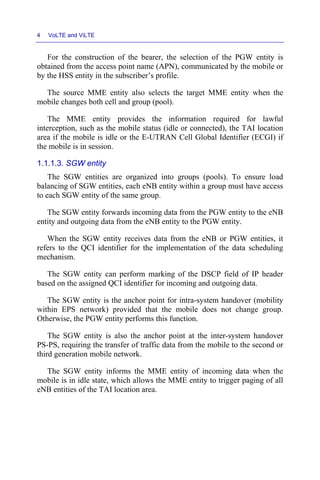
  • 84.
    54 VoLTE andViLTE The header To contains the URI of the UA entity which needs to be registered. The header From contains the URI of the entity performing the registration. This entity is generally identical to that of the header To. A UA entity may receive a redirect (3xx) or failure (4xx) response, whose header Contact contains the place where the registrations need to be sent. 2.6.1.2. INVITE method The INVITE method is used by a user agent client (UAC) to establish a dialog or a session. The definitive (positive or negative) responses need to be acknowledged by the ACK request. The INVITE request may contain a message body describing the media that the UAC entity wants to establish. If this description is absent, it needs to be added to the ACK request. The response 200 OK contains the description of the media that the user agent server (UAS) wants to establish. The media are established with the response 200 OK (if the INVITE request contains the description of the media) or with the ACK request (otherwise). A successful INVITE request establishes a dialog between two UA entities, which continues until a BYE request is sent by one of the parties to terminate the session. The dialog is identified by the header Call-ID and the parameter tag of the headers To (parameter specified by the caller) and From (parameter specified by the callee). The headers To and From are respectively specified with the identities of the callee and the caller. Within the dialog, it is possible for each UA entity to transmit one or more requests, with each request initializing a transaction. It is possible to transmit a new INVITE request (reINVITE) within a dialog, for an established session, to update the characteristics of the media. If the reINVITE request is declined, the session continues with the previous characteristics.
  • 85.
    Signaling Protocols 55 2.6.1.3.ACK method The ACK method is used to acknowledge a definitive response (2xx, 3xx, 4xx, 5xx and 6xx) to the INVITE request. The ACK request may contain a message body describing the media if this description is not given in the INVITE request. 2.6.1.4. BYE method The BYE method is used to terminate an established session. A session is considered to be established when the response 2xx is received following the INVITE request. The BYE request is transmitted by either of the UA entities participating in the session. The UAS sends the response back 2xx if the dialog is known, or else sends the response 481 Dialog/Transaction Does Not Exist. 2.6.1.5. CANCEL method The CANCEL method is used to terminate a session which has not yet been successful. It is generated when a provisional response 1xx has been received, but not a definitive response. Upon receiving a CANCEL request, the PROXY SERVER transmits the request to the next hop (a PROXY SERVER or a UA entity) and confirms the cancellation directly to the source with the response 200 OK. A UAS receiving the CANCEL request confirms cancellation with the response 200 OK and terminates the dialog initiated by the INVITE request with a definitive negative response 487 Request Terminated. 2.6.1.6. PRACK method The PRACK method is used to acknowledge the reception of a provisional response (1xx), with the exception of the response 100 Trying. The PRACK request is transmitted when the provisional response received contains the headers CSeq and Rseq. The PRACK request must include the header RAck containing the values of the headers CSeq and Rseq of the provisional response received.
  • 86.
    56 VoLTE andViLTE The provisional response is transmitted at the expiration of a timer until the reception of the PRACK request. The PRACK request is transmitted at the expiration of a timer until the reception of a 200 OK response. 2.6.1.7. UPDATE method The UPDATE method modifies the characteristics of the media in a session which has not yet been successfully established. If the session has successfully been established (the INVITE request has received a 2xx response), the modification of the characteristics of the media is negotiated by the INVITE method (reINVITE). 2.6.1.8. SUBSCRIBE method The SUBSCRIBE method is used when an UA entity wishes to subscribe to a service whereby he would receive event notifications. The type of event is described in the header Event. The entity which accepts the subscription returns the response 200 OK containing the duration of the subscription in the header Expires. The subscription has to be renewed by transmitting a new SUBSCRIBE request. In the absence of renewal, the subscription terminates automatically. 2.6.1.9. NOTIFY method The NOTIFY method enables an entity to notify the occurrence of an event. This entity needs to receive a response 200 OK which gives the assurance that the request has been properly received. Receipt of the response 481 Dialog/Transaction Does Not Exist automatically terminates the subscription. 2.6.1.10. REFER method The REFER method can be used to transfer media established between two UA entities (e.g. Alice and Bob) to someone else. The REFER request is sent by Alice (transferor) to Carol to resume communication. The header Refer-to of the request contains the SIP URI of Bob (transferee). It
  • 87.
    Signaling Protocols 57 shouldbe noted that in this scenario, communication is not established between Alice and Carol. In a second scenario, Alice establishes an additional communication with Carol. Alice then sends the REFER request to Bob to transfer the communication that she has established with Carol. When Bob notifies her that the transfer has been successful, Alice releases the communication established with Bob. 2.6.1.11. MESSAGE method The MESSAGE method is used to transmit short message service (SMS), contained in a message body, between the two UA entities involved. This message is acknowledged by a response 200 OK. The response must not contain the message body. If the recipient wishes to respond, he must in turn generate a new MESSAGE request. 2.6.2. Responses The response begins with a line containing the version of the protocol, followed by a code for the type of response and a textual description of the code. SIP/2.0 200 OK The different types of responses are detailed in Tables 2.7 to 2.13. Type of response Description 1xx Provisional response 2xx Definitive positive response 3xx Definitive redirect response 4xx Definitive negative response, error due to client 5xx Definitive negative response, error due to network 6xx Definitive negative response, global error Table 2.7. Types of respones
  • 88.
    58 VoLTE andViLTE Response Description 100 Trying The sender is informed that the SIP message has been received. 180 Ringing The caller is informed that the callee is alerted to an incoming call by a ringing tone. 181 Call Is Being Forwarded The caller is informed that its call has been transferred to a different recipient. 183 Session Progress The caller is informed that its call is being processed. Table 2.8. 1xx-type responses Response Description 200 OK The response acknowledges receipt of the request. 202 Accepted The callee has received the request, requiring a different treatment thereafter Table 2.9. 2xx-type responses Response Description 300 Multiple Choices The redirect indicates multiple contacts, the order of which is significant. 301 Moved Permanently The redirect is permanent. 302 Moved Temporarily The redirect is temporary. 305 Use Proxy The redirect is performed to a PROXY SERVER. 380 Alternative Service The redirect points to a different entity (e.g. voicemail service). Table 2.10. 3xx-type responses
  • 89.
    Signaling Protocols 59 ResponseDescription 401 Unauthorized The REGISTER request requires authentication 486 Busy Here The callee is busy 487 Request Terminated The response is transmitted by the UA when it receives a CANCEL request Table 2.11. 4xx-type responses Response Description 500 Server Internal Error An internal error has occurred on the PROXY SERVER or the REGISTRAR, so the request has to be repeated later. 502 Bad Gateway The gateway to a different network has detected a fault. 503 Service Unavailable The service is temporarily unavailable. 504 Gateway Timeout The gateway to a different network cannot relay the request because a timer has run out. 505 Version Not Supported The request is denied because of the version of the SIP. 513 Message Too Large The request is denied because the size of the SIP message is too great. Table 2.12. 5xx-type responses Response Description 600 Busy Everywhere The network is saturated. 603 Decline The call is refused. 604 Does Not Exist Anywhere The SIP URI of the callee does not exist anywhere. 606 Not Acceptable Some aspects of the session are not acceptable. Table 2.13. 6xx-type responses
  • 90.
    60 VoLTE andViLTE 2.7. SDP protocol The session description protocol (SDP) gives a description of the flow for which the establishment of the session is implemented by the SIP. The SDP message constitutes the message body attached to the SIP message. It, generally appears in the INVITE request and in the response 200 OK. The parameters which characterize the media flows are as follows: – the type of media (audio, video, data); – the transport protocol (e.g. RTP); – the format of the media (e.g. the type of codec for voice and video); – the IP address to which the media need to be transmitted; – the number of the destination port. The SDP message is a set of lines of code in the format <type>=<value>. The field <type> contains a character (Table 2.14). The content of the field <value> depends on the type. Field <type> Description v Version of the protocol <value> = <0> o Identifier of the origin and of the session s Name of the session <value> = <-> c Information about the connection t Activity time of the session <valeur> = <0 0> m Description of the media a Complementary attribute of the media Table 2.14. Structure of SDP message
  • 91.
    Signaling Protocols 61 2.8.DIAMETER protocol DIAMETER protocol is used by evolved packet system (EPS), IMS and policy and charging control (PCC) networks to ensure authentication, authorization and accounting. 2.8.1. Application to EPS network Table 2.15 summarizes the DIAMETER messages exchanged over the S6a interface between the MME and HSS entities. Request Response Authentication-Information-Request (AIR) Authentication-Information-Answer (AIA) Update-Location-Request (ULR) Update-Location-Answer (ULA) Purge-UE-Request (PUR) Purge-UE-Answer (PUA) Insert-Subscriber-Data-Request (IDR) Insert-Subscriber-Data-Answer (IDA) Cancel-Location-Request (CLR) Cancel-Location-Answer (CLA) Delete-Subscriber-Data-Request (DDR) Delete-Subscriber-Data-Answer (DDA) Reset-Request (RSR) Reset-Answer (RSA) Notify-Request (NOR) Notify-Answer (NOA) Table 2.15. DIAMETER messages over S6a interface AIR and AIA messages allow an MME entity to retrieve the authentication data of the mobile (RAND, RES, AUTN and KASME). ULR and ULA messages allow: – to provide the HSS entity with the identity of the MME entity who attached the mobile and information on the mobile; – the MME entity to retrieve the profile mobile data.
  • 92.
    62 VoLTE andViLTE PUR and PUA messages are used to inform the HSS entity that MME entity deleted the mobile profile, after a long period of inactivity. CLR and CLA messages allow the HSS entity to delete the mobile profile stored in the MME entity. IDR and IDA messages allow the HSS entity updating mobile profile stored in the MME entity. DDR and DDA messages allow the HSS entity to remove elements of the mobile profile stored in the MME entity. RSR and RSA messages allow informing the MME entity of a restart of the HSS entity. NOR and NOA messages allow to inform the HSS entity on certain events on the mobile. 2.8.2. Application to IMS network Table 2.16 summarizes DIAMETER messages exchanged over Cx interface between, on the one hand, serving call session control function (S-CSCF) or interrogating-CSCF (I-CSCF), while on the other hand, the HSS entity. The same DIAMETER messages are exchanged over the Dx interface between, on the one hand, the S-CSCF or I-CSCF entities, and, on the other hand, the subscription locator function (SLF). Request Response Multimedia-Authentication-Request (MAR) Multimedia-Authentication-Answer (MAA) Server-Assignment-Request (SAR) Server-Assignment-Answer (SAA) Registration-Termination-Request (RTR) Registration-Termination-Answer (RTA) Push-Profile-Request (PPR) Push-Profile-Answer (PPA) User-Authorization-Request (UAR) User-Authorization-Answer (UAA) Location-Information-Request (LIR) Location-Information-Answer (LIA) Table 2.16. DIAMETER messages over Cx interface
  • 93.
    Signaling Protocols 63 MARand MAA messages are exchanged between S-CSCF and HSS entities and allow the S-CSCF entity to retrieve the authentication data of the mobile. SAR and SAA messages are exchanged between S-CSCF and HSS entities and allow the S-CSCF entity to retrieve the mobile profile. RTR and RTA messages are exchanged between S-CSCF and HSS entities which, in turn, allow the HSS entity to deregister the mobile. PPR and PPA messages are exchanged between S-CSCF and HSS entities and allow the HSS entity to update the profile data of the mobile. UAR and UAA messages are exchanged between I-CSCF and HSS entities and allow the I-CSCF entity to retrieve the list of S-CSCF entities that can register the mobile. LIR and LIA messages are exchanged between HSS and I-CSCF entities and allow the I-CSCF entity to retrieve the address of the S-CSCF entity that has registered the mobile. Table 2.17 summarizes DIAMETER messages exchanged over Sh interface between telephony application server (TAS) and the HSS entity. The same DIAMETER messages are exchanged over the Dh interface between the TAS and SLF entities. Request Response User-Data-Request (UDR) User-Data-Answer (UDA) Profile-Update-Request (PUR) Profile-Update-Answer (PUA) Subscribe-Notifications-Request (SNR). Subscribe-Notifications-Answer (SNA) Push-Notification-Request (PNR) Push-Notification-Answer (PNA) Table 2.17. DIAMETER messages over Sh interface
  • 94.
    64 VoLTE andViLTE UDR and UDA messages allow the TAS entity to retrieve profile data stored in the HSS entity. PUR and PUA messages allow the TAS entity to update the profile data stored in the HSS entity. SNR and SNA messages allow the TAS entity to subscribe to notifications relating to modifications of profile data stored in the HSS entity. PNR and PNA messages allow the TAS entity to receive the notification of modifications in the profile data stored in the HSS entity. 2.8.3. Application to PCC function Table 2.18 summarizes DIAMETER messages exchanged over the Gx interface between policy charging and rules function (PCRF) and policy and charging enforcement function (PCEF) hosted in the PGW entity. Request Response Credit-Control-Request (CCR) Credit-Control-Answer (CCA) Re-Auth-Request (RAR) Re-Auth-Answer (RAA) Table 2.18. DIAMETER messages over Gx interface CCR and CCA messages enable the PCEF entity to solicit the PCRF to: – retrieve the rules to apply to the default bearer created by the EPS network; – inform the PCRF entity to the termination of the session on the EPS network. RAR and RAA messages allow the PCRF entity to solicit the PCEF entity in order to provide the rules to be applied for the dedicated bearer.
  • 95.
    Signaling Protocols 65 Table2.19 summarizes DIAMETER messages exchanged over the Rx interface between the PCRF and AF (Application Function) entities. Request Response Authenticate and Authorize Request (AAR) Authenticate and Authorize Answer (AAA) Re-Auth-Request (RAR) Re-Auth-Answer (RAA) Session Termination Request (STR) Session Termination Answer (STA) Abort-Session-Request (ASR) Abort-Session-Answer (ASA) Table 2.19. DIAMETER messages over Rx interface AAR and AAA messages allow the AF entity to provide the characteristics of the media so that the EPS network can establish the dedicated bearer. RAR and RAA messages allow the PCRF entity to notify the AF entity that a number of IP flows were disabled following a deactivation applied at the PCEF entity. STR and STA messages allow the AF entity to inform the session is finished, so that the EPS network releases the bearer dedicated. ASR and ASA messages allow the PCRF entity to notify the AF entity that session on the EPS network is complete, for example as a result of the loss of coverage of the mobile. DIAMETER messages exchanged over R9 interface between home PCRF (H-PCRF) and visited PCRF (V-PCRF) are identical to the messages exchanged over Gx and Rx interfaces. Table 2.20 summarizes DIAMETER messages exchanged over the Gz interface between the PCEF entity and offline charging system (OFCS).
  • 96.
    66 VoLTE andViLTE The same DIAMETER messages are exchanged over the Rf interface between, on the one hand, the entities of the IMS network, and, on the other hand, the OFCS entity. Request Response Accounting-Request (ACR) Accounting-Answer (ACA) Table 2.20. DIAMETER messages over Gz interface ACR and ACA messages enable the PCEF entity to inform the OFCS entity periodically on the consumption of resources in the case of post-paid service. Table 2.21 summarizes DIAMETER messages exchanged over Gy interface between the PCEF entity and online charging system (OCS). Request Response Credit-Control-Request (CCR) Credit-Control-Answer (CCA) Re-Auth-Request (RAR) Re-Auth-Answer (RAA) Abort-Session-Request (ASR) Abort-Session-Answer (ASA) Table 2.21. DIAMETER messages over Gy interface The same DIAMETER messages are exchanged over the Ro interface between, on the one hand, media gateway control function (MGCF), IMS- GWF (gateway function) and TAS entities of the IMS network, and, on the other hand, the OCS entity. CCR and CCA messages enable the PCEF entity to recover credit from OCS entity in the case of pre-paid service.
  • 97.
    Signaling Protocols 67 RARand RAA messages allow the OCS entity to initialize a new authentication or new authorization. ASR and ASA messages allow the OCS entity to end the current DIAMETER session.
  • 99.
    3 Basic Procedures 3.1. Attachment Atthe end of the connection procedure, the mobile starts the attachment procedure to the evolved packet system (EPS) which comprises the following steps: – the mutual authentication between user equipment (UE) and mobility management entity (MME) corresponding to the AKA (Authentication and Key Agreement) mechanism; – the security of non-access stratum (NAS) messages; – the location of the mobile related to the tracking area identity (TAI) and to the E-UTRAN cell global identifier (ECGI); – the establishment of a default bearer. In the case where the voice or video conversational call is supported by the EPS network, a default bearer (QCI = 5) is established for transporting the signaling exchanged between the mobile and the IP multimedia sub-system (IMS); – the granting of a globally unique temporary identity (GUTI). The UE mobile attachment procedure to the EPS network is described in Figure 3.1: 1) The attachment procedure is triggered by the UE entity when it sends to the eNB entity the EMM ATTACH REQUEST message containing the international mobile subscriber identity (IMSI) of the mobile. VoLTE and ViLTE: Voice and Conversational Video Services over the 4G Mobile Network, First Edition. André Perez. © ISTE Ltd 2016. Published by ISTE Ltd and John Wiley & Sons, Inc.
  • 100.
    70 VoLTE andViLTE Figure 3.1. Mobile attachment to EPS network The EMM ATTACH message carries the ESM PDN CONNECTIVITY REQUEST message. The EMM ATTACH REQUEST message is carried by the RRC ConnectionSetupComplete message on the LTE-Uu radio interface and the S1-AP INITIAL UE MESSAGE message on the S1-MME interface. SGW MME eNB UE PGW PCRF HSS EMM ATTACH REQUEST ESM PDN CONNECTIVITY REQUEST RRC ConnectionSetupComplete S1-AP INITIAL UE MESSAGE 1 DIAMETER AIR 2 DIAMETER AIA 3 EMM AUTHENTICATION REQUEST 4 EMM AUTHENTICATION RESPONSE 5 EMM SECURITY MODE COMMAND 6 EMM SECURITY MODE COMPLETE 7 8 DIAMETER ULA 9 DIAMETER ULR GTPv2-C CREATE SESSION REQUEST 10 GTPv2-C CREATE SESSION REQUEST 11 DIAMETER CCR 12 13 DIAMETER CCA 14 GTPv2-C CREATE SESSION RESPONSE 15 GTPv2-C CREATE SESSION RESPONSE ESM ACTIVATE DEFAULT EPS BEARER CONTEXT REQUEST EMM ATTACH ACCEPT S1-AP INITIAL CONTEXT SETUP REQUEST RRC ConnectionReconfiguration 16 RRC SecurityModeCommand 17 RRC SecurityModeComplete 18 ESM ACTIVATE DEFAULT EPS BEARER CONTEXT ACCEPT EMM ATTACH COMPLETE 19 RRC ConnectionReconfigurationComplete S1-AP INITIAL CONTEXT SETUP RESPONSE 20 GTPv2-C MODIFY BEARER REQUEST 21 GTPv2-C MODIFY BEARER RESPONSE
  • 101.
    Basic Procedures 71 TheS1-AP UE INITIAL MESSAGE message contains the identities of TAI and ECGI. 2) Upon receipt of the EMM ATTACH REQUEST message, the MME entity requests the home subscriber server (HSS) entity for the cryptographic data of the mobile in the DIAMETER AIR (Authentication-Information- Request) message. 3) The HSS entity generates cryptographic data using a random number RAND and the key Ki of the mobile and sends them to the MME entity in the DIAMETER AIA (Authentication-Information-Answer) message. The cryptographic data contain the random number (RAND), the mobile authentication code (RES), the network authentication code (AUTN) and the KASME key. The MME entity derives the KASME key to generate the CKNAS, IKNAS and KeNB keys: – the CKNAS key is used to encrypt the NAS message; – the IKNAS key is used to control the integrity of the NAS message; – the KeNB key is transferred to the eNB entity. 4) The MME entity transmits the EMM AUTHENTICATION REQUEST message containing the random number (RAND) and the network authentication code (AUTN) to the mobile. The mobile calculates locally from its secret Ki stored in the universal services identity module (USIM) of its universal integrated circuit card (UICC) and the RAND random number received, the key KASME, its authentication code (RES) and that of the network (AUTN) which it compares to the value received. If the two values are identical, the network is authenticated. 5) The mobile responds to the MME entity with the EMM AUTHENTICATION RESPONSE message containing the RES authentication code. The MME entity compares the RES values received from the mobile and HSS entity. If the values are the same, the mobile is authenticated.
  • 102.
    72 VoLTE andViLTE 6) The NAS signaling security setting is enabled by the MME entity sending the EMM SECURITY MODE COMMAND message controlled with the integrity key IKNAS. This message contains algorithms to derive the KASME key. The mobile derives the KASME key to generate the CKNAS, IKNAS and KeNB keys and checks the integrity of the EMM SECURITY MODE COMMAND message. 7) The mobile responds with the EMM SECURITY MODE COMPLETE message encrypted with the CKNAS key and controlled with integrity key IKNAS. After the mutual authentication phase and the security of NAS messages, the MME entity registers the mobile with the HSS entity. 8) The MME entity sends the DIAMETER Update-Location-Request (ULR) message to the HSS entity to register the mobile and obtain its service profile. The HSS entity records the identity of the MME entity which attached the mobile and the identity of the TAI location area. 9) The HSS entity responds to the MME entity with the DIAMETER Update-Location-Answer (ULA) message that contains the profile of the mobile: – the authorized access point names (APN); – the characteristics of quality of service (QOS) for each default bearer that must be established. The MME entity selects the serving gateway (SGW) entity in its group and the PDN gateway (PGW) entity from a domain name server (DNS) resolution of the APN. 10) The MME entity sends the GTPv2-C CREATE SESSION REQUEST message to create a context at the SGW entity. The GTPv2-C CREATE SESSION REQUEST message contains the IP address of the PGW entity, the APN and the default bearer profile.
  • 103.
    Basic Procedures 73 11)The SGW entity sends the GTPv2-C CREATE SESSION REQUEST message to create a context at the PGW entity. The GTPv2-C CREATE SESSION REQUEST message contains the tunnel endpoint identifier (TEID) that the PGW entity will use at the GPRS tunneling protocol user plane (GTP-U) level for the S5 bearer. 12) The PGW entity sends to the policy and charging rules function (PCRF) the DIAMETER Credit-Control-Request (CCR) message for authorization to open the default bearer. The PCRF entity compares the profile of the mobile with the rules defined for the network and stored in the subscription profile repository (SPR) database. 13) The PCRF entity responds to the PGW entity by a DIAMETER Credit-Control-Answer (CCA) message containing the rules to be applied to the default bearer (filter parameters and charging mode). 14) The PGW entity responds to the SGW entity by a GTPv2-C CREATE SESSION RESPONSE message which contains the following information: – the TEID identifier that the SGW entity will use at the GTP-U protocol level for the S5 bearer; – the mobile configuration (IP address of the mobile, IP address of its DNS server). 15) The SGW entity responds to the MME entity with a GTPv2-C CREATE SESSION RESPONSE which contains the following information: – the TEID identifier that the eNB entity will use at the GTP-U protocol level for the S1 bearer; – the mobile configuration. 16) The MME entity responds to the mobile with the EMM ATTACH ACCEPT message containing the following information: – the mobile configuration; – its GUTI temporary identity.
  • 104.
    74 VoLTE andViLTE The EMM ATTACH ACCEPT message carries the ESM ACTIVATE DEFAULT EPS BEARER CONTEXT REQUEST message. The EMM ATTACH ACCEPT message is carried by the S1-AP INITIAL CONTEXT SETUP REQUEST message on the S1-MME interface and by the RRC ConnectionReconfiguration message on the LTE-Uu radio interface. The S1-AP INITIAL CONTEXT SETUP REQUEST message allows for the creation of the mobile context at the eNB entity level and contains the following information: – the TEID identifier assigned by the SGW entity; – the QoS parameters; – the KeNB key derived from the KASME key. The eNB entity derives the key for creating the following keys: – the KRRCenc key for RRC message encryption; – the KRRCint key for RRC message integrity control; – the KUPenc key for traffic encryption. The RRC ConnectionReconfiguration message initializes mounting of the data radio bearer (DRB). 17) The eNB entity requests the mobile to secure the radio interface with the RRC SecurityModeCommand message which is controlled with the integrity key KRRCint and contains algorithms that allow the mobile to derive the KeNB key. The mobile derives the KeNB key to generate the keys KRRCenc, KRRCint and KUPenc, and checks the integrity of the RRC SecurityModeCommand message. 18) The mobile confirms the establishment of the keys to the eNB entity with the RRC SecurityModeComplete message which is controlled with the integrity key KRRCint. The messages of the last two steps are interposed between the reception of the S1-AP INITIAL CONTEXT SETUP REQUEST message and the
  • 105.
    Basic Procedures 75 transmissionof the RRC ConnectionReconfiguration message by the eNB entity. 19) The mobile confirms receipt of the EMM ATTACH REQUEST message by sending the EMM ATTACH COMPLETE message. The EMM ATTACH COMPLETE message carries the ESM ACTIVATE DEFAULT EPS BEARER CONTEXT ACCEPT message. The EMM ATTACH COMPLETE message is carried by the RRC ConnectionReconfigurationComplete message on the LTE-Uu radio interface and by the S1-AP INITIAL CONTEXT SETUP RESPONSE message on the S1-MME interface. The S1-AP INITIAL CONTEXT SETUP RESPONSE message contains the TEID identifier which the SGW entity will use at the GTP-U protocol level for the S1 bearer. The RRC ConnectionReconfigurationComplete message acknowledges the reception of the RRC ConnectionReconfiguration message. 20) The MME entity transfers the TEID identifier received from the eNB entity to the SGW entity in the GTPv2-C MODIFY BEARER REQUEST message. 21) The SGW entity acknowledges the message received by the GTPv2-C MODIFY BEARER RESPONSE message. 3.2. Registration The registration process to the IMS network includes the following steps: – mutual authentication between the mobile and the serving call session control function (S-CSCF); – establishment of an IPSec security association between the mobile and the P-CSCF entity (proxy-CSCF); – registration by the S-CSCF entity of the correspondence between the IP address of the mobile and its uniform resource identifier (URI); – subscription by the mobile and the P-CSCF entity for mobile registration events;
  • 106.
    76 VoLTE andViLTE – notification by the S-CSCF entity of the events concerning the registration of the mobile. The registration process to the IMS network is shown in Figure 3.2. Figure 3.2. Mobile registration to IMS network S-CSCF I-CSCF P-CSCF UA TAS HSS SIP REGISTER 1 SIP REGISTER 2 3 DIAMETER UAR DIAMETER UAA 4 SIP REGISTER 5 6 DIAMETER MAR DIAMETER MAA 7 SIP 401 Unauthorized 8 SIP 401 Unauthorized 9 SIP 401 Unauthorized 10 11 SIP REGISTER 12 13 DIAMETER LIR DIAMETER LIA 14 SIP REGISTER 15 16 DIAMETER SAR DIAMETER SAA 17 SIP 200 OK 18 19 20 SIP 200 OK SIP 200 OK 21 SIP REGISTER SIP 200 OK 22 DIAMETER UDR 23 DIAMETER UDA 24 25 SIP SUBSCRIBE 26 SIP SUBSCRIBE 27 SIP 200 OK 28 SIP 200 OK 29 SIP SUBSCRIBE 30 SIP 200 OK SIP SUBSCRIBE 31 SIP 200 OK 32 33 SIP NOTIFY 34 SIP NOTIFY SIP 200 OK 35 36 SIP 200 OK SIP NOTIFY 37 38 SIP 200 OK 39 SIP NOTIFY 40 SIP 200 OK SIP REGISTER
  • 107.
    Basic Procedures 77 1)Alice’s user agent (UA) sends to the P-CSCF entity an initial REGISTER request containing her private identity (alice_private@homeA.net) in the parameter username in the header Authorization. The header To contains the public identity of Alice’s UA entity (sip: alice@homeA.net). The header Contact contains the IP address of Alice’s UA entity. The header Security-Client contains the parameters defining the security association IPSec established with the P-CSCF entity. The headers Require and Proxy-Require contain the value sec- agree, indicating that the security mechanism based on IPSec is required. The header Proxy-Require is addressed to the P-CSCF entity. The header Require is addressed to the S-CSCF entity in case the request is transmitted directly to it. REGISTER sip:ims.mnc01.mcc208.3gppnetwork.org SIP/2.0 ... To: <sip:alice@homeA.net> Contact: <sip:192.0.2.101> Authorization: Digest username="alice_private@homeA.net", realm=" ims.mnc01.mcc208.3gppnetwork.org ", nonce="", uri="sip:ims.mnc01.mcc208.3gppnetwork.org", response="" Security-Client: ipsec-3gpp; alg=hmac-sha-1-96; spi- c=23456789; spi-s=12345678; port-c=2468; port-s=1357 Require: sec-agree Proxy-Require: sec-agree ... 2) The P-CSCF entity transfers the REGISTER message to the I-CSCF (Interrogating-CSCF) entity, including its identity in the header Path. The P-CSCF entity can find the IP address of the I-CSCF entity by doing a domain name system (DNS) resolution on the basis of the domain name of Alice’s UA entity.
  • 108.
    78 VoLTE andViLTE The P-CSCF entity provides the type of mobile network and the identity of the cell in the header P-Access-Network-Info. This information is provided by the PCRF entity. The P-CSCF inserts the header Require containing the value path to ensure that the S-CSCF (Serving-CSCF) entity will take account of the header Path. If the S-CSCF entity does not support this header, it sends back a response 420 Bad extension. The P-CSCF entity declares in the parameter integrity-protected of the header Authorization that security has not been established with the UA entity. The P-CSCF entity removes the headers Require and Proxy- Require which contained the sec-agree because IPSec security will be implemented by the P-CSCF entity. REGISTER sip:ims.mnc01.mcc208.3gppnetwork.org SIP/2.0 ... Path: <sip:pcscf@homeA.net;lr> Require: path Authorization: Digest username="alice_private@homeA.net", realm=" ims.mnc01.mcc208.3gppnetwork.org", nonce="", uri="sip:ims.mnc01.mcc208.3gppnetwork.org ", response="", integrity-protected="no" ... 3) I-CSCF entity transmits to the HSS entity the DIAMETER UAR (User-Authorization-Request) message to retrieve the list of S-CSCF entities that can be assigned to the UA entity. 4) I-CSCF entity performs the selection of an S-CSCF entity to which it forwards the REGISTER request from the list of S-CSCF entities received in the DIAMETER User-Authorization-Answer (UAA) message. 5) The I-CSCF entity replaces the initial URI (sip:ims. mnc01.mcc208.3gppnetwork.org) with that of the S-CSCF (sip:scscf.homeA.net) and sends the REGISTER request to the S- CSCF entity selected. REGISTER sip:scscf.homeA.net SIP/2.0 ...
  • 109.
    Basic Procedures 79 6)The S-CSCF entity transmits to the HSS entity the DIAMETER MAR (Multimedia-Authentication-Request) message to recover the authentication data of the mobile. 7) The S-CSCF entity receives from the HSS entity the DIAMETER MAA (Multimedia-Authentication-Answer) message containing the random number (RAND), the mobile authentication code (RES), the network authentication code (AUTN), the integrity key (IK) and the cipher key (CK) for establishing the IPSec security association. At this stage, the identity of the S-CSCF entity is registered in the HSS entity, and that of the P-CSCF entity in the S-CSCF entity. 8) The S-CSCF entity responds with a 401 Unauthorized message containing the random number (RAND), the network authentication code (AUTN), the integrity key (IK) and the cipher key (CK). The SIP 401 Unauthorized response is transmitted to the I-CSCF entity whose identity is contained in the first Via header. SIP/2.0 401 Unauthorized ... WWW-Authenticate: Digest realm="ims.mnc01.mcc208.3gppnetwork.org ", nonce=base64(RAND + AUTN + server specific data), algorithm=AKAv1-MD5, ik="00112233445566778899aabbccddeeff", ck="ffeeddccbbaa11223344556677889900" ... 9) After removing the Via header containing its identity, the I-CSCF entity forwards the response to the P-CSCF entity whose identity is contained in the first Via header. 10) After removing the Via header containing its identity and the keys IK and CK from the header WWW-Authenticate, the P-CSCF entity transfers the response to the Alice’s UA entity (or Bob’s) whose identity is contained in the first Via header. In the header Security-Server, the P-CSCF entity indicates the parameters of the security association IPSec established with Alice’s UA entity.
  • 110.
    80 VoLTE andViLTE SIP/2.0 401 Unauthorized ... WWW-Authenticate: Digest realm="ims.mnc01.mcc208.3gppnetwork.org ", nonce=base64(RAND + AUTN + server specific data), algorithm=AKAv1-MD5 Security-Server: ipsec-3gpp; q=0.1; alg=hmac-sha-1-96; spi-c=98765432; spi-s=87654321; port-c=8642; port-s=7531 ... Upon receiving a 401 Unauthorized message, the mobile retrieves the key Ki from the IMS services identity module (ISIM) contained in the UICC card, calculates locally from the random number (RAND) received, the authentication code AUTN and RES and the keys IK and CK. 11) If the authentication code calculated, AU is identical to that received, the IMS network is authenticated and the Alice’s UA entity (or Bob’s) sends to the P-CSCF entity a second SIP REGISTER request comprising its identity private, the authentication code RES answer in parameter response of the Authorization header. The REGISTER request, in the header Security-Verify, includes the security data received in the header Security-Server in the response 401 Unauthorized. REGISTER sip:ims.mnc01.mcc208.3gppnetwork.org SIP/2.0 ... Authorization: Digest username="alice_private@homeA.net", realm="ims.mnc01.mcc208.3gppnetwork.org", nonce=base64(RAND + AUTN + server specific data), algorithm=AKAv1-MD5, uri="sip:ims.mnc01.mcc208.3gppnetwork.org", response="6629fae49393a05397450978507c4ef1" Security-Client: ipsec-3gpp; alg=hmac-sha-1-96; spi- c=23456789; spi-s=12345678; port-c=2468; port-s=1357 Security-Verify: ipsec-3gpp; q=0.1; alg=hmac-sha-1-96; spi-c=98765432; spi-s=87654321; port-c=8642; port-s=7531 ... 12) The P-CSCF entity transfers the message REGISTER to the I-CSCF entity.
  • 111.
    Basic Procedures 81 13)I-CSCF entity transmits to the HSS entity the DIAMETER LIR (Location-Information-Request) message to retrieve the IP address of S- CSCF entity. 14) The HSS entity provides the IP address of the S-CSCF entity in the DIAMETER LIA (Location-Information-Answer) message. 15) I-CSCF entity sends to the S-CSCF the REGISTER request. The S-CSCF entity compares the value of the RES received from the UA entity with that of the RES received from the HSS entity. If the two values are identical, the mobile is authenticated. 16) The S-CSCF entity sends to the HSS entity the DIAMETER SAR (Server-Assignment-Request) message to retrieve the mobile profile. 17) The HSS entity transmits the profile of the mobile in a DIAMETER SAA (Server-Assignment-Answer) message. The mobile profile contains the logic to invoke the telephony application server (TAS) that provides supplementary telephone services and authorized media. The S-CSCF entity responds to the mobile with a SIP 200 OK message including its identity in the Service Route header. The registration is effective for a duration indicated in the parameter expires in the header Contact. The mobile has to renew its registration before expiration of that time, by way of the same procedure as for initial registration. The S-CSCF entity indicates, in the header P-Associated-URI, the identities registered implicitly, in addition to that indicated in the header to. SIP/2.0 200 OK ... Contact: <sip:192.0.2.101>;expires=600000 P-Associated-URI: <sip:+1-212-555-1111@homeA.net; user=phone> ...
  • 112.
    82 VoLTE andViLTE 18), 19), 20) The SIP 200 OK response follows the reverse path taken by the REGISTER request, through the Via headers. 21) The S-CSCF entity registers the mobile with the TAS entity. 22) The TAS entity sends to the HSS entity the DIAMETER UDR (User- Data-Request) message to retrieve the mobile service data. 23) The answer is provided by the DIAMETER UDA (User-Data- Answer) message. 24) The TAS entity responds with 200 OK message to the SIP REGISTER request. 25) Alice’s UA entity (or Bob’s) generates a SUBSCRIBE request to receive notifications for registration. The identity of the S-CSCF entity of the domain (homeA.net), contained in the header Route, is learned during the registration of Alice’s UA entity, information from the header Service Route. If Alice’s UA entity has multiple identities, it indicates in the header P-Preferred-Identity which among them is the preferred one (sip:alice@homeA.net). Alice’s UA entity defines in the header Event the type of event which it wishes to subscribe (value reg for registration). Alice’s UA entity publishes the duration of the subscription in the header Expires. The value must not be greater than that indicated during registration in the response 200 OK of the REGISTER request. Alice’s UA entity defines the format of the notifications of registration events in the header Accept (application/reginfo+xml). 26) The P-CSCF entity removes the headers Route containing its own identity and replaces the header P-Preferred-Identity with the header P-Asserted-Identity containing Alice’s asserted URI identity.
  • 113.
    Basic Procedures 83 TheP-CSCF adds the headers Via and Record Route containing its own identity. The header Record Route enables us to construct the route taken by subsequent requests. The S-CSCF authorizes the subscription with the response 200 OK because it trusts the content of the header P-Asserted-Identity inserted by the P-CSCF and because Alice has subscribed to the registration event service. 27), 28) The response 200 OK is routed through the addresses contained in the headers Via. 29) Receipt of the message 200 OK triggers a subscription on the part of the P-CSCF entity to discover the state of registration of Alice’s UA entity. 30) The S-CSCF entity responds with 200 OK. 31) The 200 OK response to the REGISTER message triggers the SUBSCRIBE request from the TAS entity to have knowledge of the registration status of Alice’s UA entity (or Bob’s). 32) The S-CSCF entity responds with 200 OK. 33), 34) The S-CSCF entity notifies Alice’s UA entity of the registration of its identities by sending a NOTIFY request. The S-CSCF reports the state of the subscription in the header Subscription-State (value active) and its duration in the parameter expires. The notification of registration elements is produced in an XML (eXtensible markup language) document of type reginfo attached to the SIP (session initiation protocol) message. 35), 36) The 200 OK response of the mobile is routed from addresses contained in the Via headers. 37) The S-CSCF entity notifies to the P-CSCF entity the registration status of Alice’s UA entity (or Bob’s) by sending a NOTIFY request. 38) The P-CSCF entity responds with 200 OK.
  • 114.
    84 VoLTE andViLTE 39) The S-CSCF entity notifies to the TAS entity the registration status of Alice’s UA entity (or Bob’s) by sending a NOTIFY request. 40) The TAS entity responds with 200 OK. 3.3. Deregistration The deregistration process to the IMS network is described in Figure 3.3. 1), 2) The deregistration phase starts when the Alice’s UA entity (or Bob’s) transmits a REGISTER message which parameter expires of the header Contact has a zero value. 3) The I-CSCF entity transmits to the HSS entity the DIAMETER LIR message to retrieve the IP address of S-CSCF. Figure 3.3. Mobile deregistration to IMS network S-CSCF I-CSCF P-CSCF UA TAS HSS SIP REGISTER 1 SIP REGISTER 2 3 DIAMETER LIR DIAMETER LIA 4 SIP REGISTER 5 6 DIAMETER SAR DIAMETER SAA 7 SIP NOTIFY 8 9 10 11 SIP 200 OK 16 17 18 SIP 200 OK SIP 200 OK SIP NOTIFY 14 15 12 SIP NOTIFY 13 SIP NOTIFY SIP 200 OK SIP 200 OK SIP 200 OK SIP 200 OK
  • 115.
    Basic Procedures 85 4)The HSS entity provides the IP address of the S-CSCF entity in the DIAMETER LIA message. 5) The I-CSCF entity sends to the S-CSCF entity the REGISTER request. 6) The S-CSCF entity transmits to the HSS entity the DIAMETER SAR message informing about deregistration of the mobile. The HSS entity still retains the identity of the S-CSCF entity to allow the use of services when the mobile is not registered, such as call forwarding to voicemail. 7) The HSS entity transmits the DIAMETER SAA message to acknowledge the previous request. 8), 9) The S-CSCF entity informs Alice’s UA entity (or Bob’s) of its deregistration in a NOTIFY message. 10), 11) The 200 OK message is a response to the NOTIFY request. 12) The S-CSCF entity informs the TAS entity about the deregistration of Alice’s UA entity in a NOTIFY message. 13) The 200 OK message is a response to the NOTIFY request. 14) The S-CSCF entity informs the P-CSCF entity about the deregistration of Alice’s UA entity in a NOTIFY message. 15) The 200 OK message is a response to the NOTIFY request. 16), 17), 18) The 200 OK message is a response to the REGISTER request. 3.4. Detachment The detachment procedure to the EPS network is described in Figure 3.4. 1) Upon receipt of 200 OK response to the REGISTER request for deregistration, Alice’s UA entity (or Bob’s) starts the detachment phase and passes to the MME entity the EMM DETACH REQUEST message.
  • 116.
    86 VoLTE andViLTE EMM ATTACH REQUEST message carries ESM PDN DISCONNECT REQUEST message. Figure 3.4 Mobile detachment to EPS network EMM ATTACH REQUEST message is carried by RRC ULInformation Transfer message on the radio interface LTE-Uu and S1-AP UPLINK NAS TRANSPORT message on the S1-MME interface. 2) The MME entity sends to the SGW entity the GTPv2-C DELETE SESSION REQUEST message to deactivate the default bearer used for telephone signaling. 3) The SGW entity responds with the GTPv2-C DELETE SESSION RESPONSE message. 4) The SGW entity sends to the PGW entity the GTPv2-C DELETE SESSION REQUEST message to deactivate the default bearer. 5) The PGW entity responds with the GTPv2-C DELETE SESSION RESPONSE message. 6) The PGW entity sends to the PCRF entity the DIAMETER CCR message to inform about the deactivation of the default bearer. SGW MME eNB UE PGW PCRF HSS EMM DETACH REQUEST ESM PDN DISCONNECT REQUEST RRC ULInformationTransfer S1-AP UPLINK NAS TRANSPORT 1 GTPv2-C DELETE SESSION REQUEST 2 DIAMETER CCR 6 7 DIAMETER CCA 3 GTPv2-C DELETE SESSION RESPONSE ESM DEACTIVATE EPS BEARER CONTEXT REQUEST EMM DETACH ACCEPT S1-AP UE CONTEXT RELEASE COMMAND RRC ConnectionRelease 8 9 S1-AP UE CONTEXT RELEASE COMPLETE GTPv2-C DELETE SESSION REQUEST 4 5 GTPv2-C DELETE SESSION RESPONSE
  • 117.
    Basic Procedures 87 7)The PCRF entity responds to the PGW entity with the DIAMETER CCA message. 8) The MME entity confirms the detachment to Alice’s UA entity in the EMM DETACH ACCEPT message. EMM DETACH ACCEPT message carries ESM DEACTIVATE EPS BEARER CONTEXT REQUEST message. EMM DETACH ACCEPT message is carried by RRC Connection Release message on the radio interface LTE-Uu and S1-AP UE CONTEXT RELEASE COMMAND message on the S1-MME interface. 9) The eNB entity confirms the context deactivation in S1-AP EU CONTEXT RELEASE COMPLETE message. 3.5. Establishment of VoLTE session The establishment of the VoLTE session includes the following operations: – the negotiation of the characteristics of real-time transport protocol (RTP) streams via session description protocol (SDP); – the establishment of dedicated bearer to the RTP stream. 3.5.1. Originating side The procedure for establishing the VoLTE session on the outgoing call is described in Figure 3.5. 1) Alice’s UA entity generates an initial INVITE request sent to Bob’s URI (sip:bob@homeB.net). Alice’s UA entity specifies in the header Require that Bob’s UA entity must support the precondition of resource reservation before activating the ringing of the telephone. Alice’s UA entity indicates in the header Supported that it supports the acknowledgement of provisional responses of 1xx type (value 100rel).
  • 118.
    88 VoLTE andViLTE Figure 3.5. Establishment of VoLTE session: originating side Alice’s UA entity indicates in the header Allow the different supported methods (INVITE, ACK, CANCEL, BYE, PRACK, UPDATE, REFER and MESSAGE). SGW MME eNB UE PGW PCRF P-CSCF S-CSCF 1 SIP INVITE 2 SIP 100 Trying SIP INVITE 3 4 SIP 100 Trying HomeB.net SIP INVITE 5 6 SIP 100 Trying 7 SIP 183 Session Progress 8 SIP 183 Session Progress 9 DIAMETER AAR 10 DIAMETER RAR 11 GTPv2-C CREATE BEARER REQUEST 12 GTPv2-C CREATE BEARER REQUEST ESM ACTIVATE DEDICATED EPS BEARER CONTEXT REQUEST S1-AP E-RAB SETUP REQUEST RRC ConnectionReconfiguration 13 ESM ACTIVATE DEDICATED EPS BEARER CONTEXT ACCEPT RRC ConnectionReconfigurationComplete S1-AP E-RAB SETUP RESPONSE 14 15 GTPv2-C CREATE BEARER RESPONSE 16 GTPv2-C CREATE BEARER RESPONSE 17 DIAMETER RAA 18 DIAMETER AAA 19 SIP 183 Session Progress 20 SIP PRACK 21 SIP PRACK 22 SIP PRACK 23 SIP 200 OK 24 SIP 200 OK 25 SIP 200 OK 26 SIP UPDATE 27 SIP UPDATE 28 SIP UPDATE 29 SIP 200 OK 30 SIP 200 OK 31 SIP 200 OK 32 SIP 180 Ringing 33 SIP 180 Ringing 34 SIP 180 Ringing 25 SIP 200 OK 36 SIP 200 OK 37 DIAMETER AAR 38 DIAMETER RAR 39 DIAMETER RAA 40 DIAMETER AAA 41 SIP 180 Ringing SIP ACK SIP ACK SIP ACK SGW MME eNB UE PGW PCRF P-CSCF S-CSCF 1 SIP INVITE 2 SIP 100 Trying SIP INVITE 3 4 SIP 100 Trying SIP INVITE 5 6 SIP 100 Trying 7 SIP 183 Session Progress 8 SIP 183 Session Progress 9 DIAMETER AAR 10 DIAMETER RAR 11 GTPv2-C CREATE BEARER REQUEST 12 GTPv2-C CREATE BEARER REQUEST ESM ACTIVATE DEDICATED EPS BEARER CONTEXT REQUEST S1-AP E-RAB SETUP REQUEST RRC ConnectionReconfiguration 13 ESM ACTIVATE DEDICATED EPS BEARER CONTEXT ACCEPT RRC ConnectionReconfigurationComplete S1-AP E-RAB SETUP RESPONSE 14 15 GTPv2-C CREATE BEARER RESPONSE 16 GTPv2-C CREATE BEARER RESPONSE 17 DIAMETER RAA 18 DIAMETER AAA 19 SIP 183 Session Progress 20 SIP PRACK 21 SIP PRACK 22 SIP PRACK 23 SIP 200 OK 24 SIP 200 OK 25 SIP 200 OK 26 SIP UPDATE 27 SIP UPDATE 28 SIP UPDATE 29 SIP 200 OK 30 SIP 200 OK 31 SIP 200 OK 32 SIP 180 Ringing 33 SIP 180 Ringing 34 SIP 180 Ringing 25 SIP 200 OK 36 SIP 200 OK 37 DIAMETER AAR 38 DIAMETER RAR 39 DIAMETER RAA 40 DIAMETER AAA 42 43 44
  • 119.
    Basic Procedures 89 Alice’sUA entity sends an SDP offer in the initial INVITE request to Bob’s UA entity. The offer lists the media (audio) that Alice wishes to use for that session and lists the different codecs supported as well. Alice’s UA entity indicates in the SDP offer (a=curr:qos local none, a=curr:qos remote none) that the resource reservation has not been established for the local and remote UA entities. Alice’s UA entity indicates in the SDP offer (a=des:qos mandatory local sendrecv) that the precondition of resource reservation is mandatory for the local UA entity. Alice’s UA entity indicates in the SDP offer (a=des:qos none remote sendrecv) that the precondition of resource reservation is unknown for the remote UA entity. INVITE sip:bob@homeB.net SIP/2.0 ... Require: precondition, sec-agree Proxy-Require: sec-agree Supported: 100rel Allow: INVITE, ACK, CANCEL, BYE, PRACK, UPDATE, REFER, MESSAGE ... Content-Type: application/sdp Content-Length: (…) ... a=curr:qos local none a=curr:qos remote none a=des:qos mandatory local sendrecv a=des:qos none remote sendrecv ... 2) The P-CSCF entity responds to the mobile with 100 Trying message that allows for blocking the retransmission timer of the INVITE request. 3) The P-CSCF entity removes the header Route containing its own identity.
  • 120.
    90 VoLTE andViLTE The P-CSCF entity replaces the header P-Preferred-Identity with the header P-Asserted-Identity containing the asserted URI of Alice. The P-CSCF entity adds the headers Via and Record Route containing its own identity. The header Record Route enables us to construct the route to be taken by subsequent requests. The P-CSCF entity forwards the request to the S-CSCF entity whose identity is contained in the header Route. 4) The S-CSCF entity responds to P-CSCF entity with 100 Trying message that allows for blocking the retransmission timer of the INVITE request. 5) The S-CSCF entity removes the header Route containing its own identity. The S-CSCF entity adds the headers Via and Record Route containing its own identity. The HSS entity has provided, during registration, the S-CSCF entity with the user profile, containing the types of media authorized by the service offered. The S-CSCF entity examines the information contained in the SDP message carried by the INVITE request. If the S-CSCF finds that these do not conform to the service profile, it sends to Alice’s UA entity a negative response 488 Not Acceptable Here. The S-CSCF entity retrieves the destination domain name (homeB.net) from Bob’s URI and forwards the INVITE request to the entity in charge of the interconnection with the domain (homeB.net). 6) The homeB.net domain responds to S-CSCF entity with 100 Trying message that allows for blocking the retransmission timer of the INVITE request. 7) In the response 183 Session Progress, Bob’s UA entity gives an SDP response in which it chooses a type of codec from those proposed by Alice’s UA entity.
  • 121.
    Basic Procedures 91 The183 Session Progress response contains in the header Record Route IP addresses of entities that the subsequent requests must pass through. The 183 Session Progress response also indicates that a resource reservation is also required of Bob's side before establishing a session. ... a=curr:qos local none a=curr:qos remote none a=des:qos mandatory local sendrecv a=des:qos mandatory remote sendrecv ... 8) The S-CSCF entity forwards the 183 Session Progress response to the P-CSCF entity. The identity of the P-CSCF entity assigned to Bob’s UA entity was learned during the registration (information contained in the Path header). The establishment of a dedicated bearer, assigned to voice, is coupled with the establishment of a default bearer and assigned to telephone signaling. This dedicated bearer is coupled with the default bearer assigned to telephone signaling, in that the bearer terminations are the same for both types of bearer. The establishment of the dedicated bearer is triggered by the P-CSCF entity from the analysis of telephone signaling exchanged between the terminals that want to establish a telephone call. 9) The P-CSCF entity sends to the PCRF entity the DIAMETER AAR (authenticate and authorize request) message to verify that the media settings are authorized by the EPS network and to trigger the establishment of dedicated bearer. 10) The PCRF entity consults its SPR database to retrieve the level of QoS to apply (QCI = 1) and transmits the DIAMETER RAR (Re-Auth- Request) message to the PGW entity containing the characteristics of the stream to establish.
  • 122.
    92 VoLTE andViLTE 11) The PGW entity sends to the SGW entity the GTPv2-C CREATE BEARER REQUEST message containing the TEID identifier of the S5 bearer that the SGW entity will need to use in the GTP-U header when sending traffic to the PGW entity. 12) The SGW entity sends to the MME entity the GTPv2-C CREATE BEARER REQUEST message containing the TEID identifier of the S1 bearer that the eNB entity will need to use in the GTP-U header while sending traffic to the SGW entity. 13) The MME entity sends to the mobile the ESM ACTIVATE DEDICATED EPS BEARER CONTEXT REQUEST message carried by the S1-AP E-RAB SETUP REQUEST message on the S1-MME interface and by the RRC ConnectionReconfiguration message on the LTE-Uu interface. The S1-AP E-RAB SETUP REQUEST message contains the TEID identifier that the MME entity has received from the SGW entity. The RRC ConnectionReconfiguration message contains the logical channel identifier (LCID) of the dedicated bearer. 14) The mobile responds to the MME entity by the ESM ACTIVATE DEDICATED EPS BEARER CONTEXT ACCEPT message carried by the RRC ConnectionReconfigurationComplete message on the LTE-Uu interface and by the S1-AP E-RAB SETUP RESPONSE message on the S1-MME interface. The S1-AP E-RAB SETUP RESPONSE message contains the TEID identifier of the S1 bearer that the SGW entity will need to use in the GTP-U header when it sends traffic to the eNB entity. 15) The MME entity responds to the SGW entity by the GTPv2-C CREATE BEARER RESPONSE message containing the TEID identifier that the MME entity has received from the eNB entity. 16) The SGW entity responds to the PGW entity with the C-GTPv2 CREATE BEARER RESPONSE message containing the TEID identifier of the S5 bearer that PGW entity will need to use in the GTP-U header when it sends traffic to the SGW entity.
  • 123.
    Basic Procedures 93 Thededicated bearer has been established at this stage. It will remain blocked by the PGW entity until Bob picks up the call. 17) The PGW entity responds to the PCRF entity with the DIAMETER RAA (Re-Auth Answer) message. 18) The PCRF entity responds to the P-CSCF entity with the DIAMETER AAA (Authenticate-Authorize-Answer) message. 19) The P-CSCF entity forwards the 183 Session Progress response to the Alice’s UA entity. 20), 21), 22) Alice’s entity sends the subsequent PRACK request to acknowledge the provisional response 183 Session Progress. Alice’s UA entity indicates in the Route headers the identities of CSCF entities processing the request, namely P / C-CSCF entities in the domains (homeA.net) and (homeB.net). 23), 24), 25) The 200 OK Message is the response to the PRACK request. 26), 27), 28) When Alice’s UA entity has confirmation of the resource reservation, it indicates this to Bob’s UA entity in an SDP offer (a=curr:qos local sendrecv) contained in an UPDATE request. ... a=curr:qos local sendrecv a=curr:qos remote none a=des:qos mandatory local sendrecv a=des:qos mandatory remote sendrecv ... 29), 30), 31) When Bob’s UA entity has confirmation of the resource reservation, it notifies Alice’s UA entity in an SDP offer contained in the response 200 OK to the UPDATE request. ... a=curr:qos local sendrecv a=curr:qos remote sendrecv a=des:qos mandatory local sendrecv a=des:qos mandatory remote sendrecv ...
  • 124.
    94 VoLTE andViLTE 32), 33), 34) When the resource reservations are effective at both ends, Bob’s telephone can ring and a response 180 Ringing is transmitted to Alice’s UA entity, generating a ring back tone for her. 35), 36) When Bob picks up the phone, the 200 OK response to the INVITE request is sent to the PCSCF entity. 37) The P-CSCF entity sends to the PCRF entity the DIAMETER AAR message to indicate that Bob took the call. 38) The PCRF entity transmits to the PGW entity the RAR DIAMETER message to unblock the dedicated bearer. 39) The PGW entity responds to the PCRF entity with the DIAMETER AAR message. 40) The PCRF entity responds to the P-CSCF entity with the DIAMETER AAA message. 41) The P-CSCF entity forwards the 200 OK response to the INVITE request to Alice’s UA entity, which causes the end of the ring back tone. 42), 43), 44) Alice’s UA entity acknowledges 200 OK response by the subsequent ACK request. 3.5.2. Terminating side The procedure for establishing the VoLTE session on the incoming call is shown in Figure 3.6. 1) The I-CSCF entity of the domain homeB.net receives the INVITE request from the domain homeA.net. 2) The I-CSCF entity responds to the homeA.net domain with 100 Trying message that allows for blocking the retransmission timer of the INVITE request. 3) The I-CSCF entity transmits to the HSS entity the DIAMETER LIR message to retrieve the IP address of S-CSCF which recorded Bob’s UA entity.
  • 125.
    Basic Procedures 95 4)The HSS entity the IP address of the S-CSCF entity in the DIAMETER LIA message. Figure 3.6. Establishment of VoLTE session: terminating side SGW MME eNB UE PGW PCRF P-CSCF S-CSCF I-CSCF SIP INVITE 1 2 SIP 100 Trying HSS DIAMETER LIR 3 4 DIAMETER LIA SIP INVITE 5 6 SIP 100 Trying SIP INVITE 7 8 SIP 100 Trying SIP INVITE 9 10 SIP 100 Trying 11 SIP 183 Session Progress 12 DIAMETER AAR 13 DIAMETER RAR 14 GTPv2-C CREATE BEARER REQUEST 15 GTPv2-C CREATE BEARER REQUEST ESM ACTIVATE DEDICATED EPS BEARER CONTEXT REQUEST S1-AP E-RAB SETUP REQUEST RRC ConnectionReconfiguration 16 ESM ACTIVATE DEDICATED EPS BEARER CONTEXT ACCEPT RRC ConnectionReconfigurationComplete S1-AP E-RAB SETUP RESPONSE 17 18 GTPv2-C CREATE BEARER RESPONSE 19 GTPv2-C CREATE BEARER RESPONSE 20 DIAMETER RAA 21 DIAMETER AAA 22 23 24 SIP 183 Session Progress SIP 183 Session Progress SIP 183 Session Progress 25 SIP PRACK SIP PRACK 26 27 SIP PRACK 28 SIP 200 OK SIP 200 OK 29 30 SIP 200 OK 31 SIP UPDATE SIP UPDATE 32 33 SIP UPDATE 34 SIP 200 OK SIP 200 OK 35 36 SIP 200 OK 37 SIP 180 Ringing 38 39 40 SIP 180 Ringing SIP 180Ringing SIP 180 Ringing 41 SIP 200 OK 42 DIAMETER AAR 43 DIAMETER RAR 44 DIAMETER RAA 45 DIAMETER AAA 47 48 SIP 200 OK SIP 200 OK 46 SIP 200 OK 49 SIP ACK SIP ACK 50 SIP ACK 51 HomeA.net
  • 126.
    96 VoLTE andViLTE 5) The I-CSCF entity adds the header Via, does not add a Record Route and forwards the request to the S-CSCF entity. The subsequent requests, therefore, do not pass through the I-CSCF entity. 6) The S-CSCF entity responds to the I-CSCF entity with 100 Trying message that allows for blocking the retransmission timer of the INVITE request. 7) The S-CSCF entity verifies that the types of media proposed by Alice’s UA entity correspond to the services offered to Bob. The S-CSCF entity adds a header Record Route containing its own identity. The S-CSCF entity modifies the initial request, replacing Bob’s URI with his IP address. The link between the URI and the IP address was created at registration. The S-CSCF entity adds Bob’s URI to the header P-Called-Party- ID so that Bob knows which URI the INVITE request refers to. The S-CSCF entity transfers the request to the P-CSCF entity. The IP address of the P-CSCF entity was learnt at registration (information contained in the header Path). 8) The P-CSCF entity responds to the S-CSCF entity with 100 Trying message that allows for blocking the retransmission timer of the INVITE request. 9) The P-CSCF entity adds a header Record Route containing its own identity and forwards the request to Bob’s UA entity, whose IP address is included in the URI of the request. 10) Bob’s UA entity entity responds to the P-CSCF entity with 100 Trying message that allows for blocking the retransmission timer of the INVITE request. Bob’s UA entity stores the different headers Record Route, which it will later use to route subsequent requests.
  • 127.
    Basic Procedures 97 11)Bob’s UA entity sends a response 183 Session Progress to Alice’s UA entity. The response is routed on the basis of the Via headers received from the request INVITE. The response 183 Session Progress contains the Record Route headers received from the request INVITE. This enables Alice’s UA entity to retrieve the IP addresses of the CSCF entities that need to process the subsequent requests. Bob’s UA entity indicates the value 100rel in the header Require to indicate that the response requires acknowledgement from Alice’s UA entity. To correlate the acknowledgement with the response, Bob’s UA entity inserts the header RSeq. In the response 183 Session Progress, Bob’s UA entity gives an SDP response in which it chooses a type of codec from those proposed by Alice’s UA entity. Bob’s UA entity indicates in the SDP message of the 183 Session Progress response that resource reservation is also necessary on its part before establishing a session. 12) to 21) On receiving of the 183 Session Progress response, the P-CSCF entity initiates the establishment of dedicated bearer. They are identical to messages 9 to 18 described in the preceding paragraph. 22), 23), 24) The 183 Session Progress response is transmitted to the domain homeA.net. 25), 26), 27) Subsequent PRACK request is received from the domain homeA.net, indicating that Alice’s UA entity has acknowledged receiving 183 Session Progress response. 28), 29), 30) The 200 OK message is the response to the PRACK request. 31), 32), 33) Subsequent UPDATE request is received from the domain homeA.net, indicating that the dedicated bearer on the Alice’s side is established. 34), 35), 36) The 200 OK message is the response to the UPDATE request, indicating that the dedicated bearer on the Bob’s side is established.
  • 128.
    98 VoLTE andViLTE 37) to 40) The 180 Ringing response to the initial INVITE request is sent to the domain homeA.net, indicating that the Bob’s phone is ringing. 41) The 200 OK response to the initial INVITE request indicates that Bob picks up his phone. 42) The P-CSCF entity sends the PCRF entity the DIAMETER AAR message to indicate that Bob took the call. 43) The PCRF entity transmits to the PGW entity the DIAMETER RAR message to unblock the dedicated bearer. 44) The PGW entity responds to the PCRF entity with the DIAMETER AAR message. 45) The PCRF entity responds to the P-CSCF entity with the DIAMETER AAA message. 46), 47), 48) The P-CSCF entity forwards the 200 OK response to the INVITE request to the domain homeA.net. 49), 50), 51) The ACK request of the 200 OK response is received from the domain homeA.net. 3.6. Termination of VoLTE session The termination of the session can be triggered by UA, P-CSCF or IMS- GWF entity, using the BYE method. Termination of the session can be initiated by either (Alice’s or Bob’s) UA entity when the communication has finished. The P-CSCF entity can also end the session if the mobile is no longer within radio coverage. The PCRF entity sends this information to the P-CSCF entity by way of a DIAMETER ASR (Abort-Session-Request) message. The IMS-GWF entity is an application server which controls the session in the case of pre-paid use. When the user’s credit is exhausted, the IMS-GWF entity ends the session. Two BYE requests are needed to terminate the session: one request sent to Alice’s UA entity and the second to Bob’s UA entity.
  • 129.
    Basic Procedures 99 3.6.1.Initiated side The procedure for clearing the VoLTE session initiated by the UA entity, at the initiated side, is described in Figure 3.7. Figure 3.7. Termination of VoLTE session: initiated side 1), 2), 3) The release of the session is initiated by Alice’s UA entity (or Bob’s), which forwards the BYE request to the domain homeB.net (or homeA.net). 4) On receipt of the BYE request, the P-CSCF entity informs the PCRF entity for the release of the session in the DIAMETER STR (Session- Termination-Request) message. 5) The PCRF entity requests the PGW entity to release of dedicated bearer in the DIAMETER RAR message. 6) The PGW entity acknowledges the DIAMETER RAR request by the RAR DIAMETER RAA message. 7) The PCRF entity acknowledges the DIAMETER STR request by the DIAMETER STA (Answer-Session-Termination) message. SGW MME eNB UE PGW PCRF P-CSCF S-CSCF HomeB.net 1 SIP BYE 2 SIP BYE 3 SIP BYE 4 DIAMETER STR 5 DIAMETER RAR 6 DIAMETER RAA 7 DIAMETER STA 8 SIP 200 OK 9 SIP 200 OK SIP 200 OK 10 11 GTPv2-C DELETE BEARER REQUEST 12 GTPv2-C DELETE BEARER REQUEST ESM DEACTIVATE DEDICATED EPS BEARER CONTEXT REQUEST S1-AP E-RAB RELEASE COMMAND RRC ConnectionReconfiguration 13 ESM DEACTIVATE DEDICATED EPS BEARER CONTEXT ACCEPT RRC ConnectionReconfigurationComplete S1-AP E-RAB RELEASE RESPONSE 14 15 16 GTPv2-C DELETE BEARER RESPONSE GTPv2-C DELETE BEARER RESPONSE
  • 130.
    100 VoLTE andViLTE 8), 9), 10) Alice’s UA entity (or Bob’s) receives the 200 OK response to the BYE request from the domain homeB.net (or homeA.net). 11) Upon receipt of the DIAMETER RAR message, the PGW entity initiates the removal of dedicated bearer by the GTPv2 C-BEARER DELETE REQUEST message. 12) The SGW entity transmits the GTPv2 C-BEARER DELETE REQUEST message to continue the dedicated bearer release request. 13) The MME entity sends the ESM DEACTIVATE EPS BEARER CONTEXT REQUEST message to Alice’s UA entity (or Bob’s) to inform about the deactivation of the dedicated bearer. The ESM DEACTIVATE EPS BEARER CONTEXT REQUEST message is carried by the RRC ConnectionReconfiguration message on the radio interface LTE-Uu and the S1-AP E-RAB RELEASE COMMAND message on the S1-MME interface. 14) The UA entity confirms the deactivation of the dedicated bearer in the ESM DEACTIVATE EPS BEARER CONTEXT ACCEPT message. The ESM DEACTIVATE EPS BEARER CONTEXT ACCEPT message is carried by the RRC ConnectionReconfigurationComplete message on the radio interface LTE-Uu and the S1-AP E-RAB RELEASE RESPONSE message on the S1-MME interface. 15) The MME entity responds to the SGW entity with the GTPv2-C DELETE BEARER RESPONSE message that acknowledges the release request of the dedicated bearer. 16) The SGW entity responds to the PGW entity with the GTPv2-C DELETE BEARER RESPONSE message that acknowledges the release request of the dedicated bearer. 3.6.2. Received side The procedure for clearing the VoLTE session initiated by the UA entity, at the received side, is described in Figure 3.8.
  • 131.
    Basic Procedures 101 1),2), 3) Bob’s UA entity (or Alice’s) receives the BYE request, from the domain homeA.net (or homeB.net), ending the session. 4) to 7) As described earlier, these messages are used to trigger the release of the dedicated bearer. 8), 9), 10) Bob’s UA entity (or Alice’s) sends the 200 OK response to the BYE request, to the domain homeA.net (or homeB.net). 11) to 16) As described earlier, these messages are used to remove the dedicated bearer. Figure 3.8. Termination of VoLTE session: received side 3.7. Establishment of ViLTE session The procedure for establishing the ViLTE session is identical to that described for the VoLTE session when the SDP protocol associated with the initial INVITE request contains the negotiation of the two media, audio and video, with a proposal for codecs for both media. Similarly, the 183 Session Progress response defines the codec selected among the proposals, for each media. SGW MME eNB UE PGW PCRF P-CSCF S-CSCF HomeA.net 1 SIP BYE SIP BYE 2 3 SIP BYE 4 DIAMETER STR 5 DIAMETER RAR 6 DIAMETER RAA 7 DIAMETER STA 8 SIP 200 OK 9 SIP 200 OK SIP 200 OK 10 11 GTPv2-C DELETE BEARER REQUEST 12 GTPv2-C DELETE BEARER REQUEST ESM DEACTIVATE DEDICATED EPS BEARER CONTEXT REQUEST S1-AP E-RAB RELEASE COMMAND RRC ConnectionReconfiguration 13 ESM DEACTIVATE DEDICATED EPS BEARER CONTEXT ACCEPT RRC ConnectionReconfigurationComplete S1-AP E-RAB RELEASE RESPONSE 14 15 16 GTPv2-C DELETE BEARER RESPONSE GTPv2-C DELETE BEARER RESPONSE
  • 132.
    102 VoLTE andViLTE Upon receipt of the 183 Session Progress response, the P-CSCF entity triggers to the PCRF entity to establish two dedicated bearers: – one dedicated bearer (QCI = 1) for audio flow; – one dedicated bearer (QCI=2) for video flow. The ViLTE session can also be added to a VoLTE session. The procedure of the addition of the video stream for the ViLTE session, at the initiated side, is described in Figure 3.9. Figure 3.9. Adding a video stream: initiated side 1), 2), 3) Alice’s UA entity (or Bob’s) forwards the UPDATE request to the domain homeB.net (or homeA.net). The UPDATE request can be replaced by the re-INVITE request and contains a new SDP offer on both audio and video streams. The S-CSCF entity controls that Alice’s UA entity (or Bob’s) is authorized to establish a ViLTE session. SGW MME eNB UE PGW PCRF P-CSCF S-CSCF HomeB.net 1 SIP UPDATE 2 SIP UPDATE 3 SIP UPDATE 4 SIP 200 OK 5 SIP 200 OK SIP 200 OK 16 6 7 DIAMETER RAR 8 GTPv2-C CREATE BEARER REQUEST 9 GTPv2-C CREATE BEARER REQUEST ESM ACTIVATE DEDICATED EPS BEARER CONTEXT REQUEST S1-AP E-RAB SETUP REQUEST RRC ConnectionReconfiguration 10 ESM ACTIVATE DEDICATED EPS BEARER CONTEXT ACCEPT RRC ConnectionReconfigurationComplete S1-AP E-RAB SETUP RESPONSE 11 12 GTPv2-C CREATE BEARER RESPONSE 13 GTPv2-C CREATE BEARER RESPONSE 14 DIAMETER RAA 15 DIAMETER AAA DIAMETER AAR
  • 133.
    Basic Procedures 103 4),5) The 200 OK response to the UPDATE request contains the SDP response in which Bob’s UA entity (or Alice’s) retains a codec from those proposed by Alice’s UA entity (or Bob’s). 6) to 15) Upon receipt of the 200 OK response, the P-CSCF entity initiates the establishment of dedicated bearer for the video stream. 16) The P-CSCF entity forwards the 200 OK response to Alice’s UA entity (or Bob’s). The procedure of the addition of the video stream for the ViLTE session, at the received side, is described in Figure 3.10. Figure 3.10. Adding a video stream: received side 1), 2), 3) The UPDATE request received from the domain homeA.net (or homeB.net) is transmitted to Bob’s UA entity (or Alice’s). The S-CSCF entity controls that Bob’s UA (or Alice’s) is authorized to establish a ViLTE session. 4) Bob’s UA entity (or Alice’s) selects a codec for the video stream among the proposals received in the SDP offer associated with the UPDATE request. SGW MME eNB UE PGW PCRF P-CSCF S-CSCF HomeA.net 1 SIP UPDATE SIP UPDATE 2 3 SIP UPDATE 4 15 SIP 200 OK SIP 200 OK 5 6 DIAMETER RAR 7 GTPv2-C CREATE BEARER REQUEST 8 GTPv2-C CREATE BEARER REQUEST ESM ACTIVATE DEDICATE EPS BEARER CONTEXT REQUEST S1-AP E-RAB SETUP REQUEST RRC ConnectionReconfiguration 9 ESM ACTIVATE DEDICATED EPS BEARER CONTEXT ACCEPT RRC ConnectionReconfigurationComplete S1-AP E-RAB SETUP RESPONSE 10 11 GTPv2-C CREATE BEARER RESPONSE 12 GTPv2-C CREATE BEARER RESPONSE 13 DIAMETER RAA 14 DIAMETER AAA DIAMETER AAR 16 SIP 200 OK
  • 134.
    104 VoLTE andViLTE The UA entity responds with 200 OK message containing the selected codec. 5) to 14) Upon receipt of the 200 OK response, the P-CSCF entity initiates the establishment of dedicated bearer for the video stream. 15), 16) The P-CSCF entity forwards the 200 OK response to the domain homeA.net (or homeB.net). 3.8. Termination of ViLTE session The procedure for clearing the ViLTE session is identical to that described for the VoLTE session if the two streams, audio and video, need to be released. The release of the ViLTE session may be limited to the removal of the video stream, the audio stream being retained. The procedure of the removal of the video stream, at the initiated side, is described in Figure 3.11. 1), 2), 3) Alice’s UA entity (or Bob’s) takes the initiative in removing the video flow by sending the UPDATE message to the domain homeB.net (or homeA.net). The deletion of the video flow is indicated in the SDP message, which contains the port number of the video stream set to ZERO. 4) to 7) As described earlier, these messages are used to trigger the release of the dedicated bearer for the video stream. 8), 9), 10) Bob’s UA entity (or Alice’s) sends the 200 OK response to the UPDATE request to the domain homeA.net (or homeB.net). The deletion of the video flow is indicated in the SDP message, which contains the port number of the video stream set to ZERO. 11) to 16) As described earlier, these messages are used to remove the dedicated bearer for the video stream.
  • 135.
    Basic Procedures 105 Figure3.11. Removing a video stream: initiated side The procedure of the removal of the video stream, at the received side, is described in Figure 3.12. Figure 3.12. Removing a video stream: received side SGW MME eNB UE PGW PCRF P-CSCF S-CSCF HomeB.net 1 SIP UPDATE 2 SIP UPDATE 3 SIP UPDATE 4 DIAMETER STR 5 DIAMETER RAR 6 DIAMETER RAA 7 DIAMETER STA 8 SIP 200 OK 9 SIP 200 OK SIP 200 OK 10 11 GTPv2-C DELETE BEARER REQUEST 12 GTPv2-C DELETE BEARER REQUEST ESM DEACTIVATE DEDICATED EPS BEARER CONTEXT REQUEST S1-AP E-RAB RELEASE COMMAND RRC ConnectionReconfiguration 13 ESM DEACTIVATE DEDICATED EPS BEARER CONTEXT ACCEPT RRC ConnectionReconfigurationComplete S1-AP E-RAB RELEASE RESPONSE 14 15 16 GTPv2-C DELETE BEARER RESPONSE GTPv2-C DELETE BEARER RESPONSE SGW MME eNB UE PGW PCRF P-CSCF S-CSCF HomeA.net 1 SIP UPDATE SIP UPDATE 2 3 SIP UPDATE 4 DIAMETER STR 5 DIAMETER RAR 6 DIAMETER RAA 7 DIAMETER STA 8 SIP 200 OK 9 SIP 200 OK SIP 200 OK 10 11 GTPv2-C DELETE BEARER REQUEST 12 GTPv2-C DELETE BEARER REQUEST ESM DEACTIVATE DEDICATED EPS BEARER CONTEXT REQUEST S1-AP E-RAB RELEASE COMMAND RRC ConnectionReconfiguration 13 ESM DEACTIVATE DEDICATED EPS BEARER CONTEXT ACCEPT RRC ConnectionReconfigurationComplete S1-AP E-RAB RELEASE RESPONSE 14 15 16 GTPv2-C DELETE BEARER RESPONSE GTPv2-C DELETE BEARER RESPONSE
  • 136.
    106 VoLTE andViLTE 1), 2), 3) Bob’s UA entity (or Alice’s) receives the UPDATE request, from the domain homeA.net (or homeB.net), indicating the removal of the video stream. 4) to 7) As described earlier, these messages are used to trigger the release of the dedicated for to the video stream. 8), 9), 10) Bob’s UA entity (or Alice’s) sends the 200 OK response to the UPDATE request to the domain homeA.net (or homeB.net), indicating the suppression of the video flow. 11) to 16) As described earlier, these messages are used to remove the dedicated bearer for the video stream. 3.9. Emergency call If the mobile detects the emergency call, it performs a particular resource reservation with the EPS network to transmit the INVITE request. The mobile will replace the number dialed by the user by the uniform resource name (URN) which defines the type of emergency call. INVITE urn:service:sos SIP/2.0 ... The EPS network establishes a bearer (QCI = 5) whose allocation and retention priority (ARP) is higher than that established during the attachment of the mobile. If the mobile does not detect the emergency call, the INVITE request is transmitted on the normal bearer (QCI = 5). If the P-CSCF entity detects the emergency call, it can answer the mobile with an emergency call indication (Figure 3.13). Upon receiving the INVITE message, the P-CSCF entity requests the PCRF entity for the ECGI identifier of the cell where the mobile is located. The P-CSCF entity inserts that identifier in the INVITE request that it transfers to the Emergency CSCF entity (E-CSCF), in the following two cases (Figure 3.13):
  • 137.
    Basic Procedures 107 –the mobile is not registered, because it has no UICC card or because it is on a visited network that has no roaming agreement with the home network; – the mobile is already registered with the S-CSCF entity and a specific registration for the emergency call is not required. If a specific registration for the emergency call is required, the P-CSCF entity informs the mobile (Figure 3.13). Figure 3.13. Conditions for the transmission of the emergency call The REGISTER request shall insert in the header Contact the parameter sos to indicate that it is a registration for an emergency call. REGISTER sip:ims.mnc01.mcc208.3gppnetwork.org SIP/2.0 ... Contact: <sip:192.0.2.101>; expires=600000; sos; ... User dials an emergency call The mobile detects the emergency call P-CSCFentity détects the emergency call The mobile send a normal service request yes no P-CSCF entity inserts an emergency indication information Starting the procedure of the detected emergency call The mobile is registered no the mobile sends an emergency service request P-CSCF entity accepts anonymous call E-CSCF entity processes the anonymous call yes the mobile sends an emergency service request awith normal registration P-CSCF entity accepte the emergency service request awith normal registration E-CSCF entity processes the emergency call yes Emergency registration procedure The mobile sends an emergency service request with an emergency registration no E-CSCF entity processes the emergency call
  • 139.
    4 Radio Interface Procedures 4.1.Radio interface At the LTE-Uu radio interface, between the user equipment (UE) and the evolved node base station (eNB), traffic data, corresponding to an IP Internet protocol (IP) packet and signaling data, corresponding to an radio resource control (RRC) message, are encapsulated by the data link layer broken down into three sub-layers (Figure 4.1): – packet data convergence protocol (PDCP); – radio link control (RLC) protocol; – medium access control (MAC) protocol. Three types of channels are defined (Figure 4.1): – the logical channel defines the data structure at the interface between the RLC and MAC sub-layers; – the transport channel defines the data structure at the interface between the MAC sub-layer and the physical layer; – the physical channel defines the data structure between the two parts making up the physical layer, firstly, the coding and, secondly, the modulation and the multiplexing. The RRC messages can carry non-access stratum (NAS) messages exchanged between the mobile and the mobility management entity (MME). VoLTE and ViLTE: Voice and Conversational Video Services over the 4G Mobile Network, First Edition. André Perez. © ISTE Ltd 2016. Published by ISTE Ltd and John Wiley & Sons, Inc.
  • 140.
    110 VoLTE andViLTE Figure 4.1. Radio interface structure. For a color version of the figure, see www.iste.co.uk/perez/volte.zip 4.1.1. Data link sub-layer 4.1.1.1. PDCP protocol The PDCP protocol is used for RRC signaling messages, relating to dedicated control data and for the traffic IP packets. The PDCP protocol performs the following functions: – compression of the data traffic headers using the robust header compression (ROHC) mechanism; – security of data traffic (confidentiality) and RRC signaling (integrity and confidentiality); – the delivery in sequence of the RRC messages and the IP packets; – the recovery of PDCP frames lost during the handover. Several PDCP instances can be activated simultaneously: – two instances for signaling radio bearers (SRB1 and SRB2) relating to RRC signaling data: BCCH PCCH CCCH DCCH DTCH MCCH MTCH CCCH DCCH DTCH Logical channels BCH PBCH PCH DL-SCH MCH PDSCH PMCH PDCCH PCFICH PHICH Transport channels Physical Channels UL-SCH PUSCH MAC sub-layer Physical layer RLC sub-layer PRACH RACH Uplink Downlink PDCP sub-layer RRC message IP Packet PUCCH NAS message Control flows Traffic flow
  • 141.
    Radio Interface Procedures111 - the SRB1 bearer is used for the transmission of an RRC message that can carry a NAS message, - the SRB2 bearer is used for the transmission of a NAS message only; – one instance for each data radio bearer (DRB) relating to data traffic. Header compression is based on the ROHC mechanism for which multiple algorithms have been defined by the request for comments (RFC) specifications of the Internet engineering task force (IETF) standards body (Table 4.1). Profile identifier Compressed headers References 0×0000 uncompressed RFC 4995 0×0001 RTP/UDP/IP RFC 3095, RFC 4815 0×0002 UDP/IP RFC 3095, RFC 4815 0×0003 ESP/IP RFC 3095, RFC 4815 0×0004 IP RFC 3843, RFC 4815 0×0006 TCP/IP RFC 4996 0×0101 RTP/UDP/IP RFC 5225 0×0102 UDP/IP RFC 5225 0×0103 ESP/IP RFC 5225 0×0104 IP RFC 5225 Table 4.1. ROHC specifications Header compression is based on the observation that in a session, a number of fields are invariant, such as IP addresses or port numbers. Header compression is particularly effective when the size of the IP packet payload is relatively low, which is the case for voice (Figure 4.2). The decompressor uses the PDCP feedback control message to inform the compressor that decompression is successful or that synchronization between compression and decompression has been lost.
  • 142.
    112 VoLTE andViLTE Figure 4.2. Header compression 4.1.1.2. RLC protocol The RLC protocol provides control of the radio link between the mobile and the eNB entity. The mobile can simultaneously activate multiple RLC instances, with each instance corresponding to a PDCP instance. The RLC protocol operates in three modes: – acknowledged mode (AM): session information protocol (SIP) uses this mode; – unacknowledged mode (UM): real-time transport protocol (RTP) uses this mode. – transparent mode (TM) for which no header is added. The RLC protocol performs the following operations: – retransmission in the case of error via the automatic repeat request (ARQ) mechanism, for the acknowledged mode only; – concatenation, segmentation and reassembly of PDCP frames both in the acknowledged and unacknowledged mode; – possible re-segmentation of PDCP frames, in the acknowledged mode, during retransmission of the RLC frame; – re-sequencing of received data, both in the acknowledged and unacknowledged mode; – detection of duplicate data both in the acknowledged and unacknowledged mode. AMR RTP UDP IP AMR R O H C 4 bytes 12,2 kbps 244 bits every 20 ms 28,2 kbps 564 bits every 20 ms 12,2 kbps 244 bits every 20 ms 13,8 kbps 276 bits every 20 ms 12 bytes 8 bytes 20 bytes
  • 143.
    Radio Interface Procedures113 4.1.1.3. MAC protocol The MAC protocol provides the following functions: – multiplexing of RLC frames from multiple instances in a transport block; – resource allocation via a scheduling mechanism; – management of retransmission in case of error via the hybrid automatic repeat request (HARQ) mechanism; – management of the random access procedure. 4.1.2. Logical channels The broadcast control channel (BCCH) is a unidirectional common control channel, used only in the downlink for RRC broadcasting of master information block (MIB) and system information block (SIB) messages. The paging control channel (PCCH) is a unidirectional common control channel, used only in the downlink to transport RRC messages for paging. The common control channel (CCCH) is a bidirectional common control channel, used to transmit the first RRC signaling messages when the mobile connects to the eNB entity. The dedicated control channel (DCCH) is a bidirectional dedicated control channel, used to transmit RRC messages when the mobile is connected to the eNB entity. The dedicated traffic channel (DTCH) is a dedicated bidirectional channel, used to transmit unicast IP packets. The multicast control channel (MCCH) is a unidirectional channel used for transmitting RRC messages for control information associated with IP packets transmitted in broadcast mode. The multicast traffic channel (MTCH) is a unidirectional channel used to transmit IP packets in broadcast mode to the mobile.
  • 144.
    114 VoLTE andViLTE 4.1.3. Transport channels 4.1.3.1. Downlink The broadcast channel (BCH) supports the BCCH logical channel including the RRC message relating to MIB system information. The paging channel (PCH) supports the PCCH logical channel. The downlink shared channel (DL-SCH) multiplexes the CCCH, DCCH, DTCH and BCCH logical channels. The BCCH logical channel includes the RRC messages relating to SIB system information. The MCCH and MTCH logical channels are mapped to the DL-SCH transport channel if the number of mobiles concerned by transmitted IP packets in broadcast mode is low. The multicast channel (MCH) multiplexes the MCCH and MTCH logical channels if the number of mobiles concerned by IP packets transmitted in broadcast mode is significant. 4.1.3.2. Uplink The random access channel (RACH) does not transport logical channels. It is used by the mobile for random access to the eNB entity. The RACH transport channel only carries a preamble to initialize the connection with the eNB entity. The uplink shared channel (UL-SCH) multiplexes the DCCH, CCCH and DTCH logical channels. 4.1.4. Physical layer 4.1.4.1. Transmission chain The transmission chain consists of two sub-sets: – for each direction of transmission, the first sub-set comprises the error detection code, the error correction code and the bit rate matching; – for the downlink direction, the second sub-set includes modulation, mapping on spatial layers, precoding, resource element mapping and inverse fast Fourier transform (IFFT) to generate the orthogonal frequency division multiple access (OFDMA) signal (Figure 4.3).
  • 145.
    Radio Interface Procedures115 Figure 4.3. Transmission chain: downlink – for the uplink direction, the second sub-set includes modulation, mapping to resource elements and inverse Fourier transform IFFT. The generation of the single carrier frequency division multiple access (SC-FDMA) signal introduced a fast Fourier transform (FFT). The spatial layer mapping and precoding are implemented only for Release 10 (Figure 4.4). Figure 4.4. Transmission chain: uplink Error detection code Modulation Mapping on spatial layers Precoding Mapping on resource elements Transport block Physical channel IFFT Error correction code Rate matching Control information OFDMA signal Error detection code Modulation Mapping on spatial layers Precoding Mapping on resource elements Transport block Physical channel IFFT Error correction code Rate adaptation Control information SC-FDMA signal FFT Release 10
  • 146.
    116 VoLTE andViLTE 4.1.4.2. Frequency-division multiplexing Support for both transmission directions uses two bandwidths matched in the frequency division duplex (FDD) mode or a single bandwidth in the time-division duplex (TDD) mode. For the FDD mode, each transmission direction operates simultaneously in the assigned bandwidth. For the TDD mode, both directions of transmission operate alternately in the same bandwidth, meaning each direction is assigned a portion of time. The bandwidth of the radio channel is flexible and can take several values: 1.4 MHz, 3 MHz, 5 MHz, 10 MHz, 15 MHz and 20 MHz. Carrier aggregation (CA) involves combining the use of several component carriers (CC) or radio channels to increase the cell bit rate. The aggregation can be performed on five radio channels, bringing the maximum bandwidth to 100 MHz. The radio channel is formed in the frequency domain of an orthogonal frequency-division multiplexing (OFDM) with sub-carrier spacing of 15 kHz or 7.5 kHz. 4.1.4.3. Time-division multiplexing Two structures of time frames are defined according to the FDD or TDD mode. The type-1 structure defined for the FDD mode lasts 10 ms and contains 10 sub-frames (Figure 4.5). Each sub-frame is made up of two time slots. Figure 4.5. Structure of the frame in FDD mode 1 2 3 4 5 6 7 8 0 9 11 12 13 14 15 16 17 18 10 19 Slot 0 1 2 3 4 5 6 7 8 9 Frame Sub-frame 10 ms 1 ms 0.5 ms
  • 147.
    Radio Interface Procedures117 For the uplink, the signals transmitted by different mobiles must be temporally aligned, to the reception by the eNB entity. The mobiles must, therefore, be synchronized temporally by the eNB entity which conveys the timing advance (TA) to them, to be applied for the uplink. The type-2 structure defined for the TDD mode also lasts 10 ms and contains two half-frames of 5 ms each (Figure 4.6). Each half-frame comprises five sub-frames and the second sub-frame can correspond to a special sub-frame containing three particular fields: – a field for the downlink pilot time slot (DwPTS) which can contain data; – a field for the uplink pilot time slot (UpPTS) which can contain data or a preamble; – a gap period (GP), between the two preceding fields. This interval time facilitates the compensation of a time difference between different mobiles and avoids an overlap between the two transmission directions. Figure 4.6. Structure of the frame in TDD mode 1 4 5 6 7 8 0 9 11 14 15 16 17 18 10 19 Slot 0 2 3 4 5 7 8 9 Frame Sub-frame 10 ms 1 ms 0.5 ms Half-frame Half-frame 5 ms G P DwPTS UpPTS G P DwPTS UpPTS G P G P
  • 148.
    118 VoLTE andViLTE The sub-frames are attributed to the data for the uplink and downlink according to diverse configurations (Table 4.2): – sub-frames 0 and 5 are always allocated to traffic in the downlink; – sub-frame 1 is always allocated to the special sub-frame containing the three particular fields; – sub-frame 2 is always allocated to traffic in the uplink; – sub-frame 6 can be allocated to the special sub-frame containing three particular fields for a periodicity of 5 ms; – sub-frames 3, 4, 7, 8, 9 are allocated to the downlink or uplink traffic according to the selected configuration. Configuration Periodicity Number of the sub-frame 0 1 2 3 4 5 6 7 8 9 0 5 ms D S U U U D S U U U 1 5 ms D S U U D D S U U D 2 5 ms D S U D D D S U D D 3 10 ms D S U U U D D D D D 4 10 ms D S U U D D D D D D 5 10 ms D S U D D D D D D D 6 5 ms D S U U U D S U U D D (Downlink) / U (Uplink) / S (Special) Table 4.2. TDD frame configuration
  • 149.
    Radio Interface Procedures119 Each time slot comprises of 3 or 6 or 7 OFDM symbols (Figure 4.7). Figure 4.7. Time slot structure An OFDM symbol corresponds to a number of bits which depends on the modulation used: – 2 bits in the case of a quadrature phase-shift keying (QPSK) modulation whose constellation contains 4 different symbols; – 4 bits in the case of a quadrature amplitude modulation (16-QAM) whose constellation contains 16 different symbols; – 6 bits in the case of a 64-QAM modulation whose constellation contain 64 different symbols. The introduction of a guard time between the symbols facilitates the removal of inter-symbol interference. The guard time of a time slot is found at the beginning of the symbol. It contains the copy of the end of the symbol in order to avoid a very high dynamic for the amplifiers. This copy is called the cyclic prefix (CP). The normal cyclic prefix is used in case the delay between the different reflected signals is low, which is the case in cells with a smaller diameter. Normal cyclic prefix 160 2048 144 2048 144 2048 144 2048 144 2048 144 2048 144 2048 1 slot = 15360 Ts Symbol 0 1 2 3 4 5 6 Extended cyclic prefix 512 2048 512 2048 512 2048 512 2048 512 2048 512 2048 1 slot = 15360 Ts Symbol 0 1 2 3 4 5
  • 150.
    120 VoLTE andViLTE The extended cyclic prefix is used in case the delay between the different reflected signals is significant, which is the case in cells of a large diameter. 4.1.4.4. Spatial multiplexing Four modes characterize the transmission system on the radio channel (Figure 4.8). It should be noted that the term input is applied to the input of the radio channel and the term output to the output of the same channel. Figure 4.8. Transmission modes The single input single output (SISO) mode is the basic signal propagation mode in which a transmitting and a receiving antenna are used. The single input multiple output (SIMO) mode is characterized by the use of a single transmitting antenna and multiple receiving antennas. The SIMO mode is often referred to as receive diversity. The transmitted bit rate is identical to the SISO mode. On the other side, the selection of the received signal allows the receiver to protect against fading of the radio signal. The multiple input single output (MISO) mode features multiple transmit antennas and a single reception antenna. The same signal is transmitted on the transmit antennas. The MISO mode is often referred to as transmit Tx Rx S SISO Tx Rx1 Rx2 S SIMO Tx1 Tx2 Rx MISO Tx1 Tx2 Rx1 Rx2 S1 S2 MIMO
  • 151.
    Radio Interface Procedures121 diversity. As for the SIMO mode, the MISO mode allows the receiver to protect against radio signal fading. The MISO mode is also used for beamforming, directed towards the mobile, by controlling different phases of the emitted signals. The multiple input multiple output (MIMO) uses multiple antennas for transmission and reception. It improves bit rate by allowing the transmission of several different signals on the same frequency and at the same time. 4.1.5. Physical signals 4.1.5.1. Downlink The primary synchronization signal (PSS) ensures the frequency synchronization of the OFDMA signal and timing synchronization at the half-frame level. The secondary synchronization signal (SSS) provides time synchronization at the frame level. The cell-specific reference signal (RS) is a signal specific to the cell used to perform coherent demodulation of the received signal which is based on the calculation of the transfer function of the radio channel. The MBMS single frequency network reference signal (MBSFN RS) is transmitted only in the physical multicast channel (PMCH) to perform coherent demodulation of the received signal. The UE-specific RS physical signal is a specific signal to the mobile used to perform coherent demodulation of the received signal, to measure the power of the received signal and for beamforming. The positioning reference signal (PRS) is used by the mobile to determine its location from the observed time difference of arrival (OTDOA) mechanism. The channel state information reference signal (CSI RS) improves the measurement of the received signal and the interference level from that supplied from the cell-specific RS physical signal.
  • 152.
    122 VoLTE andViLTE The power of the CSI RS physical signal is either transmitted to determine the level of the received signal, or suppressed to measure the level of interference. 4.1.5.2. Uplink The demodulation reference signal (DM-RS) associated with the physical uplink shared channel (PUSCH) is used for estimation and synchronization of the PUSCH physical channel. The DM-RS physical signal associated with the physical uplink control channel (PUCCH) is used for estimation and synchronization of the PUCCH physical channel. The sound reference signal (SRS) allows the eNB entity to measure the quality of the signal for the uplink, in a frequency band higher than that allocated to the mobile. This measurement cannot be obtained by the DM-RS physical signal because the DM-RS is associated with the PUSCH or PUCCH physical channels. The measurement performed by the eNB entity allows it to set the frequency location of the resource allocated to the mobile for the uplink direction, and the modulation and coding scheme. 4.1.6. Physical channels 4.1.6.1. Downlink The physical broadcast channel (PBCH) transmits the BCH transport channel containing the system information corresponding to the MIB message. The physical control format indicator channel (PCFICH) transmits the control format indicator (CFI) indicating the size of the physical downlink control channel (PDCCH). The physical HARQ indicator channel (PHICH) transmits the HARQ indicator (HI) which indicates a positive (ACK) or negative (NACK) acknowledgment for the uplink data received, in the physical uplink shared channel (PUSCH).
  • 153.
    Radio Interface Procedures123 The PDCCH physical channel transmits downlink control information (DCI): – allocation of resources and the modulation and coding scheme, for the data in the PDSCH and PUSCH physical channels; – transmission power of the PUCCH and PUSCH physical channels. The physical downlink shared channel (PDSCH) transmits the DL-SCH and PCH transport channels. The physical multicast channel (PMCH) transmits the MCH transport channel. 4.1.6.2. Uplink The physical random access channel (PRACH) contains a preamble used by the mobile when it needs to perform a random access, which is the first stage of the connection of the mobile to the eNB entity. The PUCCH physical channel uses three types of format to transport the uplink control information (UCI): – formats 1, 1a and 1b transport the UCI information relating to the scheduling request to obtain resource on the PUSCH physical channel and to the positive (ACK) or negative (NACK) acknowledgment, corresponding to the HARQ mechanism, for the data received on the PDSCH physical channel; – formats 2, 2a and 2b transport UCI information relating to the signal status reports for the signal received on the PDSCH physical channel and the positive (ACK) or negative (NACK) acknowledgments; – format 3 transports the same information as format 1 by adapting it to the aggregation of radio channels introduced in Release 10. The PUSCH physical channel transmits the UL-SCH transport channel and the UCI control information. For Releases 8 and 9, the simultaneous transmission of PUSCH and PUCCH physical channels is not supported. The transmission of UCI information in the PUSCH physical channel is carried out, on the one hand, together with the transfer of traffic data or RRC
  • 154.
    124 VoLTE andViLTE control, while for the transfer of aperiodic UCI information reports, on the other. For Release 10, the simultaneous transmission of the PUSCH and PUCCH physical channels is supported. The transmission of UCI information in the PUCCH physical channel is maintained when the data traffic or RRC control need to be transferred to the PUSCH physical channel. 4.2. Procedures 4.2.1. Access control 4.2.1.1. Acquisition of the PRACH physical channel The procedure of access to the eNB entity is developed for accessing the physical random access channel (PRACH) that the mobile is going to use to carry out the random access. The different physical channels and physical signals processed by the mobile for the acquisition of the PRACH physical channel can be found in Table 4.3. Physical channels Physical signals Acquisition of the parameters PSS Frequency synchronization Time synchronization Parameter (2) ID N SSS Time synchronization Length of the cyclic prefix Parameter (1) ID N Cell-Specific RS Coherent demodulation PBCH Bandwidth of the channel. for the downlink Parameter of the PHICH physical channel PCFICH Size of the PDCCH physical channel PDCCH Detection of the SI-RNTI identity PDSCH SIB1 and SIB2 system information Table 4.3. Acquisition of the PRACH physical channel
  • 155.
    Radio Interface Procedures125 The PSS physical signal facilitates the following functions: – frequency synchronization; – time synchronization at the level of the OFDM symbol, of the time slot, of the sub-frame (1-ms periodicity) and the half-frame (5-ms periodicity); – determination of the value of the number (2) ID N . The SSS physical signal facilitates the following functions: – time synchronization at the frame level (periodicity 10 ms); – determination of the FDD or TDD mode; – determination of the Cyclic Prefix (CP) type, normal or extended; – determination of the value of the number (1) ID N . The number of the physical-layer cell identity (PCI) is (1) (2) cell ID ID ID 3 N N N = + . (1) ID N represents the group number and can take the values between 0 and 167. It is determined by the SSS physical signal. (2) ID N represents the number in the group and can be a value between 0 and 2. It is determined by the PSS physical signal. The value cell ID N determines the mapping of the cell-specific (RS) physical signal on the resource elements (RE). A resource element corresponds to a symbol in the time domain and one sub-carrier in the frequency domain. After having withdrawn the resource elements allocated to the cell- specific RS physical signal, the mobile can analyze the PBCH physical channel which transmits the BCH transport channel containing the system information corresponding to the MIB message.
  • 156.
    126 VoLTE andViLTE The MIB message provides the information which allows the mobile to analyze the PCFICH and the PDCCH physical channels subsequently: – the bandwidth of the radio channel, for the downlink; – the system frame number (SFN); – the configuration of the PHICH physical channel. The processing of the PSS and SSS physical signal, on the one hand, and of the PBCH physical channel, on the other hand, is independent of the bandwidth of the radio channel. After having withdrawn the resource elements allocated to the cell- specific RS physical signal, the mobile can analyze the PCFICH physical channel which, for each sub-frame, defines the number of OFDM symbols allocated to the PDCCH physical channel. After having withdrawn the resource elements allocated to the cell- specific RS physical signal, to the PCFICH and PHICH physical channels, the mobile can analyze the PDCCH physical channel. The PDCCH physical channel transports the information which facilitates the recovery of the System Information Base 1 and 2 (SIB1 and SIB2) messages contained in the PDSCH physical channel from the detection of the system information radio network temporary identifier (SI-RNTI). The SIB1 message provides the following information: – the bandwidth of the radio channel, for the uplink; – the configuration of the type-2 time frame; – the scheduling of the other SIB system information. The SIB2 message provides the information related to the configuration of radio resources allocated to the PRACH physical channel. 4.2.1.2. Random access The random access procedure is initialized by the mobile and is required by the following cases: – when establishing the connection to the eNB entity; – when changing the cell during the session (handover);
  • 157.
    Radio Interface Procedures127 – when updating timing advance (TA); – when re-establishing the connection to the eNB entity. The random access procedure is said to be with contention when the mobile chooses the used resource (PRACH channel, preamble) randomly. This occurs for the establishment or re-establishment phases of the connection. The random access procedure is said to be without contention when the eNB entity is providing the resource to be used to the mobile. This happens for the handover or the updating of the timing advance TA. 4.2.1.2.1. Random access with contention The random access procedure with contention, during the establishment or re-establishment of the connection to the eNB entity is described in Figure 4.9. Figure 4.9. Random access with contention The mobile transmits the preamble in the PRACH physical channel. This preamble is chosen randomly in a list communicated by the eNB entity in the SIB2 system information. UE eNB PRACH (preamble) PRACH (preamble) PRACH (preamble) PDCCH (RA-RNTI) PDSCH / MAC RAR (TA, UL Grant ,TC-RNTI) PUSCH / MAC / RRC ConnectionRequest PDCCH (TC-RNTI) PDSCH / MAC (CRI) / RRC ConnectionSetup PUSCH / MAC (C-RNTI) / RRC ConnectionSetupComplete
  • 158.
    128 VoLTE andViLTE In case the eNB entity does not respond, the mobile retransmits the preamble while increasing the transmission power. The maximum number of retransmissions is shown by the SIB2 system information or the RRC Connection Reconfiguration message. The risk of contention is linked to the fact that several mobiles can access the same PRACH physical channel and use the same preamble. When the eNB entity receives the PRACH physical channel, it calculates the timing advance and transmits to the mobile: – the DCI control information in the PDCCH physical channel, recovered from random access RNTI (RA-RNTI) identity. The mobile retrieves the description of its data in the PDSCH physical channel; – the random access response (MAC RAR) frame containing the index of the preamble, the timing advance TA, the resource to use (UL Grant) for the transmission in the PUSCH physical channel and the temporary cell RNTI (TC-RNTI) identity. This identity is temporary as several mobiles may consider that this identity is allocated to them, thereby leading to contention. The mobile initializes its timing advance and responds with the RRC Connection Request message containing: – the shortened temporary mobile subscriber identity (S-TMSI), if the mobile is already attached; – a random number in the contrary case. When the eNB entity receives the RRC Connection Request message, it transmits to the mobile: – the DCI control information in the PDCCH physical channel, recovered from the TC-RNTI identity. The mobile retrieves the description of its data in the PDSCH physical channel; – the header MAC RAR containing the UE CRI (contention resolution identity) control element. This control element reproduces the identity in the RRC Connection Request message, thereby resolving the contention issue; – the RRC ConnectionSetup message. The TC-RNTI identity becomes the C-RNTI, the definitive identity allocated to mobile.
  • 159.
    Radio Interface Procedures129 The mobile indicates its C-RNTI in the control element of the MAC frame and confirms the connection through the RRC ConnectionSetupComplete message. 4.2.1.2.2. Random access without contention The random access procedure without contention, when changing the cell during the session, is described in Figure 4.10. During the procedure of handover based on the X2 interface, the target eNB entity provides the characteristics of the radio interface to the source eNB entity in a message X2-AP HANDOVER REQUEST ACK. This message contains the information element handover command which specifies the preamble that the mobile must use during the random access procedure to the target eNB entity. The source eNB entity forwards the information element handover command in the RRC Connection Reconfiguration message which triggers the handover for the mobile. Figure 4.10. Random access without contention in case of changing the cell during the session The random access procedure comprises as before the preamble transmission by the mobile and the MAC RAR frame by the eNB entity. UE PRACH (preamble) PRACH (preamble) PRACH (preamble) PDCCH (RA-RNTI) PDSCH / MAC RAR (TA, UL Grant ,TC-RNTI) PUSCH / RRC ConnectionReconfigurationComplete Target eNB Source eNB X2-AP HANDOVER REQUEST ACK (preamble) RRC ConnectionReconfiguration (preamble)
  • 160.
    130 VoLTE andViLTE The mobile connection is finalized when the mobile transmits the RRC Connection Reconfiguration Complete message. 4.2.2. Data transfer 4.2.2.1. Scheduling Data scheduling is the operation carried out by the eNB entity which consists of providing resource blocks (RB) to the mobiles and in controlling transmission power, for the downlink and the uplink direction. In the time domain, the allocation of the resources corresponds to a sub- frame of a TTI (Transmission Time Interval) duration of a millisecond, which represents two resource blocks (RB). In the frequency domain, the eNB entity can give the mobile several resource blocks, each block corresponds to a frequency band of 180 kHz, formed from an orthogonal frequency division multiplexing (OFDM) of 12 sub-carriers spaced 15 kHz or 24 sub-carriers spaced 7.5 kHz. In the space domain, the mobile can receive and transmit different resource blocks, simultaneously and in the same frequency band, thanks to the MIMO mechanism. For the downlink, the scheduling algorithm takes into account the following information: – the information recovered by the mobiles, in relation to the channel quality indicator (CQI), to the precoding matrix indicator (PMI) and to the number of spatial layers from the signal received on the PDSCH physical channel; – the information recovered by the adjacent eNB entities under the inter cell interference coordination (ICIC) mechanism, in relation to the relative narrowband tx power (RNTP) power transmission; – the information transmitted by the MME entity in relation to the category of the mobile and to the QoS class identifier (QCI) level; – the local information related to the state of the memory, to the need of retransmission, to the state of available resources and to the measure intervals constructed for the mobile.
  • 161.
    Radio Interface Procedures131 For the uplink, the scheduling algorithm takes into account the following information: – the information recovered by the mobiles, in relation to the power headroom report (PHR) and the buffer status report (BSR); – the information recovered by the adjacent eNB entities under the ICIC mechanism, in relation to the interference overload indication (IOI) and to high interference indication (HII); – the information recovered by the MME entity in relation to the category of the mobile and to the QCI level; – the local information related to the level of quality measured on the SRS physical signal, to the need for retransmission, to the state of available resources and to the measure intervals constructed for the mobile. The results of the scheduling make up the DCI control information communicated in the PDCCH physical channel. The DCI control information in formats 0 and 4 facilitates the scheduling of the data in the PUSCH physical channel. The DCI control information in formats 1, 1A, 1B, 1C, 1D and 2, 2B, 2C facilitates the scheduling of data in the PDSCH physical channel. The DCI control information in format 3 facilitates the transmit power control (TPC) of the PUSCH and PUCCH physical channels. The allocation of the resources is shown by the radio network temporary identifier (RNTI) specific to a mobile (C-RNTI, SPS C-RNTI and TPC- RNTI) or to a set of mobiles (P-RNTI, RA-RNTI, TC-RNTI and SI-RNTI). In the FDD mode, the resource allocation for the uplink, signaled in the PDCCH physical channel of the sub-frame n, is applicable to the sub-frame n+4 ms. In the TDD mode, the shift between signaling in the PDCCH physical channel and transmission in the PUSCH physical channel depends on the configuration of the time frame and the number of the sub-frame of the PDCCH physical channel (Table 4.4).
  • 162.
    132 VoLTE andViLTE Configuration of the time frame Number of the sub-frame of the PDCCH physical channel 0 1 2 3 4 5 6 7 8 9 1 – 6 – – 4 - 6 – – 4 2 – – – 4 – – – – 4 – 3 4 – – – – – – – 4 4 4 – – – – – – – – 4 4 5 – – – – – – – – 4 6 7 7 – – – 7 7 – – 5 Table 4.4. Shift between signaling in the PDCCH channel and transmission in the PUSCH channel For configuration 0 of the time frame, the shift between signaling in the PDCCH physical channel and transmission in the PUSCH channel depends on the value of the two bits Uplink Index of DCI control information in formats 0 and 4: – for the most significant bit at ONE and the least significant bit at ZERO, the shift is provided in Table 4.5; – for the most significant bit at ZERO and the least significant bit at ONE, the shift is fixed at 7 ms; – for the most significant bit at ONE and the least significant bit at ONE, the mobile can transmit in the two sub-frames previously defined. Configuration of the time frame Number of the sub-frame of the PDCCH physical channel 0 1 2 3 4 5 6 7 8 9 0 4 6 – – – 4 6 – – – Table 4.5. Shift for configuration 0 of the time frame 4.2.2.2. DRX function The discontinuous reception (DRX) function determines the moments when the mobile must analyze the PDCCH physical channel, which allows it
  • 163.
    Radio Interface Procedures133 to avoid processing this channel every millisecond and in this way to preserve the consumption of its battery (Figure 4.11). Figure 4.11. DRX function For a color version of the figure, see www.iste.co.uk/perez/volte.zip An inactivity timer drx-Inactivity Timer of the DRX function is triggered when the mobile receives data on the PDCCH physical channel. This timer is reinitialized each time that the mobile receives data on the PDCCH physical channel. When the timer drx-Inactivity Timer expires, the mobile starts an optional period for the short cycle corresponding to the timer drxShort Cycle Timer. During the short cycle, the mobile analyzes the PDCCH physical channel in a duration corresponding to the timer onDurationTimer. During the short cycle, the triggering of the active period is provided by the following formula: [(SFN * 10) + (sub-frame number)] modulo (shortDRX-Cycle) = (drxStartOffset) modulo (shortDRX-Cycle) When the timer drxShort Cycle Timer expires, the mobile starts the long cycle period for which the triggering of the active period is provided by the following formula: [(SFN * 10) + (sub-frame number)] modulo (longDRX-Cycle) = drxStartOffset The parameter configuration of the DRX function is indicated in the RRC messages of establishment or re-establishment of the connection. drx-InactivityTimer shortDRX-Cycle drxShortCycleTimer longDRX-Cycle onDurationTimer onDurationTimer
  • 164.
    134 VoLTE andViLTE The eNB entity indicates the activation of the DRX function while using the DRX control element in the MAC frame. The timer drx-Retransmission Timer defines an inactive period of the DRX function during an expected HARQ retransmission. The timer drx-Retransmission Timer starts after the round trip HARQ timer associated with the HARQ retransmission. 4.2.2.3. SPS function The semi-persistent scheduling (SPS) function is applied to the applications that have a periodic character, for example the voice which produces a block every 20 milliseconds. The SPS function allows the eNB entity to avoid announcing the DCI control information in the PDCCH physical channel. The SPS function is configured by the eNB entity in RRC messages of establishment or re-establishment of the connection or establishment of Data Radio Bearer (DRB) containing the following parameter: – SPS C-RNTI identifier; – allocation periodicity, for example a transmission every 20 sub-frames for the voice; – number of the HARQ process of retransmission in case of errors, for the downlink. When the SPS function has been configured, the eNB entity uses the DCI control information transmitted in the PDCCH physical channel to activate or release it. When the SPS function has been configured, the mobile must, nevertheless, continue the analysis of the PDCCH physical channel, for the defined sub-frames by the DRX function to detect the DCI control information in relation to the allocation release. When the SPS function has been activated for the downlink, the sub- frame allocation of the PDSCH physical channel corresponds to the following formula:
  • 165.
    Radio Interface Procedures135 (10 * SFN + sub-frame) = [(10 * SFNstart time + subframestart time) + N * semiPersistSchedIntervalDL] modulo 10240 The SFN start time and sub frame start time parameters correspond to the values of the frame and sub-frame number when the SPS function has been activated. The semiPersistSchedIntervalDL parameter corresponds to the allocation periodicity of resources for the downlink. When the SPS function has been activated for the uplink, the sub-frame allocation of the PUSCH physical channel corresponds to the following formula: (10 * SFN + sub-frame) = [(10 * SFNstart time + subframestart time) + N * semiPersistSchedIntervalUL + Subframe_Offset * (N modulo 2)] modulo 10240 The semiPersistSchedIntervalUL parameter corresponds to the allocation periodicity of resources for the uplink. The Subframe_Offset parameter is optional and its value is equal to ZERO for the FDD mode and is indicated in Table 4.6 for the TDD mode. Configuration of the sub-frame Number of the subf-rame during the SPS activation Sub-frame_Offset 0 sans objet 0 1 2 and 7 1 3 and 8 -1 2 2 5 7 -5 3 2 and 3 1 4 -2 4 2 1 3 -1 5 sans objet 0 6 sans objet 0 Table 4.6. Value of optional parameter Subframe_Offset
  • 166.
    136 VoLTE andViLTE 4.2.2.4. HARQ function In case of error, the retransmission implements two mechanisms: – the automatic repeat request (ARQ) mechanism elaborated by the RLC layer; – the hybrid ARQ (HARQ) mechanism established at the physical layer level, under the MAC layer control. The ARQ mechanism takes over from the HARQ mechanism if the retransmissions at the physical layer level have failed. The ARQ is applied only to the flow of traffic and signaling using the acknowledged mode (AM) of the RLC protocol. On the other hand, taking its speed into consideration, the HARQ mechanism is applied to the flow using the AM mode and unacknowledged mode (UM) of the RLC protocol. A different redundancy version facilitates the retransmission of selected data: – for the chase combining mechanism, the retransmission contains the same sequence. The improvement of the error corrector code is due to the increase of the signal to noise ratio; – for the incremental redundancy mechanism, the retransmission contains some different sequences. The improvement of the error corrector code is due to the increase of the number of redundancy bits. The first transmission corresponding to the redundancy version (RV0) contains the initial sequence to transmit and redundancy bits generated by the error corrector code, whose number is determined by the coding rate. The HARQ mechanism functions with a window of one data unit. When a transport block is transmitted, the transmitter must wait for the reception of the acknowledgement before sending the following transport block. This disposition penalizes the rate of the mobile and this restriction is removed thanks to the implementation of several HARQ parallel processes.
  • 167.
    Radio Interface Procedures137 The combination of HARQ parallel processes and of the retransmission mechanism provokes a de-sequencing of the blocks received by the destination. The RLC layer assures the re-sequencing of different blocks received. For the downlink, the HARQ mechanism is adaptive because the retransmission can modify the transmission parameters. For the downlink, the HARQ mechanism is asynchronous because a HARQ process transmission is not constrained by an imposed period. For the uplink, the HARQ mechanism is adaptive or non-adaptive. It is non-adaptive if the retransmission must use the same initial transmission parameters. For the uplink, the HARQ mechanism is synchronous because the HARQ process transmission must be done according to a defined timing. 4.2.2.4.1. Data transfer for uplink The number of HARQ entities for transmission mode 2 (mode with MIMO) is double that of transmission mode 1 (mode without MIMO), because one HARQ entity is allocated to each transport block: – one transport block is used for transmission mode 1; – two transport blocks are used for transmission mode 2. In case of the carrier aggregation (CA), a HARQ entity is developed for each radio channel. For the FDD mode, by the HARQ entity, the HARQ process number has a fixed value: – value equal to 8 for transmission mode 1; – value equal to 16 for transmission mode 2. Figure 4.12 described the HARQ mechanism for the transmission mode 1 in the FDD mode. The transmission moments for each HARQ process is synchronous, with an 8 ms periodicity.
  • 168.
    138 VoLTE andViLTE The PHICH physical channel transports the HARQ indicator (ACK or NACK bits) for each transport block, 4 milliseconds after the transmission of the data in the PUSCH physical channel. Under a HARQ process, if a transport block is acknowledged, a new transport block can be transmitted 8 milliseconds later. If a transport block is not acknowledged, the RV1 redundancy version is transmitted 8 milliseconds later. The HARQ processes used depend on the transmission moment of transport blocks. The 8 HARQ processes are systematically used if the eNB entity allocates every millisecond of resources to the mobile. Figure 4.12. HARQ function in the FDD mode Data transfer for uplink. For a color version of the figure, see www.iste.co.uk/perez/volte.zip For the TDD mode, the HARQ process number, under the HARQ entity, depends on the type of configuration of the time frame and transmission mode (Table 4.7). 1ms Transmission instants of data on PUSCH physical channel Reception instants of ACK/NACK on PHICH physical channel 1 2 3 4 5 6 7 8 Process number HARQ
  • 169.
    Radio Interface Procedures139 Configuration of the time frame 0 1 2 3 4 5 6 Number of sub-frames / uplink 6 4 2 3 2 1 5 Transmission mode 1 7 4 2 3 2 1 6 Transmission mode 2 14 8 4 3 4 2 12 Table 4.7. HARQ process number in the TDD mode Data transfer for uplink The shift which is given in milliseconds, between the transmission of a block in the PUSCH physical channel and the reception of the HI indicator in the PHICH physical channel, is shown in Table 4.8. Configuration of the time frame Number of the sub frame having received HI 0 1 2 3 4 5 6 7 8 9 0 7/6 4 – – – 7/6 4 – – – 1 – 4 – – 6 – 4 – – 6 2 – – – 6 – – – – 6 – 3 6 – – – – – – – 6 6 4 – – – – – – – – 6 6 5 – – – – – – – – 6 – 6 6 4 – – – 7 4 – – 6 Table 4.8. Shift between the PUSCH and PHICH physical channels Figure 4.13 describes the HARQ mechanism for configuration 1 of the time frame in the TDD mode.
  • 170.
    140 VoLTE andViLTE Figure 4.13. HARQ function in the TDD mode, for configuration 1 Data transfer for uplink. For a color version of the figure, see www.iste.co.uk/perez/volte.zip The transport block transmitted in sub-frame 2 or 7 (sub-frame 3 or 8 respectively) receives the HI indicator with a shift of 4 milliseconds (6 milliseconds respectively). Under a HARQ process, if a transport block is acknowledged, a new transport block can be transmitted 10 milliseconds later. If a transport block is not acknowledged, the RV1 redundancy version is transmitted 10 milliseconds later. 4.2.2.4.2. Data transfer for downlink Contrary to the uplink, a single HARQ entity is developed independently of the transmission mode. In case of the aggregation of radio channels, a HARQ entity is developed for each radio channel. As the process number is shown in the DCI control information, the number of open HARQ processes is not fixed and depends on transmission needs. 1ms 0 1 2 3 4 5 6 7 8 9 0 1 2 3 4 5 Transmission instants of data on PUSCH physical channel Reception instants of ACK/NACK on PHICH physical channel 1 2 3 4 HARQ process number Sub-frame number
  • 171.
    Radio Interface Procedures141 For the FDD mode, the number of open HARQ processes is less than or equal to 8. The eight HARQ processes are only open if the eNB entity allocates resources to the mobile every millisecond. The PUCCH or PUSCH physical channel transports the ACK or NACK indicator with a shift of 4 milliseconds after the transmission of the transport block in the PDSCH physical channel. Under a HARQ process, if a transport block is acknowledged, a new transport block can be transmitted. If a transport block is not acknowledged, the RV1 redundancy version is transmitted. In the two cases, the moment used by the HARQ process is not imposed by timing as is the case for the uplink. For the TDD mode, the HARQ process number, by the HARQ entity depends on the configuration of the time frame (Table 4.9). Configuration of the time frame 0 1 2 3 4 5 6 Number of sub-frames downlink 4 6 8 7 8 9 5 HARQ process number ≤ 4 ≤ 7 ≤ 10 ≤ 9 ≤ 12 ≤ 15 ≤ 6 Table 4.9. HARQ process number in the TDD mode data transfer for the downlink Table 4.10 shows the number of ACK/NACK bits to be transmitted, through the HARQ entity in the PUCCH physical channel, depending on the configuration of the time frame, for transmission mode 1. The indicated values are doubled in the case of transmission mode 2. Configuration of the time frame 0 1 2 3 4 5 6 Number of sub-frames for the PUCCH physical channel 6 4 2 3 2 1 5 Number of ACK / NACK bits 4 6 8 7 8 9 5 Number of bits through sub-frame 1 ou 0 1 ou 2 4 2 ou 3 4 9 1 Table 4.10. Number of ACK / NACK bits to be transmitted in the PUCCH physical channel for the TDD mode and the transmission mode 1
  • 172.
    142 VoLTE andViLTE In certain cases, the capacity of the PUCCH physical channel is insufficient for recovering all the ACK / NACK information: – format 1a has a capacity of one bit; – format 1b has a capacity of 2 or 4 bits. Two methods are defined to reduce the number of bits: – coupling carried out from a logical AND of various ACK / NACK information: - the NACK information of a transport block involves the retransmission of all the transport blocks which are linked to it, - in case an ACK / NACK bit is generated by a sub-frame, the coupling generates a bit transmitted in format 1a, - in case two ACK / NACK bits are generated by the sub-frame, the coupling generates two bits transmitted in format 1b (Figure 4.14); Figure 4.14. Coupling ACK / NACK information Configuration 2 of the time frame Data transfer for downlink. For a color version of the figure, see www.iste.co.uk/perez/volte.zip – multiplexing of ACK / NACK information in the PUCCH physical channel: AND 1ms 0 1 2 3 4 5 6 7 8 9 0 1 2 3 4 5 Transmission instants of data on PDSCH physical channel Reception instants of ACK/NACK on PUSCH / PUCCH physical channel Sub-frame number 8 ACK / NACK bits AND
  • 173.
    Radio Interface Procedures143 - format 1b is used for transporting 4 bits of information, each bit corresponding to ACK / NACK information generated by a sub-frame, - in case two bits are generated by the sub-frame, the two ACK / NACK corresponding bits are linked by a logical AND (Figure 4.15), - the NACK information of a transport block of a sub-frame involves the retransmission of the other transport block of the same sub-frame. Figure 4.15. Multiplexing ACK / NACK information Configuration 2 of the time frame data transfer for uplink. For a color version of the figure, see www.iste.co.uk/perez/volte.zip 4.2.2.5. TTI bundling function Real-time applications like the voice are sensitive to the packet jitter. The RTP protocol facilitates the correction of the jitter introduced in the network, with a maximum value of 40 ms and packets having a jitter greater than this value are suppressed. The retransmission mechanism of the HARQ function results in an increase of the packet jitter for each retransmission (for example 8 ms in the FDD mode). The HARQ mechanism may be counter-productive in this case. 1ms 0 1 2 3 4 5 6 7 8 9 0 1 2 3 4 5 Transmission instants of data on PDSCH physical channel Reception instants of ACK/NACK on PUSCH / PUCCH physical channel AND Sub-frame number 8 ACK / NACK bits AND AND AND
  • 174.
    144 VoLTE andViLTE The TTI bundling function consists of transmitting, in four consecutive sub-frames, four redundancy versions, without waiting for the return of HI information, in order to reduce the value of the jitter. The same modulation and coding scheme and the same frequency band are used for transmission of the four redundancy versions. The TTI bundling function is limited to the transmission for the uplink. The TTI bundling function is not supported for the aggregation of radio channels. In the FDD mode, the number of HARQ processes is reduced to 4 (Figure 4.16). The HI information is transmitted 4 ms after the last redundancy version. If the HI information corresponds to a NACK, the four redundancy versions are retransmitted with a 16 ms delay. Figure 4.16. TTI bundling function in the FDD mode For a color version of the figure, see www.iste.co.uk/perez/volte.zip In the TDD mode, the TTI bundling function is only applicable in configurations 0, 1 and 6 of the time frame. The HARQ processes number is limited to 3 for the configurations 0 and 6 and to 2 for the configuration 1 (Figure 4.17). 1ms Transmission instants of data on PUSCH physical channel Reception instants of ACK/NACK on PHICH physical channel 1 2 3 4 HARQ number process
  • 175.
    Radio Interface Procedures145 Figure 4.17. TTI function bundling in the TDD mode for configuration 1. For a color version of the figure, see www.iste.co.uk/perez/volte.zip 1ms Transmission instants of data on PUSCH physical channel Reception instants of ACK/NACK on PHICH physical channel 0 1 2 3 4 5 6 7 8 9 0 1 2 3 4 5 1 2 HARQ process number Sub-frame number 6 7 8 9 0 1 2 3 4 5 6 7 8 9 0 1
  • 177.
    5 Service Profiles 5.1. Subscriptiondata 5.1.1. Subscription to the EPS network When subscribing to the evolved packet system (EPS), the user is assigned a private international mobile subscriber identity (IMSI) which is associated with a profile on the telephone service (Figure 5.1). Figure 5.1. Subscription data to EPS network The home subscriber server (HSS) stores the service profile data that is transmitted to the mobility management entity (MME) when attaching the mobile or when changing the profile service. The “PDP-Type” field indicates the version of IP (Internet Protocol): IPv4, IPv6, IPv4 or IPv6, IPv4 and IPv6. IMSI User profile APN-Configuration-Profile Subscriber-Status Network-Access-Mode MSISDN STN-SR ICS-Indicator APN-Configuration-Profile PDN-Type Service-Selection EPS-Subscribed-QoS Profile VPLMN-Dynamic-Address-Allowed APN-Configuration VoLTE and ViLTE: Voice and Conversational Video Services over the 4G Mobile Network, First Edition. André Perez. © ISTE Ltd 2016. Published by ISTE Ltd and John Wiley & Sons, Inc.
  • 178.
    148 VoLTE andViLTE The “service-selection” field contains the access point name (APN): ims in the case of voice or conversational video service, sos in the case of emergency call. The “EPS-subscribed-QoS profile” field indicates the value of the QoS class identifier (QCI) and the allocation and retention priority (ARP). The “VPLMN-dynamic-address-allowed” field indicates whether roaming is allowed or not. The “subscriber-status” field indicates whether the telephone service is allowed or not. The “network-access-mode” field indicates whether the telephone service is available in packet-switched (PS) and circuit-switched (CS) mode or in PS mode only. The “MSISDN” field contains the mobile subscriber number. The “STN-SR” field contains the session transfer number for SRVCC, used during the PS-CS inter-system handover, in the case of the implementation of the e-SRVCC function (enhanced Single Radio Voice Call Continuity). The “ICS-indicator” field indicates whether IMS centralized services are available or not. 5.1.2. Subscription to the IMS network When subscribing to the IP multimedia subsystem (IMS), the user is assigned a IMS private user identity (IMPI) to which are associated one or more service profiles (Figure 5.2). The HSS entity stores data relating to a user’s service profile which is transmitted to the serving call session control function (S-CSCF) when the registration of the user or when a change of the service profile. Each service profile includes one or more IMS public user identity (IMPU) in the form of an SIP URI or TEL URI and a service logic in the form of initial filter criteria (iFC) (Figure 5.2).
  • 179.
    Service Profiles 149 Thefield “core network service authorization” of the service profile structure contains an integer number representing the type of media (audio, video) that the user has the right to negotiate in the session description protocol (SDP) message (Figure 5.2). Figure 5.2. Subscription data to the IMS network The first field of iFC data is priority, which determines the order in which the criteria need to be evaluated. The next field relates to the trigger point, which is a collection of filters (service point triggers) Each filter consists of a logical operation carried out on the basis of the following parameters: – Request-URI: the value of the uniform resource identifier (URI) of the request; – SIP Method: the type of method of the request; – SIP Header: the content of the headers; Private User Identity User profile Service Profile n Public Identity n Public Identity 2 Public Identity 1 Filter Criteria n Filter Criteria 2 Filter Criteria 1 1 to n 0 to n Service Profile 2 Public Identity n Public Identity 2 Public Identity 1 Filter Criteria n Filter Criteria 2 Filter Criteria 1 1 to n 0 to n Service Profile 1 Public Identity n Public Identity 2 Public Identity 1 Initial Filter Criteria n Initial Filter Criteria 2 Initial Filter Criteria 1 1 to n 0 to n 1 to n Core Network Service Authorization Priority Initial Filter Criteria Trigger Point Service Point Trigger n Service Point Trigger 2 Service Point Trigger 1 1 to n 0 to 1 Request URI SIP Method Session Case SIP Header Session Description Application Server SIP URI Default Handling Service Information
  • 180.
    150 VoLTE andViLTE – Session Case: the type of call (outgoing or incoming), for a registered or unregistered mobile; – Session Description: the content of the fields of the SDP message. The iFC data also contain the public identity of the telephony application server (TAS) to which the S-CSCF entity transfers the request if the conditions are all fulfilled. The field “default handling” defines the treatment that needs to be applied to the request (continuation or cessation) if the S-CSCF entity cannot contact the telephony application server. The field “service information” contains data which are transparent for the HSS and S-CSCF entities. These data are handled only by the telephony application server. 5.2. VoLTE profile service 5.2.1. Supplementary telephone services The user agent (UA) indicates that it supports supplementary telephone service by adding in the REGISTER and INVITE requests, the parameter +g.3gpp.icsi-ref associated with the header Contact. ... Contact: <sip:192.0.2.101>;expires=600000;+g.3gpp.icsi- ref="urn:urn-7:3A3gpp-service-ims.icsi.mmtel" ... Table 5.1 lists the supplementary telephone service. The shaded boxes represent supplementary telephone service described in this chapter. 5.2.1.1. Communication diversion CDIV consists of diverting a call (from Alice to Bob) to a different destination (Carol). In this scenario, CDIV is implemented by the telephony application server associated with the callee’s (i.e. Bob’s) S-CSCF entity.
  • 181.
    Service Profiles 151 CDIV (CommunicationDIVersion) OIP (Originating Identification Presentation) OIR (Originating Identification Restriction) TIP (Terminating Identification Presentation) TIR (Terminating Identification Restriction) MWI (Message Waiting Indication) HOLD (Communication hold) CONF (CONFerence calling) CW (Communication Waiting) CB (Communication Barring) ECT (Explicit Communication Transfer) MCID (Malicious Communication Identification) CCBS (Completion of Communications to Busy Subscriber) CCNR (Completion of Communications on No Reply) AOC (Advice Of Charge) CUG (Closed User Group) CAT (Customised Alerting Tone) CRS (Customised Ringing Signal) FA (Flexible Alerting) Table 5.1. Supplementary telephone service
  • 182.
    152 VoLTE andViLTE 5.2.1.1.1. CFU Communication forwarding unconditional (CFU) consists of systematically forwarding an incoming call to another destination. However, the outgoing calls initiated by Bob’s UA entity are not affected by this service. Optionally, a subscription service may be offered to Bob, giving him an indication that CFU is active. This information is transmitted to him when Bob initializes a communication. The different exchanges relating to CFU are shown in Figure 5.3. Figure 5.3. CFU S-CSCF TAS P-CSCF UA Bob 1 SIP INVITE (SDP Alice) 2 SIP INVITE (SDP Alice) 3 SIP 181 Call Is Being Forwarded 4 SIP 181 Call Is Being Forwarded 5 SIP INVITE (SDP Alice) 6 SIP INVITE (SDP Alice) 7 SIP INVITE (SDP Alice) 8 SIP 200 OK (SDP Carol) 9 SIP 200 OK (SDP Carol) 10 SIP 200 OK (SDP Carol) 11 SIP 200 OK (SDP Carol) SIP 200 OK (SDP Carol) 12 SIP ACK 13 SIP ACK 14 SIP ACK 15 SIP ACK 16 17 SIP ACK UA Carol
  • 183.
    Service Profiles 153 1)The INVITE request transmitted by Alice’s UA entity is received by Bob’s S-CSCF entity. The INVITE message contains the SDP message of Alice’s UA entity. 2) As the result of the iFC data handling is positive, the request is transmitted to the telephony application server. 3), 4) The telephony application server responds to Alice’s UA entity with the 181 Call Is Being Forwarded. This message alerts Alice’s UA entity that the call has been transferred. 5), 6), 7) The telephony application server generates an INVITE request, sent to Carol’s UA entity. This request includes the SDP message from the INVITE request received from Alice’s UA entity. 8), 9), 10) Carol’s UA entity responds to the telephony application server with the message 200 OK. The response contains the SDP message of Carol’s UA entity. 11), 12) The telephony application server transfers the SDP message from Carol’s UA entity in the message 200 OK transmitted to Alice’s UA entity. 13), 14) The ACK request from Alice’s UA entity acknowledges receipt of the message 200 OK from the telephony application server. 15), 16), 17) The ACK request from the telephony application server acknowledges receipt of the message 200 OK from Carol’s UA entity. The media flow is then established between Alice’s and Carol’s UA entities. 5.2.1.1.2. CFB Communication forwarding on busy user (CFB) consists of forwarding an incoming call when the callee (Bob) is busy. The different exchanges relating to CFB are shown in Figure 5.4.
  • 184.
    154 VoLTE andViLTE 1) to 5) The INVITE request transmitted by Alice’s UA entity to Bob’s UA entity passes through the telephony application server associated with Bob’s S-CSCF entity. 6), 7), 8) Bob’s UA entity responds with the message 486 Busy Here. This message is intercepted by the telephony application server, which implements communication forwarding to Carol’s UA entity. The following exchanges are identical to those shown for CFU (3 to 17). Figure 5.4. CFB 5.2.1.1.3. CFNR Communication forwarding on no reply (CFNR) involves forwarding an incoming call in the case of the lack of a response from the callee (Bob). The different exchanges relating to CFNR are shown in Figure 5.5. 1) to 5) The INVITE request submitted by Alice’s UA entity is received by Bob’s UA entity. 6) to 10) On receiving the INVITE request, Bob’s UA entity responds with the message 180 Ringing. This message passes through the telephony application server which starts a timer. S-CSCF TAS P-CSCF UA Bob 1 SIP INVITE (SDP Alice) 2 SIP INVITE (SDP Alice) 3 SIP INVITE (SDP Alice) 4 SIP INVITE (SDP Alice) 5 SIP INVITE (SDP Alice) UA Carol SIP 486 Busy Here 6 7 SIP 486 Busy Here SIP 486 Busy Here 8
  • 185.
    Service Profiles 155 11),12) At the expiration of the timer, the TAS entity responds to Alice’s UA entity with the message 181 Call Is Being Forwarded. This message can alert Alice’s UA entity that her call was being transferred. 13), 14), 15) The TAS entity stops the ringing by sending the CANCEL request to Bob’s UA entity. 16), 17), 18) Bob’s UA entity responds with the 200 OK message to the CANCEL request. Figure 5.5. CFNR S-CSCF TAS P-CSCF UA Bob 1 SIP INVITE (SDP Alice) 2 SIP INVITE (SDP Alice) UA Carol SIP INVITE (SDP Alice) 3 4 SIP INVITE (SDP Alice) 5 SIP INVITE (SDP Alice) 6 7 8 9 10 SIP 180 Ringing SIP 180 Ringing SIP 180 Ringing SIP 180 Ringing SIP 180 Ringing 11 12 SIP 181 Call Is Being Forwarded SIP 181 SIP CANCEL 13 14 SIP CANCEL 15 SIP CANCEL 16 17 18 SIP 200 OK SIP 200 OK SIP 200 OK 19 20 21 SIP 487 Request Terminated SIP 487 Request Terminated SIP 487 Request Terminated SIP ACK 22 23 SIP ACK 24 SIP ACK
  • 186.
    156 VoLTE andViLTE 19), 20), 21) Bob’s UA entity responds with the message 487 Request Terminated to the INVITE request. 22), 23), 24) The ACK request from the telephony application server acknowledges the receipt of the message 487 Request Terminated from Carol’s UA entity. The following exchanges are identical to those described for CFU (5 to 17). 5.2.1.1.4. CFNL Communication forwarding on not logged-in (CNFL) consists of diverting an incoming call if the callee (Bob) is not logged in with the S-CSCF entity. The different exchanges relating to CFNL are identical to those for CFU. 5.2.1.1.5. CD Communication deflection enables the callee (Bob) to deflect a call if he does not want to answer the caller (Alice). The different exchanges relating to CD are shown in Figure 5.6. Figure 5.6. CD S-CSCF TAS P-CSCF UA Bob 1 SIP INVITE (SDP Alice) 2 SIP INVITE (SDP Alice) UA Carol SIP INVITE (SDP Alice) 3 4 SIP INVITE (SDP Alice) 5 SIP INVITE (SDP Alice) 6 7 8 SIP 302 Moved Temporarily SIP 302 Moved Temporarily SIP 302 Moved Temporarily
  • 187.
    Service Profiles 157 1)to 5) The INVITE request submitted by Alice’s UA entity is received by Bob’s UA entity. 6), 7), 8) Bob’s UA entity responds with the message 302 Moved Temporarily. The response contains Carol’s URI, to which the call should be forwarded. The response is intercepted by the TAS entity, which diverts the communication to Carol’s UA entity. The following exchanges are identical to those described for CFU (5 to 17). 5.2.1.2. Identification presentation 5.2.1.2.1. OIP and OIR Originating identification presentation (OIP) consists of presenting the callee (Bob) with the identification of the caller (Alice), asserted by the IMS network. Alice’s UA inserts into the INVITE request the header P-Preferred- Identity, containing the public identity IMPU. INVITE sip:bob@homeB.net SIP/2.0 ... P-Preferred-Identity:<sip:alice@home1.net> ... The P-CSCF (Proxy-CSCF) entity replaces this header with the header P-Asserted-Identity. The value of this header is presented to Bob’s UA entity if the identity of Alice was registered. Otherwise, the P-CSCF entity inserts in the header P-Asserted-Identity Alice’s identity registered by default. INVITE sip:bob@homeB.net SIP/2.0 ... P-Asserted-Identity:<sip:alice@home1.net> ... Originating identification restriction (OIR) consists of hiding Alice’s identification from the callee (Bob).
  • 188.
    158 VoLTE andViLTE Alice’s UA entity can temporarily mask the presentation of her identity. It has to perform the following operations: – it has to fill in the header From with the following value: <sip:anonymous@anonymous.invalid>; – it has to indicate the value id in the header Privacy so that the identity present in the header P-Asserted-Identity is not presented to Bob. INVITE sip:bob@homeB.net SIP/2.0 ... From: "anonymous" <sip:anonymous@anonymous.invalid>;tag=xyz P-Asserted-Identity:<sip:alice@home1.net> Privacy:id ... If Alice has subscribed to OIR, her telephony application server has to insert the value id into the header Privacy. It also has to modify the value of the header From to erase Alice’s identity. If Alice has subscribed to OIR, Alice’s UA entity can raise the restriction temporarily by inserting the value none in the header Privacy. If Bob has not subscribed to OIP or if the header Privacy has the value id, his telephony application server has to remove the header P-Asserted-Identity, modify the value of the header From and remove Alice’s identity. 5.2.1.2.2. TIP and TIR Terminating identification presentation (TIP) consists of showing Alice, in the response 183 Session Progress, the identity of the callee (Bob or Carol in the case of communication forwarding), certified by the IMS network. SIP/2.0 183 Session Progress ... P-Asserted-Identity: <sip:bob@homeB.net> ...
  • 189.
    Service Profiles 159 IfAlice has not subscribed to TIP or if the messages received contain the header Privacy with the value id, her telephony application server has to remove the header P-Asserted-Identity and modify the value of the header From, deleting Bob’s or Carol’s identity. Terminating identification restriction (TIR) consists of hiding Bob or Carol’s identity from Alice. The callee’s UA entity (i.e. Bob’s or Carol’s) can temporarily mask the presentation of his/her identity by adding the value id to the header Privacy in the response. If the callee (Bob or Carol) has subscribed to TIR, their telephony application server has to insert the header Privacy with the value id. If the callee (Bob or Carol) has subscribed to TIR, they can temporarily raise the restriction by indicating the value none in the header Privacy. 5.2.1.3. Message waiting indication Message waiting indication (MWI) enables the telephony application server to indicate that a communication has occurred and that a voicemail (for instance) has been recorded. In this case, the TAS entity fulfills the function of a voicemail messaging service. An MWI is transmitted if the user has subscribed to the MWI service. Alice’s UA entity transmits a SUBSCRIBE request to subscribe to the MWI service. This message contains the header event with the value message-summary. It indicates in the header Accept the type of message body (value application/simple-message-summary). SUBSCRIBE sip:Alice@homeA.net SIP/2.0 ... Event: message-summary Accept: application/simple-message-summary ... The request is transmitted to the telephony application server by the S-CSCF entity following the iFC data processing.
  • 190.
    160 VoLTE andViLTE The telephony application server verifies that the subscription for Alice’s identity, contained in the header P-Asserted-Identity, is authorized and responds with 200 OK. Otherwise, the response is 403 Forbidden. When the subscription has been successful, the telephony application server immediately sends a NOTIFY request to synchronize the current state of the messages waiting. This initial notification contains only brief information about the recorded messages. NOTIFY sip:Alice@homeA.net SIP/2.0 ... Subscription-State: active; expires=86399 Event: message-summary ... Content-Type: application/simple-message-summary Content-Length: (...) Messages-Waiting: yes Message-Account: sip:Alice@homeA.net Voice-Message: 2/1 (1/0) Video-Message: 0/1 (0/0) The message body of the NOTIFY request contains the following fields: – Message-Account: this field includes Alice’s public identity; – Voice-Message 2/1 (1/0): this field shows the number of voice messages recorded: - 2/1: two new and one old voice messages are recorded, - (1/0): one of the two new messages is urgent; – Video-Message: 0/1 (0/0): this field shows the number of video messages recorded: - 0/1: one old message is recorded, - (0/0): no urgent messages are recorded. If new messages are recorded, the telephony application server sends a new NOTIFY request whose message body provides a detailed description (the caller’s identity, the subject of the message, the date) of the new messages.
  • 191.
    Service Profiles 161 5.2.1.4.HOLD The HOLD service enables a user to suspend an active communication and come back to it later on. The different exchanges relating to call parking are shown in Figure 5.7. Figure 5.7. HOLD UA Alice P-CSCF S-CSCF P-CSCF UA Bob SIP INVITE 1 SIP INVITE 2 SIP INVITE 3 SIP INVITE 4 SIP 200 OK 5 SIP 200 OK 6 SIP 200 OK 7 SIP 200 OK 8 SIP ACK 9 SIP ACK 10 SIP ACK 11 SIP ACK 12 Audio flow (RTP) activated Audio flow (RTP) deactivated SIP INVITE 1 SIP INVITE 2 SIP INVITE 3 SIP INVITE 4 SIP 200 OK 5 SIP 200 OK 6 SIP 200 OK 7 SIP 200 OK 8 SIP ACK 9 SIP ACK 10 SIP ACK 11 SIP ACK 12 Audio flow (RTP) activated
  • 192.
    162 VoLTE andViLTE 1) to 4) Alice’s UA entity sends a re-INVITE request to Bob’s UA entity to park the current call. Parking is achieved by modifying the attributes of the audio flow in the SDP message (a=sendonly). 5) to 8) Bob’s UA entity responds positively with the message 200 OK. The SDP message is associated with the indication of the attribute (a=recvonly). 9) to 12) Alice’s UA entity acknowledges the response with the ACK message. 13) to 16) Alice’s UA entity sends a re-INVITE to Bob’s UA entity to resume the parked communication. Recovery is achieved by modifying the attributes of the media flow in the SDP message (a=sendrecv). 17) to 20) Bob’s UA entity responds positively with the message 200 OK. 20) to 24) Alice’s UA entity acknowledges the response with the ACK message. 5.2.1.5. Conference The CONF service is provided by an application server comprising the multimedia resource function controller (MRFC) and MRF processor (MFRP). The MRFP entity enables the media flows to be added together. The MRFC entity plays the part of a UA entity and controls the MRFP entity. The different exchanges relating to establishing the conference service are shown in Figure 5.8. Two UA entities (Alice and Bob) are communicating. Alice decides to invite Carol and to activate the conference service. Alice puts Bob on hold, initializes a session with Carol, establishes a session with the conference bridge (MFRP) and transfers the two sessions established with Bob and Carol to the conference bridge. When Alice’s UA entity has established the sessions with Bob, Carol and the conference bridge, she begins the transfer of the session established with Bob to the conference bridge by sending the request REFER to the MRFC entity.
  • 193.
    Service Profiles 163 TheREFER request includes the header Refer-to containing the references of the dialog initialized with Bob’s UA entity (Bob’s URI, header Call-Id, parameters tag in the headers From and To). Figure 5.8. CONF UE Alice P-CSCF S-CSCF MRFC MFRP UE Bob P-CSCF SIP REFER UE Carol Session established between Alice and Bob Audio flow Alice places Bob on HOLD Session established between Alice and Carol Audio flow Session established between Alice and conference bridge Audio flow SIP INVITE SIP INVITE SIP INVITE SIP ACK SIP ACK SIP ACK Audio flow Transfer of the session established between Alice and Bob to the conference bridge Transfer of the session established between Alice and Carol to the conference bridge Audio flow SIP REFER SIP REFER SIP 202 SIP ACK SIP ACK SIP ACK SIP 202 SIP 202 SIP NOTIFY SIP NOTIFY SIP NOTIFY SIP 200 SIP 200 SIP 200 SIP 200 SIP 200 SIP 200 Clearing of the session established between Alice and Bob Clearing of the session established between Alice and Carol
  • 194.
    164 VoLTE andViLTE The MRFC entity sends a NOTIFY request to Alice’s UA entity to indicate that the transfer has been activated. The header Subscription- State assumes the value active. The MRFC entity initializes an INVITE request to Bob’s UA entity, using the parameters communicated in the REFER request in the header Replaces. The session is established between Bob’s UA entity and the conference bridge. The MRFC entity sends a NOTIFY request to Alice’s UA entity to communicate that the transfer has been terminated. The header Subscription-State assumes the value terminated. Alice’s UA entity sends a BYE request to Bob’s UA entity to release the previously-established session. 5.2.1.6. Communication waiting Communication waiting (CW) gives information to the caller telling them that the callee is on a different communication but that he has been notified of the call. Two possible scenarios may occur: – if the telephony application server knows the callee’s status and if the service is activated (case 1), it inserts the communication waiting indication into the INVITE request sent to the callee; – otherwise (case 2), the TAS entity is informed of the situation in the response given by the callee. The different exchanges relating to communication waiting, for case 1, are shown in Figure 5.9. 1), 2), The INVITE request containing the SDP message of the caller is transferred to Bob’s TAS entity. 3), 4), 5) The telephony application server adds a second XML message (application/vnd.3gpp.cw+xml) giving the communication waiting indication, to the message body containing an SDP message (application/sdp) in the INVITE request, received from the S-CSCF entity.
  • 195.
    Service Profiles 165 Thetelephony application server indicates in the header Content- Type that multiple messages appear in the message body (value multipart/mixed). Figure 5.9. CW The telephony application server also includes in this header a parameter boundary corresponding to the boundary between the messages (value boundary1). TAS S-CSCF P-CSCF UA Bob SIP INVITE (SDP) 1 SIP INVITE (SDP) 2 SIP INVITE (SDP / XML) 3 SIP INVITE (SDP / XML) 4 SIP INVITE (SDP / XML) 5 SIP 180 Ringing 6 SIP 180 Ringing 7 8 SIP 180 Ringing 9 SIP 180 Ringing (Alert-Info) 10 SIP 180 Ringing (Alert-Info) SIP 200 OK 11 12 13 14 15 SIP 200 OK SIP 200 OK SIP 200 OK SIP 200 OK SIP ACK 16 SIP ACK 17 SIP ACK 18 SIP ACK 19 SIP ACK 20
  • 196.
    166 VoLTE andViLTE –boundary1 Content-Type: application/sdp (SDP message) –boundary1 Content-Type: application/vnd.3gpp.cw+xml <?xml version="1.0"?> <ims-cw xmlns="urn:3gpp:ns:cw:1.0"> <communication-waiting-indication/> </ims-cw> –boundary1— 6), 7), 8) On receiving the message 180 Ringing, the telephony application server implements the CFNR, to transfer the call to a third party, in case Bob does not pick the waiting communication up. 9), 10) To the message 180 Ringing received from the P-CSCF entity, the TAS may optionally add the indication to the caller of a call waiting in the header Alert-Info (value urn:alert:service: call-waiting). 11) to 15) Bob’s UA entity decides to take the call and end the current call or park his correspondent, and responds to the INVITE request with the message 200 OK. 16) to 20) The caller’s UA entity caller acknowledges the 200 OK response with the ACK message. In the second case, the telephony application server relays the INVITE request, without enriching the message body. However, as before, it inserts the header Alert-Info into the response 180 Ringing. 5.2.1.7. Communication rejection 5.2.1.7.1. ICB Incoming communication barring (ICB) enables the callee (Bob) to reject an incoming call belonging to a certain category of communication. The rule may include the URI of the caller, present in the header P-Asserted- Identity or Referred-By (in the case of call forwarding). Bob’s telephony application server responds to Alice’s UA entity with the message 603 Decline.
  • 197.
    Service Profiles 167 5.2.1.7.2.OCB Outgoing communication barring (OCB) is able to block an outgoing communication belonging to a certain category of communication. Bob’s telephony application server responds to Alice’s UA entity with the message 603 Decline. 5.2.1.7.3. ACR Anonymous communication rejection (ACR) enables Bob to reject an anonymous communication. Bob’s TAS entity rejects the communication because the INVITE request contains the header Privacy with the value id. It responds to the INVITE request with the message 433 Anonymity Disallowed. 5.2.2. Audio flow The SDP message contains the types of audio codecs proposed by the caller and the codec selected by the callee, among the following list of codecs: – adaptative multi-rate (AMR); – AMR-WB (Wide Band); – enhanced voice services (EVS). 5.2.2.1. AMR codec The AMR codec provides the analog/digital conversion of an audio signal in the frequency band 300–3400 Hz. The AMR codec produces 20 ms frames and the resulting flow can have the following values: 12.2 kbps, 10.2 kbps, 7.95 kbps, 7.40 kbps, 6.70 kbps, 5.90 kbps, 5.15 kbps and 4.75 kbps. The AMR codec uses discontinuous transmission (DTX) associated with voice activity detection (VAD) and comfort noise generation (CNG) to reduce the flow rate during periods of silence. The SDP offer contains the values of the payload type field of the real- time transport protocol (RTP) header that identifies the codec type used.
  • 198.
    168 VoLTE andViLTE ... m=audio 49152 RTP/AVP 97 98 a=rtpmap:97 AMR/8000/1 a=rtpmap:98 AMR/8000/1 a=fmtp:98 octet-align=1 ... The value 97 corresponds to the bandwidth-efficient format, for which only the payload is aligned on byte boundaries, fewer padding bits being thus added. The value 98 corresponds to byte-aligned format, where all fields in the payload of the RTP segment are aligned individually on byte boundaries (a = fmtp: 98 byte-align = 1). The value of 97 for the payload type field is listed first as the corresponding format has priority. 5.2.2.2. AMR-WB codec The AMR-WB codec has the same technical features as the AMR codec and improves voice quality by increasing the bandwidth (50–7000 Hz) for the audio signal. Several configurations (A, B, C) and several rates per configuration are defined: – configuration A: 6.6 kbps, 8.85 kbps and 12.65 kbps; – configuration B: 6.6 kbps, 8.85 kbps, 12.65 kbps and 15.85 kbps; – configuration C: 6.6 kbps, 8.85 kbps, 12.65 kbps and 23.85 kbps. The SDP offer is more important because it must include the AMR and AMR-WB codecs and can propose, for each type of codec, both formats: – the values 97 and 99 of the Payload Type field correspond to the bandwidth-efficient format for AMR-WB and AMR codecs; – the values 98 and 100 of the payload type field correspond to the byte- aligned format for AMR-WB and AMR codecs. The values 97 and 98 of the payload type field are listed first because the AMR-WB codec has priority over the AMR codec.
  • 199.
    Service Profiles 169 ... m=audio49152 RTP/AVP 97 98 99 100 a=rtpmap:97 AMR-WB/16000/1 a=rtpmap:98 AMR-WB/16000/1 a=fmtp:98 octet-align=1 a=rtpmap:99 AMR/8000/1 a=rtpmap:100 AMR/8000/1 a=fmtp:100 octet-align=1 ... 5.2.2.3. EVS codec The EVS concept is a new family of codecs whose different types depend on the bandwidth of the audio signal: – Narrow band (NB), for an audio signal whose bandwidth is 300–3400 Hz; – Wide band (WB), for an audio signal whose bandwidth is 50–7000 Hz; – Super wide band (SWB), for an audio signal whose bandwidth is 50– 14000 Hz; – Full band (FB), for an audio signal whose bandwidth is 20–20000 Hz. The flow rates obtained have the following values: 5.9 kbps, 7.2 kbps, 8 kbps, 9.6 kbps, 13.2 kbps, 16.4 kbps, 24.4 kbps, 32 kbps, 48 kbps, 64 kbps, 96 kbps and 128 kbps. The rate for the NB type is in the range between 5.9 and 24.4 kbps. The rate for the WB type is in the range between 5.9 and 128 kbps. The rate for the SWB type is in the range between 9.6 and 128 kbps. The rate for the SWB type is in the range between 16.4 and 128 kbps. The NB-type and WB-type EVS codecs provide the following improvements compared to the AMR and AMR-WB codecs: – for the same quality, the rate is decreased; – for achieving equivalent rate, the quality is improved. The SWB-type and FB-type EVS codecs are reserved for coding music signals.
  • 200.
    170 VoLTE andViLTE The SDP offer relating to EVS codec must also include the AMR and AMR-WB codecs, EVS codec having priority. The rate required for reservation of resources in the 4G network is equal to 42 kbps (field b = AS: 42). The EVS codec is WB-type because the sampling frequency is 16000 Hz. The rate of WB-type EVS codec is in the range between 5.9 and 24.4 kbps. ... m=audio 49152 RTP/AVP 97 98 99 100 101 b=AS:42 a=rtpmap:97 EVS/16000/1 a=fmtp:97 br=5.9-24.4 a=rtpmap:98 AMR-WB/16000/1 a=rtpmap:99 AMR-WB/16000/1 a=fmtp:99 octet-align=1 a=rtpmap:100 AMR/8000/1 a=rtpmap:101 AMR/8000/1 a=fmtp:101 octet-align=1 ... 5.3. ViLTE profile service 5.3.1. Supplementary conversational video service The supplementary telephone service described for VoLTE service is extended for the ViLTE service, with supplements for communication hold and conference. In the case of communication hold, the IMS network can take the decision to reduce the bandwidth for audio and video streams. In the case of conference, the following configurations are possible: – a UA entity invited to the conference can only enable the audio stream and disable the video stream indicating in the SDP message, a value equal to ZERO for the port number; – a UA entity participating in a conversational video conference can disable the video stream and keep the audio stream;
  • 201.
    Service Profiles 171 –if the UA entity responsible for the conversational video conference removes the video stream, the IMS network may decide to convert conversational video conference in an audio conference for all participants. 5.3.2. Video flow The SDP message contains the types of video codecs proposed by the caller and the codec selected by the callee, among the following codecs list: – H.264 codec, with constrained baseline profile (CBP), level 1.2; – H.265 with main profile (MP) level 3.1 main tier. 5.3.2.1. H.264 codec H.264 profile is identified by the parameter profile-level-id in the SDP offer. The maximum image size (number of pixels) and the maximum number of frames per second for the CBP profile level 1.2 can take several values: – size 176 × 144, 60.6 frame/s; – size 320 × 240, 20 frame/s; – size 352 × 288, 15.2 frame/s. Several actual sizes of the image can be negotiated and are identified by the parameter a = imageattr in the SDP offer. The maximum rate supported by the profile is equal to 384 kbps. The reserved actual reserved is indicated by the parameter b = AS in the SDP offer. ... m=video 49154 RTP/AVP 99 b=AS:315 a=rtpmap:99 H264/90000 a=fmtp:99 profile-level-id=42e00c a=imageattr:99 send [x=176,y=144] [x=224,y=176] [x=272,y=224] [x=320,y=240] recv [x=176,y=144] [x=224,y=176] [x=272,y=224] [x=320,y=240] ...
  • 202.
    172 VoLTE andViLTE 5.3.2.2. H.265 codec The H.265 codec presents the following improvements compared to H.264 codec: – for the same quality, the rate is decreased; – for an equivalent rate, the quality is improved. The maximum image size (number of pixels) and the maximum number of frames per second for the MP profile level 3.1 main tier can take several values: – size 720 × 576, 75 frame/s; – size 960 × 540, 60 frame/s; – size 1280 × 720, 33.7 frame/s. In the following example, the mobile is equipped with a 5-inch screen which supports an 848 × 480 frame size and 25 frames per second. The SDP offer provides H.265 codec, H.264 level 3.1 for the frame size 848 × 480 and H.264 level 1.2 for the frame size 320 × 240. The required rate is equal to 690 kbps for a H.264 level 3.1 and 540 kb/s for the H.265 codec. The rate indicated by the parameter b = AS is the maximum rate. ... m=video 49154 RTP/AVP 98 97 100 99 b=AS:690 a=rtpmap:100 H264/90000 a=fmtp:100 profile-level-id=42e01f a=imageattr:100 send [x=848,y=480] recv [x=848,y=480] a=rtpmap:99 H264/90000 a=fmtp:99 profile-level-id=42e01f a=imageattr:99 send [x=320,y=240] recv [x=320,y=240] a=rtpmap:98 H265/90000 a=fmtp:98 profile-id=1; level-id=93 a=imageattr:98 send [x=848,y=480] recv [x=848,y=480] a=rtpmap:97 H265/90000 a=fmtp:97 profile-id=1; level-id=93 a=imageattr:97 send [x=320,y=240] recv [x=320,y=240] ...
  • 203.
    6 Interconnections 6.1. Interconnection CSnetwork 6.1.1. Functional architecture The CS (Circuit-Switched) network is the public switched telephone network (PSTN) or public land mobile network (PLMN) implementing time- division multiplexing (TDM). The functional architecture of the IMS network for interconnection to the CS network is described in Figure 6.1. The interconnection between the IMS network and the CS network implements new entities: – breakout gateway control function (BGCF), to determine the entity in charge of interconnection, only for outgoing calls; – media gateway control function (MGCF), performing the translation of telephone signaling and for controlling the interconnection gateway; – IMS-MGW (media gateway), adapting the transport formats of traffic flows and signaling flows between the IMS and CS networks. The BGCF entity processes the INVITE requests sent by the serving call session control function (S-CSCF) in case the session needs to be forwarded to an interconnection. This relates to calls to the users connected to the PSTN or PLMN networks. VoLTE and ViLTE: Voice and Conversational Video Services over the 4G Mobile Network, First Edition. André Perez. © ISTE Ltd 2016. Published by ISTE Ltd and John Wiley & Sons, Inc.
  • 204.
    174 VoLTE andViLTE From the telephone number, the BGCF entity determines the next hop for the routing of the SIP message. It has to choose the MGCF entity that is responsible for interconnection with the PSTN or PLMN networks. If the interconnection entity is in a third-party network, the BGCF entity transmits the SIP message to another BGCF entity in that third-party network. Figure 6.1. Functional architecture of IMS network interconnection with CS network The MGCF entity controls the establishment, the maintenance and the release of the connections in the IMS-MGW entity. A connection represents an association between an end-point related to the interface with the PSTN or PLMN networks and an end-point related to the interface with the IP network. The MGCF entity performs the translation between SIP (Session Initiation Protocol) signaling used in the IMS network and telephone
  • 205.
    Interconnections 175 signaling atthe interconnection between IMS or CS networks, using the following protocols: – ISUP (ISDN User Part), for interconnection in TDM mode, with PSTN and PLMN networks; – BICC (Bearer Independent Call Control), for interconnection in IP mode with the PLMN networks corresponding to the Release 4; – SIP-I (SIP with encapsulated ISUP), for interconnection in IP mode with the PLMN networks corresponding to the Release 4. H.248 signaling is used by the MGCF entity to control the IMS-MGW interconnection gateway, whose deployment is mandatory for the interconnection in TDM mode (case of ISUP signaling) and optional for the interconnection in IP mode (the case of BICC or SIP-I signaling). The IMS-MGW performs the conversion of protocols relating to the media flows between the two end-points. It contains the treatments carried out on the media flows, such as transcoding (modification of the type of codec between the two end-points), echo cancellation and transmission of tones and announcements. 6.1.2. Protocol architecture 6.1.2.1. ISUP signaling The protocol ISUP defines the procedures used to establish, manage and release the circuits which transport the voice signals. Initial address message (IAM) is transmitted between digital switches to notify the request for establishment of a communication. It contains the telephone numbers of the caller and the callee; Address complete message (ACM) is returned by the destination switch to indicate that the ringing has been activated for the callee. Answer message (ANM) is transmitted by the destination switch to indicate that the callee has picked up the telephone. Release (REL) message is sent to release the resources when a user hangs up the telephone.
  • 206.
    176 VoLTE andViLTE Release complete (RLC) message is transmitted to acknowledge the REL message. 6.1.2.2. BICC signaling The BICC protocol is used for signaling exchanged between, on one hand, the MGCF entity of the IMS network, and, on the other hand, the entity of the CS network responsible for interconnection of the telephone signaling. The BICC protocol was developed from the ISUP protocol that it is similar for basic call procedures and functions of supplementary telephone services basically. The BICC protocol also implements a mechanism which allows for the exchange of information linked to the support command of the media flow on the IP network between, on one hand, the IMS-MGW interconnection gateway, and, on the other hand, the entity of the CS network responsible for interconnection of the media flow. This information concerns IP addresses, UDP port numbers, types of media (voice, video and data) and formats used for this media (codecs for voice and video protocols for data). This information is tunneled in BICC messages containing signaling such as for example the IAM message for communication establishment or in the BICC APM (Application Transport Mechanism) message which does not transport any signaling information. The IP bearer control protocol (IP BCP) protocol is a control protocol for media flow which aims to ensure the exchange of necessary information to establish or modify media flow characteristics. The IPBCP protocol is initialized by the IMS-MGW and passed to the MGCF entity thanks to the H.248 protocol, for which a specific package is defined. The package defines additional properties which can appear in the terminations and contexts. The IPBCP protocol defines four types of message: – REQUEST message is sent by the MGCF entity to launch a request to establish or modify a media flow on the IP network;
  • 207.
    Interconnections 177 – ACCEPTEDmessage is sent by the MGCF entity which receives a message of media flow establishment or modification, if it accepts the request; – CONFUSED message is sent by the MGCF entity in response to a media flow modification or establishment if it cannot deal with the received request message; – REJECTED message is sent by the MGCF entity in response to a request for media flow establishment or modification if it refuses the request. The bearer control tunnelling protocol (BCTP) protocol is used for the encapsulation of support control protocol for media flow. The header of the BCTP protocol contains the following indications: – the version of the BCTP protocol; – the type of support control protocol for media flow. 6.1.2.3. SIP-I signaling SIP-I signaling allows for the transport of ISUP messages encapsulated by SIP messages. The ISUP IAM message is carried by the SIP INVITE message. The ISUP ACM message is carried by the provisional response SIP 180 Ringing to the SIP INVITE request. The ISUP ANM message is carried by the SIP 200 OK response to the SIP INVITE request. The ISUP REL message is carried by the SIP BYE message. The ISUP RLC message is carried by the SIP 200 OK response to the SIP BYE request. 6.1.2.4. H.248 signaling The connection model describes the logical entities contained in the IMS- MGW entity that the MGCF entity can control. The main abstractions used in this connection model are contexts and terminations.
  • 208.
    178 VoLTE andViLTE A termination sends and/or collects several flows. The media flow parameters are encapsulated in the termination. A context is a package of allocated terminations. The NULL context contains all terminations which are not allocated to another termination, as is the case with idle time-slots on the TDM-mode interface. H.248 messages have a header which contains the identity of the transmitter and the version of the protocol. Several transactions can be concatenated in a H.248 message. The transactions contained in a message are dealt with independently and no order is predetermined. Each transaction is indicated by a transaction identifier and consists of one or several actions (Figure 6.2). An action consists of a series of commands to modify or examine the context property. Each action usually specifies a context identifier (Figure 6.2). Each command consists of an identifier and a termination descriptor. The descriptor contains the parameters of a termination concerning a command. A descriptor consists of a name and a list of elements (Figure 6.2). Figure 6.2. H.248 structure message The terminations which are physical entities have a semi-permanent existence like a time-slot in a time-division multiplexing (TDM). Message header Transaction Transaction Transaction Transaction Transaction identifier H.248 Message Action Action Action Context identifier Command Command Command Termination identifier Termination descriptor
  • 209.
    Interconnections 179 The temporaryterminations are real-time transport protocol (RTP) flow, in the case of the interface with the IP network. The protocol provides commands to manipulate the logical entities, the contexts and the terminations of the connection model. ADD command adds a termination to a context. Applied to the first termination of a context, it also serves to create a context. MODIFY command modifies the properties of a termination. SUBTRACT command disconnects a termination from its context and sends back statistics about the participation of this termination in this context. Applied to the last termination of a context, it serves to cancel this context. MOVE command moves a termination to another context. AuditValue command sends back the current states of the properties and statistics associated with the terminations. AuditCapabilities command sends back all the possible values of termination properties authorized by the IMS-MGW gateway. NOTIFY command allows the IMS-MGW gateway to inform the MGCF entity about the development of events in this gateway. ServiceChange command allows the IMS-MGW gateway to signal to the MGCF entity that a termination or a group of terminations is about to be disabled or has just been enabled. This command is also used by the IMS-MGW to register with the MGCF entity. The MGCF entity can also use this command to request the IMS- MGW to disable a termination or a group of terminations. Most commands are reserved for the specific use of the MGCF entity to control the IMS-MGW gateway. The exceptions are NOTIFY and ServiceChange commands, the first being sent by the IMS-MGW and the second being able to be sent by one of the two entities.
  • 210.
    180 VoLTE andViLTE 6.1.2.5. Interfaces The Mi interface is the reference point between the S-CSCF and BGCF entities. This interface supports SIP and SDP signaling. The Mj interface is the reference point between the BGCF and MGCF entities. This interface supports SIP and SDP signaling. The Mg interface is the reference point between the CSCF and MGCF entities. This interface supports SIP and SDP signaling. The Mn interface is the reference point between the MGCF and IMS- MGW entities. This interface supports H.248 signaling. The IMS-MGW performs the conversion of the transport protocols relating to the signaling exchanged between the MGCF, depending on signaling transport over IP (SIGTRAN) model, the PSTN and PLMN networks, depending on signaling system 7 (SS7) model (Figure 6.3). Figure 6.3. Transport of ISUP signaling The IMS-MGW performs, in the case of the ISUP signaling, the conversion of protocols relating to the media flows between the two end- points, corresponding, firstly, to RTP flow, and, secondly, to TDM flow (Figure 6.4). ISUP SCCP MTP3 MTP2 MTP1 PLMN PSTN MTP3 MTP2 MTP1 M3UA SCTP IP Layer 2 Layer 1 M3UA SCTP IP Layer 2 Layer 1 SCCP MGCF IMS MGW ISUP Interconnection IMS / PSTN or PLMN SS7 transport SIGTRAN transport
  • 211.
    Interconnections 181 Figure 6.4.Voice transport 6.1.3. Session establishment 6.1.3.1. Session establishment initiated by IMS network The procedure for establishing the session corresponds to a call generated by the Alice’s user agent (UA) connected to the IMS network to Bob’s telephone terminal connected to a CS network. The procedure for establishing the session initiated by the IMS network for ISUP or BICC telephone signaling is illustrated in Figure 6.5. 1) The call is generated by Alice’s UA entity, by way of an INVITE request whose identity TEL URI contains the telephone number of the callee. The S-CSCF entity carries out an ENUM resolution with the DNS server, to convert the TEL URI into a SIP URI. The INVITE message contains the session description protocol (SDP) message of Alice’s UA entity. As the callee is not a client of the IMS network, the response from the DNS server is negative and the S-CSCF entity then routes the INVITE request to the BGCF entity. IP Layer 2 Layer 1 RTP UDP AMR Codec IMS-MGW G.711 Codec G.704 G.703 PLMN PSTN G.711 Codec G.704 G.703 EPS Network UE Telephone handset Interconnection IMS / PSTN or PLMN (CS mode) Interconnection IMS / EPS
  • 212.
    182 VoLTE andViLTE Figure 6.5. Session establishment initiated by IMS network ISUP or BICC signaling 2) The BGCF entity responds to the S-CSCF entity with the 100 Trying message that allows the blocking of the retransmission timer of the INVITE request. 3) The BGCF entity determines the MGCF entity which interconnects with the CS network, either from an ENUM resolution, or from internal correspondence tables, and forwards the INVITE request. 4) The MGCF entity responds to the BGCF entity with the 100 Trying message that allows the blocking of the retransmission timer of the INVITE request. BGCF S-CSCF MGCF CS network SIP INVITE (SDP Alice) 1 SIP 100 Trying 2 SIP INVITE (SDP Alice) 3 SIP 100 Trying 4 ISUP / BICC IAM 5 6 SIP 183 Session in Progress (SDP IMS-MW) 7 8 SIP PRACK 9 SIP PRACK 10 SIP 200 OK 11 SIP 200 OK 12 SIP UPDATE (SDP Alice) 13 SIP UPDATE (SDP Alice) 15 SIP 200 OK (SDP IMS-GW) 16 ISUP / BICC COT 14 SIP 183 Session in Progress (SDP IMS-MW) 17 ISUP / BICC ACM 18 SIP 200 OK (SDP IMS-GW) SIP 180 Ringing 19 SIP 180 Ringing ISUP / BICC ANM 20 21 SIP 200 OK 22 SIP 200 OK 23 SIP ACK SIP ACK 24
  • 213.
    Interconnections 183 5) TheMGCF entity converts the INVITE request into an ISUP/BICC IAM message. This message is transmitted to the IMS-MGW using SIGTRAN transport, and then to the network in CS mode. When the MGCF entity receives the INVITE request, it performs the following operations with the IMS-MGW gateway, in the case of ISUP interconnection: – it transfers to the IMS-MGW gateway the SDP message associated with the INVITE request; – it commands the constitution of the context and the end-points at the level of the IMS-MGW gateway; – it retrieves the characteristics of the media flow of the interface on the IP side and on the TDM side of the IMS-MGW gateway. In the case of a BICC interconnection, the configuration of the IMS- MGW gateway can for example correspond to a transcoding of voice: – adaptive multi-rate/narrow band (AMR/NB) codec, at the 4G network side; – half rate (HR) or full rate (FR) codec, at 2G network side. 6), 7) The MGCF entity transmits the response 183 Session Progress to the INVITE request in which the SDP messages recovered from the IMS-MGW gateway is inserted. 8), 9) The subsequent PRACK request acknowledges of the provisional response 183 Session Progress. 10), 11) The 200 OK message is the response to the PRACK request. 12), 13) The confirmation of the resource reservation on the 4G network is indicated to the MGCF entity in an SDP offer contained in the UPDATE request. 14) The MGCF entity transmits to the CS network the ISUP/BICC COT to inform him that the resource is available on the caller’s side. 15), 16) The 200 OK message is the response to the UPDATE request.
  • 214.
    184 VoLTE andViLTE 17) The network operating in CS mode reserves the resources and responds with an ISUP ACM message indicating that the call has been presented to the callee. 18), 19) The MGCF entity transmits the provisional response 180 Ringing to the INVITE request to trigger the ring back tone at Alice’s UA entity. 20) When the callee hangs up, the MGCF entity receives the ISUP/BICC ANM message. The MGCF entity connects the end-points at the level of the IMS-MGW gateway. 21), 22) The MGCF entity sends the definitive response 200 OK to Alice’s UA entity for stopping the ring back tone. 23), 24) The 200 OK response is acknowledged by the ACK request. The procedure for establishing the session initiated by the IMS network for SIP-I signaling is shown in Figure 6.6. The procedure for establishing the session initiated by the IMS network for SIP-I signaling, takes that described for ISUP/BICC signaling, with the following modifications. 5) The ISUP IAM message is transmitted in a SIP INVITE message that also contains the SDP message of Alice’s UA entity. 6) The CS network responds to MGCF entity with the 100 Trying message which allows the blocking of the retransmission timer of the INVITE request. 7) The provisional response 183 Session in Progress to the INVITE request is generated by the CS network and contains the SDP message of the gateway of this network. 12) The PRACK request is extended to the CS network. 13) The 200 OK response to the PRACK request is generated by the CS network.
  • 215.
    Interconnections 185 Figure 6.6.Session establishment initiated by IMS network SIP-I signaling 18) The UPDATE request is extended to the CS network. 19) The 200 OK response to the UPDATE request is generated by the CS network. BGCF S-CSCF MGCF CS network SIP INVITE (SDP Alice) 1 SIP 100 Trying 2 SIP INVITE (SDP Alice) 3 SIP 100 Trying 4 SIP INVITE (SDP Alice / ISUP IAM) 5 8 SIP 183 Session in Progress (SDP Réseau CS) 9 10 SIP PRACK 11 SIP PRACK 14 SIP 200 OK 15 SIP 200 OK 16 SIP UPDATE (SDP Alice) 17 SIP UPDATE (SDP Alice) 20 SIP 200 OK (SDP Réseau CS) 21 18 SIP 183 Session in Progress (SDP Réseau CS) 22 SIP 180 Ringing (ISUP ACM) 23 SIP 200 OK (SDP Réseau CS) SIP 180 Ringing 24 SIP 180 Ringing SIP 200 OK (ISUP ANM) 25 26 SIP 200 OK 27 SIP 200 OK 28 SIP ACK SIP ACK 29 6 SIP 100 Trying SIP 183 Session in Progress (SDP Réseau CS) 7 12 SIP PRACK 13 SIP 200 OK SIP UPDATE (SDP Alice) 19 SIP 200 OK (SDP Réseau CS) SIP ACK 30
  • 216.
    186 VoLTE andViLTE 22) The ISUP ACM message is transmitted in the provisional response 180 Ringing to the INVITE request. 25) The ISUP ANM message is transmitted in the 200 OK response to the INVITE request. 30) The IP ACK request is extended to the CS network. 6.1.3.2. Session establishment initiated by CS network The procedure for establishing the session corresponds to a call initiated by the telephone terminal of Alice connected to the CS network to Bob’s UA entity connected to the IMS network. The procedure for establishing the session initiated by the CS network for the BICC or ISUP signaling is described in Figure 6.7. Figure 6.7. Session establishment initiated by CS network ISUP or BICC signaling I-CSCF S-CSCF MGCF CS network 1 SIP 100 Trying 2 SIP INVITE (SDP IMS-MGW) 3 SIP 100 Trying 4 ISUP / BICC IAM 5 6 SIP 183 Session in Progress (SDP Bob) 7 8 SIP PRACK 9 10 SIP 200 OK 11 12 13 SIP UPDATE (SDP IMS_MGW) 15 SIP 200 OK (SDP Bob) 16 ISUP / BICC COT 14 SIP 183 Session in Progress (SDP Bob) 17 ISUP / BICC ACM 18 SIP 180 Ringing 19 SIP 180 Ringing ISUP / BICC ANM 20 21 SIP 200 OK SIP 200 OK SIP ACK HSS DIAMETER LIR DIAMETER LIA SIP INVITE (SDP IMS-MGW)
  • 217.
    Interconnections 187 1) Thecall is generated by the CS network, and results, at the level of the MGCF entity, in the receipt of the message ISUP/BICC IAM. The MGCF entity creates the end-points with the IMS-MGW gateway and retrieves the message, describing the characteristics of the termination of the IMS-MGW gateway on the IP side. 2) The MGCF entity generates an INVITE request with the identity TEL URI containing the telephone number contained in the message ISUP/BICC IAM, associating the SDP message given by the IMS-MGW gateway and forwards the INVITE message to the Interrogating-CSCF (I-CSCF). The MGCF entity shall indicate in the SDP message that the preconditions for the resource reservation are needed. 3) The I-CSCF entity responds to the MGCF entity with the 100 Trying message that allows the blocking of the retransmission timer of the INVITE request. 4) The I-CSCF entity sends to the home subscriber server (HSS) the DIAMETER LIR (Location-Information-Request) message to retrieve the IP address of the S-CSCF entity which registered Bob’s UA entity. 5) The HSS entity provides the IP address of the S-CSCF entity in the DIAMETER LIA (Location-Information-Answer) message. 6) The I-CSCF entity forwards the SIP INVITE request to the S-CSCF entity. 7) The S-CSCF entity responds to the I-CSCF entity with the 100 Trying message that allows the blocking of the retransmission timer of the INVITE request. 8), 9) On receipt of the message 183 Session in Progress, the MGCF entity transfers the SDP message from the Bob’s UA entity to the IMS-MGW gateway, thereby supplementing the characteristics of the end- point on the IP network. 10) The PRACK request acknowledges the provisional response 183 Session in Progress.
  • 218.
    188 VoLTE andViLTE 11) The 200 OK message is the response to the PRACK request. 12) The message ISUP/BICC COT tells the MGCF entity that the resource has been reserved on the CS network. 13) The confirmation of the resource reservation on the CS network is indicated to Bob’s UA entity in an SDP offer contained in the UPDATE request. 14) The confirmation of the resource reservation on the 4G network is indicated to the MGCF entity in an SDP offer contained in the 200 OK response to the INVITE request. 15), 16) When Bob’s UA entity has confirmation of the resource reservation in the 4G network, the telephone rings and the MGCF entity receives the message 180 Ringing. 17) The MGCF entity generates the message ISUP / BICC ACM, sent to the CS network. 18), 19) When Bob picks up, the MGCF entity receives the message 200 OK and connects the end-points of the IMS MGW. 20) The MGCF entity transmits the message ISUP / BICC ANM to the network in CS mode. 21) The 200 OK response is acknowledged by the ACK request. The procedure for establishing the session generated by the CS network for SIP-I signaling is described in Figure 6.8. The procedure for establishing the session generated by the CS network for SIP-I signaling, takes that described for ISUP/BICC signaling, with the following modifications. 1) The ISUP IAM message is transmitted in the INVITE message which also contains the SDP message of the CS network gateway. 2) The MGCF entity responds to the CS network with the 100 Trying message that allows the blocking of the retransmission timer of the INVITE request.
  • 219.
    Interconnections 189 Figure 6.8.Session establishment initiated by CS network SIP-I signaling 11) The provisional response 183 Session in Progress to the INVITE request is extended to the CS network. 12) The PRACK request is generated by the CS network. 15) The 200 OK response to the PRACK request is extended to the CS network. I-CSCF S-CSCF MGCF CS network 1 SIP 100 Trying 2 SIP INVITE (SDP Réseau CS) 3 SIP 100 Trying 4 SIP INVITE (SDP Réseau CS ISUP IAM) 5 6 SIP 183 Session in Progress (SDP Bob) 7 8 SIP PRACK 9 10 SIP 200 OK 11 12 13 SIP UPDATE (SDP Réseau CS) 15 SIP 200 OK (SDP Bob) 16 14 SIP 183 Session in Progress (SDP Bob) 17 SIP 180 Ringing (ISUP ACM) 18 SIP 180 Ringing 19 SIP 180 Ringing SIP 200 OK (ISUP ANM) 20 21 SIP 200 OK SIP 200 OK SIP ACK HSS DIAMETER LIR DIAMETER LIA SIP INVITE (SDP Réseau CS) SIP 100 Trying SIP 183 Session in Progress (SDP Bob) SIP PRACK SIP UPDATE (SDP Réseau CS) SIP 200 OK (SDP Bob) 22 23 24 26 SIP ACK 25 SIP 200 OK 27
  • 220.
    190 VoLTE andViLTE 16) The UPDATE request is generated by the CS network. 19) The 200 OK response to the UPDATE request is extended to the CS network. 22) The ISUP ACM message is transmitted in the provisional response 180 Ringing to the INVITE request. 25) The ISUP ANM message is transmitted in the 200 OK response to the INVITE request. 26) The ACK request is generated by the CS network. 6.1.4. Session termination 6.1.4.1. Session termination initiated by IMS network Procedure for the release of the session initiated by the IMS network is displayed in Figure 6.9. Figure 6.9. Session clearing initiated by IMS network ISUP, BICC or SIP-I signaling 1), 2) The UA entity terminates the communication by generating the BYE request. 3) Upon receipt of the BYE request, the MGCF entity removes the end- points of the IMS-MGW gateway and generates the message ISUP/BICC REL to the CS network, in the case of ISUP/BICC signaling. In the case of SIP-I signaling, the ISUP REL message is carried in the BYE request. BGCF S-CSCF MGCF CS network SIP BYE SIP BYE ISUP / BICC REL SIP BYE (ISUP REL) 1 2 3 ISUP / BICC RLC SIP 200 OK (ISUP RLC) 4 5 SIP 200 OK 6 SIP 200 OK
  • 221.
    Interconnections 191 4) Inthe case of ISUP/BICC signaling, the CS network responds with the message ISUP / BICC RLC. In the case of SIP-I signaling, the ISUP RLC message is conveyed in the 200 OK response to the BYE request generated by the MGCF entity. 5), 6) The 200 OK message is the response to the BYE request generated by the UA entity. 6.1.4.2. Session termination initiated by CS network The procedure for the release of the session initiated by the CS network is described in Figure 6.10. Figure 6.10. Session clearing initiated by CS network ISUP, BICC or SIP-I signaling 1) In the case of ISUP/BICC signaling, the MGCF entity receives the message ISUP / BICC REL from the CS network. In case of SIP-I signaling, the ISUP REL message is carried in the BYE request. 2) The MGCF entity, in turn, generates a BYE request sent to Bob’s UA entity and deletes the end-points of the IMS-MGW gateway. 3) The 200 OK message is the response to the BYE request generated by the MGCF entity. 4) On receiving this message, the MGCF entity generates the message ISUP/ BICC RLC, addressed to the CS network. In the case of SIP-I signaling, the ISUP RLC message is conveyed in the 200 OK response to the BYE request generated by the MGCF entity. S-CSCF MGCF CS network SIP BYE ISUP / BICC REL SIP BYE (ISUP REL) 1 2 3 ISUP / BICC RLC SIP 200 OK (ISUP RLC) 4 SIP 200 OK
  • 222.
    192 VoLTE andViLTE 6.2. Interconnection with IMS network 6.2.1. Functional architecture The functional architecture of the IMS network implementing the interconnection with other IMS networks is described in Figure 6.11. Figure 6.11. Interconnection with IMS network functional architecture of IMS network In case of an outgoing call, the S-CSCF entity detects that the called subscriber belongs to a different domain and forwards the INVITE request to the BGCF entity that retains its search function of the entity in charge of control interconnection. The interconnection border control function (IBCF) is the gateway that allows the access of the SIP flow to another IMS network. The IBCF entity can make the translation of IP addresses and port numbers, corresponding to the network address and port translation (NAPT). The IBCF entity can perform the translation of IP addresses, port numbers and conversion of IPv4 to IPv6, corresponding to the NAPT-PT (Protocol Translation) function. The IBCF entity performs the masking of the topology of the IMS network, The IBCF entity performs the withdrawal of some headers of the SIP message based on the rules established by the operator, corresponding to the function topology hiding interconnect gateway (THIG). P-CSCF TAS TrGW IBCF TAS PGW P-CSCF IBCF Alice’s network (HomeA.net) Bob’s network (HomeB.net) RTP flow SIP flow Ici Izi PGW S-CSCF BGCF I-CSCF S-CSCF TrGW
  • 223.
    Interconnections 193 The transitiongateway (TrGW) is the entity that anchors the RTP stream and allows access traffic to another IMS network. The TrGW entity may perform filtering, transcoding and NAPT or NAPT-PT translation of the RTP streams under the control of the IBCF entity. The interconnection between IMS networks is provided by: – the Ici interface between IBCF entities for the SIP flow; – the Izi interface between TrGW entities for the RTP stream. 6.2.2. Session establishment Table 6.1 summarizes the IP addresses and port numbers for the different RTP streams. Alice’s UA TrGW (HomeA.net) IP address 192.0.2.1 192.0.2.2 Port number 49170 56743 TrGW (HomeA.net) TrGW (HomeB.net) IP address 178.15.1.1 178.15.1.2 Port number 62111 33248 TrGW (HomeB.net) Bob’s UA IP address 190.1.15.1 190.1.15.2 Port number 12538 24152 Table 6.1. RTP flow characteristics The procedure for establishing the session is illustrated in Figure 6.12. To simplify the presentation, responses 100 Trying, 180 Ringing and precondition mechanisms are avoided.
  • 224.
    194 VoLTE andViLTE Figure 6.12. Interconnection with IMS network session establishment 1) The S-CSCF entity receives from the P-CSCF entity the INVITE message whose associated SDP message contains the characteristics of the RTP streams of Alice’s UA entity. INVITE SIP: tel:+4687197378; SIP/2.0 ... Route: <sip:scscf1.operatorHA.net;lr> ... Content-Type: application/sdp Content-Length: (...) ... c=IN IP4 192.0.2.1 m=audio 49170 RTP/AVP 96 97 ... 2) The S-CSCF entity detects that Alice’s and Bob’s UA entities are in different domains and transfers the INVITE message to the BGCF entity. The S-CSCF entity removes its identity from the Route header and performs the ENUM resolution on the URI identity of the destination to which it adds the iotl parameter indicating the direction of the request (homeA-Homeb). S-CSCF BGCF IBCF IBCF I-CSCF 1 SIP INVITE 2 SIP INVITE SIP INVITE 3 4 SIP INVITE SIP INVITE SIP INVITE 5 SIP 183 SIP 183 6 SIP 183 SIP 183 7 SIP 183 SIP 183 SIP 200 SIP 200 SIP 200 SIP 200 SIP 200 SIP 200 SIP ACK SIP ACK SIP ACK SIP ACK Alice’s network (HomeA.net) Bob’s network (HomeB.net)
  • 225.
    Interconnections 195 The BGCFentity selects the IBCF entity and forwards the INVITE message without changing the SDP message. INVITE <sip:+46107197378@operatorHb.net;user=phone;iotl=homeA- homeB> SIP/2.0 ... Content-Type: application/sdp Content-Length: (...) ... c=IN IP4 192.0.2.1 m=audio 49170 RTP/AVP 96 97 ... 3) The IBCF entity of the HomeA.net network selects the IBCF entity of the HomeB.net network and forwards the INVITE message including the SDP message which replaces the characteristics of the RTP streams received from Alice’s UA entity with those communicated the TrGW entity of the HomeA.net network. INVITE <sip:+46107197378@operatorHb.net;user=phone;iotl=homeA- homeB> SIP/2.0 ... Content-Type: application/sdp Content-Length: (...) ... c=IN IP4 178.15.1.1 m=audio 62111 RTP/AVP 96 97 ... 4) The IBCF entity of the HomeB.net network transfers to the I-CSCF entity the INVITE message including the SDP message which replaces the characteristics of the RTP streams received from the IBCF entity of the HomeA.net network with those communicated by the TrGW entity of the HomeB.net network. The I-CSCF entity retrieves from the HSS entity the identity of the S-CSCF entity and forwards the INVITE message without changing the SDP message.
  • 226.
    196 VoLTE andViLTE INVITE <sip:+46107197378@operatorHb.net;user=phone;iotl=homeA- homeB> SIP/2.0 ... Content-Type: application/sdp Content-Length: (...) ... c=IN IP4 190.1.15.2 m=audio 12538 RTP/AVP 97 98 ... 5) I-CSCF entity receives the provisional response 183 Session in Progress from the S-CSCF entity with the associated SDP message containing the RTP streams characteristics of Bob's UA entity. SIP/2.0 183 Session Progres ... Content-Type: application/sdp Content-Length: (...) ... c=IN IP4 190.1.15.1 m=audio 24152 RTP/AVP 97 98 ... The I-CSCF entity forwards to the IBCF entity of the HomeB.net network the provisional response 183 Session in Progress without changing the SDP message. 6) The IBCF entity of the HomeB.net network transfers to the IBCF entity of the HomeA.net network the provisional response 183 Session in Progress including the SDP message which replaces the characteristics of the RTP streams received from Bob’s UA entity with those provided by the TrGW entity of the HomeB.net network. SIP/2.0 183 Session Progress ... Content-Type: application/sdp Content-Length: (...) ... c=IN IP4 178.15.1.2 m=audio 33248 RTP/AVP 97 98 ... 7) The IBCF entity of the HomeA.net network transfers to the BGCF entity the provisional response 183 Session in Progress including
  • 227.
    Interconnections 197 the SDPmessage which replaces the characteristics of RTP streams received from the IBCF entity of the HomeB.net network with those communicated by the TrGW entity of the HomeA.net network. SIP/2.0 183 Session Progress ... Content-Type: application/sdp Content-Length: (...) ... c=IN IP4 192.0.2.2 m=audio 56743 RTP/AVP 97 98 ...
  • 229.
    7 Handover 7.1. Introduction Handover isthe mechanism that maintains the current session (the voice or the conversational video communication) when the mobile changes the radio cell. During the inter-system handover, cell change takes place without mobile network changes. During the intra-system handover, serving gateway (SG) and PDN gateway (PGW) entities play the role of an anchor point, which will hide the terminal mobility from the IMS network. There are two types of intra-system handover: – X2-based handover, from the name of the interface between the eNB entities; – S1-based handover, from the name of the interface between the MME (Mobility Management Entity) and eNB entities. X2-based handover occurs if both eNB entities, the source and the target, belong to the same group (pool) and the X2-AP interface has been enabled. VoLTE and ViLTE: Voice and Conversational Video Services over the 4G Mobile Network, First Edition. André Perez. © ISTE Ltd 2016. Published by ISTE Ltd and John Wiley & Sons, Inc.
  • 230.
    200 VoLTE andViLTE During X2-based handover, the MME entity does not change, which is not the case of SGW entity that can be relocated or not. S1-based handover occurs for the following four cases: – X2-AP interface between two eNB entities of the same group was not activated, the MME must not be relocated and the SGW entity may be relocated (scenario described in section 7.3.1); – both eNB entities belong to two different groups, the MME entity must be relocated and the SGW entity may be relocated (scenario described in section 7.3.2) or not. During the inter-system handover, cell change is accompanied by a change of network, the mobile being transferred from 4G network to 2G or 3G networks. There are two types of inter-system handover: – packet-switched (PS-PS) handover, for which the mobile does not change the mode when changing the network; – circuit-switched (PS-CS) handover, for which the mobile is also changing the mode. In the case of a voice or conversational video communication, PS-PS inter-system handover occurs only if the voice over high speed packet access (VoHSPA) service is available on 3G network. During PS-PS inter-system handover, the SGW entity acts as an anchor point, which will hide the terminal mobility to the IMS network. PS-CS inter-system handover is described relative to the service centralization and continuity in Chapter 8. The handover procedure is activated by the source eNB entity from measurements on the radio signal made by: – the eNB entity for the uplink direction; – the mobile for the downlink direction, for the serving and neighboring cells. These measures are recovered by the eNB entity in RRC MeasurementReport messages.
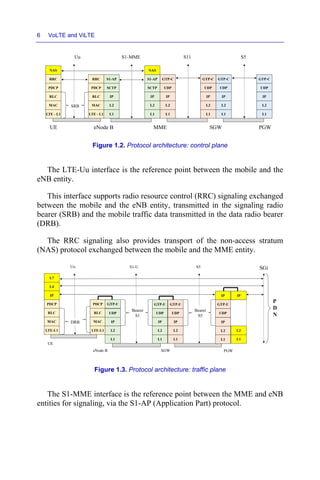
  • 231.
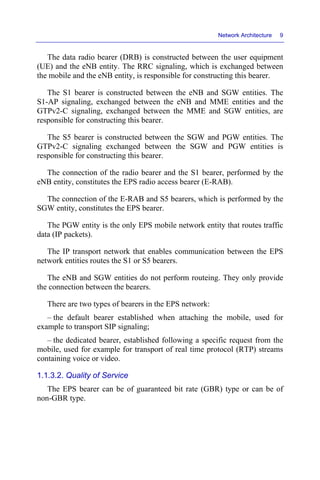
    Handover 201 The handoverprocedure takes place in three phases: – the preparation phase corresponding to the decision of cell change and resource reservation; – the execution phase corresponding to the mobile connection to the target eNB entity; – the completion phase corresponding to the establishment of final bearers and the release of the old resources. The intra-system handover is carried out with a disconnection of the mobile with the eNB entity, whose duration depends on the following: – the synchronization of the mobile on the primary synchronization signal (PSS) and secondary synchronization signal (SSS) transmitted by the target eNB entity; – the discovery of the physical random access channel (PRACH); – the random access procedure; – the connection procedure to the target eNB entity. During the preparation of the intra-system handover, a unidirectional and temporary bearer is created between the source and target eNB entities for the downward direction. During the execution of the handover, the incoming data are forwarded to the target eNB entity that stores and delivers it to the mobile when it connects. For voice and conversational video communication, this operation causes an increase in packet jitter, which is corrected using the real-time transport protocol (RTP), to a certain limit. If the jitter of packets from end to end becomes too large, the packets are dropped. 7.2. Handover based on X2 7.2.1. Handover based on X2 without relocation The functional architecture of the handover based on X2 without relocation of the SGW entity is described in Figure 7.1.
  • 232.
    202 VoLTE andViLTE Figure 7.1. Handover based on X2 without relocation functional architecture The X2-based handover procedure without relocation of the SGW entity is described in Figure 7.2: – the preparation phase includes messages 1 and 2; – the implementation phase includes messages 3 to 5; – the completion phase includes messages 6 to 15. 1) On receipt of the RRC MeasurementReport message, the source eNB entity decides to perform a cell change and transmits to the target eNB entity the message X2-AP HANDOVER REQUEST containing the context of the mobile, particularly the tunnel endpoint identifier (TEID) of the S1 bearer provided by the SGW entity. 2) The target eNB entity responds with the message X2-AP HANDOVER REQUEST ACK, containing the technical characteristics of the radio interface in the information element. Handover command and the TEID identifier of the unidirectional X2 temporary bearer built between source and target eNB entities. 3) The source eNB entity eNB starts the execution phase by sending to the mobile the message RRC ConnectionReconfiguration containing information element handover. Source eNB Target eNB MME SGW PGW PDN E-UTRAN EPC PCRF UE HSS LTE-Uu LTE-Uu S1-MME S1-U S1-U S1-MME S5 S11 Gx S6a X2
  • 233.
    Handover 203 4) Thesource eNB entity sends to the target eNB the sequence numbers of the packet data convergence protocol (PDCP) in the message X2-AP SN STATUS TRANSFER and incoming data that have not been acknowledged by the mobile and that the target eNB entity will store until the mobile is able to receive them. 5) When the RRC connection is established between the mobile and the target eNB entity, the mobile transmits the message RRC ConnectionReconfigurationComplete, which will trigger the transfer of incoming data stored by the target eNB entity to the mobile. Figure 7.2. Handover based on X2 without relocation procedure UE Source eNB Target eNB MME SGW PGW PCRF Radio Bearer S1 Bearer S5 Bearer X2-AP HANDOVER REQUEST 1 X2-AP HANDOVER REQUEST ACK 2 RRC ConnectionReconfiguration 3 X2-AP SN STATUS TRANSFER 4 RRC ConnectionReconfigurationComplete 5 S5 Bearer Traffic Incoming data S1 Bearer X2 Bearer Traffic Incoming data Outgoing data Radio Bearer Radio Bearer S1 Bearer S5 Bearer Traffic Outgoing data S1-AP PATH SWITH REQUEST 6 GTPv2-C MODIFY BEARER REQUEST 7 GTPv2-C MODIFY BEARER REQUEST 8 DIAMETER CCR 9 DIAMETER CCA 10 GTPv2-C MODIFY BEARER RESPONSE 11 GTPv2-C MODIFY BEARER RESPONSE 12 GTP-U EM 13 GTP-U EM S5 Bearer Traffic Incoming data S1 Bearer Radio Bearer S1-AP PATH SWITH REQUEST ACK 14 X2-AP UE CONTEXT RELEASE 15
  • 234.
    204 VoLTE andViLTE 6) The target eNB entity starts the completion phase and transmits to the MME entity the message S1-AP SWITH PATH REQUEST containing the following information: – the TEID identifier of the S1 bearer that the SGW entity will use in the GTP-U header when it sends traffic to the target eNB entity; – the E-UTRAN cell global identifier (ECGI). 7) The MME determines that the SGW entity shall not change and transfers this information to the SGW entity in the message GTPv2-C MODIFY BEARER REQUEST. 8) The SGW entity transfers the ECGI identifier of the cell to the PGW entity in the message GTPv2-C MODIFY BEARER REQUEST. 9) The PGW entity transfers the ECGI identifier of the cell to the policy and charging rules function (PCRF) in the message DIAMETER credit- control-request (CCR). 10) The PCRF entity responds to the PGW entity with the message DIAMETER credit-control-answer (CCA) to acknowledge the request. 11) The PGW entity responds to the SGW entity with the message GTPv2-C MODIFY BEARER RESPONSE to acknowledge the request. 12) The SGW entity responds to the MME entity with the message GTPv2-C MODIFY BEARER RESPONSE message to acknowledge the request. 13) The target eNB entity transmits to the mobile the traffic received from the source eNB entity until it receives the GTP-U EM (End Marker) messages of the SGW entity, from which the traffic will be received directly. 14) The MME responds to the target eNB entity with the message S1-AP SWITH PATH REQUEST ACK to acknowledge the request. 15) The target eNB entity informs the source eNB entity that the handover was achieved with the message X2-AP EU CONTEXT RELEASE so that it releases the context associated with the mobile.
  • 235.
    Handover 205 7.2.2. Handoverbased on X2 with relocation The functional architecture of the handover based on X2 with relocation of the SGW entity is shown in Figure 7.3. The X2-based handover procedure with relocation of SGW entity for the completion phase is illustrated in Figure 7.4. Figure 7.3. Handover based on X2 with relocation functional architecture The preparation and execution phases are identical to those described for the handover based on X2 without relocation. 1) The target eNB entity starts the completion phase and transmits to the MME entity the message S1-AP SWITH PATH REQUEST containing TEID and ECGI identifiers. 2) The MME entity determines that the SGW entity must be relocated and transfers this information as well as the IP address of the entity PGW to the new SGW entity in the message GTPv2-C CREATE SESSION REQUEST. Source eNB Target eNB MME New SGW PGW PDN E-UTRAN EPC PCRF UE HSS LTE-Uu LTE-Uu S1-MME S1-U S1-U S1-MME S5 Gx Former SGW S11 S11 X2 S6a S5
  • 236.
    206 VoLTE andViLTE 3) The new SGW entity forwards the ECGI identifier of the cell to the PGW entity in the message GTPv2-C MODIFY BEARER REQUEST that contains the TEID identifier that the PGW entity will use when it sends traffic to the new SGW entity. 4) The PGW entity forwards the ECGI identifier of the cell to the PCRF entity in the DIAMETER CCR message. Figure 7.4. Handover based on X2 with relocation completion phase 5) The PCRF entity responds to the PGW entity with the DIAMETER CCA message to acknowledge the request. 6) The PGW entity responds to the SGW entity with the message GTPv2-C MODIFY BEARER RESPONSE containing the TEID identifier that the new SGW entity will use when it sends traffic to the PGW entity. 7) The new SGW entity responds to the MME entity with the message GTPv2-C CREATE SESSION RESPONSE containing the TEID identifier UE Source eNB Target eNB MME Former SGW PGW PCRF S5 Bearer Traffic Incoming data S1 Bearer X2 Bearer Radio Bearer Radio Bearer S1 Bearer S5 Bearer Traffic Outgoing data S1-AP PATH SWITH REQUEST 1 GTPv2-C CREATE SESSION REQUEST 2 GTPv2-C MODIFY BEARER REQUEST 3 DIAMETER CCR 4 DIAMETER CCA 5 GTPv2-C MODIFY BEARER RESPONSE 6 GTPv2-C CREATE SESSION RESPONSE 7 Bearer S5 Traffic Incoming data Bearer S1 Bearer Radio S1-AP PATH SWITH REQUEST ACK 8 X2-AP UE CONTEXT RELEASE 9 New SGW Bearer Radio Bearer S1 Bearer S5 Traffic Outgoing data GTPv2-C DELETE SESSION REQUEST 10 GTPv2-C DELETE SESSION RESPONSE 11
  • 237.
    Handover 207 that thetarget eNB entity will use in the GTP-U header when sending traffic to the new SGW entity. 8) The MME entity responds to the target eNB entity with the message S1-AP SWITH PATH REQUEST ACK containing the TEID identifier provided by the new SGW entity. 9) The target eNB entity informs the source eNB entity that the handover was achieved with the message X2-AP EU CONTEXT RELEASE that it releases the context associated with the mobile. 10) The MME entity controls the release of the context of the former SGW entity with the message GTPv2-C DELETE SESSION REQUEST. 11) The former SGW entity responds to the MME entity with the message GTPv2-C DELETE SESSION REQUEST to acknowledge the request. 7.3. Handover based on S1 7.3.1. Handover based on S1 without relocation The functional architecture for the handover based on S1 without relocation of the MME and SGW entities corresponds to Figure 7.1, for which the X2 interface between the source and target eNB entities is deactivated. The MME is no longer transparent to the handover mechanism and acts as a signaling relay for the handover control between the source and target eNB entities. The temporary bearer built between the source and target eNB entities for incoming data passes through the SGW entity. The handover procedure based on S1 without relocation of the MME and SGW entities is given in Figure 7.5: – the preparation phase includes messages 1 to 6; – the execution phase includes messages 7 to 10; – the completion phase includes messages 11 to 22.
  • 238.
    208 VoLTE andViLTE Figure 7.5. Handover based on S1 without relocation procedure UE Source eNB Target eNB MME SGW PGW PCRF Radio Bearer S1 Bearer S5 Bearer S1-AP HANDOVER REQUIRED 1 S1-AP HANDOVER REQUEST 2 RRC ConnectionReconfiguration 3 4 RRC ConnectionReconfigurationComplete 5 S5 Bearer Traffic Incoming data S1 Bearer Temporary Bearer Traffic Incoming data Outgoing data Temporary Bearer Radio Bearer S1 Bearer S5 Bearer Traffic Outgoing data S1-AP HANDOVER NOTIFY 6 GTPv2-C MODIFY BEARER REQUEST 7 GTPv2-C MODIFY BEARER REQUEST 13 DIAMETER CCR 14 DIAMETER CCA 15 GTPv2-C MODIFY BEARER RESPONSE 11 GTPv2-C MODIFY BEARER RESPONSE 17 GTP-U EM (Bearer S1) 18 GTP-U EM (Bearer temporaire) S5 Bearer Traffic Incoming data S1 Bearer Radio Bearer S1-AP UE CONTEXT RELEASE REQUEST 19 20 S1-AP HANDOVER REQUEST ACK GTPv2-C CREATE INDIRECT FORWARDING TUNNEL REQUEST GTPv2-C CREATE INDIRECT FORWARDING TUNNEL RESPONSE S1-AP HANDOVER COMMAND S1-AP eNB STATUS TRANSFER 8 S1-AP MME STATUS TRANSFER 9 10 Radio Bearer 12 16 GTP-U EM (Bearer temporaire) S1-AP UE CONTEXT RELEASE COMPLETE 21 22 GTPv2-C DELETE INDIRECT FORWARDING TUNNEL REQUEST GTPv2-C DELETE INDIRECT FORWARDING TUNNEL RESPONSE
  • 239.
    Handover 209 1) Thesource eNB entity initiates the preparation phase of the handover by sending the message S1-AP HANDOVER REQUIRED to the MME entity. 2) The MME entity sends to the target eNB entity the message S1-AP HANDOVER REQUEST to perform the reservation of resources. 3) The target eNB entity responds to the MME entity with the message S1-AP HANDOVER REQUEST ACK containing the following information: – the TEID identifier of the temporary bearer that the SGW entity will use in the GTP-U header when it sends traffic to the target eNB entity; – the TEID identifier of the S1 bearer that the SGW entity will use in GTP-U header when it sends traffic to the target eNB entity; – the technical characteristics of the radio interface in the information element handover command. 4) The MME entity forwards the TEID identifier relating to the temporary bearer to the SGW entity in the message GTPv2-C CREATE INDIRECT FORWARDING TUNNEL REQUEST. 5) The SGW entity acknowledges the creation of the temporary bearer with the message GTPv2-C CREATE INDIRECT FORWARDING TUNNEL RESPONSE containing the TEID identifier of the temporary bearer that the source eNB entity will use in the GTP-U header when it will send traffic to the SGW entity. 6) The preparation phase ends when the MME entity sends to the source eNB entity the message S1-AP HANDOVER COMMAND containing the following information: – the TEID identifier of the temporary bearer that the source eNB entity will use in the GTP-U header when it sends traffic to the SGW entity; – the technical characteristics of the radio interface of the target eNB entity in the information element handover command. 7) The source eNB entity starts the execution phase by sending to the mobile the RRC ConnectionReconfiguration message containing the information element Handover Command.
  • 240.
    210 VoLTE andViLTE 8) The source eNB entity transmits to the MME entity the sequence numbers of the PDCP protocol with the message SI-AP SN STATUS TRANSFER. 9) The MME entity forwards the sequence numbers to the target eNB entity in the message SI-AP MME STATUS TRANSFER. Incoming data that have not been acknowledged by the mobile which the target eNB entity will store until the mobile is able to receive are transmitted in the temporary bearer. 10) When the RRC connection is established between the mobile and the target eNB entity, the mobile transmits the message RRC ConnectionReconfigurationComplete, which will trigger the transfer of incoming data stored by the target eNB entity to the mobile. 11) The completion phase starts when the target eNB entity notifies the MME entity with the message S1-AP HANDOVER NOTIFY containing the ECGI identity of the cell. 12) The MME entity forwards to the SGW entity the message GTPv2-C MODIFY BEARER REQUEST containing the ECGI identity of the cell and the TEID identifier of the S1 bearer that the SGW entity will use in the GTP-U header when it sends traffic to the target eNB entity. 13) The SGW entity transfers the ECGI identifier of the cell to the PGW entity in the message GTPv2-C MODIFY BEARER REQUEST. 14) The PGW entity transfers the ECGI identifier of the cell to the PCRF entity in the DIAMETER CCR message. 15) The PCRF entity responds to the PGW entity with the DIAMETER CCA message to acknowledge the request. 16) The PGW entity responds to the SGW entity with the message GTPv2-C MODIFY BEARER RESPONSE to acknowledge the request. 17) The SGW entity responds to the MME entity with the message GTPv2-C MODIFY BEARER RESPONSE to acknowledge the request. 18) The target eNB entity transmits to the mobile the traffic received from the source eNB entity by the temporary bearer until it receives a
  • 241.
    Handover 211 GTP-U EMmessage from the SGW entity from which the traffic will be received directly from the S1 bearer. 19) The release of the context of the mobile at the source eNB entity is triggered by the MME entity by sending the message S1-AP UE CONTEXT RELEASE REQUEST. 20) The source eNB entity responds to the MME entity with the message S1-AP and acknowledges the message received. 21) The release of the temporary bearer at the SGW entity is triggered by the MME entity by sending the message GTPv2-C DELETE INDIRECT FORWARDING TUNNEL REQUEST. 22) The SGW entity responds to the MME entity with the message GTPv2-C DELETE INDIRECT FORWARDING TUNNEL RESPONSE to acknowledge the received message. 7.3.2. Handover based on S1 with relocation The functional architecture for the handover based on S1 with the relocation of the MME and SGW entities is described in Figure 7.6. Figure 7.6. Handover based on S1 with relocation functional architecture Source eNB Target eNB Former MME New SGW PGW PDN E-UTRAN EPC PCRF UE HSS LTE-Uu LTE-Uu S1-MME S1-U S1-U S1-MME S5 Gx Former SGW S11 S11 S6a New MME S6a S5 S10
  • 242.
    212 VoLTE andViLTE 7.3.2.1. Preparation phase The S1-based handover procedure with the relocation of the MME and SGW entities is described in Figure 7.7 for the preparation phase. 1) The source eNB entity initializes the preparation phase of the handover by sending the message S1-AP HANDOVER REQUIRED to the former MME entity. 2) The former MME entity selects a new MME entity and transmits the message GTPv2-C FORWARD RELOCATION REQUEST containing the following information: – the IP address of the PGW entity; – the TEID identifier relative to the S5 bearer that the new SGW entity will use in the GTP-U header when it sends traffic to the PGW entity. 3) The new MME decides to relocate the SGW entity and passes to the new SGW entity the message GTPv2-C CREATE SESSION REQUEST containing the information received. Figure 7.7. Handover based on S1 with relocation preparation phase UE Source eNB Target eNB Former MME Former SGW PGW New SGW New MME Radio Bearer S1 Bearer S5 Bearer S1-AP HANDOVER REQUIRED 1 2 GTPv2-C FORWARD RELOCATION REQUEST GTPv2-C CREATE SESSION REQUEST 3 GTPv2-C CREATE SESSION REQUEST 4 S1-AP HANDOVER REQUEST 5 6 S1-AP HANDOVER REQUEST ACK 7 8 GTPv2-C CREATE INDIRECT FORWARDING TUNNEL REQUEST GTPv2-C CREATE INDIRECT FORWARDING TUNNEL RESPONSE 9 GTPv2-C FORWARD RELOCATION RESPONSE 10 11 GTPv2-C CREATE INDIRECT FORWARDING TUNNEL REQUEST GTPv2-C CREATE INDIRECT FORWARDING TUNNEL RESPONSE 12 S1-AP HANDOVER COMMAND
  • 243.
    Handover 213 4) Thenew SGW entity responds with the message GTPv2-C CREATE SESSION REQUEST containing the TEID identifier of the S1bearer that the target eNB entity will use in the GTP-U header when it sends traffic to the new SGW entity. 5) The new MME entity transmits to the target eNB entity the message S1-AP HANDOVER REQUEST to perform the reservation of resources. 6) The target eNB entity responds to the new MME entity with the message S1-AP HANDOVER REQUEST ACK containing the following information: – the TEID identifier of the temporary bearer that the new SGW entity will use in the GTP-U header when it sends traffic to the target eNB entity; – the TEID identifier of the S1 bearer that the new SGW entity will use in the GTP-U header when it sends traffic to the target eNB entity; – the technical characteristics of the radio interface in the information element handover command. 7) The new MME entity forwards the TEID identifier relating to the temporary bearer to the SGW entity in the message GTPv2-C CREATE INDIRECT FORWARDING TUNNEL REQUEST. 8) The new SGW entity acknowledges the creation of the temporary bearer by the message GTPv2-C CREATE INDIRECT FORWARDING TUNNEL RESPONSE containing the TEID identifier of the temporary bearer that the former SGW entity will use in the GTP-U header when it will send traffic to the new SGW entity. 9) The new MME entity responds to the former MME entity with the message GTPv2-C FORWARD RELOCATION REQUEST containing the following information: – the TEID identifier of the temporary bearer that the former SGW entity will use in the GTP-U header when it sends traffic to the new SGW entity; – the technical characteristics of the radio interface of the target eNB entity in the information element Handover Command. 10) The former MME entity forwards the TEID identifier relating to the temporary bearer to the former SGW entity in the message GTPv2-C CREATE INDIRECT FORWARDING TUNNEL REQUEST.
  • 244.
    214 VoLTE andViLTE 11) The former SGW entity acknowledges the creation of the temporary bearer with the message GTPv2-C CREATE INDIRECT FORWARDING TUNNEL RESPONSE containing the TEID identifier of the temporary bearer that the source eNB entity will use in the GTP-U header when it will send traffic to the former entity SGW. 12) The preparation phase ends when the former MME entity transmits to the source eNB entity the message S1-AP HANDOVER COMMAND containing the following information: – the TEID identifier from the temporary bearer that the source eNB entity will use in the GTP-U header when it sends traffic to the former SGW entity; – the technical characteristics of the radio interface of the target eNB entity in the information element handover command. 7.3.2.2. Execution phase The S1-based handover procedure with relocation of the MME and SGW entities is described in Figure 7.8 for the execution phase. Figure 7.8. Handover based on S1 with relocation execution phase 1) The source eNB entity starts the execution phase by sending to the mobile the RRC ConnectionReconfiguration message containing the information element handover command. UE Source eNB Target eNB Former MME Former SGW PGW New SGW New MME S5 Bearer S1 Bearer Temporary Bearer Temporary Bearer Radio Bearer S1 Bearer S5 Bearer Radio Bearer Temporary RRC ConnectionReconfiguration RRC ConnectionReconfigurationComplete 1 S1-AP eNB STATUS TRANSFER 2 S1-AP MME STATUS TRANSFER 5 GTPv2-C FORWARD ACCESS CONTEXT NOTIFICATION 3 GTPv2-C FORWARD ACCESS CONTEXT ACKNOWLEDGE 4 6
  • 245.
    Handover 215 2) Thesource eNB entity transmits to the former MME entity the sequence numbers of the PDCP protocol with the message SI-AP SN STATUS TRANSFER. 3) The former MME entity forwards the sequence numbers to the new MME entity in the message GTPv2-C FORWARD ACCESS CONTEXT NOTIFICATION. 4) The new MME entity responds to the former MME entity with the message GTPv2-C FORWARD ACCESS CONTEXT ACKNOWLEDGE to acknowledge the message received. 5) The new MME entity forwards the sequence numbers to the target eNB entity in the message SI-AP MME STATUS TRANSFER. Incoming data that have not been acknowledged by the mobile which the target eNB entity will store until the mobile is able to receive are transmitted in the temporary bearer. 6) When the RRC connection is established between the mobile and the target eNB entity, the mobile transmits the RRC ConnectionReconfigurationComplete message, which will trigger the transfer of incoming data stored by the target eNB entity to the mobile. 7.3.2.3. Completion phase The S1-based handover procedure with the relocation of the MME and SGW entities is shown in Figure 7.9 for the completion phase. 1) The completion phase starts when the target eNB entity notifies the new MME entity with the message S1-AP HANDOVER NOTIFY containing the ECGI identity of the cell. 2) The new MME entity informs the former MME entity that the handover is completed with the message GTPv2-C FORWARD RELOCATION COMPLETE NOTIFICATION. 3) Former MME entity responds to the new MME entity with the message GTPv2-C FORWARD RELOCATION COMPLETE ACKNOWLEDGE to acknowledge the message received.
  • 246.
    216 VoLTE andViLTE 4) The new MME entity forwards to the new SGW entity in the message GTPv2-C MODIFY BEARER REQUEST containing the ECGI identity of the cell and the TEID identifier of the S1 bearer that the new SGW entity will use in the GTP-U header when it sends traffic to the target eNB entity. Figure 7.9. Handover based on S1 with relocation completion phase 5) The new SGW entity forwards the ECGI identifier of the cell to the PGW entity in the message GTPv2-C MODIFY BEARER REQUEST. The PGW entity transfers the ECGI identifier of the cell to the PCRF entity in the DIAMETER RRC message. UE Source eNB Target eNB Former MME Former SGW PGW New SGW New MME S1-AP HANDOVER NOTIFY GTPv2-C MODIFY BEARER REQUEST GTPv2-CMODIFY BEARER REQUEST 5 GTPv2-C MODIFY BEARER RESPONSE 1 GTPv2-C MODIFY BEARER RESPONSE 7 GTP-U EM (S1 Bearer) 8 GTP-U EM (Temporary Bearer) S5 Bearer S1 Bearer Radio Bearer S1-AP UE CONTEXT RELEASE REQUEST 9 10 4 6 GTP-U EM (Temporary Bearer) S1-AP UE CONTEXT RELEASE COMPLETE 13 14 GTPv2-C DELETE INDIRECT FORWARDING TUNNEL REQUEST GTPv2-C DELETE INDIRECT FORWARDING TUNNEL RESPONSE 2 GTPv2-C FORWARD RELOCATION COMPLETE NOTIFICATION GTPv2-C FORWARD RELOCATION COMPLETE ACKNOWLEDGE 3 GTP-U EM (Temporary Bearer) 11 GTPv2-C DELETE SESSION REQUEST 12 GTPv2-C DELETE SESSION RESPONSE GTPv2-C DELETE INDIRECT FORWARDING TUNNEL REQUEST GTPv2-C DELETE INDIRECT FORWARDING TUNNEL RESPONSE 15 16
  • 247.
    Handover 217 The PCRFentity responds to the PGW entity with the DIAMETER CCA message to acknowledge the request. 6) The PGW entity responds to the new SGW entity with the message GTPv2-C MODIFY BEARER RESPONSE to acknowledge the request. 7) The new SGW entity responds to the new MME entity with the message GTPv2-C MODIFY BEARER RESPONSE to acknowledge the request. 8) The target eNB entity transmits to the mobile the traffic received from the source eNB entity by the temporary bearer until it receives the message GTP-U EM of the new SGW entity, from which the traffic will be received directly by the S1 bearer. 9) The release of the context of the mobile at the source eNB entity is triggered by the former MME entity by sending the message S1-AP EU CONTEXT RELEASE REQUEST. 10) The source eNB entity responds to the former MME entity with the message S1-AP EU CONTEXT RELEASE COMPLETE to acknowledge the received message. 11) The release of the temporary bearer at the former SGW entity is triggered by the former MME entity by sending the message GTPv2-C DELETE INDIRECT FORWARDING TUNNEL REQUEST. 12) The former SGW entity responds to the former MME entity with the message GTPv2-C DELETE INDIRECT FORWARDING TUNNEL RESPONSE to acknowledge the received message. 13) The release of the context at the former SGW entity is triggered by the former MME entity by sending the message GTP-C DELETE SESSION REQUEST. 14) The former SGW entity responds to the former MME entity with the message GTP-C DELETE SESSION RESPONSE to acknowledge the received message.
  • 248.
    218 VoLTE andViLTE 15) The release of the temporary bearer at the new SGW entity is triggered by the new MME entity by sending the message GTPv2-C DELETE INDIRECT FORWARDING TUNNEL REQUEST. 16) The new SGW entity responds to the new MME entity with the message GTPv2-C DELETE INDIRECT FORWARDING TUNNEL RESPONSE to acknowledge the received message. 7.4. PS-PS inter-system handover 7.4.1. Functional architecture PS-PS inter-system handover impacts the serving GPRS support node (SGSN) of 2G/3G mobile network and possibly the radio network controller (RNC) if the feature Direct Tunnel is implemented. The SGSN entity plays for 2G/3G mobile networks the same role as the MME entity for a 4G mobile network. The RNC entity plays for a 3G mobile network the same role as the eNB entity regarding the control of the mobile connection and the allocation of resources on the radio interface. The feature Direct Tunnel, specific to a 3G mobile network, allows for direct transfer traffic between the RNC and gateway GPRS support node (GGSN) entities without passing through the SGSN entity. The GGSN entity plays for 2G/3G mobile networks the same role as the PGW entity for 4G mobile network. The SGW entity ensures the anchor point of 2G/3G mobile networks: – anchoring the traffic is carried by the SGSN entity that connects to the SGW entity if the feature Direct Tunnel is not available; – anchoring the traffic is carried by the RNC entity that connects to the SGW entity if the feature Direct Tunnel is available. The functional architecture for the PS-PS inter-system handover is described in Figure 7.10.
  • 249.
    Handover 219 Figure 7.10.PS-PS inter-system handover functional architecture The S3 interface is the reference point between the SGSN and MME entities: – this interface supports GTPv2-C (GPRS Tunnel Protocol Control) signaling; – this interface allows the exchange of messages related to the management of PS-PS inter-system handover. The S4 interface is the reference point between the SGW and SGSN entities: – this interface is deployed if the feature Direct Tunnel is not available; – this interface supports GTPv2-C signaling for the control plane and GTP-U (GPRS Tunnel Protocol User) tunneling for the traffic plane; – GTPv2-C signaling ensures the construction of S4 bearer built between the SGW and SGSN entities. The S12 interface is the reference point between the SGW and RNC entities: – this interface is deployed if the feature Direct Tunnel is available; – this interface supports the GTP-U tunneling for the traffic plane. Source eNB MME PGW PDN GERAN EPC PCRF UE HSS LTE-Uu S1-MME S12 S1-U Gx SGW S11 SGSN S5 S3 S6a S4 E-UTRAN RNC UTRAN
  • 250.
    220 VoLTE andViLTE 7.4.2. Procedure The procedure for PS-Ps inter-system handover is shown in Figure 7.11: – the preparation phase includes messages 1 to 8; – the execution phase includes messages 9 and 10; – the completion phase includes messages 11 to 21. During the preparation phase, a temporary bearer is constructed to route the incoming data: – the temporary bearer may be direct if the data is routed directly from the eNB entity to the 2G/3G radio access network; – the temporary bearer may be indirect if the incoming data passes through the SGW and SGSN entities. The procedure for PS-PS inter-system handover is elaborated with the following assumptions in hand: – the temporary bearer built between the eNB and RNC entities is a direct bearer; – the feature Direct Tunnel is not available. 1) to 4) The messages are equivalent to messages 1 to 4 described for the preparation phase of the handover based on S1 with relocation of the MME and SGW entities. 5) The SGSN entity transmits to the RNC entity the message RANAP RELOCATION REQUEST to reserve resources in the radio access network. 6) The RNC entity responds with the message RANAP RELOCATION REQUEST ACK to acknowledge the request. 7), 8) The messages are equivalent to messages 11 and 12 described for the preparation phase of the handover based on S1 with relocation of the MME and SGW entities. 9) The message is equivalent to the message 1 described for the execution phase of the handover based on S1 with relocation of the MME and SGW entities.
  • 251.
    Handover 221 Figure 7.11.PS-PS inter-system handover procedure 10) The mobile confirms its connection to the RNC entity with the RRC HandovertoUTRANComplete message. 11) The RNC entity informs the SGSN entity about the connection of the mobile with the message RANAP RELOCATION COMPLETE. UE Source eNB RNC MME Former SGW PGW New SGW SGSN Radio Bearer S1 Bearer S5 Bearer S1-AP HANDOVER REQUIRED 1 2 GTPv2-C FORWARD RELOCATION REQUEST GTPv2-C CREATE SESSION REQUEST 3 GTPv2-C CREATE SESSION REQUEST 4 RANAP RELOCATION REQUEST 5 6 RANAP RELOCATION REQUEST ACK 7 GTPv2-C FORWARD RELOCATION RESPONSE 8 S1-AP HANDOVER COMMAND RRC ConnectionReconfiguration 9 S5 Bearer S1 Bearer Temporary Radio Bearer S1 Bearer S5 Bearer Radio Bearer RRC HandovertoUTRANComplete 10 11 RANAP RELOCATION COMPLETE GTPv2-C MODIFY BEARER REQUEST GTPv2-CMODIFY BEARER REQUEST 15 GTPv2-C MODIFY BEARER RESPONSE GTPv2-C MODIFY BEARER RESPONSE 17 14 16 12 GTPv2-C FORWARD RELOCATION COMPLETE NOTIFICATION GTPv2-C FORWARD RELOCATION COMPLETE ACKNOWLEDGE 13 S5 Bearer S1 Bearer Radio Bearer S1-AP UE CONTEXT RELEASE REQUEST 18 19 S1-AP UE CONTEXT RELEASE COMPLETE 20 21 GTPv2-C DELETE SESSION REQUEST GTPv2-C DELETE SESSION RESPONSE
  • 252.
    222 VoLTE andViLTE 12) to 17) The messages are equivalent to messages 2 to 7 described for the completion phase of the handover based on S1 with relocation of the MME and SGW entities. 18), 19) The messages are equivalent to messages 9 and 10 described the completion phase of the handover based on S1 with relocation of the MME and SGW entities. 20), 21) The messages are equivalent to messages 13 and 14 described for the completion phase of the handover based on S1 with relocation of the MME and SGW entities.
  • 253.
    8 Roaming 8.1. Functional architecture 8.1.1.Roaming applied to the EPS network The functional architecture of roaming applied to the evolved packet system (EPS) is described in Figure 8.1. Figure 8.1. Roaming applied to the EPS network functional architecture The functions of the evolved packet core (EPC) and the evolved UMTS terrestrial radio access network (E-UTRAN) are located in the visited network. eNB SGW PGW MME V PCRF H PCRF HSS Traffic flow (RTP, SIP) Control flow (4G signaling) S6a S9 Visited network Home network VoLTE and ViLTE: Voice and Conversational Video Services over the 4G Mobile Network, First Edition. André Perez. © ISTE Ltd 2016. Published by ISTE Ltd and John Wiley & Sons, Inc.
  • 254.
    224 VoLTE andViLTE The mobility management entity (MME) located in the visited network is connected to the home subscriber server (HSS) located in the home network via the S6a interface. The S9 interface between the home policy charging and rules function (H-PCRF) and the V-PCRF (Visited PCRF) entity is optional. If the S9 interface is not deployed, the rules applying to mobile traffic in roaming are stored in the subscription profile repository (SPR) associated with the V- PCRF entity. During the mobile registration, the S9 interface carries the DIAMETER messages of the Gx interface exchanged between V-PCRF and PGW entities for the establishment of the default support (default bearer) assigned to the SIP flow. During the establishment of the session, S9 interface carries the DIAMETER messages of the Rx interface exchanged between the V-PCRF entity and the proxy call session control function (P-CSCF) in the IMS for the establishment of the dedicated bearer allocated to the RTP stream. 8.1.2. Roaming applied to the IMS network The functional architecture of roaming applied to the IMS network is described in Figure 8.2, when the RTP stream passes through the home network. The roaming interface is between the P-CSCF entity located in the visited network and the S-CSCF (Serving CSCF) entity located in the home network. The interconnection border control function (IBCF) can make the translation of IP addresses and port numbers, corresponding to the network address and port translation (NAPT). The IBCF entity can perform the translation of IP addresses, port numbers and conversion of IPv4 to IPv6, corresponding to the NAPT-PT (Protocol Translation) function. The IBCF entity performs the withdrawal of some headers of the SIP message based on the rules established by the operator, corresponding to the function topology hiding interconnect gateway (THIG).
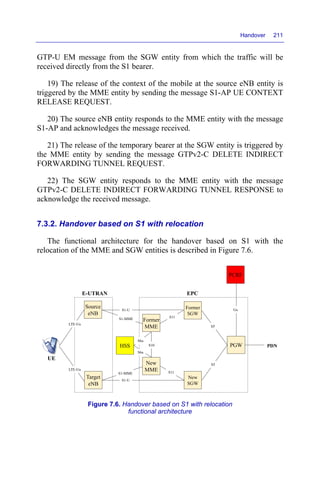
  • 255.
    Roaming 225 The transitiongateway (TrGW) may perform filtering, transcoding and NAPT or NAPT-PT translation of the RTP streams under the control of the IBCF entity. Figure 8.2. Roaming applied to the IMS network: nominal routeing The IBCF entity of Alice’s home network (Bob’s home network, respectively) consists of two IBCF-2 and-3 IBCF instances (IBCF-4 and IBCF-5, respectively). The IBCF entity of Alice’s home network (Bob’s home network, respectively) controls the TrGW-2 entity (TrGW-3, respectively). Roaming interfaces between the home network and the visited network are provided by: – Ici interfaces required for SIP flow between IBCF-1 and IBCF-2 instances for Alice’s network and between IBCF-5 and IBCF-6 instances for Bob’s network; – Izi interfaces for the RTP stream between TrGW-1 and TrGW-2 entities for Alice’s network and between TrGW-3 and TrGW-4 entities for Bob’s network. PGW P-CSCF IBCF-1 TrGW-1 IBCF-2 S-CSCF TAS TrGW-2 IBCF-3 TrGW-4 TrGW-3 IBCF-4 TAS IBCF-5 I/S- CSCF PGW P-CSCF IBCF-6 Alice’s visited network (VisitedA.net) Alice’s home network (HomeA.net) Bob ‘s visited network (VisitedB.net) Bob’s home network (HomeB.net) RTP flow SIP flow Ici Ici Ici Izi Izi Izi
  • 256.
    226 VoLTE andViLTE The interfaces for the interconnection between IMS networks performing, on the one hand, the outgoing call and, on the other hand, the incoming call is provided by: – Ici interface between IBCF-3 and IBCF-4 instances for the SIP flow; – Izi interface between the TrGW-2 and TrGW-3 entities for the RTP stream. The functional architecture of roaming applied to the IMS network is described in Figure 8.3, when the RTP flows does not pass through the home network of the caller, corresponding to the optimal media routeing (OMR). Figure 8.3. Roaming applied to IMS network: optimal routeing The IBCF entity of Alice’s visited network consists of three instances, IBCF-1, IBCF-4 and IBCF-5, and controls the TrGW-1 entity. The transit and roaming function (TRF) is located in the visited network of the caller (Alice). The TRF entity receives the initial request SIP INVITE from the S-CSCF entity of the home network of the caller and forwards the request to the home network of the called party (Bob). PGW P-CSCF IBCF-1 TrGW-1 IBCF-2 S-CSCF TAS IBCF-3 TrGW-4 IBCF-6 TAS IBCF-7 I/S- CSCF PGW P-CSCF IBCF-8 Alice’s visited network (VisitedA.net) Alice’ home network (HomeA.net) Bob’ visited network (VisitedB.net) Bob’s home network (HomeB.net) RTP flow SIP flow IBCF-4 TRF IBCF-5 Ici Ici Ici Ici Izi TrGW-3 TrGW-2
  • 257.
    Roaming 227 Roaming interfacesare provided by: – Ici interfaces between the IBCF-1 and-2 IBCF instances, between the IBCF-3 and IBCF-4 instances and between the IBCF-7 and IBCF-8 instances, for the SIP stream; – Izi interface between the GW-3 and TrGW-4 entities, for the RTP stream. The interfaces for the interconnection is provided by: – Ici interface between the IBCF-5 and IBCF-6 instances for the SIP flow; – Izi interface between the TrGW-1 and TrGW-3 entities for the RTP stream. Figure 8.4 provides an example of SDP announcements containing the characteristics (IP addresses, port numbers and domain name) of the RTP stream. Figure 8.4. SDP announcements: optimal routeing The SIP INVITE request generated by the various IBCF entities maintains in the SDP message the characteristics of RTP streams IBCF-5 TrGW-1 P-CSCF 183 (192.0.2.4, 16511) RTP flow Domain Va.operatorV Domain Xa.operatorX IBCF-2 TrGW-2 S-CSCF INVITE (190.1.15.1, 16789) (178.15.1.1, 62111) (192.0.2.1, 49170) Domain Ha.operatorH INVITE (192.0.2.1, 49170) INVITE (179.14.1.2, 34500) (190.1.15.1, 16789) (178.15.1.1, 62111) (192.0.2.1, 49170) IBCF-3 TrGW-2 183 (0.0.0.0, 16511)(192.0.2.4, 16511) INVITE (192.0.2.1, 49170) INVITE (178.15.1.1, 62111) (192.0.2.1, 49170) 183 (0.0.0.0, 16511)(192.0.2.4, 16511) 183 (0.0.0.0, 16511)(192.0.2.4, 16511) TRF IBCF-4 TrGW-1 183 (192.0.2.4, 16511) IBCF-1 TrGW-1
  • 258.
    228 VoLTE andViLTE (IP address, port number and domain name) of the previous announcements. The IBCF-4 instance must detect from the SIP INVITE request received from the IBCF-3 instance that a looping from the home network has been achieved and must implement the OMR routeing for the RTP stream, to provide to the IBCF-5 instance the SDP message generated by Alice’s UA entity. The response SIP 183 Session Progress from the IBCF-5 instance contains in the SDP message the characteristics of RTP streams provided by the TrGW-1 entity, which need to be transferred to Alice’s UA entity. The IBCF-4 instance replaces the IP address provided by the IBCF-5 instance by the undetermined IP address 0.0.0.0 as the IP address has no meaning in the home and transit networks. The IBCF-4 instance, however, maintains in the SDP message the RTP stream characteristics provided by the IBCF-5 instance. The undetermined IP address is deleted by IBCF-1 instance and the IP address provided by the IBCF-5 instance is restored. 8.2. Procedures 8.2.1. Session establishment for nominal routeing 8.2.1.1. Originating side The session establishment procedure for the nominal routeing of the RTP streams, relating to the outgoing call, is described in Figure 8.5. To simplify the presentation, responses 100 Trying and 180 Ringing and precondition mechanisms are not shown. Table 8.1 summarizes the IP addresses and the port numbers of the RTP flows, established, on the one hand, between Alice’s UA entity and the TrGW-1 entity, and on the other hand, between the TrGW-1 and TrGW-2 entities.
  • 259.
    Roaming 229 Figure 8.5.Session establishment for nominal routeing originating side Alice’s UA TrGW-1 IP address 192.0.2.1 192.0.2.2 Port number 49170 9452 TrGW-1 TrGW-2 IP address 178.15.1.1 190.1.15.2 Port number 62111 12538 Table 8.1. RTP flow characteristics in the case of nominal routeing originating side 1) Alice’s UA entity transmits to the P-CSCF entity the SIP INVITE request, whose SDP message contains the characteristics (IP address and port number) of the RTP stream. INVITE SIP: tel:+4687197378; SIP/2.0 ... Route: <sip:pcscf1.visitedVA.net;lr> ... Content-Type: application/sdp Content-Length: (...) ... c=IN IP4 192.0.2.1 m=audio 49170 RTP/AVP 96 97 ... UA P-CSCF IBCF-1 IBCF-2 S-CSCF IBCF-3 SIP INVITE 1 SIP INVITE 2 SIP INVITE 3 SIP INVITE SIP INVITE 4 SIP 183 SIP 183 SIP 183 6 SIP 183 SIP 183 5 SIP 200 SIP 200 SIP 200 SIP 200 SIP 200 SIP ACK SIP ACK SIP ACK SIP ACK SIP ACK
  • 260.
    230 VoLTE andViLTE 2) The P-CSCF entity selects the IBCF entity of the visited network (IBCF-1 instance) and transfers the SIP INVITE request. The P-CSCF entity removes its uniform resource identifier (URI) in the Route header and adds that of the S-CSCF entity of the home network, indicating in the iotl parameter the direction of request (visitedA- homeA). INVITE SIP: tel:+4687197378; SIP/2.0 ... Route: <sip:scscf1.operatorHA.net;lr;iotl=visitedA- homeA> ... Content-Type: application/sdp Content-Length: (...) ... c=IN IP4 192.0.2.1 m=audio 49170 RTP/AVP 96 97 ... 3) The IBCF-1 instance selects the IBCF entity of the home network (IBCF-2 instance) and transfers the SIP INVITE message, whose SDP message replaces the characteristics of RTP streams received from the Alice’s UA entity by those provided by the TrGW-1 entity. INVITE SIP: tel:+4687197378; SIP/2.0 ... Route: <sip:scscf1.operatorHA.net;lr;iotl=visitedA- homeA> ... Content-Type: application/sdp Content-Length: (...) ... c=IN IP4 178.15.1.1 m=audio 62111 RTP/AVP 96 97 ... The IBCF-2 instance forwards to the S-CSCF entity the SIP INVITE message without changing the SDP message. 4) The S-CSCF entity transfers to the IBCF-3 instance the SIP INVITE message having the following transactions: – it withdraws its URI identity in the route header;
  • 261.
    Roaming 231 – itperforms the ENUM resolution on the URI identity of the destination to which it adds the iotl parameter indicating the direction of the request (homeA-homeB). INVITE <sip:+46107197378@operatorY;user=phone;iotl=homeA-homeB> SIP/2.0 ... Content-Type: application/sdp Content-Length: (...) ... c=IN IP4 178.15.1.1 m=audio 62111 RTP/AVP 96 97 ... When the IBCF-3 instance has received the SIP INVITE request, it generates a new SIP INVITE request to Bob’s home network. 5) On receipt of the SIP 183 Session Progress message from Bob’s home network, the IBCF-3 instance generates the SIP 183 Session Progress message to the S-CSCF entity whose associated SDP message contains the characteristics of the flow RTP communicated by the TrGW-2 entity. SIP/2.0 183 Session Progress ... Content-Type: application/sdp Content-Length: (...) ... c=IN IP4 190.1.15.2 m=audio 12538 RTP/AVP 97 98 ... The SIP 183 Session Progress message is forwarded without changing the SDP message to the IBCF-1 instance. 6) The IBCF-1 instance forwards to the P-CSCF entity the SIP 183 Session Progress message, whose SDP message replaces the RTP stream characteristics received from the IBCF-3 instance with those provided by the entity TrGW-1.
  • 262.
    232 VoLTE andViLTE SIP/2.0 183 Session Progress ... Content-Type: application/sdp Content-Length: (...) ... c=IN IP4 192.0.2.2 m=audio 9452 RTP/AVP 97 98 ... The SIP 183 Session Progress message is forwarded without changing the SDP message to Alice’s UA entity. 8.2.1.2. Terminating side The session establishment procedure for the nominal routeing of the RTP streams, relating to the outgoing call, is described in Figure 8.6. Table 8.2 summarizes the IP addresses and the port numbers of the RTP streams, established, on the one hand, between Bob’s UA entity and TrGW-4 entity, and, on the other hand, between TrGW-3 and TrGW-4 entities. Figure 8.6. Session establishment for nominal routeing terminating side UA P-CSCF IBCF-6 IBCF-5 S-CSCF IBCF-4 SIP INVITE 1 SIP INVITE 2 SIP INVITE 3 SIP INVITE SIP INVITE 4 SIP 183 SIP 183 6 SIP 183 SIP 183 SIP 183 5 SIP 200 SIP 200 SIP 200 SIP 200 SIP 200 SIP ACK SIP ACK SIP ACK SIP ACK SIP ACK
  • 263.
    Roaming 233 Bob’s UATrGW-4 IP address 193.0.2.1 193.0.2.2 Port number 49170 9452 TrGW-4 TrGW-3 IP address 179.15.1.1 191.1.15.2 Port number 62111 12538 Table 8.2. RTP flow characteristics in the case of nominal routeing terminating side 1) Upon receipt of the SIP INVITE request from Alice’s home network, the IBCF-4 instance generates the SIP INVITE message to the S-CSCF entity, whose SDP message contains the RTP stream characteristics provided by the TrGW-3 entity. INVITE <sip:+46107197378@operatorY;user=phone;iotl=homeA-homeB> SIP/2.0 ... Content-Type: application/sdp Content-Length: (...) ... c=IN IP4 191.1.15.2 m=audio 12538 RTP/AVP 96 97 ... 2) The S-CSCF entity inserts Bob’s IP address instead of the phone number into the SIP URI identity of the SIP INVITE request. The S-CSCF entity adds the Route header containing the URI identity of the P-CSCF entity and iotl parameter indicating the direction of the request (homeB-visitedB). The IBCF-5 instance forwards to the IBCF (IBCF-6 instance) entity the SIP INVITE message without changing the SDP message.
  • 264.
    234 VoLTE andViLTE INVITE <sip:193.0.2.1@operatorY> SIP/2.0 ... Route: <sip:pcscf1.visitedVB.net;lr;iotl= homeB-visitedB> ... Content-Type: application/sdp Content-Length: (...) ... c=IN IP4 191.1.15.2 m=audio 12538 RTP/AVP 96 97 ... 3) The IBCF-6 instance transfers to the P-CSCF entity the SIP INVITE message, whose SDP message replaces the RTP stream characteristics received from TrGW-3 entity with that communicated by the TrGW-4 entity. INVITE <sip:193.0.2.1@operatorY> SIP/2.0 ... Route: <sip:pcscf1.visitedVB.net;lr;iotl= homeB-visitedB> ... Content-Type: application/sdp Content-Length: (...) ... c=IN IP4 193.0.2.2 m=audio 9452 RTP/AVP 96 97 ... 4) The P-CSCF entity removes its identity from the Route header and transfers the SIP INVITE message to Bob’s UA entity. INVITE <sip:193.0.2.1@operatorY> SIP/2.0 ... Content-Type: application/sdp Content-Length: (...) ... c=IN IP4 193.0.2.2 m=audio 9452 RTP/AVP 96 97 ... 5) Alice’s UA entity generates the SIP 183 Session Progress message to the P-CSCF entity, whose associated SDP message contains the RTP stream characteristics.
  • 265.
    Roaming 235 SIP/2.0 183Session Progress ... Content-Type: application/sdp Content-Length: (...) ... c=IN IP4 193.0.2.1 m=audio 59170 RTP/AVP 97 98 ... The SIP 183 Session Progress message is forwarded without changing the SDP message to the IBCF-6 instance. 6) The IBCF-6 instance forwards to the IBCF-5 instance SIP 183 Session Progress message, whose SDP message replaces the RTP stream characteristics received from the Bob’s UA entity with those provided by the TrGW-4 entity. SIP/2.0 183 Session Progress ... Content-Type: application/sdp Content-Length: (...) ... c=IN IP4 179.15.1.1 m=audio 62111 RTP/AVP 97 98 ... The SIP 183 Session Progress message is forwarded without changing the SDP message to the IBCF-4 instance. 8.2.2. Session establishment for optimal routeing The session establishment procedure for the OMR routeing of the RTP streams, relating to the outgoing call, is shown in Figure 8.7. 1) Alice’s UA entity transmits to the P-CSCF entity the SIP INVITE request, whose SDP message contains the characteristics (IP address and port number) of the RTP stream.
  • 266.
    236 VoLTE andViLTE INVITE SIP: tel:+4687197378; SIP/2.0 ... Route: <sip:pcscf1.visitedVA.net;lr> ... Content-Type: application/sdp Content-Length: (...) ... c=IN IP4 192.0.2.1 m=audio 49170 RTP/AVP 96 97 ... Figure 8.7. Session establishment for optimal routeing originating side 2) The P-CSCF entity removes its URI identity in the Route header and adds that of the S-CSCF entity of the home network, indicating in the iotl parameter the direction of request (visitedA-homeA). The P-CSCF entity selects the IBCF entity of the visited network (IBCF-1 instance) and transfers the SIP INVITE request, whose Feature- Caps header contains the URI identity of the TRF entity. UA P-CSCF IBCF-1 IBCF-2 S-CSCF IBCF-3 IBCF-4 TRF IBCF-5 Alice’s visited network (VisitedA.net) Alice’s home network (HomeA.net) Alice’ visited network (VisitedA.net) 1 INVITE 2 INVITE 3 INVITE 4 INVITE 5 INVITE 6 INVITE 7 INVITE 8 INVITE 9 SIP 183 SIP 183 10 SIP 183 SIP 183 SIP 183 SIP 183 11 SIP 183 SIP 183 SIP 200 SIP 200 SIP 200 SIP 200 SIP 200 SIP 200 SIP 200 SIP 200 SIP ACK SIP ACK SIP ACK SIP ACK SIP ACK SIP ACK SIP ACK SIP ACK
  • 267.
    Roaming 237 INVITE SIP:tel:+4687197378; SIP/2.0 ... Route: <sip:scscf1.operatorHA.net;lr;iotl=visitedA- homeA> Feature- Caps:*;+g.3gpp.trf="<sip:trf1.visitedV.net;iotl=homeA- visitedA>" ... Content-Type: application/sdp Content-Length: (...) ... c=IN IP4 192.0.2.1 m=audio 49170 RTP/AVP 96 97 ... 3) The IBCF-1 instance selects the IBCF entity of the home network (IBCF-2 instance) and transfers the SIP INVITE message, whose SDP message replaces the RTP stream characteristics received from Alice’s UA entity with those provided by the TrGW-1 entity. The SIP message also contains the instances 1 and 2 of the a=visited-realm populated with the following information: – the domain name to which Alice’s UA entity is connected (Va.operatorV.net), the IP address and the RTP stream port number of Alice’s UA entity; – the domain name of the network to which the IBCF-1 instance is connected (Xa1.operatorX.net), the IP address and the port number of the RTP stream provided by the TrGW-1 entity for the specified domain name. INVITE SIP: tel:+4687197378; SIP/2.0 ... Route: <sip:scscf1.operatorH.net;lr;iotl=visitedA-homeA> ... Content-Type: application/sdp Content-Length: (...) ... c=IN IP4 178.15.1.1 m=audio 62111 RTP/AVP 96 97 ... a=visited-realm:1 Va.operatorV.net IN IP4 192.0.2.1 49170 a=visited-realm:2 Xa1.operatorX.net IN IP4 178.15.1.1 62111 ...
  • 268.
    238 VoLTE andViLTE 4) The IBCF-2 instance forwards to the S-CSCF entity the SIP INVITE message, whose SDP message replaces the RTP stream characteristics received from the IBCF-1 instance with those provided by the TrGW-2 entity. The SIP message adds the instance 3 of the header a=visited-realm populated with the domain name of the network to which the instance IBCF-2 is connected (Ha.operatorH.net), the IP address and the port number of the RTP stream provided by the TrGW-2 entity for the specified domain name. INVITE SIP: tel:+4687197378; SIP/2.0 ... Route: <sip:scscf1.operatorH.net;lr;iotl=visitedA-homeA> ... Content-Type: application/sdp Content-Length: (...)... c=IN IP4 190.1.15.1 m=audio 16789 RTP/AVP 96 97 ... a=visited-realm:1 Va.operatorV.net IN IP4 192.0.2.1 49170 a=visited-realm:2 Xa1.operatorH.net IN IP4 178.15.1.1 62111 a=visited-realm:3 Ha.operatorH.net IN IP4 190.1.15.1 16789 ... 5) The S-CSCF entity transfers to the IBCF-3 instance the SIP INVITE message whose header Feature-Caps indicates that the loop to Alice’s visited network is activated. The S-CSCF entity withdraws its URI identity in the Route header and adds that the TRF entity of the visited network, indicating in the iotl parameter the direction of the request (homeA-visitedA). INVITE SIP: tel:+4687197378; SIP/2.0 ... Route:<sip:trf1.visitedV.net;lr;iotl=homeA-visitedA> Feature-Caps:*;+g.3gpp.loopback=<"homenetwork_A"> ... Content-Type: application/sdp Content-Length: (...) ...
  • 269.
    Roaming 239 c=IN IP4190.1.15.1 m=audio 16789 RTP/AVP 96 97 ... a=visited-realm:1 Va.operatorV.net IN IP4 192.0.2.1 49170 a=visited-realm:2 Xa1.operatorH.net IN IP4 178.15.1.1 62111 a=visited-realm:3 Ha.operatorH.net IN IP4 190.1.15.1 16789 ... 6) The IBCF-3 instance transfers to the IBCF entity of the visited network (IBCF-4 instance) the SIP INVITE message, whose SDP message replaces the RTP stream characteristics received from the IBCF-2 instance with those reported by the TrGW-2 entity. The SIP message adds the instance 4 of the header a=visited-realm populated with the domain name of the network to which the IBCF-3 instance is connected (Xa2.operatorX.net), the IP address and the port number of the RTP, stream provided by the TrGW-2 entity for the specified domain name. INVITE SIP: tel:+4687197378; SIP/2.0 ... Route:<sip:trf1.visitedV.net;lr;iotl=homeA-visitedA> Feature-Caps:*;+g.3gpp.loopback=<"homenetwork-A"> ... Content-Type: application/sdp Content-Length: (...) ... c=IN IP4 179.14.1.2 m=audio 34500 RTP/AVP 96 97 ... a=visited-realm:1 Va.operatorV.net IN IP4 192.0.2.1 49170 a=visited-realm:2 Xa1.operatorX.net IN IP4 178.15.1.1 62111 a=visited-realm:3 Ha.operatorH.net IN IP4 190.1.15.1 16789 a=visited-realm:4 Xa2.operatorX.net IN IP4 179.14.1.2 34500 ...
  • 270.
    240 VoLTE andViLTE 7) Upon receipt of the SIP INVITE message, the IBCF-4 instance detects that the case of optimal routeing is possible. The IBCF-4 instance transfers to the TRF entity the SIP INVITE message, whose SDP message replaces the RTP stream characteristics of the IBCF-3 instance with those of the instance 1 of the header a=visited- realm. Instances 2 to 4 of the header a=visited-realm are deleted. INVITE SIP: tel:+4687197378; SIP/2.0 Route:<sip:trf1.visitedV.net;lr;iotl=homeA-visitedA> Feature-Caps:*;+g.3gpp.loopback=<"homenetwork-A"> ... Content-Type: application/sdp Content-Length: (...) ... c=IN IP4 192.0.2.1 m=audio 49170 RTP/AVP 96 97 ... a=visited-realm:1 Va.operatorV.net IN IP4 192.0.2.1 49170 ... 8) The TRF entity performs ENUM resolution on the URI identity of the destination to which it adds the iotl parameter indicating the direction of the request (visitedA-homeB), withdraws its URI identity in the Route header and transfers the SIP INVITE request to the IBCF-5 instance. INVITE SIP: <sip:+46107197378@operatorY;user=phone;iotl=visitedA- homeB> SIP/2.0 ... Feature-Caps:*;+g.3gpp.loopback=<"homenetwork-A"> ... Content-Type: application/sdp Content-Length: (...) ... c=IN IP4 192.0.2.1 m=audio 49170 RTP/AVP 96 97 ... a=visited-realm:1 Va.operatorV.net IN IP4 192.0.2.1 49170 ...
  • 271.
    Roaming 241 When theIBCF-5 instance received the SIP INVITE request, it generates a new request to the SIP INVITE Bob’s home network. 9) Upon receipt of the SIP 183 Session Progress message from Bob’s home network, the IBCF-5 instance generates to the TRF entity, the SIP 183 Session Progress message, whose associated SDP message contains RTP stream characteristics reported by the TrGW-1 entity. The SIP message also contains the instance 1 of the header a=visited-realm populated with the domain name to which the IBCF-5 instance is connected the IP address and the RTP stream port number of the TrGW-1 entity. SIP/2.0 183 Session Progress ... Content-Type: application/sdp Content-Length: (...) ... c=IN IP4 192.0.2.4 m=audio 16511 RTP/AVP 97 98 ... a=visited-realm:1 Va.operatorV.net IN IP4 192.0.2.4 16511 ... The SIP 183 Session Progress message is forwarded without changing the SDP message to the IBCF-4 instance. 10) The IBCF-4 instance transfers to the IBCF entity of the visited network (IBCF-3 instance), the SIP 183 Session Progress message whose SDP message replaces the IP address of the RTP stream of the IBCF-5 instance by 0.0.0.0 value. SIP/2.0 183 Session Progress ... Content-Type: application/sdp Content-Length: (...) ... c=IN IP4 0.0.0.0 m=audio 16511 RTP/AVP 97 98 ... a=visited-realm:1 Va.operatorV.net IN IP4 192.0.2.4 16511 ... The SIP 183 Session Progress message is forwarded without changing the SDP message to the IBCF-1 instance.
  • 272.
    242 VoLTE andViLTE 11) The IBCF-1 instance forwards to the P-CSCF entity the SIP 183 Session Progress message, whose SDP message replaces the RTP stream characteristics received from the IBCF-4 instance with those of the instance 1 of the header a=visited-realm and removes it. The SIP 183 Session Progress message is forwarded without changing the SDP message to Alice’s UA entity. SIP/2.0 183 Session Progress ... Content-Type: application/sdp Content-Length: (...) ... c=IN IP4 192.0.2.4 m=audio 16511 RTP/AVP 97 98 ...
  • 273.
    9 Service Centralization andContinuity 9.1. ICS function IMS centralized services (ICS) allow for centralizing IMS services regardless of whether the mode of the mobile network is circuit-switched (CS) or packet-switched (PS). The role of the network in CS mode becomes equivalent to that of the network in PS mode: it is restricted to the construction of bearers which handle telephone signaling and voice or conversational video. 9.1.1. Functional architecture The functional architecture of the ICS function is described in Figure 9.1, for the case where the mobile-services switching centre (MSC) server and the user equipment (UE) implement ICS. The mobile attached to the network in CS mode can use the Gm interface for session initiation protocol (SIP) if both CS and PS modes are available simultaneously. The mobile attached to the network in CS mode can use the Ut interface to configure its services to the telephony application server (TAS) if both CS and PS modes are available simultaneously. The ICS function introduces a new entity in the IMS network, the service centralization and continuity application server (SCC AS). VoLTE and ViLTE: Voice and Conversational Video Services over the 4G Mobile Network, First Edition. André Perez. © ISTE Ltd 2016. Published by ISTE Ltd and John Wiley & Sons, Inc.
  • 274.
    244 VoLTE andViLTE Figure 9.1. MSC server and UE implementing ICS function functional architecture The SCC AS entity combines the SIP signaling arising from the mobile (via the Gm interface) and from the MSC server entity (via the I2 interface) and acts as a back-to-back user agent (B2BUA), providing an anchor point for incoming and outgoing calls: – in the case of an outgoing call, it ends the dialogue with the mobile and the MSC server entity and initiates a new dialogue with the downstream entity. The SCC AS entity is the first application server invoked by the serving call session control function (S-CSCF). – in the case of an incoming call, it ends the dialogue with the upstream entity and initiates a dialogue with the MSC server entity and the mobile. The SCC AS entity is the latest application server invoked by the S-CSCF entity. The SCC AS entity provided the terminating access domain selection (T-ADS) that can route an incoming call to the appropriate mobile network: 2G or 3G network in CS mode, 3G or 4G network in PS mode (Figure 9.2). The SCC AS entity queries the home subscriber server (HSS) to obtain the address of the mobility management entity (MME) and the service GPRS support node (SGSN). The HSS entity asks the SGSN and MME entities to recover network and mobile capacities. Sh (DIAMETER) SCC AS HSS TAS CSCF MSC Server MSC GW I2 (SIP) ISC ISC NAS (CM) (CS flow) Mb (RTP flow) Ut (XCAP) Mx / Mi (SIP) Cx (DIAMETER) TADS UE Gm(SIP)
  • 275.
    Service Centralization andContinuity 245 Figure 9.2. Functional architecture for TADS The MSC server entity ensures registering the mobile from the SCC AS and S-CSCF entities. The MSC server entity provides the translation of the telephone signaling for the establishment of a communication: – call management (CM), a part of non-access stratum (NAS), at CS side; – SIP signaling, at IMS side via the I2 interface. The MSC server entity provides the control of the MSC GW entity for the establishment of the CS bearer, on one side, and the real-time transport protocol (RTP) stream on the side of the IP network. The functional architecture of the ICS function is described in Figure 9.3 in the case where the MSC server entity and the mobile do not implement the ICS service. When the MSC server entity receives the call for the establishment of the communication, it recovers from the SCC AS entity, via camel application part (CAP), the IP multimedia routing number (IMRN). The MSC server entity routes the call to the media gateway control function (MGCF) using the IMRN number to reach the SCC AS entity. The MGCF entity translates the telephone signaling: – ISDN user part (ISUP) at CS network side; – SIP at IMS network side. Sh (DIAMETER) HSS SCC AS CSCF MSC Server I2 (SIP) ISC NAS (CM) Mx / Mi (SIP) Cx (DIAMETER) T-ADS SGSN NAS (SM) Gr (MAP) S6d (DIAMETER) MME NAS (ESM) S6a (DIAMETER)
  • 276.
    246 VoLTE andViLTE Figure 9.3. MSC server and UE not implementing ICS function functional architecture The MGCF entity provides the control of the IMS GW entity for the establishment of the CS bearer on one side and the RTP stream on the IP network side. The B2BUA function of the SCC AS entity allows to end the dialogue with the MGCF entity and to start a new dialogue with the called party. 9.1.2. Procedures 9.1.2.1. Registration The registration of the mobile to the IMS network deploys the general procedure if the mobile implements the ICS function. In the case where the mobile and the MSC server entity do not implement the ICS function, the mobile is not registered to the IMS network. The registration procedure of the mobile to the IMS network is described in Figure 9.4, where: – the MSC server entity implements ICS function; – the mobile does not implement ICS function. 1) After the attachment of the mobile, the MSC server entity transmits the SIP REGISTER request to the I-CSCF (interrogating-CSCF) entity. (ISUP) Sh (DIAMETER) SCC AS HSS TAS CSCF MSC Server IMS MGW Mg (SIP) ISC ISC NAS (CM) (CS flow) Mb (RTP flow) Ut (XCAP) Mx / Mi (SIP) Cx (DIAMETER) TADS UE (CAP) MGCF H.248
  • 277.
    Service Centralization andContinuity 247 The SIP URI (Uniform Resource Identifier) of the REGISTER request is derived from the mobile country code (MCC) and the mobile network code (MNC). The temporary public identity of the headers From and To is derived from the international mobile subscriber identity (IMSI). The private identity in the Authorization header is also derived from the IMSI private identity. The Contact header contains the parameter + g.3gpp.ics indicating that the MSC server entity implements the ICS service. REGISTER sip:ics.mnc01.mcc208.3gppnetwork.org SIP/2.0 ... From: <sip:20810999999999@ics.mnc01.mcc208.3gppnetwork.org>; tag=4fa3 To: <sip:20810999999999@ics.mnc01.mcc208.3gppnetwork.org> Contact: <sip:[5555::aaa:bbb:ccc:ddd]>;expires=600000; +g.3gpp.ics="server" Authorization: Digest username=" 20810999999999@ics.mnc01.mcc208.3gppnetwork.org ", realm=" ics.mnc01.mcc208.3gppnetwork.org ", nonce="", integrity-protected="auth-done", uri="sip: ics.mnc01.mcc208.3gppnetwork.org ", response="" ... 2) The I-CSCF entity sends to the HSS entity the message DIAMETER user-authorization-request (UAR) to retrieve the list of the S-CSCF entities that can be assigned to the UA entity. 3) The I-CSCF entity performs the selection of an S-CSCF entity to which it forwards the REGISTER request, from the list of the S-CSCF entities received in the message DIAMETER user-authorization-answer (UAA). 4) The I-CSCF entity replaces the initial URI identity (sip: ics.mnc01.mcc208.3gppnetwork.org) by that of the S-CSCF entity (sip:scscf.HomeA.net or sip:scscf.HomeB.net) and transmits the SIP REGISTER request to the selected S-CSCF entity.
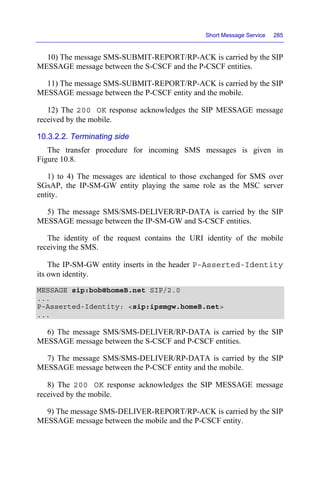
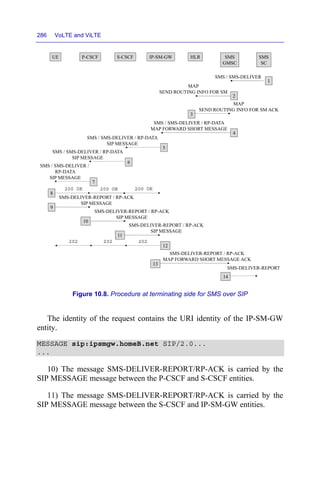
  • 278.
    248 VoLTE andViLTE Figure 9.4. Mobile registration to IMS network with ICS function 5) As the mobile has been authenticated by the MSC server entity, the S-CSCF entity sends to the HSS entity the message DIAMETER server- assignment-request (SAR) to retrieve the mobile profile. 6) The HSS entity transmits the profile of the mobile in the message DIAMETER server-assignment-answer (SAA). 7), 8) The SIP 200 OK response follows the reverse route taken by the REGISTER request. 9) The S-CSCF entity registers the mobile to the SCC AS entity. 10) The SCC AS entity responds with SIP 200 OK message to the SIP REGISTER request. After the registration procedure, the MSC server and SCC AS entities deploy the general procedure for subscription to the mobile registration events. UE MSC Server HSS I-CSCF S-CSCF SCC AS Attachment procedure 1 SIP REGISTER DIAMETER UAR 2 DIAMETER UAA 3 4 SIP REGISTER DIAMETER SAR 5 6 DIAMETER SAA SIP 200 OK 7 SIP 200 OK 8 9 SIP REGISTER SIP 200 OK 10 Subscription Subscription
  • 279.
    Service Centralization andContinuity 249 9.1.2.2. Session establishment at originating side The procedure to establish the session for the outgoing call is described in Figure 9.5, in the case where the MSC server entity and the mobile implement ICS function. Figure 9.5. Session establishment at originating side MSC server and UE implementing ICS function UE MSC Server CSCF SCC AS HomeB.net SIP INVITE 1 SIP 100 Trying 2 SIP INVITE 3 SIP 100 Trying 4 SIP 183 Session Progress 5 SIP 183 Session Progress 6 SIP PRACK 7 SIP PRACK 8 SIP 200 OK 9 SIP 200 OK 10 SETUP CALL PROCEEDING 11 SIP INVITE SIP 100 Trying 12 13 SIP INVITE SIP 100 Trying 14 15 SIP INVITE SIP 100 Trying 16 SIP INVITE 17 SIP 100 Trying 18 19 SIP 180 Ringing 20 21 SIP 180 Ringing SIP 180 Ringing 22 SIP 180 Ringing 23 SIP 200 OK 24 25 SIP 200 OK SIP 200 OK SIP 200 OK 26 CONNECT CONNECT ACK 27 SIP ACK SIP ACK 28 29 SIP 200 OK 30 SIP 200 OK SIP ACK 31 SIP ACK 32 SIP ACK 33 34 SIP ACK
  • 280.
    250 VoLTE andViLTE 1), 3) Alice’s UA entity initializes the service control by sending the SIP INVITE message to the SCC AS entity. The URI identity of the request is the SIP URI or TEL URI identity of the called party (Bob). SDP (Session Description Protocol) messages associated with the SIP INVITE request indicates that the session is established from a CS-mode network. INVITE tel:+1-212-555-2222 SIP/2.0 ... c=PSTN - - t=0 0 m=audio 9 PSTN - a=setup:active a=connection:new a=cs-correlation:callerid:+358504821437 ... 2), 4) Each entity responds with the SIP 100 Trying response that allows blocking the retransmission timer of the SIP INVITE request. 5), 6) The response SIP 183 Session in Progress received from the SCC AS entity provides a SDP response that contains the public service identity (PSI). ... c=PSTN E164 +12125556666 ... 7), 8) Alice’s UA entity sends the subsequent SIP PRACK request to acknowledge the provisional response SIP 183 Session in Progress. 9), 10) The SIP 200 OK message is the response to the PRACK request. Alice’s mobile proceeds with the establishment of the bearer in the CS- mode network (SETUP) indicating the PSI identity as destination. 11), 13) The MSC server entity generates the SIP INVITE request to the identity PSI.
  • 281.
    Service Centralization andContinuity 251 The header P-Asserted-Identity contains the phone number of the caller. The header Accept-Contact indicates that the MSC server entity supports supplementary telephone services. INVITE tel:+1-212-555-6666 SIP/2.0 ... P-Asserted-Identity: <tel:+358-50-4821437> Accept-Contact: *;+g.3gpp.icsi-ref="urn%3Aurn-7%3gpp- service.ims.icsi.mmtel" ... The SIP INVITE request contains an SDP offer that contains the characteristics of the audio stream provided by the MSC GW entity. 12), 14) Each entity responds with the SIP 100 Trying response that allows for blocking the retransmission timer of the SIP INVITE request. 15), 17) The SCC AS entity generates the SIP INVITE request to Bob located in the domain HomeB.net. The SCC AS entity replaces the PSI identity by the TEL URI identity of Bob that was recorded during the first SIP INVITE message. INVITE tel:+1-212-555-2222 SIP/2.0 ... 16), 18) Each entity responds with the SIP 100 Trying response that allows for blocking the retransmission timer of the SIP INVITE request. 19), 20) The SCC AS entity receives from the domain HomeB.net the SIP 180 Ringing message indicating that Bob’s phone is ringing. 21), 22) The SCC AS entity responds with the SIP 180 Ringing message to the INVITE request received from Alice’s UA entity. 23), 24) The SCC AS entity receives from the domain HomeB.net the SIP 200 OK message indicating that Bob picked up the phone. The SIP 200 OK message contains the SDP message with the characteristics of the audio stream.
  • 282.
    252 VoLTE andViLTE 25), 26) The SCC AS entity responds to the SIP INVITE request of the MSC server entity with the SIP 200 OK message in which the SCC AS entity forwards the SDP message received from the domain HomeB.net. Upon receipt of the SIP 200 OK message, the MSC server entity confirms the session establishment (CONNECT) to Alice’s mobile and transfers the characteristics of audio stream to the MSC GW entity. 27), 28) The MSC server entity acknowledges the SIP 200 OK response by the subsequent SIP ACK request. 29), 30) The SCC AS entity responds to the SIP INVITE request of Alice’s UA entity with the SIP 200 OK message. 31), 32) Alice’s UA entity acknowledges the SIP 200 OK response by the subsequent SIP ACK request. 33), 34) The SCC AS entity acknowledges the SIP 200 OK response received from the area HomeB.net by the subsequent SIP ACK request. 9.1.2.3. Session establishment at terminating side The procedure to establish the session for the incoming call is illustrated in Figure 9.6, in the case where the MSC server entity and the mobile implement ICS function. 1), 3) The SCC AS entity receives the SIP INVITE request from the domain HomeA.net. The translation of TEL URI identity in SIP URI has been issued within the network HomeA.net. INVITE sip:bob@HomeB.net SIP/2.0 ... The SDP message associated with the SIP INVITE request contains the characteristics of the audio stream. 2), 4) Each entity responds with the SIP 100 Trying response that allows blocking the retransmission timer of the SIP INVITE request. 5) The SCC AS entity determines the capacity and the location of the mobile through the T-ADS function and generates a SIP INVITE request to Bob’s UA entity.
  • 283.
    Service Centralization andContinuity 253 Figure 9.6. Session establishment at terminating side MSC server and UE implementing ICS function 7) The S-CSCF entity replaces the SIP URI identity by Bob’s telephone number associated with the identity of the MSC Server which recorded Bob. HomeA.net CSCF SCC AS MSC Server UA SIP INVITE 1 SIP 100 Trying 2 3 SIP INVITE SIP 100 Trying 4 SIP INVITE SIP 100 Trying 5 6 SIP INVITE 7 SIP 100 Trying 8 9 SIP 183 Session Progress SIP 183 Session Progress 10 SETUP CALL PROCEEDING SIP INVITE 11 SIP 100 Trying 12 SIP INVITE 13 14 SIP 100 Trying 15 SIP 200 OK SIP 200 OK 16 CONNECT CONNECT ACK 17 SIP ACK SIP ACK 18 SIP 180 Ringing 19 SIP 180 Ringing 20 SIP 180 Ringing 23 24 SIP 200 OK SIP 200 OK SIP 200 OK 25 21 SIP 180 Ringing 22 SIP 200 OK 26 27 SIP ACK 28 SIP ACK SIP ACK 29 SIP ACK 30
  • 284.
    254 VoLTE andViLTE INVITE sip:12125552222@msc.HomeB.net SIP/2.0 ... 6), 8) Each entity responds with SIP 100 Trying response that allows for blocking the retransmission timer of the SIP INVITE request. 9), 10) Bob’s UA entity responds with SIP 183 Session Progress message containing the SDP message indicating that the CS bearer is used. Bob’s mobile proceeds with the establishment of the bearer in the CS network (SETUP), indicating the PSI identity as destination. 11), 13) The MSC Server entity generates a SIP INVITE request to the PSI identity. The SIP INVITE request contains an SDP offer that contains the characteristics of the audio stream provided by the MSC GW entity. 12), 14) Each entity responds with SIP 100 Trying response that allows for blocking the retransmission timer of the SIP INVITE request. The MSC server entity indicates to Bob’s mobile that the media in the CS network has been established (CONNECT) and forwards the SDP message to the MSC GW entity. 15), 16) The SCC AS entity responds to the MSC server entity with SIP 200 OK message containing the SDP message received from the domain HomeA.net. 17), 18) The MSC server entity acknowledges the SIP 200 OK response with the subsequent SIP ACK request. 19), 20) Bob’s UA entity responds to the SIP INVITE request received from the SCC AS entity with the SIP 180 Ringing message to indicate that Bob’s phone is ringing. 23), 24) Bob’s UA entity responds to the SIP INVITE request received from the SCC AS entity with SIP 200 OK message to indicate that Bob picked up the phone.
  • 285.
    Service Centralization andContinuity 255 25), 26) The SCC AS entity responds to the SIP INVITE request received from the domain HomeA.net with the SIP 200 OK message to indicate that Bob picked up the phone. 27), 28) The domain HomeA.net acknowledges the SIP 200 OK response with the subsequent SIP ACK request. 29), 30) The SCC AS entity acknowledges the SIP 200 OK response with the subsequent SIP ACK request. 9.2. e-SRVCC function 9.2.1. Functional architecture 9.2.1.1. Architecture for basic call When the mobile has established a call on the 4G evolved packet system (EPS), it is necessary to be able to transfer to the 3G universal mobile telecommunications system (UMTS) or 2G global system for mobile (GSM), if loss of coverage occurs on the 4G EPS network. The enhanced single radio voice call continuity (e-SRVCC) ensures continuity of service when the mobile moves from one network in PS mode to a network in CS mode. The functional architecture of the e-SRVCC function is described in Figure 9.7, for the SIP flow and in Figure 9.8 for the RTP stream. To ensure continuity of service, e-SRVCC function introduces two anchor points in the IMS network: – access transfer control function (ATCF) which provides the anchor point for SIP signaling. The ATCF entity is inserted into the path of SIP signaling between control session CSCF entities, on one hand, the P-CSCF (Proxy-CSCF) entity while, on the other hand, the I-CSCF or the S-CSCF entity; – access gateway transfer (ATGW) that provides the anchor point for the RTP stream. The ATCF entity is located in the visited IMS network in the case of roaming to hide to the nominal IMS network and to the interconnected IMS
  • 286.
    256 VoLTE andViLTE network that the SIP flow has changed IP address, given the move from the PS mode to the CS mode. Figure 9.7. Functional architecture for basic call control plane Figure 9.8. Functional architecture for basic call traffic plane eNB PGW SGW MSC Server MME GERAN UTRAN ATCF Flux SIP Flux SIP Flux SIP Bearer Radio Flux SIP Bearer S1 Flux SIP Bearer S5 GTPv2-C S1-AP RRC GTPv2-C Interface Sv P CSCF Flux SIP NAS CM 2G / 3G S / I CSCF SCC AS HSS DIAMETER Flux SIP Flux SIP Flux SIP 1 2 1 Interface d’interconnexion 2 Interface d’itinérance DIAMETER SIP flow Radio Bearer SIP flow S1 Bearer SIP flow S5 Bearer SIP flow SIP flow SIP flow SIP flow SIP flow SIP flow GTPv2-C Sv interface Interconnection interface Roaming interface eNB MSC GW PGW SGW MSC Server MME GERAN UTRAN ATGW ATCF CS flow RTP flow RTP flow RTP flow RTP flow Radio Bearer RTP flow S1 Bearer RTP flow S5 Bearer GTPv2-C S1-AP H.248 H.248 RRC GTPCv2-C Sv interface BSSAP RANAP 1 1 Interconnection interface
  • 287.
    Service Centralization andContinuity 257 The ATGW entity is located in the visited IMS network too in the case of roaming to hide from the interconnected IMS network that the RTP stream has changed its IP address, given the move from the PS mode to the CS mode. The ATGW entity is controlled by the ATCF entity via the H.248 protocol. The ATGW entity may also perform the transcoding of voice if the codecs used, firstly, in the EPS network and, secondly, in GSM or UMTS networks, are different. Figure 9.9 provides an example of the constitution of the RTP stream between Alice’s UA in the domain HomeA.net, Bob’s UA in the domain HomeB.net and ATGW entities. Figure 9.9. RTP flow characteristics for service continuity Figure 9.10 provides an example of the constitution of the RTP stream between MSC GW entity in the domain HomeA.net, Bob’s UA in the domain HomeB.net ATGW entities, after the PS-CS inter-system handover for Alice’s mobile. Figure 9.10. RTP flow characteristics at the end of PS-CS inter-system handover The SCC AS entity implements the mechanisms for the control of the registration of the e-SRVCC function and for the transfer of the session at the PS-CS inter-system handover. UA Alice ATGW ATGW UA Bob RTP flow RTP flow RTP flow @IP 192.1.1.1 N° port 3456 @IP 200.1.1.1 N° port 11234 @IP 200.1.1.2 N° port 8899 @IP 200.2.2.2 N° port 6544 @IP 200.2.2.1 N° port 10124 @IP 192.2.2.1 N° port 4528 domain HomeA.net domain HomeB.net Alice ATGW UA Bob RTP flow RTP flow @IP 196.1.1.1 N° port 7236 @IP 200.1.1.1 N° port 5238 @IP 200.1.1.2 N° port 8899 @IP 200.2.2.2 N° port 6544 @IP 200.2.2.1 N° port 10124 @IP 192.2.2.1 N° port 4528 domain HomeA.net domain HomeB.net CS flow MSC GW ATGW RTP flow
  • 288.
    258 VoLTE andViLTE The MME entity of the EPS network is affected by the e-SRVCC function by performing the following functions: – it separates the bearer dedicated to the voice from the other media carrying no voice; – it initializes, via the Sv interface, the e-SRVCC procedure for voice handover to the target cell of the GSM or UMTS network; – it coordinates the handover from the PS mode to the CS mode for voice and possibly the handover of the PS mode to the PS mode for the other streams. The MSC server entity of the 2G GSM or 3G UMTS network is also affected by the e-SRVCC function by performing the following functions: – it ensures the availability of resources in the 2G GSM or 3G UMTS network before executing the handover; – it coordinates the execution of the handover and the transfer of the telephone communication. The transfer of the telephone signaling involves transferring, on one hand, SIP signaling exchanged between the mobile and the ATCF entity, while on the other hand, the signaling consisting of call management exchanged between the mobile and the MSC server and SIP exchanged between MSC server and ATCF entity. The voice transfer involves transferring, on one hand, the RTP stream established between the mobile and the ATGW entity, while on the other hand, the CS bearer between the mobile and the MSC GW entity and the RTP stream established between the MSC GW entity and the ATGW entity. 9.2.1.2. Architecture for emergency call The functional architecture of the e-SRVCC function in the case of an emergency call is given in Figure 9.11. The emergency access transfer function (EATF) ensures continuity of service when the mobile performs the PS-CS inter-system handover. The EATF entity constitutes the anchor point of the SIP signaling and acts as a B2BUA entity.
  • 289.
    Service Centralization andContinuity 259 In the case of roaming, the E-CSCF (Emergency CSCF) and EATF entities are located in the visited network. Figure 9.11. Functional architecture for emergency call control plane SIP flow is transmitted to the public safety answering point (PSAP) via the interconnect border control function (IBCF) in the case of IMS interconnection or via breakout gateway control function (BGCF) and MGCF entity in the case of CS interconnection. The RTP stream is transmitted to the PSAP emergency center via TrGW in the case of IMS interconnection or via IMS GW in the case of CS interconnection. In the case of IMS interconnection, the IBCF entity ensures the anchor point of the SIP stream. In the case of IMS interconnection, the TrGW entity ensures the anchor point of the RTP stream. In the case CS interconnection, the MGCF entity ensures the anchor point of the SIP stream. eNB PGW SGW MSC Server MME GERAN UTRAN EATF SIP flow SIP flow SIP flow Radio Bearer SIP flow S1 Bearer SIP flow S5 Bearer GTPv2-C S1-AP RRC GTPv2-C Sv interface P CSCF SIP flow NAS CM 2G / 3G I CSCF SIP flow SIP flow PSAP E CSCF SIP flow
  • 290.
    260 VoLTE andViLTE In case of CS interconnection, the entity IMS GW entity ensures the anchor point of the RTP stream. 9.2.2. Procedures 9.2.2.1. Registration The registration procedure implementing the e-SRVCC function is shown in Figure 9.12. 1) The ATCF entity transfers the SIP REGISTER request to the I-CSCF entity by inserting the Path header containing the PATH URI identity and the header Feature-Caps with the following parameters: – +g.3gpp.atcf: this parameter informs the session transfer number for SRVCC (STN-SR); – +g.3gpp.atcf-mgmt: this parameter contains the URI identity of the ATCF entity; – +g.3gpp.atcf-path: this parameter contains the identity PATH URI identity of the ATCF entity; – +g.3gpp.srvcc-alerting: this parameter indicates that the MSC Server entities support the SRVCC function during the ringing phase. REGISTER sip:home1.net SIP/2.0 Feature-Caps: *;+g.3gpp.atcf="<tel:+1-237-888-9999>"; +g.3gpp.atcf-mgmt-uri = "<sip:atcf.HomeA.net>"; +g.3gpp.atcf-path="<sip:termsdgfdfwe@atcf.HomeA.net>"; +g.3gpp.mid-call; +g.3gpp.srvcc-alerting Path:<sip:termsdgfdfwe@atcf.HomeA.net>,<sip:aga2gfgf@pcs cf1.HomeA.net:5070;ob> ... 2) In the second registration phase, when the mobile has been authenticated, the ATCF entity includes in the message SIP 200 OK, the Header Feature-Caps with the parameter +g.3gpp.atcf containing STN-SR number. SIP/2.0 200 OK Feature-Caps: *;+g.3gpp.atcf="<tel:+1-237-888-9999>" ...
  • 291.
    Service Centralization andContinuity 261 Figure 9.12. Registration for service continuity 3) At the end of the mobile’s registration, the SCC AS entity receives from the S-CSCF entity the SIP REGISTER message containing the following information created by the ATCF entity: – the SIP URI identity of the ATCF entity; – the PATH URI identity for the identification of the mobile while registering; – the STN-SR session transfer number. 4) The SCC AS entity responds with SIP 200 OK message to the SIP REGISTER request. 5) The SCC AS entity communicates to the SIP URI of the ATCF entity, in the SIP MESSAGE request, additional information concerning the PATH URI identity: its own access transfer update – transfer session identifier (ATU-STI) and the mobile subscriber ISDN number (MSISDN). UA P-CSCF ATCF I-CSCF S-CSCF SCC AS HSS MME SIP REGISTER SIP REGISTER 1 SIP REGISTER DIAMETER UAR DIAMETER UAA SIP REGISTER DIAMETER MAR DIAMETER MAA SIP 4O1 SIP 4O1 SIP 4O1 SIP 4O1 SIP REGISTER SIP REGISTER SIP REGISTER DIAMETER LIR DIAMETER LIA SIP REGISTER DIAMETER SAR DIAMETER SAA SIP 200 SIP 200 SIP 200 SIP 200 2 SIP REGISTER SIP 200 3 4 5 SIP MESSAGE SIP 200 SIP MESSAGE 6 SIP 200 7 DIAMETER PUR DIAMETER PUA 8 9 DIAMETER IDR DIAMETER IDA 10
  • 292.
    262 VoLTE andViLTE MESSAGE sip:atcf.HomeA.net SIP/2.0 ... <?xml version="1.0" encoding="UTF-8"?> <SRVCC-infos> <SRVCC-info ATCF-Path- URI="sip:termsdgfdfwe@atcf.HomeA.net"> <ATU-STI>sip:sccas.HomeA.net</ATU-STI> <C-MSISDN>tel:+358-50-4821437</C-MSISDN> </SRVCC-info> </SRVCC-infos> 6) The ATCF entity responds with the SIP 200 OK message to the SIP REGISTER request. 7) The SCC AS entity forwards the message DIAMETER profile- update-request (PUR) to the HSS entity to update the STN-SR session number. 8) The message DIAMETER profile-update-answer (PUA) acknowledges the received message DIAMETER PUR. 9) The HSS entity sends the message DIAMETER insert-subscriber-data- request (IDR) to the MME entity for the update of the STN-SR session number. 10) The message DIAMETER insert-subscriber-data-answer (IDA) acknowledges the received message DIAMETER IDR. 9.2.2.2. Session establishment at originating side The procedure for establishing the session implementing e-SRVCC function for an outgoing call is given in Figure 9.13. 1) The establishment of the session is started by the SIP INVITE request transmitted by Alice’s UA entity to Bob’s UA entity. The body of the SDP message contains the characteristics of the RTP stream of the offer of Alice’s UA entity: – IPv4 address (192.1.1.1); – port number (3456).
  • 293.
    Service Centralization andContinuity 263 Figure 9.13. Session establishment for service continuity originating side UA P-CSCF ATCF ATGW S-CSCF SCC AS HomeB.net SIP INVITE SIP INVITE 3 SIP INVITE SIP INVITE SIP 100 SIP 100 SIP 100 SIP 100 SIP INVITE SIP 100 SIP INVITE SIP 100 1 2 4 SIP 183 SIP 183 SIP 183 SIP 183 SIP 183 SIP 183 5 SIP PRACK SIP PRACK SIP PRACK SIP PRACK SIP PRACK SIP PRACK SIP 200 SIP 200 SIP 200 SIP 200 SIP 200 SIP 200 SIP UPDATE SIP UPDATE SIP UPDATE SIP UPDATE SIP UPDATE SIP UPDATE SIP 200 SIP 200 SIP 200 SIP 200 SIP 200 SIP 200 SIP 180 SIP 180 SIP 180 SIP 180 SIP 180 SIP 180 SIP 200 SIP 200 SIP 200 SIP 200 SIP 200 SIP 200 SIP ACK SIP ACK SIP ACK SIP ACK SIP ACK SIP ACK
  • 294.
    264 VoLTE andViLTE The Route headers contain the identities of the P-CSCF and S-CSCF entities, Alice’s UA entity does not know the identity of the ATCF entity which, however, is located between the P-CSCF and S-CSCF entities. 2) As the SIP 200 OK response to the SIP REGISTER request contains the header Feature-Caps with parameter +g.3gpp.atcf, the P-CSCF entity forwards the SIP INVITE request to the ATCF entity. 3) Upon receipt of the SIP INVITE message, the ATCF entity reserves the resource with the ATGW entity providing the anchor point for the RTP stream. The ATCF entity transfers to the S-CSCF entity the SIP INVITE request whose associated SDP message, sent to the domain HomeB.net, is that of ATGW entity to replace that of Alice’s UA entity: – Alice’s IP address (192.1.1.1) is replaced by the value communicated by the ATGW entity (200.1.1.2); – the port number (3456) is replaced by the value communicated by the ATGW entity (8899). 4) The SIP 183 Session Progress response from the domain HomeB.net contains the characteristics of the RTP stream in the SDP message body: – IPv4 address (200.2.2.2); – port number (6544). 5) Upon receipt of the provisional SIP 183 Session Progress response, the ATCF entity configures the ATGW entity and replaces the SDP message body received from the domain HomeB.net by that received from the ATGW entity: – the IP address (200.2.2.2) is replaced by the ATGW entity address (200.1.1.1); – the port number (6544) is replaced by the value communicated by the ATGW entity (11234). 9.2.2.3. Session establishment at terminating side The procedure for establishing the session implementing e-SRVCC function for an incoming call is illustrated in Figure 9.14.
  • 295.
    Service Centralization andContinuity 265 Figure 9.14. Session establishment for service continuity terminating side 1) The SIP INVITE request received from the domain HomeA.net by the I-CSCF entity contains the SDP message body with the RTP stream characteristics: – IPv4 address (200.1.1.2); – port number (8899). I-CSCF HSS S-CSCF SCC AS ATCF P-CSCF UA HomeA.net SIP INVITE 1 SIP 100 DIAMETER LIR DIAMETER LIA SIP INVITE SIP INVITE SIP 100 SIP 100 SIP INVITE SIP 100 SIP INVITE SIP 100 SIP INVITE SIP INVITE SIP 100 SIP 100 SIP 183 2 3 4 SIP 183 5 SIP 183 SIP 183 SIP 183 SIP 183 SIP 183 SIP PRACK SIP PRACK SIP PRACK SIP PRACK SIP PRACK SIP PRACK SIP 200 SIP 200 SIP 200 SIP 200 SIP 200 SIP 200 SIP UPDATE SIP UPDATE SIP UPDATE SIP UPDATE SIP UPDATE SIP UPDATE SIP 200 SIP 200 SIP 200 SIP 200 SIP 200 SIP 200 SIP 180 SIP 180 SIP 180 SIP 180 SIP 180 SIP 180 SIP 180 SIP 200 SIP 200 SIP 200 SIP 200 SIP 200 SIP 200 SIP 200 SIP ACK SIP ACK SIP ACK SIP ACK SIP ACK SIP ACK
  • 296.
    266 VoLTE andViLTE 2) The S-CSCF entity forwards the SIP INVITE request to the SCC AS, ATCF, P-CSCF and Bob’s UA entities: – the identity of the SCC AS entity is obtained following the review of the initial filter criteria (iFC); – the identities of the ATCF and P-CSCF entities are retrieved from the Path header of the SIP REGISTER request; – the IP address of Bob’s UA entity results from registration. 3) Upon receipt of the SIP INVITE message, the ATCF entity reserves the resource with the ATGW entity providing the anchor point for the RTP stream. The ATCF entity transfers to the P-CSCF entity the SIP INVITE request whose associated SDP message, sent to Bob’s UA entity, is that of the ATGW entity to replace the one received from the domain HomeA.net: – the IP address (200.1.1.2) is replaced by that of the ATGW entity (200.2.2.1); – the port number (8899) is replaced by the value communicated by the ATGW entity (10124). 4) The SIP 183 Session Progress response from Bob’s UA entity contains the characteristics of the RTP stream in the SDP message body: – IPv4 address (192.2.2.1); – port number (4528). 5) Upon receipt of the provisional response SIP 183 Session Progress, the ATCF entity configures the ATGW entity and replaces the SDP message body received from Bob’s UA entity by the one received from the ATGW entity: – the IP address (192.2.2.1) is replaced by that of the ATGW entity (200.2.2.2); – the port number (4528) is replaced by the value communicated by the ATGW entity (6544).
  • 297.
    Service Centralization andContinuity 267 9.2.2.4. PS-CS inter-system handover The PS-CS inter-system handover procedure is given in Figure 9.15. Figure 9.15. PS-CS inter-system handover 1) The decision to perform a handover from the EPS network in PS mode to the UMTS or GSM network in CS mode is taken by the eNB on which the mobile is connected. This decision is taken based on measurement reports from the mobile in the message RRC MeasurementReport. 2) The eNB entity sends to the MME entity the message S1-AP HANDOVER REQUIRED. The handover request may also relate to the flow transferred to the 3G UMTS network in PS mode. 3) From the quality class index (QCI), the MME entity separates the audio stream (QCI = 1) and possibly video (QCI = 2) from other flows and initializes them to be relocated either to the MSC server entity (RTP stream) or to the SGSN entity. UE eNB MME SGW PGW MSC Server BSS UTRAN RRC MeasurementReport 1 S1-AP HANDOVER REQUIRED 2 GTPv2-C SRVCC PS-CS REQUEST RELOCATION REQUEST RELOCATION REQUEST ACK 3 GTPv2-C SRVCC PS-CS RESPONSE 4 S1-AP HANDOVER COMMAND RRC ConnectionReconfiguration 5 6 GTPv2-C SRVCC PS-CS COMPLETE NOTIFICATION HANDOVER TO UTRAN COMPLETE GTPv2-C SRVCC PS-CS COMPLETE NOTIFICATION ACK 7 8 GTPv2-C DELETE SESSION REQUEST 9 Handover execution GTPv2-C DELETE SESSION RESPONSE 10 S1-AP UE CONTEXT RELEASE COMMAND 11
  • 298.
    268 VoLTE andViLTE The MME entity initiates the procedure of PS-CS inter-system handover by transmitting the message GTPv2-C SRVCC PS-CS REQUEST to the MSC server entity, which contains the STN-SR session number and the MSISDN phone number. The MSC server entity sends a handover request to the UMTS terrestrial radio access network (UTRAN) of the UMTS network or the base station sub-system (BSS) of the GSM network. After reserving the resources, the access network acknowledges the request received from the MSC server entity. The answer carries a container that will be transmitted to the mobile. This container contains the radio characteristics of the 2G or 3G cell, which will optimize the mobile connection time. 4) The MSC server entity responds to the MME entity by indicating that resources are available for the execution of the handover in the message GTPv2-C SRVCC PS-CS RESPONSE. 5) The MME entity triggers the execution of the handover by sending the message S1-AP HANDOVER COMMAND to the eNB entity. 6) The eNB entity transmits to the mobile the message RRC ConnectionReconfiguration, causing the connection establishment of the mobile to the radio station of the BSS or UTRAN access network. 7) When the mobile is connected, the access network notifies the MSC server entity which informs the MME entity to the completion of handover in a message GTPv2 SRVCC C-PS-CS COMPLETE NOTIFICATION. 8) This message is acknowledged by a message GTPv2-C SRVCC PS-CS COMPLETE NOTIFICATION ACK. The MSC server entity assigns a temporary mobile subscriber identity (T-TMSI) to the mobile and updates the location of the mobile to the HSS entity. 9) The MME entity induces the deletion of the context of audio and video streams at the SGW by sending the message GTPv2-C DELETE SESSION REQUEST, if the PS-PS inter-system handover is not established.
  • 299.
    Service Centralization andContinuity 269 10) The SGW and PGW entities carry the message received by the message GTPv2-C DELETE SESSION RESPONSE. 11) The MME entity causes the deletion of the contexts of audio and video streams at the entity eNB by sending the message S1-AP UE CONTEXT RELEASE COMMAND to the eNB entity. After the PS-CS inter-system handover, the CS flow is established between Alice’s mobile and the MSC GW entity. The next phase involves the establishment of RTP flows between the MSCGW and ATGW entities. 9.2.2.5. Access transfer The access transfer procedure is described in Figure 8.16. Figure 9.16. Access transfer for service continuity 1) The MSC server entity sends the SIP INVITE request to the ATCF entity. The URI identity of the query contains the STN-SR session number mentioned by the MME in the procedure of the PS-CS inter-system handover. The header P-Asserted-Identity contains Alice’s phone number (MSISDN). INVITE tel:+1-237-888-9999 SIP/2.0 ... P-Asserted-Identity: <tel:+358-50-4821437> ... MSC Server ATCF P-CSCF SCC AS SIP INVITE (URI STN-SR, SDP MSC GW) 1 SIP 100 Trying SIP 200 OK (SDP ATGW) 2 SIP INVITE (URI ATU-STI, SDP ATGW) 3 SIP 100 Trying 4 SIP 200 OK (SDP ATGW) SIP BYE SIP BYE SIP 200 OK SIP 200 OK 5 SIP ACK SIP ACK
  • 300.
    270 VoLTE andViLTE The body of the SDP message contains the characteristics of the RTP stream provided by the MSC GW entity: – IPv4 address (196.1.1.1); – port number (7236). 2) Upon receipt of the SIP INVITE message, the ATCF entity transfers the SDP message of the MSC GW entity to the ATGW entity and responds with the SIP 200 OK message containing the SDP message with the RTP flow characteristics provided by the ATGW entity: – IPv4 address (200.1.1.1); – port number (5238). The next phase aims at informing the SCC AS entity about the transfer of Alice’s communication to a CS network. 3) The ATCF entity establishes a new dialogue with the SCC AS entity by sending a new SIP INVITE request. The URI identity of the query contains the ATU-STI identity of the entity SCC AS entity recovered during registration. The SIP INVITE message incorporates a Require header with the value tdialog to mean that the header Target-Dialog is required. The header Target-Dialog specifies that the existing dialogue (Call-ID header, tag parameters of the headers From and To) must be connected with the dialogue established by the ATCF entity. The P-Asserted-Identity header contains Alice’s phone number (MSISDN). INVITE sip:sccas.HomeA.net SIP/2.0 ... Require: tdialog Target-Dialog: me03a0s09a2sdfgjkl491777; remote- tag=774321; local-tag=64727891 P-Asserted-Identity: <tel:+358-50-4821437> ...
  • 301.
    Service Centralization andContinuity 271 The body of the SDP message contains the characteristics of the RTP stream provided by the ATGW entity of the domain HomeA.net (IPv4 address 200.1.1.2 and port number 8899) while establishing the session. As the SDP message body has not changed, there is no need to make an update for the domain HomeB.net. 4) The SIP 200 OK response incorporates the SDP message communicated by ATGW entity of the domain HomeB.net (IPv4 address 200.2.2.2 and port number 6544) that the SCC AS entity had retained. 5) The SCC AS entity sends the SIP BYE request to complete the initial dialogue in the P-CSCF and ATCF entities and possibly in Alice’s UA entity if it has carried out for the SIP flow the inter-system PS-PS handover simultaneously with the PS-CS inter-system handover. In the case where Alice’s UA entity may not respond with a message SIP 200 OK, the ending of the dialogue takes place at the initiative of the entities concerned network. 9.2.2.6. Emergency call 9.2.2.6.1. Session establishment for an emergency call The procedure for establishing the emergency call by implementing the e-SRVCC function is illustrated in Figure 9.17. Figure 9.17. Session establishment for service continuity emergency call UA P-CSCF E-CSCF EATF PSAP SIP INVITE SIP INVITE SIP INVITE SIP INVITE SIP INVITE SIP 200 OK SIP 200 OK SIP 200 OK SIP 200 OK SIP 200 OK SIP ACK SIP ACK SIP ACK SIP ACK SIP ACK
  • 302.
    272 VoLTE andViLTE 9.2.2.6.2. Access transfer for an emergency call The procedure of access transfer for an emergency call is described in Figure 9.18. Figure 9.18. Access transfer for an emergency call 1) The MSC server entity sends the SIP INVITE request to the EATF entity. The URI identity of the query contains the E-STN-SR number of the EATF entity, configured at the MSC server entity. The body of the SDP message contains the characteristics of the RTP stream provided by the MSC GW entity. 2) The EATF entity transfers the SDP message received to the entity in charge of the interconnection with the emergency center, in a SIP reINVITE message. 3) The EATF entity issues the SIP BYE request to complete the initial dialogue in the P-CSCF entity, and possibly in Alice’s UA entity if it has carried out for the SIP stream the PS-PS inter-system handover simultaneously with the PS-CS inter-system handover. UA MSC Server P-CSCF I-CSCF EATF E-CSCF PSAP PS-CS inter-system handover 1 SIP INVITE (URI E-STN-SR, SDP MSC GW) SIP reINVITE (URI PSAP, SDP MSC GW) 2 SIP 200 OK SIP 200 OK SIP ACK SIP ACK SIP 200 OK SIP 200 OK SIP ACK SIP ACK SIP BYE SIP 200 OK 3 SIP BYE SIP BYE SIP 200 OK SIP 200 OK
  • 303.
    10 Short Message Service 10.1.Message structure A short message service (SMS) over the SGsAP protocol allows for a mobile connected to the 4G network to send and receive an SMS in CS (Circuit-Switched) mode. A short message service over the session initiation protocol (SIP) is a supplementary telephone service offered by the IMS. The SMS message is generated and interpreted by the short message application layer (SM-AL) between the mobile and the SMS service center (SMS-SC) (Figures 10.1 and 10.2). The short message transport layer (SM-TL) ensures reliable transmission of SMS messages between the mobile and the SMS-SC entity (Figures 10.1 and 10.2). The short message relay layer (SM-RL) ensures reliable transmission of SMS messages between, firstly, the mobile, and, secondly: – the interworking mobile services switching center (SMS-IWMSC) for outgoing SMS messages (Figures 10.1 and 10.2); – the gateway mobile-services switching center (SMS-GMSC) for incoming SMS messages (Figures 10.1 and 10.2); The short message control layer (SM-CL) ensures reliable transmission of SMS messages between the mobile and the MSC server entity (Figure 10.1). VoLTE and ViLTE: Voice and Conversational Video Services over the 4G Mobile Network, First Edition. André Perez. © ISTE Ltd 2016. Published by ISTE Ltd and John Wiley & Sons, Inc.
  • 304.
    274 VoLTE andViLTE For the architecture of SMS over SGsAP, the mobility management entity (MME) ensures relaying SM-CL messages and the MSC server entity that SM-RL messages (Figure 10.1). For the architecture of SMS over SIP, the IP short message gateway (IP- SM-GW) provides relaying SM-RL messages (Figure 10.1 and 10.2). Figure 10.1. Protocol architecture for SMS over SGsAP ` Figure 10.2. Protocol architecture for SMS over SIP 10.1.1. SM-TL layer SMS-SUBMIT message carries outgoing SMS messages from the mobile to the SMS-SC entity. SMS-SUBMIT-REPORT message is an acknowledgment on the part of the SMS-SC entity, positive or negative, of the SMS-SUBMIT message. SMS-DELIVER message carries incoming SMS messages from the SMS-SC entity to the mobile. SMS-DELIVER-REPORT message is an acknowledgment on the part of the mobile, positive or negative, of the SMS-DELIVER message or the SMS-STATUS-REPORT message. SM-AL SM-TL SM-RL SM-CL Mobile SM-CL SM-RL SM-AL SM-TL NAS SGsAP MAP Not defined MME MSC Server SMS-IWMSC SMS-GMSC SMS-SC SM-AL SM-TL SM-RL Mobile SM-RL SM-AL SM-TL SIP MAP Not defined IP-SM-GW SMS-IWMSC SMS-GMSC SMS-SC
  • 305.
    Short Message Service275 SMS-STATUS-REPORT is a report sent by the SMS-SC entity to the mobile which transmits the SMS-SUBMIT message, report relating to the delivery of the SMS message to the destination. 10.1.2. SM-RL layer The header of the SM-RL layer contains the following fields: – Message Type Indicator: this field indicates the type of message (RP-DATA-ACK RP, RP-ERROR); – Message Reference: this field contains a sequence number that associates the RP-DATA message and the RP-ACK or RP-ERROR response; – Originator Address: this field indicates the E.164 phone number of the SMS SC entity issuing the SMS message; – Destination address: this field indicates the E.164 phone number of the SMS SC entity receiving the SMS message. The RTP-DATA header contains SMS-SUBMIT, SMS-DELIVER or SMS-STATUS-REPORT messages from the SM-TL layer. The RP-ACK header is an acknowledgment of the receipt of RP-DATA header and contains the SMS-SUBMIT-REPORT or SMS-DELIVER- REPORT messages from the SM-TL layer. 10.1.3. SM-CL layer The header of the SM-LC layer contains the following fields: – Protocol Discriminator: this field indicates the nature of the data transmitted. It takes the value “SMS message”; – Transaction Identifier: this field identifies the number of the transaction; – Message Type: this field shows the type of message (CP-DATA, CP-ACK, CP-ERROR).
  • 306.
    276 VoLTE andViLTE The CP-DATA header contains the headers RP-DATA or RP-ACK and the associated messages of the SM-TL layer. The CP-ACK header is an acknowledgment of receipt of the message CP-DATA. 10.2. SMS over SGsAP 10.2.1. Functional architecture Short message service over SGsAP is a feature of the circuit-switched fallback (CSFB) mechanism which allows a mobile connected to a 4G network to use the services of the 2G/3G network in CS mode. The functional architecture of the short message service over SGsAP is described in Figure 10.3. Figure 10.3. Functional architecture for SMS over SGsAP When attaching the mobile, the MME entity attaches the mobile to the MSC server entity, selected by the MME entity. The MME entity must perform a conversion of the tracking area identity (TAI) of the mobile on the 4G network in a location area identity (LAI) on the 2G or 3G network. SMS message is conveyed between the mobile and the MSC server entity, and is supported by the following messages: – non-access stratum (NAS) message between the mobile and the MME entity; – SGsAP message between the MME and MSC server entities. E- UTRAN MME MSC Server SMS GMSC SMS IWMSC SMS SC EPS Outgoing SMS Incoming SMS
  • 307.
    Short Message Service277 SGs interface is the reference point between the MME and MSC server entities for signaling. This interface supports SGsAP signaling. For an incoming SMS message, the MSC server entity generates a paging to the MME entity. If the mobile is in standby state on the 4G network, the MME entity triggers the paging procedure for establishing the signaling bearer on LTE-Uu and S1-MME interfaces, allowing the transport of NAS messages. 10.2.2. Procedures 10.2.2.1. Originating side The transfer procedure for outgoing SMS messages is given in Figure 10.4. Figure 10.4. Procedure at originating side for SMS over SGsAP UE MME MSC Server SMS IWMSC SMS SC SMS / SMS-SUBMIT / RP-DATA / CP-DATA NAS UPLINK NAS TRANSPORT SMS / SMS-SUBMIT / RP-DATA / CP-DATA SGsAP UPLINK UNITDATA SMS / SMS-SUBMIT / RP-DATA MAP FORWARD SHORT MESSAGE SMS / SMS-SUBMIT SMS-SUBMIT-REPORT SMS-SUBMIT-REPORT / RP-ACK MAP FORWARD SHORT MESSAGE ACK SMS-SUBMIT-REPORT / RP-ACK / CP-DATA SGsAP DOWNLINK UNITDATA SMS-SUBMIT-REPORT / RP-ACK / CP-DATA NAS DOWNLINK NAS TRANSPORT CP-ACK NAS UPLINK NAS TRANSPORT CP-ACK SGsAP UPLINK UNITDATA SGsAP RELEASE REQUEST 1 2 5 6 7 8 9 10 11 12 13 CP-ACK SGsAP DOWNLINK UNITDATA CP-ACK NAS DOWNLINK NAS TRANSPORT 3 4
  • 308.
    278 VoLTE andViLTE 1) The message SMS/SMS-SUBMIT/RP-DATA/CP-DATA is carried by the message NAS UPLINK NAS TRANSPORT between the mobile and the MME entity. 2) The message SMS/SMS-SUBMIT/RP-DATA/CP-DATA is conveyed by the message SGsAP UPLINK UNITDAT between the MME and MSC Server entities. The CP-ACK message is transmitted by the MSC server entity to acknowledge the receipt of the message SMS/SMS-SUBMIT/RP- DATA/CP-DATA. 3) The CP-ACK message is conveyed by the message SGsAP DOWNLINK UNITDATA between the MSC Server and MME entities. 4) The CP-ACK message is conveyed by the message NAS DOWNLINK NAS TRANSPORT between the MME entity and the mobile. 5) The message SMS/SMS-SUBMIT/RP-DATA is carried by the message MAP FORWARD SHORT MESSAGE between the MSC server and SMS-IWMSC entities. 6) The message SMS/ SMS-SUBMIT is transferred to the SMS-SC entity. 7) The SMS SC entity acknowledges receiving the message SMS/SMS- SUBMIT message by sending SMS-SUBMIT-REPORT message to the SMS-IWMSC entity. 8) The message SMS-SUBMIT-REPORT/RP-ACK is carried by the message MAP FORWARD SHORT MESSAGE ACK between the SMS- IWMSC and MSC server entities. 9) The message SMS-SUBMIT-REPORT/RP-ACK/CP-DATA is carried by the message SGsAP DOWNLINK UNITDATA between the MSC server and MME entities. 10) The message SMS-SUBMIT-REPORT/RP-ACK/CP-DATA is carried by the message NAS DOWNLINK NAS TRANSPORT between the MME entity and the mobile.
  • 309.
    Short Message Service279 The CP-ACK message is transmitted by the mobile to acknowledge the receipt of the message SMS-SUBMIT-REPORT/RP-ACK/CP-DATA. 11) The CP-ACK message is conveyed by the message NAS UPLINK NAS TRANSPORT between the mobile and the MME entity. 12) The CP-ACK message is conveyed by the message SGsAP UPLINK UNITDATA between the MME and MSC server entities. When the SMS-SC entity has the confirmation that the SMS message was delivered to the destination, it sends to the mobile the SMS-STATUS- REPORT/RP-ACK, whose transport is nothing but reproduced steps 7 to 12. 13) The MSC server entity informs the MME entity that the transfer of the SMS message is done by sending the message SGsAP RELEASE REQUEST. 10.2.2.2. Terminating side The transfer procedure for incoming SMS messages is given in Figure 10.5. 1) The SMS-SC entity sends the message SMS/SMS-DELIVER to the SMS-GMSC entity. 2) The SMS-GMSC entity interrogates the home location register (HLR) via the message MAP SEND ROUTING INFO FOR SM to obtain the identity of the MSC server entity. 3) The HLR entity provides the identity of the MSC server entity to the SMS-GMSC entity in the message MAP SEND ROUTING INFO FOR SM ACK. 4) The message SMS/SMS-DELIVER/RP-DATA is transported by the message MAP FORWARD SHORT MESSAGE between the SMS-GMSC and MSC server entities. 5) The message SGsAP PAGING containing the temporary mobile subscriber identity (TMSI) of the mobile, is transmitted to the MME entity. 6) The message S1-AP PAGING, containing the identity shortened TMSI (S-TMSI) is sent to all eNB entities of the TAI area.
  • 310.
    280 VoLTE andViLTE Figure 10.5. Procedure at terminating side for SMS over SGsAP 7) The RRC Paging message is broadcast by the eNB entities belonging to the TAI area. The mobile connects to the eNB entity and performs a service request to the MME entity to establish the signaling bearer. UE MME MSC Server SMS GMSC SMS SC eNB HLR SMS / SMS-DELIVER 1 MAP SEND ROUTING INFO FOR SM MAP SEND ROUTING INFO FOR SM ACK 2 3 SMS / SMS-DELIVER / RP-DATA MAP FORWARD SHORT MESSAGE 4 SGsAP PAGING 5 S1-AP PAGING 6 RRC Paging 7 Service Request SGsAP SERVICE REQUEST 8 SMS / SMS-DELIVER / RP-DATA / CP-DATA SGsAP DOWNLINK UNITDATA SMS / SMS-DELIVER / RP-DATA / CP-DATA NAS DOWNLINK NAS TRANSPORT 9 10 CP-ACK NAS UPLINK NAS TRANSPORT 11 CP-ACK SGsAP UPLINK UNITDATA 12 SMS-DELIVER-REPORT / RP-ACK / CP-DATA NAS UPLINK NAS TRANSPORT 13 SMS-DELIVER-REPORT / RP-ACK / CP-DATA SGsAP UPLINK UNITDATA 14 SMS-DELIVER-REPORT / RP-ACK MAP FORWARD SHORT MESSAGE ACK 15 SMS-DELIVER-REPORT 16 CP-ACK SGsAP DOWNLINK UNITDATA CP-ACK NAS DOWNLINK NAS TRANSPORT 17 18 SGsAP RELEASE REQUEST 19
  • 311.
    Short Message Service281 8) The MME entity sends a service request to the MSC server entity, via the message SGsAP SERVICE REQUEST. 9) The message SMS/SMS-DELIVER/RP-DATA/CP-DATA is conveyed by the message SGsAP DOWNLINK UNITDATA between the MSC server and MME entities. 10) The message SMS/SMS-DELIVER/RP-DATA/CP-DATA is transported by the message NAS DOWNLINK NAS TRANSPORT between the MME and the mobile. The CP-ACK message is transmitted from the mobile to acknowledge the message SMS/SMS-DELIVER/RP-DATA/CP-DATA. 11) The CP-ACK message is conveyed by the message NAS UPLINK NAS TRANSPORT between the mobile and the MME entity. 12) The CP-ACK message is conveyed by the message SGsAP UPLINK UNITDATA between the MME and MSC server entities. The message SMS-DELIVER-REPORT/RP-ACK is transmitted from the mobile to acknowledge the message SMS/SMS-DELIVER/RP-DATA. 13) The message SMS-DELIVER-REPORT/RP-ACK/CP-DATA is carried by the message NAS UPLINK NAS TRANSPORT, between the mobile and the MME entity. 14) The message SMS-DELIVER-REPORT/RP-ACK/CP-DATA is transported by the message SGsAP UPLINK UNITDATA between the MME and MSC server entities. 15) The message SMS-DELIVER-REPORT/RP-ACK is transported by the message MAP FORWARD SHORT MESSAGE ACK, between the MSC server and SMS-GMSC entities. 16) The SMS-GMSC entity sends the message SMS-DELIVER- REPORT to the SMS-SC entity. The CP-ACK message is transmitted by the MSC server entity to acknowledge the message SMS-DELIVER-REPORT/RP-ACK/CP-DATA.
  • 312.
    282 VoLTE andViLTE 17) The CP-ACK message is the message conveyed by SGsAP DOWNLINK UNITDATA between the MSC server and MME entities. 18) The CP-ACK message is conveyed by the message NAS UPLINK NAS TRANSPORT between the MME entity and the mobile. 19) The entity MSC server informs the MME entity that the transfer of the SMS messages is done by sending the message SGsAP RELEASE REQUEST. 10.3. SMS over SIP 10.3.1. Functional architecture The functional architecture of the SMS over SIP is given in Figure 10.6. The IP-SM-GW entity is an application server of the IMS network. The IP-SM-GW entity provides the protocol interworking between, firstly, the IMS network and secondly, the SMS-IWMSC entity for outgoing SMS messages or the SMS-GMSC entity for incoming SMS messages. Figure 10.6. Functional architecture for SMS over SIP When the mobile registers with the S-CSCF entity, the S-CSCF entity registers the mobile to the IP-SM-GW entity. To receive incoming SMS messages, the IP-SM-GW entity registers in turn the mobile to the HLR entity and provides also its address. The entities SMS-IWMSC, SMS-GMSC and SMSC are not affected by the architecture of SMS over SIP. E- UTRAN EPC IP-SM GW SMS GMSC SMS IWMSC SMS SC EPS Outgoing SMS Incoming SMS S CSCF P CSCF IMS
  • 313.
    Short Message Service283 10.3.2. Procedures 10.3.2.1. Originating side The transfer procedure for outgoing SMS messages is shown in Figure 10.7. Figure 10.7. Procedure at originating side for SMS over SIP 1) The message SMS/SMS-SUBMIT/RP-DATA is carried by the SIP MESSAGE message between the mobile and the proxy call session control function (P-CSCF). The identity of the request contains the public service identity (PSI) of the SMS-SC entity. UE P-CSCF S-CSCF SMS IWMSC SMS SC SMS / SMS-SUBMIT / RP-DATA SIP MESSAGE SMS / SMS-SUBMIT / RP-DATA SIP MESSAGE SMS / SMS-SUBMIT / RP-DATA MAP FORWARD SHORT MESSAGE SMS / SMS-SUBMIT SMS-SUBMIT-REPORT SMS-SUBMIT-REPORT / RP-ACK MAP FORWARD SHORT MESSAGE ACK SMS-SUBMIT-REPORT / RP-ACK SIP MESSAGE 200 1 2 5 6 7 8 9 12 202 4 IP-SM-GW SMS / SMS-SUBMIT / RP-DATA SIP MESSAGE 3 202 202 SMS-SUBMIT-REPORT / RP-ACK SIP MESSAGE 10 SMS-SUBMIT-REPORT RP-ACK SIP MESSAGE 11 200 200
  • 314.
    284 VoLTE andViLTE The SIP MESSAGE message indicates in the header Content Type that the message body contains an SMS message. MESSAGE sip:sc.homeA.net SIP/2.0 ... Content-Type: application/vnd.3gpp.sms ... 2) The message SMS/SMS-SUBMIT/RP-DATA is carried by the SIP MESSAGE message between the P-CSCF and serving CSCF (S-CSCF) entities. The P-CSCF entity inserts in the header P-Asserted-Identity the uniform resource identifier (URI) of the origin of the SMS message. MESSAGE sip:sc.homeA.net SIP/2.0 ... P-Asserted-Identity:<sip:alice@homeA.net> Content-Type: application/vnd.3gpp.sms ... 3) The S-CSCF entity analyzes the received message and the initial filter criteria (iFC) to determine the destination of the SIP MESSAGE message. The message SMS/SMS-SUBMIT/RP-DATA is carried by the SIP MESSAGE messages between the S-CSCF and IP-SM-GW entities. 4) The answer 202 Accepted acknowledges the SIP MESSAGE message received by the IP-SM-GW entity. 5) to 8) The messages are identical to those exchanged for SMS over SGsAP, the IP-SM-GW entity playing the same role as the MSC server entity. 9) The message SMS-SUBMIT-REPORT/RP-ACK is carried by the SIP MESSAG message between the IP-SM-GW and the S-CSCF entities. The identity of the request contains the URI identity of the mobile originating the SMS message. MESSAGE sip:alice@homeA.net SIP/2.0 ...
  • 315.
    Short Message Service285 10) The message SMS-SUBMIT-REPORT/RP-ACK is carried by the SIP MESSAGE message between the S-CSCF and the P-CSCF entities. 11) The message SMS-SUBMIT-REPORT/RP-ACK is carried by the SIP MESSAGE message between the P-CSCF entity and the mobile. 12) The 200 OK response acknowledges the SIP MESSAGE message received by the mobile. 10.3.2.2. Terminating side The transfer procedure for incoming SMS messages is given in Figure 10.8. 1) to 4) The messages are identical to those exchanged for SMS over SGsAP, the IP-SM-GW entity playing the same role as the MSC server entity. 5) The message SMS/SMS-DELIVER/RP-DATA is carried by the SIP MESSAGE message between the IP-SM-GW and S-CSCF entities. The identity of the request contains the URI identity of the mobile receiving the SMS. The IP-SM-GW entity inserts in the header P-Asserted-Identity its own identity. MESSAGE sip:bob@homeB.net SIP/2.0 ... P-Asserted-Identity: <sip:ipsmgw.homeB.net> ... 6) The message SMS/SMS-DELIVER/RP-DATA is carried by the SIP MESSAGE message between the S-CSCF and P-CSCF entities. 7) The message SMS/SMS-DELIVER/RP-DATA is carried by the SIP MESSAGE message between the P-CSCF entity and the mobile. 8) The 200 OK response acknowledges the SIP MESSAGE message received by the mobile. 9) The message SMS-DELIVER-REPORT/RP-ACK is carried by the SIP MESSAGE message between the mobile and the P-CSCF entity.
  • 316.
    286 VoLTE andViLTE Figure 10.8. Procedure at terminating side for SMS over SIP The identity of the request contains the URI identity of the IP-SM-GW entity. MESSAGE sip:ipsmgw.homeB.net SIP/2.0... ... 10) The message SMS-DELIVER-REPORT/RP-ACK is carried by the SIP MESSAGE message between the P-CSCF and S-CSCF entities. 11) The message SMS-DELIVER-REPORT/RP-ACK is carried by the SIP MESSAGE message between the S-CSCF and IP-SM-GW entities. UE S-CSCF IP-SM-GW SMS GMSC SMS SC P-CSCF HLR SMS / SMS-DELIVER 1 MAP SEND ROUTING INFO FOR SM MAP SEND ROUTING INFO FOR SM ACK 2 3 SMS / SMS-DELIVER / RP-DATA MAP FORWARD SHORT MESSAGE 4 SMS / SMS-DELIVER / RP-DATA SIP MESSAGE SMS / SMS-DELIVER / RP-DATA SIP MESSAGE 5 6 8 SMS-DELIVER-REPORT / RP-ACK SIP MESSAGE 9 10 SMS-DELIVER-REPORT / RP-ACK MAP FORWARD SHORT MESSAGE ACK 13 SMS-DELIVER-REPORT 14 SMS / SMS-DELIVER / RP-DATA SIP MESSAGE 7 200 OK 200 OK 200 OK SMS-DELIVER-REPORT / RP-ACK SIP MESSAGE 11 SMS-DELIVER-REPORT / RP-ACK SIP MESSAGE 202 202 202 12
  • 317.
    Short Message Service287 12) The answer 202 Accepted acknowledges the SIP MESSAGE message received by the IP-SM-GW entity. 13), 14) The messages are identical to those exchanged for SMS over SGsAP with the IP-SM-GW entity playing the same role as the MSC server entity.
  • 319.
    Bibliography Chapter 1 –Network Architecture [3GPP TS 23.401] General Packet Radio Service (GPRS) enhancements for Evolved Universal Terrestrial Radio Access Network (E-UTRAN) access [3GPP TS 23.228] IP Multimedia Subsystem (IMS); Stage 2 [3GPP TS 24.229] IP multimedia call control protocol based on Session Initiation Protocol (SIP) and Session Description Protocol (SDP); Stage 3 [3GPP TS 29.212] Policy and Charging Control (PCC); Reference points Chapter 2 – Signaling Protocol [3GPP TS 24.301] Non-Access-Stratum (NAS) protocol for Evolved Packet System (EPS): Stage 3 [3GPP TS 36.331] Radio Resource Control (RRC): Protocol specification [3GPP TS 36.413] S1 Application Protocol (S1AP) [3GPP TS 36.423] X2 application protocol (X2AP) [3GPP TS 29.274] Evolved General Packet Radio Service (GPRS) Tunneling Protocol for Control plane (GTPv2-C); Stage 3 [IETF RFC 3261] SIP: Session Initiation Protocol [IETF RFC 4566] SDP: Session Description Protocol [IETF RFC 3428] Session Initiation Protocol (SIP) Extension for Instant Messaging VoLTE and ViLTE: Voice and Conversational Video Services over the 4G Mobile Network, First Edition. André Perez. © ISTE Ltd 2016. Published by ISTE Ltd and John Wiley & Sons, Inc.
  • 320.
    290 VoLTE andViLTE [IETF RFC 3262] Reliability of Provisional Responses in the Session Initiation Protocol (SIP) [IETF RFC 3515] The Session Initiation Protocol (SIP) Refer Method [IETF RFC 6665] SIP-Specific Event Notification [IETF RFC 3311] The Session Initiation Protocol (SIP) UPDATE Method [IETF RFC 3588] Diameter Base Protocol [3GPP TS 29.229] Cx and Dx interfaces based on the Diameter protocol; Protocol details [3GPP TS 29.329] Sh Interface based on the Diameter protocol; Protocol details [3GPP TS 29.272] Mobility Management Entity (MME) and Serving GPRS Support Node (SGSN) related interfaces based on Diameter protocol [3GPP TS 29.212] Policy and Charging Control (PCC); Reference points [3GPP TS 29.214] Policy and Charging Control over Rx reference point [3GPP TS 29.215] Policy and Charging Control (PCC) over S9 reference point; Stage 3 [3GPP TS 32.299] Diameter charging applications Chapter 3 – Basic Procedures [3GPP TS 23.401] General Packet Radio Service (GPRS) enhancements for Evolved Universal Terrestrial Radio Access Network (E-UTRAN) access [IETF RFC 3665] Session Initiation Protocol (SIP) Basic Call Flow Examples [3GPP TS 24.228] Signaling flows for the IP multimedia call control based on Session Initiation Protocol (SIP) and Session Description Protocol (SDP); Stage 3 [3GPP TS 24.930] Signaling flows for the session setup in the IP Multimedia core network Subsystem (IMS) based on Session Initiation Protocol (SIP) and Session Description Protocol (SDP); Stage 3 [3GPP TS 23.167] IP Multimedia Subsystem (IMS) emergency sessions
  • 321.
    Bibliography 291 Chapter 4– Radio Interface Procedures [3GPP TS 36.300] Evolved Universal Terrestrial Radio Access (E-UTRA) and Evolved Universal Terrestrial Radio Access Network (E-UTRAN); Overall description; Stage 2 [3GPP TS 36.213] Evolved Universal Terrestrial Radio Access (E-UTRA); Physical layer procedures Chapter 5 – Service Profiles [GSMA PRD IR.92] IMS Profile for Voice and SMS [GSMA PRD IR.94] IMS Profile for Conversational Video Service [3GPP TS 24.604] Communication Diversion (CDIV) using IP Multimedia (IM) Core Network (CN) subsystem; Protocol specification [3GPP TS 24.605] Conference (CONF) using IP Multimedia (IM) Core Network (CN) subsystem; Protocol specification [3GPP TS 24.606] Message Waiting Indication (MWI) using IP Multimedia (IM) Core Network (CN) subsystem; Protocol specification [3GPP TS 24.607] Originating Identification Presentation (OIP) and Originating Identification Restriction (OIR) using IP Multimedia (IM) Core Network (CN) subsystem; Protocol specification [3GPP TS 24.608] Terminating Identification Presentation (TIP) and Terminating Identification Restriction (TIR) using IP Multimedia (IM) Core Network (CN) subsystem; Protocol specification [3GPP TS 24.610] Communication HOLD (HOLD) using IP Multimedia (IM) Core Network (CN) subsystem; Protocol specification [3GPP TS 24.611] Anonymous Communication Rejection (ACR) and Communication Barring (CB) using IP Multimedia (IM) Core Network (CN) subsystem; Protocol specification [3GPP TS 24.615] Communication Waiting (CW) using IP Multimedia (IM) Core Network (CN) subsystem; Protocol Specification [3GPP TS 26.114] Multimedia Telephony; Media handling and interaction
  • 322.
    292 VoLTE andViLTE Chapter 6 – Interconnection [3GPP TS 29.163] Interworking between the IP Multimedia (IM) Core Network (CN) subsystem and Circuit Switched (CS) networks [3GPP TS 29.165] Interworking between SIP-I based circuit-switched core network and other networks [3GPP TS 23.205] Bearer-independent circuit-switched core network; Stage 2 [3GPP TS 23.231] SIP-I based circuit-switched core network; Stage 2 [3GPP TS 29.165] Inter-IMS Network to Network Interface (NNI) Chapter 7 – Handover [3GPP TS 23.401] General Packet Radio Service (GPRS) enhancements for Evolved Universal Terrestrial Radio Access Network (E-UTRAN) access Chapter 8 – Roaming [GSMA PRD IR.65] IMS Roaming and Interworking Guidelines [GSMA PRD IR.88] LTE Roaming Guidelines [3GPP TS 29.079] Optimal Media Routing within the IP Multimedia System (IMS); Stage 3 Chapter 9 – Service Centralization and Continuity [GSMA PRD IR.64] IMS Service Centralization and Continuity Guidelines [3GPP TS 23.292] IP Multimedia Subsystem (IMS) Centralized Services; Stage 2 [3GPP TS 24.292] IP Multimedia (IM) Core Network (CN) subsystem Centralized Services (ICS); Stage 3 [3GPP TS 23.237] IP Multimedia Subsystem (IMS) Service Continuity; Stage 2 [3GPP TS 24.237] IP Multimedia Subsystem (IMS) Service Continuity; Stage 3 [3GPP TS 23.216] Single Radio Voice Call Continuity (SRVCC); Stage 2
  • 323.
    Bibliography 293 Chapter 10– Short Message Service [3GPP TS 23.040] Technical realization of the Short Message Service (SMS) [3GPP TS 24.011] Point-to-Point (PP) Short Message Service (SMS) support on mobile radio interface [3GPP TS 23.272] Circuit Switched (CS) fallback in Evolved Packet System (EPS); Stage 2 [3GPP TS 23.204] Support of Short Message Service (SMS) over generic 3GPP Internet Protocol (IP) access; Stage 2
  • 325.
    Index 180 Ringing, 58,88, 94, 95, 98, 154, 155, 165, 166, 182, 184–186, 188– 190, 193, 228, 249, 251, 253, 254 181 Call Is Being Forwarded, 58, 152, 153, 155 183 Session Progress, 58, 88, 90, 91, 93, 95, 97, 101, 102, 158, 183, 196, 197, 228, 231, 232, 234, 235, 241, 242, 249, 253, 254, 256, 266 202 Accepted, 58, 284, 287 401 Unauthorized, 14, 59, 79, 80 603 Decline, 59, 166, 167 A AAA (DIAMETER), 88, 93, 94, 95, 98, 102, 103 AAR (DIAMETER), 88, 91, 94, 95, 98, 102, 103 access point name (APN), 4, 10, 11, 12, 72, 147, 148 ACM, 175, 177, 182, 184, 185, 186188, 189, 190 AIA (DIAMETER), 70, 71 AIR (DIAMETER), 70, 71 AMBR, 10, 11, 12 AMR, 112, 167, 168, 169, 170, 181, 183 AMR WB, 167, 168, 169, 170 ANM, 175, 177, 182, 184–186, 188– 190 application server, 12, 15, 16, 20, 63, 81, 98, 149, 150, 153, 154, 156, 158–160, 162, 164–167, 243, 244, 282 ARP, 10, 11, 106, 148 ARQ, 112, 113, 122, 123, 134, 136– 141, 143–145, ASR (DIAMETER), 98 ATCF, 255–258, 260–266, 269, 270, 271 ATGW, 255–258, 263, 264, 266, 269–271 ATU-STI, 261, 262, 269, 270 authentication code, 29, 71, 79, 80 AUTN, 29, 61, 71, 79, 80 B B2BUA, 16, 244 , 246, 258 BCCH, 34, 110, 113, 114 BCH, 34, 110, 114, 122, 124–126 bearer dedicated, 9, 11, 30–32, 43, 44, 51, 64, 65, 87, 91–94, 97–104, 106, 224 VoLTE and ViLTE: Voice and Conversational Video Services over the 4G Mobile Network, First Edition. André Perez. © ISTE Ltd 2016. Published by ISTE Ltd and John Wiley & Sons, Inc.
  • 326.
    296 VoLTE andViLTE default, 3, 9, 11, 28, 30, 31, 39, 42, 43, 64, 69, 72, 73, 86, 91, 224 radio, 5, 6, 8, 9, 33, 74, 110, 111, 134, 203, 206, 208, 212, 214, 216, 221, 256, 259 BGCF, 20, 173, 174, 180–182, 185, 190, 192, 194–196, 259 BICC, 175, 176, 181–184, 186, 187, 188, 190, 191 BYE, 54, 55, 88, 89, 98–101, 164, 177, 190, 191, 269, 271, 272 C call forwarding, 85, 166 Call Management (CM), 245, 258 camel application part (CAP), 245 CANCEL, 46, 47, 55, 59, 61, 88, 89, 155, 175, 179 CCA (DIAMETER), 70, 86, 87, 203, 206, 208, 210, 217 CCCH, 34, 110, 113, 114 CCR (DIAMETER), 70, 86, 203, 206, 208, 210 CDF, 19– 21 CDIV, 150, 151 CDR, 19, 20, 21 Cell-Specific (RS), 121, 124 CFB, 153, 154 CFNL, 156 CFNR, 154, 155, 166 CFU, 152, 154, 156, 157 CGF, 19, 20 charging, 5, 13–16, 19–23, 61, 64– 66, 73, 204, 224 Circuit-Switched, 17, 148, 174, 200, 243, 273, 276 CKNAS, 71, 72 codec, 60, 89, 90, 97, 101, 103, 104, 167–172, 175, 176, 181, 183, 257 audio, 167 video, 171 communication barring, 151, 166, 167 compression, 2, 110–112 core network (EPS), 2, 149 CQI, 130 C-RNTI, 33, 127–129, 131, 134 CS (Circuit-Switched), 173, 273 CSFB (CS Fallback), 276 CTF, 19, 20 CW, 151, 164, 165, 166 D, E data link layer, 109 DCCH, 35, 110, 113, 114, 122, 123, 124, 126–129, 131–134 DEA, 23, 24 DIAMETER (routing), 24 DL-SCH, 34, 35, 110, 114, 123 DM-RS, 122 DNS (Domain Name System), 24, 77 DRA, 23, 24 DRB, 2, 6, 8, 9, 33, 38, 39, 74, 111, 134 DRX, 132, 133, 134 DiffServ Code Point (DSCP), 2 DTCH, 110, 113, 114 EATF, 258, 259, 271, 272 ECGI, 4, 36, 69, 71, 106, 204–206, 210, 215, 216 E-CSCF, 12, 13, 15, 106–108, 174, 259, 271, 272 emergency center, 15, 259, 272 EMM, 27–30, 69–75, 85– 87 ENUM, 24, 25, 181, 182, 194, 231, 240 EPC, 1, 202, 205, 211, 219, 223, 282 E-RAB, 9, 40, 41, 43, 52, 88, 92, 95, 99, 100–103, 105 ESM, 27, 28, 30– 32, 70, 74, 75, 86– 88, 92, 95, 99, 100–102, 103, 105, 245
  • 327.
    Index 297 e-SRVCC, 148,255–258, 260, 262, 264, 271 E-UTRAN, 1, 2, 4, 36, 70, 202, 204, 205, 211, 219, 223 EVS, 167, 169, 170 F, G, H FDD, 116, 125, 131, 135, 137, 138, 141, 143, 144 GBR, 9–11 GGSN, 228 GMSC, 273, 274, 276, 279, 280–282, 286 GPRS, 7, 37, 49, 73, 218, 219, 244 GSM, 37, 255, 257, 258, 267, 268 GTP-C, 6, 8, 217 GTP-U, 6, 7, 8, 44, 47, 49, 73, 75, 92, 203, 204, 207, 208, 209, 210, 211, 212, 213, 214, 216, 217, 219 GUTI, 3, 28, 30, 69, 73 H.248, 175–178, 180, 246, 256, 257 H.264, 171, 172 H.265, 171, 172 handover, 2, 3, 4, 8, 33, 39, 40, 41, 43, 44, 46, 47, 51, 52, 110, 126, 127 HARQ, 113, 122, 123, 134, 136, 137, 138, 139, 140, 141, 144, 145 HLR, 279, 280, 282, 286 HOLD, 151, 161–163, 170, H-PCRF, 22, 23, 65, 224 I IBCF, 192–197, 224–242, 259 ICB, 166 ICS, 145, 223, 244–249, 252, 253 IDA (DIAMETER), 261 Identity module, 71, 80 presentation, 151, 157, 158 private, 3, 18, 77, 78, 80, 148, 149, 247 public, 15, 18, 77, 108, 148–150, 157, 160, 173, 247, 250, 259, 283 temporary, 3, 28, 33, 58, 69, 73, 126, 128, 131, 179, 201, 202, 207–211, 213–218, 220, 221, 247, 268, 279 IDR (DIAMETER), 261, 262 IK, 71, 72, 79, 80, 143 IKNAS, 71, 72 IMPI, 18, 148 IMPU, 18, 148, 157 IMRN, 245 IMS-GWF, 20, 98 IMSI, 3, 18, 28, 69, 147, 247 interconnection (IMS), 259 intra-system, 4, 33, 199, 201 IPSec, 13, 75, 77, 78, 79, 80 IP-SM-GW, 274, 282–287 IPX, 25 ISC, 17, 244, 245, 246 ISIM, 80 IWMSC, 273, 274, 276–278, 282, 283 K, L KASME, 61, 71, 72, 74 KeNB, 71, 72, 74 key, 69, 71, 72, 74, 79, 80, 119 cipher, 79 integrity, 2, 29, 30, 33, 38, 71, 72, 74, 78, 79, 110, 247 secret, 71 Ki, 71, 80 LAI, 276 LIA (DIAMETER), 76, 81, 84, 85, 95, 186, 187, 189, 261, 265 location area, 3, 4, 30, 36, 45, 72, 276 logical channel, 34, 35, 92, 109, 113, 114 LRF, 12, 15, 108
  • 328.
    298 VoLTE andViLTE LTE, 6, 8, 27, 30, 32, 33, 70, 74, 75, 86, 87, 92, 94, 100, 202, 205, 211, 277 M, N, O MAA (DIAMETER), 76, 79, 261 MAC, 6, 8, 109, 110, 113, 127–129, 134, 136 MAR (DIAMETER), 76, 79, 261 MBR, 10–12 MBSFN RS MCC, 36, 45, 247 MCCH, 110–114 MCH, 110, 114, 123 media resource, 12, 162 MGCF, 20, 66, 173, 174, 175, 176, 177, 179, 180, 182, 183, 184, 185, 186, 187, 188, 189, 190, 191, 245, 246, 259 MGW, 173–177, 179–181, 183, 184, 186–188, 190, 191, 246, 285, 286 MIB, 113, 114, 122, 125, 126 MIMO, 120, 121, 130, 137 MNC, 36, 45, 247 mode acknowledgment, 44 transparent, 112 MRFC, 12, 16, 17, 20, 162–164, 174 MFRP, 12, 17, 162, 163 MSC GW, 244, 245, 251, 252, 254, 256, 257, 258, 269, 270, 272 MTCH, 110, 113, 114 MWI, 151, 159 NAS (messages), 29, 33, 35, 38, 39, 41, 69, 72, 109, 277 NOTIFY, 41, 44, 53, 56, 61, 65, 76, 83–85, 160, 163, 164, 175, 179, 208, 210, 215, 216 OCB, 167 OCS, 19–23, 66, 67 OFCS, 19, 20–23, 65, 66 OIP, 151, 157, 158 OIR, 151, 157, 158 OMR, 226, 228, 235 P, Q packet-switched, 148, 200, 243 paging, 3, 4, 30, 33, 34, 36–38, 40, 41, 51, 52, 113, 114, 277, 279, 280 PATH URI, 260–262 PBCH, 34, 110, 122, 124–126 PCC, 21–23, 34, 61, 64, 110, 113, 114 PCCH, 34, 110, 113, 114 PCEF, 5, 21–23, 64–66 PCFICH, 110, 122, 124, 126 PCH, 34, 110, 114, 123 PSS, 121, 124–126, 201 PSTN, 173–175, 180, 181, 250 PUA (DIAMETER), 261 PUCCH, 110, 122–124, 131, 141– 143 PUR (DIAMETER), 261, 262 PUSCH, 34, 35, 110, 122–124, 127– 129, 131, 132, 135, 138–145 quality of service, 5, 9, 31, 72 QCI, 2, 4, 5, 10, 11, 21, 31, 69, 91, 102, 106, 130, 131, 148, 267 QoS, 2, 5, 10, 11, 31, 72, 74, 89, 91, 93, 130, 147, 148 RAA (DIAMETER), 88, 93, 95, 99, 101–103, 105 RACH, 110, 114, 123, 124, 126–129, 201 radio link control (RLC), 33, 109 RAND, 29, 61, 71, 79, 80, 113, 114, 123, 124, 126–129, 201 random access, 113, 114, 123, 124, 126–129, 201 random access response (RAR), 128 RA-RNTI, 127–129, 131 re-auth-request (RAR), 64–66, 91 reference signal, 121, 122
  • 329.
    Index 299 retransmission, 89,90, 94, 96, 112, 113, 128, 130, 131, 134, 136, 137, 142, 143, 182, 184, 187, 188, 250– 252, 254 release complete (RLC), 41, 41, 86, 87, 176, 208, 216, 217, 221 RNC, 218–221 roaming, 22–25, 42, 107, 148, 223– 227, 229, 231, 233, 235, 237, 239, 241, 255, 257, 259 ROHC, 110–112 routeing, 9, 225–229, 232, 233, 235, 236, 240 nominal routeing, 225, 228, 229, 232, 233 optimal routeing, 226, 227, 235, 236, 240 S SAA (DIAMETER), 76, 81, 84, 85, 261 SAR (DIAMETER), 76, 81, 84, 85, 248, 261 SCC AS, 243, 244, 245, 246, 248– 255, 261–263, 265, 266, 269–271 service centralization, 200, 243 service continuity, 257, 261, 263, 265, 269, 271 session description protocol (SDP), 17, 60, 87, 149, 181, 250 SGsAP, 273, 274, 276–284, 285, 287 SGSN, 218, 219, 220, 221, 244, 245, 267 SIB, 2, 3, 9, 33, 51, 54, 83, 112, 113, 114, 124, 126, 127, 128, 164, 170, 171, 174, 176, 179, 218, 240, 258, 267, 271, 272 SIGTRAN, 180, 183 SIMO, 120, 121 SIP (request), 16 SIP (response), 102, 177, 228, 250, 266 SIP-I, 175, 177, 184, 185, 188, 189, 190, 191 SI-RNTI, 124, 126, 131 SISO, 120 SLF, 18, 19, 23, 62, 63 SM-AL, 273–287 SM-CL, 273–275 SM-RL, 273–275 SM-TL, 273–276 SMS, 33, 57, 136, 193, 228, 257, 273–287 SMS-SC, 273–275, 278, 279, 281, 283 SPR, 11, 21–23, 73, 91, 224 SPS, 131, 134, 135 SRB, 6, 33–35, 38, 110, 111 SRS, 122, 131 SS7, 180 SSS, 121, 124, 125, 126, 201 STA (DIAMETER), 99, 101, 105 S-TMSI, 128, 279 STN-SR, 147, 148, 260–262, 268, 269, 272 STR (DIAMETER), 99, 101, 105 SUBSCRIBE, 3, 4, 18, 24, 28, 56, 61, 63, 64, 69, 71, 76, 82, 83, 128, 147, 148, 151, 158, 159, 187, 192, 224, 244, 247, 261, 262, 268, 279 synchronization signal, 121, 201 system information, 3, 33, 36, 38, 113, 114, 122, 124–128 T TC-RNTI, 127–129, 131 TDD, 116–118, 125, 131, 135, 138– 141, 144, 145 TDM, 173, 175, 178, 180, 183 TEID, 47, 49–52, 73–75, 92, 202, 204–207, 209–214, 216 TIP, 25, 58, 82, 109, 111–116, 120, 121, 130, 142, 143, 151, 158, 165, 174, 178
  • 330.
    300 VoLTE andViLTE TIR, 151, 158, 159 TM, 16, 17, 34, 49, 58, 112, 128, 150, 175, 268, 279 TMSI, 128, 268, 279 TRF, 226, 227, 236–241 transmission mode, 120, 137–141 transport channel, 34, 35, 109, 110, 114, 122, 123, 125 uplink, 42, 86, 110, 114, 115, 117, 118, 122, 123, 126, 130–132, 135, 137–141, 143, 144, 200, 277–282 TrGW, 192, 193, 195–197, 225, 226– 235, 237–239, 241, 259 TTI, 29, 33, 45, 56, 72, 91, 113, 120, 130, 143–145, 268 TTI bundling, 143, 144 U, V UAA (DIAMETER), 76, 248, 261 UAR (DIAMETER), 76, 78, 248, 261 UDA (DIAMETER), 76, 82 UDR (DIAMETER), 76, 82 UE-Specific RS, 121 UICC, 71, 80, 107 ULA (DIAMETER), 70 ULR (DIAMETER), 70 UL-SCH, 34, 35, 110, 114, 123 UMTS, 37, 223, 255, 257, 258, 267, 268 URN, 29, 43, 56, 57, 63, 106, 108, 144, 150, 166, 175, 191, 251, 282 user agent (UA), 13, 16, 53, 54, 77, 150, 181, 244 user equipment (UE), 2, 9, 27, 69, 109, 243 USIM, 71 ViLTE, 101–104, 170 VoHSPA, 200 VoLTE, 87, 88, 90, 94, 95, 98–102, 104, 110, 133, 138, 140, 142–145, 150, 170 V-PCRF, 22, 23, 65, 224 X X2-AP, 7, 45, 46, 49, 129, 199, 200, 202–204, 206, 207 XCAP, 17, 244, 246 XML, 17, 82, 83, 164–166, 262
  • 331.
    Other titles from in Networksand Telecommunications 2016 CHIASSERINI Carla Fabiana, GRIBAUDO Marco, MANINI Daniele Analytical Modeling of Wireless Communication Systems (Stochastic Models in Computer Science and Telecommunication Networks Set – Volume 1) 2015 BENSLAMA Malek, KIAMOUCHE Wassila, BATATIA Hadj Connections Management Strategies in Satellite Cellular Networks BENSLAMA Malek, BATATIA Hadj, BOUCENNA Mohamed Lamine Ad Hoc Networks Telecommunications and Game Theory BERTHOU Pascal, BAUDOIN Cédric, GAYRAUD Thierry, GINESTE Matthieu Satellite and Terrestrial Hybrid Networks LE RUYET Didier, PISCHELLA Mylène Digital Communications 1: Source and Channel Coding PEREZ André LTE and LTE Advanced: 4G Network Radio Interface
  • 332.
    PISCHELLA Mylène, LERUYET Didier Digital Communications 2: Digital Modulations PUJOLLE Guy Software Networks 2014 ANJUM Bushra, PERROS Harry Bandwidth Allocation for Video under Quality of Service Constraints BATTU Daniel New Telecom Networks: Enterprises and Security BEN MAHMOUD Mohamed Slim, GUERBER Christophe, LARRIEU Nicolas, PIROVANO Alain, RADZIK José Aeronautical Air−Ground Data Link Communications BITAM Salim, MELLOUK Abdelhamid Bio-inspired Routing Protocols for Vehicular Ad-Hoc Networks CAMPISTA Miguel Elias Mitre, RUBINSTEIN Marcelo Gonçalves Advanced Routing Protocols for Wireless Networks CHETTO Maryline Real-time Systems Scheduling 1: Fundamentals Real-time Systems Scheduling 2: Focuses EXPOSITO Ernesto, DIOP Codé Smart SOA Platforms in Cloud Computing Architectures MELLOUK Abdelhamid, CUADRA-SANCHEZ Antonio Quality of Experience Engineering for Customer Added Value Services OTEAFY Sharief M.A., HASSANEIN Hossam S. Dynamic Wireless Sensor Networks PEREZ André Network Security PERRET Etienne Radio Frequency Identification and Sensors: From RFID to Chipless RFID
  • 333.
    REMY Jean-Gabriel, LETAMENDIACharlotte LTE Standards LTE Services TANWIR Savera, PERROS Harry VBR Video Traffic Models VAN METER Rodney Quantum Networking XIONG Kaiqi Resource Optimization and Security for Cloud Services 2013 ASSING Dominique, CALÉ Stéphane Mobile Access Safety: Beyond BYOD BEN MAHMOUD Mohamed Slim, LARRIEU Nicolas, PIROVANO Alain Risk Propagation Assessment for Network Security: Application to Airport Communication Network Design BEYLOT André-Luc, LABIOD Houda Vehicular Networks: Models and Algorithms BRITO Gabriel M., VELLOSO Pedro Braconnot, MORAES Igor M. Information-Centric Networks: A New Paradigm for the Internet BERTIN Emmanuel, CRESPI Noël Architecture and Governance for Communication Services DEUFF Dominique, COSQUER Mathilde User-Centered Agile Method DUARTE Otto Carlos, PUJOLLE Guy Virtual Networks: Pluralistic Approach for the Next Generation of Internet FOWLER Scott A., MELLOUK Abdelhamid, YAMADA Naomi LTE-Advanced DRX Mechanism for Power Saving JOBERT Sébastien et al. Synchronous Ethernet and IEEE 1588 in Telecoms: Next Generation Synchronization Networks
  • 334.
    MELLOUK Abdelhamid, HOCEINISaid, TRAN Hai Anh Quality-of-Experience for Multimedia: Application to Content Delivery Network Architecture NAIT-SIDI-MOH Ahmed, BAKHOUYA Mohamed, GABER Jaafar, WACK Maxime Geopositioning and Mobility PEREZ André Voice over LTE: EPS and IMS Networks 2012 AL AGHA Khaldoun Network Coding BOUCHET Olivier Wireless Optical Communications DECREUSEFOND Laurent, MOYAL Pascal Stochastic Modeling and Analysis of Telecoms Networks DUFOUR Jean-Yves Intelligent Video Surveillance Systems EXPOSITO Ernesto Advanced Transport Protocols: Designing the Next Generation JUMIRA Oswald, ZEADALLY Sherali Energy Efficiency in Wireless Networks KRIEF Francine Green Networking PEREZ André Mobile Networks Architecture 2011 BONALD Thomas, FEUILLET Mathieu Network Performance Analysis CARBOU Romain, DIAZ Michel, EXPOSITO Ernesto, ROMAN Rodrigo Digital Home Networking
  • 335.
    CHABANNE Hervé, URIENPascal, SUSINI Jean-Ferdinand RFID and the Internet of Things GARDUNO David, DIAZ Michel Communicating Systems with UML 2: Modeling and Analysis of Network Protocols LAHEURTE Jean-Marc Compact Antennas for Wireless Communications and Terminals: Theory and Design RÉMY Jean-Gabriel, LETAMENDIA Charlotte Home Area Networks and IPTV PALICOT Jacques Radio Engineering: From Software Radio to Cognitive Radio PEREZ André IP, Ethernet and MPLS Networks: Resource and Fault Management TOUTAIN Laurent, MINABURO Ana Local Networks and the Internet: From Protocols to Interconnection 2010 CHAOUCHI Hakima The Internet of Things FRIKHA Mounir Ad Hoc Networks: Routing, QoS and Optimization KRIEF Francine Communicating Embedded Systems / Network Applications 2009 CHAOUCHI Hakima, MAKNAVICIUS Maryline Wireless and Mobile Network Security VIVIER Emmanuelle Radio Resources Management in WiMAX 2008 CHADUC Jean-Marc, POGOREL Gérard The Radio Spectrum
  • 336.
    GAÏTI Dominique Autonomic Networks LABIODHouda Wireless Ad Hoc and Sensor Networks LECOY Pierre Fiber-optic Communications MELLOUK Abdelhamid End-to-End Quality of Service Engineering in Next Generation Heterogeneous Networks PAGANI Pascal et al. Ultra-wideband Radio Propagation Channel 2007 BENSLIMANE Abderrahim Multimedia Multicast on the Internet PUJOLLE Guy Management, Control and Evolution of IP Networks SANCHEZ Javier, THIOUNE Mamadou UMTS VIVIER Guillaume Reconfigurable Mobile Radio Systems
  • 337.
    WILEY END USERLICENSE AGREEMENT Go to www.wiley.com/go/eula to access Wiley’s ebook EULA.
  • 339.
    This book presentsthe architecture of two networks that make up the backbone of the telephone service VoLTE and video service ViLTE. The 4G mobile network makes it possible to construct bearers through which IP packets, containing either telephone signals (SIP, SDP) or voice or video media (RTP stream), are transported. The IMS network performs the processing of the telephone signal to provide VoLTE and ViLTE services, including call routing and the provision of additional services. Different procedures are described: the set-up and termination of a session, interconnection with third-party networks, roaming and intra-system handover. The inter-system handover PS-CS is a special case that occurs when the mobile loses 4G network coverage over the course of a session. The e-SRVCC mechanism enables continuity of the service during the switch of the telephone communication to the 2G or 3G networks. The SMS service for short messages, which is a special telephone service in itself, is provided by two structures, one relying on the IMS network, and a second on the CSFB functionality. André Perez is a consultant and teacher in networks and telecommunications. He works with industrialists and operators regarding architecture studies and leads training on the 4G and IMS networks for NEXCOM SYSTEMS. Z(7ib8e8-CBJCDG( www.iste.co.uk