Vocational Schools
• There are two types of Programs
–Middle Grade School Cycle: The
ESO Diploma is a requirement.
–Superior-level School Cycle:
Post Compulsory Diploma
(Bachillerato) is a requirement.
Organization
• The cycles are organized
in Professional Families.
• Each Family has different Cycles
that correspond with professions.
• These Cycles are organized in
modules, which have the
equivalent structure to Subjects.
You can do vocational studies
at high degree level:
• You can access after obtaining the
Bachillerato degree or doing a specific
test.
• For this test you have to:
- be at least 18 years old
- study a previous course of the same
professional family.
• There are lots of things that you can do
in vocational studies.
• We will explain one of the options
Vocational Studies
(Medium Degree)
• You can start Vocational studies at 16 after
graduating in ESO (Compulsory Secondary
Education)
• You can choose a cycle from different
families
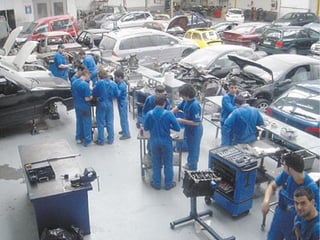
• You study for 2 years, part of them taking
part in practical classes outside school (At
different firms).
• When you finish you can continue studying
a high degree course of the same
professional family.
High Degree Vocational
Studies
An Example:
Administration of
Computer Systems or
Mechanics
Theory Classes - 1st
year

Computer Systems: Class of different
operating systems

Programming: Teaching the ''C'' language

Local Area Networks: How to put a network
in an enterprise

Training and career guidance: Laws,
rights ...
Theory Classes - 2nd
year

Databases: How to organize the
information into a database

Programming: More advanced than in the
1st
year
Practical Classes

The practical classes are the same
subjects as the theoretical classes

Then in the second year, you go to
companies to do training.

You have to be in the Company for 3
months
These are some examples of
the Programmes that you can
do in different families:
• Mechanic Manufacture Design.
• Travel Agency and Events
Management.
• Restaurant Industry.
• Esthestic .

Vocational studies

  • 1.
    Vocational Schools • Thereare two types of Programs –Middle Grade School Cycle: The ESO Diploma is a requirement. –Superior-level School Cycle: Post Compulsory Diploma (Bachillerato) is a requirement.
  • 2.
    Organization • The cyclesare organized in Professional Families. • Each Family has different Cycles that correspond with professions. • These Cycles are organized in modules, which have the equivalent structure to Subjects.
  • 3.
    You can dovocational studies at high degree level: • You can access after obtaining the Bachillerato degree or doing a specific test. • For this test you have to: - be at least 18 years old - study a previous course of the same professional family. • There are lots of things that you can do in vocational studies. • We will explain one of the options
  • 4.
    Vocational Studies (Medium Degree) •You can start Vocational studies at 16 after graduating in ESO (Compulsory Secondary Education) • You can choose a cycle from different families • You study for 2 years, part of them taking part in practical classes outside school (At different firms). • When you finish you can continue studying a high degree course of the same professional family.
  • 6.
    High Degree Vocational Studies AnExample: Administration of Computer Systems or Mechanics
  • 7.
    Theory Classes -1st year  Computer Systems: Class of different operating systems  Programming: Teaching the ''C'' language  Local Area Networks: How to put a network in an enterprise  Training and career guidance: Laws, rights ...
  • 8.
    Theory Classes -2nd year  Databases: How to organize the information into a database  Programming: More advanced than in the 1st year
  • 9.
    Practical Classes  The practicalclasses are the same subjects as the theoretical classes  Then in the second year, you go to companies to do training.  You have to be in the Company for 3 months
  • 10.
    These are someexamples of the Programmes that you can do in different families: • Mechanic Manufacture Design. • Travel Agency and Events Management. • Restaurant Industry. • Esthestic .