Anagram: Engage studentsand activate prior knowledge about pollution. Make 2 groups, students need
to see the letters and write the correct words by deciphering the anagram. Write the answers on the
board to make it more competitive. Play the first 10 words as max.
Questions: Use quizizz link to ask the questions using the word cloud option. Ss write 1 or 2 words to
answer the question.
Hotpotato pass the concept: Instructions are on the slide.You can play with three-four-five slips of
paper at the same time to make it more dynamic. It depends on the # of ss. There are 22 words to match.
Vocabulary link
https://drive.google.com/file/d/1GgqsuuaQ7uXXbzB4bN3F7ldtMuLNFvmK/view?usp=sharing
Discussion time: Ss work in groups-pairs (it depends on the number of ss) to answer the questions on
slides 8-9-10-11. The teacher asks the question and they answer using the vocabulary learned. If they
need it, there are some examples sentences using the vocabulary.
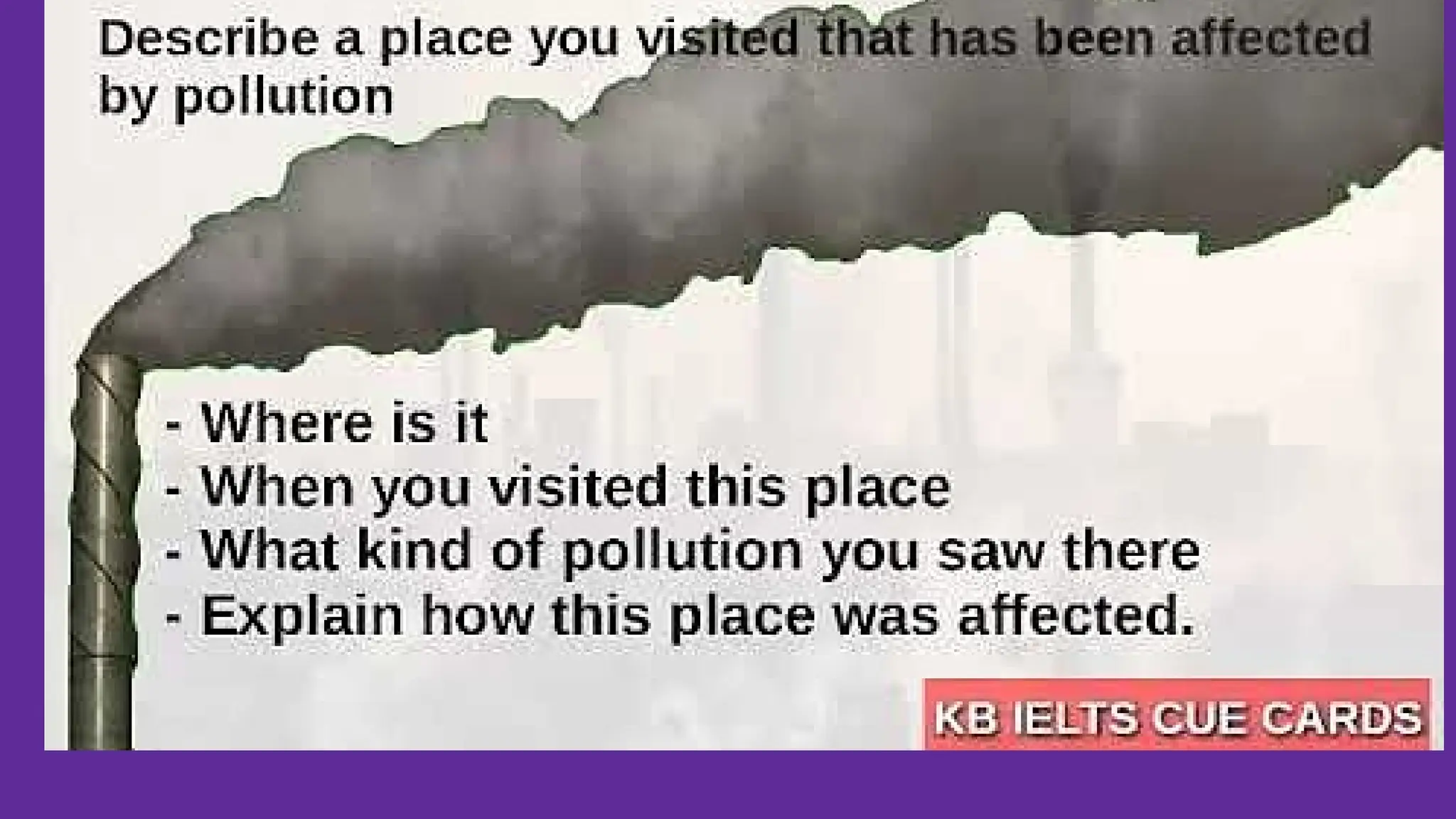
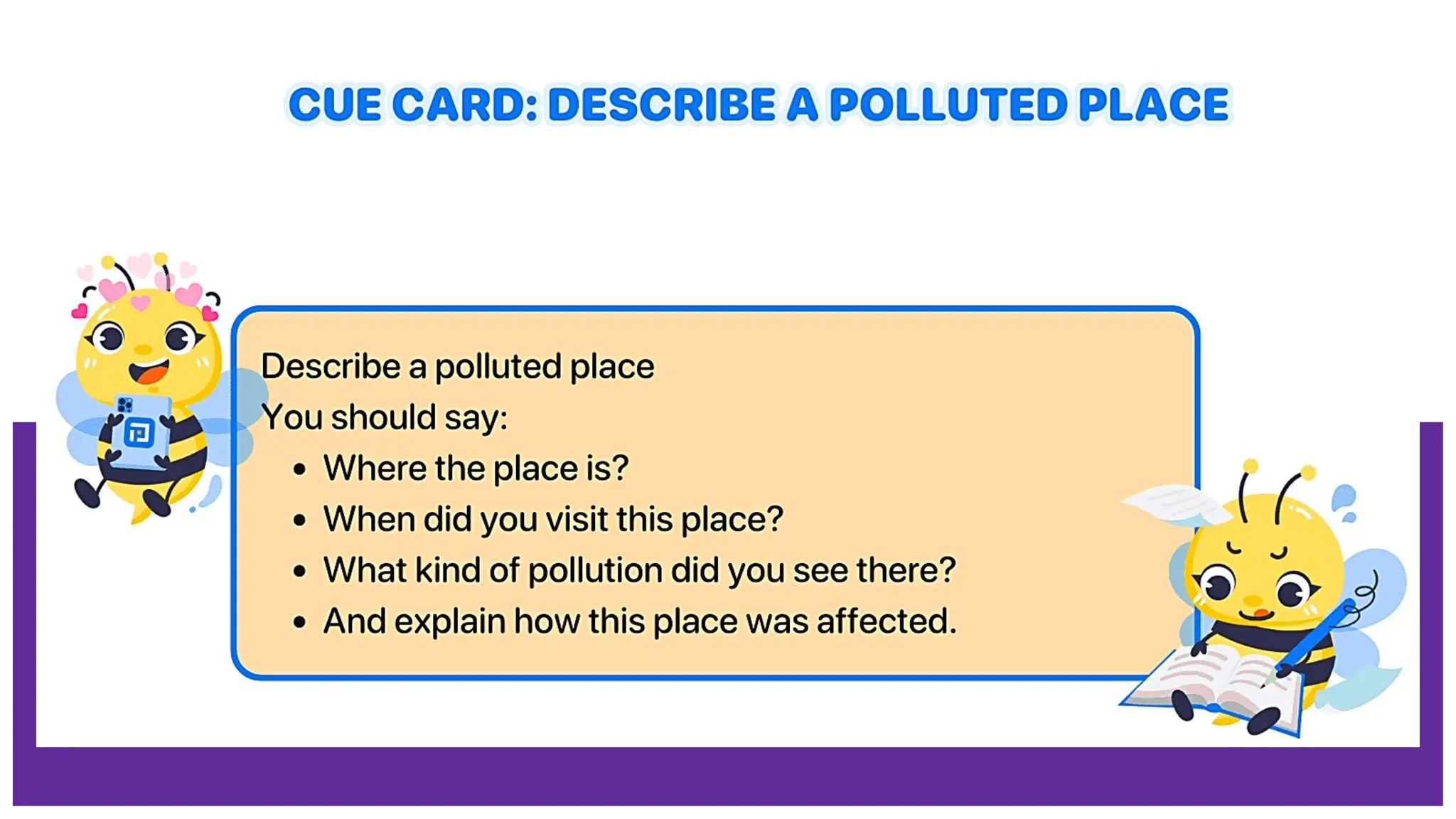
IELTS speaking practice: Questions about the environment so ss use some of the vocabulary seen in
the different sections of this test.
6.1. Urban Problems(Vocabulary Revision) - Completar la frase
Unit 6 Vocabulary Urban problems - Une las parejas
6.
QUESTIONS
1. What doyou think the city government should do to reduce traffic congestion?
2. Do you think people ought to recycle more to help reduce waste in the city?
3. What are citizens supposed to do if they see someone breaking the law in public places?
4. Do residents have to pay for parking in certain parts of the city, or is it free for everyone?
5. Are people allowed to park their cars anywhere in the city, or are there specific rules they
have to follow?
6. What are tourists supposed to know about the city's rules before visiting?
7.
Questions
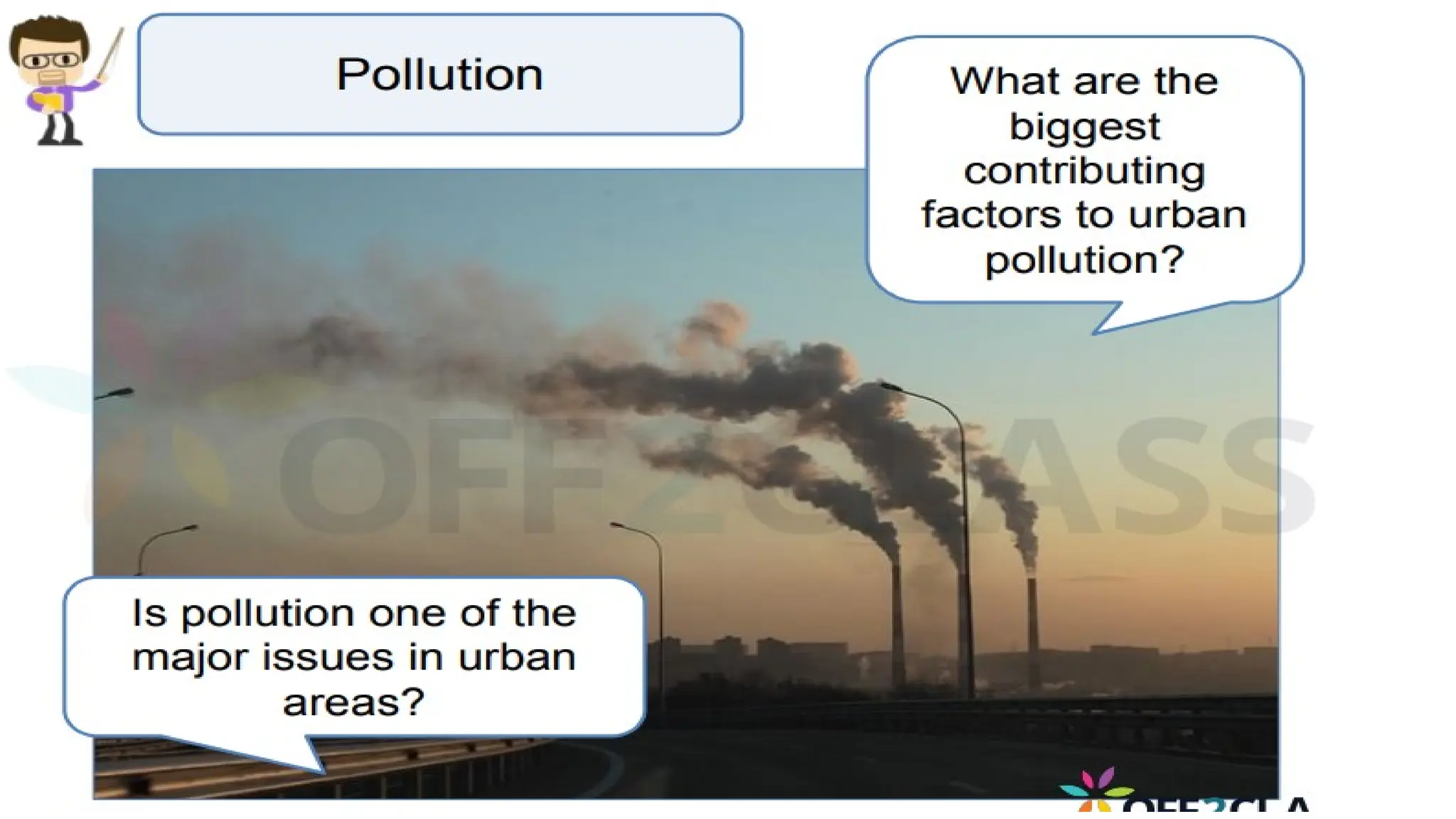
1. What doyou know
about pollution?
2. What are the
different types of
pollution?
3. Can you name some
examples of
pollution you have
seen in your city?
13.
HotPotato - Passthe concept
● Students form a circle
● Play music and ask them to pass
around a slip of paper with a concept
● Stop the music and the student with
the slip of paper has to find the match
(definition)
● The definitions will be on different
slips of paper on a table
● Play different rounds until all the
concepts are matched
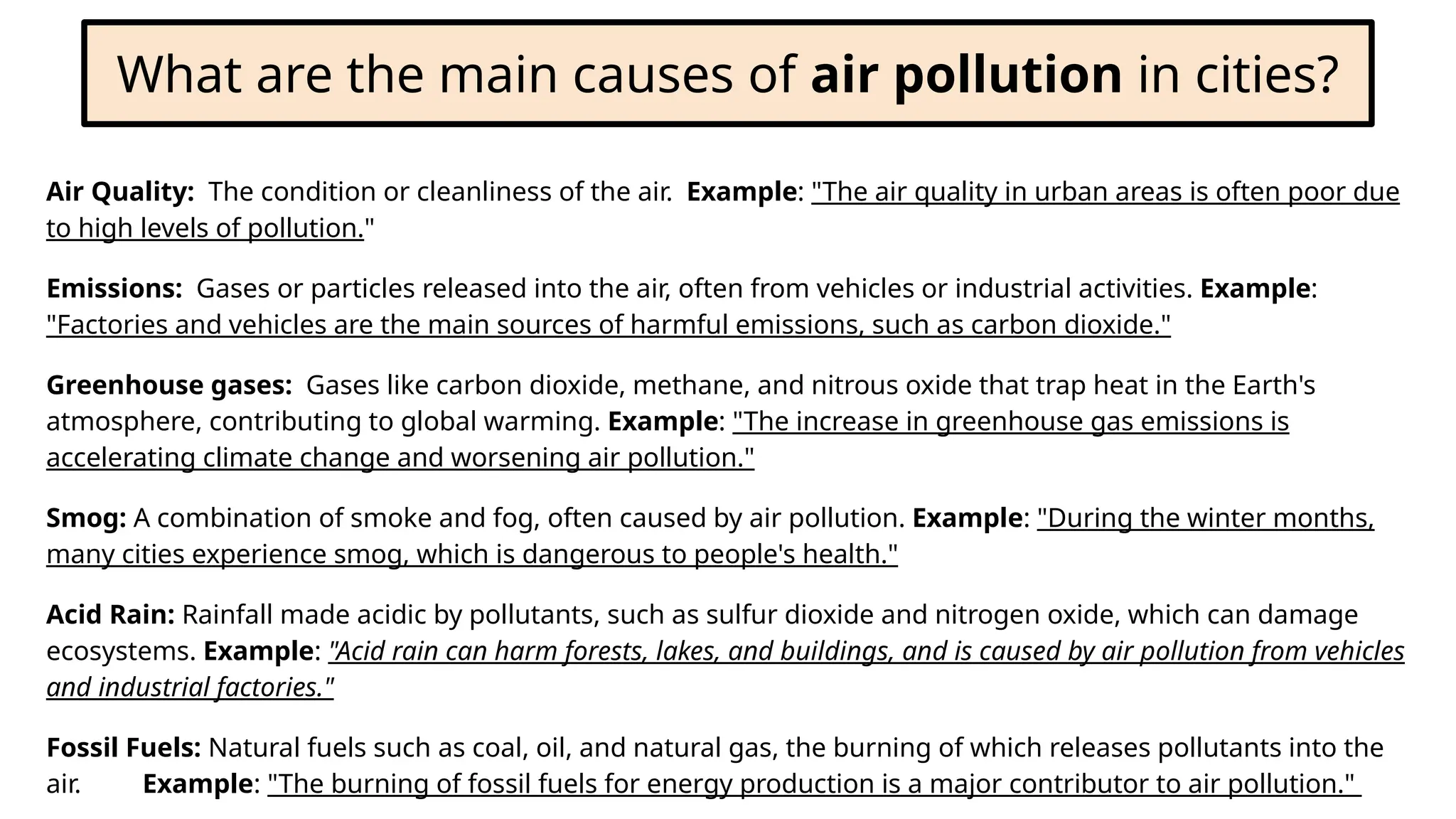
What are themain causes of air pollution in cities?
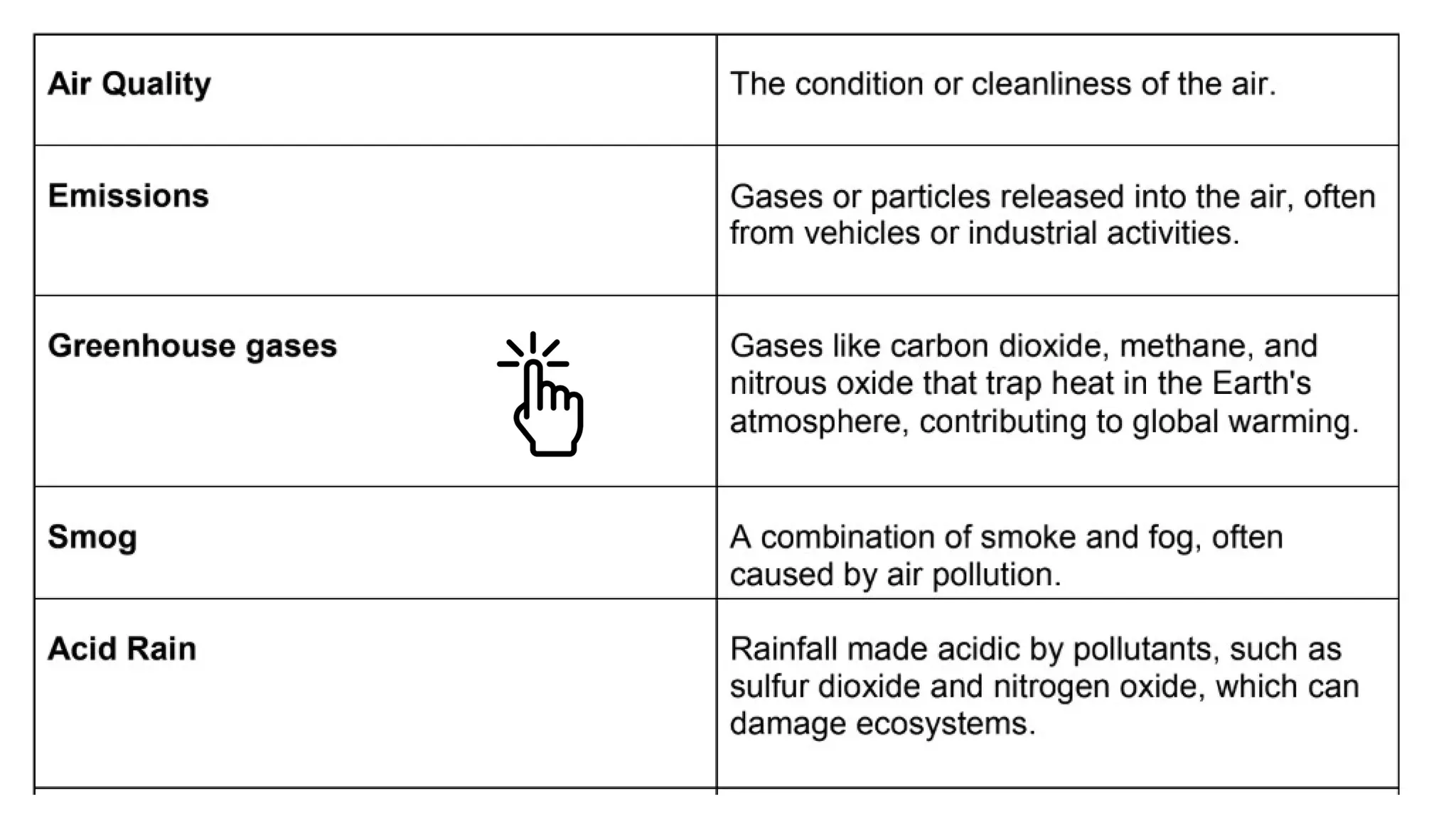
Air Quality: The condition or cleanliness of the air. Example: "The air quality in urban areas is often poor due
to high levels of pollution."
Emissions: Gases or particles released into the air, often from vehicles or industrial activities. Example:
"Factories and vehicles are the main sources of harmful emissions, such as carbon dioxide."
Greenhouse gases: Gases like carbon dioxide, methane, and nitrous oxide that trap heat in the Earth's
atmosphere, contributing to global warming. Example: "The increase in greenhouse gas emissions is
accelerating climate change and worsening air pollution."
Smog: A combination of smoke and fog, often caused by air pollution. Example: "During the winter months,
many cities experience smog, which is dangerous to people's health."
Acid Rain: Rainfall made acidic by pollutants, such as sulfur dioxide and nitrogen oxide, which can damage
ecosystems. Example: "Acid rain can harm forests, lakes, and buildings, and is caused by air pollution from vehicles
and industrial factories."
Fossil Fuels: Natural fuels such as coal, oil, and natural gas, the burning of which releases pollutants into the
air. Example: "The burning of fossil fuels for energy production is a major contributor to air pollution."
17.
How does waterpollution affect marine life and human health?
Toxic Waste: Harmful materials that can damage the environment or living organisms when released into
water. Example: "Factories often dump toxic waste into rivers, which can lead to serious ecological
damage."
Oil Spills: The release of petroleum into the environment, especially the ocean, which causes severe pollution.
Example: "Oil spills from ships can cause massive damage to marine ecosystems, killing marine life and
affecting coastal communities."
Sewage: Wastewater and excrement that is typically treated and disposed of in sewage systems. Example:
"Many developing countries lack proper sewage treatment facilities, causing untreated sewage to flow into
rivers and lakes."
Plastic Pollution: The accumulation of plastic waste in bodies of water, harming marine life and ecosystems.
Example: "Thousands of tons of plastic pollution end up in the ocean each year, severely affecting marine
species."
Aquatic Life: The living organisms found in water bodies, such as fish, plants, and microorganisms.
Example: "Chemical pollutants in water can negatively affect aquatic life, causing species to die or
relocate."
18.
In what wayscan people reduce their carbon
footprint?
Sustainable Practices:: Actions or habits that promote long-term environmental health and reduce the depletion of
natural resources. Example: "Adopting sustainable practices, such as recycling and using energy-efficient appliances, can
help reduce carbon emissions."
Renewable Energy: Energy derived from sources that are naturally replenishing, such as wind, solar, and hydroelectric
power. Example: "Switching to renewable energy sources like solar and wind power can significantly lower the carbon
footprint of households."
Carpooling: Sharing a car journey with others to reduce the number of vehicles on the road and lower emissions.
Example: "Engaging in carpooling with colleagues or friends can help reduce the amount of fuel burned and, in turn,
lower one’s carbon footprint."
Planting Trees: Trees absorb carbon dioxide during photosynthesis, helping to offset some of the carbon emissions
caused by human activities. Example: "Planting trees or supporting reforestation efforts can help reduce carbon dioxide
levels in the atmosphere."
Reducing, Reusing, and Recycling: The process of cutting down on waste, reusing items instead of discarding them,
and recycling materials to prevent unnecessary waste. Example: "By practicing the 3 Rs—reducing, reusing, and
recycling—people can minimize waste, save energy, and cut down on carbon emissions."
Eco-Friendly Products: Goods that are designed with minimal impact on the environment, often made from sustainable
materials and produced using green technologies. Example: "Switching to eco-friendly products such as biodegradable
19.
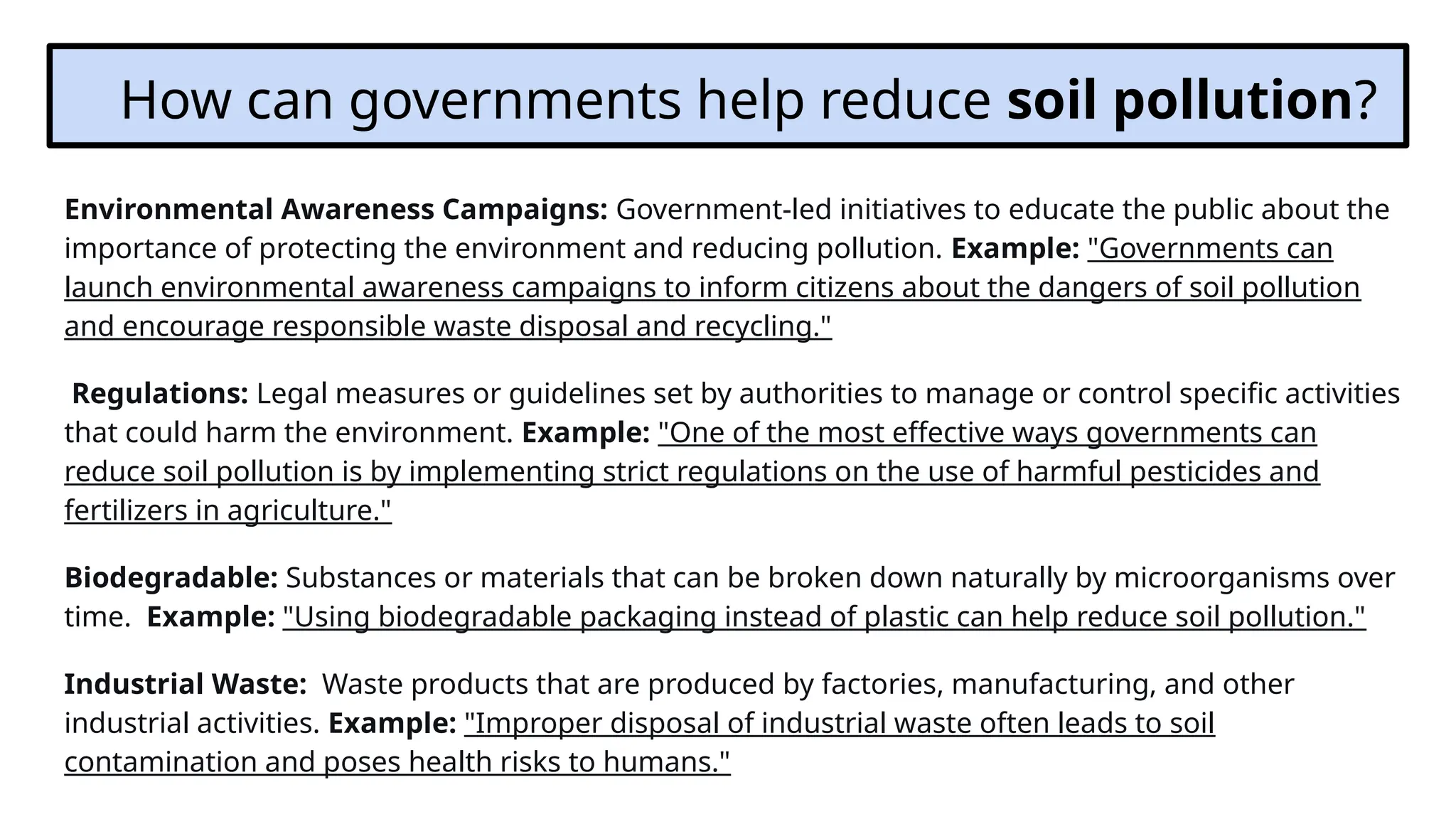
How can governmentshelp reduce soil pollution?
Environmental Awareness Campaigns: Government-led initiatives to educate the public about the
importance of protecting the environment and reducing pollution. Example: "Governments can
launch environmental awareness campaigns to inform citizens about the dangers of soil pollution
and encourage responsible waste disposal and recycling."
Regulations: Legal measures or guidelines set by authorities to manage or control specific activities
that could harm the environment. Example: "One of the most effective ways governments can
reduce soil pollution is by implementing strict regulations on the use of harmful pesticides and
fertilizers in agriculture."
Biodegradable: Substances or materials that can be broken down naturally by microorganisms over
time. Example: "Using biodegradable packaging instead of plastic can help reduce soil pollution."
Industrial Waste: Waste products that are produced by factories, manufacturing, and other
industrial activities. Example: "Improper disposal of industrial waste often leads to soil
contamination and poses health risks to humans."
IELTS Cue Card-Someone Who is Working on Protecting Environment
Describe a person you know who is working on protecting the environment.
You should say:
Who is that person?
What does he do?
How does this person protect the environment and explain how you feel about this person?
26.
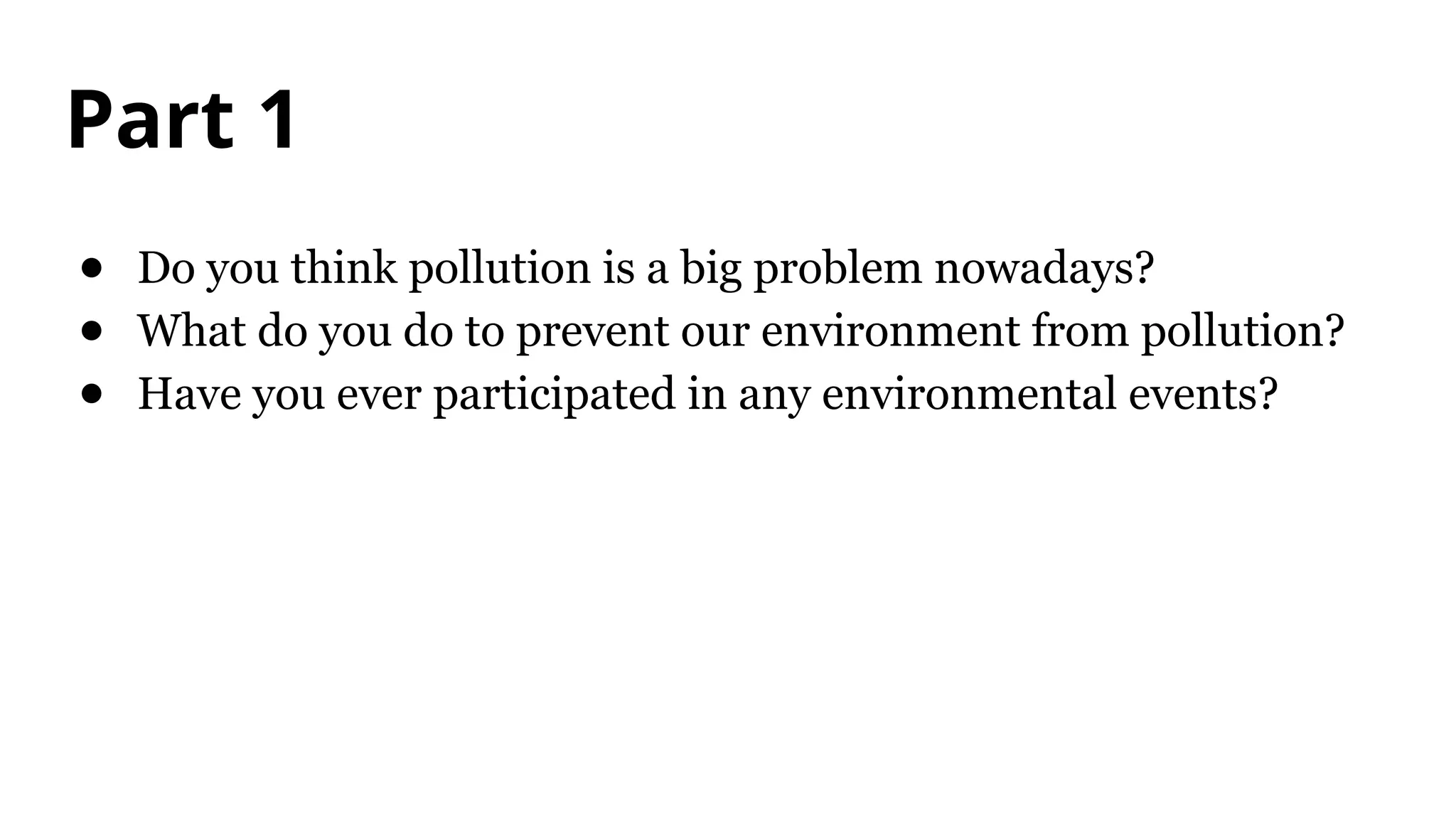
Part 1
● Doyou think pollution is a big problem nowadays?
● What do you do to prevent our environment from pollution?
● Have you ever participated in any environmental events?
#14 Vocabulary link https://drive.google.com/file/d/1GgqsuuaQ7uXXbzB4bN3F7ldtMuLNFvmK/view?usp=sharing
#16 When discussing air pollution for the IELTS exam, it's important to use a range of vocabulary to show your ability to express ideas clearly and accurately
#18 Carbon footprint: amount of carbon dioxide emissions associated with all the activities of a person or other entity.
#29 Ss need to choose one type of pollution, then they draw on their notebooks the graphic organizer shown on the slide. Once they do it, they will write three possible solutions using the vocabulary seen. Finally, they will share their ideas in small groups.