Applying the Needs
Assessment Model: Dyslexia
(2)
Screening, Diagnosing and/or Needs
Assessing?
Summer Homework
Last time in vNAP…
 Framework – prioritising and individualising
 Key information for a robust assessment
 Principles of needs assessment – knowing what
we are doing and why
 Importance of comprehensive evidence
Functional and Diagnostic
Assessments
 Range
 Purpose
 Practicality
 Reliability
 Ethics
 How, when, why and IF you should use them…
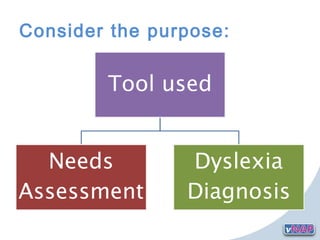
Consider the purpose:
Using screening tools
 LADS Test
 DAST
 Online Assessment e.g. testdyslexia.com
 Vinegrad Checklist
 QuickScan
Screening Tests - checklists
 Vinegrad – Adult Dyslexia Screening Test
 BDA Adult Checklist
 Dyslexia Action Adult Checklist
 Bangor Dyslexia Checklist
 Adult Dyslexia Organisation Checklist
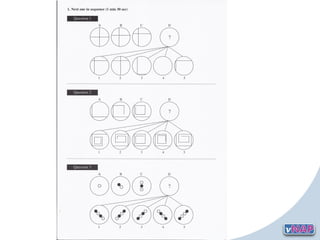
Dyslexic Adult Screening Test
(DAST)
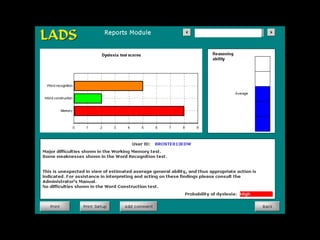
Lucid Adult Dyslexia Screening
(LADS)
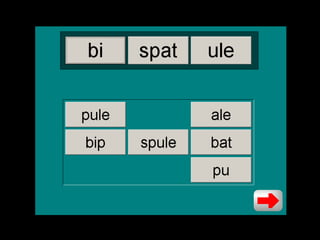
 4 or 5 sections depending on the version used
Reasoning
Test
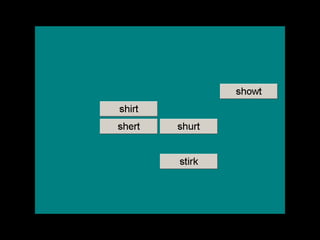
Word Recognition
Test
Word Construction
Test
Working Memory
Test
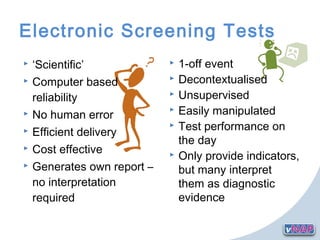
 ‘Scientific’
 Computer based
reliability
 No human error
 Efficient delivery
 Cost effective
 Generates own report –
no interpretation
required
Electronic Screening Tests
 1-off event
 Decontextualised
 Unsupervised
 Easily manipulated
 Test performance on
the day
 Only provide indicators,
but many interpret
them as diagnostic
evidence
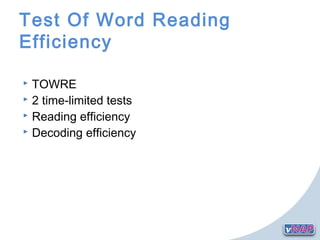
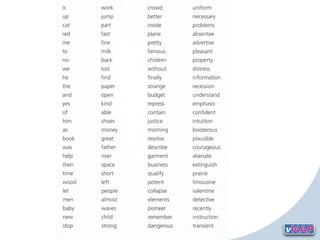
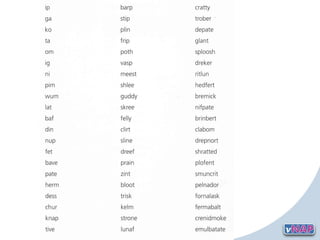
Test Of Word Reading
Efficiency
 TOWRE
 2 time-limited tests
 Reading efficiency
 Decoding efficiency
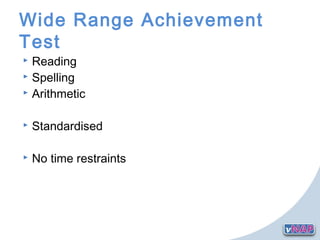
Wide Range Achievement
Test
 Reading
 Spelling
 Arithmetic
 Standardised
 No time restraints
Standardised Tests
 Standardised against who?
 Age range
 Country of origin
 Population ‘norms’
 Individualised tests of specific functions –
decontextualised; performance on the day
 Test environment
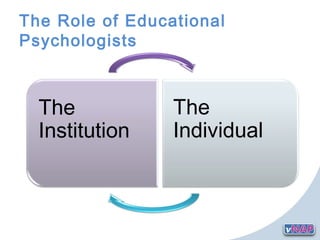
The Role of Educational
Psychologists
The
Institution
The
Individual
EP Assessment
 1-off event
 Assessing performance on the day
 De-contextualised
 Battery of tests
 Hard work – anxiety – stress – pressure
 Deficit model – rejected by the BPS!
Mentoring
 Alison
◦ Mhairi
◦ Vikki
 Carol
◦ Fiona
◦ Betty
◦ Scott
 Niall
◦ Robert
◦ Daniel
◦ Dorota
Next time…!
 Session 5
 Support Strategies
 Making recommendations
 Justifications for support
 Assistive Technologies
 Non-technical strategies
 Institutional responses

vNAP Session 5 Slides

  • 1.
    Applying the Needs AssessmentModel: Dyslexia (2) Screening, Diagnosing and/or Needs Assessing?
  • 2.
  • 3.
    Last time invNAP…  Framework – prioritising and individualising  Key information for a robust assessment  Principles of needs assessment – knowing what we are doing and why  Importance of comprehensive evidence
  • 4.
    Functional and Diagnostic Assessments Range  Purpose  Practicality  Reliability  Ethics  How, when, why and IF you should use them…
  • 5.
  • 6.
    Using screening tools LADS Test  DAST  Online Assessment e.g. testdyslexia.com  Vinegrad Checklist  QuickScan
  • 7.
    Screening Tests -checklists  Vinegrad – Adult Dyslexia Screening Test  BDA Adult Checklist  Dyslexia Action Adult Checklist  Bangor Dyslexia Checklist  Adult Dyslexia Organisation Checklist
  • 8.
  • 14.
    Lucid Adult DyslexiaScreening (LADS)  4 or 5 sections depending on the version used
  • 15.
  • 16.
  • 17.
  • 18.
  • 20.
     ‘Scientific’  Computerbased reliability  No human error  Efficient delivery  Cost effective  Generates own report – no interpretation required Electronic Screening Tests  1-off event  Decontextualised  Unsupervised  Easily manipulated  Test performance on the day  Only provide indicators, but many interpret them as diagnostic evidence
  • 21.
    Test Of WordReading Efficiency  TOWRE  2 time-limited tests  Reading efficiency  Decoding efficiency
  • 24.
    Wide Range Achievement Test Reading  Spelling  Arithmetic  Standardised  No time restraints
  • 27.
    Standardised Tests  Standardisedagainst who?  Age range  Country of origin  Population ‘norms’  Individualised tests of specific functions – decontextualised; performance on the day  Test environment
  • 28.
    The Role ofEducational Psychologists The Institution The Individual
  • 29.
    EP Assessment  1-offevent  Assessing performance on the day  De-contextualised  Battery of tests  Hard work – anxiety – stress – pressure  Deficit model – rejected by the BPS!
  • 30.
    Mentoring  Alison ◦ Mhairi ◦Vikki  Carol ◦ Fiona ◦ Betty ◦ Scott  Niall ◦ Robert ◦ Daniel ◦ Dorota
  • 31.
    Next time…!  Session5  Support Strategies  Making recommendations  Justifications for support  Assistive Technologies  Non-technical strategies  Institutional responses