Thiamin
• Also known as vitamin B1 & is one of the first organic
compounds to be recognized as a vitamin
• Occurs in the human body as free thiamin and its
phosphorylated forms
1. Thiamin monophosphate (TMP)
2. Thiamin triphosphate (TTP)
3. Thiamin pyrophosphate (TPP) or Thiamin diphosphate
• Rapidly converted to its active form, TPP in the brain
and liver by specific enzymes
• Thiamin triphosphate (TTP) activates membrane ion
channels, possibly by phosphorylating them
• The flow of electrolytes like sodium or potassium in or
out of nerve and muscle cells through membrane ion
channels plays a role in nerve impulse conduction and
voluntary muscle action
• Impaired formation of TTP may play a role in the
neurologic symptoms of severe thiamin deficiency
• Yeast, egg yolk, liver, wheat germ, nuts, red meat
and cereals
• Severe thiamin deficiency results in beriberi
• Beriberi is termed dry, wet, and cerebral,
depending on the systems affected by severe
thiamin deficiency
• During early stages of dry (paralytic or nervous)
beriberi "burning feet syndrome" may occur
• Later stages result in diminished sensation and
weakness in the legs and arms
• Wet (cardiac) beriberi results in rapid heart rate,
enlargement of the heart, severe swelling (edema),
difficulty in breathing, and ultimately congestive heart
failure
• Cerebral beriberi may lead to abnormal eye
movements, gait abnormalities, and abnormalities in
mental function result in a profound memory disorder
Riboflavin or B2
• It is primarily found in the body as an
integral component of the coenzymes:
1. Flavin adenine dinucleotide (FAD)
2. Flavin mononucleotide (FMN)
• Coenzymes derived from riboflavin are also
called flavins & enzymes that use a flavin
coenzyme are called flavoproteins
• It has antioxidant functions
• Flavins are critical for the metabolism of
carbohydrates, minerals, fats, and proteins
• Participate in the metabolism of several
other vitamins (vitamin B6, niacin & folic
acid)
• Dairy products, liver, vegetables, eggs,
cereals, fruit, yeast
• Riboflavin deficiency is often seen in chronic
alcoholics due to their poor dietetic habits
• Riboflavin decomposes when exposed to visible
light that can lead to riboflavin deficiencies in
newborns
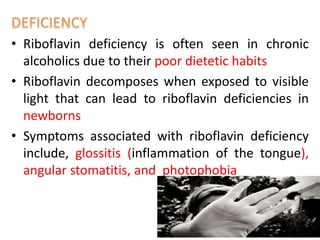
• Symptoms associated with riboflavin deficiency
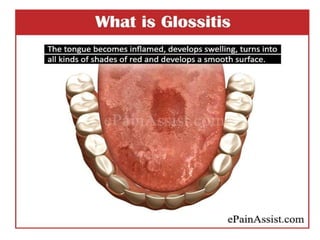
include, glossitis (inflammation of the tongue),
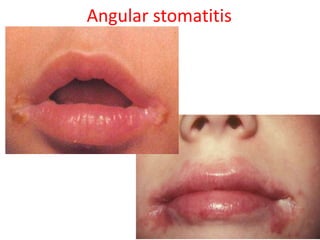
angular stomatitis, and photophobia
Angular stomatitis
• Niacin is not a true vitamin in the strictest
definition since it can be derived from the
amino acid tryptophan
• Niacin refers to nicotinic acid and
nicotinamide, which are both used by the
body to form the coenzymes
1. Nicotinamide adenine dinucleotide (NAD)
2. Nicotinamide adenine dinucleotide
phospate (NADP)
• Participate in oxidation-reduction (redox)
reactions
• Yeast, meat, poultry, fish, cereals, legumes,
milk, green leafy vegetables, coffee & tea
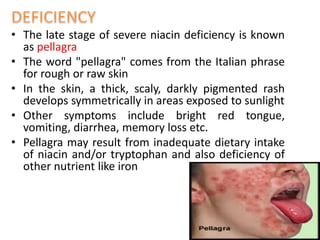
• The late stage of severe niacin deficiency is known
as pellagra
• The word "pellagra" comes from the Italian phrase
for rough or raw skin
• In the skin, a thick, scaly, darkly pigmented rash
develops symmetrically in areas exposed to sunlight
• Other symptoms include bright red tongue,
vomiting, diarrhea, memory loss etc.
• Pellagra may result from inadequate dietary intake
of niacin and/or tryptophan and also deficiency of
other nutrient like iron
Pantothenic Acid or B5
• Essential to all forms of life
• It is found throughout living cells in the form
of coenzyme A (CoA), vital in numerous
chemical reactions
• Required for the metabolism of
carbohydrate, all fats and proteins
• At least 70 enzymes have been identified as
requiring CoA or for their function
• Milk, meat, cereals, broccoli, lentils, peas,
avocado, mushrooms etc.
• Extremely rare due to its widespread
distribution in whole grain cereals, legumes and
meat
• Symptoms of deficiency are difficult to assess
since they resemble those of other B vitamin
deficiencies
• It was discovered in 1934
• There are six forms of vitamin B6:
1. Pyridoxal (PL)
2. Pyridoxine (PN),
3. Pyridoxamine (PM)
4. Pyridoxal 5'-phosphate (PLP)
5. Pyridoxine 5'-phosphate (PNP)
6. Pridoxamine 5'-phospate (PMP)
• PLP is the active coenzyme form, and is the
most important in human metabolism
• Must be obtained from the diet because humans cannot
synthesize it
• PLP plays a vital role in the function of approximately
100 enzymes that catalyze essential chemical reactions
in the human body
• PLP helps in the synthesis of the neurotransmitters
• Important in the synthesis of heme, a component of
hemoglobin
• Helps in the synthesis of niacin from tryptophan
• May have implications for diseases affected
by steroid hormones, such as breast cancer
and prostate cancer
• Involved in the synthesis of nucleic acids
• Banana, chicken, potato, spinach, vegetable
juice cocktail
• Severe deficiency of vitamin B6 is uncommon
• Alcoholics are thought to be most at risk of
vitamin B6 deficiency, due to a low intake
and impaired metabolism of the vitamin
• Symptoms of deficiency include irritability,
depression, and confusion; inflammation of
the tongue, ulcers of skin at the corners of
the mouth
Biotin
• Required by all organisms but can only be synthesized
by bacteria, yeasts, molds, algae, and some plant
species
• In its physiologically active form, biotin is attached at
the active site of four important enzymes, known as
carboxylases
• Each carboxylase catalyzes an essential metabolic
reaction
• May play a role in DNA replication and transcription
• Whole wheat bread, cheddar cheese, avocado,
raspberries raw cauliflower,
• Deficiency is generally seen only after long antibiotic
therapies which deplete the intestinal fauna or following
excessive consumption of raw eggs
• The latter is due to the affinity of the egg white protein,
avidin, for biotin preventing intestinal absorption of the
biotin
Folic acid (B9)
• Folic acid occurs rarely in foods or the human body,
but is the form most often used in vitamin
supplements and fortified foods
• Folate helps in the metabolism of several amino acids
such as histidine, glycine, serine, and methionine
• The synthesis of DNA from its precursors is dependent
on folate coenzymes
• Folic acid is essential for cell division,
production of DNA and RNA, and assists the
prevention of changes in DNA, which may lead
to cancer
• Orange juice (from concentrate) Spinach,
Lentils, Rice etc.
• Deficiency occurs due to low dietary intake
and diminished absorption, as in alcoholism,
can result in a decreased supply of folate
• Certain conditions like pregnancy or cancer
result in increased rates of cell division and
metabolism, leading to an increase in the
body's demand for folate
• The largest and most complex of all the vitamins
• Unique among vitamins in that it contains a metal
ion, cobalt
• Contrary to other water-soluble vitamins, B12 can
be stored in the body for extended amounts of
time, even for years
• Helps oxidation of several compounds
• It helps nerve cells, red blood cells, and the
manufacturing/repair of DNA
• It is vital for processing carbohydrates,
proteins and fats, which help make all of the
blood cells in our bodies, also assists memory
• Synthesized only by bacteria, also present in
animal products such as meat, poultry, fish
(including shellfish), and to a lesser extent
milk, but it is not generally present in plant
products or yeast
• The most common causes of vitamin B12
deficiency are autoimmune condition known
as pernicious anemia and food-bound
vitamin B12 malabsorption
• Deficiency results in Pernicious anemia,
constipation, heart disease, permanent
nerve damage, loss of appetite, weight loss,
difficulty in maintaining balance, memory
loss etc.
• Unlike most mammals, humans do not have the ability
to make their own vitamin C therefore, we must obtain
vitamin C through our diet
• Required for the synthesis of collagen, an important
structural component of blood vessels, tendons,
ligaments, and bone
• Plays an important role in the synthesis of the
neurotransmitters
• involved in the metabolism of cholesterol to bile acids,
which may have implications for blood cholesterol
levels
• Highly effective antioxidant & even in small
amounts vitamin C can protect indispensable
molecules in the body, such as proteins,
lipids (fats), carbohydrates, and nucleic acids
• May also be able to regenerate other
antioxidants such as vitamin E
• Orange juice, grapefruit juice, orange,
grapefruit, strawberries, potato etc.
• Severe vitamin C deficiency results in potentially fatal
disease, scurvy
• Symptoms of scurvy include bleeding and bruising
easily, hair and tooth loss, joint pain and swelling
• Such symptoms appear to be related to the weakening
of blood vessels, connective tissue, and bone, which
contain collagen
• It is rare in developed countries because it can be
prevented by as little as 10 mg of vitamin C daily
VITAMINS (Water soluble).ppt

VITAMINS (Water soluble).ppt

  • 2.
    Thiamin • Also knownas vitamin B1 & is one of the first organic compounds to be recognized as a vitamin • Occurs in the human body as free thiamin and its phosphorylated forms 1. Thiamin monophosphate (TMP) 2. Thiamin triphosphate (TTP) 3. Thiamin pyrophosphate (TPP) or Thiamin diphosphate • Rapidly converted to its active form, TPP in the brain and liver by specific enzymes
  • 3.
    • Thiamin triphosphate(TTP) activates membrane ion channels, possibly by phosphorylating them • The flow of electrolytes like sodium or potassium in or out of nerve and muscle cells through membrane ion channels plays a role in nerve impulse conduction and voluntary muscle action • Impaired formation of TTP may play a role in the neurologic symptoms of severe thiamin deficiency
  • 4.
    • Yeast, eggyolk, liver, wheat germ, nuts, red meat and cereals • Severe thiamin deficiency results in beriberi • Beriberi is termed dry, wet, and cerebral, depending on the systems affected by severe thiamin deficiency • During early stages of dry (paralytic or nervous) beriberi "burning feet syndrome" may occur
  • 5.
    • Later stagesresult in diminished sensation and weakness in the legs and arms • Wet (cardiac) beriberi results in rapid heart rate, enlargement of the heart, severe swelling (edema), difficulty in breathing, and ultimately congestive heart failure • Cerebral beriberi may lead to abnormal eye movements, gait abnormalities, and abnormalities in mental function result in a profound memory disorder
  • 6.
    Riboflavin or B2 •It is primarily found in the body as an integral component of the coenzymes: 1. Flavin adenine dinucleotide (FAD) 2. Flavin mononucleotide (FMN) • Coenzymes derived from riboflavin are also called flavins & enzymes that use a flavin coenzyme are called flavoproteins • It has antioxidant functions
  • 7.
    • Flavins arecritical for the metabolism of carbohydrates, minerals, fats, and proteins • Participate in the metabolism of several other vitamins (vitamin B6, niacin & folic acid) • Dairy products, liver, vegetables, eggs, cereals, fruit, yeast
  • 8.
    • Riboflavin deficiencyis often seen in chronic alcoholics due to their poor dietetic habits • Riboflavin decomposes when exposed to visible light that can lead to riboflavin deficiencies in newborns • Symptoms associated with riboflavin deficiency include, glossitis (inflammation of the tongue), angular stomatitis, and photophobia
  • 10.
  • 11.
    • Niacin isnot a true vitamin in the strictest definition since it can be derived from the amino acid tryptophan • Niacin refers to nicotinic acid and nicotinamide, which are both used by the body to form the coenzymes 1. Nicotinamide adenine dinucleotide (NAD) 2. Nicotinamide adenine dinucleotide phospate (NADP)
  • 12.
    • Participate inoxidation-reduction (redox) reactions • Yeast, meat, poultry, fish, cereals, legumes, milk, green leafy vegetables, coffee & tea
  • 13.
    • The latestage of severe niacin deficiency is known as pellagra • The word "pellagra" comes from the Italian phrase for rough or raw skin • In the skin, a thick, scaly, darkly pigmented rash develops symmetrically in areas exposed to sunlight • Other symptoms include bright red tongue, vomiting, diarrhea, memory loss etc. • Pellagra may result from inadequate dietary intake of niacin and/or tryptophan and also deficiency of other nutrient like iron
  • 14.
    Pantothenic Acid orB5 • Essential to all forms of life • It is found throughout living cells in the form of coenzyme A (CoA), vital in numerous chemical reactions • Required for the metabolism of carbohydrate, all fats and proteins • At least 70 enzymes have been identified as requiring CoA or for their function
  • 15.
    • Milk, meat,cereals, broccoli, lentils, peas, avocado, mushrooms etc. • Extremely rare due to its widespread distribution in whole grain cereals, legumes and meat • Symptoms of deficiency are difficult to assess since they resemble those of other B vitamin deficiencies
  • 16.
    • It wasdiscovered in 1934 • There are six forms of vitamin B6: 1. Pyridoxal (PL) 2. Pyridoxine (PN), 3. Pyridoxamine (PM) 4. Pyridoxal 5'-phosphate (PLP) 5. Pyridoxine 5'-phosphate (PNP) 6. Pridoxamine 5'-phospate (PMP) • PLP is the active coenzyme form, and is the most important in human metabolism
  • 17.
    • Must beobtained from the diet because humans cannot synthesize it • PLP plays a vital role in the function of approximately 100 enzymes that catalyze essential chemical reactions in the human body • PLP helps in the synthesis of the neurotransmitters • Important in the synthesis of heme, a component of hemoglobin • Helps in the synthesis of niacin from tryptophan
  • 18.
    • May haveimplications for diseases affected by steroid hormones, such as breast cancer and prostate cancer • Involved in the synthesis of nucleic acids • Banana, chicken, potato, spinach, vegetable juice cocktail
  • 19.
    • Severe deficiencyof vitamin B6 is uncommon • Alcoholics are thought to be most at risk of vitamin B6 deficiency, due to a low intake and impaired metabolism of the vitamin • Symptoms of deficiency include irritability, depression, and confusion; inflammation of the tongue, ulcers of skin at the corners of the mouth
  • 20.
    Biotin • Required byall organisms but can only be synthesized by bacteria, yeasts, molds, algae, and some plant species • In its physiologically active form, biotin is attached at the active site of four important enzymes, known as carboxylases • Each carboxylase catalyzes an essential metabolic reaction • May play a role in DNA replication and transcription
  • 21.
    • Whole wheatbread, cheddar cheese, avocado, raspberries raw cauliflower, • Deficiency is generally seen only after long antibiotic therapies which deplete the intestinal fauna or following excessive consumption of raw eggs • The latter is due to the affinity of the egg white protein, avidin, for biotin preventing intestinal absorption of the biotin
  • 22.
    Folic acid (B9) •Folic acid occurs rarely in foods or the human body, but is the form most often used in vitamin supplements and fortified foods • Folate helps in the metabolism of several amino acids such as histidine, glycine, serine, and methionine • The synthesis of DNA from its precursors is dependent on folate coenzymes
  • 23.
    • Folic acidis essential for cell division, production of DNA and RNA, and assists the prevention of changes in DNA, which may lead to cancer • Orange juice (from concentrate) Spinach, Lentils, Rice etc.
  • 24.
    • Deficiency occursdue to low dietary intake and diminished absorption, as in alcoholism, can result in a decreased supply of folate • Certain conditions like pregnancy or cancer result in increased rates of cell division and metabolism, leading to an increase in the body's demand for folate
  • 25.
    • The largestand most complex of all the vitamins • Unique among vitamins in that it contains a metal ion, cobalt • Contrary to other water-soluble vitamins, B12 can be stored in the body for extended amounts of time, even for years • Helps oxidation of several compounds • It helps nerve cells, red blood cells, and the manufacturing/repair of DNA
  • 26.
    • It isvital for processing carbohydrates, proteins and fats, which help make all of the blood cells in our bodies, also assists memory • Synthesized only by bacteria, also present in animal products such as meat, poultry, fish (including shellfish), and to a lesser extent milk, but it is not generally present in plant products or yeast
  • 27.
    • The mostcommon causes of vitamin B12 deficiency are autoimmune condition known as pernicious anemia and food-bound vitamin B12 malabsorption • Deficiency results in Pernicious anemia, constipation, heart disease, permanent nerve damage, loss of appetite, weight loss, difficulty in maintaining balance, memory loss etc.
  • 28.
    • Unlike mostmammals, humans do not have the ability to make their own vitamin C therefore, we must obtain vitamin C through our diet • Required for the synthesis of collagen, an important structural component of blood vessels, tendons, ligaments, and bone • Plays an important role in the synthesis of the neurotransmitters • involved in the metabolism of cholesterol to bile acids, which may have implications for blood cholesterol levels
  • 29.
    • Highly effectiveantioxidant & even in small amounts vitamin C can protect indispensable molecules in the body, such as proteins, lipids (fats), carbohydrates, and nucleic acids • May also be able to regenerate other antioxidants such as vitamin E • Orange juice, grapefruit juice, orange, grapefruit, strawberries, potato etc.
  • 30.
    • Severe vitaminC deficiency results in potentially fatal disease, scurvy • Symptoms of scurvy include bleeding and bruising easily, hair and tooth loss, joint pain and swelling • Such symptoms appear to be related to the weakening of blood vessels, connective tissue, and bone, which contain collagen • It is rare in developed countries because it can be prevented by as little as 10 mg of vitamin C daily

Editor's Notes

  • #6 The first clinical descriptions of beriberi came from Dutch physicians in the 1940’s and 1950’s. They treated a patient from the East Indies suffering from what the natives called beriberi or “the disease of lameness.” There are two major manifestations of thiamine deficiency: cardiovascular disease (wet beriberi) and nervous system disease (“dry beriberi” and Wernicke-Korsakoff syndrome). Beriberi now occurs primarily in alcoholic patients with malnutrition. Dry beriberi: Symptoms of dry beriberi include pain, tingling, or loss of sensation in hands and feet (peripheral neuropathy), muscle wasting with loss of function or paralysis of the lower extremities, and potentially brain damage and death. Wet beriberi or wet brain or Wernicke-Korsakoff syndrome: Wet beriberi is characterized by edema (swelling), increased heart rate, lung congestion, and enlarged heart related to congestive heart failure. The Wernicke-Korsakoff syndrome is an alcohol-related brain damage affecting language and thinking.
  • #9 Angular cheilitis is a common inflammatory condition affecting the corners of the mouth or oral commissures. Depending on underlying causes, it may last a few days or persist indefinitely. It is also called angular stomatitis and cheilosis.
  • #14 Pellagra, the classic niacin deficiency disease, is characterized by cutaneous, mucous membrane, central nervous system (CNS), and gastro-intestinal (GI) symptoms. The complete syndrome of advanced deficiency includes symmetric photosensitive rash in sun exposed areas, scarlet stomatitis, glossitis, diarrhea, and mental aberrations.
  • #18 Neurotransmitters, also known as chemical messengers, are endogenous chemicals that enable neurotransmission. They transmit signals across a chemical synapse, such as a neuromuscular junction, from one neuron (nerve cell) to another "target" neuron, muscle cell, or gland cell. Neurotransmitters are released from synaptic vesicles in synapses into the synaptic cleft, where they are received by receptors on the target cells. Many neurotransmitters are synthesized from simple and plentiful precursors such as amino acids, which are readily available from the diet and only require a small number of biosynthetic steps for conversion. Neurotransmitters play a major role in shaping everyday life and functions. Their exact numbers are unknown, but more than 100 chemical messengers have been uniquely identified.