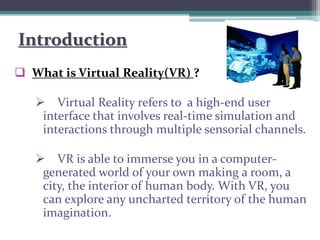
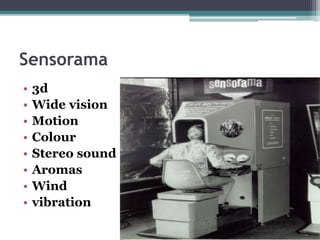
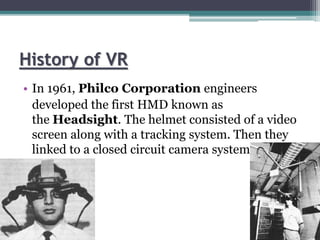
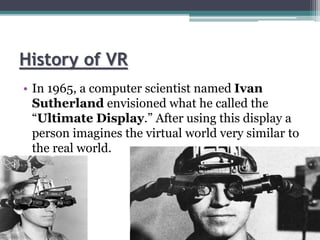
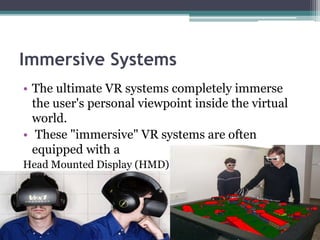
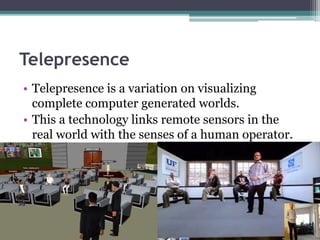
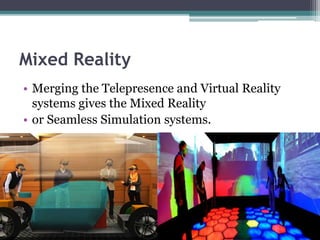
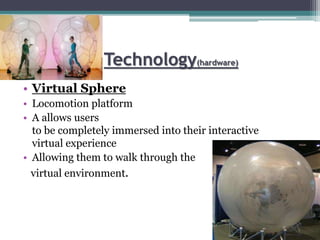
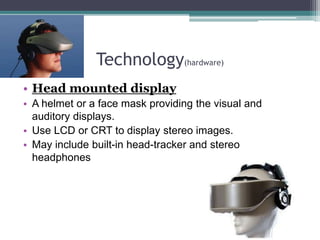
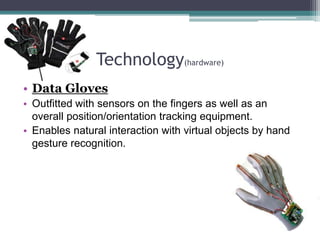
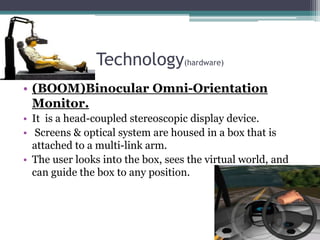
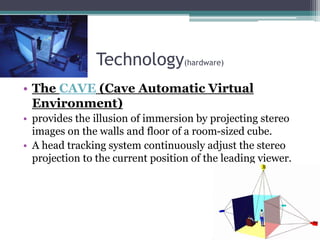
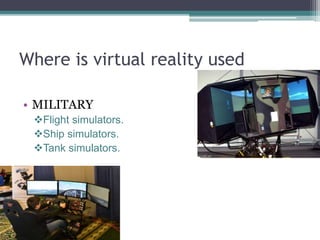
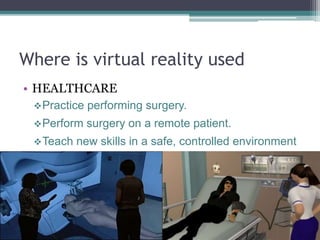
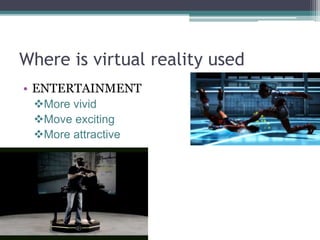
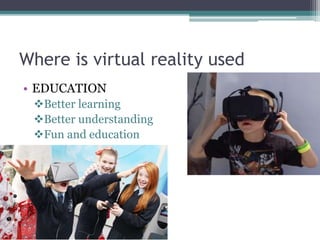
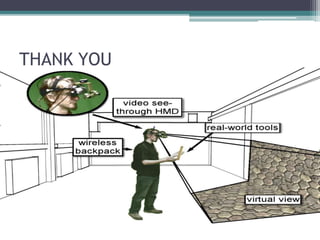
Virtual reality (VR) can simulate physical presence in non-physical worlds through computer simulation. The document discusses the history of VR from early prototypes in the 1950s-1960s to current applications. It outlines different types of VR including immersive, telepresence, and mixed reality systems. The technology used in VR includes head-mounted displays, data gloves, omnidirectional monitors, and CAVE rooms. Developing VR involves 3D modeling, sound editing, and simulation software. Applications of VR include military training, healthcare, education, and entertainment. Benefits are more engaging learning while costs and technical issues remain challenges.