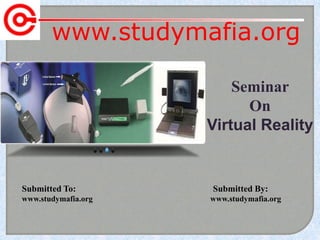
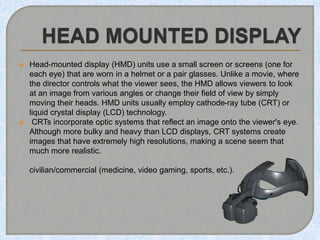
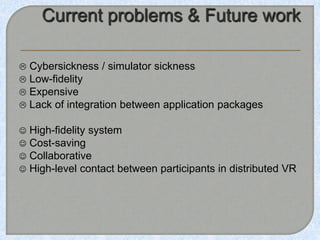
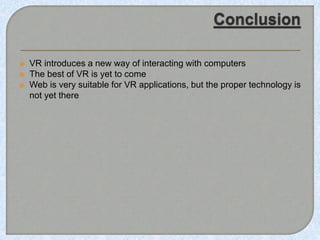
Virtual reality refers to computer-generated simulations that immerse users in an artificial 3D environment. The seminar discusses the history, principles, components and types of VR systems. VR uses head-mounted displays, gloves, and other devices to track user movements and render interactive 3D environments for applications in entertainment, medicine, manufacturing, education and training by simulating real-world environments without physical risks. While VR provides benefits like improved learning and safety, challenges include high costs, potential for cybersickness or escapism, and limitations of simulated training compared to real-world experience.