Virtual Company No no receptionist, no cubicles, no rent, no commute, no dress policy,  no office .  Real clients, real work, real deadlines, real teams, real pay,  real work . Not for : Slackers, chair fillers, soap opera junkies, full-time caregivers For : Self directed people who don’t look forward to putting on a tie or hose every morning.
Social Stack More important than technology.  (Gasp!) No office space to start  - it's okay (maybe even better) if everyone is remote. Frugality  - spend money when you need to, but don't spend money if you don't have to. Camaraderie  - you should enjoy each other's company, because you'll be spending a lot of time together. Joie de vivre  - it's really important to have native (and naïve) optimism.  Intercommunication  - communicate by writing, and as much as possible communicate in a commons (wiki, IRC, email , bug tracker, etc.) Group introspection  - create a culture that regularly does after-action reviews and write-ups of what we learned. Leadership  - make sure people know what they're supposed to be doing. Figure out how to distribute leadership among the team. Cultivate knowledge and wisdom  - the organization and individuals both should be learning all the time.
Working Rules Tasks are defined – People need to know what they should be doing and it should be written in a common location (Trac) Project Management is distributed – Ownership of a solution promotes bi-directional reviews
Technical Stack Hosted Solutions – Centralize and outsource as much hosting as possible Email SVN / Trac / Wiki / Bugtracker ( The Commons ) Development Servers (Web & DB) Central File Hosting / Trading Timesheet Software
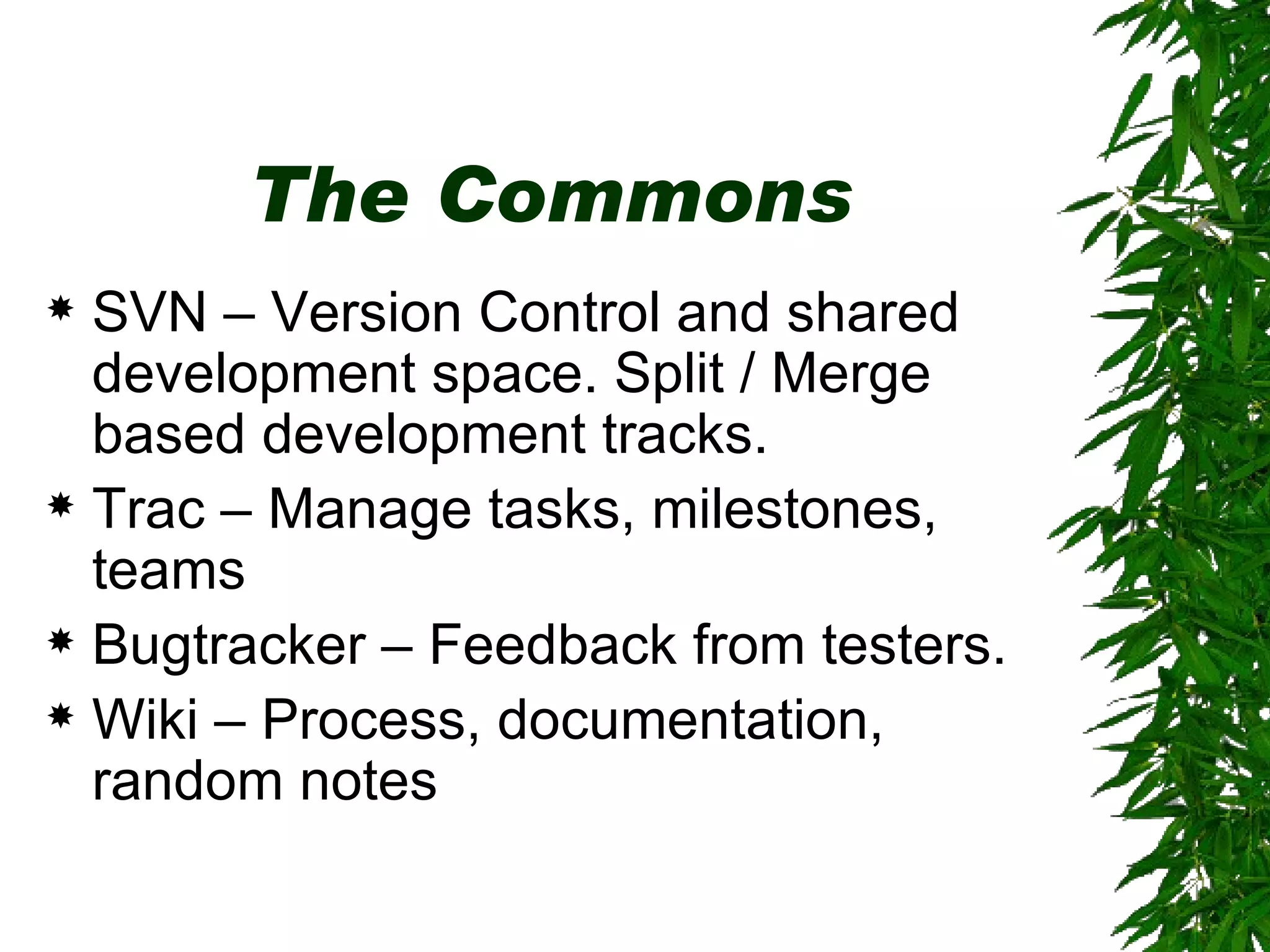
The Commons SVN – Version Control and shared development space. Split / Merge based development tracks. Trac – Manage tasks, milestones, teams Bugtracker – Feedback from testers.  Wiki – Process, documentation, random notes
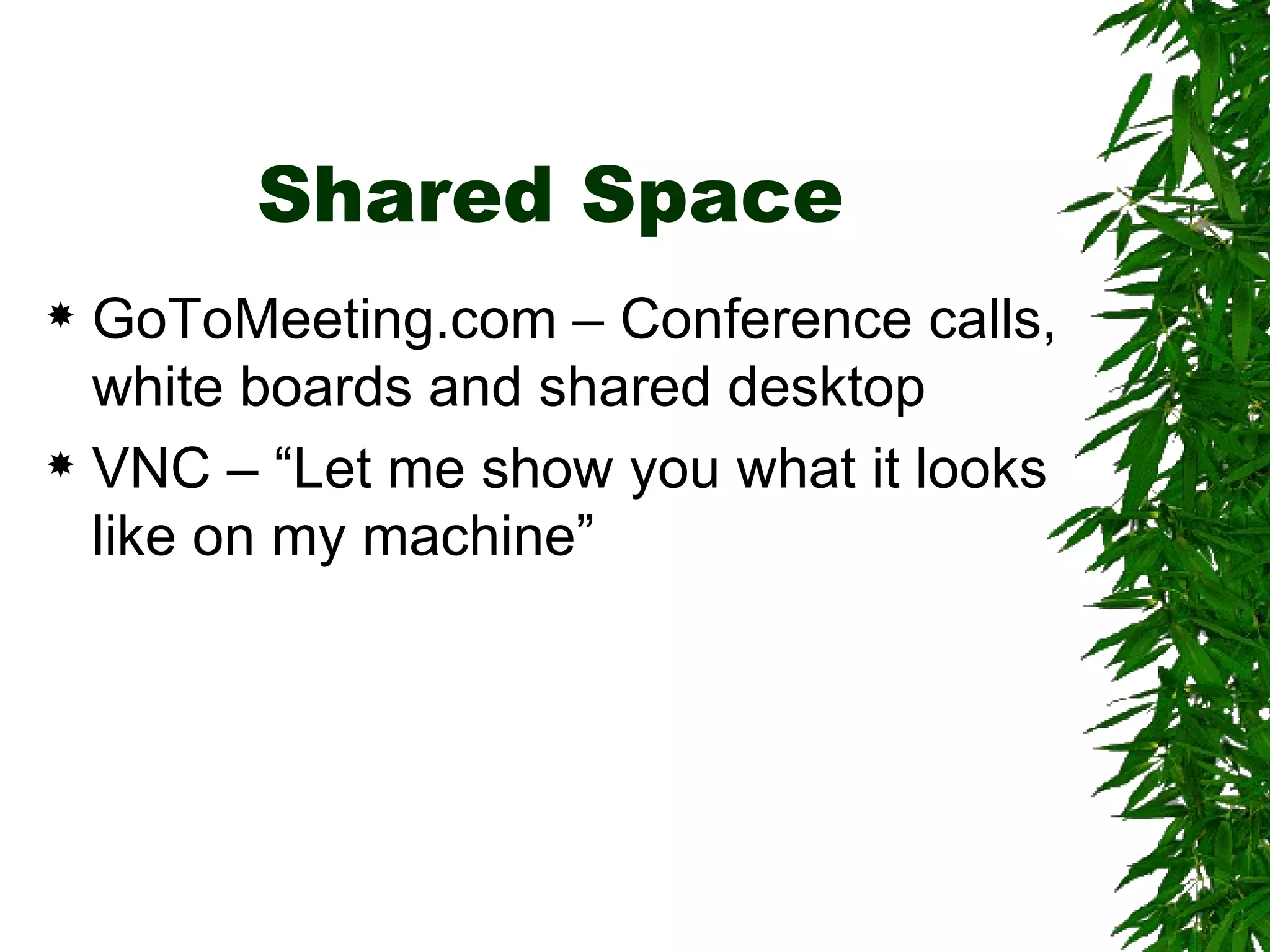
Shared Space GoToMeeting.com – Conference calls, white boards and shared desktop VNC – “Let me show you what it looks like on my machine”
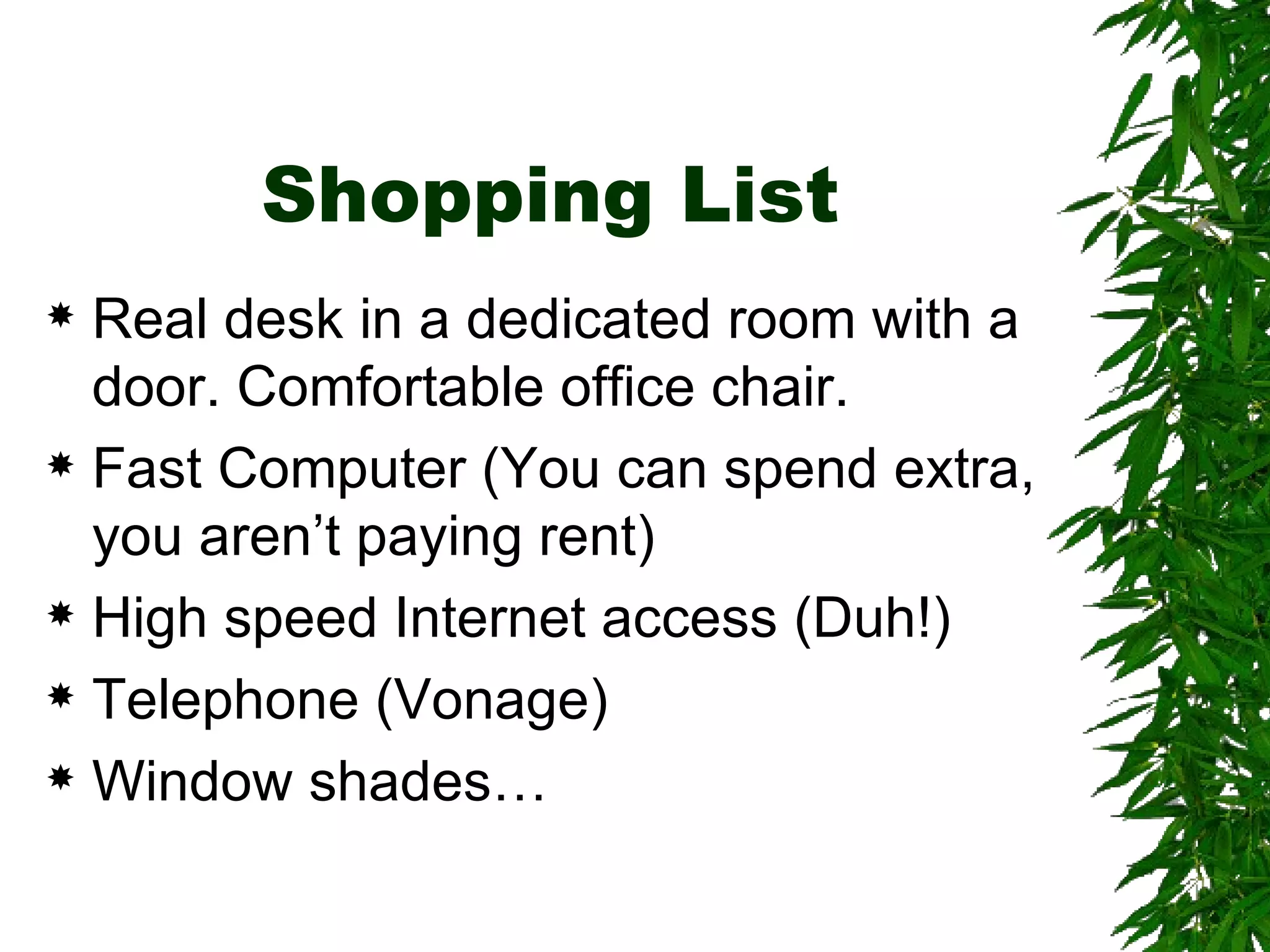
Shopping List Real desk in a dedicated room with a door. Comfortable office chair. Fast Computer (You can spend extra, you aren’t paying rent) High speed Internet access (Duh!) Telephone (Vonage) Window shades…
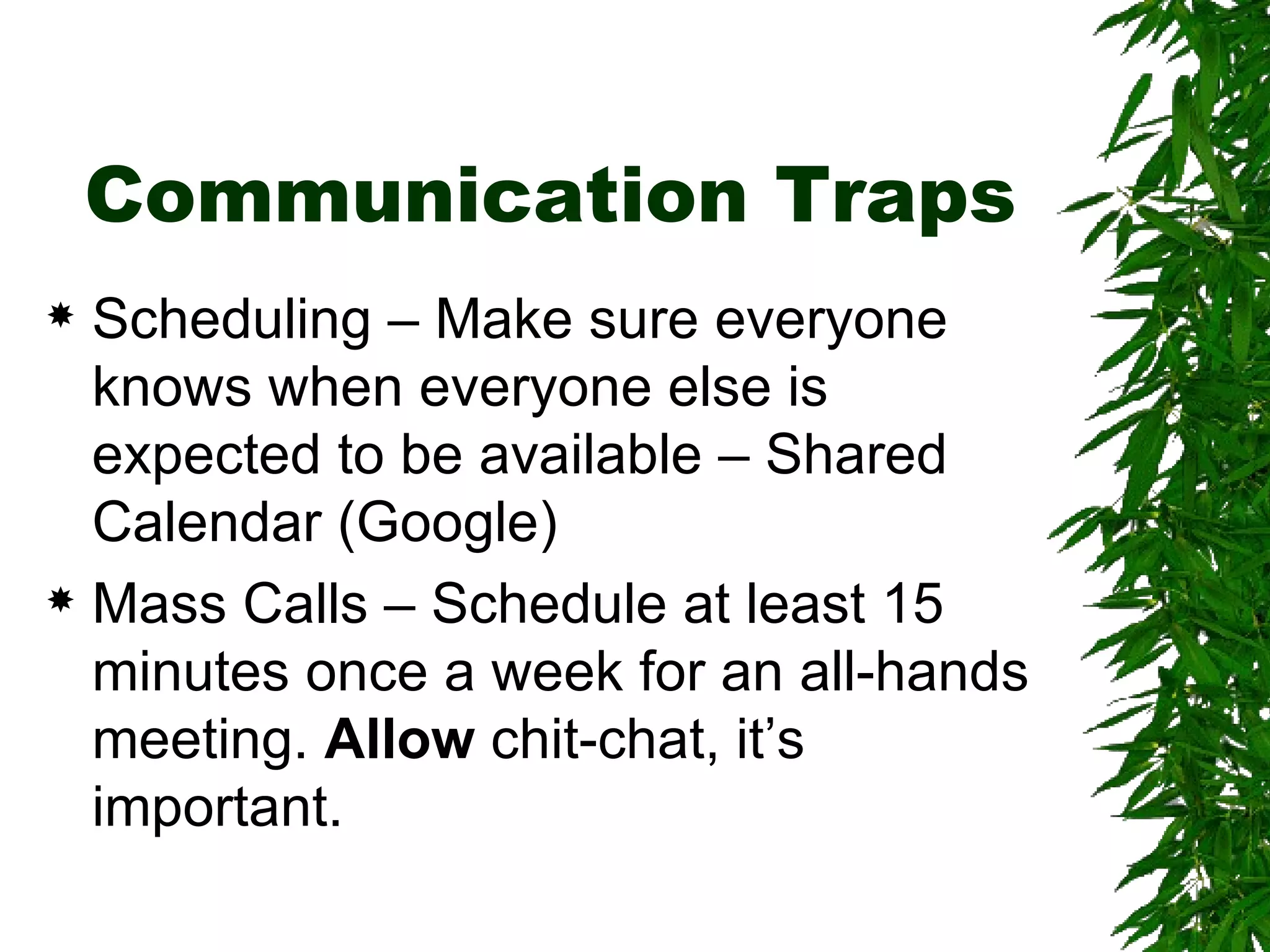
Communication Traps Scheduling – Make sure everyone knows when everyone else is expected to be available – Shared Calendar (Google) Mass Calls – Schedule at least 15 minutes once a week for an all-hands meeting.  Allow  chit-chat, it’s important.
Face Time? Never really felt the need, but some people do, so if your team isn’t too spread out, plan at least 1 meeting a year to get everyone together socially. Don’t make it required.

Virtual Company Tools

  • 1.
    Virtual Company Nono receptionist, no cubicles, no rent, no commute, no dress policy, no office . Real clients, real work, real deadlines, real teams, real pay, real work . Not for : Slackers, chair fillers, soap opera junkies, full-time caregivers For : Self directed people who don’t look forward to putting on a tie or hose every morning.
  • 2.
    Social Stack Moreimportant than technology. (Gasp!) No office space to start - it's okay (maybe even better) if everyone is remote. Frugality - spend money when you need to, but don't spend money if you don't have to. Camaraderie - you should enjoy each other's company, because you'll be spending a lot of time together. Joie de vivre - it's really important to have native (and naïve) optimism. Intercommunication - communicate by writing, and as much as possible communicate in a commons (wiki, IRC, email , bug tracker, etc.) Group introspection - create a culture that regularly does after-action reviews and write-ups of what we learned. Leadership - make sure people know what they're supposed to be doing. Figure out how to distribute leadership among the team. Cultivate knowledge and wisdom - the organization and individuals both should be learning all the time.
  • 3.
    Working Rules Tasksare defined – People need to know what they should be doing and it should be written in a common location (Trac) Project Management is distributed – Ownership of a solution promotes bi-directional reviews
  • 4.
    Technical Stack HostedSolutions – Centralize and outsource as much hosting as possible Email SVN / Trac / Wiki / Bugtracker ( The Commons ) Development Servers (Web & DB) Central File Hosting / Trading Timesheet Software
  • 5.
    The Commons SVN– Version Control and shared development space. Split / Merge based development tracks. Trac – Manage tasks, milestones, teams Bugtracker – Feedback from testers. Wiki – Process, documentation, random notes
  • 6.
    Shared Space GoToMeeting.com– Conference calls, white boards and shared desktop VNC – “Let me show you what it looks like on my machine”
  • 7.
    Shopping List Realdesk in a dedicated room with a door. Comfortable office chair. Fast Computer (You can spend extra, you aren’t paying rent) High speed Internet access (Duh!) Telephone (Vonage) Window shades…
  • 8.
    Communication Traps Scheduling– Make sure everyone knows when everyone else is expected to be available – Shared Calendar (Google) Mass Calls – Schedule at least 15 minutes once a week for an all-hands meeting. Allow chit-chat, it’s important.
  • 9.
    Face Time? Neverreally felt the need, but some people do, so if your team isn’t too spread out, plan at least 1 meeting a year to get everyone together socially. Don’t make it required.