VICTORY
Vildagliptin and Metformin Combination
Therapy Outcome in Superior Glycemic Control
Diabetes: A Global
Emergency
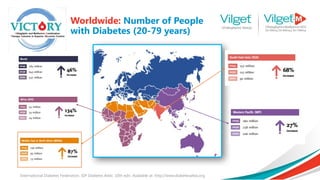
Worldwide: Number of People
with Diabetes (20-79 years)
International Diabetes Federation. IDF Diabetes Atlas. 10th edn. Available at: http://www.diabetesatlas.org
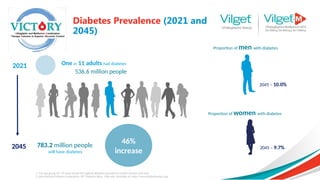
Diabetes Prevalence (2021 and
2045)
46%
increase
1, The age group 65–79 years shows the highest diabetes prevalence in both women and men
2, International Diabetes Federation. IDF Diabetes Atlas. 10th edn. Available at: http://www.diabetesatlas.org.
Proportion of women with diabetes
2045 – 9.7%
Proportion of men with diabetes
2045 – 10.0%
2021 One in 11 adults had diabetes
2045 783.2 million people
will have diabetes
536.6 million people
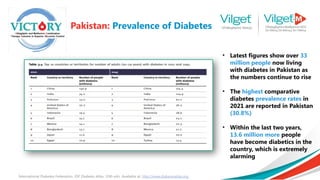
Pakistan: Prevalence of Diabetes
International Diabetes Federation. IDF Diabetes Atlas. 10th edn. Available at: http://www.diabetesatlas.org
• Latest figures show over 33
million people now living
with diabetes in Pakistan as
the numbers continue to rise
• The highest comparative
diabetes prevalence rates in
2021 are reported in Pakistan
(30.8%)
• Within the last two years,
13.6 million more people
have become diabetics in the
country, which is extremely
alarming
Management of
Hyperglycemia
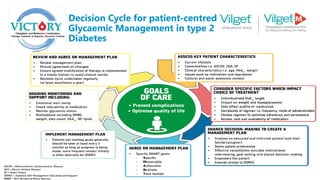
Decision Cycle for patient-centred
Glycaemic Management in type 2
Diabetes
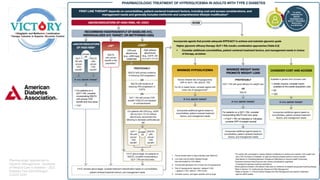
Pharmacologic Approaches to
Glycemic Management: Standards
of Medical Care in Diabetes - 2022.
Diabetes Care 2022;45(Suppl.
1):S125-S143
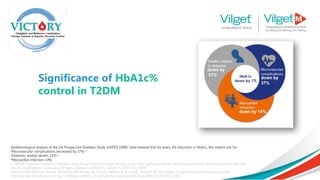
Significance of HbA1c%
control in T2DM
Epidemiological analysis of the UK Prospective Diabetes Study (UKPDS 1998)1
data showed that for every 1% reduction in HbA1c, the relative risk for:
•Microvascular complications decreased by 37%1,2
•Diabetes-related deaths 21%1,2
•Myocardial infarction 14%
1. United Kingdom Prospective Diabetes Study Group: Intensive blood-glucose control with sulphonylureas or insulin compared with conventional treatment and
risk of complications in patients with type 2 diabetes (UKPDS 33). Lancet 352: 837–853, 1998
2 Stratton IM, Adler AI, Neil HA, Matthews DR, Manley SE, Cull CA, Hadden D, Turner RC, Holman RR: Association of glycaemia with macrovascular and
microvascular complications of type 2 diabetes (UKPDS 35): prospective observational study. BMJ 321:405–412, 2000
1. Sarwar N et al. Lancet 2010;375:2215; 2. Thomas M et al. Nat Rev Nephrol 2016;12:73
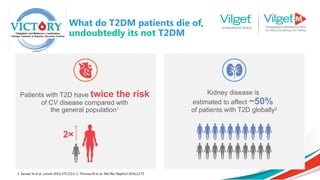
What do T2DM patients die of,
undoubtedly its not T2DM
Kidney disease is
estimated to affect ~50%
of patients with T2D globally2
Patients with T2D have twice the risk
of CV disease compared with
the general population1
2×
Diabetes: Clinical
Development Program
Vildagliptin:
Clinical Development Program
Vildagliptin:
As Monotherapy
Efficacy of Vildagliptin
Monotherapy in drug-naïve
patients with type 2 diabetes
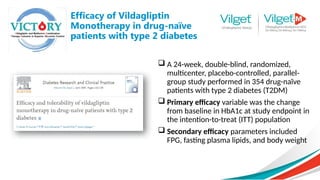
 A 24-week, double-blind, randomized,
multicenter, placebo-controlled, parallel-
group study performed in 354 drug-naïve
patients with type 2 diabetes (T2DM)
 Primary efficacy variable was the change
from baseline in HbA1c at study endpoint in
the intention-to-treat (ITT) population
 Secondary efficacy parameters included
FPG, fasting plasma lipids, and body weight
Efficacy of Vildagliptin
Monotherapy in drug-naïve
patients with type 2 diabetes
Pi-Sunyer FX, Schweizer A, Mills D, Dejager S. Efficacy and tolerability of vildagliptin monotherapy in drug-naive patients with type 2 diabetes. Diabetes research
and clinical practice. 2007 Apr 1;76(1):132-8.
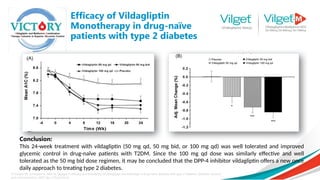
Conclusion:
This 24-week treatment with vildagliptin (50 mg qd, 50 mg bid, or 100 mg qd) was well tolerated and improved
glycemic control in drug-naïve patients with T2DM. Since the 100 mg qd dose was similarly effective and well
tolerated as the 50 mg bid dose regimen, it may be concluded that the DPP-4 inhibitor vildagliptin offers a new once
daily approach to treating type 2 diabetes.
Vildagliptin as Monotherapy
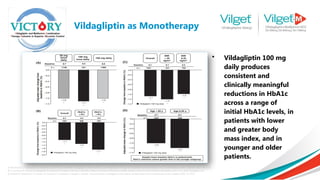
• Vildagliptin 100 mg
daily produces
consistent and
clinically meaningful
reductions in HbA1c
across a range of
initial HbA1c levels, in
patients with lower
and greater body
mass index, and in
younger and older
patients.
A) Rosenstock J, Pi-Sunyer FX, Pratley RE, Couturier A, Schweizer A, Dejager S. Robust efficacy of vildagliptin in drug-naı¨ve patients: pooled analysis of 5 monotherapy studies. Diabetes 2007; 56: A135
B) C) Nathwani A. The use of vildagliptin for treatment of patients with type 2 diabetes mellitus. Presented at the 66th scientific sessions of the American Diabetes Association; June 9–13, 2006; Washington, DC
D) Pratley RE, Rosenstock J, Pi-Sunyer FX, Couturier A, Schweizer A, Dejager S. Benefit ⁄ risk assessment of vildagliptin in the elderly: pooled analysis of 5 monotherapy studies. Diabetes 2007; 56: A135
Comparing Vildagliptin and
Metformin for HbA1c Reduction
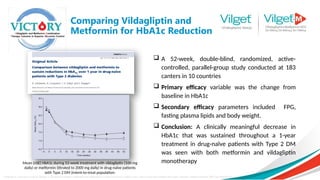
 A 52-week, double-blind, randomized, active-
controlled, parallel-group study conducted at 183
canters in 10 countries
 Primary efficacy variable was the change from
baseline in HbA1c
 Secondary efficacy parameters included FPG,
fasting plasma lipids and body weight.
 Conclusion: A clinically meaningful decrease in
HbA1c that was sustained throughout a 1-year
treatment in drug-naïve patients with Type 2 DM
was seen with both metformin and vildagliptin
monotherapy
Mean (±SE) HbA1c during 52-week treatment with vildagliptin (100 mg
daily) or metformin (titrated to 2000 mg daily) in drug-naïve patients
with Type 2 DM (intent-to-treat population:
Schweizer A, Couturier A, Foley JE, Dejager S. Comparison between vildagliptin and metformin to sustain reductions in HbA1c over 1 year in drug naïve patients with Type 2 diabetes. Diabetic Medicine. 2007 Sep;24(9):955-61
‐ .
Latest Clinical Data and
Combination Therapy
Vildagliptin:
Initial combination therapy
with other oral antidiabetic
agents and insulin
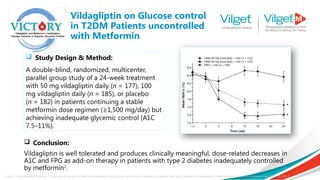
Vildagliptin on Glucose control
in T2DM Patients uncontrolled
with Metformin
1, Bosi E, Camisasca RP, Collober C, Rochotte E, Garber AJ. Effects of vildagliptin on glucose control over 24 weeks in patients with type 2 diabetes inadequately controlled with metformin. Diabetes Care 2007; 30: 890–5
 Conclusion:
Vildagliptin is well tolerated and produces clinically meaningful, dose-related decreases in
A1C and FPG as add-on therapy in patients with type 2 diabetes inadequately controlled
by metformin1
.
 Study Design & Method:
A double-blind, randomized, multicenter,
parallel group study of a 24-week treatment
with 50 mg vildagliptin daily (n = 177), 100
mg vildagliptin daily (n = 185), or placebo
(n = 182) in patients continuing a stable
metformin dose regimen (≥1,500 mg/day) but
achieving inadequate glycemic control (A1C
7.5–11%).
Vildagliptin Plus Metformin
Therapy
Bosi E, Dotta F, Jia Y, Goodman M. Vildagliptin plus metformin combination therapy provides superior glycaemic control to individual monotherapy in
treatment naive patients with type 2 diabetes mellitus. Diabetes, Obesity and Metabolism. 2009 May;11(5):506-15.
‐
 Primary efficacy variable was change
in HbA1c from baseline to week 24
endpoint
 Secondary efficacy variables included
change from baseline at the week 24
endpoint in FPG, body weight and
fasting lipids
 Results: Both vildagliptin plus high- and
low-dose metformin combination
therapy demonstrated statistically
significant superiority in lowering HbA1c
compared with vildagliptin and
metformin monotherapy
The greatest reductions were seen in the vildagliptin
and metformin combination groups, and the largest
change was in the vildagliptin plus high-dose
metformin combination therapy group [adjusted
mean (SE) change from baseline: 1.8% (0.06%)].
Bosi E, Dotta F, Jia Y, Goodman M. Vildagliptin plus metformin combination therapy provides superior glycaemic control to individual monotherapy in treatment‐
naive patients with type 2 diabetes mellitus. Diabetes, Obesity and Metabolism. 2009 May;11(5):506-15.
Results: Vildagliptin Plus
Metformin Therapy
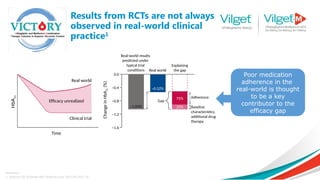
Results from RCTs are not always
observed in real-world clinical
practice1
Reference
1. Edelman SV, Polonsky WH. Diabetes Care 2017;40:1425–32
Poor medication
adherence in the
real-world is thought
to be a key
contributor to the
efficacy gap
HbA
1c
Time
0.0
Real-world results
predicted under
typical trial
conditions
Change
in
HbA
1c
(%)
–0.4
–0.8
–1.2
–1.6
Real world
Explaining
the gap
Adherence
Baseline
characteristics,
additional drug
therapy
Clinical trial
Real world
Efficacy unrealized
–1.04%
–0.52%
75%
25%
Gap
Consistent effectiveness between RCT and real-life data observed with MET + vildagliptin
while the SU-combination in real-life setting has lower effectiveness vs. RCTs
Metformin + Sulphonylureas
Metformin + Vildagliptin
• Vildagliptin efficacy is consistent
between RCTs and real life (EDGE)
• Efficacy with SU appears to be
diminished in real life versus RCTs
EDGE
RCT
Ahrén B et al. Diabetologia 2014 DOI 10.1007/s00125-014-3222-z
Data were pooled from 5 clinical trials carried out in 4480 patients [Vilda, N=2788 or SUs, N=1692 (glimepiride, n=1259; gliclazide, n=433)] and
compared with a large sample of patients extracted from the EDGE study (Vilda, n=7002 or SUs, n=3702). Linear regression analyses were
performed between the baseline HbA1c and the change in HbA1c (ΔHb1c) after 24 weeks.
Real Life Data
Vildagliptin Combination
with OADs and Insulin
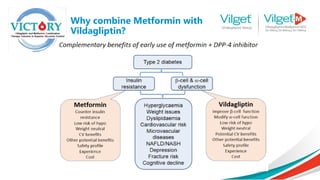
Why combine Metformin with
Vildagliptin?
Vildagliptin as an add-on to
Sulphonylurea
 Methods: This 24-week, multicenter,
randomized, double-blind, placebo-
controlled study assessed the effects of
the dipeptidyl peptidase-4 inhibitor
vildagliptin (50 mg given once or twice
daily) vs. placebo added to glimepiride
(4 mg once daily) in 515 patients with
T2DM.
 Adjusted mean changes from baseline
to end-point in HbA1c, fasting plasma
glucose, fasting lipids and body weight
were compared by analysis of
covariance
Garber AJ, Foley JE, Banerji MA, Ebeling P, Gudbjörnsdottir S, Camisasca RP, Couturier A, Baron AM. Effects of vildagliptin on glucose control in patients with type 2 diabetes inadequately controlled
with a sulphonylurea. Diabetes, Obesity and Metabolism. 2008 Nov;10(11):1047-56.
Vildagliptin as an add-on to
Sulphonylurea
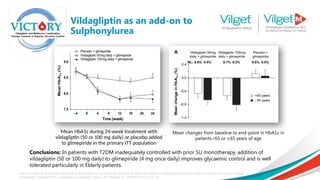
Mean HbA1c during 24-week treatment with
vildagliptin (50 or 100 mg daily) or placebo added
to glimepiride in the primary ITT population
Conclusions: In patients with T2DM inadequately controlled with prior SU monotherapy, addition of
vildagliptin (50 or 100 mg daily) to glimepiride (4 mg once daily) improves glycaemic control and is well
tolerated particularly in Elderly patients.
Mean changes from baseline to end-point in HbA1c in
patients<65 or ≥65 years of age
Garber AJ, Foley JE, Banerji MA, Ebeling P, Gudbjörnsdottir S, Camisasca RP, Couturier A, Baron AM. Effects of vildagliptin on glucose control in patients with type 2 diabetes
inadequately controlled with a sulphonylurea. Diabetes, Obesity and Metabolism. 2008 Nov;10(11):1047-56.
Vildagliptin as an Add-on to
Insulin
Fonseca V, Schweizer A, Albrecht D, Baron MA, Chang I, Dejager S. Addition of vildagliptin to insulin improves glycaemic control in type 2 diabetes. Diabetologia 2007; 50: 1148–55.
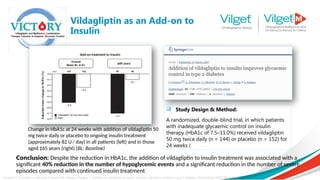
Conclusion: Despite the reduction in HbA1c, the addition of vildagliptin to insulin treatment was associated with a
significant 40% reduction in the number of hypoglycemic events and a significant reduction in the number of severe
episodes compared with continued insulin treatment
 Study Design & Method:
A randomized, double-blind trial, in which patients
with inadequate glycaemic control on insulin
therapy (HbA1c of 7.5–11.0%) received vildagliptin
50 mg twice daily (n = 144) or placebo (n = 152) for
24 weeks (
Change in HbA1c at 24 weeks with addition of vildagliptin 50
mg twice daily or placebo to ongoing insulin treatment
(approximately 82 U ⁄ day) in all patients (left) and in those
aged ‡65 years (right) (BL: Baseline)
Vildagliptin:
Comparison with other DPP4i
Efficacy & Safety of Vildagliptin,
Sitagliptin, and Linagliptin as
add-on therapy
Reference:
Tang YZ, Wang G, Jiang ZH, Yan TT, Chen YJ, Yang M, Meng LL, Zhu YJ, Li CG, Li Z, Yu P. Efficacy and safety of vildagliptin, sitagliptin, and linagliptin as add-on therapy in Chinese patients
with T2DM inadequately controlled with dual combination of insulin and traditional oral hypoglycemic agent. Diabetology & Metabolic Syndrome. 2015 Dec;7(1):1-9.
Study Design & Method:
 A total of 535 T2DM patients who failed
to achieve glycemic control with insulin and
a traditional oral hypoglycemic agent were
randomized to receive vildagliptin,
sitagliptin, or linagliptin
 Body mass index, glycosylated
hemoglobin (HbA1c), fasting and
postprandial plasma glucose (FPG and
PPG), insulin dose, and adverse events
were evaluated during the study.
Efficacy & Safety of Vildagliptin,
Sitagliptin, and Linagliptin as
add-on therapy
Tang YZ, Wang G, Jiang ZH, Yan TT, Chen YJ, Yang M, Meng LL, Zhu YJ, Li CG, Li Z, Yu P. Efficacy and safety of vildagliptin, sitagliptin, and linagliptin as add-on therapy in Chinese patients with T2DM inadequately
controlled with dual combination of insulin and traditional oral hypoglycemic agent. Diabetology & Metabolic Syndrome. 2015 Dec;7(1):1-9.
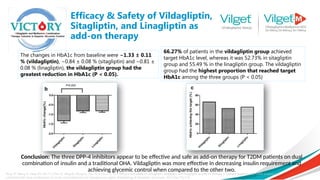
Conclusion: The three DPP 4 inhibitors appear to be effective and safe as add on therapy for T2DM patients on dual
‑ ‑
combination of insulin and a traditional OHA. Vildagliptin was more effective in decreasing insulin requirement and
achieving glycemic control when compared to the other two.
The changes in HbA1c from baseline were −1.33 ± 0.11
% (vildagliptin), −0.84 ± 0.08 % (sitagliptin) and −0.81 ±
0.08 % (linagliptin), the vildagliptin group had the
greatest reduction in HbA1c (P < 0.05).
66.27% of patients in the vildagliptin group achieved
target HbA1c level, whereas it was 52.73% in sitagliptin
group and 55.49 % in the linagliptin group. The vildagliptin
group had the highest proportion that reached target
HbA1c among the three groups (P < 0.05)
Vildagliptin and
Metformin Combination
under VERIFY Trial
VERIFY Trail:
The value of Early Treatment
Intensification in T2DM
VERIFY: Clinical Trial
VERIFY in the context of the
other studies
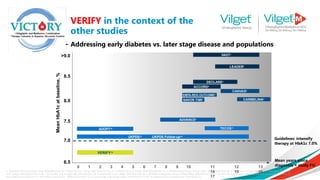
- Addressing early diabetes vs. later stage disease and populations
1. Duckworth W, et al. N Engl J Med. 2009;360(2):129-39. 2. Marso SP, et al. N Engl J Med 2016;375:311-22. 3. Wiviott SD, et al. N Engl J Med 2019;380:347-57. 4. ACCORD Study Group. N Engl J Med. 2008;358(24):2545-59. 5. Neal B, et al. N Engl J Med 2017;377:644-57. 6. Zinman B,
et al. N Engl J Med 2015;373:2117-28. 7. Scirica BM, et al. N Engl J Med 2013;369:1317-26. 8. Rosenstock J, et al. JAMA. 2019;321(1):69-79. 9. ADVANCE Collaborative Group. N Engl J Med. 2008;358(24):2560-72. 10. Kahn SE, et al. N Engl J Med 2006;355:2427-43. 11. Green JB, et al. N
Engl J Med 2015;373:232-42. 12. The UKPDS Group.Lancet. 1998;352(9131):837-53. 13. Holman RR, et al. N Engl J Med. 2008;359(15):1577-89. 14. Matthews D, et al. Diabet Med. 2019;36:505-13.
VADT1
LEADER2
DECLARE3
ACCORD4
CANVAS5
EMPA-REG OUTCOME6
SAVOR TIMI7 CARMELINA8
ADVANCE9
ADOPT10 TECOS11
UKPDS12 UKPDS Follow-up13
VERIFY14
0 1 2 3 4 5 6 7 8 9 10 11 12 13
14 15 16
17
Mean years since
diagnosis + study FU
>9.0
8.5
8.0
7.5
7.0
6.5
Mean
HbA1c
at
baseline,
%
Guidelines: intensify
therapy at HbA1c 7.0%
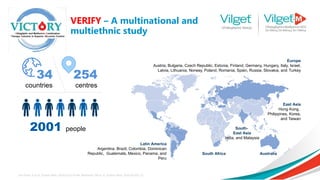
VERIFY – A multinational and
multiethnic study
Del Prato S et al. Diabet Med. 2014;31:1178-84. Matthews DR et al. Diabet Med. 2019;36:505-13.
Europe
Austria, Bulgaria, Czech Republic, Estonia, Finland, Germany, Hungary, Italy, Israel,
Latvia, Lithuania, Norway, Poland, Romania, Spain, Russia, Slovakia, and Turkey
Latin America
Argentina, Brazil, Colombia, Dominican
Republic, Guatemala, Mexico, Panama, and
Peru
East Asia
Hong Kong,
Philippines, Korea,
and Taiwan
South Africa Australia
2001 people
34
countries
254
centres
South-
East Asia
India, and Malaysia
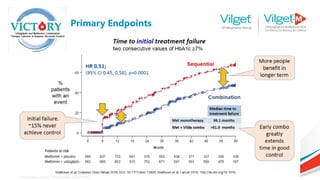
Primary Endpoints
Commentary by Prof. Clifford Bailey (EASD 2019)
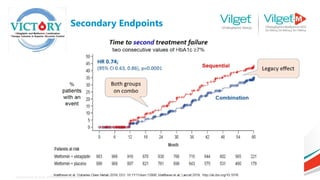
Secondary Endpoints
Commentary by Prof. Clifford Bailey (EASD 2019)
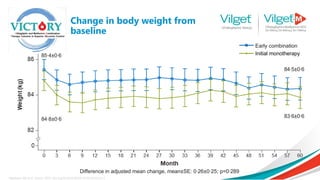
Change in body weight from
baseline
Difference in adjusted mean change, mean±SE: 0·26±0·25; p=0·289
Early combination
Initial monotherapy
84·8±0·6
Matthews DR et al. Lancet. 2019. doi.org/10.1016/S0140-6736(19)32131-2
83·6±0·6
85·4±0·6
84·5±0·6
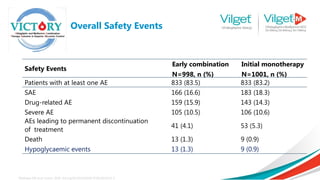
Overall Safety Events
Matthews DR et al. Lancet. 2019. doi.org/10.1016/S0140-6736(19)32131-2
Safety Events
Early combination
N=998, n (%)
Initial monotherapy
N=1001, n (%)
Patients with at least one AE 833 (83.5) 833 (83.2)
SAE 166 (16.6) 183 (18.3)
Drug-related AE 159 (15.9) 143 (14.3)
Severe AE 105 (10.5) 106 (10.6)
AEs leading to permanent discontinuation
of treatment
41 (4.1) 53 (5.3)
Death 13 (1.3) 9 (0.9)
Hypoglycaemic events 13 (1.3) 9 (0.9)
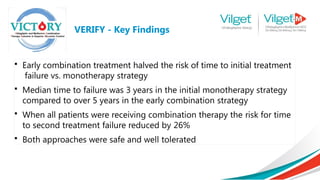
VERIFY - Key Findings
 Early combination treatment halved the risk of time to initial treatment
failure vs. monotherapy strategy
 Median time to failure was 3 years in the initial monotherapy strategy
compared to over 5 years in the early combination strategy
 When all patients were receiving combination therapy the risk for time
to second treatment failure reduced by 26%
 Both approaches were safe and well tolerated
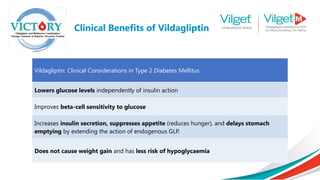
Vildagliptin: Clinical Considerations in Type 2 Diabetes Mellitus
Lowers glucose levels independently of insulin action
Improves beta-cell sensitivity to glucose
Increases insulin secretion, suppresses appetite (reduces hunger), and delays stomach
emptying by extending the action of endogenous GLP.
Does not cause weight gain and has less risk of hypoglycaemia
Clinical Benefits of Vildagliptin
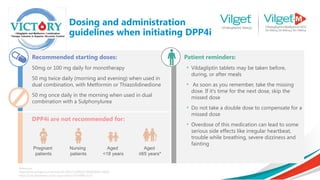
Recommended starting doses:
50mg or 100 mg daily for monotherapy
50 mg twice daily (morning and evening) when used in
dual combination, with Metformin or Thiazolidinedione
50 mg once daily in the morning when used in dual
combination with a Sulphonylurea
Patient reminders:
• Vildagliptin tablets may be taken before,
during, or after meals
• As soon as you remember, take the missing
dose. If it’s time for the next dose, skip the
missed dose
• Do not take a double dose to compensate for a
missed dose
• Overdose of this medication can lead to some
serious side effects like irregular heartbeat,
trouble while breathing, severe dizziness and
fainting
DPP4i are not recommended for:
Pregnant
patients
Nursing
patients
Aged
<18 years
Aged
≥65 years*
Reference:
https://link.springer.com/article/10.2165/11209910-000000000-00000
https://care.diabetesjournals.org/content/30/4/890.short
Dosing and administration
guidelines when initiating DPP4i
Thank You
for

Vilget Presentation (1).pptx Diabetes emergency

  • 1.
    VICTORY Vildagliptin and MetforminCombination Therapy Outcome in Superior Glycemic Control
  • 2.
  • 3.
    Worldwide: Number ofPeople with Diabetes (20-79 years) International Diabetes Federation. IDF Diabetes Atlas. 10th edn. Available at: http://www.diabetesatlas.org
  • 4.
    Diabetes Prevalence (2021and 2045) 46% increase 1, The age group 65–79 years shows the highest diabetes prevalence in both women and men 2, International Diabetes Federation. IDF Diabetes Atlas. 10th edn. Available at: http://www.diabetesatlas.org. Proportion of women with diabetes 2045 – 9.7% Proportion of men with diabetes 2045 – 10.0% 2021 One in 11 adults had diabetes 2045 783.2 million people will have diabetes 536.6 million people
  • 5.
    Pakistan: Prevalence ofDiabetes International Diabetes Federation. IDF Diabetes Atlas. 10th edn. Available at: http://www.diabetesatlas.org • Latest figures show over 33 million people now living with diabetes in Pakistan as the numbers continue to rise • The highest comparative diabetes prevalence rates in 2021 are reported in Pakistan (30.8%) • Within the last two years, 13.6 million more people have become diabetics in the country, which is extremely alarming
  • 6.
  • 7.
    Decision Cycle forpatient-centred Glycaemic Management in type 2 Diabetes
  • 8.
    Pharmacologic Approaches to GlycemicManagement: Standards of Medical Care in Diabetes - 2022. Diabetes Care 2022;45(Suppl. 1):S125-S143
  • 9.
    Significance of HbA1c% controlin T2DM Epidemiological analysis of the UK Prospective Diabetes Study (UKPDS 1998)1 data showed that for every 1% reduction in HbA1c, the relative risk for: •Microvascular complications decreased by 37%1,2 •Diabetes-related deaths 21%1,2 •Myocardial infarction 14% 1. United Kingdom Prospective Diabetes Study Group: Intensive blood-glucose control with sulphonylureas or insulin compared with conventional treatment and risk of complications in patients with type 2 diabetes (UKPDS 33). Lancet 352: 837–853, 1998 2 Stratton IM, Adler AI, Neil HA, Matthews DR, Manley SE, Cull CA, Hadden D, Turner RC, Holman RR: Association of glycaemia with macrovascular and microvascular complications of type 2 diabetes (UKPDS 35): prospective observational study. BMJ 321:405–412, 2000
  • 10.
    1. Sarwar Net al. Lancet 2010;375:2215; 2. Thomas M et al. Nat Rev Nephrol 2016;12:73 What do T2DM patients die of, undoubtedly its not T2DM Kidney disease is estimated to affect ~50% of patients with T2D globally2 Patients with T2D have twice the risk of CV disease compared with the general population1 2×
  • 11.
  • 12.
  • 13.
  • 14.
    Efficacy of Vildagliptin Monotherapyin drug-naïve patients with type 2 diabetes  A 24-week, double-blind, randomized, multicenter, placebo-controlled, parallel- group study performed in 354 drug-naïve patients with type 2 diabetes (T2DM)  Primary efficacy variable was the change from baseline in HbA1c at study endpoint in the intention-to-treat (ITT) population  Secondary efficacy parameters included FPG, fasting plasma lipids, and body weight
  • 15.
    Efficacy of Vildagliptin Monotherapyin drug-naïve patients with type 2 diabetes Pi-Sunyer FX, Schweizer A, Mills D, Dejager S. Efficacy and tolerability of vildagliptin monotherapy in drug-naive patients with type 2 diabetes. Diabetes research and clinical practice. 2007 Apr 1;76(1):132-8. Conclusion: This 24-week treatment with vildagliptin (50 mg qd, 50 mg bid, or 100 mg qd) was well tolerated and improved glycemic control in drug-naïve patients with T2DM. Since the 100 mg qd dose was similarly effective and well tolerated as the 50 mg bid dose regimen, it may be concluded that the DPP-4 inhibitor vildagliptin offers a new once daily approach to treating type 2 diabetes.
  • 16.
    Vildagliptin as Monotherapy •Vildagliptin 100 mg daily produces consistent and clinically meaningful reductions in HbA1c across a range of initial HbA1c levels, in patients with lower and greater body mass index, and in younger and older patients. A) Rosenstock J, Pi-Sunyer FX, Pratley RE, Couturier A, Schweizer A, Dejager S. Robust efficacy of vildagliptin in drug-naı¨ve patients: pooled analysis of 5 monotherapy studies. Diabetes 2007; 56: A135 B) C) Nathwani A. The use of vildagliptin for treatment of patients with type 2 diabetes mellitus. Presented at the 66th scientific sessions of the American Diabetes Association; June 9–13, 2006; Washington, DC D) Pratley RE, Rosenstock J, Pi-Sunyer FX, Couturier A, Schweizer A, Dejager S. Benefit ⁄ risk assessment of vildagliptin in the elderly: pooled analysis of 5 monotherapy studies. Diabetes 2007; 56: A135
  • 17.
    Comparing Vildagliptin and Metforminfor HbA1c Reduction  A 52-week, double-blind, randomized, active- controlled, parallel-group study conducted at 183 canters in 10 countries  Primary efficacy variable was the change from baseline in HbA1c  Secondary efficacy parameters included FPG, fasting plasma lipids and body weight.  Conclusion: A clinically meaningful decrease in HbA1c that was sustained throughout a 1-year treatment in drug-naïve patients with Type 2 DM was seen with both metformin and vildagliptin monotherapy Mean (±SE) HbA1c during 52-week treatment with vildagliptin (100 mg daily) or metformin (titrated to 2000 mg daily) in drug-naïve patients with Type 2 DM (intent-to-treat population: Schweizer A, Couturier A, Foley JE, Dejager S. Comparison between vildagliptin and metformin to sustain reductions in HbA1c over 1 year in drug naïve patients with Type 2 diabetes. Diabetic Medicine. 2007 Sep;24(9):955-61 ‐ .
  • 18.
    Latest Clinical Dataand Combination Therapy
  • 19.
    Vildagliptin: Initial combination therapy withother oral antidiabetic agents and insulin
  • 20.
    Vildagliptin on Glucosecontrol in T2DM Patients uncontrolled with Metformin 1, Bosi E, Camisasca RP, Collober C, Rochotte E, Garber AJ. Effects of vildagliptin on glucose control over 24 weeks in patients with type 2 diabetes inadequately controlled with metformin. Diabetes Care 2007; 30: 890–5  Conclusion: Vildagliptin is well tolerated and produces clinically meaningful, dose-related decreases in A1C and FPG as add-on therapy in patients with type 2 diabetes inadequately controlled by metformin1 .  Study Design & Method: A double-blind, randomized, multicenter, parallel group study of a 24-week treatment with 50 mg vildagliptin daily (n = 177), 100 mg vildagliptin daily (n = 185), or placebo (n = 182) in patients continuing a stable metformin dose regimen (≥1,500 mg/day) but achieving inadequate glycemic control (A1C 7.5–11%).
  • 21.
    Vildagliptin Plus Metformin Therapy BosiE, Dotta F, Jia Y, Goodman M. Vildagliptin plus metformin combination therapy provides superior glycaemic control to individual monotherapy in treatment naive patients with type 2 diabetes mellitus. Diabetes, Obesity and Metabolism. 2009 May;11(5):506-15. ‐
  • 22.
     Primary efficacyvariable was change in HbA1c from baseline to week 24 endpoint  Secondary efficacy variables included change from baseline at the week 24 endpoint in FPG, body weight and fasting lipids  Results: Both vildagliptin plus high- and low-dose metformin combination therapy demonstrated statistically significant superiority in lowering HbA1c compared with vildagliptin and metformin monotherapy The greatest reductions were seen in the vildagliptin and metformin combination groups, and the largest change was in the vildagliptin plus high-dose metformin combination therapy group [adjusted mean (SE) change from baseline: 1.8% (0.06%)]. Bosi E, Dotta F, Jia Y, Goodman M. Vildagliptin plus metformin combination therapy provides superior glycaemic control to individual monotherapy in treatment‐ naive patients with type 2 diabetes mellitus. Diabetes, Obesity and Metabolism. 2009 May;11(5):506-15. Results: Vildagliptin Plus Metformin Therapy
  • 23.
    Results from RCTsare not always observed in real-world clinical practice1 Reference 1. Edelman SV, Polonsky WH. Diabetes Care 2017;40:1425–32 Poor medication adherence in the real-world is thought to be a key contributor to the efficacy gap HbA 1c Time 0.0 Real-world results predicted under typical trial conditions Change in HbA 1c (%) –0.4 –0.8 –1.2 –1.6 Real world Explaining the gap Adherence Baseline characteristics, additional drug therapy Clinical trial Real world Efficacy unrealized –1.04% –0.52% 75% 25% Gap
  • 24.
    Consistent effectiveness betweenRCT and real-life data observed with MET + vildagliptin while the SU-combination in real-life setting has lower effectiveness vs. RCTs Metformin + Sulphonylureas Metformin + Vildagliptin • Vildagliptin efficacy is consistent between RCTs and real life (EDGE) • Efficacy with SU appears to be diminished in real life versus RCTs EDGE RCT Ahrén B et al. Diabetologia 2014 DOI 10.1007/s00125-014-3222-z Data were pooled from 5 clinical trials carried out in 4480 patients [Vilda, N=2788 or SUs, N=1692 (glimepiride, n=1259; gliclazide, n=433)] and compared with a large sample of patients extracted from the EDGE study (Vilda, n=7002 or SUs, n=3702). Linear regression analyses were performed between the baseline HbA1c and the change in HbA1c (ΔHb1c) after 24 weeks. Real Life Data
  • 25.
  • 26.
    Why combine Metforminwith Vildagliptin?
  • 27.
    Vildagliptin as anadd-on to Sulphonylurea  Methods: This 24-week, multicenter, randomized, double-blind, placebo- controlled study assessed the effects of the dipeptidyl peptidase-4 inhibitor vildagliptin (50 mg given once or twice daily) vs. placebo added to glimepiride (4 mg once daily) in 515 patients with T2DM.  Adjusted mean changes from baseline to end-point in HbA1c, fasting plasma glucose, fasting lipids and body weight were compared by analysis of covariance Garber AJ, Foley JE, Banerji MA, Ebeling P, Gudbjörnsdottir S, Camisasca RP, Couturier A, Baron AM. Effects of vildagliptin on glucose control in patients with type 2 diabetes inadequately controlled with a sulphonylurea. Diabetes, Obesity and Metabolism. 2008 Nov;10(11):1047-56.
  • 28.
    Vildagliptin as anadd-on to Sulphonylurea Mean HbA1c during 24-week treatment with vildagliptin (50 or 100 mg daily) or placebo added to glimepiride in the primary ITT population Conclusions: In patients with T2DM inadequately controlled with prior SU monotherapy, addition of vildagliptin (50 or 100 mg daily) to glimepiride (4 mg once daily) improves glycaemic control and is well tolerated particularly in Elderly patients. Mean changes from baseline to end-point in HbA1c in patients<65 or ≥65 years of age Garber AJ, Foley JE, Banerji MA, Ebeling P, Gudbjörnsdottir S, Camisasca RP, Couturier A, Baron AM. Effects of vildagliptin on glucose control in patients with type 2 diabetes inadequately controlled with a sulphonylurea. Diabetes, Obesity and Metabolism. 2008 Nov;10(11):1047-56.
  • 29.
    Vildagliptin as anAdd-on to Insulin Fonseca V, Schweizer A, Albrecht D, Baron MA, Chang I, Dejager S. Addition of vildagliptin to insulin improves glycaemic control in type 2 diabetes. Diabetologia 2007; 50: 1148–55. Conclusion: Despite the reduction in HbA1c, the addition of vildagliptin to insulin treatment was associated with a significant 40% reduction in the number of hypoglycemic events and a significant reduction in the number of severe episodes compared with continued insulin treatment  Study Design & Method: A randomized, double-blind trial, in which patients with inadequate glycaemic control on insulin therapy (HbA1c of 7.5–11.0%) received vildagliptin 50 mg twice daily (n = 144) or placebo (n = 152) for 24 weeks ( Change in HbA1c at 24 weeks with addition of vildagliptin 50 mg twice daily or placebo to ongoing insulin treatment (approximately 82 U ⁄ day) in all patients (left) and in those aged ‡65 years (right) (BL: Baseline)
  • 30.
  • 31.
    Efficacy & Safetyof Vildagliptin, Sitagliptin, and Linagliptin as add-on therapy Reference: Tang YZ, Wang G, Jiang ZH, Yan TT, Chen YJ, Yang M, Meng LL, Zhu YJ, Li CG, Li Z, Yu P. Efficacy and safety of vildagliptin, sitagliptin, and linagliptin as add-on therapy in Chinese patients with T2DM inadequately controlled with dual combination of insulin and traditional oral hypoglycemic agent. Diabetology & Metabolic Syndrome. 2015 Dec;7(1):1-9. Study Design & Method:  A total of 535 T2DM patients who failed to achieve glycemic control with insulin and a traditional oral hypoglycemic agent were randomized to receive vildagliptin, sitagliptin, or linagliptin  Body mass index, glycosylated hemoglobin (HbA1c), fasting and postprandial plasma glucose (FPG and PPG), insulin dose, and adverse events were evaluated during the study.
  • 32.
    Efficacy & Safetyof Vildagliptin, Sitagliptin, and Linagliptin as add-on therapy Tang YZ, Wang G, Jiang ZH, Yan TT, Chen YJ, Yang M, Meng LL, Zhu YJ, Li CG, Li Z, Yu P. Efficacy and safety of vildagliptin, sitagliptin, and linagliptin as add-on therapy in Chinese patients with T2DM inadequately controlled with dual combination of insulin and traditional oral hypoglycemic agent. Diabetology & Metabolic Syndrome. 2015 Dec;7(1):1-9. Conclusion: The three DPP 4 inhibitors appear to be effective and safe as add on therapy for T2DM patients on dual ‑ ‑ combination of insulin and a traditional OHA. Vildagliptin was more effective in decreasing insulin requirement and achieving glycemic control when compared to the other two. The changes in HbA1c from baseline were −1.33 ± 0.11 % (vildagliptin), −0.84 ± 0.08 % (sitagliptin) and −0.81 ± 0.08 % (linagliptin), the vildagliptin group had the greatest reduction in HbA1c (P < 0.05). 66.27% of patients in the vildagliptin group achieved target HbA1c level, whereas it was 52.73% in sitagliptin group and 55.49 % in the linagliptin group. The vildagliptin group had the highest proportion that reached target HbA1c among the three groups (P < 0.05)
  • 33.
  • 34.
    VERIFY Trail: The valueof Early Treatment Intensification in T2DM
  • 35.
  • 36.
    VERIFY in thecontext of the other studies - Addressing early diabetes vs. later stage disease and populations 1. Duckworth W, et al. N Engl J Med. 2009;360(2):129-39. 2. Marso SP, et al. N Engl J Med 2016;375:311-22. 3. Wiviott SD, et al. N Engl J Med 2019;380:347-57. 4. ACCORD Study Group. N Engl J Med. 2008;358(24):2545-59. 5. Neal B, et al. N Engl J Med 2017;377:644-57. 6. Zinman B, et al. N Engl J Med 2015;373:2117-28. 7. Scirica BM, et al. N Engl J Med 2013;369:1317-26. 8. Rosenstock J, et al. JAMA. 2019;321(1):69-79. 9. ADVANCE Collaborative Group. N Engl J Med. 2008;358(24):2560-72. 10. Kahn SE, et al. N Engl J Med 2006;355:2427-43. 11. Green JB, et al. N Engl J Med 2015;373:232-42. 12. The UKPDS Group.Lancet. 1998;352(9131):837-53. 13. Holman RR, et al. N Engl J Med. 2008;359(15):1577-89. 14. Matthews D, et al. Diabet Med. 2019;36:505-13. VADT1 LEADER2 DECLARE3 ACCORD4 CANVAS5 EMPA-REG OUTCOME6 SAVOR TIMI7 CARMELINA8 ADVANCE9 ADOPT10 TECOS11 UKPDS12 UKPDS Follow-up13 VERIFY14 0 1 2 3 4 5 6 7 8 9 10 11 12 13 14 15 16 17 Mean years since diagnosis + study FU >9.0 8.5 8.0 7.5 7.0 6.5 Mean HbA1c at baseline, % Guidelines: intensify therapy at HbA1c 7.0%
  • 37.
    VERIFY – Amultinational and multiethnic study Del Prato S et al. Diabet Med. 2014;31:1178-84. Matthews DR et al. Diabet Med. 2019;36:505-13. Europe Austria, Bulgaria, Czech Republic, Estonia, Finland, Germany, Hungary, Italy, Israel, Latvia, Lithuania, Norway, Poland, Romania, Spain, Russia, Slovakia, and Turkey Latin America Argentina, Brazil, Colombia, Dominican Republic, Guatemala, Mexico, Panama, and Peru East Asia Hong Kong, Philippines, Korea, and Taiwan South Africa Australia 2001 people 34 countries 254 centres South- East Asia India, and Malaysia
  • 38.
    Primary Endpoints Commentary byProf. Clifford Bailey (EASD 2019)
  • 39.
    Secondary Endpoints Commentary byProf. Clifford Bailey (EASD 2019)
  • 40.
    Change in bodyweight from baseline Difference in adjusted mean change, mean±SE: 0·26±0·25; p=0·289 Early combination Initial monotherapy 84·8±0·6 Matthews DR et al. Lancet. 2019. doi.org/10.1016/S0140-6736(19)32131-2 83·6±0·6 85·4±0·6 84·5±0·6
  • 41.
    Overall Safety Events MatthewsDR et al. Lancet. 2019. doi.org/10.1016/S0140-6736(19)32131-2 Safety Events Early combination N=998, n (%) Initial monotherapy N=1001, n (%) Patients with at least one AE 833 (83.5) 833 (83.2) SAE 166 (16.6) 183 (18.3) Drug-related AE 159 (15.9) 143 (14.3) Severe AE 105 (10.5) 106 (10.6) AEs leading to permanent discontinuation of treatment 41 (4.1) 53 (5.3) Death 13 (1.3) 9 (0.9) Hypoglycaemic events 13 (1.3) 9 (0.9)
  • 42.
    VERIFY - KeyFindings  Early combination treatment halved the risk of time to initial treatment failure vs. monotherapy strategy  Median time to failure was 3 years in the initial monotherapy strategy compared to over 5 years in the early combination strategy  When all patients were receiving combination therapy the risk for time to second treatment failure reduced by 26%  Both approaches were safe and well tolerated
  • 43.
    Vildagliptin: Clinical Considerationsin Type 2 Diabetes Mellitus Lowers glucose levels independently of insulin action Improves beta-cell sensitivity to glucose Increases insulin secretion, suppresses appetite (reduces hunger), and delays stomach emptying by extending the action of endogenous GLP. Does not cause weight gain and has less risk of hypoglycaemia Clinical Benefits of Vildagliptin
  • 44.
    Recommended starting doses: 50mgor 100 mg daily for monotherapy 50 mg twice daily (morning and evening) when used in dual combination, with Metformin or Thiazolidinedione 50 mg once daily in the morning when used in dual combination with a Sulphonylurea Patient reminders: • Vildagliptin tablets may be taken before, during, or after meals • As soon as you remember, take the missing dose. If it’s time for the next dose, skip the missed dose • Do not take a double dose to compensate for a missed dose • Overdose of this medication can lead to some serious side effects like irregular heartbeat, trouble while breathing, severe dizziness and fainting DPP4i are not recommended for: Pregnant patients Nursing patients Aged <18 years Aged ≥65 years* Reference: https://link.springer.com/article/10.2165/11209910-000000000-00000 https://care.diabetesjournals.org/content/30/4/890.short Dosing and administration guidelines when initiating DPP4i
  • 45.