TPLDOM/ENCD/0722/0279
Comparison of vildagliptin twice daily vs.
sitagliptin once daily using continuous
glucose monitoring (CGM): Crossover
pilot study (J-VICTORIA study)
Masaya Sakamoto1*, Rimei Nishimura1,2, Taiga Irako1, Daisuke Tsujino1, Kiyotaka Ando1 and Kazunori Utsunomiya1
PRESENTED BY : Dr. RAJIV RANJAN DAS
GUIDE : Dr. (PROF AND HOD ) U.S.P. KESHARI
Sakamoto et al. Cardiovascular Diabetology 2012, 11:92
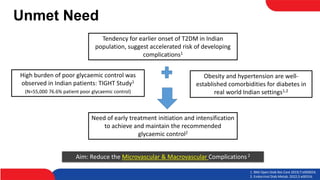
Unmet Need
Aim: Reduce the Microvascular & Macrovascular Complications2
Obesity and hypertension are well-
established comorbidities for diabetes in
real world Indian settings1,2
High burden of poor glycaemic control was
observed in Indian patients: TIGHT Study1
(N=55,000 76.6% patient poor glycaemic control)
Tendency for earlier onset of T2DM in Indian
population, suggest accelerated risk of developing
complications1
Need of early treatment initiation and intensification
to achieve and maintain the recommended
glycaemic control2
1. BMJ Open Diab Res Care 2019;7:e000654.
2. Endocrinol Diab Metab. 2022;5:e00316.
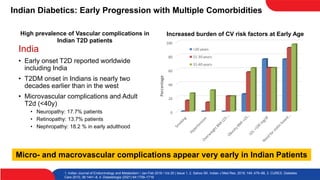
Indian Diabetics: Early Progression with Multiple Comorbidities
1. Indian Journal of Endocrinology and Metabolism / Jan-Feb 2016 / Vol 20 | Issue 1, 2. Sahoo SK. Indian J Med Res. 2019; 149 :479–88, 3. CURES. Diabetes
Care 2015; 38:1441–8, 4. Diabetologia (2021) 64:1709–1716
High prevalence of Vascular complications in
Indian T2D patients
0
20
40
60
80
100
Percentage
<20 years
21-30 years
31-40 years
Increased burden of CV risk factors at Early Age
Micro- and macrovascular complications appear very early in Indian Patients
India
• Early onset T2D reported worldwide
including India
• T2DM onset in Indians is nearly two
decades earlier than in the west
• Microvascular complications and Adult
T2d (<40y)
• Neuropathy: 17.7% patients
• Retinopathy: 13.7% patients
• Nephropathy: 18.2 % in early adulthood
ABSTRACT
BACKGROUND
• No previous studies have compared the DPP-4 inhibitors
vildagliptin and sitagliptin in terms of blood glucose levels
using continuous glucose monitoring (CGM) and
cardiovascular parameters
ABSTRACT
• METHODS
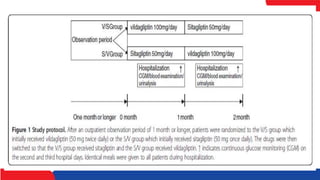
• Twenty patients with type 2 diabetes mellitus were randomly allocated to
groups who received vildagliptin then sitagliptin, or vice versa. Patients were
hospitalized at 1 month after starting each drug, and CGM was used to
determine:
1) mean (± standard deviation) 24-hour blood glucose level,
2) mean amplitude of glycemic excursions (MAGE),
3) fasting blood glucose level,
4) highest postprandial blood glucose level and time,
5) increase in blood glucose level after each meal,
6) area under the curve (AUC) for blood glucose level ≥180 mg/Dl within 3 hours after each
meal, and
7) area over the curve (AOC) for daily blood glucose level <70 mg/dL
• Plasma glycosylated hemoglobin (HbA1c), glycoalbumin (GA), 1,5-
anhydroglucitol (1,5AG), immunoreactive insulin (IRI), C-peptide
immunoreactivity (CPR), brain natriuretic peptide (BNP), and plasminogen
activator inhibitor-1 (PAI-1)levels, and urinary CPR levels, were measured
ABSTRACT
• RESULTS
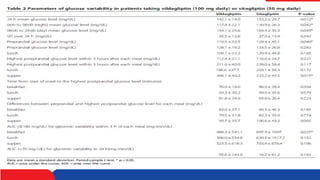
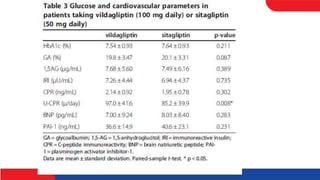
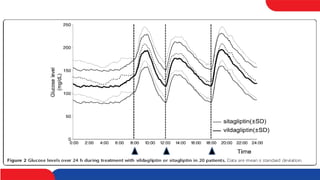
• The mean 24-hour blood glucose level was significantly lower in patients
taking vildagliptin than sitagliptin (142.1 ± 35.5 vs. 153.2 ± 37.0 mg/dL; p =
0.012). In patients taking vildagliptin, MAGE was significantly lower (110.5 ±
33.5 vs. 129.4 ± 45.1 mg/dL; p = 0.040), the highest blood glucose level after
supper was significantly lower (206.1 ± 40.2 vs. 223.2 ± 43.5 mg/dL; p = 0.015),
the AUC (≥180 mg/dL) within 3 h was significantly lower after breakfast (484.3 vs.
897.9 mg/min/dL; p = 0.025), and urinary CPR level was significantly higher (97.0
± 41.6 vs. 85.2 ± 39.9 μg/day; p = 0.008) than in patients taking sitagliptin. There
were no significant differences in plasma HbA1c, GA, 1,5AG, IRI, CPR, BNP,
or PAI-1 levels between patients taking vildagliptin and sitagliptin
ABSTRACT
• CONCLUSION
• CGM showed that mean 24-h blood glucose, MAGE, highest blood
glucose level after supper, and hyper glycemia after breakfast were
significantly lower in patients with type 2 diabetes mellitus
taking vildagliptin than those taking sitagliptin. There were no
significant differences in BNP and PAI-1 levels between patients
taking vildagliptin and sitagliptin
• Trial registration: UMIN000007687
• Keywords: Vildagliptin, Sitagliptin, Continuous glucose monitoring (CGM), Brain
natriuretic peptide (BNP), Plasminogen activator inhibitor-1 (PAI-1) (5)
INTRODUCTION
• The number of patients with type 2 diabetes mellitus is
rapidly increasing worldwide, especially in Asian countries,
because of an aging population and changes in dietary
habits
• The management of blood glucose levels has become a
significant medical issue
• The short-term aim of diabetes treatment is control of
blood glucose levels, and the long-term aim is avoidance
of the complications of diabetes
• Current diabetes treatment programs aim to lower HbA1c levels. However, recent clinical
studies have found that hypoglycemia and postprandial hyperglycemia are also associated with
the development of cardiovascular disease
• DPP-4 inhibitors are oral antihyperglycemic drugs that have recently become available for
diabetes treatment. They enhance the actions of incretin, which promotes insulin secretion and
suppresses glucagon secretion depending on blood glucose levels, thereby improving blood
glucose control without inducing hypoglycemia
• DPP-4 inhibitors are considered effective for the treatment of type 2 diabetes mellitus in Asian
patients, including Japanese patients, who often have insufficient insulin secretion , in contrast
to Caucasian patients who usually have insulin resistance
• They conducted a crossover pilot study named Jikei-Vildagliptin and sitagliptin with CGM TO
Real blood glucose control in type 2 diabetes (J-VICTORIA)
•DPP-4 inhibitors vildagliptin and sitagliptin, using
CGM to evaluate blood glucose levels and analyze
fluctuations in blood glucose levels. They also
compared cardiovascular parameters between
patients taking vildagliptin and sitagliptin by
measuring plasma levels of brain natriuretic peptide
(BNP) and plasminogen activator inhibitor-1 (PAI-1)
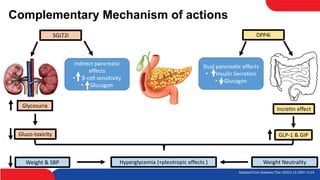
Complementary Mechanism of actions
Indirect pancreatic
effects
• β-cell sensitivity
• Glucagon
Dual pancreatic effects
• Insulin Secretion
• Glucagon
Glycosuria
Gluco-toxicity
SGLT2i DPP4i
Incretin effect
GLP-1 & GIP
Hyperglycemia (+pleotropic effects ) Weight Neutrality
Weight & SBP
Adapted from Diabetes Ther (2022) 13:1097–1114
SUBJECTS AND METHODS
• Patients with type 2 diabetes mellitus who had poor control of blood
glucose levels (HbA1c 6.5–9.5%) in spite of diet and exercise therapy
for 1 month or longer, with or without oral antidiabetic treatment, were
included in the study
• Exclusion criteria were :
1) type 1 diabetes mellitus
2) severe ketosis, coma, or reduced level of consciousness due to diabetes within
the past 6 months
3) severe infection, pre- or postoperative, or severe trauma
4) history of laparotomy or ileus
5) chronic intestinal disease associated with a disorder of digestion or absorption
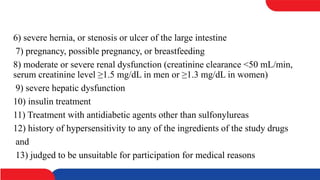
6) severe hernia, or stenosis or ulcer of the large intestine
7) pregnancy, possible pregnancy, or breastfeeding
8) moderate or severe renal dysfunction (creatinine clearance <50 mL/min,
serum creatinine level ≥1.5 mg/dL in men or ≥1.3 mg/dL in women)
9) severe hepatic dysfunction
10) insulin treatment
11) Treatment with antidiabetic agents other than sulfonylureas
12) history of hypersensitivity to any of the ingredients of the study drugs
and
13) judged to be unsuitable for participation for medical reasons
Statistical analysis
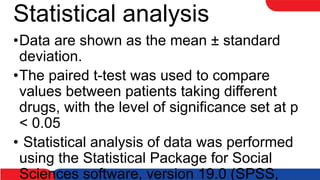
•Data are shown as the mean ± standard
deviation.
•The paired t-test was used to compare
values between patients taking different
drugs, with the level of significance set at p
< 0.05
• Statistical analysis of data was performed
using the Statistical Package for Social
Sciences software, version 19.0 (SPSS,
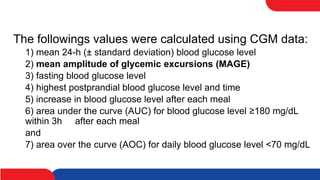
The followings values were calculated using CGM data:
1) mean 24-h (± standard deviation) blood glucose level
2) mean amplitude of glycemic excursions (MAGE)
3) fasting blood glucose level
4) highest postprandial blood glucose level and time
5) increase in blood glucose level after each meal
6) area under the curve (AUC) for blood glucose level ≥180 mg/dL
within 3h after each meal
and
7) area over the curve (AOC) for daily blood glucose level <70 mg/dL
DISCUSSION
• The influence of the DPP-4 inhibitors vildagliptin (100 mg daily) and
sitagliptin (50 mg daily) on blood glucose levels in patients with type 2
diabetes mellitus was investigated in this crossover study. Mean 24-h blood
glucose level and MAGE were significantly lower in patients taking
vildagliptin than patients taking sitagliptin
• A comparison of the randomized trials conducted in Japan showed that
vildagliptin 100 mg daily resulted in lower HbA1c levels (by approximately
0.3%) than sitagliptin 50 mg daily
• Kishimoto et al. reported that sitagliptin effectively reduced postprandial
blood glucose fluctuations and stabilized blood glucose levels [16].
Sitagliptin may also work as a vasoprotective agent in diabetes by blocking
the AGE-RAGE axis
CONTD….
• Postprandial hyperglycemia has been reported to trigger vascular disorders and cause
cardiovascular events, and is more common in patients with high HbA1c levels
• Selection of a DPP-4 inhibitor that effectively suppresses postprandial hyperglycemia
contributes to the maintenance of ideal HbA1c levels.
• It is interesting that urinary CPR level and variations in blood glucose level were higher in
patients taking vildagliptin than patients taking sitagliptin.
• THEY postulate that the higher level of DPP-4 inhibition over 24 h in patients taking
vildagliptin, compared with patients taking sitagliptin, inhibits the destruction of
incretin, which enhances endogenous insulin secretion, thereby improving MAGE and
achieving a more stable reduction in blood glucose levels. A relationship between
MAGE and oxidation stress has also been reported , suggesting that improvement of
MAGE by vildagliptin administration might suppress oxidation stress and decrease the
incidence of adverse cardiovascular events in the long term.
• This possibility should be further elucidated in future studies
CONTD…
• This study has limitations as a pilot study because of the small
number of subjects and the sitagliptin dose of 50 mg
• A randomized, double-blind, placebo-controlled study of sitagliptin
performed in Japanese patients reported that HbA1c was reduced by
0.71% after oral administration of sitagliptin 50 mg daily for 12 weeks,
and by 0.69% after oral administration of sitagliptin 100 mg daily for
12 weeks, which was not a significant difference
• It is not known if using a dose of sitagliptin 100 mg daily in this study
would have significantly affected the results. The results of larger
clinical trials evaluating the cardiovascular protective effects and
safety of DPP-4 inhibitors are awaited
CONCLUSION
• Vildagliptin 50 mg administered twice daily to patients with type 2
diabetes mellitus significantly lowered the mean 24-h blood
glucose level measured by CGM, MAGE, the highest blood
glucose levels after dinner, and hyperglycemia after breakfast,
compared with sitagliptin 50 mg administered once daily.
• There were no significant differences in BNP and PAI-1 levels
between patients treated with vildagliptin and sitagliptin.
CRITICAL EVALUATION
ABOUT THE JOURNAL
• What type of Journal : OPEN ACCESS , PEER REVIEWED
JOURNAL (BIOMED CENTRAL -
• Year of Publication : 2012
• Indexed : Yes in PUBMED, SCOPUS,GOOGLE SCHOLAR,
CAS(CHEMICAL ABSTRAC SERVICE)
• Issue no : 11
• Volume no : 92
• Page no : not mentioned
• Financial support : Yes (JAPAN DIABETES FOUNDATION)
• Conflict of Interest : None
ABOUT THE AUTHORS
• Author’s name : Mentioned
• Designation : Mentioned
• Institutional attachments : Mentioned
1Division of Diabetes, Metabolism and Endocrinology, Department of
Internal
Medicine, Jikei University School of Medicine, 3-25-8 Nishi-Shinbas
Minato-ku, Tokyo 105-8461, Japan
Full list of author information is available at the end of the article
Masaya Sakamoto1*, Rimei Nishimura1,2, Taiga Irako1, Daisuke
Tsujino1, Kiyotaka Ando1 and Kazunori Utsunomiya1
ABSTRACT
• It is structured, informative and comprehensive in its contents
• Giving the gist of the whole text
• Information given in the abstract matches with the text
• Keywords : Mentioned; 05 in no. Vildagliptin, Sitagliptin, Continuous
glucose monitoring (CGM), Brain natriuretic peptide (BNP),
• Plasminogen activator inhibitor-1 (PAI-1)
• Abbreviations : Mentioned IN TEXT
TITLE OF THE ARTICLE
• Does it indicate the topic and focus of the study? Yes
• Is the title meaningful and complete? Yes
• Does it reflect aim and objective of the study? Yes
• Does it include the important variables which are intended to be measured?
Yes
• Study population : Mentioned, 20
INTRODUCTION
• Meaningful and concise
• Presented the need of the study
• References were quoted with Vancouver style
1. Emerging Risk factors collaboration: Diabetes mellitus, fasting glucose, an
risk of cause-specific death. N Engl J Med 2011, 364:829–841.
2. UK Prospective Diabetes Study (UKPDS) Group: Intensive blood-glucose
control with sulphonylureas or insulin compared with conventional
treatment and risk of complications in patients with type 2 diabetes
(UKPDS 33). Lancet 1998, 352:837–853.
3. Adler AI, Stratton IM, Neil HA, Yudkin JS, Matthews DR, Cull CA, Wright A
Turner RC, Holman RR: Association of glycaemia with macrovascular and
microvascular complications of type 2 diabetes (UKPDS 35):
RESULTS
• Results were presented in logical and comprehensive manner
• Results were based on aims and objectives of the study
• Presented in table and text matter
• The data given in the table matches with the text
DISCUSSION
• Highlights the important findings of the study
• Explanation of all significant findings
• Concerns impacting trial are mentioned
CONCLUSION
• Conclusion is mentioned properly
• References : Total 28 references are given
• Data sharing : Not applicable
• Ethical approval : Yes The study protocol was approved by the
Ethical Committee of the Jikei University School of Medicine.
• TheClinical Trial registration No. is UMIN000007687
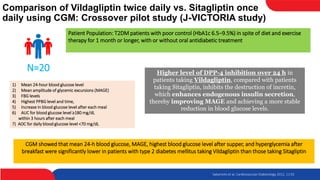
Comparison of Vildagliptin twice daily vs. Sitagliptin once
daily using CGM: Crossover pilot study (J-VICTORIA study)
Patient Population: T2DM patients with poor control (HbA1c 6.5–9.5%) in spite of diet and exercise
therapy for 1 month or longer, with or without oral antidiabetic treatment
N=20
CGM showed that mean 24-h blood glucose, MAGE, highest blood glucose level after supper, and hyperglycemia after
breakfast were significantly lower in patients with type 2 diabetes mellitus taking Vildagliptin than those taking Sitagliptin
1) Mean 24-hour blood glucose level
2) Mean amplitude of glycemic excursions (MAGE)
3) FBG levels
4) Highest PPBG level and time,
5) Increase in blood glucose level after each meal
6) AUC for blood glucose level ≥180 mg/dL
within 3 hours after each meal
7) AOC for daily blood glucose level <70 mg/dL
Sakamoto et al. Cardiovascular Diabetology 2012, 11:92
Higher level of DPP-4 inhibition over 24 h in
patients taking Vildagliptin, compared with patients
taking Sitagliptin, inhibits the destruction of incretin,
which enhances endogenous insulin secretion,
thereby improving MAGE and achieving a more stable
reduction in blood glucose levels.
Thank You

J victoria .pptx

  • 1.
    TPLDOM/ENCD/0722/0279 Comparison of vildagliptintwice daily vs. sitagliptin once daily using continuous glucose monitoring (CGM): Crossover pilot study (J-VICTORIA study) Masaya Sakamoto1*, Rimei Nishimura1,2, Taiga Irako1, Daisuke Tsujino1, Kiyotaka Ando1 and Kazunori Utsunomiya1 PRESENTED BY : Dr. RAJIV RANJAN DAS GUIDE : Dr. (PROF AND HOD ) U.S.P. KESHARI Sakamoto et al. Cardiovascular Diabetology 2012, 11:92
  • 2.
    Unmet Need Aim: Reducethe Microvascular & Macrovascular Complications2 Obesity and hypertension are well- established comorbidities for diabetes in real world Indian settings1,2 High burden of poor glycaemic control was observed in Indian patients: TIGHT Study1 (N=55,000 76.6% patient poor glycaemic control) Tendency for earlier onset of T2DM in Indian population, suggest accelerated risk of developing complications1 Need of early treatment initiation and intensification to achieve and maintain the recommended glycaemic control2 1. BMJ Open Diab Res Care 2019;7:e000654. 2. Endocrinol Diab Metab. 2022;5:e00316.
  • 3.
    Indian Diabetics: EarlyProgression with Multiple Comorbidities 1. Indian Journal of Endocrinology and Metabolism / Jan-Feb 2016 / Vol 20 | Issue 1, 2. Sahoo SK. Indian J Med Res. 2019; 149 :479–88, 3. CURES. Diabetes Care 2015; 38:1441–8, 4. Diabetologia (2021) 64:1709–1716 High prevalence of Vascular complications in Indian T2D patients 0 20 40 60 80 100 Percentage <20 years 21-30 years 31-40 years Increased burden of CV risk factors at Early Age Micro- and macrovascular complications appear very early in Indian Patients India • Early onset T2D reported worldwide including India • T2DM onset in Indians is nearly two decades earlier than in the west • Microvascular complications and Adult T2d (<40y) • Neuropathy: 17.7% patients • Retinopathy: 13.7% patients • Nephropathy: 18.2 % in early adulthood
  • 4.
    ABSTRACT BACKGROUND • No previousstudies have compared the DPP-4 inhibitors vildagliptin and sitagliptin in terms of blood glucose levels using continuous glucose monitoring (CGM) and cardiovascular parameters
  • 5.
    ABSTRACT • METHODS • Twentypatients with type 2 diabetes mellitus were randomly allocated to groups who received vildagliptin then sitagliptin, or vice versa. Patients were hospitalized at 1 month after starting each drug, and CGM was used to determine: 1) mean (± standard deviation) 24-hour blood glucose level, 2) mean amplitude of glycemic excursions (MAGE), 3) fasting blood glucose level, 4) highest postprandial blood glucose level and time, 5) increase in blood glucose level after each meal, 6) area under the curve (AUC) for blood glucose level ≥180 mg/Dl within 3 hours after each meal, and 7) area over the curve (AOC) for daily blood glucose level <70 mg/dL • Plasma glycosylated hemoglobin (HbA1c), glycoalbumin (GA), 1,5- anhydroglucitol (1,5AG), immunoreactive insulin (IRI), C-peptide immunoreactivity (CPR), brain natriuretic peptide (BNP), and plasminogen activator inhibitor-1 (PAI-1)levels, and urinary CPR levels, were measured
  • 6.
    ABSTRACT • RESULTS • Themean 24-hour blood glucose level was significantly lower in patients taking vildagliptin than sitagliptin (142.1 ± 35.5 vs. 153.2 ± 37.0 mg/dL; p = 0.012). In patients taking vildagliptin, MAGE was significantly lower (110.5 ± 33.5 vs. 129.4 ± 45.1 mg/dL; p = 0.040), the highest blood glucose level after supper was significantly lower (206.1 ± 40.2 vs. 223.2 ± 43.5 mg/dL; p = 0.015), the AUC (≥180 mg/dL) within 3 h was significantly lower after breakfast (484.3 vs. 897.9 mg/min/dL; p = 0.025), and urinary CPR level was significantly higher (97.0 ± 41.6 vs. 85.2 ± 39.9 μg/day; p = 0.008) than in patients taking sitagliptin. There were no significant differences in plasma HbA1c, GA, 1,5AG, IRI, CPR, BNP, or PAI-1 levels between patients taking vildagliptin and sitagliptin
  • 7.
    ABSTRACT • CONCLUSION • CGMshowed that mean 24-h blood glucose, MAGE, highest blood glucose level after supper, and hyper glycemia after breakfast were significantly lower in patients with type 2 diabetes mellitus taking vildagliptin than those taking sitagliptin. There were no significant differences in BNP and PAI-1 levels between patients taking vildagliptin and sitagliptin • Trial registration: UMIN000007687 • Keywords: Vildagliptin, Sitagliptin, Continuous glucose monitoring (CGM), Brain natriuretic peptide (BNP), Plasminogen activator inhibitor-1 (PAI-1) (5)
  • 8.
    INTRODUCTION • The numberof patients with type 2 diabetes mellitus is rapidly increasing worldwide, especially in Asian countries, because of an aging population and changes in dietary habits • The management of blood glucose levels has become a significant medical issue • The short-term aim of diabetes treatment is control of blood glucose levels, and the long-term aim is avoidance of the complications of diabetes
  • 9.
    • Current diabetestreatment programs aim to lower HbA1c levels. However, recent clinical studies have found that hypoglycemia and postprandial hyperglycemia are also associated with the development of cardiovascular disease • DPP-4 inhibitors are oral antihyperglycemic drugs that have recently become available for diabetes treatment. They enhance the actions of incretin, which promotes insulin secretion and suppresses glucagon secretion depending on blood glucose levels, thereby improving blood glucose control without inducing hypoglycemia • DPP-4 inhibitors are considered effective for the treatment of type 2 diabetes mellitus in Asian patients, including Japanese patients, who often have insufficient insulin secretion , in contrast to Caucasian patients who usually have insulin resistance • They conducted a crossover pilot study named Jikei-Vildagliptin and sitagliptin with CGM TO Real blood glucose control in type 2 diabetes (J-VICTORIA)
  • 10.
    •DPP-4 inhibitors vildagliptinand sitagliptin, using CGM to evaluate blood glucose levels and analyze fluctuations in blood glucose levels. They also compared cardiovascular parameters between patients taking vildagliptin and sitagliptin by measuring plasma levels of brain natriuretic peptide (BNP) and plasminogen activator inhibitor-1 (PAI-1)
  • 11.
    Complementary Mechanism ofactions Indirect pancreatic effects • β-cell sensitivity • Glucagon Dual pancreatic effects • Insulin Secretion • Glucagon Glycosuria Gluco-toxicity SGLT2i DPP4i Incretin effect GLP-1 & GIP Hyperglycemia (+pleotropic effects ) Weight Neutrality Weight & SBP Adapted from Diabetes Ther (2022) 13:1097–1114
  • 12.
    SUBJECTS AND METHODS •Patients with type 2 diabetes mellitus who had poor control of blood glucose levels (HbA1c 6.5–9.5%) in spite of diet and exercise therapy for 1 month or longer, with or without oral antidiabetic treatment, were included in the study • Exclusion criteria were : 1) type 1 diabetes mellitus 2) severe ketosis, coma, or reduced level of consciousness due to diabetes within the past 6 months 3) severe infection, pre- or postoperative, or severe trauma 4) history of laparotomy or ileus 5) chronic intestinal disease associated with a disorder of digestion or absorption
  • 13.
    6) severe hernia,or stenosis or ulcer of the large intestine 7) pregnancy, possible pregnancy, or breastfeeding 8) moderate or severe renal dysfunction (creatinine clearance <50 mL/min, serum creatinine level ≥1.5 mg/dL in men or ≥1.3 mg/dL in women) 9) severe hepatic dysfunction 10) insulin treatment 11) Treatment with antidiabetic agents other than sulfonylureas 12) history of hypersensitivity to any of the ingredients of the study drugs and 13) judged to be unsuitable for participation for medical reasons
  • 15.
    Statistical analysis •Data areshown as the mean ± standard deviation. •The paired t-test was used to compare values between patients taking different drugs, with the level of significance set at p < 0.05 • Statistical analysis of data was performed using the Statistical Package for Social Sciences software, version 19.0 (SPSS,
  • 19.
    The followings valueswere calculated using CGM data: 1) mean 24-h (± standard deviation) blood glucose level 2) mean amplitude of glycemic excursions (MAGE) 3) fasting blood glucose level 4) highest postprandial blood glucose level and time 5) increase in blood glucose level after each meal 6) area under the curve (AUC) for blood glucose level ≥180 mg/dL within 3h after each meal and 7) area over the curve (AOC) for daily blood glucose level <70 mg/dL
  • 20.
    DISCUSSION • The influenceof the DPP-4 inhibitors vildagliptin (100 mg daily) and sitagliptin (50 mg daily) on blood glucose levels in patients with type 2 diabetes mellitus was investigated in this crossover study. Mean 24-h blood glucose level and MAGE were significantly lower in patients taking vildagliptin than patients taking sitagliptin • A comparison of the randomized trials conducted in Japan showed that vildagliptin 100 mg daily resulted in lower HbA1c levels (by approximately 0.3%) than sitagliptin 50 mg daily • Kishimoto et al. reported that sitagliptin effectively reduced postprandial blood glucose fluctuations and stabilized blood glucose levels [16]. Sitagliptin may also work as a vasoprotective agent in diabetes by blocking the AGE-RAGE axis
  • 21.
    CONTD…. • Postprandial hyperglycemiahas been reported to trigger vascular disorders and cause cardiovascular events, and is more common in patients with high HbA1c levels • Selection of a DPP-4 inhibitor that effectively suppresses postprandial hyperglycemia contributes to the maintenance of ideal HbA1c levels. • It is interesting that urinary CPR level and variations in blood glucose level were higher in patients taking vildagliptin than patients taking sitagliptin. • THEY postulate that the higher level of DPP-4 inhibition over 24 h in patients taking vildagliptin, compared with patients taking sitagliptin, inhibits the destruction of incretin, which enhances endogenous insulin secretion, thereby improving MAGE and achieving a more stable reduction in blood glucose levels. A relationship between MAGE and oxidation stress has also been reported , suggesting that improvement of MAGE by vildagliptin administration might suppress oxidation stress and decrease the incidence of adverse cardiovascular events in the long term. • This possibility should be further elucidated in future studies
  • 22.
    CONTD… • This studyhas limitations as a pilot study because of the small number of subjects and the sitagliptin dose of 50 mg • A randomized, double-blind, placebo-controlled study of sitagliptin performed in Japanese patients reported that HbA1c was reduced by 0.71% after oral administration of sitagliptin 50 mg daily for 12 weeks, and by 0.69% after oral administration of sitagliptin 100 mg daily for 12 weeks, which was not a significant difference • It is not known if using a dose of sitagliptin 100 mg daily in this study would have significantly affected the results. The results of larger clinical trials evaluating the cardiovascular protective effects and safety of DPP-4 inhibitors are awaited
  • 23.
    CONCLUSION • Vildagliptin 50mg administered twice daily to patients with type 2 diabetes mellitus significantly lowered the mean 24-h blood glucose level measured by CGM, MAGE, the highest blood glucose levels after dinner, and hyperglycemia after breakfast, compared with sitagliptin 50 mg administered once daily. • There were no significant differences in BNP and PAI-1 levels between patients treated with vildagliptin and sitagliptin.
  • 24.
  • 26.
    ABOUT THE JOURNAL •What type of Journal : OPEN ACCESS , PEER REVIEWED JOURNAL (BIOMED CENTRAL - • Year of Publication : 2012 • Indexed : Yes in PUBMED, SCOPUS,GOOGLE SCHOLAR, CAS(CHEMICAL ABSTRAC SERVICE) • Issue no : 11 • Volume no : 92 • Page no : not mentioned • Financial support : Yes (JAPAN DIABETES FOUNDATION) • Conflict of Interest : None
  • 27.
    ABOUT THE AUTHORS •Author’s name : Mentioned • Designation : Mentioned • Institutional attachments : Mentioned 1Division of Diabetes, Metabolism and Endocrinology, Department of Internal Medicine, Jikei University School of Medicine, 3-25-8 Nishi-Shinbas Minato-ku, Tokyo 105-8461, Japan Full list of author information is available at the end of the article Masaya Sakamoto1*, Rimei Nishimura1,2, Taiga Irako1, Daisuke Tsujino1, Kiyotaka Ando1 and Kazunori Utsunomiya1
  • 28.
    ABSTRACT • It isstructured, informative and comprehensive in its contents • Giving the gist of the whole text • Information given in the abstract matches with the text • Keywords : Mentioned; 05 in no. Vildagliptin, Sitagliptin, Continuous glucose monitoring (CGM), Brain natriuretic peptide (BNP), • Plasminogen activator inhibitor-1 (PAI-1) • Abbreviations : Mentioned IN TEXT
  • 29.
    TITLE OF THEARTICLE • Does it indicate the topic and focus of the study? Yes • Is the title meaningful and complete? Yes • Does it reflect aim and objective of the study? Yes • Does it include the important variables which are intended to be measured? Yes • Study population : Mentioned, 20
  • 30.
    INTRODUCTION • Meaningful andconcise • Presented the need of the study • References were quoted with Vancouver style 1. Emerging Risk factors collaboration: Diabetes mellitus, fasting glucose, an risk of cause-specific death. N Engl J Med 2011, 364:829–841. 2. UK Prospective Diabetes Study (UKPDS) Group: Intensive blood-glucose control with sulphonylureas or insulin compared with conventional treatment and risk of complications in patients with type 2 diabetes (UKPDS 33). Lancet 1998, 352:837–853. 3. Adler AI, Stratton IM, Neil HA, Yudkin JS, Matthews DR, Cull CA, Wright A Turner RC, Holman RR: Association of glycaemia with macrovascular and microvascular complications of type 2 diabetes (UKPDS 35):
  • 31.
    RESULTS • Results werepresented in logical and comprehensive manner • Results were based on aims and objectives of the study • Presented in table and text matter • The data given in the table matches with the text
  • 32.
    DISCUSSION • Highlights theimportant findings of the study • Explanation of all significant findings • Concerns impacting trial are mentioned
  • 33.
    CONCLUSION • Conclusion ismentioned properly • References : Total 28 references are given • Data sharing : Not applicable • Ethical approval : Yes The study protocol was approved by the Ethical Committee of the Jikei University School of Medicine. • TheClinical Trial registration No. is UMIN000007687
  • 34.
    Comparison of Vildagliptintwice daily vs. Sitagliptin once daily using CGM: Crossover pilot study (J-VICTORIA study) Patient Population: T2DM patients with poor control (HbA1c 6.5–9.5%) in spite of diet and exercise therapy for 1 month or longer, with or without oral antidiabetic treatment N=20 CGM showed that mean 24-h blood glucose, MAGE, highest blood glucose level after supper, and hyperglycemia after breakfast were significantly lower in patients with type 2 diabetes mellitus taking Vildagliptin than those taking Sitagliptin 1) Mean 24-hour blood glucose level 2) Mean amplitude of glycemic excursions (MAGE) 3) FBG levels 4) Highest PPBG level and time, 5) Increase in blood glucose level after each meal 6) AUC for blood glucose level ≥180 mg/dL within 3 hours after each meal 7) AOC for daily blood glucose level <70 mg/dL Sakamoto et al. Cardiovascular Diabetology 2012, 11:92 Higher level of DPP-4 inhibition over 24 h in patients taking Vildagliptin, compared with patients taking Sitagliptin, inhibits the destruction of incretin, which enhances endogenous insulin secretion, thereby improving MAGE and achieving a more stable reduction in blood glucose levels.
  • 35.