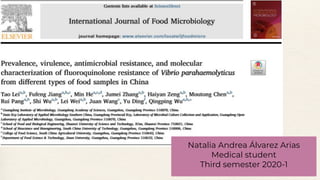
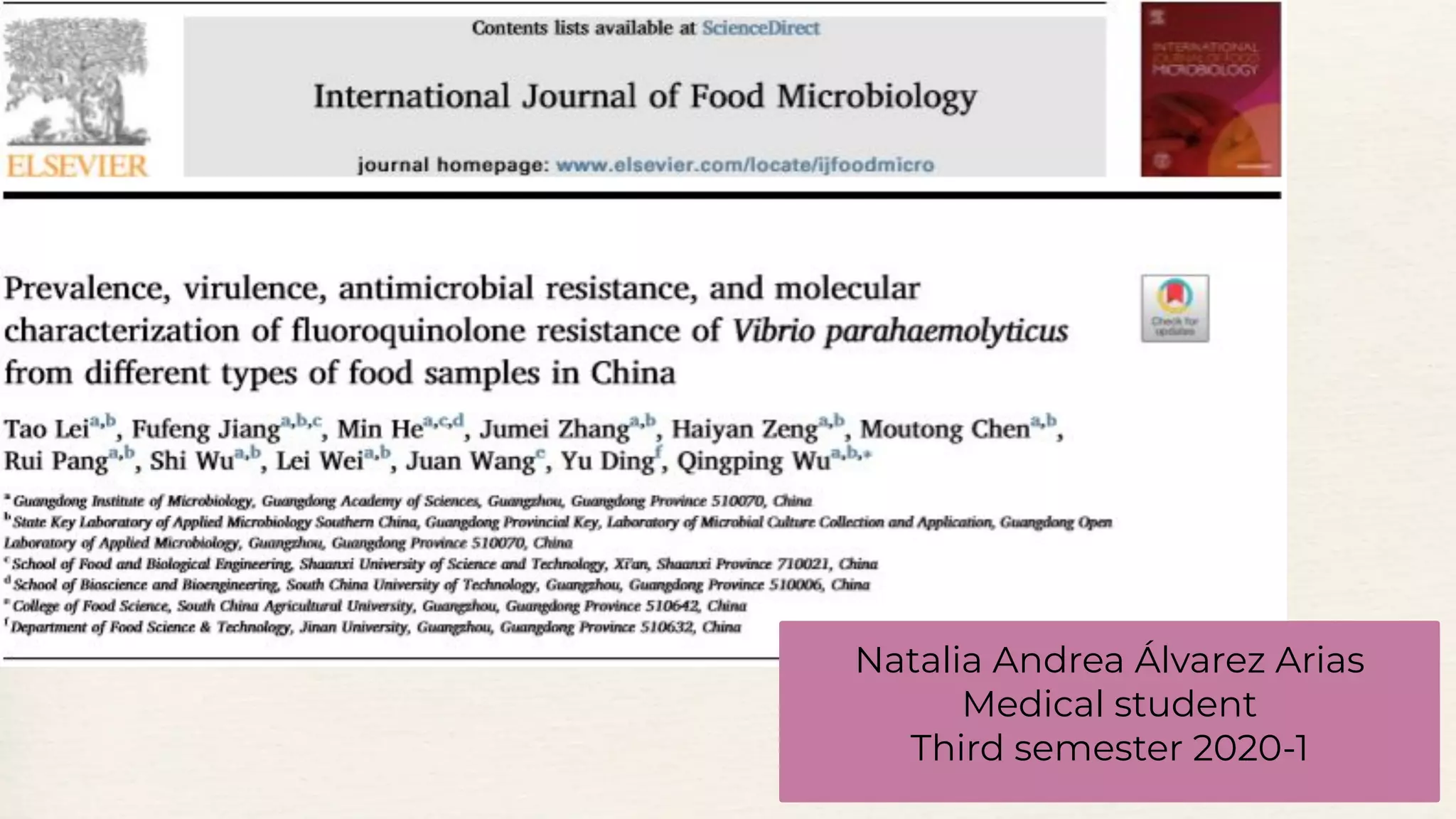
Natalia Andrea Álvarez Arias
Medical student
Third semester 2020-1
Introduction
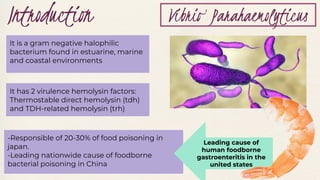
It is a gram negative halophilic
bacterium found in estuarine, marine
and coastal environments
-Responsible of 20-30% of food poisoning in
japan.
-Leading nationwide cause of foodborne
bacterial poisoning in China
It has 2 virulence hemolysin factors:
Thermostable direct hemolysin (tdh)
and TDH-related hemolysin (trh)
Leading cause of
human foodborne
gastroenteritis in the
united states
Vibrio Parahaemolyticus
Fluoroquinolone
resistance
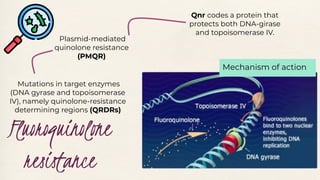
Mutations in target enzymes
(DNA gyrase and topoisomerase
IV), namely quinolone-resistance
determining regions (QRDRs)
Qnr codes a protein that
protects both DNA-girase
and topoisomerase IV.
Mechanism of action
Plasmid-mediated
quinolone resistance
(PMQR)
“The aim of this research is to conduct a study on
the prevalence, virulence, and antimicrobial
resistance of V. parahaemolyticus from different
types of food samples in 12 different cities of China”
OBJECTIVE
Materiales
y Métodos
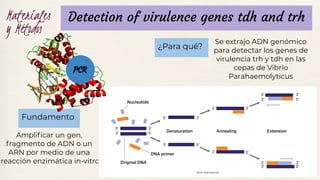
Detection of virulence genes tdh and trh
Amplificar un gen,
fragmento de ADN o un
ARN por medio de una
reacción enzimática in-vitro
Fundamento
Se extrajo ADN genómico
para detectar los genes de
virulencia trh y tdh en las
cepas de Vibrio
Parahaemolyticus
¿Para qué?
PCR
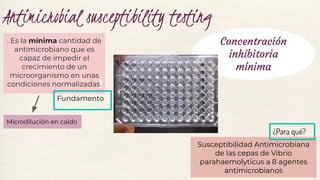
Antimicrobial susceptibility testing
. Es la mínima cantidad de
antimicrobiano que es
capaz de impedir el
crecimiento de un
microorganismo en unas
condiciones normalizadas.
Fundamento
Susceptibilidad Antimicrobiana
de las cepas de Vibrio
parahaemolyticus a 8 agentes
antimicrobianos
¿Para qué?
Concentración
inhibitoria
mínima
Microdilución en caldo
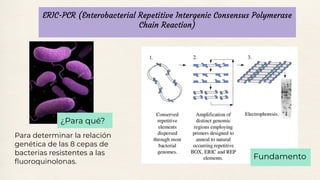
ERIC-PCR (Enterobacterial Repetitive Intergenic Consensus Polymerase
Chain Reaction)
Para determinar la relación
genética de las 8 cepas de
bacterias resistentes a las
fluoroquinolonas.
Fundamento
¿Para qué?
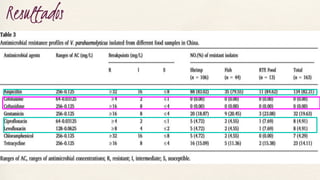
Resultados
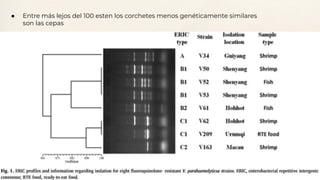
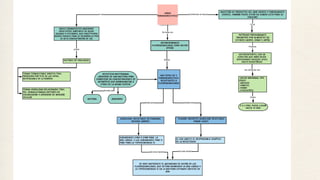
● Entre más lejos del 100 esten los corchetes menos genéticamente similares
son las cepas
AuthorContribution
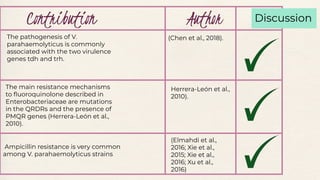
The pathogenesis of V.
parahaemolyticus is commonly
associated with the two virulence
genes tdh and trh.
(Chen et al., 2018).
The main resistance mechanisms
to fluoroquinolone described in
Enterobacteriaceae are mutations
in the QRDRs and the presence of
PMQR genes (Herrera-León et al.,
2010).
Herrera-León et al.,
2010).
Ampicillin resistance is very common
among V. parahaemolyticus strains
(Elmahdi et al.,
2016; Xie et al.,
2015; Xie et al.,
2016; Xu et al.,
2016)
Discussion
Conclusions
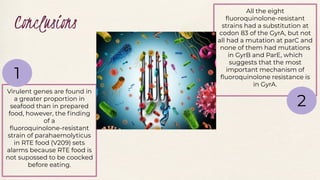
Virulent genes are found in
a greater proportion in
seafood than in prepared
food, however, the finding
of a
fluoroquinolone-resistant
strain of parahaemolyticus
in RTE food (V209) sets
alarms because RTE food is
not supossed to be coocked
before eating.
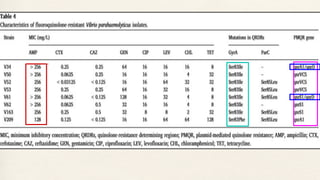
All the eight
fluoroquinolone-resistant
strains had a substitution at
codon 83 of the GyrA, but not
all had a mutation at parC and
none of them had mutations
in GyrB and ParE, which
suggests that the most
important mechanism of
fluoroquinolone resistance is
in GyrA.
1
2
Vibrio parahaemolyticus seminario

Vibrio parahaemolyticus seminario

  • 1.
    Natalia Andrea ÁlvarezArias Medical student Third semester 2020-1
  • 2.
    Introduction It is agram negative halophilic bacterium found in estuarine, marine and coastal environments -Responsible of 20-30% of food poisoning in japan. -Leading nationwide cause of foodborne bacterial poisoning in China It has 2 virulence hemolysin factors: Thermostable direct hemolysin (tdh) and TDH-related hemolysin (trh) Leading cause of human foodborne gastroenteritis in the united states Vibrio Parahaemolyticus
  • 3.
    Fluoroquinolone resistance Mutations in targetenzymes (DNA gyrase and topoisomerase IV), namely quinolone-resistance determining regions (QRDRs) Qnr codes a protein that protects both DNA-girase and topoisomerase IV. Mechanism of action Plasmid-mediated quinolone resistance (PMQR)
  • 4.
    “The aim ofthis research is to conduct a study on the prevalence, virulence, and antimicrobial resistance of V. parahaemolyticus from different types of food samples in 12 different cities of China” OBJECTIVE
  • 5.
    Materiales y Métodos Detection ofvirulence genes tdh and trh Amplificar un gen, fragmento de ADN o un ARN por medio de una reacción enzimática in-vitro Fundamento Se extrajo ADN genómico para detectar los genes de virulencia trh y tdh en las cepas de Vibrio Parahaemolyticus ¿Para qué? PCR
  • 6.
    Antimicrobial susceptibility testing .Es la mínima cantidad de antimicrobiano que es capaz de impedir el crecimiento de un microorganismo en unas condiciones normalizadas. Fundamento Susceptibilidad Antimicrobiana de las cepas de Vibrio parahaemolyticus a 8 agentes antimicrobianos ¿Para qué? Concentración inhibitoria mínima Microdilución en caldo
  • 7.
    ERIC-PCR (Enterobacterial RepetitiveIntergenic Consensus Polymerase Chain Reaction) Para determinar la relación genética de las 8 cepas de bacterias resistentes a las fluoroquinolonas. Fundamento ¿Para qué?
  • 8.
  • 10.
    ● Entre máslejos del 100 esten los corchetes menos genéticamente similares son las cepas
  • 11.
    AuthorContribution The pathogenesis ofV. parahaemolyticus is commonly associated with the two virulence genes tdh and trh. (Chen et al., 2018). The main resistance mechanisms to fluoroquinolone described in Enterobacteriaceae are mutations in the QRDRs and the presence of PMQR genes (Herrera-León et al., 2010). Herrera-León et al., 2010). Ampicillin resistance is very common among V. parahaemolyticus strains (Elmahdi et al., 2016; Xie et al., 2015; Xie et al., 2016; Xu et al., 2016) Discussion
  • 12.
    Conclusions Virulent genes arefound in a greater proportion in seafood than in prepared food, however, the finding of a fluoroquinolone-resistant strain of parahaemolyticus in RTE food (V209) sets alarms because RTE food is not supossed to be coocked before eating. All the eight fluoroquinolone-resistant strains had a substitution at codon 83 of the GyrA, but not all had a mutation at parC and none of them had mutations in GyrB and ParE, which suggests that the most important mechanism of fluoroquinolone resistance is in GyrA. 1 2