VHDL CODE FOR ADC0804, 4-BIT
MAGNITUDE COMPARATOR AND
PARITY GENERATOR
Presented by:- APARNA
Department of Electronics Engineering
(VLSI & ES)
TOPICS
 ADC0804
 ADC
 FEATURES
 PIN DIAGRAM & DISCRIPTION
 ADC0804 INTERFACE SCHEMATIC & TIMING DIAGRAM
 VHDL CODE & SIMULATION RESULT
 PARITY GENERATOR
 INTRODUCTION
 VHDL CODE & SIMULATION RESULT
 4-BIT MAGNITUDE COMPARATOR
 INTRODUCTION
 VHDL CODE & SIMULATION RESULT
ADC
 Analog-to-digital converter (ADC) is a device which can
convert analogue voltage to digital numbers so that
microcontrollers and microprocessors can handle and process
the data.
 ADC are the most widely used devices for data acquisition.
 ADC has n-bit resolution, where n can be 8, 12, 16 or even 24
bits.
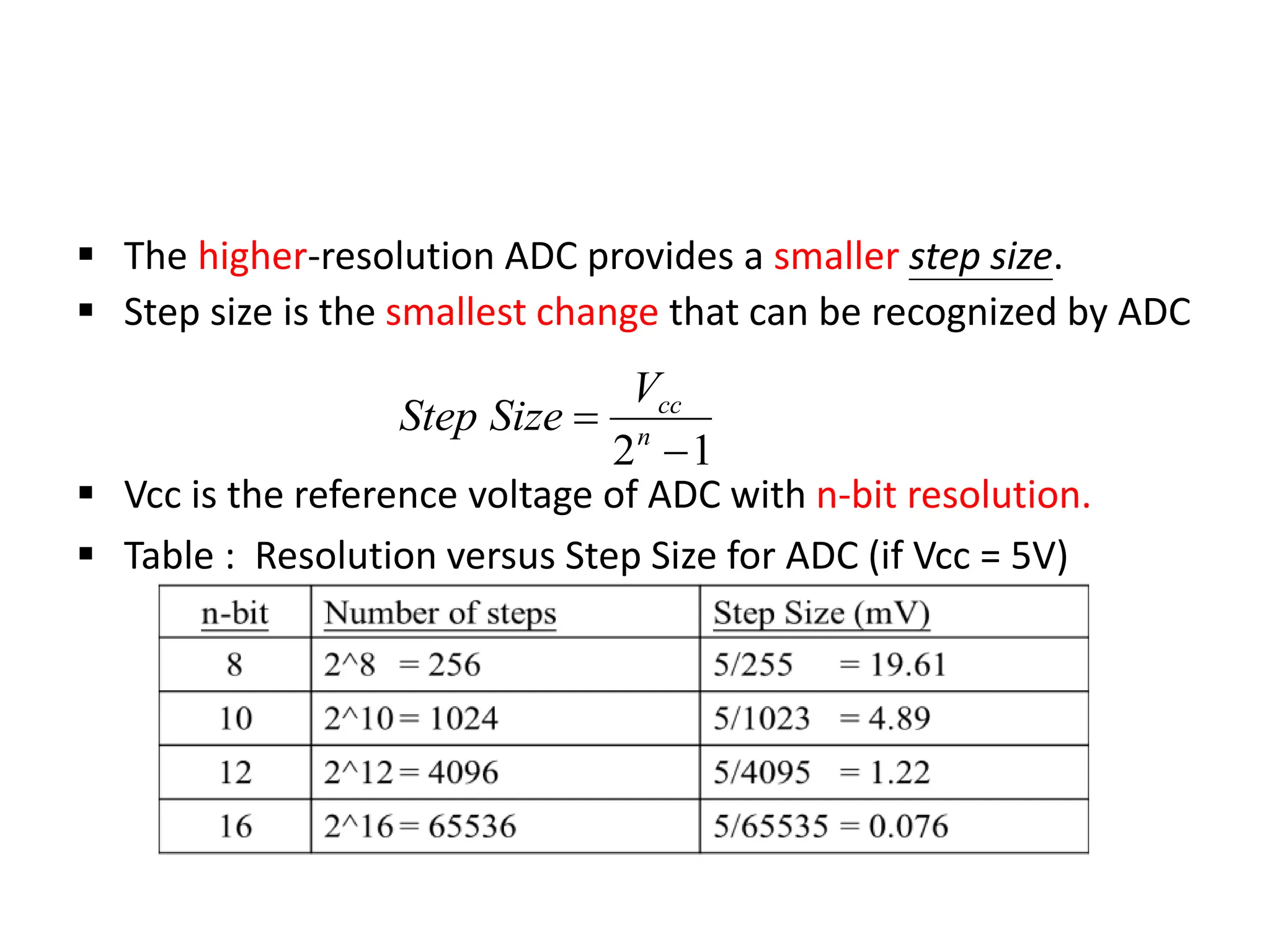
 The higher-resolution ADC provides a smaller step size.
 Step size is the smallest change that can be recognized by ADC
 Vcc is the reference voltage of ADC with n-bit resolution.
 Table : Resolution versus Step Size for ADC (if Vcc = 5V)
1
2 
 n
cc
V
Size
Step
ADC0804 IC
ADC0804
Features
 Single channel ,8-bit parallel ADC module
 Easy to interface with all
Microprocessors or works
Stand alone.
 Differential analog voltage inputs. 0V to 5V analog input
voltage range with single 5V supply.
 On chip Clock available.
 Digital output various from 0 to 255.
 When Vref = 5V, for every 19.60mV of analog value there will
be rise of one bit on digital side (Step size)
 Available in 20-pin PDIP, SOIC packages.
 A common, low-cost ADC, compatible with a wide range of
microprocessors. There are many faster ADCs available with
more resolution, this device is ideal for applications that do
not require a high degree of accuracy.
 ADC0804 requires up to 100 µs to convert an analog input
voltage into a digital output code.
ADC0804 PIN DIAGRAM
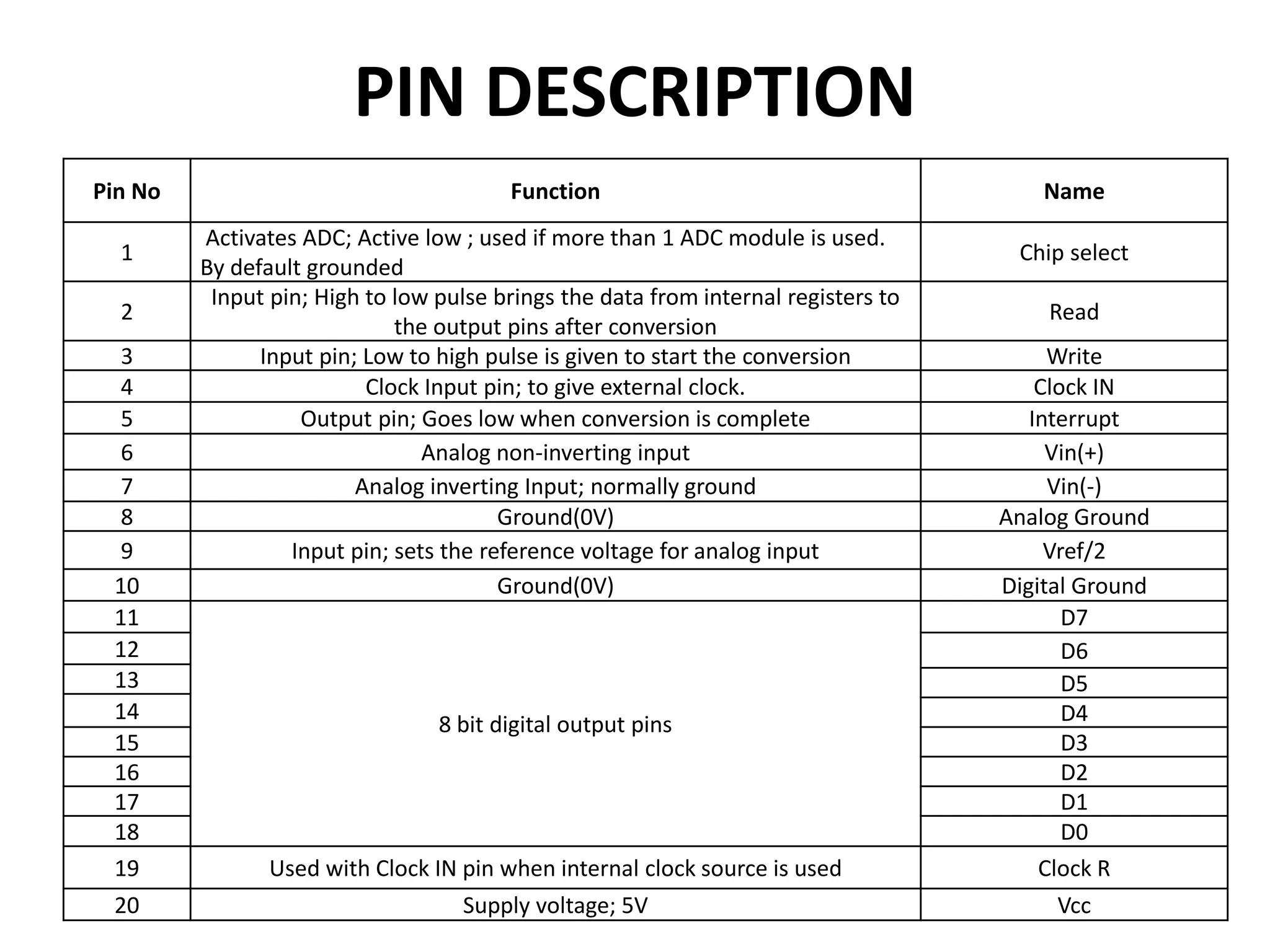
PIN DESCRIPTION
Pin No Function Name
1
Activates ADC; Active low ; used if more than 1 ADC module is used.
By default grounded
Chip select
2
Input pin; High to low pulse brings the data from internal registers to
the output pins after conversion
Read
3 Input pin; Low to high pulse is given to start the conversion Write
4 Clock Input pin; to give external clock. Clock IN
5 Output pin; Goes low when conversion is complete Interrupt
6 Analog non-inverting input Vin(+)
7 Analog inverting Input; normally ground Vin(-)
8 Ground(0V) Analog Ground
9 Input pin; sets the reference voltage for analog input Vref/2
10 Ground(0V) Digital Ground
11
8 bit digital output pins
D7
12 D6
13 D5
14 D4
15 D3
16 D2
17 D1
18 D0
19 Used with Clock IN pin when internal clock source is used Clock R
20 Supply voltage; 5V Vcc
TIMING DIAGRAM FOR ADC0804
ADC0804 INTERFACE
INTR/EOC
ADC 8-BIT OUTPUT
ADC0804 FPGA
RD/OE
WR/SC
Analog
input
ADC OUTPUT
(LED)
CLK
VHDL CODE FOR ADC0804
SIMULATION RESULT
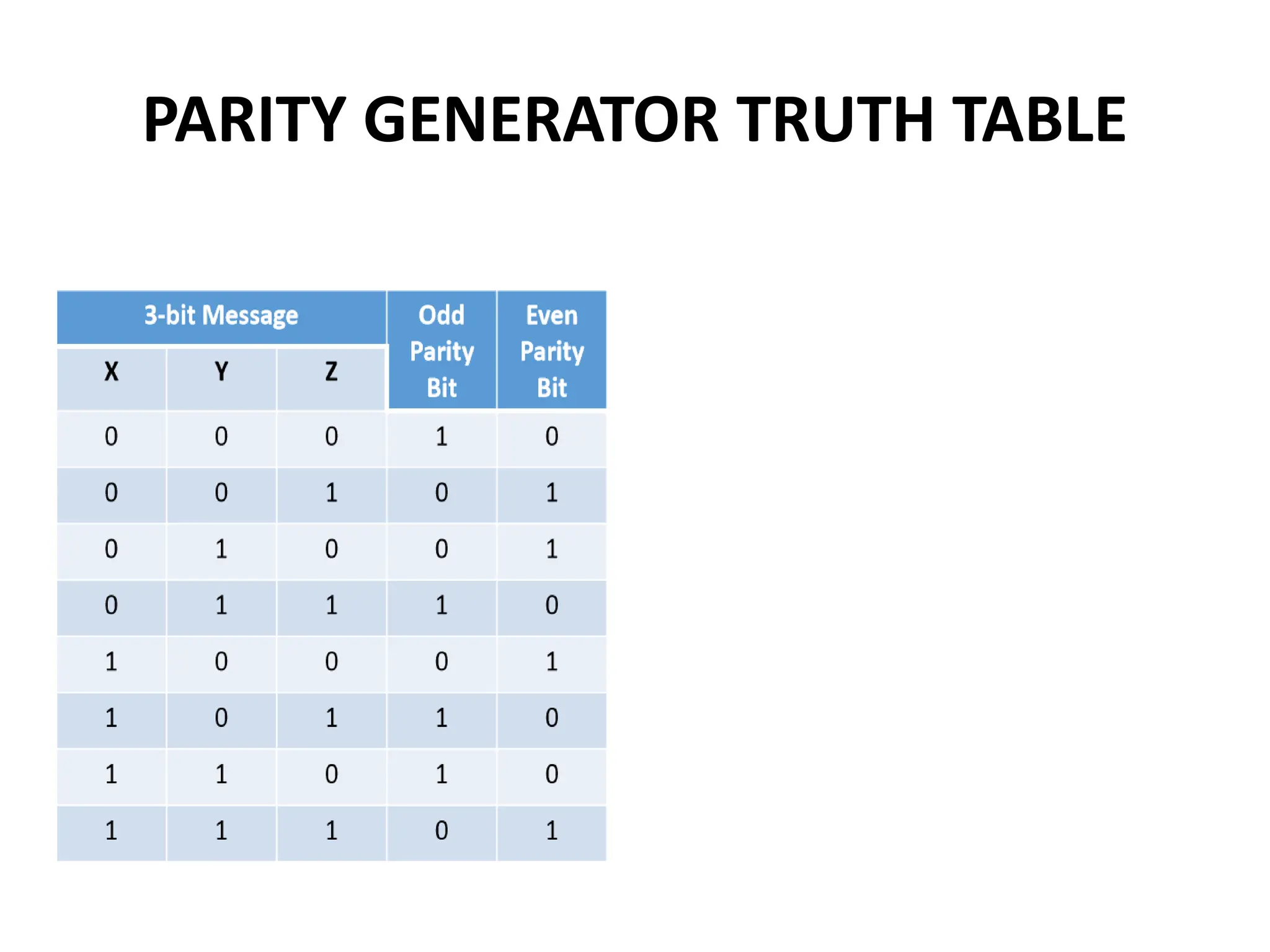
PARITY GENERATOR
 A Parity Generator is a Combinational Logic Circuit that
Generates the Parity bit in the Transmitter.
 A Parity bit is used for the Purpose of Detecting Errors during
Transmissions of binary Information.
 It is an Extra bit Included with a binary Message to Make the
Number of 1’s either Odd or Even.
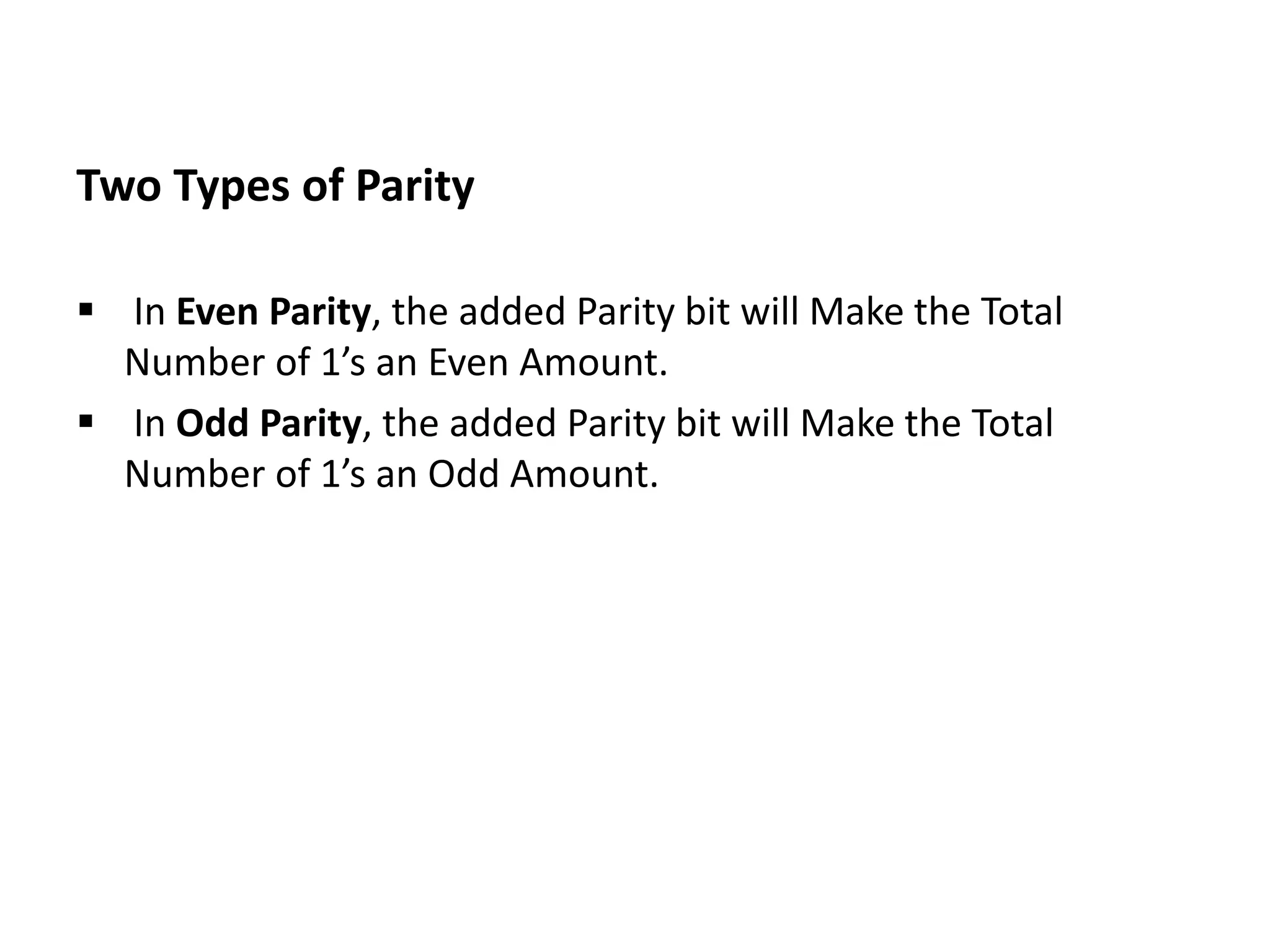
Two Types of Parity
 In Even Parity, the added Parity bit will Make the Total
Number of 1’s an Even Amount.
 In Odd Parity, the added Parity bit will Make the Total
Number of 1’s an Odd Amount.
PARITY GENERATOR TRUTH TABLE
VHDL CODE FOR ODD PARITY
SIMULATION RESULT
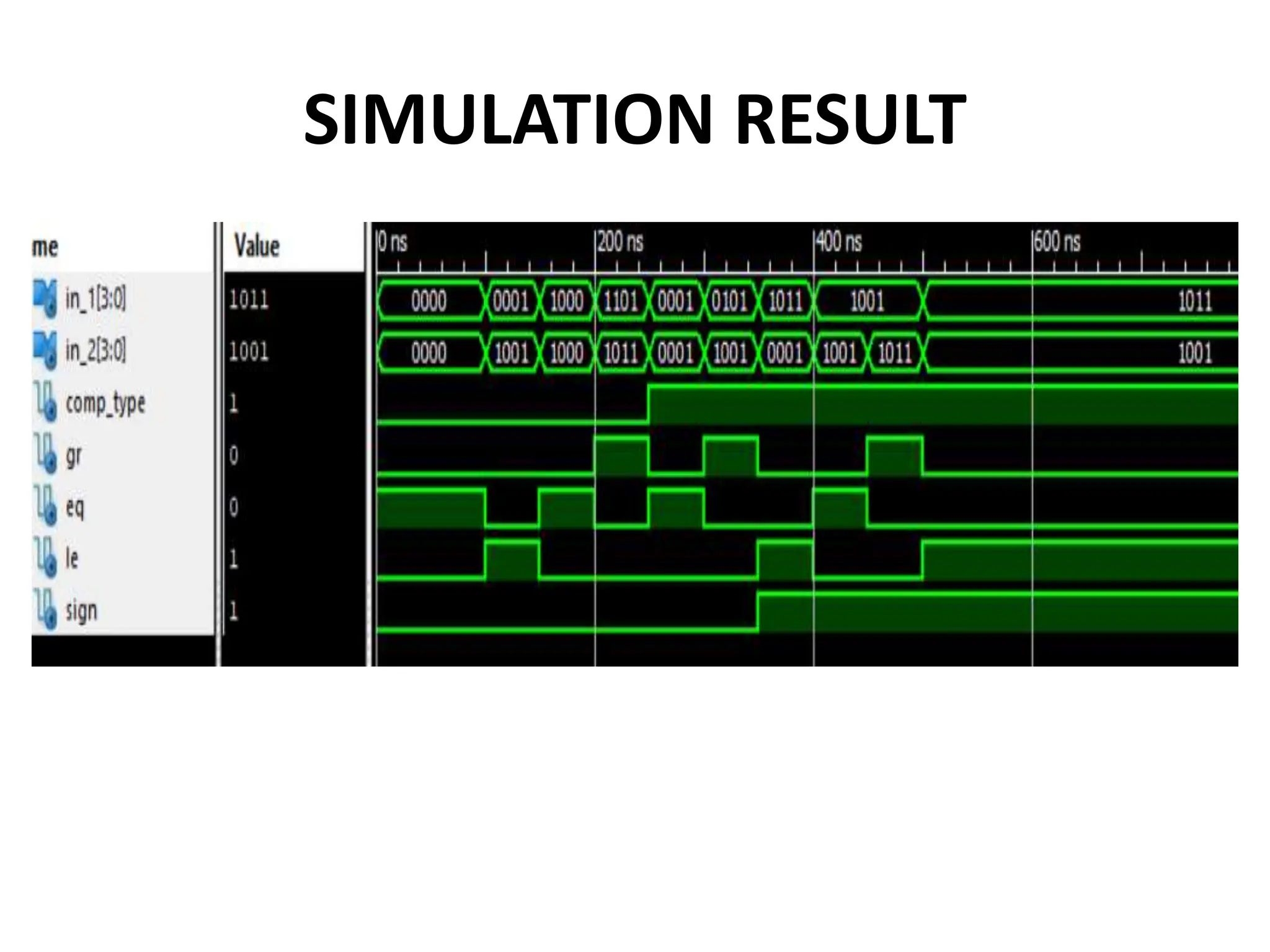
4-BIT MAGNITUDE COMPARATOR
 Compare two multi-bit binary numbers
 The comparison of two numbers
outputs: A>B, A=B, A<B
LOGIC USED IN VHDL CODE
in_1=_ _ _ _
in_2=_ _ _ _
‘0’ -> unsigned bit vector
Comp_type
‘1’-> signed bit vector
in_1= 0 _ _ _ in_1= 1 _ _ _
in_2= 0 _ _ _ in_2= 1 _ _ _
in_1= 1 _ _ _ in_1= 0 _ _ _
in_2= 0 _ _ _ in_2= 1 _ _ _
VHDL CODE FOR COMPARATOR
SIMULATION RESULT
THANK YOU

Vhdl-Code-for-Adc0804-Comparator-and-Parity-Generator.pptx

  • 1.
    VHDL CODE FORADC0804, 4-BIT MAGNITUDE COMPARATOR AND PARITY GENERATOR Presented by:- APARNA Department of Electronics Engineering (VLSI & ES)
  • 2.
    TOPICS  ADC0804  ADC FEATURES  PIN DIAGRAM & DISCRIPTION  ADC0804 INTERFACE SCHEMATIC & TIMING DIAGRAM  VHDL CODE & SIMULATION RESULT  PARITY GENERATOR  INTRODUCTION  VHDL CODE & SIMULATION RESULT  4-BIT MAGNITUDE COMPARATOR  INTRODUCTION  VHDL CODE & SIMULATION RESULT
  • 3.
    ADC  Analog-to-digital converter(ADC) is a device which can convert analogue voltage to digital numbers so that microcontrollers and microprocessors can handle and process the data.  ADC are the most widely used devices for data acquisition.  ADC has n-bit resolution, where n can be 8, 12, 16 or even 24 bits.
  • 4.
     The higher-resolutionADC provides a smaller step size.  Step size is the smallest change that can be recognized by ADC  Vcc is the reference voltage of ADC with n-bit resolution.  Table : Resolution versus Step Size for ADC (if Vcc = 5V) 1 2   n cc V Size Step
  • 5.
  • 6.
    ADC0804 Features  Single channel,8-bit parallel ADC module  Easy to interface with all Microprocessors or works Stand alone.  Differential analog voltage inputs. 0V to 5V analog input voltage range with single 5V supply.  On chip Clock available.
  • 7.
     Digital outputvarious from 0 to 255.  When Vref = 5V, for every 19.60mV of analog value there will be rise of one bit on digital side (Step size)  Available in 20-pin PDIP, SOIC packages.  A common, low-cost ADC, compatible with a wide range of microprocessors. There are many faster ADCs available with more resolution, this device is ideal for applications that do not require a high degree of accuracy.  ADC0804 requires up to 100 µs to convert an analog input voltage into a digital output code.
  • 8.
  • 9.
    PIN DESCRIPTION Pin NoFunction Name 1 Activates ADC; Active low ; used if more than 1 ADC module is used. By default grounded Chip select 2 Input pin; High to low pulse brings the data from internal registers to the output pins after conversion Read 3 Input pin; Low to high pulse is given to start the conversion Write 4 Clock Input pin; to give external clock. Clock IN 5 Output pin; Goes low when conversion is complete Interrupt 6 Analog non-inverting input Vin(+) 7 Analog inverting Input; normally ground Vin(-) 8 Ground(0V) Analog Ground 9 Input pin; sets the reference voltage for analog input Vref/2 10 Ground(0V) Digital Ground 11 8 bit digital output pins D7 12 D6 13 D5 14 D4 15 D3 16 D2 17 D1 18 D0 19 Used with Clock IN pin when internal clock source is used Clock R 20 Supply voltage; 5V Vcc
  • 10.
  • 11.
    ADC0804 INTERFACE INTR/EOC ADC 8-BITOUTPUT ADC0804 FPGA RD/OE WR/SC Analog input ADC OUTPUT (LED) CLK
  • 12.
  • 14.
  • 16.
    PARITY GENERATOR  AParity Generator is a Combinational Logic Circuit that Generates the Parity bit in the Transmitter.  A Parity bit is used for the Purpose of Detecting Errors during Transmissions of binary Information.  It is an Extra bit Included with a binary Message to Make the Number of 1’s either Odd or Even.
  • 17.
    Two Types ofParity  In Even Parity, the added Parity bit will Make the Total Number of 1’s an Even Amount.  In Odd Parity, the added Parity bit will Make the Total Number of 1’s an Odd Amount.
  • 18.
  • 19.
    VHDL CODE FORODD PARITY
  • 20.
  • 21.
    4-BIT MAGNITUDE COMPARATOR Compare two multi-bit binary numbers  The comparison of two numbers outputs: A>B, A=B, A<B
  • 22.
    LOGIC USED INVHDL CODE in_1=_ _ _ _ in_2=_ _ _ _ ‘0’ -> unsigned bit vector Comp_type ‘1’-> signed bit vector in_1= 0 _ _ _ in_1= 1 _ _ _ in_2= 0 _ _ _ in_2= 1 _ _ _ in_1= 1 _ _ _ in_1= 0 _ _ _ in_2= 0 _ _ _ in_2= 1 _ _ _
  • 23.
    VHDL CODE FORCOMPARATOR
  • 25.
  • 26.