Selective Functional
Movement Assessment
Katie Deaton, BS, CSCS, SPT
Goals
 Disclaimer
 No way to provide a comprehensive course on the SFMA and its
implementation
 Objectives
 Introduce the concept of assessing patients from a global,
movement quality perspective
 Present the major concepts of the SFMA, top-tier assessments,
and a top-tier breakout
 Facilitate a basic understanding of how to utilize the SFMA
 Stimulate interest and further investigation into the SFMA and
its clinical implementation
What is the SFMA?
 Meant for use by clinicians to facilitate assessment of patients who
experience pain with movement
 Differentiates the SFMA from the Functional Movement Screen
(FMS)
 Diagnostic tool designed to test a patient’s movement patterns and
compare those patterns to an established minimum standard
 Assess quality of movement
 Highlight movement pattern limitations and asymmetries
 Complement to other movement assessments – impairment
measures (MMT) or functional performance measures (10MWT)
 Provides a more complete picture of dysfunction rather than
snapshots of isolated impairments
 Injury leads to altered motor control globally
Appropriate Application
 SFMA is not always the most appropriate assessment
 Acute trauma or post-surgical
 Conditions dominated by swelling, bruising, inflammation
 If these are present in sub-acute or chronic conditions, it should be
managed prior to corrective exercise involving active movement
 New neurological compromise
 In these situations, other examinations are more important
 Once these conditions are managed, the SFMA can be
utilized to determine the effects on movement
Objective Grading of Movement
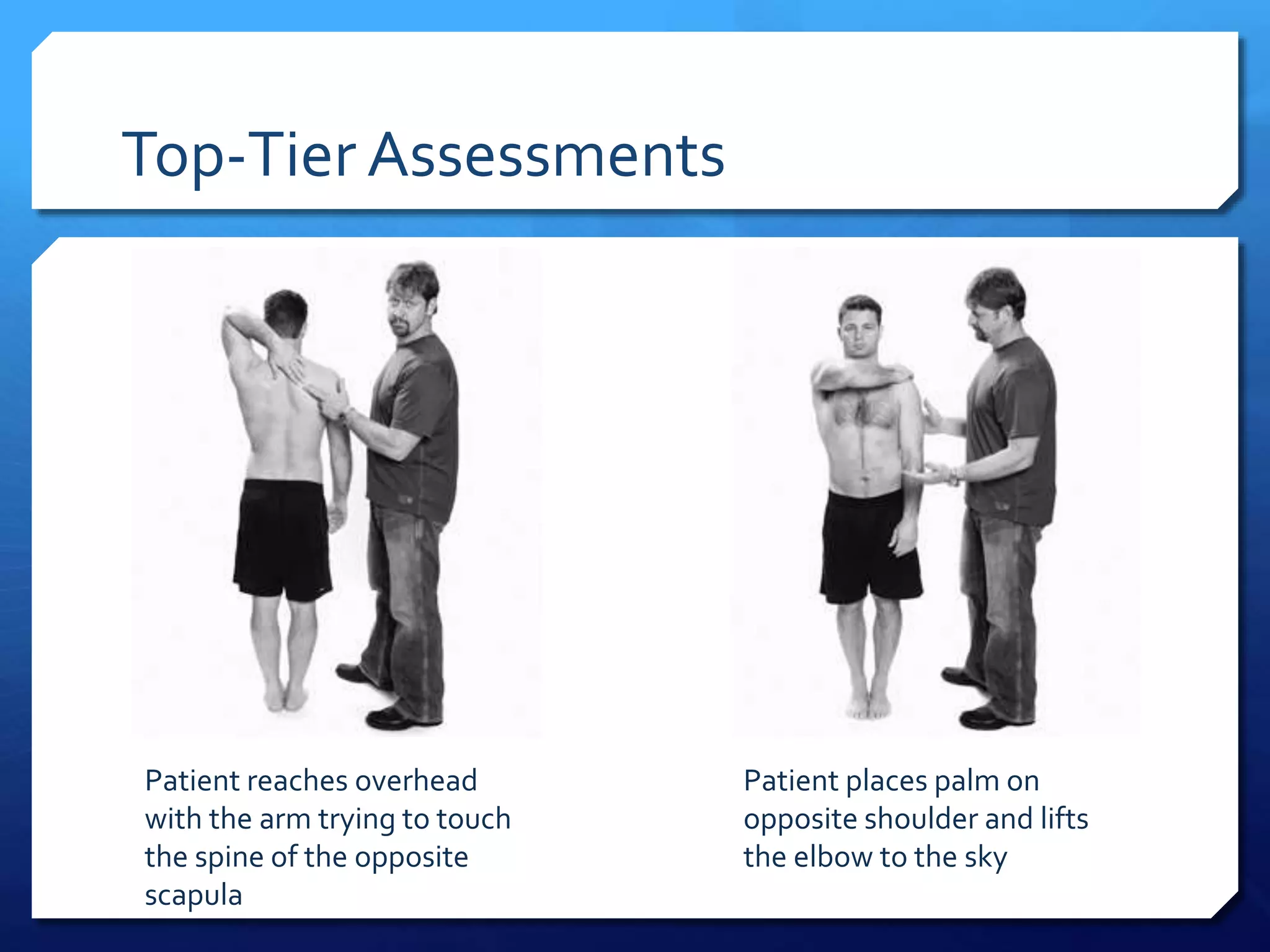
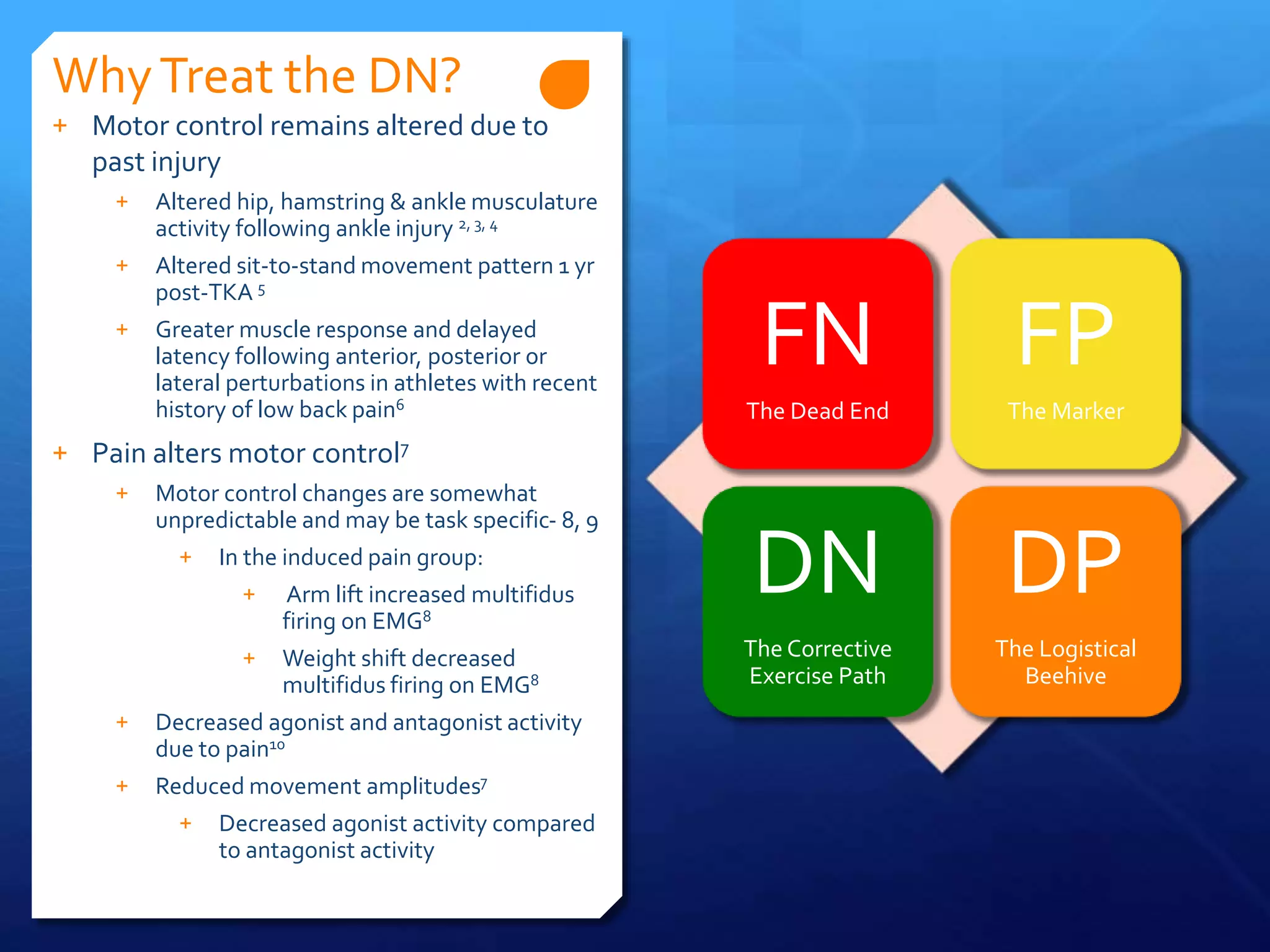
Functional, Nonpainful – FN
 “The Dead End”
 This pattern is not the weak link
 Do not spend time breaking out this
pattern- will only find insignificant
limitations
Functional, Painful – FP
 “The Marker”
 Confirms that pain is affected by
movement
 Revisit the marker to assess change or
variation
 Don’t need to exercise this movement
because it’s functional
Dysfunctional, Nonpainful – DN
 “The Corrective Exercise Path”
 Focus on these patterns
 Exercise-based treatment can be
applied in this pattern without risk of
exacerbating pain or reinforcing
dysfunctional patterns
Dysfunctional, Painful – DP
 “The Logistical Beehive”
 Breakouts can reveal FP or DN patterns
 Difficult to interpret – Is pain causing
poor movement or vice versa?
 Don’t attempt corrective exercise in this
pattern unless it’s a last resort
Top-Tier Assessments
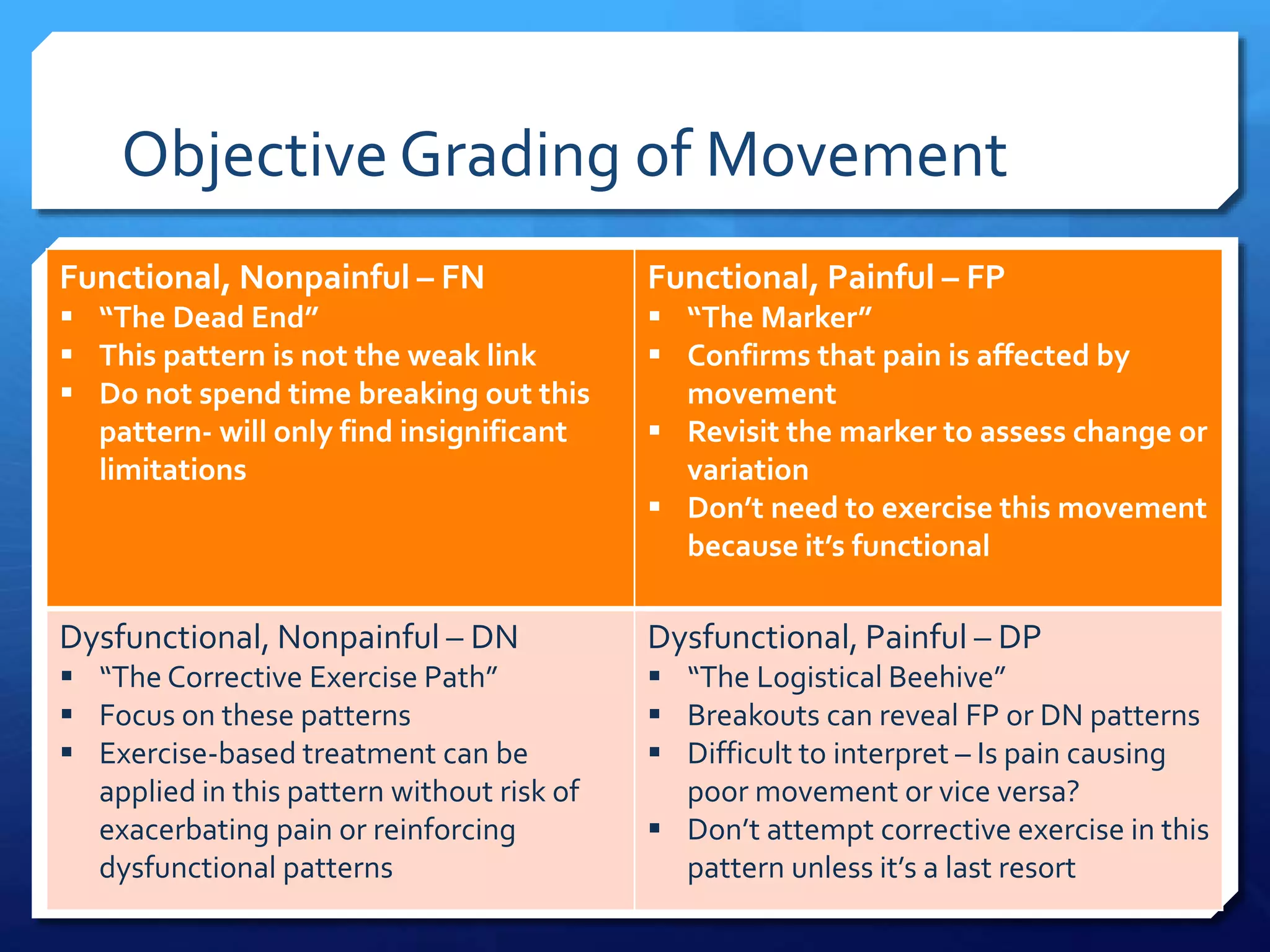
Patient should be able to
touch sternum with chin
without pain
Patient should be able to
get within 10 degrees
parallel without pain
Top-Tier Assessments
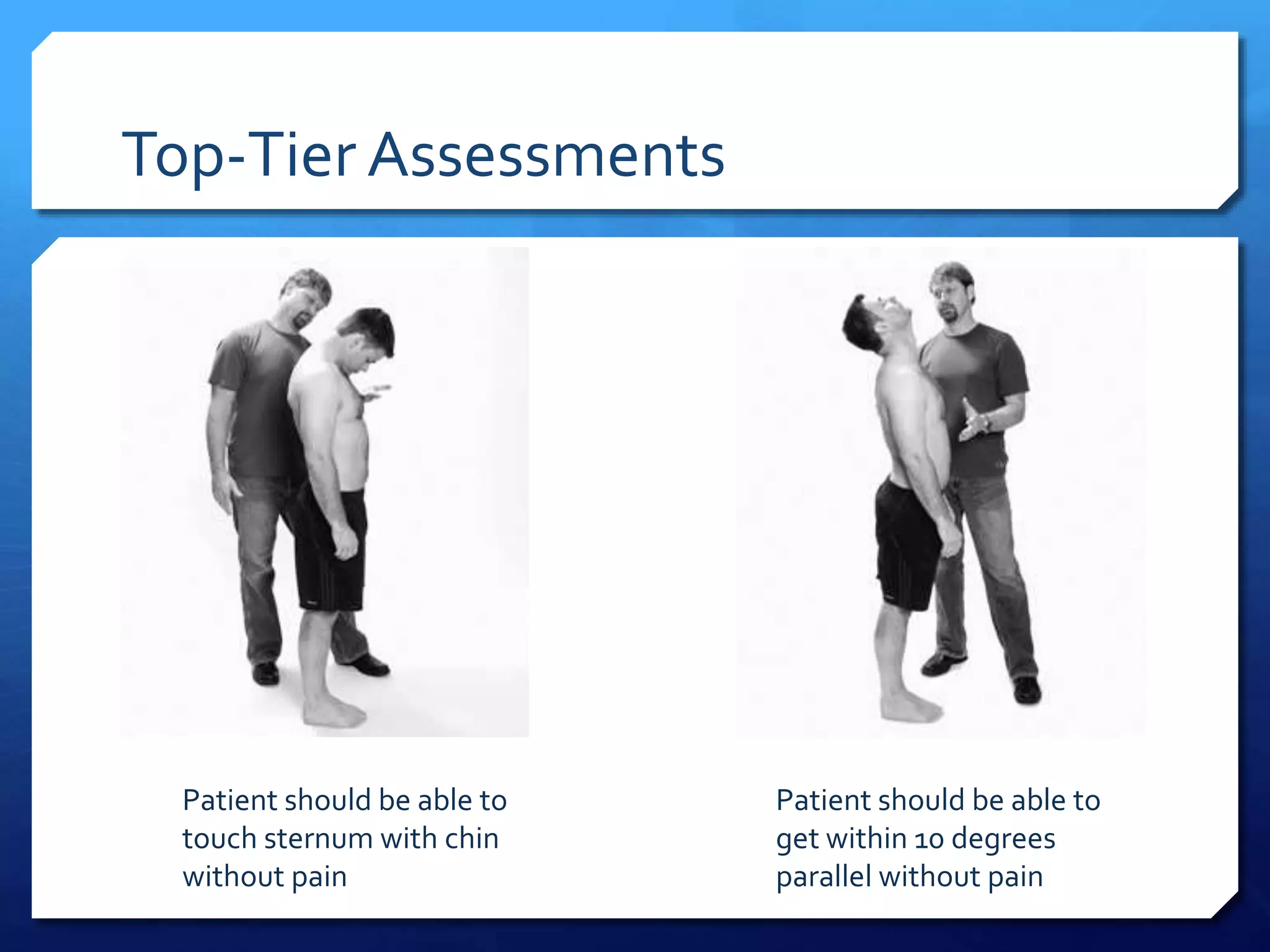
Patient should be able to
reach mid-clavicle
bilaterally without pain
Patient reaches back with
the arm trying to touch the
inferior angle of the
opposite scapula
Top-Tier Assessments
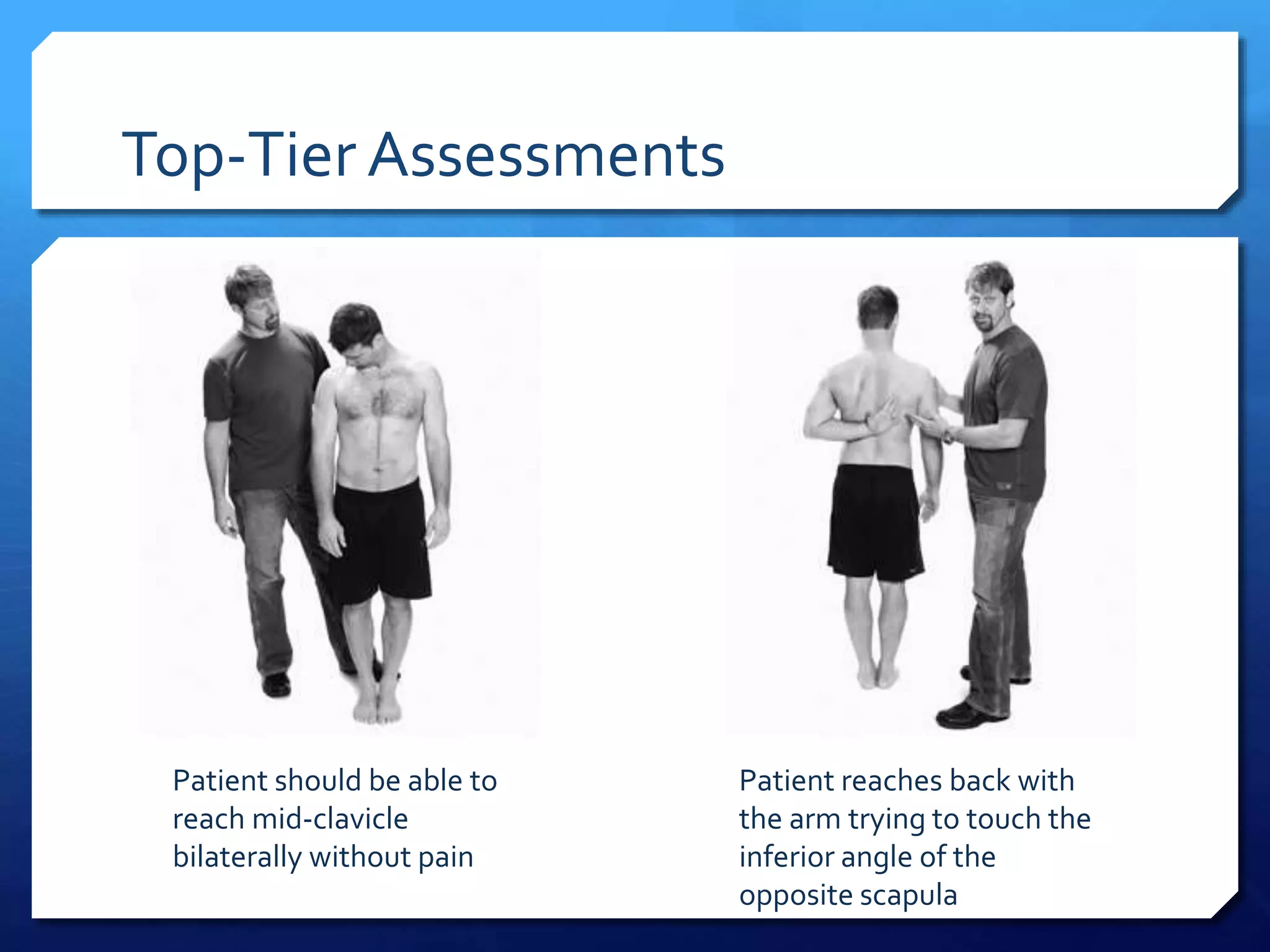
Patient reaches overhead
with the arm trying to touch
the spine of the opposite
scapula
Patient places palm on
opposite shoulder and lifts
the elbow to the sky
Top-Tier Assessments
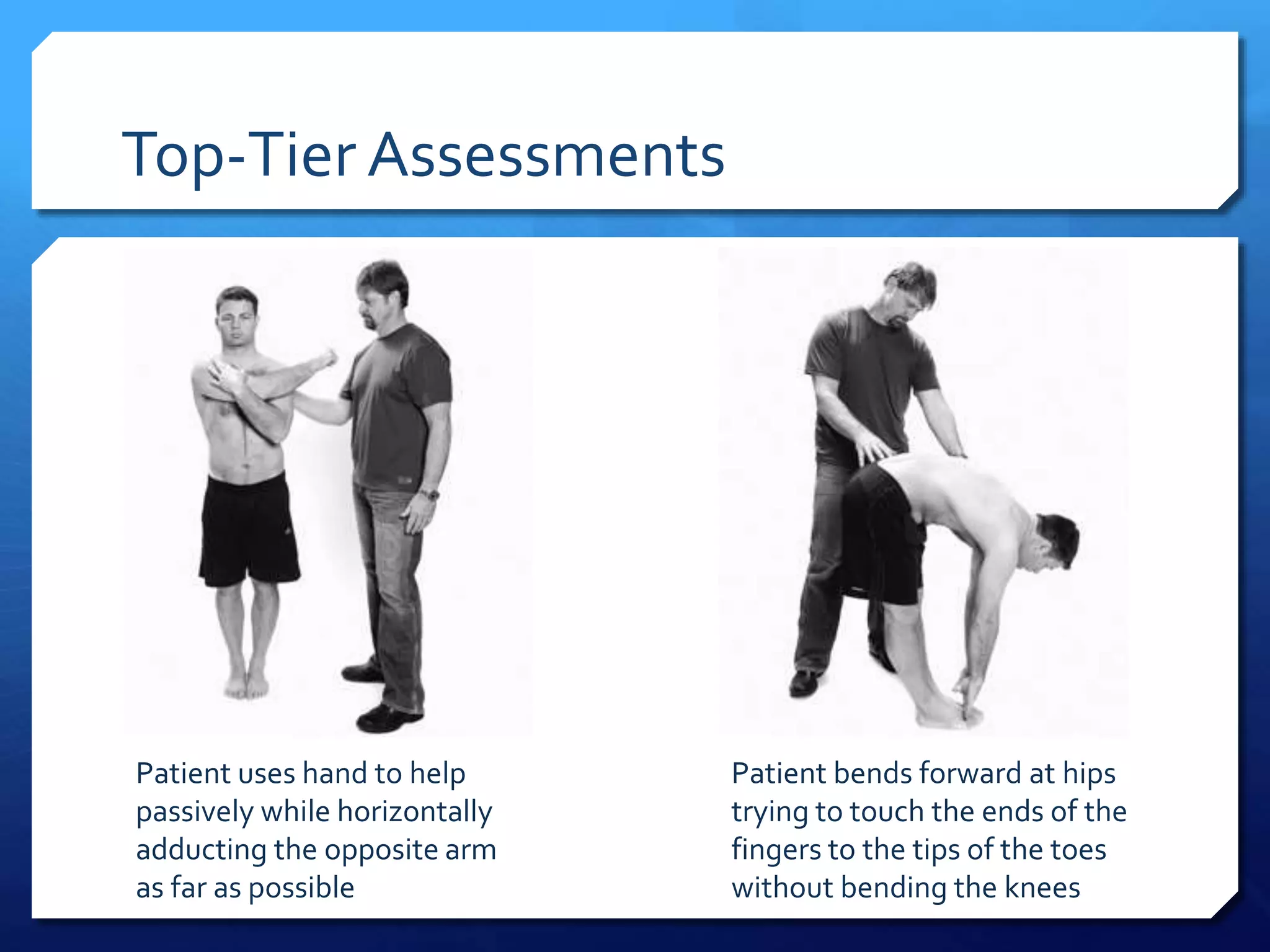
Patient uses hand to help
passively while horizontally
adducting the opposite arm
as far as possible
Patient bends forward at hips
trying to touch the ends of the
fingers to the tips of the toes
without bending the knees
Top-Tier Assessments
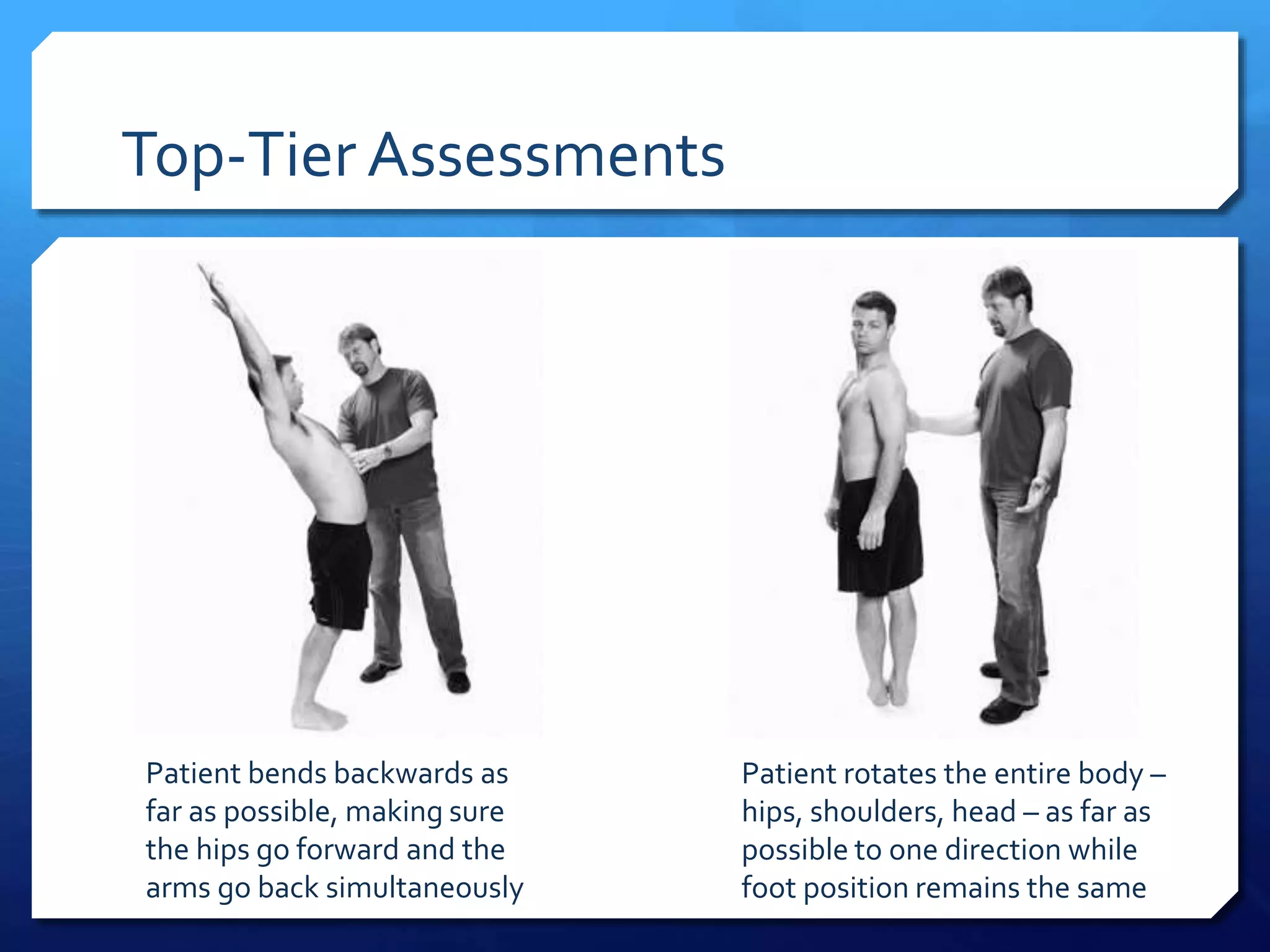
Patient bends backwards as
far as possible, making sure
the hips go forward and the
arms go back simultaneously
Patient rotates the entire body –
hips, shoulders, head – as far as
possible to one direction while
foot position remains the same
Top-Tier Assessments
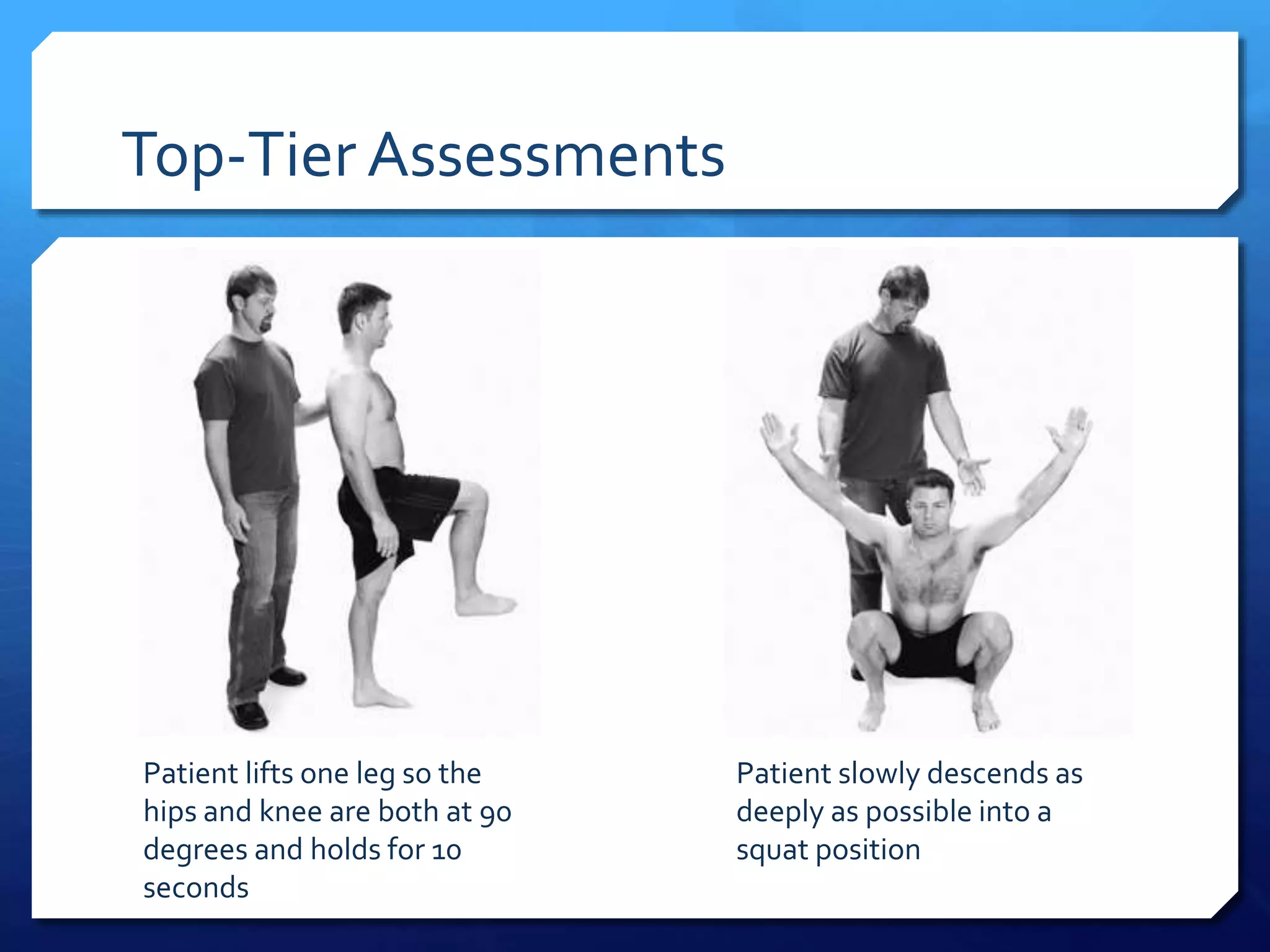
Patient lifts one leg so the
hips and knee are both at 90
degrees and holds for 10
seconds
Patient slowly descends as
deeply as possible into a
squat position
WhyTreat the DN?
FN
The Dead End
FP
The Marker
DN
The Corrective
Exercise Path
DP
The Logistical
Beehive
+ Motor control remains altered due to
past injury
+ Altered hip, hamstring & ankle musculature
activity following ankle injury 2, 3, 4
+ Altered sit-to-stand movement pattern 1 yr
post-TKA 5
+ Greater muscle response and delayed
latency following anterior, posterior or
lateral perturbations in athletes with recent
history of low back pain6
+ Pain alters motor control7
+ Motor control changes are somewhat
unpredictable and may be task specific- 8, 9
+ In the induced pain group:
+ Arm lift increased multifidus
firing on EMG8
+ Weight shift decreased
multifidus firing on EMG8
+ Decreased agonist and antagonist activity
due to pain10
+ Reduced movement amplitudes7
+ Decreased agonist activity compared
to antagonist activity
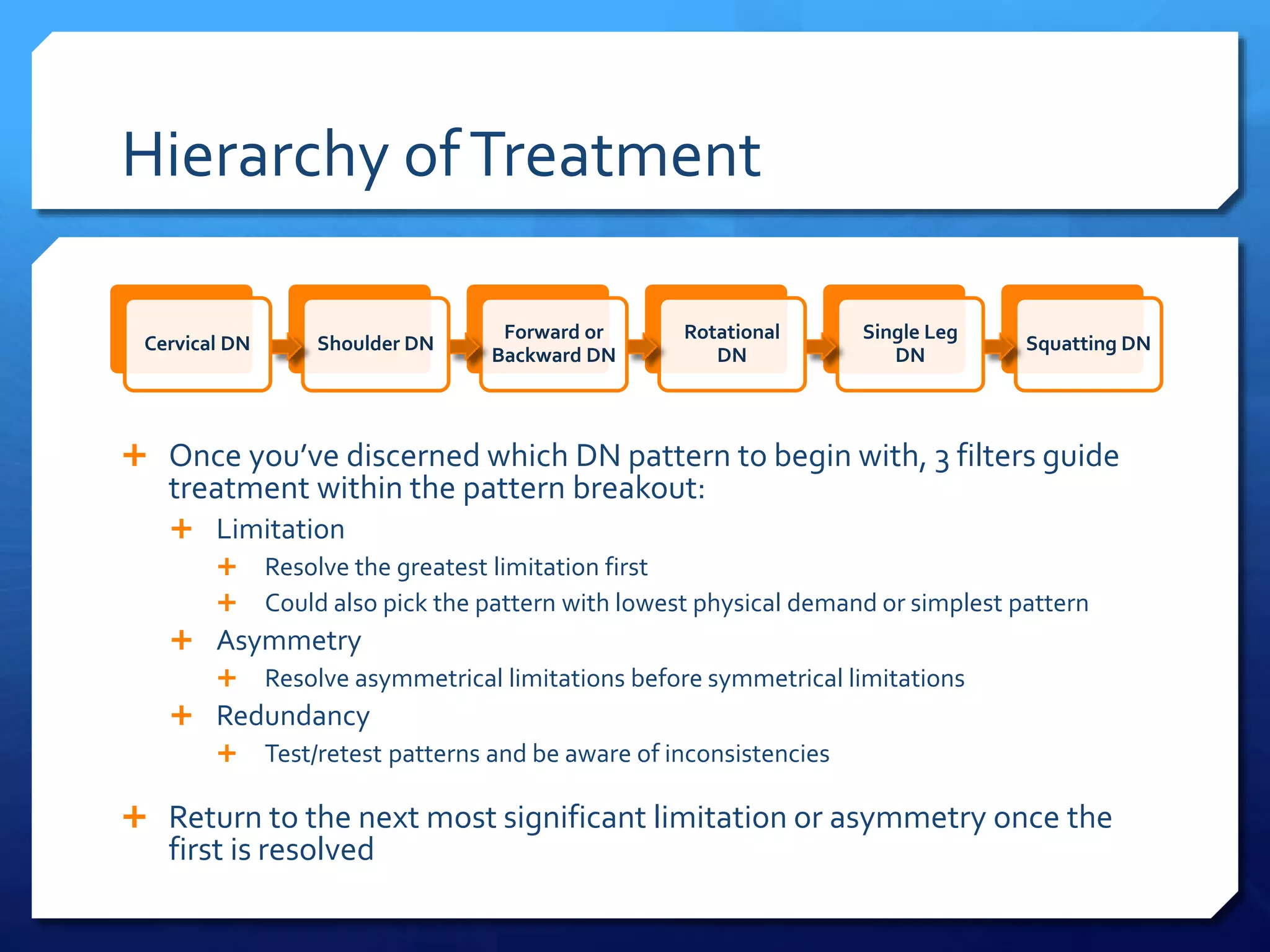
Hierarchy ofTreatment
 Once you’ve discerned which DN pattern to begin with, 3 filters guide
treatment within the pattern breakout:
 Limitation
 Resolve the greatest limitation first
 Could also pick the pattern with lowest physical demand or simplest pattern
 Asymmetry
 Resolve asymmetrical limitations before symmetrical limitations
 Redundancy
 Test/retest patterns and be aware of inconsistencies
 Return to the next most significant limitation or asymmetry once the
first is resolved
Cervical DN Shoulder DN
Forward or
Backward DN
Rotational
DN
Single Leg
DN
Squatting DN
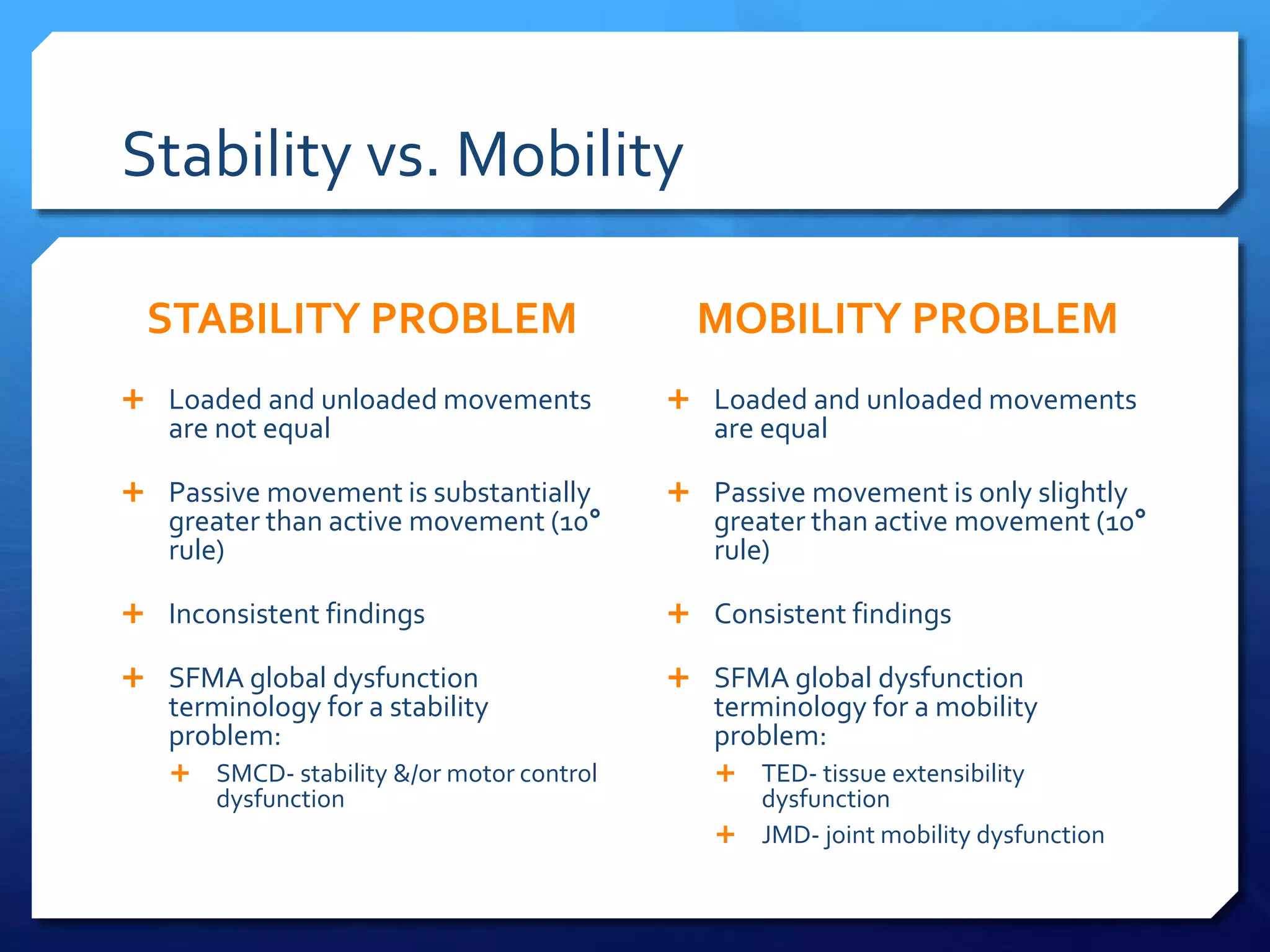
Stability vs. Mobility
STABILITY PROBLEM
 Loaded and unloaded movements
are not equal
 Passive movement is substantially
greater than active movement (10°
rule)
 Inconsistent findings
 SFMA global dysfunction
terminology for a stability
problem:
 SMCD- stability &/or motor control
dysfunction
MOBILITY PROBLEM
 Loaded and unloaded movements
are equal
 Passive movement is only slightly
greater than active movement (10°
rule)
 Consistent findings
 SFMA global dysfunction
terminology for a mobility
problem:
 TED- tissue extensibility
dysfunction
 JMD- joint mobility dysfunction
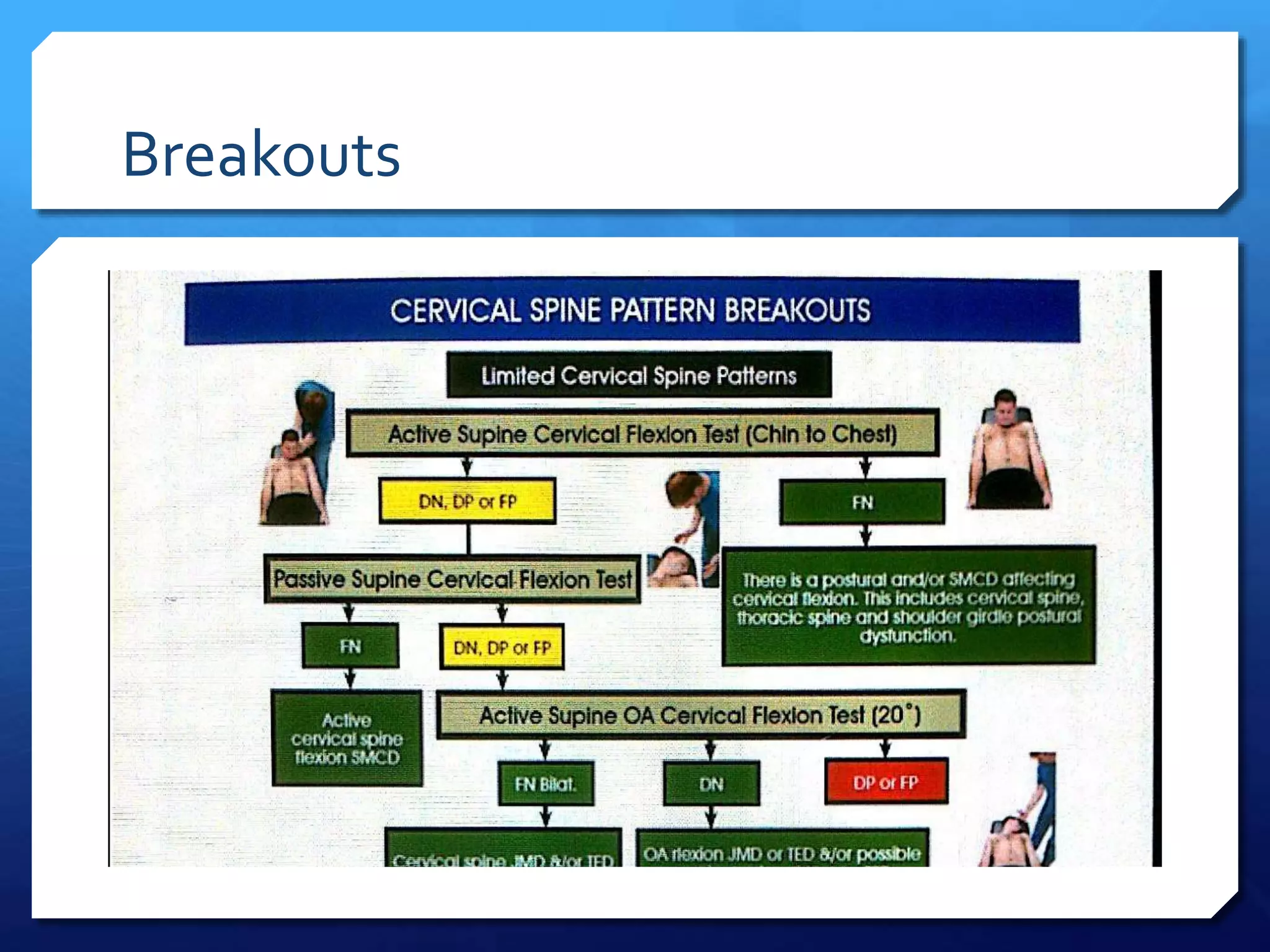
Breakouts
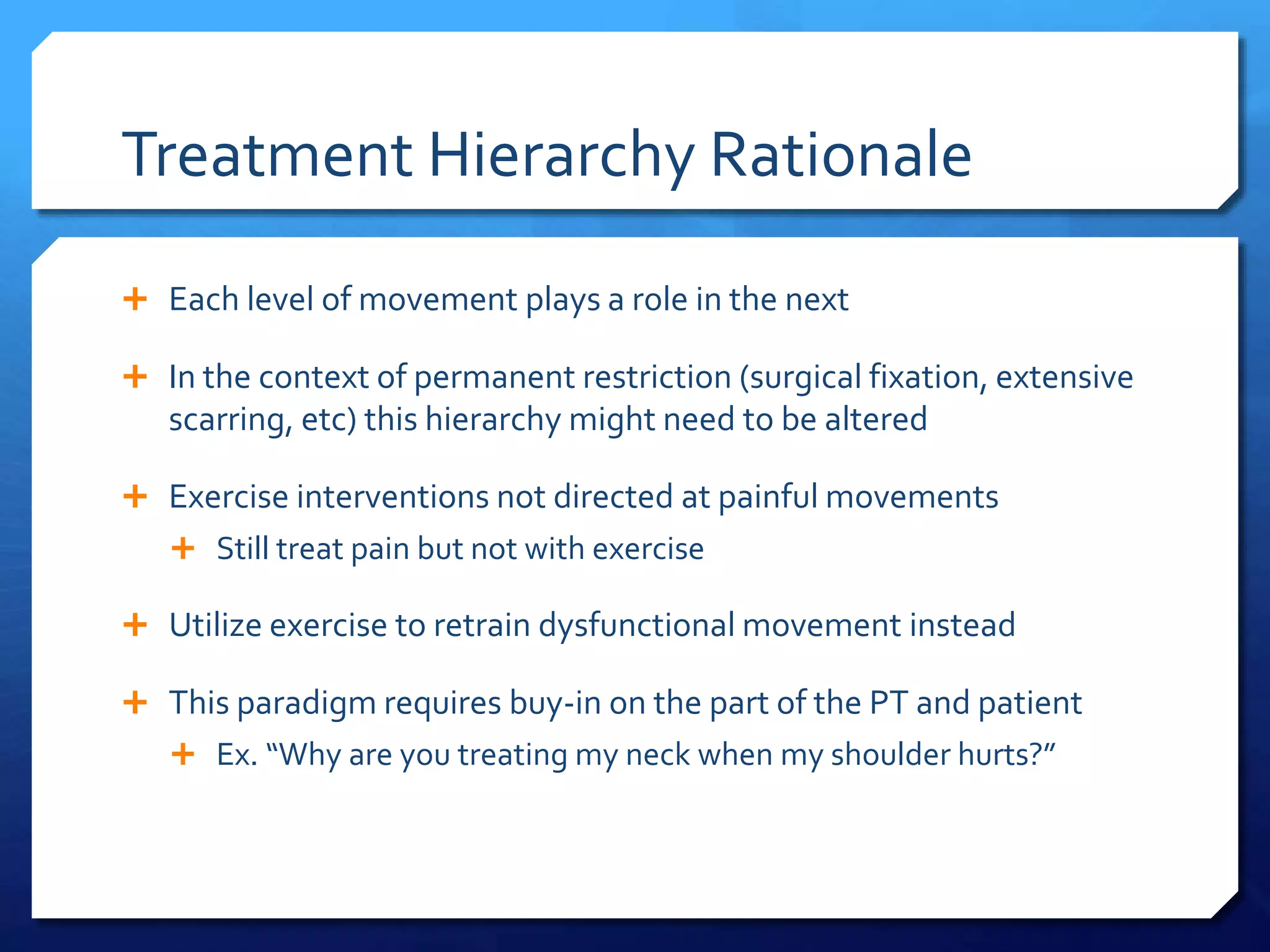
Treatment Hierarchy Rationale
 Each level of movement plays a role in the next
 In the context of permanent restriction (surgical fixation, extensive
scarring, etc) this hierarchy might need to be altered
 Exercise interventions not directed at painful movements
 Still treat pain but not with exercise
 Utilize exercise to retrain dysfunctional movement instead
 This paradigm requires buy-in on the part of the PT and patient
 Ex. “Why are you treating my neck when my shoulder hurts?”
“Transforming society by
optimizing movement to improve
the human experience.”
REVISED APTAVISION STATEMENT
To Learn More…
 Movement: Functional Movement Systems by Gray Cook
 www.functionalmovement.com
 SFMA certification courses and workshops
 Printable flow sheets for use during SFMA examination
 http://graycookmovement.com/downloads/SFMA%20Score%2
0Sheets.pdf
References
1. Cook, Gray. Movement: Functional Movement Systems. 2010. On Target Publications: Santa Clara, CA.
2. Hubbard, TJ. Kramer LC, Denegar CR. Hertel J. Correlations among multiple measures of functional and mechanical instability in subjects with chronic
ankle instability. Journal of Athletic Training. 2007; 42 (3): 361-366.
3. Beckman, SM. Buchanan TS. Ankle inversion injury and hypermobility: effect on hip and ankle muscle electromyography onset latency. Arch Phys Med
Rehabil. 1995; 76: 1138-1143.
4. Van Deun, S. Staes, FF. Stappaerts, KH. Janssens, L. Levin, O. Peers, KKH. Relationship of chronic ankle instability to muscle activation patterns during
the transition from double-leg to single-leg stance. Am J Sports Med. 2007; 35 (2): 274-281.
5. Farquhar, SJ. Reisman, DS. Snyder-Mackler, L. Persistance of altered movement patterns during a sit-to-stand task 1 year following unilateral total knee
arthroplasty. Phys Ther. 2008; 88: 567-579.
6. Hodges, P. van den Hoom, W. Dawson, A. Cholewicki, J. Changes in the mechanical properties of the trunk in low back pain may be associated with
recurrence. Journal of Biomechanics. 2009; 41 (1): 61-66.
7. Arendt-Nielsen, L. Graven-Nielsen, T. Muscle pain: sensory implications and interactions with motor control. Clin J Pain. 2008; 24 (4): 291-298.
8. Kiesel, KB. Butler, RJ. Duckworth, A. Halaby, T. Lannan, K. Phifer, C. DeLeal, C. Underwood, FB. Experimentally induced pain alters the EMG activity of
the lumbar multifidus in asymptomatic subjects. Man Ther. 2012; 17 (3): 236-240.
9. Ahern, DK. Follick, MJ. Council, JR. Comparison of lumbar paravertebral EMG patterns in chronic low back pain patients and non-patient controls. Pain.
1988; 34: 153–160.
10. Ervilha, UF. Arendt-Nielsen, L. Duarte, M. Effect of load level and muscle pain intensity on the motor control of elbow-flexion movements. Eur J Appl
Physiol. 2004; 92: 168–175.
Veterans Affairs Student Inservice

Veterans Affairs Student Inservice

  • 1.
  • 2.
    Goals  Disclaimer  Noway to provide a comprehensive course on the SFMA and its implementation  Objectives  Introduce the concept of assessing patients from a global, movement quality perspective  Present the major concepts of the SFMA, top-tier assessments, and a top-tier breakout  Facilitate a basic understanding of how to utilize the SFMA  Stimulate interest and further investigation into the SFMA and its clinical implementation
  • 3.
    What is theSFMA?  Meant for use by clinicians to facilitate assessment of patients who experience pain with movement  Differentiates the SFMA from the Functional Movement Screen (FMS)  Diagnostic tool designed to test a patient’s movement patterns and compare those patterns to an established minimum standard  Assess quality of movement  Highlight movement pattern limitations and asymmetries  Complement to other movement assessments – impairment measures (MMT) or functional performance measures (10MWT)  Provides a more complete picture of dysfunction rather than snapshots of isolated impairments  Injury leads to altered motor control globally
  • 4.
    Appropriate Application  SFMAis not always the most appropriate assessment  Acute trauma or post-surgical  Conditions dominated by swelling, bruising, inflammation  If these are present in sub-acute or chronic conditions, it should be managed prior to corrective exercise involving active movement  New neurological compromise  In these situations, other examinations are more important  Once these conditions are managed, the SFMA can be utilized to determine the effects on movement
  • 5.
    Objective Grading ofMovement Functional, Nonpainful – FN  “The Dead End”  This pattern is not the weak link  Do not spend time breaking out this pattern- will only find insignificant limitations Functional, Painful – FP  “The Marker”  Confirms that pain is affected by movement  Revisit the marker to assess change or variation  Don’t need to exercise this movement because it’s functional Dysfunctional, Nonpainful – DN  “The Corrective Exercise Path”  Focus on these patterns  Exercise-based treatment can be applied in this pattern without risk of exacerbating pain or reinforcing dysfunctional patterns Dysfunctional, Painful – DP  “The Logistical Beehive”  Breakouts can reveal FP or DN patterns  Difficult to interpret – Is pain causing poor movement or vice versa?  Don’t attempt corrective exercise in this pattern unless it’s a last resort
  • 6.
    Top-Tier Assessments Patient shouldbe able to touch sternum with chin without pain Patient should be able to get within 10 degrees parallel without pain
  • 7.
    Top-Tier Assessments Patient shouldbe able to reach mid-clavicle bilaterally without pain Patient reaches back with the arm trying to touch the inferior angle of the opposite scapula
  • 8.
    Top-Tier Assessments Patient reachesoverhead with the arm trying to touch the spine of the opposite scapula Patient places palm on opposite shoulder and lifts the elbow to the sky
  • 9.
    Top-Tier Assessments Patient useshand to help passively while horizontally adducting the opposite arm as far as possible Patient bends forward at hips trying to touch the ends of the fingers to the tips of the toes without bending the knees
  • 10.
    Top-Tier Assessments Patient bendsbackwards as far as possible, making sure the hips go forward and the arms go back simultaneously Patient rotates the entire body – hips, shoulders, head – as far as possible to one direction while foot position remains the same
  • 11.
    Top-Tier Assessments Patient liftsone leg so the hips and knee are both at 90 degrees and holds for 10 seconds Patient slowly descends as deeply as possible into a squat position
  • 12.
    WhyTreat the DN? FN TheDead End FP The Marker DN The Corrective Exercise Path DP The Logistical Beehive + Motor control remains altered due to past injury + Altered hip, hamstring & ankle musculature activity following ankle injury 2, 3, 4 + Altered sit-to-stand movement pattern 1 yr post-TKA 5 + Greater muscle response and delayed latency following anterior, posterior or lateral perturbations in athletes with recent history of low back pain6 + Pain alters motor control7 + Motor control changes are somewhat unpredictable and may be task specific- 8, 9 + In the induced pain group: + Arm lift increased multifidus firing on EMG8 + Weight shift decreased multifidus firing on EMG8 + Decreased agonist and antagonist activity due to pain10 + Reduced movement amplitudes7 + Decreased agonist activity compared to antagonist activity
  • 13.
    Hierarchy ofTreatment  Onceyou’ve discerned which DN pattern to begin with, 3 filters guide treatment within the pattern breakout:  Limitation  Resolve the greatest limitation first  Could also pick the pattern with lowest physical demand or simplest pattern  Asymmetry  Resolve asymmetrical limitations before symmetrical limitations  Redundancy  Test/retest patterns and be aware of inconsistencies  Return to the next most significant limitation or asymmetry once the first is resolved Cervical DN Shoulder DN Forward or Backward DN Rotational DN Single Leg DN Squatting DN
  • 14.
    Stability vs. Mobility STABILITYPROBLEM  Loaded and unloaded movements are not equal  Passive movement is substantially greater than active movement (10° rule)  Inconsistent findings  SFMA global dysfunction terminology for a stability problem:  SMCD- stability &/or motor control dysfunction MOBILITY PROBLEM  Loaded and unloaded movements are equal  Passive movement is only slightly greater than active movement (10° rule)  Consistent findings  SFMA global dysfunction terminology for a mobility problem:  TED- tissue extensibility dysfunction  JMD- joint mobility dysfunction
  • 15.
  • 16.
    Treatment Hierarchy Rationale Each level of movement plays a role in the next  In the context of permanent restriction (surgical fixation, extensive scarring, etc) this hierarchy might need to be altered  Exercise interventions not directed at painful movements  Still treat pain but not with exercise  Utilize exercise to retrain dysfunctional movement instead  This paradigm requires buy-in on the part of the PT and patient  Ex. “Why are you treating my neck when my shoulder hurts?”
  • 17.
    “Transforming society by optimizingmovement to improve the human experience.” REVISED APTAVISION STATEMENT
  • 18.
    To Learn More… Movement: Functional Movement Systems by Gray Cook  www.functionalmovement.com  SFMA certification courses and workshops  Printable flow sheets for use during SFMA examination  http://graycookmovement.com/downloads/SFMA%20Score%2 0Sheets.pdf
  • 19.
    References 1. Cook, Gray.Movement: Functional Movement Systems. 2010. On Target Publications: Santa Clara, CA. 2. Hubbard, TJ. Kramer LC, Denegar CR. Hertel J. Correlations among multiple measures of functional and mechanical instability in subjects with chronic ankle instability. Journal of Athletic Training. 2007; 42 (3): 361-366. 3. Beckman, SM. Buchanan TS. Ankle inversion injury and hypermobility: effect on hip and ankle muscle electromyography onset latency. Arch Phys Med Rehabil. 1995; 76: 1138-1143. 4. Van Deun, S. Staes, FF. Stappaerts, KH. Janssens, L. Levin, O. Peers, KKH. Relationship of chronic ankle instability to muscle activation patterns during the transition from double-leg to single-leg stance. Am J Sports Med. 2007; 35 (2): 274-281. 5. Farquhar, SJ. Reisman, DS. Snyder-Mackler, L. Persistance of altered movement patterns during a sit-to-stand task 1 year following unilateral total knee arthroplasty. Phys Ther. 2008; 88: 567-579. 6. Hodges, P. van den Hoom, W. Dawson, A. Cholewicki, J. Changes in the mechanical properties of the trunk in low back pain may be associated with recurrence. Journal of Biomechanics. 2009; 41 (1): 61-66. 7. Arendt-Nielsen, L. Graven-Nielsen, T. Muscle pain: sensory implications and interactions with motor control. Clin J Pain. 2008; 24 (4): 291-298. 8. Kiesel, KB. Butler, RJ. Duckworth, A. Halaby, T. Lannan, K. Phifer, C. DeLeal, C. Underwood, FB. Experimentally induced pain alters the EMG activity of the lumbar multifidus in asymptomatic subjects. Man Ther. 2012; 17 (3): 236-240. 9. Ahern, DK. Follick, MJ. Council, JR. Comparison of lumbar paravertebral EMG patterns in chronic low back pain patients and non-patient controls. Pain. 1988; 34: 153–160. 10. Ervilha, UF. Arendt-Nielsen, L. Duarte, M. Effect of load level and muscle pain intensity on the motor control of elbow-flexion movements. Eur J Appl Physiol. 2004; 92: 168–175.