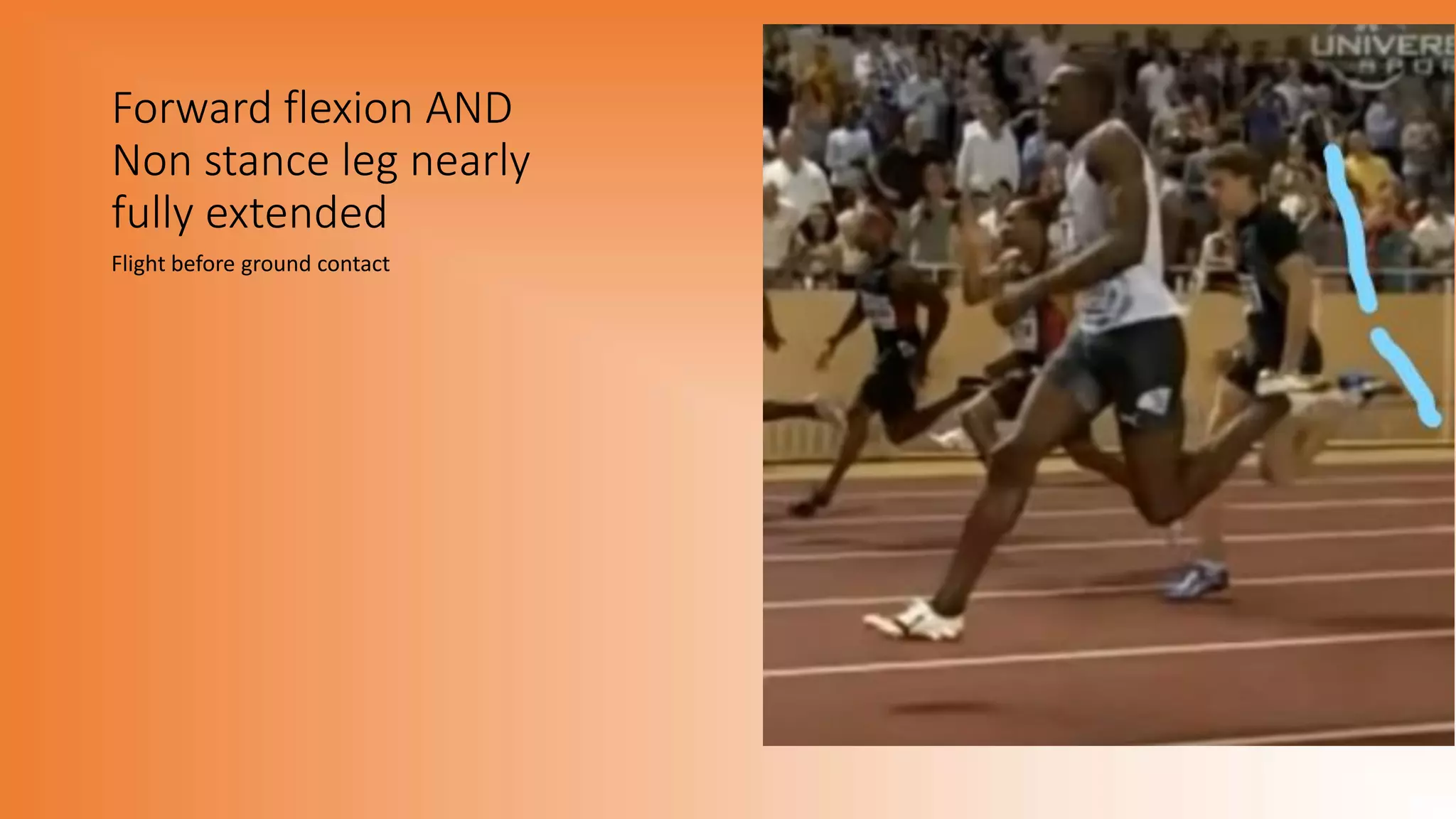
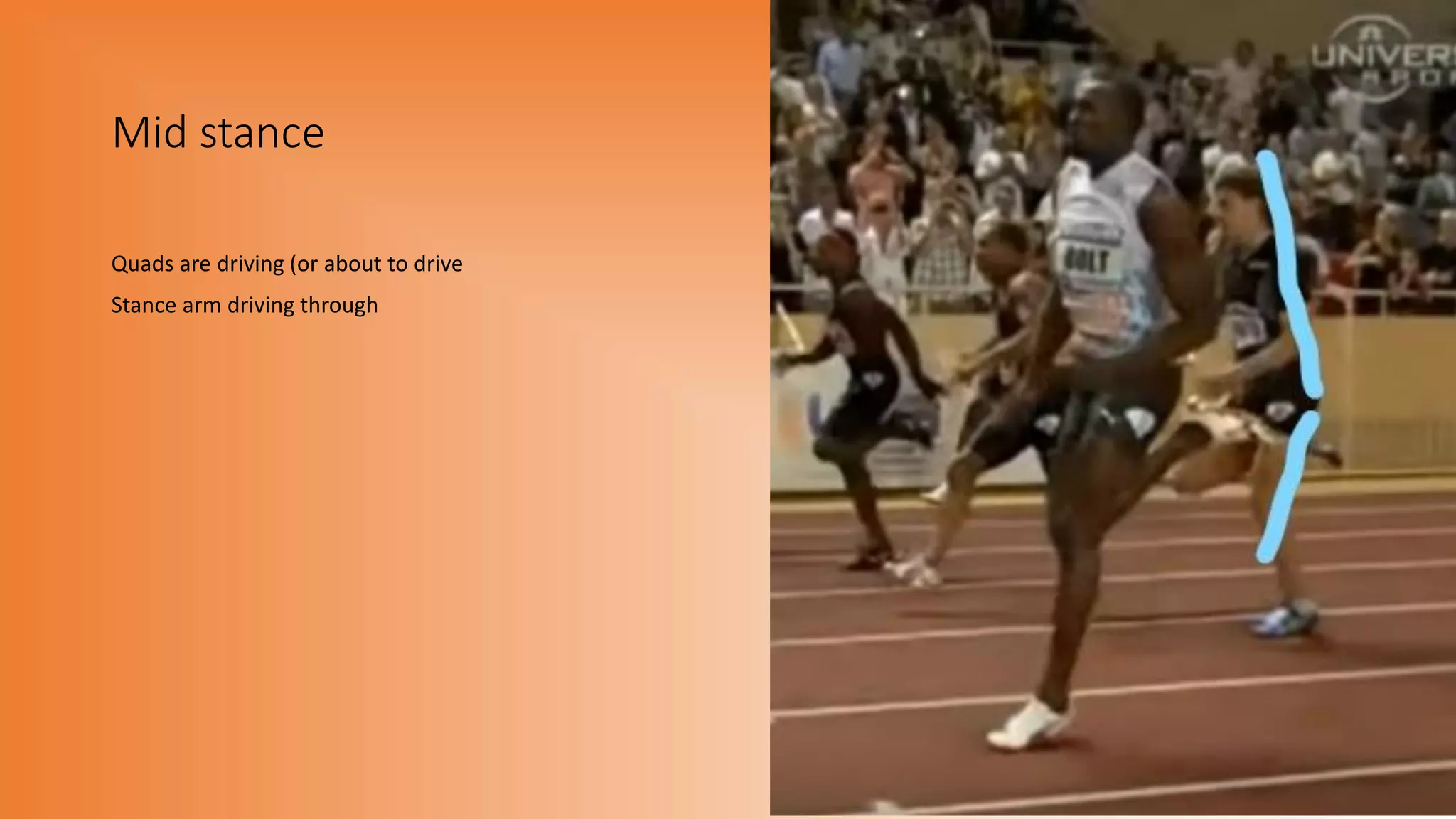
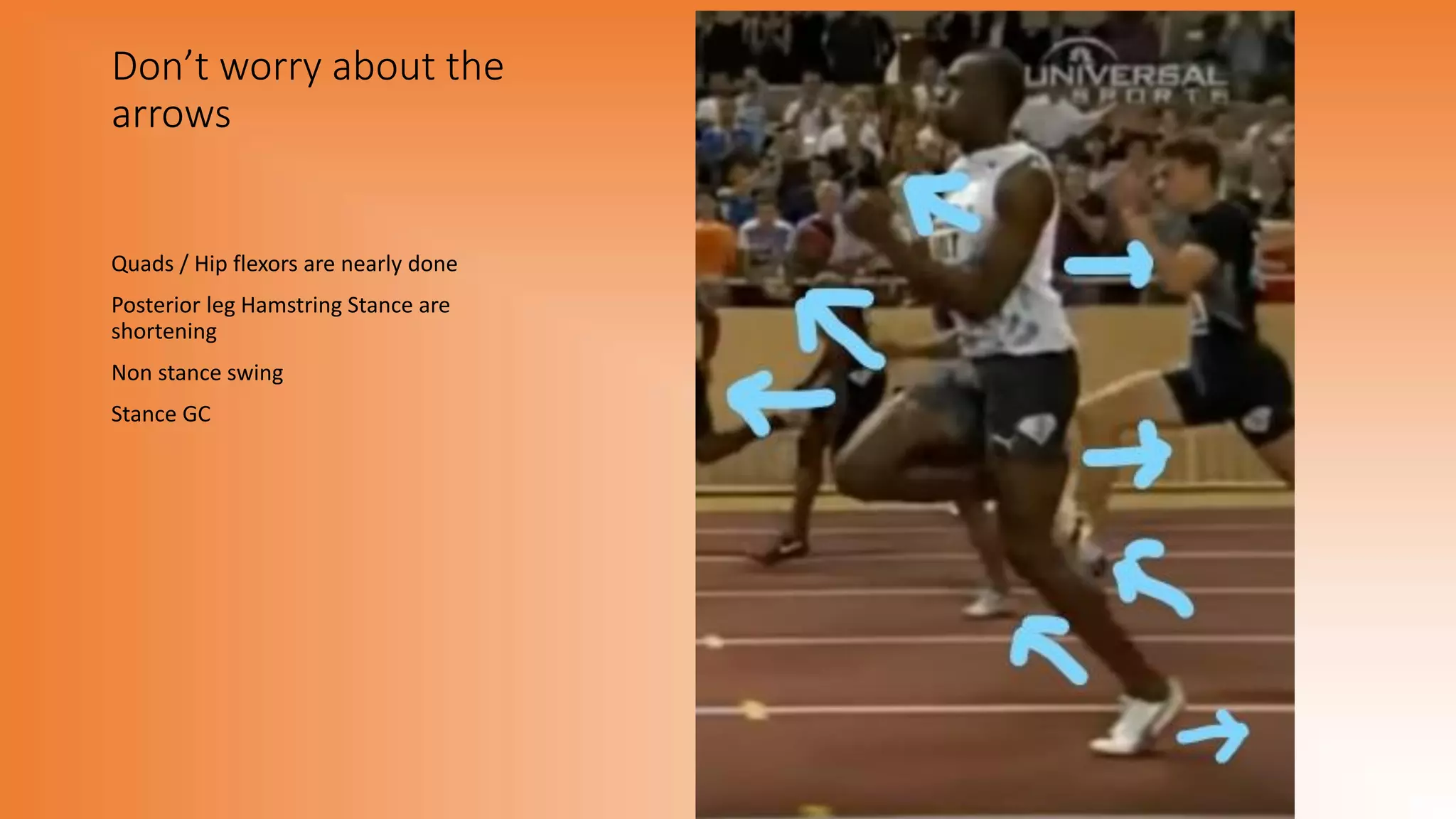
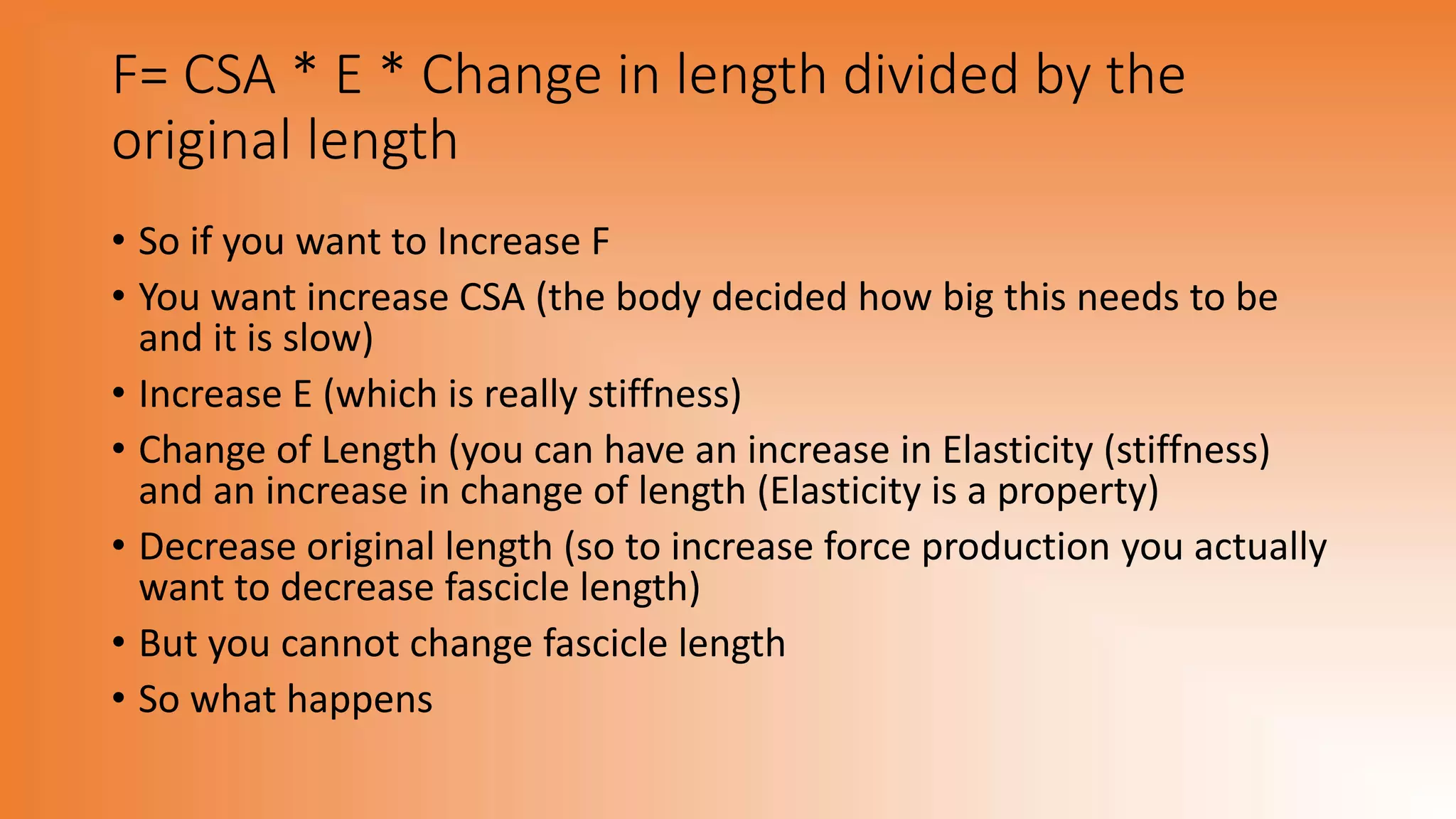
This document discusses hamstring muscle injuries, their mechanisms, and implications for rehabilitation and prevention. It begins by outlining the biomechanics of the gait cycle and how forces are applied during the stance phase of sprinting. Specifically, it notes that a hamstring strain requires the muscle to be lengthening with a tug of war between its attachment points. The most common injuries involve the proximal tendons of the biceps femoris muscle during non-stance hip flexion or knee extension. Prevention strategies aim to decrease forces on the hamstring during lengthening through proper sprint technique and training specificity. Rehabilitation focuses on early motion and addressing muscle imbalances through stretching.