1


Show Me the Money
 Venture-Stage Evaluation, Investment and Exit


                                      Dennis M. DeLeo, President

                                      www.venturejobs.org


                                                              4-Nov-12
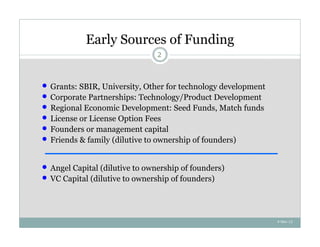
Early Sources of Funding
                                  2


   Grants: SBIR, University, Other for technology development
   Corporate Partnerships: Technology/Product Development
   Regional Economic Development: Seed Funds, Match funds
   License or License Option Fees
   Founders or management capital
   Friends & family (dilutive to ownership of founders)


   Angel Capital (dilutive to ownership of founders)
   VC Capital (dilutive to ownership of founders)


                                                                 4-Nov-12
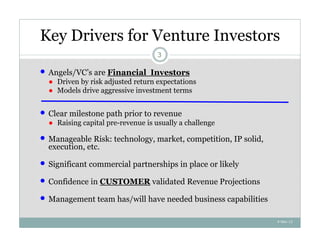
Key Drivers for Venture Investors
                                      3

   Angels/VC’s are Financial Investors
    ● Driven by risk adjusted return expectations
    ● Models drive aggressive investment terms


   Clear milestone path prior to revenue
    ● Raising capital pre-revenue is usually a challenge

   Manageable Risk: technology, market, competition, IP solid,
    execution, etc.

   Significant commercial partnerships in place or likely

   Confidence in CUSTOMER validated Revenue Projections

   Management team has/will have needed business capabilities

                                                                  4-Nov-12
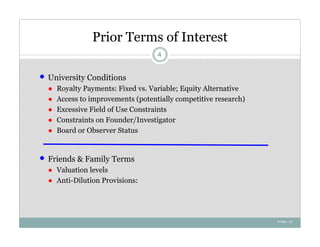
Prior Terms of Interest
                                      4


   University Conditions
    ●   Royalty Payments: Fixed vs. Variable; Equity Alternative
    ●   Access to improvements (potentially competitive research)
    ●   Excessive Field of Use Constraints
    ●   Constraints on Founder/Investigator
    ●   Board or Observer Status


   Friends & Family Terms
    ● Valuation levels
    ● Anti-Dilution Provisions:


                                                                    4-Nov-12
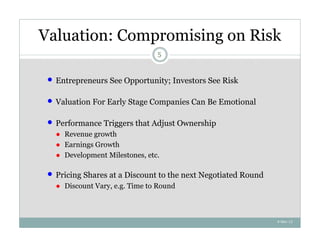
Valuation: Compromising on Risk
                                  5


    Entrepreneurs See Opportunity; Investors See Risk

    Valuation For Early Stage Companies Can Be Emotional

    Performance Triggers that Adjust Ownership
     ● Revenue growth
     ● Earnings Growth
     ● Development Milestones, etc.

    Pricing Shares at a Discount to the next Negotiated Round
     ● Discount Vary, e.g. Time to Round


                                                                 4-Nov-12
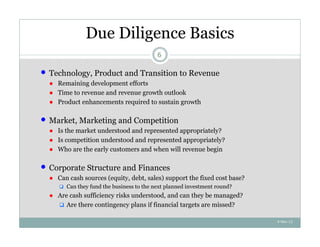
Due Diligence Basics
                                            6

   Technology, Product and Transition to Revenue
    ● Remaining development efforts
    ● Time to revenue and revenue growth outlook
    ● Product enhancements required to sustain growth

   Market, Marketing and Competition
    ● Is the market understood and represented appropriately?
    ● Is competition understood and represented appropriately?
    ● Who are the early customers and when will revenue begin

   Corporate Structure and Finances
    ● Can cash sources (equity, debt, sales) support the fixed cost base?
        Can they fund the business to the next planned investment round?
    ● Are cash sufficiency risks understood, and can they be managed?
       Are there contingency plans if financial targets are missed?

                                                                            4-Nov-12
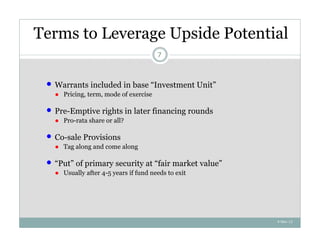
Terms to Leverage Upside Potential
                                         7


    Warrants included in base “Investment Unit”
     ● Pricing, term, mode of exercise

    Pre-Emptive rights in later financing rounds
     ● Pro-rata share or all?

    Co-sale Provisions
     ● Tag along and come along

    “Put” of primary security at “fair market value”
     ● Usually after 4-5 years if fund needs to exit


                                                        4-Nov-12
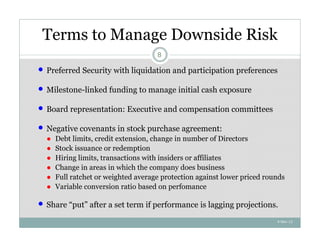
Terms to Manage Downside Risk
                                       8

   Preferred Security with liquidation and participation preferences

   Milestone-linked funding to manage initial cash exposure

   Board representation: Executive and compensation committees

   Negative covenants in stock purchase agreement:
    ●   Debt limits, credit extension, change in number of Directors
    ●   Stock issuance or redemption
    ●   Hiring limits, transactions with insiders or affiliates
    ●   Change in areas in which the company does business
    ●   Full ratchet or weighted average protection against lower priced rounds
    ●   Variable conversion ratio based on perfomance

   Share “put” after a set term if performance is lagging projections.
                                                                            4-Nov-12
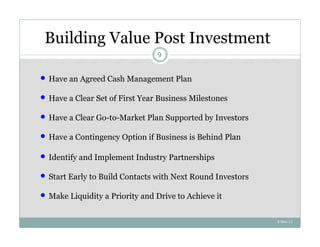
Building Value Post Investment
                                  9


   Have an Agreed Cash Management Plan

   Have a Clear Set of First Year Business Milestones

   Have a Clear Go-to-Market Plan Supported by Investors

   Have a Contingency Option if Business is Behind Plan

   Identify and Implement Industry Partnerships

   Start Early to Build Contacts with Next Round Investors

   Make Liquidity a Priority and Drive to Achieve it

                                                              4-Nov-12
The Investor Decision
                                    10

   Does the Opportunity Feel Right (Price, Potential Return, Exit Plan)

   Is There a Credible Product or Service and Clear Value Proposition

   Is the Marketing and Sales Case Plausible (Can it scale?)
    ● Revenue growth, profit growth and competitive offering
    ● Qualified management to drive growth

   Is the Financing Sought Well Matched to Needs:
    ● Business funded to next planned round of financing
    ● Interim milestones will create shareholder value

   Can Investors Work Constructively With Management

                                                                    4-Nov-12
Valuation in Later Transactions
                                    11


   Always actively negotiated

   Often based on financial performance of the business
    ● Multiple of Revenue or EBITDA
    ● Likely future cash flow impact of product/service introductions


   May be opportunistic:
    ● Competitor with a strong takeover strategy
    ● Unforeseen market development changing competitive dynamics
    ● Major technology achievement drives acquisition activity

   IPO threshold ~$100 million in revenue and positive EBITDA

                                                                        4-Nov-12
How Terms Impact Founders
                                       12


   Warrants issued to venture investors
   Liquidation and participation preferences
   Structure of pro-rata “as if converted” equity distributions
   Exit timing set by a Put


   Tools to enhance founder distributions
    ● Earn back based on performance achievements
       Reduced warrants
       Cap on pro-rata distribution to Preferred Shareholders


                                                                   4-Nov-12
13


                        Thank You


Dennis M. DeLeo, President

dmdeleo@venturejobs.org

(585) 943-9000


                                    4-Nov-12

Venture evaluation and investment [compatibility mode]

  • 1.
    1 Show Me the Money Venture-Stage Evaluation,Investment and Exit Dennis M. DeLeo, President www.venturejobs.org 4-Nov-12
  • 2.
    Early Sources ofFunding 2  Grants: SBIR, University, Other for technology development  Corporate Partnerships: Technology/Product Development  Regional Economic Development: Seed Funds, Match funds  License or License Option Fees  Founders or management capital  Friends & family (dilutive to ownership of founders)  Angel Capital (dilutive to ownership of founders)  VC Capital (dilutive to ownership of founders) 4-Nov-12
  • 3.
    Key Drivers forVenture Investors 3  Angels/VC’s are Financial Investors ● Driven by risk adjusted return expectations ● Models drive aggressive investment terms  Clear milestone path prior to revenue ● Raising capital pre-revenue is usually a challenge  Manageable Risk: technology, market, competition, IP solid, execution, etc.  Significant commercial partnerships in place or likely  Confidence in CUSTOMER validated Revenue Projections  Management team has/will have needed business capabilities 4-Nov-12
  • 4.
    Prior Terms ofInterest 4  University Conditions ● Royalty Payments: Fixed vs. Variable; Equity Alternative ● Access to improvements (potentially competitive research) ● Excessive Field of Use Constraints ● Constraints on Founder/Investigator ● Board or Observer Status  Friends & Family Terms ● Valuation levels ● Anti-Dilution Provisions: 4-Nov-12
  • 5.
    Valuation: Compromising onRisk 5  Entrepreneurs See Opportunity; Investors See Risk  Valuation For Early Stage Companies Can Be Emotional  Performance Triggers that Adjust Ownership ● Revenue growth ● Earnings Growth ● Development Milestones, etc.  Pricing Shares at a Discount to the next Negotiated Round ● Discount Vary, e.g. Time to Round 4-Nov-12
  • 6.
    Due Diligence Basics 6  Technology, Product and Transition to Revenue ● Remaining development efforts ● Time to revenue and revenue growth outlook ● Product enhancements required to sustain growth  Market, Marketing and Competition ● Is the market understood and represented appropriately? ● Is competition understood and represented appropriately? ● Who are the early customers and when will revenue begin  Corporate Structure and Finances ● Can cash sources (equity, debt, sales) support the fixed cost base?  Can they fund the business to the next planned investment round? ● Are cash sufficiency risks understood, and can they be managed?  Are there contingency plans if financial targets are missed? 4-Nov-12
  • 7.
    Terms to LeverageUpside Potential 7  Warrants included in base “Investment Unit” ● Pricing, term, mode of exercise  Pre-Emptive rights in later financing rounds ● Pro-rata share or all?  Co-sale Provisions ● Tag along and come along  “Put” of primary security at “fair market value” ● Usually after 4-5 years if fund needs to exit 4-Nov-12
  • 8.
    Terms to ManageDownside Risk 8  Preferred Security with liquidation and participation preferences  Milestone-linked funding to manage initial cash exposure  Board representation: Executive and compensation committees  Negative covenants in stock purchase agreement: ● Debt limits, credit extension, change in number of Directors ● Stock issuance or redemption ● Hiring limits, transactions with insiders or affiliates ● Change in areas in which the company does business ● Full ratchet or weighted average protection against lower priced rounds ● Variable conversion ratio based on perfomance  Share “put” after a set term if performance is lagging projections. 4-Nov-12
  • 9.
    Building Value PostInvestment 9  Have an Agreed Cash Management Plan  Have a Clear Set of First Year Business Milestones  Have a Clear Go-to-Market Plan Supported by Investors  Have a Contingency Option if Business is Behind Plan  Identify and Implement Industry Partnerships  Start Early to Build Contacts with Next Round Investors  Make Liquidity a Priority and Drive to Achieve it 4-Nov-12
  • 10.
    The Investor Decision 10  Does the Opportunity Feel Right (Price, Potential Return, Exit Plan)  Is There a Credible Product or Service and Clear Value Proposition  Is the Marketing and Sales Case Plausible (Can it scale?) ● Revenue growth, profit growth and competitive offering ● Qualified management to drive growth  Is the Financing Sought Well Matched to Needs: ● Business funded to next planned round of financing ● Interim milestones will create shareholder value  Can Investors Work Constructively With Management 4-Nov-12
  • 11.
    Valuation in LaterTransactions 11  Always actively negotiated  Often based on financial performance of the business ● Multiple of Revenue or EBITDA ● Likely future cash flow impact of product/service introductions  May be opportunistic: ● Competitor with a strong takeover strategy ● Unforeseen market development changing competitive dynamics ● Major technology achievement drives acquisition activity  IPO threshold ~$100 million in revenue and positive EBITDA 4-Nov-12
  • 12.
    How Terms ImpactFounders 12  Warrants issued to venture investors  Liquidation and participation preferences  Structure of pro-rata “as if converted” equity distributions  Exit timing set by a Put  Tools to enhance founder distributions ● Earn back based on performance achievements  Reduced warrants  Cap on pro-rata distribution to Preferred Shareholders 4-Nov-12
  • 13.
    13 Thank You Dennis M. DeLeo, President dmdeleo@venturejobs.org (585) 943-9000 4-Nov-12