VENDOR MANAGEMENT –
AN OVERVIEW
NAME: JYOTI KUMARI
ADMISSION NO.: HPGD/OC17/2752
SPECIALIZATION: IT PROJECT MANAGEMENT
PRIN. L. N. WELINGKAR INSTITUTE OF MANAGEMENT DEVELOPMENT &
RESEARCH
YEAR OF SUBMISSION: SEPTEMBER 2019
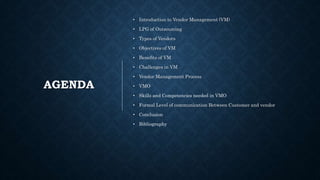
AGENDA
• Introduction to Vendor Management (VM)
• LPG of Outsourcing
• Types of Vendors
• Objectives of VM
• Benefits of VM
• Challenges in VM
• Vendor Management Process
• VMO
• Skills and Competencies needed in VMO
• Formal Level of communication Between Customer and vendor
• Conclusion
• Bibliography
INTRODUCTION
TO VENDOR
MANAGEMENT
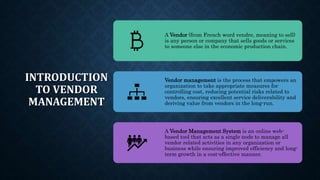
A Vendor (from French word vendre, meaning to sell)
is any person or company that sells goods or services
to someone else in the economic production chain.
Vendor management is the process that empowers an
organization to take appropriate measures for
controlling cost, reducing potential risks related to
vendors, ensuring excellent service deliverability and
deriving value from vendors in the long-run.
A Vendor Management System is an online web-
based tool that acts as a single node to manage all
vendor related activities in any organization or
business while ensuring improved efficiency and long-
term growth in a cost-effective manner.
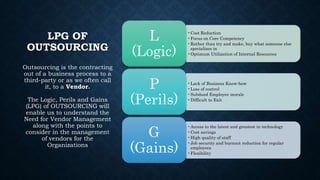
LPG OF
OUTSOURCING
Outsourcing is the contracting
out of a business process to a
third-party or as we often call
it, to a Vendor.
The Logic, Perils and Gains
(LPG) of OUTSOURCING will
enable us to understand the
Need for Vendor Management
along with the points to
consider in the management
of vendors for the
Organizations
•Cost Reduction
•Focus on Core Competency
•Rather than try and make, buy what someone else
specializes in
•Optimum Utilization of Internal Resources
L
(Logic)
•Lack of Business Know-how
•Loss of control
•Subdued Employee morale
•Difficult to Exit
P
(Perils)
•Access to the latest and greatest in technology
•Cost savings
•High quality of staff
•Job security and burnout reduction for regular
employees
•Flexibility
G
(Gains)
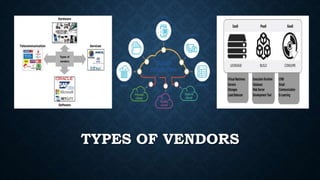
TYPES OF VENDORS
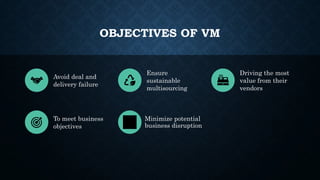
OBJECTIVES OF VM
Avoid deal and
delivery failure
Ensure
sustainable
multisourcing
Driving the most
value from their
vendors
To meet business
objectives
Minimize potential
business disruption
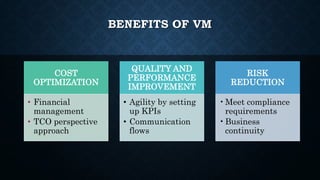
BENEFITS OF VM
COST
OPTIMIZATION
• Financial
management
• TCO perspective
approach
QUALITY AND
PERFORMANCE
IMPROVEMENT
• Agility by setting
up KPIs
• Communication
flows
RISK
REDUCTION
•Meet compliance
requirements
•Business
continuity
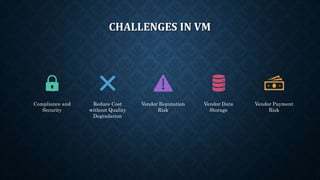
CHALLENGES IN VM
Compliance and
Security
Reduce Cost
without Quality
Degradation
Vendor Reputation
Risk
Vendor Data
Storage
Vendor Payment
Risk
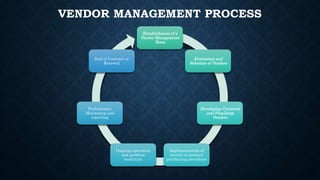
VENDOR MANAGEMENT PROCESS
Establishment of a
Vendor Management
Team
Evaluation and
Selection of Vendors
Developing Contracts
and Finalizing
Vendors
Implementation of
service or product
purchasing procedure
Ongoing operation
and problem
resolution
Performance
Monitoring and
reporting
End of Contract or
Renewal
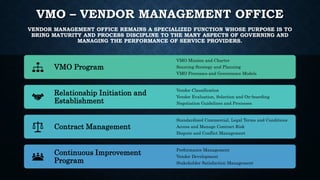
VMO – VENDOR MANAGEMENT OFFICE
VENDOR MANAGEMENT OFFICE REMAINS A SPECIALIZED FUNCTION WHOSE PURPOSE IS TO
BRING MATURITY AND PROCESS DISCIPLINE TO THE MANY ASPECTS OF GOVERNING AND
MANAGING THE PERFORMANCE OF SERVICE PROVIDERS.
VMO Program
VMO Mission and Charter
Sourcing Strategy and Planning
VMO Processes and Governance Models
Relationship Initiation and
Establishment
Vendor Classification
Vendor Evaluation, Selection and On-boarding
Negotiation Guidelines and Processes
Contract Management
Standardized Commercial, Legal Terms and Conditions
Access and Manage Contract Risk
Dispute and Conflict Management
Continuous Improvement
Program
Performance Management
Vendor Development
Stakeholder Satisfaction Management
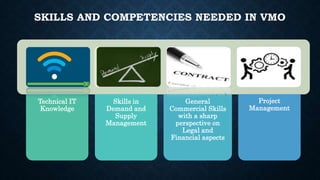
SKILLS AND COMPETENCIES NEEDED IN VMO
Technical IT
Knowledge
Skills in
Demand and
Supply
Management
General
Commercial Skills
with a sharp
perspective on
Legal and
Financial aspects
Project
Management
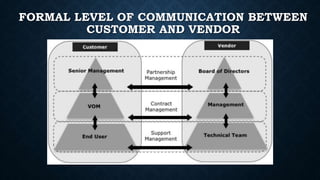
FORMAL LEVEL OF COMMUNICATION BETWEEN
CUSTOMER AND VENDOR
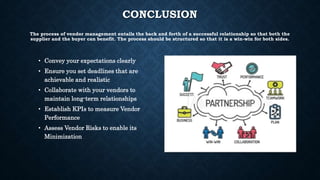
CONCLUSION
The process of vendor management entails the back and forth of a successful relationship so that both the
supplier and the buyer can benefit. The process should be structured so that it is a win-win for both sides.
• Convey your expectations clearly
• Ensure you set deadlines that are
achievable and realistic
• Collaborate with your vendors to
maintain long-term relationships
• Establish KPIs to measure Vendor
Performance
• Assess Vendor Risks to enable its
Minimization
BIBLIOGRAPHY
• Wikipedia
• https://www.slideshare.net/raminder90/outsourcing-and-vendor-management
• https://www.in.gov/idoa/2930.htm
• https://www.cisco.com/c/dam/en_us/about/ciscoitatwork/downloads/ciscoitatwork/pdf/
Cisco_IT_Case_Study_Vendor_Management_print.pdf
• www.gartner.com
THANK YOU

Vendor Management - An Overview (Project PPT)

  • 1.
    VENDOR MANAGEMENT – ANOVERVIEW NAME: JYOTI KUMARI ADMISSION NO.: HPGD/OC17/2752 SPECIALIZATION: IT PROJECT MANAGEMENT PRIN. L. N. WELINGKAR INSTITUTE OF MANAGEMENT DEVELOPMENT & RESEARCH YEAR OF SUBMISSION: SEPTEMBER 2019
  • 2.
    AGENDA • Introduction toVendor Management (VM) • LPG of Outsourcing • Types of Vendors • Objectives of VM • Benefits of VM • Challenges in VM • Vendor Management Process • VMO • Skills and Competencies needed in VMO • Formal Level of communication Between Customer and vendor • Conclusion • Bibliography
  • 3.
    INTRODUCTION TO VENDOR MANAGEMENT A Vendor(from French word vendre, meaning to sell) is any person or company that sells goods or services to someone else in the economic production chain. Vendor management is the process that empowers an organization to take appropriate measures for controlling cost, reducing potential risks related to vendors, ensuring excellent service deliverability and deriving value from vendors in the long-run. A Vendor Management System is an online web- based tool that acts as a single node to manage all vendor related activities in any organization or business while ensuring improved efficiency and long- term growth in a cost-effective manner.
  • 4.
    LPG OF OUTSOURCING Outsourcing isthe contracting out of a business process to a third-party or as we often call it, to a Vendor. The Logic, Perils and Gains (LPG) of OUTSOURCING will enable us to understand the Need for Vendor Management along with the points to consider in the management of vendors for the Organizations •Cost Reduction •Focus on Core Competency •Rather than try and make, buy what someone else specializes in •Optimum Utilization of Internal Resources L (Logic) •Lack of Business Know-how •Loss of control •Subdued Employee morale •Difficult to Exit P (Perils) •Access to the latest and greatest in technology •Cost savings •High quality of staff •Job security and burnout reduction for regular employees •Flexibility G (Gains)
  • 5.
  • 6.
    OBJECTIVES OF VM Avoiddeal and delivery failure Ensure sustainable multisourcing Driving the most value from their vendors To meet business objectives Minimize potential business disruption
  • 7.
    BENEFITS OF VM COST OPTIMIZATION •Financial management • TCO perspective approach QUALITY AND PERFORMANCE IMPROVEMENT • Agility by setting up KPIs • Communication flows RISK REDUCTION •Meet compliance requirements •Business continuity
  • 8.
    CHALLENGES IN VM Complianceand Security Reduce Cost without Quality Degradation Vendor Reputation Risk Vendor Data Storage Vendor Payment Risk
  • 9.
    VENDOR MANAGEMENT PROCESS Establishmentof a Vendor Management Team Evaluation and Selection of Vendors Developing Contracts and Finalizing Vendors Implementation of service or product purchasing procedure Ongoing operation and problem resolution Performance Monitoring and reporting End of Contract or Renewal
  • 10.
    VMO – VENDORMANAGEMENT OFFICE VENDOR MANAGEMENT OFFICE REMAINS A SPECIALIZED FUNCTION WHOSE PURPOSE IS TO BRING MATURITY AND PROCESS DISCIPLINE TO THE MANY ASPECTS OF GOVERNING AND MANAGING THE PERFORMANCE OF SERVICE PROVIDERS. VMO Program VMO Mission and Charter Sourcing Strategy and Planning VMO Processes and Governance Models Relationship Initiation and Establishment Vendor Classification Vendor Evaluation, Selection and On-boarding Negotiation Guidelines and Processes Contract Management Standardized Commercial, Legal Terms and Conditions Access and Manage Contract Risk Dispute and Conflict Management Continuous Improvement Program Performance Management Vendor Development Stakeholder Satisfaction Management
  • 11.
    SKILLS AND COMPETENCIESNEEDED IN VMO Technical IT Knowledge Skills in Demand and Supply Management General Commercial Skills with a sharp perspective on Legal and Financial aspects Project Management
  • 12.
    FORMAL LEVEL OFCOMMUNICATION BETWEEN CUSTOMER AND VENDOR
  • 13.
    CONCLUSION The process ofvendor management entails the back and forth of a successful relationship so that both the supplier and the buyer can benefit. The process should be structured so that it is a win-win for both sides. • Convey your expectations clearly • Ensure you set deadlines that are achievable and realistic • Collaborate with your vendors to maintain long-term relationships • Establish KPIs to measure Vendor Performance • Assess Vendor Risks to enable its Minimization
  • 14.
    BIBLIOGRAPHY • Wikipedia • https://www.slideshare.net/raminder90/outsourcing-and-vendor-management •https://www.in.gov/idoa/2930.htm • https://www.cisco.com/c/dam/en_us/about/ciscoitatwork/downloads/ciscoitatwork/pdf/ Cisco_IT_Case_Study_Vendor_Management_print.pdf • www.gartner.com
  • 15.