"Building a Culture of Integrity, Accountability, and
Collaboration"
Reporter: Ailine P. Donaire Department: Extension and Services
"Values Integration in the
Workplace/Organization"
Values integration is the process
of aligning personal or
organizational values with day-to-
day operations.
Ensures that decisions,
behaviors, and culture reflect
core principles.
Drives ethical decision-
making and fosters a unified
purpose.
1
2
3
"What is Values
Integration?"
Importance of Values
Integration
"Why Integrate Values?"
Key Points:
- Strengthens the organizational culture.
- Enhances employee engagement and loyalty.
- Builds trust with customers, partners, and the public.
- Leads to better decision-making and long-term sustainability.
Core Values in Organizations
Being honest and having strong moral
principles.
Integrity:
Taking responsibility for one’s actions.
Accountability:
Working together towards common goals.
Collaboration:
Valuing each individual’s contribution.
Respect:
Innovation::
Encouraging creativity and new ideas.
Steps to Integrate Values
Identify Core Values Clearly define the values that matter most.
Embed Values in
Policies and
Practices
Ensure values are reflected in all decisions, policies, and daily practices.
Regularly share the values with employees.
Leaders must demonstrate the values consistently.
Steps for Effective Integration
Communicate the
Values
Lead by Example
Reward Value-Based
Behaviors
Recognize and reward actions that reflect core values.
Challenges in Values Integration
Common
Challenges
Misalignment between stated values and actual behavior.
Resistance to change from employees or leadership.
Inconsistency in applying values across departments or teams.
Lack of accountability or clear consequences for breaches of values.
Overcoming Challenges
How to Overcome Challenges
1. Training and Development: Educate employees on the
importance of values.
2. Consistent Leadership: Ensure leaders embody the values in
their actions.
3. Open Communication: Foster an environment where
employees can speak up when values are not upheld.
4. Continuous Monitoring: Regularly evaluate how well values
are being integrated.
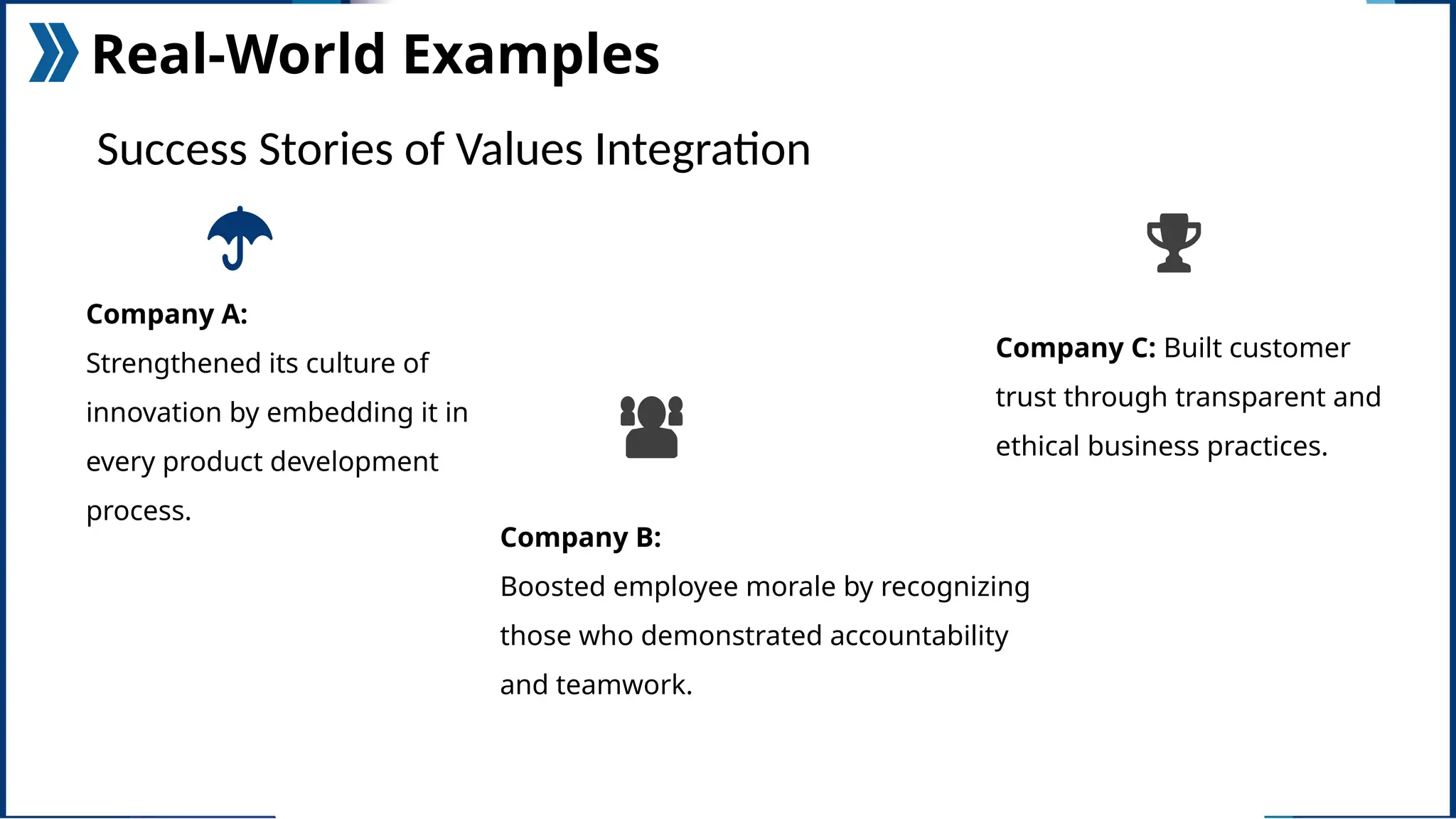
Real-World Examples
Company C: Built customer
trust through transparent and
ethical business practices.
Company A:
Strengthened its culture of
innovation by embedding it in
every product development
process.
Company B:
Boosted employee morale by recognizing
those who demonstrated accountability
and teamwork.
Success Stories of Values Integration
The Role of
Leadership
They should create an
environment where
values are part of
decision-making.
Leaders must model the
values they want to see.
Leadership’s Role in Values
Integration
Leadership should provide tools, resources, and support to help
employees integrate values into their daily work.
Measuring Success
Safety Production Responsibility
How to Measure the Impact of Values Integration
Employee surveys
and feedback on
workplace culture.
Retention rates and
employee
satisfaction.
Customer feedback
and loyalty.
Financial
performance and
business outcomes.
Conclusion
Values integration is critical to building a
cohesive, high-performing organization.
 It requires consistent effort, leadership
commitment, and engagement at all levels.
Successful integration leads to a more
resilient, ethical, and innovative
organization.
Call to Action
Encourage discussion
about values within
your team or
organization.
Reflect on how you
can personally
contribute to values
integration.
Commit to
embedding core
values into everyday
decisions and
behaviors.
Moving Forward
THANK YOU

values integration in workplace and organization.pptx

  • 1.
    "Building a Cultureof Integrity, Accountability, and Collaboration" Reporter: Ailine P. Donaire Department: Extension and Services "Values Integration in the Workplace/Organization"
  • 2.
    Values integration isthe process of aligning personal or organizational values with day-to- day operations. Ensures that decisions, behaviors, and culture reflect core principles. Drives ethical decision- making and fosters a unified purpose. 1 2 3 "What is Values Integration?"
  • 3.
    Importance of Values Integration "WhyIntegrate Values?" Key Points: - Strengthens the organizational culture. - Enhances employee engagement and loyalty. - Builds trust with customers, partners, and the public. - Leads to better decision-making and long-term sustainability.
  • 4.
    Core Values inOrganizations Being honest and having strong moral principles. Integrity: Taking responsibility for one’s actions. Accountability: Working together towards common goals. Collaboration: Valuing each individual’s contribution. Respect: Innovation:: Encouraging creativity and new ideas.
  • 5.
    Steps to IntegrateValues Identify Core Values Clearly define the values that matter most. Embed Values in Policies and Practices Ensure values are reflected in all decisions, policies, and daily practices. Regularly share the values with employees. Leaders must demonstrate the values consistently. Steps for Effective Integration Communicate the Values Lead by Example Reward Value-Based Behaviors Recognize and reward actions that reflect core values.
  • 6.
    Challenges in ValuesIntegration Common Challenges Misalignment between stated values and actual behavior. Resistance to change from employees or leadership. Inconsistency in applying values across departments or teams. Lack of accountability or clear consequences for breaches of values.
  • 7.
    Overcoming Challenges How toOvercome Challenges 1. Training and Development: Educate employees on the importance of values. 2. Consistent Leadership: Ensure leaders embody the values in their actions. 3. Open Communication: Foster an environment where employees can speak up when values are not upheld. 4. Continuous Monitoring: Regularly evaluate how well values are being integrated.
  • 8.
    Real-World Examples Company C:Built customer trust through transparent and ethical business practices. Company A: Strengthened its culture of innovation by embedding it in every product development process. Company B: Boosted employee morale by recognizing those who demonstrated accountability and teamwork. Success Stories of Values Integration
  • 9.
    The Role of Leadership Theyshould create an environment where values are part of decision-making. Leaders must model the values they want to see. Leadership’s Role in Values Integration Leadership should provide tools, resources, and support to help employees integrate values into their daily work.
  • 10.
    Measuring Success Safety ProductionResponsibility How to Measure the Impact of Values Integration Employee surveys and feedback on workplace culture. Retention rates and employee satisfaction. Customer feedback and loyalty. Financial performance and business outcomes.
  • 11.
    Conclusion Values integration iscritical to building a cohesive, high-performing organization.  It requires consistent effort, leadership commitment, and engagement at all levels. Successful integration leads to a more resilient, ethical, and innovative organization.
  • 12.
    Call to Action Encouragediscussion about values within your team or organization. Reflect on how you can personally contribute to values integration. Commit to embedding core values into everyday decisions and behaviors. Moving Forward
  • 13.