Value-added
Agriculture
ITFT COLLEGE 104/26/14
04/26/14 ITFT COLLEGE 2
What is –
Value-Added Agriculture?
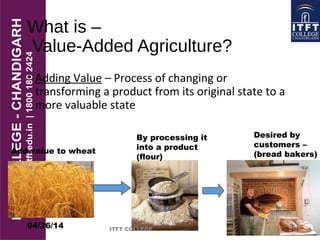
• Adding Value – Process of changing or
transforming a product from its original state to a
more valuable state
04/26/14 ITFT COLLEGE 3
Add value to wheat
By processing it
into a product
(flour)
Desired by
customers –
(bread bakers)
BUT – Raw Commodities already
have value?!
• Many raw commodities have value in their original state.
• They are raised by an agricultural producer; then sold by that
producer for further processing
• Corn, wheat, weaned calves, market lambs, watermelons
etc. all HAVE value. They are worth something.
ITFT COLLEGE 404/26/14
$$Money, Money, Money$$
Could producers get MORE $$$ for their
products if they –
04/26/14 ITFT COLLEGE 5
•Grew products differently
•Physically changed their
products before selling them
•Coordinated with an
agribusiness to change the
way their product was
www.acclaimimages.com
Adding Value in a Changing
Agricultural World
• It’s important to identify value-added activities that support
investment in research, processing & marketing
• Additional opportunities for adding value include:
• Applying biotechnology
• Food engineering (raw product to consumable forms)
• Restructuring food distribution systems.
ITFT COLLEGE 604/26/14
• Take out a blank piece of
paper
• Everyone write ONE ‘why’
question that relates to the
information we just copied
into our notes.
04/26/14 ITFT COLLEGE 7
http://www.beaverandsteve.com/wiki/index.php?
title=Sir_Isaac_Newton
• Adding value to products can be accomplished in a number
of different ways, but generally falls into one of two main
types:
• Creating Value
• Innovation
• Industrial Innovation
• Capturing Value
• Coordination
ITFT COLLEGE 804/26/14
• Creating Value – occurs with actual or perceived value to a
customer for a superior product or service
• Innovative new products
• Enhance a product’s characteristics
• Enhance services
• Create brand names
• Develop unique customer experiences
ITFT COLLEGE 904/26/14
• Creating Value through - Innovation: Improving existing
processes, procedures, products and services or creating
new ones
• Market unique or branded products
• Produce identity-preserved or specialty crops
• Combine family activities or recreation associated with direct
on-farm marketing
ITFT COLLEGE 1004/26/14
• Creating Value through - Industrial Innovation: Processing
traditional crops into nonfood end uses
• Ethanol from corn
• Biodiesel from soybeans
• Particleboard from straw
ITFT COLLEGE 1104/26/14
• Capturing Value: Changing the distribution of value in the
food/fiber production chain.
• Meant to ‘capture’ more of the consumer dollar through:
• Direct Marketing
• Vertical Integration
• Cooperative Efforts
ITFT COLLEGE 1204/26/14
• Direct Marketing
• Selling products directly to the
consumer
• Selling beef animals ‘on the hoof’
• Selling homemade soaps &
lotions to the general public
• Think – eBay!
04/26/14 ITFT COLLEGE 13
http://images.google.com/imgres?
imgurl=http://www.insidefurniture.com/insidefurniture/images/ma
rketing_cartoon_1.jpg&imgrefurl=http://www.insidefurniture.com/i
nsidefurniture/blogservation/index.html&h=224&w=309&sz=24&h
l=en&start=16&tbnid=KN8RhgvhDYw8NM:&tbnh=85&tbnw=117&
prev=/images%3Fq%3Ddirect%2Bmarketing%2Bcartoon%26gbv
%3D2%26svnum%3D10%26hl%3Den%26client%3Dfirefox-a
%26channel%3Ds%26rls%3Dorg.mozilla:en-US:official%26sa
%3DG
• Vertical Integration – One producer or business owns the
product from beginning to end. This producer or business
doesn’t sell the product until the consumer purchases it:
• Tyson Chicken -
04/26/14 ITFT COLLEGE 14
http://images.google.com/images?svnum=10&hl=en&gbv=2&client=firefox-a&channel=s&rls=org.mozilla%3Aen-US
%3Aofficial&q=Tyson+Chicken&btnG=Search+Images
• Cooperative Efforts: Individuals or companies
pool their products in order to increase bargaining
power.
04/26/14 ITFT COLLEGE 15
• Minimizing Costs:
• Before producers can explore value-added processing and
marketing they MUST minimize production costs
• Only low cost and efficient producers will survive
• Adding value cannot take the place of good management
ITFT COLLEGE 1604/26/14
4 Key Strategies for Adding Value
• Changing physical state of products
• Differentiating products
• Bundling products
• Owning assets up the supply chain
ITFT COLLEGE 1704/26/14
• Changing the
physical state /
form of products
ITFT COLLEGE 1804/26/14
• Milling wheat into
flour
• Making
strawberries into
jam
• ‘Feeding’ alfalfa
into a biomass
generator
• Differentiating
agricultural products in
order to enhance their
value
ITFT COLLEGE 1904/26/14
• Selling beef under
a branded beef
label
• Marketing ‘heat &
eat’ pot roasts
• Selling pre-
seasoned corn on
the cob
• Agriculture is moving towards a global economy
• The international market for value-added products is
growing
• Consumers have increasing health, nutrition, and
convenience needs
• Food processors want to improve productivity
• Technology enables producers to produce what consumers
WANT!
ITFT COLLEGE 2004/26/14

Value addition in rural marketing

  • 1.
  • 2.
  • 3.
    What is – Value-AddedAgriculture? • Adding Value – Process of changing or transforming a product from its original state to a more valuable state 04/26/14 ITFT COLLEGE 3 Add value to wheat By processing it into a product (flour) Desired by customers – (bread bakers)
  • 4.
    BUT – RawCommodities already have value?! • Many raw commodities have value in their original state. • They are raised by an agricultural producer; then sold by that producer for further processing • Corn, wheat, weaned calves, market lambs, watermelons etc. all HAVE value. They are worth something. ITFT COLLEGE 404/26/14
  • 5.
    $$Money, Money, Money$$ Couldproducers get MORE $$$ for their products if they – 04/26/14 ITFT COLLEGE 5 •Grew products differently •Physically changed their products before selling them •Coordinated with an agribusiness to change the way their product was www.acclaimimages.com
  • 6.
    Adding Value ina Changing Agricultural World • It’s important to identify value-added activities that support investment in research, processing & marketing • Additional opportunities for adding value include: • Applying biotechnology • Food engineering (raw product to consumable forms) • Restructuring food distribution systems. ITFT COLLEGE 604/26/14
  • 7.
    • Take outa blank piece of paper • Everyone write ONE ‘why’ question that relates to the information we just copied into our notes. 04/26/14 ITFT COLLEGE 7 http://www.beaverandsteve.com/wiki/index.php? title=Sir_Isaac_Newton
  • 8.
    • Adding valueto products can be accomplished in a number of different ways, but generally falls into one of two main types: • Creating Value • Innovation • Industrial Innovation • Capturing Value • Coordination ITFT COLLEGE 804/26/14
  • 9.
    • Creating Value– occurs with actual or perceived value to a customer for a superior product or service • Innovative new products • Enhance a product’s characteristics • Enhance services • Create brand names • Develop unique customer experiences ITFT COLLEGE 904/26/14
  • 10.
    • Creating Valuethrough - Innovation: Improving existing processes, procedures, products and services or creating new ones • Market unique or branded products • Produce identity-preserved or specialty crops • Combine family activities or recreation associated with direct on-farm marketing ITFT COLLEGE 1004/26/14
  • 11.
    • Creating Valuethrough - Industrial Innovation: Processing traditional crops into nonfood end uses • Ethanol from corn • Biodiesel from soybeans • Particleboard from straw ITFT COLLEGE 1104/26/14
  • 12.
    • Capturing Value:Changing the distribution of value in the food/fiber production chain. • Meant to ‘capture’ more of the consumer dollar through: • Direct Marketing • Vertical Integration • Cooperative Efforts ITFT COLLEGE 1204/26/14
  • 13.
    • Direct Marketing •Selling products directly to the consumer • Selling beef animals ‘on the hoof’ • Selling homemade soaps & lotions to the general public • Think – eBay! 04/26/14 ITFT COLLEGE 13 http://images.google.com/imgres? imgurl=http://www.insidefurniture.com/insidefurniture/images/ma rketing_cartoon_1.jpg&imgrefurl=http://www.insidefurniture.com/i nsidefurniture/blogservation/index.html&h=224&w=309&sz=24&h l=en&start=16&tbnid=KN8RhgvhDYw8NM:&tbnh=85&tbnw=117& prev=/images%3Fq%3Ddirect%2Bmarketing%2Bcartoon%26gbv %3D2%26svnum%3D10%26hl%3Den%26client%3Dfirefox-a %26channel%3Ds%26rls%3Dorg.mozilla:en-US:official%26sa %3DG
  • 14.
    • Vertical Integration– One producer or business owns the product from beginning to end. This producer or business doesn’t sell the product until the consumer purchases it: • Tyson Chicken - 04/26/14 ITFT COLLEGE 14 http://images.google.com/images?svnum=10&hl=en&gbv=2&client=firefox-a&channel=s&rls=org.mozilla%3Aen-US %3Aofficial&q=Tyson+Chicken&btnG=Search+Images
  • 15.
    • Cooperative Efforts:Individuals or companies pool their products in order to increase bargaining power. 04/26/14 ITFT COLLEGE 15
  • 16.
    • Minimizing Costs: •Before producers can explore value-added processing and marketing they MUST minimize production costs • Only low cost and efficient producers will survive • Adding value cannot take the place of good management ITFT COLLEGE 1604/26/14
  • 17.
    4 Key Strategiesfor Adding Value • Changing physical state of products • Differentiating products • Bundling products • Owning assets up the supply chain ITFT COLLEGE 1704/26/14
  • 18.
    • Changing the physicalstate / form of products ITFT COLLEGE 1804/26/14 • Milling wheat into flour • Making strawberries into jam • ‘Feeding’ alfalfa into a biomass generator
  • 19.
    • Differentiating agricultural productsin order to enhance their value ITFT COLLEGE 1904/26/14 • Selling beef under a branded beef label • Marketing ‘heat & eat’ pot roasts • Selling pre- seasoned corn on the cob
  • 20.
    • Agriculture ismoving towards a global economy • The international market for value-added products is growing • Consumers have increasing health, nutrition, and convenience needs • Food processors want to improve productivity • Technology enables producers to produce what consumers WANT! ITFT COLLEGE 2004/26/14