Visit ebookfinal.com todownload the full version and
explore more ebooks or textbooks
Vaccine Protocols 2nd Edition Andrew P. Robinson
_____ Click the link below to download _____
https://ebookfinal.com/download/vaccine-protocols-2nd-
edition-andrew-p-robinson/
Explore and download more ebooks or textbook at ebookfinal.com
2.
Here are somerecommended products that we believe you will be
interested in. You can click the link to download.
Matrix metalloproteinase protocols 2nd Edition Alejandro
P. Ugalde
https://ebookfinal.com/download/matrix-metalloproteinase-
protocols-2nd-edition-alejandro-p-ugalde/
Clostridium difficile Methods and Protocols 2nd ed. 2016
Edition Adam P. Roberts
https://ebookfinal.com/download/clostridium-difficile-methods-and-
protocols-2nd-ed-2016-edition-adam-p-roberts/
Neural Stem Cells Methods and Protocols 2nd Edition Leslie
P. Weiner Md (Auth.)
https://ebookfinal.com/download/neural-stem-cells-methods-and-
protocols-2nd-edition-leslie-p-weiner-md-auth/
Training for Skill in Social Case Work Virginia P.
Robinson (Editor)
https://ebookfinal.com/download/training-for-skill-in-social-case-
work-virginia-p-robinson-editor/
3.
Meningococcal Vaccines Methodsand Protocols 1st Edition
Andrew J. Pollard
https://ebookfinal.com/download/meningococcal-vaccines-methods-and-
protocols-1st-edition-andrew-j-pollard/
Neural Progenitor Cells Methods and Protocols 1st Edition
Andrew Chojnacki
https://ebookfinal.com/download/neural-progenitor-cells-methods-and-
protocols-1st-edition-andrew-chojnacki/
Road Engineering for Development 2nd Edition Richard
Robinson
https://ebookfinal.com/download/road-engineering-for-development-2nd-
edition-richard-robinson/
Genetics for dummies 2nd Edition Tara Rodden Robinson
https://ebookfinal.com/download/genetics-for-dummies-2nd-edition-tara-
rodden-robinson/
Computer aided vaccine design 1st Edition Tong Joo Chuan
https://ebookfinal.com/download/computer-aided-vaccine-design-1st-
edition-tong-joo-chuan/
5.
Vaccine Protocols 2ndEdition Andrew P. Robinson
Digital Instant Download
Author(s): AndrewP. Robinson, Martin P. Cranage, Michael J. Hudson
ISBN(s): 9781588291400, 1588291405
Edition: 2
File Details: PDF, 3.26 MB
Year: 2003
Language: english
6.
Vaccine
Protocols
Second Edition
Edited by
AndrewRobinson
Michael J. Hudson
Martin P. Cranage
M E T H O D S I N M O L E C U L A R M E D I C I N ETM
Vaccine
Protocols
Second Edition
Edited by
Andrew Robinson
Michael J. Hudson
Martin P. Cranage
2 Ada
2. Typesof Vaccines
Almost all of the vaccines in use today are used against viral or bacterial infections
(Table 1). They are mainly of three types—live attenuated agents; inactivated, whole
agents; and parts of an agent—subunit, polysaccharides, carbohydrate/conjugate
preparations, and toxoids.
Table 1
Currently Registered Viral and Bacterial Vaccines
Viral Bacterial
Live, attenuated
Vaccinia (smallpox) BCG
Polio (OPV) Salmonella typhi (Ty21a)
Yellow fever
Measles
Mumps
Rubella
Adeno
Varicella
Inactivated, whole organism
Influenza Vibrio cholerae
Rabies Bordetella pertussis
Japanese encephalitis Yersinia pestis
Hepatitis A Coxiella burnetii
Subunit
Influenza Borrelia burgdorferi
Hepatitis B (Hep B) Salmonella typhi VI
B. pertussis (acellular)
Carbohydrate Neisseria meningiditis (A, C, Y, W135)
Streptococcus pneumoniae
Conjugates Haemophilus influenzae, type b
Streptococcus pneumoniae
Neisseria meningiditis (C)
Toxoids
Corynebacterium diphtheriae
Clostridium tetani
Combinations
Measles, mumps, rubella (MMR) Diphtheria, tetanus, pertussis
whole organism (DTPw)
Diphtheria, tetanus, pertussis
acellular (DTPa)
DTPa, Hib, Hep B
9.
Overview of Vaccines3
2.1. Live, Attenuated Microorganisms
Some live viral vaccines are regarded by many as the most successful of all human
vaccines (see Subheading 4.), with one or two administrations conferring long-last-
ing immunity. Four general approaches to develop such vaccines have been used.
1. One approach, pioneered by Edward Jenner, is to use a virus that is a natural pathogen in
another mammalian host as a vaccine in humans. Examples of this approach are the use of
cowpox and parainfluenza viruses in humans, and the turkey herpes virus in chickens.
More recently, the use of avipox viruses, such as fowlpox and canarypox, which undergo
an abortive infection in humans, is being used in humans as vectors of DNA coding for
antigens of other infectious agents (2).
2. The polio, measles, and yellow fever vaccines are typical of the second approach. The
wild-type viruses are extensively passaged in tissue culture/animal hosts until an accept-
able balance is reached between loss of virulence and retention of immunogenicity in
humans.
3. Type 2 polio virus is a naturally occurring attenuated strain that has been highly success-
ful. More recently, rotavirus strains of low virulence have been recovered from children’s
nurseries during epidemics (3).
4. A fourth approach has been to select mutants that will grow at low temperatures but very
poorly above 37°C (see Chapter 2). The cold-adapted strains of influenza virus grow at
25°C and have mutations in four of the internal viral genes (4). Such strains were first
described in the late 1960s, and have since been used successfully in Russia and have
undergone extensive clinical trials in the United States.
In contrast to the these successes, bacillus Calmette-Guérin (BCG) for the control
of tuberculosis was for many years the only example of a live attenuated bacterial
vaccine. Although still widely used in the WHO Expanded Programme of Immuniza-
tion (EPI) for infants, it has yielded highly variable results in adult human trials. In
general, it has proven more difficult to make highly effective attenuated bacterial vac-
cines, but with increasing examples of antibiotic resistance occurring, there is now a
greater effort. A general approach is to selectively delete or inactivate part or groups
of genes (see ref. 5; Chapter 9). Salmonella strain Ty21a has a faulty galactose
metabolism, and strains with other deletions are being made. The latest approach is to
sequence the bacterial genome, and this has now been done for many different bacteria
(see Chapter 19).
Genetic modifications also show promise for complex viruses. Thus, 18 open read-
ing frames have been selectively deleted from the Copenhagen strain of vaccinia virus,
including six genes involved in nucleotide metabolism, to form a preparation of very
low virulence, yet one that retains immunogenicity (6). This approach has also been
tried with simian immunodeficiency virus (SIV), first with deletion of the nef gene (7)
and more recently with portions (the V2 and V3 loops) of the env gene (8).
Live attenuated vaccines have the potential to stimulate a wide range of immune
responses that may be effective in preventing or clearing a later infection in most
recipients.
10.
4 Ada
2.2. InactivatedWhole Microorganisms
Viruses and bacteria can be treated to destroy their infectivity (inactivation) and the
product used with varying efficacy as a vaccine (Table 1). Compared to attenuated
preparations, inactivated preparations must be given in larger doses and administered
more frequently. The viral vaccines are generally effective in preventing disease, and
the relatively low efficacy of the influenza viral vaccine is partly the result of the
continuing antigenic drift to which this virus is subject (9). In contrast, the only bacte-
rial vaccine of this nature still in wide use is the whole-cell pertussis vaccine that is
reasonably effective, but has been replaced in many developed countries by the sub-
unit (acellular) vaccine in order to avoid the adverse effects attributed to the whole-
cell vaccine (10).
Inactivated whole vaccines generally induce many of the desirable immune
responses, particularly the infectivity-neutralizing antibody. Generally, they do not
induce a class I MHC-restricted cytotoxic T-cell response, which has been shown to
be the major response required to clear intracellular infections caused by many viruses
and some bacteria and parasites.
2.3. Subunit Vaccines
The generation of antibody that prevents infection by both intra- and extracellular
microorganisms has been regarded as the prime requirement of a vaccine. The epitopes
recognized by such antibodies are usually restricted to one or a few proteins or carbo-
hydrate moieties that are present at the external surface of the microorganism. Isolation
(or synthesis) of such components formed the basis of the first viral and bacterial sub-
unit vaccines. Viral vaccines were composed of the influenza surface antigens, the
hemagglutinin and neuraminidase, and the hepatitis B-surface antigen (HBsAg). Bac-
terial vaccines contain the different oligosaccharide-based preparations from encapsu-
lated bacteria (see Chapter 10). In the latter case, immunogenicity was greatly increased,
especially for the children under 2 yr of age, by coupling the haptenic moiety (the
carbohydrate) to a protein carrier, thereby ensuring the involvement of T-helper (Th)
cells in the production of different classes of immunoglobulin (Ig), particularly IgG.
This approach has become increasingly more popular in recent years (11,12). The two
bacterial toxoids, tetanus, and diphtheria, represent a special situation in which the
primary requirement was neutralization of the toxin secreted by the invading bacteria.
Whereas this has traditionally been done by treatment with chemicals, it is now being
achieved by genetic manipulation (see Chapter 9).
HBsAg exists as such in the blood of hepatitis B virus (HBV)-infected people, and
infected blood was the source of antigen for the first vaccines. Production of the antigen
in yeast cells transfected with DNA coding for this antigen initiated the era of geneti-
cally engineered vaccines (13). Up to 17% of adults receiving this vaccine are poor or
nonresponders, and this is a result of their genetic make-up and/or their advanced age
(14). A second genetically engineered subunit preparation from B. burgdorferi to con-
trol lyme disease is now available (15).
11.
Overview of Vaccines5
3. Vaccine Safety
All available data concerning the efficacy and safety of candidate vaccines are
reviewed by regulatory authorities before registration (see Chapter 22). At that stage,
potential safety hazards which occur at a frequency greater than about 1/5,000 doses
should have been detected (see Chapter 21). Some undesirable side effects occur at
much lower frequencies, which are seen only during immunosurveillance following reg-
istration. The Guillain-Barré syndrome occurs after administration of the influenza vac-
cine at a frequency of about 1 case per million doses; but following the mass vaccination
of people in the United States with the swine influenza vaccine in 1976–1877, the inci-
dence was about 1 case/60,000 doses (16). The incidence of encephalopathy after
measles infection is about 1 case per 1000 doses, but only 1 case per million doses of
measles vaccine (17). In the United States, the use of OPV resulted in about one case of
paralysis per million doses of the vaccine, because of reversion to virulence of the type
3 virus strain. The Centers for Disease and Control (CDC) Advisory Committee on
Immunization Practices and the American Academy of Pediatrics (AAP) recommended
that only the IPV be used in the United States after January 1, 2000 (18).
Following successful vaccination campaigns that greatly reduced disease outbreaks,
the low levels of undesirable side-effects following vaccination gain notoriety. The
evidence bearing on causality and specific adverse health outcomes following vacci-
nation against some childhood viral and bacterial diseases, mainly in the United States,
has been evaluated by an expert committee of the Institute of Medicine (IOM) (19).
The possibility of adverse neurological effects was of particular concern, and evi-
dence for these as well as several immunological reactions, such as anaphylaxis and
delayed-type hypersensitivity, was examined in detail. In the great majority of cases,
there was insufficient evidence to support a causal relationship, and where the data
were more persuasive, the risk was considered to be extraordinarily low.
Measles has provided an interesting example of vaccine safety. The experience of
the WHO EPI shows that the vaccine is very safe (20). Although natural measles
infection induces a state of immunosuppression, even immunocompromised children
rarely show this effect after vaccination (19). In developing countries, the EPI sched-
ule is to give the vaccine at 9 mo of age. This delay is meant to allow a sufficient drop
in the level of maternally derived antibody so that the vaccine can take. In some infants,
this decay occurs by 6 mo, resulting in many deaths from measles infection in the
ensuing 2–3 mo. “High-titer” vaccines were therefore developed, which could be given
at 6 mo of age. Trials in several countries showed the apparent safety and efficacy of
the new vaccine, but after WHO authorized its wider usage, some young girls in disad-
vantaged countries died, leading to the withdrawal of the vaccine (21). One possibility
is that the high-titer vaccine caused a degree of immunosuppression sufficient to allow
infections by other infectious agents.
Even after using great care in developing a vaccine, unexpected effects can occur
after the vaccine has been registered for use. A rotavirus vaccine, registered for use in
the United States in 1998, was withdrawn in 1999 after administration to 1.5 million
12.
6 Ada
children, becauseof an unacceptable level—about one case per 10,000 recipients in
some areas—of the condition intussusception (22).
It is particularly difficult to attribute causality to the onset of diseases that may
occur many months after vaccination. When such claims are made, national authori-
ties or WHO establish expert committees to review the evidence. There have been
claims—sometimes in the medical literature but often from anti-vaccination groups—
that a vaccine can cause sudden infant death syndrome (SIDS), multiple sclerosis,
autism, asthma, or a specific allergy. There is no sound medical, scientific or epide-
miological evidence to support these claims. For example, at least eleven different
investigations have found no evidence that inflammatory bowel disease and autism
occur as a result of measles, mumps, rubella (MMR) vaccination (23,24).
4. Efficacy
Many countries keep yearly records of disease incidence and the Centers for Dis-
ease Control and Prevention (CDC) in Atlanta have kept records from as early as
1912. The incidence of cases of some common childhood infectious diseases during a
major epidemic is compared in Table 2 with the incidence in 1997, some years after
the introduction of the vaccine. Although derived in relatively ideal conditions, as all
Table 2
Efficacy in the USA of Some Childhood Vaccinesa
Before vaccination After vaccination
Decrease in
Number of Vaccine Number of disease
Disease agent cases (yr) (yr)* cases (1997) incidence (%)
Diphtheria 206,919 (1921) 1942 5 99.99
Measles 894,134 (1941) 1963 135# 99.98
Mumps 152,209 (1971) 1971 612 99.6
Rubella 57,686 (1969) 1971 161 97.9
Pertussis 265,269 (1952) 1952 5519 97.9
Poliomyelitis
(paralytic) 21,269 (1952) 1952** 0 100
(total) 57,879
H. influenzae 20,000 (1984) 165 99.2
(Hib) 1984
aAs measured by the decrease in incidence of disease some time after the vaccine was introduced
compared to the incidence during an epidemic prior to vaccine availability.
*Year of introduction of the vaccine.
** IPV, Salk vaccine in 1952; OPV, Sabin vaccine in 1963.
# A two-dose schedule for measles vaccination was introduced after an epidemic in 1989–1991.
The 135 cases in 1997 were all introduced by visitors to the United States.
Data kindly provided by the Centers for Disease Control and Prevention, Atlanta, and Summary of
notifiable diseases, United States. 1998; MMWR. 47; no. 53.
13.
Overview of Vaccines7
the infections are acute and each agent shows little (if any) antigenic drift, the data
show that vaccines can be extraordinarily effective (20). Equally impressive is the
reduced incidence of one infectious disease in the United Kingdom—a 92–95% reduc-
tion in toddlers and teenagers respectively, within 12 mo of the introduction in 1999 of
a new N. meningiditis C vaccine (see ref. 11; Chapter 21).
One of the greatest public health achievements in the twentieth century was the glo-
bal eradication of smallpox. Announced to the World Health Assembly (WHA) in 1980,
3 yr after the last case of indigenous smallpox in the world was treated, the goal took 10
yr to achieve after formation of the Special Programme for Smallpox Eradication by
WHO (25). Following the successful elimination of indigenous poliomyelitis in the
Americas in 1991, the WHA announced the goal of global eradication by the year 2000.
The elimination of indigenous poliomyelitis has now also been achieved in the Euro-
pean and Western Pacific regions, and global eradication is now planned by 2005 (26).
Prevention of transmission of measles infection has been achieved in several smaller
countries, including Finland, as well as in the United States and Canada, following the
introduction of a two-dose vaccination schedule.
Table 3 lists necessary and desirable properties for an infectious disease to be eradi-
cated by vaccination. Although the first four factors are critical, the other three factors
contribute to the ease or difficulty of the task. If the Smallpox Eradication Programme
had failed, it is unlikely that the other eradication programs would have been initiated.
5. Opportunities for Improved and New Vaccines
There are over 70 infectious agents—viruses, bacteria, parasites, and fungi—that
cause serious disease in humans (27). There are registered vaccines against 25 infec-
tious agents (nearly 40 different vaccines) and approx 14 other candidate vaccines
have entered or passed phase II clinical trials. Vaccine development is at an earlier
Table 3
Necessary and Desirable Factors for an Infectious Disease
to be Eradicated by Vaccination
Disease
Factor Smallpox Poliomyelitis Measles
1. Infection is limited to humans. Yes Yes Yes
2. Only one or a few strains (low antigenic drift). Yes Yes Yes
3. Absence of subclinical/carrier cases. Yes Yes Yes
4. A safe, effective vaccine is available. Yes* Yes* Yes
5. Vaccine is heat-stable. Yes No No
6. Virus is only moderately infectious.** Yes High Very high
7. There is a simple marker of successful
vaccination. Yes No No
*The levels of side effects after vaccination were/are acceptable at the time.
**The level of vaccine coverage to achieve herd immunity and prevent transmission varied
from (usually) 80% for smallpox and is about 95% for measles.
14.
8 Ada
stage withmost of the other viruses and bacteria (28). Table 4 lists some examples of
when improved vaccines are required, and other examples of vaccine development at
an advanced stage.
6. New Approaches to Vaccine Development
6.1. Anti-Idiotypes
The advantages of this approach include the fact that the anti-idiotype should mimic
both carbohydrate and peptide-based epitope; and the conformation of the epitope in
question. The potential advantages of the former point have disappeared following the
recent successes of carbohydrate/protein conjugate vaccines (11,12). The use of this
technology may be largely restricted to very special situations, such as identifying the
nature of the epitope recognized by very rare antibodies that neutralize a wide spec-
trum of human immunodeficiency virus (HIV)-1 primary isolates (29).
Table 4
Some Opportunities for Improved and New Vaccines
Improved New
Viral
Japanese encephalitis Corona
Polio Cytomegalo
Rabies Dengue
Measles Epstein-Barr
Influenza Hantan
Hepatitis C
Herpes
HIV-1, 2
HTLV
Papilloma
Parainfluenza
Respiratory syncytial
Rota
Bacterial
Cholera Chlamydia
M. tuberculosis E. coli
H. ducreyi
M. leprae
N. gonorrhoeae
Shigella
Others
Malaria
Filariasis
Giardia
Schistosomiasis
Treponema
15.
Overview of Vaccines9
6.2. Oligo/Polypeptides (see also Chapter 8)
The sequences may contain either B-cell epitopes or T-cell determinants, or both.
Sequences containing B-cell epitopes may either be conjugated to carrier proteins,
which act as a source of T-helper cell determinants, or assembled in different ways to
achieve particular tertiary configurations. Some of the obvious advantages of this
approach are that the final product contains the critical components of the antigen and
avoids other sequences that may mimic host sequences, and thus potentially induce an
autoimmune response. Multiple Antigenic Peptide Systems (MAPS) are more immu-
nogenic than individual sequences (30), and the immunogenicity of important “cryp-
tic” sequences may sometimes be enhanced by the deletion of other segments (31).
New methods of synthesis offer the possibility of more closely mimicking the confor-
mational patterns in the original protein.
This approach is likely to be applicable, especially for some bacterial and parasitic
vaccines. However, the first peptide-based candidate vaccine that underwent efficacy
trials in malaria endemic regions yielded disappointing results (32). A preparation
composed of polymers of linked peptides from group A streptococcus, which was
effective in a mouse model (33), is currently undergoing clinical trials.
6.3. Transfection of Cells with DNA/cDNA Coding
for Foreign Antigens
This is now a well-established procedure. Three cell types have been used: prokary-
otes; lower eukaryotes, mainly yeast; and mammalian cells—either primary cells (e.g.,
monkey kidney), cell strains (with a finite replicating ability), or cell lines (immortal-
ized cells such as Chinese Hamster Ovary cells [CHO]). Each has its own advantages.
As a general rule, other bacterial proteins should preferably be made in transfected
bacterial cells, and human viral antigens, especially glycoproteins, in mammalian cells,
because of the substantial differences in properties, such as post-translational modifi-
cations in different cell types.
6.4. Live Viral and Bacterial Vectors
Table 5 lists the viruses and bacteria mostly used for this purpose. Of the viruses,
the greatest experience has been with vaccinia and its derivatives such as the highly
attenuated modified vaccinia virus Ankara (see Chapter 4). These have a wide host
range, possess many different promoters, and can accommodate DNA coding for up to
10 average-sized proteins. The avipox viruses, canary and fowlpox, undergo abortive
replication in mammals, making them very safe to use as vectors. Adeno (see Chapter 3)
and polio viruses, and Salmonella (see Chapter 6) are mainly used for delivery via a
mucosal route, although vaccinia and BCG have been administered both orally and
intranasally.
Making such chimeric vectors has also been an effective way to evaluate the poten-
tial role of different cytokines in immune processes (see Chapter 12). Inserting DNA
coding for a particular cytokine as well as that for the foreign antigen(s) results in the
synthesis and secretion of the cytokine at the site of infection so its maximum effect
should be displayed. Thus, IL-4 and IL-12 have been shown to have dominant effects
16.
10 Ada
in inducinga humoral or cell-mediated immune response, respectively. Incorporating
DNA coding for IL-4 into the genome of ectromelia virus greatly increased the viru-
lence of this virus for otherwise resistant mice, and even if the latter had been immu-
nized before challenge (34).
6.5. “Naked” DNA
The most fascinating and exciting of the recent approaches to vaccine development
has been the injection of plasmids containing the DNA coding for antigen(s) of interest,
either directly into muscle cells or as DNA-coated tiny gold beads into the skin, using a
“gene gun” (35; see Chapter 23). In the latter case, some beads are taken up by
Langerhan’s (dendritic) cells, and during passage to the draining lymph nodes, the
expressed foreign protein(s) is processed, appropriate peptide sequences attach to MHC
molecules and the complex is expressed at the cell surface. These complexes are recog-
nized by naïve, immunocompetent T-cells in the node, and activation of these cells
occurs. A basically similar process occurs following muscle injection. In subhuman
primates, this procedure primarily induces a “type 1” T-cell response resulting in both
an antibody and cell-mediated response, with both CD4+ and CD8+ effector T-cells,
rather similar in many respects to the response following an acute infection. One advan-
tage is that the response occurs in the presence of specific antibody to the encoded
antigen.
7. Properties and Functions of Different Components
of the Immune System
7.1. Classes of Lymphocytes
Our knowledge of the properties of lymphocytes—the cell type of major impor-
tance in vaccine development—has increased enormously in recent years (36). The
Table 5
Some Viruses and Bacteria Currently Used Experimentally as Vectors
of RNA/DNA Coding for Antigens from Other Infectious agents
Infectious agents
for humans
Viruses (RNA genome) Influenza, picorna viruses (polio, mengoviruses)
Rhino, Semliki Forest, Venezuelan equine encephalitis
(DNA genome) Poxviruses* (vaccinia, Ankara, NYVAC), adeno,* herpes
simplex, Vesicula stomatitis
Bacteria BCG* Brucella abortis, Lactococcus lacti, Listeria monocytogenes,
Salmonella typhi*
Avian infections# Fowlpox,* canarypox*
Insect Baculovirus*
*Vectors most widely studied.
#Avian viruses undergo an abortive infection in humans.
17.
Overview of Vaccines11
major role of B-lymphocytes is the production of antibodies of different isotypes and,
of course, specificity. The other class of lymphocytes, the T-cells (so called because
they mature in the thymus), consist of two main types. One, with the cell-surface
marker CD4, exist in two subclasses, the Th-1 and Th-2 cells (h = helper activity). The
major role of Th-2 cells is to help B-cells differentiate, replicate, in the form of plasma
cells, secrete antibodies of a defined specificity, and of different subclasses: IgG, IgE,
and IgA. This is facilitated by the secretion of different cytokines (interleukins, or ILs)
which are listed in Table 6. Th-1 cells also have a small but important role in helping
B-cells produce antibody of various IgG subtypes, but the overall pattern of cytokine
secretion is markedly different. Factors such as IFN-γ, TNF-α, and TNF-β have sev-
eral functions, such as anti-viral activity and upregulation of components (e.g., MHC
antigens) on other cells, including macrophages that can lead to their “activation” and,
if infected, greater susceptibility to recognition by T-cells. Th-1 cells also mediate (via
cytokine secretion) delayed-type hypersensitivity (DTH) responses that may have a
protective role in some infections.
The other type of T-cell has the cell-surface marker CD8, and its pattern of cytokine
secretion is similar to that of CD4+Th-1 cells, although they generally mediate DTH
responses rather poorly. As primary effector cells in vivo, CD8+ T-cells recognize and
lyse cells infected either by a virus or by some bacteria and parasites—hence the name
cytotoxic T-lymphocytes (CTLs). An important aspect of this arm of the immune
response is that susceptibility of the infected cell to lysis occurs shortly after infection
and many hours before infectious progeny is produced, thus giving a “window of time”
for the effector cell to find and destroy the infected cell (37).
Table 6
Properties and Functions of Different Components
of the Immune System
Stages of infectious process
Type of
Type of response Cytokine profile infection Prevent Limit Reduce Clear
Innate I – ++ + –
E – ? ? –
Adaptive I +++ ++ ++ +/–
Antibody E +++ +++ +++ +++
CD4+TH2 IL-3,4,5,6,10,13 I
E
CD4+Th1 IL-2, IFNγ, TNFα I – ++ ++ +?
E – ++ ++ ++
CD8+CTLs IFNγ, TNFβ, TNFα I – +++ +++ +++
E – – – –
I, intracellular infection; E, extracellular infection; IL, interleukin; IFN, interferon;
TNF, tumor necrosis factor.
18.
12 Ada
7.2. RecognitionPatterns
Both CD4 and CD8 T-cells recognize a complex between the MHC molecule and a
peptide from a foreign protein. In the former case, the peptide, which is derived from
antigen being degraded in the lysosomes, complexes with a class II MHC antigen. In
the second case, the peptide is derived from newly synthesized antigen in the cyto-
plasm, and binds to class I MHC antigen. These complexes are expressed at the cell
surface and are recognized by the T-cell receptor. Since nearly all cell types in the
body express class I MHC molecules, the role of CD8+ CTLs has been described as
performing a continuous molecular audit of the body (38).
7.3. Roles of Different Immune Responses
Table 6 ascribes particular roles to specific antibody and to the T-cell subsets. Some
general conclusions regarding adaptive immune responses are:
1. Specific antibody is the major mechanism for preventing or greatly limiting an infection.
2. CTLs are the major mechanism for controlling and finally clearing most (acute) intracel-
lular infections (39). Generally, they would not be formed during an extracellular infec-
tion. There are only a few, rather special examples of antibody clearing an intracellular
infection (40,41).
3. Antibody should clear an extracellular infection with the aid of activated cells expressing
Fc or complement receptors such as macrophages, which can engulf and often destroy
antibody-coated particles. Th-1 cells are important for the activation of such cells.
4. Th-1 cells may contribute to the control and clearance of some intracellular infections.
For example, IFNγ has been shown to clear a vaccinia virus (a poorly virulent pathogen
for mice) infection in nude mice (42).
7.4. The Selective Induction of Different Immune Responses
During an acute model infection such as murine influenza, the sequence of appear-
ance in the infected lung of adaptive responses is: first, CD4+ Th-cells, then CD8+
CTLs, and finally antibody-secreting cells (ASCs). The CTLs are largely responsible
for virus clearance, and it is believed that the subsequent decline in CTL activity,
which occurs shortly after infectious virus can no longer be recovered (43), is a result
of the short half-life of these cells. However, it has now been found that if IL-4 forma-
tion is “artificially” induced very early after infection, CTL formation is substantially
suppressed (44). Thus, the early decline in CTL activity, which occurs as IgG-anti-
body-secreting cells are increasing in number, may be the result, at least in part, of the
production of IL-4 which favors a Th-2 response. The important point is that a large
pool of memory CTLs has already been formed by the time CTL-effector activity
disappears. These memory cells persist, and are rapidly activated if the host is exposed
to the same or closely related infectious agent at a later time. In contrast, in other
systems, IL-12 has been found to favor a Th-1 type response (45).
It is now recognized that, as well as affecting the magnitude and persistence of
immune responses to non-infectious preparations, adjuvants can also greatly influence
the type of immune response (see Chapter 11). Some adjuvants, such as alum and
cholera toxin and its B subunit, favor CD4+ Th-2 responses. Water-in-oil emulsions,
19.
Overview of Vaccines13
such as Freund’s complete and incomplete adjuvant and lipopolysaccharide (LPS),
favor a Th-1 response. A variety of delivery systems is available for the induction of
CTL responses (46).
8. Some Factors That Affect the Ease of Development of Vaccines
Although the new technologies are making it more likely that attempts to develop
vaccines to an increasing number of infectious agents will be successful, many other
factors may influence the final outcome. Some of these factors are:
1. The simpler the agent, the greater the chance that important protective antigens will be
identified.
2. The occurrence of great antigenic diversity in the pathogen can be a major hurdle,
especially in the case of RNA viruses, because escape mutants (antigenic drift) may
readily occur.
3. Integration of DNA/c.DNA into the host-cell genome is likely to lead to lifelong infec-
tion, which it is difficult for a vaccine to prevent/overcome.
4. If a sublethal natural infection does not lead to protection from a second infection, an
understanding of the pathogenesis of the infection and how the normal protective
responses (antibody, cell-mediated) are subverted or evaded is important.
5. The ready availability of an inexpensive animal model that mimics the natural human
disease can be very helpful.
9. Promising Developments
Despite these constraints, there are also some promising recent developments.
9.1. Combination Vaccines
Vaccine delivery is a major cost component in vaccination programs. Combining
vaccines so that three or more can be administered simultaneously results in consider-
able savings, so there are determined efforts to add further vaccines to DPaT and
MMR, such as DPaT-hepatitis B-H. influenzae type b. There must be compatibility
and no interference by one component on another. There is the risk of antigenic com-
petition that occurs at the T-cell level, and the likelihood of such interference is diffi-
cult to predict. However, in the case of mixtures of carbohydrate/protein conjugates,
using the same carrier protein should remove this risk. Individual components in mix-
tures of live viral vaccines, such as MMR, should not interfere with the take of other
components. The use of the same vector—e.g., the same poxvirus, in mixtures of chi-
meric constructs—should also minimize this difficulty. Again, vaccination with DNA
also offers the prospect of great advantages. Other than the possibility of antigenic
competition, it is expected that combination of different DNA vaccines should not be
subject to these other constraints.
Two other recent developments should facilitate vaccine availability and uptake.
One is the application of the vaccine directly to prewashed skin using a powerful adju-
vant such as cholera toxin, a technique known as transcutaneous immunization (47).
The second is the ability to produce some antigens (and also antibodies) in plants so
that simply eating say the fruit of the plant containing the antigen would result in
vaccination (48).
20.
14 Ada
9.2. MixedVaccine Formulations: The Prime/Boost Approach
Immunization of vaccinia-naïve volunteers with an HIV gp160/vaccinia virus con-
struct followed by boosting with a recombinant gp 160 preparation gave higher anti-
gp160 antibody titers compared to using either preparation for both priming and
boosting (49). Mice that were immunized with a chimeric DNA preparation and later
boosted with chimeric fowlpox both expressing influenza hemagglutinin (HA), gave
anti-HA titers up to 50-fold higher than those found after two injections of the same
preparation (50). This approach is now being vigorously pursued to induce very high
and persistent specific CTL responses to HIV-1, SIV, Ebola virus, M. tuberculosis,
and plasmodia antigens, with very encouraging results in mice and/or monkeys (51).
Clinical trials are now underway to determine whether humans respond as well as
lower primates to this approach.
9.3. The Genomic Analysis of Complex Infectious Agents
Whole-genome sequencing of complex microbes such as bacteria and parasites is
poised to revolutionize the way vaccines are developed (see Chapter 19). This enables
the characterization of potential candidate proteins that might be recognized by infec-
tivity-neutralizing antibodies, and which ones may provide important T-cell determi-
nants. In one recent example, mice immunized with six of 108 proteins from S.
pneumoniae, which had been identified from the DNA sequence as having appropriate
structural characteristics, were protected from disease when later challenged with this
organism (52).
References
1. Plotkin, S. A. and Orenstein, W. A., eds. (1998) Vaccines, 3rd ed., W. B. Saunders Co.,
Philadelphia, PA, pp. 1–1230.
2. Cadoz, M., Strady, A., Meigner, B., et al. (1992) Immunization with canarypox virus
expressing rabies glycoprotein. Lancet 339, 1429–1432.
3. Clark, H. F., Glass, R. I., and Offit, P. A. (1998) Rotavirus vaccines, in Vaccines, 3rd ed.,
(Plotkin, S. A. and Orenstein, W. A., eds.) W. B. Saunders Co., Philadelphia, PA, pp.
987–1005.
4. Maassab, H. F., Herlocher, M. L., and Bryant, M. L. (1998) Live influenza virus vaccine,
in Vaccines, 3rd ed., (Plotkin, S.A. and Orenstein, W.A., eds.) W. B. Saunders Co., Phila-
delphia, PA, pp. 909–927.
5. Levine, M. M. (1998). Typhoid fever vaccines, in Vaccines, 3rd ed., (Plotkin, S. A. and
Orenstein, W. A., eds.) W. B. Saunders Co., Philadelphia, PA, pp. 781–814.
6. Tartaglia, J., Perkus, M. E., and Taylor, J. (1992) NYVAC: a highly attenuated strain of
vaccinia virus. Virology, 188, 217–232.
7. Daniel, M. D., Kirchhoff, F., Czajak, S., et al. (1992) Protective effects of a live attenuated
SIV vaccine with a deletion in the nef gene. Science 258, 1938–1940.
8. Cohen, J. (2001) AIDS vaccines show promise after years of frustration. Science 291,
1686–1688.
21.
Overview of Vaccines15
9. Daly, J. M., Wood, J. M., and Robertson, J. S. (1998) Cocirculation and divergence of
human influenza viruses, In: Textbook of Influenza (Nicholson, K. G., Webster, R. G., and
Hay, A. J.).Blackwell Science Ltd., Oxford. UK, pp. 168–180.
10. Edwards, K. M., Decker, M. D., and Mortimer, E. A. (1998) Pertussis vaccine, in Vaccines
3rd ed., (Plotkin, S. A. and Orenstein, W. A., eds.) W. B. Saunders Co., Philadelphia, PA,
pp 293–344.
11. Ramsay, M. E., Andrews, N., Keezmarsk, E. B., and Miller, E. (2001) Efficacy of menin-
gococcal serogroup C conjugate vaccine in teenagers and toddlers in England. Lancet 357,
195–196.
12. Lin, F. Y. C., Ho, V. A., Khiem, H. B., et al. (2001) The efficacy of a Salmonella Vi
conjugate vaccine in two-to-five-year-old children. N. Engl. J. Med. 344, 1263–1269.
13. Hilleman, M. R. (1992) Vaccine perspectives from the vantage of hepatitis B. Vaccine
Res. 1, 1–15.
14. Egea, E., Iglesias, A., Salazar, et al. (1991) The cellular basis for the lack of antibody
response to hepatitis B vaccine in humans. J. Exp. Med., 173, 531–542.
15. Keller, D., Koster, F. T., Marks, D. H., et al. (1994) Safety and immunogenicity of a
recombinant outer surface protein A Lyme vaccine. J. Am. Med. Assoc. 271, 1764–1768.
16. Langmuir, I. D., Bregman, D. J., Kurland, L.D., et al. (1984) An epidemiological and
clinical evaluation of Guillain-Barre syndrome reported in association with the adminis-
tration of swine influenza vaccine. J. Epidemiol. 119, 841–879.
17. Weibel, R. E., Casuta, V., Bessor, D. E., et al. (1998) Acute encephalopathy followed by
permanent brain injury or death associated with further attenuated measles vaccines. Pedi-
atrics 101, 383–387.
18. Levin, A. (2000) Vaccines today. Ann. Intern. Med. 133, 661–664.
19. Stratton, K. R., Howe, C. J., and Johnston, R. B. (1994). Adverse events associated with
childhood vaccines. Evidence bearing on causality. Institute of Medicine, National Acad-
emy Press, Washington D.C., pp. 1–464.
20. Galaska, A. M., Lauer, B. A., Henderson, R. H., and Keja, J. (1984) Indications and
contraindications for vaccines used in the expanded programme of immunization. Bull.
WHO 62, 357–366.
21. Halsey, N. A. (1993) Increased mortality following high titer measles vaccines: too much
of a good thing. Pediatr. Infect. Dis., 12, 462–465.
22. Murphy, T.V., Gargiullo, P. M., Nassoudi, M. S., et al. (2001) Intussusception among
infants given an oral rotavirus vaccine. N. Engl. J. Med., 344, 564–572.
23. Amin, J. and Wong, M. (1999) Measles, mumps, rubella immunization, autism and in-
flammatory bowel diseases: update. Communicable Disease Intelligence 23, 222.
24. Elliman, D., and Bedford, H. (2001) MMR vaccine: the continuing saga. Br. Med. J. 322,
183–184.
25. Fenner, F., Henderson, D. A., Arita, I., Jesek, Z., and Ladnyi, I. D. (1988) Smallpox and
its eradication. World Health Organization, Geneva, 1–1460.
26. Department of Vaccines and Biologicals. World Health Organization. (2000) Key ele-
ments for improving supplementary immunization activities for polio eradication.
Geneva, 1–30.
27. Ada, G. and Ramsay, A. (1997) Vaccines, Vaccination and The Immune Response.
Lippincott-Raven, Philadelphia, PA, pp. 1–247.
22.
16 Ada
28. Divisionof Microbiology and Infectious Diseases, National Institutes of Health. (2000)
The Jordan Report. Accelerated Development of Vaccines, pp. 1–173.
29. Saphire, E. O., Parren, P. W. H. I., Pantophlet, R., et al. (2001) Crystal structure of a neutral-
izing human IgG against HIV-1: a template for vaccine design. Science 293, 1155–1159.
30. Tam, J. P. (1988) Synthetic peptide vaccine design: synthesis and properties of a high
density multiple antigenic peptide system. Proc. Natl. Acad. Sci. USA 85, 5409–5413.
31. D’Alessandro, U., Leach, A., Diakeley, C. J., et al. (1995) Efficacy trial of a malaria vac-
cine SPf66 in Gambian infants. Lancet 346, 462–467.
32. Pruksakorn, S., Currie, B., Brandt, E., et al. (1994) Towards a vaccine for rheumatic fever:
identification of a conserved target epitope on M protein of group A streptococci. Lancet
344, 639–642.
33. Brandt, E. R., Sriprakash, K. S., Hobb, R. I., et al. (2000) New multi-determinant strategy
for a group A streptococcal vaccine designed for the Australian aboriginal population.
Nat. Med. 6, 455–459.
34. Jackson, R. J., Ramsay, A. J., Christensen, C. D., et al. (2001) Expression of mouse
interleukin-4 by a recombinant ectromelia virus suppresses cytolytic lymphocyte responses
and overcomes genetic resistance to mousepox. J. Virol. 75, 1205–1210.
35. McDonnell, W. M. and Askari, F. K. Molecular medicine; DNA vaccines. (1995) N. Engl.
J. Med. 324, 42–45.
36. Delves, P. J. and Roitt, I. M. (2000) The immune system. N. Engl. J. Med. 343, Part 1, 37–
49. Part 2, 108–117.
37. Jackson, D. C., Ada, G. L., and Tha Lha, R. (1976) Cytotoxic T cells recognize very early,
minor changes in ectromelia virus-infected target cells. Aust J. Exp. Biol. Med. Sci. 54,
349–363.
38. Geisow, M. J. (1991) Unravelling the mysteries of molecular audit: MHC class I restric-
tion. Tibtech 9, 403–404.
39. Ada, G. (1994) Twenty years into the saga of MHC-restriction. Immunol. Cell Biol. 72,
447–454.
40. Taylor, G. (1994) The role of antibody in controlling and/or clearing virus infections, in
Strategies in Vaccine Design. (Ada, GL. ed.), Landes, Austin, TX, pp. 17–34.
41. Griffin, D. E., Levine, B., Tyor, W. B., and Irani, D. N. (1992) The immune response in
viral encephalitis. Semin. Immunol. 4, 111–1191.
42. Ramshaw, I. R., Ruby, J., Ramsay, A., et al. (1992) Expression of cytokines by recombi-
nant vaccinia viruses: a model for studying cytokines in virus infections in vivo. Immunol.
Rev. 127, 157–182.
43. Ada, G. L. (1990) The immune response to antigens: the immunological principles of
vaccination. Lancet 335, 523–526.
44. Sharma, D. P., Ramsay, A. J., and Maguire, D. J., et al. (1996) Interleukin 4 mediates
down regulation of antiviral cytokine expression and cytotoxic T lymphocyte responses
and exacerbates vaccinia virus infection in vivo. J. Virol. 70, 7103–7107.
45. Afonso, L. C. C., Scharton, T. M., Vieira, L. Q., et al. (1994) The adjuvant effect of
interleukin-12 in a vaccine against Leishmaniasis major. Science 263, 235–237.
46. Allsopp, C. E. M., Plebanski, M., Gilbert, S., et al. (1996) Comparison of numerous deliv-
ery systems for the induction of cytotoxic T lymphocytes by immunization. Eur. J.
Immunol. 26, 1951–1959.
47. Glenn, G. M., Taylor, D. N., Li, X., et al. (2000) Transcutaneous immunization: a human
vaccine delivery strategy using a patch. Nat. Med. 6, 1403–1406.
23.
Overview of Vaccines17
48. Hammond, J., McGarvey, P., Yusibov, B. eds. (1999) Plant biotechnology. New proce-
dures and applications. Cont. Top. Microbiol. Immunol. 240, 1–196.
49. Graham, B. S., Matthews, T. J., Belshe, R. B., et al. (1993) Augmentation of human
immunodeficiency virus type-1 neutralizing antibody by priming with gp160 recombinant
vaccinia and boosting with rgp160 in vaccinia naïve adults. J. Infect. Dis. 167, 533–537.
50. Leong, K. H., Ramsay, A. J., Morin, M. J., et al. (1995) Generation of enhanced immune
responses by consecutive immunization with DNA and recombinant fowlpox virus, in
Vaccines ‘95. (Brown, F., Chanock, R., Ginsberg, H., and Norrby, E., eds.), Cold Spring
Harbor Laboratory Press, pp. 327–331.
51. Ada, G. (2001). Vaccines and vaccination. N. Engl. J. Med. 355.
52. Wizemann, T. M., Heinrichs, J. H., Adamou, J., et al. (2001) Use of a whole genome
approach to identify vaccine molecules affording protection against Streptococcus
pneumoniae infection. Infect. Immun. 69, 1593–1598.
completed the surfacemust be nowhere more than three-fourths inch
below, nor more than three-eighths inch above the true sub-grade. If,
after the rolling is completed and before the pavement foundation is laid,
the surface shall become disturbed in any way, it must be replaced and
properly compacted.
Where the soil composing the sub-foundation is found to be wet or
“springy,” a system of soft tile drains, discharging into the street
drainage system, shall be constructed by the Contractor, as directed by
the Engineer. The tile shall be laid in trenches about one foot wide and
from one to two feet deep. After the tile is in place the trenches shall be
filled with crushed stone or gravel, well compacted by tamping. The tile
will be paid for per linear foot at the contract price for the same, which
price shall include the cost of excavating and refilling the trenches with
crushed stone.
PAVEMENT FOUNDATION
27. Pavement foundation shall consist of hydraulic concrete, or of old
pavement stone relaid, or of broken stone or gravel, as may be herein
specified, constructed upon the sub-grade.[6]
HYDRAULIC CONCRETE FOUNDATION
28. Concrete.—Concrete shall be composed of Portland cement,
sand, broken stone and water.
29. Portland Cement.[7]
—Portland cement shall be defined as the
pulverized product resulting from the calcination to incipient fusion of
an intimate mixture of properly proportioned argillaceous and
calcareous materials, and to which no addition greater than three per
cent. has been made subsequent to calcination.
Specific Gravity.—The specific gravity of the dry cement at a
temperature of two hundred and twelve (212) degrees F. shall not be less
than 3.10.
Fineness.—It shall be pulverized to such fineness that not more than
eight (8) per cent. shall fail to pass a number one hundred (100) sieve
and not more than twenty-five (25) per cent. shall fail to pass a number
two hundred (200) sieve.
28.
Time of Setting.—Atthe temperature of sixty (60) degrees F. mortar
made of neat cement shall not begin to set in less than thirty (30)
minutes, nor set hard in less than one hour, but must set hard within ten
(10) hours.
Strength.—When thoroughly mixed dry with clean, sharp,
moderately coarse sand, in the ratio by weight of one part cement to
three parts of sand, and then made into stiff mortar, briquets made from
this mortar and exposed for one day to moist air and immersed in water
for the balance of the periods named below, shall develop a tensile
strength per square inch not less than the following:
In seven days 175 pounds.
In twenty-eight days 250 pounds.
Constancy of Volume.—When subjected to standard tests for
constancy of volume, the cement shall show no tendency to swell or
crack.
Composition.—The cement shall not contain more than one and
three-fourths (1.75) per cent. of anhydrous sulphuric acid, nor more than
four (4) per cent. of magnesia.
Tests.—Cement tests shall be conducted in accordance with the
methods recommended by the “Committee on Uniform Tests of Cement”
of the American Society of Civil Engineers.
Conditions.—All cement shall be supplied in original packages with
the brand of the manufacturer marked on each package. It shall be
protected during transportation from rain and moisture. It shall be
delivered upon the work at least ten (10) days (exclusive of Sundays and
holidays) before it is to be used, in order to allow of proper inspection,
and the contractor shall furnish all necessary facilities for such
inspection. Brands of cement without established good reputation, or
not heretofore used in the City of ... may be rejected; or they will be
accepted only after they satisfactorily pass the 28–day test. Rejected
cement must be at once removed from the street.
30. Sand.—Sand for concrete shall be composed of grains not softer
than hard limestone. It shall be moderately coarse and preferably made
up of grains of varying size producing a mass with low percentage of
voids. It shall not contain, in all, more than seven (7) per cent. by volume
of clay, loam, mica scales, silt, or other objectionable inorganic matter,
nor more than one (1) per cent. of organic matter.
29.
31. Broken Stone.—Brokenstone for concrete shall be of hard and
sound limestone or other stone equally hard and durable, broken to a
roughly cubical form. It shall be screened through efficient revolving
screens, and only such fragments as have passed through circular screen
openings two and one-half (2½) inches in diameter, shall be used. If the
crushed dust and fine fragments be not screened out, the stone must be
so handled that the fine material will be evenly distributed through the
mass when it reaches the concrete platform or mixer.[8]
32. Water.—Water used for concrete shall be fresh, and reasonably
clean.
33. Care and Handling of Concrete Material.—Cement must not
be allowed to become wet or damp. It shall be stored until used, whether
in storehouses or on the street, so that no part of the packages shall be
nearer than four (4) inches to the ground or pavement, and shall be
effectually covered so that rain cannot reach it. Sand and stone, if stored
on the street, shall be on lumber floors.[9]
The stone shall be thoroughly
wetted a sufficient time before being placed in the concrete to allow any
surplus water to drain away, but shall remain moist where it reaches the
concrete platform or mixer.
34. Ratio of Concrete Materials.—Concrete will be composed of
one part Portland cement, ... parts of sand and ... parts of broken stone,
and the proper quantity of water, all measured by volume.[10]
The unit of
measurement shall be the barrel of cement which shall be considered as
containing four (4) cubic feet. The materials shall each be measured in
such manner and with such accuracy that the quantities used will not
vary more than seven (7) per cent. from the quantities required in the
ratio named above for each batch of concrete.
35. Mixing Concrete.—If mixed by hand, concrete shall be mixed on
platforms of iron or wood of sufficient size to admit of proper
manipulation of the concrete. The sand shall be first spread evenly over
the platform and the cement evenly distributed over the sand. These two
materials shall then be mixed dry until a uniform and homogeneous
mixture is secured. Sufficient water shall then be added and the mixing
resumed and continued until a mortar of uniform consistency and
texture is produced and distributed in an even layer over the platform.
The stone shall then be distributed over the mortar and mixed therewith
until the mortar is evenly distributed through the mass and every
fragment of stone is well coated with mortar, sufficient additional water
being added as the mixing progresses to produce a rather wet, but not
sloppy, concrete.[11]
Machine mixing of concrete will be preferred,
30.
provided the machineused secures equal accuracy in the ratios of
materials and equally as good mixing as prescribed above for hand-
mixing. Machine-mixed concrete must be delivered from the machine
upon a wood or metal platform, or directly into barrows.
36. Placing the Concrete.—Concrete shall be placed on the sub-
grade in such a manner as to prevent as far as possible the separation of
the mortar from the stone. It shall be evenly distributed in a single
horizontal layer of such depth that, after ramming, it will be not less
than ... inches thick. Immediately after being so placed it shall be well
rammed until a compact mass is produced with its upper surface parallel
to and ... inches below the pavement datum. Depressions that may
appear during the ramming may be filled with concrete of the same
composition as used for the foundation, except that smaller-sized stone
shall be used; mortar alone must not be used for this purpose, nor shall
the upper surface of the concrete be plastered with mortar. The surface
of the concrete shall not be broomed or troweled.[12]
37. Setting of Concrete.—After the concrete is completed it shall
remain undisturbed until it be firmly set. The time allowed for setting
shall not be less than five days, and as much longer as, in the judgment
of the Engineer, may be necessary, depending upon the temperature of
the weather and the setting qualities of the cement. During this period
no hauling or traveling over the concrete must be permitted unless its
surface be first protected by a covering of plank. The Contractor shall, if
necessary, keep the concrete moist by wetting it, with hose, or otherwise,
until twenty-four (24) hours before it is to be covered with the pavement
surface.
38. Measurement of Concrete.—Concrete will be measured and
computed in cubic yards as found completed on the street, the thickness
being taken as ... inches. The contract price for concrete foundation
covers the cost of providing all the materials required, making, placing
and ramming the concrete, and keeping it moist for the necessary
period.
FOUNDATION OF OLD PAVING STONE
39. Foundations made of old stone paving blocks shall be constructed
as follows:
Upon the sub-grade prepared as specified in Section 26, shall be
spread a layer of good sand to an even depth of one and one-half (1½)
31.
inches. The pavingblocks, whether taken up from the street to be paved,
or brought from other streets or storage yards, shall be cleaned of all
adhering earth, dirt and street refuse. The blocks shall then be set on the
bed of sand, on edge, perpendicular to the grade, with their long
dimension at right angles to the line of the street, in courses composed of
stones of the same width, extending entirely across and at right angles to
the axis of the street. Stones in adjoining courses shall break joint at
least two inches. Joints between courses or stones, or along the
curbstones, shall not exceed one inch in width. The stone shall be fitted
closely around manholes or other structures in the street. The stones
shall be so set in the bed of sand that after being rammed as hereafter
specified, their tops shall be at the proper grade. After being thus set in
place the stone shall be rammed with paving rammers having wooden
faces and weighing not less than thirty (30) pounds, so as to force each
stone to a good bearing in the sand below, and to bring its top to a
uniform grade, parallel to and ... inches below the pavement datum. No
stone shall project more than one-fourth (¼) inch above the proper
grade, and stones whose tops, after ramming, are more than one-half
(½) inch below such grade, shall be raised, additional sand placed under
them, and reset and re-rammed to the proper grade and bearing. After
the ramming shall have been completed, the joints between the stones
shall be filled with mortar. The mortar shall be composed of Portland
cement and sand, complying with the specifications for these materials
in Sections 29 and 30. One part of cement and three parts of sand, by
volume, shall be thoroughly mixed dry, and then made into mortar with
sufficient quantity of water to produce a mortar of such consistency that
it will just flow freely into the joints between the stones. All the joints
between the stones must be completely filled with this mortar before it
has begun to set. The mortar filling shall be brought even with, but not
above, the tops of the stones. After the filling is thus completed, the
foundation must stand undisturbed until the mortar shall have set
firmly, in no case less than five days. The mortar must be kept moist
during the period allowed for setting.[13]
Old stone foundation will be measured in square yards, in place after
completion. The contract price includes the cost of handling and
cleaning the stone, supplying and placing the bed of sand, setting and
ramming the stone, supplying the materials for, making and placing the
mortar in the joints and watering the street while the mortar is setting.
Where stone is procured from other streets, or from storage yards, the
Contractor will be required to load, haul and unload them, and will be
allowed for this service a price of ... cents per cubic yard for loading and
32.
unloading, plus ...cents per cubic yard for each one-half mile, or fraction
thereof, over which they are hauled by the nearest practicable route, the
measurement to be made after the stone is set in the street, without
deduction for joints.
40. Broken Stone Foundation.—The sub-grade for broken stone
foundation shall be prepared as specified in Section 26, except that the
rolling may be omitted at the option of the Contractor. The broken or
crushed stone shall be of hard, durable stone. The foundation shall have
an aggregate thickness of ... inches and shall be constructed in two
courses, as follows:
The broken stone used in the first course shall be of such size that it
will all pass through a screen having openings three (3) inches in
diameter, and will all be retained on a screen having openings one (1)
inch in diameter. This stone shall be evenly spread over the sub-grade to
such a thickness that after being thoroughly consolidated by rolling, its
upper surface shall be three-fourths inch below, and parallel to the
surface of the foundation when completed. It shall then be rolled with a
road-roller weighing not less than ten (10) tons until the stone is
thoroughly compacted.
The second course, composed of screenings, all of which shall have
passed through a screen with openings one inch in diameter, shall then
be spread over the first course and well raked into the voids of the first
course. It shall then be thoroughly wetted, and shall be rolled with the
ten-ton roller until the fine stone is driven into the interstices of the first
course and the whole thoroughly consolidated, the wetting being
repeated while the rolling continues. Additional screenings shall be
added and rolled in where necessary to bring the surface to the proper
elevation. When completed, the top surface of the foundation shall be ...
inches below, and parallel to the pavement datum. No part of the upper
surface of the completed foundation shall project more than one-fourth
(¼) inch above, nor shall it be more than one-half (½) inch below the
grade and contour above specified.
Gravel of a quality satisfactory to the Engineer may with his written
consent be substituted for broken stone. If of assorted sizes, such as will
compress into a mass having not more than thirty (30) per cent. of voids,
the foundation may be constructed in a single layer, graded, watered and
rolled, as prescribed above for broken stone.[14]
41. Measurement.—Broken stone and gravel foundation will be
measured and computed by the cubic yard in the street as completed,
without any allowance for consolidation by the roller or for settlement
33.
into the sub-grade,the thickness being taken as ... inches. The contract
price for it shall cover the cost of supplying the material, placing it on the
street, and grading, watering and rolling it.
34.
SHEET ASPHALT PAVEMENT
Note.—Anumber of distinct varieties of asphalt are now used for
asphalt pavements, either alone or mixed. These different varieties differ
from each other quite widely in their physical and chemical properties.
Thus, in the form called “refined asphalt” some of their properties are
shown by the following table, the data for which is taken from the second
edition of Richardson’s “The Modern Asphalt Pavement.”
35.
COMPARATIVE PROPERTIES OFDIFFERENT REFINED ASPHALTS
Trinidad,
average
Bermudez,
average of
two
samples
Maracaibo,
average of
six
samples
Calif.
“D”
grade,
average
of two
samples
Gilsonite,
average
of two
samples
Softens,
degrees F.
180 165 225 132 280
Flows,
degrees F.
190 175 236 151 300
Penetration
at 78° F.
7 24 21 48 0
Loss, heated
to 325° for
7 hours, %.
1.1 3.7 3.2 1.7 1.6
Loss, heated
to 400° for
7 hours, %.
4.0 8.8 5.5 7.1 2.6
Bitumen
soluble in
CS2.
56.5 95.5 93.9 99.3 99.4
Inorganic,
other than
bitumen.
36.5 2.2 2.9 0.3 0.5
Bitumen
soluble in
naphtha.
35.6 65.6 51.1 69.6 47.2
Bitumen sol.
in carbon
tetra-
chloride.
98.7 99.0 93.2 95.7 99.8
Fixed carbon. 10.8 13.7 17.2 17.6 13.2
The practice has been heretofore, and is at the present time, to
attempt to make specifications for asphalt pavements broad enough to
include all the various varieties of asphalts, under general requirements
which shall admit these, and any new varieties that may appear on the
market suitable for the purpose, the object being to permit a wide range
of competition. This makes it exceedingly difficult if not impossible to
frame specifications that shall be sufficiently explicit and at the same
36.
time sufficiently broadto admit these several differing materials. This
practice has been adhered to in these specifications, though in this
respect they are far from satisfactory to the author. So long as it
continues to be the policy of cities to admit these various varieties of
bitumen under the same general requirements for crude and refined
material, such objectionable specifications cannot be avoided. Even with
the great latitude now provided they exclude some materials with which
good pavements have been made.
Two remedies for this unsatisfactory condition seem practicable.
1. A city might purchase a sufficient supply of refined asphalt for its
use after asking for proposals under suitable specifications with
alternative requirements for the different varieties on the market, and
after bids are received and the samples accompanying them have been
properly examined in the laboratory, award contracts for a supply of one
or more kinds, as might seem best for the interests of the city. Stocks of
these would be delivered, tested and stored accordingly, in good time for
the season’s work. Specifications for construction with special reference
to the kind of asphalt it is proposed to use could then be prepared, the
contractors to be supplied with asphalt at the city storage yard at a
stipulated price per ton. This plan would possess a number of
advantages. A similar plan is quite commonly in use with reference to
hydraulic cement.
2. Specifications might be framed with special reference to the
properties and qualities to be possessed by the asphaltic cement,
permitting a liberal range as to the crude and refined bitumens to be
used in manufacturing this cement. This would be considered, at the
present time, a radical departure from well established custom, but the
author sees no reason why it should not be satisfactorily employed.
A sheet asphalt pavement is composed of two essential elements; a
mineral aggregate made up of sand of assorted sizes and mineral “dust”
and a bituminous cement. When properly compounded, manipulated
and compressed these elements make up a bituminous concrete suitable
for use as a wearing surface for streets and roads.
The character of the sand is important and we have now sufficient
knowledge from experience to specify a sand that will give,
approximately, the best results.
The bituminous cement is, however, the element of most importance,
and upon its suitability for the purpose depends very largely the utility
and durability of the pavements made with it.
37.
It is importantthat this asphaltic cement shall possess certain
properties and qualities, most of which we are now able to define
satisfactorily, but others require further practical and experimental
study, and some tests not now in use would doubtless be desirable.
It is not a matter of importance what particular crude or refined
materials enter into the composition of this cement if the resulting
product is satisfactory in use. The prime requisite is a paving cement
that shall possess in a high degree the chemical and physical qualities
required for making an asphalt pavement of the best quality. If we can
devise standards and tests that will enable us to secure such a cement we
need not be concerned about its antecedents.
It would be well worth while for paving engineers and those who have
laboratory facilities to give attention to this matter. If it shall be found
practicable to define satisfactorily the qualities the cement should
possess without reference to the materials from which it is compounded,
a great advance will have been made, and our asphalt paving
specifications could not only be greatly simplified, but much greater
precision and definiteness secured.
While great advances have been made in the art of building sheet
asphalt pavements and in the framing of specifications for its
construction, too many of the specifications still in use are antiquated,
indefinite and unsatisfactory. Some of these contain requirements that,
if literally enforced, would prevent the attainment of the best results.
They are largely survivals of the time when little was known either
practically or technically of the science and art of constructing the
pavements, outside of the promoters and contractors in the business,
who consequently dictated, in a large measure, the specifications used.
City engineers were compelled to rely largely on the presumption that
the guarantee clauses of the contracts would insure good results, and
allowed the contractor wide latitude in the conduct of the work.
While there is undoubtedly much yet to learn, even by the experts, in
the matter of the materials to be used, a quite satisfactory working basis
has been arrived at, particularly as to the practical side of the work, and
a large mass of data accumulated by study and experience is available to
the municipal engineer, and the services of independent experts is
readily obtainable. There is no longer any good reason, therefore, why
the character of the materials to be used, the methods followed, and the
quality of the work secured should not be quite definitely and fully
specified in the same manner and to the same extent as in the case of
other kinds of pavement and with equally satisfactory results.
38.
SPECIFICATIONS
42. General.—Asphalt pavementsurface shall be laid upon a
foundation of hydraulic cement concrete, or of stone blocks relaid, over a
sub-grade, to be constructed in accordance with Articles 26, 28, 29, 30,
31, 32, 33, 34, 35, 36 and 37.
Asphalt pavement surface shall be constructed in two courses, called
the base-course and the surface-course. The base-course may be from
one (1) inch to one and one-half (1½) inches thick, and the surface-
course may be from one (1) inch to two (2) inches thick, as shall be
hereafter specified.
43. Crude Asphalt.—The cementing element in asphalt pavements
shall be prepared from crude native, solid asphalts or from the proper
distillation of crude asphaltic oils.
Crude asphalts as obtained from the mines or natural deposits shall be
properly refined to drive off water and to separate foreign substances, by
melting at a temperature not exceeding four hundred and fifty degrees F.
(450° F.). Crude asphalts of the quality commonly called “glance pitch”
or “iron pitch” which do not distinctly soften at a temperature of two
hundred degrees F. (200° F.), and detached or deteriorated material
from deposits otherwise acceptable will be rejected.
44. Refined Asphalt.—Refined asphalt produced from native crude
asphalt shall be free from water and shall not contain an injurious
quantity of light oils or foreign matter. It shall not contain more than
four per cent. (4%) of organic matter nor more than thirty-six per cent.
(36%) of inorganic matter other than bitumen, and not more than
eighteen per cent. (18%) of fixed carbon, and not less than fifty-five per
cent. (55%) of bitumen soluble in cold carbon di-sulphide. Of the
bitumen soluble in carbon di-sulphide not less than sixty-three per cent.
(63%) shall be soluble in Pennsylvania petroleum naphtha of specific
gravity eighty-eight (88) degrees Baume at a temperature of sixty-five
degrees Fahrenheit (65° F.) and not less than ninety-eight per cent.
(98%) shall be soluble in chemically pure carbon tetra-chloride. When
exposed for seven hours to a temperature of three hundred and twenty-
five degrees F. (325° F.) in a shallow dish the bottom of which is covered
with bitumen to a depth of three-fourths (¾) inch, the refined asphalt
shall not lose more than five per cent. (5%) by evaporation.
Asphalts that are injuriously affected, in the pavement, by water (to be
determined by the test immediately hereinafter described), shall not be
39.
used except underthe conditions specified in Section 45. Cylinders made
from the surface mixture it is proposed to use, one (1) inch in diameter
and two (2) inches long, compressed to a density of two and one-tenth
(2.1), when immersed forty-five (45) days in ten (10) times their volume
of rain-water, shall retain a sound surface, unchanged and uncorroded
by the action of the water.
Refined asphalts resulting from the distillation of crude asphaltic oils
will not be accepted unless the distillation shall have been effected by the
use of suitable apparatus, at a temperature not exceeding seven hundred
(700) degrees F. The bitumen must not be over-distilled and “cut back”
by adding oil. The product, to be acceptable, shall possess the following
qualities: It shall melt and flow at a temperature not below one hundred
and forty (140) degrees F., but below a temperature of one hundred and
eighty (180) degrees F., and when tested in the standard New York State
closed oil-testing apparatus shall not flash at a temperature below four
hundred and fifty (450) degrees F. When exposed in a shallow dish, the
bottom of which is covered to a depth of three-fourths (¾) inch with the
bitumen, to a temperature of four hundred (400) degrees F., for seven
(7) hours, it shall not lose by evaporation more than seven (7) per cent.
by weight. Not less than ninety-eight (98) per cent. shall be soluble in
cold carbon di-sulphide, and not less than sixty-five (65) per cent., nor
more than seventy-five (75) per cent. of the bitumen shall be soluble in
cold Pennsylvania naphtha of gravity eighty-eight (88) degrees Baume.
Not less than ninety-nine (99) per cent. of the bitumen shall be soluble
in carbon tetra-chloride, and it shall not contain more than sixteen (16)
per cent. of fixed carbon.[15]
Bitumens resulting from destructive distillation or from artificial
oxidation, and bituminous compounds prepared from oil or oil
residuums heated with sulphur or other substances, or coal or gas tars,
will not be accepted, nor shall they be mixed with the asphalt used.[16]
45. Asphalts that are injuriously affected by water, and those whose
practical value for making pavements has not been established, in the
judgment of the City, by sufficient experience, will not be accepted
except under such special bond and guaranty provisions as the City may
prescribe.[17]
46. Full information as to the source and character of the crude
asphalt and the method of refining it shall be furnished to the Engineer
and verified by such evidence as he may require.
47. Softening or Tempering Agent.—For softening and tempering
refined asphalt, petroleum residuum oil or liquid asphalt shall be used. It
40.
shall be freefrom water, coke, and other impurities. Its specific gravity
shall not be below 0.92, nor above 1.04. Its flash test (determined in the
standard New York State closed oil-testing apparatus) shall not be under
three hundred and fifty (350) degrees F., and when exposed for seven (7)
hours to a temperature of three hundred and twenty-five (325) degrees
F., in a shallow open dish, the bottom of which is covered by the oil to a
depth of three-fourths (¾) inch, it shall not lose more than five (5) per
cent. by evaporation. It shall not contain more than ten (10) per cent. of
paraffine scale.
48. Sand.—A superior quality of sand will be required and this must
be secured, if necessary, by the admixture of two or more sands. The
sand shall be silicious and so free from organic matter, mica, soft grains,
and other impurities, that these shall not aggregate more than two (2)
per cent. of the mass. The grains shall, preferably, be moderately “sharp”
or angular, and must be of assorted sizes so that the voids in the
compacted mass of dry sand shall not exceed thirty three (33) per cent. A
typical sand, to be approximated as closely as practicable, will give the
following sieve tests, the sieves being used in the order named:
3 per cent. of the whole will pass No. 200 sieve.
15 per cent. of the whole will pass No. 100 sieve.
18 per cent. of the whole will pass No. 80 sieve.
30 per cent. of the whole will pass No. 50 sieve.
24 per cent. of the whole will pass No. 30 sieve.
10 per cent. of the whole will pass No. 10 sieve.
and none will fail to pass the No. 10 sieve.[18]
49. Pulverized Stone.—This may consist of limestone or other
sound stone or sand, pulverized to such fineness that the whole will pass
the No. 50 sieve, not more than ten (10) per cent. will be retained on the
No. 100 sieve, and at least seventy (70) per cent. of it will pass the No.
200 sieve. Portland cement may be partly substituted for pulverized
stone, where the Engineer shall so direct.[19]
Portland cement thus used
will be paid for at the price bid per barrel for the same, in addition to the
price paid per square yard for the pavement surface. The pulverized
material must be thoroughly dry when used.
50. Asphaltic Paving Cement.—Asphalt Paving Cement shall be
prepared from the refined asphalt described in Sect. 44 and the
tempering agent described in Sect. 47. The refined asphalt, together with
41.
the asphalt inthe tempering agent, shall constitute not less than sixty
per cent. (60%) of the asphaltic cement.
The refined asphalt and the tempering agent shall be mixed and
melted together at a temperature not below two hundred and seventy-
five degrees F. (275° F.), and not above three hundred and twenty-five
degrees Fahrenheit (325° F.), and thoroughly incorporated by agitation
until a homogeneous cement is produced. The agitation shall be
continued until the cement is used.
The asphaltic cement at a temperature of seventy-seven degrees F.
(77° F.) shall be of such consistency as to show a penetration of from
forty to eighty hundredths of a centimeter, as the engineer may direct for
each street, when tested with the standard Dow penetration apparatus,
using a number two cambric needle loaded with one hundred grams.
When a cement of a consistency satisfactory to the engineer has been
produced and approved for any street a sample of it shall be kept as a
standard and all subsequent batches or kettles must be made to conform
thereto, suitable apparatus and tests being employed to determine the
correspondence of each new batch with the standard.[20]
The asphaltic
cement when at its melting temperature shall be so viscous that it will
draw out into moderately long fine threads which shall be free from
lumps or raggedness and shall possess satisfactory adhesive and
cementitious qualities.[21]
51. Composition and Preparation of Asphalt Surface
Mixture.—The surface-course shall be composed of the materials
specified in Sections 43, 44, 45, 46, 47, 48, 49, and 50 mixed in such
ratios by weight as the Engineer may direct or approve. A typical mixture
will contain:
Sand 100.0
lbs.
Pulverized mineral matter passing No. 200 screen, including that found
in the paving cement 17.5 lbs.
Pure bitumen (in paving cement) 13.5
lbs.
But the quantities of pulverized stone and of asphaltic cement shall be
varied as may be found necessary or desirable by the Engineer to suit the
purity of the asphaltic cement, the character of the sand, the climatic
conditions, and the varying quantity and character of travel on the street
to be paved; and Portland cement may be substituted partly or wholly for
42.
the pulverized stone,when directed by the Engineer. The surface-course
mixture shall be submitted to the Engineer and approved by him before
any is laid upon the street.
The mixing shall be accomplished in a mechanical mixing apparatus
capable of rapidly and effectually incorporating the materials together,
and each batch must remain in the mixer a sufficient length of time to
effect a perfect mixture. The sand shall be separately heated and shall
reach the mixing apparatus at a temperature not above three hundred
and fifty (350) degrees F., nor below three hundred and twenty (320)
degrees F. The pulverized stone shall be at such a temperature that when
mixed with the sand the temperature of the mixed mass shall not be
above three hundred and fifty (350) degrees F., nor below three hundred
and twenty (320) degrees F. The sand shall be first placed in the mixer,
followed by the pulverized stone, and these two materials shall be
thoroughly mixed together before the asphaltic cement is added. The
asphaltic cement at a temperature not above three hundred and fifty
(350) degrees, nor below three hundred (300) degrees F. shall then be
added in such a way as to evenly distribute it over the sand and
pulverized stone, and the mixing continued until the materials are
thoroughly incorporated into a perfectly uniform and homogeneous
mass, with the grains of sand completely covered with cement. Suitable
thermometers shall be constantly used to determine the temperatures
specified herein. Great care must be taken to accurately weigh and
proportion the materials charged into the mixer.[22]
52. Stone for Base-course.—Stone screenings for base-course shall
be of crushed, hard, durable stone. The portion used shall all be retained
upon a No. 8 sieve, or screen, and shall all pass a screen having square
meshes, the linear dimensions of the openings in which are one-half (½)
inch less than the thickness of the base-course.
53. Composition of Base-course.—The base-course shall be
composed of the crushed stone specified in Section 52, mixed with the
asphaltic cement, sand and pulverized stone specified in Sections 50, 48
and 49, but the asphaltic cement shall be of such hardness as the
engineer may direct.
A typical base-course mixture will be composed as follows:
43.
Crushed stone 100lbs.
Sand 42 lbs.
Pure bitumen (in asphaltic cement) 7 lbs.
Pulverized stone 7½ lbs.
But the mixture shall be such that when placed on the street and
compressed by the roller the mass shall be dense and the voids in the
stone completely filled; and to accomplish this the quantity of crushed
stone used in the mixture may be increased or decreased, as the volume
of its voids may require, in order that they may be completely filled.[23]
54. Mixing the Base-course.—The materials for the base-course
shall be heated and mixed in the same general manner as prescribed for
the surface-course (Sect. 51), the crushed stone being delivered first in
the mixer. The temperature of the mixture as it comes from the mixer
being not above three hundred and twenty-five (325) degrees F., nor
below three hundred (300) degrees F.
55. Laying Asphalt Pavement, General.—Asphalt pavement must
not be laid except when the surface upon which it is to be placed is dry;
nor when the temperature of the air is below thirty-two (32) degrees F.,
or, if a strong wind prevails, when the temperature of the air is below
forty (40) degrees F.
The pavement mixture, whether for base- or surface-course, shall be
taken to the street as soon after it leaves the mixer as practicable. When
the temperature of the air is below seventy (70) degrees F., the loaded
vehicles conveying the mixture to the street shall be covered by canvas
covers to prevent the escape of heat. When unloaded upon the street, the
temperature of the mass should not be below two hundred and eighty
(280) degrees F., and any load or portions of a load found under two
hundred and forty (240) degrees F. must be rejected. After being
unloaded on the street, the mixture must be shoveled into place in such a
manner that the whole of it will be moved from the pile into which it was
unloaded.
56. Laying the Base-course.—The base-course will have an
average thickness of one and one-quarter (1¼) inches after compression.
It shall be laid directly upon the pavement foundation, which must be
free from all loose fragments and rubbish and be swept clean in advance
of the application of the base-course. The base-course mixture shall be
spread upon the foundation and evenly and regularly graded to such a
44.
depth that aftercompression by the roller its surface will be ... inches
below, and truly parallel to, the pavement datum.
Great care must be taken in handling, spreading and grading the
mixture to maintain the uniform admixture of the crushed stone
throughout the mass. The rakes used must have tines wide apart, and the
back of the rake must be principally used for grading. Immediately after
being graded, and while still hot, the base-course shall be rolled with an
asphalt roller weighing not less than five tons, the rolling being
continued until no further compression takes place.
The base-course must not be laid more than one day’s work in advance
of the surface-course.
When the base-course is completed it must present a uniform
appearance and texture over the whole surface, which must conform so
truly to the designed grade and contour that a twelve-foot template,
when applied, will show no departure from the true surface greater than
one-quarter (¼) inch.
57. Laying the Surface-course.—In delivering the surface-course
mixture upon the base-course, care must be taken not to break or disturb
the latter. Any breaks made in the base-course must be so repaired,
before the surface-course is spread, as to be equal in density and surface
to the adjoining base.
Before the surface-course is spread the base-course must be
thoroughly cleaned and all rubbish, loose material and street dirt
removed.
The material for the surface-course shall be so evenly spread and
graded with asphalt rakes that after it is properly compacted by rolling,
the surface will coincide with the pavement datum within the limits
named below. In grading the material, all lumps must be broken up and
the whole reduced to a finely comminuted mass of equal density
throughout. Directly after being so graded it shall be rolled with a hand-
roller, or light steam-roller, to partly compress the material, and, when
so directed by the Engineer, the surface shall then be ironed with
smoothing irons heated to a temperature that will melt, but not burn, the
asphaltic cement. A thin layer of hydraulic cement, just sufficient to
prevent adhesion between the material and the roller, shall then be
swept over the surface, which shall at once be thoroughly rolled with a
ten-ton asphalt roller until the material shall be thoroughly compressed
and its surface be brought to the exact grade and contour designed for
the street surface. The work of the ten-ton steam-roller must begin
45.
before the materialhas cooled below two hundred (200) degrees F., and
be continued until the roller makes no further impression upon the
surface. The first course of the heavy rolling shall be parallel to the street
beginning at the curb and working toward the center on each side, after
which it should be diagonally rolled, and also cross-rolled if the width of
the street permits.[24]
Any portions of the surface not accessible to the
roller shall be tamped with hot tampers until compacted equally with the
rolled portion. When completed, the surface shall have an average
thickness of ... inches and must be so free from waves or irregularities
that a template not less than twelve feet long, when applied to the street
surface shall nowhere show a divergence from the designed true surface
of more than three-sixteenths (³⁄₁₆) inch, and a template sixteen (16) feet
long applied to the gutters shall show no divergence from the true gutter
grade greater than one-eighth (⅛) inch.
Before the surface-course is placed, all exposed surfaces of curbs,
crosswalks, manholes, etc., with which the surface-course will be in
contact, must be well painted with hot paving cement or approved pitch.
The street shall not be opened to travel until the pavement has become
cold and hard.
58. Street Railroad Tracks.—Where railroad tracks exist on the
streets, the sub-grade and the pavement foundation shall extend under
the tracks, uninterrupted except by the ties and other structures
connected with the track. Where concrete foundation is used, special
care must be taken with the concrete directly under or around the rails,
and concrete made of fine crushed stone and a higher ratio of cement
and sand may be required in contact with the rail. The concrete must be
thoroughly tamped under and against the rail.
The asphalt surface shall be laid directly against the rails, which, if
their temperature be under fifty (50) degrees F., shall be heated by
suitable appliances to a temperature of, or above, sixty (60) degrees F.
immediately before the asphalt material is placed around the rail. The
hot asphalt material must be thoroughly tamped against and along the
rail and under any projecting portions of it, and the surface of the
pavement must be even with, or slightly (not more than one-eighth (⅛)
inch) above the top of the rail. Slot-rails will be treated in the same
manner, subject to such modifications as their forms may necessitate.[25]
59. Plant.—The plant for making asphalt paving mixtures must be of
approved modern design, adapted to do the work properly, and
equipped with efficient machinery. It shall be of sufficient capacity to
turn out at least twelve hundred square yards of pavement surface daily
46.
without crowding. Weighingand measuring devices shall be accurate
and adapted to the purpose, and must be frequently tested and adjusted.
Each plant must be supplied with the apparatus necessary to make all
determinations and tests required at the plant to properly conduct the
work in accordance with these specifications. Steam-rollers must be
properly balanced and the rolling surface must be true and smooth. All
the street tools used must be of approved kind and quality and must be
kept in good working order.
47.
Welcome to ourwebsite – the ideal destination for book lovers and
knowledge seekers. With a mission to inspire endlessly, we offer a
vast collection of books, ranging from classic literary works to
specialized publications, self-development books, and children's
literature. Each book is a new journey of discovery, expanding
knowledge and enriching the soul of the reade
Our website is not just a platform for buying books, but a bridge
connecting readers to the timeless values of culture and wisdom. With
an elegant, user-friendly interface and an intelligent search system,
we are committed to providing a quick and convenient shopping
experience. Additionally, our special promotions and home delivery
services ensure that you save time and fully enjoy the joy of reading.
Let us accompany you on the journey of exploring knowledge and
personal growth!
ebookfinal.com







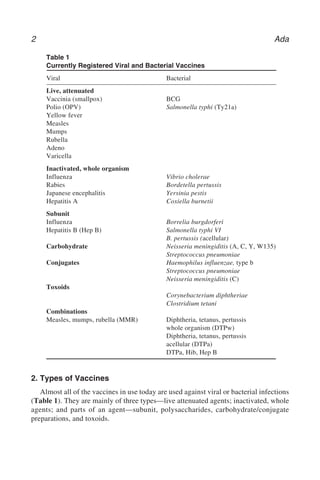
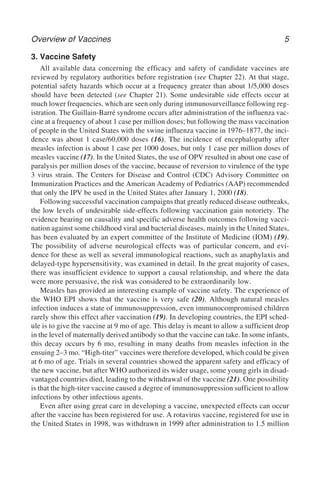
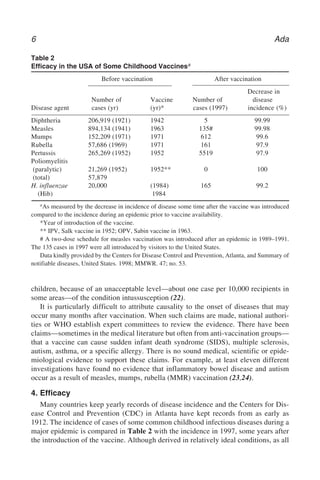
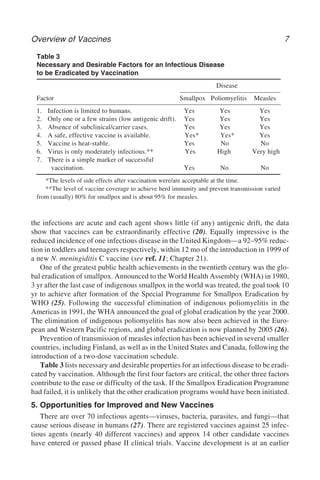
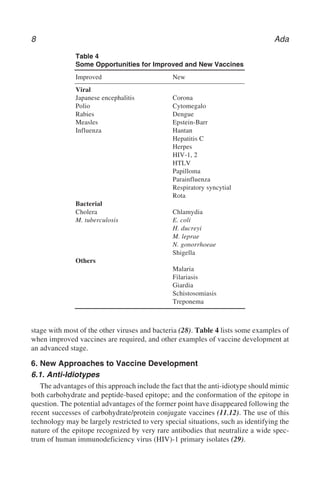
![Overview of Vaccines 9
6.2. Oligo/Polypeptides (see also Chapter 8)
The sequences may contain either B-cell epitopes or T-cell determinants, or both.
Sequences containing B-cell epitopes may either be conjugated to carrier proteins,
which act as a source of T-helper cell determinants, or assembled in different ways to
achieve particular tertiary configurations. Some of the obvious advantages of this
approach are that the final product contains the critical components of the antigen and
avoids other sequences that may mimic host sequences, and thus potentially induce an
autoimmune response. Multiple Antigenic Peptide Systems (MAPS) are more immu-
nogenic than individual sequences (30), and the immunogenicity of important “cryp-
tic” sequences may sometimes be enhanced by the deletion of other segments (31).
New methods of synthesis offer the possibility of more closely mimicking the confor-
mational patterns in the original protein.
This approach is likely to be applicable, especially for some bacterial and parasitic
vaccines. However, the first peptide-based candidate vaccine that underwent efficacy
trials in malaria endemic regions yielded disappointing results (32). A preparation
composed of polymers of linked peptides from group A streptococcus, which was
effective in a mouse model (33), is currently undergoing clinical trials.
6.3. Transfection of Cells with DNA/cDNA Coding
for Foreign Antigens
This is now a well-established procedure. Three cell types have been used: prokary-
otes; lower eukaryotes, mainly yeast; and mammalian cells—either primary cells (e.g.,
monkey kidney), cell strains (with a finite replicating ability), or cell lines (immortal-
ized cells such as Chinese Hamster Ovary cells [CHO]). Each has its own advantages.
As a general rule, other bacterial proteins should preferably be made in transfected
bacterial cells, and human viral antigens, especially glycoproteins, in mammalian cells,
because of the substantial differences in properties, such as post-translational modifi-
cations in different cell types.
6.4. Live Viral and Bacterial Vectors
Table 5 lists the viruses and bacteria mostly used for this purpose. Of the viruses,
the greatest experience has been with vaccinia and its derivatives such as the highly
attenuated modified vaccinia virus Ankara (see Chapter 4). These have a wide host
range, possess many different promoters, and can accommodate DNA coding for up to
10 average-sized proteins. The avipox viruses, canary and fowlpox, undergo abortive
replication in mammals, making them very safe to use as vectors. Adeno (see Chapter 3)
and polio viruses, and Salmonella (see Chapter 6) are mainly used for delivery via a
mucosal route, although vaccinia and BCG have been administered both orally and
intranasally.
Making such chimeric vectors has also been an effective way to evaluate the poten-
tial role of different cytokines in immune processes (see Chapter 12). Inserting DNA
coding for a particular cytokine as well as that for the foreign antigen(s) results in the
synthesis and secretion of the cytokine at the site of infection so its maximum effect
should be displayed. Thus, IL-4 and IL-12 have been shown to have dominant effects](https://image.slidesharecdn.com/28620-250310175048-3cf7d44c/85/Vaccine-Protocols-2nd-Edition-Andrew-P-Robinson-15-320.jpg)
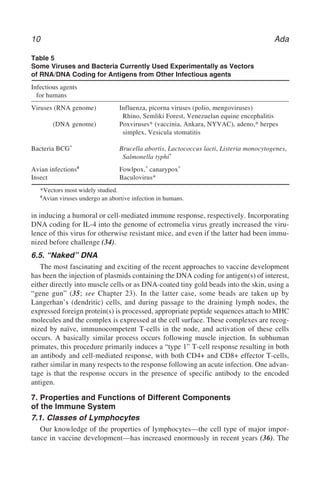
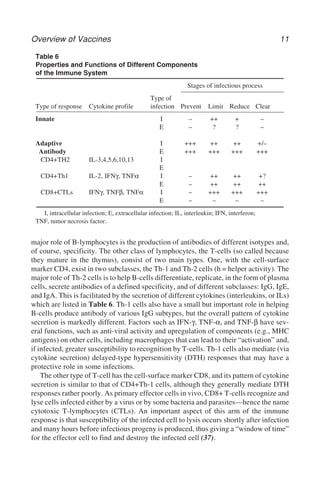
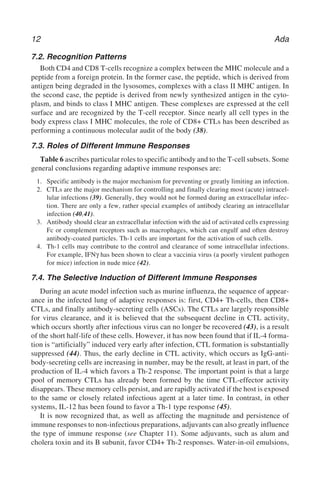
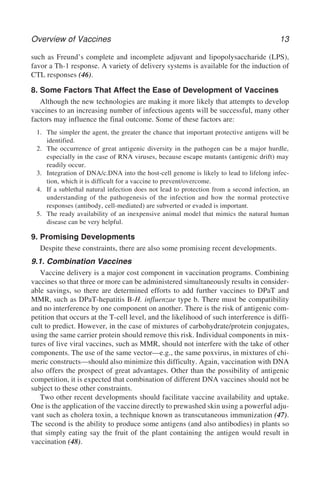
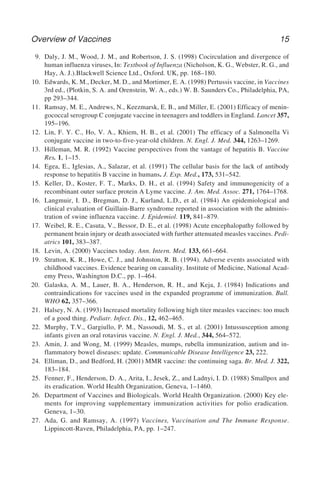
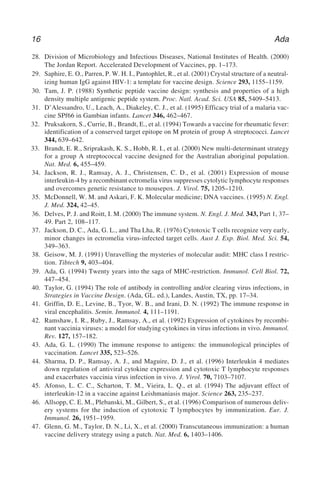
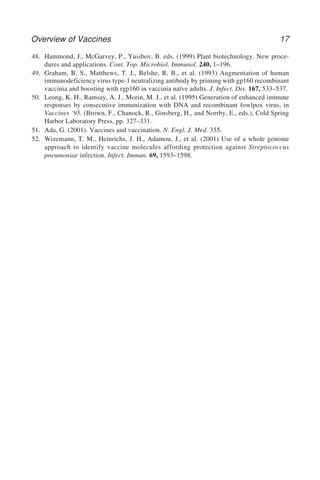


![completed the surface must be nowhere more than three-fourths inch
below, nor more than three-eighths inch above the true sub-grade. If,
after the rolling is completed and before the pavement foundation is laid,
the surface shall become disturbed in any way, it must be replaced and
properly compacted.
Where the soil composing the sub-foundation is found to be wet or
“springy,” a system of soft tile drains, discharging into the street
drainage system, shall be constructed by the Contractor, as directed by
the Engineer. The tile shall be laid in trenches about one foot wide and
from one to two feet deep. After the tile is in place the trenches shall be
filled with crushed stone or gravel, well compacted by tamping. The tile
will be paid for per linear foot at the contract price for the same, which
price shall include the cost of excavating and refilling the trenches with
crushed stone.
PAVEMENT FOUNDATION
27. Pavement foundation shall consist of hydraulic concrete, or of old
pavement stone relaid, or of broken stone or gravel, as may be herein
specified, constructed upon the sub-grade.[6]
HYDRAULIC CONCRETE FOUNDATION
28. Concrete.—Concrete shall be composed of Portland cement,
sand, broken stone and water.
29. Portland Cement.[7]
—Portland cement shall be defined as the
pulverized product resulting from the calcination to incipient fusion of
an intimate mixture of properly proportioned argillaceous and
calcareous materials, and to which no addition greater than three per
cent. has been made subsequent to calcination.
Specific Gravity.—The specific gravity of the dry cement at a
temperature of two hundred and twelve (212) degrees F. shall not be less
than 3.10.
Fineness.—It shall be pulverized to such fineness that not more than
eight (8) per cent. shall fail to pass a number one hundred (100) sieve
and not more than twenty-five (25) per cent. shall fail to pass a number
two hundred (200) sieve.](https://image.slidesharecdn.com/28620-250310175048-3cf7d44c/85/Vaccine-Protocols-2nd-Edition-Andrew-P-Robinson-27-320.jpg)
![31. Broken Stone.—Broken stone for concrete shall be of hard and
sound limestone or other stone equally hard and durable, broken to a
roughly cubical form. It shall be screened through efficient revolving
screens, and only such fragments as have passed through circular screen
openings two and one-half (2½) inches in diameter, shall be used. If the
crushed dust and fine fragments be not screened out, the stone must be
so handled that the fine material will be evenly distributed through the
mass when it reaches the concrete platform or mixer.[8]
32. Water.—Water used for concrete shall be fresh, and reasonably
clean.
33. Care and Handling of Concrete Material.—Cement must not
be allowed to become wet or damp. It shall be stored until used, whether
in storehouses or on the street, so that no part of the packages shall be
nearer than four (4) inches to the ground or pavement, and shall be
effectually covered so that rain cannot reach it. Sand and stone, if stored
on the street, shall be on lumber floors.[9]
The stone shall be thoroughly
wetted a sufficient time before being placed in the concrete to allow any
surplus water to drain away, but shall remain moist where it reaches the
concrete platform or mixer.
34. Ratio of Concrete Materials.—Concrete will be composed of
one part Portland cement, ... parts of sand and ... parts of broken stone,
and the proper quantity of water, all measured by volume.[10]
The unit of
measurement shall be the barrel of cement which shall be considered as
containing four (4) cubic feet. The materials shall each be measured in
such manner and with such accuracy that the quantities used will not
vary more than seven (7) per cent. from the quantities required in the
ratio named above for each batch of concrete.
35. Mixing Concrete.—If mixed by hand, concrete shall be mixed on
platforms of iron or wood of sufficient size to admit of proper
manipulation of the concrete. The sand shall be first spread evenly over
the platform and the cement evenly distributed over the sand. These two
materials shall then be mixed dry until a uniform and homogeneous
mixture is secured. Sufficient water shall then be added and the mixing
resumed and continued until a mortar of uniform consistency and
texture is produced and distributed in an even layer over the platform.
The stone shall then be distributed over the mortar and mixed therewith
until the mortar is evenly distributed through the mass and every
fragment of stone is well coated with mortar, sufficient additional water
being added as the mixing progresses to produce a rather wet, but not
sloppy, concrete.[11]
Machine mixing of concrete will be preferred,](https://image.slidesharecdn.com/28620-250310175048-3cf7d44c/85/Vaccine-Protocols-2nd-Edition-Andrew-P-Robinson-29-320.jpg)
![provided the machine used secures equal accuracy in the ratios of
materials and equally as good mixing as prescribed above for hand-
mixing. Machine-mixed concrete must be delivered from the machine
upon a wood or metal platform, or directly into barrows.
36. Placing the Concrete.—Concrete shall be placed on the sub-
grade in such a manner as to prevent as far as possible the separation of
the mortar from the stone. It shall be evenly distributed in a single
horizontal layer of such depth that, after ramming, it will be not less
than ... inches thick. Immediately after being so placed it shall be well
rammed until a compact mass is produced with its upper surface parallel
to and ... inches below the pavement datum. Depressions that may
appear during the ramming may be filled with concrete of the same
composition as used for the foundation, except that smaller-sized stone
shall be used; mortar alone must not be used for this purpose, nor shall
the upper surface of the concrete be plastered with mortar. The surface
of the concrete shall not be broomed or troweled.[12]
37. Setting of Concrete.—After the concrete is completed it shall
remain undisturbed until it be firmly set. The time allowed for setting
shall not be less than five days, and as much longer as, in the judgment
of the Engineer, may be necessary, depending upon the temperature of
the weather and the setting qualities of the cement. During this period
no hauling or traveling over the concrete must be permitted unless its
surface be first protected by a covering of plank. The Contractor shall, if
necessary, keep the concrete moist by wetting it, with hose, or otherwise,
until twenty-four (24) hours before it is to be covered with the pavement
surface.
38. Measurement of Concrete.—Concrete will be measured and
computed in cubic yards as found completed on the street, the thickness
being taken as ... inches. The contract price for concrete foundation
covers the cost of providing all the materials required, making, placing
and ramming the concrete, and keeping it moist for the necessary
period.
FOUNDATION OF OLD PAVING STONE
39. Foundations made of old stone paving blocks shall be constructed
as follows:
Upon the sub-grade prepared as specified in Section 26, shall be
spread a layer of good sand to an even depth of one and one-half (1½)](https://image.slidesharecdn.com/28620-250310175048-3cf7d44c/85/Vaccine-Protocols-2nd-Edition-Andrew-P-Robinson-30-320.jpg)
![inches. The paving blocks, whether taken up from the street to be paved,
or brought from other streets or storage yards, shall be cleaned of all
adhering earth, dirt and street refuse. The blocks shall then be set on the
bed of sand, on edge, perpendicular to the grade, with their long
dimension at right angles to the line of the street, in courses composed of
stones of the same width, extending entirely across and at right angles to
the axis of the street. Stones in adjoining courses shall break joint at
least two inches. Joints between courses or stones, or along the
curbstones, shall not exceed one inch in width. The stone shall be fitted
closely around manholes or other structures in the street. The stones
shall be so set in the bed of sand that after being rammed as hereafter
specified, their tops shall be at the proper grade. After being thus set in
place the stone shall be rammed with paving rammers having wooden
faces and weighing not less than thirty (30) pounds, so as to force each
stone to a good bearing in the sand below, and to bring its top to a
uniform grade, parallel to and ... inches below the pavement datum. No
stone shall project more than one-fourth (¼) inch above the proper
grade, and stones whose tops, after ramming, are more than one-half
(½) inch below such grade, shall be raised, additional sand placed under
them, and reset and re-rammed to the proper grade and bearing. After
the ramming shall have been completed, the joints between the stones
shall be filled with mortar. The mortar shall be composed of Portland
cement and sand, complying with the specifications for these materials
in Sections 29 and 30. One part of cement and three parts of sand, by
volume, shall be thoroughly mixed dry, and then made into mortar with
sufficient quantity of water to produce a mortar of such consistency that
it will just flow freely into the joints between the stones. All the joints
between the stones must be completely filled with this mortar before it
has begun to set. The mortar filling shall be brought even with, but not
above, the tops of the stones. After the filling is thus completed, the
foundation must stand undisturbed until the mortar shall have set
firmly, in no case less than five days. The mortar must be kept moist
during the period allowed for setting.[13]
Old stone foundation will be measured in square yards, in place after
completion. The contract price includes the cost of handling and
cleaning the stone, supplying and placing the bed of sand, setting and
ramming the stone, supplying the materials for, making and placing the
mortar in the joints and watering the street while the mortar is setting.
Where stone is procured from other streets, or from storage yards, the
Contractor will be required to load, haul and unload them, and will be
allowed for this service a price of ... cents per cubic yard for loading and](https://image.slidesharecdn.com/28620-250310175048-3cf7d44c/85/Vaccine-Protocols-2nd-Edition-Andrew-P-Robinson-31-320.jpg)
![unloading, plus ... cents per cubic yard for each one-half mile, or fraction
thereof, over which they are hauled by the nearest practicable route, the
measurement to be made after the stone is set in the street, without
deduction for joints.
40. Broken Stone Foundation.—The sub-grade for broken stone
foundation shall be prepared as specified in Section 26, except that the
rolling may be omitted at the option of the Contractor. The broken or
crushed stone shall be of hard, durable stone. The foundation shall have
an aggregate thickness of ... inches and shall be constructed in two
courses, as follows:
The broken stone used in the first course shall be of such size that it
will all pass through a screen having openings three (3) inches in
diameter, and will all be retained on a screen having openings one (1)
inch in diameter. This stone shall be evenly spread over the sub-grade to
such a thickness that after being thoroughly consolidated by rolling, its
upper surface shall be three-fourths inch below, and parallel to the
surface of the foundation when completed. It shall then be rolled with a
road-roller weighing not less than ten (10) tons until the stone is
thoroughly compacted.
The second course, composed of screenings, all of which shall have
passed through a screen with openings one inch in diameter, shall then
be spread over the first course and well raked into the voids of the first
course. It shall then be thoroughly wetted, and shall be rolled with the
ten-ton roller until the fine stone is driven into the interstices of the first
course and the whole thoroughly consolidated, the wetting being
repeated while the rolling continues. Additional screenings shall be
added and rolled in where necessary to bring the surface to the proper
elevation. When completed, the top surface of the foundation shall be ...
inches below, and parallel to the pavement datum. No part of the upper
surface of the completed foundation shall project more than one-fourth
(¼) inch above, nor shall it be more than one-half (½) inch below the
grade and contour above specified.
Gravel of a quality satisfactory to the Engineer may with his written
consent be substituted for broken stone. If of assorted sizes, such as will
compress into a mass having not more than thirty (30) per cent. of voids,
the foundation may be constructed in a single layer, graded, watered and
rolled, as prescribed above for broken stone.[14]
41. Measurement.—Broken stone and gravel foundation will be
measured and computed by the cubic yard in the street as completed,
without any allowance for consolidation by the roller or for settlement](https://image.slidesharecdn.com/28620-250310175048-3cf7d44c/85/Vaccine-Protocols-2nd-Edition-Andrew-P-Robinson-32-320.jpg)

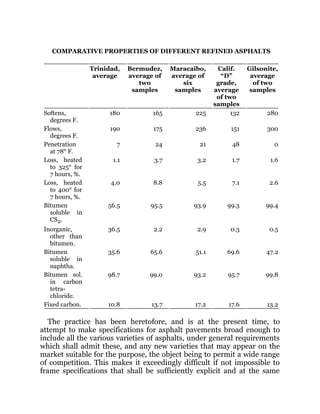
![used except under the conditions specified in Section 45. Cylinders made
from the surface mixture it is proposed to use, one (1) inch in diameter
and two (2) inches long, compressed to a density of two and one-tenth
(2.1), when immersed forty-five (45) days in ten (10) times their volume
of rain-water, shall retain a sound surface, unchanged and uncorroded
by the action of the water.
Refined asphalts resulting from the distillation of crude asphaltic oils
will not be accepted unless the distillation shall have been effected by the
use of suitable apparatus, at a temperature not exceeding seven hundred
(700) degrees F. The bitumen must not be over-distilled and “cut back”
by adding oil. The product, to be acceptable, shall possess the following
qualities: It shall melt and flow at a temperature not below one hundred
and forty (140) degrees F., but below a temperature of one hundred and
eighty (180) degrees F., and when tested in the standard New York State
closed oil-testing apparatus shall not flash at a temperature below four
hundred and fifty (450) degrees F. When exposed in a shallow dish, the
bottom of which is covered to a depth of three-fourths (¾) inch with the
bitumen, to a temperature of four hundred (400) degrees F., for seven
(7) hours, it shall not lose by evaporation more than seven (7) per cent.
by weight. Not less than ninety-eight (98) per cent. shall be soluble in
cold carbon di-sulphide, and not less than sixty-five (65) per cent., nor
more than seventy-five (75) per cent. of the bitumen shall be soluble in
cold Pennsylvania naphtha of gravity eighty-eight (88) degrees Baume.
Not less than ninety-nine (99) per cent. of the bitumen shall be soluble
in carbon tetra-chloride, and it shall not contain more than sixteen (16)
per cent. of fixed carbon.[15]
Bitumens resulting from destructive distillation or from artificial
oxidation, and bituminous compounds prepared from oil or oil
residuums heated with sulphur or other substances, or coal or gas tars,
will not be accepted, nor shall they be mixed with the asphalt used.[16]
45. Asphalts that are injuriously affected by water, and those whose
practical value for making pavements has not been established, in the
judgment of the City, by sufficient experience, will not be accepted
except under such special bond and guaranty provisions as the City may
prescribe.[17]
46. Full information as to the source and character of the crude
asphalt and the method of refining it shall be furnished to the Engineer
and verified by such evidence as he may require.
47. Softening or Tempering Agent.—For softening and tempering
refined asphalt, petroleum residuum oil or liquid asphalt shall be used. It](https://image.slidesharecdn.com/28620-250310175048-3cf7d44c/85/Vaccine-Protocols-2nd-Edition-Andrew-P-Robinson-39-320.jpg)
![shall be free from water, coke, and other impurities. Its specific gravity
shall not be below 0.92, nor above 1.04. Its flash test (determined in the
standard New York State closed oil-testing apparatus) shall not be under
three hundred and fifty (350) degrees F., and when exposed for seven (7)
hours to a temperature of three hundred and twenty-five (325) degrees
F., in a shallow open dish, the bottom of which is covered by the oil to a
depth of three-fourths (¾) inch, it shall not lose more than five (5) per
cent. by evaporation. It shall not contain more than ten (10) per cent. of
paraffine scale.
48. Sand.—A superior quality of sand will be required and this must
be secured, if necessary, by the admixture of two or more sands. The
sand shall be silicious and so free from organic matter, mica, soft grains,
and other impurities, that these shall not aggregate more than two (2)
per cent. of the mass. The grains shall, preferably, be moderately “sharp”
or angular, and must be of assorted sizes so that the voids in the
compacted mass of dry sand shall not exceed thirty three (33) per cent. A
typical sand, to be approximated as closely as practicable, will give the
following sieve tests, the sieves being used in the order named:
3 per cent. of the whole will pass No. 200 sieve.
15 per cent. of the whole will pass No. 100 sieve.
18 per cent. of the whole will pass No. 80 sieve.
30 per cent. of the whole will pass No. 50 sieve.
24 per cent. of the whole will pass No. 30 sieve.
10 per cent. of the whole will pass No. 10 sieve.
and none will fail to pass the No. 10 sieve.[18]
49. Pulverized Stone.—This may consist of limestone or other
sound stone or sand, pulverized to such fineness that the whole will pass
the No. 50 sieve, not more than ten (10) per cent. will be retained on the
No. 100 sieve, and at least seventy (70) per cent. of it will pass the No.
200 sieve. Portland cement may be partly substituted for pulverized
stone, where the Engineer shall so direct.[19]
Portland cement thus used
will be paid for at the price bid per barrel for the same, in addition to the
price paid per square yard for the pavement surface. The pulverized
material must be thoroughly dry when used.
50. Asphaltic Paving Cement.—Asphalt Paving Cement shall be
prepared from the refined asphalt described in Sect. 44 and the
tempering agent described in Sect. 47. The refined asphalt, together with](https://image.slidesharecdn.com/28620-250310175048-3cf7d44c/85/Vaccine-Protocols-2nd-Edition-Andrew-P-Robinson-40-320.jpg)
![the asphalt in the tempering agent, shall constitute not less than sixty
per cent. (60%) of the asphaltic cement.
The refined asphalt and the tempering agent shall be mixed and
melted together at a temperature not below two hundred and seventy-
five degrees F. (275° F.), and not above three hundred and twenty-five
degrees Fahrenheit (325° F.), and thoroughly incorporated by agitation
until a homogeneous cement is produced. The agitation shall be
continued until the cement is used.
The asphaltic cement at a temperature of seventy-seven degrees F.
(77° F.) shall be of such consistency as to show a penetration of from
forty to eighty hundredths of a centimeter, as the engineer may direct for
each street, when tested with the standard Dow penetration apparatus,
using a number two cambric needle loaded with one hundred grams.
When a cement of a consistency satisfactory to the engineer has been
produced and approved for any street a sample of it shall be kept as a
standard and all subsequent batches or kettles must be made to conform
thereto, suitable apparatus and tests being employed to determine the
correspondence of each new batch with the standard.[20]
The asphaltic
cement when at its melting temperature shall be so viscous that it will
draw out into moderately long fine threads which shall be free from
lumps or raggedness and shall possess satisfactory adhesive and
cementitious qualities.[21]
51. Composition and Preparation of Asphalt Surface
Mixture.—The surface-course shall be composed of the materials
specified in Sections 43, 44, 45, 46, 47, 48, 49, and 50 mixed in such
ratios by weight as the Engineer may direct or approve. A typical mixture
will contain:
Sand 100.0
lbs.
Pulverized mineral matter passing No. 200 screen, including that found
in the paving cement 17.5 lbs.
Pure bitumen (in paving cement) 13.5
lbs.
But the quantities of pulverized stone and of asphaltic cement shall be
varied as may be found necessary or desirable by the Engineer to suit the
purity of the asphaltic cement, the character of the sand, the climatic
conditions, and the varying quantity and character of travel on the street
to be paved; and Portland cement may be substituted partly or wholly for](https://image.slidesharecdn.com/28620-250310175048-3cf7d44c/85/Vaccine-Protocols-2nd-Edition-Andrew-P-Robinson-41-320.jpg)
![the pulverized stone, when directed by the Engineer. The surface-course
mixture shall be submitted to the Engineer and approved by him before
any is laid upon the street.
The mixing shall be accomplished in a mechanical mixing apparatus
capable of rapidly and effectually incorporating the materials together,
and each batch must remain in the mixer a sufficient length of time to
effect a perfect mixture. The sand shall be separately heated and shall
reach the mixing apparatus at a temperature not above three hundred
and fifty (350) degrees F., nor below three hundred and twenty (320)
degrees F. The pulverized stone shall be at such a temperature that when
mixed with the sand the temperature of the mixed mass shall not be
above three hundred and fifty (350) degrees F., nor below three hundred
and twenty (320) degrees F. The sand shall be first placed in the mixer,
followed by the pulverized stone, and these two materials shall be
thoroughly mixed together before the asphaltic cement is added. The
asphaltic cement at a temperature not above three hundred and fifty
(350) degrees, nor below three hundred (300) degrees F. shall then be
added in such a way as to evenly distribute it over the sand and
pulverized stone, and the mixing continued until the materials are
thoroughly incorporated into a perfectly uniform and homogeneous
mass, with the grains of sand completely covered with cement. Suitable
thermometers shall be constantly used to determine the temperatures
specified herein. Great care must be taken to accurately weigh and
proportion the materials charged into the mixer.[22]
52. Stone for Base-course.—Stone screenings for base-course shall
be of crushed, hard, durable stone. The portion used shall all be retained
upon a No. 8 sieve, or screen, and shall all pass a screen having square
meshes, the linear dimensions of the openings in which are one-half (½)
inch less than the thickness of the base-course.
53. Composition of Base-course.—The base-course shall be
composed of the crushed stone specified in Section 52, mixed with the
asphaltic cement, sand and pulverized stone specified in Sections 50, 48
and 49, but the asphaltic cement shall be of such hardness as the
engineer may direct.
A typical base-course mixture will be composed as follows:](https://image.slidesharecdn.com/28620-250310175048-3cf7d44c/85/Vaccine-Protocols-2nd-Edition-Andrew-P-Robinson-42-320.jpg)
![Crushed stone 100 lbs.
Sand 42 lbs.
Pure bitumen (in asphaltic cement) 7 lbs.
Pulverized stone 7½ lbs.
But the mixture shall be such that when placed on the street and
compressed by the roller the mass shall be dense and the voids in the
stone completely filled; and to accomplish this the quantity of crushed
stone used in the mixture may be increased or decreased, as the volume
of its voids may require, in order that they may be completely filled.[23]
54. Mixing the Base-course.—The materials for the base-course
shall be heated and mixed in the same general manner as prescribed for
the surface-course (Sect. 51), the crushed stone being delivered first in
the mixer. The temperature of the mixture as it comes from the mixer
being not above three hundred and twenty-five (325) degrees F., nor
below three hundred (300) degrees F.
55. Laying Asphalt Pavement, General.—Asphalt pavement must
not be laid except when the surface upon which it is to be placed is dry;
nor when the temperature of the air is below thirty-two (32) degrees F.,
or, if a strong wind prevails, when the temperature of the air is below
forty (40) degrees F.
The pavement mixture, whether for base- or surface-course, shall be
taken to the street as soon after it leaves the mixer as practicable. When
the temperature of the air is below seventy (70) degrees F., the loaded
vehicles conveying the mixture to the street shall be covered by canvas
covers to prevent the escape of heat. When unloaded upon the street, the
temperature of the mass should not be below two hundred and eighty
(280) degrees F., and any load or portions of a load found under two
hundred and forty (240) degrees F. must be rejected. After being
unloaded on the street, the mixture must be shoveled into place in such a
manner that the whole of it will be moved from the pile into which it was
unloaded.
56. Laying the Base-course.—The base-course will have an
average thickness of one and one-quarter (1¼) inches after compression.
It shall be laid directly upon the pavement foundation, which must be
free from all loose fragments and rubbish and be swept clean in advance
of the application of the base-course. The base-course mixture shall be
spread upon the foundation and evenly and regularly graded to such a](https://image.slidesharecdn.com/28620-250310175048-3cf7d44c/85/Vaccine-Protocols-2nd-Edition-Andrew-P-Robinson-43-320.jpg)
![before the material has cooled below two hundred (200) degrees F., and
be continued until the roller makes no further impression upon the
surface. The first course of the heavy rolling shall be parallel to the street
beginning at the curb and working toward the center on each side, after
which it should be diagonally rolled, and also cross-rolled if the width of
the street permits.[24]
Any portions of the surface not accessible to the
roller shall be tamped with hot tampers until compacted equally with the
rolled portion. When completed, the surface shall have an average
thickness of ... inches and must be so free from waves or irregularities
that a template not less than twelve feet long, when applied to the street
surface shall nowhere show a divergence from the designed true surface
of more than three-sixteenths (³⁄₁₆) inch, and a template sixteen (16) feet
long applied to the gutters shall show no divergence from the true gutter
grade greater than one-eighth (⅛) inch.
Before the surface-course is placed, all exposed surfaces of curbs,
crosswalks, manholes, etc., with which the surface-course will be in
contact, must be well painted with hot paving cement or approved pitch.
The street shall not be opened to travel until the pavement has become
cold and hard.
58. Street Railroad Tracks.—Where railroad tracks exist on the
streets, the sub-grade and the pavement foundation shall extend under
the tracks, uninterrupted except by the ties and other structures
connected with the track. Where concrete foundation is used, special
care must be taken with the concrete directly under or around the rails,
and concrete made of fine crushed stone and a higher ratio of cement
and sand may be required in contact with the rail. The concrete must be
thoroughly tamped under and against the rail.
The asphalt surface shall be laid directly against the rails, which, if
their temperature be under fifty (50) degrees F., shall be heated by
suitable appliances to a temperature of, or above, sixty (60) degrees F.
immediately before the asphalt material is placed around the rail. The
hot asphalt material must be thoroughly tamped against and along the
rail and under any projecting portions of it, and the surface of the
pavement must be even with, or slightly (not more than one-eighth (⅛)
inch) above the top of the rail. Slot-rails will be treated in the same
manner, subject to such modifications as their forms may necessitate.[25]
59. Plant.—The plant for making asphalt paving mixtures must be of
approved modern design, adapted to do the work properly, and
equipped with efficient machinery. It shall be of sufficient capacity to
turn out at least twelve hundred square yards of pavement surface daily](https://image.slidesharecdn.com/28620-250310175048-3cf7d44c/85/Vaccine-Protocols-2nd-Edition-Andrew-P-Robinson-45-320.jpg)