This document discusses adjuvants and their role in vaccines. It provides an overview of the current state and future directions of adjuvant development. Some key points include:
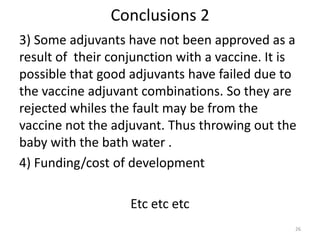
- Adjuvants are needed to improve vaccine efficacy and induce stronger immune responses. However, developing new adjuvants faces challenges related to safety, reactogenicity, and regulatory approval.
- Many existing and candidate adjuvants can induce local or systemic adverse effects. Finding the right balance between potency and reactogenicity is an ongoing challenge.
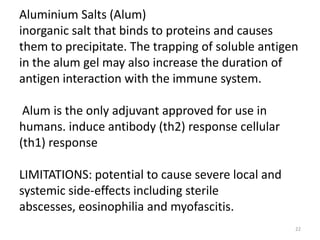
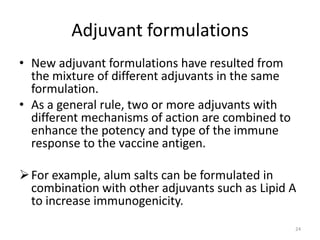
- Various adjuvant types are classified based on their source or mechanism of action, including oil emulsions, saponins, bacterial components, liposomes, carbohydrates, aluminum salts, and polymeric microspheres.