Uncommon locations for melanoma and
uveal melanoma
2014

Lorenzo Alonso
Medical Oncology
www.foro-osler.com
Sinus
gingiva
intracardiac
Bronchial mucosa
Small bowel metastases
Genital/anal
subungueal
Toes/ sole

Please, could you try to figure out
some melanoma locations beyond the
skin and subcutaneous area?
Cardiac metastases from melanoma

Right atrium is the
most common site.
Clinical scenario
• Melanoma, anemia, abdominal lump

Metastases to small bowel: usually can be resected
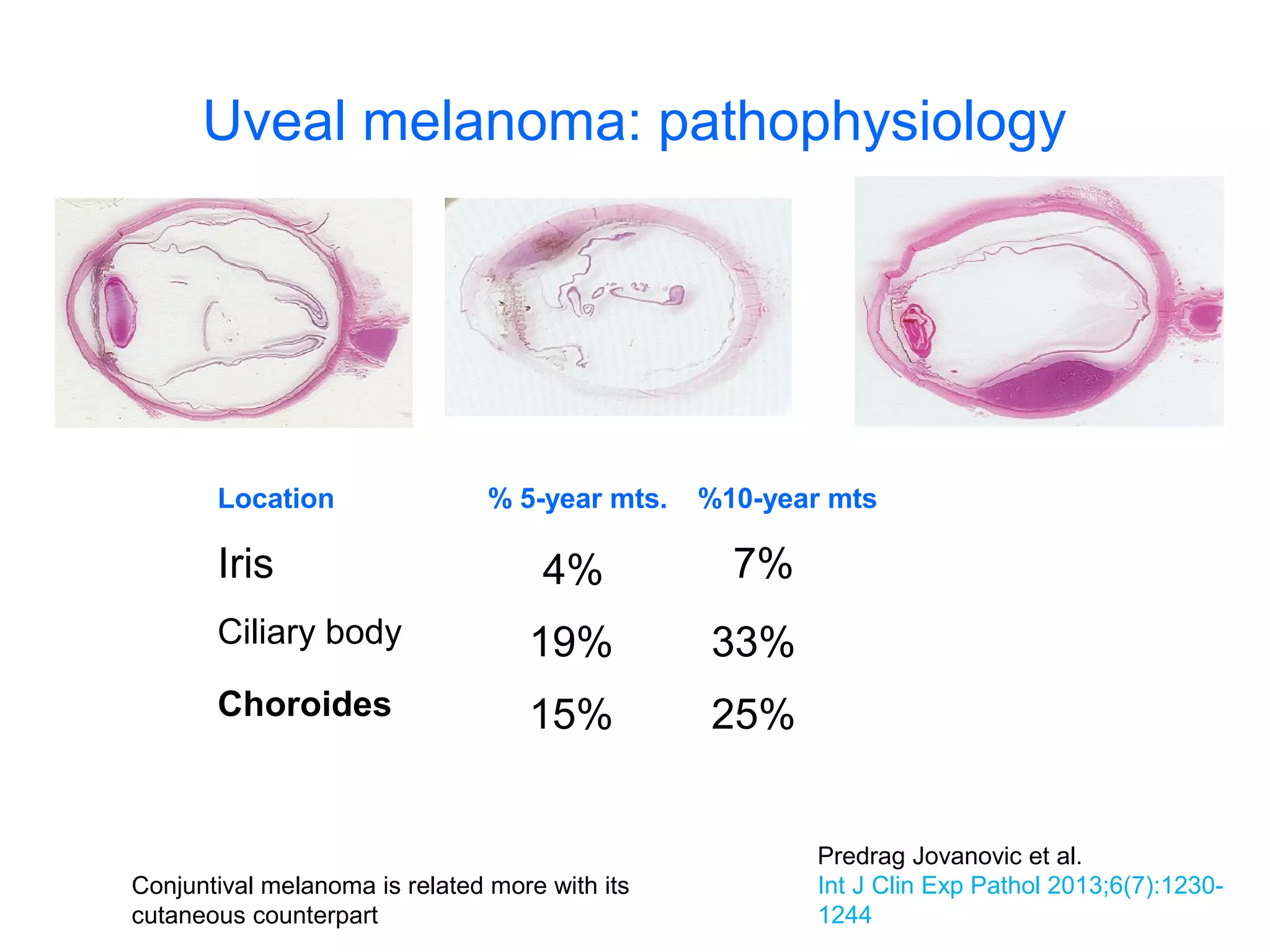
Uveal melanoma: pathophysiology

Location

Iris

% 5-year mts.

%10-year mts

4%

7%

Ciliary body

19%

33%

Choroides

15%

25%

Conjuntival melanoma is related more with its
cutaneous counterpart

Predrag Jovanovic et al.
Int J Clin Exp Pathol 2013;6(7):12301244
Ocular melanoma: pathophysiology

Liver: 93% mts

Lung: 24% mts.

WHY?
Bones: 16% mts
Local treatment

Radiotherapy (plaque) and surgery
(enucleation) achieve the same
outcome…but not without harm
Uveal melanoma prognosis

Monosomy of chromosome 3 is the
most frequent chromosome aberration
in uveal melanoma (50%)

Class 1: low grade tumors with low metastatic risk
Class 2: high grade tumors with metastatic risk
chracterized by down-regulation of genes on
chromosome 3 and up-regulation of genes on
chromosome 8q.
BAP1: BCRA-1 associated protein-1 and metastatic
development of uveal melanoma
The gene encoding BAP-1 is located on chromosome
3p21.1 and is mutated in 80% of metastatic uveal
melanoma. BAP-1 is a enzyme that forms part of a
tumor-suppressor complex. BAP-1 mutation is associated
to metastatic behaviour
Uveal melanoma
Treatment options
•
•
•
•

Ipilimumab
Chemotherapy: nanoparticles(taxanes)
MAPK pathway: MEK
Protein kinase C (PKC)
Ipilimumab in metastatic uveal melanoma

Outcome after compassionate use (USA, Italy):
1-year overall survival over 30%.
More common dose: 3 mg/Kg
Median overall survival 6 months (Italian use)
Toxicity experience and response similar to cutaneous
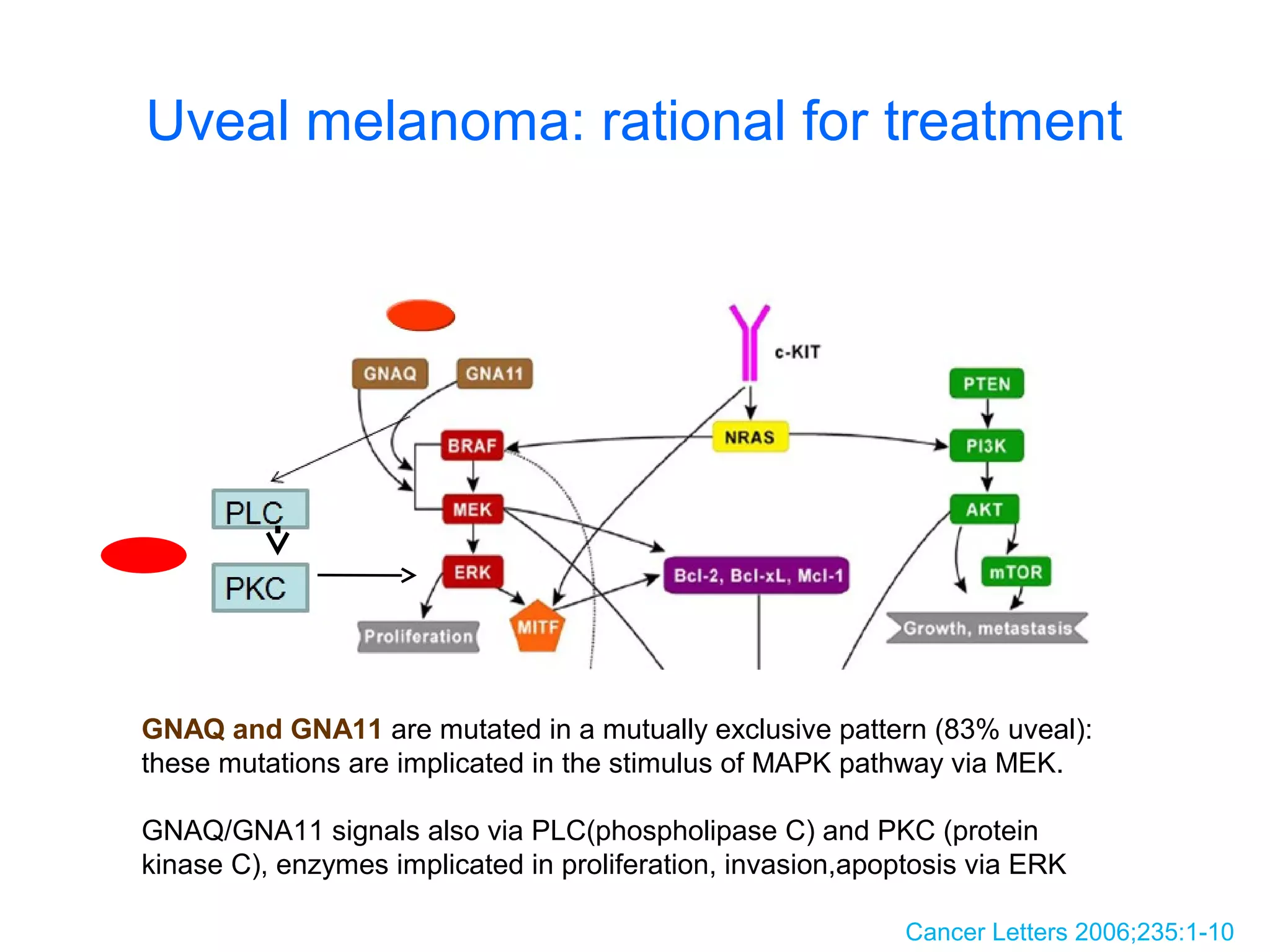
Uveal melanoma: rational for treatment

GNAQ and GNA11 are mutated in a mutually exclusive pattern (83% uveal):
these mutations are implicated in the stimulus of MAPK pathway via MEK.
GNAQ/GNA11 signals also via PLC(phospholipase C) and PKC (protein
kinase C), enzymes implicated in proliferation, invasion,apoptosis via ERK
Cancer Letters 2006;235:1-10
Therapeutic targets
• MEK inhibitors: (no response in wild-type GNAQ/GNA11)
– Selumetinib compared with temozolamide; 9 weeks benefit for
selumetinib for PFS
– MEK162

• PAK inhibitors: sotrastaurin (AEB071)/ enzastaurin.
– G1 cell cycle arrest
– Inhibition of PKC in GNAQ-mutant resulted in the inhibition of the
MAPK pathway.
A combination of a MEK and proteinkinase inhibitor could be a
perfect therapeutic combination
Conclusions
• 1. Metastases from melanoma can spread to almost
•
•
•
•

every anatomical location.
2. Uveal melanoma is the most common primary
malignancy of the eye
3. GNAQ and GNA11 are mutated in 80% of uveal
melanoma in a mutually exclusive pattern
4. Ipilimumab achieves a 30% survival in the first year in
uveal melanoma
5. MEK inhibitors and PAK inhibitors are key for
developing targeted therapies.

Uveal melanoma and uncommon locations

  • 1.
    Uncommon locations formelanoma and uveal melanoma 2014 Lorenzo Alonso Medical Oncology www.foro-osler.com
  • 2.
    Sinus gingiva intracardiac Bronchial mucosa Small bowelmetastases Genital/anal subungueal Toes/ sole Please, could you try to figure out some melanoma locations beyond the skin and subcutaneous area?
  • 3.
    Cardiac metastases frommelanoma Right atrium is the most common site.
  • 4.
    Clinical scenario • Melanoma,anemia, abdominal lump Metastases to small bowel: usually can be resected
  • 5.
    Uveal melanoma: pathophysiology Location Iris %5-year mts. %10-year mts 4% 7% Ciliary body 19% 33% Choroides 15% 25% Conjuntival melanoma is related more with its cutaneous counterpart Predrag Jovanovic et al. Int J Clin Exp Pathol 2013;6(7):12301244
  • 6.
    Ocular melanoma: pathophysiology Liver:93% mts Lung: 24% mts. WHY? Bones: 16% mts
  • 7.
    Local treatment Radiotherapy (plaque)and surgery (enucleation) achieve the same outcome…but not without harm
  • 8.
    Uveal melanoma prognosis Monosomyof chromosome 3 is the most frequent chromosome aberration in uveal melanoma (50%) Class 1: low grade tumors with low metastatic risk Class 2: high grade tumors with metastatic risk chracterized by down-regulation of genes on chromosome 3 and up-regulation of genes on chromosome 8q.
  • 9.
    BAP1: BCRA-1 associatedprotein-1 and metastatic development of uveal melanoma The gene encoding BAP-1 is located on chromosome 3p21.1 and is mutated in 80% of metastatic uveal melanoma. BAP-1 is a enzyme that forms part of a tumor-suppressor complex. BAP-1 mutation is associated to metastatic behaviour
  • 10.
    Uveal melanoma Treatment options • • • • Ipilimumab Chemotherapy:nanoparticles(taxanes) MAPK pathway: MEK Protein kinase C (PKC)
  • 11.
    Ipilimumab in metastaticuveal melanoma Outcome after compassionate use (USA, Italy): 1-year overall survival over 30%. More common dose: 3 mg/Kg Median overall survival 6 months (Italian use) Toxicity experience and response similar to cutaneous
  • 12.
    Uveal melanoma: rationalfor treatment GNAQ and GNA11 are mutated in a mutually exclusive pattern (83% uveal): these mutations are implicated in the stimulus of MAPK pathway via MEK. GNAQ/GNA11 signals also via PLC(phospholipase C) and PKC (protein kinase C), enzymes implicated in proliferation, invasion,apoptosis via ERK Cancer Letters 2006;235:1-10
  • 13.
    Therapeutic targets • MEKinhibitors: (no response in wild-type GNAQ/GNA11) – Selumetinib compared with temozolamide; 9 weeks benefit for selumetinib for PFS – MEK162 • PAK inhibitors: sotrastaurin (AEB071)/ enzastaurin. – G1 cell cycle arrest – Inhibition of PKC in GNAQ-mutant resulted in the inhibition of the MAPK pathway. A combination of a MEK and proteinkinase inhibitor could be a perfect therapeutic combination
  • 14.
    Conclusions • 1. Metastasesfrom melanoma can spread to almost • • • • every anatomical location. 2. Uveal melanoma is the most common primary malignancy of the eye 3. GNAQ and GNA11 are mutated in 80% of uveal melanoma in a mutually exclusive pattern 4. Ipilimumab achieves a 30% survival in the first year in uveal melanoma 5. MEK inhibitors and PAK inhibitors are key for developing targeted therapies.