URINARY TRACT INFECTIONS
C. Ushasree
Dept. of pharmacology
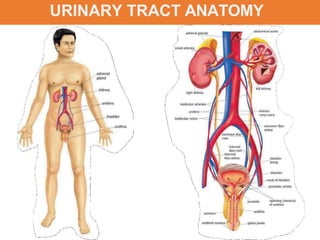
URINARY TRACT ANATOMY
INTRODUCTION
 Urinary tract infection (UTI) is an infection in any part of
urinary system – kidneys, ureters, bladder and urethra
 UTI is common, particularly in women, most often
occurring in a normal urinary tract and usually as cystitis;
half of all women will experience a UTI in their lifetime
 They can occur in either an uncomplicated host setting,
where there is no underlying structural or functional
abnormality of the patient’s genitourinary tract, or
complicated, where there is
 It is uncommon in men and children; when diagnosed, it
often occurs in an abnormal urinary tract
 UTI is not alwaysuncomplicated; recurrent
infection causes life
considerable morbidity and infection can lead to
threatening Gram negative septicemia and kidney
failure
 It can be:
act infection – urethritis & cystitis
i. Upper tract infection – acute pyelonephritis
 Growth of >105 organisms/ml from mid-
stream clean catch urine samples is diagnostic of UTI
 In symptomatic patients, small number of bacteria may
also be diagnosed as UTI
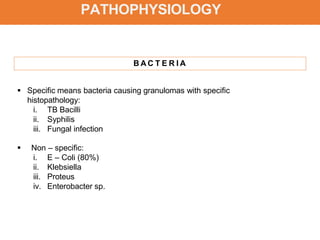
PATHOPHYSIOLOGY
B A C T E R I A
 Specific means bacteria causing granulomas with specific
histopathology:
i. TB Bacilli
ii. Syphilis
iii. Fungal infection
 Non – specific:
i. E – Coli (80%)
ii. Klebsiella
iii. Proteus
iv. Enterobacter sp.
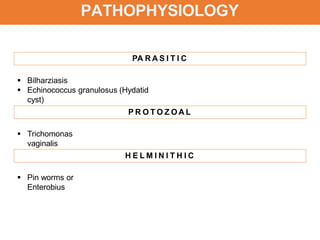
PATHOPHYSIOLOGY
PA R A S I T I C
 Bilharziasis
 Echinococcus granulosus (Hydatid
cyst)
P R O T O Z O A L
H E L M I N I T H I C
 Trichomonas
vaginalis
 Pin worms or
Enterobius
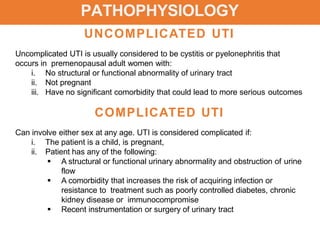
PATHOPHYSIOLOGY
UNCOMPLICATED UTI
Uncomplicated UTI is usually considered to be cystitis or pyelonephritis that
occurs in premenopausal adult women with:
i. No structural or functional abnormality of urinary tract
ii. Not pregnant
iii. Have no significant comorbidity that could lead to more serious outcomes
COMPLICATED UTI
Can involve either sex at any age. UTI is considered complicated if:
i. The patient is a child, is pregnant,
ii. Patient has any of the following:
 A structural or functional urinary abnormality and obstruction of urine
flow
 A comorbidity that increases the risk of acquiring infection or
resistance to treatment such as poorly controlled diabetes, chronic
kidney disease or immunocompromise
 Recent instrumentation or surgery of urinary tract
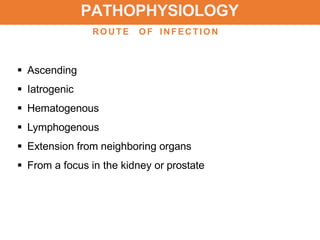
PATHOPHYSIOLOGY
RO UTE O F INFEC TIO N
 Ascending
 Iatrogenic
 Hematogenous
 Lymphogenous
 Extension from neighboring organs
 From a focus in the kidney or prostate
PATHOPHYSIOLOGY
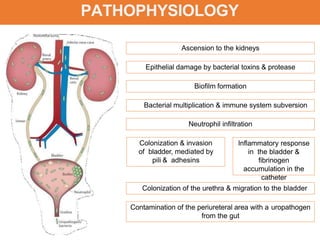
Colonization of the urethra & migration to the bladder
Inflammatory response
in the bladder &
fibrinogen
accumulation in the
catheter
Colonization & invasion
of bladder, mediated by
pili & adhesins
Neutrophil infiltration
Bacterial multiplication & immune system subversion
Biofilm formation
Epithelial damage by bacterial toxins & protease
Ascension to the kidneys
Contamination of the periureteral area with a uropathogen
from the gut
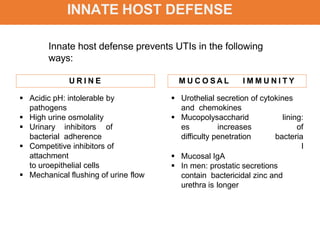
INNATE HOST DEFENSE
Innate host defense prevents UTIs in the following
ways:
U R I N E
 Acidic pH: intolerable by
pathogens
 High urine osmolality
 Urinary inhibitors of
bacterial adherence
 Competitive inhibitors of
attachment
to uroepithelial cells
 Mechanical flushing of urine flow
M U C O S A L I M M U N I T Y
 Urothelial secretion of cytokines
and chemokines
lining:
of
bacteria
l
 Mucopolysaccharid
es increases
difficulty penetration
 Mucosal IgA
 In men: prostatic secretions
contain bactericidal zinc and
urethra is longer
RISK FACTORS
Factors resulting in compromise of normal host defenses to
bacterial
colonization are an important step in pathogenesis of UTIs
I AT R O G E N I C / D R U G S
 Indwelling
catheter
 Antibiotic use
 Spermicides
B E H AV I O U R A L
 Voiding dysfunction
 Frequent or recent sexual
intercourse
A N AT O M I C / P H Y S I O L O G I C G E N E T I C
 Vesicoureteral
reflux
 Female sex
 pregnancy
 Familial tendency
 Susceptible uroepithelial
cells
 Vaginal mucus properties
CLASSIFICATION
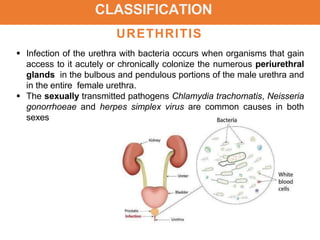
URETHRITIS
 Infection of the urethra with bacteria occurs when organisms that gain
access to it acutely or chronically colonize the numerous periurethral
glands in the bulbous and pendulous portions of the male urethra and
in the entire female urethra.
 The sexually transmitted pathogens Chlamydia trachomatis, Neisseria
gonorrhoeae and herpes simplex virus are common causes in both
sexes
CLASSIFICATION
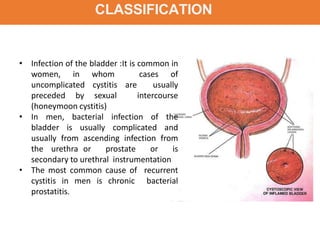
• Infection of the bladder :It is common in
women, in whom cases of
uncomplicated cystitis are usually
preceded by sexual intercourse
(honeymoon cystitis)
• In men, bacterial infection of the
bladder is usually complicated and
usually from ascending infection from
the urethra or prostate or is
secondary to urethral instrumentation
• The most common cause of recurrent
cystitis in men is chronic bacterial
prostatitis.

CLASSIFICATION
ACUTE URETHRAL SYNDROME
 Occurs in women, is a syndrome involving dysuria,
frequency
and pyuria, which thus resembles cystitis
 However, in acute urethral syndrome (unlike in cystitis),
routine urine cultures are either negative or show colony
counts that lower than the traditional criteria for diagnosis
of bacterial cystitis
 Urethritis is a possible cause because causative agents
include Chlamydia trachomatis and Ureaplasma
urealyticum, which are not detected on routine urine
culture
CLASSIFICATION
ASYMPTOMATIC BACTERIURIA
 Absence of UTI signs or symptoms in a patient whose urine
culture satisfies criteria for UTI
 Pyuria may or may not be present
 Because it is asymptomatic, such bacteriuria is found mainly
when high-risk patients are screened or when urine culture is
done for other reasons
 Screening patients for asymptomatic bacteriuria is indicated for
those at risk of complications of the bacteriuria is untreated. Such
patients include:
i. Pregnant women at 12 to 16 weeks’ gestation or at the first
prenatal visit
ii. Patients who have had a kidney transplant within the previous 6
months
iii. Young children with gross VUR
iv. Before certain invasive GU procedures that can cause mucosal
bleeding
CLASSIFICATION
ASYMPTOMATIC BACTERIURIA
 Certain patients (e.g., postmenopausal women; patients with
controlled diabetes; patients with ongoing use of urinary tract
foreign objects such as stents, nephrostomy tubes, and
indwelling catheters) often have persistent asymptomatic
bacteriuria and sometimes pyuria.
 If they are asymptomatic, these patients should not be
screened
routinely, because they are at low risk
 In patients with indwelling catheters, treatment of
asymptomatic bacteriuria often fails to clear the bacteriuria
and only leads to development of antibiotic-resistant
organisms
CLASSIFICATION
ACUTE PYELONEPHRITIS
 It’s an infection of the kidney parenchyma
 In women, about 20% of community – acquired bacteremia are
due to
pyelonephritis
 Pyelonephritis is uncommon in men with a normal urinary tract
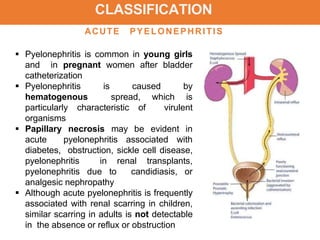
 The causeis commonly due to ascension of bacteria
through the urinary tract
 Although obstruction predisposes to pyelonephritis, most women
with pyelonephritis have no demonstrable functional or anatomic
defects.
 In men, pyelonephritis is always due to some functional or
anatomic defect
 Cystitis alone or anatomic defects may cause reflex
 The risk of bacterial ascension is greatly enhanced when ureteral
peristalsis in inhibited
CLASSIFICATION
ACUTE PYELONEPHRITIS
 Pyelonephritis is common in young girls
and in pregnant women after bladder
catheterization
 Pyelonephritis is caused by
hematogenous spread, which is
particularly characteristic of virulent
organisms
 Papillary necrosis may be evident in
acute pyelonephritis associated with
diabetes, obstruction, sickle cell disease,
pyelonephritis in renal transplants,
pyelonephritis due to candidiasis, or
analgesic nephropathy
 Although acute pyelonephritis is frequently
associated with renal scarring in children,
similar scarring in adults is not detectable
in the absence or reflux or obstruction
COMPLICATIONS
 Recurrent infections, especially in women who
experience two or more UTIs in a six-month period or
four or more within a year
 Permanent kidney damage from an acute or chronic
kidney infection (pyelonephritis) due to an untreated UTI
 Increased risk in a pregnant women of delivering low
birth weight or premature infants
 Urethral narrowing (stricture) in men from recurrent
urethritis, previously seen with gonococcal urethritis
 Sepsis, a potentially life-threatening complication of an
infection, especially if the infection its way up from urinary
tract to kidneys
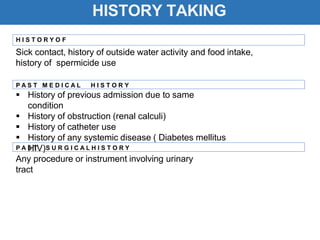
HISTORY TAKING
Can be all age and gender, more common in female due to short
urethra, pregnancy women
 Fever associated with chills and
rigor
 Voiding
 Dysuria
 Urgency
 Frequency
 Burning micturation
 Oliguria
 Hematuria
 Suprapubic pain
 Abdominal pain
Vomiting, malaise, loss of appetite,
pallor
A G E A N D G E N D E R
C H I E F C O M P L A I N T
A S S O C I A T E D S Y M P T O M S
HISTORY TAKING
Sick contact, history of outside water activity and food intake,
history of spermicide use
 History of previous admission due to same
condition
 History of obstruction (renal calculi)
 History of catheter use
 History of any systemic disease ( Diabetes mellitus
HIV)
Any procedure or instrument involving urinary
tract
H I S T O R Y O F
P A S T M E D I C A L H I S T O R Y
P A S T S U R G I C A L H I S T O R Y
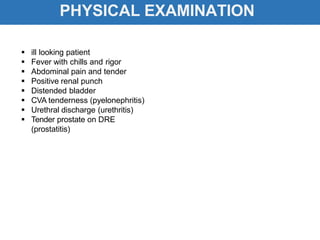
PHYSICAL EXAMINATION
 ill looking patient
 Fever with chills and rigor
 Abdominal pain and tender
 Positive renal punch
 Distended bladder
 CVA tenderness (pyelonephritis)
 Urethral discharge (urethritis)
 Tender prostate on DRE
(prostatitis)
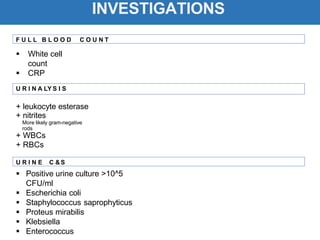
INVESTIGATIONS
 White cell
count
 CRP
+ leukocyte esterase
+ nitrites
More likely gram-negative
rods
+ WBCs
+ RBCs
 Positive urine culture >10^5
CFU/ml
 Escherichia coli
 Staphylococcus saprophyticus
 Proteus mirabilis
 Klebsiella
 Enterococcus
F U L L B L O O D C O U N T
U R I N A LY S I S
U R I N E C &S
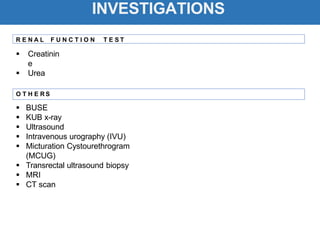
INVESTIGATIONS
 Creatinin
e
 Urea
 BUSE
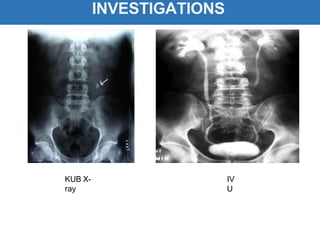
 KUB x-ray
 Ultrasound
 Intravenous urography (IVU)
 Micturation Cystourethrogram
(MCUG)
 Transrectal ultrasound biopsy
 MRI
 CT scan
R E N A L F U N C T I O N T E S T
O T H E R S
INVESTIGATIONS
KUB X-
ray
IV
U
INVESTIGATIONS
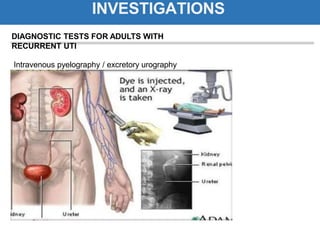
DIAGNOSTIC TESTS FOR ADULTS WITH
RECURRENT UTI
Intravenous pyelography / excretory urography
DIFFERENTIAL DIAGNOSIS
1. Acute pylonephritis
2. Acute cystitis
3. Urethritis
4. Acute prostatitis
5. Pelvic inflammatory
disease
MANAGEMENT
A N T I B I O T I C S
F O L L O W U P
INDICATIONS FOR HOSPITAL ADMISSION
 Severely ill or evidence of sepsis
 Presence of complications
 Concern about compliance
 Failure to respond to outpatient treatment
 Inability to maintain oral hydration or take medications, vomiting,
dehydration
 Uncertainty about the diagnosis
Patients who do not meet the above categories may be considered for treatment on
an
outpatient basis
S U P P O R T I V E T R E AT M E N T, L I F E ST Y L E A N D H OM E R E M E D I E S
MANAGEMENT
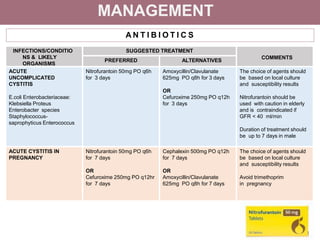
A N T I B I O T I C S
INFECTIONS/CONDITIO
NS & LIKELY
ORGANISMS
SUGGESTED TREATMENT
COMMENTS
PREFERRED ALTERNATIVES
ACUTE
UNCOMPLICATED
CYSTITIS
E.coli Enterobacteriaceae:
Klebsiella Proteus
Enterobacter species
Staphylococcus-
saprophyticus Enterococcus
Nitrofurantoin 50mg PO q6h
for 3 days
Amoxycillin/Clavulanate
625mg PO q8h for 3 days
OR
Cefuroxime 250mg PO q12h
for 3 days
The choice of agents should
be based on local culture
and susceptibility results
Nitrofurantoin should be
used with caution in elderly
and is contraindicated if
GFR < 40 ml/min
Duration of treatment should
be up to 7 days in male
ACUTE CYSTITIS IN
PREGNANCY
Nitrofurantoin 50mg PO q6h
for 7 days
OR
Cefuroxime 250mg PO q12hr
for 7 days
Cephalexin 500mg PO q12h
for 7 days
OR
Amoxycillin/Clavulanate
625mg PO q8h for 7 days
The choice of agents should
be based on local culture
and susceptibility results
Avoid trimethoprim
in pregnancy
MANAGEMENT
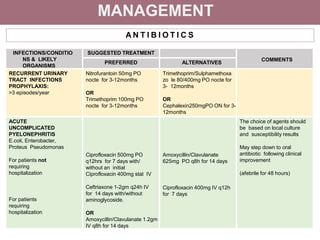
A N T I B I O T I C S
INFECTIONS/CONDITIO
NS & LIKELY
ORGANISMS
SUGGESTED TREATMENT
COMMENTS
PREFERRED ALTERNATIVES
RECURRENT URINARY
TRACT INFECTIONS
PROPHYLAXIS:
>3 episodes/year
Nitrofurantoin 50mg PO
nocte for 3-12months
OR
Trimethoprim 100mg PO
nocte for 3-12months
Trimethoprim/Sulphamethoxa
zo le 80/400mg PO nocte for
3- 12months
OR
Cephalexin250mgPO ON for 3-
12months
ACUTE
UNCOMPLICATED
PYELONEPHRITIS
E.coli, Enterobacter,
Proteus Pseudomonas
For patients not
requiring
hospitalization
For patients
requiring
hospitalization
Ciprofloxacin 500mg PO
q12hrs for 7 days with/
without an initial
Ciprofloxacin 400mg stat IV
Ceftriaxone 1-2gm q24h IV
for 14 days with/without
aminoglycoside.
OR
Amoxycillin/Clavulanate 1.2gm
IV q8h for 14 days
Amoxycillin/Clavulanate
625mg PO q8h for 14 days
Ciprofloxacin 400mg IV q12h
for 7 days
The choice of agents should
be based on local culture
and susceptibility results
May step down to oral
antibiotic following clinical
improvement
(afebrile for 48 hours)
MANAGEME
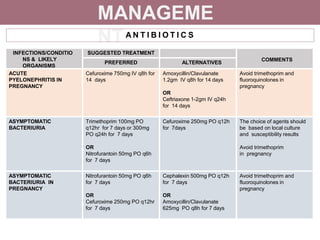
NTA N T I B I O T I C S
INFECTIONS/CONDITIO
NS & LIKELY
ORGANISMS
SUGGESTED TREATMENT
COMMENTS
PREFERRED ALTERNATIVES
ACUTE
PYELONEPHRITIS IN
PREGNANCY
Cefuroxime 750mg IV q8h for
14 days
Amoxycillin/Clavulanate
1.2gm IV q8h for 14 days
OR
Ceftriaxone 1-2gm IV q24h
for 14 days
Avoid trimethoprim and
fluoroquinolones in
pregnancy
ASYMPTOMATIC
BACTERIURIA
Trimethoprim 100mg PO
q12hr for 7 days or 300mg
PO q24h for 7 days
OR
Nitrofurantoin 50mg PO q6h
for 7 days
Cefuroxime 250mg PO q12h
for 7days
The choice of agents should
be based on local culture
and susceptibility results
Avoid trimethoprim
in pregnancy
ASYMPTOMATIC
BACTERIURIA IN
PREGNANCY
Nitrofurantoin 50mg PO q6h
for 7 days
OR
Cefuroxime 250mg PO q12hr
for 7 days
Cephalexin 500mg PO q12h
for 7 days
OR
Amoxycillin/Clavulanate
625mg PO q8h for 7 days
Avoid trimethoprim and
fluoroquinolones in
pregnancy
MANAGEME
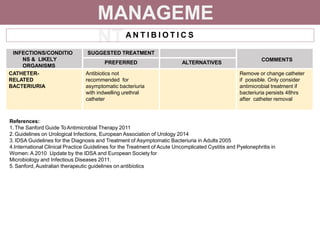
NTA N T I B I O T I C S
INFECTIONS/CONDITIO
NS & LIKELY
ORGANISMS
SUGGESTED TREATMENT
COMMENTS
PREFERRED ALTERNATIVES
CATHETER-
RELATED
BACTERIURIA
Antibiotics not
recommended for
asymptomatic bacteriuria
with indwelling urethral
catheter
Remove or change catheter
if possible. Only consider
antimicrobial treatment if
bacteriuria persists 48hrs
after catheter removal
References:
1. The Sanford Guide ToAntimicrobial Therapy 2011
2. Guidelines on Urological Infections, European Association of Urology 2014
3. IDSA Guidelines for the Diagnosis and Treatment of Asymptomatic Bacteriuria in Adults 2005
4.International Clinical Practice Guidelines for the Treatment of Acute Uncomplicated Cystitis and Pyelonephritis in
Women: A 2010 Update by the IDSA and European Society for
Microbiology and Infectious Diseases 2011.
5. Sanford, Australian therapeutic guidelines on antibiotics
MANAGEMENT
S U P P O R T I V ET X , L I F E S T Y L E A N D H O M E R E M E D I E S
Urinary tract infections can be painful, but you can take steps to ease your
discomfort until antibiotics treat the infection.
1. Fever can be treated with anti-pyretics
2. Pain can be treated with analgesics
3. Drink plenty of water. Water helps to dilute your urine and flush out bacteria.
4. Avoid drinks that may irritate your bladder. Avoid coffee, alcohol, and soft
drinks containing citrus juices or caffeine until your infection has cleared. They
can irritate your bladder and tend to aggravate your frequent or urgent need to
urinate.
5. Use a heating pad. Apply a warm, but not hot, heating pad to your abdomen to
minimize
bladder pressure or discomfort.
6. Cranberry juice – may have infection fighting properties (however results
are not conclusive)
MANAGEMENT
1. Perform urine analysis to ensure that causative agent has been eradicated
1. A urine culture obtained 1-2 weeks after completing therapy & thereafter as
clinically
indicated may also be done
1. Further genitourinary investigation should be made in cases of:
 Delayed or incomplete response to appropriate antimicrobial therapy
 Early recurrence of infection after therapy
4. Further follow-up to identify & correct anatomical, functional or metabolic
abnormalities
is indicated
T
QUARIES?????
THANK YOU

UTI urinary tract infection final.pptx

  • 1.
    URINARY TRACT INFECTIONS C.Ushasree Dept. of pharmacology
  • 2.
  • 3.
  • 4.
    INTRODUCTION  Urinary tractinfection (UTI) is an infection in any part of urinary system – kidneys, ureters, bladder and urethra  UTI is common, particularly in women, most often occurring in a normal urinary tract and usually as cystitis; half of all women will experience a UTI in their lifetime  They can occur in either an uncomplicated host setting, where there is no underlying structural or functional abnormality of the patient’s genitourinary tract, or complicated, where there is  It is uncommon in men and children; when diagnosed, it often occurs in an abnormal urinary tract
  • 5.
     UTI isnot alwaysuncomplicated; recurrent infection causes life considerable morbidity and infection can lead to threatening Gram negative septicemia and kidney failure  It can be: act infection – urethritis & cystitis i. Upper tract infection – acute pyelonephritis  Growth of >105 organisms/ml from mid- stream clean catch urine samples is diagnostic of UTI  In symptomatic patients, small number of bacteria may also be diagnosed as UTI
  • 6.
    PATHOPHYSIOLOGY B A CT E R I A  Specific means bacteria causing granulomas with specific histopathology: i. TB Bacilli ii. Syphilis iii. Fungal infection  Non – specific: i. E – Coli (80%) ii. Klebsiella iii. Proteus iv. Enterobacter sp.
  • 7.
    PATHOPHYSIOLOGY PA R AS I T I C  Bilharziasis  Echinococcus granulosus (Hydatid cyst) P R O T O Z O A L H E L M I N I T H I C  Trichomonas vaginalis  Pin worms or Enterobius
  • 8.
    PATHOPHYSIOLOGY UNCOMPLICATED UTI Uncomplicated UTIis usually considered to be cystitis or pyelonephritis that occurs in premenopausal adult women with: i. No structural or functional abnormality of urinary tract ii. Not pregnant iii. Have no significant comorbidity that could lead to more serious outcomes COMPLICATED UTI Can involve either sex at any age. UTI is considered complicated if: i. The patient is a child, is pregnant, ii. Patient has any of the following:  A structural or functional urinary abnormality and obstruction of urine flow  A comorbidity that increases the risk of acquiring infection or resistance to treatment such as poorly controlled diabetes, chronic kidney disease or immunocompromise  Recent instrumentation or surgery of urinary tract
  • 9.
    PATHOPHYSIOLOGY RO UTE OF INFEC TIO N  Ascending  Iatrogenic  Hematogenous  Lymphogenous  Extension from neighboring organs  From a focus in the kidney or prostate
  • 10.
    PATHOPHYSIOLOGY Colonization of theurethra & migration to the bladder Inflammatory response in the bladder & fibrinogen accumulation in the catheter Colonization & invasion of bladder, mediated by pili & adhesins Neutrophil infiltration Bacterial multiplication & immune system subversion Biofilm formation Epithelial damage by bacterial toxins & protease Ascension to the kidneys Contamination of the periureteral area with a uropathogen from the gut
  • 11.
    INNATE HOST DEFENSE Innatehost defense prevents UTIs in the following ways: U R I N E  Acidic pH: intolerable by pathogens  High urine osmolality  Urinary inhibitors of bacterial adherence  Competitive inhibitors of attachment to uroepithelial cells  Mechanical flushing of urine flow M U C O S A L I M M U N I T Y  Urothelial secretion of cytokines and chemokines lining: of bacteria l  Mucopolysaccharid es increases difficulty penetration  Mucosal IgA  In men: prostatic secretions contain bactericidal zinc and urethra is longer
  • 12.
    RISK FACTORS Factors resultingin compromise of normal host defenses to bacterial colonization are an important step in pathogenesis of UTIs I AT R O G E N I C / D R U G S  Indwelling catheter  Antibiotic use  Spermicides B E H AV I O U R A L  Voiding dysfunction  Frequent or recent sexual intercourse A N AT O M I C / P H Y S I O L O G I C G E N E T I C  Vesicoureteral reflux  Female sex  pregnancy  Familial tendency  Susceptible uroepithelial cells  Vaginal mucus properties
  • 13.
    CLASSIFICATION URETHRITIS  Infection ofthe urethra with bacteria occurs when organisms that gain access to it acutely or chronically colonize the numerous periurethral glands in the bulbous and pendulous portions of the male urethra and in the entire female urethra.  The sexually transmitted pathogens Chlamydia trachomatis, Neisseria gonorrhoeae and herpes simplex virus are common causes in both sexes
  • 14.
    CLASSIFICATION • Infection ofthe bladder :It is common in women, in whom cases of uncomplicated cystitis are usually preceded by sexual intercourse (honeymoon cystitis) • In men, bacterial infection of the bladder is usually complicated and usually from ascending infection from the urethra or prostate or is secondary to urethral instrumentation • The most common cause of recurrent cystitis in men is chronic bacterial prostatitis.
  • 15.
    CLASSIFICATION ACUTE URETHRAL SYNDROME Occurs in women, is a syndrome involving dysuria, frequency and pyuria, which thus resembles cystitis  However, in acute urethral syndrome (unlike in cystitis), routine urine cultures are either negative or show colony counts that lower than the traditional criteria for diagnosis of bacterial cystitis  Urethritis is a possible cause because causative agents include Chlamydia trachomatis and Ureaplasma urealyticum, which are not detected on routine urine culture
  • 16.
    CLASSIFICATION ASYMPTOMATIC BACTERIURIA  Absenceof UTI signs or symptoms in a patient whose urine culture satisfies criteria for UTI  Pyuria may or may not be present  Because it is asymptomatic, such bacteriuria is found mainly when high-risk patients are screened or when urine culture is done for other reasons  Screening patients for asymptomatic bacteriuria is indicated for those at risk of complications of the bacteriuria is untreated. Such patients include: i. Pregnant women at 12 to 16 weeks’ gestation or at the first prenatal visit ii. Patients who have had a kidney transplant within the previous 6 months iii. Young children with gross VUR iv. Before certain invasive GU procedures that can cause mucosal bleeding
  • 17.
    CLASSIFICATION ASYMPTOMATIC BACTERIURIA  Certainpatients (e.g., postmenopausal women; patients with controlled diabetes; patients with ongoing use of urinary tract foreign objects such as stents, nephrostomy tubes, and indwelling catheters) often have persistent asymptomatic bacteriuria and sometimes pyuria.  If they are asymptomatic, these patients should not be screened routinely, because they are at low risk  In patients with indwelling catheters, treatment of asymptomatic bacteriuria often fails to clear the bacteriuria and only leads to development of antibiotic-resistant organisms
  • 18.
    CLASSIFICATION ACUTE PYELONEPHRITIS  It’san infection of the kidney parenchyma  In women, about 20% of community – acquired bacteremia are due to pyelonephritis  Pyelonephritis is uncommon in men with a normal urinary tract  The causeis commonly due to ascension of bacteria through the urinary tract  Although obstruction predisposes to pyelonephritis, most women with pyelonephritis have no demonstrable functional or anatomic defects.  In men, pyelonephritis is always due to some functional or anatomic defect  Cystitis alone or anatomic defects may cause reflex  The risk of bacterial ascension is greatly enhanced when ureteral peristalsis in inhibited
  • 19.
    CLASSIFICATION ACUTE PYELONEPHRITIS  Pyelonephritisis common in young girls and in pregnant women after bladder catheterization  Pyelonephritis is caused by hematogenous spread, which is particularly characteristic of virulent organisms  Papillary necrosis may be evident in acute pyelonephritis associated with diabetes, obstruction, sickle cell disease, pyelonephritis in renal transplants, pyelonephritis due to candidiasis, or analgesic nephropathy  Although acute pyelonephritis is frequently associated with renal scarring in children, similar scarring in adults is not detectable in the absence or reflux or obstruction
  • 20.
    COMPLICATIONS  Recurrent infections,especially in women who experience two or more UTIs in a six-month period or four or more within a year  Permanent kidney damage from an acute or chronic kidney infection (pyelonephritis) due to an untreated UTI  Increased risk in a pregnant women of delivering low birth weight or premature infants  Urethral narrowing (stricture) in men from recurrent urethritis, previously seen with gonococcal urethritis  Sepsis, a potentially life-threatening complication of an infection, especially if the infection its way up from urinary tract to kidneys
  • 21.
    HISTORY TAKING Can beall age and gender, more common in female due to short urethra, pregnancy women  Fever associated with chills and rigor  Voiding  Dysuria  Urgency  Frequency  Burning micturation  Oliguria  Hematuria  Suprapubic pain  Abdominal pain Vomiting, malaise, loss of appetite, pallor A G E A N D G E N D E R C H I E F C O M P L A I N T A S S O C I A T E D S Y M P T O M S
  • 22.
    HISTORY TAKING Sick contact,history of outside water activity and food intake, history of spermicide use  History of previous admission due to same condition  History of obstruction (renal calculi)  History of catheter use  History of any systemic disease ( Diabetes mellitus HIV) Any procedure or instrument involving urinary tract H I S T O R Y O F P A S T M E D I C A L H I S T O R Y P A S T S U R G I C A L H I S T O R Y
  • 23.
    PHYSICAL EXAMINATION  illlooking patient  Fever with chills and rigor  Abdominal pain and tender  Positive renal punch  Distended bladder  CVA tenderness (pyelonephritis)  Urethral discharge (urethritis)  Tender prostate on DRE (prostatitis)
  • 24.
    INVESTIGATIONS  White cell count CRP + leukocyte esterase + nitrites More likely gram-negative rods + WBCs + RBCs  Positive urine culture >10^5 CFU/ml  Escherichia coli  Staphylococcus saprophyticus  Proteus mirabilis  Klebsiella  Enterococcus F U L L B L O O D C O U N T U R I N A LY S I S U R I N E C &S
  • 25.
    INVESTIGATIONS  Creatinin e  Urea BUSE  KUB x-ray  Ultrasound  Intravenous urography (IVU)  Micturation Cystourethrogram (MCUG)  Transrectal ultrasound biopsy  MRI  CT scan R E N A L F U N C T I O N T E S T O T H E R S
  • 26.
  • 27.
    INVESTIGATIONS DIAGNOSTIC TESTS FORADULTS WITH RECURRENT UTI Intravenous pyelography / excretory urography
  • 28.
    DIFFERENTIAL DIAGNOSIS 1. Acutepylonephritis 2. Acute cystitis 3. Urethritis 4. Acute prostatitis 5. Pelvic inflammatory disease
  • 29.
    MANAGEMENT A N TI B I O T I C S F O L L O W U P INDICATIONS FOR HOSPITAL ADMISSION  Severely ill or evidence of sepsis  Presence of complications  Concern about compliance  Failure to respond to outpatient treatment  Inability to maintain oral hydration or take medications, vomiting, dehydration  Uncertainty about the diagnosis Patients who do not meet the above categories may be considered for treatment on an outpatient basis S U P P O R T I V E T R E AT M E N T, L I F E ST Y L E A N D H OM E R E M E D I E S
  • 30.
    MANAGEMENT A N TI B I O T I C S INFECTIONS/CONDITIO NS & LIKELY ORGANISMS SUGGESTED TREATMENT COMMENTS PREFERRED ALTERNATIVES ACUTE UNCOMPLICATED CYSTITIS E.coli Enterobacteriaceae: Klebsiella Proteus Enterobacter species Staphylococcus- saprophyticus Enterococcus Nitrofurantoin 50mg PO q6h for 3 days Amoxycillin/Clavulanate 625mg PO q8h for 3 days OR Cefuroxime 250mg PO q12h for 3 days The choice of agents should be based on local culture and susceptibility results Nitrofurantoin should be used with caution in elderly and is contraindicated if GFR < 40 ml/min Duration of treatment should be up to 7 days in male ACUTE CYSTITIS IN PREGNANCY Nitrofurantoin 50mg PO q6h for 7 days OR Cefuroxime 250mg PO q12hr for 7 days Cephalexin 500mg PO q12h for 7 days OR Amoxycillin/Clavulanate 625mg PO q8h for 7 days The choice of agents should be based on local culture and susceptibility results Avoid trimethoprim in pregnancy
  • 31.
    MANAGEMENT A N TI B I O T I C S INFECTIONS/CONDITIO NS & LIKELY ORGANISMS SUGGESTED TREATMENT COMMENTS PREFERRED ALTERNATIVES RECURRENT URINARY TRACT INFECTIONS PROPHYLAXIS: >3 episodes/year Nitrofurantoin 50mg PO nocte for 3-12months OR Trimethoprim 100mg PO nocte for 3-12months Trimethoprim/Sulphamethoxa zo le 80/400mg PO nocte for 3- 12months OR Cephalexin250mgPO ON for 3- 12months ACUTE UNCOMPLICATED PYELONEPHRITIS E.coli, Enterobacter, Proteus Pseudomonas For patients not requiring hospitalization For patients requiring hospitalization Ciprofloxacin 500mg PO q12hrs for 7 days with/ without an initial Ciprofloxacin 400mg stat IV Ceftriaxone 1-2gm q24h IV for 14 days with/without aminoglycoside. OR Amoxycillin/Clavulanate 1.2gm IV q8h for 14 days Amoxycillin/Clavulanate 625mg PO q8h for 14 days Ciprofloxacin 400mg IV q12h for 7 days The choice of agents should be based on local culture and susceptibility results May step down to oral antibiotic following clinical improvement (afebrile for 48 hours)
  • 32.
    MANAGEME NTA N TI B I O T I C S INFECTIONS/CONDITIO NS & LIKELY ORGANISMS SUGGESTED TREATMENT COMMENTS PREFERRED ALTERNATIVES ACUTE PYELONEPHRITIS IN PREGNANCY Cefuroxime 750mg IV q8h for 14 days Amoxycillin/Clavulanate 1.2gm IV q8h for 14 days OR Ceftriaxone 1-2gm IV q24h for 14 days Avoid trimethoprim and fluoroquinolones in pregnancy ASYMPTOMATIC BACTERIURIA Trimethoprim 100mg PO q12hr for 7 days or 300mg PO q24h for 7 days OR Nitrofurantoin 50mg PO q6h for 7 days Cefuroxime 250mg PO q12h for 7days The choice of agents should be based on local culture and susceptibility results Avoid trimethoprim in pregnancy ASYMPTOMATIC BACTERIURIA IN PREGNANCY Nitrofurantoin 50mg PO q6h for 7 days OR Cefuroxime 250mg PO q12hr for 7 days Cephalexin 500mg PO q12h for 7 days OR Amoxycillin/Clavulanate 625mg PO q8h for 7 days Avoid trimethoprim and fluoroquinolones in pregnancy
  • 33.
    MANAGEME NTA N TI B I O T I C S INFECTIONS/CONDITIO NS & LIKELY ORGANISMS SUGGESTED TREATMENT COMMENTS PREFERRED ALTERNATIVES CATHETER- RELATED BACTERIURIA Antibiotics not recommended for asymptomatic bacteriuria with indwelling urethral catheter Remove or change catheter if possible. Only consider antimicrobial treatment if bacteriuria persists 48hrs after catheter removal References: 1. The Sanford Guide ToAntimicrobial Therapy 2011 2. Guidelines on Urological Infections, European Association of Urology 2014 3. IDSA Guidelines for the Diagnosis and Treatment of Asymptomatic Bacteriuria in Adults 2005 4.International Clinical Practice Guidelines for the Treatment of Acute Uncomplicated Cystitis and Pyelonephritis in Women: A 2010 Update by the IDSA and European Society for Microbiology and Infectious Diseases 2011. 5. Sanford, Australian therapeutic guidelines on antibiotics
  • 34.
    MANAGEMENT S U PP O R T I V ET X , L I F E S T Y L E A N D H O M E R E M E D I E S Urinary tract infections can be painful, but you can take steps to ease your discomfort until antibiotics treat the infection. 1. Fever can be treated with anti-pyretics 2. Pain can be treated with analgesics 3. Drink plenty of water. Water helps to dilute your urine and flush out bacteria. 4. Avoid drinks that may irritate your bladder. Avoid coffee, alcohol, and soft drinks containing citrus juices or caffeine until your infection has cleared. They can irritate your bladder and tend to aggravate your frequent or urgent need to urinate. 5. Use a heating pad. Apply a warm, but not hot, heating pad to your abdomen to minimize bladder pressure or discomfort. 6. Cranberry juice – may have infection fighting properties (however results are not conclusive)
  • 35.
    MANAGEMENT 1. Perform urineanalysis to ensure that causative agent has been eradicated 1. A urine culture obtained 1-2 weeks after completing therapy & thereafter as clinically indicated may also be done 1. Further genitourinary investigation should be made in cases of:  Delayed or incomplete response to appropriate antimicrobial therapy  Early recurrence of infection after therapy 4. Further follow-up to identify & correct anatomical, functional or metabolic abnormalities is indicated
  • 36.
  • 37.