Embracing Technology  and the Web in School Mark E. Moran, Founder, Dulcinea Media Fall 2010
Our mission: to help educators teach students how to use the Web effectively.
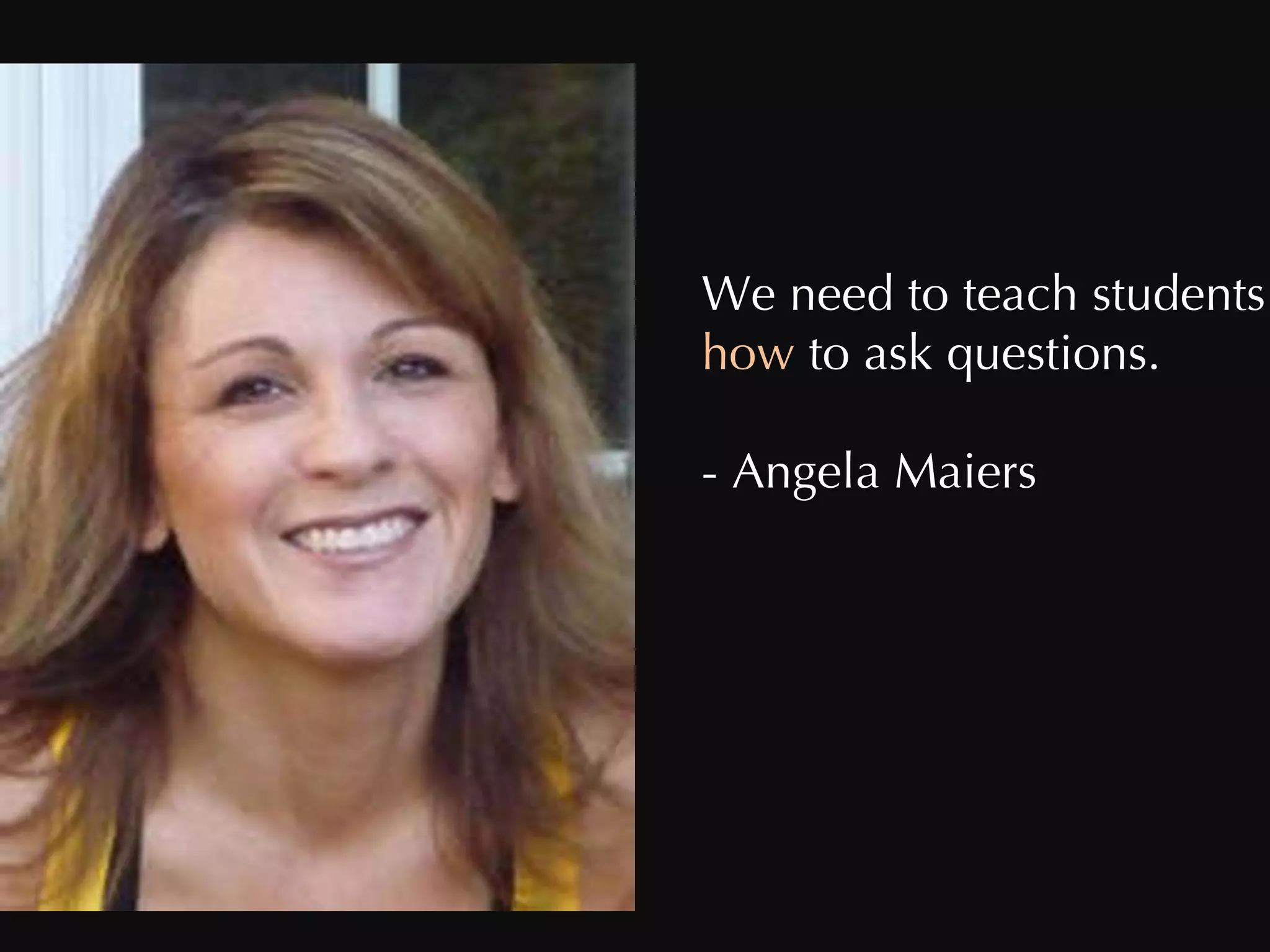
We need to teach students how  to ask questions. - Angela Maiers
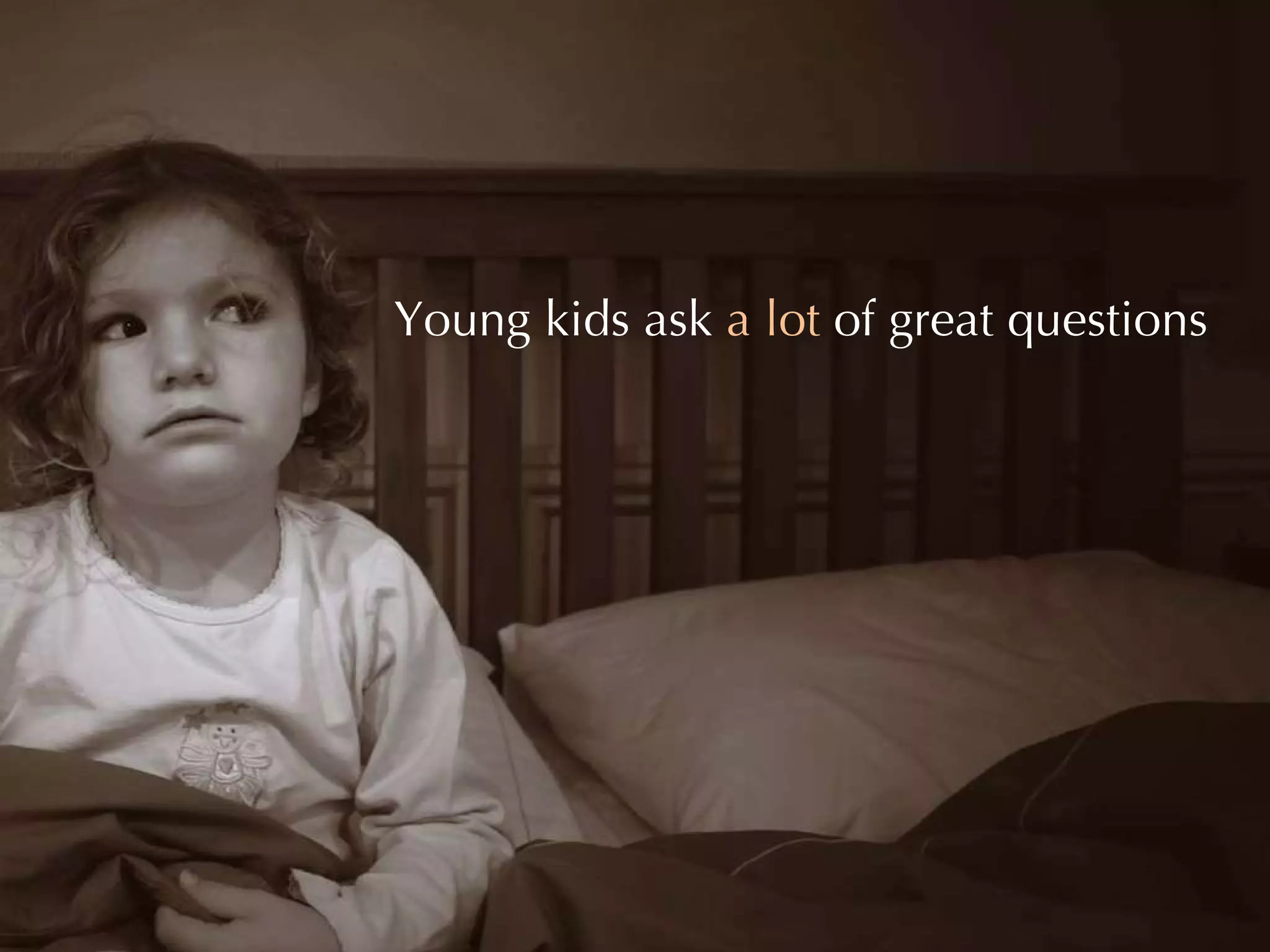
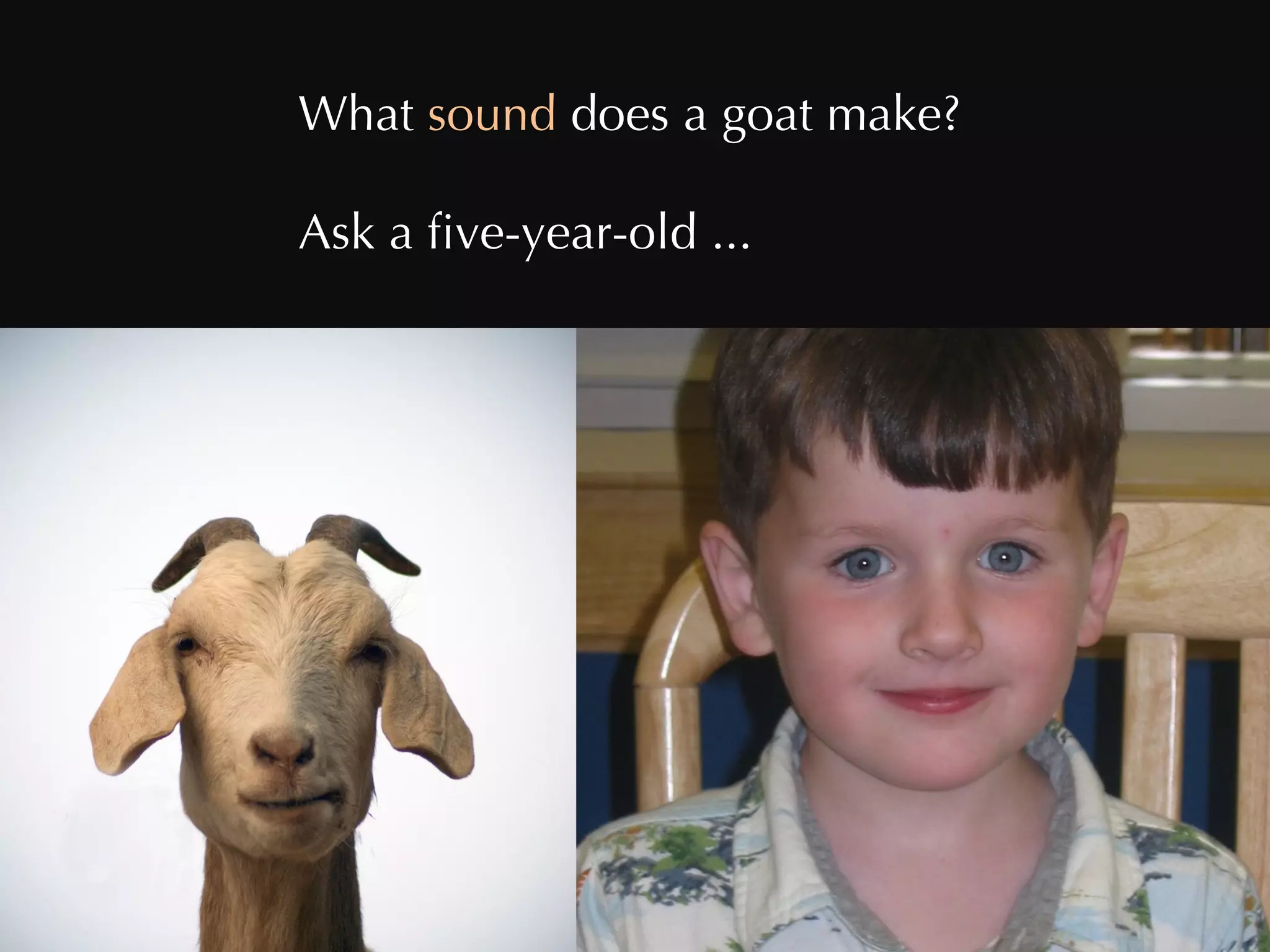
Young kids ask  a lot  of great questions
What  sound  does a goat make? Ask a five-year-old ...
  Let’s  it !
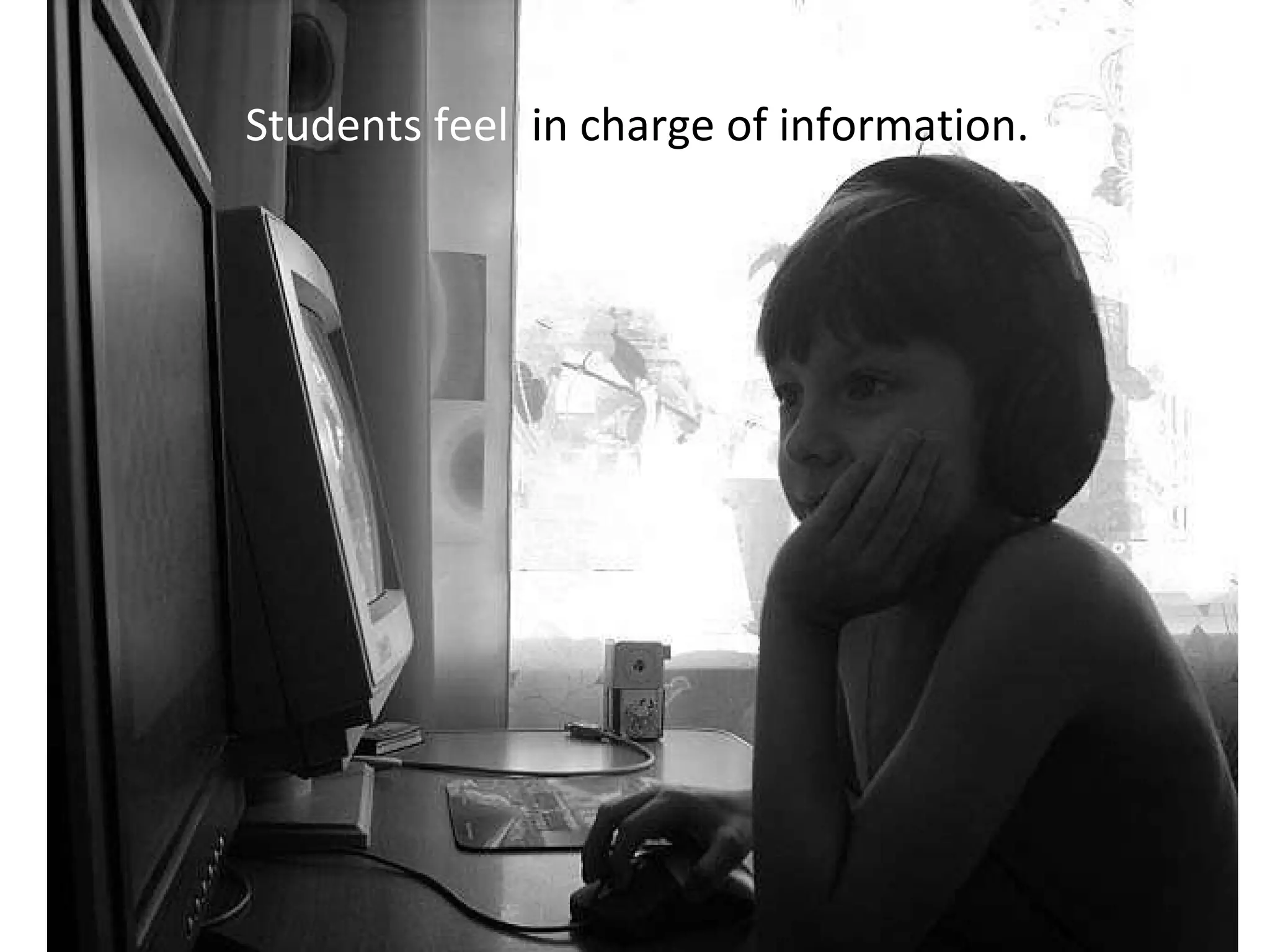
The Internet defines the way that young people learn, communicate, and create. Students feel  in charge of information.
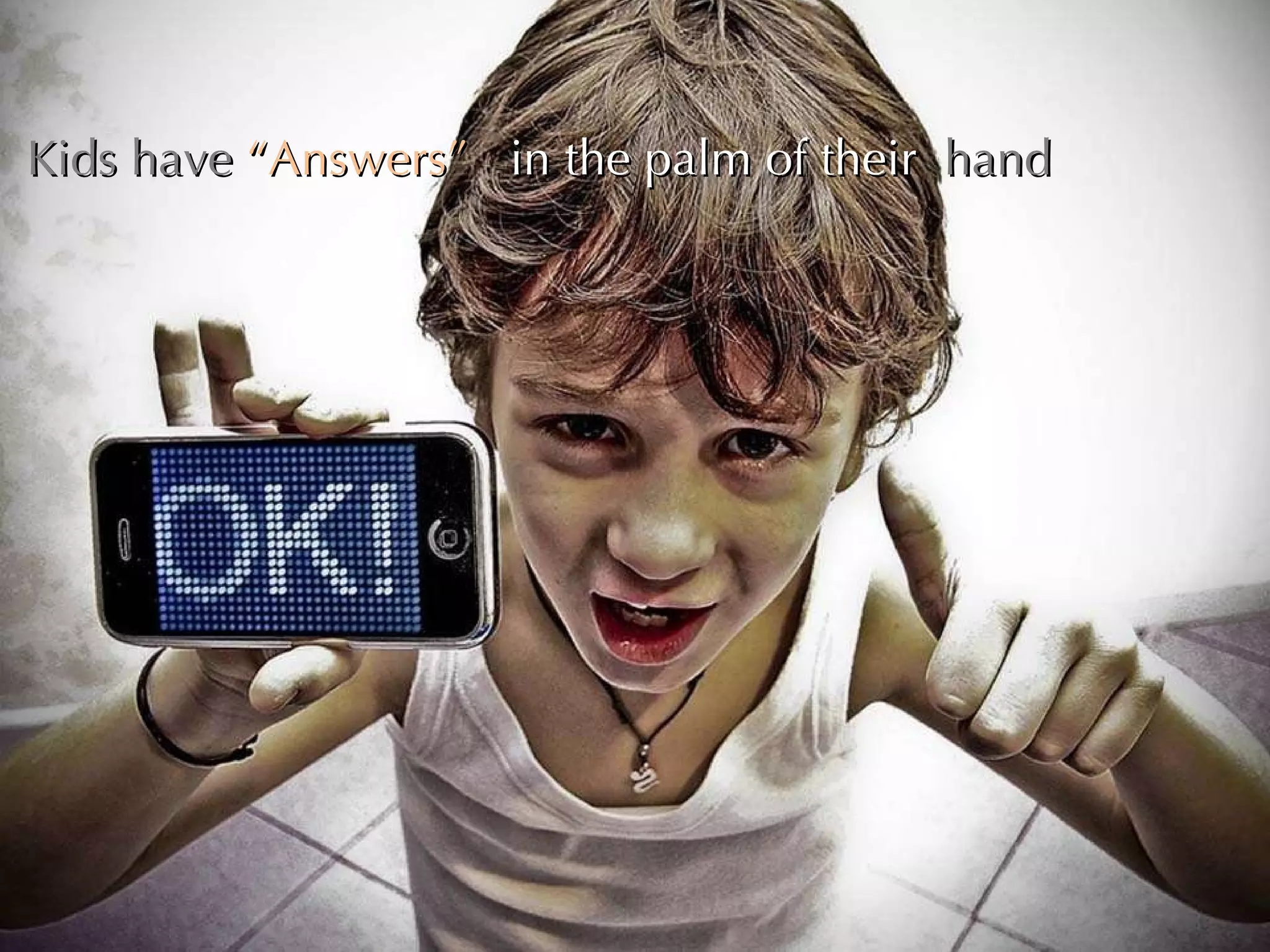
Kids have  “Answers”   in the palm of their  hand
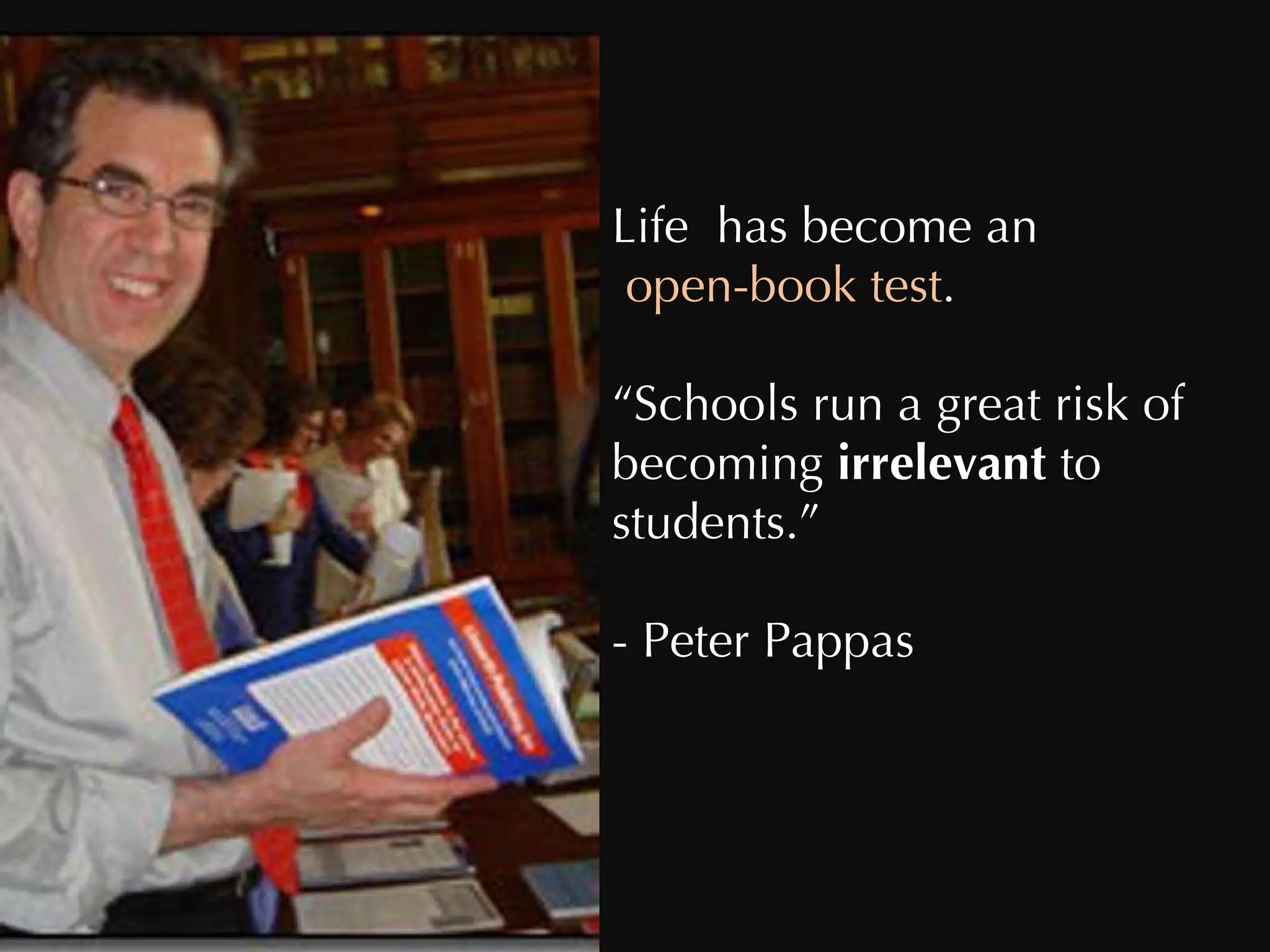
Life  has become an open-book test . “ Schools run a great risk of becoming  irrelevant  to students.” - Peter Pappas
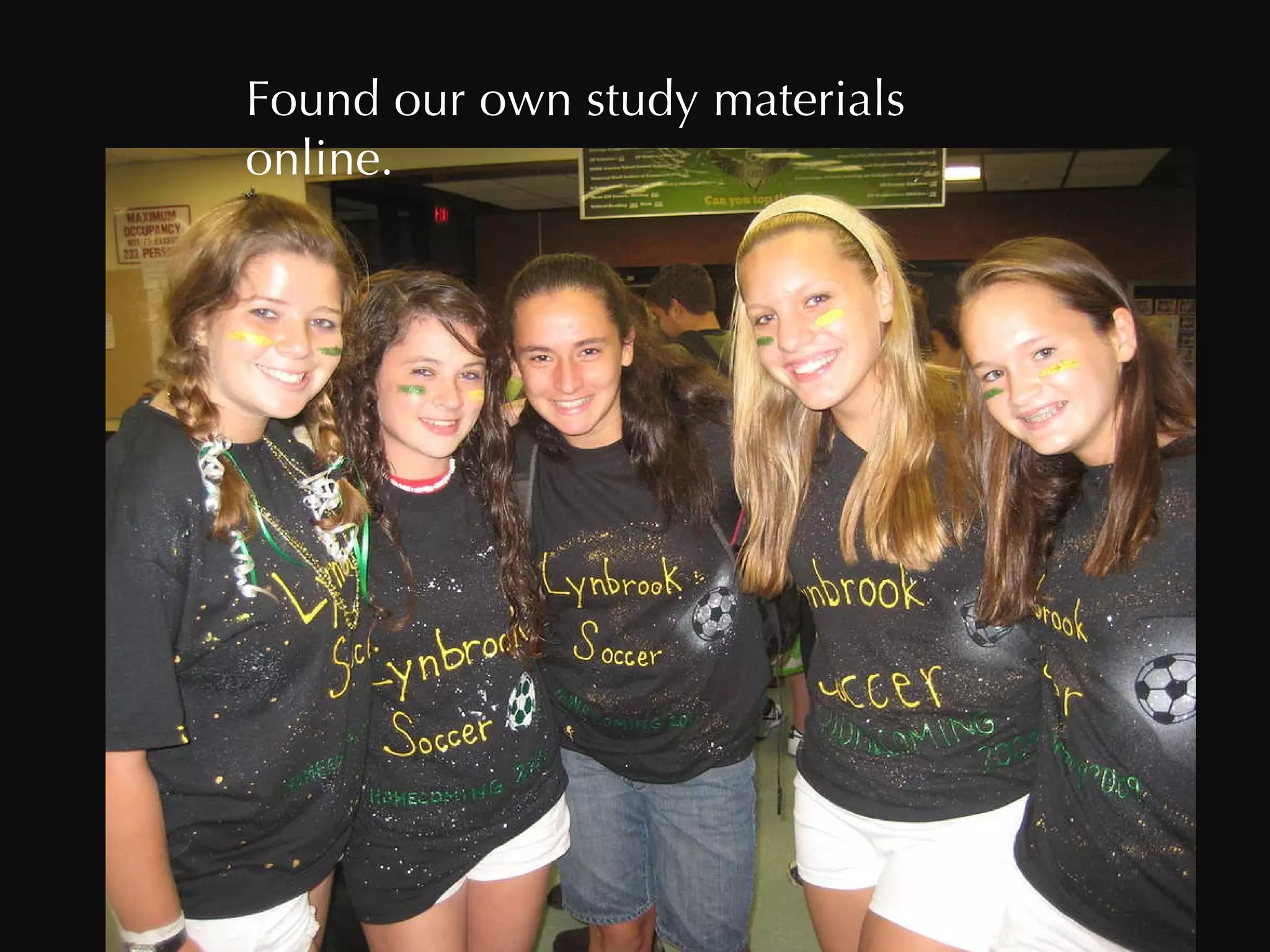
Found our own study materials online.
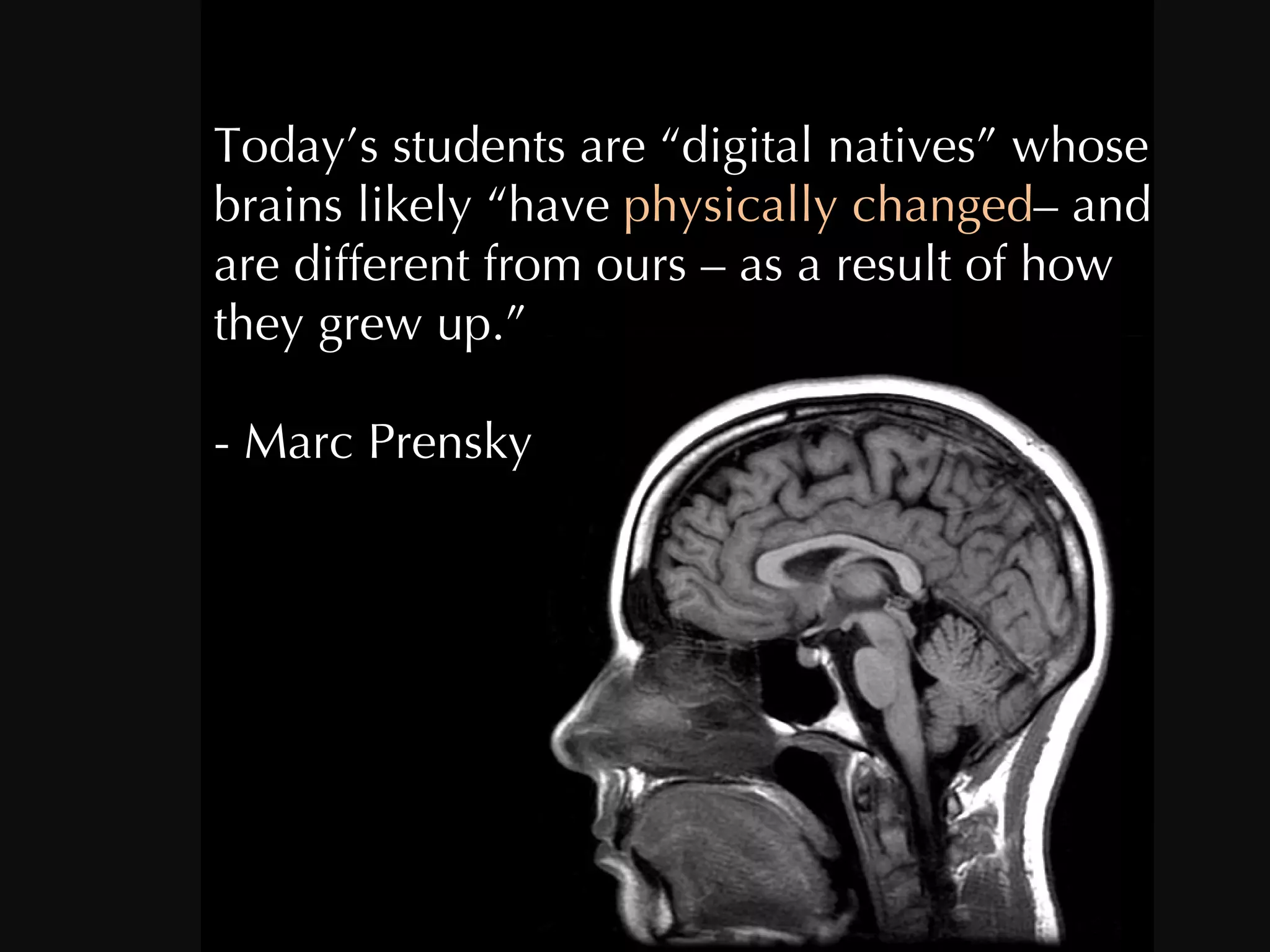
Today’s students are “digital natives” whose brains likely “have  physically changed – and are different from ours – as a result of how they grew up.” - Marc Prensky
 
Question: How do you begin your search?
Almost half of middle school students chose  “I type a question.”
Question: How do you know if a source is a good source to use for a school paper?
Answer: If it “ looks good”  or “sounds good.” If it has the “correct” information.
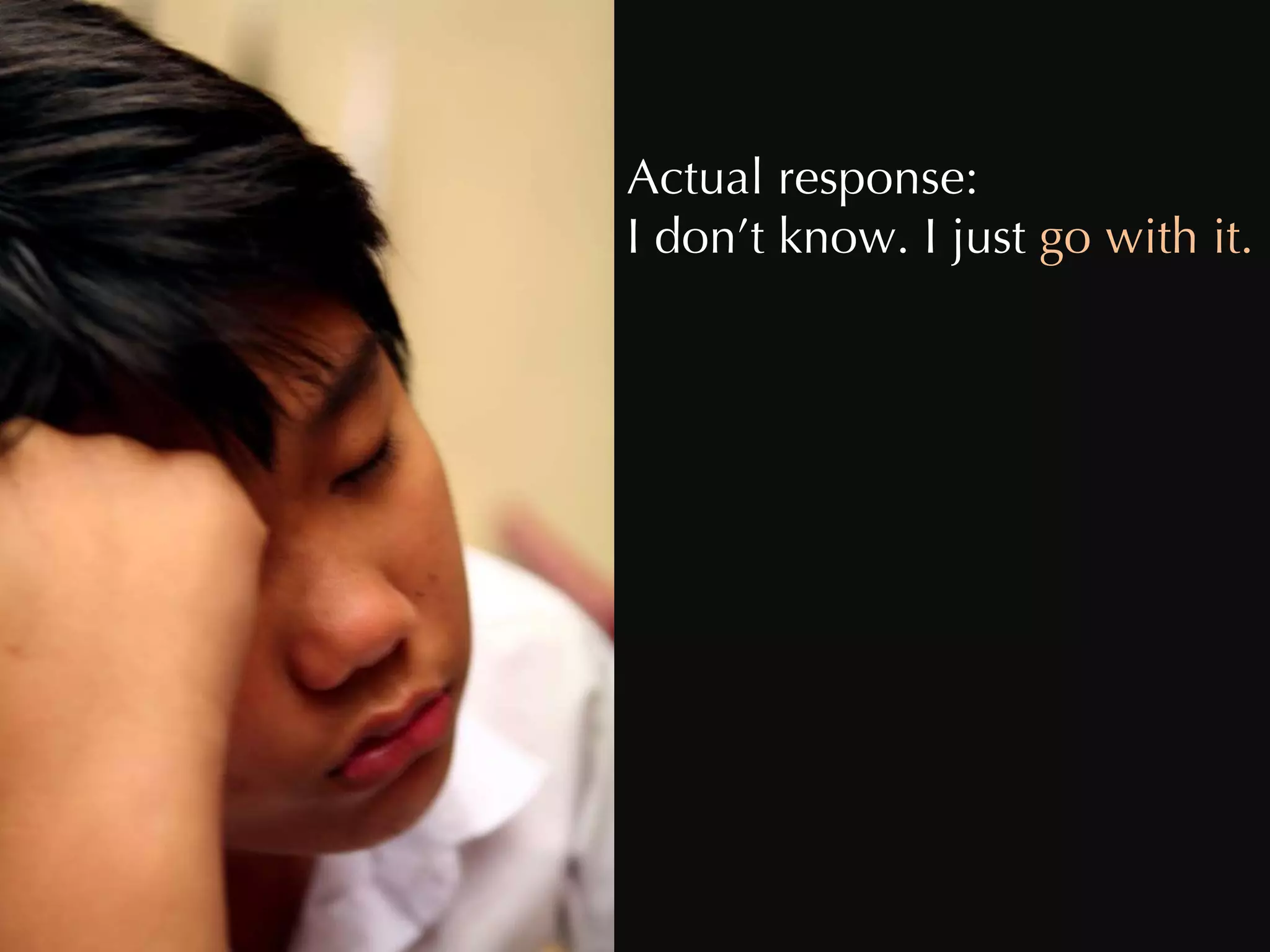
Actual response: I don’t know. I just  go with it.
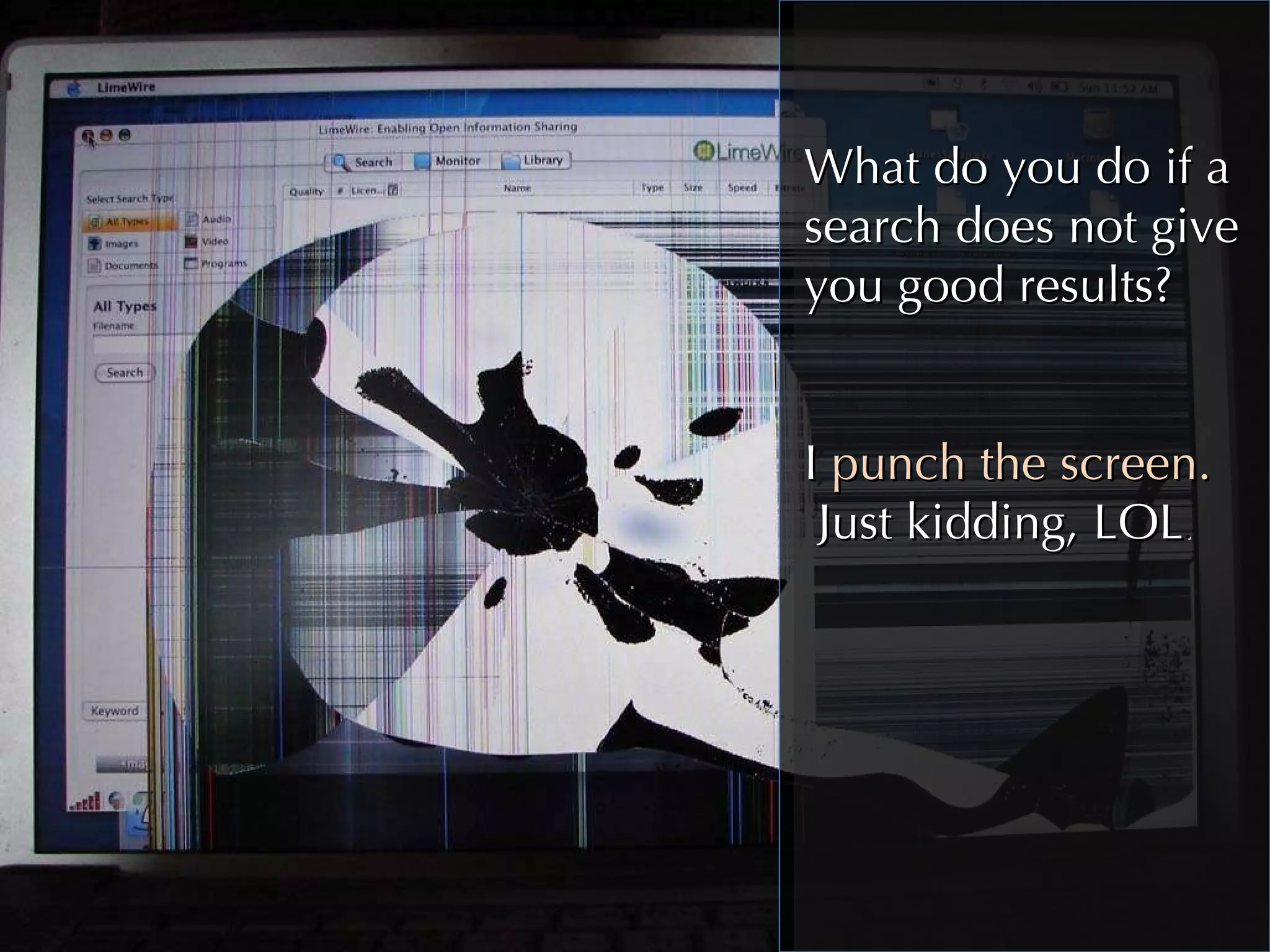
What do you do if a search does not give you good results? I  punch the screen. Just kidding, LOL .
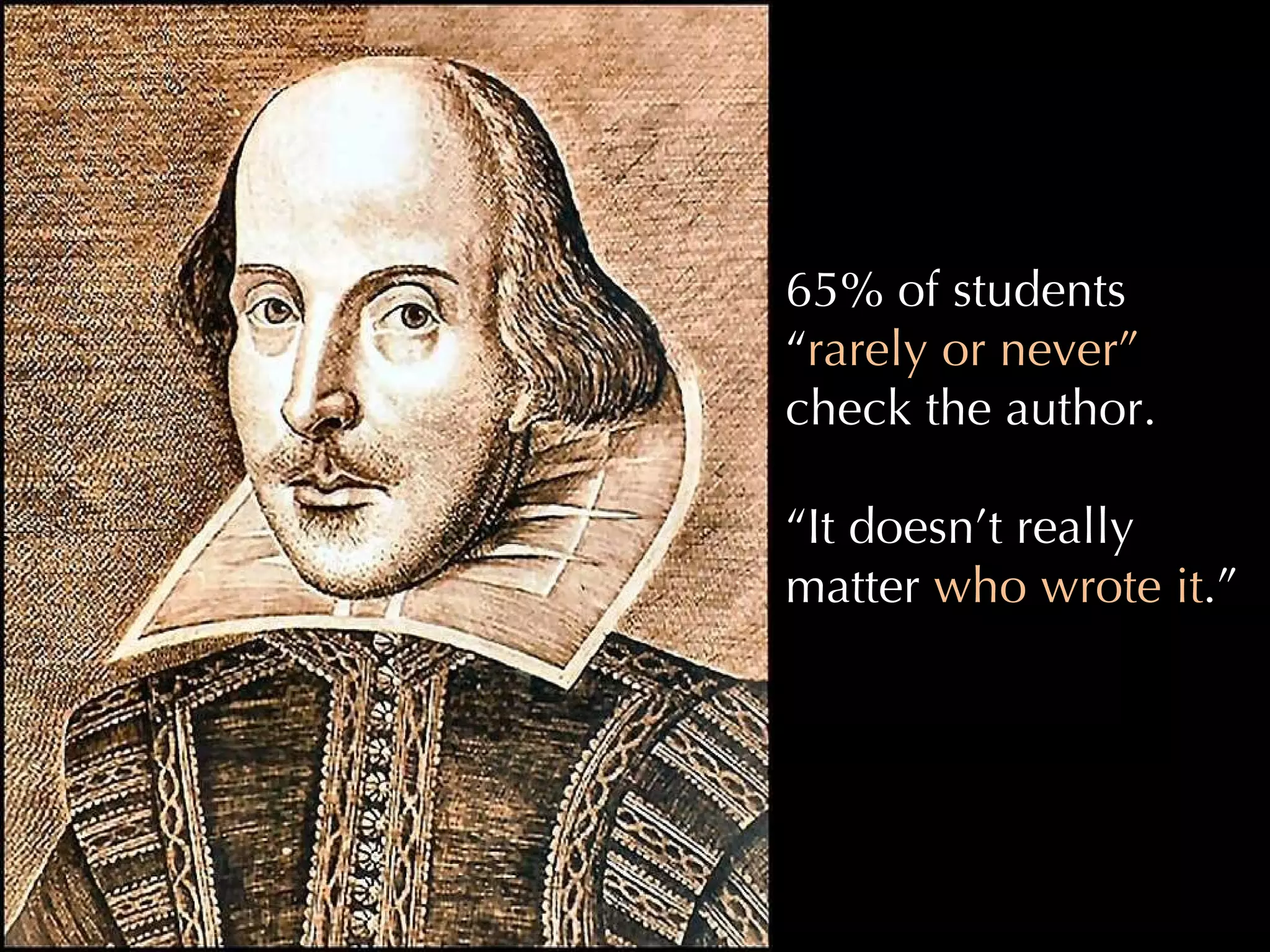
65% of students “ rarely or never”  check the author. “ It doesn’t really matter  who wrote it .” ..
50% of high school students and 72% of middle school students say they  “rarely or never”  check the date of an article.
I  can’t find  it.
Not one of  the 600 college students surveyed  "could give an adequate conceptual definition of how Google returns results.”  6   --ERIAL study (Illinois )
In Conclusion…. A majority of students: don’t know how to form a sound search query;  don’t have a strategy for dealing with poor results;  can’t articulate how they know content is credible; don’t check the author or date of an article.
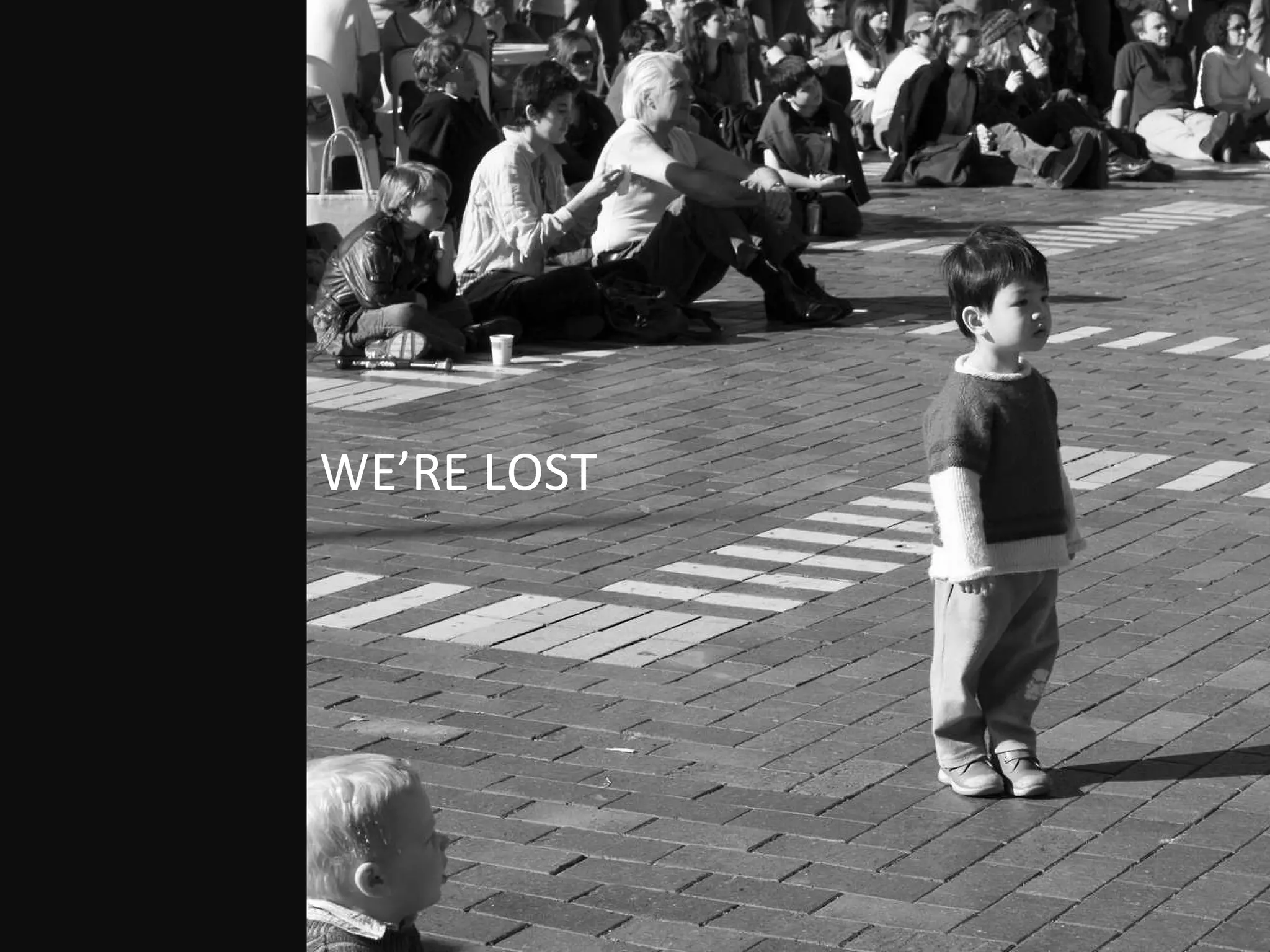
WE’RE LOST
Students in college who had Web literacy training in primary school "take the prize of better grades.”  The rest show up “beyond hope.” --UC London Research Review
Kids without adult guidance online end up as “feral children of the Internet…raised by the wolves of Web 2.0” --Henry Jenkins
Recognizing reliable sources + consider infinite options + Understanding intellectual property rights + Engaging modern audiences with conclusions = EFFECTIVE USE OF THE WEB
Use the Web to ... Empower students as creators and publishers Connect and collaborate with other classrooms Promote change and global understanding Research historical and current events
Improving Web literacy starts with your own skills.
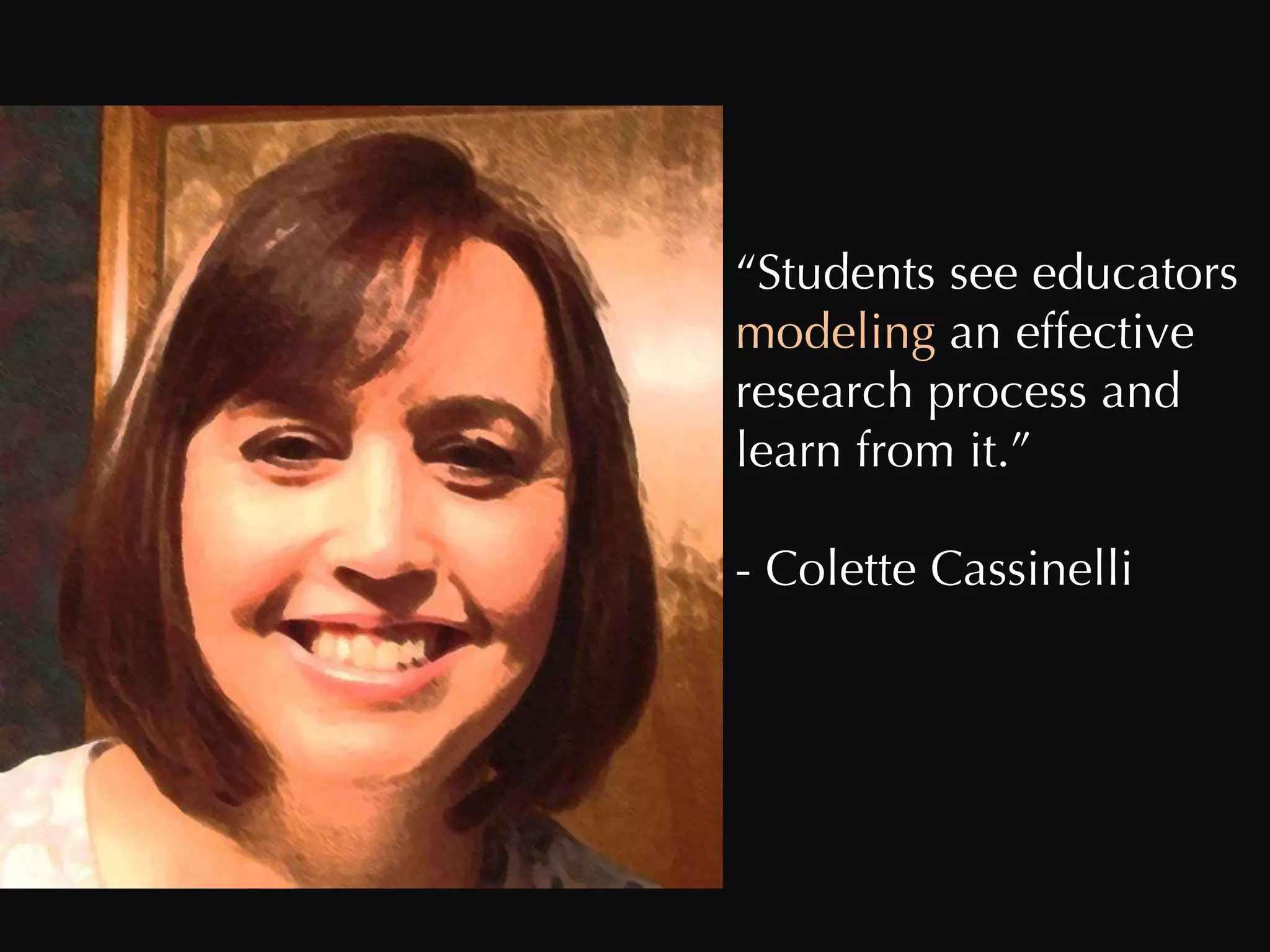
“ Students see educators  modeling  an effective  research process and  learn from it.” - Colette Cassinelli
There are  no excuses:  “ too old”  “ too new” “ too frightened of technology”  “ too shy”
“ Teachers that are waiting for a professional development day, or a workshop to show them how to use technology are never going to do it.  You just have to jump in and try something.”     -- Brent Jorth social studies teacher Brent Jorth,
“ There is no textbook for what effective practice looks like in continually morphing information and communication landscapes.”- Joyce Valenza
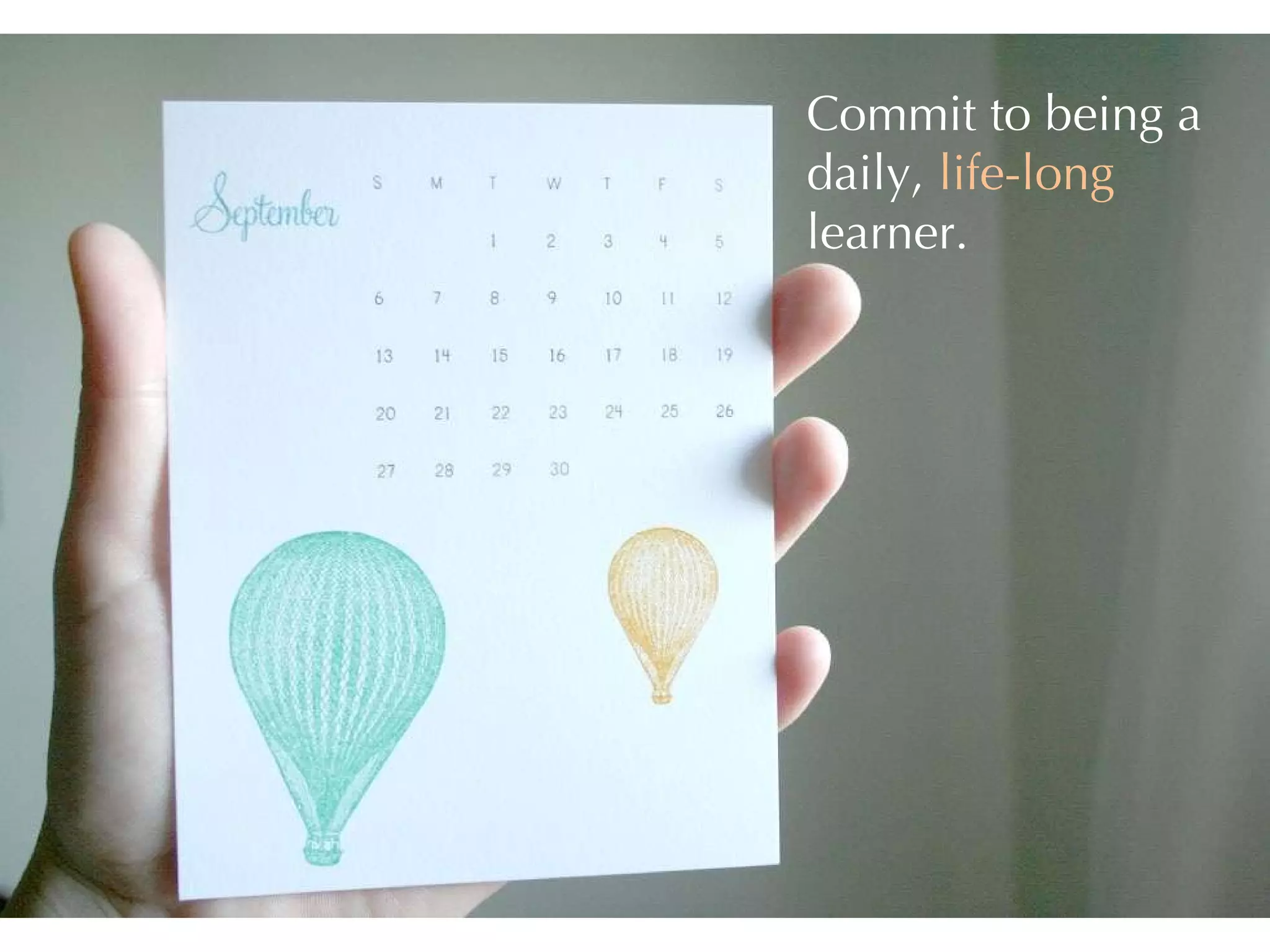
Commit to being a daily,  life-long  learner.
Develop a personal learning network through which you reach out across the world to find colleagues to learn from and collaborate with.  The investment you make in time and energy will be repaid multiple times on the back-end. Without a PLN, no professional can reach full potential.
Most educators in the same boat as you. More ways to collaborate & commiserate than ever.
Thousands of free sources online.  A PLN that helps you sort them out.
 
You are no longer the “sage on the stage.” Collaborate with students and build  knowledge.
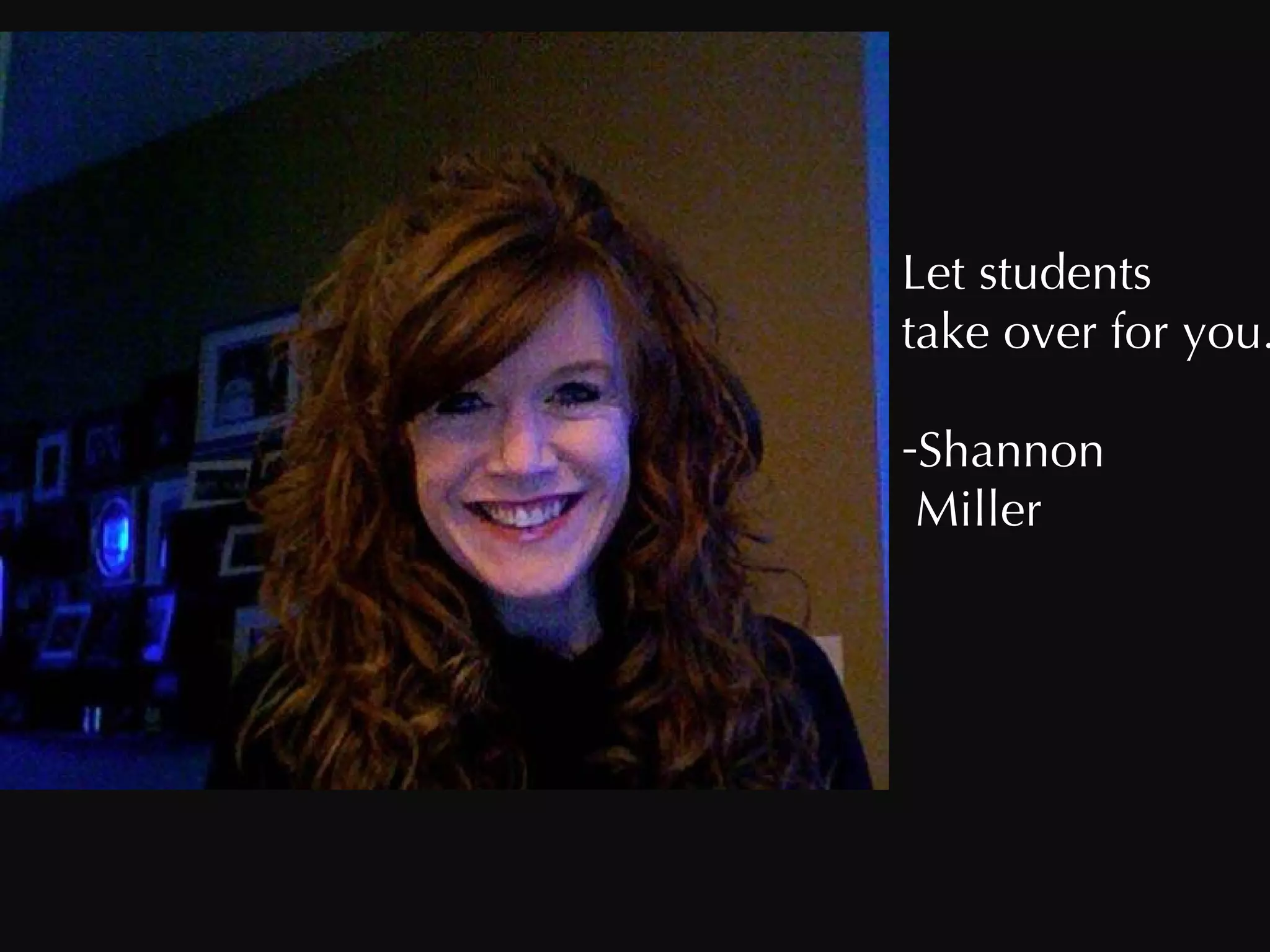
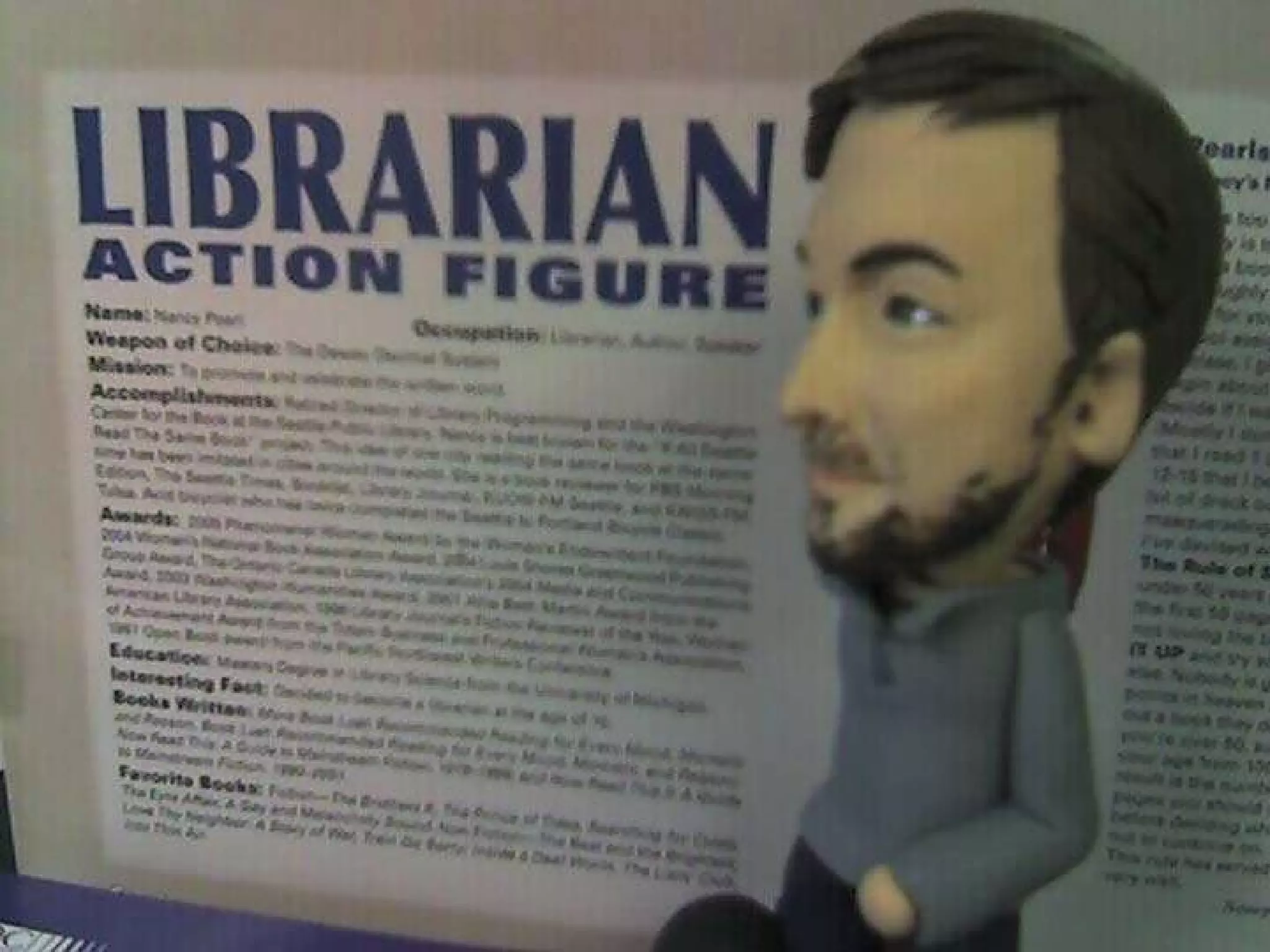
Let students  take over for you. Shannon  Miller
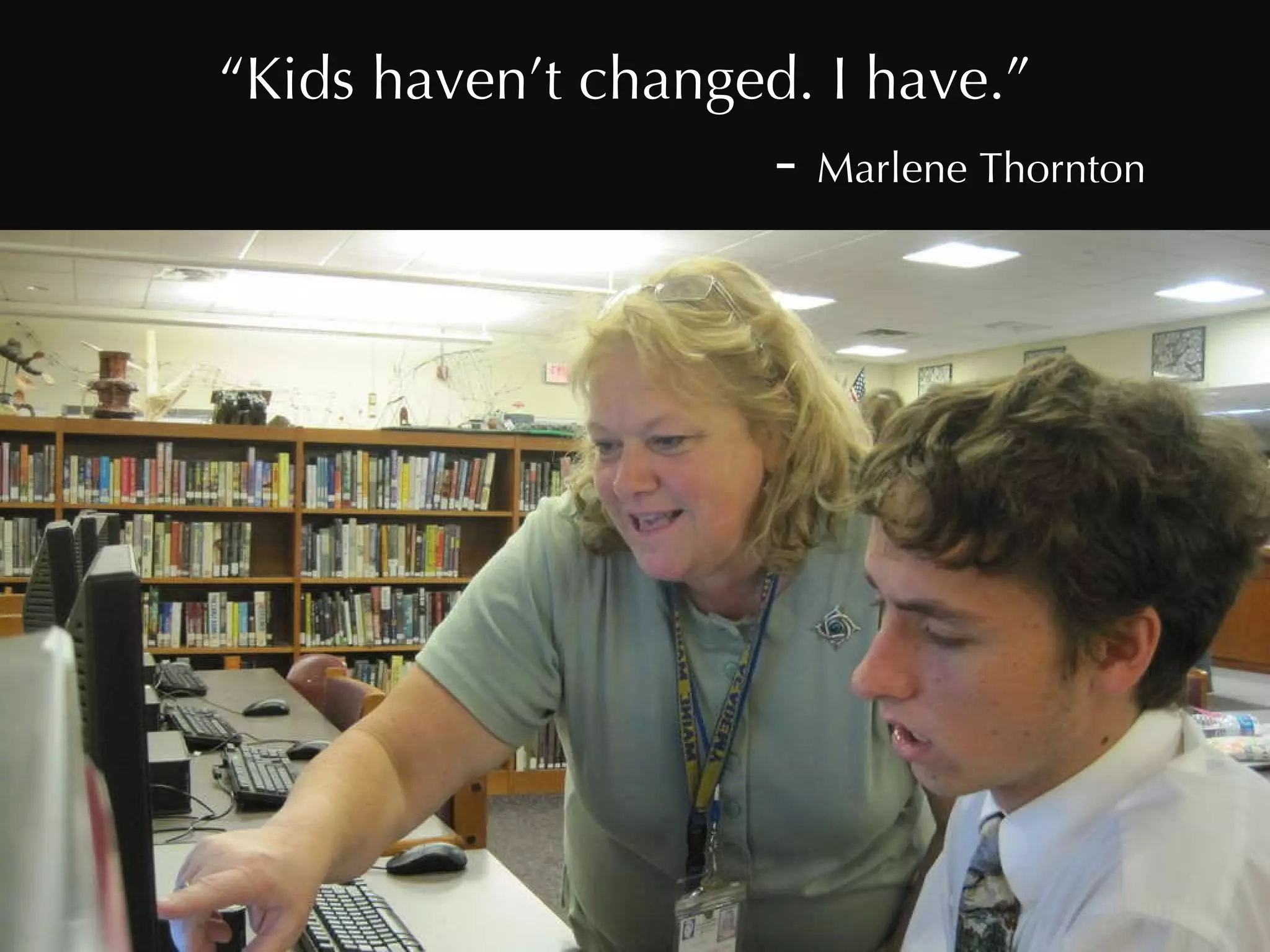
“ Kids haven’t changed. I have.”     -  Marlene Thornton
Do you  believe  in me? Do you believe in yourself?
“ Do you believe that what you’re doing is shaping, not just my generation, but that of my children and my children’s children?” “ Believe in yourself.” - Dalton Sherman, 5 th  grade, Dallas ISD http://www.americanrhetoric.com/speeches/daltonshermandallasisd.htm
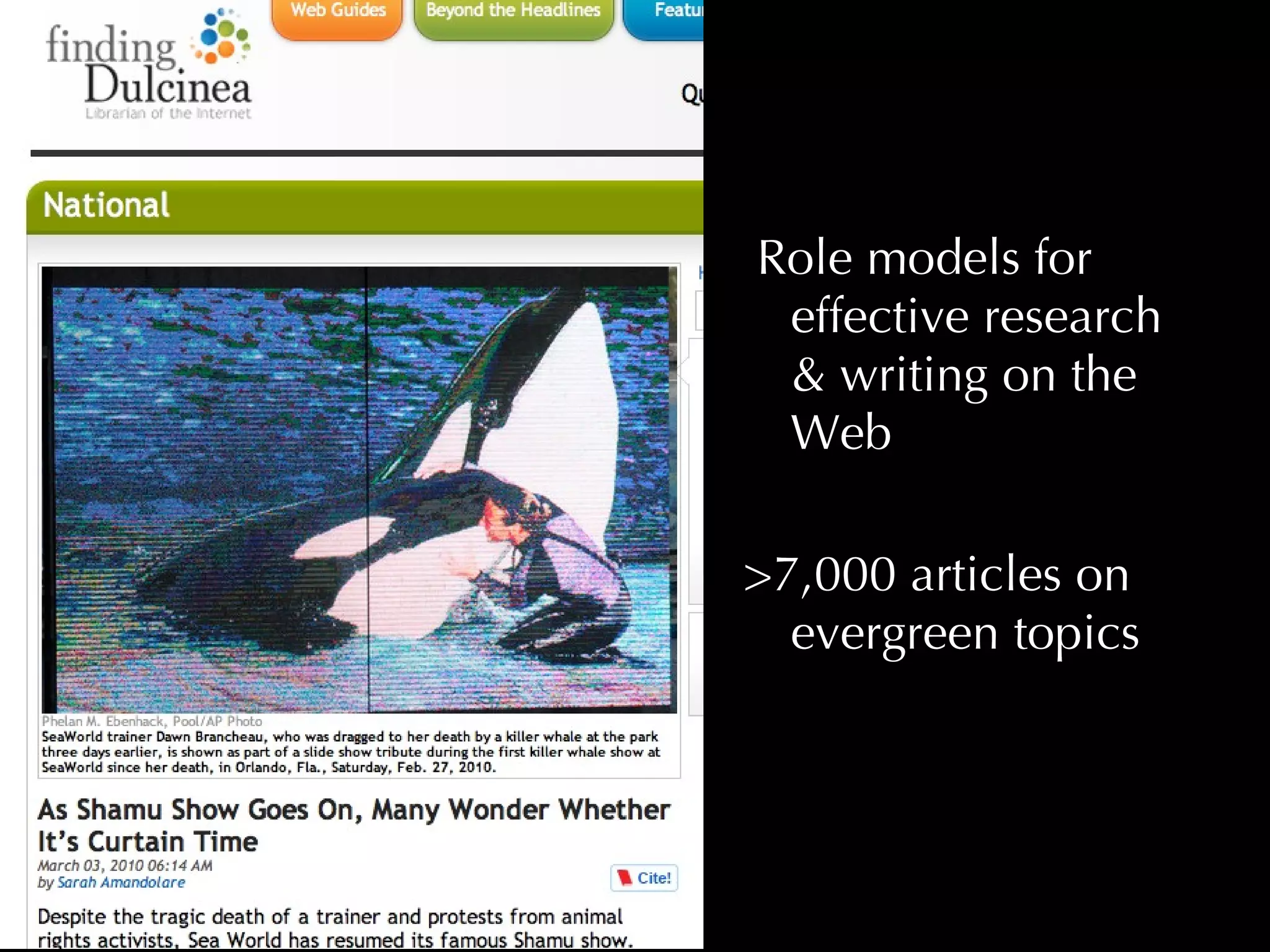
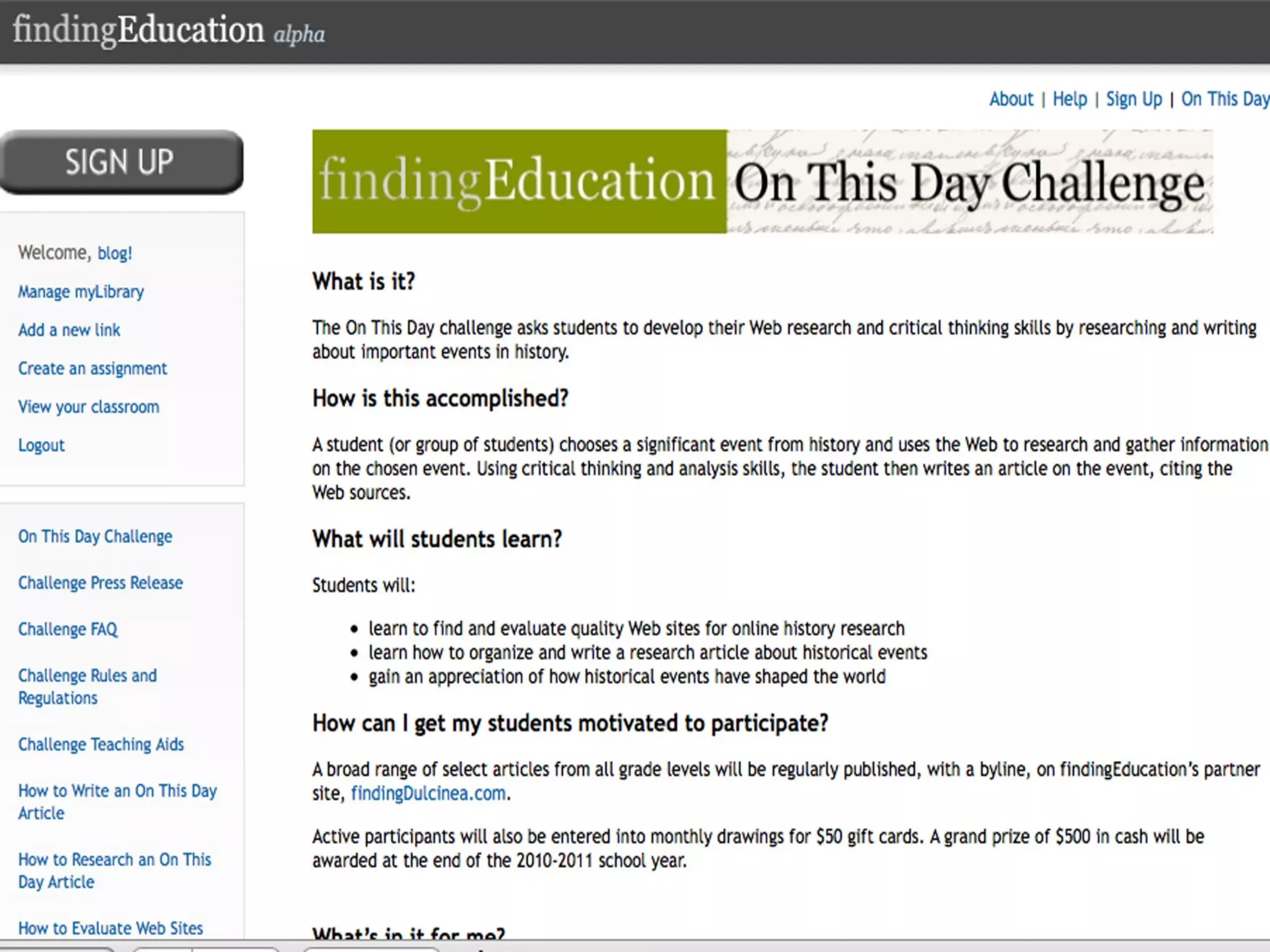
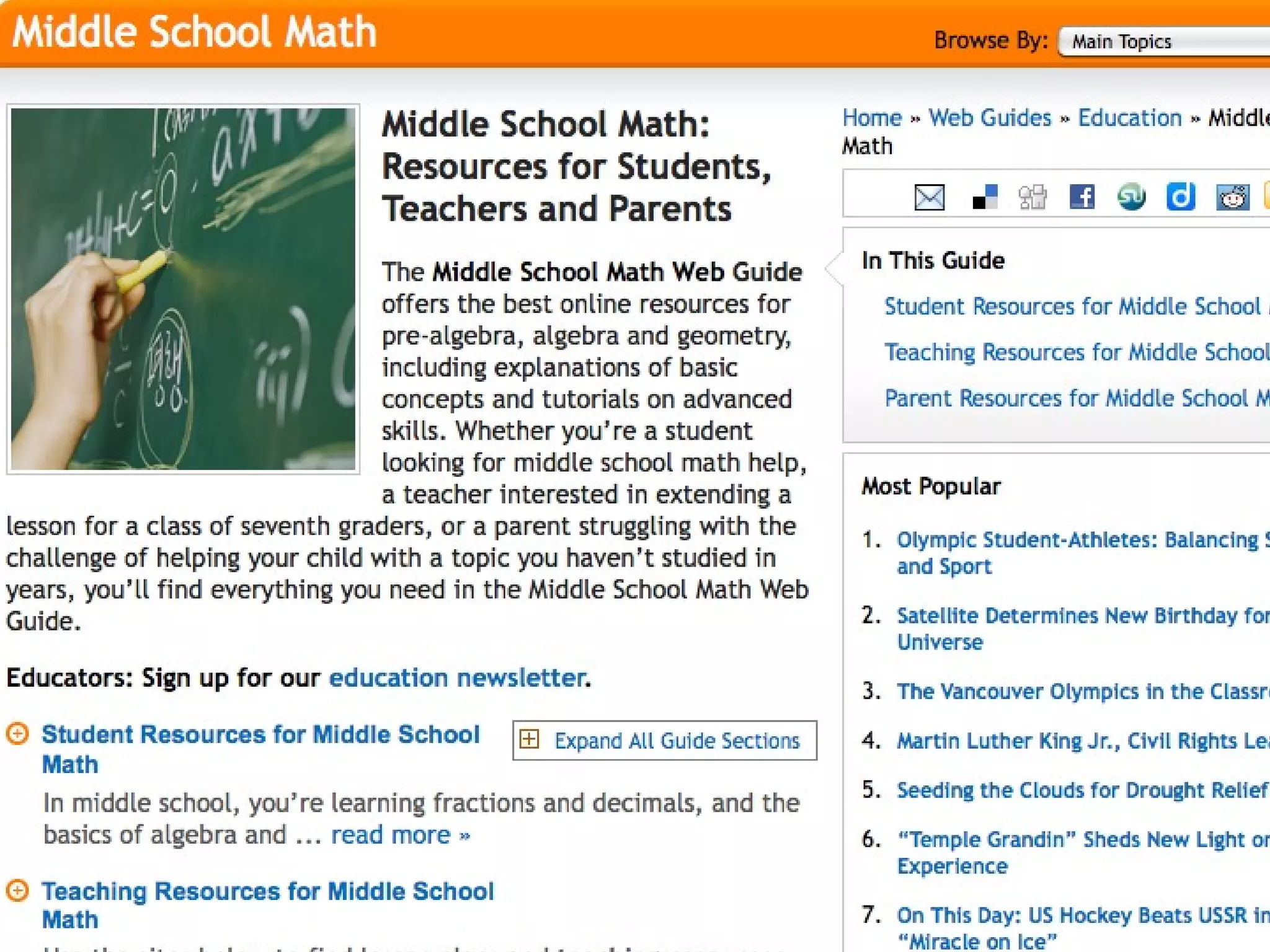
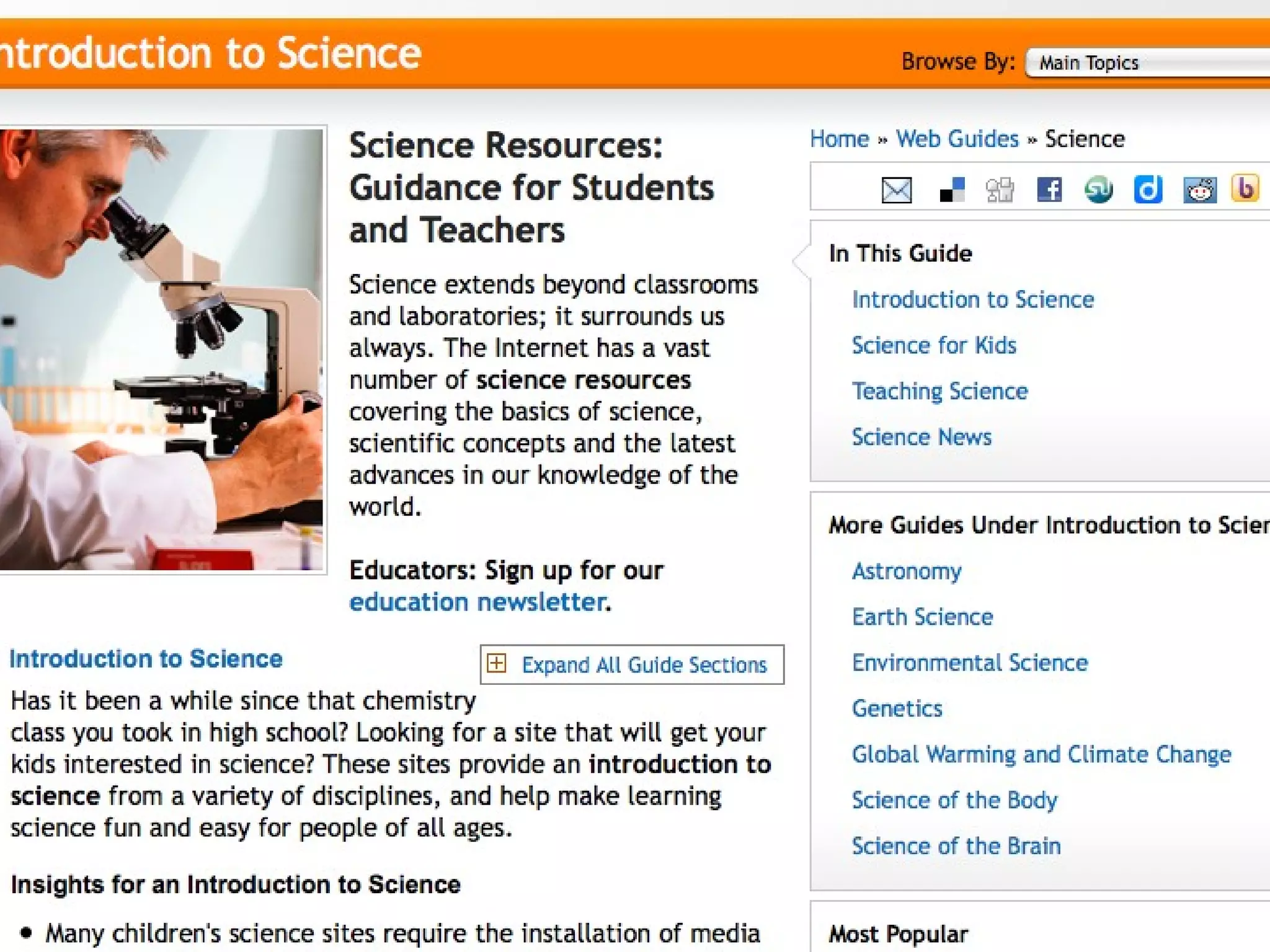
Role models for effective research & writing on the Web >7,000 articles on evergreen topics
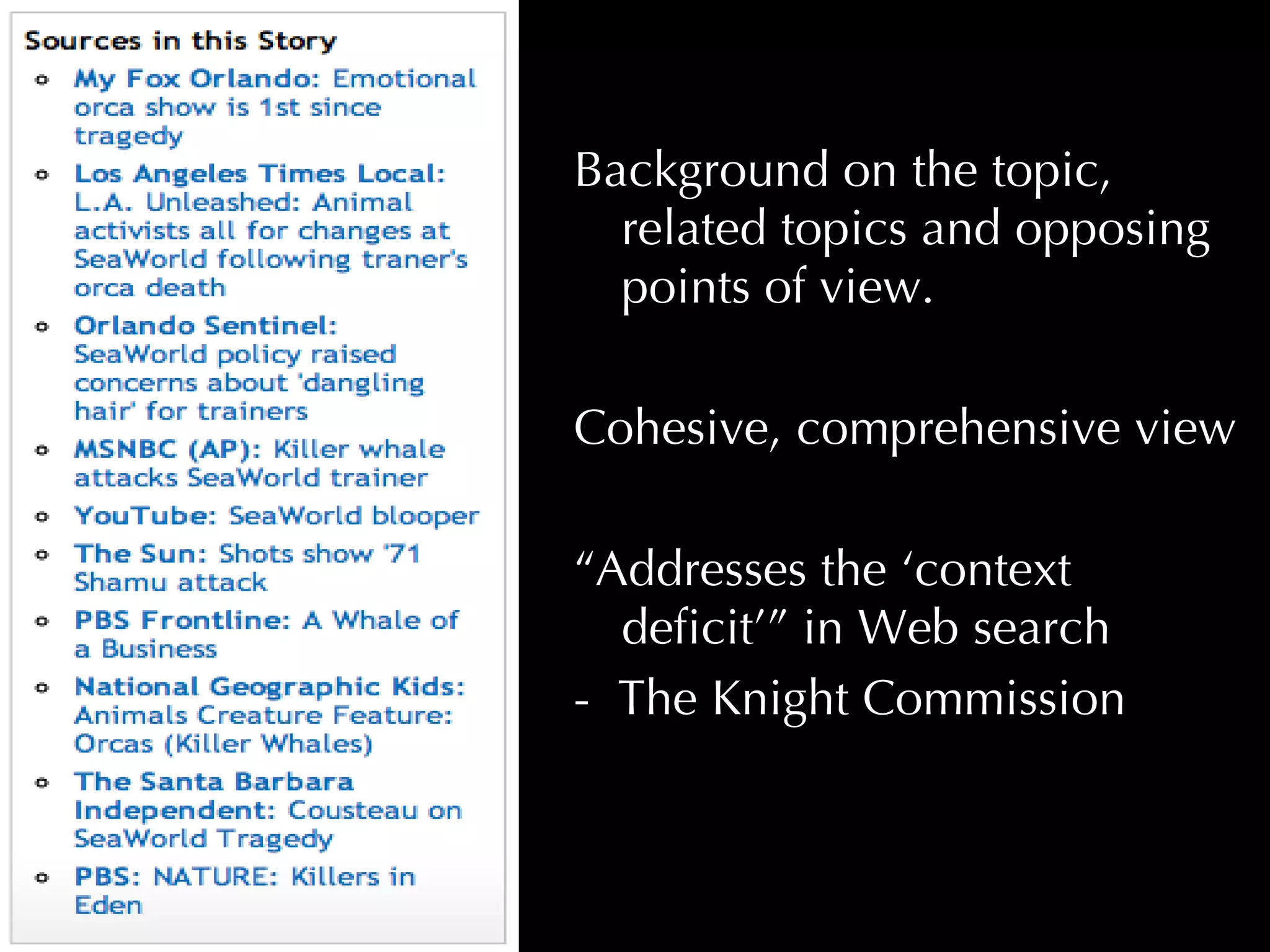
Background on the topic, related topics and opposing points of view.  Cohesive, comprehensive view “ Addresses the ‘context deficit’” in Web search  -  The Knight Commission
 
“ Search here and you're working in a universe of checked, verifiable sources and solid information. ”  - Paul Gilster, News Observer


Using Tech & the Web in School

  • 1.
    Embracing Technology and the Web in School Mark E. Moran, Founder, Dulcinea Media Fall 2010
  • 2.
    Our mission: tohelp educators teach students how to use the Web effectively.
  • 3.
    We need toteach students how to ask questions. - Angela Maiers
  • 4.
    Young kids ask a lot of great questions
  • 5.
    What sound does a goat make? Ask a five-year-old ...
  • 6.
    Let’s it !
  • 7.
    The Internet definesthe way that young people learn, communicate, and create. Students feel in charge of information.
  • 8.
    Kids have “Answers” in the palm of their hand
  • 9.
    Life hasbecome an open-book test . “ Schools run a great risk of becoming irrelevant to students.” - Peter Pappas
  • 10.
    Found our ownstudy materials online.
  • 11.
    Today’s students are“digital natives” whose brains likely “have physically changed – and are different from ours – as a result of how they grew up.” - Marc Prensky
  • 12.
  • 13.
    Question: How doyou begin your search?
  • 14.
    Almost half ofmiddle school students chose “I type a question.”
  • 15.
    Question: How doyou know if a source is a good source to use for a school paper?
  • 16.
    Answer: If it“ looks good” or “sounds good.” If it has the “correct” information.
  • 17.
    Actual response: Idon’t know. I just go with it.
  • 18.
    What do youdo if a search does not give you good results? I punch the screen. Just kidding, LOL .
  • 19.
    65% of students“ rarely or never” check the author. “ It doesn’t really matter who wrote it .” ..
  • 20.
    50% of highschool students and 72% of middle school students say they “rarely or never” check the date of an article.
  • 21.
    I can’tfind it.
  • 22.
    Not one of the 600 college students surveyed "could give an adequate conceptual definition of how Google returns results.” 6 --ERIAL study (Illinois )
  • 23.
    In Conclusion…. Amajority of students: don’t know how to form a sound search query; don’t have a strategy for dealing with poor results; can’t articulate how they know content is credible; don’t check the author or date of an article.
  • 24.
  • 25.
    Students in collegewho had Web literacy training in primary school "take the prize of better grades.” The rest show up “beyond hope.” --UC London Research Review
  • 26.
    Kids without adultguidance online end up as “feral children of the Internet…raised by the wolves of Web 2.0” --Henry Jenkins
  • 27.
    Recognizing reliable sources+ consider infinite options + Understanding intellectual property rights + Engaging modern audiences with conclusions = EFFECTIVE USE OF THE WEB
  • 28.
    Use the Webto ... Empower students as creators and publishers Connect and collaborate with other classrooms Promote change and global understanding Research historical and current events
  • 29.
    Improving Web literacystarts with your own skills.
  • 30.
    “ Students seeeducators modeling an effective research process and learn from it.” - Colette Cassinelli
  • 31.
    There are no excuses: “ too old” “ too new” “ too frightened of technology” “ too shy”
  • 32.
    “ Teachers thatare waiting for a professional development day, or a workshop to show them how to use technology are never going to do it. You just have to jump in and try something.”    -- Brent Jorth social studies teacher Brent Jorth,
  • 33.
    “ There isno textbook for what effective practice looks like in continually morphing information and communication landscapes.”- Joyce Valenza
  • 34.
    Commit to beinga daily, life-long learner.
  • 35.
    Develop a personallearning network through which you reach out across the world to find colleagues to learn from and collaborate with. The investment you make in time and energy will be repaid multiple times on the back-end. Without a PLN, no professional can reach full potential.
  • 36.
    Most educators inthe same boat as you. More ways to collaborate & commiserate than ever.
  • 37.
    Thousands of freesources online. A PLN that helps you sort them out.
  • 38.
  • 39.
    You are nolonger the “sage on the stage.” Collaborate with students and build knowledge.
  • 40.
    Let students take over for you. Shannon Miller
  • 41.
    “ Kids haven’tchanged. I have.” - Marlene Thornton
  • 42.
    Do you believe in me? Do you believe in yourself?
  • 43.
    “ Do youbelieve that what you’re doing is shaping, not just my generation, but that of my children and my children’s children?” “ Believe in yourself.” - Dalton Sherman, 5 th grade, Dallas ISD http://www.americanrhetoric.com/speeches/daltonshermandallasisd.htm
  • 44.
    Role models foreffective research & writing on the Web >7,000 articles on evergreen topics
  • 45.
    Background on thetopic, related topics and opposing points of view. Cohesive, comprehensive view “ Addresses the ‘context deficit’” in Web search - The Knight Commission
  • 46.
  • 47.
    “ Search hereand you're working in a universe of checked, verifiable sources and solid information. ” - Paul Gilster, News Observer
  • 48.
  • 49.
  • 50.
  • 51.

Editor's Notes

  • #4 We need to instill intellectual curiosity.
  • #7 5yo Hagan: what does sound a goat make? Shannon & 16yo daughter: conflicting answers. Hagan shrugs “Oh, let’s just Google it.” Shannon helped Hagan find answer online. In other families, 1st step to “Would you stop annoying me?”
  • #10 Students feel in charge of information. Their landscape explored with expectation of choice functionality Control
  • #11 High school students decide their teacher cannot adequately prepare them for an AP History Exam They find study materials online from a teacher in Northern Virginia.
  • #12 EXPLAIN WHO MARK PRENSKY IS
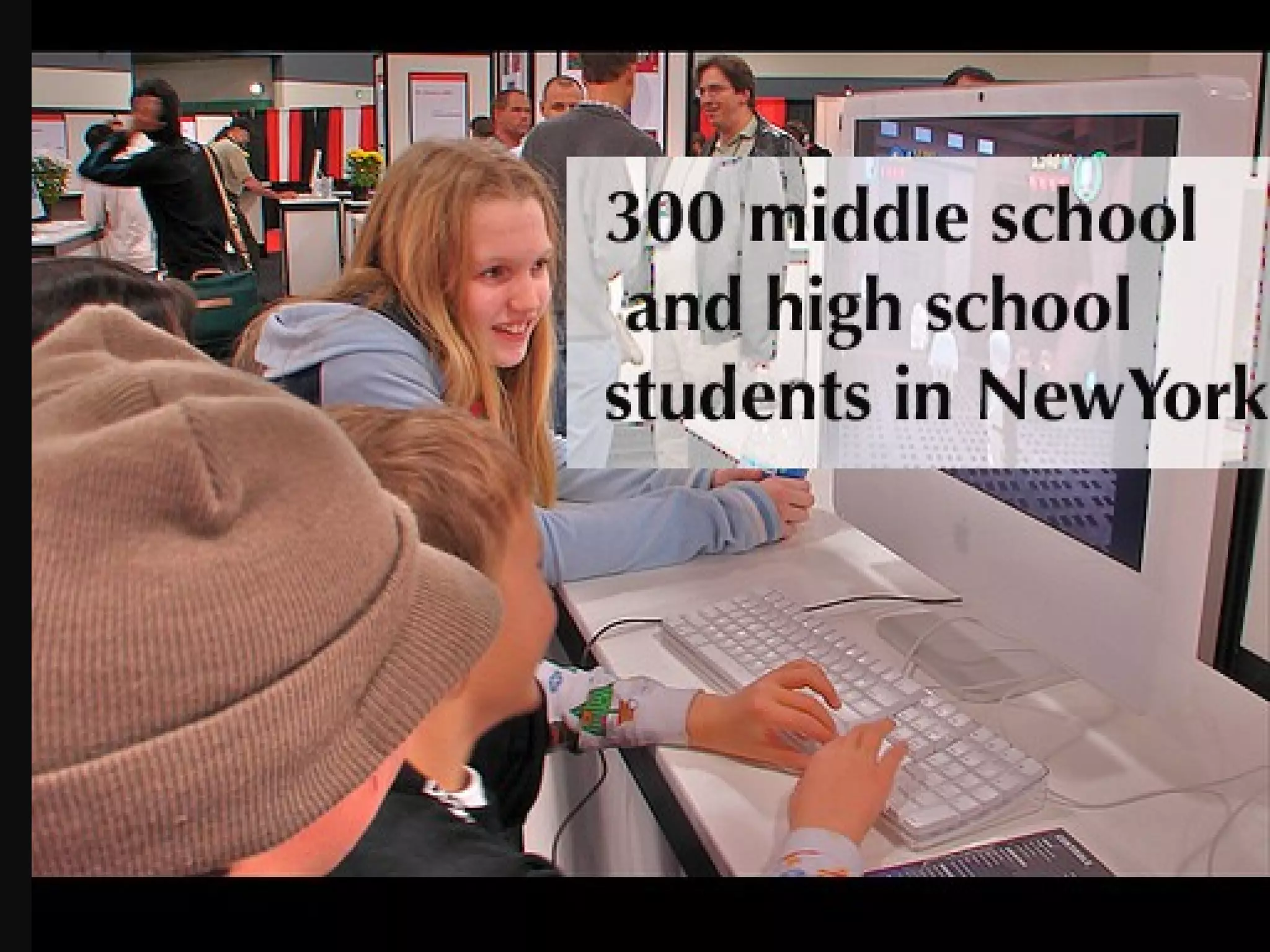
  • #13 We conducted a survey of the Internet research habits of 300 New York State middle school and high school students. The first question we asked: How do you begin your search?
  • #15 Half of middle school students are still using natural search EX:
  • #20 NEED PHOTO “It doesn’t really matter who it is”
  • #21 Script: Only about 19.2% & 8.8% (hs/ms) say they usually do.
  • #26 The rest show up at college beyond hope, having "already developed an ingrained coping behaviour: they have learned to 'get by' with Google."
  • #27 The rest show up at college beyond hope, having "already developed an ingrained coping behaviour: they have learned to 'get by' with Google."
  • #34 “There is no textbook for what effective practice looks like in continually morphing information and communication landscapes.”
  • #35 Professional Development is no longer a 2x a year thing. I am re-learning every day.
  • #36 This is what I do with my staff.
  • #37 This is what I do with my staff.
  • #38 This is what I do with my staff.
  • #40 This is what I do with my staff.
  • #41 Libarian for three years after raising three teens. Being a mom and a wife are her number one priorities but it’s not too late to learn. Shannon founded the Computer Efficiency Worker’s League.
  • #42 NEED PICTURE!!!!!!!!!!!!!!!!!!!!!!!!!!!!!!!!!!!!!! -Marlene Thornton Drama teacher since 1982, self-described technophobe Drama, Language Arts & Gifted since 1982. Taught gifted students how to create 1950s radio program, with 1950s sound effects & music Technophobe. No computer at home. Couldn ’t use any of the tools by herself. Students teach her. “ Kids haven’t changed, I have.”
  • #43 Do you believe in yourself?