Using Big Data to Enhance
the Value of Compensation
Programs
Lance A. Berger
Managing Partner, Lance A. Berger & Associates, Ltd.
Based on Chapter 46 of sixth edition of the Compensation Handbook
Copyright © 2015 by McGraw-Hill Education
Introduction
Organizations collect, connect, analyze, use, and store
large quantities of data pertinent to their business and
employees. This gives them a foundation for integrating
multiple data elements into a smaller set of cogent
decision points. These decisions pertain to the design,
implementation, and audit of the effectiveness of
compensation strategies. Technology makes this process
more accurate, easier, faster, and cheaper than ever
before. This technological phenomenon has been titled
big data.
Five Elements of Big
Data
Foundational knowledge
Levels of big data
Competencies of big data practitioners
Value-creating outcomes
Big data blueprint
Foundational Knowledge
Definition: Big
Big compensation data involves the integration of data
elements from different disciplines using a variety of
analytical tools and technologies to identify and address
important human resources issues.
Foundational Knowledge
Six Criteria for Big Data
Outcomes. Before embarking on big data, practitioners should clearly
define the issues they seek to address. Collectively, these issues seek to
answer the question, “Does the organization’s compensation strategy
align with its business strategy, culture, and talent-management
strategies?
Types of Data. Once outcomes are defined, the data necessary to
address them must be identified. The data required typically will come
from documented business strategies and performance, compensation
strategies and practices, talent-management strategies and practices,
and culture surveys
Quality. Once big data sources are identified, their accuracy,
consistency, and comprehensives for identifying and/or solving targeted
compensation issues and solutions such as just listed are determined.
Foundational Knowledge
Six Criteria for Big Data
Timeliness. After relevant data are identified and their quality ensured,
they are harvested and made available in the time frame necessary for
identifying and/or solving active and future issues. Time frames range
from periodic to real time.
Worth. After determining whether their data meet the criteria listed
earlier, practitioners must determine whether engaging in a big data
process is worth its cost and time of implementation or whether simpler
processes could be used by the organization to address compensation
issues.
Credibility. In order to implement solutions based on big data, an
organization must ensure that its employees trust and believe in its
capabilities for addressing compensation issues. This means that an
organization must have a formalized and timely employee
communications program that honestly presents the role of data in its
compensation decisions.
Levels of Big Data
A foundational understanding of big data enables an organization to
classify its current and potential level of implementation.
Descriptive. Descriptive big data involves the systematic approach to
identifying, collecting, organizing, and analyzing high-quality business
and compensation data to unearth valuable insights that help to guide
compensation decisions and actions.
Analytical. Analytic big data involves the blending and integration of
business, compensation, and talent-management data into cogent and
useful pieces of information that can be used to make valid
compensation decisions.
Predictive. Predictive big data is used to make more effective
compensation decisions through the extensive mining of all relevant data
to create paradigms that provide a clear understanding of the
relationship between organization strategies and practices and current
and future outcomes.
Prescriptive. Prescriptive big data is complex and sophisticated. It draws
on historically valid paradigms. It enables the organization to make
highly accurate decisions involving specific actions necessary to achieve
desired short and long outcomes.
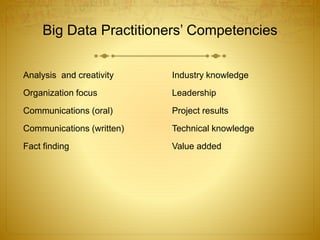
Big Data Practitioners’ Competencies
Analysis and creativity
Organization focus
Communications (oral)
Communications (written)
Fact finding
Industry knowledge
Leadership
Project results
Technical knowledge
Value added
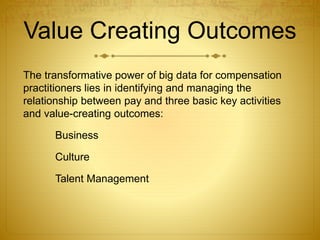
Value Creating Outcomes
The transformative power of big data for compensation
practitioners lies in identifying and managing the
relationship between pay and three basic key activities
and value-creating outcomes:
Business
Culture
Talent Management
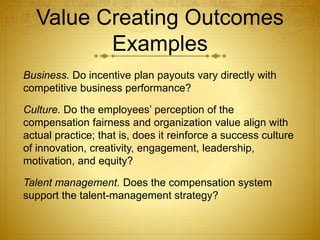
Value Creating Outcomes
Examples
Business. Do incentive plan payouts vary directly with
competitive business performance?
Culture. Do the employees’ perception of the
compensation fairness and organization value align with
actual practice; that is, does it reinforce a success culture
of innovation, creativity, engagement, leadership,
motivation, and equity?
Talent management. Does the compensation system
support the talent-management strategy?
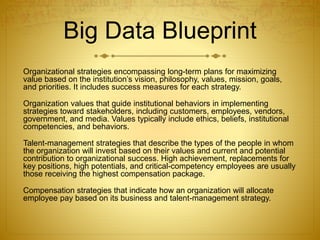
Big Data Blueprint
Organizational strategies encompassing long-term plans for maximizing
value based on the institution’s vision, philosophy, values, mission, goals,
and priorities. It includes success measures for each strategy.
Organization values that guide institutional behaviors in implementing
strategies toward stakeholders, including customers, employees, vendors,
government, and media. Values typically include ethics, beliefs, institutional
competencies, and behaviors.
Talent-management strategies that describe the types of the people in whom
the organization will invest based on their values and current and potential
contribution to organizational success. High achievement, replacements for
key positions, high potentials, and critical-competency employees are usually
those receiving the highest compensation package.
Compensation strategies that indicate how an organization will allocate
employee pay based on its business and talent-management strategy.

Using Big Data to Enhance the Value of Compensation Programs

  • 1.
    Using Big Datato Enhance the Value of Compensation Programs Lance A. Berger Managing Partner, Lance A. Berger & Associates, Ltd. Based on Chapter 46 of sixth edition of the Compensation Handbook Copyright © 2015 by McGraw-Hill Education
  • 2.
    Introduction Organizations collect, connect,analyze, use, and store large quantities of data pertinent to their business and employees. This gives them a foundation for integrating multiple data elements into a smaller set of cogent decision points. These decisions pertain to the design, implementation, and audit of the effectiveness of compensation strategies. Technology makes this process more accurate, easier, faster, and cheaper than ever before. This technological phenomenon has been titled big data.
  • 3.
    Five Elements ofBig Data Foundational knowledge Levels of big data Competencies of big data practitioners Value-creating outcomes Big data blueprint
  • 4.
    Foundational Knowledge Definition: Big Bigcompensation data involves the integration of data elements from different disciplines using a variety of analytical tools and technologies to identify and address important human resources issues.
  • 5.
    Foundational Knowledge Six Criteriafor Big Data Outcomes. Before embarking on big data, practitioners should clearly define the issues they seek to address. Collectively, these issues seek to answer the question, “Does the organization’s compensation strategy align with its business strategy, culture, and talent-management strategies? Types of Data. Once outcomes are defined, the data necessary to address them must be identified. The data required typically will come from documented business strategies and performance, compensation strategies and practices, talent-management strategies and practices, and culture surveys Quality. Once big data sources are identified, their accuracy, consistency, and comprehensives for identifying and/or solving targeted compensation issues and solutions such as just listed are determined.
  • 6.
    Foundational Knowledge Six Criteriafor Big Data Timeliness. After relevant data are identified and their quality ensured, they are harvested and made available in the time frame necessary for identifying and/or solving active and future issues. Time frames range from periodic to real time. Worth. After determining whether their data meet the criteria listed earlier, practitioners must determine whether engaging in a big data process is worth its cost and time of implementation or whether simpler processes could be used by the organization to address compensation issues. Credibility. In order to implement solutions based on big data, an organization must ensure that its employees trust and believe in its capabilities for addressing compensation issues. This means that an organization must have a formalized and timely employee communications program that honestly presents the role of data in its compensation decisions.
  • 7.
    Levels of BigData A foundational understanding of big data enables an organization to classify its current and potential level of implementation. Descriptive. Descriptive big data involves the systematic approach to identifying, collecting, organizing, and analyzing high-quality business and compensation data to unearth valuable insights that help to guide compensation decisions and actions. Analytical. Analytic big data involves the blending and integration of business, compensation, and talent-management data into cogent and useful pieces of information that can be used to make valid compensation decisions. Predictive. Predictive big data is used to make more effective compensation decisions through the extensive mining of all relevant data to create paradigms that provide a clear understanding of the relationship between organization strategies and practices and current and future outcomes. Prescriptive. Prescriptive big data is complex and sophisticated. It draws on historically valid paradigms. It enables the organization to make highly accurate decisions involving specific actions necessary to achieve desired short and long outcomes.
  • 8.
    Big Data Practitioners’Competencies Analysis and creativity Organization focus Communications (oral) Communications (written) Fact finding Industry knowledge Leadership Project results Technical knowledge Value added
  • 9.
    Value Creating Outcomes Thetransformative power of big data for compensation practitioners lies in identifying and managing the relationship between pay and three basic key activities and value-creating outcomes: Business Culture Talent Management
  • 10.
    Value Creating Outcomes Examples Business.Do incentive plan payouts vary directly with competitive business performance? Culture. Do the employees’ perception of the compensation fairness and organization value align with actual practice; that is, does it reinforce a success culture of innovation, creativity, engagement, leadership, motivation, and equity? Talent management. Does the compensation system support the talent-management strategy?
  • 11.
    Big Data Blueprint Organizationalstrategies encompassing long-term plans for maximizing value based on the institution’s vision, philosophy, values, mission, goals, and priorities. It includes success measures for each strategy. Organization values that guide institutional behaviors in implementing strategies toward stakeholders, including customers, employees, vendors, government, and media. Values typically include ethics, beliefs, institutional competencies, and behaviors. Talent-management strategies that describe the types of the people in whom the organization will invest based on their values and current and potential contribution to organizational success. High achievement, replacements for key positions, high potentials, and critical-competency employees are usually those receiving the highest compensation package. Compensation strategies that indicate how an organization will allocate employee pay based on its business and talent-management strategy.