U.S. Grains Council Ethanol Export Promotion Efforts 
Ethanol Leaders Summit
The Mission of the Council: 
The U.S. Grains Council develops export markets for U.S. barley, corn, grain sorghum and related products (corn co-products, ethanol). 
The Council believes exports are vital to global economic development and to U.S. agriculture's profitability. 
2
Council Members: A Unique Partnership 
 
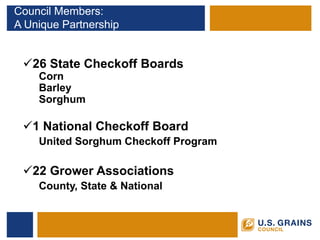
26 State Checkoff Boards 
Corn 
Barley 
Sorghum 
 
1 National Checkoff Board 
United Sorghum Checkoff Program 
22 Grower Associations 
County, State & National
Council Members: Diverse & Dedicated 
 
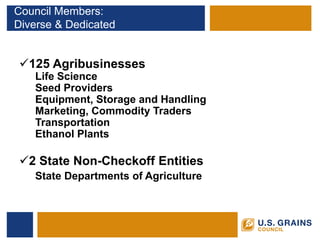
125 Agribusinesses 
Life Science 
Seed Providers 
Equipment, Storage and Handling 
Marketing, Commodity Traders 
Transportation 
Ethanol Plants 
2 State Non-Checkoff Entities 
State Departments of Agriculture
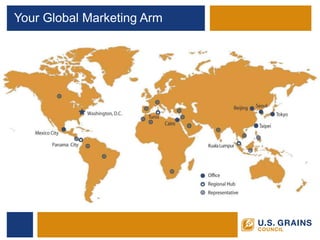
Your Global Marketing Arm
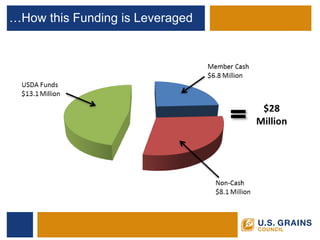
…How this Funding is Leveraged
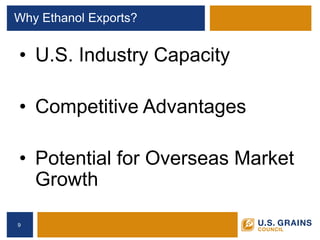
Why Ethanol Exports? 
• 
U.S. Industry Capacity 
• 
Competitive Advantages 
• 
Potential for Overseas Market Growth 
9
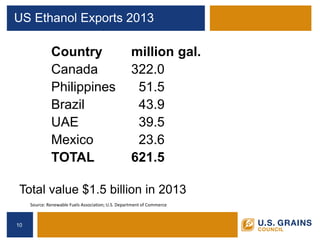
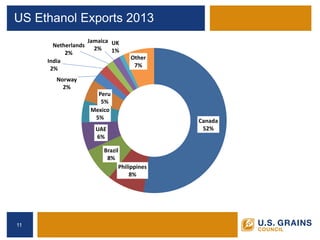
US Ethanol Exports 2013 
Country million gal. 
Canada 322.0 
Philippines 51.5 
Brazil 43.9 
UAE 39.5 
Mexico 23.6 
TOTAL 621.5 
Total value $1.5 billion in 2013 
10 
Source: Renewable Fuels Association; U.S. Department of Commerce
11 
US Ethanol Exports 2013 
Canada 52% 
Philippines 8% 
Brazil 8% 
UAE 6% 
Mexico 5% 
Peru 5% 
Norway 2% 
India 2% 
Netherlands 2% 
Jamaica 2% 
UK 1% 
Other 7%
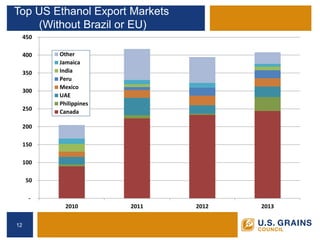
Top US Ethanol Export Markets (Without Brazil or EU) 
12 
- 
50 
100 
150 
200 
250 
300 
350 
400 
450 
2010 
2011 
2012 
2013 
Other 
Jamaica 
India 
Peru 
Mexico 
UAE 
Philippines 
Canada
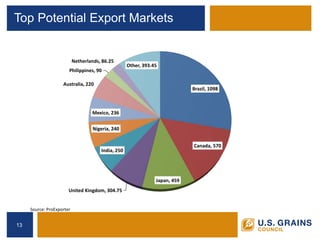
Top Potential Export Markets 
13 
Source: ProExporter 
Brazil, 1098 
Canada, 570 
Japan, 459 
United Kingdom, 304.75 
India, 250 
Nigeria, 240 
Mexico, 236 
Australia, 220 
Philippines, 90 
Netherlands, 86.25 
Other, 393.45
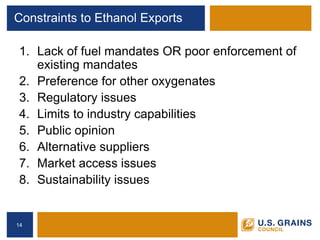
Constraints to Ethanol Exports 
1. 
Lack of fuel mandates OR poor enforcement of existing mandates 
2. 
Preference for other oxygenates 
3. 
Regulatory issues 
4. 
Limits to industry capabilities 
5. 
Public opinion 
6. 
Alternative suppliers 
7. 
Market access issues 
8. 
Sustainability issues 
14
Marketing vs. Market Development 
Marketing: Attempting to sell a product into a market. 
Market Development: Long term thinking, evaluating constraints, developing strategies, building demand. 
15
Ethanol Exports Steering Committee 
• 
U.S. Grains Council 
• 
Growth Energy 
• 
Renewable Fuels Association 
• 
Foreign Agricultural Service (USDA) 
16
Plans for 2014 
• 
Sponsored participation in USDA trade mission to China 
•Market assessment missions to three key regions: 
•Japan and Korea 
•Southeast Asia 
•Latin America 
17
Highlights of 2014 Activities 
• 
Japan has a limited ethanol project in place, with about 100 filling stations in Okinawa offering 3% blends 
• 
Peru imports a significant volume of ethanol from the United States to fulfill its 7.8% blend mandate 
• 
Travel to Southeast Asia offers an opportunity to meet with regional traders in a major transportation and trade hub 
18
2015 Plans 
• 
Request of $420,000 for 2015 
• 
Target four markets for market development activities 
• 
Continue market assessments as resources allow 
19
APEC 
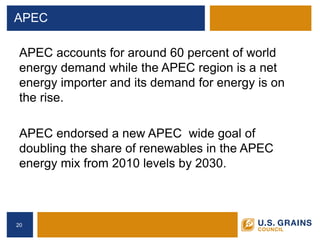
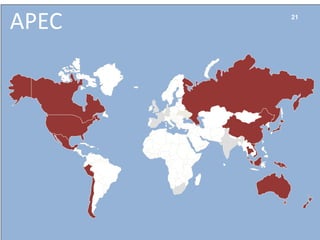
APEC accounts for around 60 percent of world energy demand while the APEC region is a net energy importer and its demand for energy is on the rise. 
APEC endorsed a new APEC wide goal of doubling the share of renewables in the APEC energy mix from 2010 levels by 2030. 
20
21 
APEC
Thank you!

USGC ethanol presentation

  • 1.
    U.S. Grains CouncilEthanol Export Promotion Efforts Ethanol Leaders Summit
  • 2.
    The Mission ofthe Council: The U.S. Grains Council develops export markets for U.S. barley, corn, grain sorghum and related products (corn co-products, ethanol). The Council believes exports are vital to global economic development and to U.S. agriculture's profitability. 2
  • 3.
    Council Members: AUnique Partnership  26 State Checkoff Boards Corn Barley Sorghum  1 National Checkoff Board United Sorghum Checkoff Program 22 Grower Associations County, State & National
  • 4.
    Council Members: Diverse& Dedicated  125 Agribusinesses Life Science Seed Providers Equipment, Storage and Handling Marketing, Commodity Traders Transportation Ethanol Plants 2 State Non-Checkoff Entities State Departments of Agriculture
  • 5.
  • 6.
    …How this Fundingis Leveraged
  • 7.
    Why Ethanol Exports? • U.S. Industry Capacity • Competitive Advantages • Potential for Overseas Market Growth 9
  • 8.
    US Ethanol Exports2013 Country million gal. Canada 322.0 Philippines 51.5 Brazil 43.9 UAE 39.5 Mexico 23.6 TOTAL 621.5 Total value $1.5 billion in 2013 10 Source: Renewable Fuels Association; U.S. Department of Commerce
  • 9.
    11 US EthanolExports 2013 Canada 52% Philippines 8% Brazil 8% UAE 6% Mexico 5% Peru 5% Norway 2% India 2% Netherlands 2% Jamaica 2% UK 1% Other 7%
  • 10.
    Top US EthanolExport Markets (Without Brazil or EU) 12 - 50 100 150 200 250 300 350 400 450 2010 2011 2012 2013 Other Jamaica India Peru Mexico UAE Philippines Canada
  • 11.
    Top Potential ExportMarkets 13 Source: ProExporter Brazil, 1098 Canada, 570 Japan, 459 United Kingdom, 304.75 India, 250 Nigeria, 240 Mexico, 236 Australia, 220 Philippines, 90 Netherlands, 86.25 Other, 393.45
  • 12.
    Constraints to EthanolExports 1. Lack of fuel mandates OR poor enforcement of existing mandates 2. Preference for other oxygenates 3. Regulatory issues 4. Limits to industry capabilities 5. Public opinion 6. Alternative suppliers 7. Market access issues 8. Sustainability issues 14
  • 13.
    Marketing vs. MarketDevelopment Marketing: Attempting to sell a product into a market. Market Development: Long term thinking, evaluating constraints, developing strategies, building demand. 15
  • 14.
    Ethanol Exports SteeringCommittee • U.S. Grains Council • Growth Energy • Renewable Fuels Association • Foreign Agricultural Service (USDA) 16
  • 15.
    Plans for 2014 • Sponsored participation in USDA trade mission to China •Market assessment missions to three key regions: •Japan and Korea •Southeast Asia •Latin America 17
  • 16.
    Highlights of 2014Activities • Japan has a limited ethanol project in place, with about 100 filling stations in Okinawa offering 3% blends • Peru imports a significant volume of ethanol from the United States to fulfill its 7.8% blend mandate • Travel to Southeast Asia offers an opportunity to meet with regional traders in a major transportation and trade hub 18
  • 17.
    2015 Plans • Request of $420,000 for 2015 • Target four markets for market development activities • Continue market assessments as resources allow 19
  • 18.
    APEC APEC accountsfor around 60 percent of world energy demand while the APEC region is a net energy importer and its demand for energy is on the rise. APEC endorsed a new APEC wide goal of doubling the share of renewables in the APEC energy mix from 2010 levels by 2030. 20
  • 19.
  • 20.